

Transfer of metacognitive skills in self-regulated learning: effects on strategy application and content knowledge acquisition
Open accessThe DOI matches its Crossref record; 62 of the 64 references it cites were found in a registry or an index.
Abstract
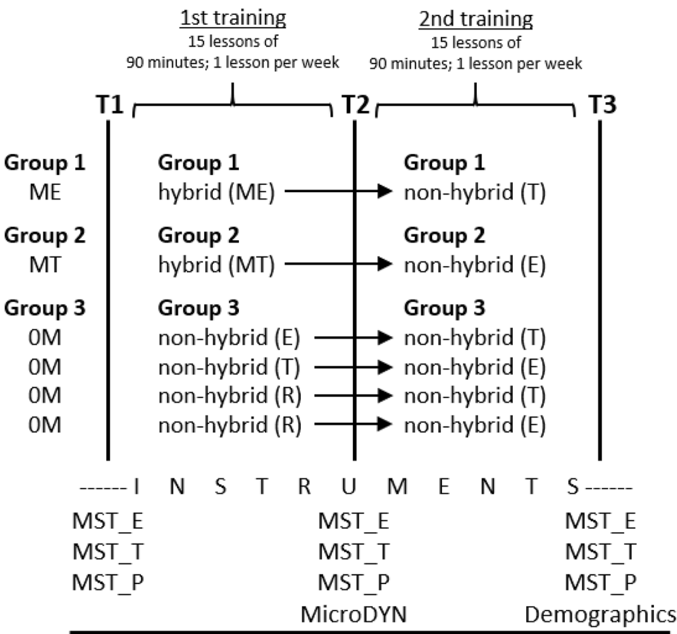
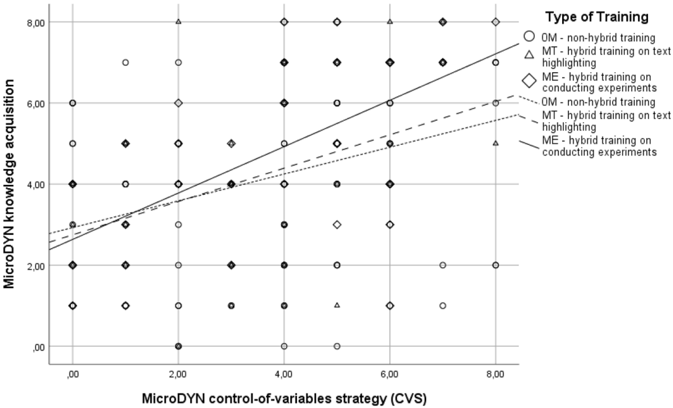
Metacognitive skills are often considered domain-general, therefore they have the potential to transfer across domains, subjects, and tasks. However, transfer of metacognitive skills seldomly occurs spontaneously. Schuster et al., (2020) showed that training can have beneficial effects on spontaneous near and far transfer of metacognitive skills. However, evidence of metacognitive skill transfer resulting in superior acquisition of content knowledge is pending. In the present study we set out to extend prior findings by investigating whether students benefit from training metacognitive skills not only regarding metacognitive skill application but also regarding content knowledge acquisition in learning tasks of different transfer distances. 243 fifth-grade students were randomly assigned to three different conditions for the first 15 weeks of a school year: two hybrid metacognitive skill training conditions (metacognitive skills and one out of two cognitive strategies) and one non-hybrid training condition (cognitive strategies or motivation regulation only). For the second 15 weeks of the school year, all students received non-hybrid training involving a new cognitive strategy. Spontaneous metacognitive skill transfer of different transfer distances (near and far) was tested after the first and after the second 15 weeks of training. The effect of hybrid metacognitive skill training on the acquisition of content knowledge was measured once directly after the first 15 weeks. Results show that hybrid metacognitive skill training supported spontaneous transfer of metacognitive skills to learning scenarios of both near and far transfer distance. However, hybrid metacognitive skill training only had a positive effect on content knowledge acquisition if metacognitive skill transfer was near.
Overview
The claims and statistics of this paper haven’t been checked yet.
Free: it reads the open-access text and checks the first 5 claims that cite a source we can check. Create a free account to check every claim.
Integrity signals
Registry
Cites
Statistics
Figures
Verification
Claims the paper makes
The claims and statistics of this paper haven’t been checked yet.
Free: it reads the open-access text and checks the first 5 claims that cite a source we can check. Create a free account to check every claim.
Claims other papers make about this one
Each is checked against this paper’s own text: does it say what the citing paper says it does?
The source backs part of the claim, not all of it — or backs it for a different population, condition or comparison.
In the citing paper
“In addition, studies in online and blended learning contexts demonstrate that the benefits of technology use for learning are contingent on learners' self-regulatory capacity rather than on tool availability alone (Eggers et al., 2021; Lobos et al., 2024; Stebner et al., 2022).”
From Cognitive offloading through digital tools and its relationship with critical thinking, task persistence, and learning depth (2026) · cites this paper as Stebner et al., 2022
Experimental — accuracy not yet measuredIn the citing paper
“Similarly, in the context of metacognitive onloading, learners not only learn at the task level but also need to adjust their metacognitive strategies over a longer timescale, gradually developing more fl exible strategies that can adapt to changing tasks and environments, including human-AI interaction 121 -123 .”
From A Metacognitive Approach to Learning and Performance in Human-AI Interaction (2026) · cites this paper as [122]
Self-check
Percentages, sums and reported differences re-computed from the paper’s own numbers.
The self-check needs the paper’s full text.
Citations
Cites
Statistical power analyses using G∗Power 3.1: tests for correlation and regression analyses
Faul, F., Erdfelder, E., Buchner, A., & Lang, A.-G. (2009) · Behavior Research Methods · doi:10.3758/brm.41.4.1149 · Cited by 37,615 · cited 2×
“Using G-Power 3.1.9.4 (Faul et al., 2009) we calculated a statistical power of 1-β = 0.85 for the MANOVA (N = 159, 3 groups, 6 dependent variables, ɑ = 1 3 730 Transfer of metacognitive skills in self-regulated learning: effects on… 0.05, f2(V) = 0.0625), and a statistical power of 1-β = 0.88 for…”
MethodInfluentialMetacognition and cognitive monitoring: A new area of cognitive–developmental inquiry
Flavell, J. H. (1979) · American Psychologist · doi:10.1037/0003-066x.34.10.906 · Cited by 11,282 · cited 2×
“According to Flavell (1979), metacognition refers to monitoring and regulation of cognitive processes.”
BackgroundMissing data analysis: making it work in the real world
Graham, J. W. (2009) · Annual Review of Psychology · doi:10.1146/annurev.psych.58.110405.085530 · Cited by 6,163
Acquisition of cognitive skill
Anderson, J. R. (1982) · Psychological Review · doi:10.1037/0033-295x.89.4.369 · Cited by 3,663 · cited 1×
“Therefore, the repeated and consistent use of the same quality criteria by metacognitive skills support the automatization of metacognitive skill execution (Anderson, 1982).”
BackgroundSchema induction and analogical transfer
Gick, M. L., & Holyoak, K. J. (1983) · Cognitive Psychology · doi:10.1016/0010-0285(83)90002-6 · Cited by 3,010 · cited 1×
“…to understand the transfer of metacognitive skills in more detail by applying principles that have been studied in the context of analogical problem-solving (e.g., Gick & Holyoak 1983) to SRL. Analogical problem solving involves the transfer of a solution learned in one problem to another problem.”
MethodMetamemory: A Theoretical Framework and New Findings
Nelson, T. O. (1990) · Psychology of Learning and Motivation · doi:10.1016/s0079-7421(08)60053-5 · Cited by 2,583 · cited 5×
“For example, according to Nelson & Narens (1990), learning is monitored at the object-level, which - in line with the COPES model (Winne & Hadwin, 1998) - is evaluated against standards at the meta-level.”
BackgroundMethodInfluentialMetacognition and learning: conceptual and methodological considerations
Veenman, M. V. J., Van Hout-Wolters, B. H. A. M., & Afflerbach, P. (2006) · Metacognition and Learning · doi:10.1007/s11409-006-6893-0 · Cited by 2,023 · cited 9×
“The degree to which certain strategies of SRL are domain-general or domain-specific has been discussed several times without clear and consensual results having been reached (e.g., Greene et al., 2015; Meijer et al., 2006; Neuenhaus et al., 2011; Poitras & Lajoie, 2013; Raaijmakers et al., 2018; Rotgans & Schmidt, 200…”
BackgroundResultInfluentialStudying as Self-Regulated Learning
(1998) · Metacognition in Educational Theory and Practice · doi:10.4324/9781410602350-19 · Cited by 1,589 · cited 6×
“Metacognitive skills included planning, monitoring, evaluating and regulating (e.g., Winne & Hadwin 1998).”
BackgroundMethodInfluentialSchraw, G., Crippen, K. J., & Hartley, K. (2006) · Research in Science Education · doi:10.1007/s11165-005-3917-8 · Cited by 1,529 · cited 4×
“, 2000), whereas within motivation the light is raised on beliefs and attitudes that motivate the application of cognitive and metacognitive strategies (Schraw et al., 2006).”
BackgroundInfluentialSelf-regulated learning : from teaching to self-reflective practice
Schunk, D. H., & Zimmerman, B. J. (1998) · Cited by 1,426
Paris, S. G., Lipson, M. Y., & Wixson, K. K. (1983) · Contemporary Educational Psychology · doi:10.1016/0361-476x(83)90018-8 · Cited by 1,352
Self-regulated learning: where we are today
Boekaerts, M. (1999) · International Journal of Educational Research · doi:10.1016/s0883-0355(99)00014-2 · Cited by 1,350 · cited 2×
“Models of self-regulated learning and metacognition (e.g., Boekaerts 1999; Nelson & Narens, 1990; Winne & Hadwin, 1998; Zimmerman, 2013) share the core idea of metacognition as the continuous monitoring of various aspects of the current state of a learning process.”
BackgroundAnalogical Mapping by Constraint Satisfaction
Holyoak, K. J., & Thagard, P. (1989) · Cognitive Science · doi:10.1207/s15516709cog1303_1 · Cited by 1,263 · cited 1×
“According to SMT, analogical transfer of the solution includes four steps (Holyoak & Thagard, 1989).”
MethodThe mechanisms of analogical learning
Gentner, D. (1989) · Similarity and Analogical Reasoning · doi:10.1017/cbo9780511529863.011 · Cited by 1,129 · cited 2×
“From a theoretical view, there are different perspectives on transfer, such as actor-oriented transfer (e.g., Lobato 2012; Roorda et al., 2015), transfer of situated learning (e.g., Greeno et al., 1993; Gruber et al., 1996), or analogical transfer (Gentner, 1983, 1989).”
BackgroundMethodRocky Roads to Transfer: Rethinking Mechanism of a Neglected Phenomenon
Salomon, G., & Perkins, D. N. (1989) · Educational Psychologist · doi:10.1207/s15326985ep2402_1 · Cited by 1,121 · cited 1×
“This finding is consistent with general findings from transfer research (Klauer, 2010; Salomon & Perkins, 1989; Schuster et al., 2020).”
ResultDual space search during scientific reasoning
Klahr, D., & Dunbar, K. (1988) · Cognitive Science · doi:10.1207/s15516709cog1201_1 · Cited by 1,058 · cited 1×
“In line with Klahr & Dunbar (1988) the cognitive strategy for conducting an experiment consisted of three steps: (1) deriving a hypothesis, (2) checking the hypothesis by using the control-of-variables strategy (CVS; Tschirgi 1980), (3) drawing a conclusion.”
MethodFrom cognitive modeling to self-regulation: a social cognitive career path.
Zimmerman, B. J. (2013) · Educational Psychologist · doi:10.1080/00461520.2013.794676 · Cited by 991 · cited 2×
“…in self-regulated learning Models of self-regulated learning and metacognition (e.g., Boekaerts 1999; Nelson & Narens, 1990; Winne & Hadwin, 1998; Zimmerman, 2013) describe learning as a dynamic process in which learners are active and constructive focusing on different issues including three…”
BackgroundStructure-mapping: A theoretical framework for analogy
GENTNER, D. (1983) · Cognitive Science · doi:10.1016/s0364-0213(83)80009-3 · Cited by 816 · cited 2×
“From a theoretical view, there are different perspectives on transfer, such as actor-oriented transfer (e.g., Lobato 2012; Roorda et al., 2015), transfer of situated learning (e.g., Greeno et al., 1993; Gruber et al., 1996), or analogical transfer (Gentner, 1983, 1989).”
BackgroundMethodMAC/FAC: A Model of Similarity‐Based Retrieval
Forbus, K. D., Gentner, D., & Law, K. (1995) · Cognitive Science · doi:10.1207/s15516709cog1902_1 · Cited by 736 · cited 1×
“, because they share the same context or domain (Forbus et al., 1994; Reeves & Weisberg, 1994).”
BackgroundGearing, R. E., El-Bassel, N., Ghesquiere, A., Baldwin, S., Gillies, J., & Ngeow, E. (2011) · Clinical Psychology Review · doi:10.1016/j.cpr.2010.09.007 · Cited by 610 · cited 1×
“In order to keep intervention fidelity high, researchers carried out all training versions while being observed by additional researchers (Gearing et al., 2011).”
BackgroundSelf-regulation interventions with a focus on learning strategies
Weinstein, C. E., Husman, J., & Dierking, D. R. (2000) · Handbook of Self-Regulation · doi:10.1016/b978-012109890-2/50051-2 · Cited by 538 · cited 2×
“…of metacognitive skills in self-regulated learning: effects on… nizing and elaborating information play a crucial role for information processing (Weinstein et al., 2000), whereas within motivation the light is raised on beliefs and attitudes that motivate the application of cognitive and…”
BackgroundEffectiveness of learning strategy instruction on academic performance: A meta-analysis
Donker, A. S., de Boer, H., Kostons, D., Dignath van Ewijk, C. C., & van der Werf, M. P. C. (2014) · Educational Research Review · doi:10.1016/j.edurev.2013.11.002 · Cited by 489 · cited 1×
“Thus, we consider metacognitive strategies as domain-general (e.g., Donker et al., 2014; Schuster et al., 2020), and we assume that learners might transfer metacognitive strategies between tasks and domains.”
MethodDignath, C., & Veenman, M. V. J. (2021) · Educational Psychology Review · doi:10.1007/s10648-020-09534-0 · Cited by 403 · cited 1×
“Research on combined direct and indirect strategy training provides initial indications for a successful strengthening of the transfer of metacognitive skills (Dignath & Veenman, 2020; Schuster et al., 2018).”
BackgroundSensible Reasoning: A Hypothesis about Hypotheses
Tschirgi, J. E. (1980) · Child Development · doi:10.1111/j.1467-8624.1980.tb02502.x · Cited by 318 · cited 2×
“In line with Klahr & Dunbar (1988) the cognitive strategy for conducting an experiment consisted of three steps: (1) deriving a hypothesis, (2) checking the hypothesis by using the control-of-variables strategy (CVS; Tschirgi 1980), (3) drawing a conclusion.”
MethodThe role of content and abstract information in analogical transfer.
Reeves, L., & Weisberg, R. W. (1994) · Psychological Bulletin · doi:10.1037/0033-2909.115.3.381 · Cited by 296 · cited 1×
“…source problems are retrieved 1 3 718 Transfer of metacognitive skills in self-regulated learning: effects on… from prior knowledge if they “look” similar to the target problem at a first glance, e.g., because they share the same context or domain (Forbus et al., 1994; Reeves & Weisberg, 1994).”
BackgroundMoving From the Lab to the Field: The Role of Fidelity and Achieved Relative Intervention Strength
Hulleman, C. S., & Cordray, D. S. (2009) · Journal of Research on Educational Effectiveness · doi:10.1080/19345740802539325 · Cited by 291 · cited 1×
“Therefore, future research should use a laboratory setting in order to gain higher internal validity by minimizing the possible effect of confounding variables (Hulleman & Cordray, 2009).”
MethodPanadero, E., Klug, J., & Järvelä, S. (2016) · Scandinavian Journal of Educational Research · doi:10.1080/00313831.2015.1066436 · Cited by 247 · cited 1×
“Although this can be seen as success, future studies should use multimodal measurements of the learning strategy application to increase validity even more in order to get a realistic impression of students’ actual metacognitive skills application (Azevedo et al., 2022; Dörrenbächer-Ulrich et al., 2021; Panadero et al…”
BackgroundSouvignier, E., & Mokhlesgerami, J. (2006) · Learning and Instruction · doi:10.1016/j.learninstruc.2005.12.006 · Cited by 246 · cited 1×
“…research showed that hybrid training enhances near transfer, that is when the deep structure similarity between training and transfer task is high (e.g., both reading strategy; Aghaie & Zhang 2012; Souvignier & Mokhlesgerami, 2006, or both problem solving strategy, Raaijmakers et al., 2018).”
BackgroundMetacognitive activities in text-studying and problem-solving: Development of a taxonomy
Meijer, J., Veenman, M. V. J., & van Hout-Wolters, B. H. A. M. (2006) · Educational Research and Evaluation · doi:10.1080/13803610500479991 · Cited by 226 · cited 5×
“The degree to which certain strategies of SRL are domain-general or domain-specific has been discussed several times without clear and consensual results having been reached (e.g., Greene et al., 2015; Meijer et al., 2006; Neuenhaus et al., 2011; Poitras & Lajoie, 2013; Raaijmakers et al., 2018; Rotgans & Schmidt, 200…”
BackgroundInfluentialAzevedo, R., Bouchet, F., Duffy, M., Harley, J., Taub, M., Trevors, G., Cloude, E., Dever, D., Wiedbusch, M., Wortha, F., et al. (2022) · Frontiers in Psychology · doi:10.3389/fpsyg.2022.813632 · Cited by 225 · cited 1×
“…should use multimodal measurements of the learning strategy application to increase validity even more in order to get a realistic impression of students’ actual metacognitive skills application (Azevedo et al., 2022; Dörrenbächer-Ulrich et al., 2021; Panadero et al., 2016; Rovers et al., 2019).”
BackgroundGranularity matters: comparing different ways of measuring self-regulated learning
Rovers, S. F. E., Clarebout, G., Savelberg, H. H. C. M., de Bruin, A. B. H., & van Merriënboer, J. J. G. (2019) · Metacognition and Learning · doi:10.1007/s11409-019-09188-6 · Cited by 213 · cited 1×
“…should use multimodal measurements of the learning strategy application to increase validity even more in order to get a realistic impression of students’ actual metacognitive skills application (Azevedo et al., 2022; Dörrenbächer-Ulrich et al., 2021; Panadero et al., 2016; Rovers et al., 2019).”
BackgroundPoor Metacomprehension Accuracy as a Result of Inappropriate Cue Use
Thiede, K. W., Griffin, T. D., Wiley, J., & Anderson, M. C. M. (2010) · Discourse Processes · doi:10.1080/01638530902959927 · Cited by 196 · cited 1×
“For example, theories of metacognitive judgment accuracy and metacomprehension (Dunlosky & Lipko, 2007; Thiede et al., 2010) put acquired knowledge at the object-level.”
BackgroundFostering effective learning strategies in higher education—A mixed-methods study.
Biwer, F., Egbrink, M. G. A. O., Aalten, P., & de Bruin, A. B. H. (2020) · Journal of Applied Research in Memory and Cognition · doi:10.1016/j.jarmac.2020.03.004 · Cited by 195 · cited 1×
“In contrast, research has shown that the skillful application of metacognitive strategies (like planning, monitoring, evaluating and regulating) can improve learning in many different domains (e.g., Aghaie & Zhang 2012; Biwer et al., 2020; Desoete et al., 2003; Meijer et al., 2006).”
The Actor-Oriented Transfer Perspective and Its Contributions to Educational Research and Practice
Lobato, J. (2012) · Educational Psychologist · doi:10.1080/00461520.2012.693353 · Cited by 191 · cited 2×
“A brief definition of transfer comes from Lobato (2012): “Past experiences carry over from one context to the next.”
BackgroundDynamic Problem Solving: A New Assessment Perspective
Greiff, S., Wüstenberg, S., & Funke, J. (2012) · Applied Psychological Measurement · doi:10.1177/0146621612439620 · Cited by 175 · cited 2×
“Concerning Hypothesis 2, students’ exploration behavior and resulting content knowledge acquisition in a computer-based learning scenario (MicroDYN; Greiff et al., 2012; Schweizer et al., 2013) was assessed.”
BackgroundSelf-citationCan offline metacognition enhance mathematical problem solving?
Desoete, A., Roeyers, H., & Clercq, A. D. (2003) · Journal of Educational Psychology · doi:10.1037//0022-0663.95.1.188 · Cited by 172 · cited 3×
“, 2014), science and mathematics (Desoete et al., 2003; Leopold & Leutner, 2015; Zepeda et al., 2015), history (Meijer et al.”
BackgroundZepeda, C. D., Richey, J. E., Ronevich, P., & Nokes-Malach, T. J. (2015) · Journal of Educational Psychology · doi:10.1037/edu0000022 · Cited by 167 · cited 4×
“, 2014), science and mathematics (Desoete et al., 2003; Leopold & Leutner, 2015; Zepeda et al., 2015), history (Meijer et al.”
BackgroundResultInfluentialSelf-Regulated Learning as a Competence: Implications of Theoretical Models for Assessment Methods
Wirth, J., & Leutner, D. (2008) · Zeitschrift für Psychologie / Journal of Psychology · doi:10.1027/0044-3409.216.2.102 · Cited by 158 · cited 2×
“Compared to questionnaires, vignettes are known to provide higher validity due to their situation-specific characteristics (Wirth & Leutner, 2008).”
BackgroundSelf-citationIntelligence assessment with computer simulations
Kröner, S., Plass, J. L., & Leutner, D. (2005) · Intelligence · doi:10.1016/j.intell.2005.03.002 · Cited by 141 · cited 1×
“Intelligence was included as a further (metric) predictor, as previous research on MicroDYN and related scenarios showed that intelligence was predictive of students’ achievement (e.g., Kröner et al., 2005).”
Self-citationAghaie, R., & Zhang, L. J. (2012) · Instructional Science · doi:10.1007/s11251-011-9202-5 · Cited by 135 · cited 3×
“…and motivation (e.g., Koedinger et al., 2009; Veenman et al., 2006; Zepeda et al., 2015) in various domains, such as reading comprehension (e.g., Aghaie & Zhang 2012; Carretti et al., 2014), science and mathematics (Desoete et al., 2003; Leopold & Leutner, 2015; Zepeda et al., 2015), history…”
BackgroundDomain-specificity of self-regulated learning processing in science and history
Greene, J. A., Bolick, C. M., Jackson, W. P., Caprino, A. M., Oswald, C., & McVea, M. (2015) · Contemporary Educational Psychology · doi:10.1016/j.cedpsych.2015.06.001 · Cited by 121 · cited 1×
“…of SRL are domain-general or domain-specific has been discussed several times without clear and consensual results having been reached (e.g., Greene et al., 2015; Meijer et al., 2006; Neuenhaus et al., 2011; Poitras & Lajoie, 2013; Raaijmakers et al., 2018; Rotgans & Schmidt, 2009; van…”
BackgroundSchweizer, F., Wüstenberg, S., & Greiff, S. (2013) · Learning and Individual Differences · doi:10.1016/j.lindif.2012.12.011 · Cited by 107 · cited 2×
“Concerning Hypothesis 2, students’ exploration behavior and resulting content knowledge acquisition in a computer-based learning scenario (MicroDYN; Greiff et al., 2012; Schweizer et al., 2013) was assessed.”
BackgroundSelf-citationTransfer of metacognitive skills in self-regulated learning: an experimental training study
Schuster, C., Stebner, F., Leutner, D., & Wirth, J. (2020) · Metacognition and Learning · doi:10.1007/s11409-020-09237-5 · Cited by 105
Self-citationCarretti, B., Caldarola, N., Tencati, C., & Cornoldi, C. (2014) · British Journal of Educational Psychology · doi:10.1111/bjep.12022 · Cited by 103 · cited 1×
“, 2015) in various domains, such as reading comprehension (e.g., Aghaie & Zhang 2012; Carretti et al., 2014), science and mathematics (Desoete et al.”
BackgroundAn Interactive Layers Model of Self-Regulated Learning and Cognitive Load
Wirth, J., Stebner, F., Trypke, M., Schuster, C., & Leutner, D. (2020) · Educational Psychology Review · doi:10.1007/s10648-020-09568-4 · Cited by 93 · cited 6×
“They need to be able to apply these strategies in a skillful way (Wirth et al., 2020), and they need to be able to apply these strategies in different learning tasks and domains.”
BackgroundInfluentialSelf-citationAssociation for Psychological Science
Bahrami, B., Vetter, P., Spolaore, E., Pagano, S., Butterworth, B. L., & Rees, G. E. (2007) · Sage eBooks · doi:10.4135/9781412952644.n29 · Cited by 93
Poitras, E., & Lajoie, S. P. (2013) · Metacognition and Learning · doi:10.1007/s11409-013-9104-9 · Cited by 88 · cited 2×
“…domains, such as reading comprehension (e.g., Aghaie & Zhang 2012; Carretti et al., 2014), science and mathematics (Desoete et al., 2003; Leopold & Leutner, 2015; Zepeda et al., 2015), history (Meijer et al., 2006; Poitras & Lajoie, 2013) or even air traffic control (van Meeuwen et al., 2018).”
BackgroundFifth graders metacognitive knowledge: general or domain-specific?
Neuenhaus, N., Artelt, C., Lingel, K., & Schneider, W. (2011) · European Journal of Psychology of Education · doi:10.1007/s10212-010-0040-7 · Cited by 85 · cited 1×
“The degree to which certain strategies of SRL are domain-general or domain-specific has been discussed several times without clear and consensual results having been reached (e.g., Greene et al., 2015; Meijer et al., 2006; Neuenhaus et al., 2011; Poitras & Lajoie, 2013; Raaijmakers et al., 2018; Rotgans & Schmidt, 200…”
BackgroundSituated learning and transfer
Gruber, H. G., Law, L. C., Mandl, H., & Renkl, A. (1995) · University of Regensburg Publication Server (University of Regensburg) · Cited by 82
Leopold, C., & Leutner, D. (2015) · Metacognition and Learning · doi:10.1007/s11409-014-9130-2 · Cited by 75 · cited 5×
“…data of Schuster et al., (2020) by using a new coding schema in order to focus more on the quality (rather than the quantity) of intended strategy application, since applying metacognitive skills was expected to increase the quality of cognitive strategy application (Leopold & Leutner, 2015).”
BackgroundMethodInfluentialSelf-citationRaaijmakers, S. F., Baars, M., Schaap, L., Paas, F., van Merriënboer, J., & van Gog, T. (2018) · Instructional Science · doi:10.1007/s11251-017-9434-0 · Cited by 59 · cited 5×
“Beyond that we are not aware of studies that addressed the question regarding domain-specificity experimentally (Raaijmakers et al., 2018).”
BackgroundInfluentialExamination of the context‐specific nature of self‐regulated learning
Rotgans, J., & Schmidt, H. (2009) · Educational Studies · doi:10.1080/03055690802648051 · Cited by 57 · cited 1×
“…has been discussed several times without clear and consensual results having been reached (e.g., Greene et al., 2015; Meijer et al., 2006; Neuenhaus et al., 2011; Poitras & Lajoie, 2013; Raaijmakers et al., 2018; Rotgans & Schmidt, 2009; van Meeuwen et al., 2018; Veenman et al., 2006).”
BackgroundShould self-regulated learning be integrated with cognitive load theory? A commentary
Sweller, J., & Paas, F. (2017) · Learning and Instruction · doi:10.1016/j.learninstruc.2017.05.005 · Cited by 54 · cited 5×
“Sweller & Paas (2017) discuss the question of transfer or general trainability of metacogni- 1 3 721 F. Stebner et al. tive skills on the basis of the concepts of biologically primary knowledge and biologically secondary knowledge.”
BackgroundResultInfluentialKoedinger, K. R., Aleven, V. A. W. M. M., Roll, I., & Baker, R. S. (2009) · doi:10.4324/9780203876428.ch20 · Cited by 52 · cited 1×
“…is supported by several training studies that showed positive effects of metacognitive skill training on learning performance and motivation (e.g., Koedinger et al., 2009; Veenman et al., 2006; Zepeda et al., 2015) in various domains, such as reading comprehension (e.g., Aghaie & Zhang 2012;…”
BackgroundDörrenbächer-Ulrich, L., Weißenfels, M., Russer, L., & Perels, F. (2021) · Instructional Science · doi:10.1007/s11251-020-09533-2 · Cited by 51 · cited 2×
“Although this can be seen as success, future studies should use multimodal measurements of the learning strategy application to increase validity even more in order to get a realistic impression of students’ actual metacognitive skills application (Azevedo et al., 2022; Dörrenbächer-Ulrich et al., 2021; Panadero et al…”
BackgroundRoorda, G., Vos, P., & Goedhart, M. J. (2014) · International Journal of Science and Mathematics Education · doi:10.1007/s10763-013-9501-1 · Cited by 28 · cited 1×
“From a theoretical view, there are different perspectives on transfer, such as actor-oriented transfer (e.g., Lobato 2012; Roorda et al., 2015), transfer of situated learning (e.”
BackgroundFörderung des Transfers metakognitiver Lernstrategien durch direktes und indirektes Training
Schuster, C., Stebner, F., Wirth, J., & Leutner, D. (2018) · Unterrichtswissenschaft · doi:10.1007/s42010-018-0028-6 · Cited by 27 · cited 2×
“Indirect strategy training might be an efficient way for continuously refreshing metacognitive skills and fostering metacognitive skill transfer (Schuster et al., 2018).”
BackgroundSelf-citationFostering self-regulation in training complex cognitive tasks
van Meeuwen, L. W., Brand‐Gruwel, S., Kirschner, P. A., de Bock, J. J. P. R., & van Merriënboer, J. J. G. (2017) · Educational Technology Research and Development · doi:10.1007/s11423-017-9539-9 · Cited by 24 · cited 2×
“…domains, such as reading comprehension (e.g., Aghaie & Zhang 2012; Carretti et al., 2014), science and mathematics (Desoete et al., 2003; Leopold & Leutner, 2015; Zepeda et al., 2015), history (Meijer et al., 2006; Poitras & Lajoie, 2013) or even air traffic control (van Meeuwen et al., 2018).”
BackgroundSelf-regulated learning from science texts.
Leutner, D., den Elzen-Rump, V., & Leopold, C. (2007) · Cited by 14
Self-citationFörderung selbstregulierten Lernens im schulischen Kontext
Spörer, N., & Glaser, C. (2010) · Zeitschrift für Pädagogische Psychologie · doi:10.1024/1010-0652/a000014 · Cited by 12 · cited 2×
“…self-regulated learning is one of the first intervention studies conducted in the field that (1) considered all criteria of high-quality research (Spörer & Glaser, 2010) and (2) examined transfer effects on metacognitive skill application as well as actually regulating cognitive strategy…”
BackgroundMethodStebner, F., Pfänder, H., Schuster, C., Schurig, M., van den Bogaert, V., & Strähle, P. (2019) · Springer eBooks · doi:10.1007/978-3-658-27172-5_3 · Cited by 10 · cited 2×
“indirect training approach might be appropriate especially for schools since indirect strategy training is easier implemented in regular school classes over a long period of time than direct strategy training (Stebner et al., 2019).”
BackgroundSelf-citationThe effects of self-regulation training on self-regulated learning competencies and cognitive load
Stebner, F., Schuster, C., Dicke, T., Karlen, Y., Wirth, J., & Leutner, D. (2019) · Routledge eBooks · doi:10.4324/9780429283895-16 · Cited by 6 · cited 2×
“) or individual differences (such as socioeconomic status; Stebner et al., 2020) could have hampered transfer but also could have helped students to transfer certain metacognitive skills.”
BackgroundSelf-citation
Research works printed but not linked: 3
- 14. Flavell, J. H., Miller, P. H., & Miller, S. A. (2002). Cognitive development (4th ed.). Prentice Hall Forbus, K. D., Gentner, D., & Law, K. (1994). MAC/FAC: A model of similarity-based retrieval. Cognitive Science, 19, 141-205
- 20. Greeno, J. G., Moore, J. L., & Smith, D. R. (1993). Transfer of situated learning. In D. K. Detterman, & R. J. Sternberg (Eds.), Transfer on trial: Intelligence, cognition, and instruction (pp. 99-167). Ablex Publishing
- 25. Horton, R. L. (1978). The general linear model. McGraw-Hill Hulleman, C. S., & Cordray, D. S. (2009). Moving from the lab to the field: The role of fidelity and achieved relative intervention strength. Journal of Research on Educational Effectiveness, 2, 88-110
Cited by
Karlen, Y., Hirt, C. N., Jud, J., Rosenthal, A., & Eberli, T. D. (2023) · Teaching and Teacher Education · doi:10.1016/j.tate.2023.104055 · Cited by 231
“This is important as teaching SRL and metacognition can be demanding and is accompanied by supporting students' transfer of metacognitive skills across various school subjects (Hirt et al., 2022; Stebner et al., 2022).”
BackgroundThe Interplay of Cognitive Load, Learners’ Resources and Self-regulation
Seufert, T., Hamm, V., Vogt, A., & Riemer, V. (2024) · Educational Psychology Review · doi:10.1007/s10648-024-09890-1 · Cited by 101
“As learners gain experience in using strategies, they will be able to tackle more difficult tasks and apply learning strategies successfully (Dresel et al., 2015; Stebner et al., 2022).”
Nufus, H., Muhandaz, R., Hasanuddin, H., Nurdin, E., Ariawan, R., Fineldi, R. J., Hayati, I. R., & Situmorang, D. D. B. (2024) · Heliyon · doi:10.1016/j.heliyon.2024.e24871 · Cited by 75
“As stated by Stebner et al., by fostering self-regulated learning, the students will be increasingly able to organize their H. Nufus et al. learning consciously [48].”
Arianto, F., & Hanif, M. (2024) · Journal of Pedagogical Research · doi:10.33902/jpr.202428575 · Cited by 71
Karlen, Y., & Hertel, S. (2024) · Unterrichtswissenschaft · doi:10.1007/s42010-024-00196-3 · Cited by 49
“As students do not automatically transfer strategies across different learning contexts (Stebner et al. 2022), teachers support learners in transferring their strategies from one context to another.”
Metadata
- Authors
- Stebner, F., Schuster, C., Weber, X.-L., Greiff, S., Leutner, D., & Wirth, J.
- Affiliations
- Osnabrück University (DE)
- Ruhr University Bochum (DE)
- University of Luxembourg (LU)
- University of Duisburg-Essen (DE)
- Corresponding author
- Stebner, Ferdinand
- Schuster, Corinna
- Greiff, Samuel
- Leutner, Detlev
- Wirth, Joachim
- Venue
- Metacognition and Learning
- Published
- 2022-10-28
- Volume
- 17
- Issue
- 3
- Pages
- 715-744
- ISSN
- 1556-1623 (ISSN-L)
- 1556-1631
- OpenAlex
- W4307727912
- Semantic Scholar
- 0eab84ca37e745acead12a1107c1000c22bb8a49
- Cited by
- 57
- References
- 64
- Citations by year
- 2026: 18 · 2025: 13 · 2024: 17 · 2023: 7 · 2022: 2
- FWCI
- 14.85
- Type
- journal article
- Language
- en
- Open access
- hybrid
- doi.org
- Licence
- cc-by
- creativecommons.org/licenses/by/4.0 (tdm)
- creativecommons.org/licenses/by/4.0 (vor)
- Locations
- Metacognition and Learning (publishedVersion, cc-by)
- Funders
- Stiftung Mercator (Stiftung Mercator)
- Universität Osnabrück
- Topics
- Social Sciences › Psychology › Developmental and Educational Psychology › Innovative Teaching and Learning Methods
- Social Sciences › Psychology › Developmental and Educational Psychology › Educational Strategies and Epistemologies
- Social Sciences › Psychology › Experimental and Cognitive Psychology › Visual and Cognitive Learning Processes
- Keywords
- metacognitive skills, student self-regulation, metacognitive training, cognitive strategy instruction, content knowledge acquisition, transfer distance, hybrid training, fifth grade students, motivational regulation
About these checks
Registry, retraction, Cites and statistics results are computed, not judged, with one exception: a printed reference that no index lists is read once by a model before it counts as a citation error. Claims are extracted by a model and kept only when their quote appears verbatim in the text; each cited source is then checked, with a model’s help, for whether it says what the claim relies on. Those verdicts can be wrong — read the claim’s quote and the cited source before relying on one.
Statistics and arithmetic are recomputed, not judged.
Confidence bands are shown only for fields calibrated on our annotated test set. None is calibrated yet, so no band is shown.
What counts as a claim ›How we measure confidence ›How we check this ›
Are you an author, or do you see a problem with this page? Request a review
Data sources
Bibliographic data: Semantic Scholar, OpenAlex, Crossref.
Contains information from the Semantic Scholar Academic Graph Datasets, made available under the ODC Attribution License (ODC-BY 1.0).
Semantic Scholar’s data is described in: Kinney, R., et al. (2023). The Semantic Scholar Open Data Platform. arXiv:2301.10140.
