

Mindfulness Meditation for Chronic Pain: Systematic Review and Meta-analysis
Open accessThe DOI matches its Crossref record; 67 of the 68 references it cites were found in a registry or an index.
Abstract
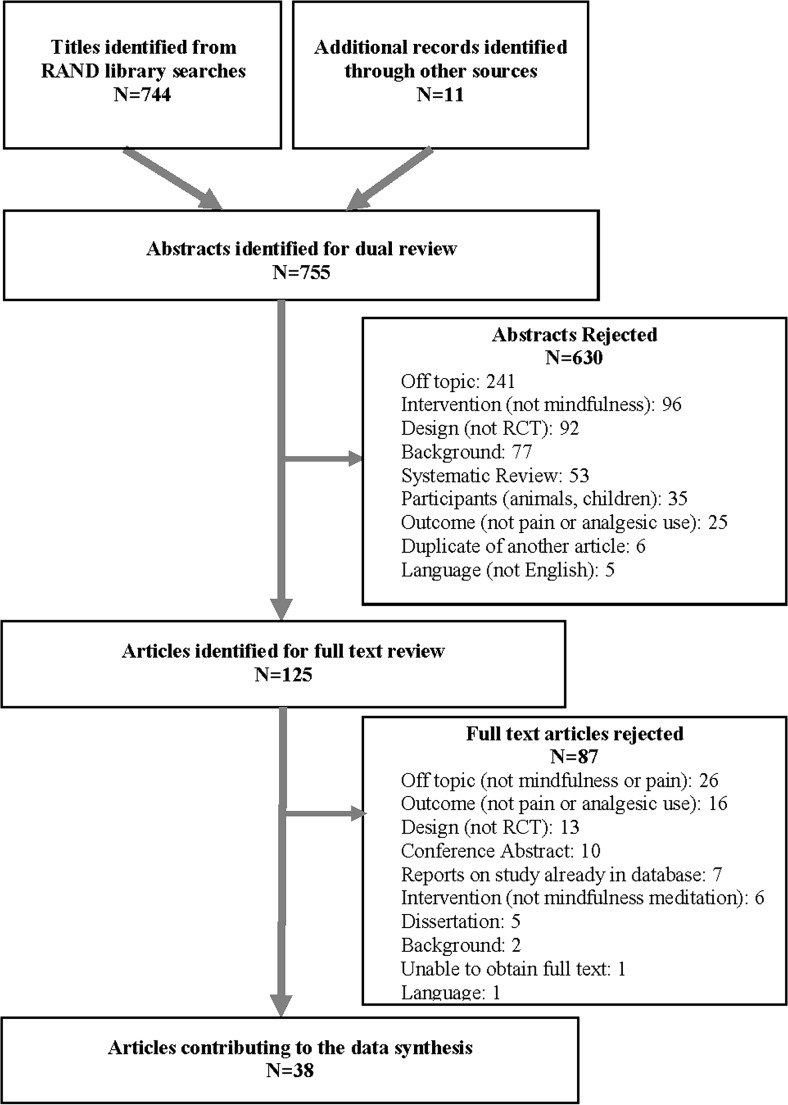
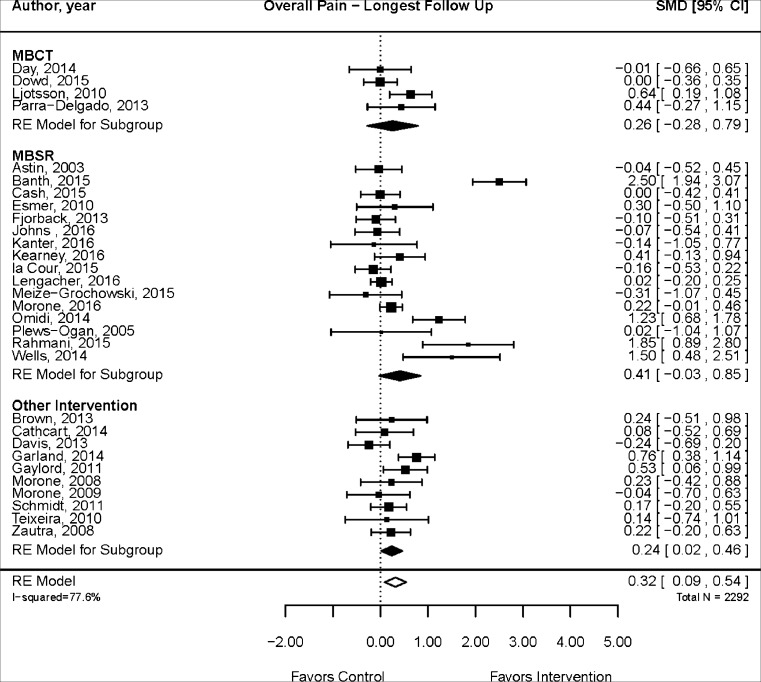
BACKGROUND: Chronic pain patients increasingly seek treatment through mindfulness meditation. PURPOSE: This study aims to synthesize evidence on efficacy and safety of mindfulness meditation interventions for the treatment of chronic pain in adults. METHOD: We conducted a systematic review on randomized controlled trials (RCTs) with meta-analyses using the Hartung-Knapp-Sidik-Jonkman method for random-effects models. Quality of evidence was assessed using the GRADE approach. Outcomes included pain, depression, quality of life, and analgesic use. RESULTS: Thirty-eight RCTs met inclusion criteria; seven reported on safety. We found low-quality evidence that mindfulness meditation is associated with a small decrease in pain compared with all types of controls in 30 RCTs. Statistically significant effects were also found for depression symptoms and quality of life. CONCLUSIONS: While mindfulness meditation improves pain and depression symptoms and quality of life, additional well-designed, rigorous, and large-scale RCTs are needed to decisively provide estimates of the efficacy of mindfulness meditation for chronic pain.
Overview
The claims and statistics of this paper haven’t been checked yet.
Free: it reads the open-access text and checks the first 5 claims that cite a source we can check. Create a free account to check every claim.
Integrity signals
Registry
Cites
Statistics
Figures
Verification
Claims the paper makes
The claims and statistics of this paper haven’t been checked yet.
Free: it reads the open-access text and checks the first 5 claims that cite a source we can check. Create a free account to check every claim.
Claims other papers make about this one
Each is checked against this paper’s own text: does it say what the citing paper says it does?
The source backs part of the claim, not all of it — or backs it for a different population, condition or comparison.
In the citing paper
“MBIs have been shown to alleviate physical and psychological symptoms in many medical conditions including cancer, cardiovascular disease, and chronic pain, as well as psychiatric illnesses (notably, anxiety, and depressive disorders) (Bawa et al., 2015; Evans et al., 2008; Hilton et al., 2017; Lin et al., 2022; Marino et al., 2021; Piet & Hougaard, 2011).”
From Online Mindfulness-Based Cognitive Therapy for People with Parkinson’s Disease and Their Caregivers: a Pilot Study (2022) · cites this paper as Hilton et al., 2017
Experimental — accuracy not yet measuredThe source backs part of the claim, not all of it — or backs it for a different population, condition or comparison.
In the citing paper
“research demonstrating that MM can lead to reductions in pain intensity,[16] pain interference,[15, 29] and pain-related affect,[30, 31]”
From The chronic pain skills study: Protocol for a randomized controlled trial comparing hypnosis, mindfulness meditation and pain education in Veterans (2020) · cites this paper as [16]
Experimental — accuracy not yet measuredThe source backs part of the claim, not all of it — or backs it for a different population, condition or comparison.
In the citing paper
“Evidence indicates that mindfulness-based interventions (MBIs) may be effective for patients with chronic pain, reducing perceived pain and decreasing harmful psychological features often associated with chronic pain, such as depression and pain catastrophizing.1,7,19,24,37”
From Randomized, wait-list–controlled pilot study of app-delivered mindfulness for patients reporting chronic pain (2021) · cites this paper as [19]
Experimental — accuracy not yet measuredThe source backs part of the claim, not all of it — or backs it for a different population, condition or comparison.
In the citing paper
“Although mindfulness can be an effective approach to the self-management of chronic pain, most research to date has been conducted on either brief inductions of mindfulness14,28,49 or on more time-intensive and resource-intensive group-based interventions.7,19”
From Randomized, wait-list–controlled pilot study of app-delivered mindfulness for patients reporting chronic pain (2021) · cites this paper as [19]
Experimental — accuracy not yet measuredThe source backs part of the claim, not all of it — or backs it for a different population, condition or comparison.
In the citing paper
“Mindfulness-based interventions (MBIs) have been found to be effective in reducing stress, anxiety, and depression, as well as improving overall quality of life in individuals with chronic illnesses (Gotink et al. 2015;Hilton et al. 2017;Niazi and Niazi 2011).”
From Lessons from Master Hongyi’s Experiences with Impermanence for Death Education (2024) · cites this paper as Hilton et al. 2017
Experimental — accuracy not yet measured
21 more claims about this paper
Create a free account to see every claim other papers make about this one.
Self-check
Percentages, sums and reported differences re-computed from the paper’s own numbers.
The self-check needs the paper’s full text.
Citations
Cites
Bias in meta-analysis detected by a simple, graphical test
Egger, M., Smith, G. D., Schneider, M., & Minder, C. (1997) · BMJ · doi:10.1136/bmj.315.7109.629 · Cited by 56,722 · cited 1×
“The quality of the body of evidence was assessed using the GRADE approach [22, 26] by which a determination of high, moderate, low, or very low was made for each major outcome [27].”
MethodGRADE guidelines: 3. Rating the quality of evidence
Balshem, H., Helfand, M., Schünemann, H. J., Oxman, A. D., Kunz, R., Brozek, J., Vist, G. E., Falck-Ytter, Y., Meerpohl, J., & Norris, S. (2011) · Journal of Clinical Epidemiology · doi:10.1016/j.jclinepi.2010.07.015 · Cited by 8,285 · cited 1×
“The quality of the body of evidence was assessed using the GRADE approach [22, 26] by which a determination of high, moderate, low, or very low was made for each major outcome [27].”
MethodMeditation Programs for Psychological Stress and Well-being: A Systematic Review and Meta-analysis
Goyal, M., Singh, S., Sibinga, E. M. S., Gould, N. F., Rowland-Seymour, A., Sharma, R., Berger, Z., Sleicher, D., Maron, D. D., Shihab, H. M., et al. (2014) · JAMA Internal Medicine · doi:10.1001/jamainternmed.2013.13018 · Cited by 2,380
The clinical use of mindfulness meditation for the self-regulation of chronic pain
Kabat-Zinn, J., Lipworth, L., & Burney, R. (1985) · Journal of Behavioral Medicine · doi:10.1007/bf00845519 · Cited by 1,745 · cited 2×
“Early mindfulness studies in pain patients showed promising outcomes on pain symptoms, mood disturbance, anxiety, and depression, as well as pain-related drug utilization [5].”
BackgroundChou, R., Turner, J. A., Devine, E. B., Hansen, R. N., Sullivan, S. D., Blazina, I., Dana, T., Bougatsos, C., & Deyo, R. A. (2015) · Annals of Internal Medicine · doi:10.7326/m14-2559 · Cited by 1,606 · cited 1×
“Systematic review Introduction Chronic pain, often defined as pain lasting longer than 3 months or past the normal time for tissue healing [1], can lead to significant medical, social, and economic consequences, relationship issues, lost productivity, and larger health care costs.”
BackgroundFjorback, L. O., Arendt, M., Ørnbøl, E., Fink, P., & Walach, H. (2011) · Acta Psychiatrica Scandinavica · doi:10.1111/j.1600-0447.2011.01704.x · Cited by 803
A refined method for the meta-analysis of controlled clinical trials with binary outcome
Hartung, J., & Knapp, G. (2001) · Statistics in Medicine · doi:10.1002/sim.1009 · Cited by 775
Cherkin, D. C., Sherman, K. J., Balderson, B. H., Cook, A. J., Anderson, M. L., Hawkes, R. J., Hansen, K. E., & Turner, J. A. (2016) · JAMA · doi:10.1001/jama.2016.2323 · Cited by 729 · cited 3×
“Likewise, a trial of MBSR for back pain [38] found no significant difference between groups in self-reported use of pain medication.”
BackgroundMedical Journal of the Islamic Republic of Iran
(2020) · Medical Journal of the Islamic Republic of Iran · doi:10.14196/mjiri · Cited by 620
Morone, N. E., Greco, C. M., & Weiner, D. K. (2008) · Pain · doi:10.1016/j.pain.2007.04.038 · Cited by 546
Cited by
Items 901–976 of 976
Kim, J., Kim, J., Lee, C., Lobos, M. A., & Kim, N. Y. (2025) · International Journal of Mental Health Promotion · doi:10.32604/ijmhp.2025.064617 · Cited by 2
“Moreover, through a systematic review, Hilton et al. [44] found small but significant decrease in pain from the chronic pain patients in 30 out of 38 randomized controlled trials.”
Saki, F., Safarpour, P., Ramezani, F., & Youzbashi, L. (2025) · Trials · doi:10.1186/s13063-025-09036-w · Cited by 1
Shin, S. (2025) · Physical therapy rehabilitation science · doi:10.14474/ptrs.2025.14.3.293
Mindfulness won’t burn calories, but it might help you stick with your health goals
Remskar, M. (2025) · The Conversation · doi:10.64628/aai.3r7rgdu7s
Saunders, D. C., Suzuki, S., Vafaie, N., Bloch, M. H., & Kober, H. (2025) · Psychotherapy and Psychosomatics · doi:10.1159/000548530 · Cited by 1
“S, N.V., and H.K. conducted analyses using Comprehensive Meta-Analysis (CMA) Version 3.0 [24], following our prior published meta-analyses [25, 26].”
InfluentialStärkung der inneren Achtsamkeit
Harrer, M. E. (2025) · Springer eBooks · doi:10.1007/978-3-662-68956-1_33
Expérience d’un programme d’éducation thérapeutique Endométriose : bilan à 8 ans de sa création
Vincens, C., Decker, G. D., Denouël, A., Triboulet, C., Dumont, A. G., Ferron, M., Roy, S., Anahory, T., & Ranisavljevic, N. (2025) · Gynécologie Obstétrique Fertilité & Sénologie · doi:10.1016/j.gofs.2025.09.090
Bryer, C. M., Stang, G. S., Collins, A. B., Haygood, L. N., Wakpa, T. B., & Proulx, J. A. (2025) · International Journal of Environmental Research and Public Health · doi:10.3390/ijerph22111685 · Cited by 1
Kupper, N. H. M., Widdershoven, J. W. M. G., Magro, M., & Nyklíček, I. (2025) · General Hospital Psychiatry · doi:10.1016/j.genhosppsych.2025.11.006 · Cited by 1
Hanley, A. W., Gibson, R. W., Davis, A., Stecher, C. D., Childs, K., & Worts, P. R. (2025) · International Journal of Behavioral Medicine · doi:10.1007/s12529-025-10398-3
“Traditional, eight-week, provider-led MBIs have been shown to effectively reduce chronic pain [11, 12, 19], while shorter formats, lasting from two hours to a single day, also appear to improve pain-related outcomes [20–23].”
Nakaso, Y., Inoue, S., Makita, K., Arai, Y.-C. P., Shimo, K., Inoue, M., Wakabayashi, T., 宮川, 博., Iwamoto, K., Niwa, K., et al. (2025) · Pain Practice · doi:10.1111/papr.70102
“It incorporated a range of chronic pain management strategies, including exercise therapy [40–42], cognitive behavioral therapy [32, 43], mindfulness meditation [44, 45], relaxation [46], and exposure to nature [47, 48], to enhance chronic pain-coping skills.”
Safavi‐Abbasi, S., Venezia, E., Sughrue, M. E., & Dibaj, P. (2025) · Discover Psychology · doi:10.1007/s44202-025-00525-2 · Cited by 3
“This study builds upon prior systematic reviews and meta-analyses investigating the efficacy of mindfulness-based interventions (MBI) for chronic pain [1, 11].”
InfluentialPreventive health: Building resilience and promoting wellness
Sharma, N., Sharma, G., & Raheja, Y. (2025) · Elsevier eBooks · doi:10.1016/b978-0-443-38325-0.00033-2
Reconnecting through touch: participant experiences of audio-recorded sensory engagement
Gauhe, G. (2025) · International Journal of Performance Arts and Digital Media · doi:10.1080/14794713.2025.2598480
Physiopathologie et traitements de la douleur chronique associée aux affections rhumatologiques
Chen, Y., Nelson, A. M., & Cohen, S. P. (2025) · Revue du Rhumatisme · doi:10.1016/j.rhum.2025.12.001
Tennfjord, M. K., Gabrielsen, R., & Tellum, T. (2021) · Figshare · doi:10.6084/m9.figshare.16779375
Tennfjord, M. K., Gabrielsen, R., & Tellum, T. (2021) · Figshare · doi:10.6084/m9.figshare.16779381
Sud, A., Nelson, M. L. A., Cheng, D. K.-Y., Armas, A., Foat, K., Greiver, M., Hosseiny, F., Katz, J., Moineddin, R., Mulsant, B. H., et al. (2020) · Figshare · doi:10.6084/m9.figshare.12097089
Priore, L. B. D., Perez, V. O., Briani, R. V., Farinelli, L. A. L. B., da Silva, J. D. C. P., Martins, O. M. G., Lopes, F. A., Amorim, A. B., Pappas, E., & de Azevedo, F. M. (2023) · Figshare · doi:10.6084/m9.figshare.22807520
Sud, A., Nelson, M. L. A., Cheng, D. K.-Y., Armas, A., Foat, K., Greiver, M., Hosseiny, F., Katz, J., Moineddin, R., Mulsant, B. H., et al. (2020) · Figshare · doi:10.6084/m9.figshare.12097083
Priore, L. B. D., Perez, V. O., Briani, R. V., Farinelli, L. A. L. B., da Silva, J. D. C. P., Martins, O. M. G., Lopes, F. A., Amorim, A. B., Pappas, E., & de Azevedo, F. M. (2023) · Figshare · doi:10.6084/m9.figshare.22807532
Priore, L. B. D., Perez, V. O., Briani, R. V., Farinelli, L. A. L. B., da Silva, J. D. C. P., Martins, O. M. G., Lopes, F. A., Amorim, A. B., Pappas, E., & de Azevedo, F. M. (2023) · Figshare · doi:10.6084/m9.figshare.22807529
Priore, L. B. D., Perez, V. O., Briani, R. V., Farinelli, L. A. L. B., da Silva, J. D. C. P., Martins, O. M. G., Lopes, F. A., Amorim, A. B., Pappas, E., & de Azevedo, F. M. (2023) · Figshare · doi:10.6084/m9.figshare.22807526
Priore, L. B. D., Perez, V. O., Briani, R. V., Farinelli, L. A. L. B., da Silva, J. D. C. P., Martins, O. M. G., Lopes, F. A., Amorim, A. B., Pappas, E., & de Azevedo, F. M. (2023) · Figshare · doi:10.6084/m9.figshare.22807523
Tennfjord, M. K., Gabrielsen, R., & Tellum, T. (2021) · Figshare · doi:10.6084/m9.figshare.16779378
Psychosocial Perspectives and Integrative Approaches in Managing Musculoskeletal Pain in Women
Gilmore, M. J., Parisi, T., Paschali, M., & Lazaridou, A. (2025) · CBT: science into practice · doi:10.1007/978-3-031-98876-9_3
Zihin-Beden Tıbbı: Geleneksel Tıbbın Tamamlayıcısı ve Klinik Uygulamalardaki Yeri
Pars, H., & Sarı, T. (2025) · KTO Karatay Üniversitesi Sağlık Bilimleri Dergisi · doi:10.59244/ktokusbd.1725189
Carpati, A., Plutchik, J., Schupak, M., & Sala, M. (2026) · doi:10.2196/preprints.90730
Senthilnathan, V., Simpson, R., Jaglal, S. B., Craven, B. C., Fetterly, M.-J., Allin, S. J., Webster, F., Hearn, J. H., Luong, D., & Munce, S. E. (2026) · Disability and Rehabilitation · doi:10.1080/09638288.2025.2612456
“MBSR was developed as a psychological therapy to treat chronic pain [73], and meta-analyses confirm it can help with pain management [74,75].”
Reconocimiento y manejo de la alodinia en Atención Primaria: una revisión actualizada
Montero, A. A., & Vidal, P. J. I. (2026) · Medicina de Familia SEMERGEN · doi:10.1016/j.semerg.2025.102664
A Brief Mindfulness Intervention for Pain Management in Fibromyalgia: A Single-arm Open-Label Study
Ramasawmy, P., Heim, L. C., Fechner, E., Schumann, S. E., Mai, T. T., Moschner, O., Jiang, Y., Guo, X., Lesani, A., Petzke, F. W., et al. (2026) · Restorative Neurology and Neuroscience · doi:10.1177/09226028251410014
“…that MBIs, including meditation, reduced affective pain without any change in pain intensity in FM (Adler-Neal & Zeidan, 2017; Gard et al., 2012; Hilton et al., 2017; Lutz et al., 2013; Perlman et al., 2010; Zorn et al., 2020), pointing to a stronger impact of mindfulness practice on the…”
Albajes, K., Barrios, V., Keegan, E. G., Queraltó, J. M., Miracco, M., & Jones, L. E. (2026) · Journal of Contextual Behavioral Science · doi:10.1016/j.jcbs.2026.100975
Parisi, A. B., Johnson, M., Zgierska, A. E., Barrett, B. P., Edwards, R. R., & Garland, E. L. (2026) · Journal of Pain · doi:10.1016/j.jpain.2026.106219
Strigo, I. A., Torrisi, S., Guerra, S. G., Alter, B. J., Lotz, J. C., Mehling, W. E., & Simmons, A. N. (2026) · Journal of Pain · doi:10.1016/j.jpain.2026.106212
Where is God? A comparison of the neural correlates of mystical and religious prayingPreprint
Hernández, S. E., Rubia, K., Perez-Diaz, O., Mora, J. L. G., & Barrós‐Loscertales, A. (2026) · bioRxiv (Cold Spring Harbor Laboratory) · doi:10.64898/2026.02.22.707337
Douleur chronique et thérapies comportementales et cognitives (TCC)
Masselin-Dubois, A. (2021) · In Press eBooks · doi:10.3917/pres.laroc.2021.01.0079
Li, T. Y., Yu, A. P., Hui, S. S., Chan, D. K. C., Cheng, C. P., Fong, D., Irwin, M. R., & Siu, P. M. (2026) · Mental health and physical activity · doi:10.1016/j.mhpa.2026.100768 · Cited by 1
Cone, A., Zuzick, S., Durinski, T., Yates, E., Simonian, N., & Reggente, N. (2026) · npj Digital Medicine · doi:10.1038/s41746-026-02555-z
Mindfulness of Pain: A Global Bibliometric Analysis from 2000 to 2024
Cai, Y.-Q., Peng, S., Bai, Q.-H., Wu, C.-S., Ma, L., Guan, C., & Zhou, G. (2026) · Mindfulness · doi:10.1007/s12671-026-02822-w
“These shifts reflect a transition from validating clinical efficacy to elucidating the biological and cognitive pathways through which mindfulness modulates pain (Bushnell et al., 2013; Cherkin et al. 2016 ;Hilton et al., 2017; Zeidan et al., 2011) (Fig.”
Mesure de la conscience du corps et de l'impact sur la cognition de l'information corporelle
Verdonk, C. (2021) · theses.fr (ABES) · doi:10.70675/abc55e86zddc9z4a4ezaba1z2cc93cac3fb9 · Cited by 1
Juneau, C. (2020) · theses.fr (ABES) · doi:10.70675/c8becf9fzcd49z4708z9b23z6fc71bc2b0e9
Chandak, A., Ewigman, N. L., & Mahale, G. (2026) · Journal of Health Psychology · doi:10.1177/13591053261436233
Mantra Meditation for Pain Conditions: A Systematic Review and Meta-analysisPreprint
Biurra, Y. C., Naude, C., Biurra, Z. C., & Thompson, A. (2026) · Research Square · doi:10.21203/rs.3.rs-9536601/v1
Ronkainen, H., Kenttä, G., Lundgren, T., Ihalainen, J. K., Valtonen, M., & Lappalainen, R. I. (2026) · The Sport Psychologist · doi:10.1123/tsp.2025-0108
Rabey, M. I., Le, N.-N., Wong, Y., Moore, B. E., Beales, D. J., & Moloney, N. A. (2026) · Musculoskeletal Science and Practice · doi:10.1016/j.msksp.2026.103575
Mindfulness-based therapy for chronic tinnitus: a narrative review
Zhang, Z.-C., Xu, Q., Wang, J., Luo, Y., Shao, Q., Li, Y., Lu, H., & Lu, J. (2026) · Frontiers in Psychology · doi:10.3389/fpsyg.2026.1738053
Team Mindfulness in Management Research: A CiteSpace-Based Bibliometric Analysis
Zeng, Q., & Yi, D. (2026) · Economics and Public Policy · doi:10.63313/epp.9030
Wang, W., Shen, X., Jia, L., Yau, D. K. W., Wu, Y., Tang, X., & Leong, H. T. (2026) · Advances in Integrative Medicine · doi:10.1016/j.aimed.2026.100681
Lee, C., Park, J. A., Chen, C. X., Sun, X., Kwoh, C. K., Liu, S., Miao, H., & Ahn, H. (2026) · Digital Health · doi:10.1177/20552076261456558
“20 Hanley et al. 21 reported that brief mindfulness training led to significant improvements in WOMAC symptoms when compared to control groups ( p < 0.001), with 55.0% of participants in the mindfulness group achieving clinically meaningful ( > 30.0”
InfluentialGrabherr, L., Ferreiro, D., Noci, C. D., Suter, M. R., Horsch, A., & Berna, C. (2026) · Pain · doi:10.1097/j.pain.0000000000004009
“29,62 Accordingly, it may be useful to more routinely assess IMI, their context and associated emotions in clinical and research settings and orient patients reporting negative IMI towards specific imagery-based therapeutic interventions.”
Carpati, A., Plutchik, J., Schupak, M., & Sala, M. (2026) · Journal of Medical Internet Research · doi:10.2196/90730
Psychotherapy Approaches and Behavioral Modification Strategies
Royuela-Colomer, E., Navarrete, J., Sanabria‐Mazo, J. P., Neblett, R., & Luciano, J. V. (2026) · Springer eBooks · doi:10.1007/978-3-032-21675-5_32
NEUROPSYCHOLOGICAL MODEL OF PERSONALIZED PSYCHOTHERAPY FOR CHRONIC PAIN
Осіпов, В. М. (2026) · Ukrains kyi Visnyk Psykhonevrolohii · doi:10.36927/2079-0325-v34-is2-2026-3
Thornton, A., Wainwright, E., Chaplin, W. J., Abbott-Fleming, V., McWilliams, D. F., Walsh, D. A., Taylor, G. T., McNamee, P., Walker-Bone, K. E., & Blake, H. (2026) · PLoS ONE · doi:10.1371/journal.pone.0351938
Cognitive Behavioral Therapy and Mindfulness in Chronic Low Back Pain
Kumar, A. (2026) · Springer eBooks · doi:10.1007/978-981-97-4087-1_69-1
The Application of Meditation for Treating Physical Illnesses
Song, H. R. (2026) · Springer eBooks · doi:10.1007/978-981-95-7147-5_19
Mindfulness-based interventions for student coping in higher education: a systematic review
Naidu, S., & Roman, N. V. (2026) · Advances in Mental Health · doi:10.1080/18387357.2026.2692478
Barfety-Servignat, V., Conradi, S., & Bioy, A. (2025) · Dunod eBooks · doi:10.3917/dunod.poisb.2025.01.1532
Adler, L., Meyer, B., Betz, L. T., Häuser, W., & Knitza, J. (2026) · doi:10.2196/preprints.107347
Hytman, L., Ramana, S., Sultan, Y., Nagaraj, S. R. R., Ueberholz, R. Y., & Fiocco, A. J. (2026) · Aging & Mental Health · doi:10.1080/13607863.2026.2703106
Giraldo‐Santiago, N., Cardoza-Contreras, M. N., Alvarez-Frank, N. A., Estey, E. E. E., Kim, Y., Schuman‐Olivier, Z., Vranceanu, A., & Greenberg, J. (2026) · Translational Behavioral Medicine · doi:10.1093/tbm/ibag047
Mindfulness: Foundations, interventions, and effects
Burattini, S., Giannandrea, A., D'Onofrio, M., Srinivasan, N., & Raffone, A. (2026) · Elsevier eBooks · doi:10.1016/b978-0-443-29258-3.00088-4
Miranda, C., Castilho, P., Guiomar, R. N. R. M., The VR-ACT Project Team, Carvalho, S. A., Menezes, P. J., Duarte, C., Skvarc, D., Silva, A. R., Valentim, A., et al. (2026) · Journal of Health Psychology · doi:10.1177/13591053261470710
Amorim, A. B., Ashton-James, C. E., Barnet-Hepples, T., Rebbeck, T. J., Refshauge, K. M., Pappas, E., & Costa, N. (2026) · Disability and Rehabilitation · doi:10.1080/09638288.2026.2721575
Age-Related Transitions in Low Back Pain Pathology: A Life-Course Narrative Review
Ikemoto, T., Hirasawa, A., & Wakao, N. (2026) · Pain and Therapy · doi:10.1007/s40122-026-00891-2
Ghai, S., Cavallo, S., Gervais, M.-J., & Zidarov, D. (2026) · JMIR Formative Research · doi:10.2196/98632
“Mindfulness involves intentionally directing attention to the present moment, including one’s cognitions, perceptions, and emotions, without judgment or any intent to control or alter them [22,23].”
Safavi‐Abbasi, S., Venezia, E., Tasker, R., Reyes, P. M., & Dibaj, P. (2026) · Research Square · doi:10.21203/rs.3.rs-10585613/v1
Pilot Study of Comprehensive Sickle Cell Care Bundle During Acute Crisis Admissions
Strickland, N. (2026) · Pain Management Nursing · doi:10.1016/j.pmn.2026.09.017
Ghodosi, D., & Hearn, J. H. (2026) · Women s Health · doi:10.1177/17455057261485419
Woodbury, A., Martini, R., Ree, A., Huang, C. Y. “., Denmon, C., Vernon, M., Lukemire, J., Ramos, J., Kim, K. S. “., Cui, X., et al. (2026) · Anesthesia & Analgesia · doi:10.1213/ane.0000000000008327
A European algorithm and strategy for management of chronic postoperative inguinal pain (EurA-CPIP)
Andersen, K. G., van der Meer, T. W. K., van Veenendaal, N., Foss, N. B., Loos, M. J. A., Miserez, M., Pawlak, M., Roumen, R. M. H., Naddaf, T., Togsverd-Bo, M., et al. (2026) · Journal of Abdominal Wall Surgery · doi:10.3389/jaws.2026.16944
“Mindfulness-based interventions show similarly modest effects on pain with potential benefits for depression symptoms and quality of life in chronic pain populations [65].”
Mantra Meditation for Pain Conditions: A Systematic Review and Meta‐Analysis
Biurra, Y. C., Naude, C., Biurra, Z. C., & Thompson, A. (2026) · Pain Research and Management · doi:10.1155/prm/7796640
Hendry, P. L., Sheikh, S., Curtis, M. E., Crisp, A. M., Li, R. M., Maples, K., Chitty, L., Warrick, M. D., Montague, M., Lott, M., et al. (2026) · PEC Innovation · doi:10.1016/j.pecinn.2026.100510
Chen, L., Mei, Z., Yin, X., Yin, T., Chen, T., & Luo, L. (2026) · Mindfulness · doi:10.1007/s12671-026-03004-4
Metadata
- Authors
- Hilton, L., Hempel, S., Ewing, B. A., Apaydin, E., Xenakis, L., Newberry, S., Colaiaco, B., Maher, A. R., Shanman, R. M., Sorbero, M. E., & Maglione, M. A.
- Affiliations
- RAND Corporation (US)
- Corresponding author
- Hilton, Lara
- ORCID
- Venue
- Annals of Behavioral Medicine
- Publisher
- Oxford University Press (OUP)
- Published
- 2016-09-22
- Volume
- 51
- Issue
- 2
- Pages
- 199-213
- ISSN
- 0742-5554 (ISSN-L)
- 0883-6612
- 1532-4796
- PMC
- PMC5368208
- OpenAlex
- W2521208344
- Semantic Scholar
- c2a7b6ba6b4cb1795860f4f990a38fb8128dd178
- Cited by
- 977
- References
- 68
- Citations by year
- 2026: 60 · 2025: 118 · 2024: 122 · 2023: 156 · 2022: 121 · 2021: 130 · 2020: 113 · 2019: 75 · 2018: 69 · 2017: 12 · 2016: 1
- FWCI
- 7.76
- Type
- journal article
- Language
- en
- Open access
- hybrid
- doi.org
- Locations
- Annals of Behavioral Medicine (publishedVersion, cc-by)
- Europe PMC (PubMed Central) (publishedVersion, cc-by)
- PubMed Central (publishedVersion, cc-by)
- PubMed (publishedVersion)
- Funders
- Defense Centers of Excellence for Psychological Health and Traumatic Brain Injury (14-539.2)
- Topics
- Social Sciences › Psychology › Clinical Psychology › Mindfulness and Compassion Interventions
- Health Sciences › Health Professions › Physical Therapy, Sports Therapy and Rehabilitation › Musculoskeletal pain and rehabilitation
- Life Sciences › Neuroscience › Cognitive Neuroscience › Pain Management and Placebo Effect
- Keywords
- mindfulness meditation, chronic pain, analgesia, depressive symptoms, quality of life, analgesic use, treatment safety, non-pharmacological pain management
- MeSH terms
- Humans, Quality of Life, Treatment Outcome, Meditation, Chronic Pain, Pain Management, Mindfulness
About these checks
Registry, retraction, Cites and statistics results are computed, not judged, with one exception: a printed reference that no index lists is read once by a model before it counts as a citation error. Claims are extracted by a model and kept only when their quote appears verbatim in the text; each cited source is then checked, with a model’s help, for whether it says what the claim relies on. Those verdicts can be wrong — read the claim’s quote and the cited source before relying on one.
Statistics and arithmetic are recomputed, not judged.
Confidence bands are shown only for fields calibrated on our annotated test set. None is calibrated yet, so no band is shown.
What counts as a claim ›How we measure confidence ›How we check this ›
Are you an author, or do you see a problem with this page? Request a review
Data sources
Bibliographic data: Semantic Scholar, OpenAlex, Crossref.
Contains information from the Semantic Scholar Academic Graph Datasets, made available under the ODC Attribution License (ODC-BY 1.0).
Semantic Scholar’s data is described in: Kinney, R., et al. (2023). The Semantic Scholar Open Data Platform. arXiv:2301.10140.
