

Mindfulness Meditation for Chronic Pain: Systematic Review and Meta-analysis
Open accessThe DOI matches its Crossref record; 67 of the 68 references it cites were found in a registry or an index.
Abstract
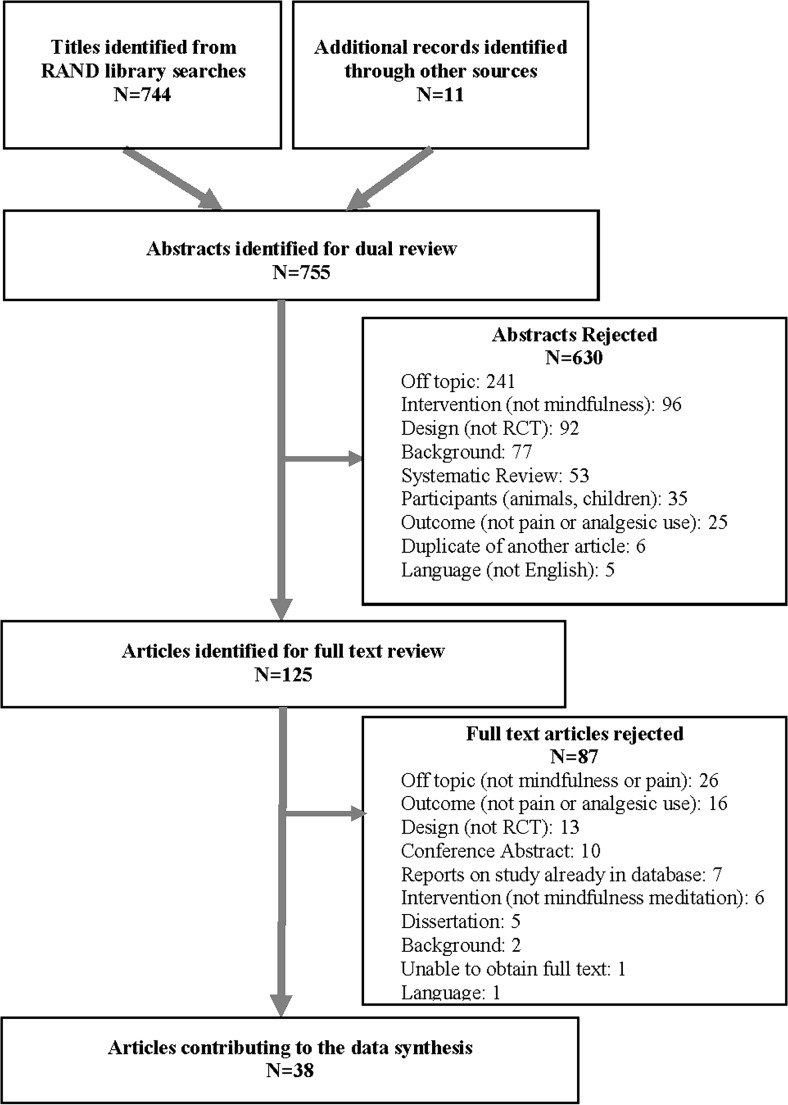
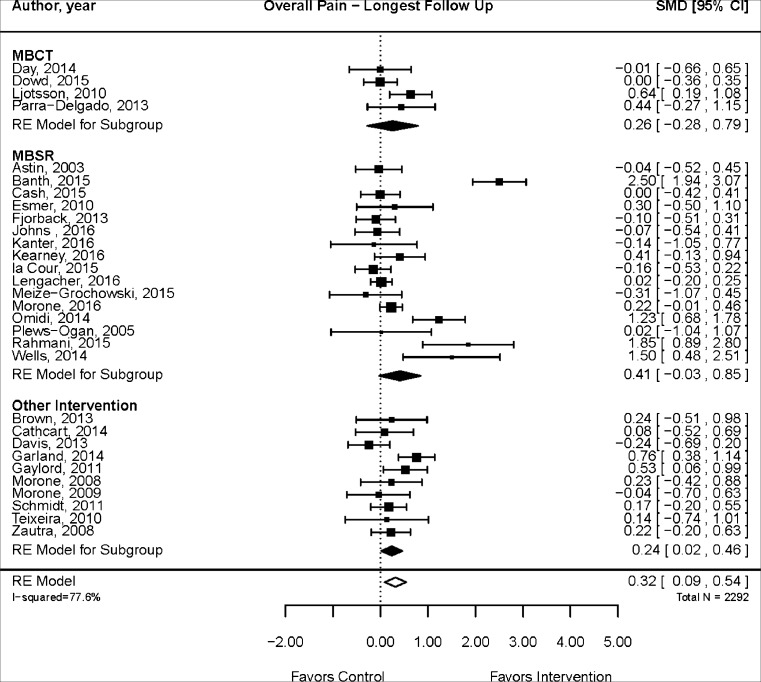
BACKGROUND: Chronic pain patients increasingly seek treatment through mindfulness meditation. PURPOSE: This study aims to synthesize evidence on efficacy and safety of mindfulness meditation interventions for the treatment of chronic pain in adults. METHOD: We conducted a systematic review on randomized controlled trials (RCTs) with meta-analyses using the Hartung-Knapp-Sidik-Jonkman method for random-effects models. Quality of evidence was assessed using the GRADE approach. Outcomes included pain, depression, quality of life, and analgesic use. RESULTS: Thirty-eight RCTs met inclusion criteria; seven reported on safety. We found low-quality evidence that mindfulness meditation is associated with a small decrease in pain compared with all types of controls in 30 RCTs. Statistically significant effects were also found for depression symptoms and quality of life. CONCLUSIONS: While mindfulness meditation improves pain and depression symptoms and quality of life, additional well-designed, rigorous, and large-scale RCTs are needed to decisively provide estimates of the efficacy of mindfulness meditation for chronic pain.
Overview
The claims and statistics of this paper haven’t been checked yet.
Free: it reads the open-access text and checks the first 5 claims that cite a source we can check. Create a free account to check every claim.
Integrity signals
Registry
Cites
Statistics
Figures
Verification
Claims the paper makes
The claims and statistics of this paper haven’t been checked yet.
Free: it reads the open-access text and checks the first 5 claims that cite a source we can check. Create a free account to check every claim.
Claims other papers make about this one
Each is checked against this paper’s own text: does it say what the citing paper says it does?
The source backs part of the claim, not all of it — or backs it for a different population, condition or comparison.
In the citing paper
“MBIs have been shown to alleviate physical and psychological symptoms in many medical conditions including cancer, cardiovascular disease, and chronic pain, as well as psychiatric illnesses (notably, anxiety, and depressive disorders) (Bawa et al., 2015; Evans et al., 2008; Hilton et al., 2017; Lin et al., 2022; Marino et al., 2021; Piet & Hougaard, 2011).”
From Online Mindfulness-Based Cognitive Therapy for People with Parkinson’s Disease and Their Caregivers: a Pilot Study (2022) · cites this paper as Hilton et al., 2017
Experimental — accuracy not yet measuredThe source backs part of the claim, not all of it — or backs it for a different population, condition or comparison.
In the citing paper
“research demonstrating that MM can lead to reductions in pain intensity,[16] pain interference,[15, 29] and pain-related affect,[30, 31]”
From The chronic pain skills study: Protocol for a randomized controlled trial comparing hypnosis, mindfulness meditation and pain education in Veterans (2020) · cites this paper as [16]
Experimental — accuracy not yet measuredThe source backs part of the claim, not all of it — or backs it for a different population, condition or comparison.
In the citing paper
“Evidence indicates that mindfulness-based interventions (MBIs) may be effective for patients with chronic pain, reducing perceived pain and decreasing harmful psychological features often associated with chronic pain, such as depression and pain catastrophizing.1,7,19,24,37”
From Randomized, wait-list–controlled pilot study of app-delivered mindfulness for patients reporting chronic pain (2021) · cites this paper as [19]
Experimental — accuracy not yet measuredThe source backs part of the claim, not all of it — or backs it for a different population, condition or comparison.
In the citing paper
“Although mindfulness can be an effective approach to the self-management of chronic pain, most research to date has been conducted on either brief inductions of mindfulness14,28,49 or on more time-intensive and resource-intensive group-based interventions.7,19”
From Randomized, wait-list–controlled pilot study of app-delivered mindfulness for patients reporting chronic pain (2021) · cites this paper as [19]
Experimental — accuracy not yet measuredThe source backs part of the claim, not all of it — or backs it for a different population, condition or comparison.
In the citing paper
“Mindfulness-based interventions (MBIs) have been found to be effective in reducing stress, anxiety, and depression, as well as improving overall quality of life in individuals with chronic illnesses (Gotink et al. 2015;Hilton et al. 2017;Niazi and Niazi 2011).”
From Lessons from Master Hongyi’s Experiences with Impermanence for Death Education (2024) · cites this paper as Hilton et al. 2017
Experimental — accuracy not yet measured
21 more claims about this paper
Create a free account to see every claim other papers make about this one.
Self-check
Percentages, sums and reported differences re-computed from the paper’s own numbers.
The self-check needs the paper’s full text.
Citations
Cites
Bias in meta-analysis detected by a simple, graphical test
Egger, M., Smith, G. D., Schneider, M., & Minder, C. (1997) · BMJ · doi:10.1136/bmj.315.7109.629 · Cited by 56,722 · cited 1×
“The quality of the body of evidence was assessed using the GRADE approach [22, 26] by which a determination of high, moderate, low, or very low was made for each major outcome [27].”
MethodGRADE guidelines: 3. Rating the quality of evidence
Balshem, H., Helfand, M., Schünemann, H. J., Oxman, A. D., Kunz, R., Brozek, J., Vist, G. E., Falck-Ytter, Y., Meerpohl, J., & Norris, S. (2011) · Journal of Clinical Epidemiology · doi:10.1016/j.jclinepi.2010.07.015 · Cited by 8,285 · cited 1×
“The quality of the body of evidence was assessed using the GRADE approach [22, 26] by which a determination of high, moderate, low, or very low was made for each major outcome [27].”
MethodMeditation Programs for Psychological Stress and Well-being: A Systematic Review and Meta-analysis
Goyal, M., Singh, S., Sibinga, E. M. S., Gould, N. F., Rowland-Seymour, A., Sharma, R., Berger, Z., Sleicher, D., Maron, D. D., Shihab, H. M., et al. (2014) · JAMA Internal Medicine · doi:10.1001/jamainternmed.2013.13018 · Cited by 2,380
The clinical use of mindfulness meditation for the self-regulation of chronic pain
Kabat-Zinn, J., Lipworth, L., & Burney, R. (1985) · Journal of Behavioral Medicine · doi:10.1007/bf00845519 · Cited by 1,745 · cited 2×
“Early mindfulness studies in pain patients showed promising outcomes on pain symptoms, mood disturbance, anxiety, and depression, as well as pain-related drug utilization [5].”
BackgroundChou, R., Turner, J. A., Devine, E. B., Hansen, R. N., Sullivan, S. D., Blazina, I., Dana, T., Bougatsos, C., & Deyo, R. A. (2015) · Annals of Internal Medicine · doi:10.7326/m14-2559 · Cited by 1,606 · cited 1×
“Systematic review Introduction Chronic pain, often defined as pain lasting longer than 3 months or past the normal time for tissue healing [1], can lead to significant medical, social, and economic consequences, relationship issues, lost productivity, and larger health care costs.”
BackgroundFjorback, L. O., Arendt, M., Ørnbøl, E., Fink, P., & Walach, H. (2011) · Acta Psychiatrica Scandinavica · doi:10.1111/j.1600-0447.2011.01704.x · Cited by 803
A refined method for the meta-analysis of controlled clinical trials with binary outcome
Hartung, J., & Knapp, G. (2001) · Statistics in Medicine · doi:10.1002/sim.1009 · Cited by 775
Cherkin, D. C., Sherman, K. J., Balderson, B. H., Cook, A. J., Anderson, M. L., Hawkes, R. J., Hansen, K. E., & Turner, J. A. (2016) · JAMA · doi:10.1001/jama.2016.2323 · Cited by 729 · cited 3×
“Likewise, a trial of MBSR for back pain [38] found no significant difference between groups in self-reported use of pain medication.”
BackgroundMedical Journal of the Islamic Republic of Iran
(2020) · Medical Journal of the Islamic Republic of Iran · doi:10.14196/mjiri · Cited by 620
Morone, N. E., Greco, C. M., & Weiner, D. K. (2008) · Pain · doi:10.1016/j.pain.2007.04.038 · Cited by 546
Cited by
Items 201–300 of 976
Rice, E. L., Adair, K. C., Tepper, S. J., & Fredrickson, B. L. (2020) · Emotion · doi:10.1037/emo0000616 · Cited by 23
Psychological distress and well-being: their association with temporomandibular disorder symptoms
Marpaung, C. D., Yap, A. U., Hanin, I., & Fitryanur, A. (2021) · CRANIO® · doi:10.1080/08869634.2021.1971449 · Cited by 26
“As interventional therapies targeted at enhancing psychological well-being were shown to improve pain and depression symptoms, further studies on psychological well-being and TMDs are warranted [29].”
BackgroundUeberholz, R. Y., & Fiocco, A. J. (2022) · Mindfulness · doi:10.1007/s12671-022-01913-8 · Cited by 27
“In a study by Hogue (2019), male college students were exposed to a 15-min lecture on achievement goal perspective theory, highlighting the importance of caring task-involving and mastery motivation, before being exposed to an ego-involving instructional juggling session.”
BackgroundResultHowarth, A., Riaz, M. A., Perkins-Porras, L., Smith, J. G., Subramaniam, J., Copland, C., Hurley, M. V., Beith, I. D., & USSHER, M. H. (2019) · Journal of Behavioral Medicine · doi:10.1007/s10865-019-00040-5 · Cited by 24
del Pino‐Sedeño, T., Cabrera-Maroto, M., Abrante-Luis, A., González‐Hernández, Y., & Herrera, M. C. O. (2024) · Frontiers in Psychology · doi:10.3389/fpsyg.2024.1457842 · Cited by 35
A novel couple-based intervention for chronic pain and relationship distress: A pilot study.
Tankha, H., Caño, A., Corley, A. M., Dillaway, H. E., Lumley, M. A., & Clark, S. (2020) · Couple and Family Psychology Research and Practice · doi:10.1037/cfp0000131 · Cited by 23
“Individual mindfulness-based interventions for chronic pain reduce pain and improve overall quality of life, fatigue, and depression; however, such interventions have not yet incorporated partners (Hilton et al., 2017; Kabat-Zinn, 1982; Wicksell, Olsson, & Hayes, 2010; Zautra et al., 2008).”
BackgroundYap, A. U., Marpaung, C. D., & Rahmadini, E. D. (2021) · Oral Surgery Oral Medicine Oral Pathology and Oral Radiology · doi:10.1016/j.oooo.2021.02.012 · Cited by 21
Santos, M. L. C., Júnior, R. T. D. S., de Brito, B. B., da Silva, F. A. F., Marques, H. S., Gonçalves, V. L. D. S., dos Santos, T. C., Cirne, C. L., Silva, N. O. E., Oliveira, M. V., et al. (2022) · World Journal of Clinical Pediatrics · doi:10.5409/wjcp.v11.i2.105 · Cited by 26
Acupuncture for painful diabetic peripheral neuropathy: a systematic review and meta-analysis
Zhou, L., Wu, T., Zhong, Z., Yi, L., & Li, Y. (2023) · Frontiers in Neurology · doi:10.3389/fneur.2023.1281485 · Cited by 23
Motivational Non-directive Resonance Breathing as a Treatment for Chronic Widespread Pain
Paccione, C. E., & Jacobsen, H. B. (2019) · Frontiers in Psychology · doi:10.3389/fpsyg.2019.01207 · Cited by 26
“Due to these findings, CWP continues to pose a tremendous burden on society and individuals (Hilton et al., 2016) who are searching for effective and integrative means of treatment.”
BackgroundEmotions matter: The role of emotional approach coping in chronic pain
Ziadni, M. S., You, D. S., Johnson, L., Lumley, M. A., & Darnall, B. D. (2020) · European Journal of Pain · doi:10.1002/ejp.1625 · Cited by 24
“, 2018) and mindfulness-based interventions for pain (Hilton et al., 2016), appear to accomplish this goal, with subsequent improvement in pain-related outcomes.”
BackgroundDavies, J. N., Sharpe, L., Day, M. A., & Colagiuri, B. (2020) · Psychosomatic Medicine · doi:10.1097/psy.0000000000000886 · Cited by 21
Turkelson, L. G., & Mano, Q. R. (2021) · Journal of Cognitive Enhancement · doi:10.1007/s41465-021-00231-6 · Cited by 26
“There is a sizable literature on the effectiveness of mindfulness in reducing symptoms of psychopathology in nonclinical (Khoury et al., 2015) and clinical populations (Goldberg et al., 2018), including anxiety and depression (Blanck et al., 2018), PTSD (Hopwood & Schutte, 2017), OCD (Selchen et al., 2018), and ADHD (…”
BackgroundDepression Predicts Chronic Pain Interference in Racially Diverse, Income-Disadvantaged Patients
Nephew, B. C., Rodriguez, A. C. I., Melican, V., Polcari, J. J., Nippert, K. E., Rashkovskii, M., Linnell, L.-B., Hu, R., Ruiz, C., King, J. A., et al. (2021) · Pain Medicine · doi:10.1093/pm/pnab342 · Cited by 21
Meditation as an Adjunct to the Management of Acute Pain
Wipplinger, F., Holthof, N., Andereggen, L., Urman, R. D., Luedi, M. M., & Bello, C. (2023) · Current Pain and Headache Reports · doi:10.1007/s11916-023-01119-0 · Cited by 20
Comparing Neural Correlates of Consciousness: From Psychedelics to Hypnosis and Meditation
Moujaes, F., Rieser, N. M., Phillips, C. L. M., de Matos, N. M. P., Brügger, M., Duerler, P., Smigielski, L., Stämpfli, P., Seifritz, E., Vollenweider, F. X., et al. (2023) · Biological Psychiatry Cognitive Neuroscience and Neuroimaging · doi:10.1016/j.bpsc.2023.07.003 · Cited by 33
A synthesis of meta-analyses of mindfulness-based interventions in pain
Sharpe, L., Richmond, B., Menzies, R. E., Forrest, D., Crombez, G., & Colagiuri, B. (2023) · Pain · doi:10.1097/j.pain.0000000000002997 · Cited by 26
A novel theta-controlled vibrotactile brain–computer interface to treat chronic pain: a pilot study
Demarest, P., Rustamov, N., Swift, J. R., Xie, T., Adamek, M., Cho, H., Wilson, E. A. H., Han, Z., Belsten, A., Luczak, N., et al. (2024) · Scientific Reports · doi:10.1038/s41598-024-53261-3 · Cited by 23
A Replicable and Sustainable Whole Person Care Model for Chronic Pain
Hansen, K. A., McKernan, L. C., Carter, S. D., Allen, C., & Wolever, R. Q. (2019) · The Journal of Alternative and Complementary Medicine · doi:10.1089/acm.2018.0420 · Cited by 26
Meehan, E., & Carter, B. (2021) · Frontiers in Psychology · doi:10.3389/fpsyg.2020.620381 · Cited by 36
Tobore, T. O. (2021) · Advances in Redox Research · doi:10.1016/j.arres.2021.100003 · Cited by 21
Cheng, D. K.-Y., Lai, K. S. P., Pico-Espinosa, O. J., Rice, D. B., Chung, C., Modarresi, G., & Sud, A. (2021) · Pain Medicine · doi:10.1093/pm/pnab248 · Cited by 23
“Ball 2017, Bawa 2015, Courtois 2015, Hilton 2017, Khoo 2019, Lauche 2013b, Veehof 2016 Mindful movement Mind-body practice that involves exercise or movements with focused attention on breathing and movement of the body (e.g. yoga, tai chi).”
BackgroundRuskin, D. A., Harris, L., Stinson, J., Kohut, S. A., Walker, K., & McCarthy, E. (2017) · Children · doi:10.3390/children4120110 · Cited by 24
“These findings are consistent with adult literature, which has found MBI programs to be effective in improving depression symptoms and quality of life [32].”
ResultWilliams, R. M., Ehde, D. M., Day, M., Turner, A. P., Hakimian, S., Gertz, K., Ciol, M., McCall, A., Kincaid, C., Pettet, M. W., et al. (2020) · Contemporary Clinical Trials · doi:10.1016/j.cct.2020.105935 · Cited by 19
“[27, 28] Similarly, in addition to research demonstrating that MM can lead to reductions in pain intensity,[16] pain interference,[15, 29] and pain-related affect,[30, 31] MM has also been shown to be effective for treating conditions frequently co-occurring Williams et al.”
ResultMa, R., Romano, E., Ashworth, M., Smith, T. O., Vancampfort, D., Scott, W., Gaughran, F., Stewart, R., & Stubbs, B. (2024) · The Journal of Pain · doi:10.1016/j.jpain.2023.11.004 · Cited by 19
A Pilot Open Trial of a Digital Mindfulness-Based Intervention for Anorexia Nervosa
Sala, M., Levinson, C. A., Kober, H., & Roos, C. R. (2023) · Behavior Therapy · doi:10.1016/j.beth.2023.01.003 · Cited by 19
“…such as depression (Kuyken et al., 2008; Williams et al., 2014), anxiety disorders (Goldberg et al., 2018), chronic pain (Goldberg et al., 2018; Hilton et al., 2017), substance use disorders (Goldberg et al., 2018; Grant et al., 2017), and attention-deficit/ hyperactivity disorder (Cairncross &…”
BackgroundZhao, H., Zhang, B., Liu, W., & Jiang, Y. (2024) · Current Psychology · doi:10.1007/s12144-024-05751-w · Cited by 25
“Through mindfulness practice can effectively treat anxiety, depression and other psychological disorders (Hilton et al., 2017; Lee et al., 2015).”
Cortical and autonomic responses during staged Taoist meditation: Two distinct meditation strategies
Volodina, M. A., Smetanin, N., Lebedev, M., & Ossadtchi, A. E. (2021) · PLoS ONE · doi:10.1371/journal.pone.0260626 · Cited by 21
“has been shown to reduce depression symptoms, anxiety, pain (3)(4), decrease stress level and improve attention (5), promote emotional regulation, prosocial behavior and subjective well-being level (6), reduce cardiovascular risk (7), decrease the glucocorticoids level and expression of proinflammatory factors in the…”
Greenberg, J., Bakhshaie, J., Lovette, B. C., & Vranceanu, A.-M. (2022) · Journal of Pain Research · doi:10.2147/jpr.s350024 · Cited by 19
Tani, A., Tartarisco, G., Vagheggini, G., Vaccaro, C., Campana, S., & Tomaiuolo, F. (2022) · Complementary Therapies in Clinical Practice · doi:10.1016/j.ctcp.2022.101605 · Cited by 20
Geva, N., Hermoni, N., & Levy-Tzedek, S. (2022) · Frontiers in Robotics and AI · doi:10.3389/frobt.2022.926185 · Cited by 19
“In addition, previous studies demonstrated that interventions aimed at reducing stress, such as relaxation techniques and mindfulness lead to pain reduction (Heidarigorji et al., 2014; Feuille and Pargament, 2015; Hilton et al., 2017; Nelson et al., 2017; Case et al., 2021).”
BackgroundSchmidt, H., & Pilat, C. (2023) · Complementary Therapies in Medicine · doi:10.1016/j.ctim.2023.102924 · Cited by 27
Mindfulness and Chronic Musculoskeletal Pain: An Umbrella Review
Cardle, P., Kumar, S., Leach, M., McEvoy, M. P., & Veziari, Y. (2023) · Journal of Multidisciplinary Healthcare · doi:10.2147/jmdh.s392375 · Cited by 26
Baez, S., & Jochimsen, K. N. (2023) · Journal of Athletic Training · doi:10.4085/1062-6050-0556.22 · Cited by 28
Wright, M., Galante, J., Corneille, J. S., Grabovac, A. D., Ingram, D. M., & Sacchet, M. D. (2024) · Mindfulness · doi:10.1007/s12671-024-02356-z · Cited by 29
“…(Goldberg et al., 2018), substance mis-use (Garland et al., 2022; Li et al., 2017; Parisi et al., 2022), mood and psychiatric disorders (Goldberg et al., 2018, 2019; Kuyken et al., 2016; Wielgosz et al., 2019), and physical ailments such as chronic pain (Brintz et al., 2020; Hilton et al., 2017).”
Rhee, T. G., Marottoli, R. A., Ness, P. H. V., & Tinetti, M. E. (2018) · The Journals of Gerontology Series A · doi:10.1093/gerona/gly099 · Cited by 20
Davies, J. N., Sharpe, L., Day, M. A., & Colagiuri, B. (2022) · Pain · doi:10.1097/j.pain.0000000000002593 · Cited by 18
Riley, T. D., Roy, S., Parascando, J. A., Wile, K., LaGamma, C., Dong, H., & Zgierska, A. E. (2022) · Journal of Integrative and Complementary Medicine · doi:10.1089/jicm.2021.0415 · Cited by 18
The impact of religiosity on political skill: evidence from Muslim hotel employees in Turkey
Wang, Y., Chi, C. G.-Q., & ERKILIÇ, E. (2021) · International Journal of Contemporary Hospitality Management · doi:10.1108/ijchm-08-2020-0836 · Cited by 23
La transe cognitive auto-induite : caractéristiques et applications thérapeutiques potentielles
Grégoire, C., Sombrun, C., Gosseries, O., & Vanhaudenhuyse, A. (2021) · HEGEL - HEpato-GastroEntérologie Libérale · doi:10.3917/heg.112.0192 · Cited by 28
“Les effets de la méditation sur la qualité de vie ont été étudiés par bon nombre d’auteurs, qui ont pu mettre en évidence ses bénéfices sur la détresse émotionnelle, la douleur [55, 56], la fatigue et les troubles du sommeil en oncologie ou au sein d’autres pathologies [47, 55, 57, 58].”
Feasibility of Implementation Mapping for Integrative Medical Group Visits
Roth, I., Tiedt, M., Barnhill, J. L., Karvelas, K. R., Faurot, K. R., Gaylord, S. A., Gardiner, P. M., Miller, V. E., & Leeman, J. (2021) · The Journal of Alternative and Complementary Medicine · doi:10.1089/acm.2020.0393 · Cited by 22
Parisi, A. B., Hanley, A. W., & Garland, E. L. (2022) · Behaviour Research and Therapy · doi:10.1016/j.brat.2022.104066 · Cited by 19
Corso, S. J. F., O’Malley, K. Y., Subaiya, S., Mayall, D., & Dakwar, E. (2023) · Journal of Affective Disorders · doi:10.1016/j.jad.2023.04.116 · Cited by 22
Choi, H. N., Hahm, S., Jeon, Y.-H., Han, J.-W., Kim, S., & Woo, J. (2021) · Healthcare · doi:10.3390/healthcare9060642 · Cited by 24
Consciousness Beyond Neural Fields: Expanding the Possibilities of What Has Not Yet Happened
Dresp, B. (2022) · Frontiers in Psychology · doi:10.3389/fpsyg.2021.762349 · Cited by 20
Rice, V. J. B., Liu, B., Allison, S. C., & Schroeder, P. J. (2019) · Mindfulness · doi:10.1007/s12671-019-01129-3 · Cited by 21
Adapting Mindfulness Training for Military Service Members With Chronic Pain
Brintz, C., Miller, S., Olmsted, K. R., Bartoszek, M. W., Cartwright, J. K., Kizakevich, P. N., Butler, M., Asefnia, N., Buben, A., & Gaylord, S. A. (2019) · Military Medicine · doi:10.1093/milmed/usz312 · Cited by 18
Hanley, A. W., & Garland, E. L. (2019) · Psychosomatic Medicine · doi:10.1097/psy.0000000000000725 · Cited by 19
Seritan, A. L., Iosif, A.-M., Prakash, P., Wang, S. S., & Eisendrath, S. (2022) · Journal of Technology in Behavioral Science · doi:10.1007/s41347-022-00261-7 · Cited by 16
“MBIs have been shown to alleviate physical and psychological symptoms in many medical conditions including cancer, cardiovascular disease, and chronic pain, as well as psychiatric illnesses (notably, anxiety, and depressive disorders) (Bawa et al., 2015; Evans et al., 2008; Hilton et al., 2017; Lin et al., 2022; Marin…”
BackgroundJiang, Y., Zhang, B., & Zhao, H. (2025) · Scientific Reports · doi:10.1038/s41598-025-87140-2 · Cited by 20
Ng, C. G., Beng, T. S., Low, S.-Y., & Kanagasundram, S. (2021) · Indian Journal of Palliative Care · doi:10.4103/ijpc.ijpc_122_20 · Cited by 18
“[13] surmised that type of intervention, medical condition, and length or frequency of intervention did not affect the efficacy of mindfulness meditation on pain, suggesting that shorter interventions may be equally as beneficial as MBSR in this respect.”
Blake, H., Somerset, S., & Greaves, S. (2021) · Healthcare · doi:10.3390/healthcare10010056 · Cited by 21
“These are wide-ranging, but examples include physical activity [61,62], exercise training [63], Tai Chi [64], yoga [65], pilates [66,67], nutrition and supplements [68], mindfulness meditation [31,32,69], massage therapy [70], acupuncture [71] and psychological therapies [72–76].”
BackgroundYap, A. U., Tan, S. H. X., & Marpaung, C. D. (2022) · Journal of Oral Rehabilitation · doi:10.1111/joor.13340 · Cited by 18
Davies, J. N., Colagiuri, B., Sharpe, L., & Day, M. A. (2023) · Pain · doi:10.1097/j.pain.0000000000002928 · Cited by 17
Xu, X., Ma, X., Ni, H., Wang, H., Wang, T., Liu, C., Song, X., & Dong, G. (2024) · Biological Psychiatry Cognitive Neuroscience and Neuroimaging · doi:10.1016/j.bpsc.2024.04.011 · Cited by 25
Mindfulness-based neurofeedback: A systematic review of EEG and fMRI studies
Treves, I. N., Greene, K. D., Bajwa, Z., Wool, E., Kim, N., Bauer, C. C. C., Bloom, P. A., Pagliaccio, D., Zhang, J., Whitfield, S., et al. (2024) · Imaging Neuroscience · doi:10.1162/imag_a_00396 · Cited by 26
“Ruminative individuals with a tendency to engage in repetitive negative thoughts may particularly have trouble learning meditation ( Alleva et al., 2014; Crane & Williams, 2010; Hilton et al., 2017).”
Martorella, G., & McDougall, G. J. (2020) · Pain Management Nursing · doi:10.1016/j.pmn.2020.09.004 · Cited by 19
Hatchard, T., Penta, S. M., Mioduzsewski, O., Correia, S., Tissera, T., Brown, O., Haefner, S. A., Poulin, P. A., & Smith, A. (2022) · Acta Neurologica Belgica · doi:10.1007/s13760-022-01877-5 · Cited by 20
Feasibility study of mindfulness-based cognitive therapy for anxiety disorders in a Japanese setting
Sado, M., Park, S., Ninomiya, A., Sato, Y., Fujisawa, D., Shirahase, J., & Mimura, M. (2018) · BMC Research Notes · doi:10.1186/s13104-018-3744-4 · Cited by 18
“The effectiveness of MBCT has been demonstrated in various treatment areas: relapse prevention of depressive episodes [15–18], psychological distress among cancer patients [19–22], chronic pain [23], and so on [24].”
BackgroundRelationship between Magnesium Intake and Chronic Pain in U.S. Adults
Tarleton, E. K., Kennedy, A. G., Rose, G. L., & Littenberg, B. (2020) · Nutrients · doi:10.3390/nu12072104 · Cited by 20
Ledoux, A.-A., Zemek, R., Cairncross, M., Silverberg, N., Sicard, V., Barrowman, N., Goldfield, G., Gray, C., Harris, A. D., Jaworska, N., et al. (2024) · JMIR Research Protocols · doi:10.2196/57226 · Cited by 15
“In addition, in-person MBIs seem effective at treating preinjury predictors of PSAC, such as mood disorders [14-17], somatization-related illness [14,18,19], headache disorders [20], and chronic pain [21].”
BackgroundBrintz, C. E., Polser, G., Coronado, R. A., French, B., Faurot, K. R., & Gaylord, S. A. (2024) · Global Advances in Integrative Medicine and Health · doi:10.1177/27536130241236775 · Cited by 15
Yap, A. U., & Marpaung, C. (2023) · Oral Diseases · doi:10.1111/odi.14343 · Cited by 15
Hearn, J. H., Finlay, K. A., & Sheffield, D. (2021) · British Journal of Health Psychology · doi:10.1111/bjhp.12462 · Cited by 15
“…experience of psychological benefits is representative of a large body of literature suggesting that engagement in mindfulness can improve symptoms of depression (Hofmann et al., 2010) and undermine ruminative thinking (Gu et al., 2015), both of which were discussed by participants in this study.”
BackgroundZhong, Z., Jiang, H., Wang, H., & Liu, Y. (2025) · Behavioral Sciences · doi:10.3390/bs15030298 · Cited by 34
“This allows them to detach from negative emotions, actively regulate their mood, and, to some extent, avoid the harm that such negative psychological states and emotional health may face (Chua et al., 2025; Hilton et al., 2017; Jin et al., 2020).”
Exploring the Use of Meditation as a Valuable Tool to Counteract Sedentariness
Bigliassi, M., & Bertuzzi, R. (2020) · Frontiers in Psychology · doi:10.3389/fpsyg.2020.00299 · Cited by 15
“Sedentary behavior has also been associated with poor mental health by numerous studies (Hoare et al., 2016; Ellingson et al., 2018).”
BackgroundChalmers, R. A., Pratscher, S. D., Bettencourt, B. A., & Medvedev, O. N. (2020) · Mindfulness · doi:10.1007/s12671-020-01520-5 · Cited by 17
Comprehensive pain management as a frontline treatment to address the opioid crisis
Hobelmann, J. G., & Huhn, A. S. (2021) · Brain and Behavior · doi:10.1002/brb3.2369 · Cited by 18
Dai, Z., Wang, H., Xiao, W., Huang, Y., Si, M., Fu, J., Xu, C., Jia, M., Leng, Z., Cui, D., et al. (2022) · Journal of Affective Disorders · doi:10.1016/j.jad.2022.09.062 · Cited by 19
“Mindfulness-based interventions have shown to be effective in alleviating symptoms related to depression, anxiety, and PTSD, as well as chronic pain in various populations (Goldberg et al., 2018; Hilton et al., 2017; Kirk et al., 2022; Mak et al., 2015).”
Does self-care improve coping or does coping improve self-care? A structural equation modeling study
Riegel, B. J., Barbaranelli, C., Stawnychy, M. A., MATUS, A. M., & Hirschman, K. B. (2024) · Applied Nursing Research · doi:10.1016/j.apnr.2024.151810 · Cited by 24
The Relationship of Mindfulness to Body Shame, Body Responsiveness, and Health Outcomes
Lamont, J. M. (2018) · Mindfulness · doi:10.1007/s12671-018-1020-2 · Cited by 24
Hosseinzadeh, Z., Sayadi, M., & Orazani, S. N. (2019) · Current Psychology · doi:10.1007/s12144-019-00487-4 · Cited by 24
#ItsNotInYourHead: A Social Media Campaign to Disseminate Information on Provoked Vestibulodynia
Brotto, L. A., Nelson, M. M. W., Barry, L., & Maher, C. (2020) · Archives of Sexual Behavior · doi:10.1007/s10508-020-01731-w · Cited by 17
Doorley, J. D., Greenberg, J., Stauder, M. J., & Vranceanu, A. (2021) · Mindfulness · doi:10.1007/s12671-021-01729-y · Cited by 24
Meditation for adults with non-specific low back pain: a systematic review and meta-analysis
Soares, L. O., Ferreira, G. E., Costa, L. O. P., Nogueira, L. A. C., Meziat‐Filho, N., & dos Reis, F. J. J. (2021) · Scandinavian Journal of Pain · doi:10.1515/sjpain-2021-0096 · Cited by 19
Belliveau, C., Nagy, C., Escobar, S., Mechawar, N., Turecki, G., Rej, S., & Torres-Platas, S. G. (2021) · Frontiers in Psychiatry · doi:10.3389/fpsyt.2021.804269 · Cited by 18
Johnson, D., Santos, E. R., Kim, K., Ponzini, M. D., McLennan, Y. A., Schneider, A., Tassone, F., & Hagerman, R. J. (2022) · Frontiers in Psychiatry · doi:10.3389/fpsyt.2021.762915 · Cited by 15
Carvalho, S. A., Xavier, A., Gillanders, D. T., Pinto‐Gouveia, J., & Castilho, P. (2018) · Current Psychology · doi:10.1007/s12144-018-0052-z · Cited by 17
Mascaro, J. S., Singh, V., Wehrmeyer, K., Scott, B., Juan, J., McKenzie-Brown, A. M., Lane, O. P., & Haack, C. (2021) · PAIN Reports · doi:10.1097/pr9.0000000000000924 · Cited by 14
“more time-intensive and resource-intensive group-based interventions.(7,19) The effectiveness of mindfulness delivered by”
BackgroundResultInfluentialCasey, M.-B., Murphy, D., Neary, R., Wade, C., Hearty, C., & Doody, C. (2020) · Journal of Contextual Behavioral Science · doi:10.1016/j.jcbs.2020.03.005 · Cited by 14
Wiebe, E. R., Kelly, M., Spiegel, L., Menard, J.-F., Hawse, E., & Dickinson, R. (2023) · Death Studies · doi:10.1080/07481187.2022.2042754 · Cited by 14
Elliott, S., Birkhäuser, V., Courtois, F. J., Gül, M., Ibrahim, E., Kiekens, C., New, P. W., Ohl, D. A., & Fode, M. M. (2025) · Sexual Medicine Reviews · doi:10.1093/sxmrev/qeaf030 · Cited by 16
Reed, D. E., Cobos, B. A., Nabity, P. S., Doolin, J., & McGeary, D. D. (2020) · Elsevier eBooks · doi:10.1016/b978-0-323-72216-2.00015-6 · Cited by 17
Pain and Interoceptive Awareness Outcomes of Chronic Pain Patients With Spinal Cord Stimulation
Park, Y. L., Hunter, J., Sheldon, B. L., Sabourin, S., DiMarzio, M. D., Khazen, O., & Pilitsis, J. G. (2020) · Neuromodulation Technology at the Neural Interface · doi:10.1111/ner.13318 · Cited by 19
Wei, G., Farooq, J., & Kumar, A. (2020) · Dermatologic Therapy · doi:10.1111/dth.14613 · Cited by 16
Piguet, C., Klauser, P., Celen, Z., Murray, R. J., Smith, M. M., & Merglen, A. (2021) · Early Intervention in Psychiatry · doi:10.1111/eip.13235 · Cited by 18
Baumann, I., Gruber, E., Vonderlin, E., Bents, H., Heidenreich, T., Kalmar, J., & Mander, J. (2022) · Mindfulness · doi:10.1007/s12671-022-01943-2 · Cited by 13
Hassett, A. L., Williams, D. A., Harris, R. E., Harte, S. E., Kaplan, C. M., Schrepf, A., Kratz, A. L., Brummett, C. M., Kidwell, K., Tsodikov, A. D., et al. (2023) · Pain Medicine · doi:10.1093/pm/pnad005 · Cited by 17
Dynamic processes of mindfulness-based alterations in pain perception
Chen, L., Moliadze, V., & Nees, F. (2023) · Frontiers in Neuroscience · doi:10.3389/fnins.2023.1253559 · Cited by 15
Gilmore, A. K., Walsh, K., Frazier, P. A., Ledray, L. E., Acierno, R. E., Ruggiero, K. J., Kilpatrick, D. G., & Resnick, H. S. (2019) · American Journal on Addictions · doi:10.1111/ajad.12922 · Cited by 16
Mun, C. J., Finan, P. H., Smith, M. T., Carroll, C. P., Smyth, J. M., Lanzkron, S., Haythornthwaite, J. A., & Campbell, C. M. (2020) · Annals of Behavioral Medicine · doi:10.1093/abm/kaaa099 · Cited by 14
Telerehabilitation for Pain Management
Nanda, U., Luo, J., Convery, Q. W., & Pangarkar, S. S. (2021) · Physical Medicine and Rehabilitation Clinics of North America · doi:10.1016/j.pmr.2021.01.002 · Cited by 16
“There are, however,meta-analysesdemonstrating thatmindfulness interventions for chronic pain do have small beneficial effects on pain symptoms as well asmental and physical health quality of lifemetrics.(32,33) Tele-mindfulness interventions have also demonstrated significant improvements in key aspects of chronic pai…”
BackgroundPavlacic, J., Schulenberg, S. E., Witcraft, S., & Buchanan, E. (2022) · Journal of Technology in Behavioral Science · doi:10.1007/s41347-022-00274-2 · Cited by 13
Anandarajah, G., Mennillo, H., Rachu, G. S., Harder, T. J., & Ghosh, J. (2019) · American Journal of Lifestyle Medicine · doi:10.1177/1559827619830049 · Cited by 18
Høye, H., Jahnsen, R. B., Løvstad, M., Hartveit, J. F., Sørli, H., Tornås, S., & Månum, G. (2020) · Frontiers in Neurology · doi:10.3389/fneur.2020.00195 · Cited by 14
Zeliadt, S. B., Coggeshall, S. S., Thomas, E. R., Gelman, H. M., & Taylor, S. L. (2020) · Clinical Trials · doi:10.1177/1740774520928399 · Cited by 16
Zeliadt, S. B., Coggeshall, S. S., Gelman, H. M., Shin, M. H., Elwy, A. R., Bokhour, B. G., & Taylor, S. L. (2020) · Pain Medicine · doi:10.1093/pm/pnaa349 · Cited by 14
Roberts, R. L., Hanley, A. W., & Garland, E. L. (2022) · The American Surgeon · doi:10.1177/00031348221114019 · Cited by 15
“Meta-analyses demonstrate the ef fi cacy of MBIs for reducing chronic pain and opioid use, 33,34 but because of their 8-week duration, MBIs may not be practical to implement in many surgical contexts.”
BackgroundZiadni, M. S., Sturgeon, J. A., & Lumley, M. A. (2022) · Frontiers in Pain Research · doi:10.3389/fpain.2022.1028561 · Cited by 14
Garland, E. L., Roberts, R. L., Hanley, A. W., Zeidan, F. Z., & Keefe, F. J. (2022) · Mindfulness · doi:10.1007/s12671-022-02034-y · Cited by 16
“, 2012) and clinical data (Garland et al., 2022; Hilton et al., 2017; McClintock et al., 2019; Smith & Langen, 2020) provide evidence of the analgesic effects of mindfulness.”
Background
Metadata
- Authors
- Hilton, L., Hempel, S., Ewing, B. A., Apaydin, E., Xenakis, L., Newberry, S., Colaiaco, B., Maher, A. R., Shanman, R. M., Sorbero, M. E., & Maglione, M. A.
- Affiliations
- RAND Corporation (US)
- Corresponding author
- Hilton, Lara
- ORCID
- Venue
- Annals of Behavioral Medicine
- Publisher
- Oxford University Press (OUP)
- Published
- 2016-09-22
- Volume
- 51
- Issue
- 2
- Pages
- 199-213
- ISSN
- 0742-5554 (ISSN-L)
- 0883-6612
- 1532-4796
- PMC
- PMC5368208
- OpenAlex
- W2521208344
- Semantic Scholar
- c2a7b6ba6b4cb1795860f4f990a38fb8128dd178
- Cited by
- 977
- References
- 68
- Citations by year
- 2026: 60 · 2025: 118 · 2024: 122 · 2023: 156 · 2022: 121 · 2021: 130 · 2020: 113 · 2019: 75 · 2018: 69 · 2017: 12 · 2016: 1
- FWCI
- 7.76
- Type
- journal article
- Language
- en
- Open access
- hybrid
- doi.org
- Locations
- Annals of Behavioral Medicine (publishedVersion, cc-by)
- Europe PMC (PubMed Central) (publishedVersion, cc-by)
- PubMed Central (publishedVersion, cc-by)
- PubMed (publishedVersion)
- Funders
- Defense Centers of Excellence for Psychological Health and Traumatic Brain Injury (14-539.2)
- Topics
- Social Sciences › Psychology › Clinical Psychology › Mindfulness and Compassion Interventions
- Health Sciences › Health Professions › Physical Therapy, Sports Therapy and Rehabilitation › Musculoskeletal pain and rehabilitation
- Life Sciences › Neuroscience › Cognitive Neuroscience › Pain Management and Placebo Effect
- Keywords
- mindfulness meditation, chronic pain, analgesia, depressive symptoms, quality of life, analgesic use, treatment safety, non-pharmacological pain management
- MeSH terms
- Humans, Quality of Life, Treatment Outcome, Meditation, Chronic Pain, Pain Management, Mindfulness
About these checks
Registry, retraction, Cites and statistics results are computed, not judged, with one exception: a printed reference that no index lists is read once by a model before it counts as a citation error. Claims are extracted by a model and kept only when their quote appears verbatim in the text; each cited source is then checked, with a model’s help, for whether it says what the claim relies on. Those verdicts can be wrong — read the claim’s quote and the cited source before relying on one.
Statistics and arithmetic are recomputed, not judged.
Confidence bands are shown only for fields calibrated on our annotated test set. None is calibrated yet, so no band is shown.
What counts as a claim ›How we measure confidence ›How we check this ›
Are you an author, or do you see a problem with this page? Request a review
Data sources
Bibliographic data: Semantic Scholar, OpenAlex, Crossref.
Contains information from the Semantic Scholar Academic Graph Datasets, made available under the ODC Attribution License (ODC-BY 1.0).
Semantic Scholar’s data is described in: Kinney, R., et al. (2023). The Semantic Scholar Open Data Platform. arXiv:2301.10140.
