

Mindfulness Meditation for Chronic Pain: Systematic Review and Meta-analysis
Open accessThe DOI matches its Crossref record; 67 of the 68 references it cites were found in a registry or an index.
Abstract
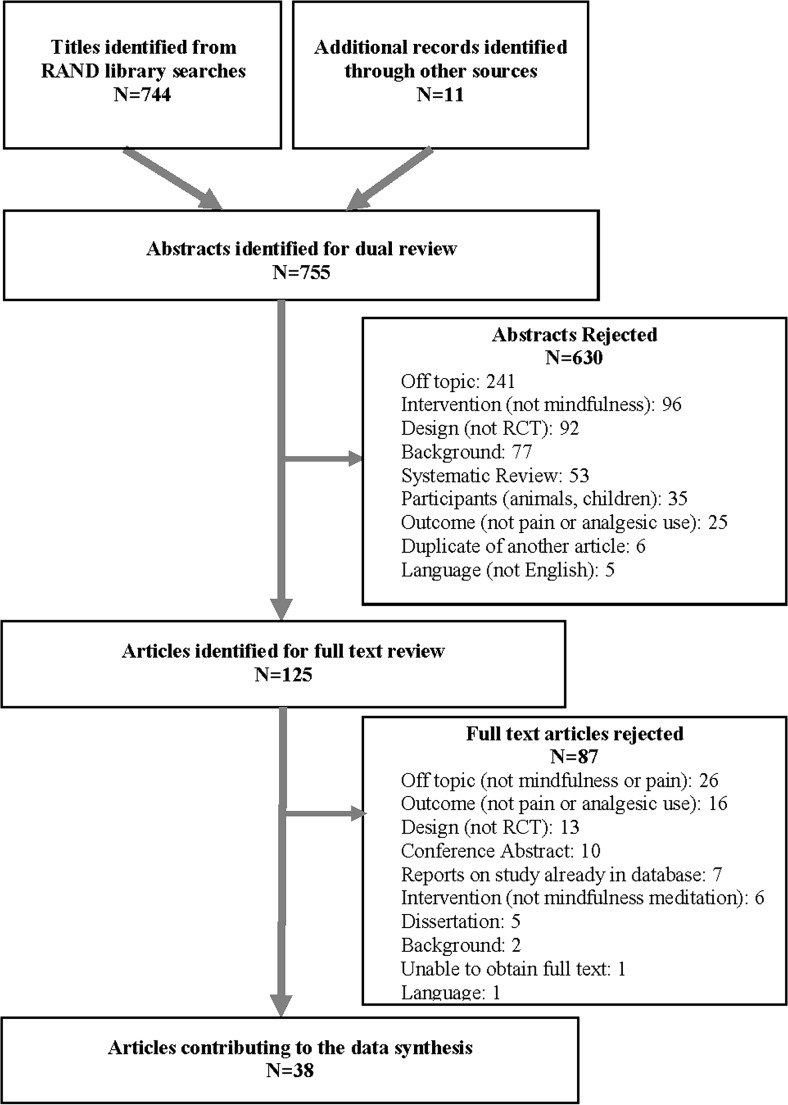
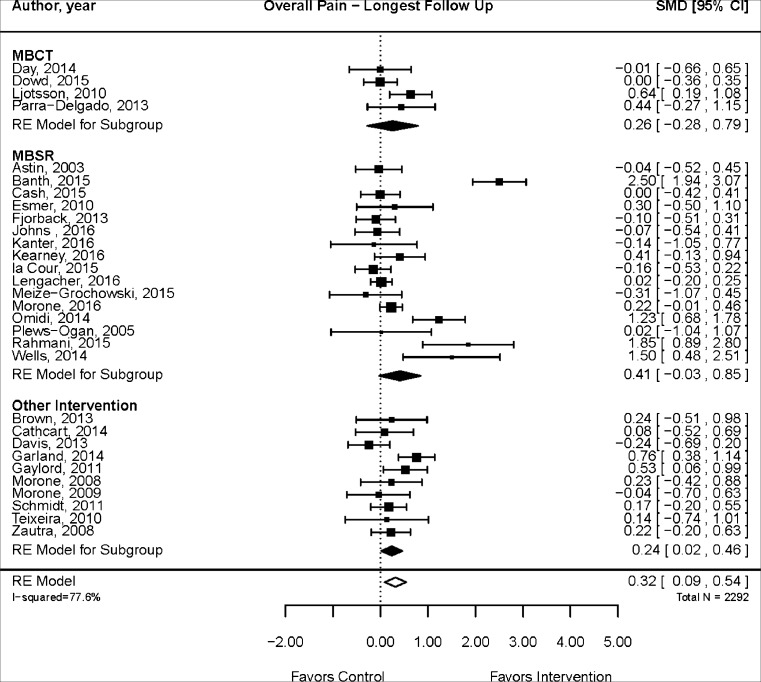
BACKGROUND: Chronic pain patients increasingly seek treatment through mindfulness meditation. PURPOSE: This study aims to synthesize evidence on efficacy and safety of mindfulness meditation interventions for the treatment of chronic pain in adults. METHOD: We conducted a systematic review on randomized controlled trials (RCTs) with meta-analyses using the Hartung-Knapp-Sidik-Jonkman method for random-effects models. Quality of evidence was assessed using the GRADE approach. Outcomes included pain, depression, quality of life, and analgesic use. RESULTS: Thirty-eight RCTs met inclusion criteria; seven reported on safety. We found low-quality evidence that mindfulness meditation is associated with a small decrease in pain compared with all types of controls in 30 RCTs. Statistically significant effects were also found for depression symptoms and quality of life. CONCLUSIONS: While mindfulness meditation improves pain and depression symptoms and quality of life, additional well-designed, rigorous, and large-scale RCTs are needed to decisively provide estimates of the efficacy of mindfulness meditation for chronic pain.
Overview
The claims and statistics of this paper haven’t been checked yet.
Free: it reads the open-access text and checks the first 5 claims that cite a source we can check. Create a free account to check every claim.
Integrity signals
Registry
Cites
Statistics
Figures
Verification
Claims the paper makes
The claims and statistics of this paper haven’t been checked yet.
Free: it reads the open-access text and checks the first 5 claims that cite a source we can check. Create a free account to check every claim.
Claims other papers make about this one
Each is checked against this paper’s own text: does it say what the citing paper says it does?
The source backs part of the claim, not all of it — or backs it for a different population, condition or comparison.
In the citing paper
“MBIs have been shown to alleviate physical and psychological symptoms in many medical conditions including cancer, cardiovascular disease, and chronic pain, as well as psychiatric illnesses (notably, anxiety, and depressive disorders) (Bawa et al., 2015; Evans et al., 2008; Hilton et al., 2017; Lin et al., 2022; Marino et al., 2021; Piet & Hougaard, 2011).”
From Online Mindfulness-Based Cognitive Therapy for People with Parkinson’s Disease and Their Caregivers: a Pilot Study (2022) · cites this paper as Hilton et al., 2017
Experimental — accuracy not yet measuredThe source backs part of the claim, not all of it — or backs it for a different population, condition or comparison.
In the citing paper
“research demonstrating that MM can lead to reductions in pain intensity,[16] pain interference,[15, 29] and pain-related affect,[30, 31]”
From The chronic pain skills study: Protocol for a randomized controlled trial comparing hypnosis, mindfulness meditation and pain education in Veterans (2020) · cites this paper as [16]
Experimental — accuracy not yet measuredThe source backs part of the claim, not all of it — or backs it for a different population, condition or comparison.
In the citing paper
“Evidence indicates that mindfulness-based interventions (MBIs) may be effective for patients with chronic pain, reducing perceived pain and decreasing harmful psychological features often associated with chronic pain, such as depression and pain catastrophizing.1,7,19,24,37”
From Randomized, wait-list–controlled pilot study of app-delivered mindfulness for patients reporting chronic pain (2021) · cites this paper as [19]
Experimental — accuracy not yet measuredThe source backs part of the claim, not all of it — or backs it for a different population, condition or comparison.
In the citing paper
“Although mindfulness can be an effective approach to the self-management of chronic pain, most research to date has been conducted on either brief inductions of mindfulness14,28,49 or on more time-intensive and resource-intensive group-based interventions.7,19”
From Randomized, wait-list–controlled pilot study of app-delivered mindfulness for patients reporting chronic pain (2021) · cites this paper as [19]
Experimental — accuracy not yet measuredThe source backs part of the claim, not all of it — or backs it for a different population, condition or comparison.
In the citing paper
“Mindfulness-based interventions (MBIs) have been found to be effective in reducing stress, anxiety, and depression, as well as improving overall quality of life in individuals with chronic illnesses (Gotink et al. 2015;Hilton et al. 2017;Niazi and Niazi 2011).”
From Lessons from Master Hongyi’s Experiences with Impermanence for Death Education (2024) · cites this paper as Hilton et al. 2017
Experimental — accuracy not yet measured
21 more claims about this paper
Create a free account to see every claim other papers make about this one.
Self-check
Percentages, sums and reported differences re-computed from the paper’s own numbers.
The self-check needs the paper’s full text.
Citations
Cites
Bias in meta-analysis detected by a simple, graphical test
Egger, M., Smith, G. D., Schneider, M., & Minder, C. (1997) · BMJ · doi:10.1136/bmj.315.7109.629 · Cited by 56,722 · cited 1×
“The quality of the body of evidence was assessed using the GRADE approach [22, 26] by which a determination of high, moderate, low, or very low was made for each major outcome [27].”
MethodGRADE guidelines: 3. Rating the quality of evidence
Balshem, H., Helfand, M., Schünemann, H. J., Oxman, A. D., Kunz, R., Brozek, J., Vist, G. E., Falck-Ytter, Y., Meerpohl, J., & Norris, S. (2011) · Journal of Clinical Epidemiology · doi:10.1016/j.jclinepi.2010.07.015 · Cited by 8,285 · cited 1×
“The quality of the body of evidence was assessed using the GRADE approach [22, 26] by which a determination of high, moderate, low, or very low was made for each major outcome [27].”
MethodMeditation Programs for Psychological Stress and Well-being: A Systematic Review and Meta-analysis
Goyal, M., Singh, S., Sibinga, E. M. S., Gould, N. F., Rowland-Seymour, A., Sharma, R., Berger, Z., Sleicher, D., Maron, D. D., Shihab, H. M., et al. (2014) · JAMA Internal Medicine · doi:10.1001/jamainternmed.2013.13018 · Cited by 2,380
The clinical use of mindfulness meditation for the self-regulation of chronic pain
Kabat-Zinn, J., Lipworth, L., & Burney, R. (1985) · Journal of Behavioral Medicine · doi:10.1007/bf00845519 · Cited by 1,745 · cited 2×
“Early mindfulness studies in pain patients showed promising outcomes on pain symptoms, mood disturbance, anxiety, and depression, as well as pain-related drug utilization [5].”
BackgroundChou, R., Turner, J. A., Devine, E. B., Hansen, R. N., Sullivan, S. D., Blazina, I., Dana, T., Bougatsos, C., & Deyo, R. A. (2015) · Annals of Internal Medicine · doi:10.7326/m14-2559 · Cited by 1,606 · cited 1×
“Systematic review Introduction Chronic pain, often defined as pain lasting longer than 3 months or past the normal time for tissue healing [1], can lead to significant medical, social, and economic consequences, relationship issues, lost productivity, and larger health care costs.”
BackgroundFjorback, L. O., Arendt, M., Ørnbøl, E., Fink, P., & Walach, H. (2011) · Acta Psychiatrica Scandinavica · doi:10.1111/j.1600-0447.2011.01704.x · Cited by 803
A refined method for the meta-analysis of controlled clinical trials with binary outcome
Hartung, J., & Knapp, G. (2001) · Statistics in Medicine · doi:10.1002/sim.1009 · Cited by 775
Cherkin, D. C., Sherman, K. J., Balderson, B. H., Cook, A. J., Anderson, M. L., Hawkes, R. J., Hansen, K. E., & Turner, J. A. (2016) · JAMA · doi:10.1001/jama.2016.2323 · Cited by 729 · cited 3×
“Likewise, a trial of MBSR for back pain [38] found no significant difference between groups in self-reported use of pain medication.”
BackgroundMedical Journal of the Islamic Republic of Iran
(2020) · Medical Journal of the Islamic Republic of Iran · doi:10.14196/mjiri · Cited by 620
Morone, N. E., Greco, C. M., & Weiner, D. K. (2008) · Pain · doi:10.1016/j.pain.2007.04.038 · Cited by 546
Cited by
Chronic pain: an update on burden, best practices, and new advances
Cohen, S. P., Vase, L., & Hooten, W. M. (2021) · The Lancet · doi:10.1016/s0140-6736(21)00393-7 · Cited by 2,614
Handbook of Religion and Health
Koenig, H. G., VanderWeele, T., & Peteet, J. R. (2024) · doi:10.1093/oso/9780190088859.001.0001 · Cited by 1,139
Mindfulness-based interventions: an overall review
Zhang, D., Lee, E. K. P., Mak, E. C. W., Ho, C. Y., & Wong, S. Y. S. (2021) · British Medical Bulletin · doi:10.1093/bmb/ldab005 · Cited by 668
“A systematic review and meta-analysis of 30 RCTs on chronic pain conducted in 2017 showed improvement on chronic pain management after mindfulness meditation intervention.(40) The percent change of the mean in pain for intervention subjects was −0.”
BackgroundResultMoisset, X., Bouhassira, D., Avez Couturier, J., Alchaar, H., Conradi, S., Delmotte, M. H., Lanteri-Minet, M., Lefaucheur, J. P., Mick, G., Piano, V., et al. (2020) · Revue Neurologique · doi:10.1016/j.neurol.2020.01.361 · Cited by 450
Mindfulness Meditation and Psychopathology
Wielgosz, J., Goldberg, S. B., Kral, T. R. A., Dunne, J. D., & Davidson, R. J. (2019) · Annual Review of Clinical Psychology · doi:10.1146/annurev-clinpsy-021815-093423 · Cited by 435
“MMBIs have shown significant benefits for quality of life and more limited evidence for reductions in pain across multiple pain-related syndromes including fibromyalgia, migraine, and chronic pelvic pain (Hilton et al. 2017).”
BackgroundReframing chronic pain as a disease, not a symptom: rationale and implications for pain management
Clauw, D. J., Essex, M. N., Pitman, V., & Jones, K. D. (2019) · Postgraduate Medicine · doi:10.1080/00325481.2019.1574403 · Cited by 256
Complex Regional Pain Syndrome: Practical Diagnostic and Treatment Guidelines, 5th Edition
Harden, R. N., McCabe, C. S., Goebel, A., Massey, M., Suvar, T., Grieve, S., & Bruehl, S. (2022) · Pain Medicine · doi:10.1093/pm/pnac046 · Cited by 246
Economides, M., Martman, J., Bell, M. J., & Sanderson, B. (2018) · Mindfulness · doi:10.1007/s12671-018-0905-4 · Cited by 250
“There is mounting evidence that mindfulness-based interventions bring about positive physical and mental health outcomes in both healthy (Brown and Ryan 2003; Keng et al. 2011) and clinical (Hilton et al. 2017; Hofmann et al. 2010) populations.”
Effects of Brief Mindfulness-Based Interventions on Health-Related Outcomes: a Systematic Review
Howarth, A., Smith, J. G., Perkins-Porras, L., & Ussher, M. (2019) · Mindfulness · doi:10.1007/s12671-019-01163-1 · Cited by 219
“This research has cumulated into a solid foundation of evidence supporting the use of mindfulness for clinical health conditions, as well as for the management of non-clinical conditions such as everyday stress and mood disturbances (Cavanagh et al. 2014; Hilton et al. 2017; Krolikowski 2013; Lakhan and Schofield 2013…”
BackgroundMethodMind-Body Therapies for Opioid-Treated Pain: A Systematic Review and Meta-analysis
Garland, E. L., Brintz, C. E., Hanley, A. W., Roseen, E. J., Atchley, R. M., Gaylord, S. A., Faurot, K. R., Yaffe, J., Fiander, M., & Keefe, F. J. (2020) · JAMA Internal Medicine · doi:10.1001/jamainternmed.2019.4917 · Cited by 190
Keefe, F. J., Main, C. J., & George, S. Z. (2018) · Physical Therapy · doi:10.1093/ptj/pzy024 · Cited by 180
Sommers-Spijkerman, M., Austin, J., Bohlmeijer, E., & Pots, W. (2021) · JMIR Mental Health · doi:10.2196/28168 · Cited by 179
“Over the past decades, a large number of systematic reviews and meta-analyses have been conducted on the effectiveness of MBIs in various target groups [8-24].”
BackgroundSommers-Spijkerman, M., Austin, J., Bohlmeijer, E., & Pots, W. (2021) · doi:10.2196/preprints.28168 · Cited by 179
Management of neurofibromatosis type 1-associated plexiform neurofibromas
Fisher, M. J., Blakeley, J. O., Weiss, B. D., Dombi, E., Ahlawat, S., Akshintala, S., Belzberg, A. J., Bornhorst, M., Bredella, M. A., Cai, W., et al. (2022) · Neuro-Oncology · doi:10.1093/neuonc/noac146 · Cited by 174
Kubo, A., Kurtovich, E., McGinnis, M., Aghaee, S., Altschuler, A., Quesenberry, C., Kolevska, T., & Avins, A. L. (2019) · Integrative Cancer Therapies · doi:10.1177/1534735419850634 · Cited by 167
“Ongoing treatment and concerns about the disease course itself cause substantial distress for both patients of advanced cancer and their loved ones, and these populations have been comparatively understudied.(1-3,68) Because previous in-person mindfulness studies primarily included white females with early-stage breas…”
BackgroundLumley, M. A., & Schubiner, H. (2019) · Current Rheumatology Reports · doi:10.1007/s11926-019-0829-6 · Cited by 155
“The most popular psychological interventions for chronic pain are cognitive-behavioral therapy (CBT) [19, 20] and acceptance and mindfulness-based therapies [21, 22].”
BackgroundTimmermann, C., Bauer, P. R., Gosseries, O., Vanhaudenhuyse, A., Vollenweider, F., Laureys, S., Singer, T., Antonova, E., & Lutz, A. (2023) · Trends in Cognitive Sciences · doi:10.1016/j.tics.2022.11.006 · Cited by 150
The neuroscience of meditation: classification, phenomenology, correlates, and mechanisms
(2019) · Progress in Brain Research · doi:10.1016/bs.pbr.2018.10.020 · Cited by 145
An integrative collaborative care model for people with mental illness and physical comorbidities
Ee, C., Lake, J., Firth, J., Hargraves, F., de Manincor, M., Meade, T., Marx, W., & Sarris, J. J. (2020) · International Journal of Mental Health Systems · doi:10.1186/s13033-020-00410-6 · Cited by 197
Linardon, J., Gleeson, J., Yap, K., Murphy, K., & Brennan, L. (2019) · Cognitive Behaviour Therapy · doi:10.1080/16506073.2018.1517389 · Cited by 134
“Numerous systematic reviews and meta-analyses have shown ACT, DBT, and MBI’s to produce large improvements from pre-treatment to post-treatment and follow-up in disorderspecific symptoms, and to be significantly more efficacious than control conditions in reducing post-treatment depressive and anxiety symptoms (Hofman…”
BackgroundRosen, N. O., & Bergeron, S. (2019) · The Journal of Sex Research · doi:10.1080/00224499.2018.1513987 · Cited by 131
“A recent meta-analysis suggested that mindfulness interventions significantly improved chronic pain, depression, and quality of life, but that the quality of evidence was low and more rigorous randomized controlled trials (RCTs) are needed (Hilton et al., 2017).”
Hanley, A. W., Nakamura, Y., & Garland, E. L. (2018) · Psychological Assessment · doi:10.1037/pas0000615 · Cited by 130
“The benefits of meditation-based training programs, are well documented and comparable to the benefits derived from other empirically supported psychological interventions (e.g., Demarzo et al., 2015; Goldberg et al., 2018; Gotink et al., 2015; Goyal et al., 2014; Hilton et al., 2016).”
Effect of physical activity and exercise on endometriosis-associated symptoms: a systematic review
Tennfjord, M. K., Gabrielsen, R., & Tellum, T. (2021) · BMC Women s Health · doi:10.1186/s12905-021-01500-4 · Cited by 192
“Since a large proportion of women with endometriosis suffer from dyspareunia and CPP [1, 2], it is surprising that only one of the present studies investigated the pelvic floor muscles [25]; however, pain scores specifically for the pelvic floor or measurements of the pelvic floor muscles were not reported.”
BackgroundInfluentialA virtual reality approach to mindfulness skills training
Chandrasiri, A., Collett, J., Fassbender, E., & De Foe, A. (2020) · Virtual Reality · doi:10.1007/s10055-019-00380-2 · Cited by 122
Wren, A., Ross, A., D’Souza, G., Almgren, C., Feinstein, A., Marshall, A., & Golianu, B. (2019) · Children · doi:10.3390/children6020033 · Cited by 115
Conversano, C., Orrù, G., Pozza, A., Miccoli, M., Ciacchini, R., Marchi, L., & Gemignani, A. (2021) · International Journal of Environmental Research and Public Health · doi:10.3390/ijerph18062882 · Cited by 113
“These results are in line with previous evidence from systematic reviews which showed that MBSR interventions are capable to reduce anxious and depressive symptoms and stress levels in chronic diseases such as heart failure [73,74].”
ResultBrief Mindfulness-Based Interventions for Acute and Chronic Pain: A Systematic Review
McClintock, A. S., McCarrick, S. M., Garland, E. L., Zeidan, F., & Zgierska, A. E. (2019) · The Journal of Alternative and Complementary Medicine · doi:10.1089/acm.2018.0351 · Cited by 107
Efficacy of psychological treatment for headache disorder: a systematic review and meta-analysis
Lee, H. J., Lee, J. H., Cho, E. Y., Kim, S. M., & Yoon, S. (2019) · The Journal of Headache and Pain · doi:10.1186/s10194-019-0965-4 · Cited by 100
Putting Integrative Oncology Into Practice: Concepts and Approaches
Latte-Naor, S., & Mao, J. J. J. (2019) · Journal of Oncology Practice · doi:10.1200/jop.18.00554 · Cited by 106
Bushell, W. C., Castle, R., Williams, M. A., Brouwer, K. C., Tanzi, R. E., Chopra, D., & Mills, P. J. (2020) · The Journal of Alternative and Complementary Medicine · doi:10.1089/acm.2020.0177 · Cited by 114
Lorenc, A., Feder, G. S., MacPherson, H., Little, P. S., Mercer, S. W., & Sharp, D. (2018) · BMJ Open · doi:10.1136/bmjopen-2017-020222 · Cited by 99
“► MBSR/mindfulness/meditation: a new SR provides evidence for mindfulness and MH, including highquality evidence (sample size not reported) for mindfulness helping with depression (compared with all controls—usual care, and active interventions (education, stress management); (as an outcome not a diagnosis) in LBP (an…”
Maindet, C., Burnod, A., Minello, C., George, B., Allano, G., & Lemaire, A. (2019) · Supportive Care in Cancer · doi:10.1007/s00520-019-04829-7 · Cited by 118
Mindfulness and physical disease: a concise review
Greeson, J. M., & Chin, G. R. (2019) · Current Opinion in Psychology · doi:10.1016/j.copsyc.2018.12.014 · Cited by 85
“Taken together, there is sufficient scientific premise and evidence to recommend mindfulness as a part of an integrative, biopsychosocial, self-management approach to treating and preventing chronic pain [30], and for other stress-related physical diseases, including cardiovascular disease (CVD) [62**].”
BackgroundSelf-management strategies to consider to combat endometriosis symptoms during the COVID-19 pandemic
Leonardi, M., Horne, A. W., Vincent, K., Sinclair, J., Sherman, K. A., Ciccia, D., Condous, G., Johnson, N. P., & Armour, M. (2020) · Human Reproduction Open · doi:10.1093/hropen/hoaa028 · Cited by 83
“More evidence is needed to support this as an effective intervention in the context of endometriosis, however, there is a body of evidence in chronic pain more generally (Ball et al., 2017; Hilton et al., 2017), but in the absence of harmful side effects, these strategies could be safely trialed by patients.”
BackgroundYıldırım, D., & Çiriş Yıldız, C. (2022) · Holistic Nursing Practice · doi:10.1097/hnp.0000000000000511 · Cited by 64
Stress and mindfulness in Parkinson’s disease – a survey in 5000 patients
van der Heide, A., Speckens, A. E. M., Meinders, M. J., Rosenthal, L. S., Bloem, B. R., & Helmich, R. C. (2021) · npj Parkinson's Disease · doi:10.1038/s41531-020-00152-9 · Cited by 82
Mindfulness-based interventions in undergraduate students: a systematic review
Chiodelli, R., Mello, L. T. N. D., Jesus, S. N. D., Beneton, E. R., Russel, T., & Andretta, I. (2022) · Journal of American College Health · doi:10.1080/07448481.2020.1767109 · Cited by 78
Pardos-Gascón, E. M., Narambuena, L., Leal-Costa, C., & van-der Hofstadt-Román, C. J. (2021) · International Journal of Clinical and Health Psychology · doi:10.1016/j.ijchp.2020.08.001 · Cited by 78
An update on non-pharmacological interventions for pain relief
Wang, Y., Aaron, R. V., Attal, N., & Colloca, L. (2025) · Cell Reports Medicine · doi:10.1016/j.xcrm.2025.101940 · Cited by 130
“87 Additional well-designed and large-scale RCTs are needed to fully understand the effects of mind-fulness meditation on pain-related outcomes in people with chronic pain.”
Acabchuk, R. L., Brisson, J. M., Park, C. L., Babbott‐Bryan, N., Parmelee, O. A., & Johnson, B. T. (2021) · Applied Psychology: Health and Well-Being · doi:10.1111/aphw.12244 · Cited by 77
Mindfulness meditation for workplace wellness: An evidence map
Hilton, L. G., Marshall, N. J., Motala, A., Taylor, S. L., Miake-Lye, I. M., Baxi, S., Shanman, R. M., Solloway, M. R., Beroesand, J. M., & Hempel, S. (2019) · Work · doi:10.3233/wor-192922 · Cited by 77
“tions including MBCT, MBSR, and others [130] and 316”
BackgroundSelf-citationComplementary and Integrated Health Approaches: What Do Veterans Use and Want
Taylor, S. L., Hoggatt, K. J., & Kligler, B. (2019) · Journal of General Internal Medicine · doi:10.1007/s11606-019-04862-6 · Cited by 77
Nicholls, J. L., Azam, M. A., Burns, L. C., Englesakis, M., Sutherland, A. M., Weinrib, A. Z., Katz, J., & Clarke, H. (2018) · Patient Related Outcome Measures · doi:10.2147/prom.s121251 · Cited by 75
Sollgruber, A., Bornemann-Cimenti, H., Szilagyi, I.-S., & Sandner-Kiesling, A. (2018) · PLOS ONE · doi:10.1371/journal.pone.0203336 · Cited by 74
Hypnosis and the Alleviation of Clinical Pain: A Comprehensive Meta-Analysis
Milling, L. S., Valentine, K. E., LoStimolo, L. M., Nett, A. M., & McCarley, H. S. (2021) · International Journal of Clinical and Experimental Hypnosis · doi:10.1080/00207144.2021.1920330 · Cited by 81
Bunjak, A., Černe, M., & Schölly, E. L. (2022) · Frontiers in Psychology · doi:10.3389/fpsyg.2022.792599 · Cited by 74
“Similarly, more research is needed on the effectiveness of mindfulness mediation for chronic pain overall (Hilton et al., 2017).”
BackgroundA Pilot Mobile-Based Mindfulness Intervention for Cancer Patients and Their Informal Caregivers
Kubo, A., Altschuler, A., Kurtovich, E., Hendlish, S., Laurent, C. A., Kolevska, T., Li, Y., & Avins, A. (2018) · Mindfulness · doi:10.1007/s12671-018-0931-2 · Cited by 73
“patients and their loved ones, and these populations have been comparatively understudied (Artherholt and Fann 2012; Bower 2014; Fann et al. 2012; Hilton et al. 2017).”
BackgroundHanley, A. W., Gililland, J., Erickson, J., Pelt, C., Peters, C., Rojas, J., & Garland, E. L. (2021) · Pain · doi:10.1097/j.pain.0000000000002195 · Cited by 70
“Study findings are consistent with evidence that mindfulness and hypnosis relieve clinical pain and reduce emotional distress.(10,22,26,29,40,60,72,73) In addition, these results are congruent with our previous RCT, which found that 15 minutes of MM or HS decreased inpatients’ pain intensity, pain unpleasantness, pain…”
ResultCan Mindfulness Help to Alleviate Loneliness? A Systematic Review and Meta-Analysis
Teoh, S. L., Letchumanan, V., & Lee, L. (2021) · Frontiers in Psychology · doi:10.3389/fpsyg.2021.633319 · Cited by 103
Mindful Self-Compassion program for chronic pain patients: A randomized controlled trial.
Torrijos‐Zarcero, M., Mediavilla, R., Rodríguez‐Vega, B., Del Río‐Diéguez, M., López‐Álvarez, I., Rocamora‐González, C., & Palao‐Tarrero, Á. (2021) · European Journal of Pain · doi:10.1002/ejp.1734 · Cited by 71
“These modest effects, ranging from small to medium in size, as observed in recent meta- analyses, indicate scope for improvement (Harrison et al., 2017; Hilton et al., 2017; Veehof et al., 2011; Williams et al., 2012).”
BackgroundMindfulness in migraine: A narrative review
Wells, R. E., Seng, E. K., Edwards, R. R., Victorson, D. E., Pierce, C. R., Rosenberg, L., Napadow, V., & Schuman-Olivier, Z. (2020) · Expert Review of Neurotherapeutics · doi:10.1080/14737175.2020.1715212 · Cited by 70
Management of Pain in the United States—A Brief History and Implications for the Opioid Epidemic
Bernard, S. A., Chelminski, P. R., Ives, T. J., & Ranapurwala, S. I. (2018) · Health Services Insights · doi:10.1177/1178632918819440 · Cited by 84
Neurophysiological Mechanisms Supporting Mindfulness Meditation–Based Pain Relief: an Updated Review
Jinich-Diamant, A., Garland, E., Baumgartner, J., Gonzalez, N., Riegner, G., Birenbaum, J., Case, L., & Zeidan, F. (2020) · Current Pain and Headache Reports · doi:10.1007/s11916-020-00890-8 · Cited by 69
Mao, L., Li, P., Wu, Y., Luo, L., & Hu, M. (2023) · Journal of Affective Disorders · doi:10.1016/j.jad.2022.10.022 · Cited by 68
Taylor, S. L., Bolton, R. E., Huynh, A. K., Dvorin, K., Elwy, A. R., Bokhour, B. G., Whitehead, A., & Kligler, B. (2019) · The Journal of Alternative and Complementary Medicine · doi:10.1089/acm.2018.0445 · Cited by 69
Scott-Sheldon, L. A. J., Balletto, B. L., Donahue, M. L., Feulner, M. M., Cruess, D. G., Salmoirago-Blotcher, E., Wing, R. R., & Carey, M. P. (2019) · AIDS and Behavior · doi:10.1007/s10461-018-2236-9 · Cited by 68
Psychological Treatment Strategy for Chronic Low Back Pain
Ikemoto, T., Miki, K., Matsubara, T., & Wakao, N. (2019) · Spine Surgery and Related Research · doi:10.22603/ssrr.2018-0050 · Cited by 67
Mindfulness related changes in grey matter: a systematic review and meta‐analysis
Pernet, C. R., Belov, N., Delorme, A., & Zammit, A. (2021) · Brain Imaging and Behavior · doi:10.1007/s11682-021-00453-4 · Cited by 86
A Randomized Trial of Yoga for Children Hospitalized With Sickle Cell Vaso-Occlusive Crisis
Moody, K., Abrahams, B., Baker, R. A., Santizo, R. O., Manwani, D. G., Carullo, V. P., Eugenio, D., & Carroll, A. E. (2017) · Journal of Pain and Symptom Management · doi:10.1016/j.jpainsymman.2016.12.351 · Cited by 73
“(24) Mindfulness training has been shown to be beneficial for pain in adults with chronic pain conditions(25) and to reduce anxiety in college students.”
BackgroundZuo, X., Tang, Y., Chen, Y., & Zhou, Z. (2023) · Frontiers in Public Health · doi:10.3389/fpubh.2023.1259250 · Cited by 110
“A previous meta-analysis examined mindfulness as a mind–body exercise and found that the effects are primarily reflected in improved psychological well-being (9), individual emotion (68), mental health (9), symptoms of pain and depression and life quality (69).”
MethodPhysical Therapy Treatment of Pelvic Pain
Bradley, M. H., Rawlins, A., & Brinker, C. A. (2017) · Physical Medicine and Rehabilitation Clinics of North America · doi:10.1016/j.pmr.2017.03.009 · Cited by 76
Factors Associated with the Use of Meditation, U.S. Adults 2017
Macinko, J., & Upchurch, D. M. (2019) · The Journal of Alternative and Complementary Medicine · doi:10.1089/acm.2019.0206 · Cited by 65
“11,12 There is some support for using meditation in the management of physical conditions, including low back pain, 13,14 and chronic pain more generally, 10 and a growing interest in identifying nonpharmacological approaches such as meditation for pain management.”
Mindfulness-Based Cognitive Therapy for Treating Chronic Pain A Systematic Review and Meta-analysis
Pei, J., Ma, T., Nan, R.-L., Chen, H., Zhang, Y., Gou, L., & Dou, X. (2020) · Psychology Health & Medicine · doi:10.1080/13548506.2020.1849746 · Cited by 78
Graser, J., & Stangier, U. (2018) · Harvard Review of Psychiatry · doi:10.1097/hrp.0000000000000192 · Cited by 65
Wren, A. A., Shelby, R. A., Soo, M. S., Huysmans, Z., Jarosz, J. A., & Keefe, F. J. (2019) · Supportive Care in Cancer · doi:10.1007/s00520-019-4657-z · Cited by 73
An experimental investigation of the relationships among race, prayer, and pain
Meints, S. M., Mosher, C. E., Rand, K. L., Ashburn‐Nardo, L., & Hirsh, A. T. (2018) · Scandinavian Journal of Pain · doi:10.1515/sjpain-2018-0040 · Cited by 67
“Meditation has been shown to improve pain across various chronic pain conditions [68].”
BackgroundMusculoskeletal Pain in Older Adults
Welsh, T. P., Yang, A. E., & Makris, U. E. (2020) · Medical Clinics of North America · doi:10.1016/j.mcna.2020.05.002 · Cited by 91
Stein, E., & Witkiewitz, K. (2020) · Mindfulness · doi:10.1007/s12671-020-01444-0 · Cited by 63
“…(Creswell 2017), including those with substance use disorders (Bowen et al. 2014), anxiety disorders (Hofmann and Gomez 2017), and chronic pain (Hilton et al. 2017a), further research is warranted to determine if treatment is effective through similar or unique components in these populations.”
BackgroundCooperman, N. A., Hanley, A. W., Kline, A., & Garland, E. L. (2021) · Journal of Substance Abuse Treatment · doi:10.1016/j.jsat.2021.108468 · Cited by 61
Biobehavioral Mechanisms of Mindfulness as a Treatment for Chronic Stress: An RDoC Perspective
Garland, E. L., Hanley, A. W., Baker, A. K., & Howard, M. O. (2017) · Chronic Stress · doi:10.1177/2470547017711912 · Cited by 60
“research demonstrates that MBIs reduce the punishing experience of pain.(105,106) Indeed, laboratory-based studies have shown that MBIs can reduce pain sensitivity(107,108) and pain intensity(109,110) during standardized, experimental acute pain inductions, whereas clinical trials indicate that MBIs can reduce chronic…”
BackgroundRe-examining the Mysterious Role of the Cerebellum in Pain
Li, C. N., Keay, K. A., Henderson, L. A., & Mychasiuk, R. (2024) · Journal of Neuroscience · doi:10.1523/jneurosci.1538-23.2024 · Cited by 71
Burrowes, S. A. B., Goloubeva, O. G., Stafford, K. A., McArdle, P. F., Goyal, M., Peterlin, B. L., Haythornthwaite, J. A., & Seminowicz, D. A. (2021) · Pain · doi:10.1097/j.pain.0000000000002372 · Cited by 76
Bittelbrunn, C. C., de FRAGA, R., Martins, C., Romano, R., Massaneiro, T. J., Mello, G. V. P., & Canciglieri, M. B. (2022) · Archives of Gynecology and Obstetrics · doi:10.1007/s00404-022-06514-3 · Cited by 67
“It can result in functional impairment and may lead to significant medical, social, and economic consequences, relationship issues, lost productivity, and increased health care costs [1].”
BackgroundInfluentialBehzadmehr, R., Dastyar, N., Moghadam, M. P., Abavisani, M., & Moradi, M. (2020) · Complementary Therapies in Medicine · doi:10.1016/j.ctim.2020.102318 · Cited by 74
Greenberg, J., Popok, P. J., Lin, A., Kulich, R. J., James, P., Macklin, E. A., Millstein, R. A., Edwards, R. R., & Vranceanu, A.-M. (2020) · JMIR Formative Research · doi:10.2196/18703 · Cited by 58
“However, across all approaches, randomized controlled trials (RCTs) have tended to report mostly short-term improvements with relatively small effect sizes [9,11-16].”
BackgroundWarriner, S., Crane, C., Dymond, M., & Krusche, A. (2018) · Midwifery · doi:10.1016/j.midw.2018.05.004 · Cited by 57
Herman, P. M., Yuan, A. H., Cefalu, M. S., Chu, K., Zeng, Q. T., Marshall, N. J., Lorenz, K., & Taylor, S. L. (2019) · PLoS ONE · doi:10.1371/journal.pone.0217831 · Cited by 64
Aaron, R. V., Finan, P. H., Wegener, S. T., Keefe, F. J., & Lumley, M. A. (2020) · American Psychologist · doi:10.1037/amp0000678 · Cited by 56
“For example, a goal of mindfulness-based interventions is to increase awareness and acceptance of ongoing emotional experiences, and these interventions have been found to have positive, albeit modest benefits for people with chronic pain (Hilton et al., 2017).”
BackgroundZorn, J., Abdoun, O., Bouet, R., & Lutz, A. (2020) · European Journal of Pain · doi:10.1002/ejp.1576 · Cited by 56
“In line with the cognitive stance cultivated by mindfulness meditation, one of the most consistent findings has been a reduction in pain affect as opposed to intensity (Gard et al., 2012; Hilton et al., 2017; Perlman, Salomons, Davidson, & Lutz, 2010).”
BackgroundHansen, K. E., Brandsborg, B., Kesmodel, U. S., Forman, A., Kold, M., Pristed, R., Donchulyesko, O., Hartwell, D., & Vase, L. (2023) · Quality of Life Research · doi:10.1007/s11136-023-03346-9 · Cited by 56
Sanabria-Mazo, J. P., Colomer-Carbonell, A., Fernández-Vázquez, Ó., Noboa-Rocamora, G., Cardona-Ros, G., McCracken, L. M., Montes-Pérez, A., Castaño-Asins, J. R., Edo, S., Borràs, X., et al. (2023) · Frontiers in Psychology · doi:10.3389/fpsyg.2023.1200685 · Cited by 56
Recent advances in understanding neuropathic pain: glia, sex differences, and epigenetics
Machelska, H., & Celik, M. Ö. (2016) · F1000Research · doi:10.12688/f1000research.9621.1 · Cited by 60
Episodic Memory in Later Life: Benefits of Prayer and Meditation
Lekhak, N., Bhatta, T. R., & Zauszniewski, J. A. (2020) · Journal of Holistic Nursing · doi:10.1177/0898010119898547 · Cited by 58
Cousineau, T. M., Hobbs, L. M., & Arthur, K. C. (2019) · Frontiers in Psychology · doi:10.3389/fpsyg.2019.01602 · Cited by 54
Greenberg, J., Lin, A., Zale, E., Kulich, R. J., James, P., Millstein, R., Shapiro, H., Schatman, M., Edwards, R., & Vranceanu, A.-M. (2019) · Journal of Pain Research · doi:10.2147/jpr.s222448 · Cited by 54
Guideline No. 445: Management of Chronic Pelvic Pain
Allaire, C., Yong, P. J., Bajzak, K., Jarrell, J., Lemos, N., Miller, C., Morin, M., Nasr-Esfahani, M., Singh, S. S., & Chen, I. (2024) · Journal of Obstetrics and Gynaecology Canada · doi:10.1016/j.jogc.2023.102283 · Cited by 53
A scoping review of chronic pain in emerging adults
Brown, D., Schenk, S., Genent, D., Zernikow, B., & Wager, J. (2021) · PAIN Reports · doi:10.1097/pr9.0000000000000920 · Cited by 53
“Unsurprisingly, much of the adult chronic pain literature addresses pain in typical pain cohorts ofmiddle-aged to older individuals.(39) To”
BackgroundWestenberg, R. F., Zale, E. L., Heinhuis, T. J., Özkan, S., Nazzal, A., Lee, S.-G., Chen, N. C., & Vranceanu, A.-M. (2018) · Clinical Orthopaedics & Related Research · doi:10.1007/s11999.0000000000000086 · Cited by 52
“Despite the most effective dose for mindfulness interventions remains unknown [26], prior research on mindfulness-based interventions suggests that the effect and skills of such intervention might be amplified, large, and durable once the intervention is repeated and practiced over a longer period of”
BackgroundResultInfluentialBaeza-Velasco, C., Bulbena, A., Polanco-Carrasco, R., & Jaussaud, R. (2019) · Disability and Rehabilitation · doi:10.1080/09638288.2017.1419294 · Cited by 51
“Recent systematic reviews and a meta-analysis highlight the contribution of the “third wave” of CBT to the treatment of chronic pain patients [64,65].”
BackgroundHuntsman, D. D., & Bulaj, G. W. (2022) · International Journal of Environmental Research and Public Health · doi:10.3390/ijerph19042248 · Cited by 65
“Mindfulness meditation • Mindfulness meditation can significantly reduce chronic pain and depressive symptoms [101,102]”
BackgroundLong‐Term Vegan Meditation Improved Human Gut Microbiota
Jia, W., Zhen, J., Liu, A., Yuan, J., Wu, X.-L., Zhao, P., Zhao, L., Li, X., Liu, Q., Huang, G., et al. (2020) · Evidence-based Complementary and Alternative Medicine · doi:10.1155/2020/9517897 · Cited by 56
Mindfulness, selfcompassion, and depressive symptoms in chronic pain: the role of pain acceptance
Carvalho, S. A., Gillanders, D., Palmeira, L., Pinto‐Gouveia, J., & Castilho, P. (2018) · Journal of Clinical Psychology · doi:10.1002/jclp.22689 · Cited by 49
Marinovic, D. A., & Hunter, R. L. (2022) · CA A Cancer Journal for Clinicians · doi:10.3322/caac.21733 · Cited by 73
Taylor, S. L., Herman, P. M., Marshall, N. J., Zeng, Q. T., Yuan, A. H., Chu, K., Shao, Y., Morioka, C. A., & Lorenz, K. (2018) · The Journal of Alternative and Complementary Medicine · doi:10.1089/acm.2018.0276 · Cited by 56
“13 Reviewers also found that mindfulness ‘‘has evidence of a potential positive effect’’ on pain 14 and is effective for chronic pain, 15 spinal manipulation has support for low-back pain but little evidence for neck pain, 16 and massage ‘‘holds promise’’ for musculoskeletal pain.”
Moreira, M. D. F., Gamboa, O. L., & Pinho Oliveira, M. A. (2022) · European Journal of Pain · doi:10.1002/ejp.1939 · Cited by 48
“Results are in line with previous research showing that mindfulness- based interventions are beneficial to managing pain in different chronic pain conditions like fibromyalgia, irritable bowel syndrome, headache and chronic back pain (Hilton et al., 2017).”
ResultDanon‐Hersch, N., Al‐Gobari, M., Burnand, B., & Rodondi, P. (2021) · Psycho-Oncology · doi:10.1002/pon.5821 · Cited by 63
The Assessment and Management of Pain in Cirrhosis
Klinge, M. J., Coppler, T., Liebschutz, J. M., Dugum, M. F., Wasan, A. D., DiMartini, A. F., & Rogal, S. S. (2018) · Current Hepatology Reports · doi:10.1007/s11901-018-0389-7 · Cited by 53
Acceptance-based interoceptive exposure for young children with functional abdominal pain
Zucker, N., Mauro, C., Craske, M., Wagner, H. R., Datta, N., Hopkins, H., Caldwell, K., Kiridly, A., Marsan, S., Maslow, G., et al. (2017) · Behaviour Research and Therapy · doi:10.1016/j.brat.2017.07.009 · Cited by 47
Intarakamhang, U., Macaskill, A., & Prasittichok, P. (2020) · Heliyon · doi:10.1016/j.heliyon.2020.e03834 · Cited by 46
“While this review has identified and examined three different mindfulness interventions delivered in clinical settings, the findings in support of the effectiveness of mindfulness is in line with other views of different types of mediation or specific groups of patients [39].”
Goldstein, E., McDonnell, C., Atchley, R., Dorado, K., Bedford, C. E., Brown, R., & Zgierska, A. E. (2019) · Clinical Journal of Pain · doi:10.1097/ajp.0000000000000730 · Cited by 52
Metadata
- Authors
- Hilton, L., Hempel, S., Ewing, B. A., Apaydin, E., Xenakis, L., Newberry, S., Colaiaco, B., Maher, A. R., Shanman, R. M., Sorbero, M. E., & Maglione, M. A.
- Affiliations
- RAND Corporation (US)
- Corresponding author
- Hilton, Lara
- ORCID
- Venue
- Annals of Behavioral Medicine
- Publisher
- Oxford University Press (OUP)
- Published
- 2016-09-22
- Volume
- 51
- Issue
- 2
- Pages
- 199-213
- ISSN
- 0742-5554 (ISSN-L)
- 0883-6612
- 1532-4796
- PMC
- PMC5368208
- OpenAlex
- W2521208344
- Semantic Scholar
- c2a7b6ba6b4cb1795860f4f990a38fb8128dd178
- Cited by
- 977
- References
- 68
- Citations by year
- 2026: 60 · 2025: 118 · 2024: 122 · 2023: 156 · 2022: 121 · 2021: 130 · 2020: 113 · 2019: 75 · 2018: 69 · 2017: 12 · 2016: 1
- FWCI
- 7.76
- Type
- journal article
- Language
- en
- Open access
- hybrid
- doi.org
- Locations
- Annals of Behavioral Medicine (publishedVersion, cc-by)
- Europe PMC (PubMed Central) (publishedVersion, cc-by)
- PubMed Central (publishedVersion, cc-by)
- PubMed (publishedVersion)
- Funders
- Defense Centers of Excellence for Psychological Health and Traumatic Brain Injury (14-539.2)
- Topics
- Social Sciences › Psychology › Clinical Psychology › Mindfulness and Compassion Interventions
- Health Sciences › Health Professions › Physical Therapy, Sports Therapy and Rehabilitation › Musculoskeletal pain and rehabilitation
- Life Sciences › Neuroscience › Cognitive Neuroscience › Pain Management and Placebo Effect
- Keywords
- mindfulness meditation, chronic pain, analgesia, depressive symptoms, quality of life, analgesic use, treatment safety, non-pharmacological pain management
- MeSH terms
- Humans, Quality of Life, Treatment Outcome, Meditation, Chronic Pain, Pain Management, Mindfulness
About these checks
Registry, retraction, Cites and statistics results are computed, not judged, with one exception: a printed reference that no index lists is read once by a model before it counts as a citation error. Claims are extracted by a model and kept only when their quote appears verbatim in the text; each cited source is then checked, with a model’s help, for whether it says what the claim relies on. Those verdicts can be wrong — read the claim’s quote and the cited source before relying on one.
Statistics and arithmetic are recomputed, not judged.
Confidence bands are shown only for fields calibrated on our annotated test set. None is calibrated yet, so no band is shown.
What counts as a claim ›How we measure confidence ›How we check this ›
Are you an author, or do you see a problem with this page? Request a review
Data sources
Bibliographic data: Semantic Scholar, OpenAlex, Crossref.
Contains information from the Semantic Scholar Academic Graph Datasets, made available under the ODC Attribution License (ODC-BY 1.0).
Semantic Scholar’s data is described in: Kinney, R., et al. (2023). The Semantic Scholar Open Data Platform. arXiv:2301.10140.
