

Mindfulness Meditation for Chronic Pain: Systematic Review and Meta-analysis
Open accessThe DOI matches its Crossref record; 67 of the 68 references it cites were found in a registry or an index.
Abstract
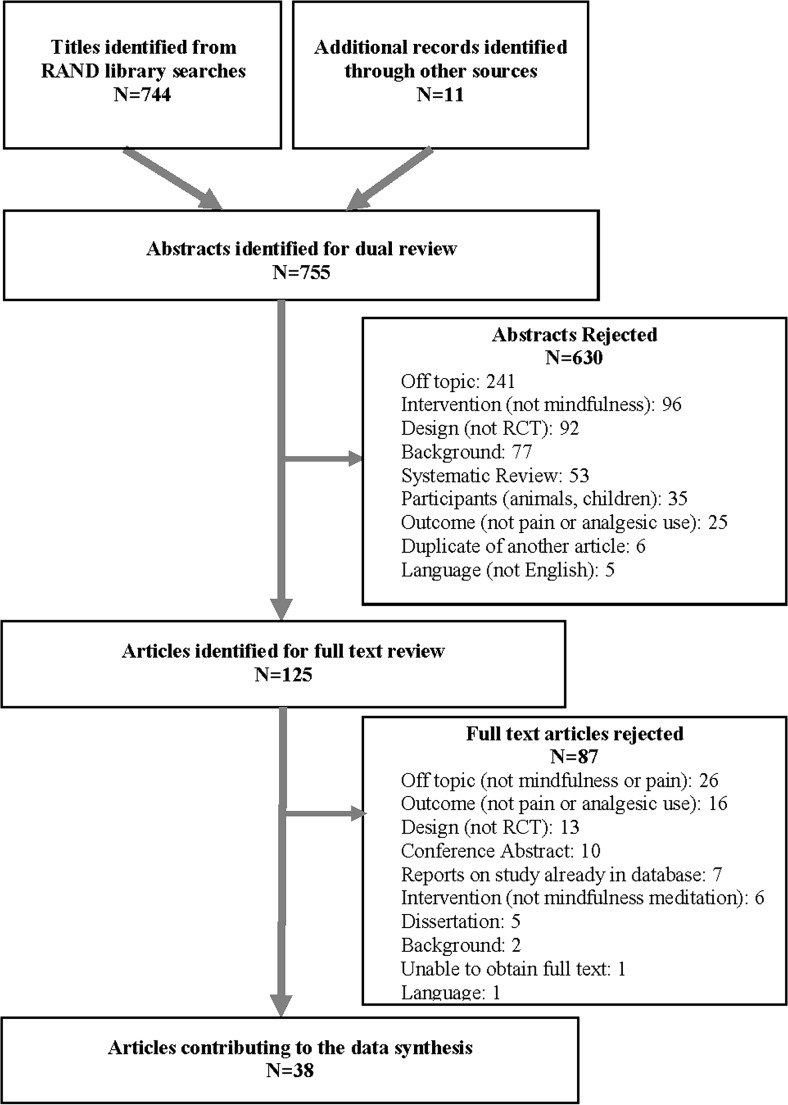
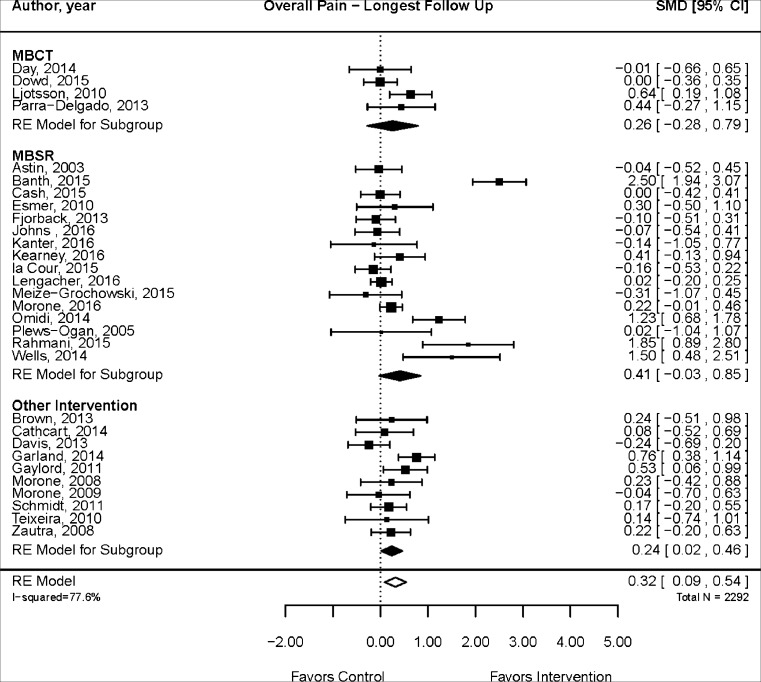
BACKGROUND: Chronic pain patients increasingly seek treatment through mindfulness meditation. PURPOSE: This study aims to synthesize evidence on efficacy and safety of mindfulness meditation interventions for the treatment of chronic pain in adults. METHOD: We conducted a systematic review on randomized controlled trials (RCTs) with meta-analyses using the Hartung-Knapp-Sidik-Jonkman method for random-effects models. Quality of evidence was assessed using the GRADE approach. Outcomes included pain, depression, quality of life, and analgesic use. RESULTS: Thirty-eight RCTs met inclusion criteria; seven reported on safety. We found low-quality evidence that mindfulness meditation is associated with a small decrease in pain compared with all types of controls in 30 RCTs. Statistically significant effects were also found for depression symptoms and quality of life. CONCLUSIONS: While mindfulness meditation improves pain and depression symptoms and quality of life, additional well-designed, rigorous, and large-scale RCTs are needed to decisively provide estimates of the efficacy of mindfulness meditation for chronic pain.
Overview
The claims and statistics of this paper haven’t been checked yet.
Free: it reads the open-access text and checks the first 5 claims that cite a source we can check. Create a free account to check every claim.
Integrity signals
Registry
Cites
Statistics
Figures
Verification
Claims the paper makes
The claims and statistics of this paper haven’t been checked yet.
Free: it reads the open-access text and checks the first 5 claims that cite a source we can check. Create a free account to check every claim.
Claims other papers make about this one
Each is checked against this paper’s own text: does it say what the citing paper says it does?
The source backs part of the claim, not all of it — or backs it for a different population, condition or comparison.
In the citing paper
“MBIs have been shown to alleviate physical and psychological symptoms in many medical conditions including cancer, cardiovascular disease, and chronic pain, as well as psychiatric illnesses (notably, anxiety, and depressive disorders) (Bawa et al., 2015; Evans et al., 2008; Hilton et al., 2017; Lin et al., 2022; Marino et al., 2021; Piet & Hougaard, 2011).”
From Online Mindfulness-Based Cognitive Therapy for People with Parkinson’s Disease and Their Caregivers: a Pilot Study (2022) · cites this paper as Hilton et al., 2017
Experimental — accuracy not yet measuredThe source backs part of the claim, not all of it — or backs it for a different population, condition or comparison.
In the citing paper
“research demonstrating that MM can lead to reductions in pain intensity,[16] pain interference,[15, 29] and pain-related affect,[30, 31]”
From The chronic pain skills study: Protocol for a randomized controlled trial comparing hypnosis, mindfulness meditation and pain education in Veterans (2020) · cites this paper as [16]
Experimental — accuracy not yet measuredThe source backs part of the claim, not all of it — or backs it for a different population, condition or comparison.
In the citing paper
“Evidence indicates that mindfulness-based interventions (MBIs) may be effective for patients with chronic pain, reducing perceived pain and decreasing harmful psychological features often associated with chronic pain, such as depression and pain catastrophizing.1,7,19,24,37”
From Randomized, wait-list–controlled pilot study of app-delivered mindfulness for patients reporting chronic pain (2021) · cites this paper as [19]
Experimental — accuracy not yet measuredThe source backs part of the claim, not all of it — or backs it for a different population, condition or comparison.
In the citing paper
“Although mindfulness can be an effective approach to the self-management of chronic pain, most research to date has been conducted on either brief inductions of mindfulness14,28,49 or on more time-intensive and resource-intensive group-based interventions.7,19”
From Randomized, wait-list–controlled pilot study of app-delivered mindfulness for patients reporting chronic pain (2021) · cites this paper as [19]
Experimental — accuracy not yet measuredThe source backs part of the claim, not all of it — or backs it for a different population, condition or comparison.
In the citing paper
“Mindfulness-based interventions (MBIs) have been found to be effective in reducing stress, anxiety, and depression, as well as improving overall quality of life in individuals with chronic illnesses (Gotink et al. 2015;Hilton et al. 2017;Niazi and Niazi 2011).”
From Lessons from Master Hongyi’s Experiences with Impermanence for Death Education (2024) · cites this paper as Hilton et al. 2017
Experimental — accuracy not yet measured
21 more claims about this paper
Create a free account to see every claim other papers make about this one.
Self-check
Percentages, sums and reported differences re-computed from the paper’s own numbers.
The self-check needs the paper’s full text.
Citations
Cites
Bias in meta-analysis detected by a simple, graphical test
Egger, M., Smith, G. D., Schneider, M., & Minder, C. (1997) · BMJ · doi:10.1136/bmj.315.7109.629 · Cited by 56,722 · cited 1×
“The quality of the body of evidence was assessed using the GRADE approach [22, 26] by which a determination of high, moderate, low, or very low was made for each major outcome [27].”
MethodGRADE guidelines: 3. Rating the quality of evidence
Balshem, H., Helfand, M., Schünemann, H. J., Oxman, A. D., Kunz, R., Brozek, J., Vist, G. E., Falck-Ytter, Y., Meerpohl, J., & Norris, S. (2011) · Journal of Clinical Epidemiology · doi:10.1016/j.jclinepi.2010.07.015 · Cited by 8,285 · cited 1×
“The quality of the body of evidence was assessed using the GRADE approach [22, 26] by which a determination of high, moderate, low, or very low was made for each major outcome [27].”
MethodMeditation Programs for Psychological Stress and Well-being: A Systematic Review and Meta-analysis
Goyal, M., Singh, S., Sibinga, E. M. S., Gould, N. F., Rowland-Seymour, A., Sharma, R., Berger, Z., Sleicher, D., Maron, D. D., Shihab, H. M., et al. (2014) · JAMA Internal Medicine · doi:10.1001/jamainternmed.2013.13018 · Cited by 2,380
The clinical use of mindfulness meditation for the self-regulation of chronic pain
Kabat-Zinn, J., Lipworth, L., & Burney, R. (1985) · Journal of Behavioral Medicine · doi:10.1007/bf00845519 · Cited by 1,745 · cited 2×
“Early mindfulness studies in pain patients showed promising outcomes on pain symptoms, mood disturbance, anxiety, and depression, as well as pain-related drug utilization [5].”
BackgroundChou, R., Turner, J. A., Devine, E. B., Hansen, R. N., Sullivan, S. D., Blazina, I., Dana, T., Bougatsos, C., & Deyo, R. A. (2015) · Annals of Internal Medicine · doi:10.7326/m14-2559 · Cited by 1,606 · cited 1×
“Systematic review Introduction Chronic pain, often defined as pain lasting longer than 3 months or past the normal time for tissue healing [1], can lead to significant medical, social, and economic consequences, relationship issues, lost productivity, and larger health care costs.”
BackgroundFjorback, L. O., Arendt, M., Ørnbøl, E., Fink, P., & Walach, H. (2011) · Acta Psychiatrica Scandinavica · doi:10.1111/j.1600-0447.2011.01704.x · Cited by 803
A refined method for the meta-analysis of controlled clinical trials with binary outcome
Hartung, J., & Knapp, G. (2001) · Statistics in Medicine · doi:10.1002/sim.1009 · Cited by 775
Cherkin, D. C., Sherman, K. J., Balderson, B. H., Cook, A. J., Anderson, M. L., Hawkes, R. J., Hansen, K. E., & Turner, J. A. (2016) · JAMA · doi:10.1001/jama.2016.2323 · Cited by 729 · cited 3×
“Likewise, a trial of MBSR for back pain [38] found no significant difference between groups in self-reported use of pain medication.”
BackgroundMedical Journal of the Islamic Republic of Iran
(2020) · Medical Journal of the Islamic Republic of Iran · doi:10.14196/mjiri · Cited by 620
Morone, N. E., Greco, C. M., & Weiner, D. K. (2008) · Pain · doi:10.1016/j.pain.2007.04.038 · Cited by 546
Cited by
Items 301–400 of 976
Chaharmahali, L., Gandomi, F., Yalfani, A., & Fazaeli, A. (2023) · Disability and Rehabilitation · doi:10.1080/09638288.2023.2228691 · Cited by 17
“Based on previous studies, MF intervention affects structures such as the posterior cortex of the brain involved in pain tolerance, life management, quality of life, and performance in pain of patients affected by chronic diseases [38].”
MethodWang, R., Lu, J., & Chow, K. M. (2024) · International Journal of Nursing Studies · doi:10.1016/j.ijnurstu.2024.104858 · Cited by 21
Meditation for perioperative pain and anxiety: A systematic review
Rajjoub, R., Sammak, S. E., Rajjo, T. I., Rajjoub, N. S., Hasan, B., Saadi, S. M., Kanaan, A., & Bydon, M. (2024) · Brain and Behavior · doi:10.1002/brb3.3640 · Cited by 20
“Recently, a previous systematic review and meta-analysis by Hilton et al. (2016)delineated improvements in pain and depressive symptomsforadultswhounderwentmindfulnessmeditationpractices for the treatment of chronic pain.”
BackgroundThomson, C. J., Pahl, H., & Giles, L. V. (2024) · Canadian Journal of Pain · doi:10.1080/24740527.2024.2352399 · Cited by 12
“10 A meta-analysis on interventions employing neurophysiological pain education, which uses cognitive behavioral techniques (CBT) to reconceptua-lize beliefs about pain, reported small to moderate effect sizes for pain reduction in patients with chronic lower back pain.”
BackgroundResultSingh, S., Gupta, K. V., Behera, L., & Bhushan, B. (2024) · Biomedical Signal Processing and Control · doi:10.1016/j.bspc.2024.106813 · Cited by 14
Fillingim, R. B., Woods, A. J., Ahn, H. B., Wu, S. S., Redden, D. T., Lai, S., Deshpande, H., DEUTSCH, G., Sibille, K. T., Staud, R. M., et al. (2020) · Contemporary Clinical Trials · doi:10.1016/j.cct.2020.106159 · Cited by 14
Petrik, M. L., Freeman, M. L., & Trikudanathan, G. (2022) · Pancreas · doi:10.1097/mpa.0000000000001953 · Cited by 17
Pilla, D., Qinaʻau, J., Patel, A., Meddaoui, B., Watson, N., Dugad, S., & Saskin, M. (2020) · Mindfulness · doi:10.1007/s12671-020-01475-7 · Cited by 15
“Study quality has also suffered from a lack of follow-up assessments (Heckenberg et al. 2018; Hilton et al. 2017; Katterman et al. 2014), small sample sizes (Galante et al. 2014; Katterman et al. 2014), and a lack of consideration for potential biases, such as demand characteristics, participant…”
BackgroundResponse to Mindfulness-Based Cognitive Therapy Differs Between Chronic and Episodic Migraine
Seng, E. K., Conway, A. B., Grinberg, A. S., Patel, Z. S., Marzouk, M. A., Rosenberg, L., Metts, C. L., Day, M. A., Minen, M. T., Buse, D. C., et al. (2020) · Neurology Clinical Practice · doi:10.1212/cpj.0000000000000984 · Cited by 15
Rizzo, J. M., & Schwartz, R. C. (2020) · Journal of Contemporary Psychotherapy · doi:10.1007/s10879-020-09481-5 · Cited by 23
“While mindfulness meditation improves pain and depression symptoms and quality of life, additional research is needed to address the impact of mindfulness meditation for chronic pain (Hilton et al. 2017).”
BackgroundFuture directions in psychological therapies for pain management
Lazaridou, A., Paschali, M., & Edwards, R. R. (2020) · Pain Medicine · doi:10.1093/pm/pnaa335 · Cited by 12
Wrapson, W., Dorrestein, M., Wrapson, J., Theadom, A., Kayes, N., Snell, D., Rutherford, S., Roche, M., Babbage, D. R., & Siegert, R. J. (2022) · Neuropsychological Rehabilitation · doi:10.1080/09602011.2021.1950777 · Cited by 12
“There is a substantial literature which confirms that mindfulness has a positive effect on wellbeing and quality of life, including mental health-related quality of life (Hilton et al., 2017).”
BackgroundBrief mindfulness training can mitigate the influence of prior expectations on pain perception
Vencatachellum, S., van der Meulen, M., Ryckeghem, D. M. L. V., Damme, S. V., & Vögele, C. (2021) · European Journal of Pain · doi:10.1002/ejp.1817 · Cited by 16
“An extensive body of literature has linked mindfulnessbased interventions to increased pain tolerance, lower pain unpleasantness and improved pain symptomology across a wide range of chronic pain conditions (Hilton et al., 2016; Lakhan & Schofield, 2013; Veehof et al., 2011, 2016).”
BackgroundAre Mindfulness and Self-Compassion Related to Peace of Mind? The Mediating Role of Nonattachment
Xie, Q. (2023) · Psychological Reports · doi:10.1177/00332941231198511 · Cited by 16
“…Mindfulness-Based Cognitive Therapy) (Kabat-Zinn, 1982; Segal et al., 2013), which was designed to cultivate mindfulness skills, could improve mental health and well-being (Goldberg et al., 2018, 2022; Hilton et al., 2017; Khoury et al., 2015; Schmelefske et al., 2022; Xie, Guan, et al., 2022).”
Analysing the psychosocial construct of temporomandibular disorders: Implications for orthodontics
Yap, A. U., Ho, H. C. W., & Lai, Y. C. (2023) · Seminars in Orthodontics · doi:10.1053/j.sodo.2023.11.006 · Cited by 14
Shah, N., Morone, N. E., Kim, E., Ellis, T. D., Cohn, E. S., LaValley, M. P., & Kumar, D. (2024) · Osteoarthritis and Cartilage Open · doi:10.1016/j.ocarto.2024.100494 · Cited by 15
“However, prior studies of mindfulness alone show smaller effect sizes as compared to effect sizes from exercise only studies [46,47].”
Resultİnam, Ö., & Satılmış, İ. G. (2025) · BMC Women s Health · doi:10.1186/s12905-025-03659-6 · Cited by 17
Pain Management: Assembling a Tool Kit, Building a Life
Boehnke, K. F. (2018) · JAMA · doi:10.1001/jama.2018.17722 · Cited by 12
LAM, L. C. W., Lee, A. T. C., Cheng, S., Yip, B. H. K., Chan, W. C., Fung, A. W. T., Ma, S. L., Cheng, C. P.-W., Kong, R., Chiu, H. T. S., et al. (2021) · Frontiers in Psychiatry · doi:10.3389/fpsyt.2021.721583 · Cited by 14
Gibert, L., Coulange, M., Reynier, J.-C., Quiniat, F. L., Molle, A., Beneton, F., Meurice, V., Micoulaud‐Franchi, J., & Trousselard, M. (2022) · European Journal of Psychotraumatology · doi:10.1080/20008198.2022.2031590 · Cited by 13
A Latin American consensus meeting on the essentials of mixed pain
Fernández-Fairén, M., Calderón‐Ospina, C., Chen, J., Duarte-Vega, M., Fernández-Villacorta, F. J., Gómez-García, F., López-Almejo, L., Manzano‐García, A., Hernández-Méndez-Villamil, E., Helito, C. P., et al. (2023) · Current Medical Research and Opinion · doi:10.1080/03007995.2023.2177401 · Cited by 12
Day, M. A., Ehde, D. M., Bindicsova, I., & Jensen, M. P. (2023) · Journal of Pain · doi:10.1016/j.jpain.2023.10.007 · Cited by 13
Paulus, D. J., Garey, L., Gallagher, M. W., Derrick, J. L., Jardin, C., Langdon, K. J., Ditre, J. W., & Zvolensky, M. J. (2018) · The American Journal of Drug and Alcohol Abuse · doi:10.1080/00952990.2018.1467432 · Cited by 13
Psychological Interventions for Persistent Orofacial Pain
Barker, S., Urbanek, M., & Penlington, C. (2018) · Primary Dental Journal · doi:10.1177/205016841800700408 · Cited by 12
Porras, V. A., Clemente‐Suárez, V. J., Jaén-Crespo, G., Navarro‐Flores, E., Pareja-Galeano, H., & Morales, C. R. (2021) · Journal of Clinical Medicine · doi:10.3390/jcm10081793 · Cited by 15
“Future research lines could explore the combination of physiotherapy treatment with other interventions that have been proved as useful for increasing PNS activation, such as physical activity programs [65], psychological approaches for stress control, or mindfulness [66].”
BackgroundKnowlton, C. N., Kryvanos, A., Poole, M., Christopher, M., & Lafavor, T. (2019) · Clinical Case Studies · doi:10.1177/1534650119839156 · Cited by 11
Ojell, H., Palohuhta, M., & Ferreira, J. M. (2023) · Trends in Psychology · doi:10.1007/s43076-023-00263-1 · Cited by 19
“…practices are well-known for their wide application in health-related treatments as a supportive intervention for addressing chronic pain (Hilton et al., 2017), depression and anxiety symptoms (Abbott et al., 2014; Bodhi, 2011; Roemer et al., 2008; Speca et al., 2000), fibromyalgia…”
BackgroundGolovacheva, V. A. (2023) · Meditsinskiy sovet = Medical Council · doi:10.21518/ms2023-216 · Cited by 13
Unveiling the Gut Microbiome: How Junk Food Impacts the Gut
Shah, S. S., Noman, O., & Jaiswal, N. (2023) · Cureus · doi:10.7759/cureus.49179 · Cited by 19
“The gut microbiome is highly responsive to dietary inputs, and research has consistently demonstrated that what we eat can significantly impact its composition (Table 3 ) [41].”
BackgroundKoenig, H. G., VanderWeele, T. J., & Peteet, J. R. (2023) · Oxford University Press eBooks · doi:10.1093/oso/9780190088859.003.0001 · Cited by 12
Burns, J. W., Jensen, M. P., Thorn, B. E., Lillis, T. A., Carmody, J., Gerhart, J. I., & Keefe, F. J. (2024) · Journal of Pain · doi:10.1016/j.jpain.2024.01.003 · Cited by 14
Pang, Y., Tse, B., Liu, W., & Yang, Q. (2024) · Cognitive Processing · doi:10.1007/s10339-024-01246-5 · Cited by 15
“…in mindfulness meditation, the reduction of people’s emotion can happen without changing their attitudes or opinions toward those emotional events (Hilton et al. 2017; Thomas et al. 2019), and people in this case primarily rely on perceptual processing of sensing their breath and/or noticing…”
Russin, N. H., Koskan, A. M., & Manson, L. (2025) · International Journal of Environmental Research and Public Health · doi:10.3390/ijerph22020289 · Cited by 15
“For those who are willing to invest additional time in learning relaxation practices outside of the clinic, mindfulness meditation, which helps practitioners to maintain present focus and detached observation [83], may be helpful.”
Well-Being Therapy for Recurrent Depression and Chronic Pain
Rotterman, E., & Wright, J. H. (2019) · Psychotherapy and Psychosomatics · doi:10.1159/000502848 · Cited by 13
Feasibility of an online health intervention for Latinas with chronic pain.
Pagan‐Ortiz, M. E., & Cortés, D. E. (2021) · Rehabilitation Psychology · doi:10.1037/rep0000341 · Cited by 13
Sud, A., Lai, K. S. P., Cheng, D. K.-Y., Chung, C., Pico-Espinosa, O. J., & Rice, D. B. (2020) · Pain Physician · doi:10.36076/ppj.2021.24.61-72 · Cited by 14
Tele-Integrative Medicine to Support Rehabilitative Care
MULLUR, R. S., Cheema, S. P. K., Alano, R., & Chang, L. E. (2021) · Physical Medicine and Rehabilitation Clinics of North America · doi:10.1016/j.pmr.2020.12.006 · Cited by 13
Hunt, C., Goodman, R. D., Hilert, A. J., Hurley, W., & Hill, C. E. (2021) · Counselling Psychology Quarterly · doi:10.1080/09515070.2021.1895724 · Cited by 14
“The beneficial effects on client outcomes have been widely reported (Grossman, Niemann, Schmidt, & Walach, 2004; Hilton et al., 2017; Khoury et al., 2013).”
BackgroundGe, S., Hu, Q., Guo, Y., Xu, K., Xia, G., & Sun, C. (2021) · Neural Plasticity · doi:10.1155/2021/6690414 · Cited by 13
“Through mindfulness meditation, there is a particular therapeutic effect as well [26, 49].”
BackgroundAgerbeck, A. H., Martiny, F., Jauernik, C. P., Bruun, K. D., Rahbek, O. J., Bissenbakker, K. H., & Brodersen, J. (2021) · Patient Related Outcome Measures · doi:10.2147/prom.s304950 · Cited by 12
Self-Reported Pain and Emotional Reactivity in Bipolar Disorder: A Prospective FACE-BD Study
Risch, N., Dubois, J., M’Baïlara, K., Cussac, I., Étain, B., Belzeaux-R, R., Dubertret, C., Haffen, É., Schwan, R., Samalin, L., et al. (2022) · Journal of Clinical Medicine · doi:10.3390/jcm11030893 · Cited by 11
“Mindfulness also could be interesting to improve emotion regulation in patients with BD and thus their pain [72,73].”
BackgroundMindful Walking in Patients with Chronic Low Back Pain: A Randomized Controlled Trial
Rotter, G., Ortiz, M., Binting, S., Tomzik, J., Reese, F., Roll, S., Brinkhaus, B., & Teut, M. (2022) · Journal of Integrative and Complementary Medicine · doi:10.1089/jicm.2021.0361 · Cited by 15
“A systematic review and meta-analysis of 30 randomized controlled trials (RCTs) investigating chronic pain showed improvement in chronic pain management after mindfulness meditation interventions.(20) The approach of mindful walking is of great interest, and patients reported a broad range of perceived benefits in a r…”
Modulation of inflammatory response and pain by mind-body therapies as meditation
Moreno, J. J. (2023) · Brain Behavior and Immunity Integrative · doi:10.1016/j.bbii.2023.100036 · Cited by 19
Abdoun, O., Poublan‐Couzardot, A., Offort, S., Pagnoni, G., & Antoine Lutz, A. (2025) · Biological Psychiatry Global Open Science · doi:10.1016/j.bpsgos.2025.100474 · Cited by 14
State of the art: What have the pain sciences brought to physiotherapy?
Parker, R., & Madden, V. J. (2020) · South African Journal of Physiotherapy · doi:10.4102/sajp.v76i1.1390 · Cited by 17
“Whereas ‘breathing more deeply’ might have previously been recommended, the evidence supports the integration of mindfulness-based approaches for both acute and chronic pain as active and intentional physiotherapy treatments (Hilton et al. 2016).”
BackgroundInfluentialRole of meditation to improve children's health: Time to look at other strategies
Wilson, N. A., Kenny, M. A., & Peña, A. S. (2020) · Journal of Paediatrics and Child Health · doi:10.1111/jpc.15275 · Cited by 16
Hepner, K. A., Bloom, E. L., Newberry, S. J., Sousa, J., Osilla, K. C., Booth, M. S., Bialas, A., & Rutter, C. M. (2022) · Rand health quarterly · doi:10.7249/rhq-10-01-09 · Cited by 19
Self-citationNavigating the 'Zen Zeitgeist': The Potential of Personalized Neurofeedback for MeditationPreprint
Brandmeyer, T., Simmons, R., & Reggente, N. (2023) · PsyArXiv (OSF Preprints) · doi:10.31234/osf.io/x23me · Cited by 15
Mind-Body Interventions for Rehabilitation Medicine
Pieczynski, J., Cosio, D., Pierce, W., & Serpa, J. G. (2020) · Physical Medicine and Rehabilitation Clinics of North America · doi:10.1016/j.pmr.2020.07.008 · Cited by 10
López-Ramón, M. F., Campos, V. M., Alonso-Esteban, Y., Navarro‐Pardo, E., & Marín, F. A. (2023) · Mindfulness · doi:10.1007/s12671-023-02234-0 · Cited by 15
“Additionally, benefits of MBIs for alleviating pain during illness in different populations were found (e.g., Hilton et al., 2017).”
BackgroundShah, N., Qazi, R., & Chu, X. (2024) · Cureus · doi:10.7759/cureus.60692 · Cited by 16
Abe, H., Inoue, R., Tsuchida, R., Ando, M., Saita, K., Konishi, M., Edamura, T., Ogawa, A., Matsuoka, Y., & Sumitani, M. (2022) · Annals of Palliative Medicine · doi:10.21037/apm-22-420 · Cited by 11
Buono, F. D., Savage, S. R., Cerrito, B., O'CONNELL, J. C., Garakani, A., Ackerman, S., & Cutter, C. J. (2020) · Journal of Pain Research · doi:10.2147/jpr.s250568 · Cited by 10
A Systematic Review of Pain-Related Neural Processes in Expert and Novice Meditator
Wang, M. Y., Bailey, N. W., Payne, J. E., Fitzgerald, P. B., & Fitzgibbon, B. M. (2020) · Mindfulness · doi:10.1007/s12671-020-01558-5 · Cited by 13
Autonomous sensory meridian response: Your patients already know, do you?
BS, N. V. R., & Mohabbat, A. B. (2020) · Cleveland Clinic Journal of Medicine · doi:10.3949/ccjm.87a.20005 · Cited by 12
“17 ■ PAIN AND MOOD IMPROVEMENTS Some authors have suggested that ASMR can temporarily improve symptoms of depression, 18 stress, 19,20 and chronic pain 21,22 in a manner similar to meditation and mindfulness.”
Martorella, G., Hanley, A. W., Pickett, S. M., & Gélinas, C. (2021) · JMIR Research Protocols · doi:10.2196/30951 · Cited by 12
“However, more recently, the number of studies on mindfulness-based interventions (MBIs) for chronic pain has increased tremendously [44-46].”
BackgroundCiere, Y., Snippe, E., Padberg, M., Jacobs, B., Visser, A., Sanderman, R., & Fleer, J. (2019) · Health Psychology · doi:10.1037/hea0000692 · Cited by 12
Jandaghi, G., Firoozi, M., & Zia-Tohidi, A. (2020) · Health Promotion Perspectives · doi:10.34172/hpp.2020.31 · Cited by 9
Thompson, C. M., Pulido, M. D., Gangidi, S., & Arnold, P. M. (2024) · Journal of Health Communication · doi:10.1080/10810730.2024.2352556 · Cited by 11
“For example, patients may be taught through cognitive behavioral therapy (CBT) and mindfulness-based therapies how to mitigate any tendencies to magnify its threat and to feel helpless about their pain and instead accept and reframe it (e.g., Hilton et al., 2017).”
BackgroundVirtual Reality Combined with Mind-Body Therapies for the Management of Pain: A Scoping Review
Louras, M., Vanhaudenhuyse, A., Panda, R., Rousseaux, F., Carella, M., Gosseries, O., Bonhomme, V. L., Faymonville, M.-É., & Bicego, A. (2024) · International Journal of Clinical and Experimental Hypnosis · doi:10.1080/00207144.2024.2391365 · Cited by 12
“However, even though medita-tion-based therapies are being increasingly studied for releasing chronic pain, most studies only indicate a small-to-moderate pain intensity reduction (Hilton et al., 2017; Majeed et al., 2018).”
Kogan, L. R., & Bussolari, C. J. (2021) · Frontiers in Psychology · doi:10.3389/fpsyg.2021.698075 · Cited by 10
Being in the Present Moment: Toward an Epidemiology of Mindfulness
Levin, J. (2023) · Mindfulness · doi:10.1007/s12671-023-02179-4 · Cited by 10
“…despite a general consensus by now regarding the salutary effects of meditation, including mindfulness meditation, for selected outcomes (e.g., Hilton et al., 2017; Sedlmeier et al., 2012), there is still no uniformity of opinion, with skeptics continuing cite a famous critique debunking the…”
Smith, C. D., Gutierrez, I. A., Nassif, T. H., Jordan, K. L., Taylor, K. M., Jha, A. P., & Adler, A. B. (2023) · Frontiers in Psychology · doi:10.3389/fpsyg.2023.1214039 · Cited by 13
“Although the direct relationship between mindfulness training (MT) and pain severity is not consistently observed (Hilton et al., 2017), research suggests that MT enables individuals to function even in the presence of pain (Reiner et al., 2013; Hilton et al., 2017).”
BackgroundResultChronic pain for rheumatological disorders: Pathophysiology, therapeutics and evidence
Chen, Y., Nelson, A. M., & Cohen, S. P. (2024) · Joint Bone Spine · doi:10.1016/j.jbspin.2024.105750 · Cited by 13
Mindfulness Training Has Elements Common to Other Techniques
Peper, E., Harvey, R., & Lin, I. (2019) · Biofeedback · doi:10.5298/1081-5937-47.3.02 · Cited by 10
Mindfulness in Therapy: A Critical Analysis
Ștefan, S., & David, D. O. (2020) · International Journal of Clinical and Experimental Hypnosis · doi:10.1080/00207144.2020.1720514 · Cited by 15
“, 2018), chronic pain (albeit with a small effect size), and associated depression and quality of life (Hilton et al., 2017).”
BackgroundIncreased Interest for Mindfulness Online.
Misitzis, A. (2020) · PubMed Central · doi:10.4103/ijoy.ijoy_15_20 · Cited by 15
Hanley, A. W., Garland, E. L., & Zingg, R. W. (2021) · Journal of Osteopathic Medicine · doi:10.1515/jom-2020-0186 · Cited by 9
Bigliassi, M., Ocubaro, A. M., Lima‐Silva, A. E., Buzzachera, C. F., & Bertuzzi, R. (2021) · International Journal of Sport and Exercise Psychology · doi:10.1080/1612197x.2021.1919743 · Cited by 11
Popok, P., Greenberg, J., Gates, M. V., & Vranceanu, A. (2021) · Complementary Therapies in Clinical Practice · doi:10.1016/j.ctcp.2021.101410 · Cited by 9
Schellekens, A., Veldman, S. E., Suranto, E. S. D., van Rijswijk, S. M., van der Wal, S. E. I., Schene, A. H., & Beek, M. H. C. T. V. (2021) · Journal of Clinical Medicine · doi:10.3390/jcm10163727 · Cited by 9
Ng, J. Y., Anagal, M., & Bhowmik, T. (2021) · Journal of Complementary and Integrative Medicine · doi:10.1515/jcim-2021-0071 · Cited by 10
Pratscher, S. D., Sibille, K. T., & Fillingim, R. B. (2023) · Pilot and Feasibility Studies · doi:10.1186/s40814-023-01247-9 · Cited by 10
Yap, A. U., & Marpaung, C. D. (2023) · Acta Odontologica Scandinavica · doi:10.1080/00016357.2023.2172076 · Cited by 13
“In addition to mindfulness meditation and cognitive-behavioural therapy, PPIs also incorporate the use of acceptance and other functional coping strategies and were shown to be effective in enhancing psychological well-being and quality of life whilst reducing depression and pain symptoms [46,47].”
BackgroundMcGirt, M. J., Holland, C. M., Farber, S. H., Zuckerman, S. L., Spertus, M. S., Theodore, N., Pfortmiller, D. T., & Stanley, G. (2023) · North American Spine Society Journal (NASSJ) · doi:10.1016/j.xnsj.2023.100287 · Cited by 18
“The positive effects of CBT and other psychological therapies on improving chronic pain including chronic back pain are well validated [23–25] .”
BackgroundMethodPain And Opioid Systems, Implications In The Opioid Epidemic
Massaly, N., & Morón, J. A. (2018) · Current Opinion in Behavioral Sciences · doi:10.1016/j.cobeha.2018.10.002 · Cited by 11
The Psychometric Properties of the Portuguese Version of the State Mindfulness Scale
Andrade, C., Arriaga, P., & Carvalho, M. (2019) · Mindfulness · doi:10.1007/s12671-019-01241-4 · Cited by 10
McCallion, E. A., Robinson, C. S. H., Clark, V. P., & Witkiewitz, K. A. (2020) · Mindfulness · doi:10.1007/s12671-020-01323-8 · Cited by 12
Nonpharmacologic Treatments for Opioid Reduction in Patients With Advanced Chronic Kidney Disease
Brintz, C., Cheatle, M. D., Dember, L. M., Heapy, A. A., Jhamb, M., Shallcross, A. J., Steel, J. L., Kimmel, P. L., & Cukor, D. (2021) · Seminars in Nephrology · doi:10.1016/j.semnephrol.2021.02.007 · Cited by 11
Cain, J. A., Brandmeyer, T., Simonian, N., Sanguinetti, J. L., Young, S., Sacchet, M. D., & Reggente, N. (2024) · PsyArXiv (OSF Preprints) · doi:10.31234/osf.io/3bzg6 · Cited by 12
Basque, D., Talbot, F., & French, D. J. (2021) · Internet Interventions · doi:10.1016/j.invent.2021.100458 · Cited by 8
The impact of neurological disability and sensory loss on mindfulness practice
Finlay, K. A., Hearn, J. H., & Chater, A. (2022) · Disability and Rehabilitation · doi:10.1080/09638288.2021.1887946 · Cited by 8
“coping, self-control and psychophysiological wellbeing [3].”
Yap, A. U., & Lee, D. Z. R. (2023) · Journal of Oral Rehabilitation · doi:10.1111/joor.13522 · Cited by 10
Park, B., Choi, Y., Lee, J., Ahn, Y., Lee, E. J., & Son, C. (2024) · General Hospital Psychiatry · doi:10.1016/j.genhosppsych.2024.08.001 · Cited by 8
Arey, D. L., Gerbi, A., & Sagi, A. (2024) · Current Psychology · doi:10.1007/s12144-024-07049-3 · Cited by 10
“The choice of a medium effect size was informed by previous studies on mindfulness interventions for chronic pain (Hilton et al., 2017 (Spielberger et al., 1970 ).”
Ramirez, C., Alayine, G. A., Akafia, C. S. K., Adichie, K., Watts, D., Galdamez, Y., Harding, L., & Allsop, S. A. (2025) · Frontiers in Neuroscience · doi:10.3389/fnins.2025.1554156 · Cited by 13
Bakshi, K., Balkrishna, A., & Varshney, A. (2025) · Annals of Neurosciences · doi:10.1177/09727531251357658 · Cited by 11
“88 Yoga has demonstrated efficacy in managing arthritic pain and its associated symptoms.”
The effectiveness of virtual reality in enhancing mindfulness: a systematic review and meta-analysis
Xie, F., Zheng, H., & Hu, X. (2025) · Frontiers in Public Health · doi:10.3389/fpubh.2025.1709782 · Cited by 10
“In contrast, for patients with chronic illnesses, mindfulness training primarily aims to facilitate disease management, enhance psychological resilience, and mitigate the negative impacts associated with their condition (30).”
Yap, A. U., & Marpaung, C. D. (2021) · CRANIO® · doi:10.1080/08869634.2021.1950336 · Cited by 9
“This may include counseling, stress management, psychotherapy, as well as positive psychology interventions like mindfulness meditation [37].”
BackgroundFeasibility of Mindfulness-Based Intervention for Veterans Managing Chronic Pain
Chen, S., Liu, H.-T., Appelt, J. C., Klassen, B. L., Liu, L., Smith, J. L., & Cruz, A. M. (2023) · Canadian Journal of Occupational Therapy · doi:10.1177/00084174231156276 · Cited by 10
“Canadian Journal of Occupational Therapy The qualitative data, including focus group and interview transcriptions, were analyzed using a conventional content analysis method (Hsieh & Shannon, 2005) to help elaborate on the quantitative results.”
MethodBawa, F. L. M., Mercer, S. W., Sutton, J. W., & Bond, C. M. (2023) · Health Expectations · doi:10.1111/hex.13745 · Cited by 11
Yap, A. U., Dewi, N. L., Pragustine, Y., & Marpaung, C. D. (2023) · Clinical Oral Investigations · doi:10.1007/s00784-023-05129-5 · Cited by 8
Parisi, A. B., Hudak, J., Froeliger, B., & Garland, E. L. (2023) · Nature Mental Health · doi:10.1038/s44220-023-00084-2 · Cited by 11
Merlet, I., Guillery, M., Weyl, L., Hammal, M., Mălîia, M. D., Maliia, S., Biraben, A., Ricordeau, C., Drapier, D., & Nica, A. (2024) · Revue Neurologique · doi:10.1016/j.neurol.2024.02.387 · Cited by 10
Fleszar‐Pavlović, S. E., Esquives, B. S. N., Brito, A. E., Sia, A. M., Kauffman, M. A., Lopes, M., Moreno, P. I., Koru‐Sengul, T., Gong, R., Wang, T. P., et al. (2024) · Contemporary Clinical Trials · doi:10.1016/j.cct.2024.107577 · Cited by 10
Mi, N., Zhang, S., Sun, X., Li, T., Liao, Y., Dong, L., & Chu, L. (2024) · Brain and Behavior · doi:10.1002/brb3.70197 · Cited by 10
Abdolghaderi, M., Kafi, S.-M., Saberi, A., & Ariapooran, S. (2018) · Caspian Journal of Neurological Sciences · doi:10.29252/nirp.cjns.4.12.18 · Cited by 9
Birdee, G. S., Wallston, K. A., Ayala, S. G., Ip, E. H., & Sohl, S. J. (2018) · Journal of Health Psychology · doi:10.1177/1359105318783041 · Cited by 13
“Among individuals with chronic pain, another meta-analysis reported low-quality evidence of mindfulness meditation producing small decreases in pain and increases in physical health-related quality of life, and moderate quality evidence for increases in mental health-related quality of life from mindfulness meditation…”
BackgroundDunne, J. P., Shindul-Rothschild, J. A., White, L. S., Lee, C. S., & Wolfe, B. E. (2019) · Eating Disorders · doi:10.1080/10640266.2019.1688009 · Cited by 11
“Research supports the usefulness of mindfulness-based interventions to reduce or manage anxiety symptoms (Bluett, Homan, Morrison, Levin, & Twohig, 2014; Hofmann, Sawyer, Witt, & Oh, 2010; Spijkerman, Pots, & Bohlmeijer, 2016) and pain (Hilton et al., 2017; Veehof, Trompetter, Bohlmeijer, & Schreurs, 2016).”
Batho, A., Kneale, D., Sutcliffe, K., & Williams, A. C. D. C. (2021) · Pain · doi:10.1097/j.pain.0000000000002242 · Cited by 9
Metadata
- Authors
- Hilton, L., Hempel, S., Ewing, B. A., Apaydin, E., Xenakis, L., Newberry, S., Colaiaco, B., Maher, A. R., Shanman, R. M., Sorbero, M. E., & Maglione, M. A.
- Affiliations
- RAND Corporation (US)
- Corresponding author
- Hilton, Lara
- ORCID
- Venue
- Annals of Behavioral Medicine
- Publisher
- Oxford University Press (OUP)
- Published
- 2016-09-22
- Volume
- 51
- Issue
- 2
- Pages
- 199-213
- ISSN
- 0742-5554 (ISSN-L)
- 0883-6612
- 1532-4796
- PMC
- PMC5368208
- OpenAlex
- W2521208344
- Semantic Scholar
- c2a7b6ba6b4cb1795860f4f990a38fb8128dd178
- Cited by
- 977
- References
- 68
- Citations by year
- 2026: 60 · 2025: 118 · 2024: 122 · 2023: 156 · 2022: 121 · 2021: 130 · 2020: 113 · 2019: 75 · 2018: 69 · 2017: 12 · 2016: 1
- FWCI
- 7.76
- Type
- journal article
- Language
- en
- Open access
- hybrid
- doi.org
- Locations
- Annals of Behavioral Medicine (publishedVersion, cc-by)
- Europe PMC (PubMed Central) (publishedVersion, cc-by)
- PubMed Central (publishedVersion, cc-by)
- PubMed (publishedVersion)
- Funders
- Defense Centers of Excellence for Psychological Health and Traumatic Brain Injury (14-539.2)
- Topics
- Social Sciences › Psychology › Clinical Psychology › Mindfulness and Compassion Interventions
- Health Sciences › Health Professions › Physical Therapy, Sports Therapy and Rehabilitation › Musculoskeletal pain and rehabilitation
- Life Sciences › Neuroscience › Cognitive Neuroscience › Pain Management and Placebo Effect
- Keywords
- mindfulness meditation, chronic pain, analgesia, depressive symptoms, quality of life, analgesic use, treatment safety, non-pharmacological pain management
- MeSH terms
- Humans, Quality of Life, Treatment Outcome, Meditation, Chronic Pain, Pain Management, Mindfulness
About these checks
Registry, retraction, Cites and statistics results are computed, not judged, with one exception: a printed reference that no index lists is read once by a model before it counts as a citation error. Claims are extracted by a model and kept only when their quote appears verbatim in the text; each cited source is then checked, with a model’s help, for whether it says what the claim relies on. Those verdicts can be wrong — read the claim’s quote and the cited source before relying on one.
Statistics and arithmetic are recomputed, not judged.
Confidence bands are shown only for fields calibrated on our annotated test set. None is calibrated yet, so no band is shown.
What counts as a claim ›How we measure confidence ›How we check this ›
Are you an author, or do you see a problem with this page? Request a review
Data sources
Bibliographic data: Semantic Scholar, OpenAlex, Crossref.
Contains information from the Semantic Scholar Academic Graph Datasets, made available under the ODC Attribution License (ODC-BY 1.0).
Semantic Scholar’s data is described in: Kinney, R., et al. (2023). The Semantic Scholar Open Data Platform. arXiv:2301.10140.
