

Mindfulness Meditation for Chronic Pain: Systematic Review and Meta-analysis
Open accessThe DOI matches its Crossref record; 67 of the 68 references it cites were found in a registry or an index.
Abstract
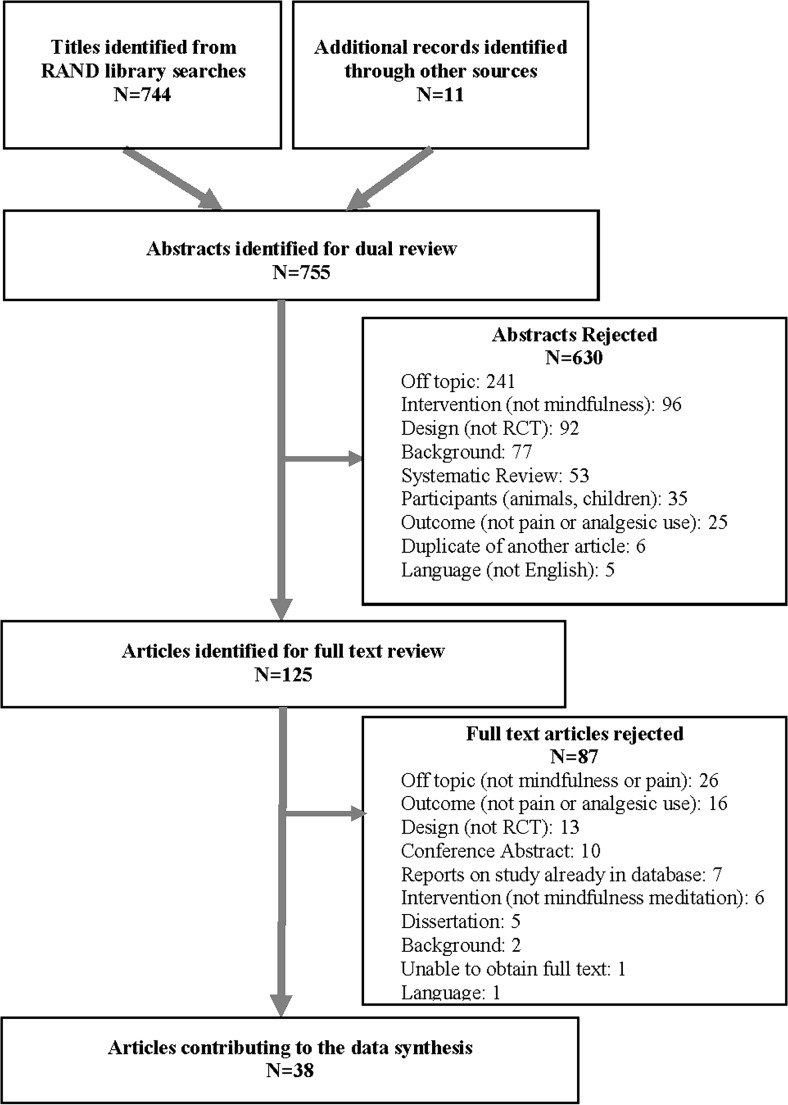
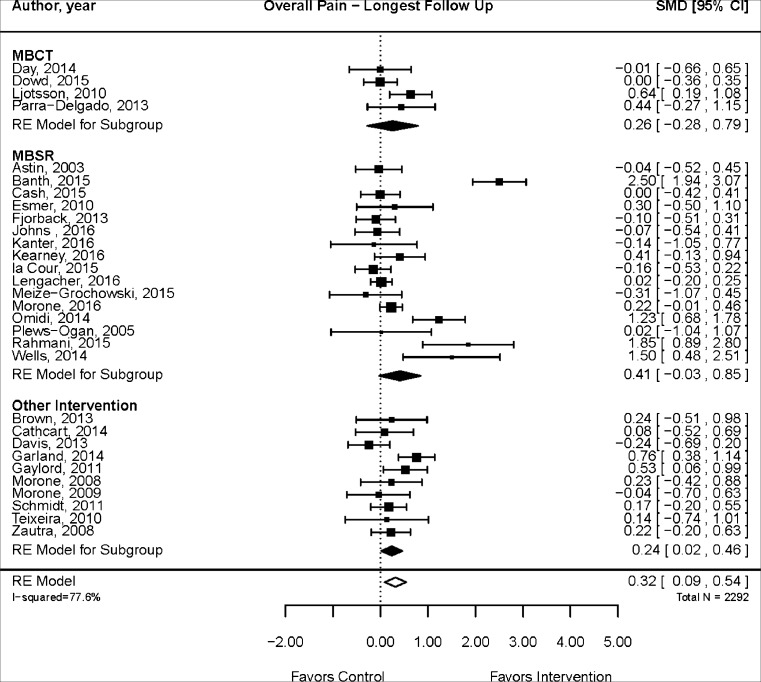
BACKGROUND: Chronic pain patients increasingly seek treatment through mindfulness meditation. PURPOSE: This study aims to synthesize evidence on efficacy and safety of mindfulness meditation interventions for the treatment of chronic pain in adults. METHOD: We conducted a systematic review on randomized controlled trials (RCTs) with meta-analyses using the Hartung-Knapp-Sidik-Jonkman method for random-effects models. Quality of evidence was assessed using the GRADE approach. Outcomes included pain, depression, quality of life, and analgesic use. RESULTS: Thirty-eight RCTs met inclusion criteria; seven reported on safety. We found low-quality evidence that mindfulness meditation is associated with a small decrease in pain compared with all types of controls in 30 RCTs. Statistically significant effects were also found for depression symptoms and quality of life. CONCLUSIONS: While mindfulness meditation improves pain and depression symptoms and quality of life, additional well-designed, rigorous, and large-scale RCTs are needed to decisively provide estimates of the efficacy of mindfulness meditation for chronic pain.
Overview
The claims and statistics of this paper haven’t been checked yet.
Free: it reads the open-access text and checks the first 5 claims that cite a source we can check. Create a free account to check every claim.
Integrity signals
Registry
Cites
Statistics
Figures
Verification
Claims the paper makes
The claims and statistics of this paper haven’t been checked yet.
Free: it reads the open-access text and checks the first 5 claims that cite a source we can check. Create a free account to check every claim.
Claims other papers make about this one
Each is checked against this paper’s own text: does it say what the citing paper says it does?
The source backs part of the claim, not all of it — or backs it for a different population, condition or comparison.
In the citing paper
“MBIs have been shown to alleviate physical and psychological symptoms in many medical conditions including cancer, cardiovascular disease, and chronic pain, as well as psychiatric illnesses (notably, anxiety, and depressive disorders) (Bawa et al., 2015; Evans et al., 2008; Hilton et al., 2017; Lin et al., 2022; Marino et al., 2021; Piet & Hougaard, 2011).”
From Online Mindfulness-Based Cognitive Therapy for People with Parkinson’s Disease and Their Caregivers: a Pilot Study (2022) · cites this paper as Hilton et al., 2017
Experimental — accuracy not yet measuredThe source backs part of the claim, not all of it — or backs it for a different population, condition or comparison.
In the citing paper
“research demonstrating that MM can lead to reductions in pain intensity,[16] pain interference,[15, 29] and pain-related affect,[30, 31]”
From The chronic pain skills study: Protocol for a randomized controlled trial comparing hypnosis, mindfulness meditation and pain education in Veterans (2020) · cites this paper as [16]
Experimental — accuracy not yet measuredThe source backs part of the claim, not all of it — or backs it for a different population, condition or comparison.
In the citing paper
“Evidence indicates that mindfulness-based interventions (MBIs) may be effective for patients with chronic pain, reducing perceived pain and decreasing harmful psychological features often associated with chronic pain, such as depression and pain catastrophizing.1,7,19,24,37”
From Randomized, wait-list–controlled pilot study of app-delivered mindfulness for patients reporting chronic pain (2021) · cites this paper as [19]
Experimental — accuracy not yet measuredThe source backs part of the claim, not all of it — or backs it for a different population, condition or comparison.
In the citing paper
“Although mindfulness can be an effective approach to the self-management of chronic pain, most research to date has been conducted on either brief inductions of mindfulness14,28,49 or on more time-intensive and resource-intensive group-based interventions.7,19”
From Randomized, wait-list–controlled pilot study of app-delivered mindfulness for patients reporting chronic pain (2021) · cites this paper as [19]
Experimental — accuracy not yet measuredThe source backs part of the claim, not all of it — or backs it for a different population, condition or comparison.
In the citing paper
“Mindfulness-based interventions (MBIs) have been found to be effective in reducing stress, anxiety, and depression, as well as improving overall quality of life in individuals with chronic illnesses (Gotink et al. 2015;Hilton et al. 2017;Niazi and Niazi 2011).”
From Lessons from Master Hongyi’s Experiences with Impermanence for Death Education (2024) · cites this paper as Hilton et al. 2017
Experimental — accuracy not yet measured
21 more claims about this paper
Create a free account to see every claim other papers make about this one.
Self-check
Percentages, sums and reported differences re-computed from the paper’s own numbers.
The self-check needs the paper’s full text.
Citations
Cites
Bias in meta-analysis detected by a simple, graphical test
Egger, M., Smith, G. D., Schneider, M., & Minder, C. (1997) · BMJ · doi:10.1136/bmj.315.7109.629 · Cited by 56,722 · cited 1×
“The quality of the body of evidence was assessed using the GRADE approach [22, 26] by which a determination of high, moderate, low, or very low was made for each major outcome [27].”
MethodGRADE guidelines: 3. Rating the quality of evidence
Balshem, H., Helfand, M., Schünemann, H. J., Oxman, A. D., Kunz, R., Brozek, J., Vist, G. E., Falck-Ytter, Y., Meerpohl, J., & Norris, S. (2011) · Journal of Clinical Epidemiology · doi:10.1016/j.jclinepi.2010.07.015 · Cited by 8,285 · cited 1×
“The quality of the body of evidence was assessed using the GRADE approach [22, 26] by which a determination of high, moderate, low, or very low was made for each major outcome [27].”
MethodMeditation Programs for Psychological Stress and Well-being: A Systematic Review and Meta-analysis
Goyal, M., Singh, S., Sibinga, E. M. S., Gould, N. F., Rowland-Seymour, A., Sharma, R., Berger, Z., Sleicher, D., Maron, D. D., Shihab, H. M., et al. (2014) · JAMA Internal Medicine · doi:10.1001/jamainternmed.2013.13018 · Cited by 2,380
The clinical use of mindfulness meditation for the self-regulation of chronic pain
Kabat-Zinn, J., Lipworth, L., & Burney, R. (1985) · Journal of Behavioral Medicine · doi:10.1007/bf00845519 · Cited by 1,745 · cited 2×
“Early mindfulness studies in pain patients showed promising outcomes on pain symptoms, mood disturbance, anxiety, and depression, as well as pain-related drug utilization [5].”
BackgroundChou, R., Turner, J. A., Devine, E. B., Hansen, R. N., Sullivan, S. D., Blazina, I., Dana, T., Bougatsos, C., & Deyo, R. A. (2015) · Annals of Internal Medicine · doi:10.7326/m14-2559 · Cited by 1,606 · cited 1×
“Systematic review Introduction Chronic pain, often defined as pain lasting longer than 3 months or past the normal time for tissue healing [1], can lead to significant medical, social, and economic consequences, relationship issues, lost productivity, and larger health care costs.”
BackgroundFjorback, L. O., Arendt, M., Ørnbøl, E., Fink, P., & Walach, H. (2011) · Acta Psychiatrica Scandinavica · doi:10.1111/j.1600-0447.2011.01704.x · Cited by 803
A refined method for the meta-analysis of controlled clinical trials with binary outcome
Hartung, J., & Knapp, G. (2001) · Statistics in Medicine · doi:10.1002/sim.1009 · Cited by 775
Cherkin, D. C., Sherman, K. J., Balderson, B. H., Cook, A. J., Anderson, M. L., Hawkes, R. J., Hansen, K. E., & Turner, J. A. (2016) · JAMA · doi:10.1001/jama.2016.2323 · Cited by 729 · cited 3×
“Likewise, a trial of MBSR for back pain [38] found no significant difference between groups in self-reported use of pain medication.”
BackgroundMedical Journal of the Islamic Republic of Iran
(2020) · Medical Journal of the Islamic Republic of Iran · doi:10.14196/mjiri · Cited by 620
Morone, N. E., Greco, C. M., & Weiner, D. K. (2008) · Pain · doi:10.1016/j.pain.2007.04.038 · Cited by 546
Cited by
Items 501–600 of 976
Cherkin, D. C. (2020) · JAMA Internal Medicine · doi:10.1001/jamainternmed.2020.7081 · Cited by 6
Rönne-Petersén, L., Niemi, M., Walach, H., Lavebratt, C., Yang, L. L., Gerdle, B., Ghafouri, B., & Falkenberg, T. (2024) · PLoS ONE · doi:10.1371/journal.pone.0308924 · Cited by 4
Pal, A., Mukhopadhyay, P., Bhattacharyya, D., & Ray, S. (2024) · Indian Journal of Anaesthesia · doi:10.4103/ija.ija_361_24 · Cited by 4
Campo, C., Cellucci, F., Treggiari, G., Spedicato, G. A., Lasaponara, S., & Conversi, D. (2026) · Frontiers in Psychology · doi:10.3389/fpsyg.2026.1755043 · Cited by 5
Gutiérrez, C. S., López‐Millán, J. M., de Rivera, A. C. N., & Gil‐García, E. (2023) · Pain Management Nursing · doi:10.1016/j.pmn.2023.01.007 · Cited by 4
MENDONÇA, J. C. D., Martins, V. D. S., Rodrigues, M. P. D., Fernandes, C. H. F., & Fernandes, I. F. (2023) · Brazilian Journal of Implantology and Health Sciences · doi:10.36557/2674-8169.2023v5n5p129-144 · Cited by 23
Rodriguez, A. C. I., Nephew, B. C., Polcari, J. J., Melican, V., King, J. A., & Gardiner, P. M. (2024) · Global Advances in Integrative Medicine and Health · doi:10.1177/27536130241254793 · Cited by 5
“16,17 Common interventions practiced for chronic pain reduction include Mindfulness-Based Stress Reduction (MBSR), Mindfulness-Based Cognitive Therapy (MBCT), and integrative treatments that combine mindfulness techniques with other conventional and complementary therapies.”
BackgroundHaun, J. N., Fowler, C. A., Venkatachalam, H. H., Alman, A. C., Ballistrea, L. M., Schneider, T., Benzinger, R. C., Melillo, C., Alexander, N. B., Klanchar, S. A., et al. (2024) · Journal of Medical Internet Research · doi:10.2196/57322 · Cited by 7
“Finally, MR also includes a mindfulness-based component, which has been associated with short-term effects on pain intensity and physical functioning [33,52-55].”
Depression and Pain: Bidirectional Relationship and Changes with Psychological Treatment
Miller-Matero, L. R. (2024) · Oxford University Press eBooks · doi:10.1093/9780197675250.003.0005 · Cited by 5
Lederer, A., Manteufel, I., Knott, A., Müller, A., Kousoulas, L., Werthmann, P. G., Klein, A. C., & Huber, R. (2024) · Journal of Clinical Medicine · doi:10.3390/jcm13216406 · Cited by 5
Augmentation of Interstitial Cystitis–Bladder Pain Syndrome Treatment With Meditation and Yoga
Dao, A., Komesu, Y. M., Jansen, S. M., Petersen, T. R., & Meriwether, K. V. (2025) · Obstetrics and Gynecology · doi:10.1097/aog.0000000000005820 · Cited by 4
Day, M. A., Ehde, D. M., Sterling, M. M., & Jensen, M. P. (2025) · Current Opinion in Psychology · doi:10.1016/j.copsyc.2025.101995 · Cited by 4
Liu, Y., Yin, S., Hu, Q., Fei, Y., Zhong, Y., Ji, Q., & Zhu, F. (2025) · Mindfulness · doi:10.1007/s12671-025-02557-0 · Cited by 7
“Numerous studies have validated the beneficial effects of MBSR/MBCT in chronic pain (Hilton et al., 2017; Khusid & Vythilingam, 2016), diabetes (Inverso et al., 2022), cardiovascular disease (Scott-Sheldon et al., 2020; Zou et al., 2021), epilepsy (Lai et al., 2021), cancer (Fan et al., 2023; Pedro…”
Weisman, A., Yona, T., & Masharawi, Y. (2025) · PeerJ · doi:10.7717/peerj.19448 · Cited by 4
“…fi ndings directly challenge premises 1 and 2 of our formal logical argument, which, although simpli fi ed, represents the prevailing logic in pain research and clinical practice ( Hilton et al., 2017 ; Louw et al., 2021 ; Sanabria-Mazo et al., 2023 ; Tlach & Hampel, 2011 ; Wetherell et al., 2011 ).”
Shi, K., Feng, G., Ye, M., Bi, X., Cui, H., Chen, W., Gao, T., Qing, Z., & Ma, Y. (2025) · PLoS ONE · doi:10.1371/journal.pone.0331084 · Cited by 7
Sumanacara, A. (2017) · Journal of Religion and Health · doi:10.1007/s10943-017-0469-y · Cited by 4
“Over the last few decades, mindfulness has also been utilized as a method for overcoming chronic pain (Hilton et al. 2016).”
MethodComplementary and Alternative Approaches to Chronic Daily Headache: Part I—Mind/Body
Wells, R. E., Granetzke, L., & Paolini, B. (2018) · Springer eBooks · doi:10.1007/978-3-319-91491-6_18 · Cited by 5
“Stories of starting”: Understanding the complex contexts of opioid misuse initiation
Spencer, N. E., Taubenberger, S. P., Roberto, R., Krishnamurti, L. S., Chang, J. C., & Hacker, K. A. (2021) · Substance Abuse · doi:10.1080/08897077.2021.1878084 · Cited by 4
Gadzhanova, S., & Roughead, E. E. (2024) · Journal of Clinical Pharmacy and Therapeutics · doi:10.1155/2024/8040681 · Cited by 7
Cool or hot: How dietary restraint produces both positive and negative eating behaviors
Moore, K., Walker, D., & Laczniak, R. N. (2024) · Food Quality and Preference · doi:10.1016/j.foodqual.2024.105147 · Cited by 8
Use of Complementary and Alternative Medicine in Patients with Rare Bone Diseases and Osteoporosis
Kocijan, R., Medibach, A., Lechner, L., Haschka, J., Kocijan, A., Kraus, D. A., Zwerina, J., & Behanová, M. (2024) · Nutrients · doi:10.3390/nu16060816 · Cited by 4
“The field of self-help options is huge, and these may be beneficial for improving quality of life and to relieve symptoms, but research evidence is too scarce to draw firm conclusions [47].”
Smith, F., Howie, L., Malsingh, J., O’Mant, A., Shakespeare, S., & Tunney, K. (2024) · Physical Therapy Reviews · doi:10.1080/10833196.2024.2367814 · Cited by 5
Yalfani, A., & Asgarpoor, A. (2024) · Journal of Bodywork and Movement Therapies · doi:10.1016/j.jbmt.2024.07.052 · Cited by 4
Barber, M., Evans, S., Marks, R., Sheedy, J., Miller, R., Lopez, S., & O’Shea, M. (2025) · Complementary Therapies in Clinical Practice · doi:10.1016/j.ctcp.2025.101955 · Cited by 5
Christopoulou, E., & Pavlopoulos, V. (2025) · Journal of Contemporary Psychotherapy · doi:10.1007/s10879-025-09663-z · Cited by 9
“Research supports the effectiveness of meditative practices in managing chronic pain (Hilton et al., 2017), functional somatic disorders (Fjorback et al., 2012), and overall health outcomes in individuals living with HIV (Gonzalez et al., 2021).”
RetractedKishor, M. R., Chandran, S., Maheshwari, S., Mathur, S., & Rao, T. S. (2018) · Annals of Indian Psychiatry · doi:10.4103/aip.aip_2_18 · Cited by 4
Ferreira-Valente, A., Pimenta, F., Costa, R. M., Day, M. A., Ribeiro, J. L. P., & Jensen, M. P. (2021) · BMJ Open · doi:10.1136/bmjopen-2020-040068 · Cited by 5
Zhang, Q., Li, X., Qiao, S., Liu, S., Shen, Z., & Zhou, Y. (2021) · Journal of Pain Research · doi:10.2147/jpr.s301651 · Cited by 4
Role of Rehabilitation in Opioid Tapering: A Scoping Review
Wiens, M., Jarrett, D., Settimi, A., White, C., Hollingham, Z., & Packham, T. (2021) · Physiotherapy Canada · doi:10.3138/ptc-2020-0011 · Cited by 4
Preliminary study: quantification of chronic pain from physiological data
Cheng, Z., Ly, F. S., Santander, T., Turki, E., Zhao, Y., Yoo, J., Lonergan, K., Gray, J., Li, C. H., Yang, H. T. Y., et al. (2022) · PAIN Reports · doi:10.1097/pr9.0000000000001039 · Cited by 4
“and meditation.(7,32,43,102) Multimodal combinations of these techniques have been successful.”
BackgroundBarton, M. F., Groves, J. E., Guevel, B., Saint, K., Barton, B. L., Hamza, M., & Papatheodorou, S. (2023) · Cureus · doi:10.7759/cureus.40102 · Cited by 7
Pauly, T., Nicol, A., Lay, J. C., Ashe, M. C., Gerstorf, D., Graf, P., Linden, W., Madden, K. M., Mahmood, A. N., Murphy, R. A., et al. (2023) · Canadian Journal on Aging / La Revue canadienne du vieillissement · doi:10.1017/s0714980823000326 · Cited by 4
“Mindfulness is a mental state that has been shown to affect various types of chronic pain (Hilton et al., 2017; Khoo et al., 2019).”
BackgroundHarris, K., Jackson, J. L., Webster, H., Farrow, J., Zhao, Y., & Hohmann, L. A. (2023) · Pharmacy · doi:10.3390/pharmacy11050150 · Cited by 13
“Mindfulness-based stress reduction (MBSR) is one such complementary and integrative method that has been proven to reduce chronic pain, improve pain-related depressive symptoms, and improve quality of life [6,7].”
BackgroundEffects of a Mind-Body Program for Chronic Pain in Older versus Younger Adults
LaRowe, L. R., Bakhshaie, J., Vranceanu, A., & Greenberg, J. (2023) · Journal of Pain Research · doi:10.2147/jpr.s435639 · Cited by 8
Koenig, H. G., VanderWeele, T. J., & Peteet, J. R. (2023) · Oxford University Press eBooks · doi:10.1093/oso/9780190088859.003.0002 · Cited by 5
The Six R’s Framework as Mindfulness for Suicide Prevention
Le, T. N., Kielburger, L. C., & Buddharakkhita, B. (2018) · Advances in mental health and addiction · doi:10.1007/978-3-030-03225-8_11 · Cited by 4
Brooks, A. K., MILLER, D. P., Fanning, J. T., Sutfin, E. L., Reid, M. C., Wells, B. J., Leng, X., & Hurley, R. W. (2020) · JMIR Research Protocols · doi:10.2196/14525 · Cited by 5
“There is a growing body of evidence showing that nonpharmacological behavioral treatment programs, which promote self-management techniques (like mindfulness meditation [17] and increasing physical activity [18]), are effective treatments for chronic pain.”
BackgroundKohut, S. A., & Saltzman, A. (2021) · Pediatric Annals · doi:10.3928/19382359-20210117-01 · Cited by 6
McIntyre, A., Mehta, S., Vanderlaan, D., Sequeira, K., Loh, E., & Teasell, R. W. (2021) · Pain Research and Management · doi:10.1155/2021/9946067 · Cited by 5
“As mentioned above, nonpharmacological methods for addressing pain and coping include pacing activities, cognitive behavioral therapy [29], dialectical behavioral therapy [30], acceptance and commitment therapy [31], and mindfulness [32].”
BackgroundDiagnosis and Treatment of Carpal Tunnel Syndrome in Low-prevalence Circumstances
Waljee, J. F., & Ring, D. (2018) · Journal of the American Academy of Orthopaedic Surgeons · doi:10.5435/jaaos-d-17-00575 · Cited by 4
Lessons from Master Hongyi’s Experiences with Impermanence for Death Education
Shi (Hsu-Feng Lee), F. (2024) · Religions · doi:10.3390/rel15050528 · Cited by 3
“Mindfulness‑based interventions (MBIs) have been found to be effective in reducing stress, anxiety, and depression, as well as improving overall quality of life in in‑ dividuals with chronic illnesses (Gotink et al. 2015; Hilton et al. 2017; Niazi and Niazi 2011).”
BackgroundPal, A., Mukhopadhyay, P., Biswas, R., & Bhattacharya, D. (2023) · Indian Journal of Psychiatry · doi:10.4103/indianjpsychiatry.indianjpsychiatry_393_23 · Cited by 3
“[9] The American college of physicians included mindfulness in their clinical practice guidelines for chronic low back pain.”
Trauma and Behavioral Health Care for Patients with Chronic Pain
Salahuddin, D., & Conti, T. (2022) · Primary Care - Clinics in Office Practice · doi:10.1016/j.pop.2022.04.001 · Cited by 3
Micheli, N., Porcelli, P., Barrault-Couchouron, M., & Dantzer, C. (2022) · Frontiers in Psychology · doi:10.3389/fpsyg.2022.996559 · Cited by 3
Robust Evidence in Integrative Medicine: Innovations, Challenges, and Future Directions
Lee, Y., Lee, M. S., Moher, D., Ha, I., Liu, J., Alræk, T., Birch, S., Kim, T., Lee, Y. J., Franco, J. V. A., et al. (2024) · Perspectives on Integrative Medicine · doi:10.56986/pim.2024.10.005 · Cited by 3
“Prof. Holger Cramer highlighted that yoga and meditation are frequently used by individuals dealing with chronic pain conditions, as extensively discussed in recent publications covering back pain [18-20], arthritis [21,22], anxiety [23], and depression [24,25].”
BackgroundProvan, S. A., Calogiuri, G., Røset, L., Mariussen, M., Rosøy, I., Johnsen, T. J., Johansen, T. R., Flaten, O. E., & Litleskare, S. (2025) · BMC Sports Science Medicine and Rehabilitation · doi:10.1186/s13102-025-01102-9 · Cited by 3
Development and content validation of integrated yoga module for patients with essential tremor
Patidar, M., Joshi, D., & Nathani, N. (2025) · European Journal of Integrative Medicine · doi:10.1016/j.eujim.2025.102463 · Cited by 3
Schuman‐Olivier, Z., Marin, F., Kinder, L. D., Datko, M., Round, K., Tohyama, S., Garcia, R. G., Hirschtick, R., Edwards, R. R., Wells, R. E., et al. (2025) · Contemporary Clinical Trials · doi:10.1016/j.cct.2025.107947 · Cited by 3
Liu, Y., Shang, J., Zhang, Y., Liu, L., & Zhang, W. (2025) · Frontiers in Neurology · doi:10.3389/fneur.2025.1627376 · Cited by 5
Complementary therapies for chronic knee pain: A placebo-controlled RCT of Reiki and mindfulness
Hanley, A. W., Nakamura, Y., Edwards, R. R., Lingard, A., Childs, K., Faulkner, J., Schnitt, R., Claire, S. V.-S., Bridge, E., & Garland, E. L. (2025) · Complementary Therapies in Medicine · doi:10.1016/j.ctim.2025.103278 · Cited by 3
Comparing the Effects of Yoga Nidra and Body Scan Meditation on Pain Outcomes
Gibbs, V., Hanney, W. J., & Anderson, A. W. (2025) · International Journal of Yoga · doi:10.4103/ijoy.ijoy_2_25 · Cited by 3
Kim, M., Choi, Y., Cho, Y., Kim, S., Lee, H., & Park, S. H. (2026) · Supportive Care in Cancer · doi:10.1007/s00520-026-10584-3 · Cited by 3
Perspective on salutogenic approaches to persistent pain with a focus on mindfulness interventions
Paley, C. A., & Johnson, M. I. (2023) · Frontiers in Pain Research · doi:10.3389/fpain.2023.1188758 · Cited by 22
Understanding the Religion, Mental, and Social Health Relationship
Koenig, H. G., VanderWeele, T. J., & Peteet, J. R. (2023) · Oxford University Press eBooks · doi:10.1093/oso/9780190088859.003.0016 · Cited by 7
The Moderating Effects of Cognitive Processes on Pain-related Outcomes
Torres, N. D., Newman, A. K., Day, M. A., Chan, J. F., Friedly, J. L., & Jensen, M. P. (2024) · Journal of Pain · doi:10.1016/j.jpain.2024.01.348 · Cited by 3
Improving Spiritual Well-Being of Polish Pain Outpatients: A Feasibility Mixed Methods Study
Klimasiński, M. W., Baum, E., Wieczorowska–Tobis, K., & Stelcer, B. (2024) · Journal of Clinical Medicine · doi:10.3390/jcm13123615 · Cited by 5
“Numerous reviews of spiritual interventions in the treatment of both cancer pain [30,31] and non-cancer pain (headaches, musculoskeletal pain) [32–35] are available; however, to the best of the authors’ knowledge, a model of spiritual care in the chronic pain treatment clinic has not been published…”
BackgroundRocca, G. L., Orlando, V., Galieri, G., Mazzucchi, E., Pignotti, F., Cusumano, D., Bazzu, P., Olivi, A., & Sabatino, G. (2024) · Journal of Personalized Medicine · doi:10.3390/jpm14090917 · Cited by 4
Fang, G., Lin, J., Cao, L., Liu, T.-S., Ma, Y.-H., & Lu, Y. (2024) · World Journal of Psychiatry · doi:10.5498/wjp.v14.i10.1506 · Cited by 3
Wasylkowska, M. A., Kobylińska, D., Mituniewicz, J., & Holas, P. (2025) · Mindfulness · doi:10.1007/s12671-025-02568-x · Cited by 4
“…(Barrington and Jarry, 2019; Hayes et al., 2006), psychological flexibility (Ciarrochi et al., 2010; Hayes et al., 2006), lowering anxiety (Hilton et al., 2017; Holas, 2015), depression (Goldberg et al., 2019; Holas et al., 2020), peer relationships and quality of adult life (Cur-rie et…”
Effects of Mindfulness on Postoperative Pain, Anxiety, and Opioid Use: An Integrative Review
Miller, M. A., Ye, L., van Pelt, M., & Pavone, K. J. (2025) · Pain Management Nursing · doi:10.1016/j.pmn.2025.04.004 · Cited by 3
Hahne, I., Segerer, J., Zierhut, M. M., Bergmann, N., Ta, T. M. T., Hahn, E. W., & Böge, K. (2025) · Scientific Reports · doi:10.1038/s41598-025-03380-2 · Cited by 5
“Mindfulness-based treatment approaches were found to be e�cacious in the treatment of a variety of conditions such as chronic pain [2, 3], substance misuse [4], depressive symptoms [5] as well as anxiety and stress [6].”
Candidate Targets for Resilience Training to Reduce Transdiagnostic Risk for Mental Illness
Holt, D. J., Sussman, R. F., Johnson, D., Vinke, L. N., Berman, T., Zimmerman, J., Utter, L., Burke, A., & DeTore, N. R. (2025) · Schizophrenia Bulletin · doi:10.1093/schbul/sbaf072 · Cited by 5
Lam, A. H. Y., Leung, S. F., & Chien, W. T. (2021) · Contemporary Nurse · doi:10.1080/10376178.2021.1994864 · Cited by 5
Maldonado, R. I. P., Henríquez, P. R., Salinas-Rivera, E., & Moreno-Coutiño, A. B. (2021) · Psicología y Salud · doi:10.25009/pys.v32i1.2712 · Cited by 4
Mindfulness Training's Effect of Pain Outcomes in Musculoskeletal Pain: A Systematic Review
Cruze, E., & Games, K. E. (2021) · Journal of Sports Medicine and Allied Health Sciences Official Journal of the Ohio Athletic Trainers Association · doi:10.25035/jsmahs.07.02.01 · Cited by 5
Posttraumatic growth and pain acceptance: A profile analysis of chronic pain experience.
Ayache, R., & Goutaudier, N. (2022) · Canadian Journal of Behavioural Science/Revue canadienne des sciences du comportement · doi:10.1037/cbs0000289 · Cited by 7
Stanos, S. P., Tyburski, M. D., & Harden, R. N. (2020) · Elsevier eBooks · doi:10.1016/b978-0-323-62539-5.00037-0 · Cited by 3
Shaygan, M., & Hosseini, F. A. (2022) · Musculoskeletal Care · doi:10.1002/msc.1635 · Cited by 3
Xia, A. (2022) · Journal of Traditional Chinese Medical Sciences · doi:10.1016/j.jtcms.2022.06.005 · Cited by 3
Krohner, S., Yamin, J. B., Ziadni, M. S., McIntosh, J. N. C., Schubiner, H. H., & Lumley, M. A. (2022) · Journal of Clinical Psychology in Medical Settings · doi:10.1007/s10880-022-09913-5 · Cited by 5
“Mindfulness and acceptance-based interventions are also commonly used, but their effects for these populations also tend to be quite modest (Hilton et al., 2017).”
BackgroundSong, G., Tian, C., Wu, L., Liu, M., & Lu, H. (2022) · Frontiers in Psychiatry · doi:10.3389/fpsyt.2022.1092199 · Cited by 4
Non-pharmaceutical management of chronic pain
Gupta, R. (2023) · GSC Advanced Research and Reviews · doi:10.30574/gscarr.2023.16.2.0112 · Cited by 8
“Studies have suggested that MBSR may be effective in reducing pain and improving function in patients with chronic pain conditions such as low back pain and fibromyalgia (6).”
Baumann, I., Kalmar, J., Gruber, E., Blanck, P., Vonderlin, E., Heidenreich, T., & Mander, J. (2024) · Journal of Clinical Psychology · doi:10.1002/jclp.23645 · Cited by 3
Approches psychocorporelles et psychothérapies
Bioy, A., Barfety-Servignat, V., & Vulser, C. (2020) · Elsevier eBooks · doi:10.1016/b978-2-294-76067-9.00016-2 · Cited by 3
Managing Pain in Patients With Comorbid Alcohol Use Disorder and Chronic Pain
Maleki, N., Thompson, B., Janiuk, K., Dhingra, L. K., & Chen, L. L. (2024) · Current Addiction Reports · doi:10.1007/s40429-024-00563-1 · Cited by 3
Addressing Stress Among Healthcare Workers Using Mindfulness-Based Interventions
Dave, P. (2024) · Asian Journal of Dental and Health Sciences · doi:10.22270/ajdhs.v4i2.89 · Cited by 3
Hathaway, L., & O'Shields, B. (2024) · ACSMʼs Health & Fitness Journal · doi:10.1249/fit.0000000000001006 · Cited by 3
Geyer, C. (2019) · American Journal of Lifestyle Medicine · doi:10.1177/1559827619840638 · Cited by 3
Kwon, C., Lee, B., Chung, S.-Y., & Kim, J. W. (2020) · EXPLORE · doi:10.1016/j.explore.2020.05.016 · Cited by 4
Heinzerling, K. G. (2018) · Elsevier eBooks · doi:10.1016/b978-0-323-54856-4.00009-2 · Cited by 6
Dhawan, D., & Mathur, A. (2020) · Mental Health Religion & Culture · doi:10.1080/13674676.2020.1718067 · Cited by 4
Pasqualucci, P. L., Seifert, G., Filho, V. O., & dos Santos, A. C. (2022) · Pilot and Feasibility Studies · doi:10.1186/s40814-022-01176-z · Cited by 5
On the Alignment of Yoga Therapy with Palliative Care
Marchand, N., & Moonaz, S. H. (2020) · The Journal of Alternative and Complementary Medicine · doi:10.1089/acm.2020.0087 · Cited by 3
Gillespie, A. L., & Harmer, C. J. (2022) · American Journal of Psychiatry · doi:10.1176/appi.ajp.20220712 · Cited by 4
Factors Associated With Interest in Engaging in Psychological Interventions for Pain Management
Miller-Matero, L. R., Yaldo, M., Chohan, S., Zabel, C., Patel, S. R., Chrusciel, T., Salas, J., Wilson, L., Sullivan, M. D., Ahmedani, B. K., et al. (2023) · Clinical Journal of Pain · doi:10.1097/ajp.0000000000001165 · Cited by 2
“10 Acceptance and Commitment Therapy builds upon components of mindfulness and promotes acceptance of negative thoughts and commitment to establishing a positive lifestyle.”
BackgroundLiu, M.-C., Liang, S., Chao, T., Tseng, L., & Rosenberg, J. P. (2023) · Healthcare · doi:10.3390/healthcare11222911 · Cited by 2
“Another study found that mindfulness meditation was significantly associated with a decrease in pain [18].”
BackgroundNunes, G. M., Paiva, S. D. P. C., Geber, S., Serra, A. S. V. D. A., Sampaio, M. A. C., & Tavares, R. L. C. (2024) · EXPLORE · doi:10.1016/j.explore.2024.103067 · Cited by 2
Nemesure, B. B., Wood, S. K., & Mermelstein, L. (2025) · Supportive Care in Cancer · doi:10.1007/s00520-025-09627-y · Cited by 5
“While research exists for the benefits of diverse mind–body interventions on symptom management and general well-being among individuals with cancer [19], there is much heterogeneity in these findings.”
Halbedl, H., Pfabigan, D. M., Ebhardt, I., & Trutnovsky, G. (2025) · Journal of Psychosomatic Obstetrics & Gynecology · doi:10.1080/0167482x.2025.2531057 · Cited by 3
Aguerre, N. V., Miró, E., Martínez, M. P., Raya-Terrón, A., & Sánchez, A. I. (2025) · Mindfulness · doi:10.1007/s12671-025-02643-3 · Cited by 6
“…attitude to various factors associated with pain experience, both through mindfulness training (see the meta-analysis by Best et al., 2024; Hilton et al., 2017; Ng et al., 2024; Nicolardi et al., 2024), and dispositional or trait mindfulness (e.g., Harrison et al., 2019; McCracken &…”
Integrative medicine for chronic pain management: a narrative review
Rayasam, S. S., & Woodbury, A. (2025) · Current Opinion in Anaesthesiology · doi:10.1097/aco.0000000000001557 · Cited by 2
Mindfulness Based Pain Management (MBPM) for Chronic Pain: Long-Term Effects
Salaberría, K., Pérez, J. I., & de Ocenda, Á. R. (2025) · Journal of Contemporary Psychotherapy · doi:10.1007/s10879-025-09698-2 · Cited by 2
“In this regard, a systematic review and meta-analysis conducted by Hilton et al. (2017) identified 30 randomized controlled trials (RCTs), but only one study by Fjorback et al. (2013) included a 12-month follow-up with patients with somatization disorders, showing that the results of mindfulness…”
Adopting Principles to Guide Pathways
Simon, C. B., Eucker, S. A., & Schmader, K. E. (2025) · Clinics in Geriatric Medicine · doi:10.1016/j.cger.2025.09.010 · Cited by 2
Xie, Q., Goldberg, S. B., Jacobson, N. A., Rakel, D. P., & Quanbeck, A. (2025) · Journal of Pain Research · doi:10.2147/jpr.s568016 · Cited by 4
Laulan, P., Rimmele, U., & Cuadrado, J. (2026) · Mindfulness · doi:10.1007/s12671-026-02767-0 · Cited by 4
“These findings align with meta-analytic evidence from 38 randomized controlled trials showing mindfulness interventions produced moderate effects for pain reduction ( SMD = 0.32), though with substantial heterogeneity between studies (Hilton et al., 2017).”
InfluentialPham, T. V., Bayne, K., Yucebas, D., Stewart, N., Taveras, D. A., Enkhtsetseg, N., Kincade, M., & Vranceanu, A. (2026) · Journal of Clinical Psychology in Medical Settings · doi:10.1007/s10880-026-10153-0 · Cited by 2
Kang, S. W. (2017) · Perspectives in Nursing Science · doi:10.16952/pns.2017.14.2.64 · Cited by 2
Living with Spondylolisthesis with (Relative) Equanimity
Dobkin, P. L. (2018) · OBM Integrative and Complementary Medicine · doi:10.21926/obm.icm.1803013 · Cited by 3
Zur, M. K., Jones, A., & Förster, B. (2018) · Clinical Neurophysiology · doi:10.1016/j.clinph.2018.09.027 · Cited by 3
Volodina, M. A., Smetanin, N., Русинова, А., Lebedev, M., & Ossadtchi, A. E. (2021) · International Conference Neurotechnologies and Neurointerfaces (CNN) · doi:10.1109/cnn53494.2021.9580200 · Cited by 2
Metadata
- Authors
- Hilton, L., Hempel, S., Ewing, B. A., Apaydin, E., Xenakis, L., Newberry, S., Colaiaco, B., Maher, A. R., Shanman, R. M., Sorbero, M. E., & Maglione, M. A.
- Affiliations
- RAND Corporation (US)
- Corresponding author
- Hilton, Lara
- ORCID
- Venue
- Annals of Behavioral Medicine
- Publisher
- Oxford University Press (OUP)
- Published
- 2016-09-22
- Volume
- 51
- Issue
- 2
- Pages
- 199-213
- ISSN
- 0742-5554 (ISSN-L)
- 0883-6612
- 1532-4796
- PMC
- PMC5368208
- OpenAlex
- W2521208344
- Semantic Scholar
- c2a7b6ba6b4cb1795860f4f990a38fb8128dd178
- Cited by
- 977
- References
- 68
- Citations by year
- 2026: 60 · 2025: 118 · 2024: 122 · 2023: 156 · 2022: 121 · 2021: 130 · 2020: 113 · 2019: 75 · 2018: 69 · 2017: 12 · 2016: 1
- FWCI
- 7.76
- Type
- journal article
- Language
- en
- Open access
- hybrid
- doi.org
- Locations
- Annals of Behavioral Medicine (publishedVersion, cc-by)
- Europe PMC (PubMed Central) (publishedVersion, cc-by)
- PubMed Central (publishedVersion, cc-by)
- PubMed (publishedVersion)
- Funders
- Defense Centers of Excellence for Psychological Health and Traumatic Brain Injury (14-539.2)
- Topics
- Social Sciences › Psychology › Clinical Psychology › Mindfulness and Compassion Interventions
- Health Sciences › Health Professions › Physical Therapy, Sports Therapy and Rehabilitation › Musculoskeletal pain and rehabilitation
- Life Sciences › Neuroscience › Cognitive Neuroscience › Pain Management and Placebo Effect
- Keywords
- mindfulness meditation, chronic pain, analgesia, depressive symptoms, quality of life, analgesic use, treatment safety, non-pharmacological pain management
- MeSH terms
- Humans, Quality of Life, Treatment Outcome, Meditation, Chronic Pain, Pain Management, Mindfulness
About these checks
Registry, retraction, Cites and statistics results are computed, not judged, with one exception: a printed reference that no index lists is read once by a model before it counts as a citation error. Claims are extracted by a model and kept only when their quote appears verbatim in the text; each cited source is then checked, with a model’s help, for whether it says what the claim relies on. Those verdicts can be wrong — read the claim’s quote and the cited source before relying on one.
Statistics and arithmetic are recomputed, not judged.
Confidence bands are shown only for fields calibrated on our annotated test set. None is calibrated yet, so no band is shown.
What counts as a claim ›How we measure confidence ›How we check this ›
Are you an author, or do you see a problem with this page? Request a review
Data sources
Bibliographic data: Semantic Scholar, OpenAlex, Crossref.
Contains information from the Semantic Scholar Academic Graph Datasets, made available under the ODC Attribution License (ODC-BY 1.0).
Semantic Scholar’s data is described in: Kinney, R., et al. (2023). The Semantic Scholar Open Data Platform. arXiv:2301.10140.
