

Mindfulness Meditation for Chronic Pain: Systematic Review and Meta-analysis
Open accessThe DOI matches its Crossref record; 67 of the 68 references it cites were found in a registry or an index.
Abstract
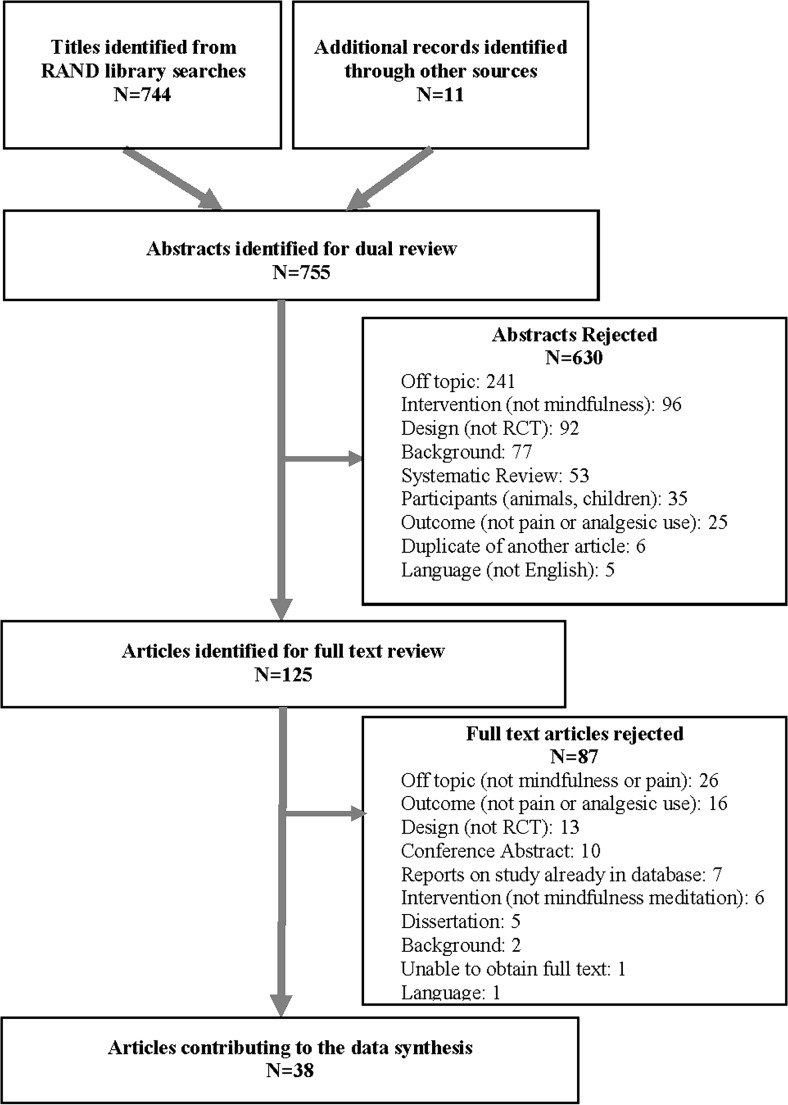
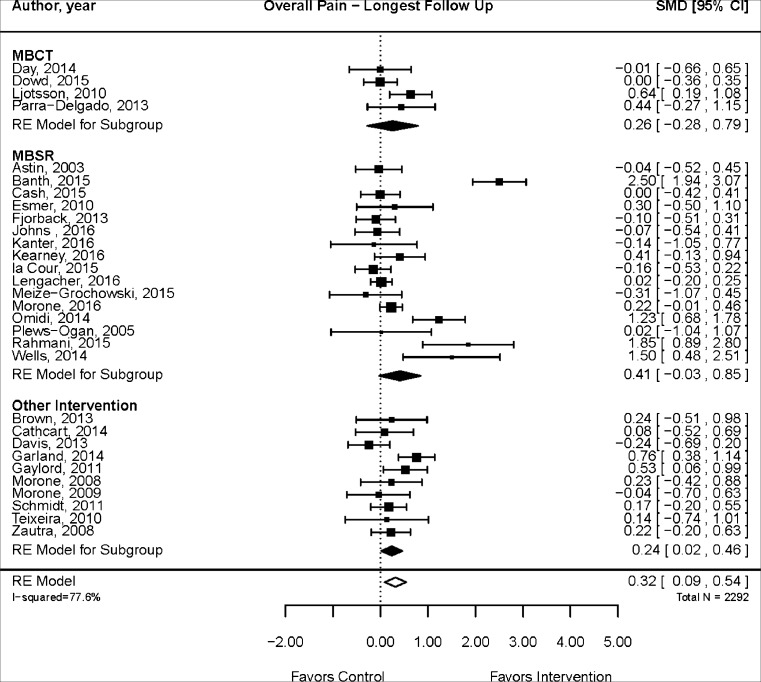
BACKGROUND: Chronic pain patients increasingly seek treatment through mindfulness meditation. PURPOSE: This study aims to synthesize evidence on efficacy and safety of mindfulness meditation interventions for the treatment of chronic pain in adults. METHOD: We conducted a systematic review on randomized controlled trials (RCTs) with meta-analyses using the Hartung-Knapp-Sidik-Jonkman method for random-effects models. Quality of evidence was assessed using the GRADE approach. Outcomes included pain, depression, quality of life, and analgesic use. RESULTS: Thirty-eight RCTs met inclusion criteria; seven reported on safety. We found low-quality evidence that mindfulness meditation is associated with a small decrease in pain compared with all types of controls in 30 RCTs. Statistically significant effects were also found for depression symptoms and quality of life. CONCLUSIONS: While mindfulness meditation improves pain and depression symptoms and quality of life, additional well-designed, rigorous, and large-scale RCTs are needed to decisively provide estimates of the efficacy of mindfulness meditation for chronic pain.
Overview
The claims and statistics of this paper haven’t been checked yet.
Free: it reads the open-access text and checks the first 5 claims that cite a source we can check. Create a free account to check every claim.
Integrity signals
Registry
Cites
Statistics
Figures
Verification
Claims the paper makes
The claims and statistics of this paper haven’t been checked yet.
Free: it reads the open-access text and checks the first 5 claims that cite a source we can check. Create a free account to check every claim.
Claims other papers make about this one
Each is checked against this paper’s own text: does it say what the citing paper says it does?
The source backs part of the claim, not all of it — or backs it for a different population, condition or comparison.
In the citing paper
“MBIs have been shown to alleviate physical and psychological symptoms in many medical conditions including cancer, cardiovascular disease, and chronic pain, as well as psychiatric illnesses (notably, anxiety, and depressive disorders) (Bawa et al., 2015; Evans et al., 2008; Hilton et al., 2017; Lin et al., 2022; Marino et al., 2021; Piet & Hougaard, 2011).”
From Online Mindfulness-Based Cognitive Therapy for People with Parkinson’s Disease and Their Caregivers: a Pilot Study (2022) · cites this paper as Hilton et al., 2017
Experimental — accuracy not yet measuredThe source backs part of the claim, not all of it — or backs it for a different population, condition or comparison.
In the citing paper
“research demonstrating that MM can lead to reductions in pain intensity,[16] pain interference,[15, 29] and pain-related affect,[30, 31]”
From The chronic pain skills study: Protocol for a randomized controlled trial comparing hypnosis, mindfulness meditation and pain education in Veterans (2020) · cites this paper as [16]
Experimental — accuracy not yet measuredThe source backs part of the claim, not all of it — or backs it for a different population, condition or comparison.
In the citing paper
“Evidence indicates that mindfulness-based interventions (MBIs) may be effective for patients with chronic pain, reducing perceived pain and decreasing harmful psychological features often associated with chronic pain, such as depression and pain catastrophizing.1,7,19,24,37”
From Randomized, wait-list–controlled pilot study of app-delivered mindfulness for patients reporting chronic pain (2021) · cites this paper as [19]
Experimental — accuracy not yet measuredThe source backs part of the claim, not all of it — or backs it for a different population, condition or comparison.
In the citing paper
“Although mindfulness can be an effective approach to the self-management of chronic pain, most research to date has been conducted on either brief inductions of mindfulness14,28,49 or on more time-intensive and resource-intensive group-based interventions.7,19”
From Randomized, wait-list–controlled pilot study of app-delivered mindfulness for patients reporting chronic pain (2021) · cites this paper as [19]
Experimental — accuracy not yet measuredThe source backs part of the claim, not all of it — or backs it for a different population, condition or comparison.
In the citing paper
“Mindfulness-based interventions (MBIs) have been found to be effective in reducing stress, anxiety, and depression, as well as improving overall quality of life in individuals with chronic illnesses (Gotink et al. 2015;Hilton et al. 2017;Niazi and Niazi 2011).”
From Lessons from Master Hongyi’s Experiences with Impermanence for Death Education (2024) · cites this paper as Hilton et al. 2017
Experimental — accuracy not yet measured
21 more claims about this paper
Create a free account to see every claim other papers make about this one.
Self-check
Percentages, sums and reported differences re-computed from the paper’s own numbers.
The self-check needs the paper’s full text.
Citations
Cites
Bias in meta-analysis detected by a simple, graphical test
Egger, M., Smith, G. D., Schneider, M., & Minder, C. (1997) · BMJ · doi:10.1136/bmj.315.7109.629 · Cited by 56,722 · cited 1×
“The quality of the body of evidence was assessed using the GRADE approach [22, 26] by which a determination of high, moderate, low, or very low was made for each major outcome [27].”
MethodGRADE guidelines: 3. Rating the quality of evidence
Balshem, H., Helfand, M., Schünemann, H. J., Oxman, A. D., Kunz, R., Brozek, J., Vist, G. E., Falck-Ytter, Y., Meerpohl, J., & Norris, S. (2011) · Journal of Clinical Epidemiology · doi:10.1016/j.jclinepi.2010.07.015 · Cited by 8,285 · cited 1×
“The quality of the body of evidence was assessed using the GRADE approach [22, 26] by which a determination of high, moderate, low, or very low was made for each major outcome [27].”
MethodMeditation Programs for Psychological Stress and Well-being: A Systematic Review and Meta-analysis
Goyal, M., Singh, S., Sibinga, E. M. S., Gould, N. F., Rowland-Seymour, A., Sharma, R., Berger, Z., Sleicher, D., Maron, D. D., Shihab, H. M., et al. (2014) · JAMA Internal Medicine · doi:10.1001/jamainternmed.2013.13018 · Cited by 2,380
The clinical use of mindfulness meditation for the self-regulation of chronic pain
Kabat-Zinn, J., Lipworth, L., & Burney, R. (1985) · Journal of Behavioral Medicine · doi:10.1007/bf00845519 · Cited by 1,745 · cited 2×
“Early mindfulness studies in pain patients showed promising outcomes on pain symptoms, mood disturbance, anxiety, and depression, as well as pain-related drug utilization [5].”
BackgroundChou, R., Turner, J. A., Devine, E. B., Hansen, R. N., Sullivan, S. D., Blazina, I., Dana, T., Bougatsos, C., & Deyo, R. A. (2015) · Annals of Internal Medicine · doi:10.7326/m14-2559 · Cited by 1,606 · cited 1×
“Systematic review Introduction Chronic pain, often defined as pain lasting longer than 3 months or past the normal time for tissue healing [1], can lead to significant medical, social, and economic consequences, relationship issues, lost productivity, and larger health care costs.”
BackgroundFjorback, L. O., Arendt, M., Ørnbøl, E., Fink, P., & Walach, H. (2011) · Acta Psychiatrica Scandinavica · doi:10.1111/j.1600-0447.2011.01704.x · Cited by 803
A refined method for the meta-analysis of controlled clinical trials with binary outcome
Hartung, J., & Knapp, G. (2001) · Statistics in Medicine · doi:10.1002/sim.1009 · Cited by 775
Cherkin, D. C., Sherman, K. J., Balderson, B. H., Cook, A. J., Anderson, M. L., Hawkes, R. J., Hansen, K. E., & Turner, J. A. (2016) · JAMA · doi:10.1001/jama.2016.2323 · Cited by 729 · cited 3×
“Likewise, a trial of MBSR for back pain [38] found no significant difference between groups in self-reported use of pain medication.”
BackgroundMedical Journal of the Islamic Republic of Iran
(2020) · Medical Journal of the Islamic Republic of Iran · doi:10.14196/mjiri · Cited by 620
Morone, N. E., Greco, C. M., & Weiner, D. K. (2008) · Pain · doi:10.1016/j.pain.2007.04.038 · Cited by 546
Cited by
Items 601–700 of 976
Hopkins, S. W., Greenberg, J., Isaacs, J., & Vranceanu, A. (2022) · Journal of Integrative and Complementary Medicine · doi:10.1089/jicm.2021.0324 · Cited by 2
Sado, M., Yamada, M., Ninomiya, A., Nagaoka, M., Goto, N., Koreki, A., Nakagawa, A., Segal, Z. V., & Mimura, M. (2022) · JMIR Research Protocols · doi:10.2196/36012 · Cited by 3
“These results have been affirmed by the findings of several meta-analyses [21-25].”
ResultFlow Meditation Improves Emotion Regulation and Pain Management in Female Fibromyalgia Patients
Amutio, A., Franco, C., Ayala, E. S., & Gordon, W. V. (2022) · Mindfulness · doi:10.1007/s12671-022-01981-w · Cited by 4
The Extreme Environments of Elite Sports
Poimann, D., Eckhardt, H., Cibis, T., & Wirth, M. (2022) · Springer eBooks · doi:10.1007/978-3-030-96921-9_13 · Cited by 4
Edwards, K. A., Reed, D. E., Anderson, D. R., Harding, K. A., Turner, A. P., Soares, B., Suri, P., & Williams, R. M. (2023) · PM&R · doi:10.1002/pmrj.12912 · Cited by 2
“Small effects on pain intensity were also observed following treatment.(75) Mindfulness treatments are delivered across a wide range of chronic pain conditions and in varying formats including in person, telephone, and web-based self-management.”
BackgroundManejo clínico da dor crônica: uma revisão atualizada das estratégias de tratamento
Souza, J. A. D., de Oliveira, A. P., Bertaglia, R. D. S., Pinho, S. C. B. D., Ortiz, W. M., Ribeiro, A. L. S., Centenaro, G. O., Oliveira, G. D., Guasti, E. R., Brito, L. F. T., et al. (2023) · Brazilian Journal of Health Review · doi:10.34119/bjhrv6n4-413 · Cited by 4
Psychological Well-Being and Positive Emotions
Koenig, H. G., VanderWeele, T. J., & Peteet, J. R. (2023) · Oxford University Press eBooks · doi:10.1093/oso/9780190088859.003.0012 · Cited by 2
Srinivasan, R., McVoy, M. K., Neudecker, M., Divan, M. K., Wu, A., Cascio, M. E., Dusek, J. A., & Miller, D. W. (2024) · Journal of Integrative and Complementary Medicine · doi:10.1089/jicm.2023.0427 · Cited by 2
“16 17–20 Thus, the objective of this scoping review was to describe the literature addressing MBIs delivered to pediatric patients with chronic, nonpain, and nonpsychiatric predominant medical conditions with regard to feasibility, acceptability, and effectiveness.”
Pain, mindfulness, and placebo: a systematic review
Lopes, A., Sampaio, R., & Tavares, I. (2024) · Frontiers in Integrative Neuroscience · doi:10.3389/fnint.2024.1432270 · Cited by 3
“Systematic reviews support the efficacy of MBIs in pain management, suggesting that these cognitive-behavioral therapies could be useful (Hilton et al., 2017; Mcclintock et al., 2019; Pardos-Gascon et al., 2021).”
BackgroundMartin, S., Kihlbom, U., Pasquini, G., Gerli, F., Niccolai, C., Bella, S. D., Portaccio, E., Betti, M., Amato, M. P., Achiron, A., et al. (2024) · Multiple Sclerosis and Related Disorders · doi:10.1016/j.msard.2024.106143 · Cited by 4
The Brave New World of the Neoliberal Market: Mindfulness as a VIP Product (or Not)?
Yavuz, M., & Çeviker, G. (2024) · Emerald Group Publishing Limited eBooks · doi:10.1108/s2051-233320240000010006 · Cited by 2
Milani, G., Zerbinati, L., Grassi, L., Fregna, G., Schincaglia, N., Baroni, A., Lamberti, N., Manfredini, F., & Straudi, S. (2024) · Advances in Rehabilitation Science and Practice · doi:10.1177/27536351241308176 · Cited by 3
Yalfani, A., & Asgarpoor, A. (2025) · Disability and Rehabilitation · doi:10.1080/09638288.2025.2451219 · Cited by 2
“…pain and eliminating unhelpful beliefs and adopting a healthy lifestyle leads to improvement of pain and disability [37]. since the core of mindfulness-based therapies are based on acceptance, teaching such techniques gradually increases tolerance in patients with chronic pain [49].”
Groessl, E. J., & Rutledge, T. R. (2025) · PLoS ONE · doi:10.1371/journal.pone.0316995 · Cited by 3
Touron, E., Gonneaud, J., Paly, L., Delarue, M., Hébert, O., Mézenge, F., Fauvel, S., Vivien, D., Sayette, V. D. L., Poisnel, G., et al. (2025) · Scientific Reports · doi:10.1038/s41598-025-99059-9 · Cited by 2
“Meditation-based interventions have been shown to be particularly effective in reducing clinical and subclinical levels of depressive and anxiety symptoms in young and middle-aged adults 30–34 , with similar effects observed in the few studies conducted in older adults 28,35–40 .”
Kelly, J. D. (2018) · Clinical Orthopaedics and Related Research · doi:10.1007/s11999.0000000000000193 · Cited by 2
“Despite the data to support mindfulness-based interventions in mitigating pain [2, 4, 7], this approach is rarely used in routine orthopaedic practice presumably due to the rather lengthy duration of traditional treatment [3, 6], the need for formal supervision, and its cost.”
Binary Model of the Dynamics of Active versus Passive Mindfulness in Managing Depression
Hede, A. J. (2018) · OBM Integrative and Complementary Medicine · doi:10.21926/obm.icm.1804037 · Cited by 3
“mindfulness meditation may play a positive role in ameliorating some non-neurological aspects of various neurological conditions such as chronic pain [17, 18], Parkinson’s disease [19, 20],”
BackgroundUse of Complementary and Integrative Health for Chronic Pain Management
Khusid, M. A., Stern, E. L., & Reed, K. (2019) · Springer eBooks · doi:10.1007/978-3-030-05384-0_13 · Cited by 2
Namjoo, S., Seirafi, M., Assarzadegan, F., & Borjali, A. (2019) · The Journal of Qazvin University of Medical Sciences · doi:10.32598/jqums.22.6.150 · Cited by 3
“One of the treatments that target negative cognition is Mindfulness-Based Cognitive Therapy (MBCT), recognized in several studies conducted over the past 15 years of effective pain relief [4-8].”
Background“Pain Takes Over Everything”: The Experience of Pain and Strategies for Management
Crowe, M., Gillon, D., McCall, C., & Jordan, J. (2019) · Springer eBooks · doi:10.1007/978-3-030-24154-4_4 · Cited by 6
Belsher, B. E., Beech, E. H., Kelber, M. S., Hempel, S., Evatt, D. P., Smolenski, D. J., Campbell, M. S., Otto, J. L., Morgan, M. A., Workman, D. E., et al. (2019) · Medical Care · doi:10.1097/mlr.0000000000001172 · Cited by 2
Self-citationPark, R., Mohiuddin, M., Poulin, P. A., Salomons, T. V., Edwards, R. R., Nathan, H., Haley, C., & Gilron, I. (2019) · PAIN Reports · doi:10.1097/pr9.0000000000000793 · Cited by 2
“The use of mindfulness-based interventions (MBIs) for the management of chronic pain has received considerable attention in the last 3 decades due to its potentially beneficial effects on pain intensity, depressive symptoms, quality of life, as well as emerging evidence regarding its safety.(23,30,31,35,41) Recent stu…”
BackgroundMindfulness-Based Interventions in the Treatment of Physical Conditions
Goyal, M., & Rusch, H. L. (2020) · Oxford University Press eBooks · doi:10.1093/oxfordhb/9780198808640.013.34 · Cited by 3
African American Young Adults’ Pain and Pain Reduction Strategies
Eze, B., & McDonald, D. D. (2020) · Pain Management Nursing · doi:10.1016/j.pmn.2020.05.004 · Cited by 2
Park, R., Mohiuddin, M., Poulin, P. A., Salomons, T. V., Edwards, R. R., Nathan, H., Haley, C., & Gilron, I. (2020) · PAIN Reports · doi:10.1097/pr9.0000000000000868 · Cited by 2
“decades because of emerging evidence regarding their efficacy and safety.(43,55,68,88) Mindfulness-based interventions for chronic”
BackgroundResultEmbodied Theodicy: From Conceptual to Bodily Engagements with Suffering
Winfield, T. P. (2021) · Journal of the American Academy of Religion · doi:10.1093/jaarel/lfaa070 · Cited by 4
Dhawan, A., Patil, V., Gupta, S., & Chugh, G. (2021) · Springer eBooks · doi:10.1007/978-3-319-70134-9_108-1 · Cited by 2
Telerehabilitation for Integrative Health
Ratcliff, C. G., Bonthala, S., Torres, D., & Korupolu, R. (2022) · Elsevier eBooks · doi:10.1016/b978-0-323-82486-6.00015-0 · Cited by 3
Spiritual Needs of Patients with Chronic Pain Diseases
Büssing, A., & Peng‐Keller, S. (2021) · Springer eBooks · doi:10.1007/978-3-030-70139-0_10 · Cited by 4
Jochimsen, K. N., Doorley, J. D., Vranceanu, A., Noehren, B. W., Duncan, S. T., & Jacobs, C. A. (2022) · International Journal of Athletic Therapy & Training · doi:10.1123/ijatt.2021-0076 · Cited by 3
The missing mechanistic link: Improving behavioral treatment efficacy for pediatric chronic pain
Jotwani, M. L., Wu, Z., Lunde, C. E., & Sieberg, C. B. (2022) · Frontiers in Pain Research · doi:10.3389/fpain.2022.1022699 · Cited by 3
Ugarte, D. A., Hanley, A. W., Dusek, J. A., Martin, S. R., Cumberland, W. G., & Young, S. D. (2023) · Cureus · doi:10.7759/cureus.35073 · Cited by 2
“Mindfulness-based interventions (MBIs) represent a promising and efficacious non-pharmacological pain treatment option [9-14] but have not been used to treat SCD pain.”
BackgroundExtracting Complementary and Integrative Health Approaches in Electronic Health Records
Zhou, H., Silverman, G., Niu, Z., Silverman, J., Evans, R., Austin, R. R., & Zhang, R. (2023) · Journal of Healthcare Informatics Research · doi:10.1007/s41666-023-00137-2 · Cited by 3
“found evidence supporting an association between mindfulness meditation and reduced pain level [11].”
BackgroundMani, R., Adhia, D. B., Awatere, S., Gray, A. R., Mathew, J., Wilson, L. C., Still, A., Jackson, D., Hudson, B., Zeidan, F. Z., et al. (2024) · Frontiers in Pain Research · doi:10.3389/fpain.2023.1271839 · Cited by 5
Mindfulness-Based Program for Children Facing Mental Health and Sociocultural Challenges
Lo, H. H. M. (2024) · Mindfulness in behavioral health · doi:10.1007/978-3-031-51943-7_6 · Cited by 3
Motion Sickness Alleviation Based on a Mindfulness Brain-Computer Interface
Zhu, J., Bao, X., Huang, Q., Wang, T., Huang, L., Han, Y., Li, K., Chen, D., Xu, K., Wang, Z., et al. (2024) · International Conference on Advanced Computational Intelligence (ICACI) · doi:10.1109/icaci60820.2024.10537001 · Cited by 3
“Previous studies have shown that mindfulness meditation is effective in improving sleep, mood, and stress reduction, and has become widely used as a clinical therapy for mental disorders such as depression and anxiety [24], [25], [26], [27], [28].”
BackgroundMeditation, Taijiquan and Qigong: Evidence for Their Impact on Health and Longevity
Davis, D. D. (2018) · Journal of Daoist studies · doi:10.1353/dao.2018.0010 · Cited by 3
“Meditation and meditative physical movement (yoga) are important elements in MBSR, which has been shown to be effective in reducing pain symptoms and comorbid conditions such as depression as well as numerous other chronic medical and psychological conditions (Hilton et al. 2017).”
BackgroundNonopioid strategies for managing chronic pain
Herndon, C. M., & Daniels, A. M. (2018) · Pharmacy Today · doi:10.1016/j.ptdy.2018.11.026 · Cited by 2
Muresanu, D. F., Roșu, O. V., Bîrle, C., Popa, L. L., Chira, D., Strilciuc, Ș., & Buzoianu, A. D. (2021) · Springer eBooks · doi:10.1007/978-3-319-56015-1_431-1 · Cited by 2
Psychological and Cardiovascular Effects of Meditation and Yoga
Bigliassi, M. (2020) · Springer eBooks · doi:10.1007/978-3-319-90305-7_57-1 · Cited by 3
Muresanu, D. F., Roșu, O. V., Bîrle, C., Popa, L. L., Chira, D., Strilciuc, Ș., & Buzoianu, A. D. (2022) · Springer eBooks · doi:10.1007/978-3-030-62059-2_431 · Cited by 2
Lino, C., Neuwersch-Sommeregger, S., Likar, R., & Bartolo, P. D. (2021) · Research Square · doi:10.21203/rs.3.rs-1123107/v1 · Cited by 2
Mindfulness Facets Associated with Orofacial Pain Outcomes.
Greenberg, J., Spyropoulos, D. C., Bakhshaie, J., & Vranceanu, A.-M. (2022) · Journal of Integrative and Complementary Medicine · doi:10.1089/jicm.2022.0479 · Cited by 1
Gopichandran, V., Pradeep, N., & Kannan, S. (2020) · Current Medical Issues · doi:10.4103/cmi.cmi_14_20 · Cited by 1
Mindfulness in Patients with Upper-Extremity Conditions: A Summary of Existing Literature
Kootstra, T. J. M., Smeeing, D. P. J., Beks, R. B., van Heijl, M., Kokke, M. C., & van der Velde, D. (2020) · Journal of Hand and Microsurgery · doi:10.1055/s-0040-1701160 · Cited by 2
Psychological Aspects in Return to Sport Following ACL Reconstruction
Zarzycki, R., & Ardern, C. L. (2020) · Springer eBooks · doi:10.1007/978-3-662-61070-1_80 · Cited by 1
Supporting Families, Building Confidence, and Increasing Breastfeeding Success
Robertson, B. D. (2019) · Clinical Lactation · doi:10.1891/2158-0782.10.1.40 · Cited by 1
Gárriz, M., Pérez, V., Pérez‐Aranda, A., Castaño, J., Colom, F., Canosa, I., Gandara, N., Martín‐Lopez, L. M., & Elices, M. (2022) · Mindfulness · doi:10.1007/s12671-022-01995-4 · Cited by 1
“Mindfulness-based interventions (MBIs) constitute an interesting alternative, as their efficacy on depressive symptomatology—and other symptoms including pain—has been tested with positive outcomes in several studies (Hedman-Lagerlöf1 et al., 2018; Hilton et al., 2017; McCarney et al., 2012).”
BackgroundEvaluating the benefits of a second pain treatment following a clinical trial.
Anastas, T., Turner, A. P., Ho, E. J., Day, M. A., Ehde, D. M., Jensen, M. P., & Williams, R. M. (2024) · Rehabilitation Psychology · doi:10.1037/rep0000510 · Cited by 2
Rhon, D. I., Davis, A. F., Ali, J., Brandt, C., Burns, A., Lucio, W., Vining, R. D., & Young-McCaughan, S. (2023) · BMJ Evidence-Based Medicine · doi:10.1136/bmjebm-2023-112547 · Cited by 2
Koenig, H. G., VanderWeele, T. J., & Peteet, J. R. (2023) · Oxford University Press eBooks · doi:10.1093/oso/9780190088859.003.0025 · Cited by 1
Substance Use and Substance Use Disorders
Koenig, H. G., VanderWeele, T. J., & Peteet, J. R. (2023) · Oxford University Press eBooks · doi:10.1093/oso/9780190088859.003.0010 · Cited by 2
Koenig, H. G., VanderWeele, T. J., & Peteet, J. R. (2023) · Oxford University Press eBooks · doi:10.1093/oso/9780190088859.003.0014 · Cited by 4
Koenig, H. G., VanderWeele, T. J., & Peteet, J. R. (2023) · Oxford University Press eBooks · doi:10.1093/oso/9780190088859.003.0015 · Cited by 1
Saleh, A. Y., & Valentina, R. (2023) · Bali Medical Journal · doi:10.15562/bmj.v12i2.4080 · Cited by 1
Mindfulness in Facilitating Pelvic Floor Botulinum Toxin Injection in Women with Chronic Pelvic Pain
Aredo, J. V., Tandon, H. K., Panahi, S., Phan, V. T., Ameli, R., Karp, B. I., & Stratton, P. (2024) · Toxins · doi:10.3390/toxins16050216 · Cited by 1
“Mindfulness interventions are effective complementary approaches to the management of chronic pain [5,6].”
BackgroundWoods, D. K., Nelson, E. O., Oakley, L. D., Kunkul, F., Barrett, B. P., Hua, N., Burzinski, C. A., Edwards, R. R., Garland, E. L., & Zgierska, A. E. (2024) · Journal of Opioid Management · doi:10.5055/jom.0867 · Cited by 2
Meditation and Compassion Therapy in Psychiatric Disorders: A Pilot Study
Babos, C. I., Zucchi, G., Filimberti, A. E., Leucuta, D., & Dumitrascu, D. L. (2024) · Cureus · doi:10.7759/cureus.65678 · Cited by 2
“Also, a meta-analysis and systematic review by Hilton et al. (2017) revealed in their systematic review and meta-analysis that mindfulness meditation has beneficial effects on chronic pain and depression symptoms and quality of life [15].”
BackgroundUpdates in the Management of Chronic Pancreatitis
Vaněk, P., & Freeman, M. L. (2024) · Gastroenterology Clinics of North America · doi:10.1016/j.gtc.2024.08.008 · Cited by 4
Going Beyond Medications for Chronic Pain: Exploring the Alternatives
Patidar, S. M., LaRowe, L. R., Goetzinger, A. M., & Margolies, S. O. (2025) · Policy Insights from the Behavioral and Brain Sciences · doi:10.1177/23727322241307834 · Cited by 1
“Mindfulness-based interventions also improve both mood and pain outcomes, showing that these targets can both be addressed with a variety of psychological interventions (Hilton et al., 2017).”
Amorim, A. B., Rebbeck, T. J., Dam, N. T. V., Johnstone, C. S. H., Ashton-James, C. E., Costa, N., Barnet-Hepples, T., Jennings, M., Refshauge, K. M., & Pappas, E. (2025) · Pilot and Feasibility Studies · doi:10.1186/s40814-025-01612-w · Cited by 1
“Despite evidence supporting the efficacy of MBSR in improving patient-reported outcomes for chronic pain [21], availability to patients in Australia remains limited.”
Pharmacological and behavioral pain treatment strategies for patients with opioid use disorder
Ameral, V., Hickey, T. R., Reilly, E. D., Patterson, J. A., & Sofuoglu, M. (2025) · Expert Opinion on Pharmacotherapy · doi:10.1080/14656566.2025.2506688 · Cited by 1
“Mindfulness-based treatments have demonstrated effectiveness in managing chronic pain in individuals without OUD [88,89] and have also been explored for the prevention of long-term opioid medication use [90].”
Simione, L. (2025) · European Burn Journal · doi:10.3390/ebj6020025 · Cited by 2
“Additionally, MBIs may modulate immune function and pain pathways, potentially contributing to improved wound healing and a reduction in the chronic pain frequently experienced by burn survivors [21,86].”
Prats, N., & López-Ramón, M. F. (2025) · Current Psychology · doi:10.1007/s12144-025-07901-0 · Cited by 1
Mateo, A. C., Navas‐Otero, A., Raya-Benítez, J., Núñez, J. M., Ciuró, A. H., Ortíz‐Rubio, A., & Valenza, M. C. (2025) · Archives of Physical Medicine and Rehabilitation · doi:10.1016/j.apmr.2025.05.008 · Cited by 1
Cheng, D. K.-Y., Simpson, R., Moineddin, R., Katz, J., Mulsant, B. H., Vasudev, A., Greiver, M., Hosseiny, F., Inzitari, M., Newman, R. I., et al. (2025) · Journal of Pain Research · doi:10.2147/jpr.s515229 · Cited by 1
“22 This current study compared SSM to an active control which may explain why the primary estimation of effect size for SSM on pain was comparatively modest and similar to the comparison of meditation interventions to CBT, while within-group estimations of effects more comparable to estimations of…”
InfluentialContemporary Approaches to Multidisciplinary Pain Management
Gross, J. B., Stacey, B. R., & Stanos, S. P. (2025) · Neurologic Clinics · doi:10.1016/j.ncl.2025.04.006 · Cited by 6
da Silva, T. M. H. R. (2025) · IGI Global eBooks · doi:10.4018/979-8-3693-9501-1.ch010 · Cited by 3
Graded Chronic Pain Scale (GCPS)
Nabors, L., Toledano‐Toledano, F., & Workman, B. (2025) · Springer eBooks · doi:10.1007/978-3-031-47219-0_65 · Cited by 1
Ramasawmy, P., Antal, A., Gamboa, O. L., Petzke, F. W., & Kästner, A. (2025) · Clinical Journal of Pain · doi:10.1097/ajp.0000000000001319 · Cited by 4
Mun, C. J., Contreras, E., Xiao, Y., Eckert, R., Harting, A., Damera, S., Perez, I., Pandey, H. K., Mardian, A. S., LoVecchio, F., et al. (2025) · Pilot and Feasibility Studies · doi:10.1186/s40814-025-01692-8 · Cited by 1
“Nevertheless, similar to other non-pharmacological interventions for chronic pain, the overall effect sizes of MBTs on pain-related outcomes are small-to-moderate in magnitude [8], suggesting opportunity for enhancement in their efficacy.”
Cavarra, M., Hutten, N. R. P. W., Schepers, J., Mason, N. L., Theunissen, E. L., Liechti, M. E., Kuypers, K. P. C., Bonnelle, V., Feilding, A., & Ramaekers, J. G. (2025) · British Journal of Pain · doi:10.1177/20494637251371626 · Cited by 1
“…in neuroplasticity, 1,31,32 tolerance after repeated dosing, 26 speci fi city for different types of chronic pain conditions, 33 and the role of psychotherapy 34 or other psychological pain management interventions such as mindfulness 35 and hypnosis 36 in combination with LSD microdosing regimens.”
Aldridge‐Waddon, L., & Russell, L. (2025) · Logopedics Phoniatrics Vocology · doi:10.1080/14015439.2025.2556741 · Cited by 2
“Mindfulness practices may also help to reduce stress [102,103], pain [104,105], and feelings of loss and grief [106,107]; potentially all relevant to individuals with voice disorders [94].”
The key role of cognitive fusion linking mindfulness and personality: a cross-sectional study
Heppt, D., Bergmann, N., Conell, I., Hahne, I. M., Hahn, E. W., Ta, T. M. T., & Böge, K. (2025) · Scientific Reports · doi:10.1038/s41598-025-18324-z · Cited by 1
“Specifically, previous findings highlight the potential of mindfulness meditation (MM) in decreasing anxiety and depressive symptoms 4 , promoting self-compassion and life-satisfaction 5,6 , and reducing chronic pain intensity 7 .”
Yoga Nidra and Pain: A between-, within-Group Meta-Analysis and Dose Response Meta-Regression
Ghai, S., & Ghai, I. (2025) · Complementary Medicine Research · doi:10.1159/000549416 · Cited by 2
“Similarly, mindfulness-based meditation interventions demonstrate small to moderate decreases in pain intensity compared to controls [51, 52].”
Embedding expectation effects on the management of cancer pain and related symptoms: A focus review
Moss, A., Terhune, J. H., Tkaczuk, K. H. R., & Colloca, L. (2025) · Journal of Pain · doi:10.1016/j.jpain.2025.105586 · Cited by 1
Thompson, S. A., Small, R., Cox, A. E., & Ullrich-French, S. C. (2025) · Behavioral Sciences · doi:10.3390/bs15111586 · Cited by 1
“Research has demonstrated that MBIs can have analgesic effects and reduce pain perception (see Garland et al., 2022; Hilton et al., 2017).”
Hodren, N., Williamson, T., & Shires, A. G. (2025) · Mindfulness · doi:10.1007/s12671-025-02712-7 · Cited by 1
“A systematic review and meta-analysis of MBIs for CP revealed significant improvements in pain, depression, and overall quality of life, although the quality of evidence was generally low; therefore, the area of research requires further refinement (Hilton et al., 2017).”
Pratscher, S. D., Lalande, L., Davis, A., & Hanley, A. W. (2025) · Journal of Integrative and Complementary Medicine · doi:10.1177/27683605251406218 · Cited by 1
“46 Given the small effect sizes for chronic pain typically found from mindfulness-based interventions, 88,89,97 it is plausible that additional or alternative mechanisms are engaged with integrative breath-work interventions.”
Mindfulness-Oriented Recovery Enhancement for Cancer Pain Relief: Pilot Randomized Controlled Trial
Bryl, K., Hanley, A. W., Baser, R. E., Desai, K., Dowd, M. F., Li, Q. S., Sandweiss, B., Garland, E. L., & Mao, J. J. J. (2026) · Journal of Pain and Symptom Management · doi:10.1016/j.jpainsymman.2025.12.024 · Cited by 1
Ristau, J., Okobi, A., Miller, M. J., Cheng, J., Deviren, S., Schwarz, E. B., Fairchild, T., Tsoh, J. Y., Aguilera, A., Zheng-Huang, C. J., et al. (2026) · Trials · doi:10.1186/s13063-025-09402-8 · Cited by 1
Effects of Mindfulness Practice on Owner-Reported Dog Behavior and Relationship
Pinelli, C., Scandurra, A., Lucrezia, A. D., Vaira, A., Regazzi, E., & D’Aniello, B. (2026) · Animals · doi:10.3390/ani16040542 · Cited by 1
Haliwa, I., Sedney, C. L., Rosensteel, M., Smith, S. H., Dekeseredy, P., & Shook, N. J. (2026) · Journal of Neurosciences in Rural Practice · doi:10.25259/jnrp_246_2025 · Cited by 2
Slepian, P. M., Buryk-Iggers, S., Lomanowska, A. M., Nguyen, B., Janmohamed, T., Clarke, H. A., Katz, J., & Niederstrasser, N. G. (2026) · JMIR Rehabilitation and Assistive Technologies · doi:10.2196/87689 · Cited by 1
“There is also accumulating evidence that other psychological treatment approaches, including mindfulness-based interventions and acceptance and commitment therapy (ACT), are similarly effective [4-7].”
Wexler, R. S., Balsamo, W., Fox, D. J., ZuZero, D., Parikshak, A., Kwin, S., Ramirez, J., Thompson, A. R., Carlson, H. L., Kern, T., et al. (2026) · Mindfulness · doi:10.1007/s12671-026-02782-1 · Cited by 1
Park, J. A., Lee, C. Y., Lin, L., Fain, M. J., Telkes, I., Dahmer, S., Park, L., Hoang, J., Miao, H., & Ahn, H. B. (2026) · npj Digital Medicine · doi:10.1038/s41746-026-02577-7 · Cited by 1
“…both active tDCS groups are consistent with prior home-based tDCS research, including a large randomizedcontroltrialreportingCohen ’ s d = 1.2 38 ,whilemeta-analysesof mindfulness-based interventions have generally reported smaller effects on chronic pain outcomes (Cohen ’ s d = 0.19 – 0.32) 39 .”
InfluentialPavlacic, J. M., Hanula, K., Toth, D., Crabtree, E. A., Abrams, C. M., Jenkins, S. J., Rheingold, A. A., & Kilpatrick, R. L. (2026) · Journal of Clinical Psychology in Medical Settings · doi:10.1007/s10880-026-10149-w · Cited by 1
“While mindfulness interventions are associated with pain reduction, there is a need for robust randomized controlled trials (Hilton et al., 2017) comparing mindfulness-based interventions to active treatment conditions (Anheyer et al., 2017).”
Brain-Centered Interventions for Nociplastic Pain: From Symptom Management to Pain Resolution
Thérond, A., Yuan, C., Aiyer, R., Hasoon, J. J., Yong, R. J., Stark‐Inbar, A., Starnino, L., Kulich, R. J., & Robinson, C. L. (2026) · Current Pain and Headache Reports · doi:10.1007/s11916-026-01489-1 · Cited by 1
“Engagement challenges have been noted, with some trials reporting dropout rates exceeding 20%, highlighting potential barriers related to treatment burden and motivation [ 22 ].”
InfluentialMindfulness Interventions for Adolescents With Chronic Pain: A Systematic Review and Meta‐Analysis
Harbeck‐Weber, C., Murad, S. T., Ramachandran, N., Sim, L. A., Weiss, K., Gerberi, D., Murad, M. H., & Saadi, S. M. (2026) · European Journal of Pain · doi:10.1002/ejp.70274 · Cited by 1
“Given positive outcomes on mindfulness-based interventions in adults with chronic pain (Hilton et al. 2017; Kabat-Zinn 1982), there has been growing interest in implementing these treat-ment approaches for youth with chronic pain.”
Knowing isn’t doing: a behavior change perspective on chronic pain management
Bezner, J. R. (2026) · Frontiers in Public Health · doi:10.3389/fpubh.2026.1876192 · Cited by 1
Mind–Body Therapies for Multimorbidity: A Bibliometric Analysis and Evidence Map
Li, X., Yin, H., Li, Z., Wang, Y., Yuan, Y., Chen, R., Fang, J., & Liu, J. (2026) · Healthcare · doi:10.3390/healthcare14182902 · Cited by 1
Solli DPS, N., & Vøllestad, J. (2018) · Scandinavian Psychologist · doi:10.15714/scandpsychol.5.e1 · Cited by 4
Promoting the Behavioral Health of Persons with Neurocognitive Disorders
Singer, J., Chong, A. K., Hisaka, R., & Fisher, J. E. (2018) · Springer eBooks · doi:10.1007/978-3-319-93003-9_16 · Cited by 1
Mindfulness y compasión en el Sistema Nacional de Salud
Muñoz‐Sanjosé, A., Liria, A. F., Vega, B. R., Palao, Á., Bayón, C., Amador, B., & Pérez, A. (2019) · Revista de Investigación y Educación en Ciencias de la Salud (RIECS) · doi:10.37536/riecs.2019.4.s1.128 · Cited by 5
Mind-based Therapies for Chronic Pain
Hall, B. H. (2020) · Springer eBooks · doi:10.1007/978-3-030-47117-0_17 · Cited by 1
Integrative Medicine in Rehabilitation
Pai, A. B., Shuart, L. V., & Drake, D. F. (2020) · Elsevier eBooks · doi:10.1016/b978-0-323-62539-5.00018-7 · Cited by 4
Hrnjic, L., Fry, N., & Wahbeh, H. (2021) · OBM Integrative and Complementary Medicine · doi:10.21926/obm.icm.2104034 · Cited by 1
“High attrition rates were expected, as is usually the case in studies with minimal staff support [53, 54] and yet, introduces a high risk of bias.”
Mindfulness-Based Interventions
Shamblaw, A. L., & Segal, Z. V. (2021) · Elsevier eBooks · doi:10.1016/b978-0-12-818697-8.00212-0 · Cited by 1
Elander, J., Kapadi, R., & Bateman, A. H. (2021) · Pain Management · doi:10.2217/pmt-2021-0055 · Cited by 1
Human-Centered Design and Research in Deprescribing
Holden, R. J., Hill, J. R., Campbell, N. L., Xiao, Y., Gürses, A. P., Chen, H.-Y. W., & Chui, M. A. (2021) · Proceedings of the Human Factors and Ergonomics Society Annual Meeting · doi:10.1177/1071181321651030 · Cited by 1
Metadata
- Authors
- Hilton, L., Hempel, S., Ewing, B. A., Apaydin, E., Xenakis, L., Newberry, S., Colaiaco, B., Maher, A. R., Shanman, R. M., Sorbero, M. E., & Maglione, M. A.
- Affiliations
- RAND Corporation (US)
- Corresponding author
- Hilton, Lara
- ORCID
- Venue
- Annals of Behavioral Medicine
- Publisher
- Oxford University Press (OUP)
- Published
- 2016-09-22
- Volume
- 51
- Issue
- 2
- Pages
- 199-213
- ISSN
- 0742-5554 (ISSN-L)
- 0883-6612
- 1532-4796
- PMC
- PMC5368208
- OpenAlex
- W2521208344
- Semantic Scholar
- c2a7b6ba6b4cb1795860f4f990a38fb8128dd178
- Cited by
- 977
- References
- 68
- Citations by year
- 2026: 60 · 2025: 118 · 2024: 122 · 2023: 156 · 2022: 121 · 2021: 130 · 2020: 113 · 2019: 75 · 2018: 69 · 2017: 12 · 2016: 1
- FWCI
- 7.76
- Type
- journal article
- Language
- en
- Open access
- hybrid
- doi.org
- Locations
- Annals of Behavioral Medicine (publishedVersion, cc-by)
- Europe PMC (PubMed Central) (publishedVersion, cc-by)
- PubMed Central (publishedVersion, cc-by)
- PubMed (publishedVersion)
- Funders
- Defense Centers of Excellence for Psychological Health and Traumatic Brain Injury (14-539.2)
- Topics
- Social Sciences › Psychology › Clinical Psychology › Mindfulness and Compassion Interventions
- Health Sciences › Health Professions › Physical Therapy, Sports Therapy and Rehabilitation › Musculoskeletal pain and rehabilitation
- Life Sciences › Neuroscience › Cognitive Neuroscience › Pain Management and Placebo Effect
- Keywords
- mindfulness meditation, chronic pain, analgesia, depressive symptoms, quality of life, analgesic use, treatment safety, non-pharmacological pain management
- MeSH terms
- Humans, Quality of Life, Treatment Outcome, Meditation, Chronic Pain, Pain Management, Mindfulness
About these checks
Registry, retraction, Cites and statistics results are computed, not judged, with one exception: a printed reference that no index lists is read once by a model before it counts as a citation error. Claims are extracted by a model and kept only when their quote appears verbatim in the text; each cited source is then checked, with a model’s help, for whether it says what the claim relies on. Those verdicts can be wrong — read the claim’s quote and the cited source before relying on one.
Statistics and arithmetic are recomputed, not judged.
Confidence bands are shown only for fields calibrated on our annotated test set. None is calibrated yet, so no band is shown.
What counts as a claim ›How we measure confidence ›How we check this ›
Are you an author, or do you see a problem with this page? Request a review
Data sources
Bibliographic data: Semantic Scholar, OpenAlex, Crossref.
Contains information from the Semantic Scholar Academic Graph Datasets, made available under the ODC Attribution License (ODC-BY 1.0).
Semantic Scholar’s data is described in: Kinney, R., et al. (2023). The Semantic Scholar Open Data Platform. arXiv:2301.10140.
