

Mindfulness Meditation for Chronic Pain: Systematic Review and Meta-analysis
Open accessThe DOI matches its Crossref record; 67 of the 68 references it cites were found in a registry or an index.
Abstract
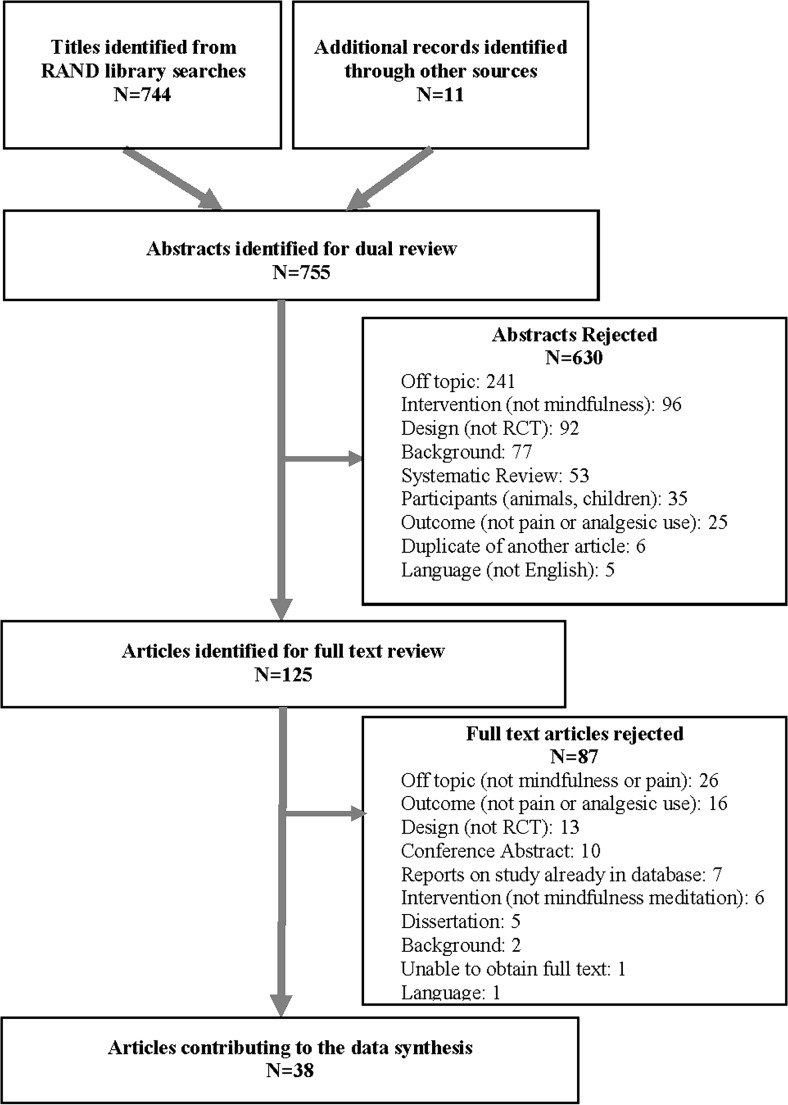
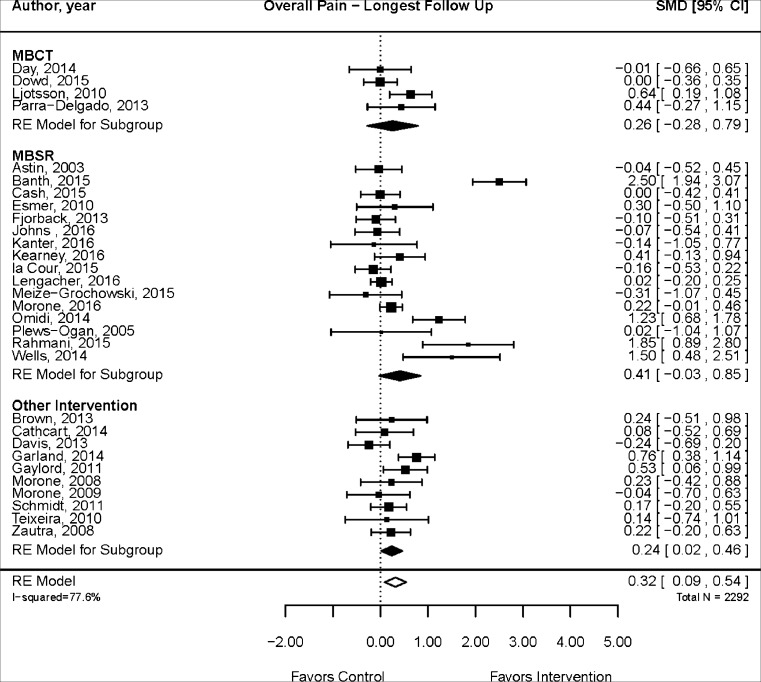
BACKGROUND: Chronic pain patients increasingly seek treatment through mindfulness meditation. PURPOSE: This study aims to synthesize evidence on efficacy and safety of mindfulness meditation interventions for the treatment of chronic pain in adults. METHOD: We conducted a systematic review on randomized controlled trials (RCTs) with meta-analyses using the Hartung-Knapp-Sidik-Jonkman method for random-effects models. Quality of evidence was assessed using the GRADE approach. Outcomes included pain, depression, quality of life, and analgesic use. RESULTS: Thirty-eight RCTs met inclusion criteria; seven reported on safety. We found low-quality evidence that mindfulness meditation is associated with a small decrease in pain compared with all types of controls in 30 RCTs. Statistically significant effects were also found for depression symptoms and quality of life. CONCLUSIONS: While mindfulness meditation improves pain and depression symptoms and quality of life, additional well-designed, rigorous, and large-scale RCTs are needed to decisively provide estimates of the efficacy of mindfulness meditation for chronic pain.
Overview
The claims and statistics of this paper haven’t been checked yet.
Free: it reads the open-access text and checks the first 5 claims that cite a source we can check. Create a free account to check every claim.
Integrity signals
Registry
Cites
Statistics
Figures
Verification
Claims the paper makes
The claims and statistics of this paper haven’t been checked yet.
Free: it reads the open-access text and checks the first 5 claims that cite a source we can check. Create a free account to check every claim.
Claims other papers make about this one
Each is checked against this paper’s own text: does it say what the citing paper says it does?
The source backs part of the claim, not all of it — or backs it for a different population, condition or comparison.
In the citing paper
“MBIs have been shown to alleviate physical and psychological symptoms in many medical conditions including cancer, cardiovascular disease, and chronic pain, as well as psychiatric illnesses (notably, anxiety, and depressive disorders) (Bawa et al., 2015; Evans et al., 2008; Hilton et al., 2017; Lin et al., 2022; Marino et al., 2021; Piet & Hougaard, 2011).”
From Online Mindfulness-Based Cognitive Therapy for People with Parkinson’s Disease and Their Caregivers: a Pilot Study (2022) · cites this paper as Hilton et al., 2017
Experimental — accuracy not yet measuredThe source backs part of the claim, not all of it — or backs it for a different population, condition or comparison.
In the citing paper
“research demonstrating that MM can lead to reductions in pain intensity,[16] pain interference,[15, 29] and pain-related affect,[30, 31]”
From The chronic pain skills study: Protocol for a randomized controlled trial comparing hypnosis, mindfulness meditation and pain education in Veterans (2020) · cites this paper as [16]
Experimental — accuracy not yet measuredThe source backs part of the claim, not all of it — or backs it for a different population, condition or comparison.
In the citing paper
“Evidence indicates that mindfulness-based interventions (MBIs) may be effective for patients with chronic pain, reducing perceived pain and decreasing harmful psychological features often associated with chronic pain, such as depression and pain catastrophizing.1,7,19,24,37”
From Randomized, wait-list–controlled pilot study of app-delivered mindfulness for patients reporting chronic pain (2021) · cites this paper as [19]
Experimental — accuracy not yet measuredThe source backs part of the claim, not all of it — or backs it for a different population, condition or comparison.
In the citing paper
“Although mindfulness can be an effective approach to the self-management of chronic pain, most research to date has been conducted on either brief inductions of mindfulness14,28,49 or on more time-intensive and resource-intensive group-based interventions.7,19”
From Randomized, wait-list–controlled pilot study of app-delivered mindfulness for patients reporting chronic pain (2021) · cites this paper as [19]
Experimental — accuracy not yet measuredThe source backs part of the claim, not all of it — or backs it for a different population, condition or comparison.
In the citing paper
“Mindfulness-based interventions (MBIs) have been found to be effective in reducing stress, anxiety, and depression, as well as improving overall quality of life in individuals with chronic illnesses (Gotink et al. 2015;Hilton et al. 2017;Niazi and Niazi 2011).”
From Lessons from Master Hongyi’s Experiences with Impermanence for Death Education (2024) · cites this paper as Hilton et al. 2017
Experimental — accuracy not yet measured
21 more claims about this paper
Create a free account to see every claim other papers make about this one.
Self-check
Percentages, sums and reported differences re-computed from the paper’s own numbers.
The self-check needs the paper’s full text.
Citations
Cites
Bias in meta-analysis detected by a simple, graphical test
Egger, M., Smith, G. D., Schneider, M., & Minder, C. (1997) · BMJ · doi:10.1136/bmj.315.7109.629 · Cited by 56,722 · cited 1×
“The quality of the body of evidence was assessed using the GRADE approach [22, 26] by which a determination of high, moderate, low, or very low was made for each major outcome [27].”
MethodGRADE guidelines: 3. Rating the quality of evidence
Balshem, H., Helfand, M., Schünemann, H. J., Oxman, A. D., Kunz, R., Brozek, J., Vist, G. E., Falck-Ytter, Y., Meerpohl, J., & Norris, S. (2011) · Journal of Clinical Epidemiology · doi:10.1016/j.jclinepi.2010.07.015 · Cited by 8,285 · cited 1×
“The quality of the body of evidence was assessed using the GRADE approach [22, 26] by which a determination of high, moderate, low, or very low was made for each major outcome [27].”
MethodMeditation Programs for Psychological Stress and Well-being: A Systematic Review and Meta-analysis
Goyal, M., Singh, S., Sibinga, E. M. S., Gould, N. F., Rowland-Seymour, A., Sharma, R., Berger, Z., Sleicher, D., Maron, D. D., Shihab, H. M., et al. (2014) · JAMA Internal Medicine · doi:10.1001/jamainternmed.2013.13018 · Cited by 2,380
The clinical use of mindfulness meditation for the self-regulation of chronic pain
Kabat-Zinn, J., Lipworth, L., & Burney, R. (1985) · Journal of Behavioral Medicine · doi:10.1007/bf00845519 · Cited by 1,745 · cited 2×
“Early mindfulness studies in pain patients showed promising outcomes on pain symptoms, mood disturbance, anxiety, and depression, as well as pain-related drug utilization [5].”
BackgroundChou, R., Turner, J. A., Devine, E. B., Hansen, R. N., Sullivan, S. D., Blazina, I., Dana, T., Bougatsos, C., & Deyo, R. A. (2015) · Annals of Internal Medicine · doi:10.7326/m14-2559 · Cited by 1,606 · cited 1×
“Systematic review Introduction Chronic pain, often defined as pain lasting longer than 3 months or past the normal time for tissue healing [1], can lead to significant medical, social, and economic consequences, relationship issues, lost productivity, and larger health care costs.”
BackgroundFjorback, L. O., Arendt, M., Ørnbøl, E., Fink, P., & Walach, H. (2011) · Acta Psychiatrica Scandinavica · doi:10.1111/j.1600-0447.2011.01704.x · Cited by 803
A refined method for the meta-analysis of controlled clinical trials with binary outcome
Hartung, J., & Knapp, G. (2001) · Statistics in Medicine · doi:10.1002/sim.1009 · Cited by 775
Cherkin, D. C., Sherman, K. J., Balderson, B. H., Cook, A. J., Anderson, M. L., Hawkes, R. J., Hansen, K. E., & Turner, J. A. (2016) · JAMA · doi:10.1001/jama.2016.2323 · Cited by 729 · cited 3×
“Likewise, a trial of MBSR for back pain [38] found no significant difference between groups in self-reported use of pain medication.”
BackgroundMedical Journal of the Islamic Republic of Iran
(2020) · Medical Journal of the Islamic Republic of Iran · doi:10.14196/mjiri · Cited by 620
Morone, N. E., Greco, C. M., & Weiner, D. K. (2008) · Pain · doi:10.1016/j.pain.2007.04.038 · Cited by 546
Cited by
Items 101–200 of 976
The Analgesic Effects of Virtual Reality for People with Chronic Pain: A Scoping Review
Austin, P. (2021) · Pain Medicine · doi:10.1093/pm/pnab217 · Cited by 54
The effects of mindfulness-based interventions in medical students: a systematic review
Kaisti, I., Kulmala, P., Hintsanen, M., Hurtig, T. M., Repo, S., Paunio, T., Miettunen, J., Halt, A., & Jääskeläinen, E. (2023) · Advances in Health Sciences Education · doi:10.1007/s10459-023-10231-0 · Cited by 73
“In addition, mindfulness-based interventions can improve functioning and well-being and reduce the perception of pain and psychological symptoms in several chronic pain disorders (Hilton et al., 2017; Kabat-Zinn et al., 1985; Majeed et al., 2018).”
BackgroundSimpson, R., Simpson, S., Ramparsad, N., Lawrence, M., Booth, J., & Mercer, S. W. (2020) · Multiple Sclerosis and Related Disorders · doi:10.1016/j.msard.2019.101493 · Cited by 45
Hussain, N., & Said, A. S. A. (2019) · Journal of Evidence-Based Integrative Medicine · doi:10.1177/2515690x19876599 · Cited by 58
“There is a lack of gender-specific studies on the 2 most common types of meditation and their impact on chronic pain experienced by elderly female diabetics in South Asia.18 To the best of our knowledge, this is the first study of its type to be conducted in Pakistan.”
BackgroundEconomic Evaluations of Mindfulness-Based Interventions: a Systematic Review
Zhang, L., Lopes, S. S., Lavelle, T. A., Jones, K. O., Chen, L., Jindal, M., Zinzow, H. M., & Shi, L. (2022) · Mindfulness · doi:10.1007/s12671-022-01960-1 · Cited by 71
“1 3 with MBIs’ impact on chronic disease management in general (Hilton et al., 2017).”
Mindfulness Meditation: Impact on Attentional Control and Emotion Dysregulation.
Prakash, R. S. (2021) · PubMed Central · doi:10.1093/arclin/acab053 · Cited by 66
Interoception, mindfulness and touch: A meta-review of functional MRI studies
Casals-Gutiérrez, S., & Abbey, H. (2020) · International Journal of Osteopathic Medicine · doi:10.1016/j.ijosm.2019.10.006 · Cited by 44
Psychometric Evaluation of the Interpersonal Mindfulness Scale Using Rasch Analysis
Medvedev, O. N., Pratscher, S. D., & Bettencourt, A. (2020) · Mindfulness · doi:10.1007/s12671-020-01415-5 · Cited by 50
Effectiveness of VR based mindfulness on psychological and physiological health: A systematic review
Zhang, S., Chen, M., Yang, N., Lu, S., & Ni, S. (2021) · Current Psychology · doi:10.1007/s12144-021-01777-6 · Cited by 51
Taylor, S. L., Gelman, H. M., DeFaccio, R., Douglas, J. H., Hawrilenko, M. J., McGinty, N. K., Resnick, A., Tomlanovich, N. C., Toyama, J., Whitehead, A. M., et al. (2022) · Journal of General Internal Medicine · doi:10.1007/s11606-022-07889-4 · Cited by 49
Carnes, D., Mars, T., Plunkett, A., Nanke, L., & Abbey, H. (2017) · International Journal of Osteopathic Medicine · doi:10.1016/j.ijosm.2017.03.005 · Cited by 42
“A clinically meaningful change score is considered to be >47% [14].”
BackgroundMartorella, G., Mathis, K. B., Miao, H., Wang, D., Park, L., & Ahn, H. B. (2022) · Brain stimulation · doi:10.1016/j.brs.2022.06.003 · Cited by 47
“Thus, adding a psychological approach, such as a mindfulnessbased intervention, could potentiate the central effects of tDCS on chronic pain [44,45].”
Smith, A. M., Leeming, A., Fang, Z., Hatchard, T., Mioduszewski, O., Schneider, M. A., Ferdossifard, A., Shergill, Y., Khoo, E.-L., & Poulin, P. (2021) · Journal of Cancer Survivorship · doi:10.1007/s11764-020-00945-0 · Cited by 41
An update on the management of chronic pelvic pain in women
Vincent, K., & Evans, E. (2021) · Anaesthesia · doi:10.1111/anae.15421 · Cited by 54
“commitment therapy and mindfulness-based interventions [51,52].”
Innes, K. E., Selfe, T. K., Kandati, S., Wen, S., & Huysmans, Z. (2018) · Evidence-based Complementary and Alternative Medicine · doi:10.1155/2018/7683897 · Cited by 56
“%) of participants with OA or nonspecific arthritis, authors found low quality evidence for an overall small reduction in pain and for modest improvements in depression and QOL [28].”
BackgroundResultInfluentialBuilding a More Diverse and Inclusive Science: Mindfulness-Based Approaches for Latinx Individuals
Nagy, G. A., Cuervo, C., Rodríguez, E. Y. R., Vilardaga, J. P., Zerubavel, N., West, J. L., Falick, M. C., & Parra, D. C. (2022) · Mindfulness · doi:10.1007/s12671-022-01846-2 · Cited by 48
“, 2018; Hofmann, & Gómez, 2017) and physical health outcomes (Black & Slavich, 2016; Hilton et al., 2017) in the general population.”
BackgroundBringing chronic-pain care to rural veterans: A telehealth pilot program description.
Glynn, L. H., Chen, J. A., Dawson, T. C., Gelman, H., & Zeliadt, S. B. (2021) · Psychological Services · doi:10.1037/ser0000408 · Cited by 40
Silverberg, N. D., Cairncross, M., Brasher, P. M. A., Vranceanu, A.-M., Snell, D. L., Yeates, K. O., Panenka, W. J., Iverson, G. L., Debert, C. T., Bayley, M. T., et al. (2022) · Archives of Physical Medicine and Rehabilitation · doi:10.1016/j.apmr.2021.12.005 · Cited by 40
Lam, A. H. Y., Leung, S. F., Lin, J. J., & Chien, W. T. (2020) · Neuropsychiatric Disease and Treatment · doi:10.2147/ndt.s231877 · Cited by 40
“Mindfulnessbased interventions (MBI) have demonstrated good effects in reducing psychological outcomes in people with depression,42 anxiety disorders,(43) substance use,(44) bipolar affective disorder,(45) and other chronic physical conditions.(46,47) There is increasing evidence demonstrating the safety and effective…”
BackgroundInternet Mindfulness Meditation Intervention (IMMI) Improves Depression Symptoms in Older Adults
Wahbeh, H. (2018) · Medicines · doi:10.3390/medicines5040119 · Cited by 40
Williams, R. M., Day, M. A., Ehde, D. M., Turner, A. P., Ciol, M. A., Gertz, K. J., Patterson, D. R., Hakimian, S., Suri, P., & Jensen, M. P. (2022) · Pain · doi:10.1097/j.pain.0000000000002586 · Cited by 43
Crosswell, A. D., Mayer, S. E., Whitehurst, L. N., Picard, M. A., Zebarjadian, S., & Epel, E. S. (2024) · Psychological Review · doi:10.1037/rev0000453 · Cited by 59
Evans, E., Herman, P. M., Washington, D. L., Lorenz, K., Yuan, A. H., Upchurch, D. M., Marshall, N. J., Hamilton, A. B., & Taylor, S. L. (2018) · Women s Health Issues · doi:10.1016/j.whi.2018.07.003 · Cited by 43
Wren, A. A., Neiman, N., Caruso, T. J., Rodríguez, S., Taylor, K. L., Madill, M., Rives, H., & Nguyen, L. A. B. (2021) · Children · doi:10.3390/children8050368 · Cited by 54
Sarkar, T. D., Edwards, R. R., & Baker, N. A. (2022) · Pain Practice · doi:10.1111/papr.13144 · Cited by 42
“Current research on using mindfulness meditation (without VR) to treat chronic pain indicates that these interventions have a significant effect on improved pain intensity, and have the greatest effect on psychological components of pain such as associated depression and quality of life.(10,13) Our pilot study used a…”
MethodSynthesizing the Strength of the Evidence of Complementary and Integrative Health Therapies for Pain
Giannitrapani, K. F., Holliday, J., Miake-Lye, I. M., Hempel, S., & Taylor, S. L. (2019) · Pain Medicine · doi:10.1093/pm/pnz068 · Cited by 44
Self-citationLumley, M. A., Krohner, S., Marshall, L. M., Kitts, T., Schubiner, H. H., & Yarns, B. C. (2021) · Pain Management · doi:10.2217/pmt-2020-0081 · Cited by 49
Advances in targeting central sensitization and brain plasticity in chronic pain
Bazzari, A. H., & Bazzari, F. H. (2022) · The Egyptian Journal of Neurology Psychiatry and Neurosurgery · doi:10.1186/s41983-022-00472-y · Cited by 48
Dorado, K., Schreiber, K. L., Koulouris, A., Edwards, R. R., Napadow, V., & Lazaridou, A. (2018) · Health Psychology Open · doi:10.1177/2055102918807406 · Cited by 37
“Mindfulnessbased interventions have been shown to be beneficial for patients with chronic pain and for patients who catastrophize (Hilton et al., 2017; Mun et al., 2014; Schutze et al., 2010; Zeidan et al., 2010, 2012).”
BackgroundBrintz, C. E., Roth, I., Faurot, K., Rao, S., & Gaylord, S. A. (2020) · Pain Medicine · doi:10.1093/pm/pnaa208 · Cited by 37
“mindfulness interventions for chronic pain [18] found that mindfulness reduced pain and depression symptoms and improved quality of life.”
BackgroundMindfulness, Interpretation Bias, and Levels of Anxiety and Depression: Two Mediation Studies
Mayer, B., Polak, M. G., & Remmerswaal, D. (2019) · Mindfulness · doi:10.1007/s12671-018-0946-8 · Cited by 37
Purcell, N., Zamora, K. A., Tighe, J., Li, Y., Douraghi, M., & Seal, K. H. (2017) · Pain Medicine · doi:10.1093/pm/pnx254 · Cited by 40
Pagnini, F., Barbiani, D., Cavalera, C., Volpato, E., Grosso, F., Minazzi, G. A., Riboni, F. V., Graziano, F., Tella, S. D., Manzoni, G. M., et al. (2023) · Perspectives on Psychological Science · doi:10.1177/17456916221141383 · Cited by 41
Schöne, B., Gruber, T., Graetz, S., Bernhof, M., & Malinowski, P. (2018) · Scientific Reports · doi:10.1038/s41598-018-32046-5 · Cited by 46
“The FFMQ comprises the subscales: (1) Non-reactivity to Inner Experience, (2) Observing/noticing/attending to sensations/perceptions/thoughts/feelings, (3) Acting with awareness/automatic pilot/concentration/non-distraction, (4) Describing/labelling with words and (5) Non-judging of experience.”
BackgroundMacPherson, M., Bakker, A. M., Anderson, K., & Holtzman, S. (2022) · Canadian Journal of Pain · doi:10.1080/24740527.2022.2030212 · Cited by 39
Shergill, Y., Rice, D. B., Khoo, E., Jarvis, V., Zhang, T., Taljaard, M., Wilson, K. G., Romanow, H. C., Glynn, B. A., Small, R., et al. (2022) · Pain Research and Management · doi:10.1155/2022/4020550 · Cited by 50
“Multiple reviews highlight the benefits of MBSR among patients with cancer [11–15] and chronic pain [16, 17].”
BackgroundEkici, Ç., Garip, G., & Van Gordon, W. (2020) · Mindfulness · doi:10.1007/s12671-018-1063-4 · Cited by 36
“…such as stress, anxiety and depression (Chiesa and Serretti 2009; Khoury et al. 2013), substance abuse (Chiesa and Serretti 2014), chronic pain (Hilton et al. 2017), behavioural addiction (Shonin et al. 2014b), anger and hostile behaviour (Shonin et al. 2013) as well as facilitating adaptive…”
BackgroundMindfulness-based Interventions for Chronic Low Back Pain: A Systematic Review and Meta-analysis
Paschali, M., Lazaridou, A., Sadora, J., Papianou, L., Garland, E. L., Zgierska, A. E., & Edwards, R. R. (2023) · Clinical Journal of Pain · doi:10.1097/ajp.0000000000001173 · Cited by 52
“23 Previous reviews have mainly focused on the effectiveness of MBIs for chronic pain in general, 38 or the effectiveness of only one type of MBI (eg, MBSR) for CLBP, 39 without examining the ef fi cacy of all types of MBIs as a form of speci fi c CLBP treatment.”
BackgroundPhysical functioning and mindfulness skills training in chronic pain: a systematic review
Jackson, W., Zale, E. L., Berman, S. J., Malacarne, A., Lapidow, A., Schatman, M. E., Kulich, R., & Vranceanu, A.-M. (2019) · Journal of Pain Research · doi:10.2147/jpr.s172733 · Cited by 35
“Other reviews neglected to report on physical function or summarize the results.(54,56) More to the point of this review, as of 2018, a brief review of these five systematic reviews of mindfulness interventions in chronic pain published after our original search reveals no new RCTs that include functional measures bey…”
Forbes, G., Newton, S., Cantalapiedra Calvete, C., Birch, J., Dodds, J., Steed, L., Rivas, C., Khan, K., Röhricht, F., Taylor, S., et al. (2020) · BMJ Open · doi:10.1136/bmjopen-2019-030164 · Cited by 35
Telehealth Mindfulness-Based Interventions for Chronic Pain: The LAMP Randomized Clinical Trial
Burgess, D. J., Calvert, C., Campbell, E. H., Allen, K. D., Bangerter, A. K., Behrens, K., Branson, M., Brønfort, G., Cross, L. J. S., Evans, R., et al. (2024) · JAMA Internal Medicine · doi:10.1001/jamainternmed.2024.3940 · Cited by 43
Childhood maltreatment, psychological resources, and depressive symptoms in women with breast cancer
Kuhlman, K. R., Boyle, C. C., Irwin, M. R., Ganz, P. A., Crespi, C. M., Asher, A., Petersen, L., & Bower, J. E. (2017) · Child Abuse & Neglect · doi:10.1016/j.chiabu.2017.08.025 · Cited by 39
“Several intervention studies targeting mindfulness have been effective in mitigating depressive symptoms in women with breast cancer (Bower et al., 2015; Hilton et al., 2017; Zainal, Booth, & Huppert, 2013), and may also improve other important outcomes, such as pain (Hilton et al., 2017).”
BackgroundExploring a compassion-focused intervention for persistent pain in a group setting
Penlington, C. (2019) · British Journal of Pain · doi:10.1177/2049463718772148 · Cited by 34
Simmons, L. A., Williams, H., Silva, S. G., Keefe, F. J., & Tanabe, P. J. (2019) · Pain Management Nursing · doi:10.1016/j.pmn.2018.10.002 · Cited by 34
“Lastly and importantly, a recent systematic review of MBIs for pain found that MBIs were associated with small improvements in pain, depression, and quality of life (Hilton et al., 2017).”
BackgroundCejudo, J., García-Castillo, F.-J., Luna, P., Rodrigo-Ruiz, D., Feltrero, R., & Moreno-Gómez, A. (2019) · Frontiers in Psychology · doi:10.3389/fpsyg.2019.02541 · Cited by 47
Non-Opioid Perioperative Pain Strategies for the Clinician: A Narrative Review
Kaye, A. D., Granier, A. L., Garcia, A. J., Carlson, S. F., Fuller, M. C., Haroldson, A., White, S. W., Krueger, O. L., Novitch, M. B., & Cornett, E. M. (2020) · Pain and Therapy · doi:10.1007/s40122-019-00146-3 · Cited by 38
“2017 systematic review of randomized controlled trials with meta-analyses using the Hartung–Knapp–Sidik–Jonkman method for random-effects models found that mindfulness meditation is associated with a small decrease in pain compared with all types of controls [51].”
MethodPolaski, A. M., Phelps, A. L., Smith, T. J., Helm, E. R., Morone, N. E., Szucs, K. A., Kostek, M. C., & Kolber, B. J. (2021) · Pain Medicine · doi:10.1093/pm/pnaa403 · Cited by 45
Mistretta, E. G., & Davis, M. C. (2021) · Mindfulness · doi:10.1007/s12671-021-01766-7 · Cited by 49
“This contrasts with meta-analyses that found small to moderate between-person effects on pain severity and pain intensity for CBT ( g = 0.10–0.37) and MBSR ( g = 0.32–0.34) (Hilton et al., 2017; Williams et al., 2020).”
InfluentialImpacts of mindfulness-based interventions in people undergoing hemodialysis: a systematic review
Razzera, B. N., Adamoli, A. N., Ranheiri, M. F., Oliveira, M. D. S., & Feóli, A. M. P. (2021) · Brazilian Journal of Nephrology · doi:10.1590/2175-8239-jbn-2021-0116 · Cited by 44
Chien, W. T., Chow, K. M., Chong, Y. Y., Bressington, D., Choi, K. C., & Chan, C. W. H. (2020) · Frontiers in Psychiatry · doi:10.3389/fpsyt.2020.00177 · Cited by 33
Gnall, K. E., Sinnott, S. M., Laumann, L. E., Park, C. L., David, A. B., & Emrich, M. (2024) · International Journal of Behavioral Medicine · doi:10.1007/s12529-023-10249-z · Cited by 43
“Findings that MBTs are generally helpful in reducing pain is consistent with other recent reviews [71, 72], and the present findings also demonstrate simultaneous improvements in interoception within those treatments.”
“I Don’t Know Why I’ve Got this Pain!” Allostasis as a Possible Explanatory Model
Rabey, M. I., & Moloney, N. A. (2022) · Physical Therapy · doi:10.1093/ptj/pzac017 · Cited by 36
Zorn, J., Abdoun, O., Sonié, S., & Lutz, A. (2021) · Psychosomatic Medicine · doi:10.1097/psy.0000000000000938 · Cited by 31
“Moreover, the efficacy of mindfulness-based interventions (MBIs) for chronic pain management is increasingly supported by the clinical literature (4), and experimental studies”
BackgroundElectrophysiological effects of mindfulness meditation in a concentration test
Morais, P., Quaresma, C., Vigário, R., & Quintão, C. (2021) · Medical & Biological Engineering & Computing · doi:10.1007/s11517-021-02332-y · Cited by 31
Norman‐Nott, N., Hesam‐Shariati, N., Wewege, M. A., Rizzo, R. R. N., Cashin, A. G., Wilks, C. R., Quidé, Y., McAuley, J. H., & Gustin, S. M. (2024) · European Journal of Pain · doi:10.1002/ejp.2268 · Cited by 39
“…psychological interventions for chronic pain have largely focused on cognitive and behavioural approaches (Bernardy et al., 2013; Prothero et al., 2018; Williams et al., 2020) and acceptance-and mindfulness-based interventions (Hilton et al., 2017; Simpson et al., 2017; Williams et al., 2020).”
Greenwald, J. D., & Shafritz, K. M. (2018) · Frontiers in Integrative Neuroscience · doi:10.3389/fnint.2018.00018 · Cited by 39
“The medial frontal lobe, including the ACC, serves many different roles including error detection (Holroyd et al., 2002), conflict monitoring (Botvinick et al., 2004), and other aspects of executive functioning and cognitive control (Ridderinkhof et al., 2004; Posner et al., 2007; Alexander and…”
BackgroundMusich, S. A., Wang, S. S., Slindee, L. B., Kraemer, S., & Yeh, C. S. (2019) · Geriatric Nursing · doi:10.1016/j.gerinurse.2019.10.008 · Cited by 38
Self-Compassion and Depressive Symptoms in Chronic Pain (CP): A 1-Year Longitudinal Study
Carvalho, S. A., Trindade, I. A., Gillanders, D. T., Pinto‐Gouveia, J., & Castilho, P. (2019) · Mindfulness · doi:10.1007/s12671-019-01292-7 · Cited by 39
Díaz‐Silveira, C., de la Hera, C. M. A., Burgos, F., Marcos, A., & Germán, M. Á. S. (2020) · International Journal of Environmental Research and Public Health · doi:10.3390/ijerph17082839 · Cited by 51
“Scientific evidence from analyses and meta-analyses has shown the results on the level of benefits of Mindfulness-based interventions (MBI), inter alia, over physical pain [57], depression [58], anxiety [59], stress and well-being [60], sleep [61], and inflammatory response [59].”
BackgroundPerson-Centered Mindfulness: A Culturally and Spiritually Sensitive Approach to Clinical Practice
Koenig, H. G. (2023) · Journal of Religion and Health · doi:10.1007/s10943-023-01768-w · Cited by 44
Rosser, B. A., Fisher, E., Janjua, S., Eccleston, C., Keogh, E., & Duggan, G. B. (2023) · Cochrane Database of Systematic Reviews · doi:10.1002/14651858.cd013863.pub2 · Cited by 45
Mindfulness, mood, and food: The mediating role of positive affect
Hsu, T., & Forestell, C. A. (2020) · Appetite · doi:10.1016/j.appet.2020.105001 · Cited by 35
Han, A. (2021) · Archives of Physical Medicine and Rehabilitation · doi:10.1016/j.apmr.2021.03.011 · Cited by 29
Lee, E. K., Wong, B., Chan, P. H. S., Zhang, D. D., Sun, W., Chan, D. C., Gao, T., Ho, F., Kwok, T. C. Y., & Wong, S. Y. (2022) · International Journal of Geriatric Psychiatry · doi:10.1002/gps.5616 · Cited by 29
Čeko, M., Baeuerle, T., Webster, L. R., Wager, T. D., & Lumley, M. A. (2024) · Pain · doi:10.1097/j.pain.0000000000003198 · Cited by 37
“27,30,65,95 The limited efficacy of behavioral approaches may stem from the fact that they are not guided by a conceptual model that places the brain as the centerpiece of the chronic pain experience, do not emphasize the possibility of substantially reducing pain by changing cognitive and…”
Sitnikova, K., Leone, S. S., van Marwijk, H. W. J., Twisk, J., van der Horst, H. E., & van der Wouden, J. C. (2019) · Journal of Psychosomatic Research · doi:10.1016/j.jpsychores.2019.109745 · Cited by 29
“Furthermore, incorporating other treatment methods such as physical exercise (49) or relaxation and mindfulness techniques (51) could be helpful for this patient group.”
MethodThe human health effects of singing bowls: A systematic review
Stanhope, J., & Weinstein, P. (2020) · Complementary Therapies in Medicine · doi:10.1016/j.ctim.2020.102412 · Cited by 47
Neural Mechanisms of Hypnosis and Meditation-Induced Analgesia: A Narrative Review
Benedittis, G. D. (2021) · International Journal of Clinical and Experimental Hypnosis · doi:10.1080/00207144.2021.1917294 · Cited by 41
“…meditation-based interventions have been shown repeatedly to alleviate pain across experimental and clinical settings (Brown & Jones, 2010; Gard et al., 2012; Grant et al., 2011; Grant & Rainville, 2009; Hilton et al., 2017; Kabat-Zinn et al., 1985; Lutz et al., 2013; Zeidan et al., 2011).”
BackgroundNicolardi, V., Simione, L., Scaringi, D., Malinowski, P., Yordanova, J., Kolev, V., Mauro, F., Giommi, F., Barendregt, H. P., Aglioti, S. M., et al. (2022) · Mindfulness · doi:10.1007/s12671-021-01797-0 · Cited by 29
“The effects of meditation and mindfulness-based interventions on pain have increasingly become subject of psychological, neuroscientific, and clinical investigations (Gard et al., 2011; Hilton et al, 2016).”
Fedkov, D., Berghofen, A., Weiß, C., Peine, C., Lang, F., Knitza, J., Kühn, S., Krämer, B. K., & Leipe, J. (2022) · Rheumatology International · doi:10.1007/s00296-022-05175-4 · Cited by 30
“It has been proven that regular mindfulness meditation improves chronic pain, depression, and quality of life [62] and CBT could decrease anxiety, depression, and fatigue level in patients with chronic pain and RA [63].”
BackgroundSimpson, R., Posa, S., Langer, L. K., Bruno, T. R., Simpson, S., Lawrence, M., Booth, J., Mercer, S. W., Feinstein, A., & Bayley, M. T. (2022) · Journal of Neurology · doi:10.1007/s00415-022-11451-x · Cited by 40
“There is high quality evidence for MBI effectiveness in non-MS populations for the treatment of stress [31], anxiety [32], recurrent depression [33] and chronic pain [34].”
BackgroundBest Practices in the Management of Nonmedical Opioid Use in Patients with Cancer-Related Pain
Ulker, E., & Fabbro, E. D. (2019) · The Oncologist · doi:10.1634/theoncologist.2019-0540 · Cited by 33
“Other techniques including mindfulness meditationbased interventions [74, 75], cognitive behavioral therapy [76, 77], acceptance and commitment therapy [78], biofeedback [79], and distraction techniques (virtual reality) [80] can be helpful in chronic pain patients, but there are no systematic reviews evaluating these…”
BackgroundWieczorek, A., Schrank, F., Renner, K., & Wagner, M. O. (2024) · Digital Health · doi:10.1177/20552076241272604 · Cited by 40
“21 Concerning physiological health outcomes, MBIs show varying positive bodily changes like reductions in heart and respiratory rates, hypertension symptoms, 22,23 skin conductance 24 and pain levels 25,26 or an increase in heart rate variability (HRV).”
BackgroundRiquino, M. R., Priddy, S. E., Howard, M. O., & Garland, E. L. (2018) · Borderline Personality Disorder and Emotion Dysregulation · doi:10.1186/s40479-018-0088-6 · Cited by 31
“For example, a recent systematic review of randomized controlled trials (RCTs) of mindfulness-based interventions (MBIs) for chronic pain demonstrated significant improvements in pain, depression symptoms, and quality of life [50].”
BackgroundHan, A. (2022) · Psychology, Health & Medicine · doi:10.1080/13548506.2021.1894345 · Cited by 28
Ardi, Z., Golland, Y., Shafir, R., Sheppes, G., & Levit‐Binnun, N. (2021) · Psychosomatic Medicine · doi:10.1097/psy.0000000000000994 · Cited by 36
Meditation-induced effects on whole-brain structural and effective connectivity
Filippi, E. D., Escrichs, A., Càmara, E., Garrido, C., Marins, T. F., Sánchez-Fibla, M., Gilson, M., & Deco, G. (2022) · Brain Structure and Function · doi:10.1007/s00429-022-02496-9 · Cited by 32
“…in an ancient Eastern tradition, in the last years, meditation has become increasingly practiced in the Western society, becoming a focus of scientific interest (Ricard et al., 2014; Millière et al., 2018; Hilton et al., 2017; Vieten et al., 2018; Davidson and Dahl, 2018; Afonso et al., 2020).”
BackgroundThe relative efficacy of mindfulness versus distraction: The moderating role of attentional bias
Shires, A., Sharpe, L., & Newton John, T. R. O. (2019) · European Journal of Pain · doi:10.1002/ejp.1340 · Cited by 28
“, 2013) and weak evidence of significant improvements for patients with chronic pain (Hilton et al., 2016).”
BackgroundRodriguez‐Larios, J., Wong, K. F., Lim, J., & Alaerts, K. (2020) · Mindfulness · doi:10.1007/s12671-020-01487-3 · Cited by 29
du Plessis, E. M., & Just, S. N. (2021) · Organization · doi:10.1177/1350508421995755 · Cited by 40
“, 2010), rumination and worry (Querstret and Cropley, 2013), and low quality of life (Hilton et al., 2016).”
BackgroundBulaj, G. W., Clark, J. E., Ebrahimi, M., & Bald, E. M. (2021) · Frontiers in Pharmacology · doi:10.3389/fphar.2021.612602 · Cited by 32
Divarco, R., Ramasawmy, P., Petzke, F. W., & Antal, A. (2023) · International Journal of Clinical and Health Psychology · doi:10.1016/j.ijchp.2023.100369 · Cited by 31
Mechanisms of mindfulness in patients with migraine: Results of a qualitative study.
Estave, P. M., Margol, C., Beeghly, S., Anderson, R., Shakir, M., Coffield, A., Byrnes, J., O'Connell, N., Seng, E., Gardiner, P., et al. (2023) · Headache The Journal of Head and Face Pain · doi:10.1111/head.14481 · Cited by 26
Barceló-Soler, A., Morillo-Sarto, H., Fernández-Martínez, S., Monreal-Bartolomé, A., Chambel, M. J., Gardiner, P., López-del-Hoyo, Y., García-Campayo, J., & Pérez-Aranda, A. (2023) · International Journal of Environmental Research and Public Health · doi:10.3390/ijerph20054438 · Cited by 26
“In this regard, clear indications on the recommended amount of home practice should be presented to patients; most studies conducted on this topic do not report presenting such indications [80], and those which do either are based solely on the MBSR and MBCT protocols (6 days per week, 45 min per practice) or establis…”
BackgroundSociodemographic Characteristics and Health Status of Mindfulness Users in the United States
Simonsson, O., Martin, M., & Fisher, S. D. (2020) · Mindfulness · doi:10.1007/s12671-020-01486-4 · Cited by 31
Farmer, M. M., McGowan, M. G., Yuan, A. H., Whitehead, A. M., Osawe, U., & Taylor, S. L. (2021) · The Journal of Alternative and Complementary Medicine · doi:10.1089/acm.2020.0395 · Cited by 25
Eller, O. C., Willits, A., Young, E. E., & Baumbauer, K. M. (2022) · Frontiers in Pain Research · doi:10.3389/fpain.2022.991736 · Cited by 35
Mindfulness-Based Pain Management (MBPM) for Chronic Pain: a Randomized Clinical Trial
Pérez, J. I., Salaberría, K., & de Ocenda, Á. R. (2022) · Mindfulness · doi:10.1007/s12671-022-02023-1 · Cited by 32
Feng, B., Hu, X., Lu, W. W., Wang, Y., & Ip, W. (2022) · European Journal of Pain · doi:10.1002/ejp.1849 · Cited by 25
“In earlier studies, the effect of MBSR on chronic pain was examined (KabatZinn, 1982) and positive results were observed compared to passive comparators (Anheyer et al., 2017; Hilton et al., 2017), however, ambiguous evidence was found when relative to active controls (Creswell, 2017).”
ResultTankha, H., Lumley, M. A., Gordon, A., Schubiner, H. H., Uipi, C., Harris, J., Wager, T. D., & Ashar, Y. K. (2023) · Journal of Pain · doi:10.1016/j.jpain.2023.04.006 · Cited by 27
The lived experience of chronic pain and dyskinesia in children and adolescents with cerebral palsy
McKinnon, C., White, J. H., Morgan, P. E., Antolovich, G. C., Clancy, C. H., Fahey, M. C., & Harvey, A. R. (2020) · BMC Pediatrics · doi:10.1186/s12887-020-2011-8 · Cited by 25
Burgess, D. J., Evans, R., Allen, K. D., Bangerter, A. K., Brønfort, G., Cross, L. J. S., Ferguson, J. E., Haley, A. C., Campbell, E. H., Mahaffey, M., et al. (2020) · Pain Medicine · doi:10.1093/pm/pnaa337 · Cited by 28
“MBIs teach mindfulness skills, which have been shown to improve chronic pain through multiple pathways [3, 9, 10].”
BackgroundMindfulness Meditation in the Treatment of Chronic Pain
Brandel, M. G., Lin, C., Hennel, D., Khazen, O., Pilitsis, J. G., & Ben‐Haim, S. (2022) · Neurosurgery Clinics of North America · doi:10.1016/j.nec.2022.02.005 · Cited by 32
Ball, E., Newton, S., Röhricht, F., Steed, L., Birch, J. V., Dodds, J. P., Calvete, C. C., Taylor, S. J., & Rivas, C. A. (2020) · BMJ Open · doi:10.1136/bmjopen-2019-030711 · Cited by 26
Toivonen, K., Hermann, M., White, J. H., Speca, M., & Carlson, L. E. (2020) · Mindfulness · doi:10.1007/s12671-020-01461-z · Cited by 27
“Evidence of mindfulness-based programs for reducing pain intensity is less compelling (Chiesa and Serretti 2011; Reiner et al. 2013; Hilton et al. 2016); however, research suggests that mindfulness might influence one’s relationship with pain and thus improve one’s pain experience (e.g.,…”
BackgroundNduwimana, I., Nindorera, F., Thonnard, J. L., & Kossi, O. (2020) · Medicine · doi:10.1097/md.0000000000021969 · Cited by 30
“Current evidence shows no effect or a small effect of meditation in reducing pain and activity limitation in individuals with chronic pain, but high–quality evidence suggests that meditation reduces psychological symptoms.([58,59]) The effectiveness of meditation for CLBP can be explained by pain acceptance, which hel…”
BackgroundKraemer, K. M., Jain, F. A., Mehta, D. H., & Fricchione, G. L. (2022) · Seminars in Neurology · doi:10.1055/s-0042-1742287 · Cited by 29
Nursing Implications of Mindfulness-Informed Interventions for Stroke Survivors and Their Families.
Saban, K. L., Tell, D., & De La Pena, P. (2022) · Stroke · doi:10.1161/strokeaha.122.038457 · Cited by 22
Ma, Y., Kraemer, K. M., Lyu, J., & Yeh, G. Y. (2021) · The Journal of Alternative and Complementary Medicine · doi:10.1089/acm.2020.0548 · Cited by 22
Siew, S. K. H., & Yu, J. (2023) · Scientific Reports · doi:10.1038/s41598-023-45765-1 · Cited by 36
“The insula is also involved in top-down control of pain expression and transmission 61 which could explain findings of improved pain symptoms amongst those suffering from chronic pain following mindfulness interventions 62,63 .”
BackgroundRetracted
Metadata
- Authors
- Hilton, L., Hempel, S., Ewing, B. A., Apaydin, E., Xenakis, L., Newberry, S., Colaiaco, B., Maher, A. R., Shanman, R. M., Sorbero, M. E., & Maglione, M. A.
- Affiliations
- RAND Corporation (US)
- Corresponding author
- Hilton, Lara
- ORCID
- Venue
- Annals of Behavioral Medicine
- Publisher
- Oxford University Press (OUP)
- Published
- 2016-09-22
- Volume
- 51
- Issue
- 2
- Pages
- 199-213
- ISSN
- 0742-5554 (ISSN-L)
- 0883-6612
- 1532-4796
- PMC
- PMC5368208
- OpenAlex
- W2521208344
- Semantic Scholar
- c2a7b6ba6b4cb1795860f4f990a38fb8128dd178
- Cited by
- 977
- References
- 68
- Citations by year
- 2026: 60 · 2025: 118 · 2024: 122 · 2023: 156 · 2022: 121 · 2021: 130 · 2020: 113 · 2019: 75 · 2018: 69 · 2017: 12 · 2016: 1
- FWCI
- 7.76
- Type
- journal article
- Language
- en
- Open access
- hybrid
- doi.org
- Locations
- Annals of Behavioral Medicine (publishedVersion, cc-by)
- Europe PMC (PubMed Central) (publishedVersion, cc-by)
- PubMed Central (publishedVersion, cc-by)
- PubMed (publishedVersion)
- Funders
- Defense Centers of Excellence for Psychological Health and Traumatic Brain Injury (14-539.2)
- Topics
- Social Sciences › Psychology › Clinical Psychology › Mindfulness and Compassion Interventions
- Health Sciences › Health Professions › Physical Therapy, Sports Therapy and Rehabilitation › Musculoskeletal pain and rehabilitation
- Life Sciences › Neuroscience › Cognitive Neuroscience › Pain Management and Placebo Effect
- Keywords
- mindfulness meditation, chronic pain, analgesia, depressive symptoms, quality of life, analgesic use, treatment safety, non-pharmacological pain management
- MeSH terms
- Humans, Quality of Life, Treatment Outcome, Meditation, Chronic Pain, Pain Management, Mindfulness
About these checks
Registry, retraction, Cites and statistics results are computed, not judged, with one exception: a printed reference that no index lists is read once by a model before it counts as a citation error. Claims are extracted by a model and kept only when their quote appears verbatim in the text; each cited source is then checked, with a model’s help, for whether it says what the claim relies on. Those verdicts can be wrong — read the claim’s quote and the cited source before relying on one.
Statistics and arithmetic are recomputed, not judged.
Confidence bands are shown only for fields calibrated on our annotated test set. None is calibrated yet, so no band is shown.
What counts as a claim ›How we measure confidence ›How we check this ›
Are you an author, or do you see a problem with this page? Request a review
Data sources
Bibliographic data: Semantic Scholar, OpenAlex, Crossref.
Contains information from the Semantic Scholar Academic Graph Datasets, made available under the ODC Attribution License (ODC-BY 1.0).
Semantic Scholar’s data is described in: Kinney, R., et al. (2023). The Semantic Scholar Open Data Platform. arXiv:2301.10140.
