

Mindfulness Meditation for Chronic Pain: Systematic Review and Meta-analysis
Open accessThe DOI matches its Crossref record; 67 of the 68 references it cites were found in a registry or an index.
Abstract
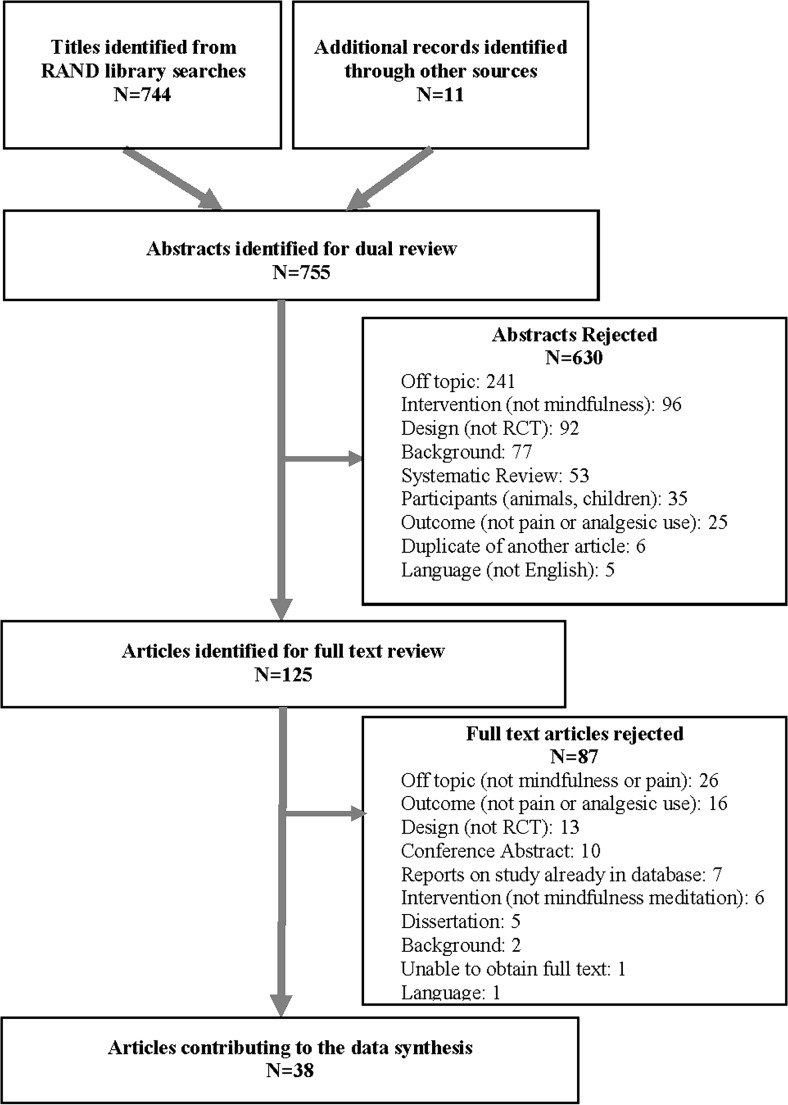
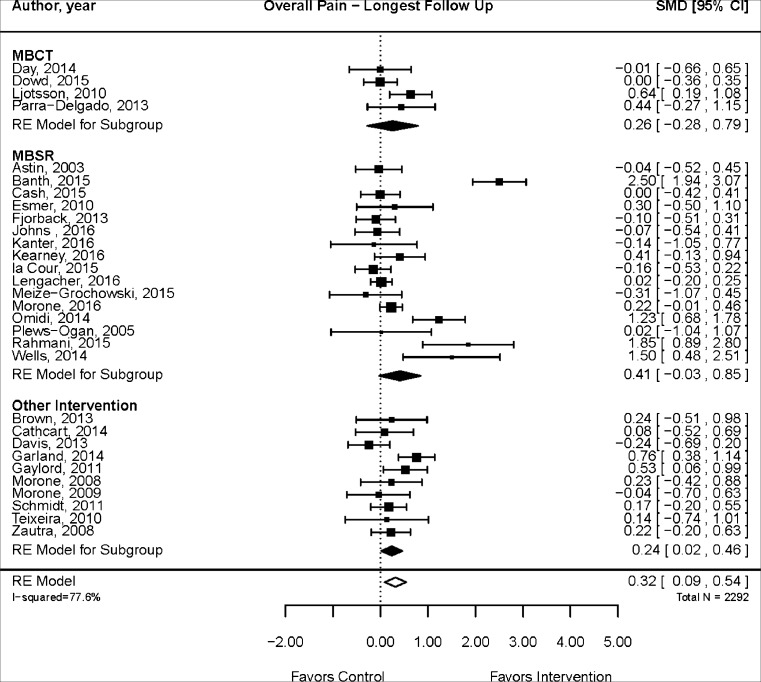
BACKGROUND: Chronic pain patients increasingly seek treatment through mindfulness meditation. PURPOSE: This study aims to synthesize evidence on efficacy and safety of mindfulness meditation interventions for the treatment of chronic pain in adults. METHOD: We conducted a systematic review on randomized controlled trials (RCTs) with meta-analyses using the Hartung-Knapp-Sidik-Jonkman method for random-effects models. Quality of evidence was assessed using the GRADE approach. Outcomes included pain, depression, quality of life, and analgesic use. RESULTS: Thirty-eight RCTs met inclusion criteria; seven reported on safety. We found low-quality evidence that mindfulness meditation is associated with a small decrease in pain compared with all types of controls in 30 RCTs. Statistically significant effects were also found for depression symptoms and quality of life. CONCLUSIONS: While mindfulness meditation improves pain and depression symptoms and quality of life, additional well-designed, rigorous, and large-scale RCTs are needed to decisively provide estimates of the efficacy of mindfulness meditation for chronic pain.
Overview
The claims and statistics of this paper haven’t been checked yet.
Free: it reads the open-access text and checks the first 5 claims that cite a source we can check. Create a free account to check every claim.
Integrity signals
Registry
Cites
Statistics
Figures
Verification
Claims the paper makes
The claims and statistics of this paper haven’t been checked yet.
Free: it reads the open-access text and checks the first 5 claims that cite a source we can check. Create a free account to check every claim.
Claims other papers make about this one
Each is checked against this paper’s own text: does it say what the citing paper says it does?
The source backs part of the claim, not all of it — or backs it for a different population, condition or comparison.
In the citing paper
“MBIs have been shown to alleviate physical and psychological symptoms in many medical conditions including cancer, cardiovascular disease, and chronic pain, as well as psychiatric illnesses (notably, anxiety, and depressive disorders) (Bawa et al., 2015; Evans et al., 2008; Hilton et al., 2017; Lin et al., 2022; Marino et al., 2021; Piet & Hougaard, 2011).”
From Online Mindfulness-Based Cognitive Therapy for People with Parkinson’s Disease and Their Caregivers: a Pilot Study (2022) · cites this paper as Hilton et al., 2017
Experimental — accuracy not yet measuredThe source backs part of the claim, not all of it — or backs it for a different population, condition or comparison.
In the citing paper
“research demonstrating that MM can lead to reductions in pain intensity,[16] pain interference,[15, 29] and pain-related affect,[30, 31]”
From The chronic pain skills study: Protocol for a randomized controlled trial comparing hypnosis, mindfulness meditation and pain education in Veterans (2020) · cites this paper as [16]
Experimental — accuracy not yet measuredThe source backs part of the claim, not all of it — or backs it for a different population, condition or comparison.
In the citing paper
“Evidence indicates that mindfulness-based interventions (MBIs) may be effective for patients with chronic pain, reducing perceived pain and decreasing harmful psychological features often associated with chronic pain, such as depression and pain catastrophizing.1,7,19,24,37”
From Randomized, wait-list–controlled pilot study of app-delivered mindfulness for patients reporting chronic pain (2021) · cites this paper as [19]
Experimental — accuracy not yet measuredThe source backs part of the claim, not all of it — or backs it for a different population, condition or comparison.
In the citing paper
“Although mindfulness can be an effective approach to the self-management of chronic pain, most research to date has been conducted on either brief inductions of mindfulness14,28,49 or on more time-intensive and resource-intensive group-based interventions.7,19”
From Randomized, wait-list–controlled pilot study of app-delivered mindfulness for patients reporting chronic pain (2021) · cites this paper as [19]
Experimental — accuracy not yet measuredThe source backs part of the claim, not all of it — or backs it for a different population, condition or comparison.
In the citing paper
“Mindfulness-based interventions (MBIs) have been found to be effective in reducing stress, anxiety, and depression, as well as improving overall quality of life in individuals with chronic illnesses (Gotink et al. 2015;Hilton et al. 2017;Niazi and Niazi 2011).”
From Lessons from Master Hongyi’s Experiences with Impermanence for Death Education (2024) · cites this paper as Hilton et al. 2017
Experimental — accuracy not yet measured
21 more claims about this paper
Create a free account to see every claim other papers make about this one.
Self-check
Percentages, sums and reported differences re-computed from the paper’s own numbers.
The self-check needs the paper’s full text.
Citations
Cites
Bias in meta-analysis detected by a simple, graphical test
Egger, M., Smith, G. D., Schneider, M., & Minder, C. (1997) · BMJ · doi:10.1136/bmj.315.7109.629 · Cited by 56,722 · cited 1×
“The quality of the body of evidence was assessed using the GRADE approach [22, 26] by which a determination of high, moderate, low, or very low was made for each major outcome [27].”
MethodGRADE guidelines: 3. Rating the quality of evidence
Balshem, H., Helfand, M., Schünemann, H. J., Oxman, A. D., Kunz, R., Brozek, J., Vist, G. E., Falck-Ytter, Y., Meerpohl, J., & Norris, S. (2011) · Journal of Clinical Epidemiology · doi:10.1016/j.jclinepi.2010.07.015 · Cited by 8,285 · cited 1×
“The quality of the body of evidence was assessed using the GRADE approach [22, 26] by which a determination of high, moderate, low, or very low was made for each major outcome [27].”
MethodMeditation Programs for Psychological Stress and Well-being: A Systematic Review and Meta-analysis
Goyal, M., Singh, S., Sibinga, E. M. S., Gould, N. F., Rowland-Seymour, A., Sharma, R., Berger, Z., Sleicher, D., Maron, D. D., Shihab, H. M., et al. (2014) · JAMA Internal Medicine · doi:10.1001/jamainternmed.2013.13018 · Cited by 2,380
The clinical use of mindfulness meditation for the self-regulation of chronic pain
Kabat-Zinn, J., Lipworth, L., & Burney, R. (1985) · Journal of Behavioral Medicine · doi:10.1007/bf00845519 · Cited by 1,745 · cited 2×
“Early mindfulness studies in pain patients showed promising outcomes on pain symptoms, mood disturbance, anxiety, and depression, as well as pain-related drug utilization [5].”
BackgroundChou, R., Turner, J. A., Devine, E. B., Hansen, R. N., Sullivan, S. D., Blazina, I., Dana, T., Bougatsos, C., & Deyo, R. A. (2015) · Annals of Internal Medicine · doi:10.7326/m14-2559 · Cited by 1,606 · cited 1×
“Systematic review Introduction Chronic pain, often defined as pain lasting longer than 3 months or past the normal time for tissue healing [1], can lead to significant medical, social, and economic consequences, relationship issues, lost productivity, and larger health care costs.”
BackgroundFjorback, L. O., Arendt, M., Ørnbøl, E., Fink, P., & Walach, H. (2011) · Acta Psychiatrica Scandinavica · doi:10.1111/j.1600-0447.2011.01704.x · Cited by 803
A refined method for the meta-analysis of controlled clinical trials with binary outcome
Hartung, J., & Knapp, G. (2001) · Statistics in Medicine · doi:10.1002/sim.1009 · Cited by 775
Cherkin, D. C., Sherman, K. J., Balderson, B. H., Cook, A. J., Anderson, M. L., Hawkes, R. J., Hansen, K. E., & Turner, J. A. (2016) · JAMA · doi:10.1001/jama.2016.2323 · Cited by 729 · cited 3×
“Likewise, a trial of MBSR for back pain [38] found no significant difference between groups in self-reported use of pain medication.”
BackgroundMedical Journal of the Islamic Republic of Iran
(2020) · Medical Journal of the Islamic Republic of Iran · doi:10.14196/mjiri · Cited by 620
Morone, N. E., Greco, C. M., & Weiner, D. K. (2008) · Pain · doi:10.1016/j.pain.2007.04.038 · Cited by 546
Cited by
Items 401–500 of 976
Bawa, F. L. M., Sutton, J. W., Mercer, S. W., & Bond, C. M. (2021) · Social Science & Medicine · doi:10.1016/j.socscimed.2021.114073 · Cited by 17
Effect of Tai Chi Quan on the Pressure Pain Thresholds of Lower Back Muscles in Healthy Women
Wang, R., Chang, X.-L., Kiartivich, S., & Wang, X.-Q. (2022) · Journal of Pain Research · doi:10.2147/jpr.s353465 · Cited by 8
“Thought refers to a high degree of attention, and then the practitioner can easily weak their attention to pain during the practice.(35) The participants may have better self-management in the face of mechanical pressure stimuli after mindful-guided exercise.”
BackgroundCheron, G. A., Ristori, D., Petieau, M., Simar, C., Zarka, D., & Cebolla, A.-M. (2022) · Frontiers in Psychology · doi:10.3389/fpsyg.2022.792872 · Cited by 9
Georgescu, M. F., Fischer, I. C., Lowe, S. R., & Pietrzak, R. H. (2023) · Psychiatric Quarterly · doi:10.1007/s11126-023-10041-y · Cited by 19
“In line with this, several studies have shown that mindfulness-based stress reduction (MBSR) can promote personal resilience [45], reduce symptoms of depression and cognitive difficulties [46], and somatic symptoms [47, 48] and is successful in virtual formats.”
Conti, L., Marzorati, C., Grasso, R., Ferrucci, R., Priori, A., Mameli, F., Ruggiero, F., & Pravettoni, G. (2023) · JMIR Research Protocols · doi:10.2196/49508 · Cited by 9
Tsur, N., Defrin, R., Haller, C. S., Bercovitz, K. E., & Langer, E. J. (2020) · Journal of Clinical Psychology · doi:10.1002/jclp.23063 · Cited by 9
Chen, S., You, B., & Jackson, T. (2020) · Mindfulness · doi:10.1007/s12671-020-01548-7 · Cited by 7
Pinel, L., Perez-Nieto, M. A., Redondo, M., Rodríguez-Rodríguez, L., & León, L. (2020) · Frontiers in Psychiatry · doi:10.3389/fpsyt.2020.554990 · Cited by 7
Kelley, M. L., Strowger, M., Chentsova, V. O., Bravo, A. J., Gaylord, S. A., Burgin, E. E., Vinci, C., Ayers, K. L., & Agha, E. (2022) · Contemporary Clinical Trials Communications · doi:10.1016/j.conctc.2022.101011 · Cited by 7
Petzold, P., Silveira, S., Godara, M., Matthaeus, H., & Singer, T. (2023) · Scientific Reports · doi:10.1038/s41598-023-40636-1 · Cited by 7
Greco, C. M., Dore, G. A., Weinberg, J., Roth, I., Thomas, H. N., Lawrence, S. M., Rodríguez, R., McGillis, M., & Morone, N. E. (2023) · Global Advances in Integrative Medicine and Health · doi:10.1177/27536130231174234 · Cited by 8
Robles, E., Blanco, I., Díez, G. G., & Vázquez, C. (2024) · European Journal of Pain · doi:10.1002/ejp.4714 · Cited by 16
Mindfulness-Based Art Interventions for Students: A Meta-Analysis Review of the Effect on Anxiety
Zhu, Z., Xiao, L., Ahmad, N. A., Roslan, S. B., Burhanuddin, N. A. N., Gao, J., & Huang, C. (2025) · Behavioral Sciences · doi:10.3390/bs15081078 · Cited by 9
“Existing findings indicated significant benefits for people with chronic pain, cancer, anxiety disorders, depression, and stress across many settings (Garmon et al., 2014; Hilton et al., 2017; Hofmann et al., 2010; Ledesma & Kumano, 2009; Schanche et al., 2020).”
Psychological Evaluation and Management of Chronic Pancreatitis
Palmer, B. E., & Petrik, M. L. (2022) · Gastroenterology Clinics of North America · doi:10.1016/j.gtc.2022.07.006 · Cited by 10
Chronic pain in haemophilia: assessment and analgesic treatment
la Corte‐Rodríguez, H. D., & Rodriguez-Merchan, E. C. (2023) · Blood Coagulation & Fibrinolysis · doi:10.1097/mbc.0000000000001199 · Cited by 7
Evaluation and Medical Management of Chronic Pelvic Pain
Carey, E. T., & McClurg, A. B. (2023) · Seminars in Interventional Radiology · doi:10.1055/s-0043-1770715 · Cited by 12
Milkias, M., Mekonnen, S., Ahmed, S., Getachew, H., Adamu, Y., Mola, S., & Gugsa, T. (2023) · Annals of Medicine and Surgery · doi:10.1097/ms9.0000000000001258 · Cited by 7
Global Meditation Practices: A Literature Review
Valluri, J., Gorton, K. L., & Schmer, C. (2023) · Holistic Nursing Practice · doi:10.1097/hnp.0000000000000626 · Cited by 11
“16,43 The broad use of meditation helped veterans who experience PTSD, 26 people with severe SLE pain, 25 anxiety, stress, and depression as psychological diseases or experienced while recovering from cancer.”
BackgroundLiberman, T., Bidegain, M., Berriel, A., López, F. M., Ibarra, A., Pisani, M., Polero, S., Brito, G., Pereira, A. C., López, S., et al. (2024) · Mindfulness · doi:10.1007/s12671-024-02380-z · Cited by 9
“The implementation of secular contemplative practices worldwide is gaining ground due to the reported beneficial effects in clinical and non-clinical populations (Goyal et al., 2014; Hilton et al., 2017; Slemp et al., 2019).”
Udvardi, V., Szabó, G., Takács, J., & Fazekas, G. (2024) · International Journal of Rehabilitation Research · doi:10.1097/mrr.0000000000000639 · Cited by 11
“…sleep quality, and styles of coping) and physical outcomes (i.e. pain, blood pressure, and heart rate), including cardiovascular disease [15], cancer [16], chronic pain [17], diabetes [18], fibromyalgia [19], multiple sclerosis [20,21], traumatic brain injury [22,23], and stroke [10,11].”
Strigo, I. A., Guerra, S. G., Torrisi, S., Murphy, E., Toor, T., Goldman, V. M., Alter, B. J., Vu, A. T., Hecht, R., Lotz, J. C., et al. (2024) · Frontiers in Pain Research · doi:10.3389/fpain.2024.1408027 · Cited by 9
“Mind-body interventions like Mindfulness-Based Stress Reduction have shown modest success (6, 7), but understanding the neural mechanisms could enhance their effectiveness.”
BackgroundAlcalde, A. I. P., Galán-del-Río, F., Fernández-Rodríguez, F. J., Frutos, M. D. L. P. S., García-Arrabé, M., Giménez, M.-J., & Ruíz-Ruíz, B. (2024) · Sensors · doi:10.3390/s24216874 · Cited by 10
Ciacchini, R., Conversano, C., Orrù, G., Scafuto, F., Sabbatini, S., Paroli, M., Miniati, M., Matiz, A., Gemignani, A., & Crescentini, C. (2024) · International Journal of Environmental Research and Public Health · doi:10.3390/ijerph21111507 · Cited by 9
“Similarly, patients with FM reported reduced stress levels, increased quality of life (QoL), and perceived well-being after MBSR participation [50,58,65–67].”
Cheung, D. S. T., Yeung, W., Chau, P. H., Chan, S. Y., Chan, W., Yeh, C. H., Lao, L., Zhang, Z., & Lin, C. (2025) · ESMO Open · doi:10.1016/j.esmoop.2025.105565 · Cited by 11
“31 The combination is likely to elicit complementary physiologic adaptations on mechanisms involving both the peripheral and central nervous systems, thereby inducing a larger and potentially clinically meaningful improvement in CIPN.”
Mindfulness, qigong y su impacto en la salud
Oblitas, L. A., Anicama, J., Calderón, R., Ferrel, R., León, A. V. A., & Ortiz, A. L. (2018) · Persona · doi:10.26439/persona2018.n021.3022 · Cited by 16
No Pain, No Gain? The Influence of Gender and Athletic Status on Reporting Pain in Sports
Sheffield, L. W., & Stutts, L. A. (2019) · Journal of Clinical Sport Psychology · doi:10.1123/jcsp.2019-0022 · Cited by 9
Sud, A., Nelson, M. L. A., Cheng, D. K.-Y., Armas, A., Foat, K., Greiver, M., Hosseiny, F., Katz, J. D., Moineddin, R., Mulsant, B. H., et al. (2020) · Trials · doi:10.1186/s13063-020-04243-z · Cited by 7
Leader Mindfulness: Well-Being Throughout the Organization
Decuypere, A., Audenaert, M., & Decramer, A. (2020) · Springer eBooks · doi:10.1007/978-3-030-02470-3_73-1 · Cited by 27
The Intergenerational Transmission of Chronic Pain from Parents to Survivors of Childhood Cancer
Patton, M., Stokoe, M., Forbes, C., Nwaroh, C., Noel, M. E., Reynolds, K. A., & Schulte, F. (2020) · Children · doi:10.3390/children7110246 · Cited by 9
“For example, mindfulness meditation has demonstrated some evidence for the reduction of pain itself as well as the ability to reduce symptoms of depression and improve HRQL [39].”
BackgroundGreenberg, J., Lin, A. C., Popok, P., Kulich, R. J., Edwards, R. R., & Vranceanu, A. (2021) · Journal of Clinical Psychology in Medical Settings · doi:10.1007/s10880-020-09758-w · Cited by 7
Gherardi‐Donato, E. C. D. S., Quinhoneiro, D. C. G., Gimenez, L. B. H., Siqueira, L. H., Díaz‐Serrano, K. V., & Zanetti, A. C. G. (2020) · SMAD Revista Eletrônica Saúde Mental Álcool e Drogas (Edição em Português) · doi:10.11606/issn.1806-6976.smad.2020.152589 · Cited by 27
Booth, G., Williams, D., Patel, H., & Gilbert, A. W. (2021) · British Journal of Pain · doi:10.1177/20494637211023074 · Cited by 9
These roots that bind us: using writing to process grief and reconstruct the self in chronic illness
Bertrand, J. (2021) · British Journal of Guidance and Counselling · doi:10.1080/03069885.2021.1933382 · Cited by 9
Can the Open Label Placebo Rationale Be Optimized?
Heiss, U., Rosenfield, M. N., & Bernstein, M. H. (2021) · Frontiers in Pain Research · doi:10.3389/fpain.2021.734882 · Cited by 7
Lebeaut, A., Zegel, M., Healy, N. A., Rogers, A. H., Buser, S. J., & Vujanovic, A. A. (2022) · Mindfulness · doi:10.1007/s12671-022-01836-4 · Cited by 12
The Effect of Mindfulness Meditation on Academic Performance of Students
Liu, Y., Liu, Y., & Wang, C. (2022) · Advances in Social Science, Education and Humanities Research/Advances in social science, education and humanities research · doi:10.2991/assehr.k.220110.012 · Cited by 9
“Mindfulness meditation (MM) practice, which uses meditation to achieve mindfulness, allows people to recall and reconstruct their experiences by connecting their minds with the present moment and increasing awareness of their surroundings and inner thoughts [7].”
BackgroundDorsolateral prefrontal cortex sensing analgesia
Ito, E., Oka, K., & Koshikawa, F. (2022) · Biophysics and Physicobiology · doi:10.2142/biophysico.bppb-v19.0014 · Cited by 8
“One meta-analysis article showed that there was low-quality evidence that mindfulness meditation was associated with a small decrease in pain, compared with all types of controls, whereas significant effects were found for ‘depression symptoms and quality of life’ [40].”
BackgroundMittal, T. K., Evans, E., Pottle, A., Lambropoulos, C., Morris, C., Surawy, C., Chuter, A., Cox, F., de Silva, R., Mason, M. J., et al. (2022) · Open Heart · doi:10.1136/openhrt-2022-001970 · Cited by 10
Utilization of Mind–Body Intervention for Integrative Health Care of COVID-19 Patients and Survivors
Yang, H., Setou, N., & Koh, E. (2022) · International Journal of Environmental Research and Public Health · doi:10.3390/ijerph19116618 · Cited by 8
Wexler, R. S., Fox, D. J., Edmond, H., Lemau, J., ZuZero, D., Bollen, M., Montenegro, D., Parikshak, A., Thompson, A. R., Carlson, N. L., et al. (2022) · Contemporary Clinical Trials Communications · doi:10.1016/j.conctc.2022.100962 · Cited by 7
Priore, L. B. D., Perez, V. O., Briani, R. V., Farinelli, L. A. L. B., da Silva, J. D. C. P., Martins, O. M. G., Lopes, F. A., Amorim, A. B., Pappas, E., & de Azevedo, F. M. (2023) · BMC Musculoskeletal Disorders · doi:10.1186/s12891-023-06491-x · Cited by 7
“This evidence-based program has been increasingly used for a variety of musculoskeletal disorders [21, 22].”
Taylor, S. L., Elwy, A. R., Bokhour, B. G., Coggeshall, S. S., Cohen, A. N., Der‐Martirosian, C., Haderlein, T. P., Haun, J. N., Kligler, B., Kloehn, A. T., et al. (2024) · Global Advances in Integrative Medicine and Health · doi:10.1177/27536130241241259 · Cited by 9
Pain management in people with hemophilia in childhood and young adulthood
Rodriguez-Merchan, E. C., & la Corte‐Rodríguez, H. D. (2021) · Expert Review of Hematology · doi:10.1080/17474086.2021.1935852 · Cited by 7
“Some mindbody therapies or techniques such as mindfulness have been shown to improve chronic pain, depressive symptoms, and quality of life in patients [39].”
BackgroundUnderstanding pain treatment mechanisms: a new direction in outcomes research
Day, M. A., & Jensen, M. P. (2021) · Pain · doi:10.1097/j.pain.0000000000002373 · Cited by 7
Azizi, Z., Jandaghi, G., Firoozi, M., Zia-Tohidi, A., & Ebnerasouli, S. (2022) · Mindfulness · doi:10.1007/s12671-022-01862-2 · Cited by 6
Diéguez, M. P., García, M. C., Asencio, E. N., & Vergara‐Moragues, E. (2024) · Mindfulness · doi:10.1007/s12671-024-02474-8 · Cited by 13
“They have identified benefits for sleep quality (Rusch et al., 2019), eating disorders (Sala et al., 2020), depression, anxiety/stress, addictive disorders (Dun-ning et al., 2019; Goldberg et al., 2018), and chronic pain (Hanley et al., 2024; Hilton et al., 2017; Pérez-Fernández et al., 2022).”
Physiology and Pathophysiology of Chronic Pain
Bentley, J. N., Awad, A. J., & Patil, P. G. (2018) · Elsevier eBooks · doi:10.1016/b978-0-12-805353-9.00043-7 · Cited by 14
Singstock, M., Hay, M. C., & Hyland, K. (2022) · Ethos · doi:10.1111/etho.12329 · Cited by 7
Mindfulness-based interventions for adult survivors of sexual assault: a scoping review
Tilley, D. S., Young, C. C., Richmond, M. M., & Humphrey, J. (2023) · Journal of Sexual Aggression · doi:10.1080/13552600.2023.2187471 · Cited by 9
“…ultimately relieve su ff ering associated with that symptom, systematic reviews and meta-analytic fi ndings have supported the e ff ectiveness of MBIs with physical health conditions (Hilton et al., 2017; Howarth et al., 2019) and mental health conditions (Chi et al., 2018; Goldberg et al., 2018).”
Singh, S., Pandey, P., Chaudhary, S., Miyapuram, K. P., & Lomas, D. (2022) · Indian Conference on Computer Vision, Graphics and Image Processing · doi:10.1145/3571600.3571656 · Cited by 6
Idelson, P. I., D’Elia, L., & Strazzullo, P. (2024) · Dietetics · doi:10.3390/dietetics3030022 · Cited by 11
“Since the 1970s, many therapeutic applications based on mindfulness have been developed to help people with a variety of clinical conditions, such as depression and stress [1], drug addiction [2], chronic pain [3] and anxiety [4].”
BackgroundChronic Pain Psychology in Neurology Practice
Serdarević, M. (2024) · CONTINUUM Lifelong Learning in Neurology · doi:10.1212/con.0000000000001471 · Cited by 7
Komariah, M., Maulana, S., Amirah, S., Platini, H., Rahayuwati, L., Yusuf, A., & Firdaus, M. K. Z. H. (2025) · JMIR Cancer · doi:10.2196/54154 · Cited by 13
“A previous meta-analysis of face-to-face mindfulness showed only a small effect in reducing chronic pain in various health conditions [58].”
Mindfulness, autorregulación emocional y reducción de estrés: ¿ciencia o ficción?
Moscoso, M. S. (2019) · Revista Mexicana de Investigación en Psicología · doi:10.32870/rmip.v10i2.459 · Cited by 36
“Otro estudio de metaanálisis acerca de los efectos de las intervenciones de mindfulness sobre la ansiedad y depresión fue concretado por Hofmann et al. (2010), quienes tomaron como referencia 39 investigaciones empíricas con un total de 1140 participantes.”
BackgroundInfluentialKwon, C., Chung, S.-Y., & Kim, J. W. (2020) · Integrative Medicine Research · doi:10.1016/j.imr.2020.100451 · Cited by 12
“(4) Gender bias: Elderly men may have low participation in the MM program due to their employment in part-time jobs.”
BackgroundSECCION IX. Síndrome Post COVID-19: complicaciones tardías y rehabilitación
Saavedra, C. (2021) · Infectio · doi:10.22354/in.v25i4.979 · Cited by 15
Lyon, R. Y., & Schuster, N. M. (2022) · Pain Medicine · doi:10.1093/pm/pnac107 · Cited by 7
Bonhof, C. S., van de Poll-Franse, L. V., de Hingh, I. H. J. T., Vreugdenhil, G., & Mols, F. (2022) · Supportive Care in Cancer · doi:10.1007/s00520-022-07340-8 · Cited by 7
“In other chronic pain-related conditions, mindfulness-based interventions have been shown promising [18, 40, 41].”
BackgroundNorman‐Nott, N., Hesam‐Shariati, N., Cashin, A. G., Wewege, M. A., Rizzo, R. R. N., Wilks, C. R., Quidé, Y., McAuley, J. H., & Gustin, S. M. (2022) · BMJ Open · doi:10.1136/bmjopen-2022-063102 · Cited by 11
Kwok, J. Y. Y., Auyeung, M., Pang, S., Ho, P. W., Yu, D. S. F., Fong, D., Lin, C., Walker, R. W., Wong, S. Y. S., & Ho, R. (2023) · BMC Complementary Medicine and Therapies · doi:10.1186/s12906-023-04049-x · Cited by 11
“Its positive effects on stress management have been demonstrated among populations with chronic conditions including psychiatric problems [13–15], cancer [16], chronic pain [17], and cardiovascular diseases [18].”
BackgroundKerry, C., Mann, P., Babaei, N., Katz, J. D., Pirbaglou, M., & Ritvo, P. (2024) · JMIR Mental Health · doi:10.2196/55283 · Cited by 7
“The large effect sizes observed in the web-based therapist-guided CBT-M group for both pain severity and interference may be due to better chronic pain management obtained through mindfulness meditation practice [46].”
BackgroundBakshi, K., & Srivastava, V. (2024) · Springer eBooks · doi:10.1007/978-981-97-2851-0_3 · Cited by 8
Attwood, S., Penney, T. L., O’Leary, R., Klahn, C., & Kelly, B. (2018) · Applied Research in Quality of Life · doi:10.1007/s11482-018-9664-6 · Cited by 9
“…suffering from anxiety, depression and stress (NHS England 2018), while the NHS is also utilising alternatives such as “mindfulness” meditation to assist patient groups in managing the symptoms of a range of different illnesses, such as chronic pain, sleep problems or fatigue (Hilton et al. 2017).”
How does art making work? Testing the hypothesized mechanisms of art making on pain experience
Kim, K. S., Kwekkeboom, K. L., & Kim, J. (2020) · Complementary Therapies in Clinical Practice · doi:10.1016/j.ctcp.2020.101200 · Cited by 7
Studying the Effects of Meditation: The First Fifty Years
Oman, D. (2020) · Oxford University Press eBooks · doi:10.1093/oxfordhb/9780198808640.013.3 · Cited by 7
Mindfulness aplicado a la atención primaria
Barceló‐Soler, A., Monreal‐Bartolomé, A., Navarro‐Gil, M., Beltrán-Ruiz, M., & García‐Campayo, J. (2018) · FMC - Formación Médica Continuada en Atención Primaria · doi:10.1016/j.fmc.2018.03.004 · Cited by 12
Azizi, Z., Jandaghi, G., Firoozi, M., Zia-Tohidi, A., & Ebnerasouli, S. (2021) · doi:10.1101/2021.06.04.21258338 · Cited by 6
“randomized trials and meta-analyses on their efficacy in improving mental health and quality of life and in reducing disability in CP patients (Cherkin et al., 2016; Hilton et al., 2016; Lauche et al., 2013; Veehof et al., 2016).”
MethodDundas, I., Ravnanger, K., Binder, P.-E., & Stige, S. H. (2020) · Frontiers in Psychiatry · doi:10.3389/fpsyt.2020.493349 · Cited by 5
Integrative approaches in the management of hidradenitis suppurativa
Hermak, S., & Lev‐Tov, H. A. (2024) · Journal of the American Academy of Dermatology · doi:10.1016/j.jaad.2024.09.016 · Cited by 7
Fleszar‐Pavlović, S. E., Esquives, B. S. N., Lovan, P., Brito, A. E., Sia, A. M., Kauffman, M. A., Lopes, M., Moreno, P. I., Koru‐Sengul, T., Gong, R., et al. (2025) · JMIR Formative Research · doi:10.2196/65188 · Cited by 9
Yap, A. U., Zheng, Y., Liu, T., Li, Y., Liu, Y., Zhou, X., Wang, J., & Xiong, X. (2025) · Journal of Oral Rehabilitation · doi:10.1111/joor.14023 · Cited by 6
Academic Burnout and Stress in Prelicensure Nursing Students: A Cross-Sectional Study
Osborne, K., Judge, L. W., Lullo, O., & Jones, J. (2025) · Journal of Nursing Education · doi:10.3928/01484834-20250530-02 · Cited by 7
Odo, V. O., Ujoatuonu, I. V. N., Ike, O. O., Kanu, G. C., Okafor, C. O., & Chinweze, U. C. (2021) · Trends in Psychology · doi:10.1007/s43076-021-00110-1 · Cited by 6
Mindfulness and Management of Low Desire and Vulvovaginal Pain
Brotto, L. A., & Altas, M. (2024) · Obstetrics and Gynecology Clinics of North America · doi:10.1016/j.ogc.2024.02.002 · Cited by 6
Chmiel, J., Malinowska, A., Rybakowski, F., & Leszek, J. (2024) · Brain Sciences · doi:10.3390/brainsci14040320 · Cited by 13
“For example, there is evidence that mindfulness is effective in alleviating symptoms of ADHD [60], autism [61], insomnia [62], Parkinson’s disease [63], and chronic pain [64].”
BackgroundImpieri, L., Mazzoli, G., Pezzi, A., Peretti, G. M., Mangiavini, L., & Rossi, N. (2024) · Journal of Orthopaedic Reports · doi:10.1016/j.jorep.2024.100477 · Cited by 8
Mindful Eating, BMI, Sleep, and Vitamin D: A Cross-Sectional Study of Cypriot and Greek Adults
Andreou, E. P., Mouski, C., Georgaki, E., Andreou, N., Christoforou, C., Abboud, M., Korfiati, P., Kaxiri, F., Papaioannou, M., Philippou, C., et al. (2024) · Nutrients · doi:10.3390/nu16244308 · Cited by 5
Burns, J. W., Lumley, M. A., Vowles, K. E., Jensen, M. P., Day, M. A., Schubiner, H. H., Jaszczak, E., Abro, B., Addicks, S. H., Bordieri, M. J., et al. (2025) · Contemporary Clinical Trials Communications · doi:10.1016/j.conctc.2025.101428 · Cited by 13
Zangi, H. A., Haugmark, T., & Provan, S. A. (2025) · Rheumatology International · doi:10.1007/s00296-024-05778-z · Cited by 5
Hurt, R. T., Ganesh, R., Schroeder, D. R., Hanson, J. L., Fokken, S. C., Overgaard, J. D., Bauer, B. A., Thilagar, B., Aakre, C. A., Pruthi, S., et al. (2025) · Journal of Primary Care & Community Health · doi:10.1177/21501319251325639 · Cited by 9
“37 Further, mindfulness techniques have improved several common symptoms in LC, including fatigue, 38,39 cognitive dysfunction, 40 autonomic dysfunction, 41,42 and pain 43 —including headache.”
The mindful migraine: does mindfulness-based stress reduction relieve episodic migraine?
Napadow, V. (2020) · Pain · doi:10.1097/j.pain.0000000000001859 · Cited by 9
Mindfulness Approaches to Athlete Well-Being
Gross, M. (2020) · Springer eBooks · doi:10.1007/978-3-030-44754-0_19 · Cited by 7
Pathrose, S. P., Patterson, P., Ussher, J. M., Everett, B., Salamonson, Y., McDonald, F. E. J., Biegel, G. M., He, S. Y., & Ramjan, L. M. (2022) · Journal of Adolescent and Young Adult Oncology · doi:10.1089/jayao.2020.0185 · Cited by 6
“14,20 Preliminary evidence suggests mindfulness can improve the well-being among young people with cancer.”
Harfensteller, J. (2022) · Psych · doi:10.3390/psych4020014 · Cited by 7
“These effects of mindfulness are compatible with well-documented effects on pain reduction in chronic pain patients [42], but have never been observed in chronic itch conditions.”
BackgroundLeader Mindfulness: Well-Being Throughout the Organization
Decuypere, A., Audenaert, M., & Decramer, A. (2021) · Springer eBooks · doi:10.1007/978-3-030-30025-8_73 · Cited by 6
Approaches to psychotherapy for chronic musculoskeletal pain
Petelin, D. S., Istomina, N. S., Tsapko, D. S., Магомедов, А. А., Bezrukov, V. E., Kochergina, M. S., Gamirova, A., & Volel, B. A. (2022) · Neurology neuropsychiatry Psychosomatics · doi:10.14412/2074-2711-2022-3-68-73 · Cited by 5
Poor, M. H., Ghorashi, Z., & Molamomanaei, Z. (2022) · Journal of Nursing and Midwifery Sciences · doi:10.4103/jnms.jnms_173_21 · Cited by 6
Eriksson‐Liebon, M., Lundgren, J., Rytterström, P., Johansson, P., & Mourad, G. (2022) · Journal of Clinical Nursing · doi:10.1111/jocn.16565 · Cited by 5
Lattimore, P. J., & Harrison, F. (2022) · Disability and Rehabilitation · doi:10.1080/09638288.2022.2140843 · Cited by 5
“Mindfulness techniques have been incorporated in psychological therapy for chronic pain [11] and systematic reviews and meta-analyses indicate small effects for relief of pain symptoms [12].”
BackgroundBishop, M. E. R., Hamiduzzaman, M., & Veltre, A. S. (2023) · Journal of Neurosciences in Rural Practice · doi:10.25259/jnrp-2022-4-7 · Cited by 6
“[8] Usually achieved by meditation, mindfulness is recognized as an effective treatment for chronic pain.”
Yang, S., Zhong, S., Fan, Y., Zhu, Y., Xu, N., Liao, Y., Fan, G., Liao, X., & He, S. (2023) · Frontiers in Neuroscience · doi:10.3389/fnins.2023.1158712 · Cited by 5
“In recent years, various physiological treatments, such as massage, reiki, mindfulness meditation, complementary and alternative therapies, and music therapy, have also shown to be effective (Furlan et al., 2015; Garza-Villarreal et al., 2017; Hilton et al., 2017; Billot et al., 2019; Paley and Johnson, 2020).”
BackgroundRocha, R. S., Soeiro, I., Magalhães, S., Castro, S. L., & Limpo, T. (2023) · Reading and Writing · doi:10.1007/s11145-023-10455-x · Cited by 13
“This process is at the base of other cognitive mechanisms (Diamond, 2013; Hilton et al., 2017 ) and has a key influence on learning and writing (Berninger et al., 2016), turning it into a relevant candidate for promotion in early grades.”
Designing voice interfaces to support mindfulness-based pain management
Mendu, S., Fosco, S. L. D., Lanza, S. T., & Abdullah, S. (2023) · Digital Health · doi:10.1177/20552076231204418 · Cited by 4
“Recent studies have identified Mindfulness-Based Stress Reduction (MBSR) to be a promising alternative for long-term pain management (38).”
BackgroundMeditation: A Promising Approach for Alleviating Chronic Pain
Dubey, A., & Muley, P. A. (2023) · Cureus · doi:10.7759/cureus.49244 · Cited by 10
“Mindfulness-based interventions were shown to help lower pain intensity, pain interference, and mental distress related to chronic pain in a meta-analysis of randomized controlled trials (RCTs) [35].”
BackgroundYap, A. U., Wee, K. K., Loh, J. Y., Marpaung, C. D., & Natu, V. P. (2024) · CRANIO® · doi:10.1080/08869634.2024.2322595 · Cited by 8
Wexler, R. S., Fox, D. J., ZuZero, D., Bollen, M., Parikshak, A., Edmond, H., Lemau, J., Montenegro, D., Ramirez, J., Kwin, S., et al. (2024) · PAIN Reports · doi:10.1097/pr9.0000000000001132 · Cited by 5
Giordano, N. A., Aspang, J. S. U., Baker, J., Holder, C., Cantu, N., Checo, G., Rice, C. W., Barrell, B., Wallace, M., Steck, A., et al. (2024) · Clinical Orthopaedics and Related Research · doi:10.1097/corr.0000000000003121 · Cited by 6
“Meta-analyses have shown similar bene fi ts on postoperative pain from aromatherapy, relaxation exercises, and music therapy [17, 19, 25, 40, 45, 51].”
fMRI-based explanations for how meditation could modulate pain processing
Golshan, F., & Mickleborough, M. (2025) · Frontiers in Neuroscience · doi:10.3389/fnins.2025.1561580 · Cited by 5
Mindfulness: Implications for Research Methods.
Culbreth, R. E., & Spratling, R. (2022) · Journal of Pediatric Health Care · doi:10.1016/j.pedhc.2022.01.004 · Cited by 4
Norman‐Nott, N., Hesam‐Shariati, N., Wilks, C. R., Schroeder, J., Suh, J., Briggs, N., McAuley, J. H., Quidé, Y., & Gustin, S. M. (2023) · JMIR Research Protocols · doi:10.2196/41890 · Cited by 5
Metadata
- Authors
- Hilton, L., Hempel, S., Ewing, B. A., Apaydin, E., Xenakis, L., Newberry, S., Colaiaco, B., Maher, A. R., Shanman, R. M., Sorbero, M. E., & Maglione, M. A.
- Affiliations
- RAND Corporation (US)
- Corresponding author
- Hilton, Lara
- ORCID
- Venue
- Annals of Behavioral Medicine
- Publisher
- Oxford University Press (OUP)
- Published
- 2016-09-22
- Volume
- 51
- Issue
- 2
- Pages
- 199-213
- ISSN
- 0742-5554 (ISSN-L)
- 0883-6612
- 1532-4796
- PMC
- PMC5368208
- OpenAlex
- W2521208344
- Semantic Scholar
- c2a7b6ba6b4cb1795860f4f990a38fb8128dd178
- Cited by
- 977
- References
- 68
- Citations by year
- 2026: 60 · 2025: 118 · 2024: 122 · 2023: 156 · 2022: 121 · 2021: 130 · 2020: 113 · 2019: 75 · 2018: 69 · 2017: 12 · 2016: 1
- FWCI
- 7.76
- Type
- journal article
- Language
- en
- Open access
- hybrid
- doi.org
- Locations
- Annals of Behavioral Medicine (publishedVersion, cc-by)
- Europe PMC (PubMed Central) (publishedVersion, cc-by)
- PubMed Central (publishedVersion, cc-by)
- PubMed (publishedVersion)
- Funders
- Defense Centers of Excellence for Psychological Health and Traumatic Brain Injury (14-539.2)
- Topics
- Social Sciences › Psychology › Clinical Psychology › Mindfulness and Compassion Interventions
- Health Sciences › Health Professions › Physical Therapy, Sports Therapy and Rehabilitation › Musculoskeletal pain and rehabilitation
- Life Sciences › Neuroscience › Cognitive Neuroscience › Pain Management and Placebo Effect
- Keywords
- mindfulness meditation, chronic pain, analgesia, depressive symptoms, quality of life, analgesic use, treatment safety, non-pharmacological pain management
- MeSH terms
- Humans, Quality of Life, Treatment Outcome, Meditation, Chronic Pain, Pain Management, Mindfulness
About these checks
Registry, retraction, Cites and statistics results are computed, not judged, with one exception: a printed reference that no index lists is read once by a model before it counts as a citation error. Claims are extracted by a model and kept only when their quote appears verbatim in the text; each cited source is then checked, with a model’s help, for whether it says what the claim relies on. Those verdicts can be wrong — read the claim’s quote and the cited source before relying on one.
Statistics and arithmetic are recomputed, not judged.
Confidence bands are shown only for fields calibrated on our annotated test set. None is calibrated yet, so no band is shown.
What counts as a claim ›How we measure confidence ›How we check this ›
Are you an author, or do you see a problem with this page? Request a review
Data sources
Bibliographic data: Semantic Scholar, OpenAlex, Crossref.
Contains information from the Semantic Scholar Academic Graph Datasets, made available under the ODC Attribution License (ODC-BY 1.0).
Semantic Scholar’s data is described in: Kinney, R., et al. (2023). The Semantic Scholar Open Data Platform. arXiv:2301.10140.
