

International Exercise Recommendations in Older Adults (ICFSR): Expert Consensus Guidelines
Open accessThe DOI matches its Crossref record; 291 of the 294 references it cites were found in a registry or an index.
Abstract
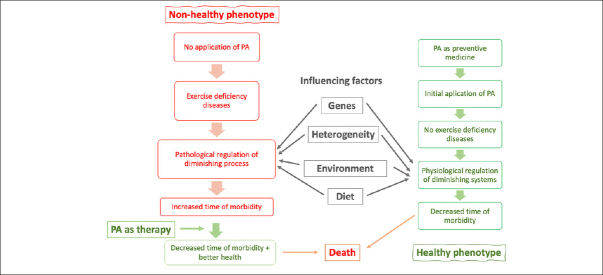
The human ageing process is universal, ubiquitous and inevitable. Every physiological function is being continuously diminished. There is a range between two distinct phenotypes of ageing, shaped by patterns of living - experiences and behaviours, and in particular by the presence or absence of physical activity (PA) and structured exercise (i.e., a sedentary lifestyle). Ageing and a sedentary lifestyle are associated with declines in muscle function and cardiorespiratory fitness, resulting in an impaired capacity to perform daily activities and maintain independent functioning. However, in the presence of adequate exercise/PA these changes in muscular and aerobic capacity with age are substantially attenuated. Additionally, both structured exercise and overall PA play important roles as preventive strategies for many chronic diseases, including cardiovascular disease, stroke, diabetes, osteoporosis, and obesity; improvement of mobility, mental health, and quality of life; and reduction in mortality, among other benefits. Notably, exercise intervention programmes improve the hallmarks of frailty (low body mass, strength, mobility, PA level, energy) and cognition, thus optimising functional capacity during ageing. In these pathological conditions exercise is used as a therapeutic agent and follows the precepts of identifying the cause of a disease and then using an agent in an evidence-based dose to eliminate or moderate the disease. Prescription of PA/structured exercise should therefore be based on the intended outcome (e.g., primary prevention, improvement in fitness or functional status or disease treatment), and individualised, adjusted and controlled like any other medical treatment. In addition, in line with other therapeutic agents, exercise shows a dose-response effect and can be individualised using different modalities, volumes and/or intensities as appropriate to the health state or medical condition. Importantly, exercise therapy is often directed at several physiological systems simultaneously, rather than targeted to a single outcome as is generally the case with pharmacological approaches to disease management. There are diseases for which exercise is an alternative to pharmacological treatment (such as depression), thus contributing to the goal of deprescribing of potentially inappropriate medications (PIMS). There are other conditions where no effective drug therapy is currently available (such as sarcopenia or dementia), where it may serve a primary role in prevention and treatment. Therefore, this consensus statement provides an evidence-based rationale for using exercise and PA for health promotion and disease prevention and treatment in older adults. Exercise prescription is discussed in terms of the specific modalities and doses that have been studied in randomised controlled trials for their effectiveness in attenuating physiological changes of ageing, disease prevention, and/or improvement of older adults with chronic disease and disability. Recommendations are proposed to bridge gaps in the current literature and to optimise the use of exercise/PA both as a preventative medicine and as a therapeutic agent.
Overview
The claims and statistics of this paper haven’t been checked yet.
Free: it reads the open-access text and checks the first 5 claims that cite a source we can check. Create a free account to check every claim.
Integrity signals
Registry
Cites
Statistics
Figures
Verification
Claims the paper makes
The claims and statistics of this paper haven’t been checked yet.
Free: it reads the open-access text and checks the first 5 claims that cite a source we can check. Create a free account to check every claim.
Claims other papers make about this one
Each is checked against this paper’s own text: does it say what the citing paper says it does?
The source backs part of the claim, not all of it — or backs it for a different population, condition or comparison.
In the citing paper
“Muscle power declines significantly with age, leading to an increased risk of physical impairment, falls, disability, and mortality [8,15].”
From Global consensus on optimal exercise recommendations for enhancing healthy longevity in older adults (ICFSR) (2025) · cites this paper as [15]
Experimental — accuracy not yet measuredThe source backs part of the claim, not all of it — or backs it for a different population, condition or comparison.
In the citing paper
“Although evidence indicates benefits for individuals ranging from robust to frail, including hospitalized older persons, power training remains underused in clinical practice [8,15,203].”
From Global consensus on optimal exercise recommendations for enhancing healthy longevity in older adults (ICFSR) (2025) · cites this paper as [15]
Experimental — accuracy not yet measuredThe source backs part of the claim, not all of it — or backs it for a different population, condition or comparison.
In the citing paper
“Aging-associated physiological changes, such as the loss of type II fast-twitch fibers and deficits in neural recruitment, can diminish power output in ways that traditional slow-velocity strength training does not address, such as the early onset of muscle force and the maximal rate of force development [15].”
From Global consensus on optimal exercise recommendations for enhancing healthy longevity in older adults (ICFSR) (2025) · cites this paper as [15]
Experimental — accuracy not yet measuredThe source backs part of the claim, not all of it — or backs it for a different population, condition or comparison.
In the citing paper
“It is also recommended that older adults participate in multicomponent exercise training, emphasizing functional balance and moderate-to-high intensity PRT at least three times per week to prevent falls [15].”
From Global consensus on optimal exercise recommendations for enhancing healthy longevity in older adults (ICFSR) (2025) · cites this paper as [15]
Experimental — accuracy not yet measuredThe source backs part of the claim, not all of it — or backs it for a different population, condition or comparison.
In the citing paper
“This cautious approach seems to stem from an unfounded fear of exercise-related injuries or the perceived risks of more vigorous activities for older adults, whereas, in reality, sedentariness is the lethal condition [15].”
From Global consensus on optimal exercise recommendations for enhancing healthy longevity in older adults (ICFSR) (2025) · cites this paper as [15]
Experimental — accuracy not yet measured
14 more claims about this paper
Create a free account to see every claim other papers make about this one.
Self-check
Percentages, sums and reported differences re-computed from the paper’s own numbers.
The self-check needs the paper’s full text.
Citations
Cites
Sarcopenia: revised European consensus on definition and diagnosis
Cruz-Jentoft, A. J., Bahat, G., Bauer, J., Boirie, Y., Bruyère, O., Cederholm, T., Cooper, C., Landi, F., Rolland, Y., Sayer, A. A., et al. (2019) · Age and Ageing · doi:10.1093/ageing/afy169 · Cited by 13,818 · cited 2×
“Sarcopenia (the loss of muscle mass, strength, and function with ageing) requires high-intensity resistance training for optimal adaptation, demonstrating the clear need to consider both modality and intensity when addressing this pervasive disease (29).”
Self-citationWorld Health Organization 2020 guidelines on physical activity and sedentary behaviour
Bull, F. C., Al-Ansari, S. S., Biddle, S., Borodulin, K., Buman, M. P., Cardon, G., Carty, C., Chaput, J.-P., Chastin, S., Chou, R., et al. (2020) · British Journal of Sports Medicine · doi:10.1136/bjsports-2020-102955 · Cited by 11,657
Tuomilehto, J., Lindström, J., Eriksson, J. G., Valle, T. T., Hämäläinen, H., Ilanne-Parikka, P., Keinänen-Kiukaanniemi, S., Laakso, M., Louheranta, A., Rastas, M., et al. (2001) · New England Journal of Medicine · doi:10.1056/nejm200105033441801 · Cited by 10,873 · cited 2×
“Based on findings from the Finnish Diabetes Study (171) and the Diabetes Prevention Program(DPP), among others (190, 191), diabetes is clearly preventable in high-risk obese adults with impaired glucose tolerance through diet and exercise intervention (192).”
The Physical Activity Guidelines for Americans
Piercy, K. L., Troiano, R. P., Ballard, R. M., Carlson, S. A., Fulton, J. E., Galuska, D. A., George, S. M., & Olson, R. D. (2018) · JAMA · doi:10.1001/jama.2018.14854 · Cited by 9,755
Garber, C. E., Blissmer, B., Deschenes, M. R., Franklin, B. A., Lamonte, M. J., Lee, I.-M., Nieman, D. C., & Swain, D. P. (2011) · Medicine & Science in Sports & Exercise · doi:10.1249/mss.0b013e318213fefb · Cited by 9,319 · cited 2×
“Exercise specialists can then use weights equivalent to 50, 60, 70, and then 80% of the 1 RM over the first four training days (i.e., 1 to 2 weeks).”
(1985) · Europe PMC (PubMed Central) · Cited by 9,143
Forouzanfar, M. H., Afshin, A., Alexander, L. T., Anderson, H. R., Bhutta, Z. A., Biryukov, S., Brauer, M., Burnett, R., Cercy, K., Charlson, F. J., et al. (2016) · The Lancet · doi:10.1016/s0140-6736(16)31679-8 · Cited by 7,698
Exercise and Physical Activity for Older Adults
Chodzko-Zajko, W. J., Proctor, D. N., Fiatarone Singh, M. A., Minson, C. T., Nigg, C. R., Salem, G. J., & Skinner, J. S. (2009) · Medicine & Science in Sports & Exercise · doi:10.1249/mss.0b013e3181a0c95c · Cited by 5,153
Self-citationStanaway, J. D., Afshin, A., Gakidou, E., Lim, S. S., Abate, D., Abate, K. H., Abbafati, C., Abbasi, N., Abbastabar, H., Abd-Allah, F., et al. (2018) · The Lancet · doi:10.1016/s0140-6736(18)32225-6 · Cited by 4,943 · cited 1×
“Estimates from 2017 indicate that not meeting PA recommendations is responsible for approximately 1.3 million deaths (17 deaths per 100,000 inhabitants) in individuals aged 25 years and over globally each year (41).”
Influential
Research works printed but not linked: 2
- World Health Organization. WHO guidelines on physical activity and sedentary behaviour. 2020. doi. 33369898
- Freiberger E Long-term effects of three multicomponent exercise interventions on physical performance and fall-related psychological outcomes in community-dwelling older adults: a randomized controlled trial J Am Geriatr Soc 60 3 2012 437 446 PubMed PMID: 22324753 10.1111/j.1532-5415.2011.03859.x 22324753 · DOI · Paper page
Cited by
Items 301–400 of 1,001
Wang, H., Zhang, Y., Sun, M., & Chen, Z. (2025) · BMC Public Health · doi:10.1186/s12889-025-23157-6 · Cited by 15
“On the other hand, aging is associated with increased energy expenditure in daily activities, meaning older adults expend more energy than younger individuals performing the same activities, requiring higher MET values [46, 49].”
Tan, Z., Jiang, Y., Candow, D. G., Castagna, C., Wang, X., & Zheng, H. (2026) · European Review of Aging and Physical Activity · doi:10.1186/s11556-025-00399-2 · Cited by 14
“The identified cumulative training volumes (~ 1,043 min for MS, ~ 2,716 min for WA) not only complement prior conceptual recommendations [71] but also transform descriptive associations into precise, evidence-based guidance for individualized RT prescription.”
Conneely, M., Leahy, A. M., O’Connor, M., Barry, L. A., Corey, G., Griffin, A., O’Shaughnessy, Í., O’Carroll, I., Leahy, S., Trépel, D., et al. (2022) · Pilot and Feasibility Studies · doi:10.1186/s40814-021-00954-5 · Cited by 14
Effects of walking and sun exposure on bone density and balance in elderly with osteopenia
Jingwei, C., Meng, S., Lee, J., Kwak, H.-B., & Liu, Y. (2022) · Journal of Bone and Mineral Metabolism · doi:10.1007/s00774-022-01317-7 · Cited by 14
“For the elderly who do not exercise regularly, moderate-intensity aerobic exercise for approximately 30 min three times a week is an appropriate regimen [10].”
BackgroundFormighieri, C., Müller, D. C., de Asteasu, M. L. S., de Mello, A. B., Teodoro, J. L., Boeno, F. P., Grazioli, R., Cunha, G. D. S., Dias, C. P., Izquierdo, M., et al. (2022) · Experimental Gerontology · doi:10.1016/j.exger.2022.111984 · Cited by 14
Self-citationZanker, J., Sim, M., Anderson, K. L. M., Balogun, S. A., Brennan-Olsen, S. L., Dent, E., Duque, G., Girgis, C. M., Grossmann, M., Hayes, A., et al. (2022) · Australian Journal on Ageing · doi:10.1111/ajag.13164 · Cited by 14
Self-citationAvello-Viveros, C., Ulloa-Mendoza, R., Durán‐Agüero, S., Carrasco-Castro, R., & Pizarro-Mena, R. A. (2022) · Retos · doi:10.47197/retos.v46.93397 · Cited by 14
“Sin embargo, en presencia de Actividad Física y Ejercicio adecuados, estos cambios en la capacidad muscular y aeróbica con la edad se atenúan sustancialmente (Izquierdo et al., 2021).”
BackgroundThe Effect of Exercise on Falls in People Living with Dementia: A Systematic Review
Jehu, D. A., Davis, J. C., Gill, J., Oke, O., & Liu-Ambrose, T. Y. L. (2023) · Journal of Alzheimer s Disease · doi:10.3233/jad-221038 · Cited by 14
“Simple exercise instructions rather than complicated verbal instructions, constant reassurance, and the use of mirror techniques have been recommended for people living with dementia to achieve meaningful progress [17].”
Carnavale, B. F., Santos, V. R. D. S., Farche, A. C. S., Rossi, P. G., Fiogbé, E., Buto, M. S. D. S., Vassimon‐Barroso, V., & Takahashi, A. C. D. M. (2024) · European Geriatric Medicine · doi:10.1007/s41999-024-01052-4 · Cited by 14
“This enhancement occurs both during aerobic training and dynamic balance training, which involve mechanisms that boost gait speed [10].”
Kassiano, W., Costa, B. D. D. V., Nunes, J. P., Cyrino, L. T., do Nascimento, M. A., Tomeleri, C. M., Antunes, M., Gobbo, L. A., Ribeiro, A. S., Coelho-e-Silva, M. J., et al. (2022) · Experimental Gerontology · doi:10.1016/j.exger.2022.111867 · Cited by 14
Poor Appetite & Aging: The Role of Physical Activity under a Geroscience Perspective
Barreto, P. D. S. (2022) · The journal of nutrition health & aging · doi:10.1007/s12603-022-1849-x · Cited by 14
“Exercise is a major intervention (7, 8) for frailty/sarcopenia, and might indirectly benefit swallowing.”
BackgroundZhu, Y., Zhang, Y., Xiao, L., & Du, Z. (2025) · Frontiers in Psychology · doi:10.3389/fpsyg.2025.1679734 · Cited by 16
Smith, C., Hiam, D., Tacey, A., Lin, X., Woessner, M. N., Zarekookandeh, N., GARNHAM, A. P., Chubb, P., Lewis, J. R., Sim, M., et al. (2022) · Bone · doi:10.1016/j.bone.2022.116545 · Cited by 13
Self-citationImpact of Strength Training Intensity on Brain-derived Neurotrophic Factor
Júnior, M. B., Tavares, L. F. J., Nagata, G. Y., Barroso, L. S. S., Fernandes, H. D. B., Souza-Gomes, A. F., de Miranda, A. S., & Nunes-Silva, A. (2023) · International Journal of Sports Medicine · doi:10.1055/a-2197-1201 · Cited by 13
“Strength training is a widely recommended form of PE for pro - moting healthy aging [18].”
BackgroundZhang, Y., Li, M., Chen, X., Deng, Y., Lin, Y., Luo, Y., & Gao, Y. (2024) · Psychogeriatrics · doi:10.1111/psyg.13087 · Cited by 13
“56 Any level of physical activity confers bene fi cial effects on cognition function.”
BackgroundAragão-Santos, J. C., Behm, D. G., de Moura, T. R., & Silva‐Grigoletto, M. E. D. (2024) · BMC Geriatrics · doi:10.1186/s12877-024-05204-w · Cited by 13
“Several guidelines suggest that physical exercise improves older individuals’ general health [7, 8].”
BackgroundReicherzer, L., Scheermesser, M., Kläy, A., Duarte, J. E., & Graf, E. S. (2024) · JMIR Rehabilitation and Assistive Technologies · doi:10.2196/52676 · Cited by 13
“Adequate exercise can help mitigate these changes [3,4].”
BackgroundBatitucci, G., Abud, G. F., Ortiz, G. U., Belisário, L. F., Travieso, S. G., Viliod, M. C. D. L., Venturini, A. C. R., & de Freitas, E. C. (2024) · Ageing Research Reviews · doi:10.1016/j.arr.2024.102460 · Cited by 13
Exercise-induced adaptive response of different immune organs during ageing
Zhou, H., Han, X., Chunxiu, H., Wu, H., Hu, Y., Chen, C., & Tao, J. (2024) · Ageing Research Reviews · doi:10.1016/j.arr.2024.102573 · Cited by 13
Shen, J., Fan, J., Wu, S., Xi, X., Fei, Y., Liu, Z., & Xiong, S. (2025) · Sustainability · doi:10.3390/su17010263 · Cited by 13
Reza, M. S., Qiu, C., Lin, X., Su, K., Liu, A., Zhang, X., Gong, Y., Luo, Z., Tian, Q., Nwadiugwu, M. C., et al. (2025) · Journal of Cachexia Sarcopenia and Muscle · doi:10.1002/jcsm.13661 · Cited by 13
“Physical activity encompasses any movement that burns energy, while exercise is a type of planned, structured and repetitive activity aimed at improving or maintaining physical fitness [24].”
Bae, S., Kong, S., Kim, C., Kim, J., Koh, J., Lee, S. K., Min, S., Lee, S., Yoo, J., Kim, D., et al. (2025) · Annals of Geriatric Medicine and Research · doi:10.4235/agmr.25.0052 · Cited by 13
Matrisciano, C., Minino, R., Mariani, A. M., & D’Anna, C. (2025) · Brain Sciences · doi:10.3390/brainsci15070703 · Cited by 13
Cui, L., Lu, D., Tan, S., & Cao, L. (2025) · Frontiers in Endocrinology · doi:10.3389/fendo.2025.1462104 · Cited by 13
Winters‐Stone, K. M., Meyers, G., Eckstrom, E., Cheville, A. L., Garcia, J. M., McNeely, M. L., Mohile, S. G., Mustian, K. M., Neil‐Sztramko, S., Rogers, L. Q., et al. (2026) · Cancer · doi:10.1002/cncr.70252 · Cited by 13
“One exercise guideline for older adults issued a specific exercise prescription for balance training in frail older adults, 13 whereas others stated that balance exercises should be performed by those at risk of falling or with frailty but issued no specific prescription.”
InfluentialKalladi, R., Elavally, S., Rojan, P. M., & Usharani, E. N. (2026) · Journal of Family Medicine and Primary Care · doi:10.4103/jfmpc.jfmpc_1748_25 · Cited by 13
“[43] Even moderate activity enhances independence and reduces the risk of falls while supporting psychological well‑being.”
Ramírez‐Vélez, R., Oteiza, J., de Tejerina, J. M. C. F., García-Alonso, N., Legarra‐Gorgoñon, G., Oscoz-Ochandorena, S., Arasanz, H., García‐Alonso, Y., Correa‐Rodríguez, M., & Izquierdo, M. (2022) · Trials · doi:10.1186/s13063-022-06608-y · Cited by 14
“strength training, in patients with persistent COVID-19 symptoms [38].”
BackgroundSelf-citationJiang, G., & Wu, X. (2022) · BMJ Open · doi:10.1136/bmjopen-2022-062486 · Cited by 13
Papatsimpas, V., Vrouva, S., Papadopoulou, Μ., Papathanasiou, G., & Bakalidou, D. (2023) · Healthcare · doi:10.3390/healthcare11050677 · Cited by 13
“Medium volume is set to approximately 13 [56,65,66].”
BackgroundHierarchical Structure of Depression Knowledge Network and Co-word Analysis of Focus Areas
Yu, Q., Wang, Z., Li, Z., Liu, X., Agyeman, F. O., & Wang, X. (2022) · Frontiers in Psychology · doi:10.3389/fpsyg.2022.920920 · Cited by 13
“Efficient and effective preventative treatment strategies demand prolonged pharmacological management for most people with repeated depression (Ormel et al., 2019; Volkow et al., 2019; Izquierdo et al., 2021; Kupfer, 2022).”
BackgroundDosages of Swallowing Exercises Prescribed in Stroke Rehabilitation: A Medical Record Audit
Choy, J., Pourkazemi, F., Anderson, C., & Bogaardt, H. (2022) · Dysphagia · doi:10.1007/s00455-022-10500-x · Cited by 13
Train your T cells: How skeletal muscles and T cells keep each other fit during aging
Slaets, H., Fonteyn, L., Eijnde, B. O., & Hellings, N. (2023) · Brain Behavior and Immunity · doi:10.1016/j.bbi.2023.03.006 · Cited by 13
Rings, S., Schmidt, S., Schmelter, T., Brosius, M., & Steinicke, F. (2023) · ACM Symposium on Virtual Reality Software and Technology (VRST) · doi:10.1145/3611659.3615706 · Cited by 12
Marques, D. L., Neiva, H. P., Marinho, D. A., & Marques, M. C. (2024) · Experimental Gerontology · doi:10.1016/j.exger.2024.112361 · Cited by 12
“Manipulating the acute resistance training (RT) variables, such as volume and intensity, is crucial to optimize sports performance and health (Gonz ´ alez-Badillo et al., 2022; Izquierdo et al., 2021; Kneffel et al., 2021; Kraemer and Ratamess, 2004).”
Kumar, P., Umakanth, S., Marzetti, E., Kalra, S., & Girish, N. (2024) · Journal of Multidisciplinary Healthcare · doi:10.2147/jmdh.s452269 · Cited by 12
Self-citationBao, F., Zhao, X., You, J., Liu, Y., Zheng, X., Wu, Y., Wu, Y., Xu, Z., Yu, L., Li, J., et al. (2024) · Experimental Gerontology · doi:10.1016/j.exger.2024.112523 · Cited by 12
“The 2021 International Conference of Frailty and Sarcopenia Research (ICFSR) working group recommended that exercise can be an important part of the clinical management of patients with sarcopenia (Izquierdo et al., 2021).”
BackgroundDong, W., Luo, M., Li, Y., Chen, X., Li, L., & Chang, Q. (2024) · PLoS ONE · doi:10.1371/journal.pone.0306137 · Cited by 12
“Current research indicates that drug therapy combined with aerobic exercise is superior to single drug therapy in cardiovascular disease [57].”
BackgroundAssociation of physical activity, sedentary behavior and stroke in older adults
Bai, L., Wen, Z., Yan, X., Wu, S., & Chen, J. (2024) · Frontiers in Public Health · doi:10.3389/fpubh.2024.1484765 · Cited by 12
Signs of Alzheimer’s Disease: Tied to Aging
Chen, J., Zhu, Z., & Xu, Y. (2025) · International Journal of Molecular Sciences · doi:10.3390/ijms26114974 · Cited by 12
“Exercise can explicitly improve or maintain physical fitness in terms of aerobic capacity, muscle strength and endurance, as well as balance, coordination, and flexibility [212,213].”
Pöyhönen, J., Roitto, H., Lehtisalo, J., Levälahti, E., Strandberg, T. E., Kivipelto, M., Kulmala, J., Antikaínen, R., Soininen, H., Tuomilehto, J. O., et al. (2025) · Journal of the American Geriatrics Society · doi:10.1111/jgs.19552 · Cited by 12
Pszedimirski, G. J., de Goveia, J. C., do Carmo, G. C. M., Vargas, L. M., & Coradassi, C. E. (2025) · Estudos Interdisciplinares sobre o Envelhecimento · doi:10.22456/2316-2171.140941 · Cited by 12
Practical guidelines for exercise prescription in different clinical populations
Komici, K., Bianco, A., Cuomo, A., Bianco, R., Illario, M., Guerra, G., Paoli, A., Schena, F., & Iaccarino, G. (2026) · Frontiers in Sports and Active Living · doi:10.3389/fspor.2026.1649549 · Cited by 12
Correlation between Physical Performance and Stabilometric Parameters in Older Adults
Labata‐Lezaun, N., González-Rueda, V., Rodríguez‐Sanz, J., López-de–Celis, C., Llurda-Almuzara, L., Rodríguez-Rubio, P. R., & Pérez‐Bellmunt, A. (2022) · Medicina · doi:10.3390/medicina58091211 · Cited by 12
“According to different official organizations, multicomponent programs focused on strength training are the best strategy to improve the physical performance of older adults [34,35].”
BackgroundIncorporating Physical Activity Assessments and Behavior Change Techniques Into Geriatrics
Wingood, M., Bean, J. F., & Linsky, A. M. (2023) · Archives of Rehabilitation Research and Clinical Translation · doi:10.1016/j.arrct.2023.100293 · Cited by 12
Shi, L., Zhou, X., Gao, Y., Li, X., Fang, R., & Deng, X. (2023) · Frontiers in Psychiatry · doi:10.3389/fpsyt.2023.1193072 · Cited by 12
Johnson, N. A., Sultana, R. N., Brown, W. J., Bauman, A. E., & Gill, T. (2023) · Pensar en Movimiento Revista de Ciencias del Ejercicio y la Salud · doi:10.15517/pensarmov.v21i2.57055 · Cited by 12
Moradell, A., Gómez‐Cabello, A., Mañas, A., Gesteiro, E., Pérez‐Gómez, J., González‐Gross, M., Casajús, J. A., Ara, I., & Vicente‐Rodríguez, G. (2024) · Nutrients · doi:10.3390/nu16020298 · Cited by 12
“The most common PA in older adults is walking [14]; however, the intensity of walking activities alone is not enough to induce physiological changes leading to body composition changes, and it should be combined with strength exercises [15].”
BackgroundDance Exergames for Older Adults: A Systematic Review and Meta-Analysis With Narrative Synthesis
Yoong, S. Q., Wu, X. V., Chen, C., Lee, P. Y., Wee, K. S. L., Teo, J., Chua, M. C. H., & Jiang, Y. (2024) · The Journals of Gerontology Series A · doi:10.1093/gerona/glae035 · Cited by 14
Experiences of older adults leisure-time physical activity in aquatic and leisure facilities
Butson, M. L., Jeanes, R., & O’Connor, J. P. (2024) · World Leisure Journal · doi:10.1080/16078055.2024.2351077 · Cited by 12
“Compliance with the recommended PA guidelines is poor in the general population and even worse in older adults (Izquierdo et al., 2021; Nikitas et al., 2022).”
Merchant, R. A., Chan, Y. H., Ling, N. M. W., Anbarasan, D., Lim, Z., & Waters, D. L. (2023) · Archives of Gerontology and Geriatrics · doi:10.1016/j.archger.2023.104957 · Cited by 13
Self-citationMoscucci, F., Baratta, F., Pastori, D., Menichelli, D., Mattioli, A. V., Gallina, S., Lospinuso, I., Sciomer, S., Piccirillo, G., & Desideri, G. (2026) · Nutrients · doi:10.3390/nu18040632 · Cited by 11
“This form of exercise induces mechanical loading on muscles, which stimulates muscle protein synthesis and counteracts the catabolic effects of caloric restriction, a common concern in weight loss strategies [63].”
Huang, J., & Park, H. (2024) · Physical Activity and Nutrition · doi:10.20463/pan.2024.0002 · Cited by 11
“Increased muscle strength was strongly associated with relief of joint discomfort and improved joint stability in patients with OA and RA and also contributed to improved dysfunction 41,42 .”
BackgroundRahim, H. A., Damirchi, A., & Babaei, P. (2024) · Scientific Reports · doi:10.1038/s41598-024-61842-5 · Cited by 11
Men, J., Zhao, C., Xiang, C., Zhu, G., Yu, Z., Wang, P., Wu, S., Zhang, Y., Li, Y., Wang, L., et al. (2025) · Frontiers in Endocrinology · doi:10.3389/fendo.2025.1526991 · Cited by 12
Netz, Y., Shalom, S. B., Argov, E., Arnon, M., Benmoha, E., Yekutieli, Z., Karlinsky, K. T., & Jacobs, J. M. (2025) · Journal of Medical Internet Research · doi:10.2196/73145 · Cited by 11
“Although amenable to improvement through focused exercise [20], nonetheless, current guidelines provide only minimal detailed attention, and consequently, this element of fitness often remains neglected [9,10].”
InfluentialBehrendt, T., Altorjay, A.-C., Bielitzki, R., Behrens, M., Glazachev, O. S., & Schega, L. (2022) · Frontiers in Physiology · doi:10.3389/fphys.2022.1043536 · Cited by 11
“Particularly for aerobic training, these recommendations proposed a duration of 20–60 min per session, a frequency of 3–7 days per week, and an intensity corresponding to 40–70% of the individual’s heart rate reserve (Izquierdo et al., 2021).”
BackgroundMartínez‐Velilla, N., Galbete, A., Roso‐Llorach, A., Zambom-Ferraresi, F., de Asteasu, M. L. S., Izquierdo, M., Vetrano, D. L., & Calderón‐Larrañaga, A. (2022) · Journal of Multimorbidity and Comorbidity · doi:10.1177/26335565221145461 · Cited by 11
Self-citationGambassi, B. B., Cadore, E. L., Chaves, L. F. C., Sousa, T. M. D. S., Mostarda, C. T., de Siqueira, A. F. L., & Schwingel, P. A. (2023) · Aging Clinical and Experimental Research · doi:10.1007/s40520-023-02572-y · Cited by 11
“In this sense, despite the effectiveness of MPT in improving hemodynamic parameters [9–11], aerobic exercise is recommended for positive changes in cardiovascular parameters in older adults [8].”
BackgroundSelf-citationForte, R., Trentin, C., Tocci, N., Lucia, S., Aydin, M., & Russo, F. D. (2023) · Aging Clinical and Experimental Research · doi:10.1007/s40520-023-02568-8 · Cited by 11
“…duration, intensity and type of exercise regardless of whether the outcomes are physical, functional or cognitive and adaptation to exercise are described to require two or more sessions a week for a number of weeks of moderate to high intensity to take effect and become evident [2, 8–10].”
BackgroundMethodReinmann, A., Koessler, T., Bodmer, A., Baud-Grasset, A., Mentha, G., Gligorov, J., & Bruyneel, A.-V. (2023) · Heliyon · doi:10.1016/j.heliyon.2023.e22180 · Cited by 11
“In these older individuals, reduced mobility and altered muscle function [57] may have impacted both tests and led to a stronger correlation.”
BackgroundLiang, C., Shi, L., Li, B., & He, Z. (2023) · Healthcare · doi:10.3390/healthcare11243146 · Cited by 11
“Furthermore, with age, their bone density decreases and their muscle strength and body functions weaken, increasing their chances of falls and fractures [39].”
BackgroundCoelho‐Júnior, H. J., Araújo, E. M., Uchida, M. C., Marzetti, E., & Aguiar, S. D. S. (2024) · Archives of Gerontology and Geriatrics · doi:10.1016/j.archger.2024.105353 · Cited by 11
Self-citationMarcos-Pérez, D., Cruces‐Salguero, S., García-Domínguez, E., Araúzo-Bravo, M. J., Gómez‐Cabrera, M. C., Viña, J., Vergara, I., & Matheu, A. (2024) · Biomolecules · doi:10.3390/biom14020166 · Cited by 11
Monteagudo, P., Cordellat, A., Roldán, A., Gómez‐Cabrera, M. C., Pesce, C., & Blasco-Lafarga, C. (2021) · International Journal of Environmental Research and Public Health · doi:10.3390/ijerph18189645 · Cited by 11
“Among different types of physical exercise, MCT has been recommended in older adults because it yields improvements in several components of physical fitness, rather than in a specific component, emphasizing that all components are affected by aging [61,63], and are also essential for maintaining functional independen…”
BackgroundSwan, L., Horgan, F., Cummins, V., Burton, E., Galvin, R., Skelton, D. A., Townley, B., Doyle, F., Jabakhanji, S. B., Sorensen, J., et al. (2022) · Clinical Interventions in Aging · doi:10.2147/cia.s351431 · Cited by 11
“Evidence to support such initiatives is strong, the benefits of physical activity in aging are consistent, physical activity is the treatment “prescription” for age-related muscle loss (sarcopenia) and current guidelines recommend physical activity for older people, including people with disability and frailty.(15,16)…”
BackgroundYuenyongchaiwat, K., Akekawatchai, C., & Khattiya, J. (2022) · Clinical Gerontologist · doi:10.1080/07317115.2022.2150396 · Cited by 11
Macila, E., Doğan, E., & Sancar, N. (2024) · Sports · doi:10.3390/sports12090239 · Cited by 10
Treating Presbyphonia in 2024: A Scoping Review
Haddad, R., Bogdanski, E., Mattei, A., Michel, J., & Giovanni, A. (2024) · Journal of Voice · doi:10.1016/j.jvoice.2024.12.025 · Cited by 10
Buendía‐Romero, Á., Větrovský, T., Hernández‐Belmonte, A., Izquierdo, M., & Courel‐Ibáñez, J. (2025) · Scandinavian Journal of Medicine and Science in Sports · doi:10.1111/sms.70010 · Cited by 10
“Therefore, exercise emerges as a highly effective, cost-efficient strategy for preventing, mitigating, and even reversing age-related functional impairments [8, 9].”
Self-citationPinto, M. M., Montalva-Valenzuela, F., Farías‐Valenzuela, C., Hernández, P. A. F., Ferrari, G., & Castillo-Paredes, A. (2025) · Psychiatry International · doi:10.3390/psychiatryint6020046 · Cited by 11
Nopour, R. (2025) · Heliyon · doi:10.1016/j.heliyon.2025.e43510 · Cited by 10
Age-related differences in activities of daily living among older Chinese adults
Chang, C.-H., Wang, F., Yang, K.-L., Wang, L., Wang, L., & Peng, N. (2025) · Scientific Reports · doi:10.1038/s41598-025-18163-y · Cited by 11
de Asteasu, M. L. S., Cadore, E. L., Steffens, T., Blanco‐Rambo, E., Schneider, T., Izquierdo, M., & Dias, C. P. (2023) · The Journal of Frailty & Aging · doi:10.14283/jfa.2023.21 · Cited by 10
“Because the maintenance of muscle strength may be one of the main aims to preserve good health-related quality of life and to prevent or revert frailty and sarcopenia, regular resistance exercise should be prescribed in people of advanced age, such as nonagenarians and centenarians (13-14).”
Self-citationPredictive Models of Muscle Strength in Older People with Type 2 Diabetes Mellitus
Leite, M. M., Neto, I. V. D. S., Dutra, M. T., Funghetto, S. S., Silva, A. D. O., da Silva, I. C. R., de Lima, L. R., & Stival, M. M. (2023) · Clinical Interventions in Aging · doi:10.2147/cia.s414620 · Cited by 11
“Noteworthy, insufficient physical activity is a known factor for lower MS.(68) In this context, physical inactivity in diabetic elderly may be associated with sleep disorders and physical, emotional, and cognitive changes, especially physical and cognitive disability, as well as depressive symptoms.”
BackgroundZarzeczny, R., Nawrat–Szołtysik, A., & Polak, A. (2023) · European Journal of Applied Physiology · doi:10.1007/s00421-023-05321-1 · Cited by 10
“…activity in older adults recommend a multi-modal exercise prescription encompassing aerobic, strengthening, balance, and flexibility training (Izquierdo et al. 2021), because single-modality training (e.g., aerobic training) does not improve strength or balance and may contribute to higher…”
BackgroundOkon, I. A., Okorocha, A. E., Beshel, J. A., Abali, H. C., & Owu, D. U. (2023) · Current Research in Physiology · doi:10.1016/j.crphys.2023.100112 · Cited by 10
“This type of exercise requires large amount of oxygen to obtain the energy needed (Izquierdo et al., 2021).”
BackgroundFragility Fracture and Orthogeriatric Nursing
Hertz, K., & Santy‐Tomlinson, J. (2023) · Perspectives in nursing management and care for older adults · doi:10.1007/978-3-031-33484-9 · Cited by 10
Grannell, A., Hallson, H., Gunlaugsson, B., & Jónsson, H. (2023) · Frontiers in Digital Health · doi:10.3389/fdgth.2023.1250979 · Cited by 10
Behrendt, T., Quisilima, J. I., Bielitzki, R., Behrens, M., Glazachev, O. S., Brigadski, T., Leßmann, V., & Schega, L. (2024) · Annals of Medicine · doi:10.1080/07853890.2024.2304650 · Cited by 10
“…under normoxic conditions (without a facemask). the training program was designed based on current exercise recommendations for older adults [76] and previous studies [74,77]. in brief, the training consisted of a 2.5 min warm-up (i.e. passive resistance pedaling at 20 rpm), followed by a…”
BackgroundMethodInfluentialTypes of Exercise: Flexibility, Strengthening, Endurance, Balance
Panton, L. B., & Artese, A. (2024) · Springer eBooks · doi:10.1007/978-3-031-52928-3_4 · Cited by 10
Nunes, P. R. P., Kassiano, W., Castro-e-Souza, P., Camilo, B. D. F., Cristina-Souza, G., Souza, L. M. V., Cyrino, E. S., & Carneiro, M. A. S. (2024) · Archives of Gerontology and Geriatrics · doi:10.1016/j.archger.2024.105474 · Cited by 10
Trends in Multicomponent Training Research in the Aged Population: A Bibliometric Analysis
Pereira-Payo, D., Denche-Zamorano, Á. M., Mendoza-Muñoz, M., Franco-García, J. M., Carlos‐Vivas, J., & Pérez‐Gómez, J. (2024) · Healthcare · doi:10.3390/healthcare12151493 · Cited by 10
Tey, S. L., Huynh, D. T. T., Kong, S. T., Oliver, J. W., Baggs, G. E., Low, Y. L., How, C. H., Cheong, M., Chow, W. L., Tan, N. C., et al. (2024) · Nutrients · doi:10.3390/nu16152495 · Cited by 10
“Various interventional strategies have been proposed to counteract aging-related muscle loss, especially nutrition and progressive resistance exercise training [23–25].”
BackgroundThe Level and Limitations of Physical Activity in Elderly Patients with Diabetes
Biernat, K., Marciniak, D. M., Mazurek, J., Kuciel, N., Hap, K., Kisiel, M., & Sutkowska, E. (2024) · Journal of Clinical Medicine · doi:10.3390/jcm13216329 · Cited by 10
“Clear and detailed information, and an established exercise program, ideally supervised, at least initially for some, can motivate older adults [47,48].”
BackgroundPapadakis, Z., Stamatis, A., Almajid, R., Appiah-Kubi, K. O., Smith, M. L., Parnes, N., & Boolani, A. (2024) · Journal of Functional Morphology and Kinesiology · doi:10.3390/jfmk9040224 · Cited by 10
Cao, Y., Zhuang, C., Zhang, Y., Liu, C., & Li, Y. (2025) · Scientific Reports · doi:10.1038/s41598-025-95402-2 · Cited by 10
Fernández‐García, Á. I., Gómez‐Cabello, A., Gómez‐Bruton, A., Moradell, A., Navarrete‐Villanueva, D., Pérez‐Gómez, J., González‐Gross, M., Ara, I., Casajús, J. A., & Vicente‐Rodríguez, G. (2022) · European Journal of Sport Science · doi:10.1080/17461391.2022.2104657 · Cited by 10
“Multicomponent training program: Eelder-fit The technical content of the Eelder-fit is based on a specific literature (Cadore et al., 2013; Coelho-Júnior et al., 2021; Izquierdo et al., 2021) and its protocol has been published elsewhere (Fernández-García et al., 2020).”
BackgroundMethodSheoran, M., & Vaish, H. (2022) · Revista Pesquisa em Fisioterapia · doi:10.17267/2238-2704rpf.2022.e4600 · Cited by 10
Macías-Valle, A., Rodríguez-López, C., González-Senac, N. M., Mayordomo‐Cava, J., Vidán, M. T., Arnes, M. L. C., Jiménez, L. M., Lindenbaum, P. D., Pérez-Menéndez, M. E., Ortiz-Alonso, J., et al. (2023) · BMC Geriatrics · doi:10.1186/s12877-023-04026-6 · Cited by 10
“According to leading guidelines on exercise prescription for older adults [52], the exercise program will be tailored to the functional capacity of the patients.”
Buckinx, F., Aubertin‐Leheudre, M., Daoust, R., Hegg, S., Martel, D., Martel-Thibault, M., & Sirois, M. (2023) · The journal of nutrition health & aging · doi:10.1007/s12603-023-1914-1 · Cited by 10
“Whether practiced in community groups or at home, PA improves seniors’ physical function (7, 8).”
BackgroundSelf-citationPark, K., Huh, Y., Nam, G. E., Han, K., Jung, J., Cho, Y. J., Kim, S. M., Hwang, H., & Park, Y. (2024) · British Journal of Sports Medicine · doi:10.1136/bjsports-2024-108264 · Cited by 10
“32 33 The post-diagnosis PA level in individuals with dementia measured in our study might represent the PA level during various stage of dementia, considering dementia has a long preclinical period with insidious onset.”
Garrido, N. D., Reis, V. M., Vilaça‐Alves, J., Lucas, G. C., Godinho, I., Peixoto, R., Fucarino, A., Cantoia, M. E. A., Iuliano, E., Giorgio, A. D., et al. (2025) · Frontiers in Sports and Active Living · doi:10.3389/fspor.2025.1505826 · Cited by 11
Zhou, Y., Lu, H.-H., Sun, X., Dai, Y.-W., Gu, Z., & Gu, Z. (2025) · Geriatric Nursing · doi:10.1016/j.gerinurse.2025.01.017 · Cited by 9
Adliah, F., Hall, A., Goodwin, V. A., & Lamb, S. E. (2025) · BMJ Open · doi:10.1136/bmjopen-2024-092775 · Cited by 10
“26 The PRISMA checklist can be found in online supplemental materials 1 and 2.”
The Present and Future of Sarcopenia Diagnosis and Exercise Interventions: A Narrative Review
Jang, H., Song, J.-H., Kim, J. H., Lee, H., Lee, H., Park, H., Shin, H., Kwon, Y.-E., Kim, Y., & Yim, J. (2025) · Applied Sciences · doi:10.3390/app152312760 · Cited by 9
Zhang, F., Zhao, J., Zhang, Y., Tian, Z., Li, J., Lü, Q., Wang, W., Hong, T., Shan, Z., Yan, L., et al. (2026) · Journal of sport and health science/Journal of Sport and Health Science · doi:10.1016/j.jshs.2026.101124 · Cited by 10
Blood RNA-Seq profiling reveals a set of circular RNAs differentially expressed in frail individuals
Iparraguirre, L., Alberro, A., Iñiguez, S. G., Muñoz‐Culla, M., Vergara, I., Matheu, A., & Otaegui, D. (2023) · Immunity & Ageing · doi:10.1186/s12979-023-00356-6 · Cited by 9
“Indeed, physical and nutritional interventions have been proposed to recover robustness (Izquierdo et al., 2021).”
BackgroundLiu, S., Zhang, S., Cheng, X., Wu, D., Chen, J., Liang, W., Qian, S., Zhang, J., & Jiang, F. (2023) · Archives of Gerontology and Geriatrics · doi:10.1016/j.archger.2023.105318 · Cited by 9
Diño, M., Dion, K. W., Abadir, P., Budhathoki, C., Huang, C.-M., Padula, W., Himmelfarb, C. D., & Davidson, P. M. (2024) · Frontiers in Public Health · doi:10.3389/fpubh.2024.1383407 · Cited by 6
Brain functional training: a perspective article
Silva‐Grigoletto, M. E. D., Monteiro, M. R. P., Aragão-Santos, J. C., Vasconcelos, A. B. S., Marcos-Pardo, P. J., & Fortes, L. D. S. (2024) · Frontiers in Aging · doi:10.3389/fragi.2024.1368878 · Cited by 9
Metadata
- Authors
- Izquierdo, M., Merchant, R. A., Morley, J. E., Anker, S. D., Aprahamian, I., Arai, H., Aubertin-Leheudre, M., Bernabei, R., Cadore, E. L., Cesari, M., Chen, L.-K., de Souto Barreto, P., Duque, G., Ferrucci, L., Fielding, R. A., García-Hermoso, A., Gutiérrez-Robledo, L. M., Harridge, S. D. R., Kirk, B., Kritchevsky, S., Landi, F., Lazarus, N., Martin, F. C., Marzetti, E., Pahor, M., Ramírez-Vélez, R., Rodriguez-Mañas, L., Rolland, Y., Ruiz, J. G., Theou, O., Villareal, D. T., Waters, D. L., Won, C. W., Woo, J., Vellas, B., & Singh, M. F.
- Affiliations
- National University of Singapore (SG)
- Saint Louis University (US)
- Berlin-Brandenburger Centrum für Regenerative Therapien (DE)
- Faculdade de Medicina de Jundiaí (BR)
- National Center for Geriatrics and Gerontology (JP)
- Università Cattolica del Sacro Cuore (IT)
- Universidade Federal do Rio Grande do Sul (BR)
- University of Milan (IT)
- National Yang Ming Chiao Tung University (TW)
- The University of Melbourne (AU)
- National Institute on Aging (US)
- Tufts University (US)
- King's College London (GB)
- Wake Forest University (US)
- University of Florida Health (US)
- Université Toulouse III - Paul Sabatier (FR)
- University of Miami (US)
- Dalhousie University (CA)
- Baylor College of Medicine (US)
- University of Otago (NZ)
- Kyung Hee University (KR)
- Chinese University of Hong Kong (HK)
- Centre Hospitalier Universitaire de Toulouse (FR)
- The University of Sydney (AU)
- ORCID
- Merchant, R.A.
- Morley, J.E.
- Anker, S.D.
- Aprahamian, I.
- Arai, H.
- Bernabei, R.
- Cadore, E.L.
- Cesari, M.
- Chen, L.-K.
- Duque, G.
- Ferrucci, L.
- Fielding, R.A.
- Harridge, S.D.R.
- Kirk, B.
- Kritchevsky, S.
- Landi, F.
- Lazarus, N.
- Martin, F.C.
- Marzetti, E.
- Rolland, Y.
- Ruiz, J.G.
- Theou, O.
- Villareal, D.T.
- Waters, D.L.
- Won, C. Won
- Woo, J.
- Vellas, B.
- Singh, M. Fiatarone
- Venue
- The Journal of nutrition, health and aging
- Publisher
- Elsevier BV
- Published
- 2021-07
- Volume
- 25
- Issue
- 7
- Pages
- 824-853
- ISSN
- 1279-7707 (ISSN-L)
- PMC
- PMC12369211
- OpenAlex
- W3191864380
- Cited by
- 1,247
- References
- 294
- Citations by year
- 2026: 228 · 2025: 323 · 2024: 314 · 2023: 209 · 2022: 159 · 2021: 14
- FWCI
- 109.50
- Type
- journal article
- Language
- en
- Open access
- hybrid
- doi.org
- Licence
- cc-by
- www.elsevier.com/tdm/userlicense/1.0/ (tdm)
- www.elsevier.com/legal/tdmrep-license (tdm)
- creativecommons.org/licenses/by/4.0/ (vor, 29 d)
- Locations
- The journal of nutrition health & aging (publishedVersion, cc-by)
- PubMed Central (publishedVersion, cc-by)
- PubMed (publishedVersion)
- Academica-e (Universidad Pública de Navarra) (submittedVersion, cc-by)
- HAL (submittedVersion, cc-by)
- Minerva Access (University of Melbourne) (submittedVersion, cc-by)
- Research Portal (King's College London) (submittedVersion, other-oa)
- Funders
- Centro de Investigación Biomédica en Red Fragilidad y Envejecimiento Saludable
- National Institutes of Health
- Instituto de Salud Carlos III (CP18/0150)
- National Institute on Aging
- Topics
- Health Sciences › Medicine › Public Health, Environmental and Occupational Health › Physical Activity and Health
- Health Sciences › Medicine › Physiology (medical) › Cardiovascular and exercise physiology
- Health Sciences › Medicine › Geriatrics and Gerontology › Frailty in Older Adults
- Keywords
- older adults, physical activity, exercise modalities, exercise dose-response, sedentary lifestyle, frailty, sarcopenia, dementia, chronic disease prevention, functional capacity, exercise therapy, deprescribing, medication overuse, quality of life, mobility (physical function), cardiorespiratory fitness, muscle function, quality-adjusted life years, cost-effectiveness, health promotion
- MeSH terms
- Frailty, Aged, Aging, Exercise Therapy, Health Promotion, Humans, Phenotype, Quality of Life, Exercise, Sedentary Behavior
About these checks
Registry, retraction, Cites and statistics results are computed, not judged, with one exception: a printed reference that no index lists is read once by a model before it counts as a citation error. Claims are extracted by a model and kept only when their quote appears verbatim in the text; each cited source is then checked, with a model’s help, for whether it says what the claim relies on. Those verdicts can be wrong — read the claim’s quote and the cited source before relying on one.
Statistics and arithmetic are recomputed, not judged.
Confidence bands are shown only for fields calibrated on our annotated test set. None is calibrated yet, so no band is shown.
What counts as a claim ›How we measure confidence ›How we check this ›
Are you an author, or do you see a problem with this page? Request a review
Data sources
Bibliographic data: Semantic Scholar, OpenAlex, Crossref.
Contains information from the Semantic Scholar Academic Graph Datasets, made available under the ODC Attribution License (ODC-BY 1.0).
Semantic Scholar’s data is described in: Kinney, R., et al. (2023). The Semantic Scholar Open Data Platform. arXiv:2301.10140.
