

The DOI matches its Crossref record; 37 of the 37 references it cites were found in a registry or an index.
Factors Associated with Attrition from Mindfulness-Based Cognitive Therapy in Patients with a History of Suicidal Depression
Open accessAbstract
We report data from a randomised controlled trial of mindfulness-based cognitive therapy to pilot procedures for people with a history of suicidal ideation or behaviour, focusing in particular on the variables that distinguish those who complete an adequate 'dose' of treatment, from those who drop out. Sixty-eight participants were randomised to either immediate treatment with mindfulness-based cognitive therapy (MBCT) (n = 33) or to the waitlist (n = 36) arm of the trial. In addition to collecting demographic and clinical information, we assessed participants' cognitive reactivity using the means end problem-solving task, completed before and after a mood induction procedure. Ten participants dropped out of treatment, and eight dropped out of the waitlist condition. Those who dropped out of MBCT were significantly younger than those who completed treatment, less likely to be on antidepressants, had higher levels of depressive rumination and brooding and showed significantly greater levels of problem-solving deterioration following mood challenge. None of these factors distinguished participants in the waiting list condition who remained in the study from those who dropped out. Our results suggest that individuals with high levels of cognitive reactivity, brooding and depressive rumination may find it particularly difficult to engage with MBCT, although paradoxically they are likely to have the most to gain from the development of mindfulness skills if they remain in class. Addressing how such patients can be best prepared for treatment and supported to remain in treatment when difficulties arise is an important challenge.
Overview
The claims and statistics of this paper haven’t been checked yet.
Run the check — free, no account needed. It reads the open-access text and checks the sources it cites.
Integrity signals
Registry
Cites
Statistics
Figures
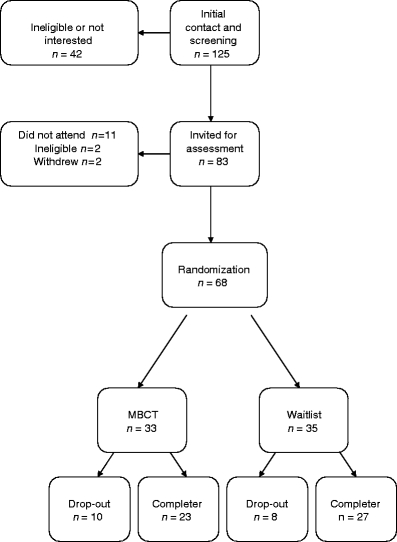
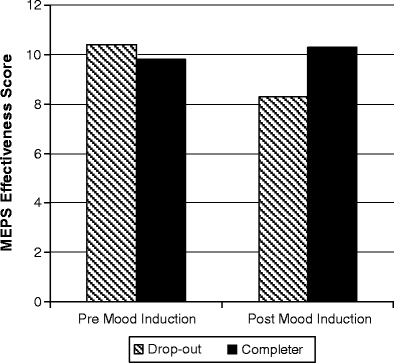
Verification
Claims the paper makes
The claims and statistics of this paper haven’t been checked yet.
Run the check — free, no account needed. It reads the open-access text and checks the sources it cites.
Claims other papers make about this one
Each is checked against this paper’s own text: does it say what the citing paper says it does?
The source backs part of the claim, not all of it — or backs it for a different population, condition or comparison.
In the citing paper
“A study by Crane and Williams70 on MBCT attrition in a community population found that those who dropped out of MBCT were significantly younger than those who completed treatment, less likely to be on antidepressants, had higher levels of depressive rumination and brooding, and showed significantly greater levels of problem-solving deterioration following mood challenge.”
From Treatment Engagement and Outcomes of Mindfulness-Based Cognitive Therapy for Veterans with Psychiatric Disorders (2019) · cites this paper as [70]
Experimental — accuracy not yet measured
Self-check
Percentages, sums and reported differences re-computed from the paper’s own numbers.
The self-check needs the paper’s full text.
Citations
Cites
(1998) · The Journal of Clinical Psychiatry · Cited by 19,139
(1998) · PubMed · Cited by 10,216
The mini international neuropsychiatric interview
Lecrubier, Y., Sheehan, D. V., Hergueta, T., & Weiller, E. (1998) · European Psychiatry · doi:10.1016/s0924-9338(99)80239-9 · Cited by 5,899
Rumination reconsidered: a psychometric analysis.
Treynor, W., Gonzalez, R., & Nolen-Hoeksema, S. (2003) · Cognitive Therapy and Research · doi:10.1023/a:1023910315561 · Cited by 3,808 · cited 6×
“…(five items, described by the authors as ‘moody pondering’ e.g. “think ‘why can’t I handle things better?’”) and reflection (five items referring to neutrally valenced pondering, e.g. ‘analyse recent events to try and understand why you are depressed’; see Treynor et al. 2003 for factor analysis).”
BackgroundInfluential(2001) · Cited by 3,666
Self-citationNolen-Hoeksema, S., & Morrow, J. (1991) · Journal of Personality and Social Psychology · doi:10.1037/0022-3514.61.1.115 · Cited by 3,276
Prevention of relapse/recurrence in major depression by mindfulness-based cognitive therapy.
Teasdale, J. D., Segal, Z. V., Williams, J. M. G., Ridgeway, V. A., Soulsby, J. M., & Lau, M. A. (2000) · Journal of Consulting and Clinical Psychology · doi:10.1037/0022-006x.68.4.615 · Cited by 3,236 · cited 4×
“Two previous trials of MBCT for recurrent depression have demonstrated that the treatment significantly reduces the risk of relapse over a 12-month period in those with three or more depressive episodes (Ma and Teasdale 2004; Teasdale et al. 2000), with a more recent trial demonstrating that MBCT has equivalent result…”
ResultInfluentialSelf-citation(1997) · American Psychiatric Press eBooks · Cited by 3,056
Self-citationRudd (2006) · doi:10.1002/(issn)1097-4679 · Cited by 2,635
Lezak, M. D., Howieson, D. B., Bigler, E. D., & Tranel, D. (1995) · Cited by 1,840
Research works printed but not linked: 5
- Beck, A. T., & Steer, R. A. (1990). Beck anxiety inventory manual. San Antonio: Psychological.
- Beck, A. T., Steer, R. A., & Brown, G. K. (1996). Manual for the BDI-II. San Antonio: Psychological.
- Lynch, G. V. (2004). Patient variables associated with treatment completion in mindfulness meditation-based stress reduction (MBSR) treatment for fibromyalgia: implications for prescriptive matching and participation enhancement. Unpublished doctoral dissertation, University of Louisville, Kentucky, USA.
- NICE. (2009). Depression: The treatment and management of depression in adults (update). UK: National Institute for Health and Clinical Excellence.
- Platt, J. J., Spivak, G., & Bloom, W. (Eds.). (1978). Manual for the Means-End Problem Solving (MEPS) procedure: A measure of interpersonal problem-solving skill. Philadelphia: Hahnemann Medical College Hospital.
Cited by
Sorted by citations
Williams, J. M. G., Crane, C., Barnhofer, T., Brennan, K., Duggan, D. S., Fennell, M. J. V., Hackmann, A., Krusche, A., Muse, K., Von Rohr, I. R., et al. (2014) · Journal of Consulting and Clinical Psychology · doi:10.1037/a0035036 · Cited by 420
“We informed participants’ general practitioners of their patients’ allocated treatment, the dates of treatment sessions (if applicable), and the point at which patients ended their participation in the trial.”
Self-citationDoing no harm in mindfulness-based programs: Conceptual issues and empirical findings
Baer, R., Crane, C., Miller, E., & Kuyken, W. (2019) · Clinical Psychology Review · doi:10.1016/j.cpr.2019.01.001 · Cited by 307
Self-citationMARCHAND, W. R. (2012) · Journal of Psychiatric Practice® · doi:10.1097/01.pra.0000416014.53215.86 · Cited by 305
Prospects for a clinical science of mindfulness-based intervention
Dimidjian, S., & Segal, Z. V. (2015) · American Psychologist · doi:10.1037/a0039589 · Cited by 291
Mindfulness-Based Cognitive Therapy: Theory and Practice
Sipe, W. E. B., & Eisendrath, S. J. (2012) · The Canadian Journal of Psychiatry · doi:10.1177/070674371205700202 · Cited by 285
Compen, F., Bisseling, E., Schellekens, M., Donders, R., Carlson, L., van der Lee, M., & Speckens, A. (2018) · Journal of Clinical Oncology · doi:10.1200/jco.2017.76.5669 · Cited by 248
“Having completed four or more sessions of MBCT was defined as a minimum adequate dose in both interventions.(22) Treatment as usual.”
MethodAn Exploration of Formal and Informal Mindfulness Practice and Associations with Wellbeing
Birtwell, K., Williams, K., van Marwijk, H., Armitage, C. J., & Sheffield, D. (2018) · Mindfulness · doi:10.1007/s12671-018-0951-y · Cited by 241
“Attrition rates for MBIs range from 15 to 30% (Carmody and Baer 2008; Crane and Williams 2010; Kabat-Zinn and Chapman-Waldrop 1988).”
BackgroundFor whom may participation in a mindfulness-based stress reduction program be contraindicated?
Dobkin, P. L., Irving, J. A., & Amar, S. (2012) · Mindfulness · doi:10.1007/s12671-011-0079-9 · Cited by 188
“While we focus on patient characteristics when attempting to answer our main question herein, Crane et al. (2010), in their excellent discussion of training teachers to deliver mindfulness-based interventions, call to mind another important variable to consider, namely teacher competence.”
BackgroundChristopher, M. S., Hunsinger, M., Goerling, L. R. J., Bowen, S., Rogers, B. S., Gross, C. R., Dapolonia, E., & Pruessner, J. C. (2018) · Psychiatry Research · doi:10.1016/j.psychres.2018.03.059 · Cited by 173
Strohmaier, S. (2020) · Mindfulness · doi:10.1007/s12671-020-01319-4 · Cited by 163
Crane, C., Crane, R. S., Eames, C., Fennell, M. J. V., Silverton, S., Williams, J. M. G., & Barnhofer, T. (2014) · Behaviour Research and Therapy · doi:10.1016/j.brat.2014.08.015 · Cited by 163
“A previous pilot trial of MBCT for recurrent suicidal depression had shown that rates of attrition from treatment were quite high (30 per cent; Crane & Williams, 2010) and so in the current trial considerable effort was invested in early participant socialisation and treatment engagement, and in…”
BackgroundSelf-citationNyklíček, I., Dijksman, S. C., Lenders, P. J., Fonteijn, W. A., & Koolen, J. J. (2014) · Journal of Behavioral Medicine · doi:10.1007/s10865-012-9475-4 · Cited by 102
“…as little is known regarding potential influences on the effectiveness by basic demographic characteristics such as age, sex, and education (Crane & Williams, 2010; Nyklı́ček & Kuijpers, 2008), and no data are available regarding the effects of medical characteristics (i.e., indication…”
BackgroundNam, S., & Toneatto, T. (2016) · International Journal of Mental Health and Addiction · doi:10.1007/s11469-016-9667-1 · Cited by 96
“For example, Crane and Williams (2010) explored attrition related factors in patients with a history of suicidal depression who participated in MBCT program.”
BackgroundMatis, J., Svetlak, M., Slezackova, A., Svoboda, M., & Šumec, R. (2020) · doi:10.2196/preprints.20709 · Cited by 81
“There is also some consensus among experts in this field [61,62] that a 4-week mindfulness training completion can be considered as a minimum adequate dose .”
Newby, J. M., Williams, A. D., & Andrews, G. (2014) · Behaviour Research and Therapy · doi:10.1016/j.brat.2014.05.009 · Cited by 78
Banerjee, M., Cavanagh, K., & Strauss, C. (2018) · Mindfulness · doi:10.1007/s12671-017-0837-4 · Cited by 75
“The finding that rumination and worry are associated with psychological disengagement from MBSH presents a challenge to the dissemination of mindfulness teaching via selfhelp in particular but may be also relevant to face-to-face MBIs (see Crane and Williams 2010).”
Glass, C. R., Spears, C. A., Perskaudas, R., & Kaufman, K. A. (2018) · Journal of Clinical Sport Psychology · doi:10.1123/jcsp.2017-0044 · Cited by 87
The Role of the Teacher in Mindfulness-Based Approaches: A Qualitative Study
van Aalderen, J. R., Breukers, W. J., Reuzel, R. P. B., & Speckens, A. E. M. (2012) · Mindfulness · doi:10.1007/s12671-012-0162-x · Cited by 69
Eggart, M., Todd, J., & Valdés‐Stauber, J. (2021) · PLoS ONE · doi:10.1371/journal.pone.0253913 · Cited by 76
Mindfulness-based interventions for anxiety and depression
Bhattacharya, S., & Hofmann, S. G. (2023) · Clinics in Integrated Care · doi:10.1016/j.intcar.2023.100138 · Cited by 81
Mind the Gaps: Are Conclusions About Mindfulness Entirely Conclusive?
Hanley, A. W., Abell, N., Osborn, D. S., Roehrig, A. D., & Canto, A. I. (2016) · Journal of Counseling & Development · doi:10.1002/jcad.12066 · Cited by 77
Anclair, M., Lappalainen, R., Muotka, J., & Hiltunen, A. J. (2018) · Scandinavian Journal of Caring Sciences · doi:10.1111/scs.12473 · Cited by 63
Mindfulness-based treatment for Bipolar Disorder: A systematic review of the literature
Bojic, S., & Becerra, R. (2017) · Europe’s Journal of Psychology · doi:10.5964/ejop.v13i3.1138 · Cited by 65
“This was comparable to other studies that investigated attrition rates in MBCT interventions in participants with recurrent depression (Crane & Williams, 2010; Kuyken et al., 2008).”
BackgroundResultGerhart, J. I., O’Mahony, S., Abrams, I., Grosse, J., Greene, M., & Levy, M. M. (2016) · Journal of Contextual Behavioral Science · doi:10.1016/j.jcbs.2016.04.003 · Cited by 70
Virtual Reality Interventions for Personal Development: A Meta-Analysis of Hardware and Software
Howard, M. C. (2018) · Human-Computer Interaction · doi:10.1080/07370024.2018.1469408 · Cited by 65
“…suggested, however, that participant dropout in interventions for emotional and physical outcomes may be because their motivation is not sufficient for the intensive efforts that they must allocate to the intervention (Crane & Williams, 2010; Postel, De Haan, Ter Huurne, Becker, & De Jong, 2010).”
BackgroundMeditation Benefits and Drawbacks: Empirical Codebook and Implications for Teaching
Anderson, T., Suresh, M., & Farb, N. A. (2019) · Journal of Cognitive Enhancement · doi:10.1007/s41465-018-00119-y · Cited by 55
Can Specific Attentional Skills be Modified with Mindfulness Training for Novice Practitioners?
Becerra, R., Dandrade, C., & Harms, C. A. (2016) · Current Psychology · doi:10.1007/s12144-016-9454-y · Cited by 58
Solati, K., Mousavi, M., Kheiri, S., & Dehkordi, A. H. (2017) · Oman Medical Journal · doi:10.5001/omj.2017.73 · Cited by 48
Mindfulness: Seeking a More Perfect Approach to Coping with Life’s Challenges
Hinterman, C., Burns, L. R., Hopwood, D., & Rogers, W. (2012) · Mindfulness · doi:10.1007/s12671-012-0091-8 · Cited by 49
“Mindfulness has been defined as the phenomenon of standing back from negative thoughts and feelings to evaluate an experience (Crane and Williams 2010; Weinstein et al. 2009).”
BackgroundPapini, N. M., Mason, T. B., Herrmann, S. D., & Lopez, N. V. (2022) · Body Image · doi:10.1016/j.bodyim.2022.09.010 · Cited by 40
Roseborough, D., McLeod, J. T., & Wright, F. (2016) · Research on Social Work Practice · doi:10.1177/1049731515569073 · Cited by 35
Early Cognitive Behavioral Therapy for Depression After Cardiac Surgery
Doering, L. V., Chen, B. C., Bodán, R. C., Magsarili, M. C., Nyamathi, A., & Irwin, M. R. (2013) · The Journal of Cardiovascular Nursing · doi:10.1097/jcn.0b013e31824d967d · Cited by 39
Reviewing Mindfulness-Based Interventions for Suicidal Behavior
Chesin, M., Interian, A., Kline, A., Benjamin-Phillips, C., Latorre, M., & Stanley, B. (2016) · Archives of Suicide Research · doi:10.1080/13811118.2016.1162244 · Cited by 37
“Crane and Williams (2010) found baseline rumination and cognitive reactivity were positively related to MBCT dropout among individuals with a history of suicidal depression.”
BackgroundA natural meditation setting improves compliance with mindfulness training
Lymeus, F., Lindberg, P., & Hartig, T. (2019) · Journal of Environmental Psychology · doi:10.1016/j.jenvp.2019.05.008 · Cited by 36
Personalising Practice Using Preferences for Meditation Anchor Modality
Anderson, T., & Farb, N. A. S. (2018) · Frontiers in Psychology · doi:10.3389/fpsyg.2018.02521 · Cited by 29
“Furthermore, this 30% parallels the 30% drop out rates in MBSR courses (Crane and Williams, 2010).”
BackgroundTseng, H., Chou, F., Chen, C.-H., & Chang, Y. (2023) · International Journal of Environmental Research and Public Health · doi:10.3390/ijerph20021555 · Cited by 34
“Although 13 RCTs were identified for the systematic review, four studies did not include baseline data or report means and standard deviations [13,28,30,33].”
BackgroundMethodInfluentialОсин, Е. Н., & Turilina, I. I. (2021) · Applied Psychology Health and Well-Being · doi:10.1111/aphw.12293 · Cited by 30
Canby, N. K., Eichel, K., Peters, S. I., Rahrig, H., & Britton, W. B. (2020) · Psychosomatic Medicine · doi:10.1097/psy.0000000000000873 · Cited by 33
“Furthermore, depressed individuals may be more motivated to meditate, yet their symptoms may interfere with their ability to practice (33,35).”
BackgroundBisseling, E., Cillessen, L., Spinhoven, P., Schellekens, M. P. J., Compen, F. R., van der Lee, M. L., & Speckens, A. E. M. (2019) · Journal of Medical Internet Research · doi:10.2196/14065 · Cited by 31
“Having completed 4 or more sessions of MBCT was defined as a minimum adequate dose in both interventions [42].”
Argungu, Z. M., Soh, K. L., Mukhtar, F., Yan, S. K., Olalekan, O. T., & Soh, K. G. (2020) · International Journal of Africa Nursing Sciences · doi:10.1016/j.ijans.2020.100200 · Cited by 30
Dispositional Mindfulness, Meditation, and Conditional Goal Setting
Crane, C., Jandric, D., Barnhofer, T., & Williams, J. M. G. (2010) · Mindfulness · doi:10.1007/s12671-010-0029-y · Cited by 31
“This is not least the case because clinical research suggests that most drop out from mindfulness-based interventions occurs very early in treatment (e.g., Crane and Williams 2010), at a point when people may have tried meditation on only a few occasions.”
BackgroundSelf-citationParameshwaran, R. (2015) · Indian Journal of Psychiatry · doi:10.4103/0019-5545.148511 · Cited by 29
“Though MBI has been reported to be very effective in various medical and psychiatric disorders, clinicians and researchers conclude that it is difficult to apply in acutely symptomatic patients.[41,42] However, chaplains do visit even acutely ill‐patients (physically and mentally), to provide an empathetic presence, w…”
BackgroundKerr, D. C., Ornelas, I. J., Lilly, M. M., Calhoun, R., & Meischke, H. (2019) · Journal of Medical Internet Research · doi:10.2196/13449 · Cited by 25
“Studies have indicated that a paradoxical relationship may exist, in which the psychological symptoms that MBIs intend to ameliorate may make it more difficult for participants first engaging in mindfulness practice to attain present-centered awareness [23-26].”
Sleep and mindfulness meditation as they relate to false memory
Konjedi, S., & Maleeh, R. (2018) · Psychological Research · doi:10.1007/s00426-018-1098-0 · Cited by 24
From Animal Behavior to Human Health
Schramm, E., Hediger, K., & Lang, U. E. (2015) · Zeitschrift für Psychologie · doi:10.1027/2151-2604/a000220 · Cited by 29
Schoultz, M., Atherton, I., Hubbard, G., & Watson, A. J. M. (2013) · Trials · doi:10.1186/1745-6215-14-431 · Cited by 20
“Literature suggest that attrition rate of approximately 25% is to be reasonably expected in mindfulness intervention studies [58].”
BackgroundLymeus, F., Ahrling, M., Apelman, J., Florin, C. D. M., Nilsson, C., Vincenti, J., Zetterberg, A., Lindberg, P., & Hartig, T. (2020) · Frontiers in Psychology · doi:10.3389/fpsyg.2020.01560 · Cited by 21
“…issue of acceptability is a major concern with people who enter into training with attention regulation difficulties; they seem to be particularly unlikely to complete the courses and the recommended amounts of homework exercise (Crane and Williams, 2010; Lymeus et al., 2017; Banerjee et al., 2018).”
The Effects of a Mindful Listening Task on Mind-Wandering
Taraban, O., Heide, F. J., Woollacott, M. H., & Chan, D. (2016) · Mindfulness · doi:10.1007/s12671-016-0615-8 · Cited by 21
“However, in light of evidence that not all populations respond positively to interventions explicitly designed to facilitate mindful awareness (Crane and Williams 2010), the present results suggest that the ATT may be a useful alternative pathway to this beneficial state of mind.”
BackgroundDark-Freudeman, A., Jones, C., & Terry, C. (2021) · Journal of American College Health · doi:10.1080/07448481.2020.1845180 · Cited by 21
Cousin, G., & Crane, C. (2015) · British Journal of Psychology · doi:10.1111/bjop.12153 · Cited by 20
Self-citationLi, Y., Coster, S., Norman, I., Chien, W. T., Qin, J., Ling Tse, M., & Bressington, D. (2021) · Early Intervention in Psychiatry · doi:10.1111/eip.12929 · Cited by 17
“(Crane & Williams, 2010), could further reflect the positive perception and acceptance of the intervention programmes by the participants.”
BackgroundMarchand, W. R., Yabko, B., Herrmann, T., Curtis, H., & Lackner, R. (2019) · The Journal of Alternative and Complementary Medicine · doi:10.1089/acm.2018.0511 · Cited by 17
Seritan, A. L., Iosif, A.-M., Prakash, P., Wang, S. S., & Eisendrath, S. (2022) · Journal of Technology in Behavioral Science · doi:10.1007/s41347-022-00261-7 · Cited by 16
“Attrition rate in MBCT groups can be as high as 30% (Crane & Williams, 2010; Rodgers et al., 2019).”
BackgroundChesin, M. S., Brodsky, B. S., Beeler, B., Benjamin-Phillips, C. A., Taghavi, I., & Stanley, B. (2018) · Crisis · doi:10.1027/0227-5910/a000519 · Cited by 19
“…of traditional mindfulness meditation practices to improve well-being) are acceptable, feasible, and effective for community members with a history of suicidal depression and/or current suicidal ideation (Britton et al., 2014; Crane & Williams, 2010; Forkmann et al., 2014; Le & Gobert, 2013).”
BackgroundMindfulness-based neurofeedback: A systematic review of EEG and fMRI studies
Treves, I. N., Greene, K. D., Bajwa, Z., Wool, E., Kim, N., Bauer, C. C. C., Bloom, P. A., Pagliaccio, D., Zhang, J., Whitfield, S., et al. (2024) · Imaging Neuroscience · doi:10.1162/imag_a_00396 · Cited by 21
“Ruminative individuals with a tendency to engage in repetitive negative thoughts may particularly have trouble learning meditation ( Alleva et al., 2014; Crane & Williams, 2010; Hilton et al., 2017).”
Handley, T. E., KAY‐LAMBKIN, F. J., Baker, A., Lewin, T. J., Kelly, B. J., Inder, K., Attia, J., & Kavanagh, D. J. (2016) · The Journal of Nervous and Mental Disease · doi:10.1097/nmd.0000000000000473 · Cited by 16
“…rates are often considerable for people with mental health issues in general (Handley et al., 2013; Richards and Borglin, 2011), evidence suggests that these rates may be higher among peoplewith elevated suicidal vulnerability (Beck et al., 1996; Crane and Williams, 2010; Tyrer et al., 2003).”
BackgroundResponse to unfairness across the suicide risk spectrum
Carbajal, J. M., Gamboa, J. L., Moore, J., Smith, F. M., Eads, L. A., Clothier, J. L., & Cáceda, R. (2017) · Psychiatry Research · doi:10.1016/j.psychres.2017.08.071 · Cited by 17
Hutchinson, J. K., Jones, F., & Griffith, G. (2021) · Mindfulness · doi:10.1007/s12671-021-01596-7 · Cited by 15
Lymeus, F., White, M. P., Lindberg, P., & Hartig, T. (2022) · Frontiers in Psychology · doi:10.3389/fpsyg.2022.763650 · Cited by 18
Coster, S., Gould, R. L., Coulson, M., & Norman, I. J. (2020) · International Journal of Nursing Studies Advances · doi:10.1016/j.ijnsa.2020.100004 · Cited by 21
Fatkin, T., Moore, S. K., Okst, K., Creedon, T. B., Samawi, F., Fredericksen, A. K., Roll, D., Oxnard, A., Lê Cook, B., & Schuman-Olivier, Z. (2021) · Journal of Substance Abuse Treatment · doi:10.1016/j.jsat.2021.108415 · Cited by 14
Exploring the Perspectives of Psychologists Who Use Mindfulness in Therapeutic Practice
Moir, S., Skues, J., & Theiler, S. (2019) · Australian psychologist · doi:10.1111/ap.12356 · Cited by 10
Nikolitch, K., Laliberté, V., Yu, C., Strychowsky, N., Segal, M., Looper, K. J., & Rej, S. (2016) · International Journal of Psychiatry in Clinical Practice · doi:10.1080/13651501.2016.1197276 · Cited by 12
PE augmented mindfulness: A neurocognitive framework for research and future healthcare
Sars, D. (2022) · Frontiers in Human Neuroscience · doi:10.3389/fnhum.2022.899988 · Cited by 12
“, 2013; Li and Bressington, 2019), particularly at an early intervention phase, this to be associated with lower levels of cognitive control (Crane and Williams, 2010; Dobkin et al., 2011), and long-term practice to be required for its cognitive and stress reducing benefits to emerge (Tang et al.”
BackgroundRecovery from Depression Through Buddhist Wisdom: An Idiographic Case Study
Cheng, F. K. (2014) · Social Work in Mental Health · doi:10.1080/15332985.2014.891554 · Cited by 11
Navigating the 'Zen Zeitgeist': The Potential of Personalized Neurofeedback for MeditationPreprint
Brandmeyer, T., Simmons, R., & Reggente, N. (2023) · PsyArXiv (OSF Preprints) · doi:10.31234/osf.io/x23me · Cited by 12
Leeuwerik, T., Cavanagh, K., Forrester, E., Hoadley, C., Bibby-Jones, A.-M., Lea, L., Rosten, C., & Strauss, C. (2020) · PLoS ONE · doi:10.1371/journal.pone.0238845 · Cited by 14
“[57] also reported that OCD symptoms were perceived to ‘conflict’ with practice and/or were all-consuming, not dissimilar to research showing that depressive rumination can affect engagement in MBCT for (recurrent) depression [84].”
ResultSocial Cognitions and Mental Health as Predictors of Adolescents’ Mindfulness Practice
Beattie, M. M., Konttinen, H. M., Volanen, S., Knittle, K. P., & Hankonen, N. E. (2020) · Mindfulness · doi:10.1007/s12671-020-01331-8 · Cited by 11
The effect of a mindfulness intervention (MI) on sleep disturbance (SD) among nurses
Hayajneh, A. A., Al-Younis, M. O., & Rababa, M. (2024) · Scientific Reports · doi:10.1038/s41598-024-55748-5 · Cited by 10
Santiago, P. H. R., Meira, L. R. V. S. E., & Colussi, C. F. (2019) · Complementary Therapies in Clinical Practice · doi:10.1016/j.ctcp.2019.01.005 · Cited by 11
Cain, J. A., Brandmeyer, T., Simonian, N., Sanguinetti, J. L., Young, S., Sacchet, M. D., & Reggente, N. (2024) · doi:10.31234/osf.io/3bzg6 · Cited by 10
Developing Acceptance with the Help of Sensors—“Embracing the Me That I Can See”
Rolnick, A., Oren, N. T., & Bassett, D. (2016) · Biofeedback · doi:10.5298/1081-5937-44.3.04 · Cited by 7
Brief Mindfulness-Based Interventions: Teacher and Course Attendee Perspectives on Content
Birtwell, K., Morris, R., & Armitage, C. J. (2021) · Mindfulness · doi:10.1007/s12671-021-01698-2 · Cited by 9
“While there is evidence for their efficacy, participation in 8-week programmes such as MBSR and MBCT (mindfulness-based cognitive therapy; Segal et al., 2013) can be challenging, and attrition rates are high at 15–30% (Carmody & Baer, 2008; Crane & Williams, 2010).”
BackgroundMindfulness-Based Cognitive Therapy for Treatment-Resistant Depression
Deen, S. R., Sipe, W. E. B., & Eisendrath, S. J. (2016) · Springer eBooks · doi:10.1007/978-3-319-29866-5_12 · Cited by 8
Yarrington, J. S., Metts, A. V., Vargas, J. H., Couto, D. D., Marafon, T., & Cohen, Z. D. (2025) · Journal of Affective Disorders · doi:10.1016/j.jad.2025.119878 · Cited by 6
(2014) · Cited by 6
Thérapie cognitive basée sur la pleine conscience : état actuel et applications futures
Irving, J. A., & Segal, Z. V. (2014) · Santé mentale au Québec · doi:10.7202/1023990ar · Cited by 9
Upton, E., Venkatesha, V., Joubert, A., Mahoney, A. E. J., Moulds, M. L., Werner-Seidler, A., & Newby, J. M. (2025) · Cognitive Therapy and Research · doi:10.1007/s10608-025-10593-2 · Cited by 5
“…Commons Attribution 4.0 International License, which permits use, sharing, adaptation, distribution and reproduction in any medium or format, rumination are predictive of outcomes in general CBT treat - ments for anxiety and depression (e.g., Bredemeier et al., 2020 ; Crane & Williams, 2010).”
InfluentialLymeus, F. (2022) · Frontiers in Psychology · doi:10.3389/fpsyg.2022.715411 · Cited by 5
“Previous studies indicated that the conventional approach to mindfulness training may selectively drive out participants with more pronounced cognitive problems (Crane and Williams, 2010; Lymeus et al., 2017; Banerjee et al., 2018).”
BackgroundResultParticipation in an Adapted Version of MBCT in Psychiatric Care
Herdt, J., Bührlen, B., Bader, K., & Hänny, C. (2012) · Mindfulness · doi:10.1007/s12671-012-0120-7 · Cited by 5
“Attrition rates reported in original articles vary considerably between values of 33 % (Godfrin and van Heeringen 2010), 15–17 % (Crane and Williams 2010), 10 % (Bondolfi et al. 2010), and 1 % (Kenny and Williams 2007).”
InfluentialMindfulness-Based Cognitive Therapy for Treatment-Resistant Depression
Sipe, W. E. B., & Eisendrath, S. J. (2014) · Elsevier eBooks · doi:10.1016/b978-0-12-416031-6.00003-7 · Cited by 5
Interian, A., Miller, R., Dave, C., Latorre, M., Hill, L. S., King, A., Boschulte, D. R., Kline, A., Siegel, D., Sedita, M. M., et al. (2024) · Mindfulness · doi:10.1007/s12671-024-02392-9 · Cited by 4
“…between dropout and depressionogenic cognitive patterns is posited to occur because mindfulness practice involves sitting with difficult feelings and cognitions, i.e., difficulty during mindfulness, among patients who tend to react cognitively to such difficulties (Crane & Williams, 2010).”
Rabasco, A., Wallace, G. T., & Andover, M. S. (2024) · Cognitive Therapy and Research · doi:10.1007/s10608-024-10516-7 · Cited by 4
“Even brief mindfulness a higher likelihood of dropping out of traditional mindfulness treatments, such as MBCT (e.g., Crane & Williams, 2010; Ma & Teasdale, 2004).”
Lymeus, F. (2022) · Landscape and Urban Planning · doi:10.1016/j.landurbplan.2022.104403 · Cited by 4
Does Virtual Reality Training Increase Mindfulness in Aboriginal Out-of-Home Care Children?
Rowland, G., Hindman, E., Jomeen, J., & Hassmén, P. (2024) · Mindfulness · doi:10.1007/s12671-024-02373-y · Cited by 4
“Methods to increase engagement with therapeutic services are an important avenue to explore; past research indicates that clients who withdraw from MBI interventions might benefit the most (Crane & Williams, 2010).”
Dat, N. T., Mitsui, N., Asakura, S., Kako, Y., Takanobu, K., Fujii, Y., & Kusumi, I. (2024) · Asian Journal of Psychiatry · doi:10.1016/j.ajp.2024.104207 · Cited by 3
dethoor, M., Vialatte, F., martinelli, M., peri, P., Lançon, C., & Trousselard, M. (2022) · OBM Integrative and Complementary Medicine · doi:10.21926/obm.icm.2204058 · Cited by 3
Doren, N. V., & Roeser, R. W. (2024) · ECNU Review of Education · doi:10.1177/20965311241265122 · Cited by 2
Mindfulness-Based Cognitive Therapy in Major depressive disorder - systematic review and metanalysis
Liberali, R. (2017) · Fisioterapia em Movimento · doi:10.1590/1980-5918.030.s01.ar03 · Cited by 2
“Thus the practice of MBCT is beneficial to these symptoms, as it combines cognitive therapy with intensive training in meditation (48), focusing on observation and working on cognitive and affective processes.”
BackgroundGárriz, M., Pérez, V., Pérez‐Aranda, A., Castaño, J., Colom, F., Canosa, I., Gandara, N., Martín‐Lopez, L. M., & Elices, M. (2022) · Mindfulness · doi:10.1007/s12671-022-01995-4 · Cited by 1
Spiritual boredom is associated with over- and underchallenge, lack of value, and reduced motivation
Goetz, T., Fries, J., Stempfer, L., Kraiger, L., Stoll, S. E. M., Baumgartner, L., Diamant, Y. L., Porics, C., Sonntag, B., Würglauer, S., et al. (2025) · Communications Psychology · doi:10.1038/s44271-025-00216-7 · Cited by 2
Gaskin, J., Chao, M., & Li, W. W. (2025) · Springer eBooks · doi:10.1007/978-3-032-00353-9_19 · Cited by 1
Eguchi, M., Yoshinaga, N., & Kunikata, H. (2025) · Journal of Psychosocial Nursing and Mental Health Services · doi:10.3928/02793695-20251104-02 · Cited by 1
McDonald, M. A., Berryhill, M. E., Lansing, A. H., & Lancaster, C. L. (2026) · Mindfulness · doi:10.1007/s12671-026-02774-1 · Cited by 1
Scholl, J., Winkens, L. H. H., & Veling, H. (2026) · JMIR Formative Research · doi:10.2196/79141 · Cited by 1
“Banerjee et al [69] found that, especially when starting out with mindfulness practice, worriers can become so overwhelmed by their thoughts that they struggle to stay focused during listening exercises, leading them to view mindfulness apps as unhelpful [87].”
Funkhouser, C. J., Katz, A. C., Meissel, E. E. E., Stevens, E. S., Weinberg, A., Nabb, C. B., & Shankman, S. A. (2022) · Affective Science · doi:10.1007/s42761-022-00121-w · Cited by 1
“Third, individuals with higher RNT are more likely to drop out and psychologically disengage from treatment (Banerjee et al., 2018; Crane & Williams, 2010).”
BackgroundShasha, S. U. N., & Xiaobing, L. I. (2022) · Advances in Psychological Science · doi:10.3724/sp.j.1042.2022.02570 · Cited by 1
Ghosh, D., Raj, S., Singh, T., Verma, S. K., & Arya, Y. K. (2023) · Elsevier eBooks · doi:10.1016/b978-0-323-85726-0.00021-1 · Cited by 1
Young, S. D., Kim, J. P., & Hanley, A. W. (2025) · Cureus · doi:10.7759/cureus.80485 · Cited by 1
“For example, some MBI studies of broader patient populations have had dropout rates as high as 47% [20].”
Song, C. (2023) · The Korean Journal of Aerospace and Environmental Medicine · doi:10.46246/kjasem.230008 · Cited by 1
“우리 사회에서 명상에 대한 많은 강좌와 교육 프로그램을 운영하고 있 고 있어 배워 활용하고자 하지만 집중하기가 어렵거나 잡념이 생 기고, 심리적 갈등을 겪고 있는 사람들이 쉽게 명상 효과를 찾기 는 어렵다[24,25].”
Metadata
- Authors
- Crane, C., & Williams, J. M. G.
- Affiliations
- Warneford Hospital (GB)
- Corresponding author
- Crane, Catherine
- Venue
- Mindfulness
- Published
- 2010-03
- Volume
- 1
- Issue
- 1
- Pages
- 10-20
- ISSN
- 1868-8527 (ISSN-L)
- 1868-8535
- PMC
- PMC2987524
- OpenAlex
- W2155494147
- Cited by
- 123
- References
- 37
- Citations by year
- 2026: 9 · 2025: 10 · 2024: 9 · 2023: 6 · 2022: 11 · 2021: 8 · 2020: 9 · 2019: 7 · 2018: 10 · 2017: 10 · 2016: 11 · 2015: 5 · 2014: 6 · 2013: 3 · 2012: 6
- FWCI
- 4.21
- Type
- journal article
- Language
- en
- Open access
- hybrid
- doi.org
- Licence
- cc-by-nc
- Locations
- Mindfulness (publishedVersion, cc-by-nc)
- PubMed Central (publishedVersion, cc-by-nc)
- PubMed (publishedVersion)
- Topics
- Social Sciences › Psychology › Clinical Psychology › Mindfulness and Compassion Interventions
- Social Sciences › Psychology › Experimental and Cognitive Psychology › Anxiety, Depression, Psychometrics, Treatment, Cognitive Processes
- Social Sciences › Psychology › Clinical Psychology › Psychotherapy Techniques and Applications
- Keywords
- mindfulness-based cognitive therapy, treatment discontinuation, suicidal depression, suicidal ideation, cognitive reactivity, brooding, depressive rumination, mood induction, predictors of treatment dropout, antidepressant use, treatment engagement
About these checks
Registry, retraction, Cites and statistics results are computed, not judged, with one exception: a printed reference that no index lists is read once by a model before it counts as a citation error. Claims are extracted by a model and kept only when their quote appears verbatim in the text; each cited source is then checked, with a model’s help, for whether it says what the claim relies on. Those verdicts can be wrong — read the claim’s quote and the cited source before relying on one.
Statistics and arithmetic are recomputed, not judged.
Confidence bands are shown only for fields calibrated on our annotated test set. None is calibrated yet, so no band is shown.
What counts as a claim ›How we measure confidence ›How we check this ›
Are you an author, or do you see a problem with this page? Request a review
