

The State- and Trait-Level Effects and Candidate Mechanisms of Four Mindfulness-Based Cognitive Therapy (MBCT) Practices: Two Exploratory Studies
Open accessThe DOI matches its Crossref record; 84 of the 85 references it cites were found in a registry or an index; 14 of the 27 sources its claims cite were checked for support.
Abstract
Objectives: The primary aim was to explore state- and trait-level effects and candidate mechanisms of four Mindfulness-Based Cognitive Therapy (MBCT) practices. Method: One hundred sixty adults self-selected from the general population were randomized to one of four mindfulness practices: body scan, mindful movement, breath and body, and befriending. Study 1 explored state-level self-compassion, mindfulness, decentering (mechanisms), and pleasantness of thoughts, emotions, and body sensations at multiple time points using two single mindfulness sessions. Study 2 explored trait-level self-compassion, mindfulness, decentering, interoceptive awareness, attentional control (mechanisms), anxiety, depression, and psychological quality of life pre-post 2 weeks of daily practice. Results: In study 1, state-level effects were demonstrated in all candidate mechanisms and outcomes within the whole sample across time points (d = 0.27 to 0.86), except for state decentering. After controlling for pre-scores and additional covariates, no between-group effects were found (p = 0.050 to 0.973). In study 2, trait-level effects were demonstrated in psychological quality of life and most candidate mechanisms within the whole sample (d = 0.26 to 0.64) but no between-group effects were found (p = 0.080 to 0.805). Within the whole sample, after controlling for pre-scores, changes in mindfulness, self-compassion, decentering, and interoceptive awareness (i.e. body listening) were associated with improvements in psychological quality of life (r = 0.23 to 0.40) and self-led mindfulness practice (r = 0.18 to 0.23). Conclusions: Future research should test the generated hypotheses using well-designed, adequately powered, and theory-driven studies that address universal and specific mechanisms in different populations and contexts. Pre-registration: This study is not pre-registered. © 2023, The Author(s).
Overview
CoChat Summary
## TL;DR
This exploratory paper tested four MBCT practices (body scan, mindful movement, breath and body, befriending) in 160 self-selected adults from the general population. It found state- and trait-level improvements in the whole sample, but no convincing between-practice differences after covariate adjustment.
## Key findings
- Study 1 (state-level, single-session): Within the whole sample, state self-compassion and pleasantness of thoughts, emotions, and body sensations improved pre-post sessions, with effect sizes ranging from d = 0.27 to 0.86; state mindfulness also improved over 2 weeks (d = 0.34), but state decentering did not (d = 0.24, CI included zero).
- Study 1 between-group effects: After controlling for baseline and additional covariates, no between-group effects were found for self-compassion, mindfulness, decentering, or pleasantness of thoughts/emotions; pleasantness of body sensations was initially significant (np2 = 0.09, p = 0.017) but became non-significant with covariates (np2 = 0.08, p = 0.050).
- Study 2 (trait-level, 2 weeks daily practice): In the whole sample, psychological quality of life improved (d = 0.26) and trait mindfulness, decentering, self-compassion, interoceptive awareness, and attentional control showed gains (d = 0.29 to 0.64); depression did not change (d = 0.11), and anxiety slightly increased (d = 0.32), though it remained in the “no symptoms” range.
- Mechanism/association findings: In Study 2, changes in trait self-compassion, mindfulness, acting with awareness, non-judgement, decentering, and body listening were associated with better psychological quality of life (r = 0.22 to 0.40), and more self-reported practice was associated with improvements in mindfulness, self-compassion, decentering, attentional control, and psychological quality of life (r = 0.18 to 0.28).
## Methods
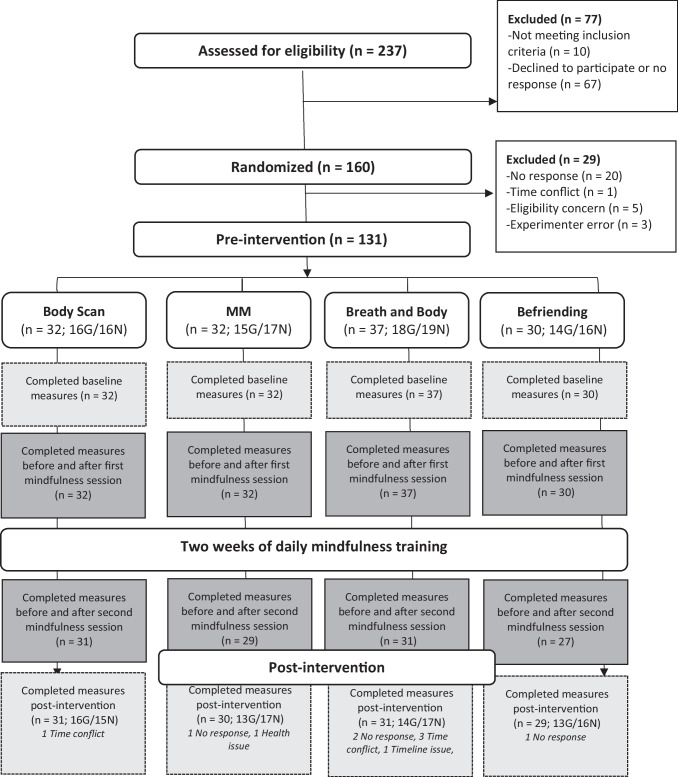
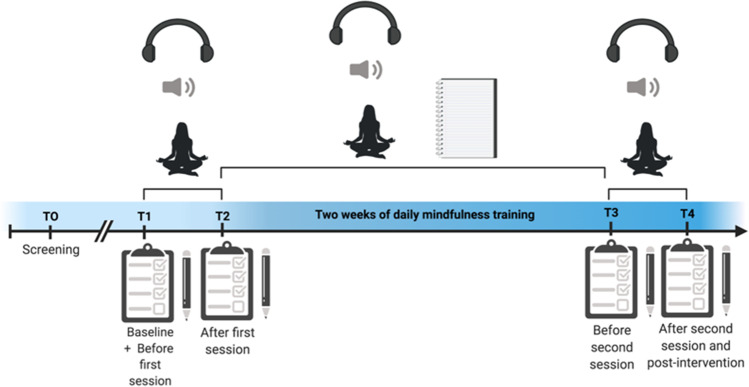
- Design: Two exploratory studies within one randomized component-analysis design comparing four MBCT practices; Study 1 examined state-level effects across single sessions and Study 2 examined trait-level effects over 2 weeks of daily practice.
- Sample/data: 160 self-selected adults from the general population were randomized; 131 were included at baseline in Study 1, and 121 completed Study 2 post-intervention measures. Participants were assigned to body scan, mindful movement, breath and body, or befriending.
- Analysis: The paper used non-parametric tests because of normality/outlier issues, including Wilcoxon signed-rank tests, Kruskal-Wallis/Fisher exact tests, Quade’s ANCOVA, and partial rank correlations; it also used Kazdin’s criteria for mechanism evidence (“strong association” and “gradient”).
## Limitations
- The paper explicitly states that the small sample size limited power to detect true effects, especially small effects, and that multiple comparisons may have increased chance findings.
- The paper explicitly notes the self-selective sample limits generalizability, and the lack of an active control group limits interpretation of MBCT-specific effects.
- Evident from the text: the study was not pre-registered, did not conduct an a priori power calculation, and relied on post hoc exploratory analyses, so conclusions are hypothesis-generating rather than confirmatory.
Model-written summary. Check it against the paper before relying on it.
Integrity signals
Registry
Cites
Statistics
Figures
Verification
Claims the paper makes
11 Valid · 1 Not valid · 3 Not checked · 91 Own results and interpretations
The sources with a verdict support this claim; the rest weren’t checked yet, have no full text we could read, or their verdicts aren’t rated yet.
In the paper
“In specific populations (i.e. recurrent depression), mechanisms of decentering, rumination, and cognitive reactivity seem to be integral to the process of change (Bieling et al., 2012; Cladder-Micus et al., 2018; Fissler et al., 2016; Segal et al., 2019; van Aalderen et al., 2012).”
§ The State- and Trait-Level Effects and Candidate Mechanisms of Four Mindfulness-Based Cognitive Therapy (MBCT) Practices: Two Exploratory Studies > Abstract > Supplementary Information
What the sources say
- Not checked — no full text of the sourcecites Bieling et al., 2012 matched to “Treatment-specific changes in decentering following mindfulness-based cognitive therapy versus antidepressant medication or placebo for prevention of depressive relapse.” (2012) source
- Supportedcites Cladder-Micus et al., 2018 matched to “Cognitive reactivity as outcome and working mechanism of mindfulness-based cognitive therapy for recurrently depressed patients in remission” (2018) source
The discussion reports that cognitive reactivity mediated the reduction in depressive symptoms during mindfulness-based cognitive therapy, while cautioning that the direction of the relationship remains uncertain. The paper also describes learning to decentre from negative thoughts and disengage from depressive rumination as part of the therapy’s approach for recurrent depression. Together, these passages support the citing sentence’s cautious description of the three processes. (LLM, conf=0.86)
- Not checked — no full text of the sourcecites Fissler et al., 2016 matched to “An investigation of the effects of brief mindfulness training on self-reported interoceptive awareness, the ability to decenter, and their role in the reduction of depressive symptoms” (2016) source
hedgedstates an association- Asserted: passes — The authors put it forward as true.
- Checkable: passes — It can be checked against evidence.
- Load-bearing: passes — The paper’s conclusions depend on it.
- Based: passes — The paper gives a reason why it holds.
A result the paper reports from its own data — it cites no other source for it, so there is none to check. The quote shows it is in the paper.
In the paper
“However, no state-level effects were observed for decentering (d = 0.24 (−0.01, 0.50)) with the confidence intervals including zero”
§ The State- and Trait-Level Effects and Candidate Mechanisms of Four Mindfulness-Based Cognitive Therapy (MBCT) Practices: Two Exploratory Studies > Study 1 > Results
plain- Asserted: passes — The authors put it forward as true.
- Checkable: passes — It can be checked against evidence.
- Load-bearing: passes — The paper’s conclusions depend on it.
- Based: passes — The paper gives a reason why it holds.
A result the paper reports from its own data — it cites no other source for it, so there is none to check. The quote shows it is in the paper.
In the paper
“State-level effects were also observed for mindfulness (d = 0.34 (0.09, 0.60)) pre-post 2 weeks of daily mindfulness training (T2–T4) with small to medium effect sizes within the whole sample.”
§ The State- and Trait-Level Effects and Candidate Mechanisms of Four Mindfulness-Based Cognitive Therapy (MBCT) Practices: Two Exploratory Studies > Study 1 > Results
plainstates a cause- Asserted: passes — The authors put it forward as true.
- Checkable: passes — It can be checked against evidence.
- Load-bearing: passes — The paper’s conclusions depend on it.
- Based: passes — The paper gives a reason why it holds.
A result the paper reports from its own data — it cites no other source for it, so there is none to check. The quote shows it is in the paper.
In the paper
“In study 2, trait-level effects were demonstrated in psychological quality of life and most candidate mechanisms within the whole sample (d = 0.26 to 0.64) but no between-group effects were found (p = 0.080 to 0.805).”
§ The State- and Trait-Level Effects and Candidate Mechanisms of Four Mindfulness-Based Cognitive Therapy (MBCT) Practices: Two Exploratory Studies > Abstract > Results
plain- Asserted: passes — The authors put it forward as true.
- Checkable: passes — It can be checked against evidence.
- Load-bearing: passes — The paper’s conclusions depend on it.
- Based: passes — The paper gives a reason why it holds.
A result the paper reports from its own data — it cites no other source for it, so there is none to check. The quote shows it is in the paper.
In the paper
“After 2 weeks of daily mindfulness practice and the second mindfulness session, whilst controlling for baseline levels, pleasantness of body sensations differed across the four experimental groups with medium to large effects (np2 = 0.09 (0.01, 0.16), p = 0.017) (T3–T4).”
§ The State- and Trait-Level Effects and Candidate Mechanisms of Four Mindfulness-Based Cognitive Therapy (MBCT) Practices: Two Exploratory Studies > Study 1 > Results
plain- Asserted: passes — The authors put it forward as true.
- Checkable: passes — It can be checked against evidence.
- Load-bearing: passes — The paper’s conclusions depend on it.
- Based: passes — The paper gives a reason why it holds.
41 more claims
Create a free account to see all 106 claims and every source verdict.
- Probably not a substantial claim. 49
- It may state two separate claims as one. 24
- The quote only partly states this claim. 2
Claims other papers make about this one
Each is checked against this paper’s own text: does it say what the citing paper says it does?
The source backs part of the claim, not all of it — or backs it for a different population, condition or comparison.
In the citing paper
“Past work has examined the acceptability and effectiveness of these adapted MBCT curricula in the context of improving mental health and well-being (Maloney et al., 2023; Montero-Marin et al., 2021; Strauss et al., 2021).”
From Pathways to mental well-being for graduates of mindfulness-based cognitive therapy (MBCT) and mindfulness-based stress reduction (MBSR): A mediation analysis of an RCT. (2024) · cites this paper as Maloney et al., 2023
Experimental — accuracy not yet measuredThe cited source says what the claim attributes to it.
In the citing paper
“An intention-to-treat (ITT) approach, using the Full Information Maximum Likelihood (FIML) to handle missing data, was used in the current paper for a secondary mediation analysis of the parent trial paper (Maloney et al., 2023).”
From Pathways to mental well-being for graduates of mindfulness-based cognitive therapy (MBCT) and mindfulness-based stress reduction (MBSR): A mediation analysis of an RCT. (2024) · cites this paper as Maloney et al., 2023
Statistics recomputed
Every reported test result, recomputed from its test statistic and degrees of freedom. A result shows as not adding up only once an independent check has confirmed it.
- Consistentr(129) = 0.73reported p < .001 · recomputed p < .001
“r (129) = 0.73, p < .001”
Self-check
Percentages, sums and reported differences re-computed from the paper’s own numbers.
Self-check results appear here once an independent check has confirmed them.
Citations
Cites
The PHQ-9: Validity of a brief depression severity measure
Kroenke, K., Spitzer, R. L., & Williams, J. B. W. (2001) · Journal of General Internal Medicine · doi:10.1046/j.1525-1497.2001.016009606.x · Cited by 44,910 · cited 1×
“The 9-item Patient Health Questionnaire (PHQ-9; Kroenke et al., 2001) was used to measure depression symptoms.”
MethodA Brief Measure for Assessing Generalized Anxiety Disorder: The GAD-7
Spitzer, R. L., Kroenke, K., Williams, J. B. W., & Löwe, B. (2006) · Archives of Internal Medicine · doi:10.1001/archinte.166.10.1092 · Cited by 31,765 · cited 1×
“The 7-item Generalized Anxiety Disorder (GAD-7; Spitzer et al., 2006) questionnaire was used to measure anxiety symptoms.”
MethodReconsidering Baron and Kenny: myths and truths about mediation analysis
Zhao, X., Lynch, J. G., & Chen, Q. (2010) · Journal of Consumer Research · doi:10.1086/651257 · Cited by 12,583 · cited 2×
“The authors of the current paper recommend future studies to calculate indirect effects, with a larger sample size, following a framework outlined by Zhao et al. (2010).”
BackgroundMethodPractical Nonparametric Statistics
Groggel, D. J. (2000) · Technometrics · doi:10.1080/00401706.2000.10486067 · Cited by 11,041
Lakens, D. (2013) · Frontiers in Psychology · doi:10.3389/fpsyg.2013.00863 · Cited by 10,303 · cited 1×
“The common language effect size, or the probability of superiority (Grissom & Kim, 2011), expresses the likelihood that one randomly selected participant from one group would have a higher score than another randomly selected participant from a different group (Lakens, 2013).”
BackgroundUsing Self-Report Assessment Methods to Explore Facets of Mindfulness
Baer, R. A., Smith, G. T., Hopkins, J., Krietemeyer, J., & Toney, L. (2006) · Assessment · doi:10.1177/1073191105283504 · Cited by 7,511 · cited 1×
“The 15-item “Five Facet Mindfulness Questionnaire” (FFMQ-15; Baer et al., 2006; Bohlmeijer et al., 2011) was used to measure trait mindfulness.”
MethodThe Development and Validation of a Scale to Measure Self-Compassion
NEFF, K. D. (2003) · Self and Identity · doi:10.1080/15298860309027 · Cited by 6,436 · cited 1×
“Self-compassion generally involves the ability to bring kindness and acceptance towards the human condition and suffering (Neff, 2003) and was measured using a two-item VAS (Kirschner et al., 2019) adapted from the Self-Compassion Scale – Short Form (SCS-SF; Raes et al., 2011) at T1, T2, T3, and T4.”
MethodProcess evaluation of complex interventions: Medical Research Council guidance
Moore, G. F., Audrey, S., Barker, M., Bond, L., Bonell, C., Hardeman, W., Moore, L., O'Cathain, A., Tinati, T., Wight, D., et al. (2015) · BMJ · doi:10.1136/bmj.h1258 · Cited by 6,204 · cited 1×
“Logic diagrams are often used to help visualize and describe the theoretical framework of how and why (through which mechanisms) one may expect a programme, or in this case one core component of a programme, produces change in outcome (Moore et al., 2015).”
MethodLöwe, B., Decker, O., Müller, S., Brähler, E., Schellberg, D., Herzog, W., & Herzberg, P. Y. (2008) · Medical Care · doi:10.1097/mlr.0b013e318160d093 · Cited by 4,527 · cited 2×
“89) in a general population sample (Löwe et al., 2008).”
BackgroundInfluentialShapiro, S. L., Carlson, L. E., Astin, J. A., & Freedman, B. (2006) · Journal of Clinical Psychology · doi:10.1002/jclp.20237 · Cited by 4,002 · cited 1×
“…self-compassion, decentering, attentional control, and interoceptive awareness) grounded in theory (Feldman & Kuyken, 2019; Segal et al., 2018; Shapiro et al., 2006) and existing evidence (Alsubaie et al., 2017; Chambers et al., 2008; Chiesa et al., 2011; Gu et al., 2015; Hanley et al., 2017;…”
BackgroundConstruction and factorial validation of a short form of the Self-Compassion Scale
Raes, F., Pommier, E., Neff, K. D., & Van Gucht, D. (2011) · Clinical Psychology & Psychotherapy · doi:10.1002/cpp.702 · Cited by 2,997 · cited 3×
“The SCS-SF has demonstrated good reliability ( α = 0.87; Raes et al., 2011).”
MethodInfluentialA critical review of visual analogue scales in the measurement of clinical phenomena
Wewers, M. E., & Lowe, N. K. (1990) · Research in Nursing & Health · doi:10.1002/nur.4770130405 · Cited by 2,580 · cited 5×
“Pleasantness of thoughts, emotions, and body sensations were considered as state-level outcomes and were measured using a single-item visual analogue scale (VAS) for each content (three in total) at T1, T2, T3, and T4.”
BackgroundInfluentialMediators and Mechanisms of Change in Psychotherapy Research
Kazdin, A. E. (2007) · Annual Review of Clinical Psychology · doi:10.1146/annurev.clinpsy.3.022806.091432 · Cited by 2,504 · cited 5×
“Instead, hypotheses regarding potential mechanisms were generated by addressing key criteria (e.g., “strong association”) set forth by Kazdin (2007) in establishing a mechanism of change.”
BackgroundMethodInfluentialThe Abuse of Power: The Pervasive Fallacy of Power Calculations for Data Analysis
Hoenig, J. M., & Heisey, D. M. (2001) · The American Statistician · doi:10.1198/000313001300339897 · Cited by 2,046 · cited 1×
“Moreover, in light of post hoc power calculations being informed by p -values and therefore limited in terms of interpretability in the context of an exploratory study, the current study emphasized effect sizes for future work to use to inform an a priori power calculation (Hoenig & Heisey, 2001).”
MethodCarmody, J., & Baer, R. A. (2008) · Journal of Behavioral Medicine · doi:10.1007/s10865-007-9130-7 · Cited by 1,823
Anxiety-related attentional biases and their regulation by attentional control.
Derryberry, D., & Reed, M. A. (2002) · Journal of Abnormal Psychology · doi:10.1037/0021-843x.111.2.225 · Cited by 1,729 · cited 1×
“The 12-item “Attentional Control Scale-Straightforward” (ACS-S; Judah et al., 2020) was used to measure trait attentional control, which broadly involves the ability to regulate attention (Derryberry & Reed, 2002).”
MethodGu, J., Strauss, C., Bond, R., & Cavanagh, K. (2015) · Clinical Psychology Review · doi:10.1016/j.cpr.2015.01.006 · Cited by 1,712 · cited 3×
“These variables (i.e. self-compassion, mindfulness, decentering) have been indicated as key mechanisms in the context of the entire MBCT programme (Alsubaie et al., 2017; Feldman & Kuyken, 2019; Gu et al., 2015; van der Velden et al., 2015).”
BackgroundCreswell, J. D. (2017) · Annual Review of Psychology · doi:10.1146/annurev-psych-042716-051139 · Cited by 1,702 · cited 2×
“However, this area of research is still in its early stages (Creswell, 2017; Dimidjian & Segal, 2015; Galante et al., 2021; Van Dam et al., 2018) with generally low to moderate quality trials that lack a consensus on a range of factors, such as the programme protocol (e.g., optimal dosage) and…”
BackgroundVan Dam, N. T., van Vugt, M. K., Vago, D. R., Schmalzl, L., Saron, C. D., Olendzki, A., Meissner, T., Lazar, S. W., Kerr, C. E., Gorchov, J., et al. (2018) · Perspectives on Psychological Science · doi:10.1177/1745691617709589 · Cited by 1,506 · cited 2×
“However, this area of research is still in its early stages (Creswell, 2017; Dimidjian & Segal, 2015; Galante et al., 2021; Van Dam et al., 2018) with generally low to moderate quality trials that lack a consensus on a range of factors, such as the programme protocol (e.g., optimal dosage) and…”
BackgroundThe Toronto Mindfulness Scale: Development and validation
Lau, M. A., Bishop, S. R., Segal, Z. V., Buis, T., Anderson, N. D., Carlson, L., Shapiro, S., Carmody, J., Abbey, S., & Devins, G. (2006) · Journal of Clinical Psychology · doi:10.1002/jclp.20326 · Cited by 1,456 · cited 2×
“The TMS Decentering subscale has demonstrated good reliability ( α = 0.84) in a sample of participants with a range of mindfulness experience (Lau et al., 2006).”
BackgroundInfluentialDo multiple outcome measures require p-value adjustment?
Feise, R. J. (2002) · BMC Medical Research Methodology · doi:10.1186/1471-2288-2-8 · Cited by 1,299 · cited 1×
“To balance the issue of minimizing both Type I and II errors, adjusted effect size calculations and confidence intervals of effect sizes were prioritized over p -value reporting in light of the exploratory nature of the current paper (Feise, 2002).”
MethodChiesa, A., Calati, R., & Serretti, A. (2011) · Clinical Psychology Review · doi:10.1016/j.cpr.2010.11.003 · Cited by 1,295 · cited 2×
“Processes relating to attention and awareness (e.g., attentional control and interoceptive awareness) have also been examined as mechanisms of change (Chambers et al., 2008; Chiesa et al., 2011; Hanley et al., 2017), but warrant further investigation.”
BackgroundMetacognitive awareness and prevention of relapse in depression: Empirical evidence
Teasdale, J. D., Moore, R. G., Hayhurst, H., Pope, M., Williams, S., & Segal, Z. V. (2002) · Journal of Consulting and Clinical Psychology · doi:10.1037/0022-006x.70.2.275 · Cited by 1,221 · cited 5×
“…as the ability to take a wider perspective of one’s current experience without getting carried away by thoughts and feelings in the present moment (Teasdale et al., 2002) and was measured using the 7-item Decentering subscale of the Toronto Mindfulness Scale (TMS; Teasdale et al., 2002) at T2…”
MethodInfluentialBeyond significance testing: Reforming data analysis methods in behavioral research.
Kline, R. B. (2004) · doi:10.1037/10693-000 · Cited by 1,034
Mindfulness-based cognitive therapy for depression
Kumari, D., & Satyapal, N. (2025) · Industrial Psychiatry Journal · doi:10.4103/ipj.ipj_127_24 · Cited by 997
Bohlmeijer, E., ten Klooster, P. M., Fledderus, M., Veehof, M., & Baer, R. (2011) · Assessment · doi:10.1177/1073191111408231 · Cited by 990 · cited 2×
“…internal experiences); Acting with awareness (attending to the present moment); Non-judgement (taking a non-evaluative stance towards one’s internal experiences); and Non-reactivity (allowing thoughts and feelings to come and go without getting caught up in them) (Bohlmeijer et al., 2011).”
BackgroundMethodA common language effect size statistic
McGraw, K. O., & Wong, S. P. (1992) · Psychological Bulletin · doi:10.1037/0033-2909.111.2.361 · Cited by 934 · cited 1×
“…of the effect sizes were reported using Cohen’s d statistic (small ( d = 0.20), medium ( d = 0.50), and large effects ( d = 0.80)) along with the common language effect size (McGraw & Wong, 1992) as an adjusted calculation to account for the data failing to meet the assumption of normality.”
MethodInfluentialWhat defines mindfulness-based programs? The warp and the weft
Crane, R. S., Brewer, J., Feldman, C., Kabat-Zinn, J., Santorelli, S., Williams, J. M. G., & Kuyken, W. (2017) · Psychological Medicine · doi:10.1017/s0033291716003317 · Cited by 868 · cited 2×
“…correlations were calculated within the whole sample and each experimental group to examine the relationship between the amount of self-reported mindfulness practice completed and post-intervention scores in proposed mechanisms and outcomes whilst controlling for baseline levels (Conover, 1999).”
MethodSelf-citationThe impact of intensive mindfulness training on attentional control, cognitive style, and affect
Chambers, R., Lo, B. C. Y., & Allen, N. B. (2008) · Cognitive Therapy and Research · doi:10.1007/s10608-007-9119-0 · Cited by 855 · cited 2×
“Processes relating to attention and awareness (e.g., attentional control and interoceptive awareness) have also been examined as mechanisms of change (Chambers et al., 2008; Chiesa et al., 2011; Hanley et al., 2017), but warrant further investigation.”
BackgroundKuyken, W., Warren, F. C., Taylor, R. S., Whalley, B., Crane, C., Bondolfi, G., Hayes, R., Huijbers, M., Ma, H., Schweizer, S., et al. (2016) · JAMA Psychiatry · doi:10.1001/jamapsychiatry.2016.0076 · Cited by 821 · cited 2×
“Recent meta-analyses have provided support for MBCT as an efficacious treatment strategy for relapse prevention compared to no intervention (Kuyken et al., 2016) and there is evidence that suggests that MBCT may be comparable to some active treatments (e.g., treatment-as-usual and anti-depressant…”
MethodResultSelf-citationFresco, D. M., Moore, M. T., van Dulmen, M. H. M., Segal, Z. V., Ma, S. H., Teasdale, J. D., & Williams, J. M. G. (2007) · Behavior Therapy · doi:10.1016/j.beth.2006.08.003 · Cited by 810 · cited 2×
“The EQ has demonstrated good internal consistency in both undergraduate and clinical samples ( α = 0.83 to 0.90; Fresco et al., 2007).”
BackgroundMethodInfluentialThe Multidimensional Assessment of Interoceptive Awareness, Version 2 (MAIA-2)
Mehling, W. E., Acree, M., Stewart, A., Silas, J., & Jones, A. (2018) · PLOS ONE · doi:10.1371/journal.pone.0208034 · Cited by 793 · cited 4×
“These five subscales of the MAIA-2 have demonstrated acceptable to good reliability ( α = 0.64 to 0.83) with the lowest score for noticing and the highest score for the attention regulation and trusting subscales (Mehling et al., 2018).”
BackgroundMethodInfluentialKocalevent, R.-D., Hinz, A., & Brähler, E. (2013) · General Hospital Psychiatry · doi:10.1016/j.genhosppsych.2013.04.006 · Cited by 748 · cited 1×
“The PHQ-9 has demonstrated good reliability ( α = 0.87) in a general population sample (Kocalevent et al., 2013).”
BackgroundInfluentialKiken, L. G., Garland, E. L., Bluth, K., Palsson, O. S., & Gaylord, S. A. (2015) · Personality and Individual Differences · doi:10.1016/j.paid.2014.12.044 · Cited by 717 · cited 3×
“These state-level outcomes and mechanisms were explored across two time points between a 2-week intervention period of daily mindfulness practice to explore the extent to which increases in state-level change occur over time, which has been supported in the literature (Kiken et al., 2015).”
BackgroundPractical Nonparametric Statistics, 3rd Ed.
Borror, C. M. (2001) · Journal of Quality Technology · doi:10.1080/00224065.2001.11980074 · Cited by 583
Parsons, C. E., Crane, C., Parsons, L. J., Fjorback, L. O., & Kuyken, W. (2017) · Behaviour Research and Therapy · doi:10.1016/j.brat.2017.05.004 · Cited by 550 · cited 4×
“Mindfulness practices are regarded as a crucial ingredient of MBPs. Crane et al. (2017) use a metaphor from weaving to define an MBP and describe the universal elements as the “warp” and the specific elements as the “weft”.”
BackgroundInfluentialSelf-citationQuade, D. (1967) · Journal of the American Statistical Association · doi:10.1080/01621459.1967.10500925 · Cited by 526
State Mindfulness Scale (SMS): Development and initial validation.
Tanay, G., & Bernstein, A. (2013) · Psychological Assessment · doi:10.1037/a0034044 · Cited by 481 · cited 2×
“The total score for the SMS has demonstrated excellent reliability ( α = 0.95) in sample of community adults (Tanay & Bernstein, 2013).”
BackgroundMethodInfluentialGrissom, R. J., & Kim, J. J. (2012) · doi:10.4324/9780203803233 · Cited by 470
van der Velden, A. M., Kuyken, W., Wattar, U., Crane, C., Pallesen, K. J., Dahlgaard, J., Fjorback, L. O., & Piet, J. (2015) · Clinical Psychology Review · doi:10.1016/j.cpr.2015.02.001 · Cited by 455 · cited 3×
“These variables (i.e. self-compassion, mindfulness, decentering) have been indicated as key mechanisms in the context of the entire MBCT programme (Alsubaie et al., 2017; Feldman & Kuyken, 2019; Gu et al., 2015; van der Velden et al., 2015).”
BackgroundSelf-citationGu, J., Strauss, C., Crane, C., Barnhofer, T., Karl, A., Cavanagh, K., & Kuyken, W. (2016) · Psychological Assessment · doi:10.1037/pas0000263 · Cited by 431 · cited 2×
“The Observing subscale was removed from the total score based on previous findings (Gu et al., 2016) that have suggested the factor structure is unstable before and after a mindfulness intervention.”
MethodInfluentialSelf-citationNeff, K. D., Tóth-Király, I., Yarnell, L. M., Arimitsu, K., Castilho, P., Ghorbani, N., Guo, H. X., Hirsch, J. K., Hupfeld, J., Hutz, C. S., et al. (2019) · Psychological Assessment · doi:10.1037/pas0000629 · Cited by 397 · cited 1×
“Items (e.g., “I try to see my failings as part of the human condition”) were answered using a 5-point Likert scale (from 1 = Almost never to 5 = Almost always ) and total mean scores were calculated and negative items were reverse coded (Neff et al., 2019).”
MethodMindfulness, spirituality, and health-related symptoms
Carmody, J., Reed, G., Kristeller, J., & Merriam, P. (2008) · Journal of Psychosomatic Research · doi:10.1016/j.jpsychores.2007.06.015 · Cited by 394 · cited 1×
“Overall, there is limited research on the state-level versus trait-level changes of candidate mechanisms (Carmody et al., 2008; Kiken et al., 2015), especially in the context of individual mindfulness practices (i.e. as a key component of MBCT).”
BackgroundAlsubaie, M., Abbott, R., Dunn, B., Dickens, C., Keil, T. F., Henley, W., & Kuyken, W. (2017) · Clinical Psychology Review · doi:10.1016/j.cpr.2017.04.008 · Cited by 383 · cited 11×
“…control, and interoceptive awareness) grounded in theory (Feldman & Kuyken, 2019; Segal et al., 2018; Shapiro et al., 2006) and existing evidence (Alsubaie et al., 2017; Chambers et al., 2008; Chiesa et al., 2011; Gu et al., 2015; Hanley et al., 2017; Maddock & Blair, 2023; van der Velden et…”
BackgroundInfluentialSelf-citationGalante, J., Friedrich, C., Dawson, A. F., Modrego-Alarcón, M., Gebbing, P., Delgado-Suárez, I., Gupta, R., Dean, L., Dalgleish, T., White, I. R., et al. (2021) · PLOS Medicine · doi:10.1371/journal.pmed.1003481 · Cited by 319 · cited 2×
“However, this area of research is still in its early stages (Creswell, 2017; Dimidjian & Segal, 2015; Galante et al., 2021; Van Dam et al., 2018) with generally low to moderate quality trials that lack a consensus on a range of factors, such as the programme protocol (e.g., optimal dosage) and…”
BackgroundBrief mindfulness training for negative affectivity: A systematic review and meta-analysis.
Schumer, M. C., Lindsay, E. K., & Creswell, J. D. (2018) · Journal of Consulting and Clinical Psychology · doi:10.1037/ccp0000324 · Cited by 316 · cited 2×
“The 2-week intervention period was chosen based on past research that has demonstrated that this dosage of mindfulness can promote change in outcomes (Schumer et al., 2018).”
BackgroundMethodEveryday mindfulness and mindfulness meditation: Overlapping constructs or not?
Thompson, B. L., & Waltz, J. (2007) · Personality and Individual Differences · doi:10.1016/j.paid.2007.06.017 · Cited by 308 · cited 1×
“…the amount of self-led mindfulness practice completed during the intervention (Parsons et al., 2017) and previous levels of mindfulness experience (Thompson & Waltz, 2007) with outcome, the current paper also explored the influence of these variables on changes in the candidate mechanisms and…”
BackgroundProspects for a clinical science of mindfulness-based intervention
Dimidjian, S., & Segal, Z. V. (2015) · American Psychologist · doi:10.1037/a0039589 · Cited by 291 · cited 1×
“However, this area of research is still in its early stages (Creswell, 2017; Dimidjian & Segal, 2015; Galante et al., 2021; Van Dam et al., 2018) with generally low to moderate quality trials that lack a consensus on a range of factors, such as the programme protocol (e.g., optimal dosage) and…”
Backgroundvan Aalderen, J. R., Donders, A. R. T., Giommi, F., Spinhoven, P., Barendregt, H. P., & Speckens, A. E. M. (2012) · Psychological Medicine · doi:10.1017/s0033291711002054 · Cited by 262 · cited 1×
“In specific populations (i.e. recurrent depression), mechanisms of decentering, rumination, and cognitive reactivity seem to be integral to the process of change (Bieling et al., 2012; Cladder-Micus et al., 2018; Fissler et al., 2016; Segal et al., 2019; van Aalderen et al., 2012).”
BackgroundGreenberg, M. T., & Abenavoli, R. (2017) · Journal of Research on Educational Effectiveness · doi:10.1080/19345747.2016.1246632 · Cited by 255 · cited 1×
“We know that interventions that are offered to the general population tend to be more accessible but produce smaller effect sizes (Greenberg & Abenavoli, 2017), so an investigation of its constituent components in terms of how and why they work can further our understanding to best optimize both…”
BackgroundBlanck, P., Perleth, S., Heidenreich, T., Kröger, P., Ditzen, B., Bents, H., & Mander, J. (2018) · Behaviour Research and Therapy · doi:10.1016/j.brat.2017.12.002 · Cited by 248 · cited 3×
“…practices are indicated as a universal element (“the warp”) that is shared across all MBPs. Early research has provided empirical support (Blanck et al., 2018; Car-mody & Baer, 2008; Sauer-Zavala et al., 2013; Schumer et al., 2018; Singer & Kok, 2017) demonstrating that mind-fulness…”
BackgroundInfluentialBieling, P. J., Hawley, L. L., Bloch, R. T., Corcoran, K. M., Levitan, R. D., Young, L. T., MacQueen, G. M., & Segal, Z. V. (2012) · Journal of Consulting and Clinical Psychology · doi:10.1037/a0027483 · Cited by 241 · cited 2×
“In specific populations (i.e. recurrent depression), mechanisms of decentering, rumination, and cognitive reactivity seem to be integral to the process of change (Bieling et al., 2012; Cladder-Micus et al., 2018; Fissler et al., 2016; Segal et al., 2019; van Aalderen et al., 2012).”
BackgroundHanley, A. W., Mehling, W. E., & Garland, E. L. (2017) · Journal of Psychosomatic Research · doi:10.1016/j.jpsychores.2017.05.014 · Cited by 180 · cited 2×
“Processes relating to attention and awareness (e.g., attentional control and interoceptive awareness) have also been examined as mechanisms of change (Chambers et al., 2008; Chiesa et al., 2011; Hanley et al., 2017), but warrant further investigation.”
BackgroundBiesheuvel-Leliefeld, K. E. M., Kok, G. D., Bockting, C. L. H., Cuijpers, P., Hollon, S. D., van Marwijk, H. W. J., & Smit, F. (2015) · Journal of Affective Disorders · doi:10.1016/j.jad.2014.12.016 · Cited by 175 · cited 1×
“…strategy for relapse prevention compared to no intervention (Kuyken et al., 2016) and there is evidence that suggests that MBCT may be comparable to some active treatments (e.g., treatment-as-usual and anti-depressant medication) (Biesheuvel-Leliefeld et al., 2015; McCartney et al., 2021).”
BackgroundSmallwood, J., Karapanagiotidis, T., Ruby, F., Medea, B., de Caso, I., Konishi, M., Wang, H.-T., Hallam, G., Margulies, D. S., & Jefferies, E. (2016) · PLOS ONE · doi:10.1371/journal.pone.0152272 · Cited by 165 · cited 1×
“These items were adapted from previous work (Smallwood et al., 2016; van der Velden et al., 2023).”
MethodKok, B. E., & Singer, T. (2017) · Mindfulness · doi:10.1007/s12671-016-0594-9 · Cited by 144 · cited 2×
“…that is shared across all MBPs. Early research has provided empirical support (Blanck et al., 2018; Car-mody & Baer, 2008; Sauer-Zavala et al., 2013; Schumer et al., 2018; Singer & Kok, 2017) demonstrating that mind-fulness practices can produce independent effects outside the framework of MBPs.”
BackgroundBeshai, S., McAlpine, L., Weare, K., & Kuyken, W. (2016) · Mindfulness · doi:10.1007/s12671-015-0436-1 · Cited by 141
Self-citationFissler, M., Winnebeck, E., Schroeter, T., Gummersbach, M., Huntenburg, J. M., Gaertner, M., & Barnhofer, T. (2016) · Mindfulness · doi:10.1007/s12671-016-0559-z · Cited by 132 · cited 1×
“In specific populations (i.e. recurrent depression), mechanisms of decentering, rumination, and cognitive reactivity seem to be integral to the process of change (Bieling et al., 2012; Cladder-Micus et al., 2018; Fissler et al., 2016; Segal et al., 2019; van Aalderen et al., 2012).”
BackgroundKirschner, H., Kuyken, W., Wright, K., Roberts, H., Brejcha, C., & Karl, A. (2019) · Clinical Psychological Science · doi:10.1177/2167702618812438 · Cited by 131 · cited 5×
“Pleasantness of thoughts, emotions, and body sensations were considered as state-level outcomes and were measured using a single-item visual analogue scale (VAS) for each content (three in total) at T1, T2, T3, and T4.”
BackgroundMethodInfluentialSelf-citationSauer-Zavala, S. E., Walsh, E. C., Eisenlohr-Moul, T. A., & Lykins, E. L. B. (2013) · Mindfulness · doi:10.1007/s12671-012-0139-9 · Cited by 128
Measuring Mindfulness: Applying Generalizability Theory to Distinguish between State and Trait
Medvedev, O. N., Krägeloh, C. U., Narayanan, A., & Siegert, R. J. (2017) · Mindfulness · doi:10.1007/s12671-017-0679-0 · Cited by 127 · cited 1×
“Mindfulness has been conceptualized both as a state, which can be tapped into whilst practicing, and also as a trait which is more stable and related to cultivating mind-fulness in your everyday life (Kiken et al., 2015; Lau et al., 2006; Medvedev et al., 2017).”
BackgroundMindfulness-Based Programs: Why, When, and How to Adapt?
Loucks, E. B., Crane, R. S., Sanghvi, M. A., Montero-Marin, J., Proulx, J., Brewer, J. A., & Kuyken, W. (2022) · Global Advances in Health and Medicine · doi:10.1177/21649561211068805 · Cited by 113 · cited 1×
“Exploratory work can help drive more rigorous investigations so that adaptations are driven by the evidence and consequently more appropriately tailored (Loucks et al., 2022).”
BackgroundSelf-citationBritton, W. B., Davis, J. H., Loucks, E. B., Peterson, B., Cullen, B. H., Reuter, L., Rando, A., Rahrig, H., Lipsky, J., & Lindahl, J. R. (2018) · Behaviour Research and Therapy · doi:10.1016/j.brat.2017.09.010 · Cited by 100 · cited 1×
“Past research has provided outcome-only (Britton et al., 2018; Sauer-Zavala et al., 2013) and mediation studies of unique mindfulness practices or techniques (e.g., Dambrun et al., 2019; Hayes-Skelton & Lee, 2020; McClintock & Anderson, 2015; Villa & Hilt, 2014).”
MethodMcCartney, M., Nevitt, S., Lloyd, A., Hill, R., White, R., & Duarte, R. (2021) · Acta Psychiatrica Scandinavica · doi:10.1111/acps.13242 · Cited by 93 · cited 1×
“…strategy for relapse prevention compared to no intervention (Kuyken et al., 2016) and there is evidence that suggests that MBCT may be comparable to some active treatments (e.g., treatment-as-usual and anti-depressant medication) (Biesheuvel-Leliefeld et al., 2015; McCartney et al., 2021).”
BackgroundDambrun, M., Berniard, A., Didelot, T., Chaulet, M., Droit‐Volet, S., Corman, M., Juneau, C., & Martinon, L. M. (2019) · Mindfulness · doi:10.1007/s12671-019-01104-y · Cited by 88 · cited 2×
“Past research has provided outcome-only (Britton et al., 2018; Sauer-Zavala et al., 2013) and mediation studies of unique mindfulness practices or techniques (e.g., Dambrun et al., 2019; Hayes-Skelton & Lee, 2020; McClintock & Anderson, 2015; Villa & Hilt, 2014).”
MethodResultStrauss, C., Gu, J., Montero-Marin, J., Whittington, A., Chapman, C., & Kuyken, W. (2021) · International Journal of Clinical and Health Psychology · doi:10.1016/j.ijchp.2021.100227 · Cited by 88 · cited 4×
“…efficacy of MBCT adaptations in general population samples (e.g., secondary school teachers, university students, healthcare workers, and workplace employees) (Beshai et al., 2016; de Bruin et al., 2020; Medlicott et al., 2021; Montero-Marin et al., 2021; Strauss et al., 2021; Taylor et al., 2014).”
BackgroundMethodInfluentialSelf-citationvan der Velden, A. M., Scholl, J., Elmholdt, E.-M., Fjorback, L. O., Harmer, C. J., Lazar, S. W., O’Toole, M. S., Smallwood, J., Roepstorff, A., & Kuyken, W. (2023) · Biological Psychiatry · doi:10.1016/j.biopsych.2022.06.038 · Cited by 83 · cited 2×
“…Assessment of Interocep-tive Awareness Version 2” questionnaire (MAIA-2; Mehling et al., 2018), based on the results of a recent study (van der Velden et al., 2023) which found pre-post changes in these subscales in an RCT comparing MBCT to a treatment-as-usual (TAU) control group.”
MethodResultSelf-citationThe MYRIAD team, Baer, R., Crane, C., Montero-Marin, J., Phillips, A., Taylor, L., Tickell, A., & Kuyken, W. (2021) · Mindfulness · doi:10.1007/s12671-020-01547-8 · Cited by 78 · cited 1×
“The rationale for this exclusion criteria was to minimize potential harm (Baer et al., 2021), in light of the limited evidence for the effects of individual and unsupervised MBCT practices on mental health outcomes.”
BackgroundSelf-citationLever Taylor, B., Strauss, C., Cavanagh, K., & Jones, F. (2014) · Behaviour Research and Therapy · doi:10.1016/j.brat.2014.09.007 · Cited by 76
A common factors perspective on mindfulness-based interventions
Goldberg, S. B. (2022) · Nature Reviews Psychology · doi:10.1038/s44159-022-00090-8 · Cited by 75 · cited 3×
“However, the field has not reached a consensus on the mechanisms that are specific to and shared across different MBCT adaptations and populations (Goldberg, 2022).”
BackgroundMaddock, A., & Blair, C. (2023) · Current Psychology · doi:10.1007/s12144-021-02082-y · Cited by 68 · cited 2×
“…have provided support for the central concept of mindfulness along with overlapping yet distinct processes (e.g., self-compassion and decenter-ing) as candidate mechanisms underlying MBCT and other MBPs (Alsubaie et al., 2017; Gu et al., 2015; Maddock & Blair, 2023; van der Velden et al., 2015).”
BackgroundMedlicott, E., Phillips, A., Crane, C., Hinze, V., Taylor, L., Tickell, A., Montero-Marin, J., & Kuyken, W. (2021) · International Journal of Environmental Research and Public Health · doi:10.3390/ijerph18116023 · Cited by 67 · cited 2×
“…efficacy of MBCT adaptations in general population samples (e.g., secondary school teachers, university students, healthcare workers, and workplace employees) (Beshai et al., 2016; de Bruin et al., 2020; Medlicott et al., 2021; Montero-Marin et al., 2021; Strauss et al., 2021; Taylor et al., 2014).”
BackgroundSelf-citationSegal, Z. V., Anderson, A. K., Gulamani, T., Dinh Williams, L.-A., Desormeau, P., Ferguson, A., Walsh, K., & Farb, N. A. S. (2019) · Journal of Consulting and Clinical Psychology · doi:10.1037/ccp0000351 · Cited by 63 · cited 1×
“In specific populations (i.e. recurrent depression), mechanisms of decentering, rumination, and cognitive reactivity seem to be integral to the process of change (Bieling et al., 2012; Cladder-Micus et al., 2018; Fissler et al., 2016; Segal et al., 2019; van Aalderen et al., 2012).”
BackgroundThe Application of Mindfulness for Interpersonal Dependency: Effects of a Brief Intervention
McClintock, A. S., & Anderson, T. (2013) · Mindfulness · doi:10.1007/s12671-013-0253-3 · Cited by 56
Montero-Marin, J., Taylor, L., Crane, C., Greenberg, M. T., Ford, T. J., Williams, J. M. G., García-Campayo, J., Sonley, A., Lord, L., Dalgleish, T., et al. (2021) · Journal of Educational Psychology · doi:10.1037/edu0000542 · Cited by 49 · cited 3×
“…efficacy of MBCT adaptations in general population samples (e.g., secondary school teachers, university students, healthcare workers, and workplace employees) (Beshai et al., 2016; de Bruin et al., 2020; Medlicott et al., 2021; Montero-Marin et al., 2021; Strauss et al., 2021; Taylor et al., 2014).”
BackgroundMethodInfluentialSelf-citationFincham, G. W., Mavor, K., & Dritschel, B. (2023) · Mindfulness · doi:10.1007/s12671-023-02119-2 · Cited by 48
Brief Instruction in Mindfulness and Relaxation Reduce Rumination Differently for Men and Women
Villa, C. D., & Hilt, L. M. (2014) · International Journal of Cognitive Therapy · doi:10.1521/ijct_2014_07_02 · Cited by 27 · cited 2×
“Past research has provided outcome-only (Britton et al., 2018; Sauer-Zavala et al., 2013) and mediation studies of unique mindfulness practices or techniques (e.g., Dambrun et al., 2019; Hayes-Skelton & Lee, 2020; McClintock & Anderson, 2015; Villa & Hilt, 2014).”
MethodResultCladder-Micus, M. B., van Aalderen, J., Donders, A. R. T., Spijker, J., Vrijsen, J. N., & Speckens, A. E. M. (2018) · Cognition and Emotion · doi:10.1080/02699931.2017.1285753 · Cited by 26 · cited 1×
“recurrent depression), mechanisms of decentering, rumination, and cognitive reactivity seem to be integral to the process of change (Bieling et al., 2012; Cladder-Micus et al., 2018; Fissler et al., 2016; Segal et al., 2019; van Aalderen et al., 2012).”
BackgroundTarget mechanisms of mindfulness-based programmes and practices: a scoping review
Maloney, S., Kock, M., Slaghekke, Y., Radley, L., Lopez-Montoyo, A., Montero-Marin, J., & Kuyken, W. (2024) · BMJ Mental Health · doi:10.1136/bmjment-2023-300955 · Cited by 22
Self-citationMindfulness ancient wisdom meets modern psychology
(2019) · Cited by 20
Self-citationWilliams, J. M. G., Baer, R., Batchelor, M., Crane, R. S., Cullen, C., De Wilde, K., Fennell, M. J. V., Kantor, L., Kirby, J., Ma, S. H., et al. (2022) · Mindfulness · doi:10.1007/s12671-022-01929-0 · Cited by 14 · cited 1×
“…all five subscales for the total score (Montero-Marin et al., 2021); in a selected sample of mostly individuals who have completed a formal mindfulness-based programme, the average score was 52.66 (SD = 9.14) using only four subscales (omitting the Observing subscale)) (Williams et al., 2022).”
MethodInfluentialHayes-Skelton, S. A., & Lee, C. S. (2020) · Behavior Modification · doi:10.1177/0145445519850744 · Cited by 13
de Bruin, E. I., van der Meulen, R. T., de Wandeler, J., Zijlstra, B. J. H., Formsma, A. R., & Bögels, S. M. (2020) · Mindfulness · doi:10.1007/s12671-018-1029-6 · Cited by 11 · cited 1×
“…efficacy of MBCT adaptations in general population samples (e.g., secondary school teachers, university students, healthcare workers, and workplace employees) (Beshai et al., 2016; de Bruin et al., 2020; Medlicott et al., 2021; Montero-Marin et al., 2021; Strauss et al., 2021; Taylor et al., 2014).”
BackgroundA Bifactor Model of the Straightforward Attentional Control Scale
Judah, M. R., Saulnier, K. G., Hager, N., & Allan, N. P. (2019) · Journal of Psychopathology and Behavioral Assessment · doi:10.1007/s10862-019-09737-y · Cited by 9 · cited 2×
“The 12-item “Attentional Control Scale-Straightforward” (ACS-S; Judah et al., 2020) was used to measure trait attentional control, which broadly involves the ability to regulate attention (Derryberry & Reed, 2002).”
BackgroundMethodInfluential
Research works printed but not linked: 2
- Williams M Penman D Mindfulness: A practical guide to finding peace in a frantic world 2011 Piatkus
- World Health Organization WHOQOL-BREF: introduction, administration, scoring and generic version of the assessment: field trial version, December 1996 (No 1996 WHOQOL-BREF) World Health Organization
Cited by
Maloney, S., Montero-Marin, J., & Kuyken, W. (2024) · Psychotherapy Research · doi:10.1080/10503307.2023.2269299 · Cited by 18
“An intention-to-treat (ITT) approach, using the Full Information Maximum Likelihood (FIML) to handle missing data, was used in the current paper for a secondary mediation analysis of the parent trial paper (Maloney et al., 2023).”
BackgroundMethodSelf-citationMehling, W. E., Strigo, I. A., Goldman, V. M., Hartogensis, W., Adler, S. R., Lotz, J. C., & Hecht, F. M. (2024) · PLoS ONE · doi:10.1371/journal.pone.0307690 · Cited by 20
Holtzman, S., Bakker, A. M., Godard, R., Wiebe, S., & Avnoor, A. (2025) · Mindfulness · doi:10.1007/s12671-025-02665-x · Cited by 10
“…links between mindfulness and better health and wellbeing, the contexts in which mindfulness is most beneficial, and the core mechanisms through which mindfulness exerts its effects remain active areas of debate and investigation (Brown et al., 2015; Maloney et al., 2023; Rosenthal et al., 2021).”
Zainal, N. H., Tan, H. H., Hong, R. Y. S., & Newman, M. G. (2024) · JMIR Mental Health · doi:10.2196/53712 · Cited by 7
“Indeed, 2 recent experiments of diverse mindfulness practices showed that state-level and trait-level self-compassion improvements were linked to increased self-guided mindfulness practices and quality of life across 14 days in nonclinical samples [33].”
Nguyen, K. H., & Tran, M. D. (2026) · Current Psychology · doi:10.1007/s12144-026-09256-6 · Cited by 4
Metadata
- Authors
- Maloney, S., Surawy, C., Martin, M., Montero-Marin, J., & Kuyken, W.
- Affiliations
- University of Oxford (GB)
- Corresponding author
- Maloney, Shannon
- Venue
- Mindfulness
- Published
- 2023-08-24
- Volume
- 14
- Issue
- 9
- Pages
- 2155-2171
- ISSN
- 1868-8527 (ISSN-L)
- 1868-8535
- PMC
- PMC10545571
- OpenAlex
- W4386121039
- Cited by
- 10
- References
- 85
- Citations by year
- 2026: 5 · 2025: 2 · 2024: 2 · 2023: 1
- FWCI
- 2.90
- Type
- journal article
- Language
- en
- Open access
- hybrid
- doi.org
- Licence
- cc-by
- creativecommons.org/licenses/by/4.0 (tdm)
- creativecommons.org/licenses/by/4.0 (vor)
- Locations
- Mindfulness (publishedVersion, cc-by)
- PubMed Central (publishedVersion, cc-by)
- PubMed (publishedVersion)
- Funders
- Wellcome Trust (WT104908/Z/14/Z and WT107496/Z/15/Z)
- Topics
- Social Sciences › Psychology › Clinical Psychology › Mindfulness and Compassion Interventions
- Social Sciences › Psychology › Clinical Psychology › Psychotherapy Techniques and Applications
- Social Sciences › Psychology › Experimental and Cognitive Psychology › Anxiety, Depression, Psychometrics, Treatment, Cognitive Processes
- Keywords
- mindfulness-based cognitive therapy, mindfulness practice, body scanning, mindful movement, befriending, self-compassion, decentering, interoceptive awareness, attentional control, psychological quality of life, anxiety, depression, mechanisms of change
About these checks
Registry, retraction, Cites and statistics results are computed, not judged, with one exception: a printed reference that no index lists is read once by a model before it counts as a citation error. Claims are extracted by a model and kept only when their quote appears verbatim in the text; each cited source is then checked, with a model’s help, for whether it says what the claim relies on. Those verdicts can be wrong — read the claim’s quote and the cited source before relying on one.
The claim verdicts this report counts are experimental: their accuracy is not yet measured.
A language model drew the claims from the paper on 2026-10-11, under version 3 of the claim definition (model deepseek-v4.1-flash, prompt extract-v3).
A second model labelled each claim on 2026-10-11 (model jev-1.13-20260917, definition revision gold-guideline-v0.2).
Cited sources are checked with a language model’s help (gpt-6-sol).
Statistics and arithmetic are recomputed, not judged.
Confidence bands are shown only for fields calibrated on our annotated test set. None is calibrated yet, so no band is shown.
What counts as a claim ›How we measure confidence ›How we check this ›
Are you an author, or do you see a problem with this page? Request a review
Data sources
Bibliographic data: Semantic Scholar, OpenAlex, Crossref.
Contains information from the Semantic Scholar Academic Graph Datasets, made available under the ODC Attribution License (ODC-BY 1.0).
Semantic Scholar’s data is described in: Kinney, R., et al. (2023). The Semantic Scholar Open Data Platform. arXiv:2301.10140.
