

Psychedelic Treatments for Psychiatric Disorders: A Systematic Review and Thematic Synthesis of Patient Experiences in Qualitative Studies
Open accessThe DOI matches its Crossref record; 131 of the 133 references it cites were found in a registry or an index.
Abstract
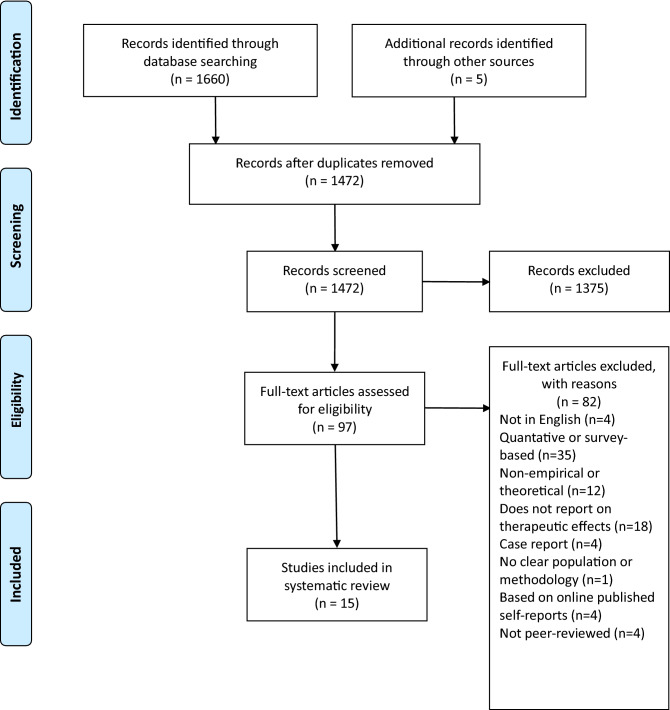
INTRODUCTION: Interest in the use of psychedelic substances for the treatment of mental disorders is increasing. Processes that may affect therapeutic change are not yet fully understood. Qualitative research methods are increasingly used to examine patient accounts; however, currently, no systematic review exists that synthesizes these findings in relation to the use of psychedelics for the treatment of mental disorders. OBJECTIVE: To provide an overview of salient themes in patient experiences of psychedelic treatments for mental disorders, presenting both common and diverging elements in patients' accounts, and elucidating how these affect the treatment process. METHODS: We systematically searched the PubMed, MEDLINE, PsycINFO, and Embase databases for English-language qualitative literature without time limitations. Inclusion criteria were qualitative research design; peer-reviewed studies; based on verbalized patient utterances; and a level of abstraction or analysis of the results. Thematic synthesis was used to analyze and synthesize results across studies. A critical appraisal of study quality and methodological rigor was conducted using the Critical Appraisal Skills Programme (CASP). RESULTS: Fifteen research articles, comprising 178 patient experiences, were included. Studies exhibited a broad heterogeneity in terms of substance, mental disorder, treatment context, and qualitative methodology. Substances included psilocybin, lysergic acid diethylamide (LSD), ibogaine, ayahuasca, ketamine and 3,4-methylenedioxymethamphetamine (MDMA). Disorders included anxiety, depression, eating disorders, post-traumatic stress disorder, and substance use disorders. While the included compounds were heterogeneous in pharmacology and treatment contexts, patients reported largely comparable experiences across disorders, which included phenomenological analogous effects, perspectives on the intervention, therapeutic processes and treatment outcomes. Comparable therapeutic processes included insights, altered self-perception, increased connectedness, transcendental experiences, and an expanded emotional spectrum, which patients reported contributed to clinically and personally relevant responses. CONCLUSIONS: This review demonstrates how qualitative research of psychedelic treatments can contribute to distinguishing specific features of specific substances, and carry otherwise undiscovered implications for the treatment of specific psychiatric disorders.
Overview
The claims and statistics of this paper haven’t been checked yet.
Free: it reads the open-access text and checks the first 5 claims that cite a source we can check. Create a free account to check every claim.
Integrity signals
Registry
Cites
Statistics
Figures
Verification
Claims the paper makes
The claims and statistics of this paper haven’t been checked yet.
Free: it reads the open-access text and checks the first 5 claims that cite a source we can check. Create a free account to check every claim.
Claims other papers make about this one
Each is checked against this paper’s own text: does it say what the citing paper says it does?
The cited source says what the claim attributes to it.
In the citing paper
“Indeed, there appears to be little qualitative research on patient experiences with ketamine for the treatment of any mental disorder (Breeksema et al., 2020a).”
From Psychedelics for the treatment of depression, anxiety, and existential distress in patients with a terminal illness: a systematic review (2022) · cites this paper as Breeksema et al., 2020a
The cited source says what the claim attributes to it.
In the citing paper
“Therapeutic outcomes appear strongly influenced by psychological “set” (mindset, expectations, preparation), environmental “setting,” and structured post-session integration (96, 99, 107, 108), highlighting the central role of context, support, and integration in optimizing benefit.”
From The therapeutic role of self-transcendence in moral injury recovery: theory, mechanisms, and clinical implications (2026) · cites this paper as [107]
The cited source says what the claim attributes to it.
In the citing paper
“These emotions largely cohered with previous observations in other psilocybin studies (36–42).”
Self-check
Percentages, sums and reported differences re-computed from the paper’s own numbers.
The self-check needs the paper’s full text.
Citations
Cites
Using thematic analysis in psychology
Braun, V., & Clarke, V. (2006) · Qualitative Research in Psychology · doi:10.1191/1478088706qp063oa · Cited by 194,414
Preferred Reporting Items for Systematic Reviews and Meta-Analyses: the PRISMA statement
Moher, D., Liberati, A., Tetzlaff, J., Altman, D. G., & for the PRISMA Group (2009) · BMJ · doi:10.1136/bmj.b2535 · Cited by 83,823
Preferred reporting items for systematic reviews and meta-analyses: the PRISMA Statement.
(2009) · PubMed Central · Cited by 44,859
Preferred reporting items for systematic reviews and meta-analyses: The PRISMA statement
Moher, D., Liberati, A., Tetzlaff, J., Altman, D. G., & the PRISMA Group* (2009) · Annals of Internal Medicine · doi:10.7326/0003-4819-151-4-200908180-00135 · Cited by 37,554
(2013) · Cited by 12,072
Methods for the thematic synthesis of qualitative research in systematic reviews
Thomas, J., & Harden, A. (2008) · BMC Medical Research Methodology · doi:10.1186/1471-2288-8-45 · Cited by 9,312
Insel, T., Cuthbert, B., Garvey, M., Heinssen, R., Pine, D. S., Quinn, K., Sanislow, C., & Wang, P. (2010) · American Journal of Psychiatry · doi:10.1176/appi.ajp.2010.09091379 · Cited by 7,067
Qualitative methods for health research
(2009) · Choice Reviews Online · doi:10.5860/choice.47-0901 · Cited by 4,596
Critical appraisal skills programme
Singh, J. (2013) · Journal of Pharmacology and Pharmacotherapeutics · doi:10.4103/0976-500x.107697 · Cited by 2,556
Mediators and Mechanisms of Change in Psychotherapy Research
Kazdin, A. E. (2007) · Annual Review of Clinical Psychology · doi:10.1146/annurev.clinpsy.3.022806.091432 · Cited by 2,504
Griffiths, R. R., Johnson, M. W., Carducci, M. A., Umbricht, A., Richards, W. A., Richards, B. D., Cosimano, M. P., & Klinedinst, M. A. (2016) · Journal of Psychopharmacology · doi:10.1177/0269881116675513 · Cited by 2,201 · cited 1×
“Both early [108–110] and present-day psychedelic studies [13, 14, 51, 111, 112] have found significant relations between mystical experiences and therapeutic outcomes.”
BackgroundMethods for the synthesis of qualitative research: a critical review
Barnett-Page, E., & Thomas, J. (2009) · BMC Medical Research Methodology · doi:10.1186/1471-2288-9-59 · Cited by 2,042
Analysis of shared heritability in common disorders of the brain
The Brainstorm Consortium, Anttila, V., Bulik-Sullivan, B., Finucane, H. K., Walters, R. K., Bras, J., Duncan, L., Escott-Price, V., Falcone, G. J., Gormley, P., et al. (2018) · Science · doi:10.1126/science.aap8757 · Cited by 1,924
Nichols, D. E. (2016) · Pharmacological Reviews · doi:10.1124/pr.115.011478 · Cited by 1,762
Ross, S., Bossis, A., Guss, J., Agin-Liebes, G., Malone, T., Cohen, B., Mennenga, S. E., Belser, A., Kalliontzi, K., Babb, J., et al. (2016) · Journal of Psychopharmacology · doi:10.1177/0269881116675512 · Cited by 1,698 · cited 2×
“Both early [108–110] and present-day psychedelic studies [13, 14, 51, 111, 112] have found significant relations between mystical experiences and therapeutic outcomes.”
BackgroundCarhart-Harris, R. L., Bolstridge, M., Rucker, J., Day, C. M. J., Erritzoe, D., Kaelen, M., Bloomfield, M., Rickard, J. A., Forbes, B., Feilding, A., et al. (2016) · The Lancet Psychiatry · doi:10.1016/s2215-0366(16)30065-7 · Cited by 1,540
Distinguishing Between the Validity and Utility of Psychiatric Diagnoses
Kendell, R., & Jablensky, A. (2003) · American Journal of Psychiatry · doi:10.1176/appi.ajp.160.1.4 · Cited by 1,246
Nichols, D. E. (2004) · Pharmacology & Therapeutics · doi:10.1016/j.pharmthera.2003.11.002 · Cited by 1,211
Pilot Study of Psilocybin Treatment for Anxiety in Patients With Advanced-Stage Cancer
Grob, C. S., Danforth, A. L., Chopra, G. S., Hagerty, M., McKay, C. R., Halberstadt, A. L., & Greer, G. R. (2011) · Archives of General Psychiatry · doi:10.1001/archgenpsychiatry.2010.116 · Cited by 1,206
Human hallucinogen research: guidelines for safety
Johnson, M., Richards, W., & Griffiths, R. (2008) · Journal of Psychopharmacology · doi:10.1177/0269881108093587 · Cited by 1,203
Psilocybin-assisted treatment for alcohol dependence: A proof-of-concept study
Bogenschutz, M. P., Forcehimes, A. A., Pommy, J. A., Wilcox, C. E., Barbosa, P., & Strassman, R. J. (2015) · Journal of Psychopharmacology · doi:10.1177/0269881114565144 · Cited by 1,151
Psilocybin occasioned mystical-type experiences: immediate and persisting dose-related effects
Griffiths, R. R., Johnson, M. W., Richards, W. A., Richards, B. D., McCann, U., & Jesse, R. (2011) · Psychopharmacology · doi:10.1007/s00213-011-2358-5 · Cited by 932
All for One and One for All: Mental Disorders in One Dimension
Caspi, A., & Moffitt, T. E. (2018) · American Journal of Psychiatry · doi:10.1176/appi.ajp.2018.17121383 · Cited by 918
Pilot study of the 5-HT 2A R agonist psilocybin in the treatment of tobacco addiction
Johnson, M. W., Garcia-Romeu, A., Cosimano, M. P., & Griffiths, R. R. (2014) · Journal of Psychopharmacology · doi:10.1177/0269881114548296 · Cited by 914
Griffiths, R., Richards, W., Johnson, M., McCann, U., & Jesse, R. (2008) · Journal of Psychopharmacology · doi:10.1177/0269881108094300 · Cited by 905
MacLean, K. A., Johnson, M. W., & Griffiths, R. R. (2011) · Journal of Psychopharmacology · doi:10.1177/0269881111420188 · Cited by 895
Palhano-Fontes, F., Barreto, D., Onias, H., Andrade, K. C., Novaes, M. M., Pessoa, J. A., Mota-Rolim, S. A., Osório, F. L., Sanches, R., dos Santos, R. G., et al. (2019) · Psychological Medicine · doi:10.1017/s0033291718001356 · Cited by 852
Insel, T. R., & Cuthbert, B. N. (2015) · Science · doi:10.1126/science.aab2358 · Cited by 840
Roseman, L., Nutt, D. J., & Carhart-Harris, R. L. (2018) · Frontiers in Pharmacology · doi:10.3389/fphar.2017.00974 · Cited by 808
Safety, tolerability, and efficacy of psilocybin in 9 patients with obsessive-compulsive disorder
Moreno, F. A., Wiegand, C. B., Taitano, E. K., & Delgado, P. L. (2006) · The Journal of Clinical Psychiatry · doi:10.4088/jcp.v67n1110 · Cited by 789
Gasser, P., Holstein, D., Michel, Y., Doblin, R., Yazar-Klosinski, B., Passie, T., & Brenneisen, R. (2014) · Journal of Nervous & Mental Disease · doi:10.1097/nmd.0000000000000113 · Cited by 750 · cited 12×
“[85] [LSD, end-of-life anxiety].”
BackgroundInfluentialUnderstanding how and why psychotherapy leads to change
Kazdin, A. E. (2009) · Psychotherapy Research · doi:10.1080/10503300802448899 · Cited by 728
The neurobiology of psychedelic drugs: implications for the treatment of mood disorders
Vollenweider, F. X., & Kometer, M. (2010) · Nature Reviews Neuroscience · doi:10.1038/nrn2884 · Cited by 723
Mithoefer, M. C., Wagner, M. T., Mithoefer, A. T., Jerome, L., & Doblin, R. (2011) · Journal of Psychopharmacology · doi:10.1177/0269881110378371 · Cited by 674
Morgan, C. J. A., Curran, H. V., & the Independent Scientific Committee on Drugs (ISCD) (2012) · Addiction · doi:10.1111/j.1360-0443.2011.03576.x · Cited by 667
Psychedelics and the essential importance of context
Carhart-Harris, R. L., Roseman, L., Haijen, E., Erritzoe, D., Watts, R., Branchi, I., & Kaelen, M. (2018) · Journal of Psychopharmacology · doi:10.1177/0269881118754710 · Cited by 657
Developing the Review Question and Inclusion Criteria
Stern, C., Jordan, Z., & McArthur, A. (2014) · AJN, American Journal of Nursing · doi:10.1097/01.naj.0000445689.67800.86 · Cited by 629
Sota, J., Insalaco, A., Cimaz, R., Alessio, M., Cattalini, M., Gallizzi, R., Maggio, M. C., Lopalco, G., La Torre, F., Fabiani, C., et al. (2019) · Frontiers in Pharmacology · doi:10.3389/fphar.2018.01526 · Cited by 616
Watts, R., Day, C., Krzanowski, J., Nutt, D., & Carhart-Harris, R. (2017) · Journal of Humanistic Psychology · doi:10.1177/0022167817709585 · Cited by 589
A Consensus Statement on the Use of Ketamine in the Treatment of Mood Disorders
Sanacora, G., Frye, M. A., McDonald, W., Mathew, S. J., Turner, M. S., Schatzberg, A. F., Summergrad, P., Nemeroff, C. B., & for the American Psychiatric Association (APA) Council of Research Task Force on Novel Biomarkers and Treatments (2017) · JAMA Psychiatry · doi:10.1001/jamapsychiatry.2017.0080 · Cited by 576
Carbonaro, T. M., Bradstreet, M. P., Barrett, F. S., MacLean, K. A., Jesse, R., Johnson, M. W., & Griffiths, R. R. (2016) · Journal of Psychopharmacology · doi:10.1177/0269881116662634 · Cited by 553
Butler, A., Hall, H., & Copnell, B. (2016) · Worldviews on Evidence-Based Nursing · doi:10.1111/wvn.12134 · Cited by 539
van Emmerik-van Oortmerssen, K., van de Glind, G., van den Brink, W., Smit, F., Crunelle, C. L., Swets, M., & Schoevers, R. A. (2012) · Drug and Alcohol Dependence · doi:10.1016/j.drugalcdep.2011.12.007 · Cited by 535
Self-citationSouthern, D. A., Norris, C. M., Quan, H., Shrive, F. M., Galbraith, P. D., Humphries, K., Gao, M., Knudtson, M. L., Ghali, W. A., & the APPROACH Investigators (2008) · BMC Medical Research Methodology · doi:10.1186/1471-2288-8-1 · Cited by 503
JANE-LLOPIS, E., & MATYTSINA, I. (2006) · Drug and Alcohol Review · doi:10.1080/09595230600944461 · Cited by 497
Hartogsohn, I. (2016) · Journal of Psychopharmacology · doi:10.1177/0269881116677852 · Cited by 483
Noyes, J., Booth, A., Flemming, K., Garside, R., Harden, A., Lewin, S., Pantoja, T., Hannes, K., Cargo, M., & Thomas, J. (2018) · Journal of Clinical Epidemiology · doi:10.1016/j.jclinepi.2017.06.020 · Cited by 480
Psilocybin-Occasioned mystical experiences in the treatment of tobacco addiction.
Garcia-Romeu, A., Griffiths, R., & Johnson, M. (2015) · Current Drug Abuse Reviews · doi:10.2174/1874473708666150107121331 · Cited by 476
Constructing drug effects: a history of set and setting
Hartogsohn, I. (2017) · Drug Science Policy and Law · doi:10.1177/2050324516683325 · Cited by 472
Sanches, R. F., de Lima Osório, F., dos Santos, R. G., Macedo, L. R. H., Maia-de-Oliveira, J. P., Wichert-Ana, L., de Araujo, D. B., Riba, J., Crippa, J. A. S., & Hallak, J. E. C. (2016) · Journal of Clinical Psychopharmacology · doi:10.1097/jcp.0000000000000436 · Cited by 466
Gasser, P., Kirchner, K., & Passie, T. (2015) · Journal of Psychopharmacology · doi:10.1177/0269881114555249 · Cited by 456
Mithoefer, M. C., Mithoefer, A. T., Feduccia, A. A., Jerome, L., Wagner, M., Wymer, J., Holland, J., Hamilton, S., Yazar-Klosinski, B., Emerson, A., et al. (2018) · The Lancet Psychiatry · doi:10.1016/s2215-0366(18)30135-4 · Cited by 439
Qualitative Methods for Health Research. (2nd edition)
Green, J., & Thorogood, N. (2009) · LSHTM Research Online (London School of Hygiene and Tropical Medicine) · Cited by 428
Subjective Reports of the Effects of MDMA in a Clinical Setting
Greer, G., & Tolbert, R. (1986) · Journal of Psychoactive Drugs · doi:10.1080/02791072.1986.10472364 · Cited by 413
Emotional breakthrough and psychedelics: Validation of the Emotional Breakthrough Inventory
Roseman, L., Haijen, E., Idialu-Ikato, K., Kaelen, M., Watts, R., & Carhart-Harris, R. (2019) · Journal of Psychopharmacology · doi:10.1177/0269881119855974 · Cited by 413
Oehen, P., Traber, R., Widmer, V., & Schnyder, U. (2013) · Journal of Psychopharmacology · doi:10.1177/0269881112464827 · Cited by 400
Psychiatric genetics and the structure of psychopathology
Smoller, J. W., Andreassen, O. A., Edenberg, H. J., Faraone, S. V., Glatt, S. J., & Kendler, K. S. (2019) · Molecular Psychiatry · doi:10.1038/s41380-017-0010-4 · Cited by 398
Chapter 2: Systematic Reviews of Qualitative Evidence
Lockwood, C., Porritt, K., Munn, Z., Rittenmeyer, L., Salmond, S., Bjerrum, M., Loveday, H., Carrier, J., & Stannard, D. (2019) · JBI Reviewer's Manual · doi:10.46658/jbirm-17-02 · Cited by 395
Mithoefer, M. C., Wagner, M. T., Mithoefer, A. T., Jerome, L., Martin, S. F., Yazar-Klosinski, B., Michel, Y., Brewerton, T. D., & Doblin, R. (2013) · Journal of Psychopharmacology · doi:10.1177/0269881112456611 · Cited by 376
Psychedelics as Medicines: An Emerging New Paradigm
Nichols, D., Johnson, M., & Nichols, C. (2017) · Clinical Pharmacology & Therapeutics · doi:10.1002/cpt.557 · Cited by 370
Barrett, F. S., Bradstreet, M. P., Leoutsakos, J.-M. S., Johnson, M. W., & Griffiths, R. R. (2016) · Journal of Psychopharmacology · doi:10.1177/0269881116678781 · Cited by 366
Meta-assessment of bias in science
Fanelli, D., Costas, R., & Ioannidis, J. P. A. (2017) · Proceedings of the National Academy of Sciences · doi:10.1073/pnas.1618569114 · Cited by 364
Kishimoto, T., Chawla, J. M., Hagi, K., Zarate, C. A., Kane, J. M., Bauer, M., & Correll, C. U. (2016) · Psychological Medicine · doi:10.1017/s0033291716000064 · Cited by 359
LSD enhances suggestibility in healthy volunteers
Carhart-Harris, R. L., Kaelen, M., Whalley, M. G., Bolstridge, M., Feilding, A., & Nutt, D. J. (2015) · Psychopharmacology · doi:10.1007/s00213-014-3714-z · Cited by 320 · cited 1×
“(sustained) changes in openness [45–47], prosocial feelings [45, 48], increases in suggestibility [49], meaning making [50], self-efficacy [51], and connectedness [52, 53].”
BackgroundBelser, A. B., Agin-Liebes, G., Swift, T. C., Terrana, S., Devenot, N., Friedman, H. L., Guss, J., Bossis, A., & Ross, S. (2017) · Journal of Humanistic Psychology · doi:10.1177/0022167817706884 · Cited by 311
dos Santos, R. G., Osório, F. L., Crippa, J. A. S., Riba, J., Zuardi, A. W., & Hallak, J. E. C. (2016) · Therapeutic Advances in Psychopharmacology · doi:10.1177/2045125316638008 · Cited by 306
“Psychiatric comorbidity”: an artefact of current diagnostic systems?
Maj, M. (2005) · British Journal of Psychiatry · doi:10.1192/bjp.186.3.182 · Cited by 305
Potential Therapeutic Effects of Psilocybin
Johnson, M. W., & Griffiths, R. R. (2017) · Neurotherapeutics · doi:10.1007/s13311-017-0542-y · Cited by 296
Psychedelic therapy for smoking cessation: qualitative analysis of participant accounts
Noorani, T., Garcia-Romeu, A., Swift, T. C., Griffiths, R. R., & Johnson, M. W. (2018) · Journal of Psychopharmacology · doi:10.1177/0269881118780612 · Cited by 285
Chapter 2: Systematic reviews of qualitative evidence
(2020) · JBI Manual for Evidence Synthesis · doi:10.46658/jbimes-20-03 · Cited by 284
Phenomenology, Structure, and Dynamic of Psychedelic States
Preller, K. H., & Vollenweider, F. X. (2016) · Current Topics in Behavioral Neurosciences · doi:10.1007/7854_2016_459 · Cited by 282 · cited 1×
“Psychedelics may intensify emotions and have been used for this purpose since early psychotherapy research in the 1950s [113].”
MethodDanforth, A. L., Grob, C. S., Struble, C., Feduccia, A. A., Walker, N., Jerome, L., Yazar-Klosinski, B., & Emerson, A. (2018) · Psychopharmacology · doi:10.1007/s00213-018-5010-9 · Cited by 280
The use of the psychological flexibility model to support psychedelic assisted therapy
Watts, R., & Luoma, J. B. (2020) · Journal of Contextual Behavioral Science · doi:10.1016/j.jcbs.2019.12.004 · Cited by 269
The hidden therapist: evidence for a central role of music in psychedelic therapy
Kaelen, M., Giribaldi, B., Raine, J., Evans, L., Timmerman, C., Rodriguez, N., Roseman, L., Feilding, A., Nutt, D., & Carhart-Harris, R. (2018) · Psychopharmacology · doi:10.1007/s00213-017-4820-5 · Cited by 267
Effects of psilocybin therapy on personality structure
Erritzoe, D., Roseman, L., Nour, M. M., MacLean, K., Kaelen, M., Nutt, D. J., & Carhart‐Harris, R. L. (2018) · Acta Psychiatrica Scandinavica · doi:10.1111/acps.12904 · Cited by 267
Psychedelics and connectedness
Carhart-Harris, R. L., Erritzoe, D., Haijen, E., Kaelen, M., & Watts, R. (2018) · Psychopharmacology · doi:10.1007/s00213-017-4701-y · Cited by 265
Psychiatric classifications: validity and utility
Jablensky, A. (2016) · World Psychiatry · doi:10.1002/wps.20284 · Cited by 263
Majić, T., Schmidt, T. T., & Gallinat, J. (2015) · Journal of Psychopharmacology · doi:10.1177/0269881114568040 · Cited by 261
Reviewing the Potential of Psychedelics for the Treatment of PTSD
Krediet, E., Bostoen, T., Breeksema, J., van Schagen, A., Passie, T., & Vermetten, E. (2020) · International Journal of Neuropsychopharmacology · doi:10.1093/ijnp/pyaa018 · Cited by 260
Self-citationKetamine abuse potential and use disorder
Liu, Y., Lin, D., Wu, B., & Zhou, W. (2016) · Brain Research Bulletin · doi:10.1016/j.brainresbull.2016.05.016 · Cited by 256
The Phenomenology of Major Depression and the Representativeness and Nature of DSM Criteria.
Kendler, K. S. (2016) · American Journal of Psychiatry · doi:10.1176/appi.ajp.2016.15121509 · Cited by 255
Ketamine Psychedelic Therapy (KPT): A Review of the Results of Ten Years of Research
Krupitsky, E. M., & Grinenko, A. Y. (1997) · Journal of Psychoactive Drugs · doi:10.1080/02791072.1997.10400185 · Cited by 246
REACTIONS TO PSILOCYBJN ADMINISTERED IN A SUPPORTIVE ENVIRONMENT
LEARY, T., LITWIN, G. H., & METZNER, R. (1963) · The Journal of Nervous and Mental Disease · doi:10.1097/00005053-196312000-00007 · Cited by 243
Carroll, C., & Booth, A. (2015) · Research Synthesis Methods · doi:10.1002/jrsm.1128 · Cited by 235
Hartogsohn, I. (2018) · Frontiers in Neuroscience · doi:10.3389/fnins.2018.00129 · Cited by 229
Ot’alora G, M., Grigsby, J., Poulter, B., Van Derveer, J. W., Giron, S. G., Jerome, L., Feduccia, A. A., Hamilton, S., Yazar-Klosinski, B., Emerson, A., et al. (2018) · Journal of Psychopharmacology · doi:10.1177/0269881118806297 · Cited by 226
LSD-Assisted Psychotherapy in Patients with Terminal Cancer
Grof, S., Goodman, L. E., Richards, W. A., & Kurland, A. A. (2017) · International Pharmacopsychiatry · doi:10.1159/000467984 · Cited by 209
Bouso, J. C., Doblin, R., Farré, M., Alcázar, M. Á., & Gómez-Jarabo, G. (2008) · Journal of Psychoactive Drugs · doi:10.1080/02791072.2008.10400637 · Cited by 205
Swift, T. C., Belser, A. B., Agin-Liebes, G., Devenot, N., Terrana, S., Friedman, H. L., Guss, J., Bossis, A. P., & Ross, S. (2017) · Journal of Humanistic Psychology · doi:10.1177/0022167817715966 · Cited by 195 · cited 10×
“Abstract and transient visual phenomena (such as seeing animals, complex patterns, landscapes) and visions (immersive and personally meaningful) were reported by respondents in studies with psilocybin and ibogaine [79, 81, 82, 86].”
BackgroundResultInfluentialKingston, R. E. F., Marel, C., & Mills, K. L. (2017) · Drug and Alcohol Review · doi:10.1111/dar.12448 · Cited by 187
Dakwar, E., Nunes, E. V., Hart, C. L., Foltin, R. W., Mathew, S. J., Carpenter, K. M., Choi, C. J. “., Basaraba, C. N., Pavlicova, M., & Levin, F. R. (2019) · American Journal of Psychiatry · doi:10.1176/appi.ajp.2019.18101123 · Cited by 186
Psychedelics in the treatment of unipolar mood disorders: a systematic review
Rucker, J. J., Jelen, L. A., Flynn, S., Frowde, K. D., & Young, A. H. (2016) · Journal of Psychopharmacology · doi:10.1177/0269881116679368 · Cited by 185
The ibogaine medical subculture
Alper, K. R., Lotsof, H. S., & Kaplan, C. D. (2008) · Journal of Ethnopharmacology · doi:10.1016/j.jep.2007.08.034 · Cited by 184
Awe: a putative mechanism underlying the effects of classic psychedelic-assisted psychotherapy
Hendricks, P. S. (2018) · International Review of Psychiatry · doi:10.1080/09540261.2018.1474185 · Cited by 179
Carhart-Harris, R. L., Murphy, K., Leech, R., Erritzoe, D., Wall, M. B., Ferguson, B., Williams, L. T. J., Roseman, L., Brugger, S., De Meer, I., et al. (2015) · Biological Psychiatry · doi:10.1016/j.biopsych.2013.12.015 · Cited by 178
Wagner, M. T., Mithoefer, M. C., Mithoefer, A. T., MacAulay, R. K., Jerome, L., Yazar-Klosinski, B., & Doblin, R. (2017) · Journal of Psychopharmacology · doi:10.1177/0269881117711712 · Cited by 160
Treatment of opioid use disorder with ibogaine: detoxification and drug use outcomes
Brown, T. K., & Alper, K. (2018) · The American Journal of Drug and Alcohol Abuse · doi:10.1080/00952990.2017.1320802 · Cited by 159
Loizaga-Velder, A., & Verres, R. (2014) · Journal of Psychoactive Drugs · doi:10.1080/02791072.2013.873157 · Cited by 157
The psychedelic mystical experience in the human encounter with death
Pahnke, W. N. (1969) · Harvard Theological Review · doi:10.1017/s0017816000027577 · Cited by 147
Ibogaine treatment outcomes for opioid dependence from a twelve-month follow-up observational study
Noller, G. E., Frampton, C. M., & Yazar-Klosinski, B. (2018) · The American Journal of Drug and Alcohol Abuse · doi:10.1080/00952990.2017.1310218 · Cited by 147
Garside, R. (2014) · Innovation: The European Journal of Social Science Research · doi:10.1080/13511610.2013.777270 · Cited by 134
Individual experiences in four cancer patients following psilocybin-assisted psychotherapy
Malone, T. C., Mennenga, S. E., Guss, J., Podrebarac, S. K., Owens, L. T., Bossis, A. P., Belser, A. B., Agin-Liebes, G., Bogenschutz, M. P., & Ross, S. (2018) · Frontiers in Pharmacology · doi:10.3389/fphar.2018.00256 · Cited by 131 · cited 1×
“Two recent psilocybin studies [75, 76] were also excluded as they presented a series of case studies, without additional analysis.”
BackgroundBogenschutz, M. P., Podrebarac, S. K., Duane, J. H., Amegadzie, S. S., Malone, T. C., Owens, L. T., Ross, S., & Mennenga, S. E. (2018) · Frontiers in Pharmacology · doi:10.3389/fphar.2018.00100 · Cited by 128
Winkelman, M. (2015) · Current Drug Abuse Reviews · doi:10.2174/1874473708666150107120011 · Cited by 126
Bogenschutz, M. P., & Pommy, J. M. (2012) · Drug Testing and Analysis · doi:10.1002/dta.1376 · Cited by 125
Lafrance, A., Loizaga-Velder, A., Fletcher, J., Renelli, M., Files, N., & Tupper, K. W. (2017) · Journal of Psychoactive Drugs · doi:10.1080/02791072.2017.1361559 · Cited by 125
Therapeutic infusions of ketamine: do the psychoactive effects matter?
Dakwar, E., Anerella, C., Hart, C. L., Levin, F. R., Mathew, S. J., & Nunes, E. V. (2014) · Drug and Alcohol Dependence · doi:10.1016/j.drugalcdep.2013.12.019 · Cited by 123
Han, Y., Chen, J., Zou, D., Zheng, P., Li, Q., Wang, H., Li, P., Zhou, X., Zhang, Y., Liu, Y., et al. (2016) · Neuropsychiatric Disease and Treatment · doi:10.2147/ndt.s117146 · Cited by 113
Nielson, E. M., May, D. G., Forcehimes, A. A., & Bogenschutz, M. P. (2018) · Frontiers in Pharmacology · doi:10.3389/fphar.2018.00132 · Cited by 113
Ibogaine in the Treatment of Substance Dependence
Brown, T. (2013) · Current Drug Abuse Reviews · doi:10.2174/15672050113109990001 · Cited by 103
Ayahuasca’s entwined efficacy: An ethnographic study of ritual healing from ‘addiction’
Talin, P., & Sanabria, E. (2017) · International Journal of Drug Policy · doi:10.1016/j.drugpo.2017.02.017 · Cited by 103
The Therapeutic Use of Ayahuasca
Labate, B., & Cavnar, C. (2014) · Springer eBooks · doi:10.1007/978-3-642-40426-9 · Cited by 99
Neuroticism is associated with challenging experiences with psilocybin mushrooms
Barrett, F. S., Johnson, M. W., & Griffiths, R. R. (2017) · Personality and Individual Differences · doi:10.1016/j.paid.2017.06.004 · Cited by 98
Sessa, B. (2017) · Neuroscience Letters · doi:10.1016/j.neulet.2016.07.004 · Cited by 97
Mathai, D. S., Meyer, M. J., Storch, E. A., & Kosten, T. R. (2020) · Journal of Affective Disorders · doi:10.1016/j.jad.2019.12.023 · Cited by 97
The Peak Experience Variable in DPT-Assisted Psychotherapy with Cancer Patients
Richards, W. A., Rhead, J. C., Dileo, F. B., Yensen, R., & Kurland, A. A. (1977) · Journal of Psychedelic Drugs · doi:10.1080/02791072.1977.10472020 · Cited by 94
Renelli, M., Fletcher, J., Tupper, K. W., Files, N., Loizaga-Velder, A., & Lafrance, A. (2018) · Eating and Weight Disorders - Studies on Anorexia Bulimia and Obesity · doi:10.1007/s40519-018-0619-6 · Cited by 92
Wilkinson, S. T., Katz, R. B., Toprak, M., Webler, R., Ostroff, R. B., & Sanacora, G. (2018) · The Journal of Clinical Psychiatry · doi:10.4088/jcp.17m11731 · Cited by 91
Psychedelics and music: neuroscience and therapeutic implications
Barrett, F. S., Preller, K. H., & Kaelen, M. (2018) · International Review of Psychiatry · doi:10.1080/09540261.2018.1484342 · Cited by 86
Dakwar, E., Nunes, E. V., Hart, C. L., Hu, M. C., Foltin, R. W., & Levin, F. R. (2018) · Neuropharmacology · doi:10.1016/j.neuropharm.2018.01.005 · Cited by 85
van Schalkwyk, G. I., Wilkinson, S. T., Davidson, L., Silverman, W. K., & Sanacora, G. (2018) · Journal of Affective Disorders · doi:10.1016/j.jad.2017.09.023 · Cited by 76
Barone, W., Beck, J., Mitsunaga-Whitten, M., & Perl, P. (2019) · Journal of Psychoactive Drugs · doi:10.1080/02791072.2019.1580805 · Cited by 61
Psychiatric comorbidity in alcohol use disorders: results from the German S3 guidelines
Preuss, U. W., Gouzoulis‐Mayfrank, E., Havemann‐Reinecke, U., Schäfer, I., Beutel, M. E., Hoch, E., & Mann, K. F. (2017) · European Archives of Psychiatry and Clinical Neuroscience · doi:10.1007/s00406-017-0801-2 · Cited by 52
Long-term effects of ayahuasca in patients with recurrent depression: a 5-year qualitative follow-up
SANTOS, R. G. D., Sanches, R. F., Osório, F. D. L., & Hallak, J. E. C. (2018) · Archives of Clinical Psychiatry (São Paulo) · doi:10.1590/0101-60830000000149 · Cited by 50
Schenberg, E. E., de Castro Comis, M. A., Alexandre, J. F. M., Tófoli, L. F., Chaves, B. D. R., & da Silveira, D. X. (2017) · Journal of Psychedelic Studies · doi:10.1556/2054.01.2017.007 · Cited by 40
Psychedelic Medicine: New evidence for hallucinogenic substances as treatments
Luke, D. P. (2008) · Drugs and Alcohol Today · doi:10.1108/17459265200800017 · Cited by 36
Treating drug dependence with the aid of ibogaine: A qualitative study
Schenberg, E. E., Comis, M. A. D. C., Alexandre, J. F. M., Chaves, B. R., Tófoli, L. F., & da Silveira, D. X. (2017) · Journal of Psychedelic Studies · doi:10.1556/2054.01.2016.002 · Cited by 33
Veen, C., Jacobs, G., Philippens, I., & Vermetten, E. (2018) · Current Topics in Behavioral Neurosciences · doi:10.1007/7854_2017_34 · Cited by 23
Self-citationCamlin, T. J., Eulert, D., Horvath, A. T., Bucky, S. F., Barsuglia, J. P., & Polanco, M. (2018) · Journal of Psychedelic Studies · doi:10.1556/2054.2018.004 · Cited by 23
Exploring good care with surveillance technology in residential care for vulnerable people
Niemeijer, A. R. (2015) · Pure Amsterdam UMC · Cited by 18
Self-citationThe psychological and human brain effects of music in combination with psychedelic drugs
Kaelen, M. (2017) · doi:10.25560/55900 · Cited by 9
Research works printed but not linked: 2
- Mithoefer MC Doblin R Mithoefer A Jerome L Ruse J Gibson E A manual for MDMA-assisted psychotherapy in the treatment of posttraumatic stress disorder 2013 Santa Cruz MAPS
- Watts R Day C Krzanowski J Nutt D Carhart-Harris R Patients’ accounts of increased “connectedness” and “acceptance” after psilocybin for treatment-resistant depression J Hum Psychol. 2017 57 5 520 564 · DOI · Paper page
Cited by
Towards an understanding of psychedelic-induced neuroplasticity
Calder, A. E., & Hasler, G. (2023) · Neuropsychopharmacology · doi:10.1038/s41386-022-01389-z · Cited by 313
“These effects are commonly described in terms of learning experiences [154, 158].”
BackgroundTherapeutic alliance and rapport modulate responses to psilocybin assisted therapy for depression
Murphy, R., Kettner, H., Zeifman, R., Giribaldi, B., Kartner, L., Martell, J., Read, T., Murphy-Beiner, A., Baker-Jones, M., Nutt, D., et al. (2022) · Frontiers in Pharmacology · doi:10.3389/fphar.2021.788155 · Cited by 250
Treatment of Posttraumatic Stress Disorder: A State-of-the-art Review
Burback, L., Brémault-Phillips, S., Nijdam, M. J., McFarlane, A., & Vermetten, E. (2024) · Current Neuropharmacology · doi:10.2174/1570159x21666230428091433 · Cited by 208
Self-citationBreeksema, J. J., Kuin, B. W., Kamphuis, J., van den Brink, W., Vermetten, E., & Schoevers, R. A. (2022) · Journal of Psychopharmacology · doi:10.1177/02698811221116926 · Cited by 178
“This is further complicated by the highly variable and context-dependent subjective effects elicited by psychedelics (Breeksema et al., 2020; Carbonaro et al., 2016).”
BackgroundSelf-citationSchimmers, N., Breeksema, J. J., Smith-Apeldoorn, S. Y., Veraart, J., van den Brink, W., & Schoevers, R. A. (2022) · Psychopharmacology · doi:10.1007/s00213-021-06027-y · Cited by 162
Self-citation
Metadata
- Authors
- Breeksema, J. J., Niemeijer, A. R., Krediet, E., Vermetten, E., & Schoevers, R. A.
- Affiliations
- University Medical Center Groningen (NL)
- University of Humanistic Studies (NL)
- Leiden University Medical Center (NL)
- Corresponding author
- Breeksema, Joost J.
- Venue
- CNS Drugs
- Published
- 2020-08-17
- Volume
- 34
- Issue
- 9
- Pages
- 925-946
- ISSN
- 1172-7047 (ISSN-L)
- 1179-1934
- PMC
- PMC7447679
- OpenAlex
- W3049156731
- Cited by
- 224
- References
- 133
- Citations by year
- 2026: 29 · 2025: 33 · 2024: 46 · 2023: 50 · 2022: 43 · 2021: 21 · 2020: 1
- FWCI
- 2.28
- Type
- journal article
- Language
- en
- Open access
- hybrid
- doi.org
- Licence
- cc-by-nc
- creativecommons.org/licenses/by-nc/4.0 (tdm)
- creativecommons.org/licenses/by-nc/4.0 (vor)
- Locations
- CNS Drugs (publishedVersion, cc-by-nc)
- PubMed Central (publishedVersion, cc-by-nc)
- PubMed (publishedVersion)
- University of Humanistic Studies OAI Repository (publishedVersion, other-oa)
- Leiden Repository (Leiden University) (submittedVersion, cc-by-nc)
- Data Archiving and Networked Services (DANS) (submittedVersion, cc-by-nc)
- University of Groningen research database (University of Groningen / Centre for Information Technology) (submittedVersion, cc-by)
- Data Archiving and Networked Services (DANS) (submittedVersion)
- Funders
- Rijksuniversiteit Groningen
- Leids Universitair Medisch Centrum
- Universitair Medisch Centrum Groningen
- Topics
- Social Sciences › Psychology › Clinical Psychology › Psychedelics and Drug Studies
- Social Sciences › Psychology › Clinical Psychology › Psychotherapy Techniques and Applications
- Social Sciences › Health › Religion, Spirituality, and Psychology
- Keywords
- psychedelic therapy, patient experience, mental illness, psilocybin, LSD, ibogaine, ayahuasca, ketamine, MDMA, therapeutic process, insight, transcendental experience, anxiety, depression, eating disorders, post-traumatic stress disorder, substance use disorders
- MeSH terms
- Mental Disorders, Hallucinogens, Humans, Substance-Related Disorders, Patient Outcome Assessment
About these checks
Registry, retraction, Cites and statistics results are computed, not judged, with one exception: a printed reference that no index lists is read once by a model before it counts as a citation error. Claims are extracted by a model and kept only when their quote appears verbatim in the text; each cited source is then checked, with a model’s help, for whether it says what the claim relies on. Those verdicts can be wrong — read the claim’s quote and the cited source before relying on one.
Statistics and arithmetic are recomputed, not judged.
Confidence bands are shown only for fields calibrated on our annotated test set. None is calibrated yet, so no band is shown.
What counts as a claim ›How we measure confidence ›How we check this ›
Are you an author, or do you see a problem with this page? Request a review
Data sources
Bibliographic data: Semantic Scholar, OpenAlex, Crossref.
Contains information from the Semantic Scholar Academic Graph Datasets, made available under the ODC Attribution License (ODC-BY 1.0).
Semantic Scholar’s data is described in: Kinney, R., et al. (2023). The Semantic Scholar Open Data Platform. arXiv:2301.10140.
