

The DOI matches its Crossref record; 120 of the 129 references it cites were found in a registry or an index.
Nutritional Strategies to Modulate Intracellular and Extracellular Buffering Capacity During High-Intensity Exercise
Open accessAbstract
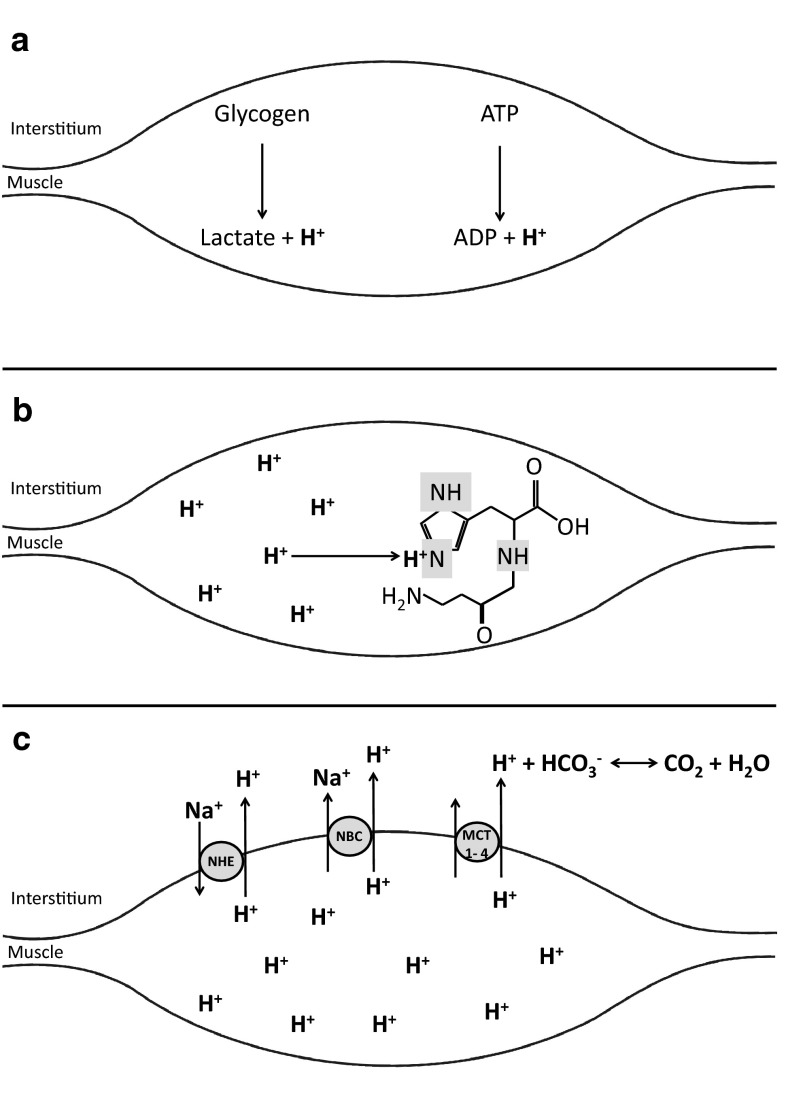
Intramuscular acidosis is a contributing factor to fatigue during high-intensity exercise. Many nutritional strategies aiming to increase intra- and extracellular buffering capacity have been investigated. Among these, supplementation of beta-alanine (~3-6.4 g/day for 4 weeks or longer), the rate-limiting factor to the intramuscular synthesis of carnosine (i.e. an intracellular buffer), has been shown to result in positive effects on exercise performance in which acidosis is a contributing factor to fatigue. Furthermore, sodium bicarbonate, sodium citrate and sodium/calcium lactate supplementation have been employed in an attempt to increase the extracellular buffering capacity. Although all attempts have increased blood bicarbonate concentrations, evidence indicates that sodium bicarbonate (0.3 g/kg body mass) is the most effective in improving high-intensity exercise performance. The evidence supporting the ergogenic effects of sodium citrate and lactate remain weak. These nutritional strategies are not without side effects, as gastrointestinal distress is often associated with the effective doses of sodium bicarbonate, sodium citrate and calcium lactate. Similarly, paresthesia (i.e. tingling sensation of the skin) is currently the only known side effect associated with beta-alanine supplementation, and it is caused by the acute elevation in plasma beta-alanine concentration after a single dose of beta-alanine. Finally, the co-supplementation of beta-alanine and sodium bicarbonate may result in additive ergogenic gains during high-intensity exercise, although studies are required to investigate this combination in a wide range of sports.
Overview
The claims and statistics of this paper haven’t been checked yet.
Run the check — free, no account needed. It reads the open-access text and checks the sources it cites.
Integrity signals
Registry
Cites
Statistics
Figures
Verification
Claims the paper makes
The claims and statistics of this paper haven’t been checked yet.
Run the check — free, no account needed. It reads the open-access text and checks the sources it cites.
Claims other papers make about this one
Each is checked against this paper’s own text: does it say what the citing paper says it does?
The source backs part of the claim, not all of it — or backs it for a different population, condition or comparison.
In the citing paper
“One possible explanation for this finding is that power is more related to glycolytic metabolism and is limited by H+ accumulation (Lancha Junior et al., 2015; Lopes-Silva et al., 2019).”
From Acute enteric-coated sodium bicarbonate has negligible effect on anaerobic performance but affects metabolomics and attenuates the gastrointestinal response (2022) · cites this paper as Lancha Junior et al., 2015
Experimental — accuracy not yet measured
Self-check
Percentages, sums and reported differences re-computed from the paper’s own numbers.
The self-check needs the paper’s full text.
Citations
Cites
Cellular mechanisms of muscle fatigue
Fitts, R. H. (1994) · Physiological Reviews · doi:10.1152/physrev.1994.74.1.49 · Cited by 1,537 · cited 1×
“These changes include substrate depletion [1] and metabolite accumulation and are accompanied by muscular fatigue [2].”
BackgroundBiochemistry of exercise-induced metabolic acidosis
Robergs, R. A., Ghiasvand, F., & Parker, D. (2004) · American Journal of Physiology-Regulatory, Integrative and Comparative Physiology · doi:10.1152/ajpregu.00114.2004 · Cited by 1,304
Aristoy, M., & Toldrá, F. (1916) · Botanical Gazette · doi:10.1007/978-94-011-2262-7 · Cited by 1,265
Fabiato, A., & Fabiato, F. (1978) · Journal of Physiology · doi:10.1113/jphysiol.1978.sp012231 · Cited by 1,168
Human muscle metabolism during intermittent maximal exercise
Gaitanos, G. C., Williams, C., Boobis, L. H., & Brooks, S. (1993) · Journal of Applied Physiology · doi:10.1152/jappl.1993.75.2.712 · Cited by 967 · cited 1×
“These changes include substrate depletion [1] and metabolite accumulation and are accompanied by muscular fatigue [2].”
BackgroundExercise Type and Intensity in Relation to Coronary Heart Disease in Men
Tanasescu, M. (2002) · JAMA · doi:10.1001/jama.288.16.1994 · Cited by 928
Validity, Reliability and Sensitivity of Measures of Sporting Performance
Currell, K., & Jeukendrup, A. E. (2008) · Sports Medicine · doi:10.2165/00007256-200838040-00003 · Cited by 786 · cited 1×
“10 % [121].”
Harris, R. C., Tallon, M. J., Dunnett, M., Boobis, L., Coakley, J., Kim, H. J., Fallowfield, J. L., Hill, C. A., Sale, C., & Wise, J. A. (2006) · Amino Acids · doi:10.1007/s00726-006-0299-9 · Cited by 534 · cited 8×
“beta-alanine level [31].”
BackgroundInfluentialDynamics and consequences of potassium shifts in skeletal muscle and heart during exercise.
Sejersted, O., & Sjøgaard, G. (2000) · Physiological Reviews · doi:10.1152/physrev.2000.80.4.1411 · Cited by 526 · cited 1×
“[4], decreased release/uptake of calcium ions (Ca) from/ to the sarcoplasmic reticulum [5], the depletion of energy substrates, and the accumulation of metabolites within the muscle cell [6].”
BackgroundThe lactate shuttle during exercise and recovery.
Brooks, G. A. (1986) · Medicine & Science in Sports & Exercise · doi:10.1249/00005768-198606000-00019 · Cited by 464 · cited 1×
“In both reactions, there is a net consumption of H, which could indirectly spare blood bicarbonate and increase blood pH [113, 119], increasing lactate and H efflux from the muscle, therefore decreasing intramuscular H concentration [79, 80].”
Background
Research works printed but not linked: 8
- Fritzon P, Efskind J. The effect of dietary 2-acetylaminofluorene on the uracil-degrading enzymes in rat liver. Cancer Res. 1965;25:703–7.
- Hayaishi O, Nishizuka Y, Tatibana M, et al. Enzymatic studies on the metabolism of beta-alanine. J Biol Chem. 1961;236:781–90. · DOI
- Kalyankar GD, Meister A. Enzymatic synthesis of carnosine and related beta-alanyl and gamma-aminobutyryl peptides. J Biol Chem. 1959;234:3210–8. · DOI
- Stout JR, Cramer JT, Zoeller RF, et al. Effects of beta-alanine supplementation on the onset of neuromuscular fatigue and ventilatory threshold in women. Amino Acids. 2007;32:381–6. · DOI
- McNaughton L, Thompson D. Acute versus chronic sodium bicarbonate ingestion and anaerobic work and power output. J Sports Med Phys Fitness. 2001;41:456–62.
- Tiryaki GR, Atterbom HA. The effects of sodium bicarbonate and sodium citrate on 600 m running time of trained females. J Sports Med Phys Fitness. 1995;35:194–8.
- Shave R, Whyte G, Siemann A, et al. The effects of sodium citrate ingestion on 3,000-meter time-trial performance. J Strength Cond Res. 2001;15:230–4.
- Oöpik V, Timpmann S, Kadak K, et al. The effects of sodium citrate ingestion on metabolism and 1500-m racing time in trained female runners. J Sports Sci Med. 2008;7:125–31.
Cited by
Sorted by citations
IOC Consensus Statement: Dietary Supplements and the High-performance Athlete
Maughan, R. J., Burke, L. M., Dvorak, J., Larson-Meyer, D. E., Peeling, P., Phillips, S. M., Rawson, E. S., Walsh, N. P., Garthe, I., Geyer, H., et al. (2018) · British Journal of Sports Medicine · doi:10.1136/bjsports-2018-099027 · Cited by 1,004
IOC Consensus Statement: Dietary Supplements and the High-Performance Athlete
Maughan, R. J., Burke, L. M., Dvorak, J., Larson-Meyer, D. E., Peeling, P., Phillips, S. M., Rawson, E. S., Walsh, N. P., Garthe, I., Geyer, H., et al. (2018) · International Journal of Sport Nutrition and Exercise Metabolism · doi:10.1123/ijsnem.2018-0020 · Cited by 540
“Mechanism Acts as an extracellular (blood) buffer, aiding intracellular pH regulation by raising the extracellular pH, and HCO3concentrations (Katz et al., 1984; Lancha Junior et al., 2015).”
BackgroundInfluentialEvidence-based supplements for the enhancement of athletic performance
Peeling, P., Binnie, M. J., Goods, P. S. R., Sim, M., & Burke, L. M. (2018) · International Journal of Sport Nutrition and Exercise Metabolism · doi:10.1123/ijsnem.2017-0343 · Cited by 225
“Beta-alanine is the rate-limiting precursor to carnosine, an endogenous intracellular (muscle) buffer, and one of the immediate defenses against the accumulation of protons in the contracting musculature during exercise (Lancha Junior et al., 2015).”
BackgroundGrgic, J., Pedisic, Z., Saunders, B., Artioli, G. G., Schoenfeld, B. J., McKenna, M. J., Bishop, D. J., Kreider, R. B., Stout, J. R., Kalman, D. S., et al. (2021) · Journal of the International Society of Sports Nutrition · doi:10.1186/s12970-021-00458-w · Cited by 138
Self-citationPeeling, P., Castell, L. M., Derave, W., de Hon, O., & Burke, L. M. (2019) · International Journal of Sport Nutrition and Exercise Metabolism · doi:10.1123/ijsnem.2018-0271 · Cited by 116
“(cid:129) Interactions with the concurrent use of other performance supplements require consideration; at present, this has been investigated in relation to use with caffeine with unclear results (Burke, 2017). β -Alanine β -Alanineis arate-limiting precursor tocarnosine,an endogenous intracellular (muscle) pH buffer…”
BackgroundMartín-Rodríguez, A., Belinchón-deMiguel, P., Rubio-Zarapuz, A., Tornero-Aguilera, J. F., Martínez‐Guardado, I., Villanueva-Tobaldo, C. V., & Clemente‐Suárez, V. J. (2024) · Nutrients · doi:10.3390/nu16040571 · Cited by 130
“This is accompanied by a proper equilibrium between the response of the hormones responsible for breaking down muscle tissue and those responsible for building it up, as well as the stability of the number of white blood cells [104,111,112].”
BackgroundInfluentialHeibel, A. B., Perim, P. H. L., Oliveira, L. F., McNaughton, L. R., & Saunders, B. (2018) · Frontiers in Nutrition · doi:10.3389/fnut.2018.00035 · Cited by 92
“Sodium bicarbonate, sodium citrate, and sodium/calcium lactate can all result in alkalosis, indicated by an increase in blood pH and circulating bicarbonate, and all have independently been shown to improve exercise capacity and performance under various circumstances (1).”
BackgroundSelf-citation“Food First but Not Always Food Only”: Recommendations for Using Dietary Supplements in Sport
Close, G. L., Kasper, A. M., Walsh, N. P., & Maughan, R. J. (2022) · International Journal of Sport Nutrition and Exercise Metabolism · doi:10.1123/ijsnem.2021-0335 · Cited by 107
“(Harris et al., 2006; Hobson et al., 2012; Hobson et al., 2013; Lancha Junior et al., 2015; Saunders et al., 2017) Sodium Bicarbonate Whilst feeding a high carbohydrate, low protein diet for a few days can increase blood and muscle pH, the ingestion of supplemental sodium bicarbonate at a dose of…”
InfluentialLopes-Silva, J., Santos, J. F. D. S., Artioli, G., Loturco, I., Abbiss, C., & Franchini, E. (2018) · European Journal of Sport Science · doi:10.1080/17461391.2018.1424942 · Cited by 70
Self-citationExogenous Ketone Supplements in Athletic Contexts: Past, Present, and Future
Evans, M., McClure, T. S., Koutnik, A. P., & Egan, B. (2022) · Sports Medicine · doi:10.1007/s40279-022-01756-2 · Cited by 84
Grgić, J., Rodriguez, R. F., Garofolini, A., Saunders, B., Bishop, D. J., Schoenfeld, B. J., & Pedišić, Ž. (2020) · Sports Medicine · doi:10.1007/s40279-020-01275-y · Cited by 67
Self-citationEffects of Dietary Supplements on Adaptations to Endurance Training
Rothschild, J. A., & Bishop, D. J. (2019) · Sports Medicine · doi:10.1007/s40279-019-01185-8 · Cited by 64
Durkalec-Michalski, K., Zawieja, E. E., Podgórski, T., Łoniewski, I., Zawieja, B., Warzybok, M., & Jeszka, J. (2018) · PLoS ONE · doi:10.1371/journal.pone.0197480 · Cited by 55
“During high-intensity exercise, intramuscular acidity is regulated by intracellular, extracellular and dynamic buffering [9], and bicarbonate (HCO3 ) in particular is a major contributor to the buffering system in blood [10].”
BackgroundCan the Skeletal Muscle Carnosine Response to Beta-Alanine Supplementation Be Optimized?
Perim, P., Marticorena, F., Ribeiro, F., Barreto, G., Gobbi, N., Kerksick, C., Dolan, E., & Saunders, B. (2019) · Frontiers in Nutrition · doi:10.3389/fnut.2019.00135 · Cited by 54
“In particular, the biological function of carnosine as a muscle buffer makes it an interesting compound for high-intensity exercise since performance during this type of activitymay be influenced byH accumulation and can be improved by increasing buffering capacity (12).”
BackgroundSelf-citationZochedh, A., Athimoolam, S., & Bahadur, S. A. (2022) · Journal of Molecular Structure · doi:10.1016/j.molstruc.2022.134402 · Cited by 46
Durkalec‐Michalski, K., Zawieja, E. E., Zawieja, B. E., Michałowska, P., & Podgórski, T. (2020) · Scientific Reports · doi:10.1038/s41598-020-57590-x · Cited by 41
Larrosa, M., Gil‐Izquierdo, Á., González‐Rodríguez, L. G., Alférez, M. J. M., Juan, A. F. S., Sánchez-Gómez, Á., Calvo‐Ayuso, N., Ramos-Álvarez, J. J., Fernández‐Lázaro, D., López-Grueso, R., et al. (2024) · Nutrition Reviews · doi:10.1093/nutrit/nuae082 · Cited by 63
Effects of sodium bicarbonate supplementation on exercise performance: an umbrella review
Grgić, J., Grgic, I., Coso, J. D., Schoenfeld, B. J., & Pedišić, Ž. (2021) · Journal of the International Society of Sports Nutrition · doi:10.1186/s12970-021-00469-7 · Cited by 46
Wroble, K. A., Trott, M. N., Schweitzer, G. G., Rahman, R. S., Kelly, P. V., & Weiss, E. P. (2019) · The Journal of Sports Medicine and Physical Fitness · doi:10.23736/s0022-4707.18.08318-4 · Cited by 51
Durkalec-Michalski, K., Zawieja, E. E., Podgórski, T., Zawieja, B., Michałowska, P., Łoniewski, I., & Jeszka, J. (2018) · Nutrients · doi:10.3390/nu10060697 · Cited by 39
“During high-intensity exercise, intramuscular acidity is regulated by intracellular, extracellular, and dynamic buffering systems [6].”
BackgroundCaffeine and sodium bicarbonate supplementation alone or together improve karate performance
Rezaei, S., Akbari, K., Gahreman, D. E., Sarshin, A., Tabben, M., Kaviani, M., Sadeghinikoo, A., Koozehchian, M. S., & Naderi, A. (2019) · Journal of the International Society of Sports Nutrition · doi:10.1186/s12970-019-0313-8 · Cited by 35
Hilton, N. P., Leach, N. K., Hilton, M. M., Sparks, S. A., & McNaughton, L. R. (2020) · European Journal of Applied Physiology · doi:10.1007/s00421-020-04387-5 · Cited by 35
de Oliveira, L. F., Painelli, V. D. S., Nemezio, K., Gonçalves, L. D. S., Yamaguchi, G. D. C., Saunders, B., Gualano, B., & Artioli, G. G. (2016) · Scandinavian Journal of Medicine and Science in Sports · doi:10.1111/sms.12792 · Cited by 34
“…that increasing either intra- or extracellular buffering capacity via beta-alanine or sodium bicarbonate supplementation, can improve exercise capacity and performance, particularly in exercise where acidosis is limiting to performance (Carr et al., 2011; Lancha et al., 2015; Peart et al., 2012).”
BackgroundSelf-citationLopes-Silva, J. P., Reale, R., & Franchini, E. (2019) · Journal of Sports Sciences · doi:10.1080/02640414.2018.1524739 · Cited by 32
“NaHCO3 acts as an extracellular (blood) buffer, as HCO3 − ions are unable to permeate the sarcolemma, and therefore aids intracellular pH regulation indirectly by raising both extracellular pH and HCO3 concentrations (Lancha Junior et al., 2015).”
BackgroundMethodInfluentialGrgić, J., Garofolini, A., Pickering, C., Duncan, M. J., Tinsley, G. M., & Coso, J. D. (2019) · Journal of science and medicine in sport · doi:10.1016/j.jsams.2019.08.016 · Cited by 39
Hara, Y., Kume, S., Kataoka, Y., & Watanabe, N. (2021) · Heliyon · doi:10.1016/j.heliyon.2021.e08501 · Cited by 30
Sodium bicarbonate improves sprint performance in endurance cycling
Dalle, S., Koppo, K., & Hespel, P. (2020) · Journal of science and medicine in sport · doi:10.1016/j.jsams.2020.09.011 · Cited by 34
Quaresma, M. V. L. D. S., Marques, C. G., & Nakamoto, F. P. (2020) · Nutrition · doi:10.1016/j.nut.2020.110994 · Cited by 37
Dietary Acid-Base Balance in High-Performance Athletes
Baranauskas, M., Jablonskienė, V., Abaravičius, J. A., Samsonienė, L., & Stukas, R. (2020) · International Journal of Environmental Research and Public Health · doi:10.3390/ijerph17155332 · Cited by 32
Durkalec‐Michalski, K., Nowaczyk, P. M., Adrian, J., Kamińska, J., & Podgórski, T. (2020) · Nutrition & Metabolism · doi:10.1186/s12986-020-00457-9 · Cited by 25
Kim, J. (2019) · Exercise Science · doi:10.15857/ksep.2019.28.3.211 · Cited by 23
Buzdağlı, Y., Eyipınar, C. D., Öğet, F., Şıktar, E., Forbes, S. C., & Tekin, A. (2022) · Biology of Sport · doi:10.5114/biolsport.2023.119990 · Cited by 24
Lopes‐Silva, J. P., Choo, H. C., Franchini, É., & Abbiss, C. R. (2019) · Journal of science and medicine in sport · doi:10.1016/j.jsams.2019.03.007 · Cited by 23
Ferreira, L. H., Smolarek, A. C., Chilibeck, P., Barros, M. P., McAnulty, S., Schoenfeld, B., Zandoná, B. A., & Souza-Junior, T. P. (2019) · Nutrition (Burbank, Los Angeles County, Calif.) · doi:10.1016/j.nut.2018.09.018 · Cited by 21
Enteric-Coated Sodium Bicarbonate Attenuates Gastrointestinal Side-Effects
Hilton, N. P., Leach, N. K., Craig, M. M., Sparks, S. A., & McNaughton, L. R. (2020) · International Journal of Sport Nutrition and Exercise Metabolism · doi:10.1123/ijsnem.2019-0151 · Cited by 20
Effects of Nutrition Interventions on Athletic Performance in Soccer Players: A Systematic Review
Aguinaga-Ontoso, I., Guillén-Aguinaga, S., Guillén-Aguinaga, L., Alas-Brun, R., & Guillén‐Grima, F. (2023) · Life · doi:10.3390/life13061271 · Cited by 30
Du, G., & Tao, T. (2023) · Frontiers in Physiology · doi:10.3389/fphys.2022.1077172 · Cited by 20
Rodas, G., Ferrer, E., Reche, X., Sanjuan-Herráez, J. D., McCall, A., & Quintás‐Cardama, A. (2022) · Frontiers in Physiology · doi:10.3389/fphys.2022.923608 · Cited by 24
Effects of sodium bicarbonate ingestion on measures of wingate test performance: A meta-analysis
Grgic, J. (2022) · Journal of the American Nutrition Association · doi:10.1080/07315724.2020.1850370 · Cited by 18
“This increase in blood bicarbonate is coupled with an increase in extracellular buffering, leading to a greater efflux of H out of the muscles active during exercise into the circulation (8, 9).”
BackgroundInfluentialLuo, H., Kamalden, T. F. T., Zhu, X.-L., Xiang, C., & Nasharuddin, N. A. (2025) · Scientific Reports · doi:10.1038/s41598-024-84359-3 · Cited by 17
Nutrition and Supplements for Elite Open-Weight Rowing
Boegman, S., & Dziedzic, C. E. (2016) · Current Sports Medicine Reports · doi:10.1249/jsr.0000000000000281 · Cited by 26
“Carnosine, a cytoplasmic dipeptide of beta-alanine and L-histidine, abundant within skeletal muscle, contributes to intracellular pH regulation (32,39).”
BackgroundInfluentialZhou, K., Liu, M., Wang, Y., Liu, H., Manor, B. D., Bao, D., Zhang, L., & Zhou, J. (2023) · Frontiers in Nutrition · doi:10.3389/fnut.2023.1094767 · Cited by 23
“H2 intake has also been reported to induce positive effects on exercise acidosis and reduce blood lactate concentration (26), thus modulating intracellular and extracellular buffering capacity during high-intensity exercise (55).”
BackgroundGilsanz, L., López‐Seoane, J., Sáiz, S. L. J., & Pareja-Galeano, H. (2021) · Critical Reviews in Food Science and Nutrition · doi:10.1080/10408398.2021.2012642 · Cited by 16
Cunha, V. C. R., Aoki, M., Zourdos, M., Gomes, R., Barbosa, W. P., Massa, M., Moreira, A., & Capitani, C. (2019) · Journal of the International Society of Sports Nutrition · doi:10.1186/s12970-019-0297-4 · Cited by 16
“On the other hand, SC supplementation may provide similar benefits to NaHCO3 with less GI distress [26].”
BackgroundInfluentialZiyaiyan, A., Shabkhiz, F., & Hofmeister, M. (2023) · Journal of the International Society of Sports Nutrition · doi:10.1080/15502783.2023.2206390 · Cited by 15
“Muscle acidity is controlled by intracellular, extracellular, and dynamic buffers during high-intensity exercise [6], and bicarbonate (HCO3-), in particular, is crucial to the blood buffering system [7].”
BackgroundVeiga, S., Pla, R., Qiu, X., Boudet, D., & Guimard, A. (2022) · Frontiers in Physiology · doi:10.3389/fphys.2022.815766 · Cited by 15
“, the accumulation of CO2 (and therefore H+), could limit the output of muscle lactate (accompanied by H+; Lancha et al., 2015).”
BackgroundDurkalec‐Michalski, K., Kusy, K., Ciekot-Sołtysiak, M., & Zieliński, J. (2019) · Nutrients · doi:10.3390/nu11091961 · Cited by 17
Ramos-Pinto, L., Machado, M., Calduch-Giner, J., Pérez-Sánchez, J., Dias, J., Conceição, L., Silva, T., & Costas, B. (2021) · Animals · doi:10.3390/ani11051193 · Cited by 14
Ragone, L., Guilherme Vieira, J., Camaroti Laterza, M., Leitão, L., da Silva Novaes, J., Macedo Vianna, J., & Ricardo Dias, M. (2020) · Journal of Human Kinetics · doi:10.2478/hukin-2020-0039 · Cited by 13
“The use of NaHCO3- supplementation depending on the dosage has not been advised as there is an increased incidence of adverse effects such as gastrointestinal distress (Junior et al., 2015).”
BackgroundInfluentialChiron, F., Thomas, C., Bardin, J., Mullie, F., Bennett, S., Chéradame, J., Caliz, L., Hanon, C., & Tiollier, E. (2024) · Journal of Human Kinetics · doi:10.5114/jhk/182986 · Cited by 13
“This can be achieved either through training (Edge et al., 2006) or by the exogenous supply of buffering agents both acutely (Lancha Junior et al., 2015) and chronically (Chycki et al., 2018).”
BackgroundCarr, A. J., McKay, A. K. A., Burke, L. M., Smith, E. S., Urwin, C. S., Convit, L., Jardine, W. T., Kelly, M. K., & Saunders, B. (2023) · Sports Medicine · doi:10.1007/s40279-023-01872-7 · Cited by 17
“Each of these supplements works by enhancing either intra-cellular or extracellular buffering capacity (increased blood bicarbonate concentration [HCO 3− ] and pH), with sodium bicarbonate and sodium citrate ingestion, or increasing muscle carnosine concentration with beta-alanine ingestion [3, 8].”
BackgroundSelf-citationGrgić, J. (2020) · Journal of Dietary Supplements · doi:10.1080/19390211.2020.1783422 · Cited by 15
Cerullo, G., Parimbelli, M., Perna, S., Pecoraro, M., Liguori, G., Negro, M., & D'Antona, G. (2020) · Translational Sports Medicine · doi:10.1002/tsm2.174 · Cited by 13
Grgic, J., & Mikulic, P. (2021) · Journal of Dietary Supplements · doi:10.1080/19390211.2021.1942381 · Cited by 12
“Muscle acidosis may cause fatigue because the accumulating Hþ may impair muscle contractions (Lancha Junior et al. 2015).”
BackgroundInfluentialEdenfield, K. M. (2019) · Primary Care Clinics in Office Practice · doi:10.1016/j.pop.2019.10.002 · Cited by 20
Fernández‐Lázaro, D., Fiandor, E. M., Sierra, J. F. G., Busto, N., Santamaría‐Peláez, M., Gutiérrez‐Abejón, E., Roche, E., & Mielgo‐Ayuso, J. (2023) · Nutrients · doi:10.3390/nu15173755 · Cited by 22
Topical Sodium Bicarbonate: No Improvement in Blood Buffering Capacity or Exercise Performance
McKay, A. K. A., Peeling, P., Binnie, M. J., Goods, P. S. R., Sim, M., Cross, R. L., & Siegler, J. C. (2020) · International Journal of Sports Physiology and Performance · doi:10.1123/ijspp.2019-0345 · Cited by 12
Voskamp, A. E., van den Bos, S., Foster, C., de Koning, J. J., & Noordhof, D. A. (2020) · International Journal of Sports Physiology and Performance · doi:10.1123/ijspp.2019-0177 · Cited by 12
“the acid-base balance (pH) in the working muscles is regulated by intracellular, extracellular 107 and dynamic buffering systems.(13) Bicarbonate (HCO3 ) is an extracellular buffer that plays an 108 important role in maintaining extracellular and intracellular pH.”
BackgroundMethodPainelli, V. D. S., & Lancha, A. H. (2016) · British Journal of Sports Medicine · doi:10.1136/bjsports-2016-096516 · Cited by 10
Hottenrott, K., Werner, T., Hottenrott, L., Meyer, T. P., & Vormann, J. (2020) · Life · doi:10.3390/life10050074 · Cited by 14
“In athletes, various studies have shown that strategies improving buffering capacities resulted in better performance [10].”
BackgroundEvidence-based sports supplements: A redox analysis
Margaritelis, N. V., Cobley, J. N., Nastos, G. G., Παπανικολάου, Κ., Bailey, S. J., Kritsiligkou, P., & Nikolaidis, M. G. (2024) · Free Radical Biology and Medicine · doi:10.1016/j.freeradbiomed.2024.08.012 · Cited by 10
Durkalec‐Michalski, K., Kusy, K., Główka, N., & Zieliński, J. (2021) · Journal of the International Society of Sports Nutrition · doi:10.1186/s12970-021-00451-3 · Cited by 6
Zhou, N., Fan, Y., Wang, X., Wang, J., & Wu, H. (2022) · Frontiers in Physiology · doi:10.3389/fphys.2022.996381 · Cited by 8
Álvarez‐Herms, J. (2024) · Microorganisms · doi:10.3390/microorganisms12061138 · Cited by 9
Effects of beta-alanine supplementation on Yo-Yo test performance: A meta-analysis.
Grgic, J. (2021) · Clinical Nutrition ESPEN · doi:10.1016/j.clnesp.2021.03.027 · Cited by 8
Yang, Y., Qiu, J., Wang, M.-Y., Feng, L., Luo, D., Gao, R., Zhou, F., & Che, K. (2022) · Annals of Palliative Medicine · doi:10.21037/apm-21-3862 · Cited by 8
“, sodium bicarbonate) have been shown to maintain glycolytic metabolism during high-intensity exercise primarily through a stronger regulation of acid-base homeostasis (48).”
BackgroundMao, Y., Huang, J.-H., Li, S., Chen, G.-Y., Du, Y., Kang, M., Zhu, S., Zhang, W., Xu, Q.-H., Wang, Y.-H., et al. (2025) · Nutrients · doi:10.3390/nu17020365 · Cited by 7
Zhou, K.-X., Yuan, C.-Q., Shang, Z., Jiao, W., & Wang, Y. (2024) · Frontiers in Physiology · doi:10.3389/fphys.2024.1458882 · Cited by 7
Kaçoğlu, C., Kırkaya, İ., Ceylan, H. İ., de Assis, G. G., de Almeida‐Neto, P. F., Bayrakdaroğlu, S., Oliveira, C. C., Özkan, A., & Nikolaidis, P. Τ. (2024) · Sports · doi:10.3390/sports12080206 · Cited by 7
“Taken at 0.3 g/kg of body weight 60 to 120 min before exercise, it increases blood bicarbonate concentration, helping maintain pH balance by buffering hydrogen ions [10,11].”
BackgroundInfluentialChiron, F., Erblang, M., Gulören, B., Bredariol, F., Hamri, I., Léger, D., Hanon, C., Tiollier, E., & Thomas, C. (2024) · Nutrients · doi:10.3390/nu16131987 · Cited by 7
“…of buffering capacity either by training [7] or by chronic exogenous buffering agent supplementation [17] can be a way to modulate acid balance and limit muscle fatigue during H-I exercise [18] and promote the repetition of the highest performance during consecutive 400 m races in competition.”
BackgroundPhysical Capacities and Combat Performance Characteristics of Male and Female Olympic Boxers
Hausen, M., Taylor, L. K., Bachini, F. I., Freire, R., Pereira, G. R., & Itaborahy, A. D. S. (2024) · Research Quarterly for Exercise and Sport · doi:10.1080/02701367.2024.2325683 · Cited by 5
Urwin, C. S., Snow, R. J., Orellana, L., Condo, D., Wadley, G. D., & Carr, A. J. (2021) · PLoS ONE · doi:10.1371/journal.pone.0251808 · Cited by 8
Effects of Nutritional Supplements on Judo‐Related Performance: A Review
Simoncini, L., Lago-Rodríguez, Á., López‐Samanes, Á., Pérez‐López, A., & Domínguez, R. (2021) · Journal of Human Kinetics · doi:10.2478/hukin-2021-0013 · Cited by 10
“Since the sarcolemma is not permeable to NaHCO3, supplementation with NaHCO3 boosts plasma levels, which increases the gradient concentration between muscle fiber and blood, facilitating the H+ flow (Lancha Junior et al., 2015).”
BackgroundAcute effect of sodium bicarbonate supplementation on the performance during CrossFit® training
Toledo, L. P., Vieira, J. G., & Dias, M. R. (2020) · Motriz Revista de Educação Física · doi:10.1590/s1980-6574202000040075 · Cited by 6
A metabolomics perspective on 2 years of high-intensity training in horses
Johansson, L., Ringmark, S., Bergquist, J., Skiöldebrand, E., & Jansson, A. (2024) · Scientific Reports · doi:10.1038/s41598-024-52188-z · Cited by 7
“Beta alanine is the rate-limiting factor for synthesis of carnosine within muscle, and in humans beta alanine supplementation has positive effects on exercise performance in www.nature.com/scientificreports/ which acidosis contributes to fatigue 24 .”
BackgroundCorreia‐Oliveira, C. R., & Lopes‐Silva, J. P. (2022) · Research Quarterly for Exercise and Sport · doi:10.1080/02701367.2022.2031847 · Cited by 6
“Attempts to mitigate the exercise-induced decline in intracellular pH have been carried out by sodium bicarbonate (NaHCO3) ingestion (Heibel et al., 2018; Kilding et al., 2012; Lancha Junior et al., 2015).”
BackgroundConnections between Different Sports and Ergogenic Aids—Focusing on Salivary Cortisol and Amylase
Honceriu, C., Curpăn, A.-Ș., Ciobica, A. S., Ciobîcă, A., Truş, C., & Timofte, D. V. (2021) · Medicina · doi:10.3390/medicina57080753 · Cited by 10
“For the purpose of decreasing acidosis and restoring the acid-base balance, several substances with buffering properties have been investigated, such as sodium bicarbonate which is capable of creating a more alkaline environment by increasing the levels of circulating bicarbonate [94,95].”
BackgroundCampos, Y., Lago-Rodríguez, Á., Juan, A. S., Moreno-Pérez, V., López‐Samanes, Á., Sánchez-Oliver, A. J., da Silva, S. F., & Domínguez, R. (2021) · Biology of Sport · doi:10.5114/biolsport.2022.107479 · Cited by 6
“Thus, BLa concentrations When executing high-intensity anaerobic exercises, concentrations of blood lactate (BLa) and hydrogen ions (H + ) rise, lowering the pH of the muscle cell [7] and reducing its capacity to generate adenos - ine triphosphate (ATP) for muscle contraction [8].”
BackgroundJahan, N., Rahman, A., Nishiyama, A., & Kitada, K. (2025) · Journal of Nutrition and Metabolism · doi:10.1155/jnme/5383415 · Cited by 5
“Te ability of phosphate to accept and release protons helps regulate the acid–base balance during these metabolic reactions, preventing drastic pH changes that could compromise muscle function [49].”
Mallett, G. S., Schoenfeld, B. J., Purdom, T. M., & Galpin, A. J. (2024) · Science & Sports · doi:10.1016/j.scispo.2023.09.007 · Cited by 4
Zhou, K.-X., Shang, Z., Yuan, C.-Q., Guo, Z., Wang, Y., Bao, D.-P., & Zhou, J.-H. (2024) · Frontiers in Nutrition · doi:10.3389/fnut.2024.1387657 · Cited by 5
Aktitiz, S., Koşar, Ş. N., & Turnagöl, H. H. (2024) · European Journal of Applied Physiology · doi:10.1007/s00421-024-05434-1 · Cited by 8
“…been associated with increased salt intake (Siegler et al. 2012), which can cause gastrointestinal (GI) distress manifested by symptoms such as abdominal cramps, nausea, diarrhea, bloating, and vomiting (Durkalec-Michalski, Zawieja, Podgorski, Zawieja, et al., 2018a; Lancha Junior et al. 2015).”
BackgroundLopes‐Silva, J. P., & Correia‐Oliveira, C. R. (2022) · European Journal of Sport Science · doi:10.1080/17461391.2022.2071171 · Cited by 6
“In this sense, (NaHCO3) ingestion increases the extracellular bicarbonate concentration [HCO3 - ], increasing the H+ efflux from muscle to the blood during high-intensity exercise, contributing to intramuscular pH maintenance (Lancha Junior et al., 2015).”
BackgroundInfluentialLino, R. D. S., Lagares, L. S., de Oliveira, C. V. C., Queiroz, C. O., Pinto, L. L. T., de Almeida, L. A. B., Bomfim, E. S., & dos Santos, C. P. C. (2021) · Physical Activity and Nutrition · doi:10.20463/pan.2021.0002 · Cited by 6
Lopes‐Silva, J. P., & Franchini, É. (2020) · Strength and conditioning journal · doi:10.1519/ssc.0000000000000603 · Cited by 6
“The glycolytic activation has as consequence the accumulation of intracellular hydrogens ions (H), inducing muscular fatigue (5,29,31).”
BackgroundHietavala, E., Stout, J. R., Frassetto, L. A., Puurtinen, R., Pitkänen, H., Selänne, H., Suominen, H., & Mero, A. A. (2017) · Applied Physiology, Nutrition, and Metabolism · doi:10.1139/apnm-2017-0279 · Cited by 17
Yu, F., Jia, D., & Wang, R. (2025) · Biomolecules · doi:10.3390/biom15060813 · Cited by 4
Sports Supplement Consumption in 316 Federated Female Road Cyclists
García-Durán, J., González-Jurado, J. A., & Sánchez-Oliver, A. (2024) · Nutrients · doi:10.3390/nu16152563 · Cited by 4
Nabilpour, M., Zouita, A., Mayhew, J., Rahimi, G. M. M., Alikhajeh, Y., Taheri, M., Irandoust, K., Youzbashi, L., Granacher, U., & Zouhal, H. (2024) · Journal of Exercise Science & Fitness · doi:10.1016/j.jesf.2024.02.001 · Cited by 3
Effects of Prior Voluntary Hyperventilation on the 3-min All-Out Cycling Test in Men
Johnson, M. A., Sharpe, G., Needham, R., & Williams, N. (2021) · Medicine & Science in Sports & Exercise · doi:10.1249/mss.0000000000002608 · Cited by 3
Metabolic and nutritional responses to acidemia and alkalemia
Apata, I. W., Bailey, J. L., & Franch, H. A. (2021) · Elsevier eBooks · doi:10.1016/b978-0-12-818540-7.00014-8 · Cited by 1
Shing, L. K., Yin, L. H., Yong, G. Y., & Hoe, W. E. (2021) · Bali Medical Journal · doi:10.15562/bmj.v10i3.2741 · Cited by 2
Liu, J., Li, J., Li, Y.-X., Gao, Z.-H., Wang, L., Song, Q., Ye, Y., & Liang, J. (2026) · npj Science of Food · doi:10.1038/s41538-026-00763-1 · Cited by 2
Couce, B., Baos, S., Moreno-Villanueva, A., Recarey-Rodríguez, A. E., Mielgo-Ayuso, J., & Martínez-Ferrán, M. (2026) · Sports · doi:10.3390/sports14030100 · Cited by 2
“SB supplementation has shown positive effects from 1 min of maximal effort, with decreasing effectiveness after 10 min [3,5,6].”
InfluentialEvidence-Based Supplementation Strategies for Wrestlers: A Systematic Review
Díaz, M. C., Martínez, A. P., Zare, R., Redha, A. A., & Forbes, S. C. (2025) · Current Nutrition Reports · doi:10.1007/s13668-025-00672-x · Cited by 2
Effect of Pre-exercise Sodium Citrate Ingestion on Repeated Sprint Performance in Soccer Players
Kuru, D., Aktitiz, S., Atakan, M. M., Köse, M. G., Turnagöl, H. H., & Koşar, Ş. N. (2024) · Journal of Strength and Conditioning Research · doi:10.1519/jsc.0000000000004651 · Cited by 2
Effects of Sodium Bicarbonate Supplementation in Martial Arts
Danković, G. (2022) · Serbian Journal of Experimental and Clinical Research · doi:10.2478/sjecr-2022-0016 · Cited by 2
AbuMoh’d, M. F., Alsababha, W., Haddad, Y., Obeidat, G. M., & Telfah, Y. (2021) · Montenegrin Journal of Sports Science and Medicine · doi:10.26773/mjssm.210301 · Cited by 2
“An intake acute dose of NaHCO3 greater than 0.5 g/kg body mass can cause abdominal pain, flatulence, nausea, vomiting, and diarrhoea (Lancha Junior et al., 2015).”
BackgroundInfluentialLower Limb Compression Socks with Biomechanical Concepts
Daniele, S., Testa, M., Licciardi, A., Rosso, G., & Malfatti, L. (2020) · Biomedical Journal of Scientific & Technical Research · doi:10.26717/bjstr.2020.32.005301 · Cited by 2
“We know that during an exhaustive or high intensity exercise, even if for a short time, the increasing in acidosis and therefore the lowering of the PH is proportional to it [21].”
BackgroundMárton, P., Bátai, L., Takács, T., Csulak, E., Kiss, A., Kopper, B., Szabó, L., Balla, D., Petrov, I., Lázár, L., et al. (2025) · Journal of the International Society of Sports Nutrition · doi:10.1080/15502783.2025.2528533 · Cited by 1
“Isotonic drinks are designed to quickly replenish fluids, electrolytes, and energy, which helps maintain blood glucose levels, delay fatigue, and sustain performance [6–8].”
Metadata
- Authors
- Lancha Junior, A. H., de Salles Painelli, V., Saunders, B., & Artioli, G. G.
- Affiliations
- Universidade de São Paulo (BR)
- Corresponding author
- Saunders, Bryan
- Venue
- Sports Medicine
- Published
- 2015-11
- Volume
- 45
- Issue
- S1
- Pages
- 71-81
- ISSN
- 0112-1642 (ISSN-L)
- 1179-2035
- PMC
- PMC4672007
- OpenAlex
- W2140700167
- Cited by
- 167
- References
- 129
- Citations by year
- 2026: 15 · 2025: 9 · 2024: 22 · 2023: 12 · 2022: 18 · 2021: 27 · 2020: 24 · 2019: 17 · 2018: 14 · 2017: 5 · 2016: 4
- FWCI
- 0.94
- Type
- journal article
- Language
- en
- Open access
- hybrid
- doi.org
- Locations
- Sports Medicine (publishedVersion, cc-by)
- Europe PMC (PubMed Central) (publishedVersion, cc-by)
- PubMed Central (publishedVersion, cc-by)
- PubMed (publishedVersion)
- Nottingham Trent University's Institutional Repository (Nottingham Trent Repository) (submittedVersion)
- Funders
- PepsiCo
- Fundação de Amparo à Pesquisa do Estado de São Paulo (2014/, 14/11948-8, 2013/04806-0, 2011/17059-2)
- Gran Sasso Science Institute
- Topics
- Health Sciences › Medicine › Physiology (medical) › Biochemical effects in animals
- Health Sciences › Nursing › Nutrition and Dietetics › Muscle metabolism and nutrition
- Health Sciences › Medicine › Orthopedics and Sports Medicine › Sports Performance and Training
- Keywords
- high-intensity exercise, buffering capacity, beta-alanine, carnosine, sodium bicarbonate supplementation, sodium citrate, calcium lactate, exercise performance, fatigue, gastrointestinal distress, paresthesia, co-supplementation
- MeSH terms
- Sodium Citrate, Acidosis, Citrates, Energy Metabolism, Humans, Hydrogen-Ion Concentration, Intracellular Fluid, Lactates, beta-Alanine, Exercise, Calcium Compounds, Sodium Bicarbonate, Muscle, Skeletal, Muscle Fatigue, Sodium Lactate, Dietary Supplements, Extracellular Fluid
About these checks
Registry, retraction, Cites and statistics results are computed, not judged, with one exception: a printed reference that no index lists is read once by a model before it counts as a citation error. Claims are extracted by a model and kept only when their quote appears verbatim in the text; each cited source is then checked, with a model’s help, for whether it says what the claim relies on. Those verdicts can be wrong — read the claim’s quote and the cited source before relying on one.
Statistics and arithmetic are recomputed, not judged.
Confidence bands are shown only for fields calibrated on our annotated test set. None is calibrated yet, so no band is shown.
What counts as a claim ›How we measure confidence ›How we check this ›
Are you an author, or do you see a problem with this page? Request a review
