

Feature dimensionality reduction: a review
Open accessThe DOI matches its Crossref record; 142 of the 142 references it cites were found in a registry or an index.
Abstract
As basic research, it has also received increasing attention from people that the “curse of dimensionality” will lead to increase the cost of data storage and computing; it also influences the efficiency and accuracy of dealing with problems. Feature dimensionality reduction as a key link in the process of pattern recognition has become one hot and difficulty spot in the field of pattern recognition, machine learning and data mining. It is one of the most challenging research fields, which has been favored by most of the scholars’ attention. How to implement “low loss” in the process of feature dimension reduction, keep the nature of the original data, find out the best mapping and get the optimal low dimensional data are the keys aims of the research. In this paper, two-dimensionality reduction methods, feature selection and feature extraction, are introduced; the current mainstream dimensionality reduction algorithms are analyzed, including the method for small sample and method based on deep learning. For each algorithm, examples of their application are given and the advantages and disadvantages of these methods are evaluated.
Overview
The claims and statistics of this paper haven’t been checked yet.
Free: it reads the open-access text and checks the first 5 claims that cite a source we can check. Create a free account to check every claim.
Integrity signals
Registry
Cites
Statistics
Figures

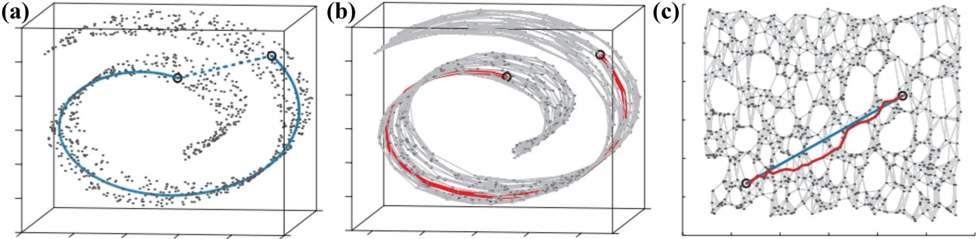
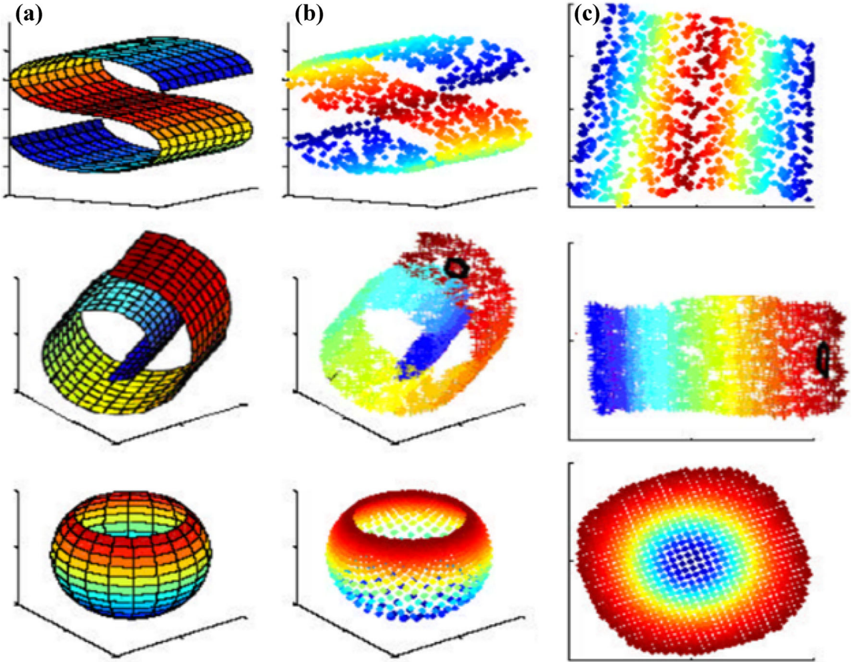
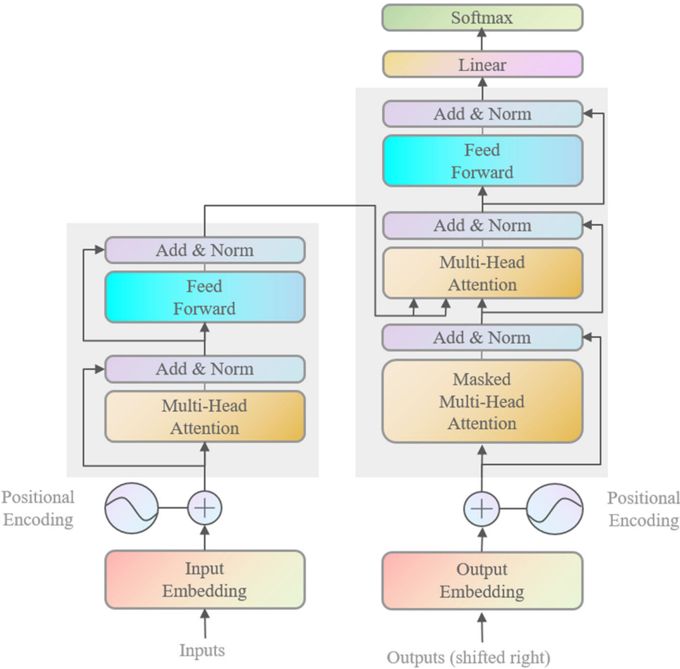
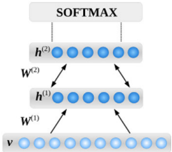
Verification
Claims the paper makes
The claims and statistics of this paper haven’t been checked yet.
Free: it reads the open-access text and checks the first 5 claims that cite a source we can check. Create a free account to check every claim.
Self-check
Percentages, sums and reported differences re-computed from the paper’s own numbers.
The self-check needs the paper’s full text.
Citations
Cites
Deep Residual Learning for Image Recognition
He, K., Zhang, X., Ren, S., & Sun, J. (2016) · 2016 IEEE Conference on Computer Vision and Pattern Recognition (CVPR) · doi:10.1109/cvpr.2016.90 · Cited by 235,474 · cited 1×
“lution and pooling layers to extract high-level semantic information [136].”
BackgroundA Mathematical Theory of Communication
Shannon, C. E. (1948) · Bell System Technical Journal · doi:10.1002/j.1538-7305.1948.tb01338.x · Cited by 88,486
LeCun, Y., Bengio, Y., & Hinton, G. (2015) · Nature · doi:10.1038/nature14539 · Cited by 84,126
Regression shrinkage and selection via the lasso
Tibshirani, R. (1996) · Journal of the Royal Statistical Society Series B: Statistical Methodology · doi:10.1111/j.2517-6161.1996.tb02080.x · Cited by 51,482 · cited 1×
“The least absolute shrinkage and selection operator (Lasso) is also a compression estimation method with reducing feature quantity as the core [116].”
MethodHe, K., Gkioxari, G., Dollar, P., & Girshick, R. (2017) · 2017 IEEE International Conference on Computer Vision (ICCV) · doi:10.1109/iccv.2017.322 · Cited by 29,137
Learning Phrase Representations using RNN Encoder–Decoder for Statistical Machine Translation
Cho, K., van Merrienboer, B., Gulcehre, C., Bahdanau, D., Bougares, F., Schwenk, H., & Bengio, Y. (2014) · Proceedings of the 2014 Conference on Empirical Methods in Natural Language Processing (EMNLP) · doi:10.3115/v1/d14-1179 · Cited by 25,545 · cited 1×
“designed a new RNN Encoder-Decoder, containing two recurrent neural networks [147].”
MethodReducing the dimensionality of data with neural networks
Hinton, G. E., & Salakhutdinov, R. R. (2006) · Science · doi:10.1126/science.1127647 · Cited by 20,928
Deep learning in neural networks: an overview
Schmidhuber, J. (2015) · Neural Networks · doi:10.1016/j.neunet.2014.09.003 · Cited by 18,570 · cited 1×
“It will also promote the further development of deep learning [171–173].”
BackgroundA fast learning algorithm for deep belief nets
Hinton, G. E., Osindero, S., & Teh, Y.-W. (2006) · Neural Computation · doi:10.1162/neco.2006.18.7.1527 · Cited by 16,336 · cited 1×
“In 2006, Hinton pointed out that the difficulty of deep learning network training can be solved by “layer-by-layer initial-ization” [127, 128].”
BackgroundLearning Internal Representations by Error Propagation
Rumelhart, D. E., Hinton, G. E., & Williams, R. J. (1985) · doi:10.21236/ada164453 · Cited by 16,172
Research works printed but not linked: 35
- Cunningham JP, Ghahramani Z (2015) Linear dimensionality reduction: survey, insights, and generalizations. J Mach Learn Res 16:2859-2900
- Hu J (2008) Survey on feature dimension reduction for high- dimensional data. Appl Res Comput 25(9):2601-2606
- Welch WJ (1982) Branch-and-bound search for experimental designs based on D optimality and other criteria. Technometrics 24(1):41-48
- Wang JH et al (2016) Analysis of imbalanced weather data based on branch-and-bound approach. Appl Res Comput 33(6):1648-1652
- Mao Y et al (2007) Survey for study of feature selection algo- rithms. Moshi Shibie yu Rengong Zhineng/Pattern Recogn Artif Intell 20(2):211-218
- Zhang HB, Sun GY (1999) Tabu search algorithm for feature selection. Acta Autom Sin 25(4):457-466
- Zhang X (1998) Dynamic programming method for feature selec- tion. Acta Autom Sin 24:680-684
- Fujarewicz K, Wiench M (2003) Selecting differentially expressed genes for colon tumor classification. Int J Appl Math Comput Sci 13:327-335
- Qiang LI et al (2005) Online palmprint identification based on improved 2D PCA. Acta Electron Sin 33(10):1886-1889
- Huang QH, Wang S, Liu Z (2007) Improved algorithm of image feature extraction based on independent component analysis. Opto-Electron Eng 1:121-125
- Chen Y et al (2018) Application of singular value decomposition algorithm to dimension-reduced clustering analysis of daily load profiles. Automat Electr Power Syst 42(3):105-111
- Mika S et al (1999) Fisher discriminant analysis with kernels. In: Neural networks for signal processing IX: Proceedings of the 1999 IEEE signal processing society workshop (cat. no. 98th8468). IEEE
- ShiZhong L, XiaoJun J, SuLei Z (1999) The application study of entropy analysis method in feature extraction. J North China Inst Technol 20(3):278-281
- Ding S, Jin F, Wang X (2005) Information feature compression algorithm based on SCEC. Mini-micro Syst 26(7):1202-1205
- Zhang J, Zhang B, Jiang X-Z (2000) Analyses of feature extraction methods based on wavelet transform. Signal Process 16(2):156-162
- Yin FP (2012) Based on improved LLE and FSVM method in face recognition of application. Sci Technol Eng 12(34):9390-9395 100.
- He X, Niyogi P (2003) Locality preserving projections. Adv Neu- ral Inf Process Syst 16:153-160 104.
- Shen Z-H, Pan Y-H, Wang S (2008) A supervised locality pre- serving projection algorithm for dimensionality reduction. Pattern Recogn Artif Intell 21(2):233-239 109.
- Zhan YB (2011) Research on manifold learning theories, methods and applications. Ph.D. thesis of University of Defence Technol- ogy 111.
- Ding S et al (2004) New PCA feature compression algorithm based on information theory. Mini-micro Syst 25(4):694-697 112.
- Ding S, Jin F, Wang J (2003) Information feature analysis and selection of orthogonal transformation. Acta Geodaetica Et Car- togr Sin 32(1):73-77 113.
- Huang R (2007) A margin based feature extraction algorithm for the small sample size problem. Chin J Comput 30(7):1173-1178 122.
- Lu J et al (2020) Learning from very few samples: a survey. arXiv preprint arXiv:2009.02653 123. · arXiv
- Wang Y et al (2020) Generalizing from a few examples: A survey on few-shot learning. ACM Comput Sur (CSUR) 53(3):1-34 124.
- Yi S, Wang X, Tang X (2014) Deep learning face representation by joint identification-verification. Adv Neural Inf Process Syst 27 131.
- Wen W et al (2016) Learning structured sparsity in deep neural networks. Adv Neural Inf Process Syst 29:2074-2082 132.
- Yu K et al (2013) Deep learning: yesterday, today, and tomorrow. J Comput Res Dev 50(9):1799-1804 133.
- Ren S et al (2015) Faster r-cnn: Towards real-time object detec- tion with region proposal networks. Adv Neural Inf Process Syst 28:91-99 138.
- Cui L et al (2020) Context-aware block net for small object detec- tion. IEEE Trans Cybern (Early access), pp 1-14 141.
- Jozefowicz R, Zaremba W, Sutskever I (2015) An empirical exploration of recurrent network architectures. In: International conference on machine learning. PMLR, pp 2342-2350 145.
- Koutnik J et al (2014) A clockwork rnn. In: International confer- ence on machine learning. PMLR, pp 1863-1871 147.
- Ergen T, Mirza AH, Kozat SS (2019) Energy-efficient LSTM net- works for online learning. IEEE Trans Neural Netw Learn Syst 99:1-13 149.
- Vaswani A et al (2017) Attention is all you need. In: Advances in neural information processing systems, pp 5998-6008 150.
- Hinton GE, Salakhutdinov RR (2006) Reducing the dimension- ality of data with neural networks. Science 313(5786):504-507 156. · DOI · Paper page
- Lee DH (2013) Pseudo-label: The simple and efficient semi- supervised learning method for deep neural networks. In Work- shop on challenges in representation learning, ICML 3(2):896 165.
Cited by
Items 701–800 of 892
Balasubramaniam, A., Balasubramaniam, T., Paul, A., Han, D. S., & Nayak, R. (2025) · IETE Technical Review · doi:10.1080/02564602.2025.2573465
“Dimensionality reduction [1–4] is an important technique in machine learning [5–7] because it can help to improve the performance of a model by reducing the number of features in a dataset while preserving the important features of the data.”
Deep Learning Forecasting of Brent Crude Oil Price with Dimensionality Reduction
Okasha, S. H., & Authority, S. C. (2025) · Abu Dhabi International Petroleum Exhibition & Conference (ADIPEC) · doi:10.2118/229876-ms
Adaptive Context-Infused Performance Evaluator for Iterative Feature Space Optimization
Wu, Y., Huang, Y., Yao, Z., Fu, Y., Liu, K., Luo, X., & Wang, D. (2025) · ACM International Conference on Information and Knowledge Management (CIKM) · doi:10.1145/3746252.3761123
Demir, G., Alataş, B., & KİŞMAN, Z. A. (2025) · SSRN Electronic Journal · doi:10.2139/ssrn.5731484
Abdillah, M. Z., & Nawangnugraeni, D. A. (2025) · Jurnal Teknik Informatika (Jutif) · doi:10.52436/1.jutif.2025.6.5.5030
FPG2DNet: A Deep Learning Framework for Molecular Property Prediction via Multi-type Feature Fusion
Wang, X., Peng, L., Huan, L., Ren, Y., Zhou, H., & Ren, Z. (2025) · Lecture notes in computer science · doi:10.1007/978-981-95-4381-6_1
Bamhdi, A. M. (2024) · International Journal of Advances in Soft Computing and its Applications · doi:10.15849/ijasca.240730.17
Raj, S. S., & S, V. C. S. (2025) · International Conference on Smart Computing and Communications (ICSCC) · doi:10.1109/icscc66177.2025.11233656
“While conventional methods such as Principal Component Analysis (PCA) and mutual information have been widely employed, they are often insufficient for capturing nonlinear relationships in biological data [2].”
Yang, J. (2025) · ICME International Conference on Complex Medical Engineering (CME) · doi:10.1109/cme67420.2025.11239051
“With the proliferation of high-dimensional data in fields such as computer vision and bioinformatics, efficient dimensionality reduction techniques are becoming increasingly urgent [1] .”
Feature Selection and Model Optimization for Survival Prediction in Patients with Angina Pectoris
Bata, R., Ghanem, A. S., & Nagy, A. C. (2025) · Journal of Clinical Medicine · doi:10.3390/jcm14228111
“…in fewer dimensions from the existing ones (e.g., Principal Component Analysis (PCA) and t-distributed Stochastic Neighbor Embedding (t-SNE)), and feature selection methods, which select a subset of the original feature set without transforming the original features (e.g., Lasso and Boruta) [5].”
Vulnerability Smart Contract Detection Model based on CUR Matrix Decomposition
Lei, H., Wong, T. L., Lim, T. M., Zhao, X., Tew, Y., & Wu, S. (2025) · IEEE International Conference on Computation, Big-Data and Engineering (ICCBE) · doi:10.1109/iccbe65177.2025.11255968
“Feature extraction is used to reduce dimensionality and abstract data [13].”
Wu, S., Tew, Y., Lim, T. M., Zhao, X., Wong, T. L., & Lei, H. (2025) · IEEE International Conference on Computation, Big-Data and Engineering (ICCBE) · doi:10.1109/iccbe65177.2025.11255947
“SVD is a matrix factorization technique commonly used in machine learning for dimensionality reduction [11].”
Atwa, A. N., Kholief, M., & Sedky, A. A. H. (2025) · Engineering Applications of Artificial Intelligence · doi:10.1016/j.engappai.2025.113376
Feature Extraction Using Sparse Autoencoder in Automatic Image Tagging
Khodayari, F., & Pazoki, E. (2025) · doi:10.1109/ipria68579.2025.11263755
“This process maps the effective information from the original features into a smaller set of features [12, 13].”
A Framework for Data Classification Integrating Autoencoder and Granular Computing
He, Z., Zhang, L., & Lu, W. (2025) · International Conference on Advanced Algorithms and Neural Networks (AANN) · doi:10.1109/aann66429.2025.11257612
“To address the problem, dimensionality reduction techniques [16], [17] can be integrated into the GrC framework to reduce data dimensionality before granulation, forming effective granules in lower-dimensional spaces, which enhances classification performance for high-dimensional data.”
Methods for estimating lower-limb joint kinematics from six stride descriptors
Sánchez-Carballo, E., Melgarejo-Meseguer, F.-M., Floría, P., & Rojo‐Álvarez, J. L. (2025) · Knowledge-Based Systems · doi:10.1016/j.knosys.2025.115033 · Cited by 1
Kim, D.-G., Shakoor, M., Riasat, S., Ahsan, M., Mushtaq, A., & Shamsi, Z. H. (2025) · Physica Scripta · doi:10.1088/1402-4896/ae2c1f
Xu, J., & Li, J. (2025) · IEEE International Conference on Tools with Artificial Intelligence (ICTAI) · doi:10.1109/ictai66417.2025.00037
Optimizing Regression Models for Carbon Emissions Prediction Using Quantum-Based Feature Selection
Munawar, G., Maulidevi, N. U., & Surendro, K. (2025) · International Conference on Smart-Green Technology in Electrical and Information Systems (ICSGTEIS) · doi:10.1109/icsgteis68532.2025.11284398
“Thus, feature selection is crucial for enhancing model accuracy and efficiency by identifying the most informative subset of variables while minimizing redundancy and computational overhead [7].”
Additional file 1 of Genomic data integration tutorial, a plant case study
Mardoc, E., Sow, M. D., Dejean, S., & Salse, J. (2024) · Figshare · doi:10.6084/m9.figshare.25017805
Ανάπτυξη μοντέλων πρόβλεψης ιδιοτήτων μοριακών δομών με αρχιτεκτονικές νευρωνικών δικτύων γραφημάτων
Savvas, I. (2024) · DSpace - NTUA (National Technical University of Athens) · doi:10.26240/heal.ntua.26304
Additional file 2 of Genomic data integration tutorial, a plant case study
Mardoc, E., Sow, M. D., Dejean, S., & Salse, J. (2024) · Figshare · doi:10.6084/m9.figshare.25017915
Microbial-Based Proxies for Europa's Habitability and Biosignature Detection
Del Moral Jimenez, A. (2024) · Open Research Online (The Open University) · doi:10.21954/ou.ro.00097433 · Cited by 1
Oshternian, S. R., Loipfinger, S., Bhattacharya, A., & Fehrmann, R. S. N. (2024) · Figshare · doi:10.6084/m9.figshare.25706160
Hofmann, A., & Nordström, I. (2025) · Diva portal (Dalarna University Library)
Investigation and prevention of cybercrimes using Artificial Intelligence
Stephen, G. (2025) · Theseus (Ammattikorkeakoulujen) · Cited by 6
Verduijn, J. (2024) · Ghent University Academic Bibliography (Ghent University)
Advancing Network Intrusion Detection Systems through Machine Learning Algorithms
Eldho, A. (2024) · TRAP@NCI (National College of Ireland)
Legrady, G. (2025) · Signata · doi:10.4000/14rhr
Some Regularized Tools for Dimensionality Reduction
Kalina, J. (2025) · Lecture notes in computer science · doi:10.1007/978-3-032-03708-4_20
Autoencoder frameworks for low-dimensional parametrizations of fluid flows
Kim, Y. (2025) · MPG.PuRe (Max Planck Society) · doi:10.25673/121642
On intrinsic dimension of point clouds by a persistent homology approach: computational tips
Bandiziol, C., Marchi, S. D., & Allegra, M. (2025) · Modern Mathematical Methods · doi:10.64700/mmm.89
“In this context, a key role is played by dimensionality reduction approaches that reduce the number of variables (coordinates) in the data with little or no loss of information [8, 33, 60].”
Research on the Classification of Digital Cultural Texts Based on ASSC-TextRCNN Algorithm
Guo, Z., Wang, H., Kumar, S., & Chen, Y. (2025) · Computers, materials & continua/Computers, materials & continua (Print) · doi:10.32604/cmc.2025.072064
“Unlike max pooling—which keeps only local extrema—SVD captures the global structure of the feature matrix through spectral factorization, suppressing redundancy and reducing information loss [53].”
Intelligent recognition of chiral alanine isomers using active terahertz low-frequency excitation
Pang, S., Su, J., Tan, K., Song, Z., Tu, S. C., Yang, J., He, Q., & Lu, M. (2026) · Journal of Molecular Structure · doi:10.1016/j.molstruc.2025.145230
Research Progress on Data Mining-Based Corrosion Prediction Models for Metallic Materials
Lu, W., Li, J., Sun, J., & Bi, J. (2025) · International Conference on Mathematics and Machine Learning (ICMML) · doi:10.1145/3783779.3783816
Zhang, W. (2026) · IEEE Access · doi:10.1109/access.2026.3651834
“It has been widely applied across various domains, including image clustering [5], community detection [6], [7], speech signal processing [8], [9], document clustering [10], [11], [12], and biomedical data analysis [13], [14].”
Interpretable Model for Oil Palm Fruit Ripeness Level Classification
Desandros, A., Suparyanto, T., Nugraha, N. S., Putra, D. P., Isnan, M., & Pardamean, B. B. (2025) · International Conference on Informatics, Multimedia, Cyber and Information System (ICIMCIS) · doi:10.1109/icimcis68501.2025.11327346
“This discrepancy can be handled through implementation of dimensionality reduction to reduce the feature space to a more manageable and statistically appropriate size [23].”
Yan, L., & Wu, S. (2025) · Journal of higher education teaching. · doi:10.62517/jhet.202515524
Imbalance classification based on supervised contrastive optimization
Zhao, Y., Chen, F., Gao, X., Nie, J., Zhao, N., & Xu, Z. (2026) · International Conference on Electronic Information Engineering and Artificial Intelligence (EIEAI) · doi:10.1117/12.3100777
Ensemble Fusion Model for Enhanced Speech Emotion Recognition and Confusion Resolution
Ahmed, R., Hussein, M., & Keshk, A. E.-S. (2026) · International Journal of Information Technology and Computer Science · doi:10.5815/ijitcs.2026.01.05
“In machine learning (ML), dimensionality reduction [16] is a basic technique that simplifies datasets by reducing the quantity of input variables or features.”
A New Adaptive Geometric SMOTE for Bearing Imbalanced Fault Diagnosis
Wei, C., Tian, C., Chen, Y., Zhao, B. W., & Wen, L. (2026) · IEEE Sensors Journal · doi:10.1109/jsen.2026.3661375 · Cited by 1
“…calculation formulas are shown in Table I. Step 3 ( Feature Dimensionality Reduction ): The dimensionality reduction process of the extracted multiple features can reduce the complexity of the model to identify the fault categories and accelerate the training speed of the relevant model [30].”
Efficient algorithms based on distribution network data modeling and identification
Lin, J., Wu, J., Huang, D., Hong, L., & Ye, D. (2026) · International Conference on Signal Processing and Virtual Reality Technology (SPVRT) · doi:10.1117/12.3107683
“It is suitable for feature extraction and dimension compression tasks of low-voltage user measurement data and distribution transformer TTU data in distribution network scenarios [5] .”
A Comprehensive Review of Informed Machine Learning in Medical Decision Systems
Budaraju, D., Lakshminarayana, M., Hiremath, B. V., & Shenoy, N. R. (2025) · International Conference on Emerging Research in Electronics, Computer Science and Technology (ICERECT) · doi:10.1109/icerect65215.2025.11375879
Haruta, C., & Ono, N. (2026) · Nippon Onkyo Gakkaishi/Acoustical science and technology/Nihon Onkyo Gakkaishi · doi:10.1250/ast.e25.62
Zhou, Y., Xu, S., Yang, X., Yu, H., Pan, Y., & Lei, Y. (2026) · Canadian Geotechnical Journal · doi:10.1139/cgj-2025-0670
Portable Upper-limb Muscle Tone Assessment by Integrating Multi-sensor Signals
Zhang, Y., Zheng, Y., Shangguan, H., Chen, T., Wang, W.-Z., Wang, Y.-L., Lin, P., He, B., Hong, W., & Chen, X. (2026) · Annals of Biomedical Engineering · doi:10.1007/s10439-026-04040-w
“Consequently, it was deemed essential to perform dimensionality reduction prior to incorporating these features into the classification model to avoid overfitting [38].”
Optimalisasi AI Writing Companion dengan Metaheuristic Algorithm Pada Teks English
Putra, F. K. A., Patria, I. B., Abdullah, I. N., & Kusumaningsih, D. (2025) · SINTECH (Science and Information Technology) Journal · doi:10.31598/sintechjournal.v8i3.1988
Ayodele, O. S., Odiketa, J. C., Auru, F. O., & Seyi-Ayodele, A. (2026) · FUDMA Journal of Sciences · doi:10.33003/fjs-2026-1002-4289
BAPO: Binary Arctic Puffin Optimization Based on Hybrid Transfer Function
Wang, H., & Liu, J. (2026) · Applied Sciences · doi:10.3390/app16052222
Adaptive water-mist infrared signature suppression for naval vessels via MPCM-constrained LSTM
Dong, C., Cao, Y., Feng, Y., Chen, C., Yu, J. M., Zhu, Z., & Xiong, F. (2026) · Infrared Physics & Technology · doi:10.1016/j.infrared.2026.106489
Park, J. Y., Seo, E. H., Kim, S., Yi, S., Lee, K. H., & Won, S. (2026) · Scientific Reports · doi:10.1038/s41598-025-34491-5
“For instance, image data often contains a vast amount of information but can also be prone to noise due to its high dimensionality 12,13 .”
Xiao, Y., Zhaohui, D., Zhuo, R., Xipeng, X., Wei, L., & Lv, L. (2026) · Engineering Science and Technology an International Journal · doi:10.1016/j.jestch.2026.102329
Somodi, A., Sharma, A., Bennett, A., & Duncan, D. (2026) · Electronics · doi:10.3390/electronics15061235
Lee, K.-F., Amini, M., Lin, S. E., & Saffari, N. (2026) · Advances in computational intelligence and robotics book series · doi:10.4018/979-8-3373-6623-4.ch006
Esan, O., Nwulu, N. I., David, L. O., & Amusan, O. T. (2026) · Circular Economy and Sustainability · doi:10.1007/s43615-026-00896-1 · Cited by 1
Іващенко, О., & Fedin, S. (2026) · Artificial Intelligence · doi:10.15407/jai2026.01.071
Richier, C., Baacke, K. A., Olshan, S. M., & Heller, W. (2026) · Journal of Neuroscience Methods · doi:10.1016/j.jneumeth.2026.110746
Akbar, N. :. 2. R. (2026) · Digital Library UIN Sunan Kalijaga (Sunan Kalijaga State Islamic University)
Zu, G., Wang, B., Meng, J., Dong, X., & Hong, T. (2026) · Energies · doi:10.3390/en19071702
Pamnani, H. K., Raja, L., & Ives, T. (2026) · GAZI UNIVERSITY JOURNAL OF SCIENCE · doi:10.35378/gujs.1633653
Belhadj, D. (2024) · theses.fr (ABES) · doi:10.70675/e5d35f37zdbf6z4caez9c76zded70202b903
Mardoc, E. (2023) · theses.fr (ABES) · doi:10.70675/c1fdbfe1z9227z4eb4z803bz835a5be3b102
Data Quality Evaluation of Numeric Data for Classification Tasks
Jouseau, R. (2024) · theses.fr (ABES) · doi:10.70675/0a703800z2bb8z4378zacd2z369e6f504189
Optimization of security risk for learning on heterogeneous quality data
Chaitou, H. (2023) · theses.fr (ABES) · doi:10.70675/dff50d0dzeb47z4040z8a6bz60efa6e7631b
A Study on Dimensionality Reduction for Transformer Embeddings Space to Enhance Ad Hoc Ranking
Hina, N. (2024) · theses.fr (ABES) · doi:10.70675/18f39c77z3735z42b7za1b7z3e677d121333
Oluwafemi, I. B., & Jiya, E. A. (2025) · International Conference on Electrical, Computer and Energy Technologies (ICECET) · doi:10.1109/icecet63943.2025.11472053
“Despite progress, optimizing these techniques for large datasets and complex feature sets remains an area of active research [12].”
Aero-structural multi-fidelity coupling methodology for preliminary aircraft design
Mori, S. (2025) · theses.fr (ABES) · doi:10.70675/647a3f06z66cez45dez9ecfzd4d4c19f255f · Cited by 1
Chen, A., Pan, P., Quan, N., & Zhou, B. (2026) · Scientific Reports · doi:10.1038/s41598-026-48133-x
Contrastive Perturbation with Frequency-Domain Feature Fusion for Face Privacy Protection
Xiao, Y., Han, J., Zhang, C., & Liu, J. (2026) · IEEE International Conference on Acoustics Speech and Signal Processing · doi:10.1109/icassp55912.2026.11462085
Unsupervised Projection via Convex-Hull Radius Minimization for Compact Cluster Representations
Xiang, Y., Zhou, J., Gao, C., Lang, G., & Guo, Y. (2026) · IEEE International Conference on Acoustics Speech and Signal Processing · doi:10.1109/icassp55912.2026.11460559
A Fine-Scale Urban Impervious Surface Extraction Method Based on UAV LiDAR and Visible Imagery
Bao, Y., Zhao, Y., Hu, S., Wang, Z., & Deng, H. (2026) · Remote Sensing · doi:10.3390/rs18091275
Alhajahmad, B. (2026) · Süleyman Demirel Üniversitesi Fen Bilimleri Enstitüsü Dergisi · doi:10.19113/sdufenbed.1703191
Study on load prediction methods of embedded container-based applications
Chang, Y., Li, W., Wu, J., Zhang, X., & Li, Y. (2026) · Xibei Gongye Daxue Xuebao/Journal of Northwestern Polytechnical University · doi:10.1051/jnwpu/20264410125
Research on click through rate estimation model based on dynamic session graph convolution
Li, P., & zhao, X. X. (2026) · Engineering Research Express · doi:10.1088/2631-8695/ae6559
Closed-loop metrics-based dataset optimization toward deep learning models
Shahrabadi, S. (2026) · Portuguese National Funding Agency for Science, Research and Technology (RCAAP Project by FCT)
Yang, M., Fu, F., Wei, Y., Lu, X., & Ni, D. (2026) · SSRN Electronic Journal · doi:10.2139/ssrn.6668965
A Novel Content-Based Video Retrieval System Using MBH and BCHOA Optimized Multiple Features
Asha, D., & Madhavee Latha, Y. (2026) · Journal of Innovative Image Processing · doi:10.36548/jiip.2026.2.007
A Bibliometric Analysis of Current Advancements in Iris Feature Extraction and Recognition
Aliyu, M. G., Jamel, S. H., & Danlami, M. (2026) · International Journal of Research and Innovation in Social Science · doi:10.47772/ijriss.2026.100400134
Multi-granularity collaborative clustering based on adaptive granular-balls
Zhang, X., Li, X. U., & Jia, W. (2026) · Scientific Reports · doi:10.1038/s41598-026-50637-5 · Cited by 1
Self-citationOn the Reliability of Feature Selection under Non-linear and Complex Data Geometries
Hosni, O. A. (2026) · International Conference on Advances in Artificial Intelligence and Machine Learning (AAIML) · doi:10.1109/aaiml67890.2026.11498110
“However, among the different three types of Feature Selection, Filter methods are most popular due to their simplicity and speed (generally faster and more scalable than Wrapper and Embedded methods when dealing with large feature sizes) [1] .”
Aires, A. S., Sales, V. F., Tonietto, L., Zanotta, D. C., Ibanez, D. M., Veronez, M. R., & da Silveira, L. G., Jr. (2025) · Workshop on Hyperspectral Image and Signal Processing: Evolution in Remote Sensing · doi:10.1109/whispers69515.2025.11501646
“In the case of hyperspectral data, this problem can be addressed by multivariate analysis methods such as Principal Component Analysis (PCA), which is largely used as a dimensionality reduction technique [3, 4].”
Identifying Genomic Biomarkers of Rare Disease Subtypes Using Minority-Weighted Feature Selection
Gul, S., Khan, D. M., Aldahmani, S., & Khan, Z. (2026) · Computational and Structural Biotechnology Reports · doi:10.34133/csbr.0009
Wang, T., Zeus, T., Quast, C., Ceylan, A. S., Klein, K., Kelm, M., Dell’Agnello, F., Celi, S., Steinseifer, U., & Neidlin, M. (2026) · Cardiovascular Engineering and Technology · doi:10.1007/s13239-026-00840-2
“[13–15] Proper Orthogonal Decomposition (POD) is a widely used example of such DR techniques, first introduced by Lumley et al. [16].”
CEDR: robust consensus cancer subtyping with multi-omics data via ensemble dimensionality reduction
Cao, H., Xu, Z., Lin, S., Du, G., Wang, T., Wang, J., Yang, X., Fang, R., Luo, Y., Zeng, P., et al. (2026) · Briefings in Bioinformatics · doi:10.1093/bib/bbag232
“…often consistent with cluster numbers, enabling precise cancer patient subtyping by mapping data into a unified low-dimensional space, interpreting dominant cluster features, and mitigating the “curse of dimensionality” to enhance pattern extraction while reducing noise and redundancy [6–9].”
Weighted intuitionistic fuzzy similarity relation for feature subset selection and its applications
Khurshid, Shreevastava, S., Nath, A., Srivastava, P. C., Kanyal, H. S., & Tiwari, A. K. (2026) · Sadhana · doi:10.1007/s12046-026-03131-7
Feature reduction approach for classification of datasets based on genetic algorithm
Sarkar, B. K., Kumar, A., & Sana, S. S. (2026) · Journal of Modelling in Management · doi:10.1108/jm2-08-2025-0386
Rashid, A., & Atif, R. M. (2026) · Atmospheric Environment · doi:10.1016/j.atmosenv.2026.122110
Introduction to machine learning and deep learning for neurodegenerative diseases assessment
Dentamaro, V., Semeraro, G., Gattulli, V., & Castro, F. (2026) · Elsevier eBooks · doi:10.1016/b978-0-443-13545-3.00003-7
Optimization of Machine Learning Methods for Predicting G-Induced Loss of Consciousness
Rote, N. C., Allred, A. R., Dooley, C., Fechtig, C., Cates, K., & Anderson, A. P. (2026) · IEEE Aerospace Conference (AERO) · doi:10.1109/aero66936.2026.11520094
Kernel Space-Based Dual-Weighted Robust Principal Component Analysis
Wu, C., Xu, P., Peng, Y. K., & Cichocki, A. S. (2026) · Journal of Classification · doi:10.1007/s00357-026-09552-7
Using Swin Transformers to Extract Features for Precise Classification of Brain Tumors in MRI Images
Sarker, R. P., Akter, M. N., Hasan, M. M., Paul, B. K., & Bhuiyan, T. (2025) · IEEE International Women in Engineering (WIE) Conference on Electrical and Computer Engineering (WIECON-ECE) · doi:10.1109/wiecon-ece69386.2025.11525917
“Furthermore, dimensionality reduction methods, such as PCA, are instrumental in high-dimensional transformer-based representations because they can eliminate redundant information while maintaining discriminative features, hence reducing overfitting [6].”
An Optimized Deep Learning Model for Sleep Apnea Detection
Abualzait, M., Qutqut, M. H., Ahmed, A., & Almasalha, F. (2026) · IEEE Middle East and North Africa Communications Conference (MENACOMM) · doi:10.1109/menacomm69507.2026.11532620
“It expresses the correctness of measurement and determines it both absolutely and comparatively [25].”
Explainable Feature Selection Using Feature Weighted Self-Organising Maps
Odega, N., & Starkey, A. J. (2026) · Communications in computer and information science · doi:10.1007/978-3-032-22205-3_2
Yin, H., Yang, H., Li, F., Hu, Y., & Yu, K. (2026) · IEEE Journal of Selected Topics in Applied Earth Observations and Remote Sensing · doi:10.1109/jstars.2026.3698129
“Effectivedimensionality reductionmethodscanlowerdataprocessingcomplexity,reduce computationalburden,andsimultaneouslyenhancethestability androbustnessofCNCestimationmodels[5],[6].”
Interpretable machine-learning prognosis of mycetoma from routine clinical data
Yousif, M. H., Alsammani, A., Abdalla, M. H., Bashier, E. B. M., Mohammed, M. A. Y., Saeed, A. A., & Fahal, A. H. (2026) · Transactions of the Royal Society of Tropical Medicine and Hygiene · doi:10.1093/trstmh/trag061
Muralidharan, S., John, H., & Mishra, D. (2026) · doi:10.5194/egusphere-2026-2027
Estimating mechanical impedance from hydrophone measurements
Polat, H., McDaniel, J. G., Gilbert, J., & Lucifredi, I. (2026) · The Journal of the Acoustical Society of America · doi:10.1121/10.0043957
Metadata
- Authors
- Jia, W., Sun, M., Lian, J., & Hou, S.
- Affiliations
- Shandong Normal University (CN)
- Shandong Management University (CN)
- Corresponding author
- Jia, Weikuan
- Hou, Sujuan
- Venue
- Complex & Intelligent Systems
- Published
- 2022-01-21
- Volume
- 8
- Issue
- 3
- Pages
- 2663-2693
- ISSN
- 2198-6053 (ISSN-L)
- 2199-4536
- OpenAlex
- W4206095984
- Cited by
- 797
- References
- 134
- Citations by year
- 2026: 155 · 2025: 256 · 2024: 242 · 2023: 122 · 2022: 22
- FWCI
- 52.59
- Type
- journal article
- Language
- en
- Open access
- gold
- doi.org
- Licence
- cc-by
- creativecommons.org/licenses/by/4.0 (tdm)
- creativecommons.org/licenses/by/4.0 (vor)
- Locations
- Complex & Intelligent Systems (publishedVersion, cc-by)
- Funders
- National Natural Science Foundation of China (62072289)
- Natural Science Foundation of Shandong Province (ZR2020MF076, ZR2020MF133)
- Focus on Research and Development Plan in Shandong Province (2019GNC106115)
- Topics
- Physical Sciences › Computer Science › Computer Vision and Pattern Recognition › Face and Expression Recognition
- Physical Sciences › Mathematics › Statistics and Probability › Statistical Methods and Applications
- Physical Sciences › Computer Science › Artificial Intelligence › Stochastic Gradient Optimization Techniques
- Keywords
- dimensionality reduction, curse of dimensionality, feature selection, feature extraction, pattern recognition
About these checks
Registry, retraction, Cites and statistics results are computed, not judged, with one exception: a printed reference that no index lists is read once by a model before it counts as a citation error. Claims are extracted by a model and kept only when their quote appears verbatim in the text; each cited source is then checked, with a model’s help, for whether it says what the claim relies on. Those verdicts can be wrong — read the claim’s quote and the cited source before relying on one.
Statistics and arithmetic are recomputed, not judged.
Confidence bands are shown only for fields calibrated on our annotated test set. None is calibrated yet, so no band is shown.
What counts as a claim ›How we measure confidence ›How we check this ›
Are you an author, or do you see a problem with this page? Request a review
Data sources
Bibliographic data: Semantic Scholar, OpenAlex, Crossref.
Contains information from the Semantic Scholar Academic Graph Datasets, made available under the ODC Attribution License (ODC-BY 1.0).
Semantic Scholar’s data is described in: Kinney, R., et al. (2023). The Semantic Scholar Open Data Platform. arXiv:2301.10140.
