

Feature dimensionality reduction: a review
Open accessThe DOI matches its Crossref record; 142 of the 142 references it cites were found in a registry or an index.
Abstract
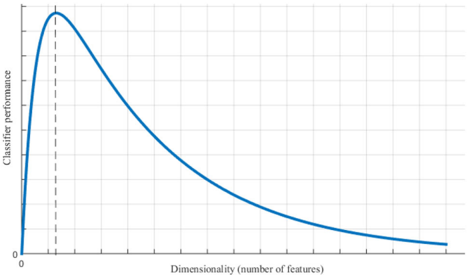
As basic research, it has also received increasing attention from people that the “curse of dimensionality” will lead to increase the cost of data storage and computing; it also influences the efficiency and accuracy of dealing with problems. Feature dimensionality reduction as a key link in the process of pattern recognition has become one hot and difficulty spot in the field of pattern recognition, machine learning and data mining. It is one of the most challenging research fields, which has been favored by most of the scholars’ attention. How to implement “low loss” in the process of feature dimension reduction, keep the nature of the original data, find out the best mapping and get the optimal low dimensional data are the keys aims of the research. In this paper, two-dimensionality reduction methods, feature selection and feature extraction, are introduced; the current mainstream dimensionality reduction algorithms are analyzed, including the method for small sample and method based on deep learning. For each algorithm, examples of their application are given and the advantages and disadvantages of these methods are evaluated.
Overview
The claims and statistics of this paper haven’t been checked yet.
Free: it reads the open-access text and checks the first 5 claims that cite a source we can check. Create a free account to check every claim.
Integrity signals
Registry
Cites
Statistics
Figures

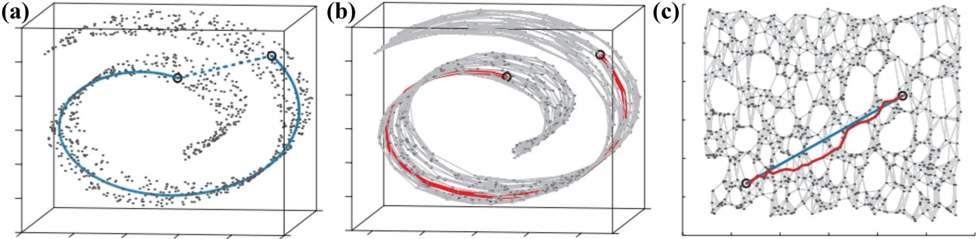
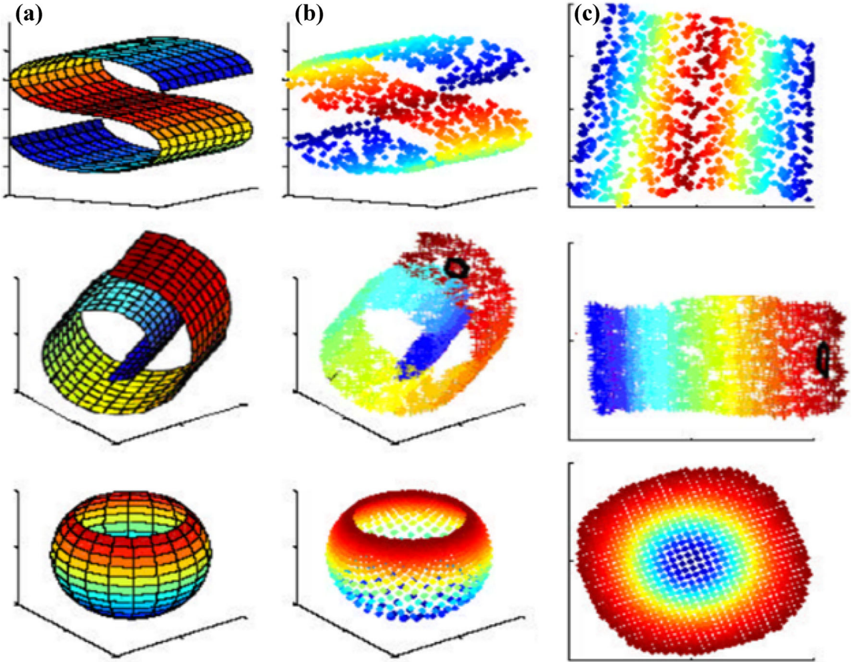
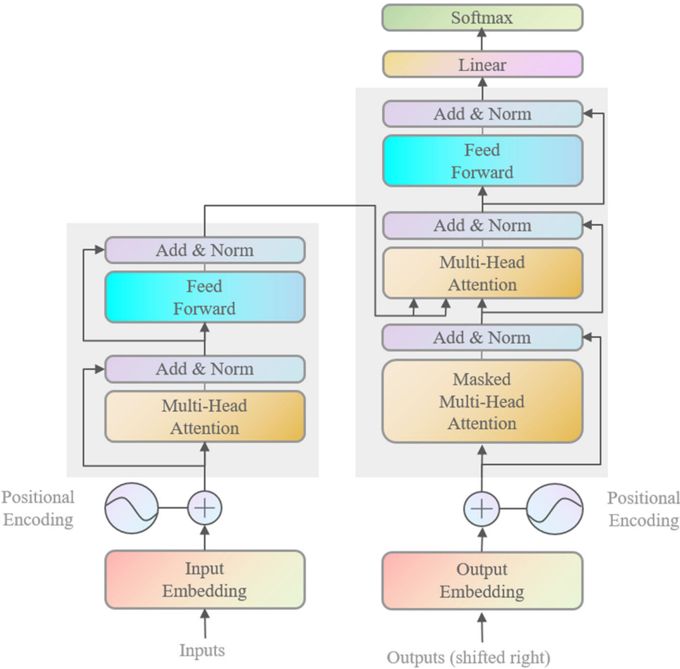
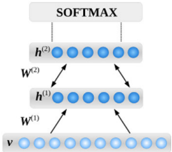
Verification
Claims the paper makes
The claims and statistics of this paper haven’t been checked yet.
Free: it reads the open-access text and checks the first 5 claims that cite a source we can check. Create a free account to check every claim.
Self-check
Percentages, sums and reported differences re-computed from the paper’s own numbers.
The self-check needs the paper’s full text.
Citations
Cites
Deep Residual Learning for Image Recognition
He, K., Zhang, X., Ren, S., & Sun, J. (2016) · 2016 IEEE Conference on Computer Vision and Pattern Recognition (CVPR) · doi:10.1109/cvpr.2016.90 · Cited by 235,474 · cited 1×
“lution and pooling layers to extract high-level semantic information [136].”
BackgroundA Mathematical Theory of Communication
Shannon, C. E. (1948) · Bell System Technical Journal · doi:10.1002/j.1538-7305.1948.tb01338.x · Cited by 88,486
LeCun, Y., Bengio, Y., & Hinton, G. (2015) · Nature · doi:10.1038/nature14539 · Cited by 84,126
Regression shrinkage and selection via the lasso
Tibshirani, R. (1996) · Journal of the Royal Statistical Society Series B: Statistical Methodology · doi:10.1111/j.2517-6161.1996.tb02080.x · Cited by 51,482 · cited 1×
“The least absolute shrinkage and selection operator (Lasso) is also a compression estimation method with reducing feature quantity as the core [116].”
MethodHe, K., Gkioxari, G., Dollar, P., & Girshick, R. (2017) · 2017 IEEE International Conference on Computer Vision (ICCV) · doi:10.1109/iccv.2017.322 · Cited by 29,137
Learning Phrase Representations using RNN Encoder–Decoder for Statistical Machine Translation
Cho, K., van Merrienboer, B., Gulcehre, C., Bahdanau, D., Bougares, F., Schwenk, H., & Bengio, Y. (2014) · Proceedings of the 2014 Conference on Empirical Methods in Natural Language Processing (EMNLP) · doi:10.3115/v1/d14-1179 · Cited by 25,545 · cited 1×
“designed a new RNN Encoder-Decoder, containing two recurrent neural networks [147].”
MethodReducing the dimensionality of data with neural networks
Hinton, G. E., & Salakhutdinov, R. R. (2006) · Science · doi:10.1126/science.1127647 · Cited by 20,928
Deep learning in neural networks: an overview
Schmidhuber, J. (2015) · Neural Networks · doi:10.1016/j.neunet.2014.09.003 · Cited by 18,570 · cited 1×
“It will also promote the further development of deep learning [171–173].”
BackgroundA fast learning algorithm for deep belief nets
Hinton, G. E., Osindero, S., & Teh, Y.-W. (2006) · Neural Computation · doi:10.1162/neco.2006.18.7.1527 · Cited by 16,336 · cited 1×
“In 2006, Hinton pointed out that the difficulty of deep learning network training can be solved by “layer-by-layer initial-ization” [127, 128].”
BackgroundLearning Internal Representations by Error Propagation
Rumelhart, D. E., Hinton, G. E., & Williams, R. J. (1985) · doi:10.21236/ada164453 · Cited by 16,172
Research works printed but not linked: 35
- Cunningham JP, Ghahramani Z (2015) Linear dimensionality reduction: survey, insights, and generalizations. J Mach Learn Res 16:2859-2900
- Hu J (2008) Survey on feature dimension reduction for high- dimensional data. Appl Res Comput 25(9):2601-2606
- Welch WJ (1982) Branch-and-bound search for experimental designs based on D optimality and other criteria. Technometrics 24(1):41-48
- Wang JH et al (2016) Analysis of imbalanced weather data based on branch-and-bound approach. Appl Res Comput 33(6):1648-1652
- Mao Y et al (2007) Survey for study of feature selection algo- rithms. Moshi Shibie yu Rengong Zhineng/Pattern Recogn Artif Intell 20(2):211-218
- Zhang HB, Sun GY (1999) Tabu search algorithm for feature selection. Acta Autom Sin 25(4):457-466
- Zhang X (1998) Dynamic programming method for feature selec- tion. Acta Autom Sin 24:680-684
- Fujarewicz K, Wiench M (2003) Selecting differentially expressed genes for colon tumor classification. Int J Appl Math Comput Sci 13:327-335
- Qiang LI et al (2005) Online palmprint identification based on improved 2D PCA. Acta Electron Sin 33(10):1886-1889
- Huang QH, Wang S, Liu Z (2007) Improved algorithm of image feature extraction based on independent component analysis. Opto-Electron Eng 1:121-125
- Chen Y et al (2018) Application of singular value decomposition algorithm to dimension-reduced clustering analysis of daily load profiles. Automat Electr Power Syst 42(3):105-111
- Mika S et al (1999) Fisher discriminant analysis with kernels. In: Neural networks for signal processing IX: Proceedings of the 1999 IEEE signal processing society workshop (cat. no. 98th8468). IEEE
- ShiZhong L, XiaoJun J, SuLei Z (1999) The application study of entropy analysis method in feature extraction. J North China Inst Technol 20(3):278-281
- Ding S, Jin F, Wang X (2005) Information feature compression algorithm based on SCEC. Mini-micro Syst 26(7):1202-1205
- Zhang J, Zhang B, Jiang X-Z (2000) Analyses of feature extraction methods based on wavelet transform. Signal Process 16(2):156-162
- Yin FP (2012) Based on improved LLE and FSVM method in face recognition of application. Sci Technol Eng 12(34):9390-9395 100.
- He X, Niyogi P (2003) Locality preserving projections. Adv Neu- ral Inf Process Syst 16:153-160 104.
- Shen Z-H, Pan Y-H, Wang S (2008) A supervised locality pre- serving projection algorithm for dimensionality reduction. Pattern Recogn Artif Intell 21(2):233-239 109.
- Zhan YB (2011) Research on manifold learning theories, methods and applications. Ph.D. thesis of University of Defence Technol- ogy 111.
- Ding S et al (2004) New PCA feature compression algorithm based on information theory. Mini-micro Syst 25(4):694-697 112.
- Ding S, Jin F, Wang J (2003) Information feature analysis and selection of orthogonal transformation. Acta Geodaetica Et Car- togr Sin 32(1):73-77 113.
- Huang R (2007) A margin based feature extraction algorithm for the small sample size problem. Chin J Comput 30(7):1173-1178 122.
- Lu J et al (2020) Learning from very few samples: a survey. arXiv preprint arXiv:2009.02653 123. · arXiv
- Wang Y et al (2020) Generalizing from a few examples: A survey on few-shot learning. ACM Comput Sur (CSUR) 53(3):1-34 124.
- Yi S, Wang X, Tang X (2014) Deep learning face representation by joint identification-verification. Adv Neural Inf Process Syst 27 131.
- Wen W et al (2016) Learning structured sparsity in deep neural networks. Adv Neural Inf Process Syst 29:2074-2082 132.
- Yu K et al (2013) Deep learning: yesterday, today, and tomorrow. J Comput Res Dev 50(9):1799-1804 133.
- Ren S et al (2015) Faster r-cnn: Towards real-time object detec- tion with region proposal networks. Adv Neural Inf Process Syst 28:91-99 138.
- Cui L et al (2020) Context-aware block net for small object detec- tion. IEEE Trans Cybern (Early access), pp 1-14 141.
- Jozefowicz R, Zaremba W, Sutskever I (2015) An empirical exploration of recurrent network architectures. In: International conference on machine learning. PMLR, pp 2342-2350 145.
- Koutnik J et al (2014) A clockwork rnn. In: International confer- ence on machine learning. PMLR, pp 1863-1871 147.
- Ergen T, Mirza AH, Kozat SS (2019) Energy-efficient LSTM net- works for online learning. IEEE Trans Neural Netw Learn Syst 99:1-13 149.
- Vaswani A et al (2017) Attention is all you need. In: Advances in neural information processing systems, pp 5998-6008 150.
- Hinton GE, Salakhutdinov RR (2006) Reducing the dimension- ality of data with neural networks. Science 313(5786):504-507 156. · DOI · Paper page
- Lee DH (2013) Pseudo-label: The simple and efficient semi- supervised learning method for deep neural networks. In Work- shop on challenges in representation learning, ICML 3(2):896 165.
Cited by
Items 601–700 of 892
HSIC Induced LncRNA Feature Selection
Guo, A., & Li, B. (2023) · Lecture notes in computer science · doi:10.1007/978-981-99-4752-2_16
Cai, Z., Guan, L., Huang, J., Zhu, S., Li, S., & Yang, H. (2023) · IEEE Power Engineering Society General Meeting · doi:10.1109/pesgm52003.2023.10252519
Gradient‐based determination of principal design influences on composite structures
Liedmann, J., Barthold, F., & Gerzen, N. (2023) · PAMM · doi:10.1002/pamm.202300177
“SVD is a mathematical technique widely used in various scientific and engineering disciplines for dimensionality reduction, feature extraction, and system identification, cf. for example [1].”
MethodComparing the Performance of Feature Selection Methods for Predicting Gastric Cancer
Mazreati, H., Radfar, R., Sohrabi, M.-R., Sabet, B., & Kazemi, M. A. A. (2023) · International Journal of Cancer Management · doi:10.5812/ijcm-138653 · Cited by 2
“New opportunities will not be created throughout feature selection; however, through feature extraction (18).”
BackgroundA lightweight feature selection method based on rankability
Kong, L., Velasquez, J. D., Perfilieva, I., Pant, M., Pan, J.-S., & Snåšel, V. (2026) · Information Sciences · doi:10.1016/j.ins.2026.123543
Research on Label Distribution Dimension Reduction Algorithm Based on MLDA
Tian, W., Li, S., Tan, C.-F., Zhang, Z., & Cui, L. (2023) · International Conference on Dependable Systems and Their Applications (DSA) · doi:10.1109/dsa59317.2023.00029
Imbalance-Aware Data Based on Multi-Criteria Decision Making Integrated Feature Selection Algorithm
王, 刚. (2023) · Journal of Sensor Technology and Application · doi:10.12677/jsta.2023.116061
Cui, W., Xu, Z., & Mu, R. (2023) · Journal of Data and Information Science · doi:10.2478/jdis-2023-0025
Lin, H. (2023) · International Conference on Electronics and Devices, Computational Science (ICEDCS) · doi:10.1109/icedcs60513.2023.00057
“The feature dimension reduction algorithm of principal component analysis is used to construct the entity recognition model [2].”
MethodKiruthika, R., Umamaheswari, H., & Karthikeyan, A. (2023) · International Conference on Sustainable Communication Networks and Application (ICSCNA) · doi:10.1109/icscna58489.2023.10370143
“One of the most difficult study areas, it has attracted the interest of the majority of academics [2,7].”
BackgroundGrzybowska, U., & Karwański, M. (2024) · Metody Ilościowe w Badaniach Ekonomicznych · doi:10.22630/mibe.2023.24.4.18 · Cited by 1
Text Classification System Using Text Mining with XGBoost Method
Rusjayanthi, N. K. D., Sudana, O., & Trisna, I. N. P. (2023) · Jurnal Ilmiah Merpati (Menara Penelitian Akademika Teknologi Informasi) · doi:10.24843/jim.2023.v11.i02.p01
Detection of Respiratory Disorder and Performance Analysis from PPG Signals
Rajaguru, H., Kalaiyarasi, M., Santhosh, B., & Selvi, A. S. (2024) · World Congress on Medical Physics and Biomedical Engineering, September 7 - 12, 2009, Munich, Germany · doi:10.1007/978-3-031-51120-2_25
Thanarat, P., Kiatjindarat, W., & Jareanpon, C. (2023) · IEEE International Conference on Teaching, Assessment, and Learning for Engineering · doi:10.1109/tale56641.2023.10398413
“Insufficient factors may overlook crucial attributes, while an excessive number of factors can result in prolonged computational time [2] and an increased likelihood of incomplete data, rendering it inadequate for accurate prediction.”
BackgroundApplying Latent Data Assimilation to a Fluid Dynamics Problem
Yu, R. (2023) · Environmental Science and Climate Research · doi:10.33140/escr.01.01.01
“This "dimensional curse" induces a substantial rise in computational complexity and storage requirements, affecting the accuracy and efficiency of the anticipations (Jia et al., 2022).”
BackgroundOpposition-Based Learning Binary Bat Algorithm as Feature Selection Approach in Taguchi's T-Method
Marlan, Z. M., Jamaludin, K. R., & Harudin, N. (2023) · IEEE Conference on Systems, Process and Control · doi:10.1109/icspc59664.2023.10420191
“Lastly, it aids in combating the curse of dimensionality, where the sparsity of data points in high-dimensional spaces can hinder model performance [10].”
BackgroundLipitakis, A.-D., Gravvanis, G. A., Filelis‐Papadopoulos, C. K., Kotsiantis, S. B., & Anagnostopoulos, D. (2024) · International Journal of Artificial Intelligence Tools · doi:10.1142/s0218213024500118
A Label Embedding Projective and Incremental Dictionary Learning Regression Method for COD Detection
Yue, J., Yang, C., & Li, Y. (2023) · China Automation Congress (CAC) · doi:10.1109/cac59555.2023.10450657
“There are thousands of different spectral variables in one spectrum sample, and there exist a large number of redundant and noisy variables, which easily cause the ”dimensional curse” [7].”
BackgroundFeature Selection Techniques for CR Isotope Identification with the AMS-02 Experiment in Space
Borchiellini, M., Mano, L., Barão, F., & Vecchi, M. (2024) · Particles · doi:10.3390/particles7020024
“Furthermore, other benefits obtained when applying feature selection are the reduction in noise and interference and the acceleration of the training time and computational efficiency, as it reduces processing resources [34,35].”
BackgroundFundamental Approaches of Studying the Neural Origin of Muscle Synergy
Samanta, A., & Bhattacharyya, S. (2024) · Springer eBooks · doi:10.1007/978-3-031-52977-1_3
Artificial intelligence for Next generation sequencing data analysis
Tarozzi, M. E. (2024) · Science Reviews Biology · doi:10.57098/scirevs.biology.3.1.2 · Cited by 1
Olufemi, T. O., Achimugu, O., Usman, S. A., Enem, T. A., Achimugu, P., Nwufoh, C. V., & Kolapo, R. (2024) · Lecture notes on data engineering and communications technologies · doi:10.1007/978-3-031-59707-7_12
A Deep Learning Approach to Predict Fearfulness in Laying Hen PulletsPreprint
Bouba, I., Manet, M. W. E., Kliphuis, S., Visser, B., van den Brand, H., & Rodenburg, T. B. (2024) · SSRN Electronic Journal · doi:10.2139/ssrn.4822314
Gikera, R., Mwaura, J., Mambo, S., & Maina, E. M. (2024) · SSRN Electronic Journal · doi:10.2139/ssrn.4820716
Bianconi, F. (2024) · Springer eBooks · doi:10.1007/978-3-031-57051-3_8
Emotion Recognition using PPG Based on Multi-Time Window PRV Feature Selection
Fang, J. (2024) · Journal of Electrical Systems · doi:10.52783/jes.4114
Bain, C. M., Shi, D., Ethridge, L. E., Norris, J. E., & Loeffelman, J. E. (2024) · Research Square · doi:10.21203/rs.3.rs-4425792/v1
Atwa, A., Sedky, A., & Kholief, M. (2024) · SSRN Electronic Journal · doi:10.2139/ssrn.4874874
Exploiting beam search confidence for energy-efficient speech recognition
Rivero, D. P., Arnau, J.-M., Riera, M., Cruz, J.-L., & González, A. M. (2024) · The Journal of Supercomputing · doi:10.1007/s11227-024-06351-y
Improving Performance With Feature Selection, Extraction, and Learning
Patil, V. K., Shinde, V., Singh, R., & Singh, V. (2024) · Wiley eBooks · doi:10.1002/9781394230952.ch6
High-Resolution Remote Sensing Image Classification with Kernel Linear Discriminant Analysis
Vinodha, K., & Gopi, E. S. (2024) · Springer eBooks · doi:10.1007/978-981-97-3820-5_9
Dao, H.-D., Nguyen, T.-L., Vu, N.-K., & Nguyen, T.-T. (2024) · Lecture notes in networks and systems · doi:10.1007/978-3-031-62238-0_50
Dao, H.-D., Nguyen, T.-T., Vu, N.-K., & Nguyen, T.-L. (2024) · Lecture notes in networks and systems · doi:10.1007/978-3-031-62238-0_32
Interpetable Target-Feature Aggregation for Multi-task Learning Based on Bias-Variance Analysis
Bonetti, P., Metelli, A. M., & Restelli, M. (2024) · Lecture notes in computer science · doi:10.1007/978-3-031-70365-2_5
EncodKNN: Augmenting KNN with Autoencoder for Computational Cost Reduction
El-Feky, S. F., Mohamed, A. K., & Ammar, A. M. (2024) · Intelligent Methods, Systems, and Applications (IMSA) · doi:10.1109/imsa61967.2024.10652805
“In statistical machine learning, dimensionality reduction methods [15] are valuable for managing high-dimensional datasets.”
BackgroundOmwansu, W., Musembi, R. J., & Derese, S. (2026) · Physical Chemistry Chemical Physics · doi:10.1039/d4cp02123a · Cited by 1
APPLICATION OF FEATURE EXTRACTION IN PIG BEHAVIOR IDENTIFICATION AND CLASSIFICATION
Jin, M., Yang, B., Liu, F., Wang, H., & Liu, Z. (2024) · Engenharia Agrícola · doi:10.1590/1809-4430-eng.agric.v44e20230184/2024
Adebiyi, M. O., Olawoye, P. O., & Abiodun, M. K. (2024) · Elsevier eBooks · doi:10.1016/b978-0-443-24028-7.00028-3
Margarit, D. H., Paccosi, G., Pagnani, A., Reale, M. V., Scagliotti, A. F., & Romanelli, L. (2024) · Journal of Biological Systems · doi:10.1142/s021833902550007x
Multimodal machine learning methods for pattern analysis in smart cities and transportation
Drosouli, I. (2024) · theses.fr (ABES) · doi:10.12681/eadd/56944
Refat, C. M. M., Azlan, N. Z., Nordin, A. N., Hakim, T., & Ramli, N. A. (2024) · SSRN Electronic Journal · doi:10.2139/ssrn.5173351 · Cited by 1
Belenguer-Llorens, A., Sevilla-Salcedo, C., Parrado-Hernández, E., & Gómez-Verdejo, V. (2024) · SSRN Electronic Journal · doi:10.2139/ssrn.5050534
Veigners, G., Galiņš, A., Dukulis, I., & Veignere, E. (2024) · Rural Sustainability Research · doi:10.2478/plua-2024-0012
Using Ribonucleic Acid Sequencing to Gain Single-cell Understanding
Vats, A., Yadav, R., Bhatia, A., & Kumar, Y. (2024) · Journal of Postgraduate Medicine Education and Research · doi:10.5005/jp-journals-10028-1674
Kadhim, E., Al‐jumaili, S., & Uçan, O. N. (2024) · International Symposium on Innovative Approaches in Smart Technologies (ISAS) · doi:10.1109/isas64331.2024.10845267 · Cited by 1
Fast and Understandable Nonlinear Supervised Dimensionality Reduction
Patron, A., Savvides, R., Franzon, L., Luu, H. P. H., & Puolamäki, K. (2025) · Lecture notes in computer science · doi:10.1007/978-3-031-78977-9_25
Belenguer-Llorens, A., Sevilla-Salcedo, C., Parrado-Hernández, E., & Gómez-Verdejo, V. (2025) · SSRN Electronic Journal · doi:10.2139/ssrn.5104224
Generalized Gene Selection for Microarray Classification Via Improved Crested Porcupine OptimizerPreprint
Chen, Y., Yang, M.-C., & Wu, K. (2025) · SSRN Electronic Journal · doi:10.2139/ssrn.5127320
Baby, A., Kannammal, A., & Keerthy, A. S. (2025) · Advances in computational intelligence and robotics book series · doi:10.4018/979-8-3693-8292-9.ch001
Xie, B., Zhang, J., Li, Y., Li, Y., & Dong, X. (2025) · Lecture notes in computer science · doi:10.1007/978-981-96-1528-5_4
Federated Learning Based on Dimension Selection
Cheng, M. (2025) · International Journal of Computer Science and Information Technology · doi:10.62051/ijcsit.v5n1.06
“Since machine learning models often have thousands or even millions of parameters [12], this approach leads to an exponential growth in the privacy budget, making it difficult to achieve effective privacy protection.”
Novel Abnormal Data Mining and Detection Algorithm for Intelligent Systems
Xu, S., Fan, Y., & Lin, B. (2025) · International Conference on Sentiment Analysis and Deep Learning (ICSADL) · doi:10.1109/icsadl65848.2025.10933250
Subramanian, V. (2025) · Wiley eBooks · doi:10.1002/9781394155408.ch8
Generalized low-rank approximation to the symmetric positive semidefinite matrix
Chang, H., Li, C., & Liu, L.-S. (2025) · AIMS Mathematics · doi:10.3934/math.2025368
Das, A., & Neelima, N. (2025) · International Conference on Advances in Electrical, Computing, Communication and Sustainable Technologies (ICAECT) · doi:10.1109/icaect63952.2025.10958981
“The higher accuracy of the DSCNN with ECO can be attributed to its ability to focus on the most relevant features while discarding redundant and irrelevant data, thereby improving the model’s learning process and predictive power[12] .”
Dimensionality reduction in 3D causal deep learning for neuroimage generation: an evaluation study
Ohara, E. Y., Vigneshwaran, V., Souza, R., Vamosi, F. G., Wilms, M., & Forkert, N. D. (2025) · Journal of medical imaging · doi:10.1117/1.jmi.12.2.024506
“9 Several DR techniques exist, including principal component analysis (PCA) 8 and autoencoders, 10 but their impact on causal modeling remains mostly unknown.”
Kumar, U. S., Konda, C., & Arun, K. (2025) · AIP conference proceedings · doi:10.1063/5.0270766
PLayer: a plug-and-play embedded neural system to boost neural organoid 3D reconstruction
Ma, Y., Khutsishvili, D., Zang, Z., Yue, W., Guo, Z., Feng, T., Wang, Z., Lin, L., Ma, S., & Guan, X. (2025) · Advanced Photonics Nexus · doi:10.1117/1.apn.4.3.036007
Wanjau, S. K., & Kamau, G. N. (2025) · International Journal of Computer and Information Technology(2279-0764) · doi:10.24203/262j5109
Abnormal data detection method of power system based on mass dissimilarityPreprint
Zhang, X., Zhang, H., Guo, Y., & Zhang, L. (2025) · Research Square · doi:10.21203/rs.3.rs-6433832/v1
Sukma, T. M., & Sakinah, A. M. (2025) · Journal of Mathematics Computations and Statistics · doi:10.35580/jmathcos.v8i1.4574
Akbar, B. M., Khasanah, A. U. A., Sholiha, S., & Dewi, W. U. (2025) · Journal of Mathematics Computations and Statistics · doi:10.35580/jmathcos.v8i1.7261
“Principal Component Analysis (PCA) is a widely used method in dimensional reduction and extraction of relevant features (Jia et al., 2022).”
Chipless RFID Signal Postprocessing and Decoding
Villa-González, F., Valderas, D., Perret, E., Lázaro, A., Genovesi, S., & Bhattacharyya, R. (2025) · Springer eBooks · doi:10.1007/978-3-031-86723-1_8
Farea, A. H., Askerzade, I. N., Alhazmi, O. H., & Takan, S. (2025) · Computers, materials & continua/Computers, materials & continua (Print) · doi:10.32604/cmc.2025.064872 · Cited by 1
Putri, R. A., Sarno, R., Taufany, F., Lee, S.-S., Sunaryono, D., Sabilla, S. I., Sungkono, K. R., Amri, T. C., & Wahyuono, R. A. (2025) · International Conference on Computer Sciences, Engineering, and Technology Innovation (ICoCSETI) · doi:10.1109/icocseti63724.2025.11019150
“Techniques for reducing dimensionality help streamline the data while preserving the key information [9, 10] necessary for pollutant detection.”
Optimizing Procurement Systems Using Classification-Based Supply Delay Predictions
Kasthalani (2025) · Journal of Information Systems Engineering & Management · doi:10.52783/jisem.v10i52s.10882
“This step aims to handle the large variety of data, both in the form of features (predictor variables) and target classes, so that the dataset becomes simpler and easier to use in classification modelling [9].”
Prabhakaran, S. (2025) · World Journal of Advanced Engineering Technology and Sciences · doi:10.30574/wjaets.2025.15.3.1057
Safyan, A. I., Sani, Z., & Abubakar, M. (2025) · Journal of Basics and Applied Sciences Research · doi:10.4314/jobasr.v3i3.33
Numan, J. A. A., & Yusoff, I. M. (2025) · Journal of Settlements and Spatial Planning · doi:10.24193/jssp.2025.1.02
Tlotleng, K. M., & Jamisola, R. S. (2025) · Big Data and Cognitive Computing · doi:10.3390/bdcc9070170 · Cited by 2
Sivakumar, S., & Thangamani, S. (2024) · World Journal of Advanced Engineering Technology and Sciences · doi:10.30574/wjaets.2024.11.1.0048
Detection of Epilepsy in EEG Signal using Dimension Reduction based Stacking Classifier
Mishra, P., Das, H., & Baral, S. (2025) · OPJU International Technology Conference on Smart Computing for Innovation and Advancement in Industry (OTCON) · doi:10.1109/otcon65728.2025.11071176
Machine learning-based prediction of head impact dynamics using an instrumented cycling helmet
Emsley, B., Farmer, J., Goodall, P. A., Sherratt, P., Jackson, T., & West, A. A. (2025) · Intelligent Sports and Health · doi:10.1016/j.ish.2025.06.002
Divergent patterns of global tuna fishing fleet dynamics among different continents
Cheng, X., Zhang, B., Li, Y., Lin, H., Chen, X., & Zhang, F. (2025) · npj Ocean Sustainability · doi:10.1038/s44183-025-00150-5
Feature Selection Based on Three-Dimensional Correlation Graphs
Dudáš, A., & Szoliková, A. (2025) · AppliedMath · doi:10.3390/appliedmath5030091
Deep Learning From Foundations to Frontiers
Jansirani, S., Saravanan, M., & Kaliappan, V. K. (2025) · Advances in computational intelligence and robotics book series · doi:10.4018/979-8-3373-0746-6.ch001
Nong, L. (2025) · Nonlinear Engineering · doi:10.1515/nleng-2025-0141
Data Dimensionality Reduction Based on the Ica Approach
Stojić, A., Al-Hasaeri, A. I., Kvaščev, G., & Djurovic, Z. M. (2025) · International Conference on Electrical, Electronic and Computing Engineering (IcETRAN) · doi:10.1109/icetran66854.2025.11114336
Dimension Reduction by Support Vector Machine
Tian, M. (2025) · International Symposium on Big Data and Applied Statistics (ISBDAS) · doi:10.1109/isbdas64762.2025.11117131
“This technique is widely applied across various subfields, such as signal processing, classification, and regression analysis[1][2][3][4][5][6].”
LSFuzz: Learning Adaptive Seed Selection Strategies for Fuzzing
Xiao, M., Zhang, Y., & Chen, Z. (2025) · IEEE Annual International Computer Software and Applications Conference (COMPSAC) · doi:10.1109/compsac65507.2025.00171 · Cited by 1
“It is known that it is not always better when using more features, because a bad feature may introduce noise to the model [21].”
A robust method for intelligent quality assurance of process curves
Lück, M., & von Linde, H. (2025) · Procedia CIRP · doi:10.1016/j.procir.2025.08.166
Belenguer-Llorens, A., Sevilla-Salcedo, C., Parrado-Hernández, E., & Gómez-Verdejo, V. (2025) · Computers in Biology and Medicine · doi:10.1016/j.compbiomed.2025.110985
Model for Non-destructive Quality Prediction of ‘Mihong’ Peach using Hyperspectral Imaging
Seo, H. R., Oh, S. H., Lee, J. W., Ryu, J. W., Jeon, H. C., Lee, S. K., Kim, J. G., & Song, S. W. (2024) · Journal of Bio-Environment Control · doi:10.12791/ksbec.2024.33.4.340
Zhao, J., Hu, D., & Yang, Q. (2025) · The British Journal of Social Work · doi:10.1093/bjsw/bcaf186
Surface roughness prediction from the friction-induced noise
Liu, X., Lu, Y., Li, H., Lu, X., & Wei, Z. (2025) · Measurement · doi:10.1016/j.measurement.2025.119115 · Cited by 3
Vector Base in AI: A Theoretical Framework for Efficient Data Handling and Retrieval
Tenneti, K., Pandula, S., Pandula, S., & Tenneti, D. B. (2025) · Lecture notes in networks and systems · doi:10.1007/978-981-96-6715-4_44
Firdaus, F., Nurmaini, S., Yusliani, N., Rachmatullah, M. N., Darmawahyuni, A., Kunang, Y. N., Fachrurrozi, M., & Armansyah, R. (2025) · Bulletin of Electrical Engineering and Informatics · doi:10.11591/eei.v14i5.9670
“The principal components are expected to reflect as much as feasible the information included in the original data, and these principal components must be independent of one another [29].”
Outlier Detection in High-Dimensional Data Based on Relevant Subspace and Hybrid Algorithms
Chen, Y., Ren, B., Gao, C., & Wang, Z. (2025) · Chinese Control Conference (CCC) · doi:10.23919/ccc64809.2025.11178952
“Thus, it is crucial to extract useful reduced data while preserving essential characteristics for accurate detection [8].”
Exploratory Visualization of IoT Attacks on the NF-CSE-CIC-IDS2018 Dataset
Val, Á. V., Granados-López, D., Arroyo, Á., & Herrero, Á. (2025) · Lecture notes in computer science · doi:10.1007/978-3-032-08465-1_17
Predictive modeling and process optimization in chemical engineering
Dulf, E. H., Dulf, F. V., Mojarradi, F., & Donsì, F. (2025) · Elsevier eBooks · doi:10.1016/b978-0-443-34076-5.00005-5
Oligonucleotide Selective Detection by Levitated Optomechanics
Wilson, T., Rackham, O. J. L., & Ulbricht, H. (2025) · ACS Nanoscience Au · doi:10.1021/acsnanoscienceau.5c00128
“[23].”
Metadata
- Authors
- Jia, W., Sun, M., Lian, J., & Hou, S.
- Affiliations
- Shandong Normal University (CN)
- Shandong Management University (CN)
- Corresponding author
- Jia, Weikuan
- Hou, Sujuan
- Venue
- Complex & Intelligent Systems
- Published
- 2022-01-21
- Volume
- 8
- Issue
- 3
- Pages
- 2663-2693
- ISSN
- 2198-6053 (ISSN-L)
- 2199-4536
- OpenAlex
- W4206095984
- Cited by
- 797
- References
- 134
- Citations by year
- 2026: 155 · 2025: 256 · 2024: 242 · 2023: 122 · 2022: 22
- FWCI
- 52.59
- Type
- journal article
- Language
- en
- Open access
- gold
- doi.org
- Licence
- cc-by
- creativecommons.org/licenses/by/4.0 (tdm)
- creativecommons.org/licenses/by/4.0 (vor)
- Locations
- Complex & Intelligent Systems (publishedVersion, cc-by)
- Funders
- National Natural Science Foundation of China (62072289)
- Natural Science Foundation of Shandong Province (ZR2020MF076, ZR2020MF133)
- Focus on Research and Development Plan in Shandong Province (2019GNC106115)
- Topics
- Physical Sciences › Computer Science › Computer Vision and Pattern Recognition › Face and Expression Recognition
- Physical Sciences › Mathematics › Statistics and Probability › Statistical Methods and Applications
- Physical Sciences › Computer Science › Artificial Intelligence › Stochastic Gradient Optimization Techniques
- Keywords
- dimensionality reduction, curse of dimensionality, feature selection, feature extraction, pattern recognition
About these checks
Registry, retraction, Cites and statistics results are computed, not judged, with one exception: a printed reference that no index lists is read once by a model before it counts as a citation error. Claims are extracted by a model and kept only when their quote appears verbatim in the text; each cited source is then checked, with a model’s help, for whether it says what the claim relies on. Those verdicts can be wrong — read the claim’s quote and the cited source before relying on one.
Statistics and arithmetic are recomputed, not judged.
Confidence bands are shown only for fields calibrated on our annotated test set. None is calibrated yet, so no band is shown.
What counts as a claim ›How we measure confidence ›How we check this ›
Are you an author, or do you see a problem with this page? Request a review
Data sources
Bibliographic data: Semantic Scholar, OpenAlex, Crossref.
Contains information from the Semantic Scholar Academic Graph Datasets, made available under the ODC Attribution License (ODC-BY 1.0).
Semantic Scholar’s data is described in: Kinney, R., et al. (2023). The Semantic Scholar Open Data Platform. arXiv:2301.10140.
