

Feature dimensionality reduction: a review
Open accessThe DOI matches its Crossref record; 142 of the 142 references it cites were found in a registry or an index.
Abstract
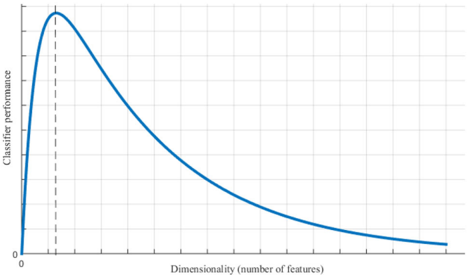
As basic research, it has also received increasing attention from people that the “curse of dimensionality” will lead to increase the cost of data storage and computing; it also influences the efficiency and accuracy of dealing with problems. Feature dimensionality reduction as a key link in the process of pattern recognition has become one hot and difficulty spot in the field of pattern recognition, machine learning and data mining. It is one of the most challenging research fields, which has been favored by most of the scholars’ attention. How to implement “low loss” in the process of feature dimension reduction, keep the nature of the original data, find out the best mapping and get the optimal low dimensional data are the keys aims of the research. In this paper, two-dimensionality reduction methods, feature selection and feature extraction, are introduced; the current mainstream dimensionality reduction algorithms are analyzed, including the method for small sample and method based on deep learning. For each algorithm, examples of their application are given and the advantages and disadvantages of these methods are evaluated.
Overview
The claims and statistics of this paper haven’t been checked yet.
Free: it reads the open-access text and checks the first 5 claims that cite a source we can check. Create a free account to check every claim.
Integrity signals
Registry
Cites
Statistics
Figures

Verification
Claims the paper makes
The claims and statistics of this paper haven’t been checked yet.
Free: it reads the open-access text and checks the first 5 claims that cite a source we can check. Create a free account to check every claim.
Self-check
Percentages, sums and reported differences re-computed from the paper’s own numbers.
The self-check needs the paper’s full text.
Citations
Cites
Deep Residual Learning for Image Recognition
He, K., Zhang, X., Ren, S., & Sun, J. (2016) · 2016 IEEE Conference on Computer Vision and Pattern Recognition (CVPR) · doi:10.1109/cvpr.2016.90 · Cited by 235,474 · cited 1×
“lution and pooling layers to extract high-level semantic information [136].”
BackgroundA Mathematical Theory of Communication
Shannon, C. E. (1948) · Bell System Technical Journal · doi:10.1002/j.1538-7305.1948.tb01338.x · Cited by 88,486
LeCun, Y., Bengio, Y., & Hinton, G. (2015) · Nature · doi:10.1038/nature14539 · Cited by 84,126
Regression shrinkage and selection via the lasso
Tibshirani, R. (1996) · Journal of the Royal Statistical Society Series B: Statistical Methodology · doi:10.1111/j.2517-6161.1996.tb02080.x · Cited by 51,482 · cited 1×
“The least absolute shrinkage and selection operator (Lasso) is also a compression estimation method with reducing feature quantity as the core [116].”
MethodHe, K., Gkioxari, G., Dollar, P., & Girshick, R. (2017) · 2017 IEEE International Conference on Computer Vision (ICCV) · doi:10.1109/iccv.2017.322 · Cited by 29,137
Learning Phrase Representations using RNN Encoder–Decoder for Statistical Machine Translation
Cho, K., van Merrienboer, B., Gulcehre, C., Bahdanau, D., Bougares, F., Schwenk, H., & Bengio, Y. (2014) · Proceedings of the 2014 Conference on Empirical Methods in Natural Language Processing (EMNLP) · doi:10.3115/v1/d14-1179 · Cited by 25,545 · cited 1×
“designed a new RNN Encoder-Decoder, containing two recurrent neural networks [147].”
MethodReducing the dimensionality of data with neural networks
Hinton, G. E., & Salakhutdinov, R. R. (2006) · Science · doi:10.1126/science.1127647 · Cited by 20,928
Deep learning in neural networks: an overview
Schmidhuber, J. (2015) · Neural Networks · doi:10.1016/j.neunet.2014.09.003 · Cited by 18,570 · cited 1×
“It will also promote the further development of deep learning [171–173].”
BackgroundA fast learning algorithm for deep belief nets
Hinton, G. E., Osindero, S., & Teh, Y.-W. (2006) · Neural Computation · doi:10.1162/neco.2006.18.7.1527 · Cited by 16,336 · cited 1×
“In 2006, Hinton pointed out that the difficulty of deep learning network training can be solved by “layer-by-layer initial-ization” [127, 128].”
BackgroundLearning Internal Representations by Error Propagation
Rumelhart, D. E., Hinton, G. E., & Williams, R. J. (1985) · doi:10.21236/ada164453 · Cited by 16,172
Research works printed but not linked: 35
- Cunningham JP, Ghahramani Z (2015) Linear dimensionality reduction: survey, insights, and generalizations. J Mach Learn Res 16:2859-2900
- Hu J (2008) Survey on feature dimension reduction for high- dimensional data. Appl Res Comput 25(9):2601-2606
- Welch WJ (1982) Branch-and-bound search for experimental designs based on D optimality and other criteria. Technometrics 24(1):41-48
- Wang JH et al (2016) Analysis of imbalanced weather data based on branch-and-bound approach. Appl Res Comput 33(6):1648-1652
- Mao Y et al (2007) Survey for study of feature selection algo- rithms. Moshi Shibie yu Rengong Zhineng/Pattern Recogn Artif Intell 20(2):211-218
- Zhang HB, Sun GY (1999) Tabu search algorithm for feature selection. Acta Autom Sin 25(4):457-466
- Zhang X (1998) Dynamic programming method for feature selec- tion. Acta Autom Sin 24:680-684
- Fujarewicz K, Wiench M (2003) Selecting differentially expressed genes for colon tumor classification. Int J Appl Math Comput Sci 13:327-335
- Qiang LI et al (2005) Online palmprint identification based on improved 2D PCA. Acta Electron Sin 33(10):1886-1889
- Huang QH, Wang S, Liu Z (2007) Improved algorithm of image feature extraction based on independent component analysis. Opto-Electron Eng 1:121-125
- Chen Y et al (2018) Application of singular value decomposition algorithm to dimension-reduced clustering analysis of daily load profiles. Automat Electr Power Syst 42(3):105-111
- Mika S et al (1999) Fisher discriminant analysis with kernels. In: Neural networks for signal processing IX: Proceedings of the 1999 IEEE signal processing society workshop (cat. no. 98th8468). IEEE
- ShiZhong L, XiaoJun J, SuLei Z (1999) The application study of entropy analysis method in feature extraction. J North China Inst Technol 20(3):278-281
- Ding S, Jin F, Wang X (2005) Information feature compression algorithm based on SCEC. Mini-micro Syst 26(7):1202-1205
- Zhang J, Zhang B, Jiang X-Z (2000) Analyses of feature extraction methods based on wavelet transform. Signal Process 16(2):156-162
- Yin FP (2012) Based on improved LLE and FSVM method in face recognition of application. Sci Technol Eng 12(34):9390-9395 100.
- He X, Niyogi P (2003) Locality preserving projections. Adv Neu- ral Inf Process Syst 16:153-160 104.
- Shen Z-H, Pan Y-H, Wang S (2008) A supervised locality pre- serving projection algorithm for dimensionality reduction. Pattern Recogn Artif Intell 21(2):233-239 109.
- Zhan YB (2011) Research on manifold learning theories, methods and applications. Ph.D. thesis of University of Defence Technol- ogy 111.
- Ding S et al (2004) New PCA feature compression algorithm based on information theory. Mini-micro Syst 25(4):694-697 112.
- Ding S, Jin F, Wang J (2003) Information feature analysis and selection of orthogonal transformation. Acta Geodaetica Et Car- togr Sin 32(1):73-77 113.
- Huang R (2007) A margin based feature extraction algorithm for the small sample size problem. Chin J Comput 30(7):1173-1178 122.
- Lu J et al (2020) Learning from very few samples: a survey. arXiv preprint arXiv:2009.02653 123. · arXiv
- Wang Y et al (2020) Generalizing from a few examples: A survey on few-shot learning. ACM Comput Sur (CSUR) 53(3):1-34 124.
- Yi S, Wang X, Tang X (2014) Deep learning face representation by joint identification-verification. Adv Neural Inf Process Syst 27 131.
- Wen W et al (2016) Learning structured sparsity in deep neural networks. Adv Neural Inf Process Syst 29:2074-2082 132.
- Yu K et al (2013) Deep learning: yesterday, today, and tomorrow. J Comput Res Dev 50(9):1799-1804 133.
- Ren S et al (2015) Faster r-cnn: Towards real-time object detec- tion with region proposal networks. Adv Neural Inf Process Syst 28:91-99 138.
- Cui L et al (2020) Context-aware block net for small object detec- tion. IEEE Trans Cybern (Early access), pp 1-14 141.
- Jozefowicz R, Zaremba W, Sutskever I (2015) An empirical exploration of recurrent network architectures. In: International conference on machine learning. PMLR, pp 2342-2350 145.
- Koutnik J et al (2014) A clockwork rnn. In: International confer- ence on machine learning. PMLR, pp 1863-1871 147.
- Ergen T, Mirza AH, Kozat SS (2019) Energy-efficient LSTM net- works for online learning. IEEE Trans Neural Netw Learn Syst 99:1-13 149.
- Vaswani A et al (2017) Attention is all you need. In: Advances in neural information processing systems, pp 5998-6008 150.
- Hinton GE, Salakhutdinov RR (2006) Reducing the dimension- ality of data with neural networks. Science 313(5786):504-507 156. · DOI · Paper page
- Lee DH (2013) Pseudo-label: The simple and efficient semi- supervised learning method for deep neural networks. In Work- shop on challenges in representation learning, ICML 3(2):896 165.
Cited by
Items 801–892 of 892
Navigating Large Chemical Spaces Using Graph Theory and Integer Programming
Ikegwu, U. M., Lehn, R. C. V., & Zavala, V. M. (2026) · Journal of Chemical Information and Modeling · doi:10.1021/acs.jcim.6c01810
Wahid, A., Habib, S., Alam, U., Hassan, W., & Akmal, M. (2026) · Discover Artificial Intelligence · doi:10.1007/s44163-026-01325-w
“According to the strategy of FS, the machine learning models in supervised learning are allocated into four categories: filter, wrapper, embedded and hybrid [4].”
Criteria for Visualizable Mathematical Structures
Papadopoulos, E., & Kougias, I. (2026) · European Scientific Journal ESJ · doi:10.19044/esj.2026.v22n18p33
CORAL: A Rank-Memory Search Framework for Multi-Objective Feature Selection
Li, W., Jia, H., & Han, C. (2026) · Information · doi:10.3390/info17060593
Szponar, M., Gmaj, B., Orłowski, J., & Kamiński, J. (2026) · Biomedical Signal Processing and Control · doi:10.1016/j.bspc.2026.110779
Multimodal Motion Tracking: A Review
Aidoo, E., Custance, O., Tenagyei, E. K., Dai, C., Chen, M., & Xu, Z. (2026) · IEEE Sensors Journal · doi:10.1109/jsen.2026.3701620
“Data Reduction: Employing feature selection or dimensionality reduction techniques like principal component analysis to manage high-dimensional data and residual noise [227].”
Yang, Q., & Tong, Y. (2026) · International Journal of Machine Learning and Cybernetics · doi:10.1007/s13042-026-03174-6
Fu, R., Wang, L., Wang, N., Yan, Q., Li, X. Y., Wang, T., Liu, J., Kong, M., Zhang, K., Li, X., et al. (2026) · International Journal of Imaging Systems and Technology · doi:10.1002/ima.70359
“…methodologies, including both classical statistical approaches (e.g., LASSO, mutual information [MI]) and modern optimization-driven or embedded techniques (e.g., Boruta, SHAP-guided selection), offer new opportunities to refine the identification of metastasis-associated biomarkers [14, 15].”
Agin, F., Fauteux‐Lefebvre, C., & Thibault, J. (2026) · The Canadian Journal of Chemical Engineering · doi:10.1002/cjce.70483
Fährrolfes, R., Sieg, J., Flachsenberg, F., & Rarey, M. (2026) · Journal of Chemical Information and Modeling · doi:10.1021/acs.jcim.6c00524
“29 We use embedding methods to reduce the high-dimensional descriptor space of the molecular HTS data and their cluster assignments to two dimensions.”
Sierra, R. M., Doblaré, M., Cui, Y., & Ayensa-Jiménez, J. (2026) · Journal of Computational Science · doi:10.1016/j.jocs.2026.102944
“Inspired by recent advancements [36, 37], the central idea is that an embedding representation of the predictive component is able to encode in a latent space the information about the experimental or computational setup.”
Barbosa, L. A. F., Guilherme, I. R., Pedronette, D. C. G., & Tisseyre, B. (2026) · Lecture notes in computer science · doi:10.1007/978-3-032-23161-1_2
Liu, J., Ahmad, F. A., Samsudin, K. B., Hashim, F., & Kadir, M. Z. A. A. (2026) · Scientific Reports · doi:10.1038/s41598-026-60033-8
“Feature processing plays a critical role in handling high-dimensional data and improving model performance in machine learning tasks 46 .”
Wu, T.-E., & Wu, J.-D. (2026) · Journal of Vibration Engineering & Technologies · doi:10.1007/s42417-026-02613-6
Convolutional Autoencoder Compression for LoRa Visual Transmission on Embedded Systems
Mendes, J., Sena, I. P., Lima, J., & Pereira, A. I. (2026) · Lecture notes in computer science · doi:10.1007/978-3-032-30518-3_14
Perbandingan Metode Hyperparameter Tuning Pada Model XGBoost Untuk Prediksi Multioutput
Handyanto, L., Arifin, W. A., & Syafri, H. (2026) · Jurnal Rekayasa Teknologi Informasi (JURTI) · doi:10.30872/jurti.v10i1.22958
“Ekstraksi fitur merupakan tahap penting dalam pengolahan data karena berfungsi untuk memisahkan informasi relevan dari data berlebihan, sekaligus menyajikan representasi baru yang lebih ringkas untuk kebutuhan prediksi [12].”
Lung Sound Classification with Multi-Feature Integration using Lightweight CNN Model
Rajasekhar, K., Reddy, A. V. N., Aasrita, C., Harshith, V. S., & Vijayalakshmi, K. (2026) · International Conference on Connected Intelligence for Industrial Applications (CI2A) · doi:10.1109/ci2a69097.2026.11576910
“Normal feature extraction procedures for time-frequency domain characteristics [17] will result in the development of the features for the processed audio samples.”
Model–Based Analysis and Optimization of Industrial MDI Manufacturing
Horváth, G. (2026) · REAL-PhD (Hungarian Academy of Sciences) · doi:10.18136/pe.2026.984
Xia, Q., & Qin, X. (2026) · Computational Statistics · doi:10.1007/s00180-026-01775-x
“In general, the methods available for addressing the challenge posed by the high-dimensionality can be categorized into two primary approaches: feature selection and feature extraction (Jia et al. 2022 ).”
Zou, Y., Hao, J., Ren, X., Wang, X., ChongBin, W. E. I., Zhou, F., & Jia, Z. (2026) · Chemical Engineering Journal · doi:10.1016/j.cej.2026.179115 · Cited by 2
Naganjaneyulu, S., Lakshmi, G. C. N. S., Reddy, G. D., & Bhargav, N. (2026) · International Conference on Computing Theory and Wireless Communications (ICCTWC) · doi:10.1109/icctwc68241.2026.11583592
“It can thus be assumed that with each feature extraction in a model, all feature representations that arise out of said extraction will ultimately turn out to have a very large size or dimensionality because these features are intended to be feature representations [20].”
Engineering Design Education Through a Data-Driven Course on Uncertainty
Ekwaro-Osire, S., Lopez-Salazar, C. A., Kalay, O. C., & Ajayi, D. O. (2026) · Journal of Integrated Design and Process Science · doi:10.1177/10920617251409397
“2) It assumes that the directions of maximum variance correspond to the most informative features, which may not always hold in the presence of non-linear relationships or noise (Jia et al., 2022).”
Zhao, J., Ding, Y., Mei, C., & Jiang, H. (2026) · Journal of Food Measurement & Characterization · doi:10.1007/s11694-026-04699-8
“Feature reduction techniques provide an effective approach to alleviating redundancy in high-dimensional sensing data by retaining informative components and discarding irrelevant or correlated features [10].”
Huang, Y., Wu, W., Li, B., Wan, J., Zheng, J., Shangguan, R., Wang, B. B., & Wang, C. (2026) · Journal of Applied Physics · doi:10.1063/5.0333993
Ta, V. P., Meca, A., Cruz, B., Swafford, I. M., & Kountakis, V. (2026) · Identity · doi:10.1080/15283488.2026.2702023
Shaikat, M. T. A., Chowdhury, S. H., Mamun, M., Shaha, P., Hossain, M. M., & Iqbal, S. (2026) · Telematics and Informatics Reports · doi:10.1016/j.teler.2026.100350 · Cited by 2
Wang, F., Kang, C., Shang, Y., & He, Y. (2026) · International Conference on Computer and Communication Systems (ICCCS) · doi:10.1109/icccs69761.2026.11613320
Sinaga, B., Yuhandri, & Nurcahyo, G. W. (2026) · International Conference on Smart Computing, IoT and Machine Learning (SIML) · doi:10.1109/siml69834.2026.11621124
“To overcome the above problems, feature reduction techniques are essential in preprocessing before classification [15], [16].”
Almakadi, A. S., Alnemari, D. S., Alsahafi, N. T., Almutairi, S., Sadik, S., Alotaibi, N. M., & Alshammari, A. N. (2026) · Neurological Research · doi:10.1080/01616412.2026.2712459
Wood, R. M., Thomson, P. M., & Creavin, S. (2026) · Health Care Management Science · doi:10.1007/s10729-026-09785-3
ENEM under a Socioeconomic Perspective: Analysis and Evaluation Through Dimensionality Reduction
Mendieta, C. C., & Vignatti, A. L. (2026) · Anais do Brazilian Workshop on Social Network Analysis and Mining (BraSNAM) · doi:10.5753/brasnam.2026.21861
“From a methodological perspective, high-dimensional datasets impose severe challenges on the use of machine learning algorithms [Jia et al. 2022, Binois and Wycoff 2022].”
An Entropy‐Guided Search Algorithm for Key Factor Combination Analysis in RF/Microwave CAD
Su, J., Qin, H., Ding, X., Yang, Y., & Wang, H. (2026) · International Journal of RF and Microwave Computer-Aided Engineering · doi:10.1155/mmce/5656170
Fu, J., & Zhao, D. (2026) · IEEE International Conference on Data Engineering (ICDE) · doi:10.1109/icde65706.2026.00265
“Factorization and clustering approaches include Nonnegative Matrix Factorization (NMF) and Feature Agglomeration [26].”
Martino, L., Millán-Castillo, R. S., & Morgado, E. (2026) · PLoS ONE · doi:10.1371/journal.pone.0354966
“This scenario appears frequently in different real-world applications: for instance, The order selection in polynomial regression or autoregressive schemes [10], [11], feature selection [12], clustering [13], change point detection [2, 14], and dimension reduction are just a few [15, 16].”
resmini, V. P. (2026) · Lume (Universidade Federal do Rio Grande do Sul)
Bernath‐Plaisted, J. S., Guido, N. A., Ruskin, K. J., Olsen, B. J., Panjabi, A. O., & Correll, M. D. (2026) · Ecology and Evolution · doi:10.1002/ece3.74218
Principal Component Analysis for Nanophotonic Structures: Theory and Applications
Badr, M. M., & Bakr, M. H. (2026) · IEEE Access · doi:10.1109/access.2026.3726440
“The transformation can be reversed in the reduced sub-space, resulting in a low-error approximation of the original data [29], [31], [32].”
Multi-scale fuzzy information discovery: a novel approach to unsupervised attribute reduction
Zhang, Y., Li, Z., Yang, T., Zhang, P., Wan, J., & Wang, Z. (2026) · International Journal of Machine Learning and Cybernetics · doi:10.1007/s13042-026-03273-4
A Genetic Algorithmic Approach to Feature Reduction Over Medical Datasets
Sarkar, B. K., Kumar, A., & Sana, S. S. (2026) · Proceedings of the National Academy of Sciences India Section A Physical Sciences · doi:10.1007/s40010-026-01172-5
Sifath, S., Rahman, M. A., Rahman, M. A., Ahmed, M. M., & Al-Hazzaa, S. A. F. (2026) · Lecture notes in electrical engineering · doi:10.1007/978-981-92-3681-7_3
Li, L., Dai, M., Suo, X., Yuan, J., Han, X., Hu, L., & Bouferguène, A. (2026) · Engineering Applications of Artificial Intelligence · doi:10.1016/j.engappai.2026.116069
Yu, H., Lin, Z., & Zhi, H. (2026) · Neuroscience · doi:10.1016/j.neuroscience.2026.08.020
Bai, K., Shen, J., Li, W., Feng, S., Li, C., Li, J., Cheng, S., & Wang, C. (2026) · Fuel · doi:10.1016/j.fuel.2026.141052
Machine learning-driven accelerated design of Ni-Zn ferrites for optimized magnetic properties
Zhao, Y., Yan, W., Wang, D., Liu, X., Chao, Y., Ye, J., Zhong, Y., & Hu, C. (2026) · Journal of Alloys and Compounds · doi:10.1016/j.jallcom.2026.190794
Deteksi Serangan DDoS Menggunakan Explainable Ensemble Learning dan Analisis SHAP
Sutrisno, S., & Irawati, O. (2026) · Riau Jurnal Teknik Informatika. · doi:10.30606/rjti.v5i2.4702
Gong, Y., Wang, Q., Du, H., Xu, W., Zhang, P., & Gu, L. (2026) · Advanced Engineering Materials · doi:10.1002/adem.71249
Amartiwi, U., & Kholodov, Y. A. (2026) · Communications in Statistics Case Studies Data Analysis and Applications · doi:10.1080/23737484.2026.2727983
Stator Fault Classifier in a Doubly-Fed Induction Genera-tor DFIG
Molina, A., Romero, A. A., & Suvire, G. O. (2026) · Simposio Internacional sobre la Calidad de la Energía Eléctrica - SICEL · doi:10.15446/sicel.v12.120323
92‐2: Accurate Prediction of OLED Dark‐state Optical Simulation via Spectral Splitting
Jiang, S., Cui, X., Fu, J., Shi, B., Shi, X., Tang, X., Lv, B., & Jiang, X. (2026) · SID Symposium Digest of Technical Papers · doi:10.1002/sdtp.70001_346
Investigating Drivers’ Heterogeneity and Its Impacts on Interactive Lane-Changing Maneuvers
Ji, A., Yan, Q., Sun, Z., & Liu, Y. (2026) · Transportation Research Record Journal of the Transportation Research Board · doi:10.1177/03611981261480090
Geist, E. L., & Parsons, T. (2026) · Journal of Geophysical Research Machine Learning and Computation · doi:10.1029/2026jh001325
Mendoza, A. M., Visbal-Cadavid, D., & Delahoz-Domínguez, E. (2026) · Open Education Studies · doi:10.1515/edu-2025-0172
“Multivariate dimensionality-reduction and clustering approaches, by contrast, constitute better methodological strategies for uncovering latent patterns and isolating institutional performance pro fi les (Hasan and Abdulazeez 2021; Jia et al. 2022; Ray et al. 2021).”
Dinh, T. H., Le‐Hoai, L., & Huynh, T. N. (2026) · Lecture notes in civil engineering · doi:10.1007/978-981-95-6770-6_181
Evaluating the robustness and long-term generalization of traffic prediction models
Khatiriolyaee, M. (2026) · e-scholar@UOIT (University of Ontario Institute of Technology)
Ehiosun, K. I., Chapleur, O., & Mazéas, L. (2026) · Environmental Microbiology Reports · doi:10.1111/1758-2229.70417 · Cited by 1
Combinatorial AI and nanotechnological approaches for advancing medical sensors
Kapur, U., Adhikari, D., Tripathi, H., & Gabrani, R. (2026) · Elsevier eBooks · doi:10.1016/b978-0-443-45321-2.00003-5
Khairi, A. (2026) · Digital Library UIN Sunan Kalijaga (Sunan Kalijaga State Islamic University)
Agin, F., Thibault, J., & Fauteux‐Lefebvre, C. (2026) · AIChE Journal · doi:10.1002/aic.70671
宋柱漢, Yang, C., & Tan, H. (2026) · Water · doi:10.3390/w18192402
Seismic oceanography reveals water column structure offshore East Antarctica
Ferrante, G. M., Accaino, F., Kovačević, V., Ursella, L., Bensi, M., & Santis, L. D. (2026) · Marine Geophysical Research · doi:10.1007/s11001-026-09635-5
“In addition, seismic attributes effectively reduce the dimensionality of the data, a process called ‘feature extraction’, which can improve the performance of a pattern recognition system (Jia et al. 2022).”
Jönsson, A. R., Fu, J., Freitas, G. P., Crawford, I., Dagsson‐Waldhauserová, P., Krejčí, R., Tobo, Y., Yttri, K. E., & Zieger, P. (2026) · Atmospheric chemistry and physics · doi:10.5194/acp-26-13617-2026
Gozin, N. S., Sedaghat, R., & Siddavaatam, P. (2026) · arXiv (Cornell University) · doi:10.48550/arxiv.2609.32008
Kwanmuang, N., Khosakitchalert, C., Amornvet, K., & Kupwiwat, C.-T. (2026) · Frontiers of Architectural Research · doi:10.1016/j.foar.2026.08.007
New data reduction methodology for classification applied to the banking sector
Ruiz-Moreno, S., Núñez-Reyes, A., García-Cantalapiedra, A., & Pavón, F. (2026) · Neural Computing and Applications · doi:10.1007/s00521-026-12471-8
Naveen, G. (2024) · Journal of Propulsion Technology
Assessment of the future productivity level of dairy cows: between dream and reality
Bovo, M., Ozella, L., Fiorilla, E., & Forte, C. (2024) · Institutional Research Information System University of Turin (University of Turin)
Kawina, I., Amarendra, K., & Marapelli, B. (2024) · International Journal of Intelligent Systems and Applications in Engineering
Bellarmino, N. (2024) · PORTO@Iris
Intelligent Systems in Engineering Design: Enhancing Efficiency and Accuracy
Balamuralitharan, S. (2024) · International Journal of Intelligent Systems and Applications in Engineering
Sarosa, I. D. A., & Diswandi, D. (2025) · Media for Empowerment, Mobilization, and Innovation in Research & Community · doi:10.59535/j61apt28
An LLM-in-the-loop RL Framework for Bioinformatics Feature Selection
Wang, X., Agrawal, D., & Fu, Y. (2026) · doi:10.1109/icaisf70757.2026.11767365
Ehret, U., Chen, J., Scholz, F., Allen, S., & Lerch, S. (2026) · doi:10.5194/egusphere-2026-4514
The Effects of Smoothing-Induced Weak Annotation in Mineral Prospectivity Mapping
Zhang, S. E., & Parsa, M. (2026) · Natural Resources Research · doi:10.1007/s11053-026-10760-6
Impact of Dimension Reduction Techniques on the Accuracy of Speech Emotion Recognition
Reem, M., Rayhan, S., & Wafa, I. (2024) · African Journal of Advanced Pure and Applied Sciences · doi:10.65418/ajapas.vi.814
Jiang, L. I. U., MUNNAF, M. A., & Mouazen, A. M. (2026) · Pedosphere · doi:10.1016/j.pedsph.2026.10.001
Hernández-García, Á., Chaparro-Peláez, J., Cuenca-Enrique, C., & Salcedo-Valverde, C. (2026) · Computers in Human Behavior Reports · doi:10.1016/j.chbr.2026.101362
Reduction of 3D-FE models to 1D beam models for AI-based simulations
Treschau, M., Witzgall, C., & Wartzack, S. (2026) · Symposium Design for X (DFX) · doi:10.35199/dfx2026.2
Plazas, J. A. P., Parra-Perdomo, J. S., & Plazas-Nossa, L. (2026) · Research Square · doi:10.21203/rs.3.rs-10374442/v1
Zhou, Y., Yi, Z., Wu, J., Wang, P., & Lin, Y. (2026) · Soft Computing · doi:10.1007/s00500-026-11451-3
Kyrana, Z., Papafilippou, N., Pratsinakis, E. D., Michaelidou, A.-M., Dordas, C. A., Markos, A., & Menexes, G. C. (2026) · Journal of Data Science and Intelligent Systems · doi:10.47852/bonviewjdsis62028503
“Dimensionality reduction represents a valuable way of analyzing data cubes, providing a compressed representation of the original dataset that is smaller in “volume” but retains critical and informative content [6].”
Lightweight Facial Feature-Based Drowsiness Detection Using Haar Cascade, EAR, MAR, and KNN
Mulyani, A., Fernando, E., Kurniadi, D., & Fauziyah, A. J. (2026) · Jurnal RESTI (Rekayasa Sistem dan Teknologi Informasi) · doi:10.29207/resti.v10i5.7190
Neela, N., Veerakumar, T., Subudhi, B. N., Bovolo, F., & Bruzzone, L. (2026) · PFG – Journal of Photogrammetry Remote Sensing and Geoinformation Science · doi:10.1007/s41064-026-00425-7
Silva, D. J. D., Amorim, L., & Pimentel, B. A. (2026) · IEEE Access · doi:10.1109/access.2026.3744896
“…as well as matrix-decomposition approaches such as Truncated SVD, which computes a low-rank approximation of the data matrix without centering it [3] (truncation strategies of this kind have also been extended to higher-order tensor decompositions [46]); (ii) kernel-based nonlinear projection ,…”
Effects of Distance Metrics and Dimensionality on AlynLOF and ARLOFF
Basheer, M. Y. I., Ali, A. M., Nordin, S., Hamid, N. H. A., Osman, R., & Yusoff, N. B. (2026) · IEEE Industrial Electronics and Applications Conference (IEACon) · doi:10.1109/ieacon68870.2026.11734419
“However, selecting the best features for retaining the actual information is tedious and it is one of the main objective of building dimensionality reduction algorithm nowadays [21].”
Lu, C., Pang, S., Li, Y., Su, J., Tan, K., Song, Z., Tu, S. C., Tang, Y., Zheng, J., & Wang, X. (2026) · Spectrochimica Acta Part A Molecular and Biomolecular Spectroscopy · doi:10.1016/j.saa.2026.128916
Pseudo-labeling-based change detection in SAR image time series using machine learning
de Carvalho, B. C., Guimarães, Y. C., Chaves, F. M., & Negri, R. G. (2026) · Applied Geomatics · doi:10.1007/s12518-026-00816-w
“…the influence of irrel - evant or redundant information, helping to minimize over-fitting and improve model training efficiency by decreasing the number of dimensions, mapping the meaningful information from the original high-dimensional data into a more compact representation (Jia et al. 2022).”
Gill, N., Ajvad Haneef, K., & Kumar, S. D. M. (2026) · IEEE International Conference on Recent Advances in Electronics, Communication, Computing, Automation and Power (RECCAP) · doi:10.1109/reccap69368.2026.11723770
“However, the growing dimensionality of such feature spaces introduces fundamental challenges related to computational efficiency, feature redundancy, and—most critically—model generalization under temporally evolving malware distributions [2]–[4].”
Mitra, A., Fleisher, D. H., Ray, C., & Reddy, V. R. (2026) · IEEE Access · doi:10.1109/access.2026.3747131
“Dimensionality reduction improves tractability [11] and is particularly important for quantum learning, where high-dimensional embeddings cannot generally be encoded with a practical number of qubits.”
Cerasola, V. A., Piani, M., Bona, S. D., Verrelst, J., Persichetti, A., Orsini, F., Pennisi, G., Manfrini, L., & Gianquinto, G. P. (2026) · Horticulturae · doi:10.3390/horticulturae12111339
Li, L., Wang, Y., Zhang, Z., Ding, Z., Guo, X., Chen, Y., 罗子江, Liu, X., & Wang, Y. (2026) · Langmuir · doi:10.1021/acs.langmuir.6c03283
Customer Segmentation Using NLP & Sentiment Analysis
Lodha, S., Deshmukh, S., Suryawanshi, K., Chordiya, P., Dhawale, V., & Bora, S. (2026) · doi:10.1109/icoicet68875.2026.11761173
Metadata
- Authors
- Jia, W., Sun, M., Lian, J., & Hou, S.
- Affiliations
- Shandong Normal University (CN)
- Shandong Management University (CN)
- Corresponding author
- Jia, Weikuan
- Hou, Sujuan
- Venue
- Complex & Intelligent Systems
- Published
- 2022-01-21
- Volume
- 8
- Issue
- 3
- Pages
- 2663-2693
- ISSN
- 2198-6053 (ISSN-L)
- 2199-4536
- OpenAlex
- W4206095984
- Cited by
- 797
- References
- 134
- Citations by year
- 2026: 155 · 2025: 256 · 2024: 242 · 2023: 122 · 2022: 22
- FWCI
- 52.59
- Type
- journal article
- Language
- en
- Open access
- gold
- doi.org
- Licence
- cc-by
- creativecommons.org/licenses/by/4.0 (tdm)
- creativecommons.org/licenses/by/4.0 (vor)
- Locations
- Complex & Intelligent Systems (publishedVersion, cc-by)
- Funders
- National Natural Science Foundation of China (62072289)
- Natural Science Foundation of Shandong Province (ZR2020MF076, ZR2020MF133)
- Focus on Research and Development Plan in Shandong Province (2019GNC106115)
- Topics
- Physical Sciences › Computer Science › Computer Vision and Pattern Recognition › Face and Expression Recognition
- Physical Sciences › Mathematics › Statistics and Probability › Statistical Methods and Applications
- Physical Sciences › Computer Science › Artificial Intelligence › Stochastic Gradient Optimization Techniques
- Keywords
- dimensionality reduction, curse of dimensionality, feature selection, feature extraction, pattern recognition
About these checks
Registry, retraction, Cites and statistics results are computed, not judged, with one exception: a printed reference that no index lists is read once by a model before it counts as a citation error. Claims are extracted by a model and kept only when their quote appears verbatim in the text; each cited source is then checked, with a model’s help, for whether it says what the claim relies on. Those verdicts can be wrong — read the claim’s quote and the cited source before relying on one.
Statistics and arithmetic are recomputed, not judged.
Confidence bands are shown only for fields calibrated on our annotated test set. None is calibrated yet, so no band is shown.
What counts as a claim ›How we measure confidence ›How we check this ›
Are you an author, or do you see a problem with this page? Request a review
Data sources
Bibliographic data: Semantic Scholar, OpenAlex, Crossref.
Contains information from the Semantic Scholar Academic Graph Datasets, made available under the ODC Attribution License (ODC-BY 1.0).
Semantic Scholar’s data is described in: Kinney, R., et al. (2023). The Semantic Scholar Open Data Platform. arXiv:2301.10140.
