

Feature dimensionality reduction: a review
Open accessThe DOI matches its Crossref record; 142 of the 142 references it cites were found in a registry or an index.
Abstract
As basic research, it has also received increasing attention from people that the “curse of dimensionality” will lead to increase the cost of data storage and computing; it also influences the efficiency and accuracy of dealing with problems. Feature dimensionality reduction as a key link in the process of pattern recognition has become one hot and difficulty spot in the field of pattern recognition, machine learning and data mining. It is one of the most challenging research fields, which has been favored by most of the scholars’ attention. How to implement “low loss” in the process of feature dimension reduction, keep the nature of the original data, find out the best mapping and get the optimal low dimensional data are the keys aims of the research. In this paper, two-dimensionality reduction methods, feature selection and feature extraction, are introduced; the current mainstream dimensionality reduction algorithms are analyzed, including the method for small sample and method based on deep learning. For each algorithm, examples of their application are given and the advantages and disadvantages of these methods are evaluated.
Overview
The claims and statistics of this paper haven’t been checked yet.
Free: it reads the open-access text and checks the first 5 claims that cite a source we can check. Create a free account to check every claim.
Integrity signals
Registry
Cites
Statistics
Figures

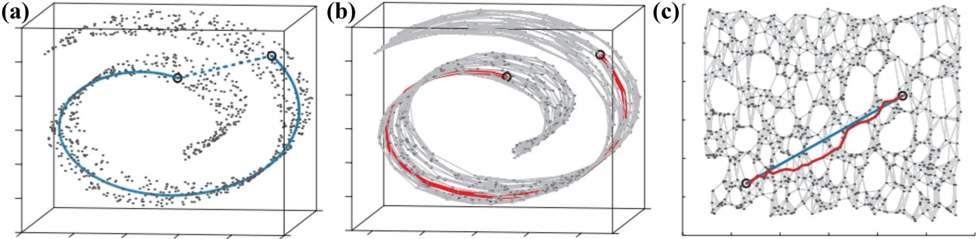
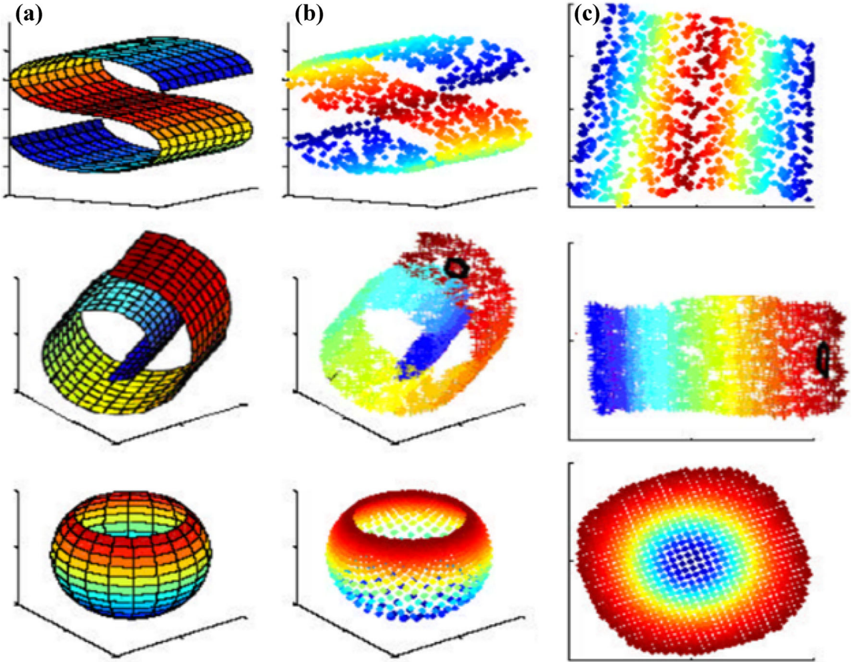
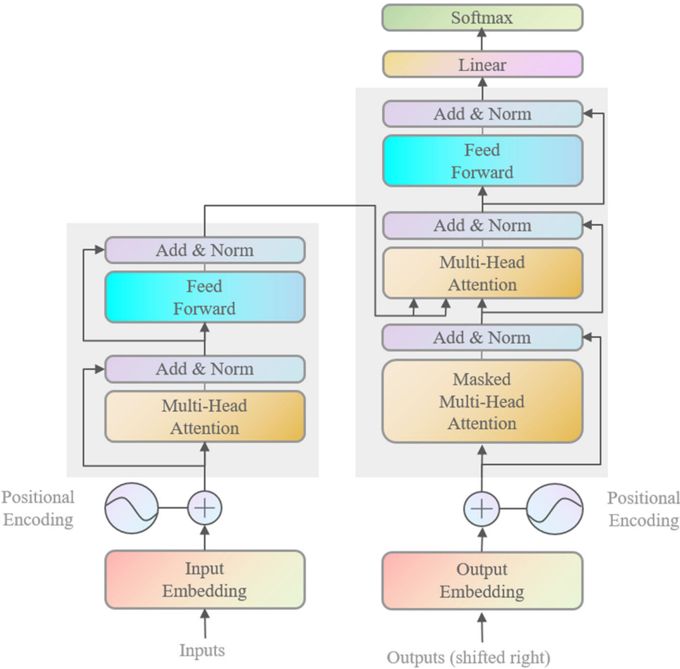
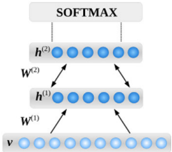
Verification
Claims the paper makes
The claims and statistics of this paper haven’t been checked yet.
Free: it reads the open-access text and checks the first 5 claims that cite a source we can check. Create a free account to check every claim.
Self-check
Percentages, sums and reported differences re-computed from the paper’s own numbers.
The self-check needs the paper’s full text.
Citations
Cites
Deep Residual Learning for Image Recognition
He, K., Zhang, X., Ren, S., & Sun, J. (2016) · 2016 IEEE Conference on Computer Vision and Pattern Recognition (CVPR) · doi:10.1109/cvpr.2016.90 · Cited by 235,474 · cited 1×
“lution and pooling layers to extract high-level semantic information [136].”
BackgroundA Mathematical Theory of Communication
Shannon, C. E. (1948) · Bell System Technical Journal · doi:10.1002/j.1538-7305.1948.tb01338.x · Cited by 88,486
LeCun, Y., Bengio, Y., & Hinton, G. (2015) · Nature · doi:10.1038/nature14539 · Cited by 84,126
Regression shrinkage and selection via the lasso
Tibshirani, R. (1996) · Journal of the Royal Statistical Society Series B: Statistical Methodology · doi:10.1111/j.2517-6161.1996.tb02080.x · Cited by 51,482 · cited 1×
“The least absolute shrinkage and selection operator (Lasso) is also a compression estimation method with reducing feature quantity as the core [116].”
MethodHe, K., Gkioxari, G., Dollar, P., & Girshick, R. (2017) · 2017 IEEE International Conference on Computer Vision (ICCV) · doi:10.1109/iccv.2017.322 · Cited by 29,137
Learning Phrase Representations using RNN Encoder–Decoder for Statistical Machine Translation
Cho, K., van Merrienboer, B., Gulcehre, C., Bahdanau, D., Bougares, F., Schwenk, H., & Bengio, Y. (2014) · Proceedings of the 2014 Conference on Empirical Methods in Natural Language Processing (EMNLP) · doi:10.3115/v1/d14-1179 · Cited by 25,545 · cited 1×
“designed a new RNN Encoder-Decoder, containing two recurrent neural networks [147].”
MethodReducing the dimensionality of data with neural networks
Hinton, G. E., & Salakhutdinov, R. R. (2006) · Science · doi:10.1126/science.1127647 · Cited by 20,928
Deep learning in neural networks: an overview
Schmidhuber, J. (2015) · Neural Networks · doi:10.1016/j.neunet.2014.09.003 · Cited by 18,570 · cited 1×
“It will also promote the further development of deep learning [171–173].”
BackgroundA fast learning algorithm for deep belief nets
Hinton, G. E., Osindero, S., & Teh, Y.-W. (2006) · Neural Computation · doi:10.1162/neco.2006.18.7.1527 · Cited by 16,336 · cited 1×
“In 2006, Hinton pointed out that the difficulty of deep learning network training can be solved by “layer-by-layer initial-ization” [127, 128].”
BackgroundLearning Internal Representations by Error Propagation
Rumelhart, D. E., Hinton, G. E., & Williams, R. J. (1985) · doi:10.21236/ada164453 · Cited by 16,172
Research works printed but not linked: 35
- Cunningham JP, Ghahramani Z (2015) Linear dimensionality reduction: survey, insights, and generalizations. J Mach Learn Res 16:2859-2900
- Hu J (2008) Survey on feature dimension reduction for high- dimensional data. Appl Res Comput 25(9):2601-2606
- Welch WJ (1982) Branch-and-bound search for experimental designs based on D optimality and other criteria. Technometrics 24(1):41-48
- Wang JH et al (2016) Analysis of imbalanced weather data based on branch-and-bound approach. Appl Res Comput 33(6):1648-1652
- Mao Y et al (2007) Survey for study of feature selection algo- rithms. Moshi Shibie yu Rengong Zhineng/Pattern Recogn Artif Intell 20(2):211-218
- Zhang HB, Sun GY (1999) Tabu search algorithm for feature selection. Acta Autom Sin 25(4):457-466
- Zhang X (1998) Dynamic programming method for feature selec- tion. Acta Autom Sin 24:680-684
- Fujarewicz K, Wiench M (2003) Selecting differentially expressed genes for colon tumor classification. Int J Appl Math Comput Sci 13:327-335
- Qiang LI et al (2005) Online palmprint identification based on improved 2D PCA. Acta Electron Sin 33(10):1886-1889
- Huang QH, Wang S, Liu Z (2007) Improved algorithm of image feature extraction based on independent component analysis. Opto-Electron Eng 1:121-125
- Chen Y et al (2018) Application of singular value decomposition algorithm to dimension-reduced clustering analysis of daily load profiles. Automat Electr Power Syst 42(3):105-111
- Mika S et al (1999) Fisher discriminant analysis with kernels. In: Neural networks for signal processing IX: Proceedings of the 1999 IEEE signal processing society workshop (cat. no. 98th8468). IEEE
- ShiZhong L, XiaoJun J, SuLei Z (1999) The application study of entropy analysis method in feature extraction. J North China Inst Technol 20(3):278-281
- Ding S, Jin F, Wang X (2005) Information feature compression algorithm based on SCEC. Mini-micro Syst 26(7):1202-1205
- Zhang J, Zhang B, Jiang X-Z (2000) Analyses of feature extraction methods based on wavelet transform. Signal Process 16(2):156-162
- Yin FP (2012) Based on improved LLE and FSVM method in face recognition of application. Sci Technol Eng 12(34):9390-9395 100.
- He X, Niyogi P (2003) Locality preserving projections. Adv Neu- ral Inf Process Syst 16:153-160 104.
- Shen Z-H, Pan Y-H, Wang S (2008) A supervised locality pre- serving projection algorithm for dimensionality reduction. Pattern Recogn Artif Intell 21(2):233-239 109.
- Zhan YB (2011) Research on manifold learning theories, methods and applications. Ph.D. thesis of University of Defence Technol- ogy 111.
- Ding S et al (2004) New PCA feature compression algorithm based on information theory. Mini-micro Syst 25(4):694-697 112.
- Ding S, Jin F, Wang J (2003) Information feature analysis and selection of orthogonal transformation. Acta Geodaetica Et Car- togr Sin 32(1):73-77 113.
- Huang R (2007) A margin based feature extraction algorithm for the small sample size problem. Chin J Comput 30(7):1173-1178 122.
- Lu J et al (2020) Learning from very few samples: a survey. arXiv preprint arXiv:2009.02653 123. · arXiv
- Wang Y et al (2020) Generalizing from a few examples: A survey on few-shot learning. ACM Comput Sur (CSUR) 53(3):1-34 124.
- Yi S, Wang X, Tang X (2014) Deep learning face representation by joint identification-verification. Adv Neural Inf Process Syst 27 131.
- Wen W et al (2016) Learning structured sparsity in deep neural networks. Adv Neural Inf Process Syst 29:2074-2082 132.
- Yu K et al (2013) Deep learning: yesterday, today, and tomorrow. J Comput Res Dev 50(9):1799-1804 133.
- Ren S et al (2015) Faster r-cnn: Towards real-time object detec- tion with region proposal networks. Adv Neural Inf Process Syst 28:91-99 138.
- Cui L et al (2020) Context-aware block net for small object detec- tion. IEEE Trans Cybern (Early access), pp 1-14 141.
- Jozefowicz R, Zaremba W, Sutskever I (2015) An empirical exploration of recurrent network architectures. In: International conference on machine learning. PMLR, pp 2342-2350 145.
- Koutnik J et al (2014) A clockwork rnn. In: International confer- ence on machine learning. PMLR, pp 1863-1871 147.
- Ergen T, Mirza AH, Kozat SS (2019) Energy-efficient LSTM net- works for online learning. IEEE Trans Neural Netw Learn Syst 99:1-13 149.
- Vaswani A et al (2017) Attention is all you need. In: Advances in neural information processing systems, pp 5998-6008 150.
- Hinton GE, Salakhutdinov RR (2006) Reducing the dimension- ality of data with neural networks. Science 313(5786):504-507 156. · DOI · Paper page
- Lee DH (2013) Pseudo-label: The simple and efficient semi- supervised learning method for deep neural networks. In Work- shop on challenges in representation learning, ICML 3(2):896 165.
Cited by
Items 501–600 of 892
A machine learning framework to generate star cluster realisations
Prodan, G. P., Pasquato, M., Iorio, G., Ballone, A., Torniamenti, S., Carlo, U. N. D., & Mapelli, M. (2024) · Astronomy and Astrophysics · doi:10.1051/0004-6361/202450995 · Cited by 1
Balanced Clustering with Discretely Weighted Pseudo-label
Liang, Z., Zhao, S., Huang, Z., & Wu, J. (2024) · Lecture notes in computer science · doi:10.1007/978-981-97-8487-5_8 · Cited by 1
Fesioch, V., & Kisilenko, D. (2024) · Communication informatization and cybersecurity systems and technologies · doi:10.58254/viti.6.2024.19.232 · Cited by 1
Peng, B., Zhang, H., Li, X., Zheng, Y., & Li, G. (2024) · Annual International Conference of the IEEE Engineering in Medicine and Biology Society (EMBC) · doi:10.1109/embc53108.2024.10782222 · Cited by 1
Entropy-driven ECG Arrhythmia Classification
Holanda, R., Monteiro, R. D. P., & Bastos-Filho, C. J. A. (2024) · IEEE Latin American Conference on Computational Intelligence (LA-CCI) · doi:10.1109/la-cci62337.2024.10814844 · Cited by 1
Evaluate Lending Club Loan Status by Machine Learning
Liu, Z. (2025) · Advances in Economics Management and Political Sciences · doi:10.54254/2754-1169/2024.19542 · Cited by 1
Ananda, R., Rachmawaty, D., Pratikno, B., Hamid, O. A., & Amin, M. B. M. (2025) · Communications in computer and information science · doi:10.1007/978-3-031-81065-7_2 · Cited by 1
Abri, K. A., & Sidhu, M. S. (2025) · Studies in computational intelligence · doi:10.1007/978-3-031-75091-5_2 · Cited by 1
Fed-FeRe: An Enhancing Approach for Efficient Anomaly Detection in IoT Security
Nguyen, T. D. (2024) · Globecom · doi:10.1109/globecom52923.2024.10901402 · Cited by 1
“This process is generally categorised into three methods: filter, wrapper, and embedded techniques [3], [10], [11]: • Filter Methods : These methods evaluate the relevance of each feature based on statistical measures independently from any machine learning algorithm.”
Grouped Feature Selection for SMONs Placement in MCU Performance Screening
Bellarmino, N., Cantoro, R., Huch, M., Kilian, T., & Squillero, G. (2025) · IEEE Latin American Test Symposium (LATS) · doi:10.1109/lats65346.2025.10963942 · Cited by 1
“Dimensionality reduction is a well-covered topic both in the ML [17], [18] and CAD communities, with several works in the realm of alternate tests for analog circuits [19], [20].”
Optimizing Latent Space Representation for Tourism Insights: A Metaheuristic Approach
Win, T. A., & Sunat, K. (2024) · Journal of Robotics and Control (JRC) · doi:10.18196/jrc.v5i2.21419 · Cited by 1
Priyanto, E., Berlilana, B., & Tahyudin, I. (2025) · Jurnal Teknik Informatika (Jutif) · doi:10.52436/1.jutif.2025.6.2.4297 · Cited by 1
SVDFormer: lightweight transformer based on singular value decomposition
Ren, X., Chen, J., & Zhang, F. (2025) · The Journal of Supercomputing · doi:10.1007/s11227-025-07430-4 · Cited by 1
Ma, R. (2025) · Scientific Reports · doi:10.1038/s41598-025-13536-9 · Cited by 1
“…of images for future analysis 45 ; feature extraction, critical in the reduction of dimensionality with the retention of meaningful information 46 ; segmentation, which selects an area of interest to focus on for individualized DM 47 ; and object detection/recognition is imperative for work…”
LAI Inversion for Winter Wheat From UAV Hyperspectral Data Considering Crop Growth Heterogeneity
Feng, J., Zeng, Z., Liang, Y., & Li, J. (2025) · IEEE Journal of Selected Topics in Applied Earth Observations and Remote Sensing · doi:10.1109/jstars.2025.3602113 · Cited by 1
Wang, X., Wang, T., & Xiang, H. (2025) · Swarm and Evolutionary Computation · doi:10.1016/j.swevo.2025.102143 · Cited by 1
Munawar, G., Maulidevi, N. U., & Surendro, K. (2025) · International Conference on Software and Computer Applications (ICSCA) · doi:10.1145/3731806.3731819 · Cited by 1
Lee, S., Kim, G., Shin, W., Lee, K., Choung, S., & Jeong, J. (2025) · Ecological Informatics · doi:10.1016/j.ecoinf.2025.103453 · Cited by 1
Manifold Learning for Hyperspectral Images
Harkat, F., Gey, G., Perrier, V., Polisano, K., & Deuberet, T. (2025) · Workshop on Hyperspectral Image and Signal Processing: Evolution in Remote Sensing · doi:10.1109/whispers69515.2025.11501644 · Cited by 1
“Studies have demonstrated the effectiveness of manifold-based techniques, such as t-distributed Stochastic Neighbor Embedding (t-SNE) [6] combined with Convolutional Neural Networks (CNN) [7], in enhancing non-linear dimensionality reduction [8] [9] and classification performance [10,11].”
Jiya, E. A., Oluwafemi, I. B., & Ajisegiri, E. (2025) · TELKOMNIKA (Telecommunication Computing Electronics and Control) · doi:10.12928/telkomnika.v23i5.26738 · Cited by 1
Abir, S. I., Shoha, S., Khan, N. I., & Shiam, S. A. A. (2025) · Springer eBooks · doi:10.1007/978-3-031-94386-7_6 · Cited by 1
Two-Dimensional Elastic Space Learning for Fault Diagnosis of Rigid Cage Guides
Su, S., Xu, Z., Ma, T., Zhu, Y., & Li, C. (2025) · IEEE Sensors Journal · doi:10.1109/jsen.2025.3621693 · Cited by 1
“First, time–frequency images often have high dimensionality and contain redundant or irrelevant information, making direct classification prone to the curse of dimensionality [9].”
Intrinsic dimensionality of molecular properties
Banjafar, A., & von Rudorff, G. F. (2025) · The Journal of Chemical Physics · doi:10.1063/5.0289088 · Cited by 4
“In recent decades, advancements in computational chemistry and machine learning have significantly heightened interest in intrinsic dimensionality and dimension reduction concepts [1, 15, 16].”
Iqbal, N., Amudha, K., Mohan, A., & Sadin, V. P. M. (2025) · International Conference on Smart Computing and Communications (ICSCC) · doi:10.1109/icscc66177.2025.11233795 · Cited by 1
Vibrational spectroscopic methods combined with chemometrics for phytochemical analysis
Shawky, E. M. (2025) · Elsevier eBooks · doi:10.1016/b978-0-443-33710-9.00013-3 · Cited by 1
A Novel Data Fusion Method for Multi-Dimensional Temporal Data Forecasting of Financial Homologous
Zhao, C., Huang, C., Yang, S., & Zhou, J. (2025) · Computational Economics · doi:10.1007/s10614-025-11184-9 · Cited by 1
“The paper (Jia et al., 2022) used various parameters to form a low-dimensional feature space, removing the influence of redundant or highly correlated information, and mapping the effective information contained in the original factors to fewer feature dimensions.”
López-López, E., Pardo-Novoa, J. C., Barrientos-Salcedo, C., Vichi-Ramírez, M., & Cerda-García-Rojas, C. (2025) · Frontiers in Drug Discovery · doi:10.3389/fddsv.2025.1724392
“The dimensionality reduction approach may oversimplify structural relationships, potentially leading to an overestimation of the predicted activity of in-house compounds (Jia et al., 2022; Orlov et al., 2025).”
Classifying Complex Dynamical and Stochastic Systems via Physics-Based Recurrence Features
Silveira, J. V. M., Costa, H. C., Spezzatto, G. S., Prado, T. D. L., & Lopes, S. R. (2025) · Brazilian Journal of Physics · doi:10.1007/s13538-025-01969-6 · Cited by 1
“Achieving this balance enhances computational efficiency, inter-pretability, and model performance [11].”
SCALAR: Self-Calibrating Adaptive Latent Attention Representation Learning
Abbas, F., Ahmad, H., & Szabo, C. (2025) · IEEE International Conference on Tools with Artificial Intelligence (ICTAI) · doi:10.1109/ictai66417.2025.00110 · Cited by 6
“Effectively modeling high-dimensional data with complex, heterogeneous features remains a persistent challenge in scientific and industrial domains [1].”
Hybrid dynamic Ant Colony and Grey Wolf optimizer for feature selection in P2P lending
Sam'an, M., Deris, M. M., Farikhin, Munsarif, M., & Rizal, N. P. (2025) · International Journal of General Systems · doi:10.1080/03081079.2025.2556786 · Cited by 1
Implicit Aspect Extraction: A Systematic Review
Chaudhary, M., & Neal, T. J. (2025) · ACM Computing Surveys · doi:10.1145/3786590 · Cited by 3
Jayadhas, S. A., & E.Thangaraj (2025) · International Conference on Computing, Communication and Automation · doi:10.1109/iccca66364.2025.11325164 · Cited by 1
Zhu, Y., Wu, J., & Zhou, C. (2026) · Chinese Science Bulletin (Chinese Version) · doi:10.1360/csb-2025-5947 · Cited by 1
Modified Convolutional Neural Network for Speaker Age and Gender Classification
Durgam, L. K., Jatoth, R. K., Hládek, D., Ondáš, S., Pleva, M., & Juhár, J. (2025) · Computing and Informatics · doi:10.31577/cai_2025_5_1071 · Cited by 1
Nag, A. (2026) · Learning and analytics in intelligent systems · doi:10.1007/978-981-95-5441-6_8 · Cited by 1
Zhu, Y., Wei, A., Zou, J., Shi, H., Hu, H., Wang, Z., Tang, K., & Li, N. (2026) · Journal of Environmental Management · doi:10.1016/j.jenvman.2026.129024 · Cited by 1
Improved artemisinin optimization for high-dimensional medical feature selection
Zheng, Y., Kuang, F., Yuan, L., Zhang, S., & Chen, H. (2026) · Biomedical Signal Processing and Control · doi:10.1016/j.bspc.2026.109863 · Cited by 2
AI-Guided Discovery of Oncogenic Signaling Crosstalk in Tumor Progression and Drug Resistance
Sutanto, E. A., Sutanto, R., Velichkovikj, S., Hadzi‐Petrushev, N., Mladenov, M. I., Avtanski, D. B., & Stojchevski, R. (2026) · Oncology Research Featuring Preclinical and Clinical Cancer Therapeutics · doi:10.32604/or.2026.076157 · Cited by 1
“Pattern recognition for algorithm development generally involves three phases: data acquisition, dimensionality reduction, and classification, with the first phase yielding a wide range of features that need to be filtered and refined for relevance [72,73].”
Bai, G.-H., Cui, Y., Huang, Z., Zhang, Y., Ren, Q., Pang, J., & Shang, R. (2026) · Biomedical Signal Processing and Control · doi:10.1016/j.bspc.2026.110000 · Cited by 1
Zhang, H., Fang, F., Wang, Y., Huang, Y., & Li, Y. (2026) · Frontiers in Psychology · doi:10.3389/fpsyg.2026.1696610 · Cited by 2
“Traditional machine learning approaches typically require manual dimensionality reduction, which risks losing fine-grained symptom information (Jia et al., 2022).”
A theoretical model of dynamical grammatical gender shifting based on set-valued set function
Idrissi, M. E. (2026) · Next research. · doi:10.1016/j.nexres.2026.102529 · Cited by 1
Msokar, S., & Davydov, R. V. (2026) · doi:10.1109/elcon-cn69892.2026.11414048 · Cited by 1
“…architecture (512 → 256 → 128 → 64 neurons) was carefully designed based on several calculated considerations: 1) Input Layer (35 features): After feature selection, the dimensionality was reduced from 111 to 35 features with the aim of reducing computational complexity and overfitting risk [21].”
Latent Data Assimilation for Efficient and Accurate Groundwater Modeling
Yongda, L. I. U., Chen, X., Wang, Z., & Dong, J. (2026) · Water Resources Research · doi:10.1029/2025wr042424 · Cited by 1
“Various dimensionality reduction techniques have been proposed and widely applied (Jia et al., 2022; X. Zhang, Jiang, et al., 2024).”
The Anatomy of Harm: A Machine Learning Smart Shield for Predicting Highway Worker Injuries
Bortey, L., & Edwards, D. J. (2025) · ABC2 Journal of Architecture Building Construction and Cities · doi:10.66408/abc2.2025.11 · Cited by 2
“Additionally, if two features were found to have a high p-value (Alozi & Hussein, 2022) one of the features was dropped in a process known as dimensionality reduction (Jia et al., 2022).”
da Silva, T. D. G. E., da Costa, D. P., da França, R. F., Filho, A. P. M., Barbosa, M. R. F., de Barros, J. A., Duda, G. P., Hammecker, C., Lima, J. R. D. S., de Araújo, A. S. F., et al. (2026) · AgriEngineering · doi:10.3390/agriengineering8030118 · Cited by 1
Hokson, J. A., Kanae, S., & Hiraga, Y. (2026) · Weather and Climate Extremes · doi:10.1016/j.wace.2026.100896 · Cited by 1
Zhao, C., Xia, Q., Yan, W., Yue, W., Yang, H., & Liu, X. (2026) · International Journal of Green Energy · doi:10.1080/15435075.2026.2657909 · Cited by 1
“This may be because the kernel function of SVM limits its ability to model complex interactive information (Jia et al. 2022).”
Zhang, B., Chen, C., Hu, Y., Li, J., Duan, Y., Wu, W., Xu, N., Cao, Y., Ding, Q., Lu, X., et al. (2026) · GIScience & Remote Sensing · doi:10.1080/15481603.2026.2664949 · Cited by 1
Rafi, U., Nawaz, Q., Latif, M. A., & Khatoon, A. (2026) · PLoS ONE · doi:10.1371/journal.pone.0347867 · Cited by 1
Han, C., Jia, H., Li, W., Li, Y., & Shi, Q. (2026) · Journal of King Saud University - Computer and Information Sciences · doi:10.1007/s44443-026-00848-7 · Cited by 1
Multispectral imaging for zeaxanthin content in the exocarp of chili peppers
Liang, W., Gao, W., Lv, X., Jinxiang, Z., Tian, X., Di, S., Li, Q., Zhang, D., Luo, S., & Chen, X. (2026) · Food Chemistry X · doi:10.1016/j.fochx.2026.103992 · Cited by 1
“This PCA-based wavelength selection method is applicable to various types of spectral data, as it does not depend on the specific data type (Jia et al., 2022); it has been successfully applied to hyperspectral, multispectral, near-infrared, and Raman spectroscopy (Gao et al., 2024; Liu et al.,…”
Liver Disease Diagnosis: Fuzzy c-means and Scoring Ranking Approach
Leite, G. F., Azevedo, B. F., Ferreira, S. R., Pacheco, M., Fernandes, F. P., & Pereira, A. I. (2026) · SN Computer Science · doi:10.1007/s42979-026-05026-0 · Cited by 1
“Thus, feature selection plays a crucial role in removing redundancy, and enhancing the accuracy of machine learning models using a smaller subset of features [ 38].”
Epigenetic biomarkers in inflammatory bowel diseases—computational challenges and opportunities
Lee, S., Park, J., Lee, H. C., Xu, X., Slater, E., Gasparetto, M., Han, N., & Zilbauer, M. (2026) · Journal of Crohn s and Colitis · doi:10.1093/ecco-jcc/jjag022 · Cited by 1
Gutiérrez-Esparza, G. O., Martínez-García, M., Amezcua-Guerra, L. M., Rivera, M. M., & Lemus, E. H. (2026) · Frontiers in Digital Health · doi:10.3389/fdgth.2026.1805107 · Cited by 1
“Pearson correlation was applied as a conservative filter to remove uninformative features, not as a data-driven search for the most predictive subset (36).”
Yang, Z., Jiang, W., Yin, X., Hou, P., Ling, Z., Wang, X. F., Lin, M., Yang, P., Lai, S., Guo, Q., et al. (2026) · Journal of Remote Sensing · doi:10.34133/remotesensing.1065 · Cited by 1
Thobejane, L., & Thango, B. A. (2026) · Machines · doi:10.3390/machines14060708 · Cited by 1
CBEN—A Multimodal Machine Learning Dataset for Cloud-Robust Remote Sensing Image Understanding
Stricker, M., Iwamura, M., & Kise, K. (2026) · Electronics · doi:10.3390/electronics15132927 · Cited by 1
Chen, X., Wang, R., Zhu, Y., & Chen, J. (2026) · Journal of Natural Fibers · doi:10.1080/15440478.2026.2691871 · Cited by 1
Enriching dimensionality reduction with distortion cues
Hassan, W., Schlieder, A., Sadlo, F., & Nonato, L. G. (2026) · Computers & Graphics · doi:10.1016/j.cag.2026.104724 · Cited by 1
Mehmood, A., Hu, Y., Hoxha, J., Wasfi, H., Ali, A., Zalah, I. A., & Khan, S. H. (2026) · International Journal of Imaging Systems and Technology · doi:10.1002/ima.70429 · Cited by 1
“Moreover, medical imaging challenges emerge due to limited datasets compared to extracted features, leading to the curse of dimensionality [15].”
Sentiment Analysis: A General Review and Comparison
Soussan, T., & Trovati, M. (2022) · Lecture notes in networks and systems · doi:10.1007/978-3-031-14627-5_22 · Cited by 1
Explaining IoT Attacks: An Effective and Efficient Semi-Supervised Learning Framework
Cascavilla, G., Zwart, R., Tamburri, D. A., & Cuzzocrea, A. (2022) · IEEE International Conference on Big Data (BigData) · doi:10.1109/bigdata55660.2022.10020894 · Cited by 1
“We chose the C(40, 20, 40) composition over the C(20) composition for final feature construction, since it showed close rMSE to the C(20) composition, and due to the ability of deep autoencoders to learn complex, nonlinear mappings of the data [33].”
Prediction of Array Antenna Assembly Accuracy Based on Auto-Encoder and Boosting-OSKELM
Tong, Y., Tong, Y., & Zhou, T. (2023) · Processes · doi:10.3390/pr11051460 · Cited by 1
“It can reduce the distance between sample points in high-dimensional space and preserve the valuable information of samples as much as possible, which is conducive to improving the inference speed and accuracy of the prediction algorithm [12].”
BackgroundMinch, B., Łazarz, R., & Dzwinel, W. (2023) · Lecture notes in computer science · doi:10.1007/978-3-031-36021-3_23 · Cited by 1
“One of the significant problems related to this data deluge is the high-dimensionality (HD) of the underlying objects, often represented by HD feature vectors with tens, hundreds, or even thousands of dimensions [6].”
En-PaFlower: An Ensemble Approach using PSO and Flower Pollination Algorithm for Cancer Diagnosis
Senapati, S. K., Shrivastava, M., & Mahapatra, S. (2023) · International Journal on Recent and Innovation Trends in Computing and Communication · doi:10.17762/ijritcc.v11i9s.7419 · Cited by 1
Learning by Autonomous Manifold Deformation with an Intrinsic Deforming Field
Zhuang, X., & Mastorakis, N. E. (2023) · Symmetry · doi:10.3390/sym15111995 · Cited by 1
Efficient estimation of the number of clusters for high-dimension data
Kasapis, S., Zhang, G., Smereka, J. M., & Vlahopoulos, N. (2023) · The Journal of Defense Modeling and Simulation Applications Methodology Technology · doi:10.1177/15485129231214569 · Cited by 1
“Here, it is important to note that comprehensive studies 39 have been published on the problem of feature dimensionality and optimization.”
High-Resolution Remote Sensing Image Classification with Kernel Linear Discriminant Analysis
Vinodha, K., & Gopi, E. S. (2023) · Springer eBooks · doi:10.1007/978-981-19-8851-6_9-1 · Cited by 1
Retracted: Analyzing Feature Selection and Dimensionality Reduction for Big Data
Bishnoi, A., Jaison, F., & Wadhwa, D. (2024) · International Conference on Optimization Computing and Wireless Communication (ICOCWC) · doi:10.1109/icocwc60930.2024.10470927 · Cited by 1
“As soon as the maximum applicable capabilities have been diagnosed, DR strategies, such as most crucial component evaluation and feature extraction, can be used to lessen the dimensionality of a dataset while retaining as much information as feasible[5-6].”
MethodRetractedImprove the efficiency of network traffic in IoT using dimensionality reduction
Mohamed, I. A., Wassif, K. T., & Bayomi, H. (2024) · International Conference on Computing and Informatics (ICCI) · doi:10.1109/icci61671.2024.10485077 · Cited by 1
“Former studies have highlighted the effectiveness of autoencoders and PCA in the dimensionality reduction field [11].”
BackgroundWalsh, A., Goodin, P., & Carey, L. M. (2024) · Applied Sciences · doi:10.3390/app14083463 · Cited by 1
Immediate traceability of ash based on laser-induced breakdown spectroscopy and machine learning
Cai, Y., Wan, E., Cai, J., Zhang, X., Ye, Y., Yin, Y., & Liu, Y. (2024) · Spectroscopy Letters · doi:10.1080/00387010.2024.2347482 · Cited by 1
“[27] LDA projects sample points onto a linear subspace to optimize the inter-class mean and minimize the intra-class variance, resulting in data points within the same category being as close as possible while those from different categories are maximally separated after projection.”
BackgroundGaber, K. S., Zaki, A., Eid, M. M., Khafaga, D. S., Alhussan, A. A., & Mohamed, M. (2024) · Journal of Artificial Intelligence in Engineering Practice. · doi:10.21608/jaiep.2024.354005 · Cited by 1
“The knowledge of the indicator is significant in the evaluation and choice of the methods for data selection, thus more information enhances the performance of the model and data-driven decisions in the real world [21].”
BackgroundMethodFingerprint Authentication System with Feature Detection using Descriptor Analysis
Imran, M., & Umar, M. S. (2024) · International Conference on Inventive Computation Technologies (ICICT) · doi:10.1109/icict60155.2024.10544976 · Cited by 1
“The dimension of feature vectors produced by SIFT and ORB has an impact on the distance calculations and storage requirements which is successfully addressed by Principal Component Analysis PCA variant of SIFT[10][12].”
MethodYang, L., Tsang, E. C. C., Mao, H., Zhang, C., & Wu, J. (2024) · International Journal of Machine Learning and Cybernetics · doi:10.1007/s13042-024-02226-z · Cited by 1
Affect Analysis: A Literature Survey on Student-Specific and General Users’ Affect Analysis
Asaju, C. B., & Vadapalli, H. (2024) · Lecture notes in networks and systems · doi:10.1007/978-3-031-62273-1_20 · Cited by 1
Rana, P., Kaur, G., Walia, H. K., Sodhi, G. K., Kajale, S. C., & Dwibedi, V. (2024) · Springer eBooks · doi:10.1007/978-981-97-2910-4_7 · Cited by 3
ДОСЛІДЖЕННЯ ЕФЕКТИВНОСТІ МОДЕЛЕЙ ОБРОБКИ ДАНИХ У СИСТЕМІ МОНІТОРИНГУ КОМП'ЮТЕРНИХ МЕРЕЖ
Senyk, A. (2024) · Herald of Khmelnytskyi National University Technical sciences · doi:10.31891/2307-5732-2024-335-3-27 · Cited by 1
Alvarado‐Pérez, J. C., García, M. Á., & Puig, D. (2024) · Advanced Intelligent Systems · doi:10.1002/aisy.202400178 · Cited by 1
Simplifying Data Analysis: A Visualization Framework and Practical Application for Complex BEV Data
Niedermayr, D., Brunner, M., Tripathi, S., & Jodlbauer, H. (2024) · IFIP advances in information and communication technology · doi:10.1007/978-3-031-71633-1_14 · Cited by 1
Patil, A., & Deshpande, A. (2024) · International Journal of Electrical and Electronics Engineering · doi:10.14445/23488379/ijeee-v11i11p111 · Cited by 1
Ozone Day Classification using Random Forests with Oversampling and Statistical Tests
Sug, H. (2024) · WSEAS TRANSACTIONS ON ENVIRONMENT AND DEVELOPMENT · doi:10.37394/232015.2024.20.81 · Cited by 1
“There are several ways to deal with the curse of dimensionality, [2], and Principle Component Analysis(PCA) is one of the most widely used methods for numerical attributes to deal with the problem, [3].”
Bidul, W. J., Surono, S., & Kurniawan, T. B. (2024) · Jurnal Ilmiah Teknik Elektro Komputer dan Informatika · doi:10.26555/jiteki.v10i2.28647 · Cited by 1
Characteristic band selection of hyperspectral unmixing based on pixel simulation experiment
Zhang, H., Yu, L., & Li, D. (2025) · Spectroscopy Letters · doi:10.1080/00387010.2025.2465699 · Cited by 1
Jasim, Z. A., Zahid, Z., Ul–Saufie, A. Z., & Mansor, M. M. (2024) · IEEE International Conference on Computing (ICOCO) · doi:10.1109/icoco62848.2024.10928248 · Cited by 3
“According to a few studies [5]:[6];[7], three major problems can occur, involving performance of classification algorithm due to high dimensional data characteristics.”
МЕТОДЫ ИНТЕЛЛЕКТУАЛЬНОЙ ОБРАБОТКИ ТЕКСТОВ (TEXT MINING)
Мехдиев, М., Шайханова, А. К., Bekeshova, G. B., Бакенова, К. С., & Икласова, И. Е. (2025) · Вестник Академии гражданской авиации · doi:10.53364/24138614_2025_36_1_10 · Cited by 1
Schenkelberg, F., Gunby-Mann, A., Graham, E. L., Li, S. Z., & Chin, P. S. (2024) · IEEE High Performance Extreme Computing Conference · doi:10.1109/hpec62836.2024.10938450 · Cited by 1
Maik, G., & Mzyk, G. (2025) · International Journal of Electronics and Telecommunications · doi:10.24425/ijet.2025.153581 · Cited by 1
A Neural Network-Based Prediction Model for Students' Mathematical Metacognitive Monitoring Ability
Chen, J., Sun, W., Xu, Q., Wang, Y., Yu, F., & Zhang, H. (2025) · International Conference on Computer Science and Technologies in Education (CSTE) · doi:10.1109/cste64638.2025.11091834 · Cited by 1
“The higher the dimensionality of the mapped vectors, the more useful information they are likely to capture[8].”
Investigation of Time-Frequency Feature Combinations with Histogram Layer Time Delay Neural Networks
Mohammadi, A., Masabarakiza, I., Barnes, E., Carreiro, D., Dine, A. V., & Peeples, J. (2025) · MTS/IEEE OCEANS Conference (OCEANS) · doi:10.1109/oceans58557.2025.11104751 · Cited by 1
“Other approaches such as filter-based feature selection techniques can improve the computational cost of “pre-screening” features instead of generating, training, and evaluating a model for each feature [35], [37].”
Mbunge, E., Sibiya, M. N., & Batani, J. (2025) · Lecture notes in networks and systems · doi:10.1007/978-3-032-03406-9_31 · Cited by 1
Metagenomics and Machine Learning-Based Precision Medicine Approaches for Autoimmune DiseasesPreprint
Zehrh, I., Habiba, U., Picco, M. R., Basheer, S. H., Rehman, U. A., Haider, O., & Khoso, S. (2023) · Preprints.org · doi:10.20944/preprints202304.0209.v1 · Cited by 2
Sharma, N., & Lalwani, P. (2023) · Research Square · doi:10.21203/rs.3.rs-3504080/v1 · Cited by 1
Sequence-based deep learning model for annotating lytic polysaccharide monooxygenase familiesPreprint
Ramesh, S. D., Arulselvan, K. S., Saravanan, V., Pulavendran, P., & Yennamalli, R. M. (2025) · bioRxiv (Cold Spring Harbor Laboratory) · doi:10.1101/2025.06.05.658061 · Cited by 1
Torre, D. L., & Chicco, D. (2025) · PeerJ Computer Science · doi:10.7717/peerj-cs.2986 · Cited by 1
Mining Software Logs with Machine Learning Techniques
Afshinpour, B. (2023) · theses.fr (ABES) · doi:10.70675/f595bf6fze8d2z402cz9df2z57e79276130d · Cited by 1
Evolutionary computation for feature selection and feature construction
Xue, B., & Zhang, M. (2022) · Genetic and Evolutionary Computation Conference Companion (GECCO Companion) · doi:10.1145/3520304.3533659
Radiomics in [18F]FDG PET/CT: A leap in the dark?
Noortman, W. A. (2023) · University of Twente Research Information · doi:10.3990/1.9789036556071
Isometric projection with reconstruction
Ran, R., Zeng, Q., Jiang, X., & Fang, B. (2023) · The Journal of Supercomputing · doi:10.1007/s11227-023-05354-5
“Dimensionality reduction (DR) [4, 5] is one of the effective ways to solve the curse of dimensionality.”
BackgroundPrediction Type of Codon Effect in Each Disease Based on Intelligent Data Analysis Techniques
Kadhuim, Z. A., & Al-Janabi, S. (2023) · Lecture notes in networks and systems · doi:10.1007/978-3-031-27409-1_20
Metadata
- Authors
- Jia, W., Sun, M., Lian, J., & Hou, S.
- Affiliations
- Shandong Normal University (CN)
- Shandong Management University (CN)
- Corresponding author
- Jia, Weikuan
- Hou, Sujuan
- Venue
- Complex & Intelligent Systems
- Published
- 2022-01-21
- Volume
- 8
- Issue
- 3
- Pages
- 2663-2693
- ISSN
- 2198-6053 (ISSN-L)
- 2199-4536
- OpenAlex
- W4206095984
- Cited by
- 797
- References
- 134
- Citations by year
- 2026: 155 · 2025: 256 · 2024: 242 · 2023: 122 · 2022: 22
- FWCI
- 52.59
- Type
- journal article
- Language
- en
- Open access
- gold
- doi.org
- Licence
- cc-by
- creativecommons.org/licenses/by/4.0 (tdm)
- creativecommons.org/licenses/by/4.0 (vor)
- Locations
- Complex & Intelligent Systems (publishedVersion, cc-by)
- Funders
- National Natural Science Foundation of China (62072289)
- Natural Science Foundation of Shandong Province (ZR2020MF076, ZR2020MF133)
- Focus on Research and Development Plan in Shandong Province (2019GNC106115)
- Topics
- Physical Sciences › Computer Science › Computer Vision and Pattern Recognition › Face and Expression Recognition
- Physical Sciences › Mathematics › Statistics and Probability › Statistical Methods and Applications
- Physical Sciences › Computer Science › Artificial Intelligence › Stochastic Gradient Optimization Techniques
- Keywords
- dimensionality reduction, curse of dimensionality, feature selection, feature extraction, pattern recognition
About these checks
Registry, retraction, Cites and statistics results are computed, not judged, with one exception: a printed reference that no index lists is read once by a model before it counts as a citation error. Claims are extracted by a model and kept only when their quote appears verbatim in the text; each cited source is then checked, with a model’s help, for whether it says what the claim relies on. Those verdicts can be wrong — read the claim’s quote and the cited source before relying on one.
Statistics and arithmetic are recomputed, not judged.
Confidence bands are shown only for fields calibrated on our annotated test set. None is calibrated yet, so no band is shown.
What counts as a claim ›How we measure confidence ›How we check this ›
Are you an author, or do you see a problem with this page? Request a review
Data sources
Bibliographic data: Semantic Scholar, OpenAlex, Crossref.
Contains information from the Semantic Scholar Academic Graph Datasets, made available under the ODC Attribution License (ODC-BY 1.0).
Semantic Scholar’s data is described in: Kinney, R., et al. (2023). The Semantic Scholar Open Data Platform. arXiv:2301.10140.
