

Feature dimensionality reduction: a review
Open accessThe DOI matches its Crossref record; 142 of the 142 references it cites were found in a registry or an index.
Abstract
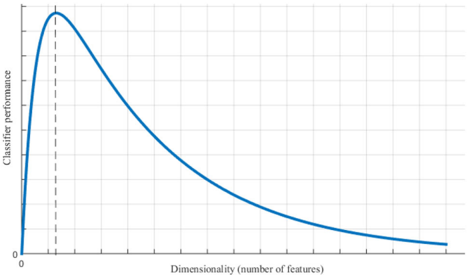
As basic research, it has also received increasing attention from people that the “curse of dimensionality” will lead to increase the cost of data storage and computing; it also influences the efficiency and accuracy of dealing with problems. Feature dimensionality reduction as a key link in the process of pattern recognition has become one hot and difficulty spot in the field of pattern recognition, machine learning and data mining. It is one of the most challenging research fields, which has been favored by most of the scholars’ attention. How to implement “low loss” in the process of feature dimension reduction, keep the nature of the original data, find out the best mapping and get the optimal low dimensional data are the keys aims of the research. In this paper, two-dimensionality reduction methods, feature selection and feature extraction, are introduced; the current mainstream dimensionality reduction algorithms are analyzed, including the method for small sample and method based on deep learning. For each algorithm, examples of their application are given and the advantages and disadvantages of these methods are evaluated.
Overview
The claims and statistics of this paper haven’t been checked yet.
Free: it reads the open-access text and checks the first 5 claims that cite a source we can check. Create a free account to check every claim.
Integrity signals
Registry
Cites
Statistics
Figures

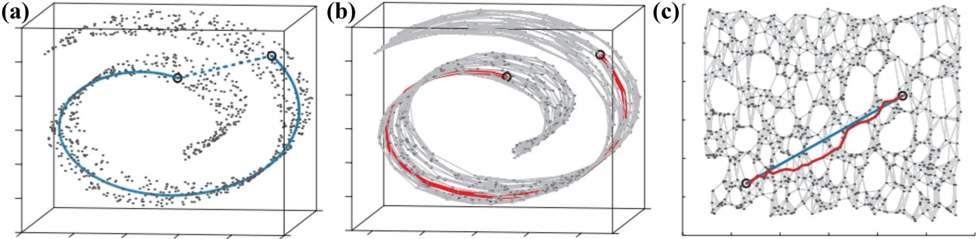
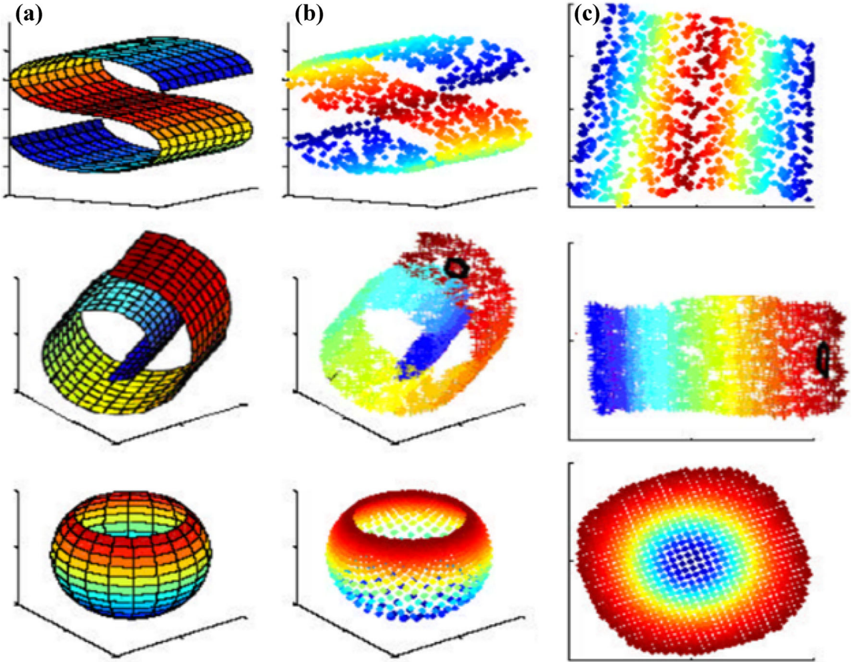
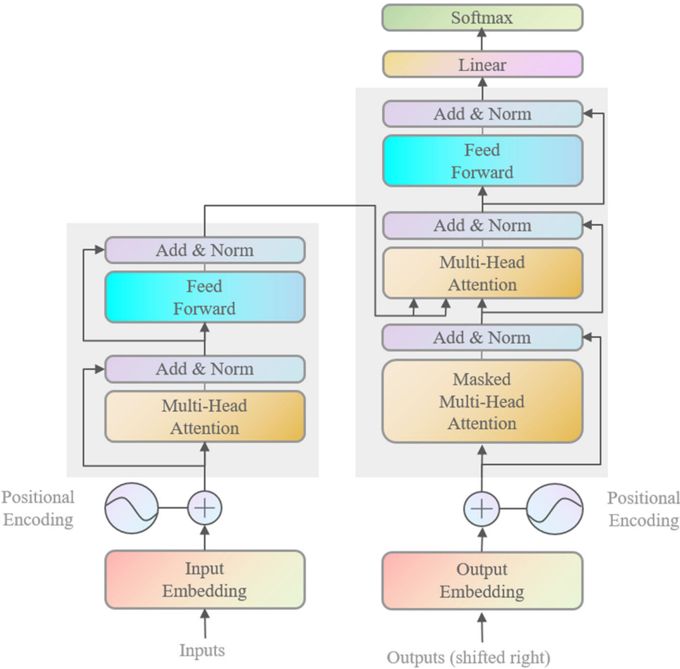
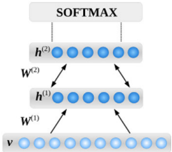
Verification
Claims the paper makes
The claims and statistics of this paper haven’t been checked yet.
Free: it reads the open-access text and checks the first 5 claims that cite a source we can check. Create a free account to check every claim.
Self-check
Percentages, sums and reported differences re-computed from the paper’s own numbers.
The self-check needs the paper’s full text.
Citations
Cites
Deep Residual Learning for Image Recognition
He, K., Zhang, X., Ren, S., & Sun, J. (2016) · 2016 IEEE Conference on Computer Vision and Pattern Recognition (CVPR) · doi:10.1109/cvpr.2016.90 · Cited by 235,474 · cited 1×
“lution and pooling layers to extract high-level semantic information [136].”
BackgroundA Mathematical Theory of Communication
Shannon, C. E. (1948) · Bell System Technical Journal · doi:10.1002/j.1538-7305.1948.tb01338.x · Cited by 88,486
LeCun, Y., Bengio, Y., & Hinton, G. (2015) · Nature · doi:10.1038/nature14539 · Cited by 84,126
Regression shrinkage and selection via the lasso
Tibshirani, R. (1996) · Journal of the Royal Statistical Society Series B: Statistical Methodology · doi:10.1111/j.2517-6161.1996.tb02080.x · Cited by 51,482 · cited 1×
“The least absolute shrinkage and selection operator (Lasso) is also a compression estimation method with reducing feature quantity as the core [116].”
MethodHe, K., Gkioxari, G., Dollar, P., & Girshick, R. (2017) · 2017 IEEE International Conference on Computer Vision (ICCV) · doi:10.1109/iccv.2017.322 · Cited by 29,137
Learning Phrase Representations using RNN Encoder–Decoder for Statistical Machine Translation
Cho, K., van Merrienboer, B., Gulcehre, C., Bahdanau, D., Bougares, F., Schwenk, H., & Bengio, Y. (2014) · Proceedings of the 2014 Conference on Empirical Methods in Natural Language Processing (EMNLP) · doi:10.3115/v1/d14-1179 · Cited by 25,545 · cited 1×
“designed a new RNN Encoder-Decoder, containing two recurrent neural networks [147].”
MethodReducing the dimensionality of data with neural networks
Hinton, G. E., & Salakhutdinov, R. R. (2006) · Science · doi:10.1126/science.1127647 · Cited by 20,928
Deep learning in neural networks: an overview
Schmidhuber, J. (2015) · Neural Networks · doi:10.1016/j.neunet.2014.09.003 · Cited by 18,570 · cited 1×
“It will also promote the further development of deep learning [171–173].”
BackgroundA fast learning algorithm for deep belief nets
Hinton, G. E., Osindero, S., & Teh, Y.-W. (2006) · Neural Computation · doi:10.1162/neco.2006.18.7.1527 · Cited by 16,336 · cited 1×
“In 2006, Hinton pointed out that the difficulty of deep learning network training can be solved by “layer-by-layer initial-ization” [127, 128].”
BackgroundLearning Internal Representations by Error Propagation
Rumelhart, D. E., Hinton, G. E., & Williams, R. J. (1985) · doi:10.21236/ada164453 · Cited by 16,172
Research works printed but not linked: 35
- Cunningham JP, Ghahramani Z (2015) Linear dimensionality reduction: survey, insights, and generalizations. J Mach Learn Res 16:2859-2900
- Hu J (2008) Survey on feature dimension reduction for high- dimensional data. Appl Res Comput 25(9):2601-2606
- Welch WJ (1982) Branch-and-bound search for experimental designs based on D optimality and other criteria. Technometrics 24(1):41-48
- Wang JH et al (2016) Analysis of imbalanced weather data based on branch-and-bound approach. Appl Res Comput 33(6):1648-1652
- Mao Y et al (2007) Survey for study of feature selection algo- rithms. Moshi Shibie yu Rengong Zhineng/Pattern Recogn Artif Intell 20(2):211-218
- Zhang HB, Sun GY (1999) Tabu search algorithm for feature selection. Acta Autom Sin 25(4):457-466
- Zhang X (1998) Dynamic programming method for feature selec- tion. Acta Autom Sin 24:680-684
- Fujarewicz K, Wiench M (2003) Selecting differentially expressed genes for colon tumor classification. Int J Appl Math Comput Sci 13:327-335
- Qiang LI et al (2005) Online palmprint identification based on improved 2D PCA. Acta Electron Sin 33(10):1886-1889
- Huang QH, Wang S, Liu Z (2007) Improved algorithm of image feature extraction based on independent component analysis. Opto-Electron Eng 1:121-125
- Chen Y et al (2018) Application of singular value decomposition algorithm to dimension-reduced clustering analysis of daily load profiles. Automat Electr Power Syst 42(3):105-111
- Mika S et al (1999) Fisher discriminant analysis with kernels. In: Neural networks for signal processing IX: Proceedings of the 1999 IEEE signal processing society workshop (cat. no. 98th8468). IEEE
- ShiZhong L, XiaoJun J, SuLei Z (1999) The application study of entropy analysis method in feature extraction. J North China Inst Technol 20(3):278-281
- Ding S, Jin F, Wang X (2005) Information feature compression algorithm based on SCEC. Mini-micro Syst 26(7):1202-1205
- Zhang J, Zhang B, Jiang X-Z (2000) Analyses of feature extraction methods based on wavelet transform. Signal Process 16(2):156-162
- Yin FP (2012) Based on improved LLE and FSVM method in face recognition of application. Sci Technol Eng 12(34):9390-9395 100.
- He X, Niyogi P (2003) Locality preserving projections. Adv Neu- ral Inf Process Syst 16:153-160 104.
- Shen Z-H, Pan Y-H, Wang S (2008) A supervised locality pre- serving projection algorithm for dimensionality reduction. Pattern Recogn Artif Intell 21(2):233-239 109.
- Zhan YB (2011) Research on manifold learning theories, methods and applications. Ph.D. thesis of University of Defence Technol- ogy 111.
- Ding S et al (2004) New PCA feature compression algorithm based on information theory. Mini-micro Syst 25(4):694-697 112.
- Ding S, Jin F, Wang J (2003) Information feature analysis and selection of orthogonal transformation. Acta Geodaetica Et Car- togr Sin 32(1):73-77 113.
- Huang R (2007) A margin based feature extraction algorithm for the small sample size problem. Chin J Comput 30(7):1173-1178 122.
- Lu J et al (2020) Learning from very few samples: a survey. arXiv preprint arXiv:2009.02653 123. · arXiv
- Wang Y et al (2020) Generalizing from a few examples: A survey on few-shot learning. ACM Comput Sur (CSUR) 53(3):1-34 124.
- Yi S, Wang X, Tang X (2014) Deep learning face representation by joint identification-verification. Adv Neural Inf Process Syst 27 131.
- Wen W et al (2016) Learning structured sparsity in deep neural networks. Adv Neural Inf Process Syst 29:2074-2082 132.
- Yu K et al (2013) Deep learning: yesterday, today, and tomorrow. J Comput Res Dev 50(9):1799-1804 133.
- Ren S et al (2015) Faster r-cnn: Towards real-time object detec- tion with region proposal networks. Adv Neural Inf Process Syst 28:91-99 138.
- Cui L et al (2020) Context-aware block net for small object detec- tion. IEEE Trans Cybern (Early access), pp 1-14 141.
- Jozefowicz R, Zaremba W, Sutskever I (2015) An empirical exploration of recurrent network architectures. In: International conference on machine learning. PMLR, pp 2342-2350 145.
- Koutnik J et al (2014) A clockwork rnn. In: International confer- ence on machine learning. PMLR, pp 1863-1871 147.
- Ergen T, Mirza AH, Kozat SS (2019) Energy-efficient LSTM net- works for online learning. IEEE Trans Neural Netw Learn Syst 99:1-13 149.
- Vaswani A et al (2017) Attention is all you need. In: Advances in neural information processing systems, pp 5998-6008 150.
- Hinton GE, Salakhutdinov RR (2006) Reducing the dimension- ality of data with neural networks. Science 313(5786):504-507 156. · DOI · Paper page
- Lee DH (2013) Pseudo-label: The simple and efficient semi- supervised learning method for deep neural networks. In Work- shop on challenges in representation learning, ICML 3(2):896 165.
Cited by
Items 401–500 of 892
Hwang, G.-Y., Seong, M.-S., Han, C. H., & Oh, J.-S. (2024) · IEEE Access · doi:10.1109/access.2024.3450968 · Cited by 4
“In other words, although large and complex datasets (e.g., number of sensors) can provide valuable insights, they can also complicate the interpretation of information [13], [14].”
BackgroundiLDA: A new dimensional reduction method for non-Gaussian and small sample size datasets
Sudibyo, U., Rustad, S., Andono, P. N., Fanani, A. Z., & Supriyanto, C. (2024) · Egyptian Informatics Journal · doi:10.1016/j.eij.2024.100533 · Cited by 3
Han, Y., Ding, C., Yang, S., Ge, Y., Yin, J., Zhao, Y., & Zhang, J. (2024) · Bioengineering · doi:10.3390/bioengineering11101012 · Cited by 3
“In this study, a total of 15 features, including bispectral flatness, bispectral brightness, and bispectral roll-off, etc. [35–38], were extracted and incorporated into the model, as detailed in Table 2.”
MethodDynamic Path Planning Scheme for OHT in AMHS Based on Map Information Double Deep Q-Network
Ao, Q., Zhou, Y., Guo, W., Wang, W., & Ye, Y. (2024) · Electronics · doi:10.3390/electronics13224385 · Cited by 3
Lizano-Villalobos, A., Namikas, B., & Tang, X. (2024) · The Journal of Chemical Physics · doi:10.1063/5.0244337 · Cited by 3
PIMA Diabetes Prediction Using Machine Learning and Quantum Machine Learning Techniques
Vimal, D. (2024) · ITU Kaleidoscope Academic Conference (ITU K) · doi:10.23919/ituk62727.2024.10772814 · Cited by 6
“PCA [16] is a method for dimensionality reduction and for visualising data, transforming original variables into orthogonal vectors called principal components, and maximizing data variance.”
Cosine Similarity Preserving Curse of Dimensionality Reduction for Managing Computational Complexity
Kgosietsile, T. (2025) · Lecture notes in networks and systems · doi:10.1007/978-981-97-5703-9_21 · Cited by 3
An Exhaustive Survey of Big Data Storage Reduction Techniques
Patil, S. A., & Sangam, S. (2025) · Cureus Journal of Computer Science. · doi:10.7759/s44389-025-03518-3 · Cited by 3
“Without proper pre-processing, raw data remains unstructured and unreliable, making it unsuitable for analysis [13].”
Ye, Y., Ai, Q., Zhang, X., Liu, M., & Shuai, Y. (2025) · Advances in Engineering Software · doi:10.1016/j.advengsoft.2025.103935 · Cited by 3
An Enhanced Latent Factor Recommendation Approach for Sparse Datasets of E-Commerce Platforms
Wu, W., Zhan-yong, Q., Tian, J., Wang, B., Tang, M., & Liu, X. (2025) · Systems · doi:10.3390/systems13050372 · Cited by 3
“These approaches include item similarity-based collaborative algorithms [14], data matrix dimension reduction [15–19], and artificial intelligence techniques [20,21].”
Gracy, G. A., & Pravin, S. C. (2025) · IEEE Access · doi:10.1109/access.2025.3579999 · Cited by 3
“The Zigbee transmission analysis is presented in Table 7, assuming a Zigbee transmission speed of 250 kbps (250 × 10 3 bits per second) and a transmission power of 20 mW (0.02 W) [37].”
InfluentialImproving Voice Spoofing Detection Through Extensive Analysis of Multicepstral Feature Reduction
de Souza, L. M., Guido, R. C., Contreras, R. C., Viana, M. S., & Bongarti, M. A. D. S. (2025) · Sensors · doi:10.3390/s25154821 · Cited by 5
“For readers interested in deeper technical insights into each method, we recommend consulting dedicated reviews, such as those by Jia et al. [51], Guyon and Elisseeff [52], and Van Der Maaten et al. [53].”
Thakur, S., Thakur, S., Rana, A., Kumar, P., Kumar, K., & Chen, C. (2025) · Wiley Interdisciplinary Reviews Data Mining and Knowledge Discovery · doi:10.1002/widm.70040 · Cited by 6
CBMAP: Clustering-Based Manifold Approximation and Projection for Dimensionality Reduction
Doğan, B. (2025) · IEEE Access · doi:10.1109/access.2025.3599722 · Cited by 4
“The generalization ability of learning algorithms weakens in the presence of many features, especially if the number of data points is less than the number of dimensions, leading to overfitting, a situation commonly referred to as the curse of dimensionality in the literature [1].”
Wang, Q., Gao, Z., Li, T., Li, J., Yang, F., Chen, X., & Li, Z. (2025) · Spectrochimica Acta Part A Molecular and Biomolecular Spectroscopy · doi:10.1016/j.saa.2025.126852 · Cited by 3
Nassra, I., & Capella, J. V. (2025) · Internet of Things · doi:10.1016/j.iot.2025.101764 · Cited by 3
A Novel Paradigm in Cardiovascular Disease Risk Prediction Through Hybrid Machine Learning
Rahi, P., & Kang, S. S. (2025) · Systems Engineering and Information Technologies · doi:10.54708/2658-5014-siit-2025-no3-p48 · Cited by 13
A Robust Deep Transfer Learning Model for Accurate Speech Emotion Classification
Akinpelu, S. A., & Viriri, S. (2022) · Lecture notes in computer science · doi:10.1007/978-3-031-20716-7_33 · Cited by 3
Euler Representation-Based Structural Balance Discriminant Projection for Machinery Fault Diagnosis
Zhang, M., Zhu, Y., Su, S., Fang, X., & Wang, T. (2023) · Machines · doi:10.3390/machines11020307 · Cited by 3
Evkoski, B., Novak, P. K., & Ljubešić, N. (2023) · Applied Network Science · doi:10.1007/s41109-023-00561-8 · Cited by 4
“Second, it reduces the number of dimensions of the vector representations using a dimensionality reduction technique, such as UMAP or PCA (Jia et al. 2022), so that Euclidean similarity measures can be applied to a dense low-dimensional space.”
MethodRD-Classifier: Reduced Dimensionality Classifier for Alzheimer’s Diagnosis Support System
Njimbouom, S. N., Abdelkader, G. A., Zonyfar, C., Lee, H. J., & Kim, J. (2023) · Lecture notes in computer science · doi:10.1007/978-3-031-39821-6_1 · Cited by 3
Data-driven modeling of municipal water system responses to hydroclimate extremes
Johnson, R., Burian, S. J., Oroza, C. A., Halgren, J., Irons, T., Aziz, D., Hassan, D., Li, J., Hansen, C., Kirkham, T., et al. (2023) · Journal of Hydroinformatics · doi:10.2166/hydro.2023.170 · Cited by 4
Mahawar, E. A. K. (2023) · International Journal on Recent and Innovation Trends in Computing and Communication · doi:10.17762/ijritcc.v11i10.8961 · Cited by 3
Mehla, A., Deora, S. S., & Dalal, S. (2024) · Indian Journal of Science and Technology · doi:10.17485/ijst/v16i47.1602 · Cited by 3
Hu, Z., Zhao, X., Guo, Y., & Zhou, C. (2024) · IEEE Sensors Journal · doi:10.1109/jsen.2023.3347616 · Cited by 3
“1) An appropriate dimensionality reduction method can reduce the computation time and increase the noise resistance of the network at the cost of classification accuracy [19], [20].”
MethodJi, L., Qiu, S., Xu, Z. J., Liu, Y., & Yang, G. (2024) · The Visual Computer · doi:10.1007/s00371-023-03235-9 · Cited by 4
“MDS considers the contribution of all dimensions to be the same and can effectively preserve the relative relationship between data by using distance as a criterion [19].”
Chen, Z., Gong, Z., Chang, C., Chen, C., Lv, X., & Chen, C. (2024) · Spectroscopy Letters · doi:10.1080/00387010.2024.2349143 · Cited by 3
“[18] This further improves the model’s ability to fit complex relationships and enhances the model’s expression ability, which is particularly beneficial for solving nonlinear problems.”
BackgroundA Comparative Exploration of PCA Variants for Clustering Analysis
Ramos, L., Rivas, F., Amaro, I. R., & Camacho, F. J. (2023) · International Conference on Information Systems and Software Technologies (ICI2ST) · doi:10.1109/ici2st62251.2023.00016 · Cited by 3
“This can be beneficial for a variety of tasks, such as improving the performance of machine learning algorithms, making data visualization easier, and reducing the computational cost of data analysis [4].”
BackgroundRisk factors for antimicrobial usage and diseases in Dutch veal calf farms: A cross-sectional study
Mallioris, P., Kritsi, E., Theeuwes, P., Wagenaar, J. A., Stegeman, A., & Mughini‐Gras, L. (2024) · The Veterinary Journal · doi:10.1016/j.tvjl.2024.106263 · Cited by 4
Liu, H., & Li, Y. (2024) · Symmetry · doi:10.3390/sym16121651 · Cited by 3
Ahfa, M. I. M., Hakim, L., & Rosadi, M. I. (2025) · Journal of Information Technology and Cyber Security · doi:10.30996/jitcs.12212 · Cited by 3
“ICA is also analyzed for its ability to decompose independent components in the data, which is relevant for detecting hidden patterns or anomalies that are not detected by linear methods (Hyvärinen & Oja, 2000; Jia, Sun, Lian, & Hou, 2022).”
Application of Ensemble Learning Based on High-Dimensional Features in Financial Big Data
Zhang, Y., Li, Y., Zhang, G., Ding, Z., Yaqi, W., & Peng, Y. F. (2025) · Lecture notes in computer science · doi:10.1007/978-981-96-1148-5_10 · Cited by 3
Lightweight Hybrid Model Combining MobilNetV2 and PCA for Copy-Move Forgery Detection
Shallal, I., Haddada, L. R., & Amara, N. E. B. (2024) · International Conference on Developments in eSystems Engineering (DeSE) · doi:10.1109/dese63988.2024.10911910 · Cited by 3
“This technique retains the most important variance while transforming data into a lower-dimensional space [34].”
Sirmayanti, S., Prastyo, P. H., Mahyati, M., & RAHMAN, F. (2025) · Applied Computer Science · doi:10.35784/acs_6849 · Cited by 4
“While feature selection retains original variables by selecting the most relevant ones, feature extraction transforms the dataset into a lower-dimensional space while preserving critical information (Jia et al., 2022).”
DEM-UFR: Deep Ensemble Method for Enhanced Unconstraint Face Recognition System
Kumar, D., Kumar, R. K., Garain, J., Kisku, D. R., Sing, J. K., & Gupta, P. (2024) · OITS International Conference on Information Technology (OCIT) · doi:10.1109/ocit65031.2024.00032 · Cited by 3
“The authors of [31] found that fusing features at different levels led to a more comprehensive representation of facial characteristics, resulting in improved recognition performance.”
Feature aggregation in nonlinear systems: two interpretable supervised algorithms
Bonetti, P., Metelli, A. M., & Restelli, M. (2026) · Data Mining and Knowledge Discovery · doi:10.1007/s10618-026-01219-6 · Cited by 3
Personalized movie recommendations based on deep representation learning
Li, L., Huang, H., Li, Q., & Man, J. (2023) · PeerJ Computer Science · doi:10.7717/peerj-cs.1448 · Cited by 5
Cunff, Y. L., Chesneau, L., Pastezeur, S., Pinson, X., Soler, N., Fairbrass, D., Mercat, B., Rodríguez-García, R., Alayan, Z., Abdouni, A., et al. (2024) · PLoS Computational Biology · doi:10.1371/journal.pcbi.1012330 · Cited by 3
Multiomics analysis of the Silkworm cocoon shell
Fragkou, P., Martakos, I. C., Rouni, G., Vassilakos, D., Koutsoukos, E., Saviane, A., Cappellozza, S., Τhomaidis, Ν. S., Kostakis, M. G., Samiotaki, M. K., et al. (2025) · Scientific Data · doi:10.1038/s41597-025-06071-9 · Cited by 3
“A variety of dimensionality reduction methods 49,50 , such as the t-distributed Stochastic Neighbor Embedding (t-SNE) 51 , the Uniform Manifold Approximation and Projection (UMAP) 52 , the Principal Component Analysis (PCA), the MultiDimensional Scaling (MDS) 53 , the Isometric Mapping (ISOMAP) 54 and the Locally Line…”
Interpretable multi-morphology and multi-scale microalgae classification based on machine learning
Yan, H., Peng, X., Wang, C., Xia, A., Huang, Y., Zhu, X., Zhang, J., Zhu, X., & Liao, Q. (2024) · Algal Research · doi:10.1016/j.algal.2024.103812 · Cited by 2
Using similarity network analysis to improve text similarity calculations
Witschard, D., Kucher, K., Jusufi, I., & Kerren, A. (2025) · Applied Network Science · doi:10.1007/s41109-025-00699-7 · Cited by 4
“First, given the prevalence of analysis methods that seek to exploit similarity/closeness relations (Gomaa and Fahmy 2013; Ezugwu et al. 2022; Jia et al. 2022; Choi et al. 2009), there is a need for a solid understanding of the fundamental principles of similarity calculations.”
Image-set classification using Discriminant Neighborhood Preserving Embedding on Grassmann manifold
Li, B., Zheng, Y., Ran, R., & Fang, B. (2025) · Signal Processing · doi:10.1016/j.sigpro.2025.110028 · Cited by 2
Representation of high-dimensional cell morphology and morphodynamics in 2D latent space
Cunningham, C. T., & Sun, B. (2025) · Physical Biology · doi:10.1088/1478-3975/adcd37 · Cited by 3
Center Manifold Reduction for Caputo–Hadamard Fractional Differential System
Ma, L., & Shu, Y. (2025) · Journal of Computational and Nonlinear Dynamics · doi:10.1115/1.4068728 · Cited by 2
Challenges of conventional feature extraction techniques for multivariate time-bars assets
Atwa, A. N., Sedky, A. A. H., & Kholief, M. (2025) · International Journal of Data Science and Analytics · doi:10.1007/s41060-025-00824-w · Cited by 2
“Several diverse techniques exist for DR in feature extraction, as highlighted in [2, 13, 18, 25, 27].”
Situju, S. F., Nur, N., & Halal, N. (2025) · Journal of Applied Computer Science and Technology · doi:10.52158/jacost.v6i1.1106 · Cited by 2
SHAP-Prioritised Machine Learning for Diagnostic-Grade Prediction of Lung Function
Pitts, O., Siddiqui, S., Shah, A., Bell, A. G., Brightling, C. E., Singh, D., Kocks, J. W. H., Fabbri, L. M., Papi, A. A., Rabe, K. F., et al. (2025) · Lecture notes in computer science · doi:10.1007/978-3-031-97567-7_7 · Cited by 2
Elgalaly, O. A., Mohamed, A. F., Ali, A. A., & Gharieb, R. R. (2024) · International Japan-Africa Conference on Electronics, Communications, and Computations (JAC-ECC) · doi:10.1109/jac-ecc64419.2024.11061205 · Cited by 2
Xie, P., Hu, Y., Li, J., Wang, Y., Zhang, L., Zhang, X., Li, M. K., Fang, J., Huang, C., & Hower, J. C. (2025) · Powder Technology · doi:10.1016/j.powtec.2025.121461 · Cited by 2
Zhang, W., Yu, R., Cheng, Y., & Gao, X. (2025) · Tribology International · doi:10.1016/j.triboint.2025.111087 · Cited by 2
Xu, L., Lv, J., & Yu, Y. (2025) · Mathematics · doi:10.3390/math13172799 · Cited by 2
Research on optimal stiffness distribution of homocercal fish tail based on surrogate modeling
Zhang, X., Pei, Z., Tang, Z., & Feng, N. (2025) · Bioinspiration & Biomimetics · doi:10.1088/1748-3190/ae0908 · Cited by 2
MPGH-FS: A Hybrid Feature Selection Framework for Robust Multi-Temporal OBIA Classification
Xu, X., Qiao, H., Xu, Z., & Hu, S. (2025) · Sensors · doi:10.3390/s25185933 · Cited by 2
“Despite its computational efficiency [13], this strategy remains fundamentally limited as it prioritizes feature–class relevance while neglecting inter-feature redundancy, which may result in suboptimal subset selection and reduced classification performance [6,14].”
Advances in intelligent epitaxy of semiconductor materials
Shen, C., Yang, K., Zhan, W., Xu, B.-W., Li, Z., Pan, S., Chen, S., Wang, Z., & Zhao, C. F. (2025) · Progress in Quantum Electronics · doi:10.1016/j.pquantelec.2025.100587 · Cited by 2
Nondestructive detection method of salt content in dried sea cucumber based on hyperspectral imaging
Gao, Q., He, X., Zhao, J., Lou, P., Zhang, Y., & Li, J. (2025) · Journal of Food Composition and Analysis · doi:10.1016/j.jfca.2025.108473 · Cited by 2
Robust surrogate modeling for glass forming process
Chang, K. E., Dhakal, A., & Kraft, T. (2025) · The International Journal of Advanced Manufacturing Technology · doi:10.1007/s00170-025-16123-4 · Cited by 2
A Deep Learning Framework for Anomaly Prediction in an HVAC System Using IoT-Based Vibration Data
Sureeya, K., Karupongsiri, C., & Inthasuth, T. (2025) · IEEE Internet of Things Journal · doi:10.1109/jiot.2025.3627959 · Cited by 4
“Sensor data often contains a large number of variables, and if many features are used without dimensionality reduction, the model may not be accurate and may not perform well on new data [29], [30].”
Kurniadi, D., Nurhaliza, N. P., Balilo, B. B., Aulawi, H., & Mulyani, A. (2025) · Jurnal Online Informatika · doi:10.15575/join.v10i2.1606 · Cited by 2
Miao, R., & Amendola, V. (2025) · The Journal of Physical Chemistry C · doi:10.1021/acs.jpcc.5c06804 · Cited by 2
Speech emotion recognition: A systematic mega-review of techniques and pipelines
Chakhtouna, A., Sekkate, S., & Adib, A. (2026) · Information Fusion · doi:10.1016/j.inffus.2026.104161 · Cited by 6
Haberland, S., Ruge, H., & Frimmel, H. (2026) · Imaging Neuroscience · doi:10.1162/imag.a.1142 · Cited by 3
“Reducing feature redundancy during DQN training could, thus, be a useful strategy, and several methods exist to quantify and mitigate this issue ( Ayinde & Inanc, 2019a; Jia et al., 2022).”
Wang, S., Lee, C.-H., Jung, T., Cui, S., Duan, D., Wan, X., Xie, X., Song, H., Dong, X., & Wen, D. (2026) · Advanced Engineering Informatics · doi:10.1016/j.aei.2026.104517 · Cited by 2
Gao, H., Liu, Y., He, Z., Sun, Y., Wang, X., & Hu, C. (2026) · European Journal of Remote Sensing · doi:10.1080/22797254.2026.2642998 · Cited by 2
Laser Doppler vibrometers on moving platforms: advancements, challenges, and future opportunities
Zeng, Y., Núñez, A. A., Rembe, C., & Li, Z. (2026) · Mechanical Systems and Signal Processing · doi:10.1016/j.ymssp.2026.114312 · Cited by 2
A Tutorial on Best Practices and Pitfalls in Applying Machine Learning to Environmental Research
Yan, Z., Li, J., Zhang, W., Wen, H., Yu, H., Yu, M., Liu, Q. S., & Jiang, G. (2026) · ACS Environmental Au · doi:10.1021/acsenvironau.6c00025 · Cited by 2
Design Scheme Style Feature Extraction and Machine Learning Classification Algorithm Construction
Wang, W. (2026) · International Scientific Technical and Economic Research · doi:10.67541/istaer2623 · Cited by 2
Yáñez, A., Crawford, B., Monfroy, É., Paz, Á., Barrera-García, J., Cisternas-Caneo, F., Peña, Á., & Soto, R. (2026) · Biomimetics · doi:10.3390/biomimetics11070512 · Cited by 2
“Dimensionality reduction refers to procedures that transform the original feature space into a lower-dimensional representation, such as principal component analysis, latent representations, embeddings, or other projection-based techniques [28–30].”
Multispectral Image Segmentation With Dimensionality Reduction Using Autoencoders
Albuquerque, E., & Jung, C. R. (2023) · SIBGRAPI Conference on Graphics, Patterns and Images (SIBGRAPI) · doi:10.1109/sibgrapi59091.2023.10347038 · Cited by 2
Peng, T., Xue, Y., Li, J., & Xu, J. (2023) · IEEE International Conference on Tools with Artificial Intelligence (ICTAI) · doi:10.1109/ictai59109.2023.00085 · Cited by 2
“The LE is to convert original high-dimensional label space into a low-dimensional real or binary one linearly or nonlinearly, and the LS is to select some most informative labels to preserve label physical meanings [8], [9], as in feature dimensionality reduction [10].”
BackgroundMysterious ultraslow and ordered activity observed in the cortex
Laurent, G. (2023) · Nature · doi:10.1038/d41586-023-03795-9 · Cited by 2
Research on feature coding theory and typical application analysis in machine learning algorithms
Wang, P., Xiao, K., & Zhou, L. (2024) · Applied and Computational Engineering · doi:10.54254/2755-2721/32/20230188 · Cited by 2
Activity Recognition Method Based on Kernel Supervised Laplacian Eigenmaps
Tu, P., Cheng, T., Du, D., Li, J., & Wang, H. (2024) · IEEE International Conference on Acoustics Speech and Signal Processing · doi:10.1109/icassp48485.2024.10446979 · Cited by 2
“The target data dimension conversion from high to low is realized and preserves the important structure of high-dimensional data as much as possible in low-dimensional mapping [9].”
BackgroundAnalysing Unlabeled Data with Randomness and Noise: The Case of Fishery Catch Reports
Ashrafi, A., Tessem, B., & Enberg, K. (2024) · Linköping electronic conference proceedings · doi:10.3384/ecp208023 · Cited by 2
“An autoencoder is a neural network architecture designed to compress input data into its essential features through an encoder and then reconstruct the original input from this compressed representation efficiently though a decoder [10].”
BackgroundEnhancing Visitor Forecasting with Target-Concatenated Autoencoder and Ensemble Learning
Chang, R.-I., Tsai, C.-Y., & Chang, Y.-W. (2024) · Machine Learning and Knowledge Extraction · doi:10.3390/make6030083 · Cited by 2
“Conventional methods like principal component analysis (PCA), non-negative matrix factorization (NMF), independent component analysis (ICA), and genetic algorithms (GAs) each have their uses but also distinct limitations in handling complex, non-linear tourism data [8].”
MethodNavigating the emotional maze: Understanding Adolescent suicidal ideation using CNN-LSTM model
Rappai, S., & Ramasamy, G. (2024) · Intelligent Decision Technologies · doi:10.3233/idt-240790 · Cited by 2
“In order to avoid overfitting, this technique effectively lowers the number of parameters and computations in the network [16].”
Jad, S., Desforges, X., Villard, P. Y., Caussidéry, C., & Medjaher, K. (2024) · IFAC-PapersOnLine · doi:10.1016/j.ifacol.2024.08.065 · Cited by 2
Li, J., Zhao, R., & Bi, J. (2024) · IEEE Transactions on Instrumentation and Measurement · doi:10.1109/tim.2024.3396861 · Cited by 2
“…instead of relying on the derivation of polarization ratios for particle classification which may result in a reduction in feature dimensionality [15], [16], [17], we opt to analyze the original polarization components using support vector machine (SVM) algorithms, and this change notably…”
MethodPredicción del riesgo crediticio a microfinanciera usando aprendizaje computacional
Pérez, E. M., Guzmán, M. E. R., Jiménez, A. H., & Santiago-Alvarado, A. (2024) · Revista Mexicana de Economía y Finanzas · doi:10.21919/remef.v19i4.868 · Cited by 3
“En el trabajo de Jia et al. (2022) definen a las bases de datos con muchas características como de alta dimensionalidad, por tanto, es conveniente transformar los conjuntos de datos de alta dimensión a un espacio de dimensión relativamente baja, conservando la mayor varianza de la información de la…”
Embedded Feature Selection in MCU Performance Screening
Bellarmino, N., Cantoro, R., Huch, M., Kilian, T., Schlichtmann, U., & Squillero, G. (2024) · doi:10.1109/dttis62212.2024.10780418 · Cited by 3
“Dimensionality reduction is well-covered topic both in the ML [16], [17] and CAD communities, with several works in the realm of alternate tests for analog circuits [18], [19].”
A Bearing Fault Diagnosis Method Based on One-Dimensional Convolutional Neural Network
Yu, F., Wang, P., & Ke, W. (2024) · International Conference on Big Data and Information Analytics (BigDIA) · doi:10.1109/bigdia63733.2024.10809019 · Cited by 2
“Common feature dimensionality reduction methods include [8]: Principal Component Analysis (PCA), Independent Component Analysis (ICA), Local Preserving Projection (LPP), and t-Distributed Stochastic Neighbor Embedding.”
Phuc, D. T., Dang, H. T. N., Huu, P. D., & Hieu, D. S. (2024) · Multimedia Tools and Applications · doi:10.1007/s11042-024-20549-5 · Cited by 2
Quantifying the Complexity of Agricultural Data for Regression and Classification Problems
Roy, A. (2025) · Sustainable development goals series · doi:10.1007/978-3-031-76758-6_12 · Cited by 2
Sinap, V. (2025) · DÜMF Mühendislik Dergisi · doi:10.24012/dumf.1597564 · Cited by 2
Li, X., Liu, X., Zhou, X., Zhang, X., & Zhou, X. (2025) · Lecture notes in computer science · doi:10.1007/978-981-96-3297-8_5 · Cited by 2
Decision Trees in Predicting Loan Default Risk in Customer Relationships within the Financial Sector
Syahra, Y., Tarigan, Y. F. B., Andriani, K., Hevlie Winda Nazry, S., & Setik, R. B. (2025) · SinkrOn · doi:10.33395/sinkron.v9i2.14672 · Cited by 2
“Addressing these challenges requires innovative approaches, including feature engineering and dimensionality reduction techniques(Jia et al., 2022) .”
Predictive Modelling of Meteorological Data Using Time Series Methods
Hymavathi., M., Sandeepu Kumar., K., & Jahnavi, Y. (2025) · International Journal of Advanced Networking and Applications · doi:10.35444/ijana.2025.16608 · Cited by 4
RFAE: A high-robust feature selector based on fractal autoencoder
Ou, J., Li, J., Xia, Z., Dai, S., Guo, Y. P., Jiang, L., & Tang, J. (2025) · Expert Systems with Applications · doi:10.1016/j.eswa.2025.127519 · Cited by 2
Utilization of extremely precise analytics: A State-of-the-Art Approach and Future Potentials
Katrakazas, P. (2022) · IEEE Globecom Workshops (GC Wkshps) · doi:10.1109/gcwkshps56602.2022.10008477 · Cited by 2
“In this case, not only the size of the problem matters but also the number of instances of execution that are needed for an accurate analysis makes a difference [20].”
BackgroundLinear local tangent space alignment with autoencoder
Ran, R., Wang, J., & Fang, B. (2023) · Complex & Intelligent Systems · doi:10.1007/s40747-023-01055-x · Cited by 2
Clustering-Based Analysis on 5G Networks: A Comparison
Annam, S., & Kumar, P. M. (2023) · International Conference on Electronics and Sustainable Communication Systems (ICESC) · doi:10.1109/icesc57686.2023.10193024 · Cited by 2
“PCA [16-19] to extract the most feasible features.”
MethodBenny, D., Giacobini, M., Costa, G., Gnavi, R., & Ricceri, F. (2024) · BMC Medical Research Methodology · doi:10.1186/s12874-024-02200-x · Cited by 2
“Even though mapping data with a higher dimension to a space of low dimension leads to some information loss [24], the predictive ability of the new data without sparsity can be an advantage for Machine Learning modeling.”
BackgroundUpper Limb Movement Prediction Based on Segmented sEMG Signals
Yan, H., Li, X., Shi, Z., & Wang, S. (2024) · IEEE Access · doi:10.1109/access.2024.3447275 · Cited by 2
“On the contrary, insufficient eigenvalues will cause the robot to fail to accurately acquire the patient’s limbs’ movement intention [30], [31].”
BackgroundAhmadian, R., Ghatee, M., & Wahlström, J. (2023) · SSRN Electronic Journal · doi:10.2139/ssrn.4616995 · Cited by 2
Zhou, X., & Shi, Z. (2024) · arXiv (Cornell University) · doi:10.48550/arxiv.2401.15564 · Cited by 2
“In the field of machine learning, overlearning directly affects classification accuracy [34-36] and can increase the task size of machine learning.”
BackgroundBain, C. M., Shi, D., Loeffelman, J. E., Norris, J. E., & Ethridge, L. E. (2024) · PsyArXiv (OSF Preprints) · doi:10.31234/osf.io/j695a · Cited by 2
Sukhorukov, N., Gusak, D., & Frolov, E. (2025) · arXiv (Cornell University) · doi:10.48550/arxiv.2508.06455 · Cited by 2
“Feature handling in recommender systems includes feature selection [6, 11, 60], feature weighting [46], and dimensionality reduction [30].”
A Comprehensive Analysis of techniques used for Dimensional Reduction of HSI Images
Lalitha, V., & Latha, B. (2022) · 2022 1st International Conference on Computational Science and Technology (ICCST) · doi:10.1109/iccst55948.2022.10040360 · Cited by 1
Wanjau, S. K., Wambugu, G. M., & Oirere, A. M. (2023) · International Journal of Wireless and Microwave Technologies · doi:10.5815/ijwmt.2023.04.05 · Cited by 1
EFFECTIVENESS OF VARIABLE SELECTION METHODS FOR MACHINE LEARNING AND CLASSICAL STATISTICAL MODELS
Grzybowska, U., & Karwański, M. (2024) · Metody Ilościowe w Badaniach Ekonomicznych · doi:10.22630/mibe.2024.25.2.6 · Cited by 1
“There are many strategies of variable selection and an overview of them can be found in numerous publications (see [Bag et al. 2022, Li et al. 2017; Pudjihartono et al. 2022; Jia et al. 2022; Zebari et al. 2020, Sauerbrei et al. 2020]).”
BackgroundMethodRegulatory-based classification of rums: a chemometric and machine learning analysis
Rincón‐López, J., Chica, J. C., Rojas, V. E. R., Martínez, L. M., Gartner, Á. M. A., Rosero‐Moreano, M., & Ocampo, G. T. (2024) · International Journal of Food Science & Technology · doi:10.1111/ijfs.17464 · Cited by 1
Metadata
- Authors
- Jia, W., Sun, M., Lian, J., & Hou, S.
- Affiliations
- Shandong Normal University (CN)
- Shandong Management University (CN)
- Corresponding author
- Jia, Weikuan
- Hou, Sujuan
- Venue
- Complex & Intelligent Systems
- Published
- 2022-01-21
- Volume
- 8
- Issue
- 3
- Pages
- 2663-2693
- ISSN
- 2198-6053 (ISSN-L)
- 2199-4536
- OpenAlex
- W4206095984
- Cited by
- 797
- References
- 134
- Citations by year
- 2026: 155 · 2025: 256 · 2024: 242 · 2023: 122 · 2022: 22
- FWCI
- 52.59
- Type
- journal article
- Language
- en
- Open access
- gold
- doi.org
- Licence
- cc-by
- creativecommons.org/licenses/by/4.0 (tdm)
- creativecommons.org/licenses/by/4.0 (vor)
- Locations
- Complex & Intelligent Systems (publishedVersion, cc-by)
- Funders
- National Natural Science Foundation of China (62072289)
- Natural Science Foundation of Shandong Province (ZR2020MF076, ZR2020MF133)
- Focus on Research and Development Plan in Shandong Province (2019GNC106115)
- Topics
- Physical Sciences › Computer Science › Computer Vision and Pattern Recognition › Face and Expression Recognition
- Physical Sciences › Mathematics › Statistics and Probability › Statistical Methods and Applications
- Physical Sciences › Computer Science › Artificial Intelligence › Stochastic Gradient Optimization Techniques
- Keywords
- dimensionality reduction, curse of dimensionality, feature selection, feature extraction, pattern recognition
About these checks
Registry, retraction, Cites and statistics results are computed, not judged, with one exception: a printed reference that no index lists is read once by a model before it counts as a citation error. Claims are extracted by a model and kept only when their quote appears verbatim in the text; each cited source is then checked, with a model’s help, for whether it says what the claim relies on. Those verdicts can be wrong — read the claim’s quote and the cited source before relying on one.
Statistics and arithmetic are recomputed, not judged.
Confidence bands are shown only for fields calibrated on our annotated test set. None is calibrated yet, so no band is shown.
What counts as a claim ›How we measure confidence ›How we check this ›
Are you an author, or do you see a problem with this page? Request a review
Data sources
Bibliographic data: Semantic Scholar, OpenAlex, Crossref.
Contains information from the Semantic Scholar Academic Graph Datasets, made available under the ODC Attribution License (ODC-BY 1.0).
Semantic Scholar’s data is described in: Kinney, R., et al. (2023). The Semantic Scholar Open Data Platform. arXiv:2301.10140.
