

AI-Based Modeling: Techniques, Applications and Research Issues Towards Automation, Intelligent and Smart Systems
Open accessPublished version of a preprint
The DOI matches its Crossref record; 116 of the 116 references it cites were found in a registry or an index.
Abstract
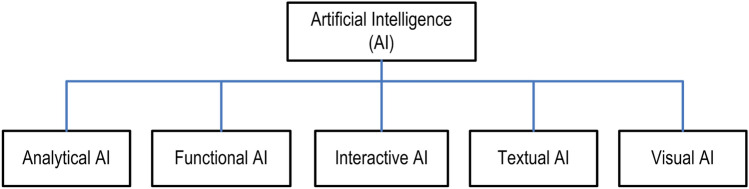
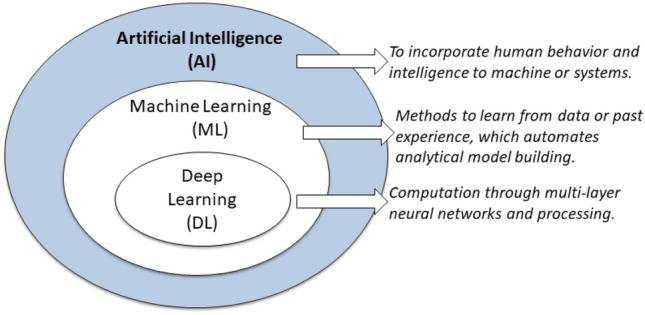
Artificial intelligence (AI) is a leading technology of the current age of the Fourth Industrial Revolution (Industry 4.0 or 4IR), with the capability of incorporating human behavior and intelligence into machines or systems. Thus, AI-based modeling is the key to build automated, intelligent, and smart systems according to today’s needs. To solve real-world issues, various types of AI such as analytical, functional, interactive, textual, and visual AI can be applied to enhance the intelligence and capabilities of an application. However, developing an effective AI model is a challenging task due to the dynamic nature and variation in real-world problems and data. In this paper, we present a comprehensive view on “AI-based Modeling” with the principles and capabilities of potential AI techniques that can play an important role in developing intelligent and smart systems in various real-world application areas including business, finance, healthcare, agriculture, smart cities, cybersecurity and many more. We also emphasize and highlight the research issues within the scope of our study. Overall, the goal of this paper is to provide a broad overview of AI-based modeling that can be used as a reference guide by academics and industry people as well as decision-makers in various real-world scenarios and application domains.
Overview
The claims and statistics of this paper haven’t been checked yet.
Free: it reads the open-access text and checks the first 5 claims that cite a source we can check. Create a free account to check every claim.
Integrity signals
Registry
Cites
Statistics
Figures
Verification
Claims the paper makes
The claims and statistics of this paper haven’t been checked yet.
Free: it reads the open-access text and checks the first 5 claims that cite a source we can check. Create a free account to check every claim.
Self-check
Percentages, sums and reported differences re-computed from the paper’s own numbers.
The self-check needs the paper’s full text.
Citations
Cites
1 retracted
Hybrid genetic algorithm and a fuzzy logic classifier for heart disease diagnosis
Reddy, G. T., Reddy, M. P. K., Lakshmanna, K., Rajput, D. S., Kaluri, R., & Srivastava, G. (2020) · Evolutionary Intelligence · doi:10.1007/s12065-019-00327-1 · Cited by 404 · cited 1×
“Reddy et al. [74], for example, use a fuzzy logic classifier for heart disease detection, with the derived rules from fuzzy classifiers being optimized using an adaptive genetic algorithm.”
MethodRetractedBreiman, L. (2001) · Machine Learning · doi:10.1023/a:1010933404324 · Cited by 133,538 · cited 1×
“…[4], Support vector machines [46], Decision Trees - ID3 [71], C4.5 [72], CART [15], BehavDT [84], IntrudTree [82], Ensemble learning, Random Forest [14], Linear regression [36], Support vector regression [46], etc. [81] are the popular techniques that can be used to solve various supervised…”
MethodScikit-learn: Machine Learning in Python
Pedregosa, F., Varoquaux, G., Gramfort, A., Michel, V., Thirion, B., Grisel, O., Blondel, M., Müller, A., Nothman, J., Louppe, G., et al. (2012) · arXiv · doi:10.48550/arxiv.1201.0490 · Cited by 71,016
Gradient-based learning applied to document recognition
Lecun, Y., Bottou, L., Bengio, Y., & Haffner, P. (1998) · Proceedings of the IEEE · doi:10.1109/5.726791 · Cited by 58,805 · cited 2×
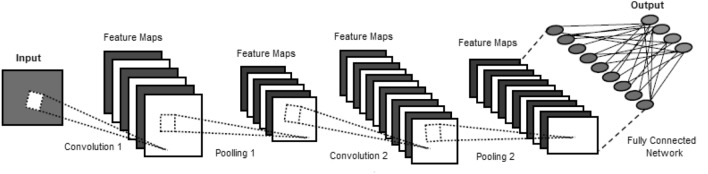
“Convolutional neural networks (CNN or ConvNet) [53, 80] have recently demonstrated considerable promise in a variety of computer vision tasks, including classification, object detection, and scene analysis.”
BackgroundData mining: concepts and techniques
(2012) · Choice Reviews Online · doi:10.5860/choice.49-3305 · Cited by 28,531
Data Mining: Practical Machine Learning Tools and Techniques
(2011) · Elsevier eBooks · doi:10.1016/c2009-0-19715-5 · Cited by 25,437
(1967) · Cited by 23,719
Classification and Regression Trees.
Gordon, A. D., Breiman, L., Friedman, J. H., Olshen, R. A., & Stone, C. J. (1984) · Biometrics · doi:10.2307/2530946 · Cited by 23,522
(1992) · Cited by 23,431
Quinlan, J. R. (1986) · Machine Learning · doi:10.1007/bf00116251 · Cited by 21,439 · cited 2×
“Navies Bayes [42], K-nearest neighbors [4], Support vector machines [46], Decision Trees - ID3 [71], C4.”
Method
Research works printed but not linked: 5
- Dupond S. A thorough review on the current advance of neural network structures. Annu Rev Control. 2019;14:200–30.
- Goodfellow I, Bengio Y, Courville A, Bengio Y. Deep learning, vol. 1. Cambridge: MIT press; 2016.
- Russell S, Norvig P. Artificial intelligence: a modern approach, global edition 4th. Foundations. 2021;19:23.
- Sarker IH, Colman A, Han J, Watters P. Context-aware machine learning and mobile data analytics: automated rule-based services with intelligent decision-making. Berlin: Springer; 2022.
- Thorvald Sorensen. method of establishing groups of equal amplitude in plant sociology based on similarity of species. Biol Skr. 1948;5:20.
Cited by
Items 901–1,000 of 1,001
Mannila, L., Henry, J., Bahr, T., Chytas, C., Connamacher, H., Müller, B. C. N., Opel, S., & Scholl, A. (2025) · ACM Conference on Innovation and Technology in Computer Science Education (ITiCSE) · doi:10.1145/3760545.3783976 · Cited by 1
Lung Cancer in the New Era: Trends, Innovations, and Future Recommendations
Ansari, M. M., Kumar, S., Heyat, M. B. B., Tariq, U., Akhtar, F., Parveen, S., Saeed, S. H., & Li, Y. (2026) · Wiley Interdisciplinary Reviews Data Mining and Knowledge Discovery · doi:10.1002/widm.70061 · Cited by 1
Advanced Brain Cancer Prediction Using Fuzzy-Based Machine Learning Techniques
Patira, R., & Gupta, Y. K. (2025) · International Conference on Emerging Technologies in Computer Engineering: Machine Learning and Internet of Things (ICETCE) · doi:10.1109/icetce66848.2025.11387973 · Cited by 1
“Cancer remains one of the leading causes of death globally, and among its many forms, brain cancer poses unique diagnostic challenges due to the brain’s structural complexity and functional sensitivity [2], [18].”
AI-Driven Modeling and Optimization of 3D Graphene–MXene Hybrid Nanocomposites
Kızıl, Ç., Kömür, A. İ., Karaman, O., & Karaman, C. (2026) · IGI Global eBooks · doi:10.4018/979-8-3373-3556-8.ch007 · Cited by 1
A Data-Based Digital Twin Model for Distributed Systems in the Field
Orimi, A. G., Hamlaoui, R., Backe, C., Briken, V., & Lachmayer, R. (2025) · IEEE Smart World Congress (SWC) · doi:10.1109/swc65939.2025.00245 · Cited by 1
“Furthermore, post-processing techniques such as data compression and formatting are applied to optimize storage and enhance compatibility with databases and visualization tools [6], [14], [43], [44].”
Enhancing Immersive Virtual Worlds: The Role of AI, NLP, and Generative Models in the Metaverse
Mohamed, A., & Assayed, S. K. (2025) · IEEE Smart World Congress (SWC) · doi:10.1109/swc65939.2025.00279 · Cited by 1
“These technologies are being used in various fields like education, healthcare, and business to improve services and simplify tasks [3].”
Mansoor, S. I. U. (2026) · Springer eBooks · doi:10.1007/978-3-032-01638-6_2 · Cited by 3
AI-Enabled Threat Detection and Prevention in Cyber Physical Systems
Roohani, B. S., Verma, R. K., Dwivedi, N., Srivastava, P. K., & Sharma, A. (2026) · Engineering cyber-physical systems and critical infrastructures · doi:10.1007/978-3-032-09656-2_5 · Cited by 1
The Future Was Yesterday: Artificial Intelligence in Newborn Medicine
Dias, R., Neu, J., & Saugstad, O. D. (2026) · Neonatology · doi:10.1159/000551248 · Cited by 1
HireSight: AI and Blockchain-Driven Candidate Matching, Verification, and ATS Resume Generation
Senthilkumar, S., Sundaresh, M., Jeswin, J., & Guru Prasad, C. (2025) · OITS International Conference on Information Technology (OCIT) · doi:10.1109/ocit66168.2025.11400344 · Cited by 1
Construction and validation of the AI Ethics Scale in language research
DEMİR, B., & Aydın, S. (2026) · Australasian Journal of Educational Technology · doi:10.14742/ajet.11034 · Cited by 3
Das, A., Arora, D., Deswal, G., Grewal, A. S., & Bansal, S. (2026) · Journal of the National Medical Association · doi:10.1016/j.jnma.2026.02.007 · Cited by 5
Exploration of Business Management Through Quantum AI
Manoharan, G., & Kumar, S. (2026) · Advances in computational intelligence and robotics book series · doi:10.4018/979-8-3373-4347-1.ch003 · Cited by 1
Wang, T., Wang, H., Li, M., Bressington, D. T., Terry, D., Wang, G., Kwok, W. H., & Tan, J.-Y. B. (2026) · International Journal of Medical Informatics · doi:10.1016/j.ijmedinf.2026.106643 · Cited by 1
A Focused Review on AI-Powered Intrusion Detection in IoT
Hana, M., Haouari, O. E., Khaissidi, G., & Mrabti, M. (2025) · International Conference on Embedded Systems and Artificial Intelligence (ESAI) · doi:10.1109/esai67033.2025.11438669 · Cited by 1
“Recent studies have estimated that the growth of interconnected devices continues to accelerate, deepening the dependence of critical services on distributed edge intelligence and large-scale data exchange [1], [2].”
Artificial intelligence in pediatric myopia - a narrative review
Pawar, N., Berendschot, T. T. J. M., Bauer, N. J. C., Ravindran, M., Maheshwari, D., Giap, B. D., & Nallasamy, N. (2026) · Graefe s Archive for Clinical and Experimental Ophthalmology · doi:10.1007/s00417-026-07193-5 · Cited by 2
Algorithmic Systems and the Ethical Imperative to Prevent Structural Harm and Bias
Mansoor, S. I. U., Khan, H., Asrar, A., & Wani, S. A. (2026) · Advances in computational intelligence and robotics book series · doi:10.4018/979-8-3373-7685-1.ch004 · Cited by 1
Personalized Healthcare: Using Predictive Models to Improve Treatment Outcomes for Chronic Diseases
Khobragade, P., Ghutke, P., Dhankar, P. K., Adakane, P. K., Kotta, A. B., & Purohit, N. (2025) · International Conference on Data Science and Intelligent Network Computing (ICDSINC) · doi:10.1109/icdsinc66221.2025.11448158 · Cited by 1
“However, despite the fact that forecast models have proven promise in better results, there are massive troubles that include the use of them [3].”
A Beginner’s Guide to Applying Large Language Models in Behavioral Interventions
Shah, N., Buis, L. R., Papierski, D., Castellanos, A., Mlakha, M., & Murphy, S. (2026) · JMIR mhealth and uhealth · doi:10.2196/79302 · Cited by 1
Modeling, control and safety of hybrid energy storage systems in microgrids
Wang, B., Tang, X., Li, Z., Zhang, X., Xiong, B., Li, Y., Wei, Z., & Xu, Q. (2026) · Journal of Energy Storage · doi:10.1016/j.est.2026.122218 · Cited by 1
Nourildean, S. W., Mefteh, W., & Frihida, A. (2026) · The Journal of Supercomputing · doi:10.1007/s11227-026-08529-y · Cited by 2
Verma, S., & Kumar, B. (2026) · Studies in computational intelligence · doi:10.1007/978-3-032-16711-8_16 · Cited by 2
Nurse Educators' ChatGPT Use in Canadian Undergraduate Nursing Education: A Qualitative Study
Vogelsang, L., AliSher, A. N., & Kleib, M. (2026) · Journal of Nursing Education · doi:10.3928/01484834-20260316-05 · Cited by 1
Rao, H., & Jia, H. (2026) · Applied Soft Computing · doi:10.1016/j.asoc.2026.115403 · Cited by 1
Bashabsheh, M. (2025) · Journal of Robotics and Control (JRC) · doi:10.18196/jrc.v6i5.27780 · Cited by 2
Domingo, J. L., & Shomar, B. (2026) · Human and Ecological Risk Assessment An International Journal · doi:10.1080/10807039.2026.2670401 · Cited by 1
Faria, J. M., Boas, L. V., Dillen, J., Simões, N., Figueiredo, J., Cardoso, L., Borges, J., & Moreira, A. H. J. (2026) · Sensors · doi:10.3390/s26103144 · Cited by 1
Batra, P., Puttaswamy, E., Hurkadle, J., Shastri, D., Sharma, V., Raza, M., & Jakhal, M. (2026) · European Journal of Orthodontics · doi:10.1093/ejo/cjag024 · Cited by 1
Alhazmi, M. H. (2026) · Smart Agricultural Technology · doi:10.1016/j.atech.2026.102259 · Cited by 3
Replacing the Genetic Algorithm with Multi-Objective Bacterial Foraging Optimization in XCS
Novak, D., Fister, I., & Dugonik, J. (2026) · Mathematics · doi:10.3390/math14111947 · Cited by 1
4D printing with shape memory polymers and composites: A comprehensive review
Yadav, A., Das, B., Kumar, P., Pandey, M. K., Khan, M. A., & Bandyopadhyay, T. K. (2026) · Applied Materials Today · doi:10.1016/j.apmt.2026.103308 · Cited by 3
Artificial intelligence in the hospitality industry: benefits, barriers and labour market disruption
Alrawadıeh, D. D. (2026) · Journal of Hospitality and Tourism Technology · doi:10.1108/jhtt-12-2024-0844 · Cited by 1
For Factors of AI Integration in Research: Case Study of Russian Laboratories
Sazonov, A., Popova, E. V., & Matsepuro, D. M. (2026) · Высшее образование в России · doi:10.31992/0869-3617-2026-35-6-149-168 · Cited by 2
Self-driving manufacturing: accelerating materials discovery with adaptive closed-loop processing
Choi, S., Ko, H., Lee, K., & Park, H. (2026) · npj Computational Materials · doi:10.1038/s41524-026-02204-9 · Cited by 1
“These models are typically trained to map observed process signals to prede fi ned performance metrics, lacking representations of underlying causal physical structures or long-term temporal process evolution 141 .”
Lamolla, P. V., Páez-Izquierdo, A., Carrasco, F., Paraira, M., Ganzer, M., Montes, S., Botta, F., Pacheco, D. F., Farmani, R., Tobella, J., et al. (2026) · Applied Water Science · doi:10.1007/s13201-026-02882-2 · Cited by 1
“In recent years, the power of artificial intelligence (AI) techniques, such as machine-learning (ML), has dramatically improved (Sarker 2022).”
Rahman, A., Kundu, D., Debnath, T., Rahman, M., Islam, M. J., Farid, F. A., Karim, H. B. A., & Miah, A. S. M. (2026) · Artificial Intelligence Review · doi:10.1007/s10462-026-11612-8 · Cited by 4
Tran, H. Y., Lam, B., Nguyen, L. T., & Phạm, M. (2026) · The International Journal of Management Education · doi:10.1016/j.ijme.2026.101502 · Cited by 4
Internet of Things for Prefabricated Buildings: A Review and Future Outlook
Sun, H., Wen, X.-D., Jiang, S., & Wang, G. (2026) · Buildings · doi:10.3390/buildings16163162 · Cited by 1
Ali, J. F., & Zou, X. (2026) · SAGE Open · doi:10.1177/21582440261475709 · Cited by 1
Alshamy, A. S., Al’Abri, K. M., Garcia, M. B., & Yousef, A. M. F. (2026) · Journal of Applied Learning & Teaching · doi:10.37074/jalt.2026.9.2.12 · Cited by 1
The Role of Knowledge Representation & Reasoning in Deciphering Chemical Complexity
Ferraz-Caetano, J., Teixeira, F., & Cordeiro, M. N. D. S. (2026) · Wiley Interdisciplinary Reviews Computational Molecular Science · doi:10.1002/wcms.70085 · Cited by 1
“Semantic networks can also improve knowledge representation efficiency, translating to better data management and faster model training [44].”
Yanti, M. A., Syifa, N., & Violita, C. E. (2026) · Synergy Journal of Business Finance and Management · doi:10.68111/sjbfm.v2i2.152 · Cited by 1
Boonlua, T. (2026) · Journal of Intelligent Decision Making and Information Science · doi:10.17762/jidmis.v3.2917 · Cited by 1
“Recent developments in generative spatial AI further extend this role by supporting scenario generation, spatial design exploration, and predictive analysis within sustainable smart-city and urban digital-twin systems [27], [28], [31], [34].”
Jia, C., & Dong, F. (2022) · World Automation Congress (WAC) · doi:10.23919/wac55640.2022.9934457 · Cited by 1
ALGORITHMIZING CRIMINAL LAW: WHAT IS LEFT TO HUMAN JUDGMENT
Naziris, Y. (2022) · doi:10.56461/zr_22.dukpp.24 · Cited by 1
Active regression model for clinical grading of COVID-19
Sh, Y., Dong, J., Chen, Z., Yuan, M., Lyu, L., & Zhang, X. (2023) · Frontiers in Immunology · doi:10.3389/fimmu.2023.1141996 · Cited by 1
Selected Topics of Artificial Intelligence in Robotics
Kwiecień, J. (2022) · International Conference on Mechanical Engineering and Robotics Research (ICMERR) · doi:10.1109/icmerr56497.2022.10097788 · Cited by 1
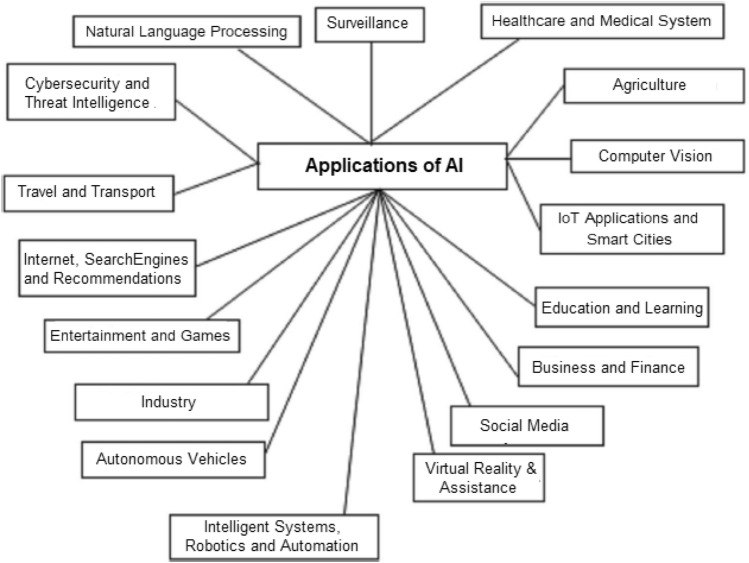
“A good summary of AI applications in several real-world areas is given in [1].”
BackgroundAspect Based Sentiment Analysis of COVID-19 Tweets Using Blending Ensemble of Deep Learning Models
Shahriar, K. T., Anwar, M. M., & Sarker, I. H. (2023) · Lecture notes of the Institute for Computer Sciences, Social Informatics and Telecommunications Engineering · doi:10.1007/978-3-031-34619-4_31 · Cited by 1
Self-citationdel Giglio, A., & da Costa, M. U. P. (2023) · Brazilian Journal of Oncology · doi:10.5935/2526-8732.20230421 · Cited by 1
Machine Learning Applications for the Smart Grid Infrastructure
Kumar, S., Kameswari, Y. L., Pragathi, B., & Rao, S. K. (2023) · Intelligent systems reference library · doi:10.1007/978-3-031-46092-0_8 · Cited by 1
Grafik Tasarımında Post Modernizmden Modernizme Eklektik Tavır: Paula Scher ve Retro Stil
Kaya, S. E. (2023) · Özgür Yayınları eBooks · doi:10.58830/ozgur.pub345.c1507 · Cited by 1
Grafik Tasarımda İfade Biçimi Olarak Noktanın Evrimi
Turhan, A. E. (2023) · Özgür Yayınları eBooks · doi:10.58830/ozgur.pub345.c1505 · Cited by 1
Lamrani, M., Moghadas, M., Kalia, Y. N., & Santer, V. (2024) · Springer eBooks · doi:10.1007/978-981-99-8122-9_19 · Cited by 3
Nayak, I., Kanagaraj, K., Shrimali, M., Kumar, D., Ghamande, M. V., & Kumar, C. S. (2023) · International Conference on Automation, Computing and Renewable Systems (ICACRS) · doi:10.1109/icacrs58579.2023.10404259 · Cited by 1
“[11] Both computer science and linguistics play an important role in this discipline.”
BackgroundErkennungsverfahren für KI-generierte Texte: Überblick und Architekturentwurf
Pröhl, T., Mohrhardt, R., Förster, N., Putzier, E., & Zarnekow, R. (2024) · HMD Praxis der Wirtschaftsinformatik · doi:10.1365/s40702-024-01051-w · Cited by 1
“Weiterhin wer-K den die genannten Vorarbeiten und Fortschritte auf riesige Datenmengen angewandt, um Sprachmuster zu erlernen (Sarker 2022).”
Evolutionary Algorithms and Fuzzy Systems for Enabling Smart Technologies across Industries
Refonaa, J., Poornima, D., Shabu, S. L. J., Kanipriya, M., & Surya, V. (2023) · International Conference on Emerging Research in Computational Science (ICERCS) · doi:10.1109/icercs57948.2023.10434211 · Cited by 1
“Evolutionary algorithms (EAs) use methods including genetic algorithms, particle swarm optimization, and evolutionary techniques to locate optimal solutions to hard, multi-faceted issues [12].”
MethodDigital Knowledge Transfer for Banks
Lu, H. (2024) · Advances in finance, accounting, and economics book series · doi:10.4018/979-8-3693-1331-2.ch007 · Cited by 1
Artificial Intelligence as a Driver of Strategic Communications in the Period of Deep Mediatization
Gavra, D. P., Быкова, Е., & Baikova, I. A. (2024) · Communication Strategies in Digital Society Seminar (ComSDS) · doi:10.1109/comsds61892.2024.10502095 · Cited by 1
“In the last decade, two main methods of AI operations have been developed: training neural networks based on big data processing and a symbolic approach based on logical manipulation of symbols [9, 10, 11], which allows you to draw conclusions and interpret the results.”
BackgroundCosta, I. C. P., do Nascimento, M. C., Treviso, P., Chini, L. T., Roza, B. D. A., Barbosa, S. D. F. F., & Mendes, K. D. S. (2024) · Revista Latino-Americana de Enfermagem · doi:10.1590/1518-8345.7133.4193 · Cited by 1
Expert System for Diagnosing Pests on Oil Palm Seed Plants Using the Certainty Factor Method
Fikri, M. I., & Nasution, Y. R. (2024) · Journal La Multiapp · doi:10.37899/journallamultiapp.v5i2.1303 · Cited by 1
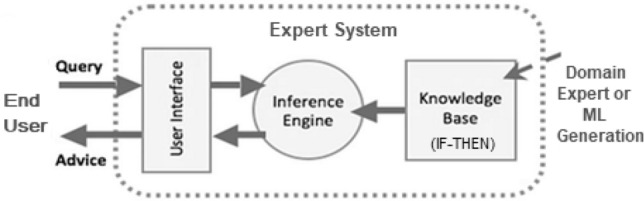
“An expert system is a computer-based system that uses knowledge, facts and reasoning techniques to solve problems, which usually can only be solved by an expert in a particular field (Nurrahman Bugis, 2019; Sarker, 2022; Yuliardi et al., 2023).”
BackgroundSecured Transportation and Distribution of Examination Papers Using IOT and AI
Jaiman, A., Sharma, A., Jaiman, V., & Porwal, N. (2024) · Wireless Personal Communications · doi:10.1007/s11277-024-11338-2 · Cited by 1
“Developing an effective AI model is a not easy task however, due to the dynamic nature and variation in real-world problems as well as data [1].”
Safeguarding against AI exploitation in e-commerce investment management
Volynets, V., Ilchenko, H., Akimov, М., Похиленко, І. С., & Dobrodzii, O. (2024) · Multidisciplinary Reviews · doi:10.31893/multirev.2024spe028 · Cited by 1
Salih, G., & Mohammed, F. K. (2024) · Communications in computer and information science · doi:10.1007/978-3-031-65996-6_6 · Cited by 2
Huang, S. (2024) · Journal of Organizational and End User Computing · doi:10.4018/joeuc.350224 · Cited by 1
“These systems aim to use advanced technological means, including artificial intelligence, and big data analysis, to improve the efficiency and accuracy of corporate financial management (Sarker, 2022).”
Requirement and User Modeling for Decision Support System Children Disabilities in Pandemic
Wibowo, R. M. (2024) · Journal of Electrical Systems · doi:10.52783/jes.6659 · Cited by 1
Ruiz, J. R., Siles, R. E., & López, I. C. M. (2024) · doi:10.36006/09643-1-10 · Cited by 3
Computer Vision Performance Analysis for Smart Doorbell System With IoT and Edge Computing
Raval, G., Arya, S., Patel, P., Valiveti, S., Shah, R., & Parikh, S. (2024) · Advances in information security, privacy, and ethics book series · doi:10.4018/979-8-3693-6996-8.ch009 · Cited by 1
Privacy Preserving and Verifiable Outsourcing of AI Processing for Cyber-Physical Systems
Spathoulas, G. P., Katsika, A., & Kavallieratos, G. (2024) · Lecture notes in computer science · doi:10.1007/978-981-97-8798-2_15 · Cited by 4
Sebahi, Y., Jabeen, F., Jan Treur, A., Taal, H. R., & Roelofsma, P. H. M. P. (2024) · Studies in systems, decision and control · doi:10.1007/978-3-031-72075-8_7 · Cited by 1
Yu, B. (2024) · El Profesional de la Informacion · doi:10.3145/epi.2024.0509 · Cited by 1
Pioneering Healthcare With AIoT
Surapaneni, P., Chigurupati, S., & Bojjagani, S. (2025) · Advances in computational intelligence and robotics book series · doi:10.4018/979-8-3693-7703-1.ch001 · Cited by 1
GENERATIVE ARTIFICIAL INTELLIGENCE (AI) NEW VALUE PROPOSITION IN COLLEGE
Suhana, S., Hikmayanti, D., Agustin, L. C., & Aurelline, Z. C. (2025) · Jurnal Abdisci · doi:10.62885/abdisci.v2i4.612 · Cited by 1
“The goal of artificial intelligence (AI), a broad field in computer science, is to enable computer systems to generate intelligent machines that can think, learn, and act like humans (Dwivedi et al., 2021; Sarker, 2022).”
Artificial intelligence and reconfigurable intelligent surfaces: Transforming urban infrastructure
Firoozi, A. A. (2025) · doi:10.70593/978-93-49307-08-7_1 · Cited by 1
Analyzing Vibration Characteristics: A Comparative Study of Laser vs. Spindle Systems
Farhan, M. K., Salman, S. D., Leman, Z., Alkbir, M. F. M., & Januddi, F. (2025) · Al-Nahrain Journal for Engineering Sciences · doi:10.29194/njes.28010044 · Cited by 1
Seliger, R., Micheler, M., Gül-Ficici, S., & Göhner, U. (2025) · Lecture notes in computer science · doi:10.1007/978-3-031-82957-4_20 · Cited by 1
Revolutionizing Scientific Research: The Role of AI and the Metaverse in Modern Discovery
Asrifan, A., & Ingilan, S. S. (2025) · Advances in computational intelligence and robotics book series · doi:10.4018/979-8-3373-0340-6.ch001 · Cited by 2
Automation at Scale: An AI-First Approach to Data Analysis
Senior Data Scientist, P. A., & Musunuri, A. (2025) · International Journal of Innovative Research in Computer and Communication Engineering · doi:10.15680/ijircce.2025.1304004 · Cited by 2
Rachmoune, K., Aknouch, A., Belcadi, H., El-ouardi, Y., Mouniane, Y., Aitouhanni, I., Mabsor-Zgandaoui, S., Rhazi, M., Belkadi, M. C., & Moutaouakkil, A. (2025) · IGI Global eBooks · doi:10.4018/979-8-3693-9112-9.ch003 · Cited by 2
Ferrari, A. (2025) · doi:10.22495/aimlfacpea · Cited by 4
Artificial intelligence and neural networks: new context of identification
Mamedova, N., Ivleva, M. I., Vityaev, S., Buzskaya, O., & Rubtsov, A. (2025) · Journal on Innovation and Sustainability RISUS · doi:10.23925/2179-3565.2025v16i2p146-154 · Cited by 1
Language and Digital Rights: Fostering Communication Skills for Responsible Online Engagement
Sari, H., Nurhayati, A. N. A., Sulaeman, S., Pajarianto, H., & Asrifan, A. (2025) · Advances in computational intelligence and robotics book series · doi:10.4018/979-8-3373-5781-2.ch012 · Cited by 1
A Survey of Artificial Intelligence Techniques in Intrusion Detection for the Internet of Things
Hana, M., Aouraghe, I., Haouari, O. E., Khaissidi, G., & Mrabti, M. (2025) · Journal Européen des Systèmes Automatisés · doi:10.18280/jesa.580609 · Cited by 1
Jain, V. K., Mitra, A., & Paul, S. (2025) · Advances in computational intelligence and robotics book series · doi:10.4018/979-8-3373-1057-2.ch002 · Cited by 2
Artificial Intelligence in Biomarker Discovery and Disease Diagnosis-2
Shah, S. N. A., & Parveen, R. (2025) · Springer eBooks · doi:10.1007/978-981-96-8176-1_7 · Cited by 1
Intrusion Detection System Based Artificial Intelligence to Improve Cyber Security of IoT Network
Nourildean, S. W., Mefteh, W., & Frihida, A. A. M. (2025) · Lecture notes in networks and systems · doi:10.1007/978-3-032-03769-5_45 · Cited by 1
Batik 4.0 Bridging Heritage and Technology in the Manufacturing Process
Martawidjaja, M., Yemima, S., & Kawilarang, T. L. C. (2023) · Zenodo (CERN European Organization for Nuclear Research) · doi:10.5281/zenodo.8277405 · Cited by 1
Performance Of ChatGPT on the American Endocrine Society Self-Assessment TestPreprint
Zhuang, Z., Yang, Z., Li, K., Shi, P., Liu, X., Zhang, S., & Ni, Q. (2023) · SSRN Electronic Journal · doi:10.2139/ssrn.4658115 · Cited by 2
The Impact of AI on Maintenance Performance and PredictionsPreprint
Almaiman, S. (2024) · SSRN Electronic Journal · doi:10.2139/ssrn.4797461 · Cited by 1
Low-Light Liquid Content Detection in Transparent Containers: A BenchmarkPreprint
Mo, J., Tan, Y., Huang, L., Fan, M., Li, S., & Shen, X. (2025) · SSRN Electronic Journal · doi:10.2139/ssrn.5117320 · Cited by 1
Critical Analysis of Industry 4.0, Industry 5.0, and Maturity Models: Definitions and ApplicationsPreprint
Alarcón, C., & García, S. A. A. (2025) · Preprints.org · doi:10.20944/preprints202502.0001.v1 · Cited by 1
Sievert, H., & Inderhees, M. (2025) · SSRN Electronic Journal · doi:10.2139/ssrn.5087283 · Cited by 1
AI in Agriculture: The Applications of Technological Advancements in Precision FarmingPreprint
Gupta, G., Pal, S. K., Mishra, Y., Jaiswal, J., Khan, Z., & Parmar, V. (2025) · SSRN Electronic Journal · doi:10.2139/ssrn.5231362 · Cited by 1
Ruqnuzzaman, M., Nuruzzaman, M., Shamim, M. M. R., & Uddin, K. Z. (2025) · Research Square · doi:10.21203/rs.3.rs-7987593/v1 · Cited by 1
Advancing AI-Driven Drilling in Deep Offshore Unconventional Reservoirs: Progress and ProspectsPreprint
Ding, J., Shi, F., Liu, G., & Tao, C. (2025) · SSRN Electronic Journal · doi:10.2139/ssrn.5765908 · Cited by 1
Breitwieser, L. (2024) · arXiv (Cornell University) · doi:10.3929/ethz-b-000726143 · Cited by 3
Bayesian Deep Learning Framework for Radiogenomics Analysis of Cancer
Jayme, A. (2025) · heiDOK (Heidelberg University) · doi:10.11588/heidok.00037600 · Cited by 1
Adverse Environmental and Public Health Effects of Artificial Intelligence: A Narrative ReviewPreprint
Domingo, J. L. (2026) · Qeios · doi:10.32388/x3o2n6.3 · Cited by 1
Shalmani, S. H., Pirbazari, A. E., Saraei, F. E. K., Tabatabai‐Yazdi, F., Derakhshesh, A., Esmaeili, A., & Pirbazari, A. E. (2022) · SSRN Electronic Journal · doi:10.2139/ssrn.4156648
Class Room Ambience Measurement using Ai Technique
Moorthi, M. N. (2022) · International Journal of Engineering and Advanced Technology · doi:10.35940/ijeat.f3768.0811622
Golovina, L. A., Bugaenko, M. V., Timokhin, D. V., & Popova, G. I. (2022) · Procedia Computer Science · doi:10.1016/j.procs.2022.11.138
Metadata
- Authors
- Sarker, I. H.
- Affiliations
- Chittagong University of Engineering & Technology (BD)
- Corresponding author
- Sarker, Iqbal H.
- ORCID
- Sarker, Iqbal H.
- Venue
- SN Computer Science
- Published
- 2022-02-10
- Volume
- 3
- Issue
- 2
- Pages
- 158-158
- ISSN
- 2661-8907 (ISSN-L)
- 2662-995X
- PMC
- PMC8830986
- OpenAlex
- W4225716729
- Cited by
- 1,208
- References
- 115
- Citations by year
- 2026: 228 · 2025: 395 · 2024: 361 · 2023: 184 · 2022: 39
- FWCI
- 17.11
- Type
- journal article
- Language
- en
- Open access
- hybrid
- doi.org
- Licence
- cc-by
- creativecommons.org/licenses/by/4.0 (tdm)
- creativecommons.org/licenses/by/4.0 (vor)
- Locations
- SN Computer Science (publishedVersion, cc-by)
- Preprints.org (acceptedVersion, cc-by)
- PubMed Central (publishedVersion, cc-by)
- PubMed (publishedVersion)
- Funders
- Swinburne University of Technology
- Topics
- Physical Sciences › Computer Science › Artificial Intelligence › Artificial Intelligence Applications
- Physical Sciences › Computer Science › Information Systems › Internet of Things and AI
- Social Sciences › Decision Sciences › Management Science and Operations Research › Impact of AI and Big Data on Business and Society
- Keywords
- artificial intelligence techniques, intelligent systems, automation, Industry 4.0, interactive AI, artificial intelligence in business, artificial intelligence in finance, artificial intelligence in healthcare, smart cities, cybersecurity
About these checks
Registry, retraction, Cites and statistics results are computed, not judged, with one exception: a printed reference that no index lists is read once by a model before it counts as a citation error. Claims are extracted by a model and kept only when their quote appears verbatim in the text; each cited source is then checked, with a model’s help, for whether it says what the claim relies on. Those verdicts can be wrong — read the claim’s quote and the cited source before relying on one.
Statistics and arithmetic are recomputed, not judged.
Confidence bands are shown only for fields calibrated on our annotated test set. None is calibrated yet, so no band is shown.
What counts as a claim ›How we measure confidence ›How we check this ›
Are you an author, or do you see a problem with this page? Request a review
Data sources
Bibliographic data: Semantic Scholar, OpenAlex, Crossref.
Contains information from the Semantic Scholar Academic Graph Datasets, made available under the ODC Attribution License (ODC-BY 1.0).
Semantic Scholar’s data is described in: Kinney, R., et al. (2023). The Semantic Scholar Open Data Platform. arXiv:2301.10140.
