

AI-Based Modeling: Techniques, Applications and Research Issues Towards Automation, Intelligent and Smart Systems
Open accessPublished version of a preprint
The DOI matches its Crossref record; 116 of the 116 references it cites were found in a registry or an index.
Abstract
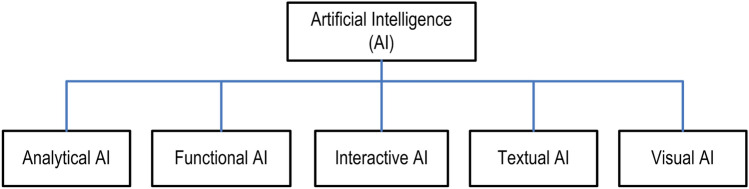
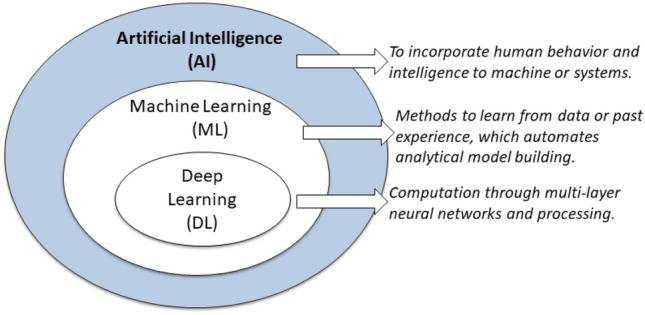
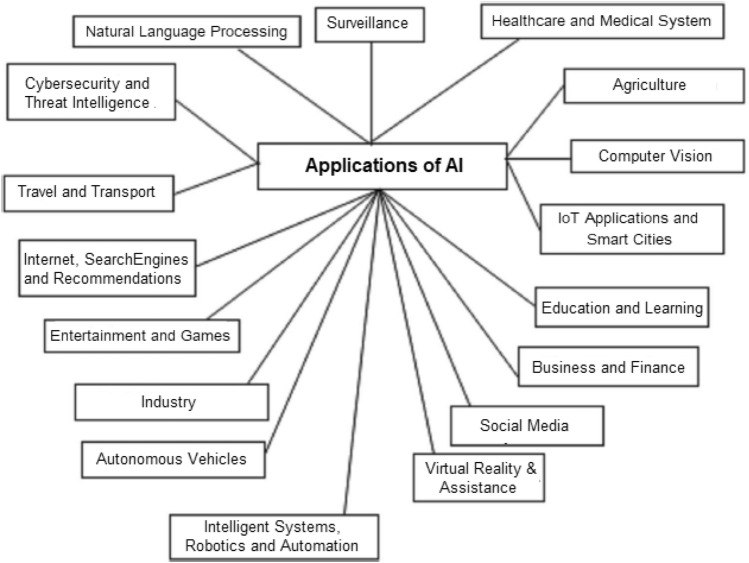
Artificial intelligence (AI) is a leading technology of the current age of the Fourth Industrial Revolution (Industry 4.0 or 4IR), with the capability of incorporating human behavior and intelligence into machines or systems. Thus, AI-based modeling is the key to build automated, intelligent, and smart systems according to today’s needs. To solve real-world issues, various types of AI such as analytical, functional, interactive, textual, and visual AI can be applied to enhance the intelligence and capabilities of an application. However, developing an effective AI model is a challenging task due to the dynamic nature and variation in real-world problems and data. In this paper, we present a comprehensive view on “AI-based Modeling” with the principles and capabilities of potential AI techniques that can play an important role in developing intelligent and smart systems in various real-world application areas including business, finance, healthcare, agriculture, smart cities, cybersecurity and many more. We also emphasize and highlight the research issues within the scope of our study. Overall, the goal of this paper is to provide a broad overview of AI-based modeling that can be used as a reference guide by academics and industry people as well as decision-makers in various real-world scenarios and application domains.
Overview
The claims and statistics of this paper haven’t been checked yet.
Free: it reads the open-access text and checks the first 5 claims that cite a source we can check. Create a free account to check every claim.
Integrity signals
Registry
Cites
Statistics
Figures
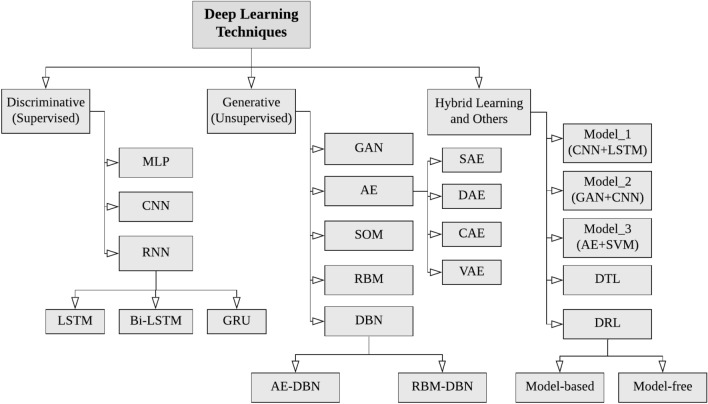
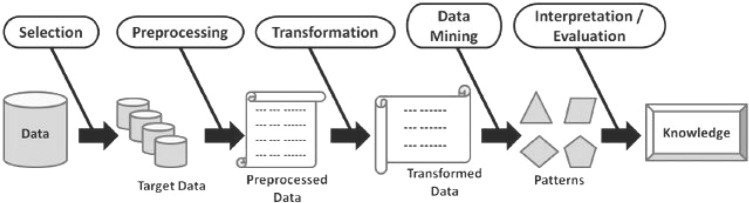
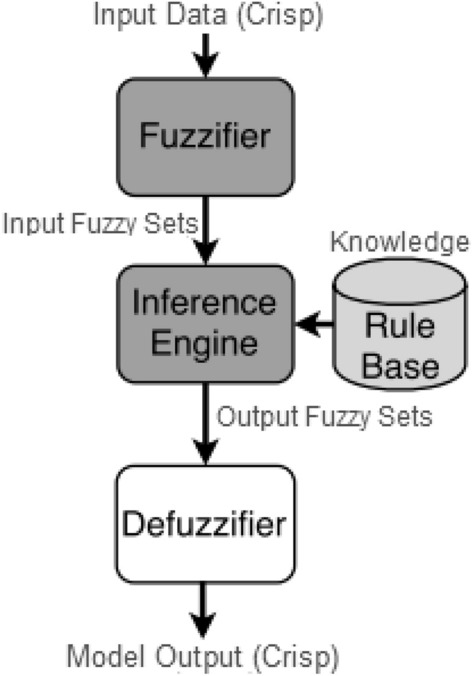
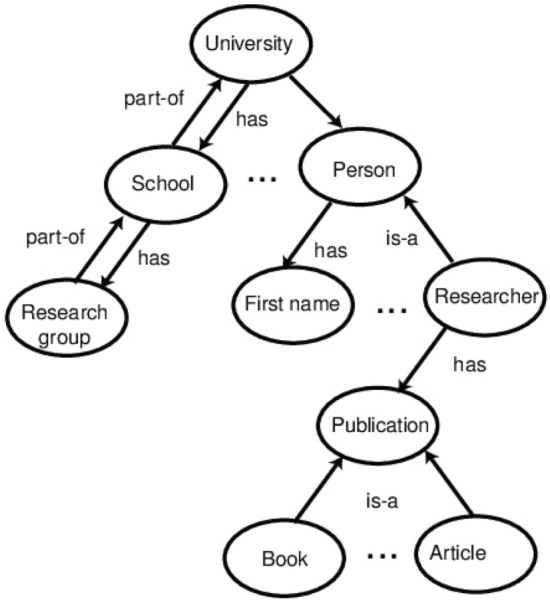
Verification
Claims the paper makes
The claims and statistics of this paper haven’t been checked yet.
Free: it reads the open-access text and checks the first 5 claims that cite a source we can check. Create a free account to check every claim.
Self-check
Percentages, sums and reported differences re-computed from the paper’s own numbers.
The self-check needs the paper’s full text.
Citations
Cites
1 retracted
Hybrid genetic algorithm and a fuzzy logic classifier for heart disease diagnosis
Reddy, G. T., Reddy, M. P. K., Lakshmanna, K., Rajput, D. S., Kaluri, R., & Srivastava, G. (2020) · Evolutionary Intelligence · doi:10.1007/s12065-019-00327-1 · Cited by 404 · cited 1×
“Reddy et al. [74], for example, use a fuzzy logic classifier for heart disease detection, with the derived rules from fuzzy classifiers being optimized using an adaptive genetic algorithm.”
MethodRetractedBreiman, L. (2001) · Machine Learning · doi:10.1023/a:1010933404324 · Cited by 133,538 · cited 1×
“…[4], Support vector machines [46], Decision Trees - ID3 [71], C4.5 [72], CART [15], BehavDT [84], IntrudTree [82], Ensemble learning, Random Forest [14], Linear regression [36], Support vector regression [46], etc. [81] are the popular techniques that can be used to solve various supervised…”
MethodScikit-learn: Machine Learning in Python
Pedregosa, F., Varoquaux, G., Gramfort, A., Michel, V., Thirion, B., Grisel, O., Blondel, M., Müller, A., Nothman, J., Louppe, G., et al. (2012) · arXiv · doi:10.48550/arxiv.1201.0490 · Cited by 71,016
Gradient-based learning applied to document recognition
Lecun, Y., Bottou, L., Bengio, Y., & Haffner, P. (1998) · Proceedings of the IEEE · doi:10.1109/5.726791 · Cited by 58,805 · cited 2×
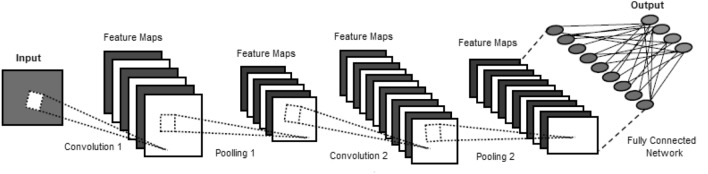
“Convolutional neural networks (CNN or ConvNet) [53, 80] have recently demonstrated considerable promise in a variety of computer vision tasks, including classification, object detection, and scene analysis.”
BackgroundData mining: concepts and techniques
(2012) · Choice Reviews Online · doi:10.5860/choice.49-3305 · Cited by 28,531
Data Mining: Practical Machine Learning Tools and Techniques
(2011) · Elsevier eBooks · doi:10.1016/c2009-0-19715-5 · Cited by 25,437
(1967) · Cited by 23,719
Classification and Regression Trees.
Gordon, A. D., Breiman, L., Friedman, J. H., Olshen, R. A., & Stone, C. J. (1984) · Biometrics · doi:10.2307/2530946 · Cited by 23,522
(1992) · Cited by 23,431
Quinlan, J. R. (1986) · Machine Learning · doi:10.1007/bf00116251 · Cited by 21,439 · cited 2×
“Navies Bayes [42], K-nearest neighbors [4], Support vector machines [46], Decision Trees - ID3 [71], C4.”
Method
Research works printed but not linked: 5
- Dupond S. A thorough review on the current advance of neural network structures. Annu Rev Control. 2019;14:200–30.
- Goodfellow I, Bengio Y, Courville A, Bengio Y. Deep learning, vol. 1. Cambridge: MIT press; 2016.
- Russell S, Norvig P. Artificial intelligence: a modern approach, global edition 4th. Foundations. 2021;19:23.
- Sarker IH, Colman A, Han J, Watters P. Context-aware machine learning and mobile data analytics: automated rule-based services with intelligent decision-making. Berlin: Springer; 2022.
- Thorvald Sorensen. method of establishing groups of equal amplitude in plant sociology based on similarity of species. Biol Skr. 1948;5:20.
Cited by
Items 101–200 of 1,001
TOWARDS A CONCEPTUAL FRAMEWORK FOR ETHICAL AI DEVELOPMENT IN IT SYSTEMS
Olorunfemi, O. L., Amoo, O. O., Atadoga, A., Farayola, O. A., Abrahams, T. O., & Shoetan, P. O. (2024) · Computer Science & IT Research Journal · doi:10.51594/csitrj.v5i3.910 · Cited by 92
Evaluating the performance of ChatGPT-4 on the United Kingdom Medical Licensing Assessment
Lai, U. H., Wu, K. S., Hsu, T.-Y., & Kan, J. K. C. (2023) · Frontiers in Medicine · doi:10.3389/fmed.2023.1240915 · Cited by 67
“AI is widespread today, particularly in business and finance, supply chain management, and cybersecurity (6, 7).”
BackgroundArtificial intelligence-enhanced non-destructive defect detection for civil infrastructure
Zhang, Y., Chow, C. L., & Lau, D. (2025) · Automation in Construction · doi:10.1016/j.autcon.2025.105996 · Cited by 68
LEVERAGING AI AND DATA ANALYTICS FOR ENHANCING FINANCIAL INCLUSION IN DEVELOPING ECONOMIES
Adeoye, O. B., Addy, W. A., Ajayi-Nifise, A. O., Odeyemi, O., Okoye, C. C., & Ofodile, O. C. (2024) · Finance & Accounting Research Journal · doi:10.51594/farj.v6i3.856 · Cited by 66
Al-Faouri, E. H., Huson, Y. A., Aljawarneh, N. M., & Alqmool, T. J. (2024) · Sustainability · doi:10.3390/su16114747 · Cited by 86
Artificial intelligence in diabetic retinopathy: Bibliometric analysis
Poly, T. N., Islam, M. M., Walther, B. A., Lin, M. C., & Li, Y. (2023) · Computer Methods and Programs in Biomedicine · doi:10.1016/j.cmpb.2023.107358 · Cited by 73
Elias, O., Awotunde, O. J., Oladepo, O. I., Azuikpe, P. F., Samson, O. A., Oladele, O. R., & Ogunruku, O. O. (2024) · World Journal of Advanced Research and Reviews · doi:10.30574/wjarr.2024.23.1.2272 · Cited by 83
“For instance, an AI system could automatically gather data on a company's carbon emissions, energy usage, and waste management practices from multiple internal systems, then compile this information into a report formatted according to specific regulatory standards [45].”
From Vision to Reality: The Use of Artificial Intelligence in Different Urban Planning Phases
Othengrafen, F., Sievers, L., & Reinecke, E. (2024) · Urban Planning · doi:10.17645/up.8576 · Cited by 77
“This sort of AI is often used in fields such as computer vision and augmented reality (Sarker, 2022, p. 158).”
BackgroundMethodInfluentialSCADA securing system using deep learning to prevent cyber infiltration
Diaba, S. Y., Anafo, T., Tetteh, L. A., Oyibo, M. A., Alola, A. A., Shafie‐khah, M., & Elmusrati, M. S. (2023) · Neural Networks · doi:10.1016/j.neunet.2023.05.047 · Cited by 67
Gianola, S., Bargeri, S., Castellini, G., Cook, C., Palese, A., Pillastrini, P., Salvalaggio, S., Turolla, A., & Rossettini, G. (2024) · Journal of Orthopaedic & Sports Physical Therapy · doi:10.2519/jospt.2024.12151 · Cited by 62
Role of artificial intelligence in education: A conceptual review
Tahir, M. S., Hassan, F. D., & Shagoo, M. R. (2024) · World Journal of Advanced Research and Reviews · doi:10.30574/wjarr.2024.22.1.1217 · Cited by 72
“Furthermore, Sarker (2022) suggests that AI use in educational assessment increases consistency, personalization, and scalability.”
BackgroundAlawamleh, M., Shammas, N., Alawamleh, K. J., & Ismail, L. B. (2024) · Journal of Open Innovation Technology Market and Complexity · doi:10.1016/j.joitmc.2024.100338 · Cited by 68
AI‐Driven Personalized Nutrition: Integrating Omics, Ethics, and Digital Health
Mundt, C., Yusufoğlu, B., Kudenko⋆, D., Mertoğlu, K., & Esatbeyoglu, T. (2025) · Molecular Nutrition & Food Research · doi:10.1002/mnfr.70293 · Cited by 68
“These systems are closely linked to data science, as they help extract meaningful insights and contribute to intelligent, domain-specific solutions [22].”
Curti, P. D. F., Selli, A., Pinto, D. L., Merlos-Ruiz, A., Balieiro, J. C. D. C., & Ventura, R. V. (2023) · Animal Reproduction · doi:10.1590/1984-3143-ar2023-0077 · Cited by 74
“…that merges computer science (statistical models and algorithms) and large datasets to create intelligent systems that can perform tasks that normally require human intelligence, such as recognizing visual patterns, understanding languages, making decisions and processing speech (Sarker, 2022).”
BackgroundRole of artificial intelligence in cancer drug discovery and development
Sarvepalli, S., & Vadarevu, S. (2025) · Cancer Letters · doi:10.1016/j.canlet.2025.217821 · Cited by 70
Behera, B., Behera, P., Pata, U. K., Sethi, L., & Sethi, N. (2025) · Journal of Environmental Management · doi:10.1016/j.jenvman.2025.126285 · Cited by 69
CYBERSECURITY CHALLENGES IN SMART CITIES: A CASE REVIEW OF AFRICAN METROPOLISES
Ahmad, I. A. I., Anyanwu, A. C., Onwusinkwue, S., Dawodu, S. O., Akagha, O. V., & Ejairu, E. (2024) · Computer Science & IT Research Journal · doi:10.51594/csitrj.v5i2.756 · Cited by 77
Managing workplace AI risks and the future of work
Howard, J., & Schulte, P. A. (2024) · American Journal of Industrial Medicine · doi:10.1002/ajim.23653 · Cited by 66
A systemic review of AI for interdisciplinary learning: Application contexts, roles, and influences
Cai, C., Zhu, G., & Ma, M. (2024) · Education and Information Technologies · doi:10.1007/s10639-024-13193-x · Cited by 76
“For instance, virtual teachers offered emotional support and facilitated interdisciplinary learning by analyzing students’ emotions through NLP (Terracina et al., 2017).”
InfluentialSeven HCI Grand Challenges Revisited: Five-Year Progress
Stephanidis, C., Salvendy, G., Antona, M., Duffy, V. G., Gao, Q., Karwowski, W., Konomi, S., Nah, F. F., Ntoa, S., Rau, P. P., et al. (2025) · International Journal of Human-Computer Interaction · doi:10.1080/10447318.2025.2450411 · Cited by 70
“Examples of such integration include smart appliances, smart urban infrastructures, or natural landscapes (Gill et al., 2022; Poslad, 2011; Pradhan et al., 2020; Sarker, 2022; Tuli et al., 2020).”
Park, S., Kim, S. H., Park, C.-Y., Kim, J., & Lee, D. (2023) · Biotechnology and Bioengineering · doi:10.1002/bit.28405 · Cited by 64
“Our analysis revealed that the best algorithm for achieving accuracy varied depending on the prediction target, as each algorithm had a different ability to capture the relationships in the data sets (Sarker, 2022).”
BackgroundDopamu, O., Adesiyan, J. S., & Oke, F. (2024) · World Journal of Advanced Research and Reviews · doi:10.30574/wjarr.2024.21.3.0791 · Cited by 59
The Impact of Using AI Chat GPT on Marketing Effectiveness: A Case Study on Instagram Marketing
Saputra, R., Nasution, M. I. P., & Dharma, B. E. (2023) · Indonesian Journal of Economics and Management · doi:10.35313/ijem.v3i3.4936 · Cited by 58
Odugbemi, A. I., Nyirenda, C., Christoffels, A. G., & Egieyeh, S. A. (2024) · Computational and Structural Biotechnology Journal · doi:10.1016/j.csbj.2024.07.003 · Cited by 61
“AI is a vast subject of computer science that seeks to develop intelligent systems capable of doing activities that would normally need human intelligence [5].”
BackgroundArun, M., Barik, D., Othman, N. A., Praveenkumar, S., & Tudu, K. (2025) · Energy Reports · doi:10.1016/j.egyr.2025.05.003 · Cited by 57
Pacurari, A. C., Bhattarai, S., Muhammad, A., Avram, C., Mederle, O. A., Roșca, O., Bratosin, F., Bogdan, I. G., Fericean, R. M., Biriş, M., et al. (2023) · Diagnostics · doi:10.3390/diagnostics13132145 · Cited by 62
“The primary components consist of a dataset that is used for training, a pretreatment technique, an algorithm that is used to construct the prediction model, and a pretrained model that is used to expedite the pace at which models are built and inherit past experience [13].”
MethodKaftan, A. N., Hussain, M. K., & Naser, F. H. (2024) · Scientific Reports · doi:10.1038/s41598-024-58964-1 · Cited by 62
“Factors contributing to each AI model rating could include its training data, algorithmic approach, and validation against real-world clinical cases 12 .”
BackgroundFarooq, U., Naseem, S., Mahmood, T., Li, J., Rehman, A. U., Saba, T., & Mustafa, L. (2024) · The Journal of Supercomputing · doi:10.1007/s11227-024-06087-9 · Cited by 64
“Sarker et al. [39] proposed that machine learning involves machines autonomously acquiring data knowledge, improving performance through prior experiences, and generating predictions.”
Bongomin, O., Nzila, C. K., Mwasiagi, J. I., & Maube, O. (2024) · International Journal of Energy Research · doi:10.1155/2024/6087208 · Cited by 57
“ML is a sub fi eld of arti fi cial intelligence (AI) that equips machines with the ability to learn from data without explicit programming, enabling data-driven predictive analytics across various industrial sectors [53 – 56].”
Industry 5.0 technology capabilities in Trauma and Orthopaedics
Iyengar, K. P., Zaw, E., Jalli, J., Shashidhara, M. K., Jain, V. K., Vaish, A., & Vaishya, R. (2022) · Journal of Orthopaedics · doi:10.1016/j.jor.2022.06.001 · Cited by 59
Artificial intelligence in the practice of forensic medicine: a scoping review
Tournois, L., Trousset, V., Hatsch, D., Delabarde, T., Ludes, B., & Lefèvre, T. (2023) · International Journal of Legal Medicine · doi:10.1007/s00414-023-03140-9 · Cited by 61
“Nowadays, AI may be considered as a modeling tool for specific tasks [5].”
Multi-omics based artificial intelligence for cancer research
Li, L., Sun, M., Wang, J., & Wan, S. (2024) · Advances in cancer research · doi:10.1016/bs.acr.2024.06.005 · Cited by 58
Perry, N., Sun, C., Munro, M., Boulton, K., & Guastella, A. J. (2024) · npj Digital Medicine · doi:10.1038/s41746-024-01355-7 · Cited by 59
“AI encompasses a range of techniques,includingautonomoussystems 29 ,machinelearning 30 ,computer vision 31 , Natural Language Processing (NLP) 32,33 and more.”
The Role of Artificial Intelligence in Enhancing Design Innovation and Sustainability
Agboola, O. P. (2024) · Smart Design Policies · doi:10.38027/smart-v1n1-2 · Cited by 59
Abedi, M., Alshybani, I., Shahadat, M., & Murillo, M. S. (2023) · Qeios · doi:10.32388/md04b0 · Cited by 69
“As LLMs increasingly find applications in higher education, it is crucial for instructors and students to comprehend their inner workings, ethical implications, alignment with human values, and the importance of model training and dataset quality [61–63].”
BackgroundAcosta-Vargas, P., Salvador-Acosta, B., Novillo-Villegas, S., Sarantis, D., & Salvador-Ullauri, L. (2024) · Emerging Science Journal · doi:10.28991/esj-2024-08-04-021 · Cited by 53
“Its capacity to automate various tasks, from email responses to data analysis, endows entities with unprecedented speed and precision, optimizing operations and decision-making processes [8, 9].”
BackgroundIntelligent Virtual Reality and Augmented Reality Technologies: An Overview
Λαμπρόπουλος, Γ. (2025) · Future Internet · doi:10.3390/fi17020058 · Cited by 62
Siddiqui, N. A. (2025) · Strategic Data Management and Innovation · doi:10.71292/sdmi.v2i01.21 · Cited by 75
Meena, R., Sahoo, S., Malik, A., Kumar, S., & Nguyen, M. (2025) · Annals of Operations Research · doi:10.1007/s10479-025-06510-1 · Cited by 61
“AI entails the creation of computer algorithms and systems capable of doing activities that generally require human intellect, such as natural language processing, image recognition, and gameplay (Sarker, 2022).”
Ahmed, I. (2025) · American Journal of Advanced Technology and Engineering Solutions · doi:10.63125/590d7098 · Cited by 59
Towards Trustworthy Machine Learning in Production: An Overview of the Robustness in MLOps Approach
Bayram, F., & Ahmed, B. S. (2025) · ACM Computing Surveys · doi:10.1145/3708497 · Cited by 48
“With the increasing difficulty in managing data-driven applications for monitoring and prediction, the deployment of artificial intelligence (AI) systems has played a vital role in real-world applications due to fast-paced advances and innovation in the field [137].”
Moldt, J.-A., Festl-Wietek, T., Fuhl, W., Zabel, S., Claassen, M., Wagner, S., Nieselt, K., & Herrmann-Werner, A. (2024) · JMIR Medical Education · doi:10.2196/58355 · Cited by 47
“A clear definition of this complex term helps prevent misunderstandings, as the field of AI is expansive, encompassing various technologies and methodologies [45,46].”
BackgroundThe Application of Artificial Intelligence Models for Food Security: A Review
Sarku, R., Clemen, U. A., & Clemen, T. (2023) · Agriculture · doi:10.3390/agriculture13102037 · Cited by 54
Olabanji, S. O., Oladoyinbo, O. B., Asonze, C. U., Oladoyinbo, T. O., Ajayi, S. A., & Olaniyi, O. O. (2024) · Asian Journal of Economics Business and Accounting · doi:10.9734/ajeba/2024/v24i41268 · Cited by 49
Vyas, A., Kumar, K., Sharma, A., Verma, D., Bhatia, D. D., Wahi, N., & Yadav, A. K. (2025) · Computers in Biology and Medicine · doi:10.1016/j.compbiomed.2025.110178 · Cited by 53
Asadollah, S. B. H. S., Jódar-Abellán, A., & Picazo, M. Á. P. (2024) · Agricultural Systems · doi:10.1016/j.agsy.2024.103955 · Cited by 52
The Metaverse for Industry 5.0 in NextG Communications: Potential Applications and Future Challenges
Prabadevi, B., Deepa, N., Maddikunta, P. K. R., Victor, N., Gadekallu, T. R., Yenduri, G., Wang, W. W., Pham, Q., Huynh‐The, T., & Liyanage, M. (2024) · IEEE Open Journal of the Computer Society · doi:10.1109/ojcs.2024.3497335 · Cited by 52
“AI models lack transparency; even the decision-makers or developers do not completely understand the model’s decision-making capability, making it difficult to monitor, interpret and be accountable [124].”
Artificial Intelligence: An Overview
Jaboob, A. S., Durrah, O., & Chakir, A. (2024) · Synthesis lectures on engineering, science, and technology · doi:10.1007/978-3-031-50300-9_1 · Cited by 70
Anwar, H., Anwar, T., & Mahmood, G. (2023) · Innovative Computing Review · doi:10.32350/icr.32.02 · Cited by 52
Abbas, A. T. M., Al-Abduljabbar, A. A., Rayes, M. M. E., Benyahia, F., Abdelgaliel, I. H., & Elkaseer, A. (2023) · Metals · doi:10.3390/met13010096 · Cited by 43
Imjai, N., Nui-Suk, C., Usman, B., Somwethee, P., & Aujirapongpan, S. (2024) · International Journal of Information Management Data Insights · doi:10.1016/j.jjimei.2024.100301 · Cited by 54
Explainable Artificial Intelligence: A systematic Review of Progress and Challenges
Mohamed, A., Abdelqader, K., & Shaalan, K. F. (2025) · Intelligent Systems with Applications · doi:10.1016/j.iswa.2025.200595 · Cited by 69
(2023) · Journal of Pharmaceutical Policy and Practice · doi:10.1186/s40545-023-00624-2 · Cited by 42
“The multidisciplinary field of computer science and linguistics known as artificial intelligence (AI) aims to build robots capable of carrying out tasks that would typically need human intelligence [1].”
BackgroundMethodGesami, B. K., & Nunoo, J. (2024) · Frontiers in Marine Science · doi:10.3389/fmars.2024.1404104 · Cited by 45
Soto-Sanfiel, M. T., Angulo-Brunet, A., & Lutz, C. (2025) · Humanities and Social Sciences Communications · doi:10.1057/s41599-025-05978-3 · Cited by 49
“In computing, AI is often de fi ned as a set of algorithms that emulate human intelligence (Sarker, 2022).”
Distributed intelligence for IoT-based smart cities: a survey
Hashem, M., Siddiqa, A., Alaba, F. A., Bilal, M., & Alhashmi, S. M. (2024) · Neural Computing and Applications · doi:10.1007/s00521-024-10136-y · Cited by 51
“Therefore, lightweight models needed to be developed in such a way that they can adapt to the dynamic environment based on the context [191].”
AI-Powered Innovations in High-Tech Research and Development: From Theory to Practice
Madanchian, M., & Taherdoost, H. (2024) · Computers, materials & continua/Computers, materials & continua (Print) · doi:10.32604/cmc.2024.057094 · Cited by 53
Higashitsuji, A., Otsuka, T., & Watanabe, K. (2024) · Teaching and learning in nursing · doi:10.1016/j.teln.2024.10.002 · Cited by 45
AI-Driven Data Analytics and Automation: A Systematic Literature Review of Industry Applications
Apu, K. U. (2025) · Strategic Data Management and Innovation · doi:10.71292/sdmi.v2i01.9 · Cited by 60
Ghanem, S., Moraleja, M., Gravesande, D., & Rooney, J. A. (2025) · Frontiers in Public Health · doi:10.3389/fpubh.2025.1524616 · Cited by 44
Ontologies as the semantic bridge between artificial intelligence and healthcare
Ambalavanan, R., Snead, R. S., Marczika, J., Towett, G., Malioukis, A., & Mbogori-Kairichi, M. (2025) · Frontiers in Digital Health · doi:10.3389/fdgth.2025.1668385 · Cited by 43
Chlorogiannis, D.-D., Apostolos, A., Chlorogiannis, A., Palaiodimos, L., Giannakoulas, G., Pargaonkar, S., Xesfingi, S., & Kokkinidis, D. G. (2023) · Healthcare · doi:10.3390/healthcare11212906 · Cited by 37
“The days of the binary calculators have long past and ever since there has been a rapid development of more than ten artificial intelligence models, each demonstrating remarkable capabilities [7].”
BackgroundCurrent trends and future implications in the utilization of ChatGPT in nursing: a rapid review
Kleib, M., Darko, E. M., Akingbade, O., Kennedy, M., Majekodunmi, P., Nickel, E., & Vogelsang, L. (2024) · International Journal of Nursing Studies Advances · doi:10.1016/j.ijnsa.2024.100252 · Cited by 40
“AI can be defined as the multidisciplinary approach of computer science and linguistics that aspires to create machines capable of performing tasks that normally require human intelligence (Sarker, 2022).”
Transforming Justice: Implications of Artificial Intelligence in Legal Systems
Vargas-Murillo, A. R., Pari-Bedoya, I. N. M. D. L. A., Turriate-Guzmán, A. M., Delgado-Chávez, C. A., & Sanchez-Paucar, F. (2024) · Academic Journal of Interdisciplinary Studies · doi:10.36941/ajis-2024-0059 · Cited by 51
“AI is a subfield of computer science focused on developing computer systems and algorithms capable of performing tasks that typically require human cognition (Sarker, 2022).”
BackgroundEnhancing data management and security protocols in financial sector projects
Apeh, C. E., Odionu, C. S., Bristol-Alagbariya, B., Okon, R., & Austin-Gabriel, B. (2024) · World Journal of Advanced Research and Reviews · doi:10.30574/wjarr.2024.21.3.0735 · Cited by 41
“AI, encompassing machine learning algorithms and data analytics, has demonstrated remarkable capabilities in automating tasks, predicting outcomes, and personalizing experiences across various domains (Sarker, 2022).”
BackgroundMachine learning-assisted design of flow fields for proton exchange membrane fuel cells
Zhou, X., Zhang, J., Feng, K., Qiao, Z., Wang, Y., & Shi, L. (2024) · Journal of Power Sources · doi:10.1016/j.jpowsour.2024.235753 · Cited by 40
Jaboob, M. S., Al‐Ansi, A. M., Al‐Okaily, M., & Ferasso, M. (2025) · Asia-Pacific Journal of Business Administration · doi:10.1108/apjba-12-2024-0706 · Cited by 47
Gînguță, A., Ştefea, P., Noja, G. G., & Munteanu, V. P. (2023) · Electronics · doi:10.3390/electronics12061462 · Cited by 50
Tortella, F., Palese, A., Turolla, A., Castellini, G., Pillastrini, P., Landuzzi, M. G., Cook, C., Galeoto, G., Giovannico, G., Rodeghiero, L., et al. (2025) · BMC Medical Education · doi:10.1186/s12909-025-07176-w · Cited by 38
“AI Chatbots, such as Chat-GPT, Google Gemini, and Microsoft Copilot, represent a growing application of AI, which uses generative AI algorithms to simulate human interaction [3].”
A novel deep learning model to predict the soil nutrient levels (N, P, and K) in cabbage cultivation
Sajindra, H., Abekoon, T., Jayakody, A., & Rathnayake, U. (2023) · Smart Agricultural Technology · doi:10.1016/j.atech.2023.100395 · Cited by 43
Chat bots to Virtual Tutors: An Overview of Chat GPT's Role in the Future of Education
Graefen, B., & Fazal, N. (2024) · Archives of Pharmacy Practice · doi:10.51847/touppjedsx · Cited by 28
“The subject of computer science known as artificial intelligence (AI) is growing quickly and focuses on creating intelligent systems that are capable of activities that would typically need human intellect, such as visual perception, speech recognition, decision-making, and language translation [1].”
BackgroundAlsanosi, S., & Padmanabhan, S. (2024) · Healthcare · doi:10.3390/healthcare12070788 · Cited by 46
“These technologies have found extensive application in healthcare, ranging from diagnostic procedures to treatment regimen planning and patient monitoring [15,16].”
BackgroundUkato, A., Sofoluwe, O. O., Jambol, D. D., & Ochulor, O. J. (2024) · World Journal of Advanced Research and Reviews · doi:10.30574/wjarr.2024.22.1.1315 · Cited by 47
“Artificial Intelligence (AI) encompasses technologies that enable machines to mimic human intelligence, including learning from data, recognizing patterns, and making decisions (Sarker, 2022).”
Hammed, V. O., Salako, E. W., Edet, D., Ederhion, J., Keshinro, B. I., Uwaoma, I. A., Adeleke, O. J., Akinrotimi, O., Adedokun, O. J., Makinde, P. F., et al. (2025) · Measurement Energy · doi:10.1016/j.meaene.2025.100060 · Cited by 61
Rajesh, P. K., Soundarya, T., & Jithin, K. V. (2024) · Journal of Power Sources · doi:10.1016/j.jpowsour.2024.234464 · Cited by 41
Estrada-Araoz, E. G., Manrique-Jaramillo, Y. V., Díaz-Pereira, V. H., Rucoba-Frisancho, J. M., Valverde, Y. P., Quispe-Herrera, R., & Quispe-Paredes, D. R. (2024) · Data & Metadata · doi:10.56294/dm2024285 · Cited by 44
Madanchian, M. (2024) · Systems · doi:10.3390/systems12100415 · Cited by 69
Kong, J. D., Akpudo, U. E., Effoduh, J. O., & Bragazzi, N. L. (2023) · Healthcare · doi:10.3390/healthcare11040457 · Cited by 36
AI-powered cow detection in complex farm environments
Araújo, V. M., Rili, I., Gisiger, T., Gambs, S., Vasseur, E., Cellier, M., & Diallo, A. B. (2025) · Smart Agricultural Technology · doi:10.1016/j.atech.2025.100770 · Cited by 43
Artificial intelligence driven adaptive learning methods in sustainable tourism education
Neophytou, R., Liasidou, S., Pipyros, K., & Christofi, A. (2025) · Worldwide Hospitality and Tourism Themes · doi:10.1108/whatt-12-2024-0308 · Cited by 40
Chen, X., Lei, Z., Chang, J., & Lee, D. (2025) · Journal of Cleaner Production · doi:10.1016/j.jclepro.2025.145467 · Cited by 36
Food State Recognition Using Deep Learning
Alahmari, S. S., & Salem, T. (2022) · IEEE Access · doi:10.1109/access.2022.3228701 · Cited by 38
“The computerized techniques for food preparation can be used in various applications, including supporting people with disability [2], especially people with vision impairment who need help recognizing the food type and ingredients.”
MethodChatGPT: A Conceptual Review of Applications and Utility in the Field of Medicine
Rao, S. J., Isath, A., Krishnan, P., Tangsrivimol, J. A., Virk, H. U. H., Wang, Z., Glicksberg, B. S., & Krittanawong, C. (2024) · Journal of Medical Systems · doi:10.1007/s10916-024-02075-x · Cited by 35
“By utilizing a multidisciplinary approach, AI combines computer science and linguistics to enable performance of tasks typically requiring human intelligence [1].”
Imjai, N., Swatdikun, T., Rungruang, P., Basiruddin, R., & Aujirapongpan, S. (2024) · Journal of Open Innovation: Technology, Market and Complexity · doi:10.1016/j.joitmc.2024.100308 · Cited by 35
“Expanding the scope to include business and engineering, Jir-aphanumes et al. (2023) and Sarker (2022), respectively, explored the integral roles of effective communication and problem-solving within diagnostic processes.”
Hagiwara, A., Fujita, S., Kurokawa, R., Andica, C., Kamagata, K., & Aoki, S. (2023) · Investigative Radiology · doi:10.1097/rli.0000000000000962 · Cited by 47
Shi, Z., Marinello, F., Ai, P., & Pezzuolo, A. (2024) · The Science of The Total Environment · doi:10.1016/j.scitotenv.2024.174665 · Cited by 39
Moradi, A., Tajalli, S., Mosallanejad, M. H., & Saboori, A. (2024) · The International Journal of Advanced Manufacturing Technology · doi:10.1007/s00170-024-14858-0 · Cited by 38
“AI technologies, such as machine learning (ML), automation, robotics, machine vision, data mining, extensive data analysis, and expert systems, have presented their efficacy in manufacturing [7].”
Bone-brain interaction: mechanisms and potential intervention strategies of biomaterials
Yu, J., Ji, L., Liu, Y., Wang, X., Wang, J., & Liu, C. (2025) · Bone Research · doi:10.1038/s41413-025-00404-5 · Cited by 34
“242 AI not only accelerates the screening of material systems for desired biological effects but also re fi nes material and bioactive combinations to meet speci fi c biological requirements, thus enhancing both the speed and accuracy of biomaterial development.”
Jalil, M. F., Lynch, P., Marikan, D. A. B. A., & Isa, A. H. B. M. (2025) · AI & SOCIETY · doi:10.1007/s00146-024-01969-1 · Cited by 33
“AI is often hailed as a technology that adds value for customers (Frank et al. 2021), owing to advancements that enable the replication of cognitive behavior (Mariani et al. 2022) and automation of complex problem-solving processes (Sarker 2022).”
Zsidai, B., Kaarre, J., Narup, E., Senorski, E. H., Pareek, A., Grassi, A., Ley, C., Longo, U. G., Herbst, E., Hirschmann, M. T., et al. (2024) · Journal of Experimental Orthopaedics · doi:10.1002/jeo2.12025 · Cited by 35
“…driven medical research include simple and multiple linear regression [68], gradient boosting [7], polynomial regression [68], decision tree and random forest ‐ based approaches [30, 66], least absolute shrinkage and selection operator (LASSO) and ridge regression [20] and deep NNs [67] (Table 2).”
MethodExploring Human-AI Collaboration in Agile: Customised LLM Meeting Assistants
Cabrero‐Daniel, B., Herda, T., Pichler, V., & Eder, M. (2024) · Lecture notes in business information processing · doi:10.1007/978-3-031-61154-4_11 · Cited by 33
Engineering Biomimetic Nanofluidics Toward High‐Performance Osmotic Energy Harvesting
Ling, H., Xin, W., Kong, X., Jiang, L., & Wen, L. (2025) · Advanced Materials · doi:10.1002/adma.202506029 · Cited by 33
Mosha, N. F., Chigwada, J. P., Ketchiwou, G. F., & Ngulube, P. (2026) · Education Sciences · doi:10.3390/educsci16020185 · Cited by 44
Mijwil, M. M., Ali, G., & Sadıkoğlu, E. (2023) · Mesopotamian Journal of Computer Science · doi:10.58496/mjcsc/2023/012 · Cited by 40
Tenório, K., & Romeike, R. (2023) · Proceedings of the 23rd Koli Calling International Conference on Computing Education Research · doi:10.1145/3631802.3631829 · Cited by 21
“Artificial intelligence (AI) systems have become a leading technology in diverse areas, such as medicine, education, law, and journal-ism [37].”
Introduction to artificial intelligence and current trends
Singh, L. K., & Khanna, M. (2023) · Elsevier eBooks · doi:10.1016/b978-0-323-99891-8.00001-2 · Cited by 38
Navigating AI Cybersecurity: Evolving Landscape and Challenges
Roshanaei, M., Khan, M. R., & Sylvester, N. N. (2024) · Journal of Intelligent Learning Systems and Applications · doi:10.4236/jilsa.2024.163010 · Cited by 42
Current Status and Future of Artificial Intelligence in Medicine
Basubrin, O. (2025) · Cureus · doi:10.7759/cureus.77561 · Cited by 44
Vidanaralage, A. J., Dharmaratne, A. T., & Haque, S. (2022) · Computers and Education Artificial Intelligence · doi:10.1016/j.caeai.2022.100109 · Cited by 41
Editorial: The changing landscape of marketing research in the AI era: prospects and challenges
Wang, C. L. (2026) · Journal of Research in Interactive Marketing · doi:10.1108/jrim-02-2026-766 · Cited by 38
Metadata
- Authors
- Sarker, I. H.
- Affiliations
- Chittagong University of Engineering & Technology (BD)
- Corresponding author
- Sarker, Iqbal H.
- ORCID
- Sarker, Iqbal H.
- Venue
- SN Computer Science
- Published
- 2022-02-10
- Volume
- 3
- Issue
- 2
- Pages
- 158-158
- ISSN
- 2661-8907 (ISSN-L)
- 2662-995X
- PMC
- PMC8830986
- OpenAlex
- W4225716729
- Cited by
- 1,208
- References
- 115
- Citations by year
- 2026: 228 · 2025: 395 · 2024: 361 · 2023: 184 · 2022: 39
- FWCI
- 17.11
- Type
- journal article
- Language
- en
- Open access
- hybrid
- doi.org
- Licence
- cc-by
- creativecommons.org/licenses/by/4.0 (tdm)
- creativecommons.org/licenses/by/4.0 (vor)
- Locations
- SN Computer Science (publishedVersion, cc-by)
- Preprints.org (acceptedVersion, cc-by)
- PubMed Central (publishedVersion, cc-by)
- PubMed (publishedVersion)
- Funders
- Swinburne University of Technology
- Topics
- Physical Sciences › Computer Science › Artificial Intelligence › Artificial Intelligence Applications
- Physical Sciences › Computer Science › Information Systems › Internet of Things and AI
- Social Sciences › Decision Sciences › Management Science and Operations Research › Impact of AI and Big Data on Business and Society
- Keywords
- artificial intelligence techniques, intelligent systems, automation, Industry 4.0, interactive AI, artificial intelligence in business, artificial intelligence in finance, artificial intelligence in healthcare, smart cities, cybersecurity
About these checks
Registry, retraction, Cites and statistics results are computed, not judged, with one exception: a printed reference that no index lists is read once by a model before it counts as a citation error. Claims are extracted by a model and kept only when their quote appears verbatim in the text; each cited source is then checked, with a model’s help, for whether it says what the claim relies on. Those verdicts can be wrong — read the claim’s quote and the cited source before relying on one.
Statistics and arithmetic are recomputed, not judged.
Confidence bands are shown only for fields calibrated on our annotated test set. None is calibrated yet, so no band is shown.
What counts as a claim ›How we measure confidence ›How we check this ›
Are you an author, or do you see a problem with this page? Request a review
Data sources
Bibliographic data: Semantic Scholar, OpenAlex, Crossref.
Contains information from the Semantic Scholar Academic Graph Datasets, made available under the ODC Attribution License (ODC-BY 1.0).
Semantic Scholar’s data is described in: Kinney, R., et al. (2023). The Semantic Scholar Open Data Platform. arXiv:2301.10140.
