

AI-Based Modeling: Techniques, Applications and Research Issues Towards Automation, Intelligent and Smart Systems
Open accessPublished version of a preprint
The DOI matches its Crossref record; 116 of the 116 references it cites were found in a registry or an index.
Abstract
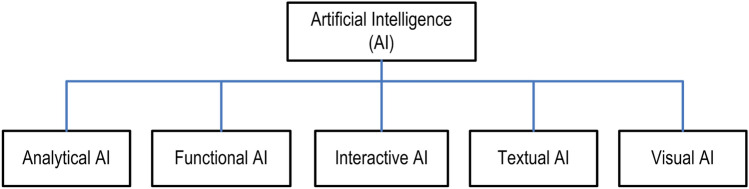
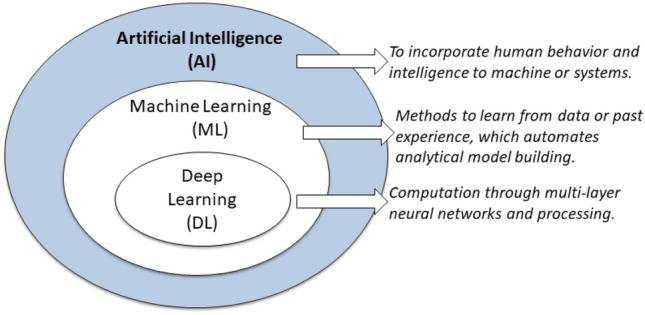
Artificial intelligence (AI) is a leading technology of the current age of the Fourth Industrial Revolution (Industry 4.0 or 4IR), with the capability of incorporating human behavior and intelligence into machines or systems. Thus, AI-based modeling is the key to build automated, intelligent, and smart systems according to today’s needs. To solve real-world issues, various types of AI such as analytical, functional, interactive, textual, and visual AI can be applied to enhance the intelligence and capabilities of an application. However, developing an effective AI model is a challenging task due to the dynamic nature and variation in real-world problems and data. In this paper, we present a comprehensive view on “AI-based Modeling” with the principles and capabilities of potential AI techniques that can play an important role in developing intelligent and smart systems in various real-world application areas including business, finance, healthcare, agriculture, smart cities, cybersecurity and many more. We also emphasize and highlight the research issues within the scope of our study. Overall, the goal of this paper is to provide a broad overview of AI-based modeling that can be used as a reference guide by academics and industry people as well as decision-makers in various real-world scenarios and application domains.
Overview
The claims and statistics of this paper haven’t been checked yet.
Free: it reads the open-access text and checks the first 5 claims that cite a source we can check. Create a free account to check every claim.
Integrity signals
Registry
Cites
Statistics
Figures
Verification
Claims the paper makes
The claims and statistics of this paper haven’t been checked yet.
Free: it reads the open-access text and checks the first 5 claims that cite a source we can check. Create a free account to check every claim.
Self-check
Percentages, sums and reported differences re-computed from the paper’s own numbers.
The self-check needs the paper’s full text.
Citations
Cites
1 retracted
Hybrid genetic algorithm and a fuzzy logic classifier for heart disease diagnosis
Reddy, G. T., Reddy, M. P. K., Lakshmanna, K., Rajput, D. S., Kaluri, R., & Srivastava, G. (2020) · Evolutionary Intelligence · doi:10.1007/s12065-019-00327-1 · Cited by 404 · cited 1×
“Reddy et al. [74], for example, use a fuzzy logic classifier for heart disease detection, with the derived rules from fuzzy classifiers being optimized using an adaptive genetic algorithm.”
MethodRetractedBreiman, L. (2001) · Machine Learning · doi:10.1023/a:1010933404324 · Cited by 133,538 · cited 1×
“…[4], Support vector machines [46], Decision Trees - ID3 [71], C4.5 [72], CART [15], BehavDT [84], IntrudTree [82], Ensemble learning, Random Forest [14], Linear regression [36], Support vector regression [46], etc. [81] are the popular techniques that can be used to solve various supervised…”
MethodScikit-learn: Machine Learning in Python
Pedregosa, F., Varoquaux, G., Gramfort, A., Michel, V., Thirion, B., Grisel, O., Blondel, M., Müller, A., Nothman, J., Louppe, G., et al. (2012) · arXiv · doi:10.48550/arxiv.1201.0490 · Cited by 71,016
Gradient-based learning applied to document recognition
Lecun, Y., Bottou, L., Bengio, Y., & Haffner, P. (1998) · Proceedings of the IEEE · doi:10.1109/5.726791 · Cited by 58,805 · cited 2×
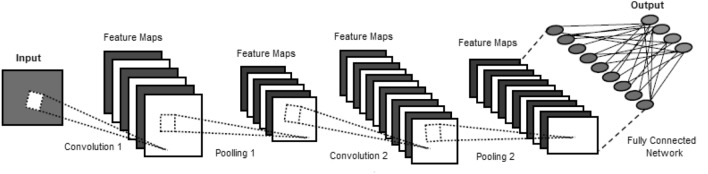
“Convolutional neural networks (CNN or ConvNet) [53, 80] have recently demonstrated considerable promise in a variety of computer vision tasks, including classification, object detection, and scene analysis.”
BackgroundData mining: concepts and techniques
(2012) · Choice Reviews Online · doi:10.5860/choice.49-3305 · Cited by 28,531
Data Mining: Practical Machine Learning Tools and Techniques
(2011) · Elsevier eBooks · doi:10.1016/c2009-0-19715-5 · Cited by 25,437
(1967) · Cited by 23,719
Classification and Regression Trees.
Gordon, A. D., Breiman, L., Friedman, J. H., Olshen, R. A., & Stone, C. J. (1984) · Biometrics · doi:10.2307/2530946 · Cited by 23,522
(1992) · Cited by 23,431
Quinlan, J. R. (1986) · Machine Learning · doi:10.1007/bf00116251 · Cited by 21,439 · cited 2×
“Navies Bayes [42], K-nearest neighbors [4], Support vector machines [46], Decision Trees - ID3 [71], C4.”
Method
Research works printed but not linked: 5
- Dupond S. A thorough review on the current advance of neural network structures. Annu Rev Control. 2019;14:200–30.
- Goodfellow I, Bengio Y, Courville A, Bengio Y. Deep learning, vol. 1. Cambridge: MIT press; 2016.
- Russell S, Norvig P. Artificial intelligence: a modern approach, global edition 4th. Foundations. 2021;19:23.
- Sarker IH, Colman A, Han J, Watters P. Context-aware machine learning and mobile data analytics: automated rule-based services with intelligent decision-making. Berlin: Springer; 2022.
- Thorvald Sorensen. method of establishing groups of equal amplitude in plant sociology based on similarity of species. Biol Skr. 1948;5:20.
Cited by
Items 701–800 of 1,001
-, I. K. J., & -, R. N. (2024) · International Journal For Multidisciplinary Research · doi:10.36948/ijfmr.2024.v06i01.13927 · Cited by 5
A Conceptual Study on Instagram Marketing
Panda, P. R., Sahoo, S. M., Das, S., Bansal, R., Dey, S., Kanwal, N. D. S., & Badawy, H. (2024) · Advances in human resources management and organizational development book series · doi:10.4018/979-8-3693-0724-3.ch002 · Cited by 3
Delay Prediction in M2M Networks Using the Deep Learning Approach
Abdellah, A. R., Alsweity, M., Essai, M. H., Muthanna, A., & Koucheryavy, A. (2024) · EAI/Springer Innovations in Communication and Computing · doi:10.1007/978-3-031-51097-7_7 · Cited by 3
Sánchez‐García, E., Martínez‐Falcó, J., Marco‐Lajara, B., & Słoniec, J. (2024) · Applied Computer Science · doi:10.35784/acs-2024-12 · Cited by 3
“In the dynamic and ever-progressing domain of technology, the confluence of computer science with management and economics has emerged as a cornerstone of modern organizational and economic strategies (Brauner et al., 2022; Sarker, 2022).”
BackgroundAutomated and Orchestrated CI/CD Pipelines in Industrial Protocol Certification Testing
Lone, O., Stasiak, T., & Doran, H. D. (2024) · IEEE International Workshop on Factory Communication Systems (WFCS) · doi:10.1109/wfcs60972.2024.10540983 · Cited by 3
“The industrial automation landscape is undergoing rapid transformation, driven by the confluence of Industry 4.0 technologies and the ever-increasing need for connected, intelligent systems [1 - 4].”
BackgroundInfluentialKhurana, S., & Arora, S. (2024) · Methods in microbiology · doi:10.1016/bs.mim.2024.05.011 · Cited by 3
Using ChatGPT in Foreign Language Research: An Overview
Aydın, S. (2024) · Innovational Research in ELT · doi:10.29329/irelt.2024.1045.2 · Cited by 3
A Preliminary Fuzzy Inference System for Predicting Atmospheric Ozone in an Intermountain Basin
Lawson, J. R., & Lyman, S. N. (2024) · Air · doi:10.3390/air2030020 · Cited by 4
Shaker, A. H., Ibrahim, I. A., & Gharghan, S. K. (2024) · AIP conference proceedings · doi:10.1063/5.0236263 · Cited by 3
From Classroom to Clinic: The Impact of AI on Medical Education
Nawaz, F. A., Opriessnig, E., Usman, F. M., Agrohi, J., Arshad, Z., Kashyap, R., & Anwar, S. (2024) · Advances in medical technologies and clinical practice book series · doi:10.4018/979-8-3693-4422-4.ch004 · Cited by 4
The Role of Metadata in Promoting Explainability and Interoperability of AI-based Prediction Models
Ahmed, A. A., Abdullahi, A. U., Gital, A. Y., & Dutse, A. Y. (2024) · Journal of exceptional multidisciplinary research. · doi:10.69739/jemr.v1i1.153 · Cited by 5
Shankar, B. S., & Mohan, S. (2025) · Cureus · doi:10.7759/cureus.79556 · Cited by 3
“The scope and impact of AI extend far beyond computer science, permeating various domains, including 1 2 manufacturing, search engines, healthcare, drug discovery, speech recognition, and image processing [3].”
Anusha, G., Deshmukh, R., & Sudhakar, A. V. V. (2025) · IGI Global eBooks · doi:10.4018/979-8-3373-3321-2.ch008 · Cited by 3
Aydın, S. (2025) · Advances in computational intelligence and robotics book series · doi:10.4018/979-8-3373-5681-5.ch006 · Cited by 3
ШТУЧНИЙ ІНТЕЛЕКТ: ІСТОРІЯ ТА СТАНОВЛЕННЯ
Stasevych, S., & ГОЛОДОВСЬКА, О. (2025) · INFORMATION TECHNOLOGY AND SOCIETY · doi:10.32689/maup.it.2025.1.31 · Cited by 3
Review of Machine Learning Algorithms and Their Applications
Sharma, J. (2024) · International Journal of Innovations in Science Engineering and Management. · doi:10.69968/ijisem.2024v3i2113-119 · Cited by 3
A Deep Learning Approach for Public Sentiment Analysis in COVID-19 Pandemic
Hossain, G. M. S., Asaduzzaman, S., Mynoddin, M., & Sarker, I. H. (2022) · International Conference on Intelligent Technologies (CONIT) · doi:10.1109/conit55038.2022.9847839 · Cited by 3
“This type of work with intelligent services can help all the organizations like financial, health, educational, transportation, restaurants, tourism as well as government to understand their people’s views and to take necessary actions [1].”
BackgroundSelf-citationEsmaeili, A., Shalmani, S. H., Pirbazari, A. E., Saraei, F. E. K., Tabatabai‐Yazdi, F., Pirbazari, A. E., & Derakhshesh, A. (2023) · Chemical Product and Process Modeling · doi:10.1515/cppm-2022-0070 · Cited by 3
Effectual Text Classification in Data Mining: A Practical Approach
Salem, I. E., Abdulqader, A. W., & Shaker, A. S. (2023) · Mesopotamian Journal of Big Data · doi:10.58496/mjbd/2023/007 · Cited by 3
Ai-Driven Decision-Making in Healthcare Information Systems: A Comprehensive ReviewPreprint
Amiri, Z. (2024) · SSRN Electronic Journal · doi:10.2139/ssrn.4756316 · Cited by 3
Jessen, S. (2024) · VBN Forskningsportal (Aalborg Universitet) · doi:10.54337/aau687403957 · Cited by 3
Developing Text Mining Web Applications for Teaching and Learning Using Shiny Apps
Rosli, I. N. I. B. M., & Yusop, N. M. (2023) · International Journal of Academic Research in Progressive Education and Development · doi:10.6007/ijarped/v12-i3/18199 · Cited by 3
“Text mining, a subset of natural language processing (NLP), involves the extraction of meaningful patterns, insights, and knowledge from unstructured text data (Sarker, 2022).”
BackgroundLainjo, B. (2023) · Journal of Information Systems and Informatics · doi:10.51519/journalisi.v5i4.609 · Cited by 5
The Phenomenon of Risk Under the Application of Artificial Intelligence Algorithms
Михайлович, К. Р., & Sleptsova, Y. (2023) · Вестник Волгоградского государственного университета. Серия 3: Экономика. Экология · doi:10.15688/ek.jvolsu.2023.4.1 · Cited by 2
Health Sciences students and educators experience with using ChatGPT
Ahmed, F. R., Al‐Yateem, N., Rushdan, E. E., Saifan, A. R., Rahman, S. A., Mottershead, R., Hijazi, H. H. A., Subu, M. A., Bani‐Issa, W., Dias, J. M., et al. (2024) · IEEE Annual International Computer Software and Applications Conference (COMPSAC) · doi:10.1109/compsac61105.2024.00305 · Cited by 2
“Artificial intelligence (AI) encompasses a multidisciplinary approach, combining computer science and linguistics to develop machines capable of tasks requiring human intelligence, including learning, adaptation, reasoning, and understanding abstract concepts [1].”
Marwala, T. (2024) · Springer eBooks · doi:10.1007/978-981-97-9251-1_5 · Cited by 4
Wang, Y., & Yan, F. (2025) · Remote Sensing · doi:10.3390/rs17020245 · Cited by 2
Object Detection for Retail Product Recognition
Pannoy, N., Nonsiri, S., & Makdee, S. (2024) · International Conference on Business and Industrial Research (ICBIR) · doi:10.1109/icbir61386.2024.10875711 · Cited by 2
Singh, M. K., Singh, A. K., Choudhary, P., Singh, P. K., & Singh, A. K. (2025) · BENTHAM SCIENCE PUBLISHERS eBooks · doi:10.2174/9789815324099125030021 · Cited by 3
Kumari, S., Bhushan, B., & Aurangzeb, K. (2025) · Advances in computational intelligence and robotics book series · doi:10.4018/979-8-3693-9694-0.ch013 · Cited by 2
Exploring Future Cultivation Strategies in Greenhouses
Abdelhafez, A. A., Al-Dhumri, S. A., Shaban, M. S., Elgeheny, O. K. M., Saleh, A. S. H., & Metwally, A. S. (2025) · Agricultural sciences. · doi:10.5772/intechopen.1010015 · Cited by 2
Wang, H.-W., Huang, Y.-C., Fang, Y., Jang, T.-N., Chen, M., & Tsai, M. (2025) · Scientific Reports · doi:10.1038/s41598-025-97787-6 · Cited by 2
Pelatihan Teknik Parafrase dalam Penulisan Ilmiah Berbasis Artificial Intelligence
Risal, A. A. N., Indargairi, Risal, A. A. N., Rivai, A. T. O., & Firman, R. (2025) · TEKNOVOKASI Jurnal Pengabdian Masyarakat · doi:10.59562/teknovokasi.v3i1.6819 · Cited by 2
“…berperan dalam membantu individu menyelesaikan berbagai permasalahan yang kompleks serta meningkatkan efisiensi dalam berbagai sektor dan industri (Sarker 2022) Kemajuan teknologi, terutama dalam bidang Kecerdasan Buatan (AI), telah membawa perubahan signifikan di berbagai aspek kehidupan,…”
Gopalakrishnan, R. (2025) · Journal of Computer Science and Technology Studies · doi:10.32996/jcsts.2025.7.4.112 · Cited by 2
“The critical components of infrastructure assessment show that organizations meeting the baseline infrastructure requirements achieve a 65% higher success rate in AI implementation [4].”
The Use of Advanced Oral Cancer Diagnostic Tools in Africa: Potential and Challenges
Tundealao, S. T., Alufa, O., & Adisa, A. O. (2025) · Journal of Oral Health and Community Dentistry · doi:10.5005/jp-journals-10062-0203 · Cited by 2
Potential for use of Al/machine learning for pharmacovigilance: Is there a role for regulators?
Gao, C., Hopkins, A. M., Rowland, A., & Bacchi, S. (2025) · British Journal of Clinical Pharmacology · doi:10.1002/bcp.70173 · Cited by 2
Huy, P. Q., & Phuc, V. K. (2025) · Operations Research Forum · doi:10.1007/s43069-025-00485-2 · Cited by 2
“Machines that can mimic human intelligence in terms of thought, learning, and behavior are the goal of the expansive field known as artificial intelligence in computer science [37, 108].”
NeuroScopia: smart optical imaging solution for on-site applications
Hassan, M. B., Javed, I., Tauqeer, T., Naveed, M. A., Zubair, M., & Mehmood, M. Q. (2025) · Engineering Research Express · doi:10.1088/2631-8695/adf410 · Cited by 2
Utilizing Artificial Intelligence for Enhancing Glaucoma Care
Gupta, V., & Dada, T. (2025) · JOURNAL OF CURRENT GLAUCOMA PRACTICE · doi:10.5005/jp-journals-10078-1472 · Cited by 2
Rizwana, Singh, P., Muralidhar, S., & Roy, P. (2025) · Public Health of Indonesia · doi:10.36685/phi.v11i3.955 · Cited by 2
Amarkhil, Q., Hegab, M. Y., & Alroomi, A. S. (2025) · doi:10.3390/engproc2025112003 · Cited by 4
A comprehensive study on the role of CFD in modern suspension engineering
Ferhath, A. A. (2025) · Discover Vehicles · doi:10.1007/s44465-025-00001-0 · Cited by 4
“The solver serves as the numerical engine of the CFD process, transforming physical principles into predictive results [62].”
Ghosh, S., Bhaskar, R., Singh, K. K., Yarlagadda, B., Verma, P., Han, S. S., Purohit, S. D., & Sinha, J. K. (2025) · IET Nanobiotechnology · doi:10.1049/nbt2/6805313 · Cited by 2
“The utilization of AI enables a dynamic monitoring capability that surpasses the constraints of conventional static assessments [121].”
AI-Based Model Estimation for a Precision Positioning Stage Employing Multiple Control Switching
Wang, F., Zhong, B.-X., Wen, C.-W., Tsai, I.-H., & Yen, J. (2025) · Micromachines · doi:10.3390/mi16121305 · Cited by 2
“For example, Sarker [15] reviewed the AI-based modeling in various fields.”
Evaluating the clinical utility of multimodal large language models in rare maculopathy
Tran, M. D., Walker, E., Nagel, I. D., Mehta, N. N., Most, J. A., Ferreyra, H. A., Everett, L. A., Yang, P. G., Pennesi, M. E., & Borooah, S. (2025) · Scientific Reports · doi:10.1038/s41598-025-29299-2 · Cited by 4
The Use of ChatGPT in English Language Learning: A Systematic Literature Review
Hidayati, N., Andriyanti, E., & Adiyani, N. (2025) · Tarling Journal of Language Education · doi:10.24090/tarling.v9i1.14740 · Cited by 4
Artificial intelligence of things: society readiness
Yuniarto, D., & Subiyakto, A. (2025) · IAES International Journal of Artificial Intelligence · doi:10.11591/ijai.v14.i4.pp2590-2600 · Cited by 2
The AIoT ecosystem for next-generation satellite systems
Iqrar, W., Khurshid, K., Khan, S., & Saeed, N. (2025) · Physical Communication · doi:10.1016/j.phycom.2025.102967 · Cited by 2
Ignjatović, A., Apostolovic, M. A., Stevanović, L., Radovanović, P., Sidharth, Topalović, M., & Filipović, T. (2025) · Journal of Medical Education and Curricular Development · doi:10.1177/23821205251409530 · Cited by 2
Battineni, G., Chougule, S., Kataria, A., & Goyal, L. M. (2025) · Studies in computational intelligence · doi:10.1007/978-981-95-2129-6_12 · Cited by 3
A detailed comparative study on cybersecurity in IoT environment
Sangwan, U., & Chhillar, R. S. (2026) · International Journal of Systems Assurance Engineering and Management · doi:10.1007/s13198-025-03124-5 · Cited by 2
Shahbazi, A., Jafari, M., Kawsar, M., Janani, S., & Nadra, S. (2026) · International Journal of Advanced Business Studies · doi:10.59857/wpgh3w33 · Cited by 3
“The workings of the AI systems must often be audited to determine their conformity with the data protection laws and to see whether they are operating as expected (Sarker, 2022).”
Marrujo-Ingunza, C., & Campos, M. M. P. (2026) · Multidisciplinary Reviews · doi:10.31893/multirev.2026365 · Cited by 2
“Today, artificial intelligence (AI) and automation represent a global technological revolution that is transforming various sectors (Sarker, 2022; Singh & Mishra, 2021), including education (Kamalov et al., 2023).”
Ünal, E., Kaya, M., Uzun, A. M., & Erdem, C. (2026) · Journal of Educational Computing Research · doi:10.1177/07356331261424767 · Cited by 4
“Furthermore, AI functions can be categorized by their primary output (Sarker, 2022): Analytical AI (data-driven insights), Functional AI (physical action in robotics/IoT), Interactive AI (communication automation), Textual AI (content creation), and Visual AI (image/video interpretation).”
Nourildean, S. W., & Jihad, N. J. (2026) · Journal of Optical Communications · doi:10.1515/joc-2025-0534 · Cited by 2
“Machine learning comprises a set of methods, rules, or intricate “ transfer functions ” that are commonly employed in ML models to identify signi fi cant data patterns or forecast behavior [34].”
Stawicki, S. P. (2026) · Artificial intelligence · doi:10.5772/intechopen.1011816 · Cited by 2
Julien, G. (2026) · Journal of Creative Research in English Literature and Culture · doi:10.25125/jcrelc-feb-2026-3 · Cited by 3
Varshney, S., Gupta, P., Gaur, R., & Mudgal, S. K. (2026) · Indian Journal of Otolaryngology and Head & Neck Surgery · doi:10.1007/s12070-026-06433-8 · Cited by 2
Kolesnyk, S., Souza, J. D. P., Bearth, A., Aicher, L., Wilks, M., Mosig, A., & Fritsche, E. (2026) · Toxicology · doi:10.1016/j.tox.2026.154439 · Cited by 3
Romero, J., Zapata, G., Ávalos-Ortecho, E., & Ponce, S. (2026) · Cleaner Engineering and Technology · doi:10.1016/j.clet.2026.101198 · Cited by 3
Machine learning surrogates for CALPHAD inputs in mean-field precipitation modelling of IN738LC
Cao, Z. Y., Anderson, M. J., Rowe, A., Panoutsos, G., & Basoalto, H. (2026) · Materials & Design · doi:10.1016/j.matdes.2026.115909 · Cited by 2
Advances in Closed-Loop Artificial Intelligence for Healthcare
Das, D., Adams, S. D., Corva, D. M., Bucknall, T. K., & Kouzani, A. Z. (2026) · Electronics · doi:10.3390/electronics15071396 · Cited by 3
Ahmad, M., Zubi, M. A. A., Biswas, S., Rakib, A. R., Alzlfawi, A., Hussan, S., Haq, S., Omar, R. C., Ullah, Z., & Tóth, Z. (2026) · Scientific Reports · doi:10.1038/s41598-026-50670-4 · Cited by 2
Bridging diagnosis and therapeutics: The role of AI in cancer detection and drug development
Barua, S., Balaji, B., & Balaji, S. (2026) · Health Sciences Review · doi:10.1016/j.hsr.2026.100270 · Cited by 3
Wang, C., Li, Z., Yang, J., & Cao, Y. (2026) · Humanities and Social Sciences Communications · doi:10.1057/s41599-026-07699-7 · Cited by 2
“AI technologies establish a data-driven framework that uses computers to make decisions and carry out complex tasks by imitating human thinking processes such as learning, reasoning, and perception (Sarker et al. 2022).”
Basant, N., Reid, T.-E. R., Singh, R., & Singh, R. (2026) · Journal of environmental chemical engineering · doi:10.1016/j.jece.2026.123240 · Cited by 2
A Review of Automatic Identification System Approaches for Maritime Cyber Security
Zaman, S. M. A. U., Qamar, F., Mohd, M., Suhaimi, N. H. S., & Khandakar, A. A. (2026) · Security and Communication Networks · doi:10.1155/sec/5898106 · Cited by 3
Weber, L. G., & Wolff, M. W. (2026) · Expert Review of Vaccines · doi:10.1080/14760584.2026.2689611 · Cited by 2
Gaikwad, A. S., B.Pawar, S., & Rajguru, M. K. (2026) · Journal of Pharmaceutical Innovation · doi:10.1007/s12247-026-10841-2 · Cited by 2
“By enabling advanced data processing, pattern recognition, and predictive modeling, AI can enhance the interpretation of complex analytical signals and improve decision-making processes [ 32, 33 ].”
Zayed, W. (2026) · Journal of Intelligent Decision Making and Information Science · doi:10.59543/jidmis.v3.824 · Cited by 2
“Today, however, AI is defined as the branch of computer science dealing with the simulation of intelligent behavior and the capacity to mimic or improve human behavior [11].”
Large AI Models Empowering Intelligent Manufacturing: Architecture, Evolution, and Prospects
Chen, B., Dai, L., Wan, J., Wang, C., Wang, L., Xiang, F., Wang, Z., Tan, J., Savaglio, C., Xia, X., et al. (2026) · IEEE Access · doi:10.1109/access.2026.3716955 · Cited by 3
“Against this background, the manufacturing sector is beginning to treat large models as part of a broader shift toward more data-intensive and adaptive forms of production [12], [13], [14].”
Quantifying Patellofemoral Instability in a Sea of Metrics
Ridha, A., Vijay, A., Monem, M., & Kader, D. F. (2026) · Sports Medicine and Arthroscopy Review · doi:10.1097/jsa.0000000000000449 · Cited by 2
Ela, H. A., Moustapha, R., Badran, A. S., Abou‐Bakr, A., & Almalahy, H. G. (2026) · Scientific Reports · doi:10.1038/s41598-026-65434-3 · Cited by 2
“The sample size post-hoc power analysis done in G*Power, version 3.1, for logistic regression considering five predictors showed that this sample size gave > 80% power detecting a small-to-medium effect size, represented as an odds ratio = 1.5 at an α = 0.05 level of significance 21,24 .”
InfluentialBoor, M. C. H., MOHAMMED, S., & Musa, Y. (2026) · Journal of Studies in Science and Mathematics Education · doi:10.67203/jossme.2026.bwsd2sjn · Cited by 2
An Umbrella Review of Artificial Intelligence Applications in Mental Health Care
Odame, J., Obeng‐Gyamfi, G., Heo, D., Kusi, A. B., Kwanin, C. B., Adarkwah, M. A., & Osei, E. A. (2026) · Journal of Psychiatric and Mental Health Nursing · doi:10.1111/jpm.70180 · Cited by 2
Intelligent agents: architectures, learning paradigms, deployment models, and applications
Dritsas, E., & Τρίγκα, Μ. (2026) · Evolutionary Intelligence · doi:10.1007/s12065-026-01259-3 · Cited by 2
“Bayesian inference enables agents to update their beliefs based on observed data, thereby improving their decision-making strategies as new information becomes available [ 33 ].”
Putra, I. P., Adri, M., & Irfan, D. (2025) · JAVIT Jurnal Vokasi Informatika · doi:10.24036/javit.v5i1.257 · Cited by 6
Artificial Intelligence in Public Health: Facts and Hyperboles
Devgun, P., & Sadana, P. (2023) · AMEI's Current Trends in Diagnosis & Treatment · doi:10.5005/jp-journals-10055-0154 · Cited by 2
“Int J Environ Res Public Health 2021;18(1):271.”
An Approach to Operationalise Resiliency towards Sustainable Futures
Amadi-Echendu, J. (2023) · Portland International Conference on Management of Engineering and Technology (PICMET) · doi:10.23919/picmet59654.2023.10216879 · Cited by 2
Parvin, S. A., Sumathi, M., & Barani, R. (2023) · Indian Journal of Science and Technology · doi:10.17485/ijst/v16i44.2498 · Cited by 2
Sampling - Variational Auto Encoder - Ensemble: In the Quest of Explainable Artificial Intelligence
Maitra, S., Mishra, V. K., Verma, P., Chopra, M., & Nath, P. (2023) · International Conference on Electrical and Information Technology (IEIT) · doi:10.1109/ieit59852.2023.10335522 · Cited by 2
Brockmann’ın Grid Sistemine Göre Afiş Değerlendirmeleri: Emrah Yücel Film Afiş Tasarımları
Özlem, K. U. M. (2023) · Özgür Yayınları eBooks · doi:10.58830/ozgur.pub345.c1508 · Cited by 2
Afiş Tasarımında Modern ve Postmodern Akımların Etkisi: Görsel İletişimde Değişen Paradigmalar
Kaya, M. E. (2023) · Özgür Yayınları eBooks · doi:10.58830/ozgur.pub345.c1509 · Cited by 2
А.П., П. (2023) · Economics and Environmental Management · doi:10.17586/2310-1172-2023-16-4-100-108 · Cited by 2
Artificial Intelligence in Biology
-, A., Srivastava, Y., -, A. S., -, D. K., -, S. P., -, N. M., & Gupta, A. (2024) · International Journal For Multidisciplinary Research · doi:10.36948/ijfmr.2024.v06i02.15067 · Cited by 3
“Artificial Intelligence (AI) technologies, including machine learning, rule-based systems, natural language processing, and speech recognition, are gaining momentum as disruptive technologies in various industries [47].”
BackgroundEmpowering Elderly Care: Innovative Fall Detection with OpenPose and YOLO
Hardiyanto, R. A., Setianingsih, C., Purboyo, T. W., Radim, A. S. A., Brilliandy, A. A., Rusydi, M. ’. C., Fawwaz, M. R., & Amelia, N. (2023) · International Seminar on Research of Information Technology and Intelligent Systems (ISRITI) · doi:10.1109/isriti60336.2023.10468014 · Cited by 2
“On the other hand, according to[14], inference in machine learning refers to evaluating the extent to which current inputs match each rule and decision making according to those inputs.”
BackgroundChristophe, C. M., Anthony, B., Cibangu, C., & Abdalla, A. T. (2024) · SN Computer Science · doi:10.1007/s42979-024-02634-6 · Cited by 2
Analysis of Computer Application Software Automation Development Technology
Xie, T., & Song, Y. (2024) · Advances in Computer and Communication · doi:10.26855/acc.2024.02.003 · Cited by 2
“This technology also effectively diminishes the occurrence of code errors and vulnerabilities, thereby enhancing the overall quality and security of the software [1].”
BackgroundARTIFICIAL INTELLIGENCE FOR PREDICTIVE ANALYSIS IN CYBER SECURITY
(2024) · International Research Journal of Modernization in Engineering Technology and Science · doi:10.56726/irjmets55880 · Cited by 2
An Exploratory Big Data Approach to Understanding Commitment in Projects
Vajjhala, N. R., & Strang, K. D. (2024) · Lecture notes in networks and systems · doi:10.1007/978-3-031-60227-6_6 · Cited by 2
Assessing the Impact of AI-Driven Systems on Automated Data Science
Sharma, B., Jayasudha, S., Dhabliya, D., Acharjya, K., Zaidi, T., & Dev, S. (2023) · IEEE International Conference on Paradigm Shift in Information Technologies with Innovative Applications in Global Scenario (ICPSITIAGS) · doi:10.1109/icpsitiags59213.2023.10527638 · Cited by 3
“AI-driven AI-driven structures are also pretty speedy and dependable[12]. not like guide systems, AI-pushed systems can method huge statistics sets and offer accurate outcomes with little oversight.”
BackgroundDebnath, R., Ikbal, A. M. A., Choudhury, A., Mandal, S. C., & Palit, P. (2024) · Interdisciplinary biotechnological advances · doi:10.1007/978-981-97-1148-2_19 · Cited by 5
Bakhov, I. S., Іщук, Н., Hrachova, I., Dzhydzhora, L., & Strashko, I. V. (2024) · Archive des Sciences · doi:10.62227/as/74216 · Cited by 4
Uso do Chat Generative Pre-trained Transformer na escrita acadêmica em saúde: uma revisão do escopo
Costa, I. C. P., do Nascimento, M. C., Treviso, P., Chini, L. T., Roza, B. D. A., Barbosa, S. D. F. F., & Mendes, K. D. S. (2024) · Revista Latino-Americana de Enfermagem · doi:10.1590/1518-8345.7133.4195 · Cited by 3
Artificial Intelligence in Newborn Medicine
Huisman, T. A. G. M., & Huisman, T. A. G. M. (2024) · Newborn · doi:10.5005/jp-journals-11002-0095 · Cited by 2
Ölgen, B., & Cucuzzella, C. (2024) · Research on humanities and social sciences · doi:10.7176/rhss/14-5-06 · Cited by 2
Hu, S., Tang, H., & Luo, Y. (2024) · Biomedical Optics Express · doi:10.1364/boe.532482 · Cited by 2
“Deep learning technology has become a hot topic in the field of computer science and is widely applied in various domains such as healthcare, visual recognition, text analysis, and cybersecurity [2,3].”
BackgroundAdvancing Health Monitoring With Cognitive IoT, Rapid Machine Learning, and Mechanical Systems
Yeruva, A. R., Jadhav, R. S., Roopa Chandrika, R., Preetha, S., Priya, R., Mishra, K. N., & Karthick, L. (2024) · Advances in mechatronics and mechanical engineering (AMME) book series · doi:10.4018/979-8-3693-1966-6.ch019 · Cited by 3
Artificial intelligence and public health: challenges and opportunities
Thomas, J. (2024) · Elsevier eBooks · doi:10.1016/b978-0-443-22270-2.00023-x · Cited by 2
Safety First: AI Applications for Security and Risk Management
Semwal, R. L., Tripathi, N., & Tyagi, P. K. (2024) · Advances in hospitality, tourism and the services industry (AHTSI) book series · doi:10.4018/979-8-3693-7898-4.ch021 · Cited by 2
Metadata
- Authors
- Sarker, I. H.
- Affiliations
- Chittagong University of Engineering & Technology (BD)
- Corresponding author
- Sarker, Iqbal H.
- ORCID
- Sarker, Iqbal H.
- Venue
- SN Computer Science
- Published
- 2022-02-10
- Volume
- 3
- Issue
- 2
- Pages
- 158-158
- ISSN
- 2661-8907 (ISSN-L)
- 2662-995X
- PMC
- PMC8830986
- OpenAlex
- W4225716729
- Cited by
- 1,208
- References
- 115
- Citations by year
- 2026: 228 · 2025: 395 · 2024: 361 · 2023: 184 · 2022: 39
- FWCI
- 17.11
- Type
- journal article
- Language
- en
- Open access
- hybrid
- doi.org
- Licence
- cc-by
- creativecommons.org/licenses/by/4.0 (tdm)
- creativecommons.org/licenses/by/4.0 (vor)
- Locations
- SN Computer Science (publishedVersion, cc-by)
- Preprints.org (acceptedVersion, cc-by)
- PubMed Central (publishedVersion, cc-by)
- PubMed (publishedVersion)
- Funders
- Swinburne University of Technology
- Topics
- Physical Sciences › Computer Science › Artificial Intelligence › Artificial Intelligence Applications
- Physical Sciences › Computer Science › Information Systems › Internet of Things and AI
- Social Sciences › Decision Sciences › Management Science and Operations Research › Impact of AI and Big Data on Business and Society
- Keywords
- artificial intelligence techniques, intelligent systems, automation, Industry 4.0, interactive AI, artificial intelligence in business, artificial intelligence in finance, artificial intelligence in healthcare, smart cities, cybersecurity
About these checks
Registry, retraction, Cites and statistics results are computed, not judged, with one exception: a printed reference that no index lists is read once by a model before it counts as a citation error. Claims are extracted by a model and kept only when their quote appears verbatim in the text; each cited source is then checked, with a model’s help, for whether it says what the claim relies on. Those verdicts can be wrong — read the claim’s quote and the cited source before relying on one.
Statistics and arithmetic are recomputed, not judged.
Confidence bands are shown only for fields calibrated on our annotated test set. None is calibrated yet, so no band is shown.
What counts as a claim ›How we measure confidence ›How we check this ›
Are you an author, or do you see a problem with this page? Request a review
Data sources
Bibliographic data: Semantic Scholar, OpenAlex, Crossref.
Contains information from the Semantic Scholar Academic Graph Datasets, made available under the ODC Attribution License (ODC-BY 1.0).
Semantic Scholar’s data is described in: Kinney, R., et al. (2023). The Semantic Scholar Open Data Platform. arXiv:2301.10140.
