

AI-Based Modeling: Techniques, Applications and Research Issues Towards Automation, Intelligent and Smart Systems
Open accessPublished version of a preprint
The DOI matches its Crossref record; 116 of the 116 references it cites were found in a registry or an index.
Abstract
Artificial intelligence (AI) is a leading technology of the current age of the Fourth Industrial Revolution (Industry 4.0 or 4IR), with the capability of incorporating human behavior and intelligence into machines or systems. Thus, AI-based modeling is the key to build automated, intelligent, and smart systems according to today’s needs. To solve real-world issues, various types of AI such as analytical, functional, interactive, textual, and visual AI can be applied to enhance the intelligence and capabilities of an application. However, developing an effective AI model is a challenging task due to the dynamic nature and variation in real-world problems and data. In this paper, we present a comprehensive view on “AI-based Modeling” with the principles and capabilities of potential AI techniques that can play an important role in developing intelligent and smart systems in various real-world application areas including business, finance, healthcare, agriculture, smart cities, cybersecurity and many more. We also emphasize and highlight the research issues within the scope of our study. Overall, the goal of this paper is to provide a broad overview of AI-based modeling that can be used as a reference guide by academics and industry people as well as decision-makers in various real-world scenarios and application domains.
Overview
The claims and statistics of this paper haven’t been checked yet.
Free: it reads the open-access text and checks the first 5 claims that cite a source we can check. Create a free account to check every claim.
Integrity signals
Registry
Cites
Statistics
Figures
Verification
Claims the paper makes
The claims and statistics of this paper haven’t been checked yet.
Free: it reads the open-access text and checks the first 5 claims that cite a source we can check. Create a free account to check every claim.
Self-check
Percentages, sums and reported differences re-computed from the paper’s own numbers.
The self-check needs the paper’s full text.
Citations
Cites
1 retracted
Hybrid genetic algorithm and a fuzzy logic classifier for heart disease diagnosis
Reddy, G. T., Reddy, M. P. K., Lakshmanna, K., Rajput, D. S., Kaluri, R., & Srivastava, G. (2020) · Evolutionary Intelligence · doi:10.1007/s12065-019-00327-1 · Cited by 404 · cited 1×
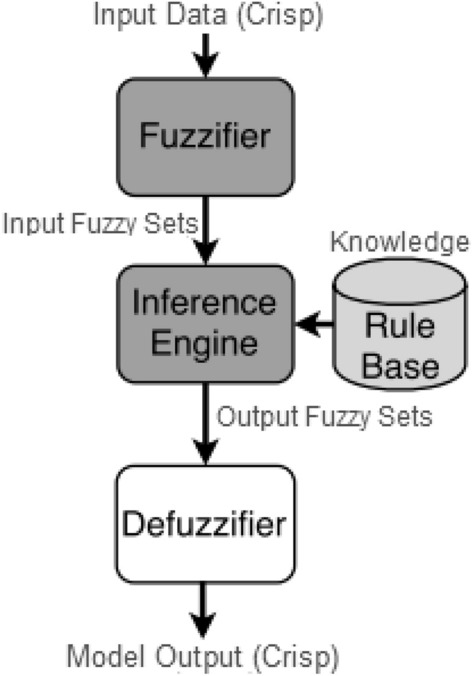
“Reddy et al. [74], for example, use a fuzzy logic classifier for heart disease detection, with the derived rules from fuzzy classifiers being optimized using an adaptive genetic algorithm.”
MethodRetractedBreiman, L. (2001) · Machine Learning · doi:10.1023/a:1010933404324 · Cited by 133,538 · cited 1×
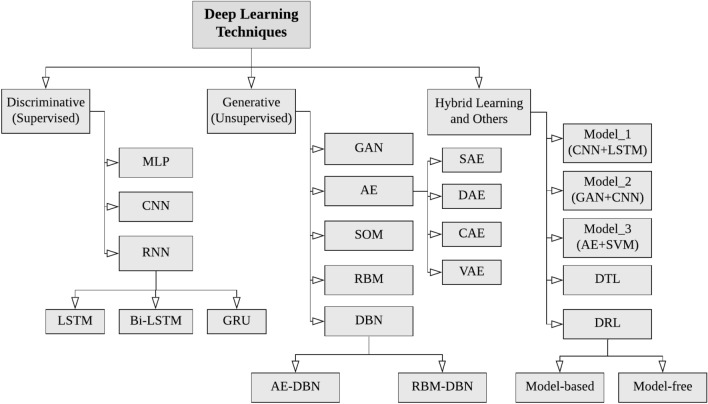
“…[4], Support vector machines [46], Decision Trees - ID3 [71], C4.5 [72], CART [15], BehavDT [84], IntrudTree [82], Ensemble learning, Random Forest [14], Linear regression [36], Support vector regression [46], etc. [81] are the popular techniques that can be used to solve various supervised…”
MethodScikit-learn: Machine Learning in Python
Pedregosa, F., Varoquaux, G., Gramfort, A., Michel, V., Thirion, B., Grisel, O., Blondel, M., Müller, A., Nothman, J., Louppe, G., et al. (2012) · arXiv · doi:10.48550/arxiv.1201.0490 · Cited by 71,016
Gradient-based learning applied to document recognition
Lecun, Y., Bottou, L., Bengio, Y., & Haffner, P. (1998) · Proceedings of the IEEE · doi:10.1109/5.726791 · Cited by 58,805 · cited 2×
“Convolutional neural networks (CNN or ConvNet) [53, 80] have recently demonstrated considerable promise in a variety of computer vision tasks, including classification, object detection, and scene analysis.”
BackgroundData mining: concepts and techniques
(2012) · Choice Reviews Online · doi:10.5860/choice.49-3305 · Cited by 28,531
Data Mining: Practical Machine Learning Tools and Techniques
(2011) · Elsevier eBooks · doi:10.1016/c2009-0-19715-5 · Cited by 25,437
(1967) · Cited by 23,719
Classification and Regression Trees.
Gordon, A. D., Breiman, L., Friedman, J. H., Olshen, R. A., & Stone, C. J. (1984) · Biometrics · doi:10.2307/2530946 · Cited by 23,522
(1992) · Cited by 23,431
Quinlan, J. R. (1986) · Machine Learning · doi:10.1007/bf00116251 · Cited by 21,439 · cited 2×
“Navies Bayes [42], K-nearest neighbors [4], Support vector machines [46], Decision Trees - ID3 [71], C4.”
Method
Research works printed but not linked: 5
- Dupond S. A thorough review on the current advance of neural network structures. Annu Rev Control. 2019;14:200–30.
- Goodfellow I, Bengio Y, Courville A, Bengio Y. Deep learning, vol. 1. Cambridge: MIT press; 2016.
- Russell S, Norvig P. Artificial intelligence: a modern approach, global edition 4th. Foundations. 2021;19:23.
- Sarker IH, Colman A, Han J, Watters P. Context-aware machine learning and mobile data analytics: automated rule-based services with intelligent decision-making. Berlin: Springer; 2022.
- Thorvald Sorensen. method of establishing groups of equal amplitude in plant sociology based on similarity of species. Biol Skr. 1948;5:20.
Cited by
Sallam, M. (2023) · Healthcare · doi:10.3390/healthcare11060887 · Cited by 3,126
Sallam, M. (2023) · doi:10.1101/2023.02.19.23286155 · Cited by 3,123
“and linguistics that aspires to create machines capable of performing tasks that normally require human intelligence [1].”
BackgroundArtificial Intelligence in Pharmaceutical Technology and Drug Delivery Design
Vora, L. K., Gholap, A. D., Jetha, K., Thakur, R. R. S., Solanki, H. K., & Chavda, V. P. (2023) · Pharmaceutics · doi:10.3390/pharmaceutics15071916 · Cited by 1,061
AI revolutionizing industries worldwide: A comprehensive overview of its diverse applications
Rashid, A. B., & Kausik, M. A. K. (2024) · Hybrid Advances · doi:10.1016/j.hybadv.2024.100277 · Cited by 764
Alqahtani, T., Badreldin, H. A., Alrashed, M., Alshaya, A. I., Alghamdi, S. S., bin Saleh, K., Alowais, S. A., Alshaya, O. A., Rahman, I., Al Yami, M. S., et al. (2023) · Research in Social and Administrative Pharmacy · doi:10.1016/j.sapharm.2023.05.016 · Cited by 565
RETRACTED ARTICLE: Artificial intelligence-based solutions for climate change: a review
Chen, L., Chen, Z., Zhang, Y., Liu, Y., Osman, A. I., Farghali, M., Hua, J., Al-Fatesh, A., Ihara, I., Rooney, D. W., et al. (2023) · Environmental Chemistry Letters · doi:10.1007/s10311-023-01617-y · Cited by 385
“A Sarker (2022) stated that artificial intelligence tech‑ nology could understand the operation of each process step to identify the problem, timely adjustment, and optimization.”
RetractedA Comprehensive Review of Deep Learning: Architectures, Recent Advances, and Applications
Mienye, I. D., & Swart, T. G. (2024) · Information · doi:10.3390/info15120755 · Cited by 330
Esmaeilzadeh, P. (2024) · Artificial Intelligence in Medicine · doi:10.1016/j.artmed.2024.102861 · Cited by 377
Zong, Z., & Guan, Y. (2024) · Journal of the Knowledge Economy · doi:10.1007/s13132-024-02001-z · Cited by 300
“These technologies play a pivotal role in unlocking the full potential of the interconnected and dynamic industrial framework by extracting actionable insights from vast troves of data (Sarker, 2022).”
Artificial intelligence in environmental monitoring: Advancements, challenges, and future directions
Olawade, D. B., Wada, O. Z., Ige, A. O., Egbewole, B. I., Olojo, A., & Oladapo, B. I. (2024) · Hygiene and Environmental Health Advances · doi:10.1016/j.heha.2024.100114 · Cited by 326
Large language models (LLMs): survey, technical frameworks, and future challenges
Kumar, P. (2024) · Artificial Intelligence Review · doi:10.1007/s10462-024-10888-y · Cited by 395
Ethical and legal considerations in healthcare AI: innovation and policy for safe and fair use
Pham, T. (2025) · Royal Society Open Science · doi:10.1098/rsos.241873 · Cited by 261
Gupta, R., Nair, K., Mishra, M., Ibrahim, B., & Bhardwaj, S. (2024) · International Journal of Information Management Data Insights · doi:10.1016/j.jjimei.2024.100232 · Cited by 278
AI-based decision support systems in Industry 4.0, a review
Soori, M., Jough, F. K. G., Dastres, R., & Arezoo, B. (2026) · Journal of Economy and Technology · doi:10.1016/j.ject.2024.08.005 · Cited by 225
Sarker, I. H. (2023) · Annals of Data Science · doi:10.1007/s40745-022-00444-2 · Cited by 256
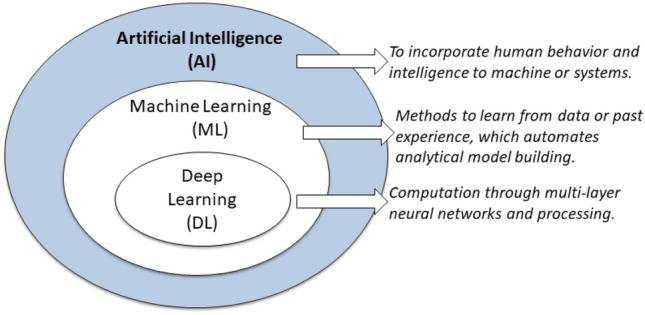
“In general, AI [10] combines human behavior and intelligence into machines or systems, whereas ML [3] is a method of learning from data or experience that automates the creation of analytical models in a particular application domain, e.g., cybersecurity according to our focused area.”
MethodSelf-citationRevolutionizing education through AI: A comprehensive review of enhancing learning experiences
Onesi-Ozigagun, O., Ololade, Y. J., Eyo-Udo, N. L., & Ogundipe, D. O. (2024) · International Journal of Applied Research in Social Sciences · doi:10.51594/ijarss.v6i4.1011 · Cited by 262
Sarker, I. H., Janicke, H., Mohsin, A., Gill, A., & Maglaras, L. (2024) · ICT Express · doi:10.1016/j.icte.2024.05.007 · Cited by 188
Self-citationZhao, L., Wu, X., & Luo, H. (2022) · Sustainability · doi:10.3390/su142114549 · Cited by 239
Examining artificial intelligence literacy among pre-service teachers for future classrooms
Ayanwale, M. A., Adelana, O. P., Molefi, R. R., Adeeko, O., & Ishola, A. M. (2024) · Computers and Education Open · doi:10.1016/j.caeo.2024.100179 · Cited by 238
Kassa, B. Y., & Worku, E. K. (2025) · Journal of Open Innovation Technology Market and Complexity · doi:10.1016/j.joitmc.2025.100474 · Cited by 264
Deep Learning for Credit Card Fraud Detection: A Review of Algorithms, Challenges, and Solutions
Mienye, I. D., & Jere, N. (2024) · IEEE Access · doi:10.1109/access.2024.3426955 · Cited by 179
Gala, D., Behl, H., Shah, M., & Makaryus, A. N. (2024) · Healthcare · doi:10.3390/healthcare12040481 · Cited by 183
“It involves the development of algorithms that enable computers to recognize patterns within datasets, learn from these patterns, make predictions, and/or take actions based on the learned information [7–9].”
AI-driven warehouse automation: A comprehensive review of systems
Sodiya, E. O., Umoga, U. J., Amoo, O. O., & Atadoga, A. (2024) · GSC Advanced Research and Reviews · doi:10.30574/gscarr.2024.18.2.0063 · Cited by 210
“The purpose of this review is to provide a comprehensive analysis of AI-driven warehouse automation systems, exploring the latest advancements, emerging trends, and best practices in the field (Sarker, 2022).”
BackgroundSmart City Data Science: Towards data-driven smart cities with open research issues
Sarker, I. H. (2022) · Internet of Things · doi:10.1016/j.iot.2022.100528 · Cited by 177
Self-citationAkinrinola, O., Okoye, C. C., Ofodile, O. C., & Ugochukwu, C. E. (2024) · GSC Advanced Research and Reviews · doi:10.30574/gscarr.2024.18.3.0088 · Cited by 206
“Real-world conditions and user interactions can influence the performance of AI models, making continuous monitoring a crucial component of responsible AI development (Sarker, 2022).”
BackgroundDesign thinking and artificial intelligence: A systematic literature review exploring synergies
Sreenivasan, A., & Suresh, M. (2024) · International Journal of Innovation Studies · doi:10.1016/j.ijis.2024.05.001 · Cited by 232
Ansari, A. N., Ahmad, S., & Bhutta, S. M. (2024) · Education and Information Technologies · doi:10.1007/s10639-023-12223-4 · Cited by 198
“In current times, advanced AI has two potential components: (i) computer science that allows it to process a diverse set of information and generate outputs, and (ii) linguistics that allows it to interact humanly (Sarker, 2022).”
Mustofa, R. H., Kuncoro, T. G., Atmono, D., Hermawan, H. D., & Sukirman, S. (2025) · Computers and Education Artificial Intelligence · doi:10.1016/j.caeai.2025.100379 · Cited by 228
Implications of AI innovation on economic growth: a panel data study
Gonzales, J. (2023) · Journal of Economic Structures · doi:10.1186/s40008-023-00307-w · Cited by 210
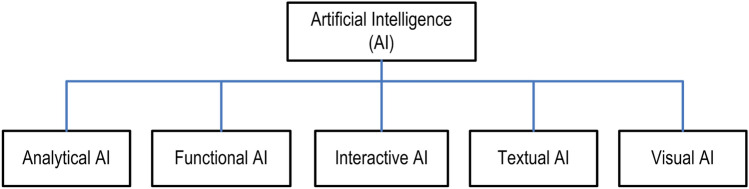
“In spite of this, Sarker (2022) categorized AI into five types, which include analytical, functional, interactive, textual, and visual.”
BackgroundInfluentialHossain, M. B., Iqbal, S. M. H. S., Islam, M. M., Akhtar, M. N., & Sarker, I. H. (2022) · Informatics in Medicine Unlocked · doi:10.1016/j.imu.2022.100916 · Cited by 160
“The important achievement in AI is deep learning (DL) [11].”
Self-citationDeep Learning and Neural Networks: Decision-Making Implications
Taherdoost, H. (2023) · Symmetry · doi:10.3390/sym15091723 · Cited by 224
“Some preprocessing techniques may in-Symmetry crease precision but also reduce interpretability, which can be problematic when making crucial decisions [49].”
InfluentialA systematic review of federated learning: Challenges, aggregation methods, and development tools
Guendouzi, S. B., Ouchani, S., Assaad, H. E., & Zaher, M. E. (2023) · Journal of Network and Computer Applications · doi:10.1016/j.jnca.2023.103714 · Cited by 199
Artificial Intelligence in Biological Sciences
Bhardwaj, A., Kishore, S., & Pandey, D. K. (2022) · Life · doi:10.3390/life12091430 · Cited by 210
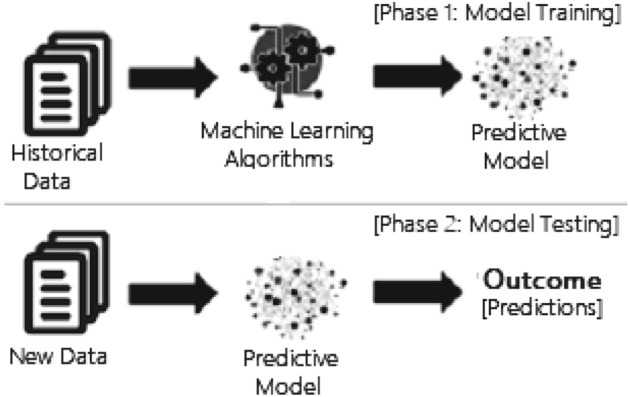
“The more these deep learning and machine learning algorithms are trained using data from various sources, the more advanced, intelligent and self-aware artificial systems may be developed (Figure 3) [9].”
BackgroundModeling Hybrid Feature-Based Phishing Websites Detection Using Machine Learning Techniques
Guptta, S. D., Shahriar, K. T., Alqahtani, H., Alsalman, D., & Sarker, I. H. (2022) · Annals of Data Science · doi:10.1007/s40745-022-00379-8 · Cited by 198
Self-citationYaghoubi, E., Yaghoubi, E., Khamees, A. A., & Vakili, A. H. (2024) · Neural Computing and Applications · doi:10.1007/s00521-024-09893-7 · Cited by 191
“AI consists of a sophisticated collection of programming techniques [48, 49].”
Deiana, G., Dettori, M., Arghittu, A., Azara, A., Gabutti, G., & Castiglia, P. (2023) · Vaccines · doi:10.3390/vaccines11071217 · Cited by 168
“LLMs analyze patterns and connections within the data they have been trained on and use that knowledge to understand and generate language in various fields such as machine translation and text generation [3,4].”
BackgroundMathew, D. E., Ebem, D. U., Ikegwu, A. C., Ukeoma, P. E., & Dibiaezue, N. F. (2025) · Neural Processing Letters · doi:10.1007/s11063-025-11732-2 · Cited by 168
“[ 81 , 97 , 107 , 138 ]) Fig.”
Ramadan, O. M. E., Alruwaili, M. M., Alruwaili, A. N., Elsehrawy, M. G., & Alanazi, S. (2024) · BMC Nursing · doi:10.1186/s12912-024-02571-y · Cited by 180
The use of artificial intelligence to improve the scientific writing of non-native english speakers
Giglio, A. D., & Costa, M. U. P. D. (2023) · Revista da Associação Médica Brasileira · doi:10.1590/1806-9282.20230560 · Cited by 158
Rane, N. L., Choudhary, S., & Rane, J. (2023) · SSRN Electronic Journal · doi:10.2139/ssrn.4644253 · Cited by 157
Martínez-Comesaña, M., Rigueira, X., Larrañaga, A., Martínez, J. M., Ocarranza-Prado, I., & Kreibel, D. (2023) · Revista de Psicodidáctica · doi:10.1016/j.psicod.2023.06.001 · Cited by 194
He, F., Yuan, L., Mu, H., Ros, M., Ding, D., Pan, Z. S., & Li, H. (2023) · Robotics and Computer-Integrated Manufacturing · doi:10.1016/j.rcim.2023.102525 · Cited by 163
Cherbal, S., Zier, A., Hebal, S., Louail, L., & Annane, B. (2024) · The Journal of Supercomputing · doi:10.1007/s11227-023-05616-2 · Cited by 152
Martínez-Comesaña, M., Rigueira-Díaz, X., Larrañaga-Janeiro, A., Martínez-Torres, J., Ocarranza-Prado, I., & Kreibel, D. (2023) · Revista de Psicodidáctica (English ed.) · doi:10.1016/j.psicoe.2023.06.002 · Cited by 79
Evaluating AI's impact on self-regulated language learning: A systematic review
Chang, W.-L., & Sun, J. C. (2024) · System · doi:10.1016/j.system.2024.103484 · Cited by 165
Egara, F. O., & Mosimege, M. D. (2024) · Education Sciences · doi:10.3390/educsci14070742 · Cited by 168
Agrawal, K., Göktaş, P., Kumar, N., & Leung, M.-F. (2025) · Frontiers in Nutrition · doi:10.3389/fnut.2025.1636980 · Cited by 176
Yiğitcanlar, T., David, A. J., Li, W., Fookes, C., Bibri, S. E., & Ye, X. (2024) · Smart Cities · doi:10.3390/smartcities7040064 · Cited by 164
“As AI pervades diverse applied urban domains [38] and industrial spheres [39], it becomes imperative to systematically classify AI technologies [40,41] to effectively understand their functionalities, capabilities, and implications.”
Adama, H. E., & Okeke, C. D. (2024) · Magna Scientia Advanced Research and Reviews · doi:10.30574/msarr.2024.10.2.0066 · Cited by 178
“Among the key technologies shaping this transformation are: AI encompasses machine learning, natural language processing, and robotics, enabling systems to mimic human intelligence and perform tasks autonomously (Sarker, 2022).”
BackgroundArtificial Intelligence‐Driven Nanoarchitectonics for Smart Targeted Drug Delivery
Bae, H., Ji, H., Konstantinov, K., Sluyter, R., Ariga, K., Kim, Y. H., & Kim, J. H. (2025) · Advanced Materials · doi:10.1002/adma.202510239 · Cited by 150
AI in Thyroid Cancer Diagnosis: Techniques, Trends, and Future Directions
Habchi, Y., Himeur, Y., Kheddar, H., Boukabou, A., Atalla, S., Chouchane, A., Ouamane, A., & Mansoor, W. (2023) · Systems · doi:10.3390/systems11100519 · Cited by 154
An Improved K-means Clustering Algorithm Towards an Efficient Data-Driven Modeling
Zubair, M., Iqbal, M. A., Shil, A., Chowdhury, M. J. M., Moni, M. A., & Sarker, I. H. (2022) · Annals of Data Science · doi:10.1007/s40745-022-00428-2 · Cited by 152
Self-citationBeyond AI-powered context-aware services: the role of human–AI collaboration
Jiang, N., Liu, X., Liu, H., Lim, E. T. K., Tan, C., & Gu, J. (2022) · Industrial Management & Data Systems · doi:10.1108/imds-03-2022-0152 · Cited by 157
Rahman, M., Saleh, T., Jahan, M. P., McGarry, C., Chaudhari, A., Huang, R., Tauhiduzzaman, M., Ahmed, A., Mahmud, A. A., Bhuiyan, M. S., et al. (2023) · Micromachines · doi:10.3390/mi14030508 · Cited by 136
Pellas, N. (2023) · Smart Learning Environments · doi:10.1186/s40561-023-00276-4 · Cited by 83
“For example, AI chatbots can provide instant support to students, and automated grading systems can reduce the workload on educators (Sarker, 2022).”
BackgroundBilal, H., Khan, M. N., Khan, S., Shafiq, M., Fang, W., Khan, R. U., Rahman, M. U., Li, X., Lv, Q.-L., & Xu, B. (2025) · Computational and Structural Biotechnology Journal · doi:10.1016/j.csbj.2025.01.006 · Cited by 120
Dangayach, R., Jeong, N., Demirel, E., Uzal, N., Fung, V., & Chen, Y. (2024) · Environmental Science & Technology · doi:10.1021/acs.est.4c08298 · Cited by 126
Wusu, O. (2024) · AI and Ethics · doi:10.1007/s43681-024-00432-7 · Cited by 115
“2 Various types of artificial intelligence (AI) in the real-world situations [41] Fig.”
Emotion Recognition from EEG Signals Using Recurrent Neural Networks
Chowdary, M. K., Anitha, J., & Hemanth, D. J. (2022) · Electronics · doi:10.3390/electronics11152387 · Cited by 133
Sarker, I. H. (2023) · Security and Privacy · doi:10.1002/spy2.295 · Cited by 141
Self-citationArtificial-intelligence-led revolution of construction materials: From molecules to Industry 4.0
Wang, X. Q., Chen, P., Chow, C. L., & Lau, D. (2023) · Matter · doi:10.1016/j.matt.2023.04.016 · Cited by 120
Exploring opportunities of Artificial Intelligence in aquaculture to meet increasing food demand
Rather, M. A., Ahmad, I., Shah, A., Hajam, Y. A., Amin, A., Khursheed, S., Ahmad, I., & Rasool, S. (2024) · Food Chemistry X · doi:10.1016/j.fochx.2024.101309 · Cited by 143
“While they share some similarities, there are also few differences between the two techniques (Sarker, 2022).”
BackgroundResultJo, H. (2025) · Information Development · doi:10.1177/02666669231202764 · Cited by 84
“Persistent interaction between humans and AI can lead to the mutual enhancement of intelligence (Jarrahi et al., 2023, 2022).”
InfluentialAI AND PRODUCT MANAGEMENT: A THEORETICAL OVERVIEW FROM IDEA TO MARKET
Ogundipe, D. O., Babatunde, S. O., & Abaku, E. A. (2024) · International Journal of Management & Entrepreneurship Research · doi:10.51594/ijmer.v6i3.965 · Cited by 127
Rasheed, M. Q., Yuhuan, Z., Ahmed, Z., Haseeb, A., & Saud, S. (2024) · Journal of Cleaner Production · doi:10.1016/j.jclepro.2024.141466 · Cited by 110
Olatoye, F. O., Awonuga, K. F., Mhlongo, N. Z., Ibeh, C. V., Elufioye, O. A., & Ndubuisi, N. L. (2024) · International Journal of Science and Research Archive · doi:10.30574/ijsra.2024.11.1.0235 · Cited by 131
“The integration of AI in business processes is multifaceted, encompassing areas such as automation, decision-making, and predictive analytics (Sarker, 2022).”
BackgroundArtificial intelligence and sustainable development in Africa: A comprehensive review
Mienye, I. D., Sun, Y., & Ileberi, E. (2024) · Machine Learning with Applications · doi:10.1016/j.mlwa.2024.100591 · Cited by 121
Cognitive imperialism in artificial intelligence: counteracting bias with indigenous epistemologies
Ofosu-Asare, Y. (2025) · AI & SOCIETY · doi:10.1007/s00146-024-02065-0 · Cited by 97
“AI technologies, ranging from machine learning algorithms to advanced data analytics, are now pivotal tools in educational environments, research institutions, and knowledge-based industries (Sarker 2022).”
A Review on the Use of Large Language Models as Virtual Tutors
García-Méndez, S., de Arriba-Pérez, F., & Somoza-López, M. D. C. (2024) · Science & Education · doi:10.1007/s11191-024-00530-2 · Cited by 120
“The most relevant change that perfectly exemplifies the impact of the mega-trends above is the transformer architectures that contribute to managing long-term dependencies for natural language processing (NLP) (Tay et al., 2023).”
REVIEWING THE ROLE OF ARTIFICIAL INTELLIGENCE IN ENERGY EFFICIENCY OPTIMIZATION
Olatunde, T. M., Okwandu, A. C., Akande, D. O., & Sikhakhane, Z. Q. (2024) · Engineering Science & Technology Journal · doi:10.51594/estj.v5i4.1015 · Cited by 121
AI‐Driven TENGs for Self‐Powered Smart Sensors and Intelligent Devices
Baburaj, A., Jayadevan, S., Aliyana, A. K., Kumar, S. K. N., & Stylios, G. K. (2025) · Advanced Science · doi:10.1002/advs.202417414 · Cited by 95
Blanco‐Pintos, T., Regueira‐Iglesias, A., Seijo‐Porto, I., Balsa‐Castro, C., Castelo‐Baz, P., Nibali, L., & Tomás, I. (2023) · Journal Of Clinical Periodontology · doi:10.1111/jcpe.13854 · Cited by 99
Zhang, X., Ibrahim, Z., Khaskheli, M. B., Raza, H., Zhou, F., & Shamsi, I. H. (2024) · Sustainability · doi:10.3390/su16177651 · Cited by 105
Abujaber, A. A., Abd-alrazaq, A., Al-Qudimat, A. R., & Nashwan, A. J. (2023) · Cureus · doi:10.7759/cureus.48643 · Cited by 91
“So, the ability of ChatGPT to Lack of human emotion: Computer science and linguistics aim to create AI capable of executing tasks that typically necessitate human intelligence [62].”
BackgroundJia, F., Sun, D., Ma, Q., & Looi, C.-K. (2022) · Sustainability · doi:10.3390/su142315527 · Cited by 90
Siderska, J., Aunimo, L., Süße, T., Stamm, J. V. (. S. )., Kedziora, D., & Aini, S. N. B. M. (2023) · Engineering Management in Production and Services · doi:10.2478/emj-2023-0030 · Cited by 111
“Nevertheless, AI is generally viewed as a conglomer-ate of different techniques, including subjects like natural language processing (NLP), machine learning (ML), neural networks, and computer vision (Sarker, 2022).”
BackgroundJathar, L. D., Nikam, K. C., Awasarmol, U. V., Gurav, R. B., Patil, J. D., Shahapurkar, K., Soudagar, M. E. M., Khan, T. M. Y., Kalam, M. A., Hnydiuk-Stefan, A., et al. (2024) · Heliyon · doi:10.1016/j.heliyon.2024.e25407 · Cited by 90
“The provided knowledge holds significant value in terms of enhancing the design and functionality of PV systems and solar stills [38].”
BackgroundZainEldin, H. Y., Gamel, S. A., Talaat, F. M., Aljohani, M., Baghdadi, N. A., Malki, A., Badawy, M., & Elhosseini, M. A. (2024) · Artificial Intelligence Review · doi:10.1007/s10462-024-10816-0 · Cited by 88
“The application of this technology is prevalent throughout several fields, encompassing computer vision, natural language processing (NLP), recommendation systems, and autonomous cars (Sarker 2022; Dwivedi et al. 2021).”
Transforming Financial Reporting with AI: Enhancing Accuracy and Timeliness
Antwi, B. O., Adelakun, B. O., & Eziefule, A. O. (2024) · International Journal of Advanced Economics · doi:10.51594/ijae.v6i6.1229 · Cited by 87
The impact of artificial intelligence on research efficiency
Madanchian, M., & Taherdoost, H. (2025) · Results in Engineering · doi:10.1016/j.rineng.2025.104743 · Cited by 106
The Artificial Intelligence-Powered New Era in Pharmaceutical Research and Development: A Review
Suriyaamporn, P., Pamornpathomkul, B., Patrojanasophon, P., Ngawhirunpat, T., Rojanarata, T., & Opanasopit, P. (2024) · AAPS PharmSciTech · doi:10.1208/s12249-024-02901-y · Cited by 112
“…discriminant analysis, logistic regression, K-nearest neighbors, support vector machines, decision tree, random forest, simple and multiple linear regression, polynomial regression, and others, are selected based on the specific characteristics of the data within a given problem domain [75, 76].”
Digital technologies for the Sustainable Development Goals
Hariyani, D., Hariyani, P., & Mishra, S. (2025) · Green Technologies and Sustainability · doi:10.1016/j.grets.2025.100202 · Cited by 102
NAVIGATING THE LEGAL COMPLEXITIES OF ARTIFICIAL INTELLIGENCE IN GLOBAL TRADE AGREEMENTS
Igbinenikaro, E., & Adewusi, A. O. (2024) · International Journal of Applied Research in Social Sciences · doi:10.51594/ijarss.v6i4.987 · Cited by 102
Towards an AI-Enhanced Cyber Threat Intelligence Processing Pipeline
Alevizos, L., & Dekker, M. (2024) · Electronics · doi:10.3390/electronics13112021 · Cited by 105
“AI-driven models, especially those built on streaming data platforms, can process data as it flows in, without waiting for batch updates [40].”
BackgroundHalkiopoulos, C., & Gkintoni, E. (2025) · Electronics · doi:10.3390/electronics14061110 · Cited by 90
Wang, T., Zuo, Y., Manda, T., Hwarari, D., & Yang, L. (2025) · Plants · doi:10.3390/plants14070998 · Cited by 100
“Artificial intelligence refers to a broad field of operation incorporating the development and capability of computer systems to perform tasks that otherwise require human intelligence [13].”
Hassani, M. E., & Marsot, A. (2023) · Clinical Pharmacokinetics · doi:10.1007/s40262-023-01233-7 · Cited by 87
“It has enabled models to analyse and automatically learn from a vast range of electronic health records using advanced statistical and probabilistic techniques without being explicitly programmed [65].”
BackgroundPractical AI Cases for Solving ESG Challenges
Burnaev, E. V., Mironov, E., Shpilman, A., Mironenko, M., & Katalevsky, D. (2023) · Sustainability · doi:10.3390/su151712731 · Cited by 93
Automation and artificial intelligence in filamentous fungi-based bioprocesses: A review
Wainaina, S., & Taherzadeh, M. J. (2022) · Bioresource Technology · doi:10.1016/j.biortech.2022.128421 · Cited by 86
Issa, J., Jaber, M., Rifai, I., Mozdziak, P. E., Kempisty, B., & Dyszkiewicz-Konwińska, M. (2023) · Medicina · doi:10.3390/medicina59040768 · Cited by 98
Abulibdeh, A. O., Chatti, C. B., Alkhereibi, A. H., & El-Menshawy, S. (2025) · European Journal of Education · doi:10.1111/ejed.12908 · Cited by 93
An overview on the use of AI/ML in Manufacturing MSMEs: solved issues, limits, and challenges
Simone, V. D., Pasquale, V. D., & Miranda, S. (2023) · Procedia Computer Science · doi:10.1016/j.procs.2022.12.382 · Cited by 95
Issaiy, M., Zarei, D., & Saghazadeh, A. (2023) · World Journal of Emergency Surgery · doi:10.1186/s13017-023-00527-2 · Cited by 96
“The terms AI, machine learning (ML), and deep learning (DL) represent a nested hierarchy of intelligent systems, where DL is a specialized subtype of ML, which itself falls under the broader category of AI [8].”
BackgroundArtificial intelligence for hydrogen-enabled integrated energy systems: A systematic review
Mullanu, S., Chua, C., Molnar, A., & Yavari, A. (2024) · International Journal of Hydrogen Energy · doi:10.1016/j.ijhydene.2024.08.013 · Cited by 95
Challenges in Achieving Artificial Intelligence in Agriculture
Atapattu, A. J., Perera, L., Nuwarapaksha, T. D., Udumann, S. S., & Dissanayaka, N. S. (2024) · Springer eBooks · doi:10.1007/978-981-97-5878-4_2 · Cited by 93
Lokanan, M. E. (2022) · Journal of Applied Security Research · doi:10.1080/19361610.2022.2114744 · Cited by 75
“Other studies showed that ML and AI models could handle more volumes of data than traditional rule-based systems and could do so in a fraction of the time (Lokanan, 2019; Salehi et al., 2017; Sarker, 2022).”
ResultToward Secured IoT-Based Smart Systems Using Machine Learning
Abdalzaher, M. S., Fouda, M. M., Elsayed, H. A. E. A., & Salim, M. M. (2023) · IEEE Access · doi:10.1109/access.2023.3250235 · Cited by 86
The Algorithmic Divide: A Systematic Review on AI-Driven Racial Disparities in Healthcare
Haider, S. A., Borna, S., Gomez-Cabello, C. A., Pressman, S. M., Haider, C. R., & Forte, A. J. (2024) · Journal of Racial and Ethnic Health Disparities · doi:10.1007/s40615-024-02237-0 · Cited by 92
Artificial Intelligence in Head and Neck Cancer: Innovations, Applications, and Future Directions
Pham, T. D., Teh, M., Chatzopoulou, D., Holmes, S., & Coulthard, P. (2024) · Current Oncology · doi:10.3390/curroncol31090389 · Cited by 89
Waqas, M., & Naseem, A. (2025) · FinTech and Sustainable Innovation · doi:10.47852/bonviewfsi52025321 · Cited by 71
Metadata
- Authors
- Sarker, I. H.
- Affiliations
- Chittagong University of Engineering & Technology (BD)
- Corresponding author
- Sarker, Iqbal H.
- ORCID
- Sarker, Iqbal H.
- Venue
- SN Computer Science
- Published
- 2022-02-10
- Volume
- 3
- Issue
- 2
- Pages
- 158-158
- ISSN
- 2661-8907 (ISSN-L)
- 2662-995X
- PMC
- PMC8830986
- OpenAlex
- W4225716729
- Cited by
- 1,208
- References
- 115
- Citations by year
- 2026: 228 · 2025: 395 · 2024: 361 · 2023: 184 · 2022: 39
- FWCI
- 17.11
- Type
- journal article
- Language
- en
- Open access
- hybrid
- doi.org
- Licence
- cc-by
- creativecommons.org/licenses/by/4.0 (tdm)
- creativecommons.org/licenses/by/4.0 (vor)
- Locations
- SN Computer Science (publishedVersion, cc-by)
- Preprints.org (acceptedVersion, cc-by)
- PubMed Central (publishedVersion, cc-by)
- PubMed (publishedVersion)
- Funders
- Swinburne University of Technology
- Topics
- Physical Sciences › Computer Science › Artificial Intelligence › Artificial Intelligence Applications
- Physical Sciences › Computer Science › Information Systems › Internet of Things and AI
- Social Sciences › Decision Sciences › Management Science and Operations Research › Impact of AI and Big Data on Business and Society
- Keywords
- artificial intelligence techniques, intelligent systems, automation, Industry 4.0, interactive AI, artificial intelligence in business, artificial intelligence in finance, artificial intelligence in healthcare, smart cities, cybersecurity
About these checks
Registry, retraction, Cites and statistics results are computed, not judged, with one exception: a printed reference that no index lists is read once by a model before it counts as a citation error. Claims are extracted by a model and kept only when their quote appears verbatim in the text; each cited source is then checked, with a model’s help, for whether it says what the claim relies on. Those verdicts can be wrong — read the claim’s quote and the cited source before relying on one.
Statistics and arithmetic are recomputed, not judged.
Confidence bands are shown only for fields calibrated on our annotated test set. None is calibrated yet, so no band is shown.
What counts as a claim ›How we measure confidence ›How we check this ›
Are you an author, or do you see a problem with this page? Request a review
Data sources
Bibliographic data: Semantic Scholar, OpenAlex, Crossref.
Contains information from the Semantic Scholar Academic Graph Datasets, made available under the ODC Attribution License (ODC-BY 1.0).
Semantic Scholar’s data is described in: Kinney, R., et al. (2023). The Semantic Scholar Open Data Platform. arXiv:2301.10140.
