

AI-Based Modeling: Techniques, Applications and Research Issues Towards Automation, Intelligent and Smart Systems
Open accessPublished version of a preprint
The DOI matches its Crossref record; 116 of the 116 references it cites were found in a registry or an index.
Abstract
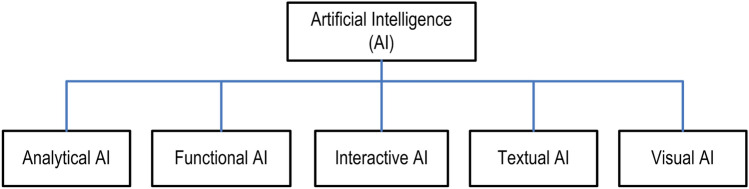
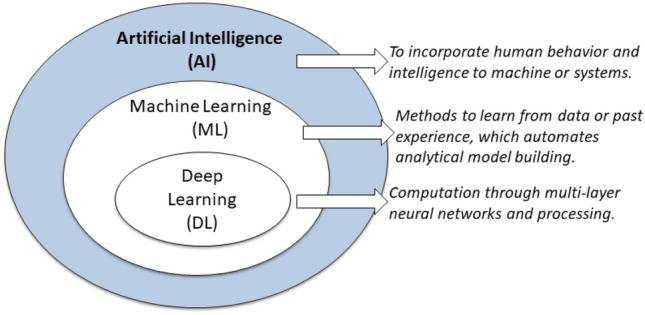
Artificial intelligence (AI) is a leading technology of the current age of the Fourth Industrial Revolution (Industry 4.0 or 4IR), with the capability of incorporating human behavior and intelligence into machines or systems. Thus, AI-based modeling is the key to build automated, intelligent, and smart systems according to today’s needs. To solve real-world issues, various types of AI such as analytical, functional, interactive, textual, and visual AI can be applied to enhance the intelligence and capabilities of an application. However, developing an effective AI model is a challenging task due to the dynamic nature and variation in real-world problems and data. In this paper, we present a comprehensive view on “AI-based Modeling” with the principles and capabilities of potential AI techniques that can play an important role in developing intelligent and smart systems in various real-world application areas including business, finance, healthcare, agriculture, smart cities, cybersecurity and many more. We also emphasize and highlight the research issues within the scope of our study. Overall, the goal of this paper is to provide a broad overview of AI-based modeling that can be used as a reference guide by academics and industry people as well as decision-makers in various real-world scenarios and application domains.
Overview
The claims and statistics of this paper haven’t been checked yet.
Free: it reads the open-access text and checks the first 5 claims that cite a source we can check. Create a free account to check every claim.
Integrity signals
Registry
Cites
Statistics
Figures
Verification
Claims the paper makes
The claims and statistics of this paper haven’t been checked yet.
Free: it reads the open-access text and checks the first 5 claims that cite a source we can check. Create a free account to check every claim.
Self-check
Percentages, sums and reported differences re-computed from the paper’s own numbers.
The self-check needs the paper’s full text.
Citations
Cites
1 retracted
Hybrid genetic algorithm and a fuzzy logic classifier for heart disease diagnosis
Reddy, G. T., Reddy, M. P. K., Lakshmanna, K., Rajput, D. S., Kaluri, R., & Srivastava, G. (2020) · Evolutionary Intelligence · doi:10.1007/s12065-019-00327-1 · Cited by 404 · cited 1×
“Reddy et al. [74], for example, use a fuzzy logic classifier for heart disease detection, with the derived rules from fuzzy classifiers being optimized using an adaptive genetic algorithm.”
MethodRetractedBreiman, L. (2001) · Machine Learning · doi:10.1023/a:1010933404324 · Cited by 133,538 · cited 1×
“…[4], Support vector machines [46], Decision Trees - ID3 [71], C4.5 [72], CART [15], BehavDT [84], IntrudTree [82], Ensemble learning, Random Forest [14], Linear regression [36], Support vector regression [46], etc. [81] are the popular techniques that can be used to solve various supervised…”
MethodScikit-learn: Machine Learning in Python
Pedregosa, F., Varoquaux, G., Gramfort, A., Michel, V., Thirion, B., Grisel, O., Blondel, M., Müller, A., Nothman, J., Louppe, G., et al. (2012) · arXiv · doi:10.48550/arxiv.1201.0490 · Cited by 71,016
Gradient-based learning applied to document recognition
Lecun, Y., Bottou, L., Bengio, Y., & Haffner, P. (1998) · Proceedings of the IEEE · doi:10.1109/5.726791 · Cited by 58,805 · cited 2×
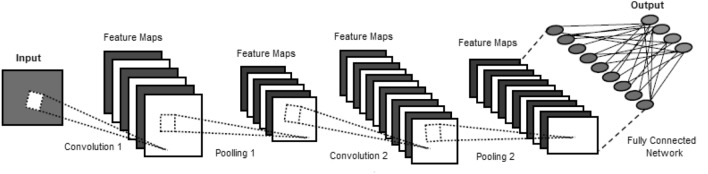
“Convolutional neural networks (CNN or ConvNet) [53, 80] have recently demonstrated considerable promise in a variety of computer vision tasks, including classification, object detection, and scene analysis.”
BackgroundData mining: concepts and techniques
(2012) · Choice Reviews Online · doi:10.5860/choice.49-3305 · Cited by 28,531
Data Mining: Practical Machine Learning Tools and Techniques
(2011) · Elsevier eBooks · doi:10.1016/c2009-0-19715-5 · Cited by 25,437
(1967) · Cited by 23,719
Classification and Regression Trees.
Gordon, A. D., Breiman, L., Friedman, J. H., Olshen, R. A., & Stone, C. J. (1984) · Biometrics · doi:10.2307/2530946 · Cited by 23,522
(1992) · Cited by 23,431
Quinlan, J. R. (1986) · Machine Learning · doi:10.1007/bf00116251 · Cited by 21,439 · cited 2×
“Navies Bayes [42], K-nearest neighbors [4], Support vector machines [46], Decision Trees - ID3 [71], C4.”
Method
Research works printed but not linked: 5
- Dupond S. A thorough review on the current advance of neural network structures. Annu Rev Control. 2019;14:200–30.
- Goodfellow I, Bengio Y, Courville A, Bengio Y. Deep learning, vol. 1. Cambridge: MIT press; 2016.
- Russell S, Norvig P. Artificial intelligence: a modern approach, global edition 4th. Foundations. 2021;19:23.
- Sarker IH, Colman A, Han J, Watters P. Context-aware machine learning and mobile data analytics: automated rule-based services with intelligent decision-making. Berlin: Springer; 2022.
- Thorvald Sorensen. method of establishing groups of equal amplitude in plant sociology based on similarity of species. Biol Skr. 1948;5:20.
Cited by
Items 201–300 of 1,001
Sudarsono, B., Listyaningrum, P., Tentama, F., & Ghozali, F. A. (2024) · International Journal of Evaluation and Research in Education (IJERE) · doi:10.11591/ijere.v13i3.26175 · Cited by 31
“Industry-oriented learning models with real work patterns will encourage students to collect new information and knowledge according to various problems [45]–[47].”
BackgroundTopsakal, Y., & Çuhadar, M. (2024) · Current Issues in Tourism · doi:10.1080/13683500.2024.2375361 · Cited by 36
“This can encompass comprehending and responding to natural language, detecting patterns in data, and making decisions based on intricate algorithms (Sarker, 2022).”
Ethical Considerations in the Use of Artificial Intelligence in Pain Medicine
Cascella, M., Shariff, M. N., Viswanath, O., Leoni, M. L. G., & Varrassi, G. (2025) · Current Pain and Headache Reports · doi:10.1007/s11916-024-01330-7 · Cited by 33
“A commonly used classification system categorizes AI into three types based on their capabilities: Artificial Narrow Intelligence (ANI), Artificial General Intelligence (AGI), and Artificial Super Intelligence (ASI) [16].”
Sarhan, S., Badran, A. S., Ghalwash, D. M., Almalahy, H. G., & Abou‐Bakr, A. (2025) · BMC Medical Education · doi:10.1186/s12909-025-07544-6 · Cited by 33
Waseem, M., Ahmad, A., Liang, P., Akbar, M. A., Khan, A. A., Ahmad, I., Setälä, M., & Mikkonen, T. (2025) · Journal of Systems and Software · doi:10.1016/j.jss.2025.112558 · Cited by 36
Omheni, N., Koubaa, H., & Zarai, F. (2025) · Technologies · doi:10.3390/technologies13120559 · Cited by 45
Abuyaman, O. (2023) · JMIR Formative Research · doi:10.2196/49459 · Cited by 32
“Artificial intelligence (AI) is a convergence of computer science and linguistics aiming to develop machines that emulate tasks necessitating human intelligence, including learning, adaptation, reasoning, comprehension, abstraction, and responsiveness to attributes like attention and emotion [1,2].”
BackgroundArtificial intelligence in civil engineering
Kapoor, N. R., Kumar, A., Kumar, A., Kumar, A., & Arora, H. C. (2024) · Elsevier eBooks · doi:10.1016/b978-0-443-13191-2.00009-2 · Cited by 50
Unveiling the frontiers of deep learning: Innovations shaping diverse domains
Ahmed, S. F., Alam, M. S. B., Kabir, M., Afrin, S., Rafa, S. J., Mehjabin, A., & Gandomi, A. H. (2025) · Applied Intelligence · doi:10.1007/s10489-025-06259-x · Cited by 39
Aguilar-Gallardo, C., & Ana Bonora-Centelles, A. (2024) · Applied Sciences · doi:10.3390/app14031303 · Cited by 34
“The capability of AIs in handling complexity allows flexible and sophisticated adaptive control, especially when dealing with the specific needs of tailored batches [40].”
BackgroundMethodTeachers’ Perspectives on Integrating AI tools in Classrooms: Insights from the Philippines
Sibug, V. B., Vital, V. P., Miranda, J. P. P., Fernando, E. Q., Gamboa, A. B., Hernandez, H. E., Bansil, J. A., Penecilla, E., & Gonzales, D. (2024) · International Conference on Computers in Education · doi:10.58459/icce.2024.4964 · Cited by 37
Generative AI: Current Status and Future Directions
Leong, L.-Y., Hew, T.-S., Ooi, K., Tan, G. W., & Koohang, A. A. (2025) · Journal of Computer Information Systems · doi:10.1080/08874417.2025.2482571 · Cited by 39
Shah, B. A., & Muthalif, A. G. A. (2025) · Anti-Corrosion Methods and Materials · doi:10.1108/acmm-09-2024-3085 · Cited by 29
Deep Learning for Predicting Traffic in V2X Networks
Abdellah, A. R., Muthanna, A., Essai, M. H., & Koucheryavy, A. (2022) · Applied Sciences · doi:10.3390/app121910030 · Cited by 28
“Artificial intelligence (AI), defined as any method or system that recognizes its environment and performs actions that increase the chances of success in achieving a particular goal, is a practical solution for developing new complicated communication systems [1,2].”
TER-CA-WGNN: Trimodel Emotion Recognition Using Cumulative Attribute-Weighted Graph Neural Network
Al-Saadawi, H. F. T., & Daş, R. (2024) · Applied Sciences · doi:10.3390/app14062252 · Cited by 32
Braunsberger, C., & Aschauer, E. (2025) · Journal of risk and financial management · doi:10.3390/jrfm18080465 · Cited by 33
Zhen, S., Surender, R., Dhiman, G., Rani, K. R., Ashifa, K. M., & Reegu, F. A. (2022) · Optik · doi:10.1016/j.ijleo.2022.170123 · Cited by 27
RetractedRahimikhoob, H., Delshad, M., & Habibi, R. (2023) · Measurement · doi:10.1016/j.measurement.2023.113636 · Cited by 28
Kapsali, M. Z., Livanis, E., Tsalikidis, C., Oikonomou, P., Voultsos, P. P., & Tsaroucha, A. (2024) · Cureus · doi:10.7759/cureus.54759 · Cited by 32
Use of ChatGPT in Urology and its Relevance in Clinical Practice: Is it useful?
Braga, A. V. N. M., Nunes, N. C., Santos, E. N., Veiga, M. L., Braga, A. A. N. M., de Abreu, G. E., de Bessa, J., Braga, L. H., Kirsch, A. J., & Barroso, U. (2024) · International braz j urol · doi:10.1590/s1677-5538.ibju.2023.0570 · Cited by 30
ChatGPT Performance in Diagnostic Clinical Microbiology Laboratory-Oriented Case Scenarios
Sallam, M., Al‐Salahat, K., & Al-Ajlouni, E. (2023) · Cureus · doi:10.7759/cureus.50629 · Cited by 33
“Another factor is the architecture of various AI-based models where image analysis and processing of text data may vary [13].”
BackgroundA Review on Integrating Autonomy Into System of Systems: Challenges and Research Directions
Torkjazi, M., & Raz, A. K. (2024) · IEEE Open Journal of Systems Engineering · doi:10.1109/ojse.2024.3456037 · Cited by 30
“Although AI and ML terms are usually used interchangeably, ML mostly refers to learning methods and can be classified as a subset of AI [36].”
BackgroundEvaluating the Impact of AI Tools on Grammar Mastery: A Comparative Study of Learning Outcomes
Lalira, J. E., Pangemanan, Y. A. T., Scipio, J. E., Lumi, S. M., Merentek, T. C., & Tumuju, V. N. (2024) · Voices of English Language Education Society · doi:10.29408/veles.v8i3.27856 · Cited by 34
AI and learning experiences of international students studying in the UK: an exploratory case study
Arslan, N., Youssef, M. H., & Ghandour, R. (2025) · Artificial Intelligence in Education · doi:10.1108/aiie-10-2024-0019 · Cited by 38
Arvizu-Montes, A., Guerrero-Bustamante, O., Polo-Mendoza, R., & Martinez-Echevarria, M. J. (2025) · Materials · doi:10.3390/ma18184307 · Cited by 31
“First of all, AI refers to the capability of machines/computers to imitate intelligent human behavior by performing tasks such as learning, reasoning, problem-solving, and perception [59,60].”
To democratize or not to democratize AI? That is the question
Murphy, J. W., & Taylor, R. R. (2023) · AI and Ethics · doi:10.1007/s43681-023-00313-5 · Cited by 30
An AI-Based Evaluation Framework for Smart Building Integration into Smart City
Shahrabani, M. M. N., & Apanavičienė, R. (2024) · Sustainability · doi:10.3390/su16188032 · Cited by 30
Zou, Q., Duan, H., Yang, Z., Wang, X., Tian, Y., Hou, H., & Yang, J. (2025) · Resources Conservation and Recycling · doi:10.1016/j.resconrec.2025.108320 · Cited by 26
Naeem, M. A., Gul, R., Arfaoui, N., Bakry, W., & Bhatti, M. I. (2025) · Pacific-Basin Finance Journal · doi:10.1016/j.pacfin.2025.102845 · Cited by 26
Sharma, D., & Singh, K. (2025) · World Journal of Microbiology and Biotechnology · doi:10.1007/s11274-025-04494-5 · Cited by 28
“AI programs have the capability to autonomously make decisions by following preset rules or recognizable patterns in data (Sarker 2022).”
InfluentialArtificial intelligence in routine blood tests
Santos-Silva, M. A., Sousa, N., & Sousa, J. C. (2024) · Frontiers in Medical Engineering · doi:10.3389/fmede.2024.1369265 · Cited by 30
Gavhane, J. M., & Pagare, R. (2024) · Education + Training · doi:10.1108/et-04-2023-0117 · Cited by 30
Нестеров, В. (2023) · Вісник Черкаського державного технологічного університету · doi:10.62660/2306-4412.4.2023.82-90 · Cited by 34
Artificial Intelligence-Based Models for Prediction of Mortality in ICU Patients: A Scoping Review
Olang, O., Mohseni, S., Shahabinezhad, A., Hamidianshirazi, Y., Goli, A. N., Abolghasemian, M., Shafiee, M. A., Aarabi, M., Alavinia, M., & Shaker, P. (2024) · Journal of Intensive Care Medicine · doi:10.1177/08850666241277134 · Cited by 30
Employing Artificial Intelligence in Management Information Systems to Improve Business Efficiency
Susilo, B. W., & Susanto, E. (2024) · Journal of Management and Informatics · doi:10.51903/jmi.v3i2.30 · Cited by 43
“Similarly, (Sarker, 2022) explains that AI incorporates a range of techniques that enable machines to acquire knowledge from data and alter their behavior according to past experiences.”
BackgroundHasan, M., Vasker, N., & Khan, M. (2024) · Journal of Agriculture and Food Research · doi:10.1016/j.jafr.2024.101372 · Cited by 29
Sadeghi, T. S., Ourang, S. A., Sohrabniya, F., Sadr, S., Shobeiri, P., & Motamedian, S. R. (2025) · BMC Oral Health · doi:10.1186/s12903-025-05482-9 · Cited by 26
Büker, M., Sümbüllü, M., & Arslan, H. (2025) · International Dental Journal · doi:10.1016/j.identj.2025.100920 · Cited by 27
“33 These findings are still preliminary and require additional verification and validation to be confirmed.”
Aziz, M., Osabel, D. M., Kim, Y., Kim, S.-H., Bae, J., & Tsavdaridis, K. D. (2025) · Results in Engineering · doi:10.1016/j.rineng.2025.107882 · Cited by 27
AI-driven cybersecurity solutions for real-time threat detection in critical infrastructure
Ojo, B., & Aghaunor, C. T. (2024) · International Journal of Science and Research Archive · doi:10.30574/ijsra.2024.12.2.1401 · Cited by 27
“As a result, AI can detect compromised credentials and other suspicious activity related to ransomware through the use of machine learning algorithms, hence significantly decreasing response time (Sarker, 2022).”
Höfler, L. (2024) · Sensors and Actuators B Chemical · doi:10.1016/j.snb.2024.136528 · Cited by 28
Artificial Intelligence for Clinical Management of Male Infertility, a Scoping Review
Naik, N. C., Roth, B. J., & Lundy, S. D. (2024) · Current Urology Reports · doi:10.1007/s11934-024-01239-z · Cited by 25
AI-Based Model Order Reduction Techniques: A Survey
Mallick, S., & Mittal, M. (2025) · Archives of Computational Methods in Engineering · doi:10.1007/s11831-024-10207-2 · Cited by 27
Artificial intelligence in offsite and modular construction research
Yevu, S. K., Blay, K. B., Ayinla, K. O., & Hadjidemetriou, G. M. (2025) · Automation in Construction · doi:10.1016/j.autcon.2025.105994 · Cited by 23
Digital transformation in pharmaceuticals: The impact of AI on supply chain management
Vadaga, A. K., Dokuburra, U. R., Nekkanti, H., Gudla, S. S., & Kumari, R. (2025) · Intelligent Hospital · doi:10.1016/j.inhs.2025.100008 · Cited by 30
Choi, M. H., Kim, D., Park, Y., & Jeong, S. H. (2023) · Journal of Infection and Public Health · doi:10.1016/j.jiph.2023.10.021 · Cited by 24
Banyong, C., Hantanong, N., Wisutwattanasak, P., Champahom, T., Theerathitichaipa, K., Seefong, M., Ratanavaraha, V., & Jomnonkwao, S. (2024) · Results in Engineering · doi:10.1016/j.rineng.2024.103110 · Cited by 23
Pre-Service English Teachers’ Lived Experience in Using AI in Teaching Preparation
Karina, B. D., & Kastuhandani, F. C. (2024) · Edunesia Jurnal Ilmiah Pendidikan · doi:10.51276/edu.v5i1.767 · Cited by 25
“AI technology adoption in education also presents challenges for the user such as output biases, privacy concerns, ethical utilization, and AI dependency on decision-making (Alqahtani et al., 2023; Sarker, 2022).”
BackgroundShi, S., Caluyo, F. S., Hernandez, R., Sarmiento, J. S., & Rosales, C. A. (2024) · Natural and Engineering Sciences · doi:10.28978/nesciences.1569560 · Cited by 22
Explainable AI for Digital Forensics: Ensuring Transparency in Legal Evidence Analysis
Maruf, B. (2025) · Journal of Forensic Science and Research · doi:10.29328/journal.jfsr.1001089 · Cited by 25
Beyond automation: Unveiling the potential of agentic intelligence
Tirulo, A., Yadav, M., Lolamo, M., Chauhan, S., Siano, P., & Shafie‐khah, M. (2025) · Renewable and Sustainable Energy Reviews · doi:10.1016/j.rser.2025.116218 · Cited by 28
A Machine Learning Model for Predicting Individual Substance Abuse with Associated Risk-Factors
Islam, U. I., Haque, E., Alsalman, D., Islam, M. N., Moni, M. A., & Sarker, I. H. (2022) · Annals of Data Science · doi:10.1007/s40745-022-00381-0 · Cited by 26
Self-citationAutsadee, Y., Jeevan, J., Othman, M. R., & Salleh, N. H. M. (2023) · Australian Journal of Maritime & Ocean Affairs · doi:10.1080/18366503.2023.2287872 · Cited by 24
“Artificial intelligence (AI) systems use machine learning, natural language processing, and computer vision to mimic human intellect and allow robots to do tasks autonomously (Sarker 2022).”
Park, S. J., Lee, J. Y., & Lee, J. (2022) · Data & Knowledge Engineering · doi:10.1016/j.datak.2023.102264 · Cited by 24
Marcos, F. L., & Plangklang, B. (2024) · Energy Reports · doi:10.1016/j.egyr.2024.01.062 · Cited by 22
New Horizons of Artificial Intelligence in Medicine and Surgery
Luțenco, V., Țocu, G., Guliciuc, M., Moraru, M., Candussi, I.-L., Dănilă, D. M., Luțenco, V., Dimofte, F., Mihailov, O. M., & Mihailov, R. (2024) · Journal of Clinical Medicine · doi:10.3390/jcm13092532 · Cited by 22
“Cognitive computing, in theory, is an equal interaction between man and machine [3].”
BackgroundAlsayed, A. A., Aldajani, M. B., Aljohani, M., Alamri, H., Alwadi, M. A. M., Alshammari, B. Z., & Alshammari, F. R. (2024) · The Saudi Dental Journal · doi:10.1016/j.sdentj.2024.09.009 · Cited by 23
Bechara, H., Ibrahim, R., Zemouri, R. M., Kedjar, B., Merkhouf, A., Tahan, A. S., & Al‐Haddad, K. (2024) · IEEE Access · doi:10.1109/access.2024.3502546 · Cited by 22
“AI is becoming increasingly prevalent in today’s world and is seen as a crucial part of Industry 4.0, the fourth industrial revolution; as it has the potential to handle big data, increase efficiency and reduce costs [22].”
InfluentialRecent advancement in selective gas sensors and role of machine learning
Pradyumn, Barman, P. B., Sil, A., & Hazra, S. K. (2025) · Journal of Alloys and Compounds · doi:10.1016/j.jallcom.2025.180757 · Cited by 24
An analytical review of predictive methods for delivery delays in supply chains
Müller, N., Burggräf, P., Steinberg, F., Sauer, C. R., & Schütz, M. (2025) · Supply Chain Analytics · doi:10.1016/j.sca.2025.100130 · Cited by 29
Digital transformation and economic growth: empirical evidence from Vietnam
Vu, H. Q., Trâm, N. H. M., & Tùng, L. T. (2025) · Post-Communist Economies · doi:10.1080/14631377.2025.2511511 · Cited by 26
“AI mimics human intelligence for tasks like learning, problem-solving, and natural language processing (Javaid et al., 2022; Sarker, 2022).”
ASHP Statement on Artificial Intelligence in Pharmacy
Bastow, S. S., Greszler, C. A., Hartell, E., Kalichira, A. L., Mathew, S., Rhodes, D., Zhan, S., & Anderson, S. V. (2025) · American Journal of Health-System Pharmacy · doi:10.1093/ajhp/zxaf107 · Cited by 24
Forensic Odontology in the Digital Era: A Narrative Review of Current Methods and Emerging Trends
Radu, C. C., Hogea, T., Carașcă, C., & Radu, C.-M. (2025) · Diagnostics · doi:10.3390/diagnostics15202550 · Cited by 21
“Integration with digital health records, biometric databases, and DNA analysis further enhances the multidisciplinary potential of forensic odontology, enabling more holistic and reliable identification frameworks [18].”
Hikuwai, M. V., Patorniti, N. P., Vieira, A. S., Frangioudakis, G., & Stewart, R. A. (2023) · Sustainability · doi:10.3390/su15054276 · Cited by 21
Yapay Zekâ Destekli Dil İşleme Teknolojisi Olan ChatGPT’nin Sağlık Hizmetlerinde Kullanımı
Yiğit, S., Berşe, S., & Dіrgar, E. (2023) · Eurasian Journal of Health Technology Assessment · doi:10.52148/ehta.1302000 · Cited by 27
Zarei, M., Zarei, M., Hamzehzadeh, S., Oliyaei, S. S. B., & Hosseini, M. (2024) · Shiraz E-Medical Journal · doi:10.5812/semj-145840 · Cited by 26
Guo, Z., Song, M., Fang, X., Lin, C., Zhang, H., Li, X., & Wang, W. (2024) · Journal of Engineering Design · doi:10.1080/09544828.2024.2373038 · Cited by 22
“For instance, AI can effectively identify and analyse complex engineering system problems, propose data-driven solutions, and potentially predict the future development path of technical systems (Sarker 2022).”
Application of Artificial Intelligence for Library Services: A Systematic Literature Review
Marasinghe, M. M. I. K., Gunasekera, D., & Senevirathne, W. A. R. (2024) · Journal of the University Librarians Association of Sri Lanka · doi:10.4038/jula.v27i2.8089 · Cited by 21
Abedi, M., Alshybani, I., Shahadat, M., & Murillo, M. S. (2023) · Qeios · doi:10.32388/md04b0.2 · Cited by 24
A Review and Bibliometric Analysis of Sorting and Recycling of Plastic Wastes
Oyewale, J. A., Tartibu, L. K., & Okokpujie, I. P. (2023) · International Journal of Design & Nature and Ecodynamics · doi:10.18280/ijdne.180107 · Cited by 23
“However, since heuristic search methods are accessible, for critical and challenging issues that require a long calculation time [10], it is, therefore, necessary to employ these automated methods to create efficient techniques to solve problems in real-life applications.”
Spatio-temporal Crime Analysis and Forecasting on Twitter Data Using Machine Learning Algorithms
Vivek, M., & Prathap, B. R. (2023) · SN Computer Science · doi:10.1007/s42979-023-01816-y · Cited by 20
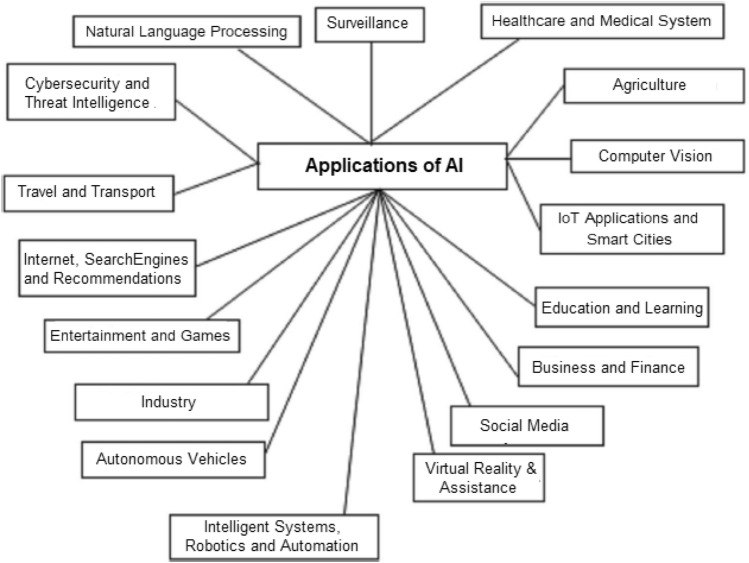
“[13] provide a comprehensive overview of "AI-based Modeling" including the principles and capabilities of potential AI techniques that can aid in the development of intelligent and smart systems in real-world application domains, such as business, finance, healthcare, agriculture, smart cities, and more.”
BackgroundStrategic organizational changes: Adopting data‐driven decisions
Bilkštytė‐Skanė, D., & Akstinaitė, V. (2023) · Strategic Change · doi:10.1002/jsc.2566 · Cited by 24
Prajapati, J. B., Kumar, A., Singh, S. K., Prajapati, B. G., Thakar, Y., Tambe, P. R., & Ved, A. D. (2024) · SN Social Sciences · doi:10.1007/s43545-023-00818-0 · Cited by 23
“Other businesses outside academic publishing also use AI, for example, to upsurge website traffic using Big Data and Natural Language Processing (NLP) (Sarker 2022).”
Darwish, A. M., Almansour, M., Salah, A., Zagow, M., Saeed, K., & Elkafoury, A. (2024) · Transportation Research Interdisciplinary Perspectives · doi:10.1016/j.trip.2024.101052 · Cited by 31
Arinze, C. A., & Jacks, B. S. (2024) · Engineering Science & Technology Journal · doi:10.51594/estj.v5i3.950 · Cited by 26
Elevating Business Analysis with AI: Strategies for Analysts
Seyi-Lande, O. B., & Onaolapo, C. P. (2024) · International Journal of Management Research and Economics · doi:10.51483/ijmre.4.2.2024.1-17 · Cited by 43
“Sarker (2022)Automation not only expedites processes but also enhances decision-making capacities.”
BackgroundInfluentialUnpacking service failures in artificial intelligence: future research directions
Chopra, R., Bhardwaj, S., Thaichon, P., & Nair, K. (2024) · Asia Pacific Journal of Marketing and Logistics · doi:10.1108/apjml-03-2024-0393 · Cited by 24
AI and Smart Manufacturing: Building Industry 4.0
Motia, K., Kumar, R., & Akhai, S. (2024) · Advances in business strategy and competitive advantage book series · doi:10.4018/979-8-3693-6720-9.ch001 · Cited by 21
Capabilities and Limitations of ChatGPT in Anatomy Education: An Interaction With ChatGPT
Saluja, S. S., & Tigga, S. R. (2024) · Cureus · doi:10.7759/cureus.69000 · Cited by 20
Alshehhi, K., Cheaitou, A., & Rashid, H. (2024) · Sustainability · doi:10.3390/su16177724 · Cited by 19
Detection of SARS-CoV-2 based on artificial intelligence-assisted smartphone: A review
Li, Y., Zhang, J., Chen, J., Zhu, F., Liu, Z., Bao, P., Shen, W., & Tang, S. N. (2023) · Chinese Chemical Letters · doi:10.1016/j.cclet.2023.109220 · Cited by 21
Kayser, K., & Telukdarie, A. (2024) · Springer proceedings in business and economics · doi:10.1007/978-3-031-46177-4_12 · Cited by 21
Oyekunle, D. O. T., Boohene, D., & Preston, D. (2024) · International Journal of Scientific Research and Management (IJSRM) · doi:10.18535/ijsrm/v12i03.em18 · Cited by 25
“Sarker (2022) discussed that AI's technological advancements have significantly impacted various domains, promising to revolutionize industries by enhancing efficiency, accuracy, and decision-making processes.”
BackgroundArtificial Intelligence in Mathematical Modeling of Complex Systems
Zhao, T. (2024) · ICST Transactions on e-Education and e-Learning · doi:10.4108/eetel.5256 · Cited by 24
“Artificial Intelligence Technology [15]: Artificial Intelligence technology, especially machine learning and deep learning, is widely used in generating models from complex systems, predicting system behavior, optimizing system performance, etc. Control Theory: Control theory is used to design…”
Nukah, P. D., Abbey, S. J., & Booth, C. A. (2024) · Journal of Building Engineering · doi:10.1016/j.jobe.2024.110330 · Cited by 19
Perspectives and experiences of health sciences academics regarding ChatGPT: A qualitative study
Güner, S. G., Yiğit, S., Berşe, S., & Dіrgar, E. (2024) · Medical Teacher · doi:10.1080/0142159x.2024.2413425 · Cited by 20
“Artificial intelligence (AI) is a multidisciplinary approach combining computer science and linguistics, aimed at designing machines capable of performing tasks that would normally require human intelligence [1].”
Gouda, H. F., Hassan, F. A. M., El-Araby, E. E., & Moawed, S. A. (2022) · BMC Veterinary Research · doi:10.1186/s12917-022-03486-z · Cited by 20
“Several papers [10, 11] have provided evidence for using ML in the medical field to increase the likelihood of successful ML applications and overcoming challenges.”
BackgroundRahman, M. A., Hossain, M. S., Mintoo, A. A., & Islam, S. (2025) · American Journal of Advanced Technology and Engineering Solutions · doi:10.63125/a5yh1293 · Cited by 21
Deivayanai, V. C., Swaminaathan, P., Vickram, A. S., Saravanan, A., Bibi, S., Aggarwal, N., Kumar, V., Alhadrami, A. H., Mohammedsaleh, Z. M., Altalhi, R., et al. (2025) · International Journal of Surgery · doi:10.1097/js9.0000000000002481 · Cited by 23
Forte, P. M., Encarnação, S., Monteiro, A. M., Teixeira, J. E., Hattabi, S., Sortwell, A., Branquinho, L., Amaro, B., Sampaio, T., Flores, P., et al. (2023) · Behavioral Sciences · doi:10.3390/bs13070522 · Cited by 19
Dong, S., Yu, H., Poupart, P., & Ho, E. A. (2024) · Drug Delivery and Translational Research · doi:10.1007/s13346-024-01625-7 · Cited by 18
“It is typically categorized by how data is labeled: supervised, unsupervised, and reinforcement learning [10].”
Perceived Benefits And Concerns Of AI Integration In Higher Education: Insights From India
Ali, M. S., Suchiang, T., Saikia, T. P., & Gulzar, D. (2024) · doi:10.53555/kuey.v30i5.5122 · Cited by 20
Building Guardrails in AI Systems with Threat Modeling
Dev, J., Akhuseyinoglu, N. B., Kayas, G., Rashidi, B., & Garg, V. (2025) · Digital Government Research and Practice · doi:10.1145/3674845 · Cited by 24
“Based on the learning principles, capabilities, and the nature of the data they are trained on, ML models can be classified as supervised , unsupervised , semisupervised , and reinforcement learning [5, 35].”
InfluentialAhmed, I., Adnan, M., Iqbal, S., Raza, A., Hassan, W., & Mohamed, S. E. G. (2024) · Results in Engineering · doi:10.1016/j.rineng.2024.103004 · Cited by 20
Smart Cognitive IoT Devices Using Multi-Layer Perception Neural Network on Limited Microcontroller
Hussein, M., Mohammed, Y. S., Galal, A. I. A., Abd-Elrahman, E., & Zorkany, M. (2022) · Sensors · doi:10.3390/s22145106 · Cited by 20
“In the first method, the learning and training process will be handled on the cloud, as well as the decision-making [8,9].”
A review paper: optimal test cases for regression testing using artificial intelligent techniques
Khaleel, S., & Alghadanfary, R. A. (2022) · International Journal of Power Electronics and Drive Systems/International Journal of Electrical and Computer Engineering · doi:10.11591/ijece.v13i2.pp1803-1816 · Cited by 18
“Building and developing an effective artificial intelligence (AI) model is a challenging task due to the dynamic nature and differences in real world data and problems [5].”
Ghai, D., Saxena, S., Dhingra, G., & Tripathi, S. L. (2024) · Multimedia Tools and Applications · doi:10.1007/s11042-024-20257-0 · Cited by 37
Machine Learning and Artificial Intelligence in IoT: Integration Techniques and Applications
Rao, A. N., Velivela, A., Reddy, M. S. R. L., Sagar, Y. A., Jyothi, N., & Shilpa, S. (2025) · Cognitive science and technology · doi:10.1007/978-981-97-8533-9_5 · Cited by 17
Mkilima, T. (2025) · Biofuels Bioproducts and Biorefining · doi:10.1002/bbb.70004 · Cited by 19
“86 Machine learning algorithms are employed to predict the quality and yield of biocrude oil based on large datasets collected from HTL experiments.”
Ojo, D. A. (2025) · Journal of Management and Development Research · doi:10.69739/jmdr.v2i2.1171 · Cited by 22
“Predictive and prescriptive analytics tools, including regression models, Monte Carlo models, clustering algorithms, and machine learning are built into this layer in detecting patterns of risks and predicting possible deviations in the projects (Sarker, 2022).”
Metadata
- Authors
- Sarker, I. H.
- Affiliations
- Chittagong University of Engineering & Technology (BD)
- Corresponding author
- Sarker, Iqbal H.
- ORCID
- Sarker, Iqbal H.
- Venue
- SN Computer Science
- Published
- 2022-02-10
- Volume
- 3
- Issue
- 2
- Pages
- 158-158
- ISSN
- 2661-8907 (ISSN-L)
- 2662-995X
- PMC
- PMC8830986
- OpenAlex
- W4225716729
- Cited by
- 1,208
- References
- 115
- Citations by year
- 2026: 228 · 2025: 395 · 2024: 361 · 2023: 184 · 2022: 39
- FWCI
- 17.11
- Type
- journal article
- Language
- en
- Open access
- hybrid
- doi.org
- Licence
- cc-by
- creativecommons.org/licenses/by/4.0 (tdm)
- creativecommons.org/licenses/by/4.0 (vor)
- Locations
- SN Computer Science (publishedVersion, cc-by)
- Preprints.org (acceptedVersion, cc-by)
- PubMed Central (publishedVersion, cc-by)
- PubMed (publishedVersion)
- Funders
- Swinburne University of Technology
- Topics
- Physical Sciences › Computer Science › Artificial Intelligence › Artificial Intelligence Applications
- Physical Sciences › Computer Science › Information Systems › Internet of Things and AI
- Social Sciences › Decision Sciences › Management Science and Operations Research › Impact of AI and Big Data on Business and Society
- Keywords
- artificial intelligence techniques, intelligent systems, automation, Industry 4.0, interactive AI, artificial intelligence in business, artificial intelligence in finance, artificial intelligence in healthcare, smart cities, cybersecurity
About these checks
Registry, retraction, Cites and statistics results are computed, not judged, with one exception: a printed reference that no index lists is read once by a model before it counts as a citation error. Claims are extracted by a model and kept only when their quote appears verbatim in the text; each cited source is then checked, with a model’s help, for whether it says what the claim relies on. Those verdicts can be wrong — read the claim’s quote and the cited source before relying on one.
Statistics and arithmetic are recomputed, not judged.
Confidence bands are shown only for fields calibrated on our annotated test set. None is calibrated yet, so no band is shown.
What counts as a claim ›How we measure confidence ›How we check this ›
Are you an author, or do you see a problem with this page? Request a review
Data sources
Bibliographic data: Semantic Scholar, OpenAlex, Crossref.
Contains information from the Semantic Scholar Academic Graph Datasets, made available under the ODC Attribution License (ODC-BY 1.0).
Semantic Scholar’s data is described in: Kinney, R., et al. (2023). The Semantic Scholar Open Data Platform. arXiv:2301.10140.
