

AI-Based Modeling: Techniques, Applications and Research Issues Towards Automation, Intelligent and Smart Systems
Open accessPublished version of a preprint
The DOI matches its Crossref record; 116 of the 116 references it cites were found in a registry or an index.
Abstract
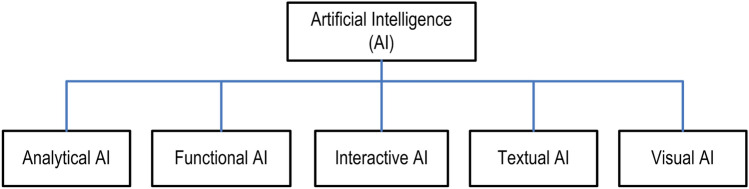
Artificial intelligence (AI) is a leading technology of the current age of the Fourth Industrial Revolution (Industry 4.0 or 4IR), with the capability of incorporating human behavior and intelligence into machines or systems. Thus, AI-based modeling is the key to build automated, intelligent, and smart systems according to today’s needs. To solve real-world issues, various types of AI such as analytical, functional, interactive, textual, and visual AI can be applied to enhance the intelligence and capabilities of an application. However, developing an effective AI model is a challenging task due to the dynamic nature and variation in real-world problems and data. In this paper, we present a comprehensive view on “AI-based Modeling” with the principles and capabilities of potential AI techniques that can play an important role in developing intelligent and smart systems in various real-world application areas including business, finance, healthcare, agriculture, smart cities, cybersecurity and many more. We also emphasize and highlight the research issues within the scope of our study. Overall, the goal of this paper is to provide a broad overview of AI-based modeling that can be used as a reference guide by academics and industry people as well as decision-makers in various real-world scenarios and application domains.
Overview
The claims and statistics of this paper haven’t been checked yet.
Free: it reads the open-access text and checks the first 5 claims that cite a source we can check. Create a free account to check every claim.
Integrity signals
Registry
Cites
Statistics
Figures
Verification
Claims the paper makes
The claims and statistics of this paper haven’t been checked yet.
Free: it reads the open-access text and checks the first 5 claims that cite a source we can check. Create a free account to check every claim.
Self-check
Percentages, sums and reported differences re-computed from the paper’s own numbers.
The self-check needs the paper’s full text.
Citations
Cites
1 retracted
Hybrid genetic algorithm and a fuzzy logic classifier for heart disease diagnosis
Reddy, G. T., Reddy, M. P. K., Lakshmanna, K., Rajput, D. S., Kaluri, R., & Srivastava, G. (2020) · Evolutionary Intelligence · doi:10.1007/s12065-019-00327-1 · Cited by 404 · cited 1×
“Reddy et al. [74], for example, use a fuzzy logic classifier for heart disease detection, with the derived rules from fuzzy classifiers being optimized using an adaptive genetic algorithm.”
MethodRetractedBreiman, L. (2001) · Machine Learning · doi:10.1023/a:1010933404324 · Cited by 133,538 · cited 1×
“…[4], Support vector machines [46], Decision Trees - ID3 [71], C4.5 [72], CART [15], BehavDT [84], IntrudTree [82], Ensemble learning, Random Forest [14], Linear regression [36], Support vector regression [46], etc. [81] are the popular techniques that can be used to solve various supervised…”
MethodScikit-learn: Machine Learning in Python
Pedregosa, F., Varoquaux, G., Gramfort, A., Michel, V., Thirion, B., Grisel, O., Blondel, M., Müller, A., Nothman, J., Louppe, G., et al. (2012) · arXiv · doi:10.48550/arxiv.1201.0490 · Cited by 71,016
Gradient-based learning applied to document recognition
Lecun, Y., Bottou, L., Bengio, Y., & Haffner, P. (1998) · Proceedings of the IEEE · doi:10.1109/5.726791 · Cited by 58,805 · cited 2×
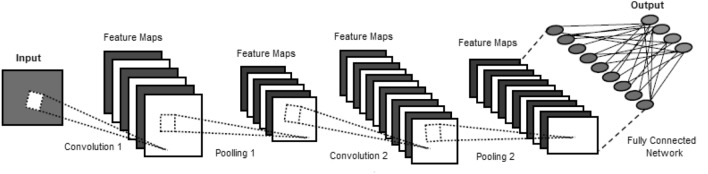
“Convolutional neural networks (CNN or ConvNet) [53, 80] have recently demonstrated considerable promise in a variety of computer vision tasks, including classification, object detection, and scene analysis.”
BackgroundData mining: concepts and techniques
(2012) · Choice Reviews Online · doi:10.5860/choice.49-3305 · Cited by 28,531
Data Mining: Practical Machine Learning Tools and Techniques
(2011) · Elsevier eBooks · doi:10.1016/c2009-0-19715-5 · Cited by 25,437
(1967) · Cited by 23,719
Classification and Regression Trees.
Gordon, A. D., Breiman, L., Friedman, J. H., Olshen, R. A., & Stone, C. J. (1984) · Biometrics · doi:10.2307/2530946 · Cited by 23,522
(1992) · Cited by 23,431
Quinlan, J. R. (1986) · Machine Learning · doi:10.1007/bf00116251 · Cited by 21,439 · cited 2×
“Navies Bayes [42], K-nearest neighbors [4], Support vector machines [46], Decision Trees - ID3 [71], C4.”
Method
Research works printed but not linked: 5
- Dupond S. A thorough review on the current advance of neural network structures. Annu Rev Control. 2019;14:200–30.
- Goodfellow I, Bengio Y, Courville A, Bengio Y. Deep learning, vol. 1. Cambridge: MIT press; 2016.
- Russell S, Norvig P. Artificial intelligence: a modern approach, global edition 4th. Foundations. 2021;19:23.
- Sarker IH, Colman A, Han J, Watters P. Context-aware machine learning and mobile data analytics: automated rule-based services with intelligent decision-making. Berlin: Springer; 2022.
- Thorvald Sorensen. method of establishing groups of equal amplitude in plant sociology based on similarity of species. Biol Skr. 1948;5:20.
Cited by
Items 301–400 of 1,001
Narra, M., Ray, A., Polley, B., Yang, H., & Bhowmik, P. (2025) · Frontiers in Plant Science · doi:10.3389/fpls.2025.1718810 · Cited by 21
“This ultimately reduces the need for extensive laboratory experimentation, saving time and resources in optimizing conditions for in vitro culture (Sarker, 2022).”
Kim, S. H., Tae, J. H., Chang, I. H., Kim, T., Myung, S. C., Nguyen, T. T., Choi, J., Kim, J. H., Kim, J. W., Lee, Y. S., et al. (2023) · Digital Health · doi:10.1177/20552076231203940 · Cited by 22
“Artificial Intelligence (AI) is a multidisciplinary field combining computer science and linguistics to develop machines that can perform tasks that generally require human intelligence.(1) Large Language Models (LLMs) are an AI breakthrough that enables them to replicate humanlike language.”
BackgroundA Survey on Uncertainty Assessment in ANN-Based Measurements
Carratù, M., Gallo, V., Laino, V., Liguori, C., & Pietrosanto, A. (2023) · IEEE International Conference on Metrology for eXtended Reality, Artificial Intelligence and Neural Engineering (MetroXRAINE) · doi:10.1109/metroxraine58569.2023.10405788 · Cited by 17
“The advances that have been manifested in recent years in the field of Artificial Intelligence, mainly due to the rapid development of both techniques and computational processing power for their application, have enabled their unprecedented diffusion in multiple fields of application [1]- [9].”
BackgroundA comparative analysis of missing data imputation techniques on sedimentation data
Loh, W. S., Ling, L., Chin, R. J., Lai, S. H., Loo, K. K., & Seah, C. S. (2024) · Ain Shams Engineering Journal · doi:10.1016/j.asej.2024.102717 · Cited by 19
A Systematic Review of Natural Language Processing Methods and Applications in Thyroidology
Loor-Torres, R., Duran, M., Toro-Tobón, D., Chavez, M. M., Ponce, O. J., Jacome, C. S., Torres, D. S., Perneth, S. A., Montori, V. M., Golembiewski, E. H., et al. (2024) · Mayo Clinic Proceedings Digital Health · doi:10.1016/j.mcpdig.2024.03.007 · Cited by 20
Karmakar, P., Sinha, S., & Pal, D. (2024) · International Journal of Advanced Research in Science Communication and Technology · doi:10.48175/ijarsct-19613 · Cited by 18
Sumarlin, T., & Kusumajaya, R. A. (2024) · Journal of Management and Informatics · doi:10.51903/jmi.v3i2.25 · Cited by 17
“According to (Sarker, 2022), AI is a branch of computer science that focuses on developing systems and technologies to perform tasks that usually require human intelligence.”
BackgroundNew Insights into Valve Hemodynamics
Marom, G., & Einav, S. (2020) · Rambam Maimonides Medical Journal · doi:10.5041/rmmj.10400 · Cited by 22
Humpert, L., Wäschle, M., Horstmeyer, S., Anacker, H., Dumitrescu, R., & Albers, A. (2023) · Procedia CIRP · doi:10.1016/j.procir.2023.02.160 · Cited by 17
Application of Artificial Intelligence in the Management of Drinking Water: A Narrative Review
Maroju, R. G., Choudhari, S. G., Shaikh, M. K., Borkar, S. K., & Mendhe, H. G. (2023) · Cureus · doi:10.7759/cureus.49344 · Cited by 21
“Human intervention in artificially intelligent systems should become less active and humans should have more of an observer role [22].”
Pijarski, P., & Belowski, A. (2024) · Energies · doi:10.3390/en17020516 · Cited by 17
Oracle HR Cloud Application Mechanization for Configuration Migration
Ganji, M. (2025) · International Journal of Engineering Development and Research · doi:10.56975/ijedr.v13i2.301303 · Cited by 16
Adewuyi, O. B., Folly, K. A., Oyedokun, D. T. O., & Ogunwole, E. I. (2022) · Sustainability · doi:10.3390/su142215448 · Cited by 16
“…chemical processing, building design and construction, etc. Common AI-based prediction models include artificial intelligence-based algorithms such as regression analysis, artificial neural networks (ANNs), support vector machines, K-means, Bayesian methods, fuzzy logic, expert systems, etc., [11].”
MethodCyber Security Threats and Countermeasures using Machine and Deep Learning Approaches: A Survey
Manjula, M., Venkatesh, V., & Venugopal, K. R. (2023) · Journal of Computer Science · doi:10.3844/jcssp.2023.20.56 · Cited by 16
“Table 8 describes some of the DL techniques under these categories (Sarker, 2022).”
MethodLi, M., Waheed, R., Kırıkkaleli, D., & Aziz, G. (2023) · Geoscience Frontiers · doi:10.1016/j.gsf.2023.101670 · Cited by 16
YAPAY ZEKA ÖZ-YETERLİLİK ÖLÇEĞİNİN TÜRKÇE’YE UYARLANMASI: GEÇERLİLİLİK VE GÜVENİRLİK ÇALIŞMASI
Uyan, U., & Gültekin, S. U. (2024) · Journal of Research in Business · doi:10.54452/jrb.1415212 · Cited by 16
BERADAPTASI DENGAN PERUBAHAN TEKNOLOGI: KECERDASAN BUATAN DAN EVOLUSI KOMUNIKASI INTERPERSONAL
Pramana, P., Priastuty, C. W., Utari, P., Aziz, R. A., & Purwati, E. (2022) · Jurnal Ilmiah Dinamika Sosial · doi:10.38043/jids.v7i2.4909 · Cited by 30
Sodikin, S. (2024) · Academicus Journal of Teaching and Learning · doi:10.59373/academicus.v3i2.65 · Cited by 26
Risana., V. U., Shirin, A., Purayil, R. N., Mathew, S. R., Soman, S., Sarath Chandran, C., & Kiron, S. S. (2024) · Discover Education · doi:10.1007/s44217-024-00297-2 · Cited by 24
“Advances in computer and information communication technologies (ICT) have led to the emergence of AI [1].”
Role of AI&ML in Modernizing Water and Wastewater Treatment Processes
Kumar, R., & Goyal, M. K. (2024) · Water Air & Soil Pollution · doi:10.1007/s11270-024-07618-z · Cited by 18
“AI is the development of computer systems capable of doing activities that would typically need human intelligence (Sarker, 2022).”
Rawas, S., Tafran, C., AlSaeed, D., & Al-Ghreimil, N. (2024) · Computers, materials & continua/Computers, materials & continua (Print) · doi:10.32604/cmc.2024.055307 · Cited by 28
“In healthcare, the implementation of AI-driven optimization techniques has revolutionized data analytics, bringing about significant advancements across various domains [39].”
Agarwal, S., Kweh, Q. L., Jamali, D., Wider, W., Hossain, S. F. A., & Fauzi, M. A. (2025) · Discover Sustainability · doi:10.1007/s43621-025-01480-7 · Cited by 21
Diagnostic performance of Large Language Models (LLMs) compared with physicians in sleep medicine
Patel, A., Ruoff, C. M., Helgeson, S. A., Carvalho, D. Z., Castillo, P. R., & Cheung, J. (2025) · Sleep Medicine · doi:10.1016/j.sleep.2025.106677 · Cited by 18
Targeting bacterial transcription factors for infection control: opportunities and challenges
Al-Tohamy, A., & Grove, A. (2023) · Transcription · doi:10.1080/21541264.2023.2293523 · Cited by 18
“Through iterative refinement, AI systems adjust parameters to minimize errors, enabling them to detect complex patterns and relationships within vast datasets [101].”
Refoyo, M., & Luengo, D. (2024) · Communications in computer and information science · doi:10.1007/978-3-031-63800-8_1 · Cited by 26
Singh, G., Sahu, S., Bharti, S., & Arya, S. K. (2024) · Process Safety and Environmental Protection · doi:10.1016/j.psep.2024.07.063 · Cited by 15
Alzeyani, E. M. M., & Szabó, C. (2024) · Mathematics · doi:10.3390/math12162529 · Cited by 15
Taha, T. A.-E. A., Abdel‐Qader, D. H., Alamiry, K. R., Fadl, Z. A., Alrawi, A., & Abdelsattar, N. K. (2024) · BMC Health Services Research · doi:10.1186/s12913-024-11815-1 · Cited by 15
Aggarwal, K., Ravi, R., & Yerraguntla, K. (2025) · Intelligence-Based Medicine · doi:10.1016/j.ibmed.2025.100214 · Cited by 20
Artificial intelligence applied to diabetes complications: a bibliometric analysis
Tao, Y.-H., Hou, J., Zhou, G., & Zhang, D. (2025) · Frontiers in Artificial Intelligence · doi:10.3389/frai.2025.1455341 · Cited by 17
Shahriar, K. T., Islam, M. N., Anwar, M. M., & Sarker, I. H. (2022) · Informatics in Medicine Unlocked · doi:10.1016/j.imu.2022.100969 · Cited by 16
“Thus context-aware technology [49] and AI techniques [50] could be useful.”
Self-citationA technology-people-integrated toolkit for retail care management during a crisis
Priporas, C., Vellore-Nagarajan, D., & Kamenidou, I. E. (2023) · Journal of Retailing and Consumer Services · doi:10.1016/j.jretconser.2023.103304 · Cited by 16
Advanced Optimisation and Forecasting Methods in Power Engineering—Introduction to the Special Issue
Pijarski, P., Kacejko, P., & Miller, P. (2023) · Energies · doi:10.3390/en16062804 · Cited by 16
Dalky, A. F., Malkawi, R. M. O., Alrawashdeh, A., ALBashtawy, M., & Hani, S. B. (2025) · Digital Health · doi:10.1177/20552076251360924 · Cited by 14
Orrù, L., & Mannarini, S. (2026) · Clinical Psychology & Psychotherapy · doi:10.1002/cpp.70242 · Cited by 17
Yazdani, S., Mozaffarian, M., Pazuki, G., & Hadidi, N. (2026) · Materials Today Bio · doi:10.1016/j.mtbio.2026.103153 · Cited by 24
“For example, ML models can predict key performance metrics – such as drug encapsulation efficiency, release kinetics, and tissue distribution – directly from carrier formulation parameters [15 – 18].”
Investigating the attitude of university students towards the use of ChatGPT as a learning resource
Estrada-Araoz, E. G., Valverde, Y. P., Quispe-Herrera, R., Ramos, N. A. G., Rivera-Mamani, F. A., & Claros, A. R. (2024) · Data & Metadata · doi:10.56294/dm2024268 · Cited by 16
Impact of disruptive technologies on transforming Indian agriculture
Pradhan, S. K., Prusty, A. K., Priyadarshi, D., Badavath, A., Nayak, S., Munda, S. C., & Sudham, V. (2024) · International Journal of Agriculture Extension and Social Development · doi:10.33545/26180723.2024.v7.i5a.597 · Cited by 14
“Computer science's artificial intelligence (AI) allows machines and computers to make decisions similarly to humans (Sarker, 2022) [74] .”
Gabelaia, I., Bagočiūnaitė, R., & Navickienė, V. (2024) · International Journal of Management Knowledge and Learning · doi:10.53615/2232-5697.13.71-80 · Cited by 15
Shujaat, S., Alfadley, A. A., Morgan, N., Jamleh, A. O., Riaz, M., Aboalela, A. A., & Jacobs, R. (2024) · Clinical Implant Dentistry and Related Research · doi:10.1111/cid.13352 · Cited by 14
Digital Twins of Socio-Technical Ecosystems to Drive Societal Change
Bonetti, F., Bucchiarone, A., Michael, J., Cicchetti, A., Marconi, A., & Rumpe⋆, B. (2024) · ACM/IEEE International Conference on Model Driven Engineering Languages and Systems (MODELS) · doi:10.1145/3652620.3686248 · Cited by 21
“Current modeling approaches, drawing from fields such as Artificial Intelligence [80], Mathematical and Physical Models [3], Optimization Techniques [35], and Complex Systems [36, 84], offer diverse methodologies.”
Sonpol, N. B. A., & Khalifa, Z. L. A. E.-H. (2024) · International Conference on Decision Aid Sciences and Applications (DASA) · doi:10.1109/dasa63652.2024.10836356 · Cited by 16
Uddin, M. G., Bamal, A., Diganta, M. T. M., Sajib, A. M., Rahman, A., Abioui, M., & Olbert, A. I. (2025) · Alexandria Engineering Journal · doi:10.1016/j.aej.2025.03.022 · Cited by 16
Navigating the Future: Challenges and Opportunities in Intelligent RPA Implementation
Kumar, M., Dagar, M., Yadav, M., Choudhury, T., & Luu, T. M. N. (2025) · Advances in computational intelligence and robotics book series · doi:10.4018/979-8-3693-4365-4.ch015 · Cited by 17
Bridging the gap between discrete event simulation and digital twin: A manufacturing case study☆☆
Wooley, A., Bitencourt, J., & Silva, D. F. (2025) · Manufacturing Letters · doi:10.1016/j.mfglet.2025.06.147 · Cited by 21
Pradeep, T., Kumar, D. R., Kumar, N., Wipulanusat, W., Keawsawasvong, S., & Sunkpho, J. (2024) · Engineered Science · doi:10.30919/es1082 · Cited by 21
“As a result, the application of AI techniques is anticipated to further expand in prevalence across a wide range of engineering disciplines in the foreseeable future (Sarker, 2022).”
BackgroundAssessing the performance of ChatGPT to solve biochemistry question papers of university examination
Mahat, R. K., Jantikar, A. M., Rathore, V., & Panda, S. (2023) · AJP Advances in Physiology Education · doi:10.1152/advan.00076.2023 · Cited by 14
Attitudes and perceptions of dental students towards artificial intelligence
Shrateh, O. N., Al-batat, S., Al-Qudimat, A. R., Ghannam, L. I., & Abuhanoud, L. J. (2025) · BMC Medical Education · doi:10.1186/s12909-025-07854-9 · Cited by 13
“AI can help bridge these gaps through adaptive e-learning systems, virtual patient simulations, and AI-assisted diagnostic tools [9, 10].”
Ferhati, K., Burlea‐Schiopoiu, A., & Nascu, A. G. (2025) · Systems · doi:10.3390/systems13121078 · Cited by 13
Lee, W.-T., Fang, Y., Chang, W.-S., Hsiao, K., Shia, B., Chen, M., & Tsai, M. (2023) · Scientific Reports · doi:10.1038/s41598-023-48905-9 · Cited by 13
“Machine learning (ML), a branch of AI that imitates human intelligence by incorporating and analyzing available data, is widely utilized in this context 15–17 .”
BackgroundEnhancing Industrial Automation through Efficient Technology Management in Society
Aithal, P. S. (2023) · International Journal of Applied Engineering and Management Letters · doi:10.47992/ijaeml.2581.7000.0199 · Cited by 18
Kaushik, P., Rani, M., Khurana, N., Pandey, P., Payal, P., & Kapoor, S. (2024) · The Natural Products Journal · doi:10.2174/0122103155302871240527094915 · Cited by 17
NEXT DYNAMICS IN DESIGNING ARTIFICIAL INTELLIGENCE TO SUPPORT TOURISM DEVELOPMENT
Zimik, A. S. S., & Barman, A. (2024) · International Journal of Engineering Technologies and Management Research · doi:10.29121/ijetmr.v11.i6.2024.1465 · Cited by 14
Sharun, K., Banu, S. A., Mamachan, M., Abualigah, L., PAWDE, A. M., & Dhama, K. (2024) · Journal of Experimental Biology and Agricultural Sciences · doi:10.18006/2024.12(3).297.317 · Cited by 15
Artificial Intelligence and Cybersecurity in Face Sale Contracts: Legal Issues and Frameworks
Al-Seedi, L. A. E., mohammed, D. F. G. A., Shakir, F. J., Mihna, F. K. H., Shayea, G. G., Khaleel, Y. L., & Habeeb, M. A. (2024) · Mesopotamian Journal of CyberSecurity · doi:10.58496/mjcs/2024/0012 · Cited by 13
Multi-Objective Optimization of Manufacturing Process Using Artificial Neural Networks
Marcineková, K., & Sujová, A. (2024) · Systems · doi:10.3390/systems12120569 · Cited by 14
Using Artificial Intelligence in Foreign Language Teaching: Teachers’ Perspectives
Sayici, S., & Aydın, S. (2025) · Proceedings of The World Conference on Education and Teaching · doi:10.33422/etconf.v4i1.1016 · Cited by 14
“It can be defined as a branch of computer science that aims to enable machines to think and act as humans do, including problem-solving, decision-making, perception, and comprehension (Sarker, 2022).”
Furizal, F., Ramelan, A., Adriyanto, F., Maghfiroh, H., Ma’arif, A., Kariyamin, K., Masitha, A., & Fawait, A. B. (2024) · Journal of Robotics and Control (JRC) · doi:10.18196/jrc.v5i6.24090 · Cited by 16
“Relations between AI, ML, NN, and DL [88], [89], [90] Furizal, Concerns of Ethical and Privacy in the Rapid Advancement of Artificial Intelligence: Directions, Challenges, and Solutions Moreover, AI has introduced various innovative tools in education, such as adaptive learning platforms that…”
Explainable AI and machine learning for robust cybersecurity in smart cities
Gupta, S., Singh, J., Agrawal, R., & Batra, U. (2025) · Cyber Security and Applications · doi:10.1016/j.csa.2025.100104 · Cited by 19
AI-Driven Decision-Making Applications in Higher Education
Lestari, R., Windarwati, H. D., & Hidayah, R. (2024) · Advances in media, entertainment and the arts (AMEA) book series · doi:10.4018/979-8-3693-0639-0.ch011 · Cited by 13
A Fuzzy Logic-Based Automobile Fault Detection System Using Mamdani Algorithm
Kizito, A. E., Ojei, E., & Okpor, M. D. (2024) · International Journal of Scientific Research and Management (IJSRM) · doi:10.18535/ijsrm/v12i03.ec06 · Cited by 13
Building bones for blood and beyond: the growing field of bone marrow niche model development
Doherty-Boyd, W. S., Donnelly, H., Tsimbouri, M. P., & Dalby, M. J. (2024) · Experimental Hematology · doi:10.1016/j.exphem.2024.104232 · Cited by 14
Singh, A., Dhanaraj, R. K., & Sharma, A. K. (2024) · Computers & Electrical Engineering · doi:10.1016/j.compeleceng.2024.109435 · Cited by 15
Optimization-Based Data Science for an IoT Service Applicable in Smart Cities
Juneja, V., Singh, S., Jain, V., Pandey, K. K., Dhabliya, D., Gupta, A., & Pandey, D. (2023) · Advances in data mining and database management book series · doi:10.4018/978-1-6684-6408-3.ch016 · Cited by 12
An Update on the Use of Artificial Intelligence in Cardiovascular Medicine
Rao, S. J., Iqbal, S. B., Isath, A. M., Virk, H. U. H., Wang, Z., Glicksberg, B. S., & Krittanawong, C. (2024) · Hearts · doi:10.3390/hearts5010007 · Cited by 16
“By combining linguistics and computer science, AI enables performance of tasks such as understanding abstract concepts, reasoning, learning, adapting, and reacting, which typically requires human intelligence [1–3].”
BackgroundLeveraging High-Performance Computing and Artificial Intelligence in Climate Modeling and Prediction
Sabahath, A., Mohammed, A. B., & Naim, A. (2024) · Advances in systems analysis, software engineering, and high performance computing book series · doi:10.4018/979-8-3693-1794-5.ch012 · Cited by 12
Using the Chat Generative Pre-trained Transformer in academic writing in health: a scoping review
Costa, I. C. P., do Nascimento, M. C., Treviso, P., Chini, L. T., Roza, B. D. A., Barbosa, S. D. F. F., & Mendes, K. D. S. (2024) · Revista Latino-Americana de Enfermagem · doi:10.1590/1518-8345.7133.4194 · Cited by 20
A Glossary of Terms in Artificial Intelligence for Healthcare
Rana, S., Ghahremani, J. S., Woo, J. J., Navarro, R. A., & Ramkumar, P. N. (2024) · Arthroscopy The Journal of Arthroscopic and Related Surgery · doi:10.1016/j.arthro.2024.08.010 · Cited by 12
Bo, D., Ma’rof, A. A., & Zaremohzzabieh, Z. (2024) · Studies in Media and Communication · doi:10.11114/smc.v13i1.7212 · Cited by 21
Akter, J., Kamruzzaman, M., Hasan, R., Khatoon, R., Farabi, S. F., & Ullah, M. W. (2024) · IEEE International Conference on Computing, Applications and Systems (COMPAS) · doi:10.1109/compas60761.2024.10796075 · Cited by 12
“AI techniques enable more sophisticated, automated, and data-driven insights into spatial patterns and linkages, as highlighted by Sarker [18].”
Evaluating the internal control strategy in the AI industry: using the COSO framework
Huang, L. (2025) · Applied Economics · doi:10.1080/00036846.2025.2451255 · Cited by 12
“Its applications encompass a wide range of fields, such as speech recognition, image processing, and autonomous vehicles (Sarker 2022).”
Gen-Optimizer: A Generative AI Framework for Strategic Business Cost Optimization
Faruqui, N., Raju, N., Sivakumar, S., Patel, N., Bhaskaran, S. V., Khanam, S., & Bhuiyan, T. (2025) · Computers · doi:10.3390/computers14020059 · Cited by 17
“These gaps underscore the urgent need for a comprehensive framework that leverages advanced GenAI models to provide actionable insights and optimize business processes [11].”
Accurate V2X traffic prediction with deep learning architectures
Abdellah, A. R., Abdelmoaty, A., Ateya, A. A., El‐Latif, A. A. A., Muthanna, A., & Koucheryavy, A. (2025) · Frontiers in Artificial Intelligence · doi:10.3389/frai.2025.1565287 · Cited by 12
“Such capabilities are essential for addressing autonomous vehicles’ stringent Quality of Service (QoS) requirements (Christopoulou et al., 2023; Sarker, 2022; Jiang et al., 2022; Ahmed et al., 2023).”
Investigating User Acceptance of AI-Driven Fintech Services Through the Lens of the UTAUT Model
Alkhwaldi, A. F., Abu-AlSondos, I. A., Shehadeh, M., Ajouz, M., & Abdulmuhsin, A. A. (2025) · Advances in Science, Technology & Innovation/Advances in science, technology & innovation · doi:10.1007/978-3-031-84889-6_37 · Cited by 20
Productivity of incident management with conversational bots-a review
Iparraguirre-Villanueva, O., Obregon-Palomino, L., Pujay-Iglesias, W., Sierra-Liñan, F., & Cabanillas-Carbonell, M. (2023) · IAES International Journal of Artificial Intelligence · doi:10.11591/ijai.v12.i4.pp1543-1556 · Cited by 15
“Likewise, in the AI categories, in [21] reference is made to interactive AI, which enables efficient and interactive communication automation, which is oriented to the commercial sphere.”
Yadav, P. V., Kollimath, U. S., Giramkar, S. A., Pisal, D. T., Badave, S. S., & Swamy, S. M. (2023) · International Conference on Emerging Smart Technologies and Applications (eSmarTA) · doi:10.1109/esmarta59349.2023.10293625 · Cited by 14
Generative artificial intelligence in education: an umbrella review of applications and challengesPreprint
Namoun, A., Ibrahim, I. A., Mustafa, E., Alrehaili, A., Tufail, A., Shuja, J., & Bilal, K. (2024) · Research Square · doi:10.21203/rs.3.rs-4892155/v1 · Cited by 14
The Impact of AI on Cybersecurity Defense Mechanisms: Future Trends and ChallengesPreprint
Gilbert, C., & Gilbert, M. A. (2025) · SSRN Electronic Journal · doi:10.2139/ssrn.5258783 · Cited by 17
A Review of Artificial Intelligence Research in Peer-Reviewed Communication Journals
Ertem-Eray, T., & Cheng, Y. (2025) · Applied Sciences · doi:10.3390/app15031058 · Cited by 11
“However, the pivotal juncture in AI’s impact coincided with the ascendancy of the internet and the advent of social media, propelling transformative shifts in communication practices [22].”
Sharma, A., Kumar, R., Kumar, N., & Saxena, V. (2023) · Vibrational Spectroscopy · doi:10.1016/j.vibspec.2023.103628 · Cited by 12
Lainjo, B., & Tmouche, H. (2024) · International Journal of Education Teaching and Social Sciences · doi:10.47747/ijets.v4i1.1626 · Cited by 11
AI and ML in Welding Technologies
Goka, S., Narayana, G. S., Jyothi, G. D., Saheb, S. H., & Moinuddin, S. Q. (2024) · Wiley eBooks · doi:10.1002/9781394172948.ch5 · Cited by 11
Luo, J., Zhuang, Z., Bian, Y., Wu, B., & Liang, G. (2024) · Sustainable Cities and Society · doi:10.1016/j.scs.2024.105821 · Cited by 14
Translation of genome-wide association study: from genomic signals to biological insights
Bruner, W. S., & Grant, S. F. A. (2024) · Frontiers in Genetics · doi:10.3389/fgene.2024.1375481 · Cited by 13
“AI is a general term used to describe technology that utilizes computer algorithms like machine learning or deep learning (Sarker, 2022).”
BackgroundArtificial intelligence in nursing practice – A Delphi study with ChatGPT
Bohn, B., & Anselmann, V. (2024) · Applied Nursing Research · doi:10.1016/j.apnr.2024.151867 · Cited by 13
Kwon, S., & Porter, A. L. (2025) · Technology in Society · doi:10.1016/j.techsoc.2025.102820 · Cited by 11
Verdenhofa, O., Kinderis, R., & Berjozkina, G. (2024) · Baltic Journal of Economic Studies · doi:10.30525/2256-0742/2024-10-5-111-119 · Cited by 13
Yang, Y., Michael, V. A., & Abidin, S. Z. (2025) · PRESENCE Virtual and Augmented Reality · doi:10.1162/pres_a_00449 · Cited by 12
Omotayo, T., Tanyer, A. M., Deng, J., Kaima, A., Akponeware, A., Pekeriçli, M. K., Shikder, S., & Ogunnusi, M. (2025) · Buildings · doi:10.3390/buildings15081224 · Cited by 14
“A SOTA review was chosen for this study instead of systematic or PRISMA reviews because it provides contemporary and valid opinions on a phenomenon [8,9].”
Ejas, F., Khan, S. A., Mujahid, A., AlJoker, F., Mautong, H., Alvarado-Villa, G., Kashyap, A., Yasir, M. U., Woubshet, K., Jain, N., et al. (2025) · Journal of Medical Education and Curricular Development · doi:10.1177/23821205251331124 · Cited by 11
Ball Detection System for a Soccer on Wheeled Robot Using the MobileNetV2 SSD Method
Puriyanto, R. D., Yunandha, I. D., Maghfiroh, H., Ma’arif, A., Furizal, F., & Suwarno, I. (2025) · Emerging Science Journal · doi:10.28991/esj-2025-09-05-028 · Cited by 11
Explainable AI for predicting pavement roughness under maintenance and no-maintenance scenarios
Adnan, T., & Erfani, A. (2025) · Results in Engineering · doi:10.1016/j.rineng.2025.108666 · Cited by 11
Overview of Deep Learning Models for Banknote Recognition
Sadyk, U., Turan, C., & Baimukashev, R. (2023) · International Conference on Electronics, Computer and Computation · doi:10.1109/icecco58239.2023.10147142 · Cited by 11
“Numerous studies have explored the application of deep learning models for banknote recognition [8] from various countries, achieving an accuracy rate of 99.8% with a dataset of 3,900 banknote images [10].”
BackgroundInfluentialAdvancements in On-Device Deep Neural Networks
Saravanan, K., & Kouzani, A. Z. (2023) · Information · doi:10.3390/info14080470 · Cited by 19
Bahado-Singh, R. O., Türkoğlu, O., Aydas, B., & Vishweswaraiah, S. (2023) · Cancer Medicine · doi:10.1002/cam4.6604 · Cited by 11
“39 Studies have also shown the superiority of Machine Learning/AI techniques including DL 25 over conventional statistical analysis for disease detection and prediction of medical outcomes.”
BackgroundKhilji, N. K., Nicolic, K., & Ikram-ur-Rehman (2024) · Lecture notes in networks and systems · doi:10.1007/978-3-031-53960-2_24 · Cited by 12
The Use of Machine Learning to Predict Prevalence of Subclinical Mastitis in Dairy Sheep Farms
Kiouvrekis, Y., Vasileiou, N. G. C., Katsarou, E. I., Lianou, D. T., Michael, C. K., Zikas, S., Katsafadou, A. I., Bourganou, M. V., Liagka, D. V., Chatzopoulos, D. C., et al. (2024) · Animals · doi:10.3390/ani14162295 · Cited by 11
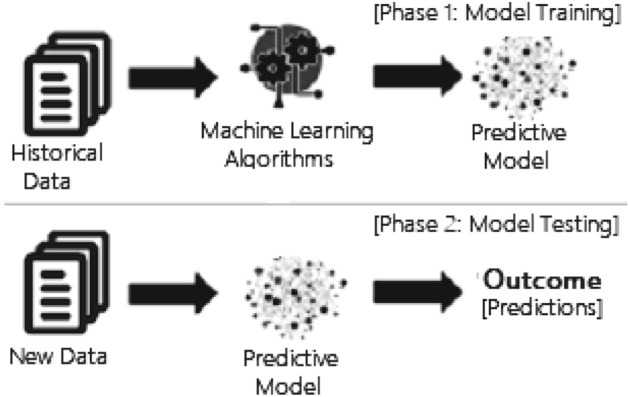
“…based on new, previously unseen data) and ‘unsupervised learning’ (an approach where the algorithm is provided with a dataset with no labeled outcomes, aiming to uncover hidden patterns or structures therein, e.g., clustering similar data points together or dimensionality reduction) [4–6].”
BackgroundYiğit, S., Berşe, S., Dіrgar, E., & Güner, S. G. (2024) · Innovations in Education and Teaching International · doi:10.1080/14703297.2024.2391044 · Cited by 13
“Artificial intelligence (AI) is defined as a multidisciplinary approach of computer and linguistic sciences aiming to create devices that can perform tasks requiring human intelligence (Sarker, 2022).”
Artificial Internet of Things (AIoT): A Review
Nourildean, S. W. (2024) · International Conference on Electrical, Computer and Energy Technologies (ICECET) · doi:10.1109/icecet61485.2024.10698612 · Cited by 12
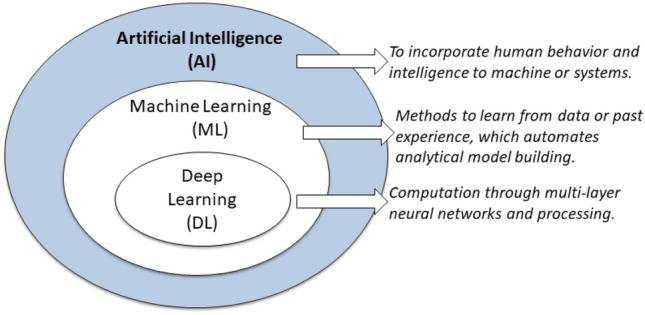
“Machine learning is a process that involves learning from data or experience to automate the creation of analytical models, whereas artificial intelligence integrates behavior of human and intellect into computers [14].”
BackgroundMethodInfluentialSubroto, V. K., Kusumajaya, R. A., & Tobing, W. T. M. (2024) · Journal of Management and Informatics · doi:10.51903/jmi.v3i2.31 · Cited by 12
“(Sarker, 2022) expands this concept, describing AI as a computer system’s ability to exhibit behavior deemed intelligent through techniques like machine learning and neural networks, where systems learn from data and gradually improve their performance.”
Background
Metadata
- Authors
- Sarker, I. H.
- Affiliations
- Chittagong University of Engineering & Technology (BD)
- Corresponding author
- Sarker, Iqbal H.
- ORCID
- Sarker, Iqbal H.
- Venue
- SN Computer Science
- Published
- 2022-02-10
- Volume
- 3
- Issue
- 2
- Pages
- 158-158
- ISSN
- 2661-8907 (ISSN-L)
- 2662-995X
- PMC
- PMC8830986
- OpenAlex
- W4225716729
- Cited by
- 1,208
- References
- 115
- Citations by year
- 2026: 228 · 2025: 395 · 2024: 361 · 2023: 184 · 2022: 39
- FWCI
- 17.11
- Type
- journal article
- Language
- en
- Open access
- hybrid
- doi.org
- Licence
- cc-by
- creativecommons.org/licenses/by/4.0 (tdm)
- creativecommons.org/licenses/by/4.0 (vor)
- Locations
- SN Computer Science (publishedVersion, cc-by)
- Preprints.org (acceptedVersion, cc-by)
- PubMed Central (publishedVersion, cc-by)
- PubMed (publishedVersion)
- Funders
- Swinburne University of Technology
- Topics
- Physical Sciences › Computer Science › Artificial Intelligence › Artificial Intelligence Applications
- Physical Sciences › Computer Science › Information Systems › Internet of Things and AI
- Social Sciences › Decision Sciences › Management Science and Operations Research › Impact of AI and Big Data on Business and Society
- Keywords
- artificial intelligence techniques, intelligent systems, automation, Industry 4.0, interactive AI, artificial intelligence in business, artificial intelligence in finance, artificial intelligence in healthcare, smart cities, cybersecurity
About these checks
Registry, retraction, Cites and statistics results are computed, not judged, with one exception: a printed reference that no index lists is read once by a model before it counts as a citation error. Claims are extracted by a model and kept only when their quote appears verbatim in the text; each cited source is then checked, with a model’s help, for whether it says what the claim relies on. Those verdicts can be wrong — read the claim’s quote and the cited source before relying on one.
Statistics and arithmetic are recomputed, not judged.
Confidence bands are shown only for fields calibrated on our annotated test set. None is calibrated yet, so no band is shown.
What counts as a claim ›How we measure confidence ›How we check this ›
Are you an author, or do you see a problem with this page? Request a review
Data sources
Bibliographic data: Semantic Scholar, OpenAlex, Crossref.
Contains information from the Semantic Scholar Academic Graph Datasets, made available under the ODC Attribution License (ODC-BY 1.0).
Semantic Scholar’s data is described in: Kinney, R., et al. (2023). The Semantic Scholar Open Data Platform. arXiv:2301.10140.
