

AI-Based Modeling: Techniques, Applications and Research Issues Towards Automation, Intelligent and Smart Systems
Open accessPublished version of a preprint
The DOI matches its Crossref record; 116 of the 116 references it cites were found in a registry or an index.
Abstract
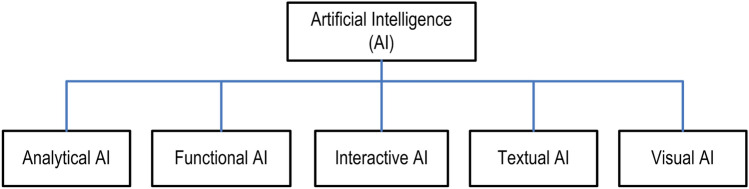
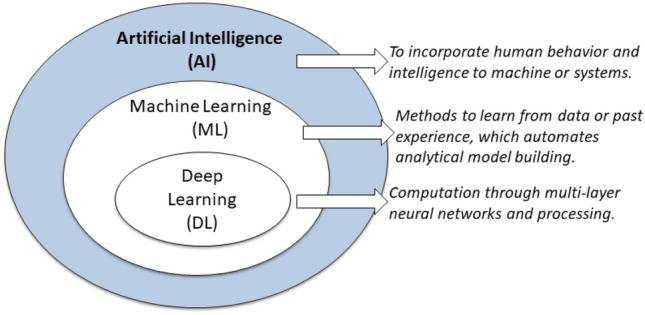
Artificial intelligence (AI) is a leading technology of the current age of the Fourth Industrial Revolution (Industry 4.0 or 4IR), with the capability of incorporating human behavior and intelligence into machines or systems. Thus, AI-based modeling is the key to build automated, intelligent, and smart systems according to today’s needs. To solve real-world issues, various types of AI such as analytical, functional, interactive, textual, and visual AI can be applied to enhance the intelligence and capabilities of an application. However, developing an effective AI model is a challenging task due to the dynamic nature and variation in real-world problems and data. In this paper, we present a comprehensive view on “AI-based Modeling” with the principles and capabilities of potential AI techniques that can play an important role in developing intelligent and smart systems in various real-world application areas including business, finance, healthcare, agriculture, smart cities, cybersecurity and many more. We also emphasize and highlight the research issues within the scope of our study. Overall, the goal of this paper is to provide a broad overview of AI-based modeling that can be used as a reference guide by academics and industry people as well as decision-makers in various real-world scenarios and application domains.
Overview
The claims and statistics of this paper haven’t been checked yet.
Free: it reads the open-access text and checks the first 5 claims that cite a source we can check. Create a free account to check every claim.
Integrity signals
Registry
Cites
Statistics
Figures
Verification
Claims the paper makes
The claims and statistics of this paper haven’t been checked yet.
Free: it reads the open-access text and checks the first 5 claims that cite a source we can check. Create a free account to check every claim.
Self-check
Percentages, sums and reported differences re-computed from the paper’s own numbers.
The self-check needs the paper’s full text.
Citations
Cites
1 retracted
Hybrid genetic algorithm and a fuzzy logic classifier for heart disease diagnosis
Reddy, G. T., Reddy, M. P. K., Lakshmanna, K., Rajput, D. S., Kaluri, R., & Srivastava, G. (2020) · Evolutionary Intelligence · doi:10.1007/s12065-019-00327-1 · Cited by 404 · cited 1×
“Reddy et al. [74], for example, use a fuzzy logic classifier for heart disease detection, with the derived rules from fuzzy classifiers being optimized using an adaptive genetic algorithm.”
MethodRetractedBreiman, L. (2001) · Machine Learning · doi:10.1023/a:1010933404324 · Cited by 133,538 · cited 1×
“…[4], Support vector machines [46], Decision Trees - ID3 [71], C4.5 [72], CART [15], BehavDT [84], IntrudTree [82], Ensemble learning, Random Forest [14], Linear regression [36], Support vector regression [46], etc. [81] are the popular techniques that can be used to solve various supervised…”
MethodScikit-learn: Machine Learning in Python
Pedregosa, F., Varoquaux, G., Gramfort, A., Michel, V., Thirion, B., Grisel, O., Blondel, M., Müller, A., Nothman, J., Louppe, G., et al. (2012) · arXiv · doi:10.48550/arxiv.1201.0490 · Cited by 71,016
Gradient-based learning applied to document recognition
Lecun, Y., Bottou, L., Bengio, Y., & Haffner, P. (1998) · Proceedings of the IEEE · doi:10.1109/5.726791 · Cited by 58,805 · cited 2×
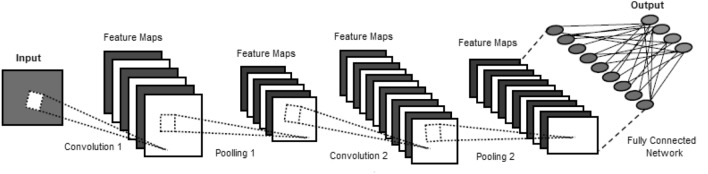
“Convolutional neural networks (CNN or ConvNet) [53, 80] have recently demonstrated considerable promise in a variety of computer vision tasks, including classification, object detection, and scene analysis.”
BackgroundData mining: concepts and techniques
(2012) · Choice Reviews Online · doi:10.5860/choice.49-3305 · Cited by 28,531
Data Mining: Practical Machine Learning Tools and Techniques
(2011) · Elsevier eBooks · doi:10.1016/c2009-0-19715-5 · Cited by 25,437
(1967) · Cited by 23,719
Classification and Regression Trees.
Gordon, A. D., Breiman, L., Friedman, J. H., Olshen, R. A., & Stone, C. J. (1984) · Biometrics · doi:10.2307/2530946 · Cited by 23,522
(1992) · Cited by 23,431
Quinlan, J. R. (1986) · Machine Learning · doi:10.1007/bf00116251 · Cited by 21,439 · cited 2×
“Navies Bayes [42], K-nearest neighbors [4], Support vector machines [46], Decision Trees - ID3 [71], C4.”
Method
Research works printed but not linked: 5
- Dupond S. A thorough review on the current advance of neural network structures. Annu Rev Control. 2019;14:200–30.
- Goodfellow I, Bengio Y, Courville A, Bengio Y. Deep learning, vol. 1. Cambridge: MIT press; 2016.
- Russell S, Norvig P. Artificial intelligence: a modern approach, global edition 4th. Foundations. 2021;19:23.
- Sarker IH, Colman A, Han J, Watters P. Context-aware machine learning and mobile data analytics: automated rule-based services with intelligent decision-making. Berlin: Springer; 2022.
- Thorvald Sorensen. method of establishing groups of equal amplitude in plant sociology based on similarity of species. Biol Skr. 1948;5:20.
Cited by
Items 501–600 of 1,001
Exploring the Intersection of Schizophrenia, Machine Learning, and Genomics: Scoping Review
Hudon, A., Beaudoin, M., Phraxayavong, K., Potvin, S., & Dumais, A. (2024) · JMIR Bioinformatics and Biotechnology · doi:10.2196/62752 · Cited by 6
“It focuses on creating systems that, through experience, may naturally perform better on a given task without having to be specifically designed to do so [25].”
Refoyo, M., & Luengo, D. (2026) · Neurocomputing · doi:10.1016/j.neucom.2026.134526 · Cited by 6
“Machine Learning in general, and particularly Deep Learning, is becoming increasingly pervasive, automating tasks and improving decision-making across industries such as healthcare, finance, and manufacturing [1].”
The role of AI in microbial fermentation: Transforming industrial applications
Srivastava, A., & Atri, C. (2025) · Methods in microbiology · doi:10.1016/bs.mim.2024.12.004 · Cited by 6
Artificial intelligence techniques applications in the wastewater: A comprehensive review
Zakur, Y. A., Márquez, F. P. G., Al-taie, A. H. S., Alsaidi, S. A. A. A., Alsadoon, A., Mirashrafi, S. B., Flaih, L. R., & Zakoor, Y. A. (2025) · E3S Web of Conferences · doi:10.1051/e3sconf/202560503006 · Cited by 7
The Role of AI in Shaping Modern Legal Frameworks: A Political Science Perspective
Khalifa, M., & Sabry, M. (2024) · International Conference on Decision Aid Sciences and Applications (DASA) · doi:10.1109/dasa63652.2024.10836624 · Cited by 6
Kotecha, N. (2025) · Open Journal of Business and Management · doi:10.4236/ojbm.2025.132037 · Cited by 11
Evaluation of Large Language Models as Geotechnical Virtual Assistant
Babu, A. S., Sadiq, M. F., Aydin, C., Velasquez, R., & Izevbekhai, B. I. (2025) · Geotechnical Frontiers · doi:10.1061/9780784485989.006 · Cited by 6
Human-AI Teaming in a Digital Twin Model for Virtual Product Development
Orimi, A. G., Saralajew, S., Feng, J., Dai, Z., Hamlaoui, R., Stauß, T., & Lachmayer, R. (2025) · Zeitschrift für wirtschaftlichen Fabrikbetrieb · doi:10.1515/zwf-2024-0141 · Cited by 6
Mahadev, N., Shankar, R., Sowmya, V. L., Premkumar, A., Natarajan, R., Thangarasu, N., & Gupta, S. K. (2025) · International Research Journal of Multidisciplinary Technovation · doi:10.54392/irjmt2532 · Cited by 6
Zhao, W., Yu, F., Zhang, P., Gu, H., Wang, L., Qiao, S., Lu, T., & Gu, N. (2025) · CHI Conference on Human Factors in Computing Systems · doi:10.1145/3706598.3713360 · Cited by 8
Li, Z., Li, Q., & Zhao, X. (2025) · Journal of Manufacturing Technology Management · doi:10.1108/jmtm-09-2024-0539 · Cited by 6
AI-Guided Decision Support in Acute Cardiac Care: From Chest Pain to STEMI
Tran, H. H.-V., Thu, A., Twayana, A. R., Fuertes, A., Gonzalez, M., Basta, M., Mehta, K. A., James, M., Frishman, W. H., & Aronow, W. S. (2025) · Cardiology in Review · doi:10.1097/crd.0000000000001016 · Cited by 7
Artificial Intelligence (AI) Literacy as a Pathway for School Teachers' Professional Development
Sagheem, M., Jan, N., Hassan, S., & Tariq, M. N. (2025) · BTTN Journal · doi:10.61732/bj.v4i1.180 · Cited by 6
Billah, M. (2025) · International Journal of Latest Technology in Engineering Management & Applied Science · doi:10.51583/ijltemas.2025.1407000002 · Cited by 7
Subramanya, V. K., Jiang, C., Bhat, C., Romario, Y. S., Li, X., & Ramezani, M. (2025) · The International Journal of Advanced Manufacturing Technology · doi:10.1007/s00170-025-16376-z · Cited by 8
“Instance-based models are considered non-parametric as they do not assume a fixed form of the data distribution, making them highly flexible but potentially sensitive to noise and data scaling [78, 79].”
Do, T.-T., Dat, L. V., Arpornwichanop, A., & Chen, Y. (2025) · Fuel · doi:10.1016/j.fuel.2025.136628 · Cited by 7
Mema, H., Gaxhja, E., Alicka, Y., Gugu, M., Topi, S., Giannoni, M., Pietropaoli, D., & Altamura, S. (2025) · Applied Sciences · doi:10.3390/app15179790 · Cited by 6
Sakib, M. N., Islam, M., Fahlevi, M., Rahman, M. S., Younus, M., & Rahman, M. M. (2025) · Computers in Human Behavior Artificial Humans · doi:10.1016/j.chbah.2025.100204 · Cited by 10
The Ongoing Evolution of AI in Craniofacial Surgery: From Theory to Reality and Beyond
Pourriyahi, H., & Alkureishi, L. W. T. (2025) · Journal of Craniofacial Surgery · doi:10.1097/scs.0000000000012123 · Cited by 6
Madani, S. A. S., Vaezi, E., Mirfasihi, S. S., & Keshmiri, A. (2025) · Machine Learning with Applications · doi:10.1016/j.mlwa.2025.100708 · Cited by 6
Rekreasyon Tutkunları için ChatGPT: Gelecekte Ne Bekleniyor?
GENÇ, N. (2023) · Sportive · doi:10.53025/sportive.1309495 · Cited by 7
Leveraging Support Vector Machine for Sports Injury Classification
Surasak, T., Praking, P., & Kitchat, K. (2023) · doi:10.1109/icitee59582.2023.10317743 · Cited by 6
“Its objective is to replicate the remarkable ability of human vision by developing algorithms and models that support the analysis, processing, and extraction of meaningful insights from digital visual information [1], [2].”
BackgroundMulti-scale attention fusion network for semantic segmentation of remote sensing images
Wen, Z., Huang, H., & Liu, S. (2023) · International Journal of Remote Sensing · doi:10.1080/01431161.2023.2290999 · Cited by 6
“Semantic segmentation of HRSI involves processing the region to be segmented in the image by using the spectral features and abstract semantic features of different positions in the remote sensing image and assigning corresponding label categories to each pixel (Sarker 2022).”
MethodAbubeker, K. M., Rekhamole, G., Divya, D. T., Drishya, S., Mohan, M. J., Sumisha, M. S., & Rajimol, V. (2023) · Annual International Conference on Emerging Research Areas and International Conference on Microelectronics, Communications and Renewable Energy · doi:10.1109/aicera/icis59538.2023.10420126 · Cited by 9
“Artificial Intelligence (AI) and Computer Vision (CV) technologies have facilitated the development of sophisticated traffic management systems that can analyse data in real-time, make adaptive decisions, and implement proactive traffic control measures [1,2].”
BackgroundThe CNN: The Architecture Behind Artificial Intelligence Development
Lee, Y. (2023) · Journal of Student Research · doi:10.47611/jsrhs.v12i4.5579 · Cited by 9
Ahn, J., & Choi, M. (2024) · Ophthalmic and Physiological Optics · doi:10.1111/opo.13315 · Cited by 7
Lawal, R., Alasiri, H. S., Aitani, A. M., Abdulraheem, A., & Tanimu, G. (2024) · Reaction Chemistry & Engineering · doi:10.1039/d4re00118d · Cited by 6
An innovative approach for detecting buildings and construction anomalies in Zenata City
Moulay, M. A., Salbi, A., Bouganssa, I., Masmoudi, M.-S., & Lasfar, A. (2024) · IAES International Journal of Artificial Intelligence · doi:10.11591/ijai.v13.i3.pp2703-2712 · Cited by 6
“Machine learning is a subset of artificial intelligence concentrated on ISSN: 2252-8938 Int J Artif Intell, Vol. 13, No. 3, September 2024: 2703-2712 2704 developing algorithms that allow computers to learn from data and make predictions or decisions without getting specifically programmed [4].”
BackgroundArtificial intelligence application in education: A systematic study
Rishwinder, S. B., Radhika, & Rakesh, K. (2024) · i-manager’s Journal on Educational Psychology · doi:10.26634/jet.21.1.20532 · Cited by 9
Artificial Intelligence Algorithms as a Precursor for Personalized Learning and Education
van der Merwe, R., & Goosen, L. (2024) · Advances in computational intelligence and robotics book series · doi:10.4018/979-8-3693-4252-7.ch009 · Cited by 6
An Efficient and Robust Framework for IoT Security using Machine Learning Techniques
Pandey, V. K., Prakash, S., Jha, S. K., Yang, T., & Rathore, R. S. (2025) · Procedia Computer Science · doi:10.1016/j.procs.2025.04.205 · Cited by 6
Aguilar, E. C., Escobar, J. A., & Capajaña, M. Q. (2025) · INGENIERÍA INVESTIGA · doi:10.47796/ing.v7i00.1192 · Cited by 7
AI-enabled transition to smart European cities
Marji, N., Kohout, M., Chen, L., Işık, G. E., & Kumar, A. R. (2024) · Acta Polytechnica CTU Proceedings · doi:10.14311/app.2024.46.0085 · Cited by 10
“AI utilizes algorithms and machine learning techniques to assess massive datasets in order to make predictions or suggestions based on patterns found within them [9–11].”
MethodBasics of Artificial Intelligence (AI) Modeling
Richie, R. C. (2024) · Journal of Insurance Medicine · doi:10.17849/insm-51-1-35-40.1 · Cited by 10
Wardhana, D. E. C., Sarwono, S., Yulistio, D., Subakti, A., & Jamaludin, J. (2024) · Fundamentum · doi:10.62383/fundamentum.v2i2.124 · Cited by 6
Assunção, G., Castelo-Branco, M. S., & Menezes, P. J. (2025) · AI · doi:10.3390/ai6090220 · Cited by 6
“These are becoming more and more digital, from medical pathology [1] to industrial smart systems [2] and even socio-emotive companionship [3].”
Edge Data Center Organization and Optimization by Using Cage Graphs
Roig, P. J., Alcaraz, S., Gilly, K., Bernad, C., & Juiz, C. (2023) · Network · doi:10.3390/network3010005 · Cited by 6
The Impact of IoT on the Modern World A review and evaluation studyPreprint
Vicci, H. (2024) · SSRN Electronic Journal · doi:10.2139/ssrn.4818308 · Cited by 7
Sebahi, Y., Jabeen, F., Treur, J., Taal, H. R., & Roelofsma, P. H. M. P. (2024) · Studies in computational intelligence · doi:10.1007/978-3-031-53472-0_21 · Cited by 5
Ogunye, R. O., Egwuatu, D. C., Anene, P. C., Azubuike, E. O., Asenuga, O. O., Sargwak, J. P., Ojobor, J.-F. C., Onoharigho, F. O., & Nwokafor, C. V. (2024) · Journal of Pharmaceutical Research International · doi:10.9734/jpri/2024/v36i97576 · Cited by 7
Design of an intelligent data analysis platform for pharmaceutical forecasts
Sokolovska, Z., Ivchenko, I., & Ivchenko, O. (2024) · Eastern-European Journal of Enterprise Technologies · doi:10.15587/1729-4061.2024.313490 · Cited by 5
“Methodological problems of the development of intelligent systems are raised in [7, 8], in which a broad overview of modeling directions involving various methods of artificial intelligence is provided.”
BackgroundAdeyemo, A., Coffey, A., & Kingston, L. (2025) · Journal of Nursing Regulation · doi:10.1016/s2155-8256(25)00030-4 · Cited by 5
Siluvai, S., Narayanan, V., Ramachandran, V. S., & Lazar, V. R. (2025) · Healthcare Informatics Research · doi:10.4258/hir.2025.31.2.189 · Cited by 5
““Artificial intelligence (AI) encompasses a wide-ranging domain within computer science that focuses on creating intelligent machines capable of executing tasks usually requiring human cognitive abilities” [1].”
Veeman, D., Vellaisamy, M., Ponnuswamy, P. C., Subathra, D. P., & Katiyar, J. K. (2025) · Journal of Materials Engineering and Performance · doi:10.1007/s11665-025-11406-z · Cited by 6
“These models are applied across numerous fields, including natural language processing, computer vision, healthcare, finance, marketing, and manufacturing, to drive innovation, improve efficiency, and enhance decision-making (Ref 16).”
Artificial Intelligence Integration in Mathematics Education: A SWOT-BWM Analysis
Şahin, S., & Teke, B. (2025) · Journal of Learning and Teaching in Digital Age · doi:10.53850/joltida.1667650 · Cited by 6
Sallam, M., Snygg, J., Hamdan, A. M., Allam, D., Kassem, R., & Damani, M. (2025) · Research and Advances in Education · doi:10.63593/rae.2788-7057.2025.05.005 · Cited by 5
BOLATLI, G., Birişçi, S., & Bolatlı, Z. (2025) · Clinical Anatomy · doi:10.1002/ca.70008 · Cited by 10
A multi-model longitudinal assessment of ChatGPT performance on medical residency examinations
Souto, M. E. V. C., Fernandes, A. C., da Silva, A. E. C., Ribeiro, L. H. D. F., & Fernandes, T. A. A. D. M. (2025) · Frontiers in Artificial Intelligence · doi:10.3389/frai.2025.1614874 · Cited by 7
“Artificial Intelligence (AI) has been progressively integrated across various fields due to AI models’ broad and promising applicability in the real world, spanning numerous work and research domains (Sarker, 2022; Haenlein and Kaplan, 2019).”
Ethics and Privacy in AI Education: Prospects and Challenges in Higher Education
Dadson, Y. A., Mohammed, Z., Hussein, B., Armah, Y. E., & Yeboah, A. K. (2025) · Future education and learning spaces · doi:10.1007/978-981-96-7937-9_10 · Cited by 5
Artificial Intelligence in Cardiovascular Health: Insights into Post-COVID Public Health Challenges
Naushad, Z., Malik, J., Mishra, A. K., Singh, S., Shrivastav, D., Sharma, C. K., Verma, V. V., Pal, R. K., Roy, B., & Sharma, V. K. (2025) · High Blood Pressure & Cardiovascular Prevention · doi:10.1007/s40292-025-00738-5 · Cited by 7
“These predictive models are able recognize at-risk individuals early, allowing for timely intervention to prevent adverse outcomes [47].”
InfluentialVitale, J. A., McCall, A., Cina, A., Athlete Travel, S. I. G. (., Alonso, J.-M., Bender, A., Biggins, M., Charest, J., Dohi, M., Filip-Stachnik, A., et al. (2025) · Sports Medicine · doi:10.1007/s40279-025-02303-5 · Cited by 7
“NLP focuses on the understanding and generation of human language, enabling AI systems to interpret, process, and produce text in a way that mimics human communication [1].”
Aladdin, A. M., Hasan, D. O., Mohammed-Taha, S. R., Mustafa, A. I., & Badawi, S. S. (2025) · Measurement · doi:10.1016/j.measurement.2025.119991 · Cited by 5
Shubina, I. (2026) · International Journal of Technology in Education · doi:10.46328/ijte.5737 · Cited by 5
“According to reviewed studies, ChatGPT used in psychological education increases interactive learning (Sarker, 2022; Korteling et al., 2021), offers learners customized support and feedback (McCarthy et al., 2006; Jordan & Mitchell, 2015), and easy access to related and reliable sources of…”
Aniruddha Prabhu, B. P., & Sunitha, N. R. (2026) · Discover Artificial Intelligence · doi:10.1007/s44163-026-00901-4 · Cited by 5
“The following are hybrid AI architectures used to overcome these deficiencies, • Graph Neural Networks (GNNs): Model relational dependencies between hosts, services, and sessions, which makes subsequent lateral movement detection 8 to 10% higher on CICIDS-2017 [7, 10] .”
Sui, D., Sui, D., Wang, X., Zhan, M., Sadeghpour, F., Torkashvand, M., Nasirzadeh, E., & Ostadhassan, M. (2026) · Energy · doi:10.1016/j.energy.2026.140492 · Cited by 5
Purbohadi, D., Wulandari, N. D., & Kurniasari, L. (2026) · Social Sciences & Humanities Open · doi:10.1016/j.ssaho.2026.102662 · Cited by 5
Warrier, S. P., Narasimhan, V., Meijer, E., Gütlin, Y., Nolte, O., Veeraraghavan, B., & Egli, A. (2026) · Frontiers in Public Health · doi:10.3389/fpubh.2026.1776922 · Cited by 6
“These models generate predictions by learning on prior experiences captured in data inputs and typically rely on supervised, unsupervised, or reinforcement learning strategies (14, 25).”
Bioprocess Considerations and Enabling Technologies for High-Efficiency Precision Fermentation
Robertson, S., Ponrajan, H., Sharma, M., Lim, L., & Kaur, G. (2026) · Food Reviews International · doi:10.1080/87559129.2026.2651257 · Cited by 5
“[17, 96] These include the following: (a) Gaussian process regression: a method using predictions based on existing knowledge to provide uncertainty measures over predictions, [97] (b) surrogate modeling: to build simplified approximations of complex models,- [98] (c) soft sensor development:…”
Beyond FinTech Adoption: How AI-Enabled Financial Process Digitalization Shapes Entrepreneurship
Skandalis, K. S., & Skandali, D. (2026) · FinTech · doi:10.3390/fintech5020031 · Cited by 5
“AI in digital finance functions as a tool that enhances current operations without taking away from human decision-making abilities; thus, users must acquire financial confidence and digital competence [8].”
Visedsun, N., Nupueng, S., Imjai, N., Chávez-Díaz, J. M., & Aujirapongpan, S. (2026) · The International Journal of Management Education · doi:10.1016/j.ijme.2026.101437 · Cited by 7
Artificial Intelligence Across the Drug Development Lifecycle
Demyashkin, G. A., Алексеевич, П. М., Zyryanov, S., Yavorskiy, A., Shegai, P., & Kaprin, A. (2026) · Medical Sciences · doi:10.3390/medsci14020248 · Cited by 6
“AI, in its broadest sense, embodies computational systems engineered to perform tasks that traditionally necessitate cognitive faculties, often achieving or exceeding agent-level performance within defined environments [25,26].”
Applications of artificial intelligence in benign prostatic hyperplasia
Bansal, S., Chuluunbaatar, Y., Brodie, A., & Vasdev, N. (2023) · Artificial Intelligence Surgery · doi:10.20517/ais.2023.07 · Cited by 5
Evaluating the Precision of ChatGPT Artificial Intelligence in Emergency Differential Diagnosis
Altamimi, A., Aldughaim, A., Alotaibi, S. A., Alrehaili, J. A., Bakir, M. A., & Al-Muhainy, A. (2024) · The Journal of Medicine Law & Public Health · doi:10.52609/jmlph.v4i1.113 · Cited by 5
The effect of artificial intelligence on economic growth
Singh, R., & Kumar, S. (2024) · International Journal of Research in Management · doi:10.33545/26648792.2024.v6.i1e.171 · Cited by 7
Sánchez, R. V. (2024) · European Public & Social Innovation Review · doi:10.31637/epsir-2024-912 · Cited by 6
Synergizing Human and Machine: Innovations in Knowledge Discovery and Management
Asrifan, A., Rusmayadi, R., Hasmawaty, H., Nirwana, N., Sivaraja, S., & Dewi, A. C. (2024) · Advances in environmental engineering and green technologies book series · doi:10.4018/979-8-3693-9879-1.ch010 · Cited by 6
The Future of Game Development in the Era of Gen AI
Pilaniwala, P., Chhabra, G., & Kaur, P. (2024) · Artificial Intelligence for Business (AIxB) · doi:10.1109/aixb62249.2024.00013 · Cited by 8
“AI enables computers to think and learn, enhancing their ability to perform tasks such as understanding and generating code [25].”
Mandičák, T., Behúnová, A., & Mésároš, P. (2024) · Machines · doi:10.3390/machines12120919 · Cited by 7
“AI, often described as a set of practical tools and methods, including the prominent machine learning/ML and data analysis, is adept at solving various correlation, optimization, classification, and prediction problems [29,31].”
Qi, J. (2025) · AIMS Mathematics · doi:10.3934/math.2025143 · Cited by 5
Shahsavari, M., Hussain, O. K., Sharma, P., & Saberi, M. (2025) · Enterprise Information Systems · doi:10.1080/17517575.2025.2472303 · Cited by 5
“However, this study focuses specifically on AI-based techniques, which Sarker (Sarker 2022) defines as models trained on data to generate predictive intelligence.”
Mutambik, I., & Almuqrin, A. (2025) · Applied Sciences · doi:10.3390/app15116362 · Cited by 6
“Studies such as those conducted by Truong et al. [30] and Sarker [31] have examined multiple feature-selection techniques, including the reinforcement learning-based strategies explored by Maniriho et al. [32].”
Himmah, E. F., & Kaestria, R. (2022) · NUMERICAL Jurnal Matematika dan Pendidikan Matematika · doi:10.25217/numerical.v6i1.1625 · Cited by 7
Maduabuchi, E. (2024) · International Journal of Engineering and Advanced Technology Studies · doi:10.37745/ijeats.13/vol12n13349 · Cited by 6
AI-Driven Modeling: From Concept to Implementation
Palakurti, N. R., & Kolasani, S. (2024) · Advances in systems analysis, software engineering, and high performance computing book series · doi:10.4018/979-8-3693-2909-2.ch005 · Cited by 17
Artificial intelligence for legal system: Jurisprudence in the digital age
Ramachandran, D., & Rana, R. S. (2024) · International Journal of Advanced Academic Studies · doi:10.33545/27068919.2024.v6.i5a.1158 · Cited by 5
Coşkun, L. (2023) · Education and Information Technologies · doi:10.1007/s10639-023-12216-3 · Cited by 5
“Currently, AI-based modeling methods are frequently used in engineering studies (Liu et al., 2020; Sarker et al., 2021; Sarker, 2022; Surya et al., 2022).”
Genetic AI: Evolutionary Games for ab initio dynamic Multi-Objective OptimizationPreprint
Wissgott, P. (2025) · arXiv (Cornell University) · doi:10.48550/arxiv.2501.19113 · Cited by 5
“In a training phase, they learn the ’right’ behavior for a certain data problem [5].”
Waseem, M., Ahmad, A., Liang, P., Akbar, M. A., Khan, A. A., Ahmad, I., Setälä, M., & Mikkonen, T. (2025) · SSRN Electronic Journal · doi:10.2139/ssrn.5151248 · Cited by 5
Ahmad, S., Ahmed, A., Bhutta, S. M., & Ansari, A. N. (2024) · The Evolution of Artificial Intelligence in Higher Education · doi:10.1108/978-1-83549-486-820241007 · Cited by 4
The Intersection of AI and Science Education in Indonesia: A Path Forward
Harianti, H., Kadarohman, A., & Anwar, S. (2025) · Journal of Science Education Research · doi:10.21831/jser.v9i1.74872 · Cited by 4
“Artificial intelligence (AI) is a rapidly emerging technical phenomenon and leading technology (Sarker, 2022), capable of functioning similarly to human intelligence (Huang et al., 2021).”
Opportunities and Threats of the ChatGPT Revolution in Completing Students’ Final Assignments
Mansur, A., Amaliya, W., Lestari, W. A., & Adiba, F. (2025) · Journal of Education Research and Evaluation · doi:10.23887/jere.v9i1.83227 · Cited by 4
“Artificial intelligence can be defined as a multidisciplinary approach to computer science and linguistics that aims to create machines capable of performing tasks that usually require human intelligence (Javaid et al., 2022; Sarker, 2022).”
Artificial Intelligence and Publishing Ethics: A Narrative Review and SWOT Analysis
Gurnal, P., & Rana, L. (2025) · Cureus · doi:10.7759/cureus.84098 · Cited by 5
Tran, H. H.-V., Thu, A., Fuertes, A., Twayana, A. R., Mahadevaiah, A., Mehta, K. A., James, M., Basta, M., Weissman, S. I., Frishman, W. H., et al. (2025) · Cardiology in Review · doi:10.1097/crd.0000000000000975 · Cited by 6
Kamara, R. D. (2025) · Public Administration and Regional Development · doi:10.34132/pard2025.28.02 · Cited by 6
Habeeb, M., Vengateswaran, H. T., Suseela, P., Grace, X., & Rani, T. S. (2025) · doi:10.70593/978-93-7185-515-0 · Cited by 5
Pereira, R. A. D. C., Lima, R. R., Gomes, A. C. A., Saldanha, F. A. S., Schwingel, D., Schwingel, P. A., & Gambassi, B. B. (2025) · Scientifica · doi:10.1155/sci5/2632410 · Cited by 4
“Te integration of AI technologies into healthcare has catalyzed signifcant transformations by improving clinical documentation, supporting decision-making processes, and personalizing patient care [1, 5, 6].”
Shakerian, M., Barakat, S., & Saber, E. (2025) · Journal of Occupational Health and Epidemiology · doi:10.61882/johe.14.3.214 · Cited by 4
“AI is a broad field covering various techniques and methods enabling computers and systems to perform intelligent tasks [20].”
AI-Driven Augmented Software Engineering: Leveraging Cognitive Models for Enhanced Code Generation
Shaheen, A., Khaldy, M. A. A., Alzyadat, W., & Alhroob, A. (2025) · Journal of Computational and Cognitive Engineering · doi:10.47852/bonviewjcce52026123 · Cited by 4
“Cognitive models, which simulate human cognitive processes, offer a valuable approach to enhancing AI in software engineering [ 12, 13 ].”
Maddodi, B. S., Shwetha, V., Nirmala, R., Vinod, G. S., Laxmi, V., Shrivastava, S., & Mizera, S. (2025) · Engineering Applications of Artificial Intelligence · doi:10.1016/j.engappai.2025.113354 · Cited by 10
Machine learning to predict food effects during drug development: a comprehensive review
Shah, A., Bi, F., & Yang, J. (2025) · Journal of Cheminformatics · doi:10.1186/s13321-025-01131-z · Cited by 4
“These techniques include Naïve Bayes, K-nearest neighbors, support vector machines, ensemble learning, random forest, linear regression, and support vector regression [35, 53, 114].”
Demirtaş, Ş., & Beşaltı, M. (2025) · BMC Psychiatry · doi:10.1186/s12888-025-07702-6 · Cited by 4
“It includes a variety of models ranging from rule-based models based on predefined symbolic rules, machine learning approaches that learn patterns from data, and deep learning architectures that represent the most advanced, adaptive forms of AI [44].”
Omar, M. A., Gomaa, I. I., Sabry, S. H., & Moubarak, H. M. R. (2026) · Journal of risk and financial management · doi:10.3390/jrfm19010051 · Cited by 4
Aqeel, U., & John, S. (2025) · Health Professions Education · doi:10.55890/2452-3011.1377 · Cited by 7
“AI technologies encompass the ability to acquire information, reason, and perform functions traditionally requiring human expertise [2].”
Artificial intelligence in transitional care: practice, promise, and pitfalls—a scoping review
Fakha, A., & Boonstra, A. (2026) · Frontiers in Digital Health · doi:10.3389/fdgth.2025.1690223 · Cited by 4
“More specifically, AI encompasses systems designed to support healthcare professionals in clinical decision-making, diagnostic accuracy, and personalized treatment planning, ultimately leading to more efficient and effective patient care (24).”
Artificial intelligence and mental health in the workplace: positive and negative impacts
El-Helaly, M., Awaad, A. E., & Elhelaly, A. M. (2026) · Archives of Environmental & Occupational Health · doi:10.1080/19338244.2026.2623267 · Cited by 5
“32,61,62 As a result of that, the prospect of AI taking over specific job functions can trigger a sense of fear and uncertainty among employees, as they may worry about the stability of their positions within the organization.”
InfluentialAI ‐Driven Epidemiology: The Next Frontier in Precision Public Health
Prema, S. S., Ganapathy, D., & Shanmugamprema, D. (2026) · Wiley Interdisciplinary Reviews Data Mining and Knowledge Discovery · doi:10.1002/widm.70077 · Cited by 7
“early outbreak detection, and risk assessment beyond the capabilities of established epidemiological approaches (Davenport and Kalakota 2019; Sarker 2022).”
Zulqarnain, R. M., Baušys, R., Naveed, H., Siddique, I., Abdal, S., & Senapati, T. (2026) · Applied Soft Computing · doi:10.1016/j.asoc.2026.115235 · Cited by 4
Katsigiannis, G., Panoutsopoulos, G., Perrea, A., & Detopoulou, P. (2026) · Journal of Nutrition · doi:10.1016/j.tjnut.2026.101667 · Cited by 4
Types of Artificial Intelligence and Future of Artificial Intelligence in Medical Sciences
Saba, N. U., & Faheem, M. (2023) · Artificial intelligence · doi:10.5772/intechopen.112056 · Cited by 7
Hildesheim, W., Holoyad, T., & Schmid, T. (2023) · it - Information Technology · doi:10.1515/itit-2023-0028 · Cited by 4
Metadata
- Authors
- Sarker, I. H.
- Affiliations
- Chittagong University of Engineering & Technology (BD)
- Corresponding author
- Sarker, Iqbal H.
- ORCID
- Sarker, Iqbal H.
- Venue
- SN Computer Science
- Published
- 2022-02-10
- Volume
- 3
- Issue
- 2
- Pages
- 158-158
- ISSN
- 2661-8907 (ISSN-L)
- 2662-995X
- PMC
- PMC8830986
- OpenAlex
- W4225716729
- Cited by
- 1,208
- References
- 115
- Citations by year
- 2026: 228 · 2025: 395 · 2024: 361 · 2023: 184 · 2022: 39
- FWCI
- 17.11
- Type
- journal article
- Language
- en
- Open access
- hybrid
- doi.org
- Licence
- cc-by
- creativecommons.org/licenses/by/4.0 (tdm)
- creativecommons.org/licenses/by/4.0 (vor)
- Locations
- SN Computer Science (publishedVersion, cc-by)
- Preprints.org (acceptedVersion, cc-by)
- PubMed Central (publishedVersion, cc-by)
- PubMed (publishedVersion)
- Funders
- Swinburne University of Technology
- Topics
- Physical Sciences › Computer Science › Artificial Intelligence › Artificial Intelligence Applications
- Physical Sciences › Computer Science › Information Systems › Internet of Things and AI
- Social Sciences › Decision Sciences › Management Science and Operations Research › Impact of AI and Big Data on Business and Society
- Keywords
- artificial intelligence techniques, intelligent systems, automation, Industry 4.0, interactive AI, artificial intelligence in business, artificial intelligence in finance, artificial intelligence in healthcare, smart cities, cybersecurity
About these checks
Registry, retraction, Cites and statistics results are computed, not judged, with one exception: a printed reference that no index lists is read once by a model before it counts as a citation error. Claims are extracted by a model and kept only when their quote appears verbatim in the text; each cited source is then checked, with a model’s help, for whether it says what the claim relies on. Those verdicts can be wrong — read the claim’s quote and the cited source before relying on one.
Statistics and arithmetic are recomputed, not judged.
Confidence bands are shown only for fields calibrated on our annotated test set. None is calibrated yet, so no band is shown.
What counts as a claim ›How we measure confidence ›How we check this ›
Are you an author, or do you see a problem with this page? Request a review
Data sources
Bibliographic data: Semantic Scholar, OpenAlex, Crossref.
Contains information from the Semantic Scholar Academic Graph Datasets, made available under the ODC Attribution License (ODC-BY 1.0).
Semantic Scholar’s data is described in: Kinney, R., et al. (2023). The Semantic Scholar Open Data Platform. arXiv:2301.10140.
