

The response of aquatic ecosystems to the interactive effects of stratospheric ozone depletion, UV radiation, and climate change
Open accessThe DOI matches its Crossref record; 285 of the 285 references it cites were found in a registry or an index.
Abstract
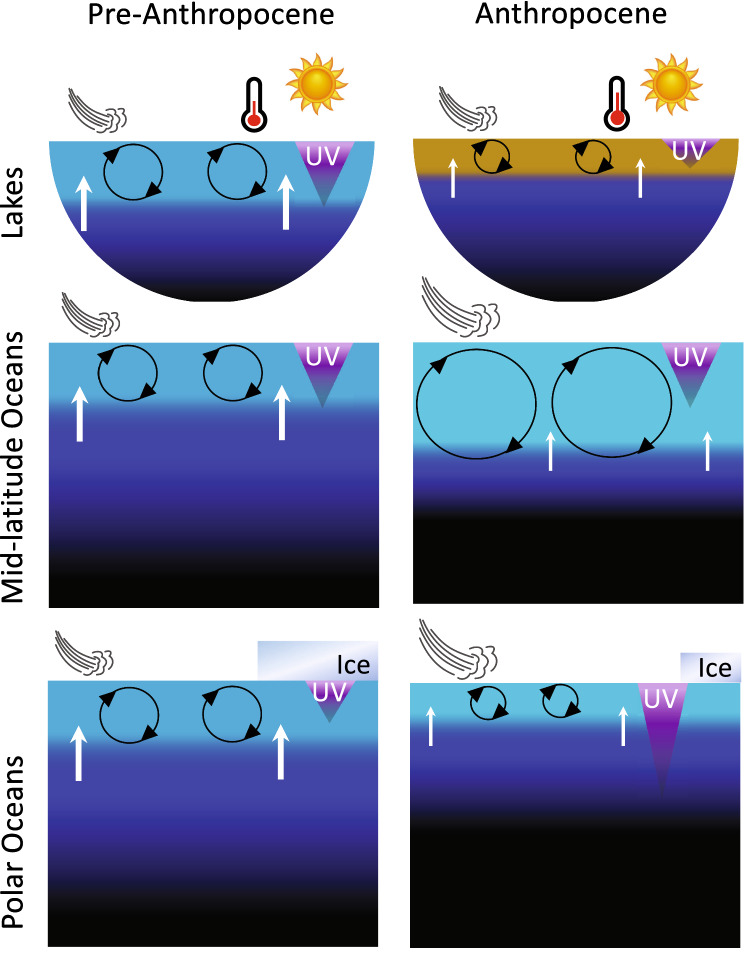
Variations in stratospheric ozone and changes in the aquatic environment by climate change and human activity are modifying the exposure of aquatic ecosystems to UV radiation. These shifts in exposure have consequences for the distributions of species, biogeochemical cycles, and services provided by aquatic ecosystems. This Quadrennial Assessment presents the latest knowledge on the multi-faceted interactions between the effects of UV irradiation and climate change, and other anthropogenic activities, and how these conditions are changing aquatic ecosystems. Climate change results in variations in the depth of mixing, the thickness of ice cover, the duration of ice-free conditions and inputs of dissolved organic matter, all of which can either increase or decrease exposure to UV radiation. Anthropogenic activities release oil, UV filters in sunscreens, and microplastics into the aquatic environment that are then modified by UV radiation, frequently amplifying adverse effects on aquatic organisms and their environments. The impacts of these changes in combination with factors such as warming and ocean acidification are considered for aquatic micro-organisms, macroalgae, plants, and animals (floating, swimming, and attached). Minimising the disruptive consequences of these effects on critical services provided by the world’s rivers, lakes and oceans (freshwater supply, recreation, transport, and food security) will not only require continued adherence to the Montreal Protocol but also a wider inclusion of solar UV radiation and its effects in studies and/or models of aquatic ecosystems under conditions of the future global climate. Graphical abstract
Overview
The claims and statistics of this paper haven’t been checked yet.
Free: it reads the open-access text and checks the first 5 claims that cite a source we can check. Create a free account to check every claim.
Integrity signals
Registry
Cites
Statistics
Figures
Verification
Claims the paper makes
The claims and statistics of this paper haven’t been checked yet.
Free: it reads the open-access text and checks the first 5 claims that cite a source we can check. Create a free account to check every claim.
Claims other papers make about this one
Each is checked against this paper’s own text: does it say what the citing paper says it does?
The source backs part of the claim, not all of it — or backs it for a different population, condition or comparison.
In the citing paper
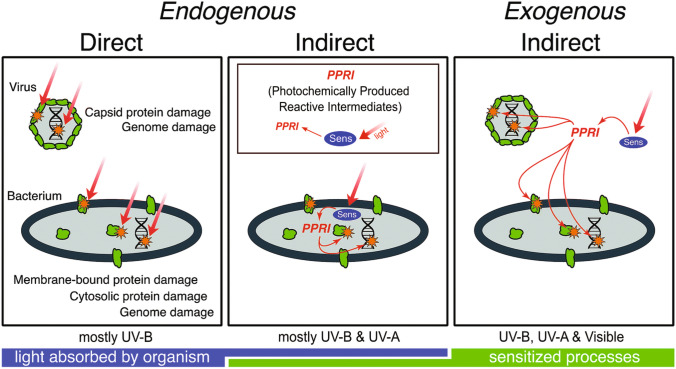
“During indirect photolysis, transformation involves reactive intermediates such as the hydroxyl (•OH) and carbonate (CO3•−) radicals, singlet oxygen (1O2), and excited triplet states (3CDOM*) that are photochemically generated by nitrate, nitrite, and chromophoric dissolved organic matter (CDOM) [217, 236].”
From Environmental consequences of interacting effects of changes in stratospheric ozone, ultraviolet radiation, and climate: UNEP Environmental Effects Assessment Panel, Update 2024 (2025) · cites this paper as [217]
Experimental — accuracy not yet measuredThe cited source says what the claim attributes to it.
In the citing paper
“Exposure to excess UV-B radiation can be detrimental, with some of the most significant negative effects being DNA damage and mortality [217].”
The cited source says what the claim attributes to it.
In the citing paper
“The extent of ice cover, thickness, and depth of circulation are changing due to global warming, resulting in different exposures of phytoplankton to UV-B radiation [217].”
The cited source says what the claim attributes to it.
In the citing paper
“Climate change and alterations in stratospheric ozone modify exposure to UV-B radiation in natural waters, affecting ice cover, the depth penetration of UV-B radiation, the mixing depth of plankton, and the temperature-dependent repair of UV-induced DNA damage.”
The cited source says what the claim attributes to it.
In the citing paper
“There is consensus that exposing both invertebrates and vertebrates to UV-B radiation has many negative effects [217, 220].”
Self-check
Percentages, sums and reported differences re-computed from the paper’s own numbers.
The self-check needs the paper’s full text.
Citations
Cites
The representative concentration pathways: an overview
van Vuuren, D. P., Edmonds, J., Kainuma, M., Riahi, K., Thomson, A., Hibbard, K., Hurtt, G. C., Kram, T., Krey, V., Lamarque, J.-F., et al. (2011) · Climatic Change · doi:10.1007/s10584-011-0148-z · Cited by 7,741 · cited 1×
“5 for emission of greenhouse gases (see [39]), models predict that the average duration of stratification will increase by 13, 22, and 33 days, respectively, by the end of the century [37].”
BackgroundClimate change, coral bleaching and the future of the world's coral reefs
Hoegh-Guldberg, O. (1999) · Marine and Freshwater Research · doi:10.1071/mf99078 · Cited by 3,878 · cited 1×
“Increased sea surface temperatures by 1 to 2 °C can cause coral bleaching [227].”
BackgroundThe Global Methane Budget 2000–2017
Saunois, M., Stavert, A. R., Poulter, B., Bousquet, P., Canadell, J. G., Jackson, R. B., Raymond, P. A., Dlugokencky, E. J., Houweling, S., Patra, P. K., et al. (2019) · doi:10.5194/essd-2019-128 · Cited by 2,760 · cited 1×
“Global CH4 emissions are 576 TgCH4 yr−1 [124], while photochemical production from the ocean surface is 121 GgCH4 yr−1 (Gg = 109 g) [125], yielding 0.”
BackgroundThe Global Methane Budget 2000–2017
Saunois, M., Stavert, A. R., Poulter, B., Bousquet, P., Canadell, J. G., Jackson, R. B., Raymond, P. A., Dlugokencky, E. J., Houweling, S., Patra, P. K., et al. (2020) · Earth System Science Data · doi:10.5194/essd-12-1561-2020 · Cited by 2,711
Dissolved organic carbon trends resulting from changes in atmospheric deposition chemistry
Monteith, D. T., Stoddard, J. L., Evans, C. D., de Wit, H. A., Forsius, M., Høgåsen, T., Wilander, A., Skjelkvåle, B. L., Jeffries, D. S., Vuorenmaa, J., et al. (2007) · Nature · doi:10.1038/nature06316 · Cited by 1,778 · cited 1×
“The consequent increases in soil pH cause greater dissolution of soil-bound organic matter [8].”
BackgroundMedema, G., Heijnen, L., Elsinga, G., Italiaander, R., & Brouwer, A. (2020) · Environmental Science & Technology Letters · doi:10.1021/acs.estlett.0c00357 · Cited by 1,747
Hugelius, G., Strauss, J., Zubrzycki, S., Harden, J. W., Schuur, E. A. G., Ping, C.-L., Schirrmeister, L., Grosse, G., Michaelson, G. J., Koven, C. D., et al. (2014) · Biogeosciences · doi:10.5194/bg-11-6573-2014 · Cited by 1,731 · cited 1×
“1 3 about 1300 petagrams C (PgC = 1015 g C), which is about twice as large as the carbon reservoir in the atmosphere [102] (also see Barnes et al.”
BackgroundGlobal lake responses to climate change
Woolway, R. I., Kraemer, B. M., Lenters, J. D., Merchant, C. J., O’Reilly, C. M., & Sharma, S. (2020) · Nature Reviews Earth & Environment · doi:10.1038/s43017-020-0067-5 · Cited by 1,538 · cited 1×
“2 Lakes Like ice cover in the oceans, high-latitude lakes have also exhibited rapid and substantial declines in ice cover [52].”
BackgroundPermafrost and the global carbon budget
Zimov, S. A., Schuur, E. A. G., & Chapin, F. S. (2006) · Science · doi:10.1126/science.1128908 · Cited by 1,034
Response of ocean ecosystems to climate warming
Sarmiento, J. L., Slater, R., Barber, R., Bopp, L., Doney, S. C., Hirst, A. C., Kleypas, J., Matear, R., Mikolajewicz, U., Monfray, P., et al. (2004) · Global Biogeochemical Cycles · doi:10.1029/2003gb002134 · Cited by 908 · cited 9×
“In clear lakes like Crater Lake (United States), these shallower MLDs can cause substantially more exposure to UV radiation and consequent damage to organisms [31].”
BackgroundInfluentialNorthern Hemisphere atmospheric stilling partly attributed to an increase in surface roughness
Vautard, R., Cattiaux, J., Yiou, P., Thépaut, J.-N., & Ciais, P. (2010) · Nature Geoscience · doi:10.1038/ngeo979 · Cited by 793 · cited 1×
“In general, surface wind speeds on continents were declining over the period 1979–2008, but have increased since then [33, 34].”
BackgroundLarge stocks of peatland carbon and nitrogen are vulnerable to permafrost thaw
Hugelius, G., Loisel, J., Chadburn, S., Jackson, R. B., Jones, M., MacDonald, G., Marushchak, M., Olefeldt, D., Packalen, M., Siewert, M. B., et al. (2020) · Proceedings of the National Academy of Sciences · doi:10.1073/pnas.1916387117 · Cited by 784 · cited 1×
“As the climate warms, permafrost is melting and a part of this carbon pool is especially susceptible to abrupt thaw [103].”
BackgroundThe Shikimate Pathway — A Metabolic Tree with Many Branche
Bentley, R., & Haslam, E. (1990) · Critical Reviews in Biochemistry and Molecular Biology · doi:10.3109/10409239009090615 · Cited by 731 · cited 1×
“These compounds are only synthesised by bacteria, cyanobacteria, fungi and algae [209].”
BackgroundWidespread deoxygenation of temperate lakes
Jane, S. F., Hansen, G. J. A., Kraemer, B. M., Leavitt, P. R., Mincer, J. L., North, R. L., Pilla, R. M., Stetler, J. T., Williamson, C. E., Woolway, R. I., et al. (2021) · Nature · doi:10.1038/s41586-021-03550-y · Cited by 690 · cited 2×
“Empirical evidence demonstrates that a longer duration of stratification is associated with stronger summer stratification and more stable mixed layers [40].”
BackgroundSelf-citationImpacts of multiple stressors on freshwater biota across spatial scales and ecosystems
Birk, S., Chapman, D., Carvalho, L., Spears, B. M., Andersen, H. E., Argillier, C., Auer, S., Baattrup-Pedersen, A., Banin, L., Beklioğlu, M., et al. (2020) · Nature Ecology & Evolution · doi:10.1038/s41559-020-1216-4 · Cited by 665 · cited 2×
“In addition to excessive UV radiation, aquatic organisms are exposed to a plethora of other concurrent environmental stress factors such as warming, eutrophication, and acidification [65, 66].”
BackgroundWorldwide alteration of lake mixing regimes in response to climate change
Woolway, R. I., & Merchant, C. J. (2019) · Nature Geoscience · doi:10.1038/s41561-019-0322-x · Cited by 643 · cited 1×
“In these lakes, there is a trend towards longer seasons of stratification [37] and/ or less frequent episodes of full water column mixing [38].”
BackgroundSunlight controls water column processing of carbon in arctic fresh waters
Cory, R. M., Ward, C. P., Crump, B. C., & Kling, G. W. (2014) · Science · doi:10.1126/science.1253119 · Cited by 585
Multiplatform evaluation of global trends in wind speed and wave height
Young, I. R., & Ribal, A. (2019) · Science · doi:10.1126/science.aav9527 · Cited by 576 · cited 1×
“In some cases, there are shallower MLDs, but in many others, the resistance to mixing due to the increased density difference has been counterbalanced, or even overpowered, by stronger winds [23].”
BackgroundWidespread loss of lake ice around the Northern Hemisphere in a warming world
Sharma, S., Blagrave, K., Magnuson, J. J., O’Reilly, C. M., Oliver, S., Batt, R. D., Magee, M. R., Straile, D., Weyhenmeyer, G. A., Winslow, L., et al. (2019) · Nature Climate Change · doi:10.1038/s41558-018-0393-5 · Cited by 530 · cited 1×
“Overall, it has been estimated that the number of lakes in the Northern Hemisphere experiencing intermittent winter ice cover will double or increase 15 fold with 2 or 8 °C of warming, respectively [55].”
BackgroundA reversal in global terrestrial stilling and its implications for wind energy production
Zeng, Z., Ziegler, A. D., Searchinger, T., Yang, L., Chen, A., Ju, K., Piao, S., Li, L. Z. X., Ciais, P., Chen, D., et al. (2019) · Nature Climate Change · doi:10.1038/s41558-019-0622-6 · Cited by 522
Presence and infectivity of SARS-CoV-2 virus in wastewaters and rivers
Rimoldi, S. G., Stefani, F., Gigantiello, A., Polesello, S., Comandatore, F., Mileto, D., Maresca, M., Longobardi, C., Mancon, A., Romeri, F., et al. (2020) · Science of The Total Environment · doi:10.1016/j.scitotenv.2020.140911 · Cited by 507
Phenological shifts in lake stratification under climate change
Woolway, R. I., Sharma, S., Weyhenmeyer, G. A., Debolskiy, A., Golub, M., Mercado-Bettín, D., Perroud, M., Stepanenko, V., Tan, Z., Grant, L., et al. (2021) · Nature Communications · doi:10.1038/s41467-021-22657-4 · Cited by 443 · cited 3×
“5 for emission of greenhouse gases (see [39]), models predict that the average duration of stratification will increase by 13, 22, and 33 days, respectively, by the end of the century [37].”
BackgroundBoyd, P. W., Collins, S., Dupont, S., Fabricius, K., Gattuso, J., Havenhand, J., Hutchins, D. A., Riebesell, U., Rintoul, M. S., Vichi, M., et al. (2018) · Global Change Biology · doi:10.1111/gcb.14102 · Cited by 442
Sustained climate warming drives declining marine biological productivity
Moore, J. K., Fu, W., Primeau, F., Britten, G. L., Lindsay, K., Long, M., Doney, S. C., Mahowald, N., Hoffman, F., & Randerson, J. T. (2018) · Science · doi:10.1126/science.aao6379 · Cited by 439 · cited 6×
“While ice cover loss in Antarctica has been limited, there is considerably more exposure to UV radiation on a seasonal basis associated with seasonality in 1 3 ice cover.”
BackgroundInfluentialMitigating the Expansion of Harmful Algal Blooms Across the Freshwater-to-Marine Continuum
Paerl, H. W., Otten, T. G., & Kudela, R. (2018) · Environmental Science & Technology · doi:10.1021/acs.est.7b05950 · Cited by 431 · cited 1×
“Particularly undesirable are toxic microalgae that accumulate in harmful algal blooms that are a hazard to public health (reviewed by [200]).”
BackgroundEffects of UV radiation on aquatic ecosystems and interactions with other environmental factors
Häder, D.-P., Williamson, C. E., Wängberg, S.-Å., Rautio, M., Rose, K. C., Gao, K., Helbling, E. W., Sinha, R. P., & Worrest, R. (2014) · Photochemical & Photobiological Sciences · doi:10.1039/c4pp90035a · Cited by 423
Self-citationMorphometry and average temperature affect lake stratification responses to climate change
Kraemer, B. M., Anneville, O., Chandra, S., Dix, M., Kuusisto, E., Livingstone, D. M., Rimmer, A., Schladow, S. G., Silow, E., Sitoki, L. M., et al. (2015) · Geophysical Research Letters · doi:10.1002/2015gl064097 · Cited by 417 · cited 1×
“Long time-series data (1970–2010) from 26 lakes around the globe show no significant trend in MLD despite surface warming trends [29].”
BackgroundUV Effects in Aquatic Organisms and Ecosystems
Webb, A. R., Neale, P. J., Kieber, D. J., Wetzel, R. G., Blumthaler, M., Hargreaves, B. R., Zepp, R. G., Osburn, C. L., Morris, D. P., Diamond, S. A., et al. (2003) · Royal Society of Chemistry eBooks · doi:10.1039/9781847552266 · Cited by 417
Self-citationCurrent Browning of Surface Waters Will Be Further Promoted by Wetter Climate
de Wit, H. A., Valinia, S., Weyhenmeyer, G. A., Futter, M. N., Kortelainen, P., Austnes, K., Hessen, D. O., Räike, A., Laudon, H., & Vuorenmaa, J. (2016) · Environmental Science & Technology Letters · doi:10.1021/acs.estlett.6b00396 · Cited by 374 · cited 1×
“This “browning” of surface waters has been mainly documented for boreal lakes in North America and Europe affected in the past by atmospheric deposition and surface runoff [1, 5].”
BackgroundReview of environmental effects of oxybenzone and other sunscreen active ingredients
Schneider, S. L., & Lim, H. W. (2019) · Journal of the American Academy of Dermatology · doi:10.1016/j.jaad.2018.06.033 · Cited by 358 · cited 2×
“In general, inorganic mineral UV filters are considered less toxic and safer for aquatic organisms compared to their organic counterparts [165] and have therefore been suggested as environmentally safer alternatives [148].”
BackgroundBais, A. F., Lucas, R. M., Bornman, J. F., Williamson, C. E., Sulzberger, B., Austin, A. T., Wilson, S. R., Andrady, A. L., Bernhard, G., McKenzie, R. L., et al. (2018) · Photochemical & Photobiological Sciences · doi:10.1039/c7pp90043k · Cited by 350
Self-citationMycosporines: are they nature’s sunscreens?
M. Bandaranayake, W. (1998) · Natural Product Reports · doi:10.1039/a815159y · Cited by 336 · cited 1×
“There are more than 20 types of MAAs with absorption maxima at wavelengths ranging from 309 to 362 nm [207] and broad absorption bands of up to 50 nm at full-width half maximum, which can effectively absorb UV-B and UV-A wavelengths [208].”
BackgroundSummertime increases in upper-ocean stratification and mixed-layer depth
Sallée, J.-B., Pellichero, V., Akhoudas, C., Pauthenet, E., Vignes, L., Schmidtko, S., Garabato, A. N., Sutherland, P., & Kuusela, M. (2021) · Nature · doi:10.1038/s41586-021-03303-x · Cited by 333 · cited 19×
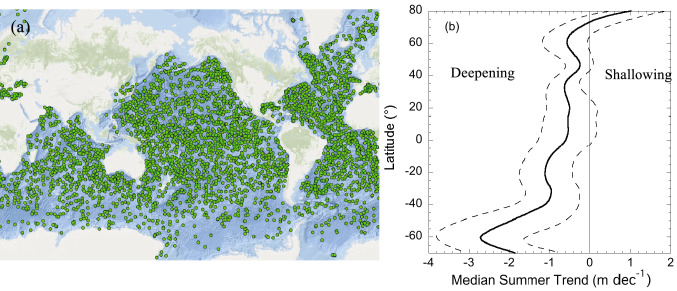
“An analysis of almost 50 years (1970–2018) of density profiles from these floats as well as data from ships show that, on average, over the global ocean, the MLD has deepened by 2.9% per decade, adding around 5–10 m per decade to the MLD [25].”
BackgroundInfluentialThe Arctic's sea ice cover: trends, variability, predictability, and comparisons to the Antarctic
Serreze, M. C., & Meier, W. N. (2019) · Annals of the New York Academy of Sciences · doi:10.1111/nyas.13856 · Cited by 300 · cited 4×
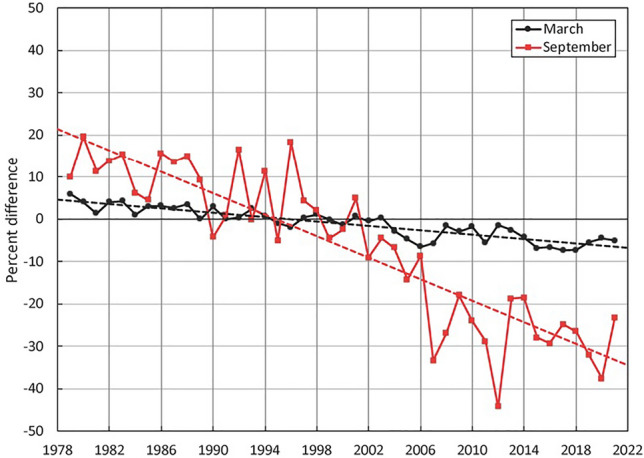
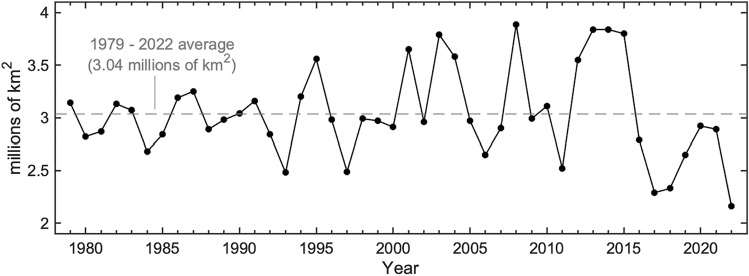
“1 Polar oceans The spatial extent and seasonal duration of ice-cover in the polar oceans have decreased substantially in recent decades [46, 47].”
BackgroundInfluentialNelson, K. L., Boehm, A. B., Davies-Colley, R. J., Dodd, M. C., Kohn, T., Linden, K. G., Liu, Y., Maraccini, P. A., McNeill, K., Mitch, W. A., et al. (2018) · Environmental Science: Processes & Impacts · doi:10.1039/c8em00047f · Cited by 296 · cited 4×
“The net effect depends, inter alia, on depth and spectral attenuation in the water column, biological weighting functions, and mixing dynamics [78, 80].”
BackgroundInfluentialSelf-citationBerkelmans, R., & Willis, B. L. (1999) · Coral Reefs · doi:10.1007/s003380050186 · Cited by 286 · cited 1×
“However, tropical dwelling corals often live near their upper thermal limit [226], and therefore are particularly vulnerable to thermal stress associated with increased sea surface temperatures as a result of climate change.”
BackgroundCory, R. M., & Kling, G. W. (2018) · Limnology and Oceanography Letters · doi:10.1002/lol2.10060 · Cited by 264 · cited 1×
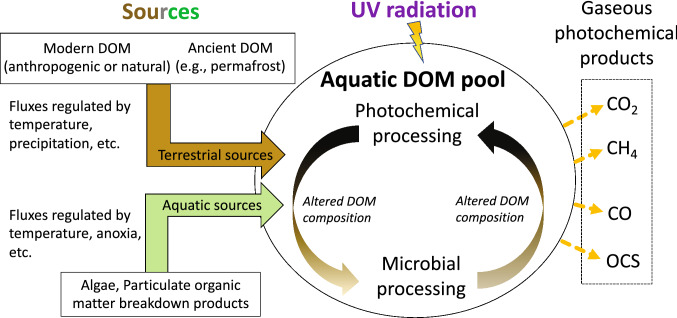
“Partial photooxidation of DOM by UV radiation is increasingly recognised as a key trigger of the cycling of elements in aquatic systems because of the direct impact that DOM chemistry has on microbial processes [108, 111, 130, 131].”
BackgroundSolar Ultraviolet Radiation and Coral Reef Epifauna
Jokiel, P. L. (1980) · Science · doi:10.1126/science.207.4435.1069 · Cited by 261
Gao, K., Beardall, J., Häder, D.-P., Hall-Spencer, J. M., Gao, G., & Hutchins, D. A. (2019) · Frontiers in Marine Science · doi:10.3389/fmars.2019.00322 · Cited by 251 · cited 24×
“Microbial mineralisation elicited by partial photooxidation may also release more CO2 than direct DOM photomineralisation in Arctic watersheds [111, 131, 133] but the magnitude of this coupled photochemicalmicrobial CO2 emission, its seasonality, and its variation in response to climate change and changes in UV radiat…”
BackgroundInfluentialSelf-citationOptical properties of ice and snow
Warren, S. G. (2019) · Philosophical Transactions of the Royal Society A: Mathematical, Physical and Engineering Sciences · doi:10.1098/rsta.2018.0161 · Cited by 241 · cited 1×
“Clean ice has very little absorbance in the UV range between 200 and 400 nm [41].”
BackgroundMitchelmore, C. L., He, K., Gonsior, M., Hain, E., Heyes, A., Clark, C., Younger, R., Schmitt-Kopplin, P., Feerick, A., Conway, A., et al. (2019) · Science of The Total Environment · doi:10.1016/j.scitotenv.2019.03.034 · Cited by 238 · cited 3×
“Organic and inorganic UV filters have been detected in surface waters, sediments, and organisms [151].”
BackgroundInfluentialZheng, B., Chevallier, F., Yin, Y., Ciais, P., Fortems-Cheiney, A., Deeter, M. N., Parker, R. J., Wang, Y., Worden, H. M., & Zhao, Y. (2019) · Earth System Science Data · doi:10.5194/essd-11-1411-2019 · Cited by 232
Neale, R. E., Barnes, P. W., Robson, T. M., Neale, P. J., Williamson, C. E., Zepp, R. G., Wilson, S. R., Madronich, S., Andrady, A. L., Heikkilä, A. M., et al. (2021) · Photochemical & Photobiological Sciences · doi:10.1007/s43630-020-00001-x · Cited by 225 · cited 1×
“Recent work has shown that this function is also applicable to the mortality of a freshwater ciliate (Pelagodileptus trachelioides) due to UV irradiation [245, 246].”
BackgroundSelf-citationTechnical Note: A mobile sea-going mesocosm system – new opportunities for ocean change research
Riebesell, U., Czerny, J., von Bröckel, K., Boxhammer, T., Büdenbender, J., Deckelnick, M., Fischer, M., Hoffmann, D., Krug, S. A., Lentz, U., et al. (2013) · Biogeosciences · doi:10.5194/bg-10-1835-2013 · Cited by 223
Reviews and syntheses: Carbonyl sulfide as a multi-scale tracer for carbon and water cycles
Whelan, M. E., Lennartz, S. T., Gimeno, T. E., Wehr, R., Wohlfahrt, G., Wang, Y., Kooijmans, L. M. J., Hilton, T. W., Belviso, S., Peylin, P., et al. (2018) · Biogeosciences · doi:10.5194/bg-15-3625-2018 · Cited by 221
Ward, C. P., Nalven, S. G., Crump, B. C., Kling, G. W., & Cory, R. M. (2017) · Nature Communications · doi:10.1038/s41467-017-00759-2 · Cited by 216 · cited 2×
“Partial photooxidation of DOM by UV radiation is increasingly recognised as a key trigger of the cycling of elements in aquatic systems because of the direct impact that DOM chemistry has on microbial processes [108, 111, 130, 131].”
BackgroundShick, J. M., Romaine-Lioud, S., Romaine-Lioud, S., Ferrier-Pagès, C., & Gattuso, J.-P. (1999) · Limnology and Oceanography · doi:10.4319/lo.1999.44.7.1667 · Cited by 211 · cited 1×
“Suites of MAAs have been detected in tropical reef-dwelling corals, which provide broad-band protection from damage due to UV irradiation [240].”
BackgroundChanges of water clarity in large lakes and reservoirs across China observed from long-term MODIS
Wang, S., Li, J., Zhang, B., Lee, Z., Spyrakos, E., Feng, L., Liu, C., Zhao, H., Wu, Y., Zhu, L., et al. (2020) · Remote Sensing of Environment · doi:10.1016/j.rse.2020.111949 · Cited by 209 · cited 6×
“More recently, reductions in exposure to UV radiation have also been reported for three lakes in eastern and southwestern China.”
BackgroundInfluentialEffects of UVB radiation on marine and freshwater organisms: a synthesis through meta‐analysis
Bancroft, B. A., Baker, N. J., & Blaustein, A. R. (2007) · Ecology Letters · doi:10.1111/j.1461-0248.2007.01022.x · Cited by 205
The synthesis of mycosporine-like amino acids (MAAs) by cultured, symbiotic dinoflagellates
T. Banaszak, LaJeunesse, T. C., & Trench, R. K. (2000) · Journal of Experimental Marine Biology and Ecology · doi:10.1016/s0022-0981(00)00192-1 · Cited by 202
Singlet Oxygen in the Coupled Photochemical and Biochemical Oxidation of Dissolved Organic Matter
Cory, R. M., McNeill, K., Cotner, J. P., Amado, A., Purcell, J. M., & Marshall, A. G. (2010) · Environmental Science & Technology · doi:10.1021/es902989y · Cited by 193 · cited 1×
“Carboxylic-rich alicyclic molecules are among the products of partial DOM photooxidation and are predominantly formed via singlet oxygen oxidation [133, 134].”
BackgroundMycosporine-Like Amino Acids (MAAs): Biology, Chemistry and Identification Features
Geraldes, V., & Pinto, E. (2021) · Pharmaceuticals · doi:10.3390/ph14010063 · Cited by 193 · cited 1×
“Mycosporinelike amino acids (MAAs) are UV-absorbing compounds produced by marine macroalgae [174–177], fungi, phytoplankton, plants, and bacteria [176, 178] and have been investigated as natural alternatives to commercial sunscreen components (see [179] for a database of these compounds).”
BackgroundSunlight‐induced carbon dioxide emissions from inland waters
Koehler, B., Landelius, T., Weyhenmeyer, G. A., Machida, N., & Tranvik, L. J. (2014) · Global Biogeochemical Cycles · doi:10.1002/2014gb004850 · Cited by 188 · cited 1×
“Outside of the Arctic, photomineralisation typically explains < 15% of total organic carbon loss from aquatic ecosystems, namely 9–12% in Scandinavian lakes [105, 106], 3–5% in rivers [107], and 0.”
Background(2022) · Elsevier eBooks · doi:10.1016/c2018-1-02432-4 · Cited by 188
He, K., Hain, E., Timm, A., Tarnowski, M., & Blaney, L. (2019) · Science of The Total Environment · doi:10.1016/j.scitotenv.2018.10.021 · Cited by 187 · cited 1×
“1–136 ng/L in coastal waters near Oahu, Hawaii [151] and 114, 11, and 118 ng/L in Chesapeake Bay water, sediments, and oyster tissues, respectively [156].”
BackgroundMarine Photochemistry of Organic Matter
Mopper, K., Kieber, D. J., & Stubbins, A. (2015) · Biogeochemistry of Marine Dissolved Organic Matter · doi:10.1016/b978-0-12-405940-5.00008-x · Cited by 185 · cited 5×
“In addition to nitrogen species, UV-irradiation of dissolved and particulate organic matter in aquatic ecosystems releases phosphate [120, 142], which may fuel algal blooms.”
BackgroundInfluentialDistribution and abundance of MAAs in 33 species of microalgae across 13 classes
Llewellyn, C. A., & Airs, R. L. (2010) · Marine Drugs · doi:10.3390/md8041273 · Cited by 184 · cited 1×
“These substances are pigments or compounds that intercept solar UV radiation before they can damage biologically important molecules such as DNA and structures such as the photosynthetic apparatus [205, 206].”
BackgroundEffects of UV radiation on natural and synthetic materials
Andrady, A. L., Heikkilä, A. M., Pandey, K. K., Bruckman, L. S., White, C. C., Zhu, M., & Zhu, L. (2023) · Photochemical & Photobiological Sciences · doi:10.1007/s43630-023-00377-6 · Cited by 181 · cited 1×
“[189], this issue), and it is presently unknown how much of these UV filters could be released into the natural environment.”
BackgroundLoss of Ice Cover, Shifting Phenology, and More Extreme Events in Northern Hemisphere Lakes
Sharma, S., Richardson, D. C., Woolway, R. I., Imrit, M. A., Bouffard, D., Blagrave, K., Daly, J., Filazzola, A., Granin, N., Korhonen, J., et al. (2021) · Journal of Geophysical Research: Biogeosciences · doi:10.1029/2021jg006348 · Cited by 178 · cited 1×
“For example, trends in the later onset of seasonal ice formation and shorter seasonal duration were six times faster in the last 25-year period (1992–2016) compared with previous quarter centuries [53].”
ResultPeng, X., Fan, Y., Jin, J., Xiong, S., Liu, J., & Tang, C. (2017) · Environmental Pollution · doi:10.1016/j.envpol.2017.03.035 · Cited by 177
A world without parasites: exploring the hidden ecology of infection
Wood, C. L., & Johnson, P. T. (2015) · Frontiers in Ecology and the Environment · doi:10.1890/140368 · Cited by 176 · cited 1×
“Host–pathogen interactions differentially affect the growth and survival of individual species and thus the species composition of aquatic ecosystems [91].”
BackgroundBENEFICIAL AND DETRIMENTAL EFFECTS OF UV ON AQUATIC ORGANISMS: IMPLICATIONS OF SPECTRAL VARIATION
Williamson, C. E., Neale, P. J., Grad, G., De Lange, H. J., & Hargreaves, B. R. (2001) · Ecological Applications · doi:10.1890/1051-0761(2001)011[1843:badeou]2.0.co;2 · Cited by 175
Self-citationWilliamson, C. E., Neale, P. J., Hylander, S., Rose, K. C., Figueroa, F. L., Robinson, S. A., Häder, D.-P., Wä, S.-Å., & Worrest, R. C. (2019) · Photochemical & Photobiological Sciences · doi:10.1039/c8pp90062k · Cited by 169 · cited 15×
“A primary effect of UV-B radiation on microalgae is inhibition of photosynthesis and DNA damage, with cumulative exposure causing decreases in growth rate.”
BackgroundMethodResultInfluentialSelf-citationComprehensive review of ultraviolet radiation and the current status on sunscreens.
Wilson, B. D., Moon, S. D., & Armstrong, F. (2012) · PubMed Central · Cited by 165
Corinaldesi, C., Marcellini, F., Nepote, E., Damiani, E., & Danovaro, R. (2018) · Science of The Total Environment · doi:10.1016/j.scitotenv.2018.05.108 · Cited by 163
Mycosporine-Like Amino Acids for Skin Photoprotection
Lawrence, K. P., Long, P. F., & Young, A. R. (2019) · Current Medicinal Chemistry · doi:10.2174/0929867324666170529124237 · Cited by 157 · cited 1×
“Among the various compounds, there is a particular interest in mycosporine-glycine [180], palythine [181], palythene [182], shinorine [183], porphyra-334 [184], and scytonemin as UV filters for sunscreen [185], skin care [186], and cosmetic formulations [187, 188] due to their availability, stability, and antioxidant…”
BackgroundDeeper waters are changing less consistently than surface waters in a global analysis of 102 lakes
Pilla, R. M., Williamson, C. E., Адамович, Б. В., Adrian, R., Anneville, O., Chandra, S., Colom, W., Devlin, S. P., Dix, M. A., Dokulil, M. T., et al. (2020) · Scientific Reports · doi:10.1038/s41598-020-76873-x · Cited by 157 · cited 1×
“39 °C decade−1, while temperature has remained stable in deep waters [40, 62].”
BackgroundSelf-citationSilverman, A. I., & Boehm, A. B. B. (2020) · Environmental Science & Technology Letters · doi:10.1021/acs.estlett.0c00313 · Cited by 156
Vähätalo, A. V., Salonen, K., & Wetzel, R. G. (2003) · Archiv für Hydrobiologie · doi:10.1127/0003-9136/2003/0156-0287 · Cited by 155 · cited 1×
“The average value is comparable to previous estimates for boreal lakes [140].”
ResultHansson, L., & Hylander, S. (2009) · Photochemical & Photobiological Sciences · doi:10.1039/b908825c · Cited by 154 · cited 2×
“At larger geographic scales, changes in UV-transparency can lead to range expansions, modulated zooplankton interactions (see above), as well as changes in community composition [256, 271, 272].”
BackgroundSelf-citationConversion of oxybenzone sunscreen to phototoxic glucoside conjugates by sea anemones and corals
Vuckovic, D., Tinoco, A. I., Ling, L., Renicke, C. C., Pringle, J. R., & Mitch, W. A. (2022) · Science · doi:10.1126/science.abn2600 · Cited by 147 · cited 2×
“These organisms normally have symbiotic algae that can suppress the toxicity by sequestering the derivative but this protection is lost if the algae are expelled [154].”
BackgroundDirect oceanic emissions unlikely to account for the missing source of atmospheric carbonyl sulfide
Lennartz, S. T., Marandino, C., von Hobe, M., Cortés, P., Quack, B., Simó, R., Booge, D., Pozzer, A., Steinhoff, T., Arévalo-Martínez, D. L., et al. (2017) · Atmospheric chemistry and physics · doi:10.5194/acp-17-385-2017 · Cited by 146
Stratospheric ozone, UV radiation, and climate interactions
Bernhard, G. H., Bais, A. F., Aucamp, P. J., Klekociuk, A. R., Liley, J. B., & McKenzie, R. L. (2023) · Photochemical & Photobiological Sciences · doi:10.1007/s43630-023-00371-y · Cited by 138 · cited 2×
“[27], this issue), are used to quantify wavelength effects on the direct photoinactivation of microorganisms and to better understand the role of microbial characteristics and environmental changes in their sensitivity to UV radiation [78, 81–83].”
BackgroundMethodAtmospheric stilling leads to prolonged thermal stratification in a large shallow polymictic lake
Woolway, R. I., Meinson, P., Nõges, P., Jones, I. D., & Laas, A. (2017) · Climatic Change · doi:10.1007/s10584-017-1909-0 · Cited by 137 · cited 1×
“declining wind speeds, is associated with shallower MLDs in large lakes [31, 32].”
BackgroundBoehm, A. B. B., Silverman, A. I., Schriewer, A., & Goodwin, K. D. (2019) · Water Research · doi:10.1016/j.watres.2019.114898 · Cited by 137 · cited 1×
“Photoinactivation has been studied in a number of parasites and pathogens affecting human health [77, 78].”
BackgroundHe, T., Tsui, M. M. P., Tan, C. J., Ma, C. Y., Yiu, S. K. F., Wang, L. H., Chen, T. H., Fan, T. Y., Lam, P. K. S., & Murphy, M. B. (2019) · Environmental Pollution · doi:10.1016/j.envpol.2018.11.029 · Cited by 136
Häder, D., & Barnes, P. W. (2019) · The Science of The Total Environment · doi:10.1016/j.scitotenv.2019.05.024 · Cited by 135 · cited 1×
“When these differences in sensitivity combine with the effects of climate change, the species composition of aquatic ecosystems can shift [57].”
BackgroundSelf-citationByrne, M., & Fitzer, S. C. (2019) · Conservation Physiology · doi:10.1093/conphys/coz062 · Cited by 134 · cited 1×
“Ocean acidification reduces the calcium carbonate incorporation of calcifying algae such as Corallina and Acetabularia as well as in many zoological taxa such as worms, bivalves, and corals [66, 69].”
BackgroundEffects of solar ultraviolet radiation on coral reef organisms
Banaszak, A. T., & Lesser, M. P. (2009) · Photochemical & Photobiological Sciences · doi:10.1039/b902763g · Cited by 130 · cited 5×
“Their high molar absorptivity, stability, and dissipation of UV radiation energy as heat mean these compounds are particularly effective photoprotectants against UV-B and UV-A damage in aquatic organisms ([208] and refs.”
BackgroundInfluentialSelf-citationPhotochemistry of Surface Fresh Waters in the Framework of Climate Change
Vione, D., & Scozzaro, A. (2019) · Environmental Science & Technology · doi:10.1021/acs.est.9b00968 · Cited by 129 · cited 1×
“Significant advances have been achieved in the simulation of photoreactions of contaminants in aquatic environments including those involving solar UV-B radiation [78, 196, 197].”
BackgroundHe, T., Tsui, M. M. P., Tan, C. J., Ng, K. Y., Guo, F. W., Wang, L. H., Chen, T. H., Fan, T. Y., Lam, P. K. S., & Murphy, M. B. (2019) · Science of The Total Environment · doi:10.1016/j.scitotenv.2018.10.148 · Cited by 128 · cited 4×
“Organic UV filters Coral bleaching and death Pocillopora damicornis, Seriatopora caliendrum [161, 162]”
BackgroundInfluentialMycosporine-Like Amino Acids: Making the Foundation for Organic Personalised Sunscreens
Rosic, N. (2019) · Marine Drugs · doi:10.3390/md17110638 · Cited by 125 · cited 1×
“While zooplankton and higher organisms cannot synthesise these substances, they can take them up in their diet or from associated microorganisms and incorporate them into outer tissue cells where they protect the organisms from damage by UV radiation [174, 214].”
BackgroundToxic algal bloom induced by ocean acidification disrupts the pelagic food web
Riebesell, U., Aberle-Malzahn, N., Achterberg, E. P., Algueró-Muñiz, M., Alvarez-Fernandez, S., Arístegui, J., Bach, L. T., Boersma, M., Boxhammer, T., Guan, W., et al. (2018) · Nature Climate Change · doi:10.1038/s41558-018-0344-1 · Cited by 123 · cited 1×
“, [74]), which leaves open the question of how representative the results of some multi-stressor experiments are with respect to natural conditions that include exposure to UV radiation—such as the finding that ocean acidification encourages the growth of toxic microalgae [75].”
BackgroundBernhard, G. H., Neale, R. E., Barnes, P. W., Neale, P. J., Zepp, R. G., Wilson, S. R., Andrady, A. L., Bais, A. F., McKenzie, R. L., Aucamp, P. J., et al. (2020) · Photochemical & Photobiological Sciences · doi:10.1039/d0pp90011g · Cited by 122
Self-citationThe warmer the ocean surface, the shallower the mixed layer. How much of this is true?
Somavilla, R., González‐Pola, C., & Fernández‐Diaz, J. (2017) · Journal of Geophysical Research: Oceans · doi:10.1002/2017jc013125 · Cited by 119 · cited 9×
“In clear lakes like Crater Lake (United States), these shallower MLDs can cause substantially more exposure to UV radiation and consequent damage to organisms [31].”
BackgroundInfluentialBanaszak, A. T., Santos, M. G. B., LaJeunesse, T. C., & Lesser, M. P. (2006) · Journal of Experimental Marine Biology and Ecology · doi:10.1016/j.jembe.2006.06.014 · Cited by 115 · cited 1×
“muricata [228] may provide protection against the damaging effects of UV radiation as they do for other corals ([234], more details in Sect.”
BackgroundSelf-citationThe promise of marine molecules as cosmetic active ingredients
Brunt, E. G., & Burgess, J. G. (2017) · International Journal of Cosmetic Science · doi:10.1111/ics.12435 · Cited by 114 · cited 1×
“Among the various compounds, there is a particular interest in mycosporine-glycine [180], palythine [181], palythene [182], shinorine [183], porphyra-334 [184], and scytonemin as UV filters for sunscreen [185], skin care [186], and cosmetic formulations [187, 188] due to their availability, stability, and antioxidant…”
BackgroundPhotosynthesis in the aquatic environment as affected by UVR
Villafañe, V. E., Sundbäck, K., Figueroa, F. L., & Helbling, E. W. (2003) · Royal Society of Chemistry eBooks · doi:10.1039/9781847552266-00357 · Cited by 113 · cited 1×
“After the realisation in the 1990s that ozone depletion increased the exposure of aquatic ecosystems to UV-B radiation, many studies demonstrated that photosynthesis by aquatic primary producers, mainly phytoplankton, was inhibited by UV-B radiation (reviewed by [96]).”
BackgroundBarnes, P. W., Robson, T. M., Zepp, R. G., Bornman, J. F., Jansen, M. A. K., Ossola, R., Wang, Q.-W., Robinson, S. A., Foereid, B., Klekociuk, A. R., et al. (2023) · Photochemical & Photobiological Sciences · doi:10.1007/s43630-023-00376-7 · Cited by 113
Self-citationImpact of elevated UVB radiation on marine biota: a meta‐analysis
Llabrés, M., Agustí, S., Fernández, M., Canepa, A., Maurin, F., Vidal, F., & Duarte, C. M. (2013) · Global Ecology and Biogeography · doi:10.1111/j.1466-8238.2012.00784.x · Cited by 111
Substantial twentieth-century Arctic warming caused by ozone-depleting substances
Polvani, L. M., Previdi, M., England, M. R., Chiodo, G., & Smith, K. L. (2020) · Nature Climate Change · doi:10.1038/s41558-019-0677-4 · Cited by 109 · cited 1×
“While ice melt is directly attributable to warming, recent global climate modelling suggests about half of the Arctic warming responsible for ice loss over this period was caused by ozone-depleting substances acting as powerful greenhouse gasses [48, 49].”
BackgroundSunscreen bans: Coral reefs and skin cancer
Raffa, R. B., Pergolizzi, J. V., Taylor, R., Kitzen, J. M., & for the NEMA Research Group (2019) · Journal of Clinical Pharmacy and Therapeutics · doi:10.1111/jcpt.12778 · Cited by 106 · cited 1×
“In general, inorganic mineral UV filters are considered less toxic and safer for aquatic organisms compared to their organic counterparts [165] and have therefore been suggested as environmentally safer alternatives [148].”
BackgroundMouchi, V., Chapron, L., Péru, E., Pruski, A. M., Meistertzheim, A., Vétion, G., Galand, P. E., & Lartaud, F. (2019) · Environmental Pollution · doi:10.1016/j.envpol.2019.07.024 · Cited by 105 · cited 1×
“Microplastic degradation Decreased growth and food capture rates Lophelia pertusa, Madrepora oculata [231]”
BackgroundWilliamson, C. E., Olson, O. G., Lott, S. E., Walker, N. D., Engstrom, D. R., & Hargreaves, B. R. (2001) · Ecology · doi:10.1890/0012-9658(2001)082[1748:urazcs]2.0.co;2 · Cited by 104
Self-citationDu, Y., Wang, W.-Q., Pei, Z.-T., Ahmad, F., Xu, R.-R., Zhang, Y.-M., & Sun, L.-W. (2017) · International Journal of Environmental Research and Public Health · doi:10.3390/ijerph14111414 · Cited by 103
Annual precipitation regulates spatial and temporal drivers of lake water clarity
Rose, K. C., Greb, S. R., Diebel, M. W., & Turner, M. G. (2017) · Ecological Applications · doi:10.1002/eap.1471 · Cited by 101 · cited 3×
“Similarly, there is a wide range of water transparency trends in the period 1991–2012 for thousands of lakes in Wisconsin as estimated from remotely sensed reflectance data [9].”
BackgroundSelf-citationMannino, A. M., & Micheli, C. (2020) · Journal of Marine Science and Engineering · doi:10.3390/jmse8010019 · Cited by 101
Lalegerie, F., Gager, L., Stiger‐Pouvreau, V., & Connan, S. (2019) · Advances in botanical research · doi:10.1016/bs.abr.2019.11.007 · Cited by 100 · cited 1×
“Finally, there is a strong seasonal variability in protective MAAs with low concentrations in winter concomitant with low stress from exposure to UV radiation [219, 220].”
BackgroundZhang, Z., Wang, K., Chen, D., Li, J., & Dickinson, R. E. (2019) · Journal of Climate · doi:10.1175/jcli-d-18-0691.1 · Cited by 99 · cited 1×
“The causes and future of atmospheric stilling are unclear, as is whether the reversal in atmospheric stilling will continue in the future [34, 35].”
BackgroundPilla, R. M., Williamson, C. E., Zhang, J., Smyth, R. L., Lenters, J. D., Brentrup, J. A., Knoll, L. B., & Fisher, T. J. (2018) · Journal of Geophysical Research: Biogeosciences · doi:10.1029/2017jg004321 · Cited by 96
Self-citationFetterer, F. ;. K. (2016) · National Snow and Ice Data Center · doi:10.7265/n5736nv7 · Cited by 96
Yuan, S., Huang, J., Jiang, X., Huang, Y., Zhu, X., & Cai, Z. (2022) · Nanomaterials · doi:10.3390/nano12040699 · Cited by 95 · cited 1×
“The applicability of many toxicity studies has been questioned because they were conducted at concentrations that exceed ecological relevance [155].”
BackgroundClimate Change Drives Increases in Extreme Events for Lake Ice in the Northern Hemisphere
Filazzola, A., Blagrave, K., Imrit, M. A., & Sharma, S. (2020) · Geophysical Research Letters · doi:10.1029/2020gl089608 · Cited by 94 · cited 1×
“Similarly, extreme events, such as years without any ice cover on lakes that historically had ice every winter, are becoming more common [54].”
BackgroundSingh, A., Čížková, M., Bišová, K., & Vítová, M. (2021) · Antioxidants · doi:10.3390/antiox10050683 · Cited by 94 · cited 1×
“Mycosporinelike amino acids (MAAs) are UV-absorbing compounds produced by marine macroalgae [174–177], fungi, phytoplankton, plants, and bacteria [176, 178] and have been investigated as natural alternatives to commercial sunscreen components (see [179] for a database of these compounds).”
BackgroundVega, J., Bonomi-Barufi, J., Gómez-Pinchetti, J. L., & Figueroa, F. L. (2020) · Marine Drugs · doi:10.3390/md18120659 · Cited by 93 · cited 1×
“Among the various compounds, there is a particular interest in mycosporine-glycine [180], palythine [181], palythene [182], shinorine [183], porphyra-334 [184], and scytonemin as UV filters for sunscreen [185], skin care [186], and cosmetic formulations [187, 188] due to their availability, stability, and antioxidant…”
BackgroundWaugh, D. W., Garfinkel, C. I., & Polvani, L. M. (2015) · Journal of Climate · doi:10.1175/jcli-d-15-0138.1 · Cited by 92 · cited 1×
“Deeper mixing in the Southern Ocean is linked to the strengthening of surface winds associated with the positive phase of the Southern Annular Mode (in turn an effect of ozone depletion) [26](see also Bernhard et al.”
BackgroundFel, J.-P., Lacherez, C., Bensetra, A., Mezzache, S., Béraud, E., Léonard, M., Allemand, D., & Ferrier-Pagès, C. (2019) · Coral Reefs · doi:10.1007/s00338-018-01759-4 · Cited by 92 · cited 2×
“Reduced photosystem II activity Stylophora pistillata [168]”
BackgroundDowns, C. A., Bishop, E., Diaz-Cruz, M. S., Haghshenas, S. A., Stien, D., Rodrigues-Stien, A., Woodley, C. M., Sunyer‐Caldú, A., Doust, S. N., Espero, W., et al. (2021) · Chemosphere · doi:10.1016/j.chemosphere.2021.132880 · Cited by 92 · cited 2×
“For example, the concentration of oxybenzone ranged from 30 ng/L to 27,880 ng/L in near-shore waters in Hanauma Bay, Hawai’i [158].”
BackgroundMassive coastal tourism influx to the Mediterranean Sea: The environmental risk of sunscreens
Tovar-Sánchez, A., Sánchez-Quiles, D., & Rodríguez-Romero, A. (2019) · Science of The Total Environment · doi:10.1016/j.scitotenv.2018.11.399 · Cited by 91
Doane, T. A. (2017) · ACS Earth and Space Chemistry · doi:10.1021/acsearthspacechem.7b00059 · Cited by 89 · cited 1×
“It is well acknowledged that UV irradiation of dissolved organic nitrogen (DON) releases ammonia [80, 120, 137], a process with the potential of sustaining microbial activity in nitrogen-limited ecosystems such as Arctic waterbodies [137, 138].”
BackgroundUV Radiation as a Potential Driving Force for Zooplankton Community Structure in Patagonian Lakes
Marinone, M. C., Marque, S. M., Suárez, D. A., Diéguez, M. D. C., Pérez, P., De Los Ríos, P., Soto, D., & Zagarese, H. E. (2006) · Photochemistry and Photobiology · doi:10.1562/2005-09-09-ra-680 · Cited by 88 · cited 1×
“At larger geographic scales, changes in UV-transparency can lead to range expansions, modulated zooplankton interactions (see above), as well as changes in community composition [256, 271, 272].”
BackgroundUV Photoprotection, Cytotoxicity and Immunology Capacity of Red Algae Extracts
Álvarez-Gómez, F., Korbee, N., Casas-Arrojo, V., Abdala-Díaz, R. T., & Figueroa, F. L. (2019) · Molecules · doi:10.3390/molecules24020341 · Cited by 87 · cited 1×
“Aquatic invertebrates use a range of photoprotective mechanisms to offset potential damage by UV irradiation including morphological changes, avoidance of exposure, synthesis of antioxidant and photoprotective compounds such as carotenoids and MAAs, and molecular defence mechanisms such as activation of DNA repair mec…”
BackgroundWilliamson, C. E., Overholt, E. P., Brentrup, J. A., Pilla, R. M., Leach, T. H., Schladow, S. G., Warren, J. D., Urmy, S. S., Sadro, S., Chandra, S., et al. (2016) · Frontiers in Ecology and the Environment · doi:10.1002/fee.1228 · Cited by 86
Self-citationReduction in surface climate change achieved by the 1987 Montreal Protocol
Goyal, R., England, M. H., Sen Gupta, A., & Jucker, M. (2019) · Environmental Research Letters · doi:10.1088/1748-9326/ab4874 · Cited by 86 · cited 2×
“To the extent that they continue to decrease, the rate of Arctic warming, and hence ice melt and consequent increases in exposure to UV radiation, may be tempered in future decades [48].”
BackgroundThe oceanic cycle of carbon monoxide and its emissions to the atmosphere
Conte, L., Szopa, S., Séférian, R., & Bopp, L. (2019) · Biogeosciences · doi:10.5194/bg-16-881-2019 · Cited by 85 · cited 2×
“[119] report carbon monoxide (CO) as carbon mass equivalent.”
BackgroundSun, Y., Zhang, N., Zhou, J., Dong, S., Zhang, X., Guo, L., & Guo, G. (2020) · Marine Drugs · doi:10.3390/md18010043 · Cited by 84 · cited 1×
“The concentration and number of MAAs in any given organism are probably related to the potential for exposure to damaging UV radiation such that macroalgae that are adapted to surface waters synthesise higher amounts of MAAs than at depth [213].”
BackgroundEffect of ultraviolet radiation (UVR) on the life stages of fish
Alves, R. N., & Agustí, S. (2020) · Reviews in Fish Biology and Fisheries · doi:10.1007/s11160-020-09603-1 · Cited by 84 · cited 3×
“Additional sub-lethal and lethal effects have been demonstrated in response to exposure to both UV-B and UV-A radiation and in different life stages of many fish species [275, 276].”
BackgroundPhotosynthetic Production of Sunscreen Shinorine Using an Engineered Cyanobacterium
Yang, G., Cozad, M. A., Holland, D. A., Zhang, Y., Luesch, H., & Ding, Y. (2018) · ACS Synthetic Biology · doi:10.1021/acssynbio.7b00397 · Cited by 82 · cited 2×
“Among the various compounds, there is a particular interest in mycosporine-glycine [180], palythine [181], palythene [182], shinorine [183], porphyra-334 [184], and scytonemin as UV filters for sunscreen [185], skin care [186], and cosmetic formulations [187, 188] due to their availability, stability, and antioxidant…”
BackgroundDOM degradation by light and microbes along the Yukon River-coastal ocean continuum
Grunert, B., Tzortziou, M. A., Neale, P. J., Menendez, A., & Hernes, P. J. (2021) · Scientific Reports · doi:10.1038/s41598-021-89327-9 · Cited by 81 · cited 2×
“Partial photooxidation of DOM by UV radiation is increasingly recognised as a key trigger of the cycling of elements in aquatic systems because of the direct impact that DOM chemistry has on microbial processes [108, 111, 130, 131].”
BackgroundSelf-citationCentennial decline in North Sea water clarity causes strong delay in phytoplankton bloom timing
Opdal, A. F., Lindemann, C., & Aksnes, D. L. (2019) · Global Change Biology · doi:10.1111/gcb.14810 · Cited by 79 · cited 1×
“Similar long-term trends of increasing inputs of sediment and terrestrially derived DOM are causing decreased water transparency in the North Sea, a phenomenon termed “coastal darkening” [16].”
BackgroundWijgerde, T., van Ballegooijen, M., Nijland, R., van der Loos, L., Kwadijk, C., Osinga, R., Murk, A., & Slijkerman, D. (2020) · Science of The Total Environment · doi:10.1016/j.scitotenv.2020.139030 · Cited by 79
Chemical profiling of mycosporine‐like amino acids in twenty‐three red algal species
Orfanoudaki, M., Hartmann, A., Karsten, U., & Ganzera, M. (2019) · Journal of Phycology · doi:10.1111/jpy.12827 · Cited by 77
Oziel, L., Massicotte, P., Randelhoff, A., Ferland, J., Vladoiu, A., Lacour, L., Galindo, V., Lambert-Girard, S., Dumont, D., Cuypers, Y., et al. (2019) · Elementa: Science of the Anthropocene · doi:10.1525/elementa.372 · Cited by 76 · cited 1×
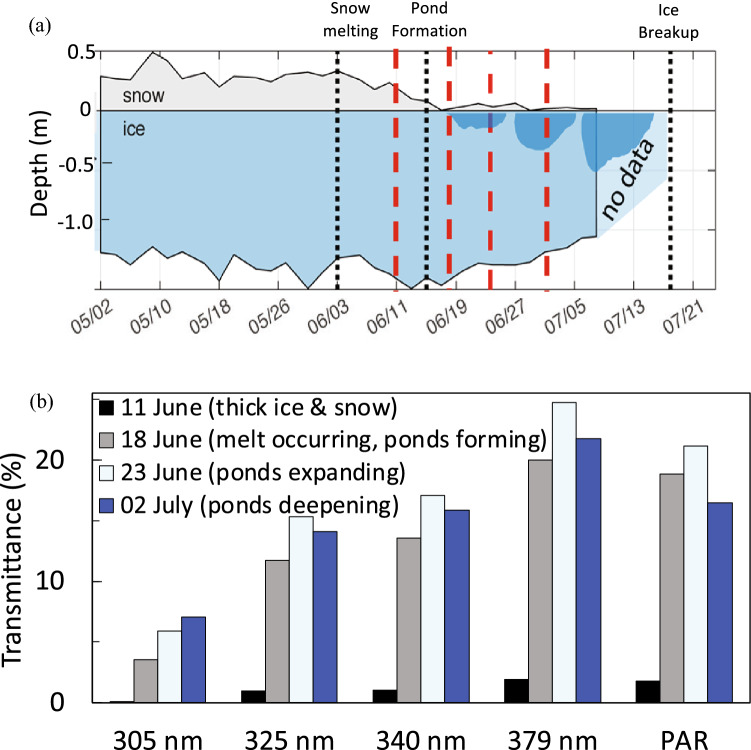
“For example, seasonal studies in Baffin Bay in 2016 [44, 45] showed that when ponds developed, average transmittance increased about ten times for PAR and UV-A radiation (325, 340 and 379 nm) (Fig.”
BackgroundWard, C. P., & Overton, E. B. (2020) · Environmental Science Processes & Impacts · doi:10.1039/d0em00027b · Cited by 75
Bowen, J. C., Ward, C. P., Kling, G. W., & Cory, R. M. (2020) · Geophysical Research Letters · doi:10.1029/2020gl087085 · Cited by 75 · cited 1×
“Recent work highlighted that seasonality [114, 116] and iron levels [114] are critical controls of DOM photomineralisation in this environment and may justify the contrasting literature results.”
ResultNishida, Y., Kumagai, Y., Michiba, S., Yasui, H., & Kishimura, H. (2020) · Marine Drugs · doi:10.3390/md18100502 · Cited by 75
The Contribution of Methane Photoproduction to the Oceanic Methane Paradox
Li, Y., Fichot, C. G., Geng, L., Scarratt, M., & Xie, H. (2020) · Geophysical Research Letters · doi:10.1029/2020gl088362 · Cited by 74 · cited 1×
“Global CH4 emissions are 576 TgCH4 yr−1 [124], while photochemical production from the ocean surface is 121 GgCH4 yr−1 (Gg = 109 g) [125], yielding 0.”
BackgroundMulti-decadal improvement in US Lake water clarity
Topp, S., Pavelsky, T. M., Stanley, E. H., Yang, X., Griffin, C. G., & Ross, M. R. V. (2021) · Environmental Research Letters · doi:10.1088/1748-9326/abf002 · Cited by 72 · cited 7×
“More recently, reductions in exposure to UV radiation have also been reported for three lakes in eastern and southwestern China.”
BackgroundInfluentialPaul, D., Kolar, P., & Hall, S. (2021) · npj Clean Water · doi:10.1038/s41545-020-00096-w · Cited by 71 · cited 1×
“[86]) but the rate of this process in water in response to solar radiation is not well-known [87].”
BackgroundSulzberger, B., Austin, A. T., Cory, R. M., Zepp, R. G., & Paul, N. D. (2019) · Photochemical & Photobiological Sciences · doi:10.1039/c8pp90063a · Cited by 70 · cited 2×
“The net effect depends, inter alia, on depth and spectral attenuation in the water column, biological weighting functions, and mixing dynamics [78, 80].”
BackgroundSelf-citationSeasonal Evolution of Light Transmission Distributions Through Arctic Sea Ice
Katlein, C., Arndt, S., Belter, H. J., Castellani, G., & Nicolaus, M. (2019) · Journal of Geophysical Research Oceans · doi:10.1029/2018jc014833 · Cited by 70 · cited 2×
“Snow on ice scatters solar radiation, although the degree depends on grain size, for example, melted, refrozen snow has large grains and low albedo (reflection) [42].”
BackgroundHanigan, D., Truong, L., Schoepf, J., Nosaka, T., Mulchandani, A., Tanguay, R. L., & Westerhoff, P. (2018) · Water Research · doi:10.1016/j.watres.2018.03.062 · Cited by 69 · cited 1×
“Moreover, TiO2 and ZnO nanoparticles released into the aquatic environment generate damaging reactive oxygen species (ROS) under UV radiation [170].”
BackgroundMechanisms of Photoprotection in Cyanobacteria
Pathak, J., Ahmed, H., Singh, P. R., Singh, S. P., Häder, D., & Sinha, R. P. (2018) · Elsevier eBooks · doi:10.1016/b978-0-12-814667-5.00007-6 · Cited by 69 · cited 1×
“These substances are effective UV absorbers since they protect cyanobacteria on sun-exposed surfaces of rocks, trees and buildings [216].”
BackgroundSelf-citationWard, C. P., & Cory, R. M. (2020) · Environmental Science Processes & Impacts · doi:10.1039/c9em00504h · Cited by 69
Ocean Studies Board, Board on Environmental Studies and Toxicology, Board on Health Sciences Policy, Studies, D. O. E. A. L., Division, H. A. M., & National Academies of Sciences, E. (2022) · National Academies Press eBooks · doi:10.17226/26381 · Cited by 69
Low photolability of yedoma permafrost dissolved organic carbon
Stubbins, A., Mann, P. J., Powers, L., Bittar, T. B., Dittmar, T., McIntyre, C. P., Eglinton, T. I., Zimov, N., & Spencer, R. G. M. (2017) · Journal of Geophysical Research: Biogeosciences · doi:10.1002/2016jg003688 · Cited by 68
Launois, T., Belviso, S., Bopp, L., Fichot, C. G., & Peylin, P. (2015) · Atmospheric Chemistry and Physics · doi:10.5194/acp-15-2295-2015 · Cited by 66
Guo, M., Li, X., Song, C., Liu, G., & Zhou, Y. (2019) · Environmental Pollution · doi:10.1016/j.envpol.2019.113679 · Cited by 64 · cited 8×
“More recently, reductions in exposure to UV radiation have also been reported for three lakes in eastern and southwestern China.”
BackgroundInfluentialMadronich, S., Sulzberger, B., Longstreth, J. D., Schikowski, T., Andersen, M. P. S., Solomon, K. R., & Wilson, S. R. (2023) · Photochemical & Photobiological Sciences · doi:10.1007/s43630-023-00369-6 · Cited by 64
Li, G., Gao, K., & Gao, G. (2010) · Photochemistry and Photobiology · doi:10.1111/j.1751-1097.2010.00862.x · Cited by 63 · cited 1×
“Organisms in coastal ecosystems are usually more sensitive to solar UV radiation than open ocean species [59, 60], but are better protected due to the lower transparency of coastal waters (Sect.”
BackgroundEutrophication drives divergent water clarity responses to decadal variation in lake level
Lisi, P. J., & Hein, C. L. (2018) · Limnology and Oceanography · doi:10.1002/lno.11095 · Cited by 63 · cited 2×
“There, runoff from increased precipitation tended to dilute the concentration of algae and increase transparency [13].”
BackgroundSong, N., & Jiang, H. (2020) · Water Research · doi:10.1016/j.watres.2020.115516 · Cited by 63 · cited 1×
“Internal loading of CDOM also occurs in shallow lakes due to the breakdown of litter from aquatic plants; this CDOM is highly susceptible to photodegradation [19].”
BackgroundAllesson, L., Koehler, B., Thrane, J., Andersen, T., & Hessen, D. O. (2020) · Limnology and Oceanography · doi:10.1002/lno.11594 · Cited by 62 · cited 1×
“Outside of the Arctic, photomineralisation typically explains < 15% of total organic carbon loss from aquatic ecosystems, namely 9–12% in Scandinavian lakes [105, 106], 3–5% in rivers [107], and 0.”
BackgroundMoeller, M., Pawlowski, S., Petersen-Thiery, M., Miller, I. B., Nietzer, S., Heisel-Sure, Y., Kellermann, M. Y., & Schupp, P. J. (2021) · Frontiers in Marine Science · doi:10.3389/fmars.2021.665548 · Cited by 61
Downs, C. A., Cruz, O. T., & Remengesau, T. E. (2022) · Aquatic Conservation Marine and Freshwater Ecosystems · doi:10.1002/aqc.3791 · Cited by 61
Carbon monoxide apparent quantum yields and photoproduction in the Tyne estuary
Stubbins, A., Law, C. S., Uher, G., & Upstill-Goddard, R. C. (2011) · Biogeosciences · doi:10.5194/bg-8-703-2011 · Cited by 60
Stetler, J. T., Girdner, S. F., Mack, J. A., Winslow, L., Leach, T. H., & Rose, K. C. (2020) · Limnology and Oceanography · doi:10.1002/lno.11654 · Cited by 60 · cited 2×
“declining wind speeds, is associated with shallower MLDs in large lakes [31, 32].”
BackgroundSelf-citationPhotochemical Production of Sulfate and Methanesulfonic Acid from Dissolved Organic Sulfur
Ossola, R., Tolu, J., Clerc, B., Erickson, P. R., Winkel, L. H. E., & McNeill, K. (2019) · Environmental Science & Technology · doi:10.1021/acs.est.9b04721 · Cited by 59
Self-citationUnravelling the Photoprotection Properties of Mycosporine Amino Acid Motifs
Woolley, J. M., Staniforth, M. J., Horbury, M. D., Richings, G. W., Wills, M., & Stavros, V. G. (2018) · The Journal of Physical Chemistry Letters · doi:10.1021/acs.jpclett.8b00921 · Cited by 57 · cited 1×
“Mycosporinelike amino acids (MAAs) are UV-absorbing compounds produced by marine macroalgae [174–177], fungi, phytoplankton, plants, and bacteria [176, 178] and have been investigated as natural alternatives to commercial sunscreen components (see [179] for a database of these compounds).”
BackgroundZito, P. A., Podgorski, D. C., Bartges, T. E., Guillemette, F., Roebuck, A., Spencer, R. G. M., Rodgers, R. P., & Tarr, M. A. (2020) · Energy & Fuels · doi:10.1021/acs.energyfuels.9b04408 · Cited by 57
The effects of ultraviolet radiation and climate on oil toxicity to coral reef organisms – A review
Nordborg, F. M., Jones, R. J., Oelgemöller, M., & Negri, A. P. (2020) · The Science of The Total Environment · doi:10.1016/j.scitotenv.2020.137486 · Cited by 57 · cited 2×
“Several studies evaluated the effect of co-exposure of coral reef invertebrates to both UV radiation and oil pollutants (reviewed by [193]).”
BackgroundCheng, F., Zhang, T., Liu, Y., Zhang, Y., & Qu, J. (2021) · Journal of Xenobiotics · doi:10.3390/jox12010001 · Cited by 57 · cited 1×
“UV radiation plays a key role in the formation of microplastics, as well as in their absorptive capacity and release of associated leachates and bound substances [144].”
BackgroundInfluence of snow depth and surface flooding on light transmission through A ntarctic pack ice
Arndt, S., Meiners, K. M., Ricker, R., Krumpen, T., Katlein, C., & Nicolaus, M. (2017) · Journal of Geophysical Research Oceans · doi:10.1002/2016jc012325 · Cited by 55
Nitrogen Fixation in a Changing Arctic Ocean: An Overlooked Source of Nitrogen?
von Friesen, L. W., & Riemann, L. (2020) · Frontiers in Microbiology · doi:10.3389/fmicb.2020.596426 · Cited by 55
UV-filter pollution: current concerns and future prospects
de Miranda, L. L. R., Harvey, K. E., Ahmed, A., & Harvey, S. C. (2021) · Environmental Monitoring and Assessment · doi:10.1007/s10661-021-09626-6 · Cited by 55 · cited 1×
“Organic UV filters such as oxybenzone, octinoxate, octocrylene, and benzophenones are toxic to a wide range of aquatic organisms, including corals, zooplankton, and marine bacteria [152, 153].”
BackgroundToxicity of UV filters on marine bacteria: Combined effects with damaging solar radiation
Lozano, C., Matallana-Surget, S., Givens, J., Nouet, S., Arbuckle, L., Lambert, Z., & Lebaron, P. (2020) · Science of The Total Environment · doi:10.1016/j.scitotenv.2020.137803 · Cited by 54 · cited 1×
“Organic UV filters such as oxybenzone, octinoxate, octocrylene, and benzophenones are toxic to a wide range of aquatic organisms, including corals, zooplankton, and marine bacteria [152, 153].”
BackgroundSolar ultraviolet radiation sensitivity of SARS-CoV-2
Seyer, A., & Şanlıdağ, T. (2020) · The Lancet Microbe · doi:10.1016/s2666-5247(20)30013-6 · Cited by 54 · cited 1×
“[86]) but the rate of this process in water in response to solar radiation is not well-known [87].”
BackgroundLennartz, S. T., von Hobe, M., Booge, D., Bittig, H. C., Fischer, T., Gonçalves‐Araujo, R., Ksionzek, K. B., Koch, B. P., Bracher, A. U., Röttgers, R., et al. (2019) · Ocean science · doi:10.5194/os-15-1071-2019 · Cited by 53
Knightes, C. D., Ambrose, R. B., Avant, B., Han, Y., Acrey, B., Bouchard, D. C., Zepp, R., & Wool, T. (2019) · Environmental Modelling & Software · doi:10.1016/j.envsoft.2018.10.012 · Cited by 52 · cited 3×
“The updated program can now simulate the direct phototransformation of nanomaterials and other contaminants taking into account the full solar spectrum [196, 198].”
BackgroundMethodSelf-citationCocci, P., Mosconi, G., & Palermo, F. A. (2020) · Marine Pollution Bulletin · doi:10.1016/j.marpolbul.2020.111012 · Cited by 50 · cited 1×
“In a separate study on loggerhead turtles (Caretta caretta), researchers found evidence of bioaccumulation and observed that gene biomarkers for inflammation, oxidative stress, and hormonal activity increased with plasma concentrations of UV filters [164].”
BackgroundMycosporine-Like Amino Acids from Marine Resource
Figueroa, F. L. (2021) · Marine Drugs · doi:10.3390/md19010018 · Cited by 49 · cited 1×
“These substances are pigments or compounds that intercept solar UV radiation before they can damage biologically important molecules such as DNA and structures such as the photosynthetic apparatus [205, 206].”
BackgroundStefanidis, K., Varlas, G., Papaioannou, G., Παπαδόπουλος, Α., & Dimitriou, E. (2022) · The Science of The Total Environment · doi:10.1016/j.scitotenv.2022.154709 · Cited by 48 · cited 2×
“Lake ice thickness has also declined, especially in subarctic lakes [30].”
BackgroundSeasonal Variation of Mycosporine-Like Amino Acids in Three Subantarctic Red Seaweeds
Jofré, J., Celis‐Plá, P. S. M., Figueroa, F. L., & Navarro, N. P. (2020) · Marine Drugs · doi:10.3390/md18020075 · Cited by 47 · cited 1×
“Finally, there is a strong seasonal variability in protective MAAs with low concentrations in winter concomitant with low stress from exposure to UV radiation [219, 220].”
BackgroundArctic Report Card: Update for 2016
Soreide, N. N. (2017) · 97th American Meteorological Society Annual Meeting · Cited by 46
Smoke from regional wildfires alters lake ecology
Scordo, F., Chandra, S., Suenaga, E., Kelson, S. J., Culpepper, J., Scaff, L., Tromboni, F., Caldwell, T. J., Seitz, C., Fiorenza, J. E., et al. (2021) · Scientific Reports · doi:10.1038/s41598-021-89926-6 · Cited by 46 · cited 1×
“However, a recent field study demonstrated that reduced exposure to UV radiation created by smoke haze does not always reduce zooplankton migration [268].”
BackgroundSelf-citationCampen, H. I., Arévalo-Martínez, D. L., Artioli, Y., Brown, I., Kitidis, V., Lessin, G., Rees, A. P., & Bange, H. W. (2021) · AMBIO · doi:10.1007/s13280-021-01612-z · Cited by 46 · cited 1×
“CO production from the photodegradation of DOM and particulate organic matter in the Arctic Ocean is also not yet included in CO estimates, and its contribution is expected to increase due to climate change [122, 123].”
BackgroundReader, H. E., & Miller, W. L. (2012) · Biogeosciences · doi:10.5194/bg-9-4279-2012 · Cited by 44 · cited 1×
“High latitude watersheds in spring may also represent an overlooked source of this gas, as CO is always produced alongside CO2 during DOM photodegradation (CO2/CO ratio ranges from 4 to 73 [121]).”
BackgroundMetabolism overrides photo‐oxidation in CO2 dynamics of Arctic permafrost streams
Rocher‐Ros, G., Harms, T. K., Sponseller, R. A., Väisänen, M., Mörth, C., & Giesler, R. (2020) · Limnology and Oceanography · doi:10.1002/lno.11564 · Cited by 44
Phototoxic effects of two common marine fuels on the settlement success of the coral Acropora tenuis
Nordborg, F. M., Flores, F., Brinkman, D. L., Agustí, S., & Negri, A. P. (2018) · Scientific Reports · doi:10.1038/s41598-018-26972-7 · Cited by 43 · cited 1×
“Phototoxicity of marine fuels reduced metamorphosis success Acropora tenuis [232]”
BackgroundNalven, S. G., Ward, C. P., Payet, J. P., Cory, R. M., Kling, G. W., Sharpton, T. J., Sullivan, C. M., & Crump, B. C. (2020) · Environmental Microbiology · doi:10.1111/1462-2920.15121 · Cited by 42 · cited 2×
“While the exact structure and reactivity of carboxylicrich alicyclic molecules and other partial photooxidation products are unknown, they are analogous to the compounds generated during the breakdown of DOM by natural microbial communities [132].”
BackgroundRangel, K. C., Villela, L. Z., Pereira, K. D. C., Colepicolo, P., Debonsi, H. M., & Gaspar, L. R. (2020) · Algal Research · doi:10.1016/j.algal.2020.101984 · Cited by 42
Elevated CO2 increases sensitivity to ultraviolet radiation in lacustrine phytoplankton assemblages
Sobrino, C., Neale, P. J., Phillips-Kress, J. D., Moeller, R. E., & Porter, J. A. (2009) · Limnology and Oceanography · doi:10.4319/lo.2009.54.6_part_2.2448 · Cited by 41 · cited 1×
“In terms of the effects of UV radiation, inhibition of photosynthesis is more severe under elevated CO2 for some freshwater phytoplankton populations [70] and marine diatoms [66].”
BackgroundSelf-citationLalegerie, F., Stiger‐Pouvreau, V., & Connan, S. (2020) · Journal of Applied Phycology · doi:10.1007/s10811-020-02075-7 · Cited by 41
A Comprehensive Estuarine Dissolved Organic Carbon Budget Using an Enhanced Biogeochemical Model
Clark, J. B., Long, W., & Hood, R. R. (2020) · Journal of Geophysical Research Biogeosciences · doi:10.1029/2019jg005442 · Cited by 40 · cited 1×
“Partial photooxidation of DOM by UV radiation is increasingly recognised as a key trigger of the cycling of elements in aquatic systems because of the direct impact that DOM chemistry has on microbial processes [108, 111, 130, 131].”
BackgroundFitness costs and benefits of ultraviolet radiation exposure in marine pelagic copepods
Hylander, S., Grenvald, J. C., & Kiørboe, T. (2013) · Functional Ecology · doi:10.1111/1365-2435.12159 · Cited by 39 · cited 1×
“Experimental studies using lamps that mimic the full spectrum of solar UV radiation demonstrated that the lifetime reproductive success of zooplankton (a proxy for fitness) can be reduced by exposure to broad-band UV radiation [243].”
BackgroundSelf-citationUVA Photoprotective Activity of Brown Macroalgae Sargassum cristafolium
Prasedya, E. S., Syafitri, S. M., Geraldine, B. A. F. D., Hamdin, C. D., Frediansyah, A., Miyake, M., Kobayashi, D., Hazama, A., & Sunarpi, H. (2019) · Biomedicines · doi:10.3390/biomedicines7040077 · Cited by 39 · cited 1×
“Among the various compounds, there is a particular interest in mycosporine-glycine [180], palythine [181], palythene [182], shinorine [183], porphyra-334 [184], and scytonemin as UV filters for sunscreen [185], skin care [186], and cosmetic formulations [187, 188] due to their availability, stability, and antioxidant…”
BackgroundSen, S., & Mallick, N. (2021) · Algal Research · doi:10.1016/j.algal.2021.102425 · Cited by 39
Urmy, S. S., Williamson, C. E., Leach, T. H., Schladow, S. G., Overholt, E. P., & Warren, J. D. (2016) · Geophysical Research Letters · doi:10.1002/2016gl068533 · Cited by 38
Self-citationRose, K. C., Neale, P. J., Tzortziou, M., Gallegos, C. L., & Jordan, T. E. (2019) · Limnology and Oceanography · doi:10.1002/lno.11005 · Cited by 37
Self-citationSunlight-driven dissolution is a major fate of oil at sea
Freeman, D. H., & Ward, C. P. (2022) · Science Advances · doi:10.1126/sciadv.abl7605 · Cited by 36 · cited 2×
“During the 102 days of the Deepwater Horizon spill, UV-driven production of watersoluble organic carbon (also referred to as photodissolution) accounted for about 8% (estimated range: 3–17%) of overall oil removal, an amount comparable to other widely acknowledged removal processes (evaporation and coastal stranding)…”
BackgroundResultThe role of ultraviolet radiation and fish in regulating the vertical distribution of Daphnia
Rose, K. C., Williamson, C. E., Fischer, J. M., Connelly, S. J., Olson, M. H., Tucker, A., & Noe, D. A. (2012) · Limnology and Oceanography · doi:10.4319/lo.2012.57.6.1867 · Cited by 35
Self-citationAraújo, C. V. M., Rodríguez‐Romero, A., Fernández, M., Sparaventi, E., Medina, M. M., & Tovar‐Sánchez, A. (2020) · Chemosphere · doi:10.1016/j.chemosphere.2020.127190 · Cited by 35 · cited 1×
“Exposure methods can also influence observed responses [160].”
BackgroundLopes, F. C., de Castro, M. R., Caldas, S. S., Prímel, E. G., & Martins, C. D. M. G. (2020) · Marine Pollution Bulletin · doi:10.1016/j.marpolbul.2020.111401 · Cited by 35 · cited 1×
“Also, ocean acidification amplified the potential toxicity (as measured by biomarkers) of the benzophenone BP-3 for the yellow clam Amarilladesma mactroides [172].”
BackgroundSimulating graphene oxide nanomaterial phototransformation and transport in surface water
Han, Y., Knightes, C. D., Bouchard, D. C., Zepp, R. G., Avant, B., Hsieh, H.-S., Chang, X., Acrey, B., Henderson, W. M., & Spear, J. (2019) · Environmental Science Nano · doi:10.1039/c8en01088a · Cited by 33 · cited 1×
“The updated program can now simulate the direct phototransformation of nanomaterials and other contaminants taking into account the full solar spectrum [196, 198].”
Self-citationWater browning mediates predatory decimation of the Arctic fairy shrimp Branchinecta paludosa
Lindholm, M., Wolf, R. L., Finstad, A. G., & Hessen, D. O. (2016) · Freshwater Biology · doi:10.1111/fwb.12712 · Cited by 32 · cited 1×
“More recently, zooplankton predators such as the phantom midge larvae Chaoborus, and the freshwater jellyfish (Craspedacusta sowerbii) have been shown to be sensitive to UV radiation and mainly invade habitats with low UV transparency [273, 274].”
BackgroundGómez, I., Navarro, N. P., & Huovinen, P. S. (2018) · Progress In Oceanography · doi:10.1016/j.pocean.2018.03.013 · Cited by 32
Wang, X., Feng, X., Zhuang, Y., Lu, J., Wang, Y., Gonçalves, R. J., Li, X., Lou, Y., & Guan, W. (2018) · Harmful Algae · doi:10.1016/j.hal.2018.11.013 · Cited by 32 · cited 1×
“Growth of the toxic marine dinoflagellate Karenia mikimotoi was unaffected by exposure to solar UV radiation, ocean acidification, or a combination of the two treatments [201].”
BackgroundRen, L., Wang, P., Wang, C., Paerl, H. W., & Wang, H. (2019) · Environmental Pollution · doi:10.1016/j.envpol.2019.113441 · Cited by 32 · cited 1×
“When a toxic strain of Microcystis aeruginosa was grown with large amounts of phosphorus, as would occur in a nutrient-rich lake, photosynthesis and growth were little affected by UV radiation compared to the moderate or severe inhibition observed under low or depleted phosphorous conditions, respectively [202].”
BackgroundCunningham, B. E., Torres‐Duarte, C., Cherr, G. N., & Adams, N. L. (2019) · Aquatic Toxicology · doi:10.1016/j.aquatox.2019.105355 · Cited by 32 · cited 1×
“Similarly, ZnO reduced the efficiency of photosynthesis in the Indo-Pacific smooth cauliflower coral, Stylophora pistillata, compared to controls [168], and exposure of California purple sea urchins (Strongylocentrotus purpuratus) to ZnO resulted in embryonic malformations [169].”
BackgroundUnraveling the Seasonality of UV Exposure in Reef Waters of a Rapidly Warming (Sub-)tropical Sea
Overmans, S., & Agustí, S. (2020) · Frontiers in Marine Science · doi:10.3389/fmars.2020.00111 · Cited by 32 · cited 11×
“Spatial variation in the amount of CDOM in the Red Sea causes the penetration of UV-B radiation to 1% of the surface incident to range from 35 m in the North to 13 m in the South [3].”
BackgroundInfluentialUV and violet light can Neutralize SARS-CoV-2 Infectivity
Biasin, M., Strizzi, S., Bianco, A. G., Macchi, A., Utyro, O., Pareschi, G., Loffreda, A., Cavalleri, A., Lualdi, M., Trabattoni, D., et al. (2022) · Journal of Photochemistry and Photobiology · doi:10.1016/j.jpap.2021.100107 · Cited by 32 · cited 1×
“The action spectrum of inactivation by UV radiation of SARS-CoV-2 in the air [88] is somewhat different from other viruses (either DNA or RNA based) in that it shows some sensitivity to UV-A radiation (see Bernhard et al.”
Zhang, Y., Shi, K., Zhou, Q., Zhou, Y., Zhang, Y., Qin, B., & Deng, J. (2020) · The Science of The Total Environment · doi:10.1016/j.scitotenv.2020.137694 · Cited by 31 · cited 2×
“This gap could be filled by following a modelling approach similar to that used for the previously cited study of the three Chinese lakes [6], and can involve CDOM, algal biomass and suspended sediments (which can all be remotely sensed), analogous to relationships already established for estuarine waters [12] discuss…”
BackgroundMethodQu, L., Wu, Y., Li, Y., Stubbins, A., Dahlgren, R. A., Chen, N., & Guo, W. (2020) · Geophysical Research Letters · doi:10.1029/2020gl089877 · Cited by 31
Osburn, C. L., Atar, J. N., Boyd, T. J., & Montgomery, M. T. (2019) · Estuarine Coastal and Shelf Science · doi:10.1016/j.ecss.2019.03.016 · Cited by 30
Fastelli, P., & Renzi, M. (2019) · Marine Pollution Bulletin · doi:10.1016/j.marpolbul.2019.110517 · Cited by 30 · cited 1×
“For example, the toxicity of both organic and inorganic sunscreen compounds to sea urchins, diatoms, and amphipods increases with increasing salinity [171], and salinity is increasing in regions where evaporation exceeds precipitation.”
BackgroundBrown Algal Phlorotannins: An Overview of Their Functional Roles
Gómez, I., & Huovinen, P. S. (2020) · Springer eBooks · doi:10.1007/978-3-030-39448-6_18 · Cited by 30
Comparative sensitivity of the early life stages of a coral to heavy fuel oil and UV radiation
Nordborg, F. M., Brinkman, D. L., Ricardo, G. F., Agustí, S., & Negri, A. P. (2021) · The Science of The Total Environment · doi:10.1016/j.scitotenv.2021.146676 · Cited by 30 · cited 3×
“Embryos (floating on water surface) Phototoxicity of heavy fuel oil Fragmentation of embryos resulting in smaller larvae Acropora millepora [194]”
BackgroundInfluentialWard, C. P., Bowen, J. C., Freeman, D. H., & Sharpless, C. M. (2021) · Environmental Science & Technology Letters · doi:10.1021/acs.estlett.1c00172 · Cited by 30 · cited 1×
“While the required investment of time and cost has been a barrier in the past, a novel, light-emitting diode-based, exposure system now makes it easier to estimate spectral weighting functions for aquatic samples [280].”
BackgroundClark, J. B., Neale, P. J., Tzortziou, M. A., Cao, F., & Hood, R. R. (2019) · Marine Chemistry · doi:10.1016/j.marchem.2019.103666 · Cited by 29 · cited 1×
“Photodegradation converts 48% of biologically recalcitrant and 4% of semi-labile DOM into the labile pool, which is readily mineralised by microorganisms [135].”
BackgroundSelf-citationShaw, C. L., Hall, S. R., Overholt, E. P., Cáceres, C. E., Williamson, C. E., & Duffy, M. A. (2020) · Ecology · doi:10.1002/ecy.3168 · Cited by 29 · cited 1×
“Furthermore, zooplankton parasites have larger and longer outbreaks in less transparent systems than in systems with higher transparency [94].”
BackgroundSelf-citation
Cited by
The effects of exposure to solar radiation on human health
Neale, R. E., Lucas, R. M., Byrne, S. N., Hollestein, L., Rhodes, L. E., Yazar, S., Young, A. R., Berwick, M., Ireland, R. A., & Olsen, C. M. (2023) · Photochemical & Photobiological Sciences · doi:10.1007/s43630-023-00375-8 · Cited by 162
“1 3 on terrestrial [3] and aquatic [4] ecosystems, and materials [5].”
BackgroundStratospheric ozone, UV radiation, and climate interactions
Bernhard, G. H., Bais, A. F., Aucamp, P. J., Klekociuk, A. R., Liley, J. B., & McKenzie, R. L. (2023) · Photochemical & Photobiological Sciences · doi:10.1007/s43630-023-00371-y · Cited by 138
“This assessment sets the stage for subsequent assessments in this series that address the consequences of the interconnected effects of stratospheric ozone depletion, UV radiation, and climate change on human health [1] (including the COVID19 pandemic [2]), terrestrial [3] and aquatic [4] ecosystems, the carbon cycle…”
BackgroundNanostructured transparent solutions for UV-shielding: Recent developments and future challenges
Silva, M. R. F., Alves, M. F. R. P., Cunha, J. P. G. Q., Costa, J. L., Silva, C. A., Fernandes, M. H. V., Vilarinho, P. M., & Ferreira, P. (2023) · Materials Today Physics · doi:10.1016/j.mtphys.2023.101131 · Cited by 157
Barnes, P. W., Robson, T. M., Zepp, R. G., Bornman, J. F., Jansen, M. A. K., Ossola, R., Wang, Q.-W., Robinson, S. A., Foereid, B., Klekociuk, A. R., et al. (2023) · Photochemical & Photobiological Sciences · doi:10.1007/s43630-023-00376-7 · Cited by 113
“Most studies of photodegradation of organic matter in terrestrial ecosystems have focussed on effects on carbon but, as demonstrated in aquatic ecosystems [111], UV radiation can also affect the storage and cycling of other elements, such as nitrogen and phosphorous.”
BackgroundInfluentialSelf-citationJansen, M. A. K., Andrady, A. L., Bornman, J. F., Aucamp, P. J., Bais, A. F., Banaszak, A. T., Barnes, P. W., Bernhard, G. H., Bruckman, L. S., Busquets, R., et al. (2024) · Photochemical & Photobiological Sciences · doi:10.1007/s43630-024-00552-3 · Cited by 83
Self-citation
Metadata
- Authors
- Neale, P. J., Williamson, C. E., Banaszak, A. T., Häder, D.-P., Hylander, S., Ossola, R., Rose, K. C., Wängberg, S.-Å., & Zepp, R.
- Affiliations
- Smithsonian Environmental Research Center (US)
- Miami University (US)
- Universidad Nacional Autónoma de México (MX)
- Friedrich-Alexander-Universität Erlangen-Nürnberg (DE)
- Linnaeus University (SE)
- Colorado State University (US)
- Rensselaer Polytechnic Institute (US)
- University of Gothenburg (SE)
- Environmental Protection Agency (US)
- Corresponding author
- Neale, P. J.
- Hylander, S.
- ORCID
- Venue
- Photochemical & Photobiological Sciences
- Published
- 2023-05-02
- Volume
- 22
- Issue
- 5
- Pages
- 1093-1127
- ISSN
- 1474-905X (ISSN-L)
- 1474-9092
- PMC
- PMC10153058
- OpenAlex
- W4367669372
- Cited by
- 79
- References
- 284
- Citations by year
- 2026: 17 · 2025: 24 · 2024: 26 · 2023: 12
- FWCI
- 6.81
- Type
- journal article
- Language
- en
- Open access
- hybrid
- doi.org
- Licence
- cc-by
- creativecommons.org/licenses/by/4.0 (tdm)
- creativecommons.org/licenses/by/4.0 (vor)
- Locations
- Photochemical & Photobiological Sciences (publishedVersion, cc-by)
- PubMed Central (publishedVersion, cc-by)
- PubMed (publishedVersion)
- DiVA (Linnaeus University) (submittedVersion, cc-by)
- Funders
- Linnaeus University
- Topics
- Physical Sciences › Environmental Science › Environmental Chemistry › Aquatic Ecosystems and Phytoplankton Dynamics
- Physical Sciences › Environmental Science › Health, Toxicology and Mutagenesis › Environmental Toxicology and Ecotoxicology
- Physical Sciences › Earth and Planetary Sciences › Oceanography › Marine Plankton and Biogeochemistry
- Keywords
- stratospheric ozone depletion, ultraviolet radiation, climate change, aquatic ecosystems, UV filters, microplastics, ocean acidification, ice cover, dissolved organic matter, anthropogenic pollution, species distribution, ecosystem services, Montreal Protocol, freshwater ecosystems, marine ecosystems
- MeSH terms
- Animals, Humans, Hydrogen-Ion Concentration, Ozone, Plastics, Seawater, Ultraviolet Rays, Ecosystem, Climate Change, Stratospheric Ozone, Ozone Depletion
About these checks
Registry, retraction, Cites and statistics results are computed, not judged, with one exception: a printed reference that no index lists is read once by a model before it counts as a citation error. Claims are extracted by a model and kept only when their quote appears verbatim in the text; each cited source is then checked, with a model’s help, for whether it says what the claim relies on. Those verdicts can be wrong — read the claim’s quote and the cited source before relying on one.
Statistics and arithmetic are recomputed, not judged.
Confidence bands are shown only for fields calibrated on our annotated test set. None is calibrated yet, so no band is shown.
What counts as a claim ›How we measure confidence ›How we check this ›
Are you an author, or do you see a problem with this page? Request a review
Data sources
Bibliographic data: Semantic Scholar, OpenAlex, Crossref.
Contains information from the Semantic Scholar Academic Graph Datasets, made available under the ODC Attribution License (ODC-BY 1.0).
Semantic Scholar’s data is described in: Kinney, R., et al. (2023). The Semantic Scholar Open Data Platform. arXiv:2301.10140.
