

The DOI matches its Crossref record; 15 of the 15 references it cites were found in a registry or an index.
Newly Emerging Airborne Pollutants: Current Knowledge of Health Impact of Micro and Nanoplastics
Abstract
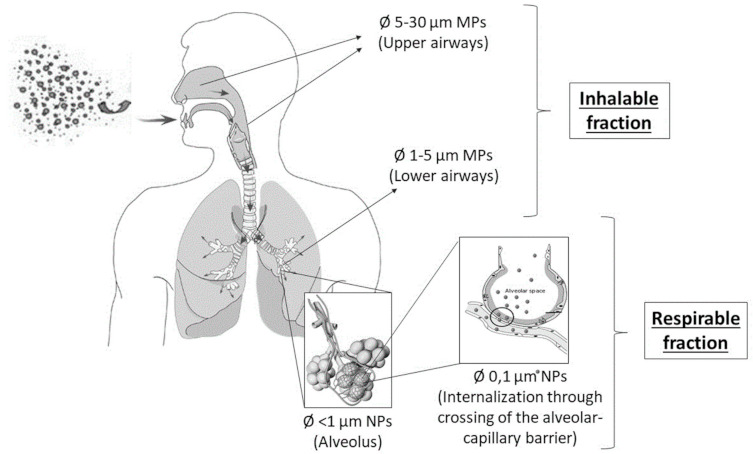
Plastics are ubiquitous persistent pollutants, forming the most representative material of the Anthropocene. In the environment, they undergo wear and tear (i.e., mechanical fragmentation, and slow photo and thermo-oxidative degradation) forming secondary microplastics (MPs). Further fragmentation of primary and secondary MPs results in nanoplastics (NPs). To assess potential health damage due to human exposure to airborne MPs and NPs, we summarize the evidence collected to date that, however, has almost completely focused on monitoring and the effects of airborne MPs. Only in vivo and in vitro studies have assessed the toxicity of NPs, and a standardized method for their analysis in environmental matrices is still missing. The main sources of indoor and outdoor exposure to these pollutants include synthetic textile fibers, rubber tires, upholstery and household furniture, and landfills. Although both MPs and NPs can reach the alveolar surface, the latter can pass into the bloodstream, overcoming the pulmonary epithelial barrier. Despite the low reactivity, the number of surface area atoms per unit mass is high in MPs and NPs, greatly enhancing the surface area for chemical reactions with bodily fluids and tissue in direct contact. This is proven in polyvinyl chloride (PVC) and flock workers, who are prone to persistent inflammatory stimulation, leading to pulmonary fibrosis or even carcinogenesis.
Overview
The claims and statistics of this paper haven’t been checked yet.
Run the check — free, no account needed. It reads the open-access text and checks the sources it cites.
Integrity signals
Registry
Cites
Statistics
Figures
Verification
Claims the paper makes
The claims and statistics of this paper haven’t been checked yet.
Run the check — free, no account needed. It reads the open-access text and checks the sources it cites.
Claims other papers make about this one
Each is checked against this paper’s own text: does it say what the citing paper says it does?
In the citing paper
“Urban air contains high levels of MP contamination with the most prevalent polymers reported to be polyethylene (PE), polypropylene (PP), polystyrene (PS), polyethylene terephthalate (PET), and polyvinyl chloride (PVC) (Facciolà et al., 2021).”
From Airborne microplastic exposure and urinary oxidative damage biomarkers in populations living in traffic-congested areas (2026) · cites this paper as Facciolà et al., 2021
Self-check
Percentages, sums and reported differences re-computed from the paper’s own numbers.
The self-check needs the paper’s full text.
Citations
Cites
Hahladakis, J. N., Velis, C. A., Weber, R., Iacovidou, E., & Purnell, P. (2018) · Journal of Hazardous Materials · doi:10.1016/j.jhazmat.2017.10.014 · Cited by 3,873
Horton, A. A., Walton, A., Spurgeon, D. J., Lahive, E., & Svendsen, C. (2017) · Science of The Total Environment · doi:10.1016/j.scitotenv.2017.01.190 · Cited by 3,756
Plasticenta: First evidence of microplastics in human placenta
Ragusa, A., Svelato, A., Santacroce, C., Catalano, P., Notarstefano, V., Carnevali, O., Papa, F., Rongioletti, M. C. A., Baiocco, F., Draghi, S., et al. (2021) · Environment International · doi:10.1016/j.envint.2020.106274 · Cited by 3,474
Plastic and Human Health: A Micro Issue?
Wright, S. L., & Kelly, F. J. (2017) · Environmental Science & Technology · doi:10.1021/acs.est.7b00423 · Cited by 3,413
Environmental exposure to microplastics: An overview on possible human health effects
Prata, J. C., da Costa, J. P., Lopes, I., Duarte, A. C., & Rocha-Santos, T. (2020) · Science of The Total Environment · doi:10.1016/j.scitotenv.2019.134455 · Cited by 2,690
Eerkes-Medrano, D., Thompson, R. C., & Aldridge, D. C. (2015) · Water Research · doi:10.1016/j.watres.2015.02.012 · Cited by 2,638
Atmospheric microplastic deposition in an urban environment and an evaluation of transport
Wright, S. L., Ulke, J., Font, A., Chan, K. L. A., & Kelly, F. J. (2020) · Environment International · doi:10.1016/j.envint.2019.105411 · Cited by 1,222
Fries, E., Dekiff, J. H., Willmeyer, J., Nuelle, M.-T., Ebert, M., & Remy, D. (2013) · Environmental Science: Processes & Impacts · doi:10.1039/c3em00214d · Cited by 926
Valavanidis, A., Vlachogianni, T., Fiotakis, K., & Loridas, S. (2013) · International Journal of Environmental Research and Public Health · doi:10.3390/ijerph10093886 · Cited by 910
Abbasi, S., Keshavarzi, B., Moore, F., Turner, A., Kelly, F. J., Dominguez, A. O., & Jaafarzadeh, N. (2019) · Environmental Pollution · doi:10.1016/j.envpol.2018.10.039 · Cited by 770
Research works printed but not linked: 126
- Swallowe, 1999, Thermoplastics and Thermosets, Mechanical Properties and Testing of Polymers, Volume 3, 248, 10.1007/978-94-015-9231-4_53 · DOI
- Eriksen, M., Lebreton, L.C.M., Carson, H.S., Thiel, M., Moore, C.J., Borerro, J.C., Galgani, F., Ryan, P.G., and Reisser, J. (2014). Plastic pollution in the world’s ocean: More than 5 trillion plastic pieces weighting over 250,000 tons afloat at sea. PLoS ONE, 9. · DOI · Paper page
- Andrady, 2011, Microplastics in the marine environment, Mar. Pollut. Bull., 62, 1596, 10.1016/j.marpolbul.2011.05.030 · DOI · Paper page
- Browne, 2011, Accumulation of microplastic on shorelines worldwide: Sources and sinks, Environ. Sci. Technol., 45, 9175, 10.1021/es201811s · DOI · Paper page
- Sutton, 2016, Microplastic contamination in the San Francisco Bay, California, USA, Mar. Pollut. Bull., 109, 230, 10.1016/j.marpolbul.2016.05.077 · DOI
- Dehghani, 2017, Microplastic pollution in deposited urban dust, Tehran metropolis, Iran, Environ. Sci. Pollut. Res., 24, 20360, 10.1007/s11356-017-9674-1 · DOI
- Hu, 2018, Microplastics in Small Waterbodies and Tadpoles from Yangtze River Delta, China, Environ. Sci. Technol., 52, 8885, 10.1021/acs.est.8b02279 · DOI
- Wilcox, 2015, A global inventory of small floating plastic debris, Environ. Res. Lett., 10, 124006, 10.1088/1748-9326/10/12/124006 · DOI · Paper page
- Abidli, 2018, Microplastics in sediments from the littoral zone of the north Tunisian coast (Mediterranean Sea), Estuar. Coast. Shelf Sci., 205, 1, 10.1016/j.ecss.2018.03.006 · DOI
- Reed, 2018, Microplastics in marine sediments near Rothera Research Station, Antarctica, Mar. Pollut. Bull., 133, 460, 10.1016/j.marpolbul.2018.05.068 · DOI
- Watteau, 2018, Microplastic Detection in Soil Amended With Municipal Solid Waste Composts as Revealed by Transmission Electronic Microscopy and Pyrolysis/GC/MS, Front. Sustain. Food Syst., 2, 81, 10.3389/fsufs.2018.00081 · DOI
- Dris, 2015, Microplastic contamination in an urban area: A case study in Greater Paris, Environ. Chem., 12, 592, 10.1071/EN14167 · DOI · Paper page
- Dris, 2016, Synthetic fibers in atmospheric fallout: A source of microplastics in the environment?, Mar. Pollut. Bull., 104, 290, 10.1016/j.marpolbul.2016.01.006 · DOI
- Kosuth, M., Mason, S.A., and Wattenberg, E.V. (2018). Anthropogenic contamination of tap water, beer, and sea salt. PLoS ONE, 13. · DOI
- Zuccarello, 2019, Exposure to microplastics (<10 µm) associated to plastic bottles mineral water consumption: The first quantitative study, Water Res., 157, 365, 10.1016/j.watres.2019.03.091 · DOI · Paper page
- Foekema, 2013, Plastic in North Sea Fish, Environ. Sci. Technol., 47, 8818, 10.1021/es400931b · DOI
- Vandermeersch, 2015, A critical view on microplastic quantification in aquatic organisms, Environ. Res., 143, 46, 10.1016/j.envres.2015.07.016 · DOI
- Ziajahromi, 2017, Impact of Microplastic Beads and Fibers on Waterflea (Ceriodaphnia dubia) Survival, Growth, and Reproduction: Implications of Single and Mixture Exposures, Environ. Sci. Technol., 51, 13397, 10.1021/acs.est.7b03574 · DOI
- Lei, 2018, Microplastic particles cause intestinal damage and other adverse effects in zebrafish Danio rerio and nematode Caenorhabditis elegans, Sci. Total Environ., 619–620, 1, 10.1016/j.scitotenv.2017.11.103 · DOI
- Allen, S., Allen, D., Moss, K., Le Roux, G., Phoenix, V.R., and Sonke, J.E. (2020). Examination of the ocean as a source for atmospheric microplastics. PLoS ONE, 15. · DOI
- Liu, 2019, Source and potential risk assessment of suspended atmospheric microplastics in Shanghai, Sci. Total Environ., 675, 462, 10.1016/j.scitotenv.2019.04.110 · DOI
- Elsaesser, 2012, Toxicology of nanoparticles, Adv. Drug Deliv. Rev., 64, 129, 10.1016/j.addr.2011.09.001 · DOI
- Son, 2014, Quantum confinement and its related effects on the critical size of GeO2 nanoparticles anodes for lithium batteries, Nano Lett., 14, 1005, 10.1021/nl404466v · DOI
- Trovato, 2018, Nanostructures: Between natural environment and medical practice, Rev. Environ. Health, 33, 295, 10.1515/reveh-2017-0036 · DOI
- Smith, 2018, Microplastics in Seafood and the Implications for Human Health, Curr. Environ. Health Rep., 5, 375, 10.1007/s40572-018-0206-z · DOI
- Prata, 2018, Airborne microplastics: Consequences to human health?, Environ. Pollut., 234, 115, 10.1016/j.envpol.2017.11.043 · DOI · Paper page
- Liu, 2019, Widespread distribution of PET and PC microplastics in dust in urban China and their estimated human exposure, Environ. Int., 128, 116, 10.1016/j.envint.2019.04.024 · DOI
- Janssen, 2014, Microplastics in bivalves cultured for human consumption, Environ. Pollut., 193, 65, 10.1016/j.envpol.2014.06.010 · DOI
- Bergmann, M., Gutow, L., and Klages, M. (2015). Micro- and Nano-plastics and Human Health, Springer. [1st ed.].
- Catarino, 2018, Low levels of microplastics (MP) in wild mussels indicate that MP ingestion by humans is minimal compared to exposure via household fibres fallout during a meal, Environ. Pollut., 237, 675, 10.1016/j.envpol.2018.02.069 · DOI
- Stock, 2019, Uptake and effects of orally ingested polystyrene microplastic particles in vitro and in vivo, Arch. Toxicol., 93, 1817, 10.1007/s00204-019-02478-7 · DOI
- Wu, 2019, Size-dependent effects of polystyrene microplastics on cytotoxicity and efflux pump inhibition in human Caco-2 cells, Chemosphere, 221, 333, 10.1016/j.chemosphere.2019.01.056 · DOI
- Liao, 2020, Microplastic serves as a potential vector for Cr in an in-vitro human digestive model, Sci. Total Environ., 703, 134805, 10.1016/j.scitotenv.2019.134805 · DOI
- Enyoh, 2019, Airborne microplastics: A review study on method for analysis, occurrence, movement and risks, Environ. Monit. Assess., 191, 668, 10.1007/s10661-019-7842-0 · DOI
- Chen, 2020, Mini-review of microplastics in the atmosphere and their risks to humans, Sci. Total Environ., 703, 135504, 10.1016/j.scitotenv.2019.135504 · DOI
- Wang, 2016, Surface modification-mediated biodistribution of 13C–fullerene C60 in vivo, Part. Fibre Toxicol., 13, 14, 10.1186/s12989-016-0126-8 · DOI
- Visalli, 2017, The role of the iron catalyst in the toxicity of multi-walled carbon nanotubes (MWCNTs), J. Trace Elem. Med. Biol., 43, 153, 10.1016/j.jtemb.2017.01.005 · DOI
- Bettmer, 2018, Gold nanoparticles: Distribution, bioaccumulation and toxicity. In vitro and in vivo studies, Nanomed. Nanotechnol. Biol. Med., 14, 1, 10.1016/j.nano.2017.08.011 · DOI
- Visalli, G., Facciolà, A., Currò, M., Laganà, P., La Fauci, V., Iannazzo, D., Pistone, A., and Di Pietro, A. (2019). Mitochondrial Impairment Induced by Sub-Chronic Exposure to Multi-Walled Carbon Nanotubes. Int. J. Environ. Res. Public Health, 16. · DOI
- Visalli, 2020, Food chemoprevention and air pollution: The health comes with eating, Rev. Environ. Health, 35, 471, 10.1515/reveh-2019-0072 · DOI
- Visalli, 2017, In vitro assessment of neurotoxicity and neuroinflammation of homemade MWCNTs, Environ. Toxicol. Pharmacol., 56, 121, 10.1016/j.etap.2017.09.005 · DOI
- Visalli, 2019, Carbon nanotubes and central nervous system: Environmental risks, toxicological aspects and future perspectives, Environ. Toxicol. Pharmacol., 65, 23, 10.1016/j.etap.2018.11.006 · DOI · Paper page
- Yukioka, 2020, Occurrence and characteristics of microplastics in surface road dust in Kusatsu (Japan), Da Nang (Vietnam), and Kathmandu (Nepal), Environ. Pollut., 256, 113447, 10.1016/j.envpol.2019.113447 · DOI
- Dris, 2017, A first overview of textile fibers, including microplastics, in indoor and outdoor environments, Environ. Pollut., 221, 453, 10.1016/j.envpol.2016.12.013 · DOI
- Liebezeit, 2015, Origin of Synthetic Particles in Honeys, Pol. J. Food Nutr. Sci., 65, 143, 10.1515/pjfns-2015-0025 · DOI
- Zhang, 2020, Microplastic Fallout in Different Indoor Environments, Environ. Sci. Technol., 54, 6530, 10.1021/acs.est.0c00087 · DOI
- Woodall, 2015, Using forensic science approach to minimize environmental contamination and to identify microfibers in marine sediments, Mar. Pollut. Bull., 95, 40, 10.1016/j.marpolbul.2015.04.044 · DOI
- Cai, 2017, Characteristic of microplastics in the atmospheric fallout from Dongguan city, China: Preliminary research and first evidence, Environ. Sci. Pollut. Res., 24, 24928, 10.1007/s11356-017-0116-x · DOI · Paper page
- Gasperi, J., Dris, R., Mirande-Bret, C., Mandin, C., Langlois, V., and Tassin, B. (2015, January 20–24). First overview of microplastics in indoor and outdoor air. Proceedings of the 15th EuCheMS International Conference on Chemistry and the Environment, Leipzig, Germany.
- Vianello, 2019, Simulating human exposure to indoor airborne microplastics using a Breathing Thermal Manikin, Sci. Rep., 9, 1, 10.1038/s41598-019-45054-w · DOI · Paper page
- Kaur, 2007, Fine particulate matter and carbon monoxide exposure concentrations in urban street transport microenvironments, Atmos. Environ., 41, 4781, 10.1016/j.atmosenv.2007.02.002 · DOI
- Nizzetto, 2016, A theoretical assessment of microplastic transport in river catchments and their retention by soils and river sediments, Environ. Sci. Process. Impacts, 18, 1050, 10.1039/C6EM00206D · DOI
- Fernando, 2001, Urban Fluid Mechanics: Air Circulation and Contaminant Dispersion in Cities, Environ. Fluid Mech., 1, 107, 10.1023/A:1011504001479 · DOI
- Seaton, 2009, Nanoparticles, human health hazard and regulation, J. R. Soc. Interface, 7, S119
- Zhang, 2019, Chemical Composition and Toxicity of Particles Emitted from a Consumer-Level 3D Printer Using Various Materials, Environ. Sci. Technol., 53, 12054, 10.1021/acs.est.9b04168 · DOI
- Goldberg, 1994, Retrospective cohort study of workers of a synthetic textiles plant in Quebec: II. Colorectal cancer mortality and incidence, Am. J. Ind. Med., 25, 889, 10.1002/ajim.4700250612 · DOI
- Zuskin, 1998, Respiratory findings in synthetic textile workers, Am. J. Ind. Med., 33, 263, 10.1002/(SICI)1097-0274(199803)33:3<263::AID-AJIM8>3.0.CO;2-X · DOI
- Acquavela, 1988, Evaluation of excess colorectal cancer incidence among workers involved in the manufacture of polypropylene, J. Occup. Med., 30, 438, 10.1097/00043764-198805000-00012 · DOI
- Mastrangelo, 2002, Epidemiologic evidence of cancer risk in textile industry workers: A review and update, Toxicol. Ind. Health, 18, 171, 10.1191/0748233702th139rr · DOI
- Valic, 1977, Respiratory-Function Changes in Textile Workers Exposed to Synthetic Fibers, Arch. Environ. Health Int. J., 32, 283, 10.1080/00039896.1977.10667296 · DOI
- Barroso, 2002, Polyethylene flock-associated interstitial lung disease in a Spanish female, Eur. Respir. J., 20, 1610, 10.1183/09031936.02.00030102 · DOI
- Atis, 2005, The respiratory effects of occupational polypropylene flock exposure, Eur. Respir. J., 25, 110, 10.1183/09031936.04.00138403 · DOI
- Kern, 2000, Flock Worker’s Lung: Broadening the Spectrum of Clinicopathology, Narrowing the Spectrum of Suspected Etiologies, Chest, 117, 251, 10.1378/chest.117.1.251 · DOI
- Washko, 2000, Epidemiologic investigation of respiratory morbidity at a nylon flock plant, Am. J. Ind. Med., 38, 628, 10.1002/1097-0274(200012)38:6<628::AID-AJIM3>3.0.CO;2-U · DOI
- Kern, 1998, Flock Worker’s lung: Chronic interstitial lung disease in the nylon flocking industry, Ann. Intern. Med., 129, 261, 10.7326/0003-4819-129-4-199808150-00001 · DOI · Paper page
- Burkhart, 1999, Environmental study of nylon flocking process, J. Toxicol. Environ. Health, 57, 1, 10.1080/009841099157836 · DOI
- Porter, 1999, Acute inflammatory reaction in rats after intratracheal instillation of material collected from a nylon flocking plant, J. Toxicol. Environ. Health, 57, 24
- Ng, 1991, Pulmonary effects of polyvinyl chloride dust exposure on compounding workers, Scand. J. Work. Environ. Health, 17, 53, 10.5271/sjweh.1734 · DOI
- Xu, 2003, Role of Residual Additives in the Cytotoxicity and Cytokine Release Caused by Polyvinyl Chloride Particles in Pulmonary Cell Cultures, Toxicol. Sci., 72, 92, 10.1093/toxsci/kfg003 · DOI
- Mastrangelo, 2003, Lung cancer risk in workers exposed to poly(vinyl chloride) dust: A nested case-referent study, Occup. Environ. Med., 60, 423, 10.1136/oem.60.6.423 · DOI
- Xu, 2004, Pulmonary toxicity of polyvinyl chloride particles after a single intratracheal instillation in rats. Time course and comparison with silica, Toxicol. Appl. Pharmacol., 194, 111, 10.1016/j.taap.2003.09.018 · DOI
- Studnicka, 1995, Pneumoconiosis and systemic sclerosis following 10 years of exposure to polyvinyl chloride dust, Thorax, 50, 583, 10.1136/thx.50.5.583 · DOI
- Agarwal, 1978, Some biochemical and histopathological changes induced by polyvinyl chloride dust in rat lung, Environ. Res., 16, 333, 10.1016/0013-9351(78)90166-4 · DOI
- Hoelting, 2013, A 3-dimensional human embryonic stem cell (hESC)-derived model to detect developmental neurotoxicity of nanoparticles, Arch. Toxicol., 87, 721, 10.1007/s00204-012-0984-2 · DOI · Paper page
- Murali, 2015, Uptake and bio-reactivity of polystyrene nanoparticles is affected by surface modifications, ageing and LPS adsorption: In vitro studies on neural tissue cells, Nanoscale, 7, 4199, 10.1039/C4NR06849A · DOI
- Schirinzi, 2017, Cytotoxic effects of commonly used nanomaterials and microplastics on cerebral and epithelial human cells, Environ. Res., 159, 579, 10.1016/j.envres.2017.08.043 · DOI · Paper page
- Poma, A., Vecchiotti, G., Colafarina, S., Zarivi, O., Aloisi, M., Arrizza, L., Chichiriccò, G., and Di Carlo, P. (2019). In vitro genotoxicity of polystyrene nanoparticles on the human fibroblast Hs27 cell line. Nanomaterials, 9. · DOI · Paper page
- Carvalho, 2011, Influence of particle size on regional lung deposition—What evidence is there?, Int. J. Pharm., 406, 1, 10.1016/j.ijpharm.2010.12.040 · DOI · Paper page
- Bakand, 2012, Finance Dechsakulthorn Nanoparticles: A review of particle toxicology following inhalation exposure, Inhal. Toxicol., 24, 125, 10.3109/08958378.2010.642021 · DOI
- Donaldson, 2002, Inflammation Caused by Particles and Fibers, Inhal. Toxicol., 14, 5, 10.1080/089583701753338613 · DOI
- Gasperi, 2018, Microplastics in air: Are we breathing it in?, Curr. Opin. Environ. Sci. Health, 1, 1, 10.1016/j.coesh.2017.10.002 · DOI · Paper page
- Yacobi, 2008, Polystyrene nanoparticle trafficking across alveolar epithelium, Nanomed. Nanotechnol. Biol. Med., 4, 139, 10.1016/j.nano.2008.02.002 · DOI
- Sabella, 2014, A general mechanism for intracellular toxicity of metal-containing nanoparticles, Nanoscale, 6, 7052, 10.1039/c4nr01234h · DOI
- Shang, 2014, Engineered nanoparticles interacting with cells: Size matters, J. Nanobiotechnol., 12, 5, 10.1186/1477-3155-12-5 · DOI
- Churg, 2000, Ambient atmospheric particles in the airways of human lungs, Ultrastruct. Pathol., 24, 353, 10.1080/019131200750060014 · DOI
- Prietl, 2014, Nano-sized and micro-sized polystyrene particles affect phagocyte function, Cell Biol. Toxicol., 30, 1, 10.1007/s10565-013-9265-y · DOI
- Baluce, 2011, Ex vivo study for the assessment of behavioral factor and gene polymorphisms in individual susceptibility to oxidative DNA damage metals-induced, Int. J. Hyg. Environ. Health, 214, 210, 10.1016/j.ijheh.2011.01.006 · DOI
- Tran, 2000, Inhalation of poorly soluble particles. II. Influence of particle surface area on inflammation and clearance, Inhal. Toxicol., 12, 1113, 10.1080/08958370050166796 · DOI · Paper page
- Sun, 2016, Occurrence of polybrominated diphenyl ethers in indoor air and dust in Hangzhou, China: Level, role of electric appliances, and human exposure, Environ. Pollut., 218, 942, 10.1016/j.envpol.2016.08.042 · DOI
- Murphy, 2012, The mechanism of pleural inflammation by long carbon nanotubes: Interaction of long fibres with macrophages stimulates them to amplify pro-inflammatory responses in mesothelial cells, Part. Fibre Toxicol., 9, 8, 10.1186/1743-8977-9-8 · DOI
- Patel, 2018, Danger-Associated Molecular Patterns (DAMPs): The Derivatives and Triggers of Inflammation, Curr. Allergy Asthma Rep., 18, 63, 10.1007/s11882-018-0817-3 · DOI
- Kelly, 2012, Size, source and chemical composition as determinants of toxicity attributable to ambient particulate matter, Atmos. Environ., 60, 504, 10.1016/j.atmosenv.2012.06.039 · DOI
- Chang, 2010, The immune effects of naturally occurring and synthetic nanoparticles, J. Autoimmun., 34, J234, 10.1016/j.jaut.2009.11.009 · DOI · Paper page
- Xia, 2006, Comparison of the Abilities of Ambient and Manufactured Nanoparticles To Induce Cellular Toxicity According to an Oxidative Stress Paradigm, Nano Lett., 6, 1794, 10.1021/nl061025k · DOI
- Geiser, 2005, Ultrafine Particles Cross Cellular Membranes by Nonphagocytic Mechanisms in Lungs and in Cultured Cells, Environ. Health Perspect., 113, 1555, 10.1289/ehp.8006 · DOI
- Deville, 2015, Intracellular dynamics and fate of polystyrene nanoparticles in A549 Lung epithelial cells monitored by image (cross-) correlation spectroscopy and single particle tracking, Biochim. Biophys. Acta Bioenerg., 1853, 2411, 10.1016/j.bbamcr.2015.07.004 · DOI
- Visalli, 2015, Toxicological assessment of multi-walled carbon nanotubes on A549 human lung epithelial cells, Toxicol. In Vitro, 29, 352, 10.1016/j.tiv.2014.12.004 · DOI
- Schwarze, 2006, Particulate matter properties and health effects: Consistency of epidemiological and toxicological studies, Hum. Exp. Toxicol., 25, 559, 10.1177/096032706072520 · DOI
- Beckett, 2000, Occupational Respiratory Diseases, N. Engl. J. Med., 342, 406, 10.1056/NEJM200002103420607 · DOI
- Turcotte, 2013, Flock Worker’s lung disease. Natural history of cases and exposed workers in kingston, Ontario, Chest, 143, 1642, 10.1378/chest.12-0920 · DOI
- Wagoner, 1983, Toxicity of vinyl chloride and poly(vinyl chloride): A critical review, Environ. Health Perspect., 52, 61, 10.1289/ehp.835261 · DOI
- Bellmann, 1992, Irreversible pulmonary changes induced in rat lung by dust overload, Environ. Health Perspect., 97, 189, 10.1289/ehp.9297189 · DOI
- Dong, 2020, Polystyrene microplastic particles: In vitro pulmonary toxicity assessment, J. Hazard. Mater., 385, 121575, 10.1016/j.jhazmat.2019.121575 · DOI
- Lim, 2019, Targeted metabolomics reveals differential biological effects of nanoplastics and nanoZnO in human lung cells, Nanotoxicology, 13, 1117, 10.1080/17435390.2019.1640913 · DOI
- Pauly, 1998, Inhaled cellulosic and plastic fibers found in human lung tissue, Cancer Epidemiol. Biomark. Prev., 7, 419
- Paget, V., Dekali, S., Kortulewski, T., Grall, R., Gamez, C., Blazy, K., Aguerre-Chariol, O., Chevillard, S., Braun, A., and Rat, P. (2015). Specific Uptake and Genotoxicity Induced by Polystyrene Nanobeads with Distinct Surface Chemistry on Human Lung Epithelial Cells and Macrophages. PLoS ONE, 10. · DOI
- Song, 2009, Exposure to nanoparticles is related to pleural effusion, pulmonary fibrosis and granuloma, Eur. Respir. J., 34, 559, 10.1183/09031936.00178308 · DOI
- Nemmar, 2002, Passage of Inhaled Particles Into the Blood Circulation in Humans, Circulation, 105, 411, 10.1161/hc0402.104118 · DOI · Paper page
- Eyles, 2001, Tissue distribution of radioactivity following intranasal administration of radioactive microspheres, J. Pharm. Pharmacol., 53, 601, 10.1211/0022357011775929 · DOI
- Fattal, 1997, Evaluation of hepatic antioxidant systems after intravenous administration of polymeric nanoparticles, Biomaterials, 18, 511, 10.1016/S0142-9612(96)00178-0 · DOI
- Wick, 2010, Barrier Capacity of Human Placenta for Nanosized Materials, Environ. Health Perspect., 118, 432, 10.1289/ehp.0901200 · DOI · Paper page
- Cristale, 2016, Occurrence and sources of brominated and organophosphorus flame retardants in dust from different indoor environments in Barcelona, Spain, Environ. Res., 149, 66, 10.1016/j.envres.2016.05.001 · DOI
- Drage, 2017, Demographic and temporal trends of hexabromocyclododecanes (HBCDD) in an Australian population, Environ. Res., 152, 192, 10.1016/j.envres.2016.10.015 · DOI
- Kuang, 2018, Brominated flame retardants in black plastic kitchen utensils: Concentrations and human exposure implications, Sci. Total Environ., 610–611, 1138, 10.1016/j.scitotenv.2017.08.173 · DOI
- Covaci, 2011, Novel brominated flame retardants: A review of their analysis, environmental fate and behavior, Environ. Int., 37, 532, 10.1016/j.envint.2010.11.007 · DOI
- Vorkamp, 2014, A review of new and current-use contaminants in the Arctic environment: Evidence of long-range transport and indications of bioaccumulation, Chemosphere, 111, 379, 10.1016/j.chemosphere.2014.04.019 · DOI
- Xie, 2016, Exposure to bisphenol A and the development of asthma: A systematic review of cohort studies, Reprod. Toxicol., 65, 224, 10.1016/j.reprotox.2016.08.007 · DOI
- Ashworth, M.J., Chappell, A., Ashmore, E., and Fowles, J. (2018). Analysis and Assessment of Exposure to Selected Phthalates Found in Children’s Toys in Christchurch, New Zealand. Int. J. Environ. Res. Public Health, 15. · DOI
- Huang, 2021, Microplastics and associated contaminants in the aquatic environment: A review on their ecotoxicological effects, trophic transfer, and potential impacts to human health, J. Hazard. Mater., 405, 124187, 10.1016/j.jhazmat.2020.124187 · DOI
- Bakir, 2012, Competitive sorption of persistent organic pollutants onto microplastics in the marine environment, Mar. Pollut. Bull., 64, 2782, 10.1016/j.marpolbul.2012.09.010 · DOI
- Barhoumi, 2020, Chemical composition and in vitro aryl hydrocarbon receptor-mediated activity of atmospheric particulate matter at an urban, agricultural and industrial site in North Africa (Bizerte, Tunisia), Chemosphere, 258, 127312, 10.1016/j.chemosphere.2020.127312 · DOI
- Zhou, 2019, Characterization of microplastics and the association of heavy metals with microplastics in suburban soil of central China, Sci. Total Environ., 694, 133798, 10.1016/j.scitotenv.2019.133798 · DOI
- Yuan, 2019, In vitro toxicity evaluation of heavy metals in urban air particulate matter on human lung epithelial cells, Sci. Total Environ., 678, 301, 10.1016/j.scitotenv.2019.04.431 · DOI
- Visalli, 2009, Oxidative damage in human epithelial alveolar cells exposed in vitro to oil fly ash transition metals, Int. J. Hyg. Environ. Health, 212, 196, 10.1016/j.ijheh.2008.05.005 · DOI
- Visalli, 2015, Mitochondrial dysfunction by pro-oxidant vanadium: Ex vivo assessment of individual susceptibility, Environ. Toxicol. Pharmacol., 39, 93, 10.1016/j.etap.2014.11.008 · DOI
- Carducci, 2019, Environment and health: Risk perception and its determinants among Italian university students, Sci. Total Environ., 691, 1162, 10.1016/j.scitotenv.2019.07.201 · DOI
Cited by
Sorted by citations
Navasumrit, P., Chompoobut, C., Rattanayut, P., Kuntinuguntanon, A., Waeya, S., Kanitwithayanun, J., & Ruchirawat, M. (2026) · Journal of Hazardous Materials Advances · doi:10.1016/j.hazadv.2026.101571
Metadata
- Authors
- Facciolà, A., Visalli, G., Pruiti Ciarello, M., & Di Pietro, A.
- Affiliations
- Department of Biomedical and Dental Sciences and Morphofunctional Imaging, University of Messina, Via C. Valeria, I-98100 Messina, Italy
- ORCID
- Visalli, Giuseppa
- Venue
- International Journal of Environmental Research and Public Health
- Publisher
- MDPI AG
- Published
- 2021-03-15
- Volume
- 18
- Issue
- 6
- Pages
- 2997
- ISSN
- 1660-4601
- PMC
- PMC7998604
- Cited by
- 152
- References
- 15
- Language
- en
About these checks
Registry, retraction, Cites and statistics results are computed, not judged, with one exception: a printed reference that no index lists is read once by a model before it counts as a citation error. Claims are extracted by a model and kept only when their quote appears verbatim in the text; each cited source is then checked, with a model’s help, for whether it says what the claim relies on. Those verdicts can be wrong — read the claim’s quote and the cited source before relying on one.
Statistics and arithmetic are recomputed, not judged.
Confidence bands are shown only for fields calibrated on our annotated test set. None is calibrated yet, so no band is shown.
What counts as a claim ›How we measure confidence ›How we check this ›
Are you an author, or do you see a problem with this page? Request a review
How to cite
Cite CoChat for the checks on this page, and the paper for its own findings.
- This page
- CoChat. (2026). Citation check: Newly Emerging Airborne Pollutants: Current Knowledge of Health Impact of Micro and Nanoplastics. https://app.cochat.ai/papers/10.3390/ijerph18062997
- The paper
- Facciolà, A., Visalli, G., Pruiti Ciarello, M., & Di Pietro, A. (2021). Newly Emerging Airborne Pollutants: Current Knowledge of Health Impact of Micro and Nanoplastics. International Journal of Environmental Research and Public Health. https://doi.org/10.3390/ijerph18062997
