

The DOI matches its Crossref record; 163 of the 168 references it cites were found in a registry or an index.
The anatomy of apathy: A neurocognitive framework for amotivated behaviour
Open accessAbstract
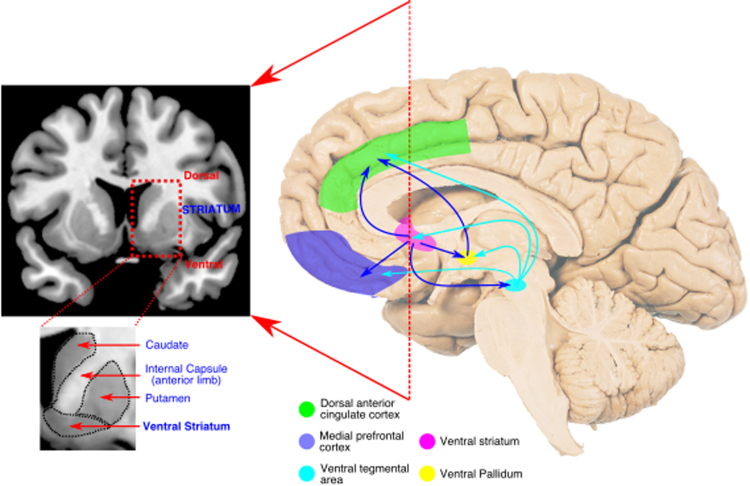
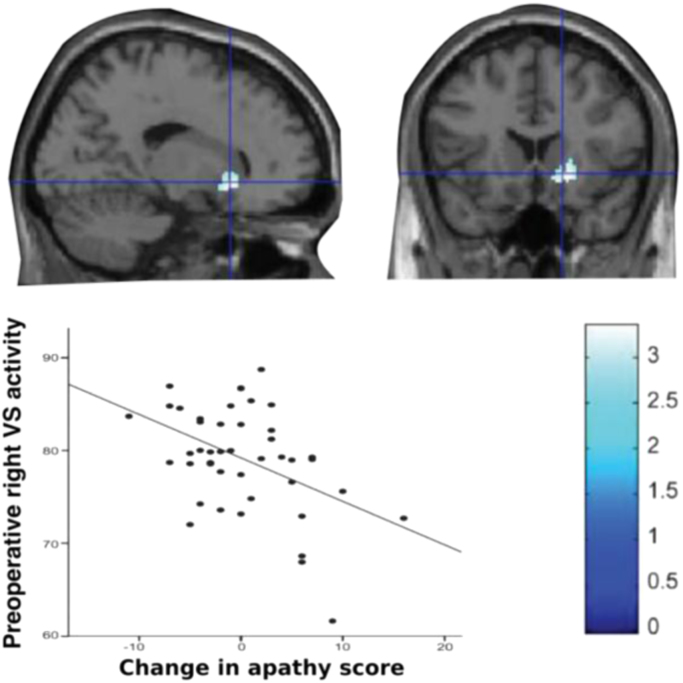
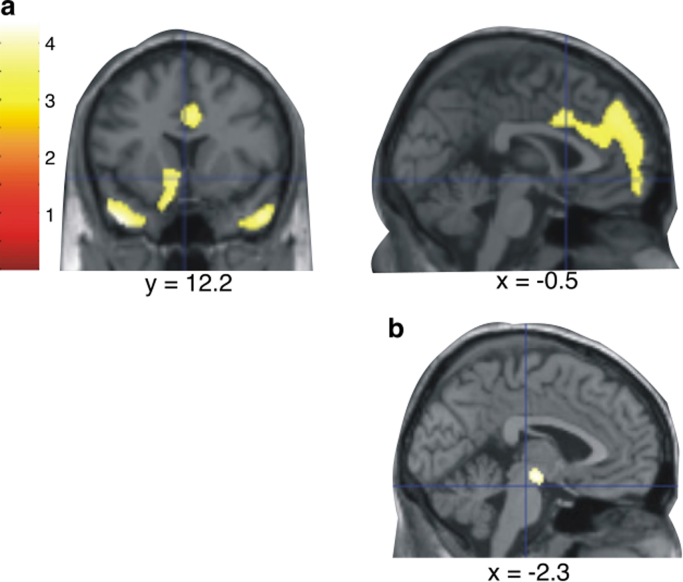
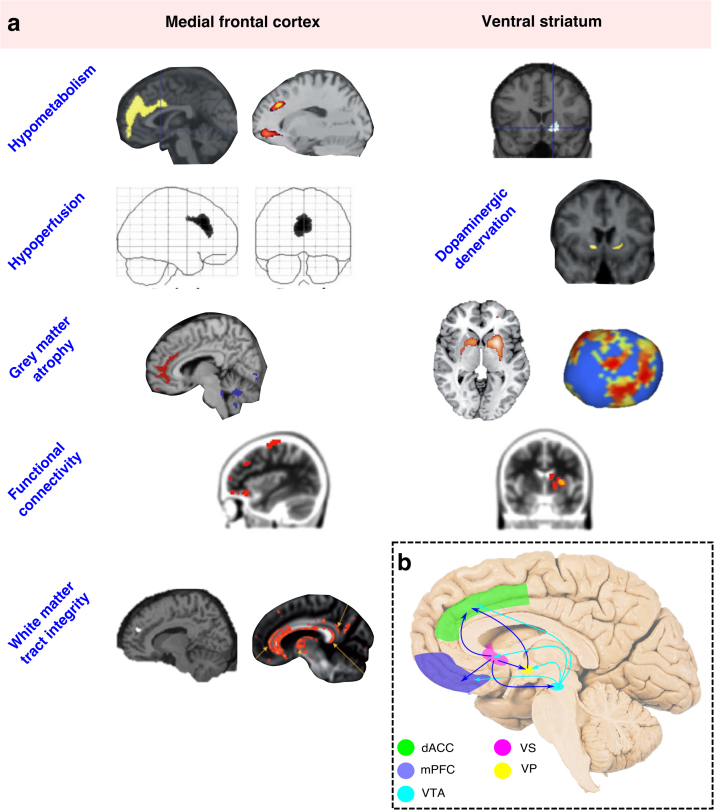
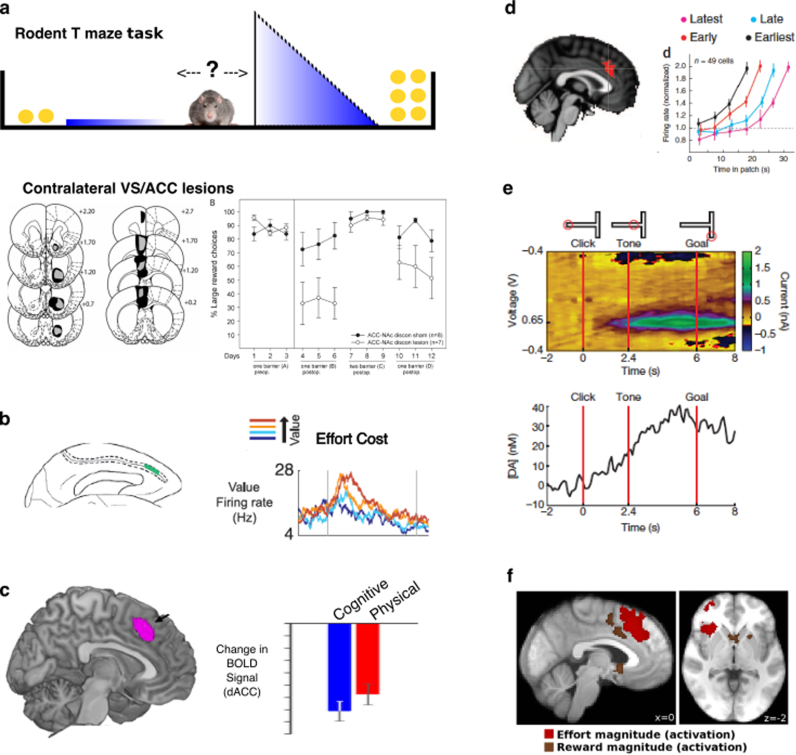
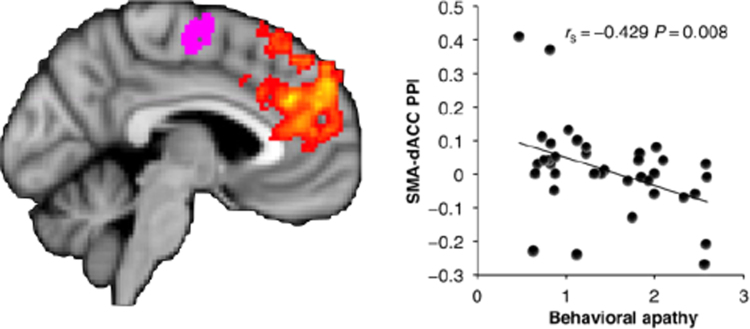
Apathy is a debilitating syndrome associated with many neurological disorders, including several common neurodegenerative diseases such as Parkinson's disease and Alzheimer's disease, and focal lesion syndromes such as stroke. Here, we review neuroimaging studies to identify anatomical correlates of apathy, across brain disorders. Our analysis reveals that apathy is strongly associated with disruption particularly of dorsal anterior cingulate cortex (dACC), ventral striatum (VS) and connected brain regions. Remarkably, these changes are consistent across clinical disorders and imaging modalities. Review of the neuroimaging findings allows us to develop a neurocognitive framework to consider potential mechanisms underlying apathy. According to this perspective, an interconnected group of brain regions - with dACC and VS at its core - plays a crucial role in normal motivated behaviour. Specifically we argue that motivated behaviour requires a willingness to work, to keep working, and to learn what is worth working for. We propose that deficits in any one or more of these processes can lead to the clinical syndrome of apathy, and outline specific approaches to test this hypothesis. A richer neurobiological understanding of the mechanisms underlying apathy should ultimately facilitate development of effective therapies for this disabling condition.
Overview
The claims and statistics of this paper haven’t been checked yet.
Run the check — free, no account needed. It reads the open-access text and checks the sources it cites.
Integrity signals
Registry
Cites
Statistics
Figures
Verification
Claims the paper makes
The claims and statistics of this paper haven’t been checked yet.
Run the check — free, no account needed. It reads the open-access text and checks the sources it cites.
Claims other papers make about this one
Each is checked against this paper’s own text: does it say what the citing paper says it does?
The cited source says what the claim attributes to it.
In the citing paper
“In addition, apathy is a well-recognized feature of strokes affecting similar portions of the medial frontal cortex (Kang & Kim, 2008; Le Heron et al., 2018) and the medial and anterior thalamus (Carrera & Bogousslavsky, 2006; Krause et al., 2012; Serra et al., 2013) respectively.”
From The cingulum bundle: Anatomy, function, and dysfunction (2018) · cites this paper as Le Heron et al., 2018
The cited source says what the claim attributes to it.
In the citing paper
“Across differing underlying pathologies and neuroimaging methods, the anterior cingulate cortex, orbital frontal cortex, and medial thalamus exhibit some of the most robust changes associated with apathy (Le Heron et al., 2018).”
From The cingulum bundle: Anatomy, function, and dysfunction (2018) · cites this paper as Le Heron et al., 2018
Self-check
Percentages, sums and reported differences re-computed from the paper’s own numbers.
The self-check needs the paper’s full text.
Citations
Cites
(2022) · La Revue du praticien · doi:10.1093/ageing/afgi30 · Cited by 15,809 · cited 1×
“Research using SPECT has consistently demonstrated that reduced perfusion in ACC and OFC – as well as frontopolar and DLPFC regions in some studies – is associated with apathy in AD (Benoit et al., 2004; Craig et al., 1996; Lanctôt et al., 2007; Migneco et al., 2001; Robert et al., 2006).”
ResultKalia, L. V., & Lang, A. E. (2015) · The Lancet · doi:10.1016/s0140-6736(14)61393-3 · Cited by 6,184
Optimal foraging, the marginal value theorem
Charnov, E. L. (1976) · Theoretical Population Biology · doi:10.1016/0040-5809(76)90040-x · Cited by 5,374
Functional architecture of basal ganglia circuits: neural substrates of parallel processing
Alexander, G. E., & Crutcher, M. D. (1990) · Trends in Neurosciences · doi:10.1016/0166-2236(90)90107-l · Cited by 4,131
Contributions of anterior cingulate cortex to behaviour
Devinsky, O., Morrell, M. J., & Vogt, B. A. (1995) · Brain · doi:10.1093/brain/118.1.279 · Cited by 3,377
Anterior Cingulate Cortex, Error Detection, and the Online Monitoring of Performance
Carter, C. S., Braver, T. S., Barch, D. M., Botvinick, M. M., Noll, D., & Cohen, J. D. (1998) · Science · doi:10.1126/science.280.5364.747 · Cited by 3,273
The expected value of control: an integrative theory of anterior cingulate cortex function
Shenhav, A., Botvinick, M. M., & Cohen, J. D. (2013) · Neuron · doi:10.1016/j.neuron.2013.07.007 · Cited by 2,321
Berridge, K. C., & Kringelbach, M. L. (2015) · Neuron · doi:10.1016/j.neuron.2015.02.018 · Cited by 1,730 · cited 1×
“Subcortically, basal ganglia lesions, particularly those involving the caudate nucleus or nucleus accumbens, are associated with the development of apathy (Bhatia and Marsden, 1994; Gerace et al., 2013; Maeda et al., 2012; Phillips et al., 1987).”
BackgroundReconsidering anhedonia in depression: Lessons from translational neuroscience
Treadway, M. T., & Zald, D. H. (2011) · Neuroscience & Biobehavioral Reviews · doi:10.1016/j.neubiorev.2010.06.006 · Cited by 1,579
Temporal difference models and reward-related learning in the human brain
O'Doherty, J. P., Dayan, P., Friston, K., Critchley, H., & Dolan, R. J. (2003) · Neuron · doi:10.1016/s0896-6273(03)00169-7 · Cited by 1,522
Research works printed but not linked: 1
- Mori, 2006, Principles of diffusion tensor imaging and its applications to basic neuroscience research, Neuron, 51, 527, 10.1016/j.neuron.2006.08.012 · DOI · Paper page
Cited by
Sorted by citations
The cingulum bundle: Anatomy, function, and dysfunction
Bubb, E. J., Metzler-Baddeley, C., & Aggleton, J. P. (2018) · Neuroscience & Biobehavioral Reviews · doi:10.1016/j.neubiorev.2018.05.008 · Cited by 740
Neuroscience of apathy and anhedonia: a transdiagnostic approach
Husain, M., & Roiser, J. P. (2018) · Nature reviews. Neuroscience · doi:10.1038/s41583-018-0029-9 · Cited by 682
Self-citationRobert, P., Lanctôt, K., Agüera-Ortiz, L., Aalten, P., Brémond, F., Defrancesco, M., Hanon, C., David, R., Dubois, B., Dujardin, K., et al. (2018) · European psychiatry · doi:10.1016/j.eurpsy.2018.07.008 · Cited by 283
“, interviews and self-reports; see [17] for a review) but also on new Information and Communication Technologies (ICTs, e.”
BackgroundSelf-citationBehavioral and Psychological Effects of Coronavirus Disease-19 Quarantine in Patients With Dementia
Cagnin, A., Lorenzo, R. D., Marra, C., Bonanni, L., Cupidi, C., Laganà, V., Rubino, E., Vacca, A., Provero, P., Isella, V., et al. (2020) · Frontiers in Psychiatry · doi:10.3389/fpsyt.2020.578015 · Cited by 380
“Apathy, in fact, may have a cognitive, emotional, and physical component and each type of apathy has defined neuro-anatomical correlates targeting prefrontal, dorsolateral, and motor cortex other than striatum (34, 35).”
BackgroundMüller, T., & Apps, M. A. J. (2018) · Neuropsychologia · doi:10.1016/j.neuropsychologia.2018.04.030 · Cited by 265
Self-citationChen, Y., Dang, M., & Zhang, Z. (2021) · Molecular Neurodegeneration · doi:10.1186/s13024-021-00456-1 · Cited by 238
Nobis, L., & Husain, M. (2017) · Current Opinion in Behavioral Sciences · doi:10.1016/j.cobeha.2017.12.007 · Cited by 155
Self-citationBrain mechanisms underlying apathy
Heron, C. J. L., Holroyd, C. B., Salamone, J. D., & Husain, M. (2018) · Journal of Neurology Neurosurgery & Psychiatry · doi:10.1136/jnnp-2018-318265 · Cited by 209
“Studies examining the neuroimaging correlates of the apathetic syndrome have identified consistent associations between apathy and disruption of specific medial frontal cortex and subcortical structures—see refs 7 8 for reviews.”
Self-citationDiagnostic criteria for apathy in neurocognitive disorders
Miller, D. S., Robert, P. H., Ereshefsky, L., Adler, L., Bateman, D. R., Cummings, J., DeKosky, S. T., Fischer, C. E., Husain, M., Ismail, Z., et al. (2021) · Alzheimer s & Dementia · doi:10.1002/alz.12358 · Cited by 199
Self-citationApathy and anxiety are early markers of Alzheimer's disease
Johansson, M., Stomrud, E., Lindberg, O. E., Westman, E., Johansson, P., van Westen, D., Mattsson, N., & Hansson, O. (2019) · Neurobiology of Aging · doi:10.1016/j.neurobiolaging.2019.10.008 · Cited by 192
Müller, H. L., Tauber, M., Lawson, E. A., Özyurt, J., Bison, B., Martinez-Barbera, J.-P., Puget, S., Merchant, T. E., & van Santen, H. M. (2022) · Nature Reviews Disease Primers · doi:10.1038/s41572-022-00351-z · Cited by 144
Distinct effects of apathy and dopamine on effort-based decision-making in Parkinson’s disease
Heron, C. J. L., Plant, O., Manohar, S., Ang, Y., Jackson, M., Lennox, G. G., Hu, M. T., & Husain, M. (2018) · Brain · doi:10.1093/brain/awy110 · Cited by 162
“…brain network underlying effort-based decision-making is one such candidate system intrinsic to normal motivated behaviour, and indeed a recent neurocognitive framework of apathy emphasizes three core components of it that could potentially underlie the apathetic phenotype (Le Heron et al., 2017).”
BackgroundSelf-citationApathy after stroke: Diagnosis, mechanisms, consequences, and treatment
Tay, J., Morris, R., & Markus, H. (2021) · International Journal of Stroke · doi:10.1177/1747493021990906 · Cited by 124
“These core regions are embedded in large-scale functionally connected networks that underlie GDB-related cognitive functions such as reward-based decision-making, attentional control, and reinforcement learning.(24,28) Disruption to these networks may lead to cognitive deficits that manifest behaviorally as apathy (Su…”
BackgroundBègue, I., Kaiser, S., & Kirschner, M. (2020) · Neuroscience & Biobehavioral Reviews · doi:10.1016/j.neubiorev.2020.06.004 · Cited by 124
Steffens, D. C., Fahed, M., Manning, K. J., & Wang, L. (2022) · Translational Psychiatry · doi:10.1038/s41398-022-02292-3 · Cited by 128
Salamone, J., Correa, M., Ferrigno, S. M., Yang, J.-H., Rotolo, R., & Presby, R. (2018) · Pharmacological Reviews · doi:10.1124/pr.117.015107 · Cited by 95
“…by a lack of behavioral activation that can be seen across several different disorders, including depression and schizophrenia (Salamone et al., 2006, 2015; Treadway and Zald, 2011; Barch et al., 2014; Dantzer et al., 2014; Whitton et al., 2015; Le Heron et al., 2017; De Doncker et al., 2018).”
BackgroundNeural and computational mechanisms of momentary fatigue and persistence in effort-based choice
Müller, T., Klein-Flügge, M. C., Manohar, S., Husain, M., & Apps, M. A. J. (2021) · Nature Communications · doi:10.1038/s41467-021-24927-7 · Cited by 107
Self-citationHird, E. J., Slanina-Davies, A., Lewis, G., Hamer, M., & Roiser, J. P. (2024) · Translational Psychiatry · doi:10.1038/s41398-024-02922-y · Cited by 79
Early limbic microstructural alterations in apathy and depression in de novo Parkinson's disease
Prange, S., Météreau, É., Maillet, A., Lhommée, E., Klinger, H., Pélissier, P., Ibarrola, D., Heckemann, R. A., Castrioto, A., Tremblay, L., et al. (2019) · Movement Disorders · doi:10.1002/mds.27793 · Cited by 86
“Interestingly, white-matter abnormalities are remarkably similar to the ones observed in patients suffering from apathy across other neurodegenerative conditions (including frontotemporal dementia,(42) Alzheimer’s disease,(43) and small-vessel disease(44)), which emphasizes the transdiagnostic validity of the conceptu…”
BackgroundAn Integrative Model of Effortful Control
André, N., Audiffren, M. F., & Baumeister, R. F. (2019) · Frontiers in Systems Neuroscience · doi:10.3389/fnsys.2019.00079 · Cited by 96
Apathy in schizophrenia: A review of neuropsychological and neuroanatomical studies
Bortolon, C., Macgregor, A., Capdevielle, D., & Raffard, S. (2018) · Neuropsychologia · doi:10.1016/j.neuropsychologia.2017.09.033 · Cited by 69
Effort shapes social cognition and behaviour: A neuro-cognitive framework.
Contreras-Huerta, L. S., Pisauro, A., & Apps, M. (2020) · Neuroscience and Biobehavioral Reviews · doi:10.31234/osf.io/mvwqz · Cited by 64
Self-citationIndividual differences in empathy are associated with apathy-motivation
Lockwood, P. L., Ang, Y., Husain, M., & Crockett, M. J. (2017) · Scientific Reports · doi:10.1038/s41598-017-17415-w · Cited by 71
Self-citationAntidepressant medications in dementia: evidence and potential mechanisms of treatment-resistance
Costello, H., Roiser, J. P., & Howard, R. (2023) · Psychological Medicine · doi:10.1017/s003329172200397x · Cited by 60
“Human and animal studies have shown that dopaminergic transmission is crucial in motivated behaviour and reward processing (Le Heron, Apps, & Husain, 2018).”
Dopamine and reward hypersensitivity in Parkinson’s disease with impulse control disorder
Drew, D. S., Muhammed, K., Baig, F., Kelly, M. J., Saleh, Y., Sarangmat, N., Okai, D., Hu, M., Manohar, S., & Husain, M. (2020) · Brain · doi:10.1093/brain/awaa198 · Cited by 71
Self-citationThe transdiagnostic structure of mental effort avoidance
Patzelt, E. H., Kool, W., Millner, A. J., & Gershman, S. J. (2019) · Scientific Reports · doi:10.1038/s41598-018-37802-1 · Cited by 72
“, cognitive control) that mediates between task demands and task performance5, and/or (3) a preference for greater mental effort.”
BackgroundMultidimensional apathy: evidence from neurodegenerative disease
Radakovic, R., & Abrahams, S. (2018) · Current Opinion in Behavioral Sciences · doi:10.1016/j.cobeha.2017.12.022 · Cited by 57
Apathy as a Treatment Target in Alzheimer's Disease: Implications for Clinical Trials
Mortby, M. E., Adler, L., Agüera-Ortíz, L., Bateman, D. R., Brodaty, H., Cantillon, M., Geda, Y. E., Ismail, Z., Lanctôt, K. L., Marshall, G. A., et al. (2021) · American Journal of Geriatric Psychiatry · doi:10.1016/j.jagp.2021.06.016 · Cited by 69
Distinct neural representations for prosocial and self-benefiting effort
Lockwood, P. L., Wittmann, M. K., Nili, H., Matsumoto-Ryan, M., Abdurahman, A., Cutler, J., Husain, M., & Apps, M. A. J. (2022) · Current Biology · doi:10.1016/j.cub.2022.08.010 · Cited by 73
Self-citationEye movements in Parkinson’s disease: from neurophysiological mechanisms to diagnostic tools
Antoniades, C. A., & Spering, M. (2023) · Trends in Neurosciences · doi:10.1016/j.tins.2023.11.001 · Cited by 52
The tenacious brain: How the anterior mid-cingulate contributes to achieving goals
Touroutoglou, A., Andreano, J. M., Dickerson, B. C., & Barrett, L. F. (2019) · Cortex · doi:10.1016/j.cortex.2019.09.011 · Cited by 70
Dysfunctional effort-based decision-making underlies apathy in genetic cerebral small vessel disease
Heron, C. J. L., Manohar, S., Plant, O., Muhammed, K., Griffanti, L., Nemeth, A. H., Douaud, G., Markus, H. S., & Husain, M. (2018) · Brain · doi:10.1093/brain/awy257 · Cited by 45
Self-citationSaleh, Y., Heron, C. J. L., Petitet, P., Veldsman, M., Drew, D., Plant, O., Schulz, U. G., Sen, A., Rothwell, P. M., Manohar, S., et al. (2021) · Brain · doi:10.1093/brain/awab013 · Cited by 56
“6, top left) encompass the medial forebrain regions such as the vmPFC and dACC, as well as subcortical structures within the basal ganglia such as the ventral striatum.(17,25,105) That we were able to correlate these changes to our behavioural modelling parameters supports the hypothesis that apathetic behaviour arise…”
Self-citationLang, S., Yoon, E. J., Kibreab, M., Kathol, I., Cheetham, J., Hammer, T., Sarna, J. R., Ismail, Z., & Monchi, O. (2020) · NeuroImage Clinical · doi:10.1016/j.nicl.2020.102252 · Cited by 55
Contreras-Huerta, L. S., Lockwood, P. L., Bird, G., Apps, M. A. J., & Crockett, M. J. (2020) · Emotion · doi:10.1037/emo0000813 · Cited by 55
Self-citationUncovering the prevalence and neural substrates of anhedonia in frontotemporal dementia
Shaw, S. R., El-Omar, H., Roquet, D., Hodges, J. R., Piguet, O., Ahmed, R. M., Whitton, A. E., & Irish, M. (2021) · Brain · doi:10.1093/brain/awab032 · Cited by 61
“Neuroimaging studies in clinical populations converge to reveal commonalities in terms of anterior cingulate cortex and ventral striatum involvement in both apathy and anhedonia.(18,26,27) Importantly, however, divergent neural substrates are evident,”
BackgroundDiagnosis and Management of Neuropsychiatric Symptoms in Alzheimer’s Disease
Wolinsky, D., Drake, K., & Bostwick, J. R. (2018) · Current Psychiatry Reports · doi:10.1007/s11920-018-0978-8 · Cited by 73
Dujardin, K., & Sgambato, V. (2020) · Frontiers in Neuroscience · doi:10.3389/fnins.2020.00025 · Cited by 46
Saggu, S., Bai, A., Aida, M., Rehman, H., Pless, A., Ware, D., Deák, F., Jiao, K., & Wang, Q. (2024) · GeroScience · doi:10.1007/s11357-024-01359-x · Cited by 48
“These DA-modulated regions are heavily involved in apa-thy and depression, indicating that NPS is partially characterized by hypodopaminergic symptoms [151, 152].”
Saleh, Y., Jarratt-Barnham, I., Petitet, P., Fernandez-Egea, E., Manohar, S. G., & Husain, M. (2023) · Molecular Psychiatry · doi:10.1038/s41380-023-02232-7 · Cited by 45
“One example is the process of option selection, where participants are asked to weigh up the bene fi ts (e.g., potential reward) and costs (e.g., effort required to obtain that reward) of a decision prior to initiating goal-directed action [18, 20, 21].”
BackgroundSelf-citationHuman ventromedial prefrontal cortex is necessary for prosocial motivation
Lockwood, P. L., Cutler, J., Drew, D., Abdurahman, A., Jeyaretna, D. S., Apps, M. A. J., Husain, M., & Manohar, S. (2024) · Nature Human Behaviour · doi:10.1038/s41562-024-01899-4 · Cited by 65
“However, the VLSM analysis also identified specific characterizes apathy, a clinical condition of reduced motivation that is common across multiple psychiatric and neurological disorders 33,34 .”
Self-citationBupropion for the Treatment of Apathy in Alzheimer Disease: A Randomized Clinical Trial
Maier, F., Spottke, A., Bach, J.-P., Bartels, C., Buerger, K., Dodel, R., Fellgiebel, A., Fliessbach, K., Frölich, L., Hausner, L., et al. (2020) · JAMA Network Open · doi:10.1001/jamanetworkopen.2020.6027 · Cited by 46
Martin, G., Mcdonald, K., Allsop, D., Diggle, P., & Leroi, I. (2019) · Journal of Neurology · doi:10.1007/s00415-019-09538-z · Cited by 44
Updating the role of dopamine in human motivation and apathy
Chong, T. T. ‐. (2018) · Current Opinion in Behavioral Sciences · doi:10.1016/j.cobeha.2017.12.010 · Cited by 53
Brain-based mechanisms of late-life depression: Implications for novel interventions
Gunning, F. M., Oberlin, L. E., Schier, M. M., & Victoria, L. W. (2021) · Seminars in Cell and Developmental Biology · doi:10.1016/j.semcdb.2021.05.002 · Cited by 49
The VTA dopaminergic system as diagnostic and therapeutical target for Alzheimer's disease
Krashia, P., Spoleti, E., & D’Amelio, M. (2022) · Frontiers in Psychiatry · doi:10.3389/fpsyt.2022.1039725 · Cited by 41
Qiao, J., Lv, Y., Cao, C., Wang, Z., & Li, A. (2018) · Frontiers in Aging Neuroscience · doi:10.3389/fnagi.2018.00417 · Cited by 41
Sleep deprivation, effort allocation and performance
Massar, S. A. A., Lim, J., & Huettel, S. A. (2019) · Progress in brain research · doi:10.1016/bs.pbr.2019.03.007 · Cited by 58
Apathy and Motivation: Biological Basis and Drug Treatment
Costello, H., Husain, M., & Roiser, J. P. (2023) · The Annual Review of Pharmacology and Toxicology · doi:10.1146/annurev-pharmtox-022423-014645 · Cited by 51
Self-citationNeuropsychiatric symptoms in spinocerebellar ataxias and Friedreich ataxia
Karamazovová, S., Matušková, V., Ismail, Z., & Vyhnálek, M. (2023) · Neuroscience & Biobehavioral Reviews · doi:10.1016/j.neubiorev.2023.105205 · Cited by 45
Pharmacological Management of Apathy in Dementia
Azhar, L., Kusumo, R. W., Marotta, G., Lanctôt, K. L., & Herrmann, N. (2022) · CNS Drugs · doi:10.1007/s40263-021-00883-0 · Cited by 49
“Studies have shown that, across the different neurodegenerative disorders, consistent changes are observed mainly in the fronto-striatal circuits, the dorsal anterior cingulate cortex and the ventral striatum (VS), which includes the nucleus accumbens (NAc) [16].”
BackgroundRaimo, S., Santangelo, G., D’Iorio, A., Trojano, L., & Grossi, D. (2018) · Brain Imaging and Behavior · doi:10.1007/s11682-018-9959-0 · Cited by 37
“In particular, frontal regions, that are either directly or indirectly connected to the striatum and implicated in normal motivated behavior (Le Heron et al. 2017), have been subdivided on the basis of the human Brainnetome Atlas (see Fan et al. 2016) in: superior frontal gyrus, middle frontal…”
BackgroundMethodAltered nucleus accumbens functional connectivity precedes apathy in Parkinson’s disease
Morris, L., Harrison, S. J., Melzer, T. R., Dalrymple‐Alford, J. C., Anderson, T., MacAskill, M. R., & Heron, C. J. L. (2023) · Brain · doi:10.1093/brain/awad113 · Cited by 40
“In addition to Parkinson’s disease, neuroimaging of apathy across neurodegenerative and other neurological conditions consistently implicates these same regions.(32) For example, the anterior cingulate cortex is the strongest correlate of apathy in Alzheimer’s disease, as is the basal ganglia for apathy in cerebrovasc…”
Disordered Decision Making: A Cognitive Framework for Apathy and Impulsivity in Huntington’s Disease
Morris, L., O'Callaghan, C., & Le Heron, C. (2022) · Movement Disorders · doi:10.1002/mds.29013 · Cited by 36
The Sense of Effort: a Cost-Benefit Theory of the Phenomenology of Mental Effort
Székely, M., & Michael, J. (2020) · Review of Philosophy and Psychology · doi:10.1007/s13164-020-00512-7 · Cited by 64
Apathy is Associated with Reduced Precision of Prior Beliefs about Action OutcomesPreprint
Hezemans, F. H., Wolpe, N., & Rowe, J. B. (2019) · bioRxiv (Cold Spring Harbor Laboratory) · doi:10.1101/672113 · Cited by 6
“Lesion and neuroimaging studies have also implicated the anterior cingulate cortex and basal ganglia in apathy (Le Heron, Apps, & Husain, 2018; R. Levy & Dubois, 2006).”
Bustamante, L. A., Oshinowo, T., Lee, J. R., Tong, E., Burton, A. R., Shenhav, A., Cohen, J. D., & Daw, N. D. (2023) · Proceedings of the National Academy of Sciences · doi:10.1073/pnas.2221510120 · Cited by 59
Heightened effort discounting is a common feature of both apathy and fatigue
Jurgelis, M., Chong, W. B., Atkins, K. J., Cooper, P. S., Coxon, J. P., & Chong, T. T. ‐. (2021) · Scientific Reports · doi:10.1038/s41598-021-01287-2 · Cited by 42
Apathy: Neurobiology, Assessment and Treatment
Fahed, M., & Steffens, D. C. (2021) · Clinical Psychopharmacology and Neuroscience · doi:10.9758/cpn.2021.19.2.181 · Cited by 50
“tex (dACC), and ventral striatum (VS) being the most consistently identified [14].”
BackgroundGreen, S. L., Gignac, G. E., Watson, P. A., Brosnan, N., Becerra, R., Pestell, C., & Weinborn, M. (2021) · Neuropsychology Review · doi:10.1007/s11065-021-09501-8 · Cited by 38
The neural basis of neuropsychiatric symptoms in Alzheimer’s disease
Zhang, N. K., Zhang, S. K., Zhang, L. I., Tao, H. W., & Zhang, G. (2024) · Frontiers in Aging Neuroscience · doi:10.3389/fnagi.2024.1487875 · Cited by 39
Fan, Z., Wang, L.-C., Zhang, H.-F., Lv, X., Tu, L., Zhang, M., Zhang, Y., Yan, C., Yu, X., & Wang, H.-L. (2021) · Frontiers in Psychiatry · doi:10.3389/fpsyt.2021.792168 · Cited by 33
“Apathy has been closely associated with components of the frontostriatal circuit (19, 20).”
BackgroundRevisiting Apathy in Alzheimer’s Disease: From Conceptualization to Therapeutic Approaches
Teixeira, A. L., Gonzales, M. M., de Souza, L. C., & Weisenbach, S. L. (2021) · Behavioural Neurology · doi:10.1155/2021/6319826 · Cited by 41
“To a certain extent, all these neurodegenerative diseases share overlapping neural correlates of apathy [28, 70].”
BackgroundInsula and Amygdala Atrophy Are Associated With Functional Impairment in Subjects With Presbycusis
Belkhiria, C., Vergara, R. C., Martín, S. S., Alexis Leiva, C., Martínez, M., Marcenaro, B., Andrade, M., Delano, P. H., & Delgado, C. (2020) · Frontiers in Aging Neuroscience · doi:10.3389/fnagi.2020.00102 · Cited by 34
Network neuroscience of apathy in cerebrovascular disease
Tay, J., Lisiecka, D. M., Hollocks, M. J., Tuladhar, A. M., Barrick, T. R., Förster, A., O'Sullivan, M. J., Husain, M., de Leeuw, F., Morris, R. G., et al. (2020) · Progress in Neurobiology · doi:10.1016/j.pneurobio.2020.101785 · Cited by 39
Self-citationA neuroanatomical and cognitive model of impaired social behaviour in frontotemporal dementia
Rouse, M. A., Binney, R. J., Patterson, K. E., Rowe, J. B., & Ralph, M. A. L. (2024) · Brain · doi:10.1093/brain/awae040 · Cited by 43
“3,117,118 Lateral prefrontal atrophy is associated with impaired executive function, which is the set of processes that control cognition, e.g. in working memory, attentional selection, planning and inhibition.”
BackgroundChang, C. Y. M., Baber, W., Dening, T., & Yates, J. (2021) · International Journal of Environmental Research and Public Health · doi:10.3390/ijerph18126317 · Cited by 32
“Traditionally, apathy is considered the result of neurodegenerative disorder [4] and disease progression, such as cortical changes in the anterior cingulate cortex [5], a region linked to impaired executive functioning in dementia [6].”
BackgroundFrom apathy to addiction: Insights from neurology and psychiatry
Kirschner, M., Rabinowitz, A. G., Singer, N., & Dagher, A. (2020) · Progress in Neuro-Psychopharmacology and Biological Psychiatry · doi:10.1016/j.pnpbp.2020.109926 · Cited by 37
Costello, H., Yamamori, Y., Reeves, S., Schrag, A., Howard, R., & Roiser, J. (2022) · Journal of Neurology Neurosurgery & Psychiatry · doi:10.1136/jnnp-2022-330790 · Cited by 31
Apathy in rapid eye movement sleep behaviour disorder is common and under‐recognized
Barber, T., Muhammed, K., Drew, D., Lawton, M., Crabbe, M., Rolinski, M., Quinnell, T., Zaiwalla, Z., Ben-Shlomo, Y., Husain, M., et al. (2017) · European Journal of Neurology · doi:10.1111/ene.13515 · Cited by 31
“The ventral striatum and dorsal anterior cingulate cortex appear to be key regions involved in generating motivated behaviour [34], and dysfunction in striatofrontal functional connectivity has been shown to associate with apathy in patients with PD [35].”
BackgroundSelf-citationRicciardi, L., Apps, M. A. J., & Little, S. J. (2023) · npj Parkinson s Disease · doi:10.1038/s41531-023-00567-0 · Cited by 31
Self-citationAn Update on Apathy in Alzheimer’s Disease
Dolphin, H., Dyer, A. H., McHale, C., O’Dowd, S., & Kennelly, S. (2023) · Geriatrics · doi:10.3390/geriatrics8040075 · Cited by 40
Neurobehavioral Initiation and Motivation Problems After Acquired Brain Injury
Palmisano, S., Fasotti, L., & Bertens, D. (2020) · Frontiers in Neurology · doi:10.3389/fneur.2020.00023 · Cited by 28
The relationship between rehabilitation motivation and upper limb motor function in stroke patients
Li, W.-X., Zhu, G.-Y., Lu, Y., Wu, J., Fu, Z., Tang, J.-Y., Zhang, G., & Xu, D. (2024) · Frontiers in Neurology · doi:10.3389/fneur.2024.1390811 · Cited by 27
Berthier, M. L., Edelkraut, L., López‐González, F. J., López-Barroso, D., Mohr, B., Friedemann Pulvermüller, A., STARKSTEIN, S. E., Jorge, R. E., Torres‐Prioris, M. J., & Dávila, G. (2022) · Brain and Language · doi:10.1016/j.bandl.2022.105205 · Cited by 27
“Post-stroke apathy and depression are clinically dissociable and result from disruptions of different subcomponents of networks regulating motivated behavior and mood (Jorge et al., 2010; Kos et al., 2016; Le Heron et al., 2018; Riva-Posse et al., 2019; Starkstein & Brockman, 2018).”
Clement, A., Wiborg, O., & Asuni, A. A. (2020) · Frontiers in Aging Neuroscience · doi:10.3389/fnagi.2020.00056 · Cited by 28
“…this, several studies have mapped apathy to specific brain regions with abnormalities including the anterior cingulate cortex, the prefrontal cortex, and the basal ganglia (Stella et al., 2014; Theleritis et al., 2014; Le Heron et al., 2017), all of which are innervated by dopaminergic pathways.”
BackgroundSelf- and informant-rated apathy in patients with childhood-onset craniopharyngioma
Mehren, A., Özyurt, J., Klampen, P. Z., Boekhoff, S., Thiel, C., & Müller, H. (2018) · Journal of Neuro-Oncology · doi:10.1007/s11060-018-2936-z · Cited by 27
Pharmacotherapy for Neuropsychiatric Symptoms in Frontotemporal Dementia
Le, C., & Finger, E. (2021) · CNS Drugs · doi:10.1007/s40263-021-00854-5 · Cited by 26
Zhou, Y., Yao, X.-Y., Han, W., Wang, Y., Li, Z., & Li, Y. (2022) · International Journal of Geriatric Psychiatry · doi:10.1002/gps.5827 · Cited by 26
“Similarly, many researchers considered comorbid apathy and depression as distinct psychiatric syndromes different from depression or apathy alone.(42,43) Therefore, future studies should use functional near‐infrared spectroscopy and magnetic resonance”
BackgroundOzzoude, M., Varriano, B. M., Beaton, D., Ramirez, J., Adamo, S. M., Holmes, M. F., Scott, C. J. M., Gao, F., Sunderland, K. M., McLaughlin, P. M., et al. (2023) · Alzheimer s Research & Therapy · doi:10.1186/s13195-023-01257-y · Cited by 26
Chu, M. K., Liu, L., Wang, J., Liu, L., Kong, Y., Jing, D., Xie, K., Cui, Y., Cui, B., Zhang, J., et al. (2021) · Journal of Alzheimer s Disease · doi:10.3233/jad-215127 · Cited by 20
“Apathy is a debilitating syndrome that is associated with numerous neurological disorders, and ACC is an anatomical correlate [47].”
BackgroundSoleimani, L., Ravona‐Springer, R., Lin, H., Liu, X., Sano, M. C., Heymann, A. D., & Beeri, M. S. (2021) · Diabetes Care · doi:10.2337/dc20-2031 · Cited by 27
Connors, M. H., Teixeira-Pinto, A., Ames, D., Woodward, M., & Brodaty, H. (2023) · International Psychogeriatrics · doi:10.1017/s1041610222001089 · Cited by 23
Spectrum of neuropsychiatric symptoms in chronic post-stroke aphasia
Edelkraut, L., López-Barroso, D., Torres‐Prioris, M. J., STARKSTEIN, S. E., Jorge, R. E., Aloisi, J., Berthier, M. L., & Dávila, G. (2022) · World Journal of Psychiatry · doi:10.5498/wjp.v12.i3.450 · Cited by 26
Apathy is associated with parietal cortical-subcortical dysfunction in ALS.
Caga, J., Tu, S.-C., Dharmadasa, T., Tse, N. Y., Zoing, M. C., Huynh, W., Mahoney, C. J., Ahmed, R., & Kiernan, M. (2021) · Cortex; a journal devoted to the study of the nervous system and behavior · doi:10.1016/j.cortex.2021.02.029 · Cited by 23
Kurniawan, I. T., Grueschow, M., & Ruff, C. (2020) · Journal of Neuroscience · doi:10.1101/2020.02.25.964676 · Cited by 23
Exploration Deficits Under Ecological Conditions as a Marker of Apathy in Frontotemporal Dementia
Batrancourt, B. M., Lecouturier, K., Ferrand-Verdejo, J., Guillemot, V., Azuar, C., Bendetowicz, D., Migliaccio, R., Rametti‐Lacroux, A., Dubois, B., & Lévy, R. (2019) · Frontiers in Neurology · doi:10.3389/fneur.2019.00941 · Cited by 21
“Fourth, the underlying mechanisms of apathy are poorly known in general (18) and in bvFTD in particular (19).”
BackgroundKowalska, K., Droś, J., Mazurek, M., Pasińska, P., Gorzkowska, A., & Klimkowicz-Mrowiec, A. (2020) · Journal of Clinical Medicine · doi:10.3390/jcm9072232 · Cited by 22
Overcoming apathy in frontotemporal dementia: challenges and future directions
Johnson, E., & Kumfor, F. (2018) · Current Opinion in Behavioral Sciences · doi:10.1016/j.cobeha.2018.01.022 · Cited by 22
Hoy, C. W., de Hemptinne, C., Wang, S. S., Harmer, C. J., Apps, M. A. J., Husain, M., Starr, P. A., & Little, S. J. (2024) · Proceedings of the National Academy of Sciences · doi:10.1073/pnas.2322869121 · Cited by 34
Self-citationInsensitivity to loss predicts apathy in huntington's disease
McLauchlan, D. J., Lancaster, T. M., Craufurd, D., Linden, D. E. J., & Rosser, A. (2019) · Movement Disorders · doi:10.1002/mds.27787 · Cited by 28
“A number of cognitive processes are hypothesized to contribute to goal-directed behavior: initiation, including option generation and selection (reward valuation and reward-effort calculations), planning (executive function), and outcome evaluation (learning from loss and reward).(12,13) Deficits in reward valuation,…”
BackgroundA neurometabolic mechanism involving dmPFC/dACC lactate in physical effort-based decision-making
Clairis, N., Barakat, A., Brochard, J., Xin, L., & Sandi, C. (2024) · Molecular Psychiatry · doi:10.1038/s41380-024-02726-y · Cited by 21
Impaired value-based decision-making in Parkinson’s disease apathy
Gilmour, W., Mackenzie, G. M., Feile, M., Tayler-Grint, L., Suveges, S., Macfarlane, J. A., Macleod, A. D., Marshall, V. L., Grunwald, I. Q., Steele, J. D., et al. (2024) · Brain · doi:10.1093/brain/awae025 · Cited by 23
Chokesuwattanaskul, A., Jiang, H., Bond, R. L., Jiménez, D., Russell, L. L., Sivasathiaseelan, H., Johnson, J. C. S., Benhamou, E., Agustus, J. L., van Leeuwen, J. E. P., et al. (2023) · Brain Communications · doi:10.1093/braincomms/fcad027 · Cited by 24
Cholinergic nucleus 4 grey matter density is associated with apathy in Parkinson’s disease
Sperling, S. A., Druzgal, T. J., Blair, J. C., Flanigan, J. L., Stohlman, S. L., & Barrett, M. J. (2022) · The Clinical Neuropsychologist · doi:10.1080/13854046.2022.2065362 · Cited by 21
“…between the prefrontal cortex and its connections to the ACC and subcortical structures (Bechara et al., 1994; Carmichael & Price, 1995; holroyd & McClure, 2015; Le heron et al., 2018) can contribute to deficits in executive functioning and subsequently a reduction in goal-directed behavior.”
BackgroundMultidimensional Apathy: The Utility of the Dimensional Apathy Scale in Huntington's Disease
Atkins, K. J., Andrews, S. C., Chong, T. T. ‐., & Stout, J. C. (2021) · Movement Disorders Clinical Practice · doi:10.1002/mdc3.13147 · Cited by 21
Nour, A. E. A. M., Jiao, Y., Teng, G., & Initiative, A. D. N. (2020) · Acta Neurologica Belgica · doi:10.1007/s13760-020-01349-8 · Cited by 27
A Transdiagnostic Study of Effort-Cost Decision-Making in Psychotic and Mood Disorders
Culbreth, A. J., Moran, E. K., Mahaphanit, W., Erickson, M. A., Boudewyn, M. A., Frank, M. J., Barch, D. M., MacDonald, A. W., Ragland, J. D., Luck, S. J., et al. (2024) · Schizophrenia Bulletin · doi:10.1093/schbul/sbad155 · Cited by 19
“11,12 However, there are substantial individual differences in the relative contribution of these factors to ECDM.”
BackgroundGonzález-Usigli, H., Ortíz, G. G., Niño, C. L. C., Mireles-Ramírez, M. A., Pacheco-Moisés, F. P., Torres-Mendoza, B. M., Hernández-Cruz, J. J., Delgado-Lara, D. L. C., & Ramírez-Jirano, L. J. (2023) · Brain Sciences · doi:10.3390/brainsci13030508 · Cited by 28
Armbruster‐Genc, D., Valton, V., Neil, L., Vuong, V., Freeman, Z., Packer, K. C., Kiffin, M. J., Roiser, J. P., Viding, E. M., & McCrory, E. J. P. (2022) · Neuropsychopharmacology · doi:10.1038/s41386-022-01284-7 · Cited by 19
Metadata
- Authors
- Le Heron, C., Apps., M. A. J., & Husain, M.
- Venue
- Neuropsychologia
- Publisher
- Elsevier BV
- Published
- 2018-09
- Volume
- 118
- Issue
- Pt B
- Pages
- 54-67
- ISSN
- 0028-3932 (ISSN-L)
- PMC
- PMC6200857
- OpenAlex
- W2726746745
- Cited by
- 380
- References
- 168
- Citations by year
- 2026: 44 · 2025: 43 · 2024: 55 · 2023: 48 · 2022: 55 · 2021: 50 · 2020: 38 · 2019: 20 · 2018: 21
- FWCI
- 13.34
- Type
- journal article
- Language
- en
- Open access
- hybrid
- doi.org
- Locations
- Neuropsychologia (publishedVersion, cc-by)
- Europe PMC (PubMed Central) (publishedVersion, cc-by)
- PubMed Central (publishedVersion, cc-by)
- PubMed (publishedVersion)
- University of Birmingham Research Portal (University of Birmingham) (submittedVersion)
- Funders
- University of Oxford Christopher Welch Scholarship in Biological Sciences
- University of Oxford Clarendon Scholarship
- Green Templeton College Partnership award (GAF1415_CB2_ MSD_758342)
- Biotechnology and Biological Sciences Research Council AFL Fellowship (BB/M013596/1)
- Wellcome Trust (098282)
- Topics
- Life Sciences › Neuroscience › Cognitive Neuroscience › Neural and Behavioral Psychology Studies
- Life Sciences › Neuroscience › Cellular and Molecular Neuroscience › Neurotransmitter Receptor Influence on Behavior
- Health Sciences › Medicine › Psychiatry and Mental health › Dementia and Cognitive Impairment Research
- Keywords
- apathy, motivated behavior, dorsal anterior cingulate cortex, ventral striatum, neurodegenerative diseases, Parkinson's disease, Alzheimer's disease, stroke, neuroimaging correlates, willingness to work
- MeSH terms
- Brain, Brain Mapping, Humans, Motivation, Apathy, Neuroimaging
About these checks
Registry, retraction, Cites and statistics results are computed, not judged, with one exception: a printed reference that no index lists is read once by a model before it counts as a citation error. Claims are extracted by a model and kept only when their quote appears verbatim in the text; each cited source is then checked, with a model’s help, for whether it says what the claim relies on. Those verdicts can be wrong — read the claim’s quote and the cited source before relying on one.
Statistics and arithmetic are recomputed, not judged.
Confidence bands are shown only for fields calibrated on our annotated test set. None is calibrated yet, so no band is shown.
What counts as a claim ›How we measure confidence ›How we check this ›
Are you an author, or do you see a problem with this page? Request a review
