

The DOI matches its Crossref record; 163 of the 168 references it cites were found in a registry or an index.
The anatomy of apathy: A neurocognitive framework for amotivated behaviour
Open accessAbstract
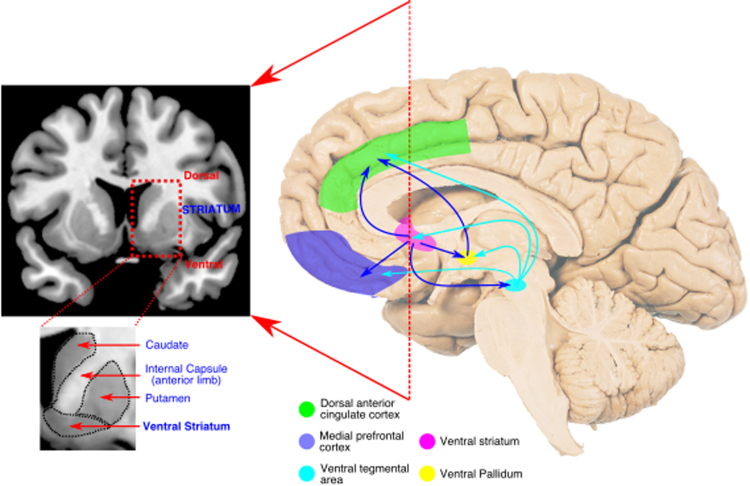
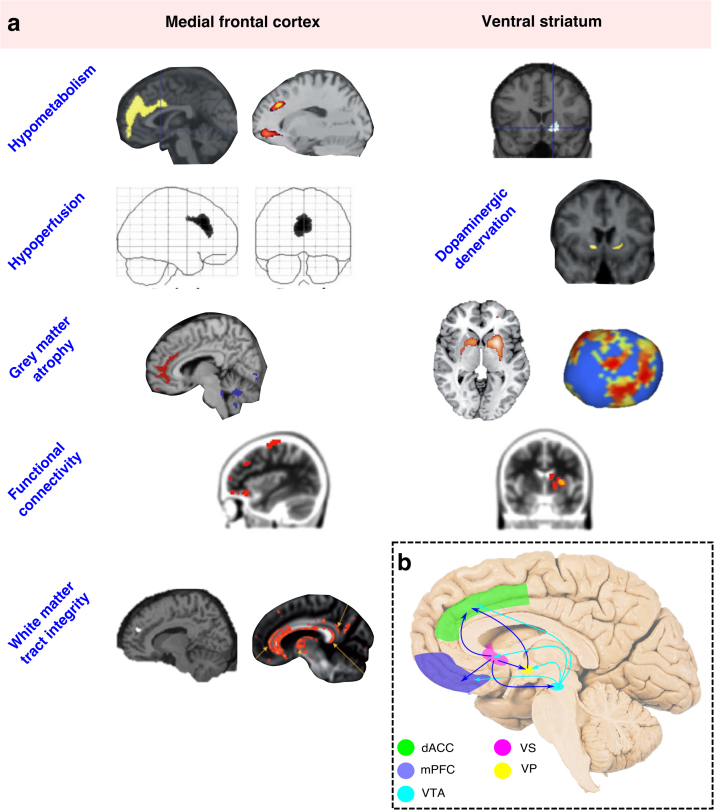
Apathy is a debilitating syndrome associated with many neurological disorders, including several common neurodegenerative diseases such as Parkinson's disease and Alzheimer's disease, and focal lesion syndromes such as stroke. Here, we review neuroimaging studies to identify anatomical correlates of apathy, across brain disorders. Our analysis reveals that apathy is strongly associated with disruption particularly of dorsal anterior cingulate cortex (dACC), ventral striatum (VS) and connected brain regions. Remarkably, these changes are consistent across clinical disorders and imaging modalities. Review of the neuroimaging findings allows us to develop a neurocognitive framework to consider potential mechanisms underlying apathy. According to this perspective, an interconnected group of brain regions - with dACC and VS at its core - plays a crucial role in normal motivated behaviour. Specifically we argue that motivated behaviour requires a willingness to work, to keep working, and to learn what is worth working for. We propose that deficits in any one or more of these processes can lead to the clinical syndrome of apathy, and outline specific approaches to test this hypothesis. A richer neurobiological understanding of the mechanisms underlying apathy should ultimately facilitate development of effective therapies for this disabling condition.
Overview
The claims and statistics of this paper haven’t been checked yet.
Run the check — free, no account needed. It reads the open-access text and checks the sources it cites.
Integrity signals
Registry
Cites
Statistics
Figures
Verification
Claims the paper makes
The claims and statistics of this paper haven’t been checked yet.
Run the check — free, no account needed. It reads the open-access text and checks the sources it cites.
Claims other papers make about this one
Each is checked against this paper’s own text: does it say what the citing paper says it does?
The cited source says what the claim attributes to it.
In the citing paper
“In addition, apathy is a well-recognized feature of strokes affecting similar portions of the medial frontal cortex (Kang & Kim, 2008; Le Heron et al., 2018) and the medial and anterior thalamus (Carrera & Bogousslavsky, 2006; Krause et al., 2012; Serra et al., 2013) respectively.”
From The cingulum bundle: Anatomy, function, and dysfunction (2018) · cites this paper as Le Heron et al., 2018
The cited source says what the claim attributes to it.
In the citing paper
“Across differing underlying pathologies and neuroimaging methods, the anterior cingulate cortex, orbital frontal cortex, and medial thalamus exhibit some of the most robust changes associated with apathy (Le Heron et al., 2018).”
From The cingulum bundle: Anatomy, function, and dysfunction (2018) · cites this paper as Le Heron et al., 2018
Self-check
Percentages, sums and reported differences re-computed from the paper’s own numbers.
The self-check needs the paper’s full text.
Citations
Cites
(2022) · La Revue du praticien · doi:10.1093/ageing/afgi30 · Cited by 15,809 · cited 1×
“Research using SPECT has consistently demonstrated that reduced perfusion in ACC and OFC – as well as frontopolar and DLPFC regions in some studies – is associated with apathy in AD (Benoit et al., 2004; Craig et al., 1996; Lanctôt et al., 2007; Migneco et al., 2001; Robert et al., 2006).”
ResultKalia, L. V., & Lang, A. E. (2015) · The Lancet · doi:10.1016/s0140-6736(14)61393-3 · Cited by 6,184
Optimal foraging, the marginal value theorem
Charnov, E. L. (1976) · Theoretical Population Biology · doi:10.1016/0040-5809(76)90040-x · Cited by 5,374
Functional architecture of basal ganglia circuits: neural substrates of parallel processing
Alexander, G. E., & Crutcher, M. D. (1990) · Trends in Neurosciences · doi:10.1016/0166-2236(90)90107-l · Cited by 4,131
Contributions of anterior cingulate cortex to behaviour
Devinsky, O., Morrell, M. J., & Vogt, B. A. (1995) · Brain · doi:10.1093/brain/118.1.279 · Cited by 3,377
Anterior Cingulate Cortex, Error Detection, and the Online Monitoring of Performance
Carter, C. S., Braver, T. S., Barch, D. M., Botvinick, M. M., Noll, D., & Cohen, J. D. (1998) · Science · doi:10.1126/science.280.5364.747 · Cited by 3,273
The expected value of control: an integrative theory of anterior cingulate cortex function
Shenhav, A., Botvinick, M. M., & Cohen, J. D. (2013) · Neuron · doi:10.1016/j.neuron.2013.07.007 · Cited by 2,321
Berridge, K. C., & Kringelbach, M. L. (2015) · Neuron · doi:10.1016/j.neuron.2015.02.018 · Cited by 1,730 · cited 1×
“Subcortically, basal ganglia lesions, particularly those involving the caudate nucleus or nucleus accumbens, are associated with the development of apathy (Bhatia and Marsden, 1994; Gerace et al., 2013; Maeda et al., 2012; Phillips et al., 1987).”
BackgroundReconsidering anhedonia in depression: Lessons from translational neuroscience
Treadway, M. T., & Zald, D. H. (2011) · Neuroscience & Biobehavioral Reviews · doi:10.1016/j.neubiorev.2010.06.006 · Cited by 1,579
Temporal difference models and reward-related learning in the human brain
O'Doherty, J. P., Dayan, P., Friston, K., Critchley, H., & Dolan, R. J. (2003) · Neuron · doi:10.1016/s0896-6273(03)00169-7 · Cited by 1,522
Neuronal Coding of Prediction Errors
Schultz, W., & Dickinson, A. (2000) · Annual Review of Neuroscience · doi:10.1146/annurev.neuro.23.1.473 · Cited by 1,427 · cited 2×
“A key theme of several theories of ACC and VS function is that these regions play a prominent role in monitoring the outcomes of our actions (Carter et al., 1998; Kolling et al., 2016b; Schultz, 2013; Schultz and Dickinson, 2000).”
BackgroundAn opportunity cost model of subjective effort and task performance
Kurzban, R., Duckworth, A., Kable, J. W., & Myers, J. (2013) · Behavioral and Brain Sciences · doi:10.1017/s0140525x12003196 · Cited by 1,381
Apathy and the Functional Anatomy of the Prefrontal Cortex–Basal Ganglia Circuits
Levy, R., & Dubois, B. (2006) · Cerebral Cortex · doi:10.1093/cercor/bhj043 · Cited by 1,285 · cited 2×
“Some apathy measures allow fractionation into components (for example “emotional, cognitive, behavioural”) (Levy and Dubois, 2006) and in some cases authors have reported correlates of these components with imaging analyses.”
BackgroundThe behavioural and motor consequences of focal lesions of the basal ganglia in man.
Bhatia, K., & Marsden, C. (1994) · Brain : a journal of neurology · doi:10.1093/brain/117.4.859 · Cited by 1,137
Tonic dopamine: Opportunity costs and the control of response vigor
Niv, Y., Daw, N. D., Joel, D., & Dayan, P. (2007) · Psychopharmacology · doi:10.1007/s00213-006-0502-4 · Cited by 1,133
The spectrum of behavioral changes in Alzheimer's disease
Mega, M., Cummings, J., Fiorello, T., & Gornbein, J. (1996) · Neurology · doi:10.1212/wnl.46.1.130 · Cited by 1,124
Rémy, P., Doder, M., Lees, A. J., Turjanski, N., & Brooks, D. J. (2005) · Brain · doi:10.1093/brain/awh445 · Cited by 1,090 · cited 2×
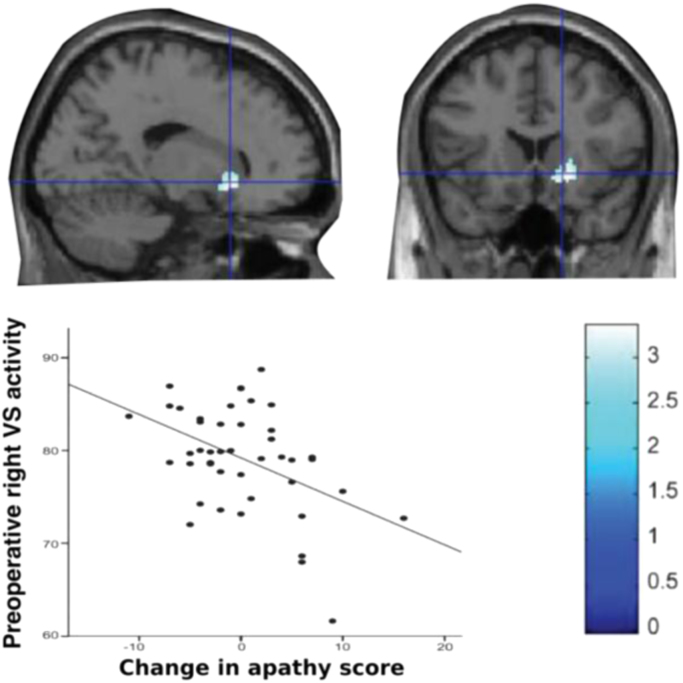
“…neuronal loss), research using more specific metabolic imaging techniques has implicated dopaminergic neuromodulatory systems in the development of apathy in PD. Apathetic PD patients have reduced dopamine and/or noradrenaline receptor binding capacity within bilateral VS (Remy et al., 2005).”
BackgroundPetrides, M., & Pandya, D. N. (1999) · European Journal of Neuroscience · doi:10.1046/j.1460-9568.1999.00518.x · Cited by 1,068
Insula of the old world monkey. III: Efferent cortical output and comments on function
Mesulam, M. ‐., & Mufson, E. J. (1982) · Journal of Comparative Neurology · doi:10.1002/cne.902120104 · Cited by 1,013 · cited 1×
“…insula, DLPFC, VTA, and more ventral portions of the medial prefrontal cortex (Balsters et al., 2016; Beckmann et al., 2009; Haber et al., 1995; Mesulam and Mufson, 1982; Mufson and Mesulam, 1982; Neubert et al., 2015; Petrides and Pandya, 1999; Tighe et al., 2012; Vogt, 2009; Yeterian and…”
BackgroundEffort-related functions of nucleus accumbens dopamine and associated forebrain circuits
Salamone, J. D., Correa, M., Farrar, A., & Mingote, S. M. (2007) · Psychopharmacology · doi:10.1007/s00213-006-0668-9 · Cited by 1,000
Temporal Prediction Errors in a Passive Learning Task Activate Human Striatum
McClure, S. M., Berns, G. S., & Montague, P. R. (2003) · Neuron · doi:10.1016/s0896-6273(03)00154-5 · Cited by 917
Choice, uncertainty and value in prefrontal and cingulate cortex
Rushworth, M. F. S., & Behrens, T. E. J. (2008) · Nature Neuroscience · doi:10.1038/nn2066 · Cited by 866 · cited 1×
“There is now a wealth of neurophysiological and neuroimaging evidence that activity in the VS and ACC signals PEs (Hayden et al., 2011a; Holroyd and Coles, 2008; Jahn et al., 2016; Jocham et al., 2009; Lockwood et al., 2016; Matsumoto et al., 2007; McClure et al., 2003; O’Doherty et al., 2003; Rushworth and Behrens, 2…”
BackgroundMesolimbic dopamine signals the value of work
Hamid, A., Pettibone, J. R., Mabrouk, O. S., Hetrick, V. L., Schmidt, R., Weele, C. M. V., Kennedy, R. T., Aragona, B. J., & Berke, J. D. (2015) · Nature Neuroscience · doi:10.1038/nn.4173 · Cited by 848
Beckmann, M., Johansen-Berg, H., & Rushworth, M. F. S. (2009) · The Journal of Neuroscience · doi:10.1523/jneurosci.3328-08.2009 · Cited by 789
Updating dopamine reward signals
Schultz, W. (2013) · Current Opinion in Neurobiology · doi:10.1016/j.conb.2012.11.012 · Cited by 651 · cited 1×
“A key theme of several theories of ACC and VS function is that these regions play a prominent role in monitoring the outcomes of our actions (Carter et al., 1998; Kolling et al., 2016b; Schultz, 2013; Schultz and Dickinson, 2000).”
BackgroundKolling, N., Behrens, T. E. J., Mars, R. B., & Rushworth, M. F. S. (2012) · Science · doi:10.1126/science.1216930 · Cited by 629
Motivation of extended behaviors by anterior cingulate cortex
Holroyd, C. B., & Yeung, N. (2012) · Trends in Cognitive Sciences · doi:10.1016/j.tics.2011.12.008 · Cited by 618 · cited 1×
“…these regions have in three key components of motivation: willingness to initiate an action (to work), to sustain performance (to keep working), and to learn whether actions are worth performing (what is worth working for) (Holroyd and Yeung, 2012; Kolling et al., 2016b; Salamone et al., 2016).”
BackgroundProposed diagnostic criteria for apathy in Alzheimer’s disease and other neuropsychiatric disorders
Robert, P. H., Onyike, C. U., Leentjens, A. F. G., Dujardin, K., Aalten, P., STARKSTEIN, S. E., Verhey, F. R. J., Yessavage, J., Clément, J., Drapier, D., et al. (2009) · European Psychiatry · doi:10.1016/j.eurpsy.2008.09.001 · Cited by 618 · cited 1×
“On reviewing this literature we have inevitably had to be selective at times due to the considerable variability introduced by different methods of diagnosis and different levels of controlling for comorbidity (Radakovic et al., 2015; Robert et al., 2009).”
BackgroundThe orbital and medial prefrontal circuit through the primate basal ganglia
Haber, S., Kunishio, K., Mizobuchi, M., & Lynd-Balta, E. (1995) · The Journal of Neuroscience · doi:10.1523/jneurosci.15-07-04851.1995 · Cited by 605 · cited 1×
“Classical accounts suggested that basal ganglia nuclei formed closed loops with cortical areas via the pallidum, leading to the notion of distinct ‘fronto-striatal’ circuits (Alexander and Crutcher, 1990; Haber et al., 1993).”
BackgroundProlonged dopamine signalling in striatum signals proximity and value of distant rewards
Howe, M. W., Tierney, P. L., Sandberg, S. G., Phillips, P. E. M., & Graybiel, A. M. (2013) · Nature · doi:10.1038/nature12475 · Cited by 565
Effort-Based Cost–Benefit Valuation and the Human Brain
Croxson, P. L., Walton, M. E., O'Reilly, J. X., Behrens, T. E. J., & Rushworth, M. F. S. (2009) · The Journal of Neuroscience · doi:10.1523/jneurosci.4515-08.2009 · Cited by 560
The Anterior Cingulate Gyrus and Social Cognition: Tracking the Motivation of Others
Apps, M. A. J., Rushworth, M. F. S., & Chang, S. W. C. (2016) · Neuron · doi:10.1016/j.neuron.2016.04.018 · Cited by 559 · cited 2×
“The dorsal ACC is comprised of multiple different sub-regions that can be delineated anatomically (Devinsky et al., 1995; Neubert et al., 2015) and functionally (Apps et al., 2016).”
BackgroundSelf-citationInsula of the old world monkey. II: Afferent cortical input and comments on the claustrum
Mufson, E. J., & Mesulam, M. ‐. (1982) · Journal of Comparative Neurology · doi:10.1002/cne.902120103 · Cited by 559 · cited 1×
“…DLPFC, VTA, and more ventral portions of the medial prefrontal cortex (Balsters et al., 2016; Beckmann et al., 2009; Haber et al., 1995; Mesulam and Mufson, 1982; Mufson and Mesulam, 1982; Neubert et al., 2015; Petrides and Pandya, 1999; Tighe et al., 2012; Vogt, 2009; Yeterian and Pandya, 1991).”
BackgroundNeuronal basis of sequential foraging decisions in a patchy environment
Hayden, B. Y., Pearson, J. M., & Platt, M. L. (2011) · Nature Neuroscience · doi:10.1038/nn.2856 · Cited by 547
Thobois, S., Ardouin, C., Lhommée, E., Klinger, H., Lagrange, C., Xie, J., Fraix, V., Braga, M.-C. C., Hassani, R., Kistner, A., et al. (2010) · Brain · doi:10.1093/brain/awq032 · Cited by 546
Sockeel, P. (2006) · Journal of Neurology Neurosurgery & Psychiatry · doi:10.1136/jnnp.2005.075929 · Cited by 512
Separate Valuation Subsystems for Delay and Effort Decision Costs
Prévost, C., Pessiglione, M., Météreau, E., Cléry-Melin, M.-L., & Dreher, J.-C. (2010) · The Journal of Neuroscience · doi:10.1523/jneurosci.2752-10.2010 · Cited by 499 · cited 1×
“When associated with temporal delays or risk, SV is processed in other frontal lobe regions but not in the dACC (Burke et al., 2013; Massar et al., 2015; Prevost et al., 2010).”
BackgroundNeuroanatomical correlates of behavioural disorders in dementia
Rosen, H. J., Allison, S. C., Schauer, G. F., Gorno-Tempini, M. L., Weiner, M. W., & Miller, B. L. (2005) · Brain · doi:10.1093/brain/awh628 · Cited by 497 · cited 2×
“It was the most common neurobehavioural disorder in a large imaging study that combined patients with these diagnoses as well as AD (Rosen et al., 2005).”
BackgroundWidespread origin of the primate mesofrontal dopamine system
Williams, S. (1998) · Cerebral Cortex · doi:10.1093/cercor/8.4.321 · Cited by 479
Value, search, persistence and model updating in anterior cingulate cortex
Kolling, N., Wittmann, M. K., Behrens, T. E. J., Boorman, E. D., Mars, R. B., & Rushworth, M. F. S. (2016) · Nature Neuroscience · doi:10.1038/nn.4382 · Cited by 475
Medial prefrontal cell activity signaling prediction errors of action values
Matsumoto, M., Matsumoto, K., Abe, H., & Tanaka, K. (2007) · Nature Neuroscience · doi:10.1038/nn1890 · Cited by 462
Neurons in the frontal lobe encode the value of multiple decision variables
Kennerley, S. W., Dahmubed, A. F., Lara, A. H., & Wallis, J. D. (2009) · Journal of Cognitive Neuroscience · doi:10.1162/jocn.2009.21100 · Cited by 453
Role of brain dopamine in food reward and reinforcement
Wise, R. A. (2006) · Philosophical Transactions of the Royal Society B Biological Sciences · doi:10.1098/rstb.2006.1854 · Cited by 436 · cited 1×
“Dopamine has often been linked with motivated behaviour and the processing of rewards (Berridge and Kringelbach, 2015; Wise, 2006).”
BackgroundNeurocomputational mechanisms underlying subjective valuation of effort costs
Chong, T. T.-J., Apps, M., Giehl, K., Sillence, A., Grima, L. L., & Husain, M. (2017) · PLOS Biology · doi:10.1371/journal.pbio.1002598 · Cited by 415
Self-citationNeubert, F.-X., Mars, R. B., Sallet, J., & Rushworth, M. F. S. (2015) · Proceedings of the National Academy of Sciences · doi:10.1073/pnas.1410767112 · Cited by 384
Hayden, B. Y., Heilbronner, S. R., Pearson, J. M., & Platt, M. L. (2011) · The Journal of Neuroscience · doi:10.1523/jneurosci.4652-10.2011 · Cited by 379
Neuroanatomical correlates of neuropsychiatric symptoms in Alzheimer's disease
Bruen, P. D., McGeown, W. J., Shanks, M. F., & Venneri, A. (2008) · Brain · doi:10.1093/brain/awn151 · Cited by 374
The role of rat medial frontal cortex in effort-based decision making
Walton, M. E., Bannerman, D. M., & Rushworth, M. F. S. (2002) · The Journal of Neuroscience · doi:10.1523/jneurosci.22-24-10996.2002 · Cited by 364
Effort discounting in human nucleus accumbens
Botvinick, M., Huffstetler, S., & McGuire, J. T. (2009) · Cognitive Affective & Behavioral Neuroscience · doi:10.3758/cabn.9.1.16 · Cited by 364
Reward Pays the Cost of Noise Reduction in Motor and Cognitive Control
Manohar, S., Chong, T. T. ‐., Apps, M. A. J., Batla, A., Stamelou, M., Jarman, P., Bhatia, K. P., & Husain, M. (2015) · Current Biology · doi:10.1016/j.cub.2015.05.038 · Cited by 353
Self-citationPrefrontostriatal connections in relation to cortical architectonic organization in rhesus monkeys
Yeterian, E. H., & Pandya, D. N. (1991) · Journal of Comparative Neurology · doi:10.1002/cne.903120105 · Cited by 351
Salamone, J. D., Yohn, S. E., López-Cruz, L., San Miguel, N., & Correa, M. (2016) · Brain · doi:10.1093/brain/aww050 · Cited by 350 · cited 6×
“There is not scope to fully review this literature here, but there is now an overwhelming wealth of behavioural evidence which highlights the crucial role of the ACC-VS loop in motivating the exertion of effort towards a goal, sustaining this effort and in learning whether a behaviour is worthwhile (Salamone et al., 2…”
BackgroundInfluentialCytoarchitecture of mouse and rat cingulate cortex with human homologies
Vogt, B. A., & Paxinos, G. (2014) · Brain Structure and Function · doi:10.1007/s00429-012-0493-3 · Cited by 348
Dopamine Does Double Duty in Motivating Cognitive Effort
Westbrook, A., & Braver, T. S. (2016) · Neuron · doi:10.1016/j.neuron.2015.12.029 · Cited by 331
Neuropsychiatric symptoms in Parkinson's disease
Aarsland, D., Marsh, L., & Schrag, A. (2009) · Movement Disorders · doi:10.1002/mds.22589 · Cited by 320 · cited 1×
“Apathy is common at all stages of the disease, is associated with impaired quality of life for both patients and their relatives, and is a presenting symptom in a significant number of cases (Aarsland et al., 2009).”
BackgroundNeural mechanisms underlying motivation of mental versus physical effort
Schmidt, L., Lebreton, M., Cléry-Melin, M.-L., Daunizeau, J., & Pessiglione, M. (2012) · PLoS Biology · doi:10.1371/journal.pbio.1001266 · Cited by 310 · cited 2×
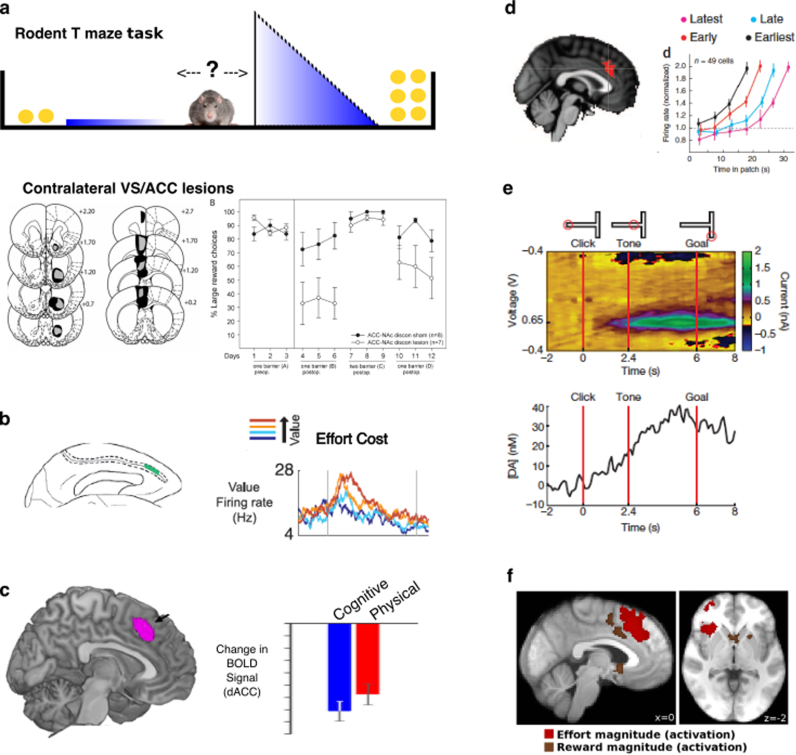
“VS signals the expected effort and reward level (Schmidt et al., 2012).”
BackgroundWeighing up the benefits of work: Behavioral and neural analyses of effort-related decision making
Walton, M. E., Kennerley, S. W., Bannerman, D. M., Phillips, P. E. M., & Rushworth, M. F. S. (2006) · Neural Networks · doi:10.1016/j.neunet.2006.03.005 · Cited by 305
The thalamus and behavior: Effects of anatomically distinct strokes
Carrera, E., & Bogousslavsky, J. (2006) · Neurology · doi:10.1212/01.wnl.0000219679.95223.4c · Cited by 290
Dopamine enhances willingness to exert effort for reward in Parkinson's disease
Chong, T. T.-J., Bonnelle, V., Manohar, S., Veromann, K.-R., Muhammed, K., Tofaris, G. K., Hu, M., & Husain, M. (2015) · Cortex · doi:10.1016/j.cortex.2015.04.003 · Cited by 276
Self-citationApathy and disinhibition in frontotemporal dementia
Zamboni, G., Huey, E. D., Krueger, F. W., Nichelli, P., & Grafman, J. H. (2008) · Neurology · doi:10.1212/01.wnl.0000324920.96835.95 · Cited by 276
White, R. (2017) · doi:10.1093/obo/9780199846740-0105 · Cited by 272 · cited 1×
“Firstly, a rostral-caudal axis, with more anterior portions containing less dense projections to the motor system and playing more important roles in cognitive processes, such as decision-making (Silvetti et al., 2014).”
BackgroundDopamine Does Double Duty in Motivating Cognitive Effort.
Westbrook, A., & Braver, T. (2016) · Neuron · doi:10.1016/j.neuron.2016.07.020 · Cited by 271
Klein-Flügge, M. C., Kennerley, S. W., Friston, K. J., & Bestmann, S. (2016) · Journal of Neuroscience · doi:10.1523/jneurosci.0292-16.2016 · Cited by 271
Distinct Subtypes of Apathy Revealed by the Apathy Motivation Index
Ang, Y., Lockwood, P. L., Apps, M. A. J., Muhammed, K., & Masud Husain, B. (2017) · PLoS ONE · doi:10.1371/journal.pone.0169938 · Cited by 256
Self-citationFoussias, G., Agid, O., Fervaha, G., & Remington, G. J. (2013) · European Neuropsychopharmacology · doi:10.1016/j.euroneuro.2013.10.017 · Cited by 250 · cited 1×
“We do not discuss psychiatric disorders, where there is also a body of work that examines the structural or functional basis of apathy (Foussias et al., 2014; Holroyd and Umemoto, 2016; Treadway and Zald, 2011).”
BackgroundMultiple signals in anterior cingulate cortex
Kolling, N., Behrens, T., Wittmann, M., & Rushworth, M. (2016) · Current Opinion in Neurobiology · doi:10.1016/j.conb.2015.12.007 · Cited by 249
Neuropsychiatric aspects of progressive supranuclear palsy
Litvan, I., Mega, M., Cummings, J., & Fairbanks, L. A. (1996) · Neurology · doi:10.1212/wnl.47.5.1184 · Cited by 248
Calculating utility: preclinical evidence for cost–benefit analysis by mesolimbic dopamine
Phillips, P. E. M., Walton, M. E., & Jhou, T. C. (2007) · Psychopharmacology · doi:10.1007/s00213-006-0626-6 · Cited by 237 · cited 1×
“A key component of motivation appears to be that prior to performing a behaviour people engage in a cost-benefit evaluation (Phillips et al., 2007; Salamone et al., 2016).”
BackgroundChoosing to make an effort: The role of striatum in signaling physical effort of a chosen action
Kurniawan, I. T., Seymour, B., Talmi, D., Yoshida, W., Chater, N., & Dolan, R. J. (2010) · Journal of Neurophysiology · doi:10.1152/jn.00027.2010 · Cited by 225
Prefrontostriatal Circuitry Regulates Effort-Related Decision Making
Hauber, W., & Sommer, S. (2009) · Cerebral Cortex · doi:10.1093/cercor/bhn241 · Cited by 224
Cerebral Blood Flow Correlates of Apathy in Alzheimer Disease
Craig, A., Cummings, J. L., Fairbanks, L. A., Itti, L., Miller, B. L., Li, J. J., & Mena, I. G. (1996) · Archives of Neurology · doi:10.1001/archneur.1996.00550110056012 · Cited by 223 · cited 1×
“Research using SPECT has consistently demonstrated that reduced perfusion in ACC and OFC – as well as frontopolar and DLPFC regions in some studies – is associated with apathy in AD (Benoit et al., 2004; Craig et al., 1996; Lanctôt et al., 2007; Migneco et al., 2001; Robert et al., 2006).”
ResultLongitudinal Evaluation of Neuropsychiatric Symptoms in Huntington's Disease
Thompson, J. C., Harris, J., Sollom, A. C., Stopford, C. L., Howard, E., Snowden, J. S., & Craufurd, D. (2012) · Journal of Neuropsychiatry · doi:10.1176/appi.neuropsych.11030057 · Cited by 221
Neurocomputational mechanisms of prosocial learning and links to empathy
Lockwood, P. L., Apps, M. A. J., Valton, V., Viding, E. M., & Roiser, J. P. (2016) · Proceedings of the National Academy of Sciences · doi:10.1073/pnas.1603198113 · Cited by 219
Self-citationProsocial apathy for helping others when effort is required
Lockwood, P. L., Hamonet, M., Zhang, S. H., Ratnavel, A., Salmony, F. U., Husain, M., & Apps, M. A. J. (2017) · Nature Human Behaviour · doi:10.1038/s41562-017-0131 · Cited by 218
Self-citationPositron emission tomography metabolic correlates of apathy in Alzheimer disease.
Marshall, G., Monserratt, L., Harwood, D., Mandelkern, M., Cummings, J., & Sultzer, D. (2007) · Archives of Neurology · doi:10.1001/archneur.64.7.1015 · Cited by 209
Reijnders, J. S. A. M., Scholtissen, B., Weber, W. E. J., Aalten, P., Verhey, F. R. J., & Leentjens, A. F. G. (2010) · Movement Disorders · doi:10.1002/mds.23268 · Cited by 205
Hartmann, M. N., Hager, O. M., Reimann, A. V., Chumbley, J. R., Kirschner, M., Seifritz, E., Tobler, P. N., & Kaiser, S. (2015) · Schizophrenia Bulletin · doi:10.1093/schbul/sbu102 · Cited by 200
Overlapping neural systems represent cognitive effort and reward anticipation
Vassena, E., Silvetti, M., Boehler, C. N., Achten, E., Fias, W., & Verguts, T. (2014) · PLoS ONE · doi:10.1371/journal.pone.0091008 · Cited by 200
Hierarchical control over effortful behavior by rodent medial frontal cortex: A computational model.
Holroyd, C. B., & McClure, S. M. (2014) · Psychological Review · doi:10.1037/a0038339 · Cited by 199 · cited 1×
“We do not discuss psychiatric disorders, where there is also a body of work that examines the structural or functional basis of apathy (Foussias et al., 2014; Holroyd and Umemoto, 2016; Treadway and Zald, 2011).”
BackgroundDepression, anxiety, and apathy in Parkinson's disease: insights from neuroimaging studies
Wen, M., Chan, L. L., Tan, L. C. S., & Tan, E. (2016) · European Journal of Neurology · doi:10.1111/ene.13002 · Cited by 196
Camille, N., Tsuchida, A., & Fellows, L. K. (2011) · The Journal of Neuroscience · doi:10.1523/jneurosci.3164-11.2011 · Cited by 195
Migneco, O., Benoît, M., Koulibaly, P. M., Dygai, I., Bertogliati, C., Desvignes, P., Robert, P. H., Malandain, G., Bussiere, F., & Darcourt, J. (2001) · NeuroImage · doi:10.1006/nimg.2000.0741 · Cited by 191
Holthoff, V. A., Beuthien-Baumann, B., Kalbe, E., Lüdecke, S., Lenz, O., Zündorf, G., Spirling, S., Schierz, K., Winiecki, P., Sorbi, S., et al. (2005) · Biological Psychiatry · doi:10.1016/j.biopsych.2004.11.035 · Cited by 190
The research domain criteria framework: The case for anterior cingulate cortex
Holroyd, C. B., & Umemoto, A. (2016) · Neuroscience & Biobehavioral Reviews · doi:10.1016/j.neubiorev.2016.09.021 · Cited by 187 · cited 1×
“We do not discuss psychiatric disorders, where there is also a body of work that examines the structural or functional basis of apathy (Foussias et al., 2014; Holroyd and Umemoto, 2016; Treadway and Zald, 2011).”
BackgroundThe organization of the descending ventral pallidal projections in the monkey
Haber, S., Lynd-Balta, E., & Mitchell, S. (1993) · The Journal of comparative neurology · doi:10.1002/cne.903290108 · Cited by 184
Neuropsychiatric features of corticobasal degeneration
Litvan, I., Cummings, J. L., & Mega, M. S. (1998) · Journal of Neurology Neurosurgery & Psychiatry · doi:10.1136/jnnp.65.5.717 · Cited by 181
Skvortsova, V., Palminteri, S., & Pessiglione, M. (2014) · The Journal of Neuroscience · doi:10.1523/jneurosci.1350-14.2014 · Cited by 177
Anterior cerebral artery infarction: Stroke mechanism and clinical-imaging study in 100 patients
Kang, S. Y., & Kim, J. S. (2008) · Neurology · doi:10.1212/01.wnl.0000314686.94007.d0 · Cited by 177
Dorsal anterior cingulate cortex integrates reinforcement history to guide voluntary behavior
Holroyd, C. B., & COLES, M. G. H. (2007) · Cortex · doi:10.1016/j.cortex.2007.08.013 · Cited by 176
Parabolic discounting of monetary rewards by physical effort
Hartmann, M. N., Hager, O. M., Tobler, P. N., & Kaiser, S. (2013) · Behavioural Processes · doi:10.1016/j.beproc.2013.09.014 · Cited by 169
Apathy Secondary to Stroke: A Systematic Review and Meta-Analysis
Caeiro, L., Ferro, J. M., & Costa, J. N. (2013) · Cerebrovascular Diseases · doi:10.1159/000346076 · Cited by 167
Hollocks, M. J., Lawrence, A. J., Brookes, R. L., Barrick, T. R., Morris, R. G., Husain, M., & Markus, H. S. (2015) · Brain · doi:10.1093/brain/awv304 · Cited by 166
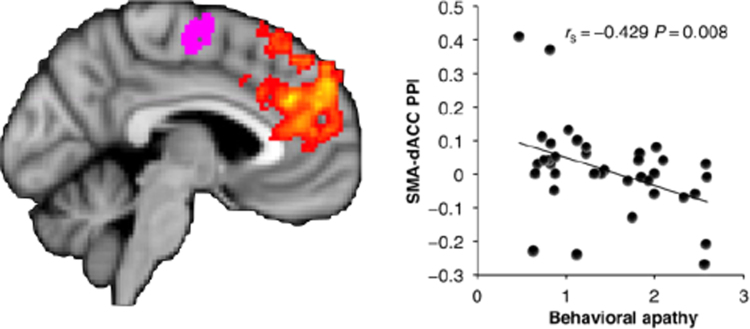
Self-citationIndividual Differences in Premotor Brain Systems Underlie Behavioral Apathy
Bonnelle, V., Manohar, S., Behrens, T., & Husain, M. (2015) · Cerebral Cortex · doi:10.1093/cercor/bhv247 · Cited by 163
Self-citationSkidmore, F. M., Yang, M. C. K., Baxter, L., von Deneen, K. M., Collingwood, J. F., He, G., Tandon, R., Korenkevych, D., Savenkov, A. A., Heilman, K. M., et al. (2011) · NeuroImage · doi:10.1016/j.neuroimage.2011.07.012 · Cited by 162
Reyes, S., Viswanathan, A., Godin, O., Dufouil, C., Benisty, S., Hernandez, K., Kurtz, A., Jouvent, É., O'Sullivan, M. J., Czernecki, V., et al. (2009) · Neurology · doi:10.1212/01.wnl.0000344166.03470.f8 · Cited by 150
Neurons in Dorsal Anterior Cingulate Cortex Signal Postdecisional Variables in a Foraging Task
Blanchard, T. C., & Hayden, B. Y. (2014) · Journal of Neuroscience · doi:10.1523/jneurosci.3151-13.2014 · Cited by 149
Reward sensitivity deficits modulated by dopamine are associated with apathy in Parkinson’s disease
Muhammed, K., Manohar, S., Yehuda, M. B., Chong, T. T. ‐., Tofaris, G. K., Lennox, G. G., Bogdanovic, M. D., Hu, M., & Husain, M. (2016) · Brain · doi:10.1093/brain/aww188 · Cited by 148
Self-citationBrain perfusion correlates of the apathy inventory dimensions of Alzheimer's disease
Benoit, M., Clairet, S., Koulibaly, P. M., Darcourt, J., & Robert, P. H. (2004) · International Journal of Geriatric Psychiatry · doi:10.1002/gps.1163 · Cited by 147
Carrière, N., Besson, P., Dujardin, K., Duhamel, A., Defebvre, L., Delmaire, C., & Devos, D. (2014) · Movement Disorders · doi:10.1002/mds.25904 · Cited by 147
Wittmann, M. K., Kolling, N., Akaishi, R., Chau, B. K. H., Brown, J. W., Nelissen, N., & Rushworth, M. F. S. (2016) · Nature Communications · doi:10.1038/ncomms12327 · Cited by 146
The role of cognitive effort in subjective reward devaluation and risky decision-making
Apps, M. A. J., Grima, L. L., Manohar, S., & Husain, M. (2015) · Scientific Reports · doi:10.1038/srep16880 · Cited by 145
Self-citationScahill, R. I., Hobbs, N. Z., Say, M. J., Bechtel, N., Henley, S. M. D., Hyare, H., Langbehn, D. R., Jones, R., Leavitt, B. R., Roos, R. A. C., et al. (2011) · Human Brain Mapping · doi:10.1002/hbm.21449 · Cited by 144 · cited 1×
“A study in pre-symptomatic and early HD did not find any associations between apathy and either GM or WM changes (Scahill et al., 2011).”
BackgroundNeuroimaging Correlates of Apathy and Depression in Alzheimer's Disease
STARKSTEIN, S. E., Mizrahi, R., Capizzano, A. A., Ación, L., Brockman, S., & Power, B. (2009) · Journal of Neuropsychiatry · doi:10.1176/jnp.2009.21.3.259 · Cited by 140
Resting-state frontostriatal functional connectivity in Parkinson's disease-related apathy
Baggio, H. C., Segura, B., Garrido‐Millan, J. L., Marti, M., Compta, Y., Valldeoriola, F., Tolosa, E., & Junque, C. (2015) · Movement Disorders · doi:10.1002/mds.26137 · Cited by 131
A SPECT study of apathy in Alzheimer's disease
Lanctôt, K. L., Moosa, S., Herrmann, N., Leibovitch, F. S., Rothenburg, L., Cotter, A., & Black, S. E. (2007) · Dementia and Geriatric Cognitive Disorders · doi:10.1159/000103633 · Cited by 126
Apathy in frontotemporal dementia: Behavioral and neuroimaging correlates
Eslinger, P., Moore, P., Antani, S., Anderson, C., & Grossman, M. (2012) · Behavioural Neurology · doi:10.3233/ben-2011-0351 · Cited by 126
Separate and overlapping brain areas encode subjective value during delay and effort discounting
Massar, S. A. A., Libedinsky, C., Weiyan, C., Huettel, S. A., & Chee, M. W. L. (2015) · NeuroImage · doi:10.1016/j.neuroimage.2015.06.080 · Cited by 123
Basal forebrain infarction. A clinicopathologic correlation.
Phillips, S., Sangalang, V., & Sterns, G. L. (1987) · Archives of Neurology · doi:10.1001/archneur.1987.00520230024008 · Cited by 121 · cited 1×
“Subcortically, basal ganglia lesions, particularly those involving the caudate nucleus or nucleus accumbens, are associated with the development of apathy (Bhatia and Marsden, 1994; Gerace et al., 2013; Maeda et al., 2012; Phillips et al., 1987).”
BackgroundAdaptive effort investment in cognitive and physical tasks: A neurocomputational model
Verguts, T., Vassena, E., & Silvetti, M. (2015) · Frontiers in Behavioral Neuroscience · doi:10.3389/fnbeh.2015.00057 · Cited by 118
Silvetti, M., Alexander, W., Verguts, T., & Brown, J. W. (2013) · Neuroscience & Biobehavioral Reviews · doi:10.1016/j.neubiorev.2013.11.003 · Cited by 118
Apathy and striatal dopamine transporter levels in de-novo, untreated Parkinson's disease patients.
Santangelo, G., Vitale, C., Picillo, M., Cuoco, S., Moccia, M., Pezzella, D., Erro, R., Longo, K., Vicidomini, C., Pellecchia, M. T., et al. (2015) · Parkinsonism & Related Disorders · doi:10.1016/j.parkreldis.2015.02.015 · Cited by 115 · cited 1×
“They have reduced striatal dopamine binding capacity even at the time of PD diagnosis, and before they have commenced dopaminergic therapy (Santangelo et al., 2015).”
BackgroundThe Anterior Cingulate Gyrus Signals the Net Value of Others' Rewards
Apps, M. A. J., & Ramnani, N. (2014) · The Journal of Neuroscience · doi:10.1523/jneurosci.2701-13.2014 · Cited by 109 · cited 1×
“Neuroimaging studies in healthy human adults have consistently implicated the dACC and VS in signaling the effort costs of a particular behaviour, but also in signaling rewards on offer prior to any action being performed (Apps and Ramnani, 2014; Botvinick et al., 2009; Croxson et al., 2009; Schmidt et al., 2012; Vass…”
BackgroundSelf-citationDopamine reverses reward insensitivity in apathy following globus pallidus lesions
Adam, R. J., Leff, A. P., Sinha, N., Turner, C., Bays, P. M., Draganski, B., & Husain, M. (2012) · Cortex · doi:10.1016/j.cortex.2012.04.013 · Cited by 108 · cited 1×
“Profound apathy is also seen following lesions to the GPi, a crucial output structure of the basal ganglia (Adam et al., 2013).”
BackgroundSelf-citationThe syndrome of combined polar and paramedian thalamic infarction.
Perren, F., Clarke, S., & Bogousslavsky, J. (2005) · Archives of Neurology · doi:10.1001/archneur.62.8.1212 · Cited by 105
Huang, C. C., Ravdin, L., Nirenberg, M. J., Piboolnurak, P., Severt, L., Maniscalco, J. S., Sólnes, L. B., Dorfman, B. J., & Henchcliffe, C. (2013) · Dementia and Geriatric Cognitive Disorders · doi:10.1159/000345987 · Cited by 105
Neural Correlates for Apathy: Frontal-Prefrontal and Parietal Cortical- Subcortical Circuits
Moretti, R., & Signori, R. (2016) · Frontiers in Aging Neuroscience · doi:10.3389/fnagi.2016.00289 · Cited by 104 · cited 2×
“Yet, to date, few attempts have been made to synthesize findings regarding the neurobiology across different conditions (but see Kos et al., 2016; Moretti and Signori, 2016) and there is particularly limited understanding of the functional anatomy of apathy across disorders.”
BackgroundThe structural correlates of functional deficits in early huntington's disease
Delmaire, C., Dumas, E. M., Sharman, M. A., van den Bogaard, S. J. A., Valabrègue, R., Jauffret, C., Justo, D., Reilmann, R., Stout, J. C., Craufurd, D., et al. (2012) · Human Brain Mapping · doi:10.1002/hbm.22055 · Cited by 103
Apathy is Associated With Volume of the Nucleus Accumbens in Patients Infected With HIV
Paul, R. H., Brickman, A. M., Navia, B., Hinkin, C., Malloy, P. F., Jefferson, A. L., Cohen, R. A., Tate, D. F., & Flanigan, T. (2005) · Journal of Neuropsychiatry · doi:10.1176/appi.neuropsych.17.2.167 · Cited by 102 · cited 1×
“Apathy in HIV is associated with reduced NAc volume (Paul et al., 2005).”
BackgroundApathy and cortical atrophy in Alzheimer's disease
Tunnard, C., Whitehead, D. L., Hurt, C. S., Wahlund, L., Mecocci, P., Tsolaki, M., Vellas, B. J., Spenger, C., Kłoszewska, I., Soininen, H. S., et al. (2010) · International Journal of Geriatric Psychiatry · doi:10.1002/gps.2603 · Cited by 102
Kos, C., van Tol, M.-J., Marsman, J.-B. C., Knegtering, H., & Aleman, A. (2016) · Neuroscience & Biobehavioral Reviews · doi:10.1016/j.neubiorev.2016.08.012 · Cited by 101
A review of neuroimaging findings of apathy in Alzheimer's disease
Theleritis, C. G., Politis, A. M., Siarkos, K., & Lyketsos, C. G. (2013) · International Psychogeriatrics · doi:10.1017/s1041610213001725 · Cited by 98
Robert, P. H., Darcourt, G., Koulibaly, M. P., Clairet, S., Benoit, M., Garcia, R., Dechaux, O., & Darcourt, J. (2006) · European Journal of Neurology · doi:10.1111/j.1468-1331.2006.01088.x · Cited by 98 · cited 1×
“Research using SPECT has consistently demonstrated that reduced perfusion in ACC and OFC – as well as frontopolar and DLPFC regions in some studies – is associated with apathy in AD (Benoit et al., 2004; Craig et al., 1996; Lanctôt et al., 2007; Migneco et al., 2001; Robert et al., 2006).”
ResultA Multidimensional Approach to Apathy after Traumatic Brain Injury
Arnould, A., Rochat, L., Azouvi, P., & der Linden, M. V. (2013) · Neuropsychology Review · doi:10.1007/s11065-013-9236-3 · Cited by 94
Stanton, B. R., Leigh, P. N., Howard, R. J., Barker, G. J., & Brown, R. G. (2013) · Journal of Neurology · doi:10.1007/s00415-013-6989-9 · Cited by 92
Apathy in Parkinson's Disease: Neurophysiological Evidence of Impaired Incentive Processing
Martínez‐Horta, S., Riba, J., de Bobadilla, R. F., Pagonabarraga, J., Pascual‐Sedano, B., Antonijoan, R. M., Romero, S., Mañanas, M. Á., García‐Sánchez, C., & Kulisevsky, J. (2014) · Journal of Neuroscience · doi:10.1523/jneurosci.0251-14.2014 · Cited by 91
Lavretsky, H., Zheng, L., Weiner, M. W., Mungas, D., Reed, B., Kramer, J. H., Jagust, W. J., Chui, H. C., & Mack, W. J. (2008) · International Journal of Geriatric Psychiatry · doi:10.1002/gps.2030 · Cited by 90
Neural integration of risk and effort costs by the frontal pole: only upon request
Burke, C. J., Brünger, C., Kahnt, T., Park, S. Q., & Tobler, P. N. (2013) · The Journal of Neuroscience · doi:10.1523/jneurosci.3662-12.2013 · Cited by 87 · cited 4×
“Alterations in fronto-striatal circuits may mediate post-stroke apathy Apathy is also a complication of strokes in other cortical locations (Caeiro et al., 2013).”
BackgroundInfluentialMedial prefrontal cortical activity reflects dynamic re-evaluation during voluntary persistence
McGuire, J. T., & Kable, J. W. (2015) · Nature Neuroscience · doi:10.1038/nn.3994 · Cited by 86
Scholl, J., Kolling, N., Nelissen, N., Wittmann, M. K., Harmer, C. J., & Rushworth, M. F. S. (2015) · Journal of Neuroscience · doi:10.1523/jneurosci.0396-15.2015 · Cited by 85
Dissociating behavioral disorders in early dementia—An FDG-PET study
Schroeter, M. L., Vogt, B., Frisch, S., Becker, G., Seese, A., Barthel, H., Mueller, K., Villringer, A., & Sabri, O. (2011) · Psychiatry Research Neuroimaging · doi:10.1016/j.pscychresns.2011.06.009 · Cited by 84 · cited 2×
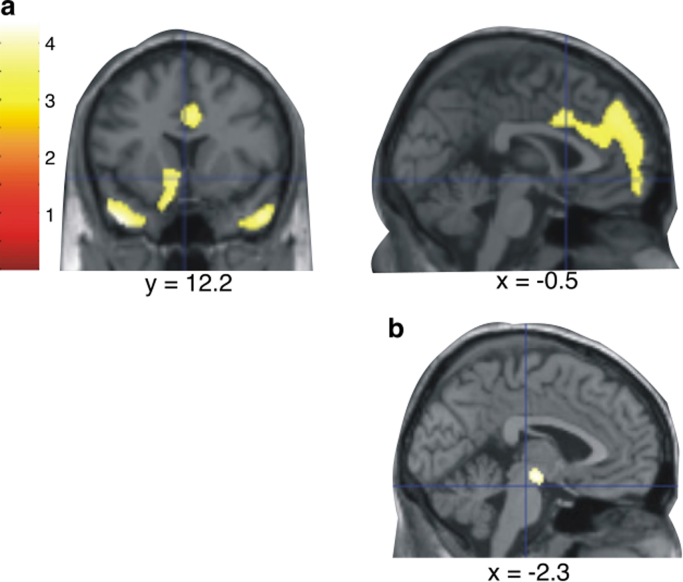
“Strikingly, when regional metabolism or perfusion is examined across different disorders (including frontotemporal dementia (FTD) and subjective cognitive impairment in one study, and AD and organic personality disorder in another), apathy is strongly correlated with reduced ACC activity (Migneco et al., 2001; Schroet…”
BackgroundLoss of psychic self-activation after paramedian bithalamic infarction.
Engelborghs, S., Mariën, P., Pickut, B., Verstraeten, S., & de Deyn, P. (2000) · Stroke · doi:10.1161/01.str.31.7.1762 · Cited by 82
Blanchard, T. C., Strait, C. E., & Hayden, B. Y. (2015) · Journal of Neurophysiology · doi:10.1152/jn.00711.2015 · Cited by 80
Association of Vascular Factors With Apathy in Community-Dwelling Elderly Individuals
Ligthart, S. A., Richard, E., Fransen, N. L., Eurelings, L. S. M., Beem, L., Eikelenboom, P., van Gool, W. A., & Moll van Charante, E. P. (2012) · Archives of General Psychiatry · doi:10.1001/archgenpsychiatry.2011.1858 · Cited by 79
Microstructural alteration of the anterior cingulum is associated with apathy in Alzheimer disease
Kim, J. W., Lee, D. Y., Choo, I. H., Seo, E. H., Kim, S. G., Park, S. Y., & Woo, J. I. (2011) · The American Journal of Geriatric Psychiatry · doi:10.1097/jgp.0b013e31820dcc73 · Cited by 79
Tighe, S. K., Oishi, K., Mori, S., Smith, G. S., Albert, M., Lyketsos, C. G., & Mielke, M. M. (2012) · The Journal of Neuropsychiatry and Clinical Neurosciences · doi:10.1176/appi.neuropsych.11120375 · Cited by 77
A systematic review of the validity and reliability of apathy scales in neurodegenerative conditions
Radakovic, R., Harley, C., Abrahams, S., & Starr, J. (2014) · International Psychogeriatrics · doi:10.1017/s1041610214002221 · Cited by 77 · cited 1×
“On reviewing this literature we have inevitably had to be selective at times due to the considerable variability introduced by different methods of diagnosis and different levels of controlling for comorbidity (Radakovic et al., 2015; Robert et al., 2009).”
BackgroundDistinct Regions within Medial Prefrontal Cortex Process Pain and Cognition
Jahn, A., Nee, D. E., Alexander, W. H., & Brown, J. W. (2016) · The Journal of Neuroscience · doi:10.1523/jneurosci.2180-16.2016 · Cited by 75
Post-Stroke Apathy and Hypoperfusion in Basal Ganglia: SPECT Study
Onoda, K., Kuroda, Y., Yamamoto, Y., Abe, S., Oguro, H., Nagai, A., Bokura, H., & Yamaguchi, S. (2010) · Cerebrovascular Diseases · doi:10.1159/000319771 · Cited by 64 · cited 1×
“One study has in fact concluded that cerebral blood flow within the basal ganglia is reduced in apathetic compared to non-apathetic patients, irrespective of stroke location (Onoda et al., 2011).”
BackgroundAgosta, F., Galantucci, S., Svetel, M. V., Ječmenica‐Lukić, M., Copetti, M., Davidović, K., Tomić, A., Spinelli, E. G., Kostić, V., & Filippi, M. (2014) · Journal of Neurology · doi:10.1007/s00415-014-7301-3 · Cited by 63
Neuroanatomy of a neurobehavioral disturbance in the left anterior thalamic infarction
Nishio, Y., Hashimoto, M., Ishii, K., & Mori, E. (2011) · Journal of Neurology Neurosurgery & Psychiatry · doi:10.1136/jnnp.2010.236463 · Cited by 63
White matter correlates of apathy in HIV-positive subjects: a diffusion tensor imaging study.
Hoare, J., Fouche, J., Spottiswoode, B., Joska, J., Schoeman, R., Stein, D. J., & Carey, P. (2010) · The Journal of Neuropsychiatry and Clinical Neurosciences · doi:10.1176/appi.neuropsych.22.3.313 · Cited by 59 · cited 1×
“Limited reports link cerebellar and brainstem involvement with post stroke apathy (Hoffmann and Cases, 2008).”
BackgroundRelationship between apathy and diffusion tensor imaging metrics of the brain in Alzheimer's disease
Ota, M., Sato, N., Nakata, Y., Arima, K., & Uno, M. (2012) · International Journal of Geriatric Psychiatry · doi:10.1002/gps.2779 · Cited by 58
Jonsson, M., Edman, Å., Lind, K., Rolstad, S., Sjögren, M., & Wallin, A. (2009) · International Journal of Geriatric Psychiatry · doi:10.1002/gps.2379 · Cited by 56
The circuitry of abulia: Insights from functional connectivity MRI
Siegel, J. S., Snyder, A. Z., Metcalf, N. V., Fucetola, R. P., Hacker, C. D., Shimony, J. S., Shulman, G. L., & Corbetta, M. (2014) · NeuroImage Clinical · doi:10.1016/j.nicl.2014.09.012 · Cited by 54
McIntosh, R. C., Rosselli, M., Uddin, L. Q., & Antoni, M. H. (2015) · Neuroscience & Biobehavioral Reviews · doi:10.1016/j.neubiorev.2015.04.008 · Cited by 53 · cited 1×
“…infection Apathy has been recognized as a significant accompaniment of human immunodeficiency virus (HIV) infection, and is thought to arise from the direct result of viral infection, which has a particular affinity for the basal ganglia, rather than as a reactive process (McIntosh et al., 2015).”
BackgroundBalsters, J. H., Mantini, D., Apps, M. A. J., Eickhoff, S. B., & Wenderoth, N. (2016) · NeuroImage: Clinical · doi:10.1016/j.nicl.2016.03.016 · Cited by 50 · cited 1×
“These include the amygdala, anterior insula, DLPFC, VTA, and more ventral portions of the medial prefrontal cortex (Balsters et al., 2016; Beckmann et al., 2009; Haber et al., 1995; Mesulam and Mufson, 1982; Mufson and Mesulam, 1982; Neubert et al., 2015; Petrides and Pandya, 1999; Tighe et al.,…”
BackgroundSelf-citationTotal Recovery after Bilateral Paramedian Thalamic Infarct
Krolak-Salmon, P., Croisile, B., Houzard, C., Setiey, A., Girard-Madoux, P., & Vighetto, A. (2000) · European Neurology · doi:10.1159/000008239 · Cited by 50
Kamat, R., Brown, G. G., Bolden, K., Fennema-Notestein, C., Archibald, S., Marcotte, T. D., Letendre, S. L., Ellis, R. J., Woods, S. P., Grant, I., et al. (2014) · Journal of Clinical and Experimental Neuropsychology · doi:10.1080/13803395.2014.950636 · Cited by 47
Apathy blunts neural response to money in Parkinson's disease
Lawrence, A. D., Goerendt, I. K., & Brooks, D. J. (2011) · Social Neuroscience · doi:10.1080/17470919.2011.556821 · Cited by 47
Neuropsychiatry and White Matter Microstructure in Huntington’s Disease
Gregory, S., the Track-HD investigators, Scahill, R. I., Seunarine, K. K., Stopford, C. L., Zhang, H. G., Zhang, J., Orth, M., Dürr, A., Roos, R. A. C., et al. (2015) · Journal of Huntington s Disease · doi:10.3233/jhd-150160 · Cited by 38 · cited 1×
“In a heterogeneous group of 60 patients who had suffered traumatic brain injury (TBI), reduced volume within brain regions including medial frontal cortex was associated with greater severity of apathetic features (Guild and Levine, 2015).”
BackgroundDeficiency of brain structural sub‐network underlying post‐ischaemic stroke apathy
Yang, S., Hua, P., Shang, X.-Y., Cui, Z., Zhong, S., Gong, G., & Humphreys, G. W. (2014) · European Journal of Neurology · doi:10.1111/ene.12575 · Cited by 32
Reduced prefrontal N-acetylaspartate in stroke patients with apathy.
Głodzik-Sobańska, L., Słowik, A., Kiełtyka, A., Kozub, J., Sobiecka, B., Urbanik, A., & Szczudlik, A. (2005) · Journal of Neurological Sciences · doi:10.1016/j.jns.2005.06.004 · Cited by 31
Preoperative factors of apathy in subthalamic stimulated Parkinson disease
Robert, G., Jeune, F. L., Lozachmeur, C., Drapier, S., Dondaine, T., Péron, J., Houvenaghel, J.-F., Travers, D., Sauleau, P., Millet, B., et al. (2014) · Neurology · doi:10.1212/wnl.0000000000000941 · Cited by 28
Lim, T., & So, Y.-M. (2010) · doi:10.1016/j.jalz.2010.05.1477 · Cited by 27
Etiology of Frontal Network Syndromes in Isolated Subtentorial Stroke
Hoffmann, M., & Cases, L. B. (2009) · Behavioural Neurology · doi:10.3233/ben-2008-0220 · Cited by 23 · cited 1×
“Apathy was associated with reduced FA within WM pathways including the anterior cingulum, uncinate fasciculus and fornix (Hollocks et al., 2015).”
BackgroundTakayanagi, Y., Gerner, G. J., Takayanagi, M., Rao, V., Vannorsdall, T., Sawa, A., Schretlen, D., & Cascella, N. (2013) · The Journal of Neuropsychiatry and Clinical Neurosciences · doi:10.1176/appi.neuropsych.12040093 · Cited by 21
Woodhall, B. (1960) · Cancer chemotherapy reports · doi:10.1097/00000542-197401000-00027 · Cited by 21 · cited 1×
“Research using SPECT has consistently demonstrated that reduced perfusion in ACC and OFC – as well as frontopolar and DLPFC regions in some studies – is associated with apathy in AD (Benoit et al., 2004; Craig et al., 1996; Lanctôt et al., 2007; Migneco et al., 2001; Robert et al., 2006).”
ResultPrefrontal Markers and Cognitive Performance Are Dissociated during Progressive Dopamine Lesion
Wilson, C. R. E., Vezoli, J., Stoll, F. M., Faraut, M. C. M., Leviel, V., Knoblauch, K., & Procyk, E. (2016) · PLoS Biology · doi:10.1371/journal.pbio.1002576 · Cited by 19
Functional Correlates of Midline Brain Volume Loss in Chronic Traumatic Brain Injury
Guild, E. B., & Levine, B. (2015) · Journal of the International Neuropsychological Society · doi:10.1017/s1355617715000600 · Cited by 17 · cited 1×
“…the amygdala, anterior insula, DLPFC, VTA, and more ventral portions of the medial prefrontal cortex (Balsters et al., 2016; Beckmann et al., 2009; Haber et al., 1995; Mesulam and Mufson, 1982; Mufson and Mesulam, 1982; Neubert et al., 2015; Petrides and Pandya, 1999; Tighe et al., 2012; Vogt,…”
BackgroundAdaptive coding of action values in the human rostral cingulate zone
Ullsperger, M., Neumann, J., Klein, T., Danielmeier, C., & Jocham, G. (2009) · NeuroImage · doi:10.1016/s1053-8119(09)72093-2 · Cited by 6
Apathetic syndrome from carotid dissection: a dangerous condition
Gerace, C., Corsi, F., & Comanducci, G. (2013) · BMJ Case Reports · doi:10.1136/bcr-2013-009686 · Cited by 4
Micrographia and abulia due to frontal subcortical infarction.
Maeda, K., Idehara, R., & Shiraishi, T. (2012) · Internal medicine · doi:10.2169/internalmedicine.51.7721 · Cited by 4 · cited 1×
“Subcortically, basal ganglia lesions, particularly those involving the caudate nucleus or nucleus accumbens, are associated with the development of apathy (Bhatia and Marsden, 1994; Gerace et al., 2013; Maeda et al., 2012; Phillips et al., 1987).”
BackgroundKhan (2000) · doi:10.1002/1531-8249(200008)48:2
Research works printed but not linked: 1
- Mori, 2006, Principles of diffusion tensor imaging and its applications to basic neuroscience research, Neuron, 51, 527, 10.1016/j.neuron.2006.08.012 · DOI · Paper page
Cited by
Sorted by citations
The cingulum bundle: Anatomy, function, and dysfunction
Bubb, E. J., Metzler-Baddeley, C., & Aggleton, J. P. (2018) · Neuroscience & Biobehavioral Reviews · doi:10.1016/j.neubiorev.2018.05.008 · Cited by 740
Neuroscience of apathy and anhedonia: a transdiagnostic approach
Husain, M., & Roiser, J. P. (2018) · Nature reviews. Neuroscience · doi:10.1038/s41583-018-0029-9 · Cited by 682
Self-citationRobert, P., Lanctôt, K., Agüera-Ortiz, L., Aalten, P., Brémond, F., Defrancesco, M., Hanon, C., David, R., Dubois, B., Dujardin, K., et al. (2018) · European psychiatry · doi:10.1016/j.eurpsy.2018.07.008 · Cited by 283
“, interviews and self-reports; see [17] for a review) but also on new Information and Communication Technologies (ICTs, e.”
BackgroundSelf-citationBehavioral and Psychological Effects of Coronavirus Disease-19 Quarantine in Patients With Dementia
Cagnin, A., Lorenzo, R. D., Marra, C., Bonanni, L., Cupidi, C., Laganà, V., Rubino, E., Vacca, A., Provero, P., Isella, V., et al. (2020) · Frontiers in Psychiatry · doi:10.3389/fpsyt.2020.578015 · Cited by 380
“Apathy, in fact, may have a cognitive, emotional, and physical component and each type of apathy has defined neuro-anatomical correlates targeting prefrontal, dorsolateral, and motor cortex other than striatum (34, 35).”
BackgroundMüller, T., & Apps, M. A. J. (2018) · Neuropsychologia · doi:10.1016/j.neuropsychologia.2018.04.030 · Cited by 265
Self-citation
Metadata
- Authors
- Le Heron, C., Apps., M. A. J., & Husain, M.
- Venue
- Neuropsychologia
- Publisher
- Elsevier BV
- Published
- 2018-09
- Volume
- 118
- Issue
- Pt B
- Pages
- 54-67
- ISSN
- 0028-3932 (ISSN-L)
- PMC
- PMC6200857
- OpenAlex
- W2726746745
- Cited by
- 380
- References
- 168
- Citations by year
- 2026: 44 · 2025: 43 · 2024: 55 · 2023: 48 · 2022: 55 · 2021: 50 · 2020: 38 · 2019: 20 · 2018: 21
- FWCI
- 13.34
- Type
- journal article
- Language
- en
- Open access
- hybrid
- doi.org
- Locations
- Neuropsychologia (publishedVersion, cc-by)
- Europe PMC (PubMed Central) (publishedVersion, cc-by)
- PubMed Central (publishedVersion, cc-by)
- PubMed (publishedVersion)
- University of Birmingham Research Portal (University of Birmingham) (submittedVersion)
- Funders
- University of Oxford Christopher Welch Scholarship in Biological Sciences
- University of Oxford Clarendon Scholarship
- Green Templeton College Partnership award (GAF1415_CB2_ MSD_758342)
- Biotechnology and Biological Sciences Research Council AFL Fellowship (BB/M013596/1)
- Wellcome Trust (098282)
- Topics
- Life Sciences › Neuroscience › Cognitive Neuroscience › Neural and Behavioral Psychology Studies
- Life Sciences › Neuroscience › Cellular and Molecular Neuroscience › Neurotransmitter Receptor Influence on Behavior
- Health Sciences › Medicine › Psychiatry and Mental health › Dementia and Cognitive Impairment Research
- Keywords
- apathy, motivated behavior, dorsal anterior cingulate cortex, ventral striatum, neurodegenerative diseases, Parkinson's disease, Alzheimer's disease, stroke, neuroimaging correlates, willingness to work
- MeSH terms
- Brain, Brain Mapping, Humans, Motivation, Apathy, Neuroimaging
About these checks
Registry, retraction, Cites and statistics results are computed, not judged, with one exception: a printed reference that no index lists is read once by a model before it counts as a citation error. Claims are extracted by a model and kept only when their quote appears verbatim in the text; each cited source is then checked, with a model’s help, for whether it says what the claim relies on. Those verdicts can be wrong — read the claim’s quote and the cited source before relying on one.
Statistics and arithmetic are recomputed, not judged.
Confidence bands are shown only for fields calibrated on our annotated test set. None is calibrated yet, so no band is shown.
What counts as a claim ›How we measure confidence ›How we check this ›
Are you an author, or do you see a problem with this page? Request a review
