

The DOI matches its Crossref record; 163 of the 168 references it cites were found in a registry or an index.
The anatomy of apathy: A neurocognitive framework for amotivated behaviour
Open accessAbstract
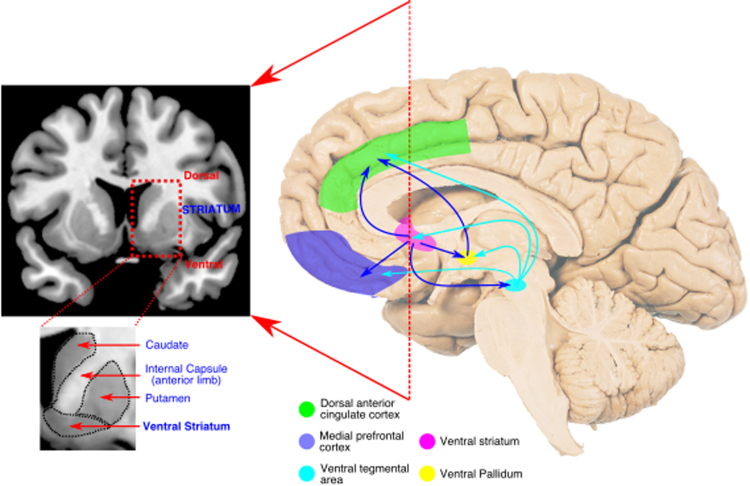
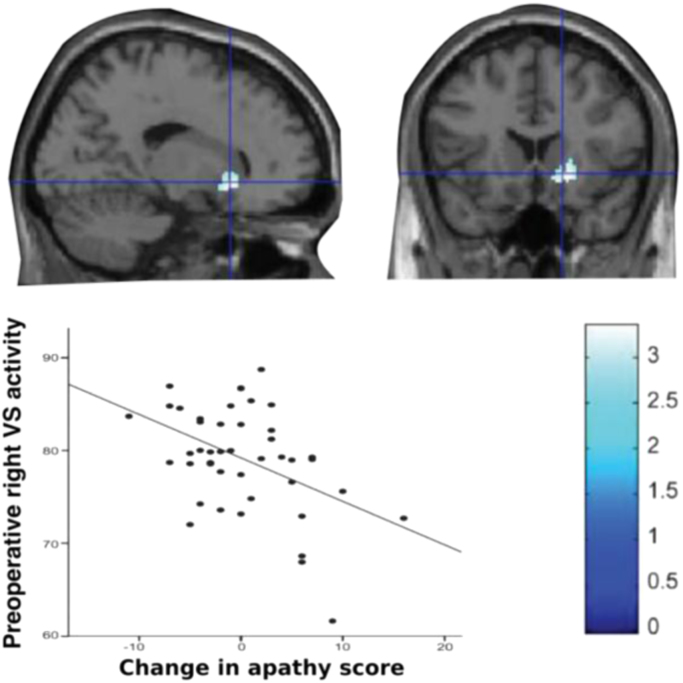
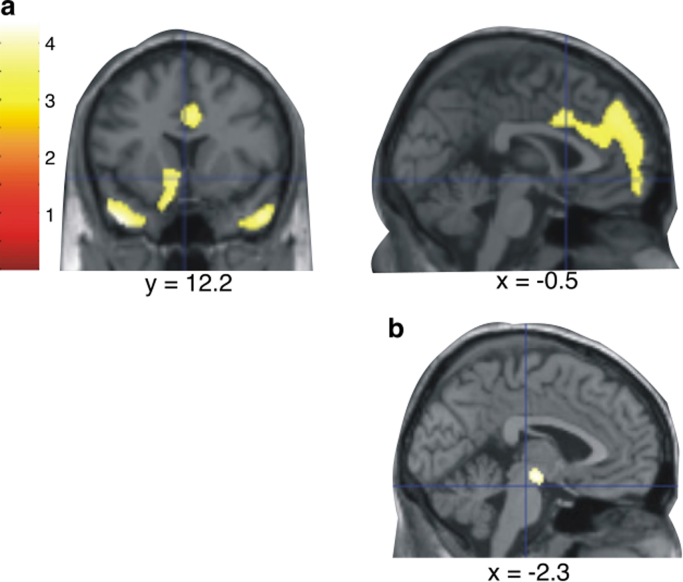
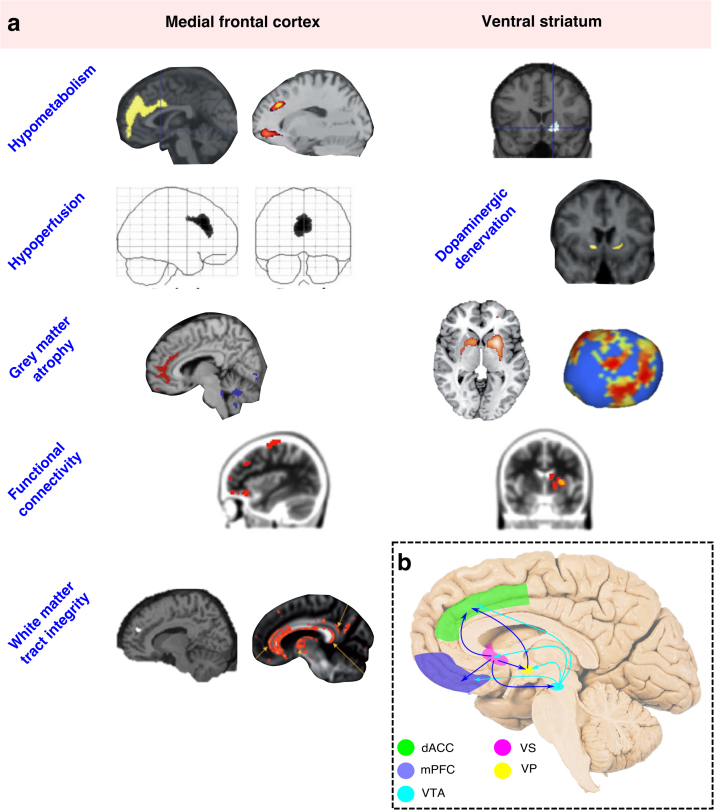
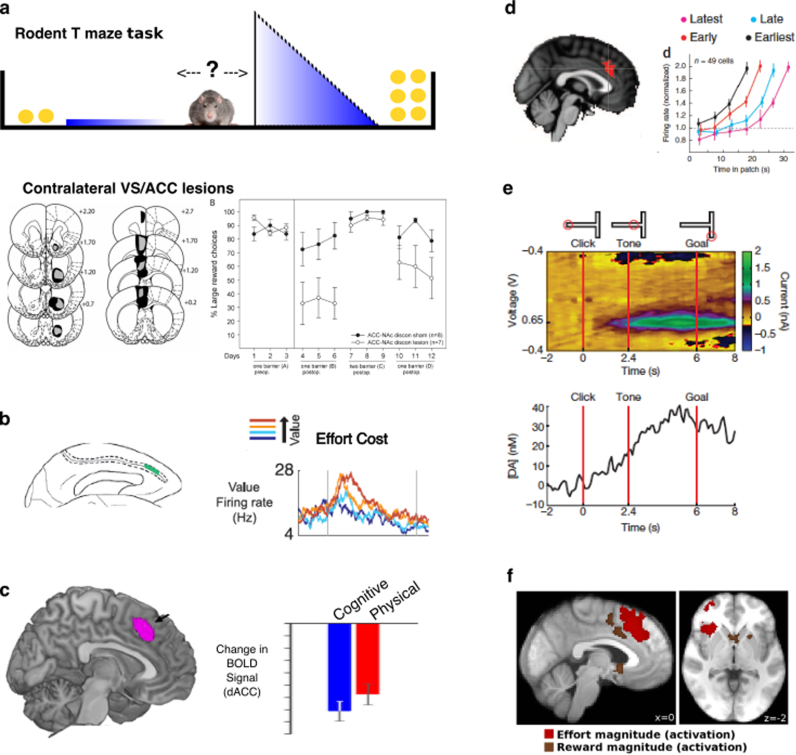
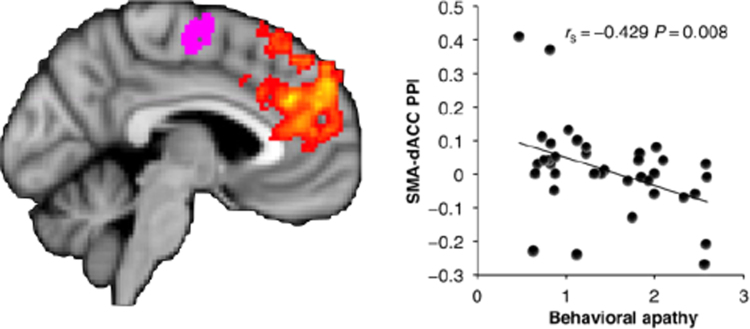
Apathy is a debilitating syndrome associated with many neurological disorders, including several common neurodegenerative diseases such as Parkinson's disease and Alzheimer's disease, and focal lesion syndromes such as stroke. Here, we review neuroimaging studies to identify anatomical correlates of apathy, across brain disorders. Our analysis reveals that apathy is strongly associated with disruption particularly of dorsal anterior cingulate cortex (dACC), ventral striatum (VS) and connected brain regions. Remarkably, these changes are consistent across clinical disorders and imaging modalities. Review of the neuroimaging findings allows us to develop a neurocognitive framework to consider potential mechanisms underlying apathy. According to this perspective, an interconnected group of brain regions - with dACC and VS at its core - plays a crucial role in normal motivated behaviour. Specifically we argue that motivated behaviour requires a willingness to work, to keep working, and to learn what is worth working for. We propose that deficits in any one or more of these processes can lead to the clinical syndrome of apathy, and outline specific approaches to test this hypothesis. A richer neurobiological understanding of the mechanisms underlying apathy should ultimately facilitate development of effective therapies for this disabling condition.
Overview
The claims and statistics of this paper haven’t been checked yet.
Run the check — free, no account needed. It reads the open-access text and checks the sources it cites.
Integrity signals
Registry
Cites
Statistics
Figures
Verification
Claims the paper makes
The claims and statistics of this paper haven’t been checked yet.
Run the check — free, no account needed. It reads the open-access text and checks the sources it cites.
Claims other papers make about this one
Each is checked against this paper’s own text: does it say what the citing paper says it does?
The cited source says what the claim attributes to it.
In the citing paper
“In addition, apathy is a well-recognized feature of strokes affecting similar portions of the medial frontal cortex (Kang & Kim, 2008; Le Heron et al., 2018) and the medial and anterior thalamus (Carrera & Bogousslavsky, 2006; Krause et al., 2012; Serra et al., 2013) respectively.”
From The cingulum bundle: Anatomy, function, and dysfunction (2018) · cites this paper as Le Heron et al., 2018
The cited source says what the claim attributes to it.
In the citing paper
“Across differing underlying pathologies and neuroimaging methods, the anterior cingulate cortex, orbital frontal cortex, and medial thalamus exhibit some of the most robust changes associated with apathy (Le Heron et al., 2018).”
From The cingulum bundle: Anatomy, function, and dysfunction (2018) · cites this paper as Le Heron et al., 2018
Self-check
Percentages, sums and reported differences re-computed from the paper’s own numbers.
The self-check needs the paper’s full text.
Citations
Cites
(2022) · La Revue du praticien · doi:10.1093/ageing/afgi30 · Cited by 15,809 · cited 1×
“Research using SPECT has consistently demonstrated that reduced perfusion in ACC and OFC – as well as frontopolar and DLPFC regions in some studies – is associated with apathy in AD (Benoit et al., 2004; Craig et al., 1996; Lanctôt et al., 2007; Migneco et al., 2001; Robert et al., 2006).”
ResultKalia, L. V., & Lang, A. E. (2015) · The Lancet · doi:10.1016/s0140-6736(14)61393-3 · Cited by 6,184
Optimal foraging, the marginal value theorem
Charnov, E. L. (1976) · Theoretical Population Biology · doi:10.1016/0040-5809(76)90040-x · Cited by 5,374
Functional architecture of basal ganglia circuits: neural substrates of parallel processing
Alexander, G. E., & Crutcher, M. D. (1990) · Trends in Neurosciences · doi:10.1016/0166-2236(90)90107-l · Cited by 4,131
Contributions of anterior cingulate cortex to behaviour
Devinsky, O., Morrell, M. J., & Vogt, B. A. (1995) · Brain · doi:10.1093/brain/118.1.279 · Cited by 3,377
Anterior Cingulate Cortex, Error Detection, and the Online Monitoring of Performance
Carter, C. S., Braver, T. S., Barch, D. M., Botvinick, M. M., Noll, D., & Cohen, J. D. (1998) · Science · doi:10.1126/science.280.5364.747 · Cited by 3,273
The expected value of control: an integrative theory of anterior cingulate cortex function
Shenhav, A., Botvinick, M. M., & Cohen, J. D. (2013) · Neuron · doi:10.1016/j.neuron.2013.07.007 · Cited by 2,321
Berridge, K. C., & Kringelbach, M. L. (2015) · Neuron · doi:10.1016/j.neuron.2015.02.018 · Cited by 1,730 · cited 1×
“Subcortically, basal ganglia lesions, particularly those involving the caudate nucleus or nucleus accumbens, are associated with the development of apathy (Bhatia and Marsden, 1994; Gerace et al., 2013; Maeda et al., 2012; Phillips et al., 1987).”
BackgroundReconsidering anhedonia in depression: Lessons from translational neuroscience
Treadway, M. T., & Zald, D. H. (2011) · Neuroscience & Biobehavioral Reviews · doi:10.1016/j.neubiorev.2010.06.006 · Cited by 1,579
Temporal difference models and reward-related learning in the human brain
O'Doherty, J. P., Dayan, P., Friston, K., Critchley, H., & Dolan, R. J. (2003) · Neuron · doi:10.1016/s0896-6273(03)00169-7 · Cited by 1,522
Research works printed but not linked: 1
- Mori, 2006, Principles of diffusion tensor imaging and its applications to basic neuroscience research, Neuron, 51, 527, 10.1016/j.neuron.2006.08.012 · DOI · Paper page
Cited by
Sorted by citations
Items 201–300 of 351
Apathy scores in Parkinson’s disease relate to EEG components in an incentivized motor task
Lee, S., Song, E., Zhu, M., Appel‐Cresswell, S., & McKeown, M. J. (2023) · Brain Communications · doi:10.1093/braincomms/fcae025 · Cited by 5
“…neural systems have cascading effects on other brain regions, impacting the evaluation of costs and benefits (here, the ‘costs’ are assumed to reflect the effort associated with taking an action, and the ‘benefit’ involves the valuation of the expected potential rewards from the action 5,16,17 ).”
BackgroundPsychobehavioural profile in narcolepsy type 1 with and without REM sleep behaviour disorder
Mombelli, S., Ricordeau, F., Gillard, L., Lecca, R., Vidal, T., Pereira, B., Beudin, P., Vitello, N., Bastuji, H., Peter‐Derex, L., et al. (2023) · Journal of Sleep Research · doi:10.1111/jsr.13925 · Cited by 4
“Neuroimaging studies in patients with apa-thy associated with neurologic conditions showed a disruption of different brain areas including the ventral striatum, a major reward system component (Le Heron et al., 2018).”
BackgroundDisentangling Clinical Profiles of Apathy in Behavioral Variant Frontotemporal Dementia
Godefroy, V., Batrancourt, B., Charron, S., Bouzigues, A., Sezer, I., Bendetowicz, D., Carle, G., Rametti‐Lacroux, A., Bombois, S., Cognat, E., et al. (2022) · Journal of Alzheimer's Disease · doi:10.3233/jad-220370 · Cited by 6
“Besides, since bvFTD-G2’s atrophy pattern included regions typically associated with apathy in the literature [1, 3, 4, 11, 42], it is also doubtful that this subgroup could be a “no-apathy” group, as suggested by their mean SAS score below the clinical cut-off of 14.”
Post-Acute Sequelae of SARS-CoV-2 Infection: A Descriptive Clinical Study
Gutiérrez-Martínez, L., Karten, J., Kritzer, M. D., Josephy‐Hernandez, S. E., Kim, D. D., Newhouse, A. L., Pasinski, M., Praschan, N. C., Razafsha, M., Rubin, D. B., et al. (2022) · Journal of Neuropsychiatry · doi:10.1176/appi.neuropsych.21070193 · Cited by 8
Post-stroke apathy: A case series investigation of neuropsychological and lesion characteristics
Horne, K., Gibson, E. C., Byrne, J., Bender, J. R., & Robinson, G. A. (2022) · Neuropsychologia · doi:10.1016/j.neuropsychologia.2022.108244 · Cited by 5
Raffard, S., Norton, J. L., der Linden, M. V., Lançon, C., Benoît, M., & Capdevielle, D. (2022) · Journal of Psychiatric Research · doi:10.1016/j.jpsychires.2022.01.033 · Cited by 9
Leśniak, M., Roessler-Górecka, M., Członkowska, A., & Seniów, J. (2021) · Neurological Sciences · doi:10.1007/s10072-021-05366-0 · Cited by 6
Hogeveen, J., Aragon, D., Rogge-Obando, K., Campbell, R. A., Shuttleworth, C. W., Avila-Rieger, R., Yeo, R. A., Wilson, J. K., Fratzke, V., Brandt, E., et al. (2021) · Journal of Neurotrauma · doi:10.1089/neu.2020.7363 · Cited by 13
“In addition, given the hypothesized association be-tween ventral striatum-dACC connectivity and apathy in neurological disorders, 58 the TBI FC regression was also run with nucleus accumbens as the seed ROI (run separately by hemisphere; accumbens masks via the Harvard-Oxford Probabilistic…”
Caravaggio, F., Plavén‐Sigray, P., Matheson, G. J., Plitman, E., Chakravarty, M. M., Borg, J., Graff‐Guerrero, A., & Červenka, S. (2018) · PLoS ONE · doi:10.1371/journal.pone.0209584 · Cited by 5
Pillny, M., Renz, K. E., Lincoln, T. M., Lütje, F., Hay, A., Fulford, D., Barch, D. M., Gold, J. M., & Kaiser, S. (2026) · Psychological Bulletin · doi:10.1037/bul0000510 · Cited by 10
Apathy in autoimmune GFAP Astrocytopathy: A case series and literature review.
Tomizawa, Y., Okada, H., Miyachi, M., Hoshino, Y., Cossu, D., Kimura, A., Shimohata, T., & Hattori, N. (2025) · Journal of Neuroimmunology · doi:10.1016/j.jneuroim.2025.578733 · Cited by 5
Diminished Social and Leisure Engagement in Community Dwelling-Older Adults with Apathy
Valles, K., Ayers, E. I., Verghese, J., & Ceïde, M. E. (2025) · International Journal of Environmental Research and Public Health · doi:10.3390/ijerph22071138 · Cited by 6
“Additionally, decreased connectivity between the neural circuits involved in motivated behavior have been observed in neuroimaging studies of apathy [52,53].”
Franz, M., Kebets, V., Berg, X., Georgiadis, F., Milano, B. A., Burrer, A., Brakowski, J., Kaiser, S., Seifritz, E., Homan, P., et al. (2025) · Schizophrenia Bulletin · doi:10.1093/schbul/sbaf078 · Cited by 6
“37,38 39 morphometric findings on striatal subregions have been inconsistent, with studies reporting negative , 40, 41 positive, 42 or Integrating multiple lines of research, our study investigates whether localized OFC thickness alterations and OFC covariance networks constitute transdiagnostic…”
Zhao, J., Shi, C., Zhang, X.-C., Ma, S.-C., Sun, W., Tian, F., Wang, P.-F., Li, J.-L., Du, J.-C., Zhao, X.-H., et al. (2025) · Frontiers in Neurology · doi:10.3389/fneur.2025.1537841 · Cited by 5
Tremblay, C., Shakir, N., Zhang, N., Adler, C. H., Shill, H. A., Mehta, S., Driver-Dunckley, E., Belden, C. M., Atri, A., Beach, T., et al. (2025) · Journal of Alzheimer's Disease · doi:10.1177/13872877251320670 · Cited by 5
“31 Overall, our results suggest that NPS pro fi le could be useful for identifying patients with comorbid LB pathology early in the disease process and clinicians should consider co-morbid LB pathology in patients with high NPS burden.”
Totuk, Ö., & Şahin, Ş. (2025) · Journal of Clinical Medicine · doi:10.3390/jcm14061822 · Cited by 8
van Dorst, M. E. G., Rensen, Y. C. M., Nijsten, J. M. H., Janssen, G. T. L., & Kessels, R. (2024) · Neuropsychiatric Disease and Treatment · doi:10.2147/ndt.s483470 · Cited by 5
Bogdanov, M., Bustamante, L., Devine, S., Sheldon, S., & Otto, A. (2024) · Journal of Neuroscience · doi:10.1101/2024.09.27.615545 · Cited by 5
“…contributing factor of apathy and anhedonia, symptoms commonly observed across many neurological and psychiatric conditions, including major depression, schizophrenia, Parkinson ’ s disease, and dementia (Culbreth et al., 2018; Husain and Roiser, 2018; Le Heron et al., 2018; McGuigan et al., 2019).”
APOE4-related differences in cortical thickness are modulated by sex in middle age
Leclaire, K. N., Blujus, J. K., Korthauer, L. E., & Driscoll, I. F. (2024) · Brain Imaging and Behavior · doi:10.1007/s11682-024-00911-9 · Cited by 6
“…in the pathophysiology of AD, loss of ACC integrity has been related to normal aging (Kalpouzos et al., 2009; Pardo et al., 2007; Vaidya et al., 2007), dementia-related apathy (Le Heron et al., 2018), and is predictive of the behavioral variant of frontotemporal dementia (Tan et al., 2013).”
Zhou, P., Li, W., Zhao, J., Chen, S., Chen, Y., Shen, X., & Xu, D. (2023) · Frontiers in Neurology · doi:10.3389/fneur.2023.1200741 · Cited by 8
Jiang, S., Zhang, H., Fang, Y., Yin, D., Dong, Y., Chao, X., Gong, X., Wang, J., & Sun, W. (2023) · Brain Sciences · doi:10.3390/brainsci13050730 · Cited by 6
Dehmiyani, A., Mehdizadeh, H., Azad, A., Cheraghifard, M., Jamali, S., Davoudi, M., Shokouhyan, S. M., & Taghizadeh, G. (2022) · Neuropsychologia · doi:10.1016/j.neuropsychologia.2022.108344 · Cited by 5
Apathetic symptoms and white matter integrity after traumatic brain injury
Navarro-Main, B., Castaño-Leon, A., Hilario, A., Lagares, A., Rubio, G., Periañez, J., Ríos-Lago, M., & Inertia Group Collaborators (2021) · Brain Injury · doi:10.1080/02699052.2021.1953145 · Cited by 5
Thomas, S. T., Palanikumar, L., Darby, D., & Brodtmann, A. G. (2025) · Cerebral Circulation - Cognition and Behavior · doi:10.1016/j.cccb.2025.100404 · Cited by 3
“Pathological processes affecting the ACC and its connections are associated with apathy, slowed processing speed, and behavioural rigidity, commonly observed in VCID patients [13,14].”
Apathy linked to higher amyloid burden and cognitive deterioration in Parkinson's disease
Gasca-Salas, C., Fernández-Fernández, R., Rodríguez-Rojas, R., Fernández-Rodríguez, B., García-Cañamaque, L., Lahera, G., & Trompeta, C. (2025) · Journal of Parkinson's Disease · doi:10.1177/1877718x251370969 · Cited by 4
Guasch, C., Shulte, V. P., & Rojas-Velasquez, D. (2025) · The American journal of geriatric psychiatry · doi:10.1016/j.osep.2025.03.001 · Cited by 4
Liu, Y., Hsien, Y.-K., Su, W., Tang, Z., Li, H., Long, J., Liao, X., & Zhang, H. (2025) · Frontiers in Psychiatry · doi:10.3389/fpsyt.2025.1458602 · Cited by 4
“Neuroimaging studies have consistently linked the apathetic syndrome to disruptions in speci fi c medial frontal cortex and subcortical structures, particularly the anterior cingulate cortex, medial orbitofrontal cortex, and ventral striatum (17, 18).”
Persistence of effort in apathy.
Dalléry, R., Saleh, Y., Manohar, S., & Husain, M. (2023) · Revue neurologique (Paris) · doi:10.1016/j.neurol.2023.03.017 · Cited by 4
Self-citationHorne, K., Ceslis, A., Mosley, P. E., Adam, R. J., & Robinson, G. A. (2023) · Cognitive and Behavioral Neurology · doi:10.1097/wnn.0000000000000345 · Cited by 5
Davis, M.-C., Hill, A. T., Fitzgerald, P. B., Stout, J. C., & Hoy, K. (2022) · medRxiv · doi:10.1101/2022.08.10.22278645 · Cited by 4
Bawa, K. K., Ba, J., Kiss, A., Wang, R., Feng, V., Swardfager, W., Andreazza, A. C., Gallagher, D., Marotta, G., Herrmann, N., et al. (2022) · Journal of Alzheimer s Disease · doi:10.3233/jad-220274 · Cited by 4
Hernández-Contreras, K. A., Martínez-Díaz, J. A., Hernández‐Aguilar, M. E., Herrera‐Covarrubias, D., Rojas-Durán, F., & Aranda-Abreu, G. E. (2021) · Revista Colombiana de Psiquiatría · doi:10.1016/j.rcp.2021.10.007 · Cited by 4
Lázaro-Perlado, F. (2019) · Current Psychiatry Research and Reviews · doi:10.2174/1573400515666190306150306 · Cited by 4
Stimulating cingulate: distinct behaviours arise from discrete zones
Apps, M. (2018) · Brain : a journal of neurology · doi:10.1093/brain/awy224 · Cited by 4
“This aligns with many theories that posit a role for this area in goal-directed behaviour, motivation and cognitive control (Kolling et al., 2016; Le Heron et al., 2017).”
BackgroundSelf-citationCognitive dysfunction and neuropsychiatric aspects of Parkinson's disease
Austgen, G., & Marsh, L. (2022) · Progress in brain research · doi:10.1016/bs.pbr.2022.01.009 · Cited by 6
[Apathy in depression: a morphometric analysis].
Avedisova, A., Samotaeva, I., Luzin, R., Semenovyh, N. S., Sergunova, K., Akzhigitov, R., & Zakharova, R. V. (2019) · Zhurnal Nevrologii i Psikhiatrii imeni S.S. Korsakova · doi:10.17116/jnevro2019119051141 · Cited by 4
Evidence and implications of abnormal predictive coding in dementia
Kocagoncu, E., Klimovich-Gray, A., Hughes, L. E., & Rowe, J. B. (2021) · Brain · doi:10.1093/brain/awab254 · Cited by 3
Neuropsychiatric symptoms in behavioral variant frontotemporal dementia: a narrative review
Page, J., Pontone, G. M., & Davydow, D. S. (2025) · International Review of Psychiatry · doi:10.1080/09540261.2025.2583257 · Cited by 3
“…to involve dysfunction in several areas including the orbitofrontal cortex (OFC), anterior cingulate cortex (ACC), ventral striatum, and the dorsal lateral prefrontal cortex (DLPFC) (Rouse et al., 2025; Sheelakumari et al., 2020; Zamboni et al., 2008; Ducharme et al., 2018; Le Heron et al., 2018).”
Zhang, L., Chen, K.-D., Zhi, Y., Ji, W., Shi, G., You, Y.-P., Wang, F., Chen, K.-F., Xu, T., & Fang, X.-M. (2025) · Quantitative Imaging in Medicine and Surgery · doi:10.21037/qims-2024-2626 · Cited by 3
“The characteristic pathological changes of PD are the degenerative death of dopaminergic neurons in the substantia nigra of the midbrain and the presence of Lewy bodies composed of α -synuclein ( α -syn) in the remaining neurons (14).”
Mapping of validated apathy scales onto the apathy diagnostic criteria for neurocognitive disorders
Sankhe, K., Bawa, K. K., Miller, D. S., Bateman, D. R., Cummings, J. L., Ereshefsky, L., Husain, M., Ismail, Z., Manera, V., Mintzer, J. E., et al. (2025) · International Psychogeriatrics · doi:10.1016/j.inpsyc.2025.100074 · Cited by 5
Self-citationHärmson, O., Grennan, I., Perry, B. A. L., Toth, R. A., McNamara, C. G., Denison, T., Cagnan, H., Manohar, S., Walton, M. E., & Sharott, A. (2025) · Cell Reports · doi:10.1016/j.celrep.2024.115209 · Cited by 5
Norris, S., Salgado, F., Murray, S., Amen, D., & Keator, D. B. (2025) · Depression and Anxiety · doi:10.1155/da/2739947 · Cited by 4
Farajzadeh, A., Jabouille, F., Benoit, N., Bezeau, O., Bourgie, T., Gerro, B., Ouimet, J., & Boisgontier, M. P. (2024) · Communications in Kinesiology · doi:10.51224/cik.2024.68 · Cited by 5
“Apathy, characterized by reduced motivation and difficulty generating action plans for goal-directed behavior, results from a desensitization to reward (Martínez-Horta et al., 2014; Muhammed et al., 2016) or an increased sensitivity to effort (Bonnelle, 2016; Le Heron, 2018; Le Heron, 2019).”
de Bruin, J., Choi, K. S., Mayberg, H., Jimenez-shahed, J., Palmese, C., Khang, J., Song, H., Kopell, B., & Figee, M. (2024) · Parkinsonism & Related Disorders · doi:10.1016/j.parkreldis.2024.107244 · Cited by 3
Malik, R., Beaton, D., Ahmed, J., Nho, K. T., Saykin, A. J., Wang, J., Hegele, R. A., Finger, E. C., & Initiative, A. D. N. (2024) · Journal of Alzheimer s Disease · doi:10.1177/13872877241299785 · Cited by 4
Measuring clinically relevant change in apathy symptoms in ADMET and ADMET 2
Tumati, S., Herrmann, N., Perin, J., Rosenberg, P. B., Lerner, A. J., Mintzer, J. E., Padala, P. R., Brawman‐Mintzer, O., van Dyck, C. H., Porsteinsson, A. P., et al. (2024) · International Psychogeriatrics · doi:10.1017/s1041610224000711 · Cited by 5
“Finally, while these rating scales are widely used, they do not account for the multidimensional nature of apathy (Le Heron et al ., 2018).”
Characterization of Apathy-Like Behaviors in Mouse Models of Down Syndrome
Zhang, T., Wang, X., Jester, H. M., Zhou, X., & Ma, T. (2024) · Journal of Alzheimer s Disease · doi:10.3233/jad-240675 · Cited by 3
Hédouin, R., Roy, J.-C., Desmidt, T., Robert, G., & Coloigner, J. (2024) · Scientific Reports · doi:10.1038/s41598-024-67535-3 · Cited by 3
“…suggests that impaired behaviour execution, independent of depression severity, might be involved in apathy in LLD. Lesions of the striato-premotor fasciculus have been reported in apathy in neurodegenerative disorders 35 , which may be more sensitively detected with multi-compartments modeling.”
Adolescent stress accelerates postpartum novelty recognition impairment in 5xFAD mice
Leitzel, O., de Oliveira, J. F., Khedr, S., Ariste, L., Robel, S., Kano, S., Arrant, A. E., & Niwa, M. (2024) · Frontiers in Neuroscience · doi:10.3389/fnins.2024.1366199 · Cited by 3
Navigating the complex terrain of motivated behavior: a bibliometric and neuroscientific perspective
Helou, A. Y., & Bittencourt, J. C. (2024) · Frontiers in Behavioral Neuroscience · doi:10.3389/fnbeh.2024.1363856 · Cited by 3
Neural and computational mechanisms of effort under the pressure of a deadline
Pisauro, M. A., Pollicino, D., Fisher, L., & Apps, M. A. J. (2026) · Nature Communications · doi:10.1038/s41467-026-75987-6 · Cited by 3
“Lesions to these regions in humans, and homologous areas in animals models, reduce the willingness to exert effort 15,16,29 .”
InfluentialSelf-citationPredictors of Student Apathy amongst Generation Z
Ewurum, N., Obi-Aso, N. E., & Emoh, F. I. (2024) · Journal of African Real Estate Research · doi:10.15641/jarer.v8i2.1366 · Cited by 4
“…empiricisms have generated considerable delineations of apathy behaviour in corporate, civil service, manufacturing, tertiary education, healthcare and other establishments (Abd & Behadili, 2019; Glerum & Joseph, 2017; Le Heron et al., 2018; Schmidt et al., 2017; Starkstein & Leentjens, 2008).”
BackgroundRoy, J.-C., Hédouin, R., Desmidt, T., Dam, S., Miréa-Grivel, I., Weyl, L., Bannier, É., Barantin, L., Drapier, D., Batail, J.-M. V., et al. (2024) · Biological Psychiatry Cognitive Neuroscience and Neuroimaging · doi:10.1016/j.bpsc.2024.04.002 · Cited by 2
“Based on previous studies of LLD or apathy (32 – 34), we selected 22 bundles of interest a priori: 7 parts from the corpus callosum comprising the rostrum, genu, posterior midbody, isthmus, and splenium; the anterior commissure; bilateral cingulum; bilateral superior longitudinal fascicles (divided…”
Daumas, L., Zory, R., Junquera-Badilla, I., y Montesino, M. F., Ettore, É., Robert, P. H., Sacco, G., Manera, V., & Ramanoël, S. (2023) · npj Aging · doi:10.1038/s41514-023-00121-5 · Cited by 3
“Last, current fi ndings could be explained by the relying of exploitation on the structures involved in anticipation, valuation, and experience of rewards comprising notably the mesocorticolimbic dopaminergic pathway and the vmPFC 32 , which are also found disrupted in apathy 15,18 .”
Successful Treatment of Apathy with Electroconvulsive Therapy
Blumberger, D. (2023) · International Journal of Clinical Studies and Medical Case Reports · doi:10.46998/ijcmcr.2023.30.000726 · Cited by 3
Cannizzaro, A., Ronat, L. A., Haffaf, L. M. E., Hanganu, A., & Initiative, A. D. N. (2023) · International Journal of Geriatric Psychiatry · doi:10.1002/gps.5952 · Cited by 4
“49,50 Our findings support the association between the disruption of these regions and the clinical manifestations of apathy such as deficits in self ‐ initiated and goal ‐ directed behavior.”
Teixeira, A. L., Martins, L. B., Cordeiro, T. M. E., Jose, L., Suchting, R., Holmes, H. M., Acierno, R. E., & Ahn, H. B. (2023) · Pilot and Feasibility Studies · doi:10.1186/s40814-023-01310-5 · Cited by 3
Dimitriou, T.-D., Parthimos, T., Kamtsadeli, V., Tsinia, N., Hatzopoulou, M., Lykou, E., Chatziantoniou, L., Papatriantafyllou, O., Tzavara, C., Zikos, P., et al. (2022) · Journal of Clinical Medicine · doi:10.3390/jcm11247375 · Cited by 3
Cingulate transcranial direct current stimulation in adults with HIV
Jiang, X., Dahmani, S., Bronshteyn, M., Yang, F. N., Ryan, J. P., Gallagher, R. C., Damera, S. R., Kumar, P. N., Moore, D. J., Ellis, R. J., et al. (2022) · PLoS ONE · doi:10.1371/journal.pone.0269491 · Cited by 4
Peltier, C., Lejeune, F., Jorgensen, L. G. T., Rametti‐Lacroux, A., Tanguy, D., Godefroy, V., Bendetowicz, D., Carle, G., Cognat, E., Bombois, S., et al. (2022) · Journal of Neuroscience Methods · doi:10.1016/j.jneumeth.2022.109625 · Cited by 2
“Apathy is a common behavioral syndrome that occurs across a wide range of neurological and psychiatric disorders (Le Heron et al., 2018; Robert et al., 2018).”
BackgroundFrailty and senile apathy in the everyday clinical practice in the conditions of COVID-19
Veselova, D. К., & Викторович, Б. В. (2022) · Journal of clinical practice · doi:10.17816/clinpract104831 · Cited by 4
Lesion location may attenuate response to strategy training in acute stroke
Skidmore, E., Shih, M.-M., Terhorst, L., & O'Connor, E. (2021) · PM & R : the journal of injury, function, and rehabilitation · doi:10.1002/pmrj.12590 · Cited by 3
Kesserwani, H. N. (2021) · Cureus · doi:10.7759/cureus.13802 · Cited by 3
“Other subcortical areas with hypometabolism include the thalamus and ventral tegmental area (VTA) (part of the dopaminergic motivation and pleasure pathway) [6].”
BackgroundImpaired option generation underpins deficient reasoning in Parkinson’s disease patients with apathy
Mole, J., Josephs, L., & Prangnell, S. J. (2020) · Applied neuropsychology. Adult · doi:10.1080/23279095.2020.1712400 · Cited by 3
Martinaud, O., Goff, F. L., Carlier, J., Pouliquen, D., Gerardin, E., & Savouré, A. (2019) · Neurocase · doi:10.1080/13554794.2019.1608263 · Cited by 3
Perri, R., Carlesimo, G., & Costa, A. (2018) · Neuropsychologia · doi:10.1016/j.neuropsychologia.2018.08.013 · Cited by 3
The recipe for intelligence in natural and artificial systems
Summerfield, C., & Stachenfeld, K. (2026) · Neuron · doi:10.1016/j.neuron.2026.08.013 · Cited by 1
Apathy in persons with neurocognitive disorders: Moving the field forward
Gatchel, J. R., Husain, M., Brodaty, H., Burhan, A. M., Manera, V., Nijsten, J. M. H., Zhu, C. W., Gastiazoro, M. P., & Lanctôt, K. L. (2026) · International Psychogeriatrics · doi:10.1016/j.inpsyc.2026.100240 · Cited by 2
Self-citationBallmann, C. G., Schmid, D. G., Pitts, M. M., Pounds, E. S., Sizemore, A. A., Oakes, H. K., & Osburn, S. C. (2026) · International Journal of Cognitive Sciences · doi:10.3390/ijcs2020014 · Cited by 2
Understanding mechanisms of voluntary engagement of mental effort using active inference
Maramotti, R., Parr, T., Tondelli, M., Ballotta, D., Manohar, S., Zamboni, G., & Pagnoni, G. (2026) · Cognitive Affective & Behavioral Neuroscience · doi:10.3758/s13415-026-01419-z · Cited by 2
Apathy as a failure of active inference
Williams, R. S., & Rowe, J. B. (2025) · Trends in Neurosciences · doi:10.1016/j.tins.2025.10.010 · Cited by 3
Apathy as a Loss of Prior Precision on Action OutcomesPreprint
Williams, R. S., Naessens, M., Jafarian, A., Lanskey, J. H., Hezemans, F. H., Friston, K. J., Hughes, L. E., & Rowe, J. B. (2025) · bioRxiv (Cold Spring Harbor Laboratory) · doi:10.1101/2025.10.06.680685 · Cited by 1
“Both regions have also been associated with apathy and impulsivity 31 – 33 with the orbitofrontal cortex playing a central role in updating stimulus value through contextualising sensory input 34 , and the medial prefrontal cortex representing behavioural contexts 35 crucial to action selection and…”
Functional and microstructural neurosubstrates between apathy and depressive symptoms in dementia
Huang, S., Hsu, Y., Yang, J., Lin, C.-Y. E., Tu, M.-C., & Kuo, L. (2025) · NeuroImage Clinical · doi:10.1016/j.nicl.2025.103781 · Cited by 3
Omlor, W., Cecere, G., Huang, G.-Y., Spiller, T., Misra, A., Rabe, F., Kallen, N., Kirschner, M., Surbeck, W., Burrer, A., et al. (2025) · BMC Medicine · doi:10.1186/s12916-025-04004-2 · Cited by 2
Sankhe, K., Tumati, S., Perin, J., Rivet, L., Vieira, D., Rosenberg, P. B., Herrmann, N., Shade, D. M., Lerner, A. J., Padala, P. R., et al. (2024) · International Psychogeriatrics · doi:10.1016/j.inpsyc.2024.100012 · Cited by 2
Tynterova, A., Shusharina, N., Barantsevich, E., Khoymov, M., & Rozhdestvensky, A. (2024) · The European Physical Journal Special Topics · doi:10.1140/epjs/s11734-023-01052-8 · Cited by 2
“…on the neuroanatomy of poststroke psychoemotional disorders, are explained by the lesion of cerebral structures strategically important for the development of affective and motivational disorders—orbitofrontal cortex, cingulate cortex, temporal–limbic and frontal–subcortical structures [10–12].”
Wong, K. S., Chou, T., Peters, A. T., Ellard, K. K., Nierenberg, A. A., Dougherty, D. D., & Deckersbach, T. (2022) · Journal of Psychiatric Research · doi:10.1016/j.jpsychires.2022.03.053 · Cited by 3
Manera, V., Galperti, G., Rovini, E., Zeghari, R., Mancioppi, G., Fiorini, L., Gros, A., Mouton, A., Robert, P., & Cavallo, F. (2021) · Journal of Alzheimer's Disease · doi:10.3233/jad-200966 · Cited by 2
“Dysfunctions in these networks can lead to deficits in motor planning and execution, and apathy in several different pathological conditions [6, 55].”
Mecanismos Neurocognitivos de la motivación en el entrenamiento físico
Bertone, M. S., Loskin, U. E., Sandoval-Obando, E., & Acosta, M. (2020) · Revista de Investigación e Innovación en Ciencias de la Salud · doi:10.46634/riics.44 · Cited by 4
de Bruin, J., Kopell, B., Mayberg, H., Jimenez-shahed, J., Beudel, M., Choi, K. S., & Figee, M. (2026) · Brain Stimulation · doi:10.1016/j.brs.2026.103183 · Cited by 1
Siarkos, K., Politis, A. M., Politis, A. A., Smyrnis, N., Papageorgiou, C., Prentakis, A. G., Gournellis, R., Katirtzoglou, E. A., & Theleritis, C. G. (2026) · Brain Sciences · doi:10.3390/brainsci16070687 · Cited by 1
Facing pain is effortful: key role of the supplementary motor area and anterior midcingulate cortexPreprint
Monti, I., Picard, M.-È., Mangin, T., Bergevin, M., Gruet, M., Baudry, S., Otto, R., Chen, J.-I., Roy, M., Rainville, P., et al. (2026) · bioRxiv (Cold Spring Harbor Laboratory) · doi:10.64898/2026.04.17.719211 · Cited by 1
“Given the established role of the aMCC in cost evaluation and motivated behavior 65,68,69 , its reduced activity during higher perceived effort suggests that effort may be experienced as a costly state associated with diminished motivational value.”
Marafioti, G., Culicetto, L., Blundo, C., Susinna, C., Restuccia, G., Lorenzo, G. D., Quartarone, A., & Buono, V. L. (2026) · Brain Research Bulletin · doi:10.1016/j.brainresbull.2026.111922 · Cited by 1
Predicting apathy using connectome-based models derived from static and dynamic brain connectivity
Lin, Y., Wang, Y., Xu, P.-F., Luo, Y.-J., & Han, S.-F. (2026) · Social Cognitive and Affective Neuroscience · doi:10.1093/scan/nsag016 · Cited by 1
“Thus, future research could incorporate task-state fMRI paradigms, such as the classic effort-based decision-making tasks, to investigate the specific mechanisms of apathy in individuals when making decisions between effort and reward (Le Heron et al. 2018).”
Apathy Through History: A Disorder at the Crossroads of Psychiatry and Neurology.
de Noreña-Martínez, D., Sánchez-Cubillo, I., Adrover-Roig, D., Quemada, J. I., & Ríos-Lago, M. (2026) · Neuropsychology Review · doi:10.1007/s11065-026-09694-w · Cited by 1
Depression and apathy: examining an overlooked dimension
Carbone, E. A., de Filippis, R., Scalzo, A., Calabretta, E., Lodari, S., Rania, M., Menculini, G., Tortorella, A. A. V., Segura‐Garcìa, C., & Fazio, P. D. (2026) · Annals of General Psychiatry · doi:10.1186/s12991-026-00641-w · Cited by 1
Anwia, M. A., Lowe, M. S., Matis, S., Carrick, J., Piguet, O., Landín-Romero, R., & Ballard, K. J. (2025) · Cortex · doi:10.1016/j.cortex.2025.11.011 · Cited by 2
Hypocritical blame is associated with reduced prosocial motivation
Contreras-Huerta, L. S., Yu, H.-B., Prosser, A., Lockwood, P., Crockett, M. J., & Apps, M. A. J. (2025) · Scientific Reports · doi:10.1038/s41598-025-17698-4 · Cited by 1
Self-citationHogeveen, J., Campbell, E. M., Aragon, D., Pearson, E., Enders, C., Romero, J. D., Brown, L., Campbell, R. A., Gill, D., Quinn, D. K., et al. (2025) · medRxiv · doi:10.1101/2025.08.22.25334260 · Cited by 1
Self-citationElectroconvulsive therapy for Parkinson's disease‐related apathy: A case report
Yamanaka, K., Mizui, R., Noriyama, Y., Honda, Y., Takada, R., & Okada, T. (2025) · Psychiatry and Clinical Neurosciences · doi:10.1002/pcn5.70192 · Cited by 1
White matter microstructure predicts effort and reward sensitivity
Trinh, N., Dricot, L., Vassiliadis, P., Dessain, Q., Duque, J., Ward, T., & Derosière, G. (2025) · bioRxiv · doi:10.1101/2025.08.19.671080 · Cited by 1
Apathy in Parkinson’s Disease: EEG Microstate Characteristics
Tungaç, F. Ç., Toplutaş, E., Mantar, N., Güntekin, B., & Hanoğlu, L. (2025) · Brain Topography · doi:10.1007/s10548-025-01124-z · Cited by 1
“…self-referential internal thinking, as seen in C, towards processing internal and emotional information alongside the default mode network represented by E, and to a state in which the somatosensory connected brain regions, is strongly associated with apathy (Le Heron et al. 2018; Yan et al. 2023).”
Goal-directedness deficit in Huntington’s disease
Morris, L.-A., Manohar, S., Horne, K., Paermentier, L., Buchanan, C. M., MacAskill, M. J., Myall, D. J., Husain, M., Roxburgh, R., Anderson, T., et al. (2025) · Cognitive, Affective, & Behavioral Neuroscience · doi:10.3758/s13415-025-01313-0 · Cited by 1
“Conversely, neuroscience studies have reasonably consistently identified neural substrates associated with apathy and impulsivity in clinical populations (Dalley & Robbins, 2017; Le Heron et al., 2018).”
Self-citationKimura, A., Kawakami, I., Ikeda, K., Nagakura, A., Niizato, K., Oshima, K., Kato, T., & Hasegawa, M. (2025) · Psychiatry and Clinical Neurosciences Reports · doi:10.1002/pcn5.70116 · Cited by 1
“This finding is consistent with previous neuropathological 26 and neuroradiological 27 studies.”
Agboji, A., Freeman, S., Banner, D., Armstrong, J., & Martin-Khan, M. (2024) · The Canadian journal of nursing research = Revue canadienne de recherche en sciences infirmieres · doi:10.1177/08445621241276613 · Cited by 1
“Cognitively, it manifests as diminished intellectual engagement such as a lack of curiosity or motivation to pursue knowledge or engage in problem-solving activities (Le Heron et al., 2018; Robert et al., 2002).”
BackgroundVenkatesan, U. M., & Rabinowitz, A. R. (2024) · The Journal of Neuropsychiatry and Clinical Neurosciences · doi:10.1176/appi.neuropsych.20230082 · Cited by 1
Kapustin, D., Tumati, S., Wong, M., Herrmann, N., Dixon, R. A., Seitz, D., Rapoport, M., & Lanctôt, K. (2024) · International Journal of Geriatric Psychiatry · doi:10.1002/gps.6080 · Cited by 1
Xeni, F., Marangoni, C., & Jackson, M. G. (2023) · bioRxiv · doi:10.1101/2023.12.12.571234 · Cited by 1
“Consistent with this, previous work has shown that apathetic patients in a Parkinson’s disease patient population showed a reduction in effort sensitivity in a physical effort based decision making task (Le Heron et al., 2018).”
ResultCognitive processes of apathy in Huntington’s disease show high sensitivity to disease progression
Hare, E., Bachoud-Lévi, A., Reilmann, R., Craufurd, D., Busse, M., Rosser, A., & Mclauchlan, D. (2022) · Clinical Parkinsonism & Related Disorders · doi:10.1016/j.prdoa.2022.100168 · Cited by 1
Ouerchefani, R., Ouerchefani, N., Rejeb, M. R. B., & Gall, D. L. (2022) · Applied Neuropsychology Adult · doi:10.1080/23279095.2022.2036152 · Cited by 1
“For instance, the neuro-anatomy of apathy was associated with damage to the orbital-medial and the dorsolateral prefrontal cortex, the dorsal anterior cingulate cortex, and the frontostriatal circuits (Le Heron et al., 2018).”
Metadata
- Authors
- Le Heron, C., Apps., M. A. J., & Husain, M.
- Venue
- Neuropsychologia
- Publisher
- Elsevier BV
- Published
- 2018-09
- Volume
- 118
- Issue
- Pt B
- Pages
- 54-67
- ISSN
- 0028-3932 (ISSN-L)
- PMC
- PMC6200857
- OpenAlex
- W2726746745
- Cited by
- 380
- References
- 168
- Citations by year
- 2026: 44 · 2025: 43 · 2024: 55 · 2023: 48 · 2022: 55 · 2021: 50 · 2020: 38 · 2019: 20 · 2018: 21
- FWCI
- 13.34
- Type
- journal article
- Language
- en
- Open access
- hybrid
- doi.org
- Locations
- Neuropsychologia (publishedVersion, cc-by)
- Europe PMC (PubMed Central) (publishedVersion, cc-by)
- PubMed Central (publishedVersion, cc-by)
- PubMed (publishedVersion)
- University of Birmingham Research Portal (University of Birmingham) (submittedVersion)
- Funders
- University of Oxford Christopher Welch Scholarship in Biological Sciences
- University of Oxford Clarendon Scholarship
- Green Templeton College Partnership award (GAF1415_CB2_ MSD_758342)
- Biotechnology and Biological Sciences Research Council AFL Fellowship (BB/M013596/1)
- Wellcome Trust (098282)
- Topics
- Life Sciences › Neuroscience › Cognitive Neuroscience › Neural and Behavioral Psychology Studies
- Life Sciences › Neuroscience › Cellular and Molecular Neuroscience › Neurotransmitter Receptor Influence on Behavior
- Health Sciences › Medicine › Psychiatry and Mental health › Dementia and Cognitive Impairment Research
- Keywords
- apathy, motivated behavior, dorsal anterior cingulate cortex, ventral striatum, neurodegenerative diseases, Parkinson's disease, Alzheimer's disease, stroke, neuroimaging correlates, willingness to work
- MeSH terms
- Brain, Brain Mapping, Humans, Motivation, Apathy, Neuroimaging
About these checks
Registry, retraction, Cites and statistics results are computed, not judged, with one exception: a printed reference that no index lists is read once by a model before it counts as a citation error. Claims are extracted by a model and kept only when their quote appears verbatim in the text; each cited source is then checked, with a model’s help, for whether it says what the claim relies on. Those verdicts can be wrong — read the claim’s quote and the cited source before relying on one.
Statistics and arithmetic are recomputed, not judged.
Confidence bands are shown only for fields calibrated on our annotated test set. None is calibrated yet, so no band is shown.
What counts as a claim ›How we measure confidence ›How we check this ›
Are you an author, or do you see a problem with this page? Request a review
