

The DOI matches its Crossref record; 163 of the 168 references it cites were found in a registry or an index.
The anatomy of apathy: A neurocognitive framework for amotivated behaviour
Open accessAbstract
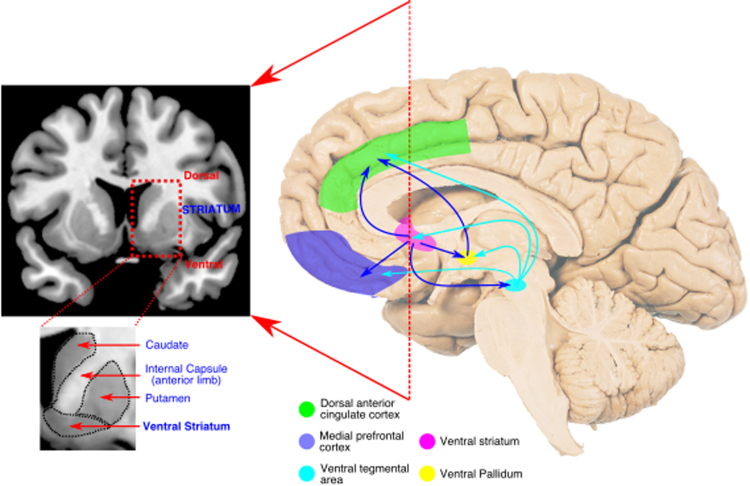
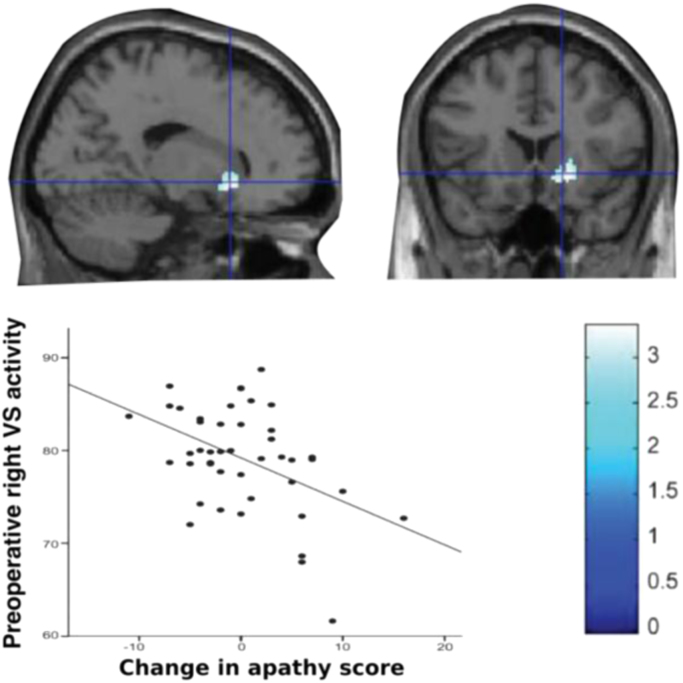
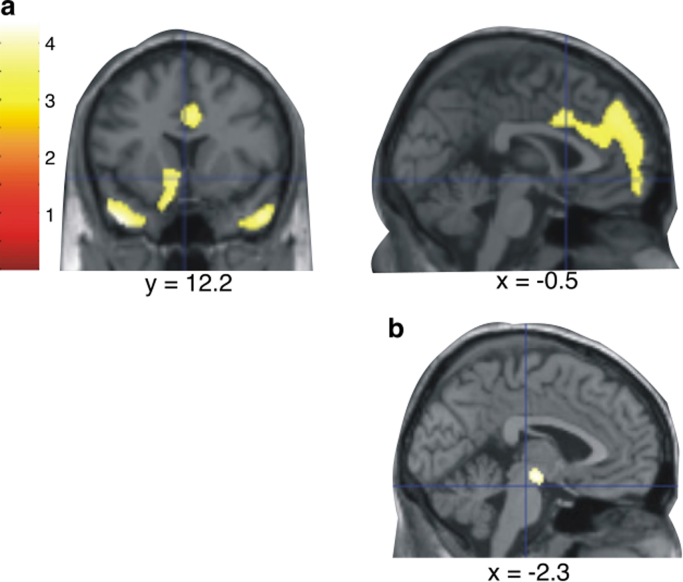
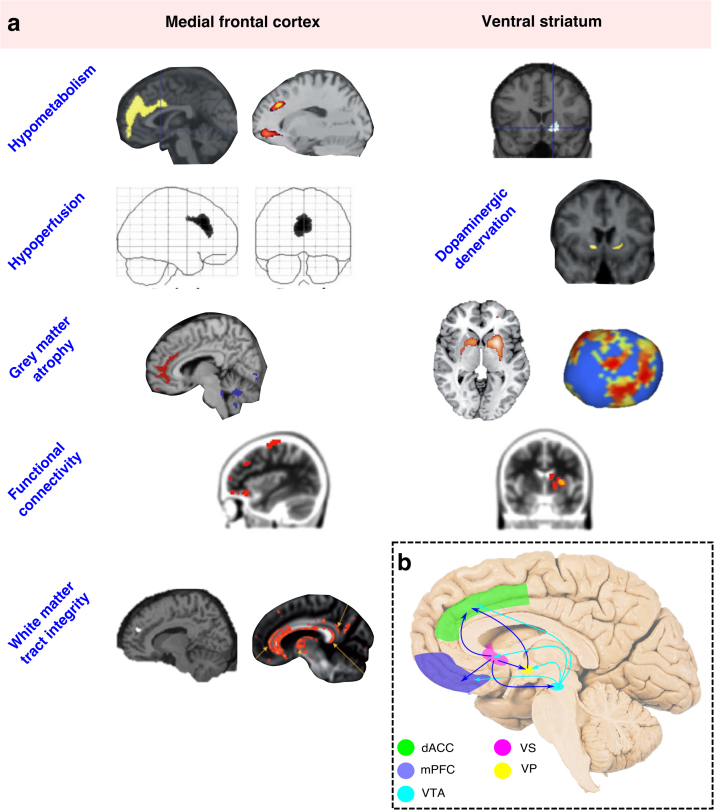
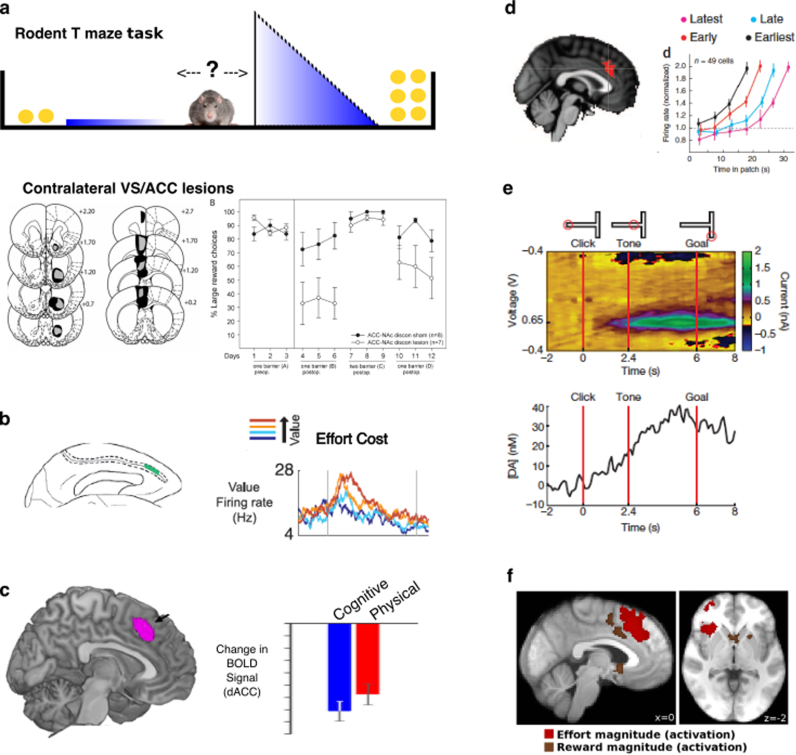
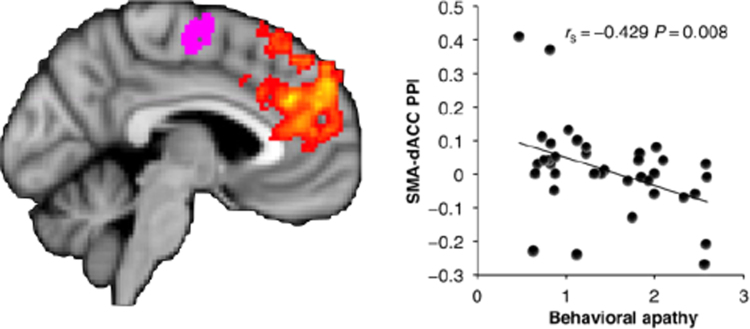
Apathy is a debilitating syndrome associated with many neurological disorders, including several common neurodegenerative diseases such as Parkinson's disease and Alzheimer's disease, and focal lesion syndromes such as stroke. Here, we review neuroimaging studies to identify anatomical correlates of apathy, across brain disorders. Our analysis reveals that apathy is strongly associated with disruption particularly of dorsal anterior cingulate cortex (dACC), ventral striatum (VS) and connected brain regions. Remarkably, these changes are consistent across clinical disorders and imaging modalities. Review of the neuroimaging findings allows us to develop a neurocognitive framework to consider potential mechanisms underlying apathy. According to this perspective, an interconnected group of brain regions - with dACC and VS at its core - plays a crucial role in normal motivated behaviour. Specifically we argue that motivated behaviour requires a willingness to work, to keep working, and to learn what is worth working for. We propose that deficits in any one or more of these processes can lead to the clinical syndrome of apathy, and outline specific approaches to test this hypothesis. A richer neurobiological understanding of the mechanisms underlying apathy should ultimately facilitate development of effective therapies for this disabling condition.
Overview
The claims and statistics of this paper haven’t been checked yet.
Run the check — free, no account needed. It reads the open-access text and checks the sources it cites.
Integrity signals
Registry
Cites
Statistics
Figures
Verification
Claims the paper makes
The claims and statistics of this paper haven’t been checked yet.
Run the check — free, no account needed. It reads the open-access text and checks the sources it cites.
Claims other papers make about this one
Each is checked against this paper’s own text: does it say what the citing paper says it does?
The cited source says what the claim attributes to it.
In the citing paper
“In addition, apathy is a well-recognized feature of strokes affecting similar portions of the medial frontal cortex (Kang & Kim, 2008; Le Heron et al., 2018) and the medial and anterior thalamus (Carrera & Bogousslavsky, 2006; Krause et al., 2012; Serra et al., 2013) respectively.”
From The cingulum bundle: Anatomy, function, and dysfunction (2018) · cites this paper as Le Heron et al., 2018
The cited source says what the claim attributes to it.
In the citing paper
“Across differing underlying pathologies and neuroimaging methods, the anterior cingulate cortex, orbital frontal cortex, and medial thalamus exhibit some of the most robust changes associated with apathy (Le Heron et al., 2018).”
From The cingulum bundle: Anatomy, function, and dysfunction (2018) · cites this paper as Le Heron et al., 2018
Self-check
Percentages, sums and reported differences re-computed from the paper’s own numbers.
The self-check needs the paper’s full text.
Citations
Cites
(2022) · La Revue du praticien · doi:10.1093/ageing/afgi30 · Cited by 15,809 · cited 1×
“Research using SPECT has consistently demonstrated that reduced perfusion in ACC and OFC – as well as frontopolar and DLPFC regions in some studies – is associated with apathy in AD (Benoit et al., 2004; Craig et al., 1996; Lanctôt et al., 2007; Migneco et al., 2001; Robert et al., 2006).”
ResultKalia, L. V., & Lang, A. E. (2015) · The Lancet · doi:10.1016/s0140-6736(14)61393-3 · Cited by 6,184
Optimal foraging, the marginal value theorem
Charnov, E. L. (1976) · Theoretical Population Biology · doi:10.1016/0040-5809(76)90040-x · Cited by 5,374
Functional architecture of basal ganglia circuits: neural substrates of parallel processing
Alexander, G. E., & Crutcher, M. D. (1990) · Trends in Neurosciences · doi:10.1016/0166-2236(90)90107-l · Cited by 4,131
Contributions of anterior cingulate cortex to behaviour
Devinsky, O., Morrell, M. J., & Vogt, B. A. (1995) · Brain · doi:10.1093/brain/118.1.279 · Cited by 3,377
Anterior Cingulate Cortex, Error Detection, and the Online Monitoring of Performance
Carter, C. S., Braver, T. S., Barch, D. M., Botvinick, M. M., Noll, D., & Cohen, J. D. (1998) · Science · doi:10.1126/science.280.5364.747 · Cited by 3,273
The expected value of control: an integrative theory of anterior cingulate cortex function
Shenhav, A., Botvinick, M. M., & Cohen, J. D. (2013) · Neuron · doi:10.1016/j.neuron.2013.07.007 · Cited by 2,321
Berridge, K. C., & Kringelbach, M. L. (2015) · Neuron · doi:10.1016/j.neuron.2015.02.018 · Cited by 1,730 · cited 1×
“Subcortically, basal ganglia lesions, particularly those involving the caudate nucleus or nucleus accumbens, are associated with the development of apathy (Bhatia and Marsden, 1994; Gerace et al., 2013; Maeda et al., 2012; Phillips et al., 1987).”
BackgroundReconsidering anhedonia in depression: Lessons from translational neuroscience
Treadway, M. T., & Zald, D. H. (2011) · Neuroscience & Biobehavioral Reviews · doi:10.1016/j.neubiorev.2010.06.006 · Cited by 1,579
Temporal difference models and reward-related learning in the human brain
O'Doherty, J. P., Dayan, P., Friston, K., Critchley, H., & Dolan, R. J. (2003) · Neuron · doi:10.1016/s0896-6273(03)00169-7 · Cited by 1,522
Research works printed but not linked: 1
- Mori, 2006, Principles of diffusion tensor imaging and its applications to basic neuroscience research, Neuron, 51, 527, 10.1016/j.neuron.2006.08.012 · DOI · Paper page
Cited by
Sorted by citations
Items 301–351 of 351
Opportunity cost determines action initiation latency and predicts apathyPreprint
Nair, A., Niyogi, R. K., Shang, F., Tabrizi, S., Rees, G., & Rutledge, R. (2020) · doi:10.31234/osf.io/d9pgz · Cited by 1
“…disabling and hard-to-treat neuropsychiatric symptom found in a range of neuropsychiatric disorders such as schizophrenia, depression, Parkinson’s Disease (PD), Alzheimer’s disease (AD) and Huntington’s disease (HD) (Husain & Roiser, 2017; Krishnamoorthy & Craufurd, 2011; Le Heron et al., 2017).”
BackgroundDopamine and motivational state drive dynamics of human decision making
Heron, C. L., Kolling, N., Plant, O., Kienast, A., Janska, R., Ang, Y.-S., Fallon, S., Husain, M., & Apps, M. (2019) · bioRxiv · doi:10.1101/709857 · Cited by 1
Self-citationNon-invasive Brain Stimulation in Human Stroke Survivors
Wortman-Jutt, S., van der Groen, O., & Edwards, D. J. (2020) · Springer eBooks · doi:10.1007/978-3-030-49586-2_20 · Cited by 3
Brain Stimulation as a Treatment for Apathy: A Scoping Review of Effects and Safety
Grewal, P., Seidman, M. B., Chasen, J., Lench, D. H., Dickens, I., Brennan, E. A., Rodriguez‐Porcel, F. E., Kindred, J. H., George, M. S., Kautz, S., et al. (2026) · Journal of Neuropsychiatry · doi:10.1176/appi.neuropsych.20250297
Murray, C., Rooney, C. N., DeLong, S. M., Alhusaini, S., Prakash, P., Weisbach, E., Vinacco, K., Rawnsley, N., Guglielmo, M., Klinge, P. M., et al. (2026) · International Review of Psychiatry · doi:10.1080/09540261.2026.2742149
Brady, E., Livingston, G., Rapaport, P., & Belessiotis-Richards, C. (2026) · International Review of Psychiatry · doi:10.1080/09540261.2026.2742148
Pei-wen, L., Yu, R., Hong, W., Sung, P., & Tan, C. (2026) · Parkinsonism & Related Disorders · doi:10.1016/j.parkreldis.2026.108997
Pugh, E., Calle, M. T., Babulal, G. M., & Adkins‐Jackson, P. B. (2026) · Alzheimer s & Dementia · doi:10.1002/alz.71790
Fatigue and neurodegeneration: a review of evidence connecting fatigue with dementia syndromes
Bishop, C., & Sorenson, M. (2026) · Future Neurology · doi:10.1080/14796708.2026.2725256
HIV and vascular disease confer additive effects on apathy
Woods, S. P., Mustafa, A. I., Kamar, J. L. T., Teixeira, A. L., Dotson, V. M., & Beltran‐Najera, I. (2026) · AIDS Care · doi:10.1080/09540121.2026.2717449
Apathy phenotypes in depression and dementia: A latent profile analysis.
de Filippis, R., Aloi, M., Carbone, E., Pascucci, E., Luppino, D. L., Scaramuzzino, A., Liparota, G., Segura-García, C., Gareri, P., & Fazio, P. D. (2026) · Comprehensive Psychiatry · doi:10.1016/j.comppsych.2026.152741
Jurgelis, M., Copko, M., Leaver, C., White, L., & Krieg, J. (2026) · Educational Psychology · doi:10.1080/01443410.2026.2695197 · Cited by 1
[Glial-derived neurotrophic factor and neuropsychological status in COVID-19 survivors].
Kuznetsova, M. A., & Karakulova, Y. (2026) · Zhurnal Nevrologii i Psikhiatrii imeni S.S. Korsakova · doi:10.17116/jnevro202612606187
Michel, E., Garnier-Allain, A., Kaliuzhna, M., Bennabi, D., Servant, M., & Béreau, M. (2026) · PLoS ONE · doi:10.1371/journal.pone.0352351
“This distinction aligns with neurocognitive frameworks in which apathy reflects reduced self-generation of goal-directed behavior despite relatively preserved responding when behavior is externally prompted [2,4,6,40,41].”
Understanding apathy in people with amyotrophic lateral sclerosis using motivational theories
Bailey, F., Eun, M. W., Hobson, E., McDermott, C. J., & Knox, L. (2026) · Journal of Health Psychology · doi:10.1177/13591053261454342
Vöckel, J., Mai, T. T., Hertel, J., Bender, S., & Wischnewski, M. (2026) · Neuroscience & Biobehavioral Reviews · doi:10.1016/j.neubiorev.2026.106785
Mohammed, S. F., Goyal, A., Kakde, S., Mishra, A. P., Kumar, A. K. A., Koske, D. C., Imam, B., Abraham, J., Cruz, J. R. R., Jacob, A., et al. (2026) · Cureus · doi:10.7759/cureus.110371
The Assessment and Management of Apathy in Neurocognitive Disorders
Pérez-Palmer, N., Camacho, D. F., Forrest, L., & Conroy, M. (2026) · Advances in Psychiatry and Behavioral Health · doi:10.1016/j.ypsc.2026.05.005
You, X., & Guo, Z. (2026) · International Journal of General Medicine · doi:10.2147/ijgm.s622802
“20 Decreased functional connectivity in this prefrontal–striatal pathway may impair the transformation of reward evaluation into behavioral effort, which is a crucial step significantly correlated with a reduction in goal-directed behaviors.”
Selective Cingulum Degeneration in Huntington's Disease: A Clinically Relevant Event
Saini, F., Demir, A., & Rosas, H. (2026) · Movement Disorders · doi:10.1002/mds.70357
“19 The CCG supports a range of functions highly relevant to HD, including affective behavior and social interaction, 16 motivation and apathy, 22,23 and executive processes such as working memory, attention, and cognitive fl exi-bility.”
Deng, W., van Tol, M., Marsman, J. C., Kos, C., Servaas, M., & Aleman, A. (2026) · Translational Psychiatry · doi:10.1038/s41398-026-04066-7
“Moreover, dysfunctions in the ventral striatum, ACC and IPL within a fronto-parieto-striatal network have been associated with apathy across neuropsychiatric disorders [24 – 26].”
Straková, A., Januška, J., Majsniarová, S., Cviková, V., Ivančík, V., Čavojská, N., Kutlikova, H. H., & Hajdúk, M. (2026) · Scientific Reports · doi:10.1038/s41598-026-53164-5
Fang, J.-P., Chen, K.-K., Liu, Y.-H., Wang, R.-D., Wang, Y.-X., Meng, D.-T., Zhang, H.-Y., Hou, T.-T., Yan, H., An, X., et al. (2026) · Brain and Behavior · doi:10.1002/brb3.71480
Feng, C.-Y., Tan, C.-H., Hong, W.-P., Chen, K.-C., Sung, P.-S., & Yu, R.-L. (2026) · Comprehensive Psychiatry · doi:10.1016/j.comppsych.2026.152722
Sad Mood in Late‐Life Depression Correlates With Reduced Thickness in Orbitofrontal Cortex
Loureiro, J. C., Martins, B., Valiengo, L. D. C. L., Pinto, B. S., Bariani, B., Tort, L. C., Santosa, L. A., Benatti, R. G., Lessa, M. P. M., Silva, J., et al. (2026) · International Journal of Geriatric Psychiatry · doi:10.1002/gps.70218
“The motivational circuit includes the ventral striatum, such as the nucleus accumbens and nearby areas; the ACC (BA 24, 32); the pars orbitalis of the VLPFC (BA 47); and the OFC (BA 10, 11) [87].”
Munro, C. E., Beltran, J., Palmer, P., Farrell, M. E., Hanseeuw, B., Rentz, D., Buckley, R., Properzi, M., Vannini, P., Amariglio, R., et al. (2026) · Journal of Alzheimer's Disease · doi:10.1177/13872877261436755
“24,25 4 However, we found that amyloid-β levels in the entorh-inal cortex, lOFC, amygdala, and thalamus did not predict future study-partner-rated apathy symptoms.”
Maladie de Parkinson et apathie
Dujardin, K., Bereau, M., & Prange, S. (2026) · EMC - Neurologia · doi:10.1016/s0246-0378(25)50184-7
Increased apathy level in systemic lupus erythematosus.
Anumolu, N., Putman, M., & Gazeley, D. J. (2026) · Clinical Rheumatology · doi:10.1007/s10067-026-08053-7
Kuno, T., Katada, E., Yamada, G., Toyoda, T., Okita, K., & Matsukawa, N. (2026) · Journal of clinical neuroscience · doi:10.1016/j.jocn.2026.111988
Demmin, D., Roché, M. W., Vaidya, J., Langbehn, D., Fuller, R., Weingast, S., Sampaio, C., & Stebbins, G. (2026) · Journal of Huntington's Disease · doi:10.1177/18796397261423978
“– 31 Importantly, some data suggests that prevalence and severity of apathy may vary by subtype (i.e., cognitive, behavioral, emotional apathy) over the course of HD; for example, an increase in behavioral apathy has been reported after clinical motor diagnosis.”
Angelopoulou, E., Tsinia, N., Hatzopoulou, M., Despoti, A., Kamtsadeli, V., Papadogiani, M., Stanitsa, E., Kyriakidis, V., Papageorgiou, S., & Papatriantafyllou, J. (2026) · Frontiers in dementia · doi:10.3389/frdem.2026.1736570
“…work has shown that anosoagnosia, as well as apathy and agitation, are associated with reduced caregiver quality of life in dementia (Conde-Sala et al., 2016) and MCI populations (Mak et al., 2015), likely reflecting the shared disruption of frontal-subcortical networks (Le Heron et al., 2018).”
Pathway Anchored Multimodal Clustering Reveals Circuit Level Signatures in Parkinsons DiseasePreprint
Vinod, A., Ellendula, A. S., Bhardwaj, S., Dev, A., Dominic, A., & Bajaj, C. L. (2025) · bioRxiv · doi:10.64898/2025.12.15.694278
“This pattern is consistent with prior work showing early mesolimbic dopaminergic deficits in PD and their links to apathy and reward-based learning impairments[11, 25].”
Agulleiro, L. M. M., Deng, B., Gallagher, R., Abikoff, H., Yoncheva, Y. N., Robinson, L., Conlon, G. R., Haroon, M., Yan, C., Martino, A. D., et al. (2025) · Frontiers in Neuroimaging · doi:10.3389/fnimg.2025.1671310
Papadopetraki, D., Cools, R., Taylor, K. I., Popp, W., Siderowf, A. D., Weintraub, D. A., & Kurniawan, I. T. (2025) · JMIR Formative Research · doi:10.2196/81913
Dopamine supports reward prediction to constrain reward seeking
Malvaez, M., Suarez, A., Griffin, N. K., Ramírez-Armenta, K., Ostlund, S. B., & Wassum, K. M. (2025) · Journal of Neuroscience · doi:10.1101/2025.08.22.671841
“This can underlie symptoms of psychiatric conditions such as addictions and depression (Levy and Dubois, 2006; Jentsch and Pennington, 2014; Le Heron et al., 2018; Robinson and Berridge, 2025).”
Discourse in primary progressive aphasia: Longitudinal changes and neural correlatesPreprint
Anwia, M. A., Lowe, M., Matis, S., Carrick, J., Piguet, O., Landin-Romero, R., & Ballard, K. (2025) · medRxiv · doi:10.1101/2025.05.26.25328350
“Conversely, reduced grey matter volume in middle frontal gyrus is, in part, has been shown to correlate with apathy in the frontotemporal dementias that underlie nfvPPA (i.e., FTD, PSP and CBD) (Eslinger et al., 2012; Le Heron et al., 2018; Rosen et al., 2005; Zamboni et al., 2008).”
Fang, Y., Chao, X., Wang, J., Lu, Z., Yin, D., Shi, R., Wang, P., Liu, X., & Sun, W. (2025) · Human Brain Mapping · doi:10.1002/hbm.70139
Constrained Emotional Sentence Production in Parkinson's Disease.
Hazamy, A. A., Park, H., & Altmann, L. J. P. (2024) · Journal of Speech, Language and Hearing Research · doi:10.1044/2024_jslhr-23-00566
Apathy Syndrome in Neurological Diseases – State of the Art and Current Research Directions
Roessler‐Górecka, M. (2024) · Przegląd Psychologiczny · doi:10.31648/przegldpsychologiczny.10469
“Ap-athy in AD correlates with decreased glucose metabolism in orbitofrontal cortex and ventral striatum, while hypometabolism in ventral tegmental area is associated with apathy in other types of dementia as well (Le Heron et al., 2018; Theleritis et al., 2017).”
BackgroundOmlor, W., Cecere, G., Huang, G.-Y., Rabe, F., Kallen, N., Kirschner, M., Surbeck, W., Burrer, A., Spiller, T., Garibaldi, G., et al. (2024) · medRxiv · doi:10.1101/2024.04.13.24305575
“A recent study proposed that parts of ACC and ventral striatum play a key role in the generation of apathy across neurological disorders [37].”
BackgroundZespół apatii w chorobach neurologicznych – stan wiedzy i aktualne kierunki badań
Roessler‐Górecka, M. (2024) · Przegląd Psychologiczny · doi:10.31648/przegldpsychologiczny.9439
Editorial: Impact of apathy on aging and age-related neuropsychiatric disorders
Burhan, A. (2023) · Frontiers in Psychiatry · doi:10.3389/fpsyt.2023.1341182
Zhou, P., Li, W., Zhao, J., Chen, S., Chen, Y., Shen, X., & Xu, D. (2023) · medRxiv · doi:10.1101/2023.03.22.23287541
Seong, H.-S., Kim, Y.-S., Sa, S., Jeong, Y., Hong, J.-K., & Cho, E. (2022) · Animals · doi:10.3390/ani12172300
“A prominent behavioral symptom of these neurological disorders is apathy, which is defined as the deficit of goal-directed behavior or motivational impairment [61,62].”
BackgroundNeural representations of vicarious rewards are linked to interoception and prosocial behaviour
Contreras-Huerta, L. S., Coll, M.-P., Bird, G., Yu, H.-B., Prosser, A., Lockwood, P., Murphy, J., Crockett, M. J., & Apps, M. (2022) · bioRxiv · doi:10.1101/2022.03.04.482889
Self-citationDistinct neural representations for prosocial and self-benefitting effortPreprint
Lockwood, P. L., Wittmann, M. K., Nili, H., Matsumoto-Ryan, M., Abdurahman, A., Cutler, J., Masud Husain, B., & Apps, M. A. J. (2021) · bioRxiv (Cold Spring Harbor Laboratory) · doi:10.1101/2021.09.27.461936 · Cited by 4
Self-citationThe distinction between apathy and depression in neuroscience nursing practice
Santo, L. D. (2019) · British Journal of Neuroscience Nursing · doi:10.12968/bjnn.2019.15.4.164
(2020) · Elsevier eBooks · doi:10.1016/b978-0-12-815002-3.00020-6
Ischemic and Intracerebral Hemorrhagic Stroke
Mark, V. W., & Kirshner, H. (2020) · Neurovascular Neuropsychology · doi:10.1007/978-3-030-49586-2_3
On the neurobiology of apathy and depression in cerebral small vessel disease
Tay, J. (2019) · Apollo (University of Cambridge) · doi:10.17863/cam.56769
“For the purposes of this review, we will consider apathy to be a deficit in the cognitive processes underlying effort-based decision making due to the conceptual simplicity and operationalisability of this approach (Le Heron et al., 2018a, 2019).”
BackgroundMethodResultInfluentialBrain Structures Playing a Critical Role in Different Components and Hierarchical Levels of Emotions
Gainotti, G. (2019) · Springer eBooks · doi:10.1007/978-3-030-34090-2_3
Metadata
- Authors
- Le Heron, C., Apps., M. A. J., & Husain, M.
- Venue
- Neuropsychologia
- Publisher
- Elsevier BV
- Published
- 2018-09
- Volume
- 118
- Issue
- Pt B
- Pages
- 54-67
- ISSN
- 0028-3932 (ISSN-L)
- PMC
- PMC6200857
- OpenAlex
- W2726746745
- Cited by
- 380
- References
- 168
- Citations by year
- 2026: 44 · 2025: 43 · 2024: 55 · 2023: 48 · 2022: 55 · 2021: 50 · 2020: 38 · 2019: 20 · 2018: 21
- FWCI
- 13.34
- Type
- journal article
- Language
- en
- Open access
- hybrid
- doi.org
- Locations
- Neuropsychologia (publishedVersion, cc-by)
- Europe PMC (PubMed Central) (publishedVersion, cc-by)
- PubMed Central (publishedVersion, cc-by)
- PubMed (publishedVersion)
- University of Birmingham Research Portal (University of Birmingham) (submittedVersion)
- Funders
- University of Oxford Christopher Welch Scholarship in Biological Sciences
- University of Oxford Clarendon Scholarship
- Green Templeton College Partnership award (GAF1415_CB2_ MSD_758342)
- Biotechnology and Biological Sciences Research Council AFL Fellowship (BB/M013596/1)
- Wellcome Trust (098282)
- Topics
- Life Sciences › Neuroscience › Cognitive Neuroscience › Neural and Behavioral Psychology Studies
- Life Sciences › Neuroscience › Cellular and Molecular Neuroscience › Neurotransmitter Receptor Influence on Behavior
- Health Sciences › Medicine › Psychiatry and Mental health › Dementia and Cognitive Impairment Research
- Keywords
- apathy, motivated behavior, dorsal anterior cingulate cortex, ventral striatum, neurodegenerative diseases, Parkinson's disease, Alzheimer's disease, stroke, neuroimaging correlates, willingness to work
- MeSH terms
- Brain, Brain Mapping, Humans, Motivation, Apathy, Neuroimaging
About these checks
Registry, retraction, Cites and statistics results are computed, not judged, with one exception: a printed reference that no index lists is read once by a model before it counts as a citation error. Claims are extracted by a model and kept only when their quote appears verbatim in the text; each cited source is then checked, with a model’s help, for whether it says what the claim relies on. Those verdicts can be wrong — read the claim’s quote and the cited source before relying on one.
Statistics and arithmetic are recomputed, not judged.
Confidence bands are shown only for fields calibrated on our annotated test set. None is calibrated yet, so no band is shown.
What counts as a claim ›How we measure confidence ›How we check this ›
Are you an author, or do you see a problem with this page? Request a review
