

The DOI matches its Crossref record; 152 of the 153 references it cites were found in a registry or an index.
ROS and the DNA damage response in cancer
Open accessAbstract
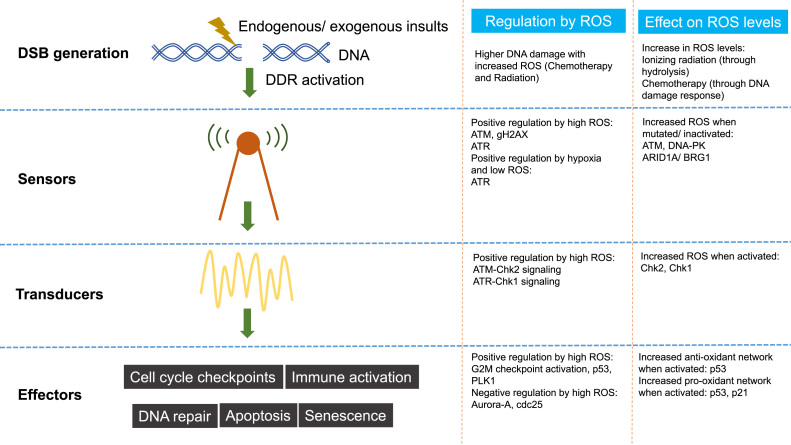
Reactive oxygen species (ROS) are a group of short-lived, highly reactive, oxygen-containing molecules that can induce DNA damage and affect the DNA damage response (DDR). There is unequivocal pre-clinical and clinical evidence that ROS influence the genotoxic stress caused by chemotherapeutics agents and ionizing radiation. Recent studies have provided mechanistic insight into how ROS can also influence the cellular response to DNA damage caused by genotoxic therapy, especially in the context of Double Strand Breaks (DSBs). This has led to the clinical evaluation of agents modulating ROS in combination with genotoxic therapy for cancer, with mixed success so far. These studies point to context dependent outcomes with ROS modulator combinations with Chemotherapy and radiotherapy, indicating a need for additional pre-clinical research in the field. In this review, we discuss the current knowledge on the effect of ROS in the DNA damage response, and its clinical relevance.
Overview
The claims and statistics of this paper haven’t been checked yet.
Run the check — free, no account needed. It reads the open-access text and checks the sources it cites.
Integrity signals
Registry
Cites
Statistics
Figures
Verification
Claims the paper makes
The claims and statistics of this paper haven’t been checked yet.
Run the check — free, no account needed. It reads the open-access text and checks the sources it cites.
Claims other papers make about this one
Each is checked against this paper’s own text: does it say what the citing paper says it does?
In the citing paper
“The most frequently occurring mutations in the tumor suppressor gene TP53 in lung cancer are Guanine → Thymine and Guanine → Adenine transversions (Srinivas et al. 2019; Gibbons et al. 2014).”
From Reactive Oxygen Species, Toxicity, Oxidative Stress, and Antioxidants: Chronic Diseases and Aging (2023) · cites this paper as Srinivas et al. 2019
Self-check
Percentages, sums and reported differences re-computed from the paper’s own numbers.
The self-check needs the paper’s full text.
Citations
Cites
Vogelstein, B., Lane, D., & Levine, A. J. (2000) · Nature · doi:10.1038/35042675 · Cited by 6,607 · cited 1×
“p53 is a well-studied tumor suppressor that is mutated in over 50% of all cancers [87,88], and affects multiple cellular responses to DNA U.”
BackgroundDNA double-stranded breaks induce histone H2AX phosphorylation on serine 139
Rogakou, E. P., Pilch, D. R., Orr, A. H., Ivanova, V. S., & Bonner, W. M. (1998) · Journal of Biological Chemistry · doi:10.1074/jbc.273.10.5858 · Cited by 5,438
(1994) · New England Journal of Medicine · doi:10.1056/nejm199404143301501 · Cited by 4,737
The DNA Damage Response: Making It Safe to Play with Knives
Ciccia, A., & Elledge, S. J. (2010) · Molecular Cell · doi:10.1016/j.molcel.2010.09.019 · Cited by 4,368 · cited 1×
“This response includes DNA damage recognition, activation of checkpoints, cell cycle arrest, and eventually final outcomes of repair, apoptosis and immune clearance [4,5].”
BackgroundRadiobiology for the Radiologist.
(1974) · Annals of Internal Medicine · doi:10.7326/0003-4819-80-3-438_1 · Cited by 3,498
Molecular Mechanisms of Mammalian DNA Repair and the DNA Damage Checkpoints
Sancar, A., Lindsey-Boltz, L. A., Ünsal-Kaçmaz, K., & Linn, S. (2004) · Annual Review of Biochemistry · doi:10.1146/annurev.biochem.73.011303.073723 · Cited by 3,317 · cited 1×
“Depending on the nature of the lesion in DNA, specific pathways are activated to facilitate identification of the damaged regions and their repair [2,3].”
BackgroundImmunogenic Cell Death in Cancer Therapy
Kroemer, G., Galluzzi, L., Kepp, O., & Zitvogel, L. (2013) · Annual Review of Immunology · doi:10.1146/annurev-immunol-032712-100008 · Cited by 3,303 · cited 1×
“to eventual T-cell mediated killing [116].”
Yang, Y., Li, S., Yang, Q., Shi, Y., Zheng, M., Liu, Y., Chen, F., Song, G., Xu, H., Wan, T., et al. (2014) · Cellular Physiology and Biochemistry · doi:10.1159/000358696 · Cited by 3,263
ATM and ATR Substrate Analysis Reveals Extensive Protein Networks Responsive to DNA Damage
Matsuoka, S., Ballif, B. A., Smogorzewska, A., McDonald, E. R., Hurov, K. E., Luo, J., Bakalarski, C. E., Zhao, Z., Solimini, N., Lerenthal, Y., et al. (2007) · Science · doi:10.1126/science.1140321 · Cited by 3,075
Association of reactive oxygen species levels and radioresistance in cancer stem cells
Diehn, M., Cho, R. W., Lobo, N. A., Kalisky, T., Dorie, M. J., Kulp, A. N., Qian, D., Lam, J. S., Ailles, L. E., Wong, M., et al. (2009) · Nature · doi:10.1038/nature07733 · Cited by 2,555
Cited by
Sorted by citations
Items 901–1,000 of 1,002
Pan, M., Ju, J., Li, X., Xu, Y., Wang, J., Ren, Y., Lu, X., & Sun, S. (2020) · Cell Cycle · doi:10.1080/15384101.2020.1794545 · Cited by 13
Liu, L., Jia, Y., Zhang, X., Chen, S., Wang, S., Zhu, J., Zheng, L., Chen, Z., & Huang, L. (2021) · Toxicology in Vitro · doi:10.1016/j.tiv.2021.105271 · Cited by 13
In vitro evaluation of chemical decontamination of titanium discs
Ichioka, Y., Derks, J., Dahlén, G., Berglundh, T., & Larsson, L. (2021) · Scientific Reports · doi:10.1038/s41598-021-02220-3 · Cited by 14
Engineering Macrophage via Biomaterial-Mediated Mitochondrial Regulation: Mechanisms and Strategies
Li, J., He, M., Wan, S., Wang, S., Liu, N., Xin, L., & Chen, T. (2025) · Research · doi:10.34133/research.0883 · Cited by 14
“At physiological levels, these reactive molecules participate in homeostatic signaling [ 88 ], yet their dysregulated propagation triggers oxidative cascades that per-oxidize lipids, carbonylate proteins, and fragment mtDNA [ 89 ].”
Unravelling the genetics and epigenetics of the ageing tumour microenvironment in cancer
Easwaran, H., & Weeraratna, A. T. (2025) · Nature reviews. Cancer · doi:10.1038/s41568-025-00868-x · Cited by 15
“The relationship between ROS and DNA damage has also been called into question: although ROS can certainly cause DNA damage in vitro or under extreme conditions 169 , the evidence that physiological levels of ROS are the predominant source of DNA damage in vivo is lacking 170,171 .”
He, Z., Li, C., Xia, W., Wang, Z., Li, R., Zhang, Y., & Wang, M. (2022) · Journal of Agricultural and Food Chemistry · doi:10.1021/acs.jafc.2c00093 · Cited by 12
Chen, L., Ma, X., Sun, X., Wu, T., Yu, J., Wang, C., Jin, Y., & Zheng, X. (2022) · Anti-Cancer Agents in Medicinal Chemistry · doi:10.2174/1871520622666220609112816 · Cited by 12
Dong, M., Ding, Y., Liu, Y., Xu, Z., Hong, H., Sun, H., Huang, X., Yu, X., & Chen, Q. (2022) · Environmental Toxicology · doi:10.1002/tox.23721 · Cited by 12
“Once DNA damage, cell cycle would be arrested.(18,19) It is admitted that cell cycle is a crucial process that regulates the duplication and transmission of genetic information from one cell into two”
BackgroundFunctional Perspective of Leeks: Active Components, Health Benefits and Action Mechanisms
Xie, T., Wu, Q., Lü, H., Hu, Z., Luo, Y., Chu, Z., & Luo, F. (2023) · Foods · doi:10.3390/foods12173225 · Cited by 12
Recent strategies of carbon dot-based nanodrugs for enhanced emerging antitumor modalities
Chu, X., Duan, M., Hou, H., Zhang, Y., Liu, P., Chen, H., Liu, Y., & Li, S. (2023) · Journal of Materials Chemistry B · doi:10.1039/d3tb00718a · Cited by 12
Ravichandran, G., Harijan, D., Ganapathy, N., Prabusankar, G., De, A., & Rengan, A. K. (2023) · ACS Materials Letters · doi:10.1021/acsmaterialslett.3c00616 · Cited by 12
Najafi, A., Keykhaee, M., Kazemi, M. H., Karimi, M. Y., Khorramdelazad, H., Aghamohamadi, N., Bolouri, M. R., Nazari, H. G., Mirsharif, E. S., Karimi, M., et al. (2023) · Biomedicine & Pharmacotherapy · doi:10.1016/j.biopha.2023.115557 · Cited by 12
Roles of tissue-resident immune cells in immunotherapy of non-small cell lung cancer
Tang, R., Wang, H., & Tang, M. (2023) · Frontiers in Immunology · doi:10.3389/fimmu.2023.1332814 · Cited by 13
“And ROS-induced DNA damage includes DNA strand breaks, DNA base modi fi cations, and DNA cross-links, leading to replication errors and genomic instability, which in turn lead to tumorigenesis (85).”
BackgroundLiposome-based nanomedicine for immune checkpoint blocking therapy and combinatory cancer therapy
Zhou, H., Yu, C., & Wei, H. (2024) · International Journal of Pharmaceutics · doi:10.1016/j.ijpharm.2024.123818 · Cited by 12
Bae, S.-J., Lee, W.-Y., Bak, S. B., Lee, S. J., Hwang, S., Kim, G.-W., Koo, B., Park, S., Yoo, H. H., Kim, C. O., et al. (2024) · International Journal of Molecular Sciences · doi:10.3390/ijms25042313 · Cited by 12
“Additionally, it was confirmed that conditions of high ROS levels induced the degradation of mitochondrial DNA, the downregulation of antioxidant proteins such as superoxide dismutase 2 (SOD2) and nrf2 by p53, and eventually, apoptosis [40].”
BackgroundAngelica keiskei water extract Mitigates Age-Associated Physiological Decline in Mice
Liu, H., Wei, G., Wang, T., Hou, Y., Hou, B., Li, X., Wang, C., Sun, M., Su, M., Guo, Z., et al. (2024) · Redox Report · doi:10.1080/13510002.2024.2305036 · Cited by 13
Sun, Y., Zeng, Q., Yang, Q. K., Hao, Y., Pu, Y., Yang, B., Wu, Y., Shi, S., & Gong, Z. (2024) · Journal of Water Process Engineering · doi:10.1016/j.jwpe.2024.105076 · Cited by 12
Chen, W., Lu, Y., Xu, Y., Chen, Y., Lin, S., He, X., Zhang, C., & Yuan, C. (2024) · Chemical Engineering Journal · doi:10.1016/j.cej.2024.151838 · Cited by 12
Synthesis and anti-cancer investigations of copper(II) complexes based on adenine
Zhai, X., Hanibah, H., Hashim, N. Z. N., Zhang, J., Ma, X., Wei, L., & Zhou, X. (2024) · Journal of Molecular Structure · doi:10.1016/j.molstruc.2024.138836 · Cited by 12
Peng, Z., Cui, M., Chu, J., Chen, J., & Wang, P. (2024) · Bioorganic Chemistry · doi:10.1016/j.bioorg.2024.107592 · Cited by 12
Zhang, Y., Liu, D., Qiao, B., Luo, Y., Zhang, L., Cao, Y., Ran, H., & Yang, C. (2024) · International Journal of Nanomedicine · doi:10.2147/ijn.s450124 · Cited by 12
“33,34 PTT and RT both produced more ROS when assisted by nanoparticles.”
BackgroundLi, X., Yang, C., Wu, H., Chen, H., Gao, X., Zhou, S., Zhang, T., & Ma, W. (2024) · DNA repair · doi:10.1016/j.dnarep.2024.103730 · Cited by 14
Wen, X. T., Hou, Y., Guo, J., Liu, Z., Ren, N., Wang, A., Wei, W., Ni, B., & Huang, C. (2024) · Journal of Cleaner Production · doi:10.1016/j.jclepro.2024.143201 · Cited by 12
Iwasaki, T., Shirota, H., Sasaki, K., Ouchi, K., Nakayama, Y., Oshikiri, H., Otsuki, A., Suzuki, T., Yamamoto, M., & Ishioka, C. (2024) · Cancer Science · doi:10.1111/cas.16355 · Cited by 12
Optimization of Antiproliferative Properties of Triimine Copper(II) Complexes
Choroba, K., Zowiślok, B., Kula, S., Machura, B., Maroń, A. M., Erfurt, K., Marques, C., Cordeiro, S. Z., Baptista, P. V., & Fernandes, A. R. (2024) · Journal of Medicinal Chemistry · doi:10.1021/acs.jmedchem.4c01806 · Cited by 13
Half‐Sandwich Organometallic Ir(III) and Ru(II) Compounds and their Interactions with Biomolecules
Kozieł, S., Wojtala, D. B., Szmitka, M., Lesiów, M. K., Ziółkowska, A., Sawka, J., Carpio, E. D., Crans, D. C., & Komarnicka, U. K. (2025) · ChemPlusChem · doi:10.1002/cplu.202400621 · Cited by 12
Bokhout, L., Campeiro, J. D., & Dalm, S. U. (2025) · European Journal of Nuclear Medicine and Molecular Imaging · doi:10.1007/s00259-025-07123-3 · Cited by 13
“Both direct and indirect irradiation lead to DNA single and/or double-strand breaks, the generation of reactive oxygen species and reactive nitrogen species, all potentially leading to cancer cell death [ 5 , 8 ].”
Real-time ROS monitoring-guided tumor electrodynamic therapy using a metal microneedle array system
Xie, X., Liu, J., Liu, J., Wei, H., Lin, M., Chen, G., Liu, Z., He, M., Huang, X., Huang, S., et al. (2025) · Nano Today · doi:10.1016/j.nantod.2025.102731 · Cited by 12
Effects of the copper oxide nanoparticles (CuO NPs) on Galleria mellonella hemocytes
Eskin, A., & Bozdoğan, H. (2021) · Drug and Chemical Toxicology · doi:10.1080/01480545.2021.1892948 · Cited by 13
Kim, M. J., Ku, J. M., Hong, S. H., Kim, H. I., Kwon, Y. Y., Park, J.-S., Jung, D. H., Shin, Y. C., & Ko, S. (2021) · Frontiers in Pharmacology · doi:10.3389/fphar.2021.683575 · Cited by 12
“Excessive ROS accumulation can induce oxidative damage to lipids, proteins, and DNA in cancer cells and lead to activated signaling pathways that promote apoptosis via extrinsic or intrinsic mechanisms(Engel and Evens, 2006; Srinivas et al., 2019).”
BackgroundRetractedXu, R., Zeng, M., Wu, Y., Wang, S., Zhang, B., Zhang, J., Kan, Y., Li, B., Cao, B., Zheng, X., et al. (2021) · OncoTargets and Therapy · doi:10.2147/ott.s308371 · Cited by 12
“ROS are a group of short-lived, highly reactive oxygen-containing molecules that can induce DNA damage and affect the DNA damage response.(30) The role of ROS in cancer is complicated, and there have been disagreements for a long time.”
BackgroundXu, P., Zhang, Y., Ge, F., Zhang, F., He, X., & Gao, X.-Y. (2021) · Frontiers in Oncology · doi:10.3389/fonc.2021.637252 · Cited by 12
Raghubir, M., Azeem, S. M., Hasnat, R., Rahman, C. N., Wong, L., Yan, S., Huang, Y. Q., Zhagui, R., Blyufer, A., Tariq, I., et al. (2021) · Scientific Reports · doi:10.1038/s41598-021-00439-8 · Cited by 14
DNA damage response proteins synergistically affect the cancer prognosis and resistance
Sharma, M., Anand, P., Padwad, Y. S., Dogra, V., & Acharya, V. (2021) · Free Radical Biology and Medicine · doi:10.1016/j.freeradbiomed.2021.11.033 · Cited by 12
Kolesnik, O. V., Rozhko, T. V., Lapina, M. A., Solovyev, V. S., Sachkova, A. S., & Kudryasheva, N. S. (2021) · Bioengineering · doi:10.3390/bioengineering8120194 · Cited by 12
Ibrahim, S., Fahim, S. A., Tadros, S. A., & Badary, O. A. (2022) · Journal of Biochemical and Molecular Toxicology · doi:10.1002/jbt.23078 · Cited by 12
An integrated approach to cardioprotection in lymphomas
Maraldo, M. V., Levis, M., Andreis, A., Armenian, S. H., Bates, J. E., Brady, J. L., Ghigo, A., Lyon, A. R., Manisty, C., Ricardi, U., et al. (2022) · The Lancet Haematology · doi:10.1016/s2352-3026(22)00082-5 · Cited by 12
At the Crossroads of Life and Death: The Proteins That Influence Cell Fate Decisions
Dhokia, V., Moss, J. A. Y., Macip, S., & Fox, J. L. (2022) · Cancers · doi:10.3390/cancers14112745 · Cited by 13
“Senescence can be caused by stresses such as ionising radiation due to an accumulation of double-strand breaks leading to the activation of ATM and a DDR (Figure 3) [53].”
BackgroundInfluentialAzhagar, S., Murugesan, B., Chinnalagu, D. K., Arumugam, M., & Mahalingam, S. (2022) · Ceramics International · doi:10.1016/j.ceramint.2022.08.140 · Cited by 12
Xu, J., Xu, W., Wang, Z., & Jiang, Y. (2022) · Journal of Biomedical Materials Research Part A · doi:10.1002/jbm.a.37436 · Cited by 12
“Reactive oxygen species are a group of short-lived, highly reactive, oxygen-containing molecules, which are considered to be normal byproducts of numerous cellular processes.(31) ROS have a dual role in cell metabolism: at low to moderate levels, ROS act as signal transducers to activate cell proliferation, migration,…”
BackgroundTantalum-carbon-integrated nanozymes as a nano-radiosensitizer for radiotherapy enhancement
Li, R., Zhao, W., Wu, T., Wang, A., Li, Q., Liu, Y., & Xiong, H. (2022) · Frontiers in Bioengineering and Biotechnology · doi:10.3389/fbioe.2022.1042646 · Cited by 12
“The free radicals generated during RT treatment are themain source of ROS, which promote the effects of RT by acting on DNA double-strand breaks (DSBs) (Cheng et al., 2018; Sun et al., 2018; Srinivas et al., 2019; Huang and Pan, 2020).”
BackgroundLi, Q., Fan, W., Ling, Y., Wen, J., Li, J., Peng, Z., & Jin, M. (2023) · Materials & Design · doi:10.1016/j.matdes.2023.111777 · Cited by 12
Wawrowicz, K., Żelechowska-Matysiak, K., Majkowska‐Pilip, A., Wierzbicki, M., & Bilewicz, A. (2023) · Nanoscale Advances · doi:10.1039/d3na00165b · Cited by 12
König, P., Zhulenko, R., Suparman, E., Hoffmeister, H., Bückreiß, N., Ott, I., & Bendas, G. (2023) · Cancer Chemotherapy and Pharmacology · doi:10.1007/s00280-023-04548-1 · Cited by 12
“DNA damages, as induced by cisplatin, have a strong impact on ROS formation in cancer cells [14].”
BackgroundAdditive effects of resveratrol and doxorubicin on bladder cancer cells
Soares, L. B. M., Lima, A. P. B., Melo, A. S., Almeida, T. C., Teixeira, L. F. D. M., & da Silva, G. N. (2021) · Anti-Cancer Drugs · doi:10.1097/cad.0000000000001218 · Cited by 12
The Bright and Dark Sides of Reactive Oxygen Species Generated by Copper–Peptide Complexes
Komarnicka, U. K., Lesiów, M. K., Witwicki, M., & Bieńko, A. (2022) · Separations · doi:10.3390/separations9030073 · Cited by 12
Application of Reactive Oxygen Species in Dental Treatment
Komine, C., Uchibori, S., Tsudukibashi, O., & Tsujimoto, Y. (2022) · Journal of Personalized Medicine · doi:10.3390/jpm12091531 · Cited by 12
Bioactive Platinum(IV) Complexes Incorporating Halogenated Phenylacetates
Aputen, A. D., Elias, M. G., Gilbert, J., Sakoff, J. A., Gordon, C. P., Scott, K. F., & Aldrich-Wright, J. R. (2022) · Molecules · doi:10.3390/molecules27207120 · Cited by 12
“Modulating the levels of ROS may treat cancer by causing DNA damage, resulting in mitochondrial membrane permeabilization that subsequently signals to the execution caspases (3, 6, and 7) to cleave the DNA repair protein PARP-1 (116 kDa), which produces two fragments (89 and 24 kDa) that reduce the binding affinity an…”
BackgroundLiu, J., Xiao, S., Huang, C., Zhang, X., Cai, R., Qu, S., Peng, Y., & Xie, L. (2025) · Biomaterials Advances · doi:10.1016/j.bioadv.2025.214380 · Cited by 11
Zhang, M., Li, F., Zhang, D., Dai, Y., Zhang, X., Lin, S., Li, Y., & Wen, C. (2025) · Acta Biomaterialia · doi:10.1016/j.actbio.2025.06.028 · Cited by 11
Chen, K., Wang, W., Shu, H.-Y., Lyu, J., Cui, W., & Fang, H. (2025) · Interdisciplinary medicine · doi:10.1002/inmd.70054 · Cited by 11
LI, Y., Zhao, Q., Hu, H., & Pei, J.-F. (2026) · Cellular & Molecular Biology Letters · doi:10.1186/s11658-025-00849-w · Cited by 14
Alarcón‐Sánchez, B. R., Pérez‐Carreón, J. I., Villa‐Treviño, S., & Arellanes‐Robledo, J. (2021) · Biochemical Pharmacology · doi:10.1016/j.bcp.2021.114818 · Cited by 12
Haldavnekar, R., Ganesh, S., Venkatakrishnan, K., & Tan, B. (2022) · Small Methods · doi:10.1002/smtd.202101467 · Cited by 11
Self-citationNie, Z., Zhang, K., Chen, X., Wang, J., Gao, H., Zheng, B., Wu, Q., Guo, Y., Liu, X., & Wang, X. (2023) · Advanced Science · doi:10.1002/advs.202206171 · Cited by 11
Utispan, K., Koontongkaew, S., Niyomtham, N., & Yingyongnarongkul, B. (2023) · Heliyon · doi:10.1016/j.heliyon.2023.e15518 · Cited by 11
“Therefore, the mechanistic basis for explaining the effect of EEOS on cancer cells might involve increased ROS stress in the cancer cells [3,9].”
BackgroundZhang, H., Zhu, F.-Y., He, X., Tang, S., Long, T., Peng, L., Zhang, H., Zou, Z.-Z., Xiong, Z., & Zhang, X.-P. (2023) · Open Life Sciences · doi:10.1515/biol-2022-0597 · Cited by 11
Chlamydia Infection Remodels Host Cell Mitochondria to Alter Energy Metabolism and Subvert Apoptosis
Cheong, H. C., Sulaiman, S., Looi, C. Y., Chang, L., & Wong, W. F. (2023) · Microorganisms · doi:10.3390/microorganisms11061382 · Cited by 12
“If left unchecked, excessive buildup of ROS is detrimental to the cells as it causes damage to DNA in the form of double-stranded breaks and telomere shortening [89,90]; both events have been observed following chlamydial infection [91–93].”
BackgroundResponsive nanoplatforms: Versatile design strategies for efficient cancer theranostics
Kuang, Y., Chen, S., & Chen, H. (2023) · Materials & Design · doi:10.1016/j.matdes.2023.112076 · Cited by 12
Li, J., Yu, L., Zhao, X., & Wu, C. (2023) · Frontiers in Immunology · doi:10.3389/fimmu.2023.1196054 · Cited by 11
“Reactive oxygen species (ROS) are byproducts of various aerobic metabolic pathways and are more reactive but less longlived than common oxygen molecules (6).”
BackgroundQi, Q., Yang, S., Li, J., Li, P., & Du, L. (2023) · Antioxidants and Redox Signaling · doi:10.1089/ars.2023.0371 · Cited by 12
“Then, the internal base-pairs are fully exposed to ROS, which stimulates the oxidative modification of base-pairs and causes the mutation of base-pairs in the nucleus (Srinivas et al., 2019).”
Cancer Stem Cells and Glioblastoma: Time for Innovative Biomarkers of Radio-Resistance?
Pasqualetti, F., Miniati, M., Gonnelli, A., Gadducci, G., Giannini, N., Palagini, L., Mancino, M., Fuentes, T., & Paiar, F. (2023) · Biology · doi:10.3390/biology12101295 · Cited by 11
“Radiotherapy (RT) induces DNA damage, either directly or indirectly, through the generation of water-derived radicals and reactive oxygen species (ROS), which interact with macromolecules, lipids, and proteins [36–38].”
BackgroundZheng, P., Xia, Y., Shen, X., Lu, H. J., Chen, Y., Xu, C., Qiu, C., Zhang, Y., Zou, P., Cui, R., et al. (2023) · International Journal of Biological Sciences · doi:10.7150/ijbs.86160 · Cited by 11
“Therefore, tumor is more sensitive to the toxicity of ROS and it could be a good strategy to inhibit tumor by destroying the redox balance [47, 48].”
BackgroundGlycolytic enzymes in non-glycolytic web: functional analysis of the key players
Malla, A., Gupta, S., & Sur, R. (2024) · Cell Biochemistry and Biophysics · doi:10.1007/s12013-023-01213-5 · Cited by 12
“During the early phases of carcinogenesis, autophagy decreases reactive oxygen species (ROS), DNA damage, tissue damage, in fl ammation, and genomic instability [127 – 130].”
The role of DNA damage in neural stem cells ageing
Zhong, Y., Wang, G., Yang, S., Zhang, Y., & Wang, X. (2024) · Journal of Cellular Physiology · doi:10.1002/jcp.31187 · Cited by 12
“It can attack water molecules and produce free radicals that cause DNA double strands break (DSB), and it can also induce other forms of DNA damage by oxidizing nucleotide bases (Srinivas et al., 2019).”
BackgroundMelones-Herrero, J., Alcalá, S., Ruíz-Cañas, L., Benitéz‐Buelga, C., Batres-Ramos, S., Calés, C., Lorenzo, Ó., Perona, R., Quiroga, A. G., Sáinz, B., et al. (2024) · Communications Biology · doi:10.1038/s42003-024-06052-5 · Cited by 11
“SinceCDDPhasbeenreportedtoinduce oxidativestressinvariouscelltypes 47 , we investigated whether the iodido prototypes generate ROS in vitro.”
Çal, T., DİLSİZ, S. A., Canpınar, H., & Bucurgat, Ü. Ü. (2024) · Turkish Journal of Pharmaceutical Sciences · doi:10.4274/tjps.galenos.2023.60543 · Cited by 11
“In addition, DNA damage that may be caused by ROS production (72) induced by genistein, 5-fluorouracil, and TRAIL supported the results regarding cell cycles and apoptosis.”
ResultCitrate, a TCA cycle metabolite, plays a role as a hydroxyl radical scavenger in vitro
Machi, K., Ono, Y., & Iwahashi, H. (2024) · Journal of Photochemistry and Photobiology A Chemistry · doi:10.1016/j.jphotochem.2024.115691 · Cited by 11
Kanagavel, M., Samuvel, R. M. S., Ramalingam, V., & Nechipadappu, S. K. (2024) · Molecular Pharmaceutics · doi:10.1021/acs.molpharmaceut.4c00156 · Cited by 11
Interplay between altered metabolism and DNA damage and repair in ovarian cancer
Uboveja, A., & Aird, K. M. (2024) · BioEssays · doi:10.1002/bies.202300166 · Cited by 13
Ge, M., Hu, J., Zhou, Y., Tian, Y., Liu, Z., Yang, H., Zhou, Y., Qiu, Q., & Ye, D. (2024) · CNS Neuroscience & Therapeutics · doi:10.1111/cns.70012 · Cited by 11
“36,37 To further verify the effect of paclitaxel injection on DNA oxidative damage in rats, the expression of p-γ H2A.”
BackgroundMEOX1 triggers myofibroblast apoptosis resistance, contributing to pulmonary fibrosis in mice
Jin, L., Bao, B., Huang, X., Tao, J., Duan, J., Zhong, W., Zhang, C., Liu, Y., Chen, H., Yang, N., et al. (2024) · Journal of Cellular Physiology · doi:10.1002/jcp.31442 · Cited by 11
“Several cytokines, including TGF ‐ β 1, have been shown to promote apoptosis resistance of myofibroblasts (Srinivas et al., 2019).”
Progress in the study of anti-tumor effects and mechanisms of vitexin
Yang, Q., Huan, R., Meng, D., Qi, J., & Xia, L. (2024) · Pharmacological Reports · doi:10.1007/s43440-024-00664-8 · Cited by 11
“ROS are a group of short-lived, highly reactive oxygen-containing molecules that can induce DNA damage and affect DNA damage response [ 63 ].”
Targeting CA9 restricts pancreatic cancer progression through pH regulation and ROS production
Yang, H. J., Tong, X., Wang, W. J., Yu, X., Xu, J., & Shi, S. (2024) · Cellular Oncology · doi:10.1007/s13402-024-01022-9 · Cited by 11
Tu, C., Wang, S., Dai, M.-X., Lai, S.-Q., Huang, Z.-W., Yu, Y.-P., Chen, Y.-B., Zeng, J., Wang, L., & Zhong, Z. (2025) · Molecular Medicine · doi:10.1186/s10020-025-01076-x · Cited by 13
The role of Sestrins in the regulation of the aging process
Fan, X., Zeng, Y. Y., Song, W., Li, J., Ai, S., Yang, D., Mao, X., & Yang, M. (2020) · Mechanisms of Ageing and Development · doi:10.1016/j.mad.2020.111251 · Cited by 12
Effects of Iron Chelation in Osteosarcoma
Argenziano, M., Paola, A. D., Tortora, C., Pinto, D., Pota, E., Martino, M. D., Perrotta, S., Rossi, F., & Punzo, F. (2020) · Current Cancer Drug Targets · doi:10.2174/1568009620666201230090531 · Cited by 11
The characterization and biological activities of synthetic N, O-selenized chitosan derivatives
Chen, W., Cheng, H., Jiang, Q., & Xia, W. (2021) · International Journal of Biological Macromolecules · doi:10.1016/j.ijbiomac.2021.01.084 · Cited by 12
EF24 exerts cytotoxicity against NSCLC via inducing ROS accumulation
Chang, M., Shang, M., Yuan, F., Guo, W., & Wang, C. (2021) · Cancer Cell International · doi:10.1186/s12935-021-02240-z · Cited by 11
Anti-Tumor and Anti-Metastasis Effects of Berbamine-Loaded Lipid Nanoparticles on Pancreatic Cancer
Tang, Z., Yi-Chun, N., Xu, Z., Shi, Y., Liu, Y., Fu, W., Zheng, M., He, H., & Wu, T. (2022) · Anti-Cancer Agents in Medicinal Chemistry · doi:10.2174/1871520622666220501161636 · Cited by 11
Fernandes, C., Palma, E., Silva, F., Belchior, A., Pinto, C. I. G., Guerreiro, J. F., Botelho, H. M., Mendes, F., Raposinho, P., & Paulo, A. (2022) · International Journal of Molecular Sciences · doi:10.3390/ijms23137238 · Cited by 16
Park, C., Cha, H., Lee, H., Jeong, J.-W., Han, M. H., Song, K. S., Kim, G., Chang, Y., Leem, S., Hyun, J. W., et al. (2022) · General Physiology and Biophysics · doi:10.4149/gpb_2022013 · Cited by 11
Zhu, J., Li, L., Duan, Y., Wu, Y., & Wang, X. (2022) · Frontiers in Oncology · doi:10.3389/fonc.2022.924210 · Cited by 11
“Frontiers in Oncology 09 lead to a rise in oxidative stress and a drop in antioxidants while the destruction of tumour cells (35, 36).”
BackgroundLiu, L., Cui, J., Chen, S., Zhang, X., Wang, S., & Huang, L. (2022) · The Science of The Total Environment · doi:10.1016/j.scitotenv.2022.160819 · Cited by 12
Oncometabolic role of mitochondrial sirtuins in glioma patients
Haq, M. F. U., Hussain, M. Z., Mahjabeen, I., Akram, Z., Saeed, N., Shafique, R., Abbasi, S. F., & Kayani, M. A. (2023) · PLoS ONE · doi:10.1371/journal.pone.0281840 · Cited by 11
“ROS accumulation also results in mitochondrial DNA lesions, strand breaks and degradation of mitochondrial DNA [95].”
BackgroundMajidi, H. J., Zabihi, E., Arab‐Bafrani, Z., Mir, S. M., & Reiter, R. J. (2023) · 2D Materials · doi:10.1088/2053-1583/acc413 · Cited by 11
“X-ray radiotherapy is considered as one of the main approaches to eradicate breast cancer cells (BCCs) and tumor removal [4, 5].”
Zheng, Z., Wang, X., & Chen, D. (2023) · Experimental and Therapeutic Medicine · doi:10.3892/etm.2023.11924 · Cited by 11
Madrid, A., Martín-Pardillos, A., Bonet‐Aleta, J., Sancho‐Albero, M., Martinez, G., Calzada-Funes, J., Martín‐Duque, P., Santamarı́a, J., & Hueso, J. L. (2023) · Catalysis Today · doi:10.1016/j.cattod.2023.114154 · Cited by 11
“Since the generation of ROS is directly related to the induction of DNA damage, DNA damage response activation and reduction of cell viability was also evaluated [73,74].”
Lee, Y.-P., Lin, C.-R., Chen, S.-S., Chen, R.-J., Wu, Y.-H., Chen, Y., & Huang, B. (2023) · PubMed Central · Cited by 11
Zhou, J., Zhao, R., Zhou, H., Yang, S., Tao, F., Xie, Y., Wang, H., & Yun, J. (2023) · Frontiers in Pharmacology · doi:10.3389/fphar.2023.1196158 · Cited by 11
“The accumulation of excessive ROS disrupts the integrity of the mitochondrial membrane, causes the opening of mitochondrial membrane transport pores, reduces ΔΨm, and thus leading to mitochondrial pathway-mediated apoptosis (Zorov et al., 2014; Srinivas et al., 2019).”
BackgroundLavado, G., & Cava, R. (2023) · LWT · doi:10.1016/j.lwt.2023.115025 · Cited by 11
Ngamphaiboon, N., Chairoungdua, A., Dajsakdipon, T., & Jiarpinitnun, C. (2023) · Oral Oncology · doi:10.1016/j.oraloncology.2023.106520 · Cited by 13
Peng, H., Zhu, M., Kong, W., Tang, C., Du, J., Huang, Y., & Jin, H. (2023) · Frontiers in Pharmacology · doi:10.3389/fphar.2023.1161542 · Cited by 11
“mouse model of spontaneous atherosclerosis (Srinivas et al., 2019).”
Gaur, T., Ali, A., Sharma, D., Gupta, S. K., Gota, V., Bagal, B. P., Platzbeckar, U., Mishra, R., Dutt, A., Khattry, N., et al. (2023) · Cellular Signalling · doi:10.1016/j.cellsig.2023.111004 · Cited by 11
Ferguson, D. T., Taka, E., Messeha, S. S., Flores‐Rozas, H., Reed, S. L., Redmond, B. V., Soliman, K. F. A., Kanga, K. J. W., & Darling‐Reed, S. (2024) · Nutrients · doi:10.3390/nu16020300 · Cited by 12
“Further research is needed to fully elucidate the mechanism of DATS and the findings obtained from our results.”
ResultChoukroun, É., Parnot, M., Surmenian, J., Gruber, R., Cohen, N., Davido, N., Simonpieri, A., Savoldelli, C., Afota, F., Mjabber, H. E., et al. (2024) · Bioengineering · doi:10.3390/bioengineering11020191 · Cited by 13
Silva‐Hirschberg, C., Hartman, H., Stack, S., Swenson, S. D., Minea, R. O., Davitz, M. A., Chen, T. C., & Schönthal, A. H. (2019) · Therapeutic Advances in Medical Oncology · doi:10.1177/1758835919891567 · Cited by 11
Huang, M.-F., Pang, L. K., Chen, Y., Zhao, R., & Lee, D. (2021) · Cells · doi:10.3390/cells10112823 · Cited by 12
Epigenetically programmed resistance to chemo- and immuno-therapies
Walker, R. R., Rentia, Z., & Chiappinelli, K. B. (2023) · Advances in cancer research · doi:10.1016/bs.acr.2022.12.001 · Cited by 13
Chen, S., Wang, C., Meng, Y., Li, P., Pan, Y., He, M., & Ni, X. (2024) · International Journal of Nanomedicine · doi:10.2147/ijn.s441418 · Cited by 7
Metadata
- Authors
- Srinivas, U. S., Tan, B. W. Q., Vellayappan, B. A., & Jeyasekharan, A. D.
- Affiliations
- National University of Singapore (SG)
- National University Hospital (SG)
- Corresponding author
- Jeyasekharan, Anand D.
- Venue
- Redox Biology
- Publisher
- Elsevier BV
- Published
- 2019-07
- Volume
- 25
- Pages
- 101084
- ISSN
- 2213-2317 (ISSN-L)
- PMC
- PMC6859528
- OpenAlex
- W2906120852
- Cited by
- 2,144
- References
- 153
- Citations by year
- 2026: 217 · 2025: 396 · 2024: 392 · 2023: 381 · 2022: 335 · 2021: 262 · 2020: 132 · 2019: 26
- FWCI
- 10.28
- Type
- journal article
- Language
- en
- Open access
- gold
- doi.org
- Licence
- Locations
- Redox Biology (publishedVersion, cc-by)
- PubMed Central (publishedVersion, cc-by)
- PubMed (publishedVersion)
- National University of Singapore (submittedVersion, cc-by-nc-nd)
- DOAJ (DOAJ: Directory of Open Access Journals) (submittedVersion, cc-by-sa)
- Funders
- National Medical Research Council (NMRC/TA/0052/2016)
- AstraZeneca
- Ministry of Health -Singapore
- Meso Scale Diagnostics
- National Research Foundation Singapore
- Ministry of Education - Singapore
- Janssen Pharmaceuticals
- Topics
- Life Sciences › Biochemistry, Genetics and Molecular Biology › Molecular Biology › Redox biology and oxidative stress
- Life Sciences › Biochemistry, Genetics and Molecular Biology › Molecular Biology › DNA Repair Mechanisms
- Health Sciences › Medicine › Radiology, Nuclear Medicine and Imaging › Effects of Radiation Exposure
- Keywords
- reactive oxygen species, DNA damage response, cancer, DNA double-strand breaks, genotoxic stress, anticancer agents, ionizing radiation, radiosensitizers, combination therapy, oxidative DNA damage
- MeSH terms
- Animals, DNA Damage, DNA Repair, Humans, Neoplasms, Tumor Suppressor Protein p53, Apoptosis, Reactive Oxygen Species
About these checks
Registry, retraction, Cites and statistics results are computed, not judged, with one exception: a printed reference that no index lists is read once by a model before it counts as a citation error. Claims are extracted by a model and kept only when their quote appears verbatim in the text; each cited source is then checked, with a model’s help, for whether it says what the claim relies on. Those verdicts can be wrong — read the claim’s quote and the cited source before relying on one.
Statistics and arithmetic are recomputed, not judged.
Confidence bands are shown only for fields calibrated on our annotated test set. None is calibrated yet, so no band is shown.
What counts as a claim ›How we measure confidence ›How we check this ›
Are you an author, or do you see a problem with this page? Request a review
