

The DOI matches its Crossref record; 152 of the 153 references it cites were found in a registry or an index.
ROS and the DNA damage response in cancer
Open accessAbstract
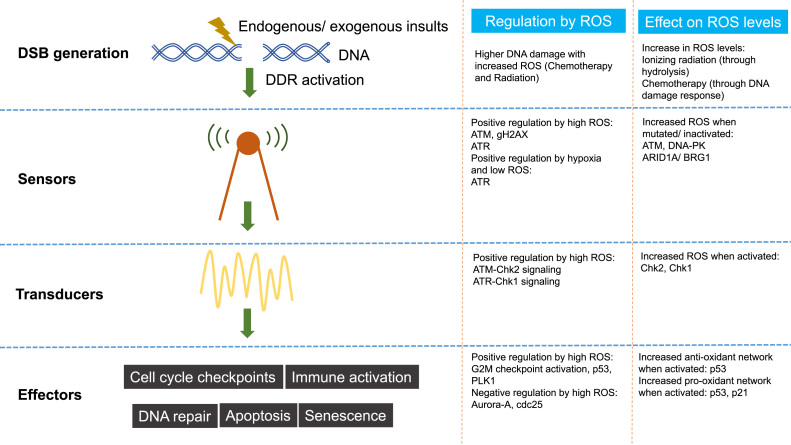
Reactive oxygen species (ROS) are a group of short-lived, highly reactive, oxygen-containing molecules that can induce DNA damage and affect the DNA damage response (DDR). There is unequivocal pre-clinical and clinical evidence that ROS influence the genotoxic stress caused by chemotherapeutics agents and ionizing radiation. Recent studies have provided mechanistic insight into how ROS can also influence the cellular response to DNA damage caused by genotoxic therapy, especially in the context of Double Strand Breaks (DSBs). This has led to the clinical evaluation of agents modulating ROS in combination with genotoxic therapy for cancer, with mixed success so far. These studies point to context dependent outcomes with ROS modulator combinations with Chemotherapy and radiotherapy, indicating a need for additional pre-clinical research in the field. In this review, we discuss the current knowledge on the effect of ROS in the DNA damage response, and its clinical relevance.
Overview
The claims and statistics of this paper haven’t been checked yet.
Run the check — free, no account needed. It reads the open-access text and checks the sources it cites.
Integrity signals
Registry
Cites
Statistics
Figures
Verification
Claims the paper makes
The claims and statistics of this paper haven’t been checked yet.
Run the check — free, no account needed. It reads the open-access text and checks the sources it cites.
Claims other papers make about this one
Each is checked against this paper’s own text: does it say what the citing paper says it does?
In the citing paper
“The most frequently occurring mutations in the tumor suppressor gene TP53 in lung cancer are Guanine → Thymine and Guanine → Adenine transversions (Srinivas et al. 2019; Gibbons et al. 2014).”
From Reactive Oxygen Species, Toxicity, Oxidative Stress, and Antioxidants: Chronic Diseases and Aging (2023) · cites this paper as Srinivas et al. 2019
Self-check
Percentages, sums and reported differences re-computed from the paper’s own numbers.
The self-check needs the paper’s full text.
Citations
Cites
Vogelstein, B., Lane, D., & Levine, A. J. (2000) · Nature · doi:10.1038/35042675 · Cited by 6,607 · cited 1×
“p53 is a well-studied tumor suppressor that is mutated in over 50% of all cancers [87,88], and affects multiple cellular responses to DNA U.”
BackgroundDNA double-stranded breaks induce histone H2AX phosphorylation on serine 139
Rogakou, E. P., Pilch, D. R., Orr, A. H., Ivanova, V. S., & Bonner, W. M. (1998) · Journal of Biological Chemistry · doi:10.1074/jbc.273.10.5858 · Cited by 5,438
(1994) · New England Journal of Medicine · doi:10.1056/nejm199404143301501 · Cited by 4,737
The DNA Damage Response: Making It Safe to Play with Knives
Ciccia, A., & Elledge, S. J. (2010) · Molecular Cell · doi:10.1016/j.molcel.2010.09.019 · Cited by 4,368 · cited 1×
“This response includes DNA damage recognition, activation of checkpoints, cell cycle arrest, and eventually final outcomes of repair, apoptosis and immune clearance [4,5].”
BackgroundRadiobiology for the Radiologist.
(1974) · Annals of Internal Medicine · doi:10.7326/0003-4819-80-3-438_1 · Cited by 3,498
Molecular Mechanisms of Mammalian DNA Repair and the DNA Damage Checkpoints
Sancar, A., Lindsey-Boltz, L. A., Ünsal-Kaçmaz, K., & Linn, S. (2004) · Annual Review of Biochemistry · doi:10.1146/annurev.biochem.73.011303.073723 · Cited by 3,317 · cited 1×
“Depending on the nature of the lesion in DNA, specific pathways are activated to facilitate identification of the damaged regions and their repair [2,3].”
BackgroundImmunogenic Cell Death in Cancer Therapy
Kroemer, G., Galluzzi, L., Kepp, O., & Zitvogel, L. (2013) · Annual Review of Immunology · doi:10.1146/annurev-immunol-032712-100008 · Cited by 3,303 · cited 1×
“to eventual T-cell mediated killing [116].”
Yang, Y., Li, S., Yang, Q., Shi, Y., Zheng, M., Liu, Y., Chen, F., Song, G., Xu, H., Wan, T., et al. (2014) · Cellular Physiology and Biochemistry · doi:10.1159/000358696 · Cited by 3,263
ATM and ATR Substrate Analysis Reveals Extensive Protein Networks Responsive to DNA Damage
Matsuoka, S., Ballif, B. A., Smogorzewska, A., McDonald, E. R., Hurov, K. E., Luo, J., Bakalarski, C. E., Zhao, Z., Solimini, N., Lerenthal, Y., et al. (2007) · Science · doi:10.1126/science.1140321 · Cited by 3,075
Association of reactive oxygen species levels and radioresistance in cancer stem cells
Diehn, M., Cho, R. W., Lobo, N. A., Kalisky, T., Dorie, M. J., Kulp, A. N., Qian, D., Lam, J. S., Ailles, L. E., Wong, M., et al. (2009) · Nature · doi:10.1038/nature07733 · Cited by 2,555
Cited by
Sorted by citations
Items 701–800 of 1,002
Feng, M., Fu, F., Lei, M., Luo, W., Su, Y., Xie, Y., Wang, Q., Zhang, D., Yu, Q., & Yan, C. (2025) · Carbohydrate Polymers · doi:10.1016/j.carbpol.2025.123838 · Cited by 17
Wang, Y.-C., Wu, P., Ting, W.-C., Wang, Y., Yang, M.-H., Su, T., Su, J.-Y., Sun, H.-I., Huang, W., Tsai, P.-L., et al. (2025) · Nature Communications · doi:10.1038/s41467-025-60727-z · Cited by 21
“Oxidative damage to DNA bases, which can lead to replication stress 11 , is primarily repaired through the base excision repair pathway, initiated by a DNA glycosylase that removes damaged bases, followed by the recruitment of the apurinic/apyrimidinic endonuclease APE1 13 .”
Jiang, L., Fu, Z., Ye, B., Feng, X., Chen, Z., Chen, Q., Long, Y., Wang, S., & Deng, G. (2025) · Drug Delivery · doi:10.1080/10717544.2025.2565480 · Cited by 21
“…concentrations, they participate in cellular signal regulation, but in excess, they can cause oxidative stress and pro-carcinogenic effects (Srinivas et al. 2019; chen, Huang, et al. 2024). the concentration of ROS in tumor cells (~10 × 10 −5 M) is several thousand times higher than that…”
Cellular and Molecular Mechanisms of Oxidative DNA Damage and Repair
Ayna, A., Çağlayan, C., & Tayşi, S. (2025) · Medicina · doi:10.3390/medicina61112013 · Cited by 24
“These reactive species can interact directly with DNA, resulting in single-strand breaks (SSB), double-strand breaks (DSB) and various base modifications [8,9].”
Yan, J., Zhuang, Q.-Z., Li, Z., Xiong, Y., He, M. Y., Kang, C., Zhang, Q., Han, L., Liang, E., Liu, H., et al. (2021) · European Journal of Pharmacology · doi:10.1016/j.ejphar.2021.173975 · Cited by 17
Brożek-Płuska, B., & Beton-Mysur, K. (2021) · RSC Advances · doi:10.1039/d1ra01950c · Cited by 17
Jin, H., & Kim, H. J. (2021) · International Journal of Molecular Sciences · doi:10.3390/ijms22179639 · Cited by 17
Exploring the direct effects of microcystin-LR on DNA via using cross-technical means
Zhang, H., Wang, Z., Liu, Y., & Xie, P. (2022) · Ecotoxicology and Environmental Safety · doi:10.1016/j.ecoenv.2022.113841 · Cited by 18
McGrath, J., Kane, L. E., & Maher, S. G. (2022) · Cells · doi:10.3390/cells11152294 · Cited by 18
“ROS accumulation can give rise to oxidative stress, resulting in DNA damage and cell death [26].”
BackgroundLavudi, K., Harika, V. S., Kokkanti, R. R., Patchigolla, S., Anupriya, S., Patnaik, S., & Penchalaneni, J. (2022) · Frontiers in Bioengineering and Biotechnology · doi:10.3389/fbioe.2022.978846 · Cited by 17
“For tumor formation, ROS can be a two-edged sword (Srinivas et al., 2019).”
BackgroundPrdx5 regulates DNA damage response through autophagy-dependent Sirt2-p53 axis
Agborbesong, E., Zhou, J. X., Li, L. X., Harris, P. C., Calvet, J. P., & Li, X. (2022) · Human Molecular Genetics · doi:10.1093/hmg/ddac218 · Cited by 17
Properties of flavonoids in the treatment of bladder cancer (Review)
Lv, Y., Liu, Z., Jia, H., Xiu, Y., Liu, Z., & Deng, L. (2022) · Experimental and Therapeutic Medicine · doi:10.3892/etm.2022.11612 · Cited by 19
Control of actin polymerization via reactive oxygen species generation using light or radiation
Ishimoto, T., & Mori, H. (2022) · Frontiers in Cell and Developmental Biology · doi:10.3389/fcell.2022.1014008 · Cited by 19
“Numerous studies have demonstrated that X-irradiation generates ROS (Ghosal et al., 2005; Kam and Banati, 2013; Srinivas et al., 2019).”
BackgroundSow, P., Dey, S., Dey, R., Majumder, A., Nandi, S., Bera, M., & Samadder, A. (2022) · Colloids and Surfaces B Biointerfaces · doi:10.1016/j.colsurfb.2022.112905 · Cited by 17
NEK6 Regulates Redox Balance and DNA Damage Response in DU-145 Prostate Cancer Cells
Pavan, I. C. B., Basei, F. L., Severino, M. B., Silva, I. R. E., Issayama, L. K., Mancini, M. C. S., Góis, M. M., da Silva, L. G. S., Bezerra, R. M. N., Simabuco, F. M., et al. (2023) · Cells · doi:10.3390/cells12020256 · Cited by 19
“ROS can also induce DNA damage and activate the DNA damage response (DDR), which culminates in DNA repair, cell cycle arrest, and cell death [30].”
BackgroundInfluentialPotential applications of drug delivery technologies against radiation enteritis
Liu, D., Wei, M., Yan, W., Xie, H. Q., Sun, Y., Yuan, B., & Jin, Y. (2023) · Expert Opinion on Drug Delivery · doi:10.1080/17425247.2023.2183948 · Cited by 17
“ble strand breaks clustered lesions, and complex doublestrand breaks, but also can damage proteins [39].”
BackgroundKumar, V., Zoltan, K., Sulaj, A., Blume, M., Kliemank, E., Tsilingiris, D., Groener, J., Brune, M., Shahzad, K., Isermann, B. H., et al. (2022) · EBioMedicine · doi:10.1016/j.ebiom.2023.104516 · Cited by 17
Liang, C., Chang, K., Huang, Y., Huang, X., Sheu, G., Kuo, C., Hsiao, C., & Tsai, N. (2023) · Thoracic Cancer · doi:10.1111/1759-7714.14982 · Cited by 17
“Accumulating evidence indicates that ROS-mediated DNA damage plays a critical role in cancer therapy by triggering DDR mechanisms to promote cell cycle arrest or activate apoptosis.(36) Dysregulation of cell cycle progression and apoptosis are common in cancer cells, and both are often regarded as targets for cancer t…”
BackgroundDomingo-Reinés, J., Montes, R., García-Moreno, A., Gallardo, A., Sanchez-Manas, J. M., Ellson-Lancho, I., Lamolda, M., Calabrò, C., Lopez-Escamez, J. A., Catalina, P., et al. (2023) · Cell Death and Disease · doi:10.1038/s41419-023-05870-5 · Cited by 17
“These results con fi rm that patient-derived hematopoietic cells expressing NUP98-KDM5A exhibit accumulation of DNA damage, mitotic defects, and direct interaction of the fusion protein with RAE1 during mitosis.”
Alaouna, M., Penny, C. B., Hull, R., Molefi, T., Chauke-Malinga, N., Khanyile, R., Makgoka, M., Bida, M., & Dlamini, Z. (2023) · Plants · doi:10.3390/plants12122350 · Cited by 19
Homologous Recombination Deficiency (HRD) in Cutaneous Oncology
Akinjiyan, F. A., Morecroft, R., Phillipps, J., Adeyelu, T. T., Elliott, A., Park, S. J., Butt, O. H., Zhou, A. Y., & Ansstas, G. (2023) · International Journal of Molecular Sciences · doi:10.3390/ijms241310771 · Cited by 17
“The disruption of normal DNA structure or sequence can lead to DNA damage [6].”
BackgroundPark, J. D., Jang, H. J., Choi, S. H., Jo, G. H., Choi, J., Hwang, S., Park, W., & Park, K. (2023) · Cell Death Discovery · doi:10.1038/s41420-023-01536-5 · Cited by 17
“Consistent with the report that the accumulation of intracellular ROS can induce DNA damage and subsequent cell cycle arrest [20, 21], CDDP treatment resulted in a 1.”
BackgroundLim, H. J., Jang, W. B., Rethineswaran, V. K., Choi, J., Lee, E. J., Park, S., Jeong, Y., Ha, J. S., Yun, J., Choi, Y. J., et al. (2023) · Cells · doi:10.3390/cells12152005 · Cited by 17
“Additionally, DNA damage is associated with cellular senescence [42,43].”
BackgroundSchistosoma mansoni–Induced Oxidative Stress Triggers Hepatocellular Proliferation
von Bülow, V., Schneider, M., Dreizler, D., Russ, L., Baier, A., Buß, N., Lichtenberger, J., Härle, L., Müller, H., Tschuschner, A., et al. (2023) · Cellular and Molecular Gastroenterology and Hepatology · doi:10.1016/j.jcmgh.2023.08.014 · Cited by 18
“9 To maintain the stability of the genome it is mandatory that eukaryotic DNA replication is strictly limited to only once per cell cycle.”
BackgroundZhang, B., Huang, C., Xu, D., Huang, K., Yang, L., Jiao, L., Fu, B., Li, S., & Li, Y. (2023) · Ecotoxicology and Environmental Safety · doi:10.1016/j.ecoenv.2023.115784 · Cited by 17
Cresyl Diphenyl Phosphate exposure induces reproductive functional defects in men and male mice
Jiang, D., Xu, Y., Han, X., Lin, Y., Li, Q., Yang, Y., Wang, Y., Guo, A.-L., Li, H., Fan, Z., et al. (2024) · Ecotoxicology and Environmental Safety · doi:10.1016/j.ecoenv.2024.116003 · Cited by 17
Khatun, S., Pebam, M., Sankaranarayanan, S. A., Pogu, S. V., Bantal, V. S., & Rengan, A. K. (2024) · Biomaterials Advances · doi:10.1016/j.bioadv.2024.213802 · Cited by 18
İnanır, M., Uçar, E., Tüzün, B., Eruygur, N., Ataş, M., & AKPULAT, H. A. (2024) · International Journal of Biological Macromolecules · doi:10.1016/j.ijbiomac.2024.130943 · Cited by 17
Tang, S., An, N., Luan, J., Wen, X., Fu, Y., Gao, M., & Guo, C. (2024) · Chemical Engineering Journal · doi:10.1016/j.cej.2024.150906 · Cited by 17
Ramos, R., Karaı̈skou, A., Botuha, C., Amhaz, S., Trichet, M., Dingli, F., Forté, J., Lam, F., Canette, A., Chaumeton, C., et al. (2024) · Journal of Medicinal Chemistry · doi:10.1021/acs.jmedchem.3c02000 · Cited by 17
Li, J., Cui, D., Yang, Z., Ma, J.-Y., Liu, J., Yu, Y., Huang, X., & Xiang, P. (2024) · Environmental Research · doi:10.1016/j.envres.2024.118890 · Cited by 17
Radio-miRs: a comprehensive view of radioresistance-related microRNAs
Pedroza‐Torres, A., Romero-Cordoba, S. L., Montaño, S., Peralta-Zaragoza, Ó., Vélez-Uriza, D. E., Arriaga-Canon, C., Guajardo-Barreto, X., Bautista-Sánchez, D., Sosa-León, R., Hernández‐González, O., et al. (2024) · Genetics · doi:10.1093/genetics/iyae097 · Cited by 17
“In addition, IR also produces DNA modifications in all cells exposed to the fractionated doses conventionally used (Srinivas et al. 2019).”
Biological Profile of Synthetic and Natural Indole Derivatives: Paving New Paths in Cancer Treatment
Janeiro, A. M., & Marques, C. S. (2024) · Drugs and Drug Candidates · doi:10.3390/ddc3030029 · Cited by 18
“…region (that contributes to the overall binding), a hydrophobic channel and pocket (without established interactions), and a phosphate-binding region (which anchors ATP to the binding site) [52]. through hydrogen bonds) with the hinge region, a sugar interaction region (that contributes to the”
BackgroundXiang, Z., Hou, G., Zheng, S., Lu, M., Li, T., Lin, Q., Liu, H., Wang, X., Guan, T., Wei, Y., et al. (2024) · Proceedings of the National Academy of Sciences · doi:10.1073/pnas.2403038121 · Cited by 18
“Conversely, ER stress can promote the production of reactive oxygen species, a primary source of DNA damage ( 35 , 36 ).”
Sánchez‐Castillo, A., & Kampen, K. R. (2024) · Discover Oncology · doi:10.1007/s12672-024-01544-6 · Cited by 18
Quercetin exhibits cytotoxicity in cancer cells by inducing two-ended DNA double-strand breaks
Someya, Y., Saito, S., Takeda, S., Adachi, N., & Kurosawa, A. (2024) · Biochemical and Biophysical Research Communications · doi:10.1016/j.bbrc.2024.150977 · Cited by 17
Citric acid-crosslinked β-cyclodextrin supported zinc peroxide as a biocompatible H2O2 scavenger
Pirouzmand, M., Sani, P. S., Ghasemi, Z., & Azizi, S. (2020) · JBIC Journal of Biological Inorganic Chemistry · doi:10.1007/s00775-020-01771-6 · Cited by 17
Long noncoding RNA: A resident staff of genomic instability regulation in tumorigenesis
Guo, F., Li, L., Wang, Y., Hu, J., & Cui, J. (2021) · Cancer Letters · doi:10.1016/j.canlet.2021.01.021 · Cited by 16
Contribution of SOS genes to H2O2-induced apoptosis-like death in Escherichia coli
Kim, H., & Lee, D. G. (2021) · Current Genetics · doi:10.1007/s00294-021-01204-0 · Cited by 17
“The ROS accumulation frequently leads to modification of nucleotide bases and DNA strand breaks (Srinivas et al. 2019).”
BackgroundPeri, S., Ruzzolini, J., Urciuoli, S., Versienti, G., Biagioni, A., Andreucci, E., Peppicelli, S., Bianchini, F., Bottari, A., Calorini, L., et al. (2022) · Antioxidants · doi:10.3390/antiox11091762 · Cited by 17
“may also be suggested by the increased level of p53 following the OCF treatment (Figures 2d, 4d and 6d); indeed, p53 is implicated in the cellular response of several sources of stress, including the ROS [40].”
BackgroundPang, S., Xu, S. Q., Wang, L., Wu, H., Chu, Y., Ma, X., Li, Y., Zou, B., Wang, S., & Zhou, G. (2022) · Thoracic Cancer · doi:10.1111/1759-7714.14728 · Cited by 16
“ROS can cause DNA damage.(27) The negative regulation of the cell cycle might be one of the manifestations of CTCs in harsh environments.”
BackgroundPyrethrum extract induces oxidative DNA damage and AMPK/mTOR-mediated autophagy in SH-SY5Y cells
Yang, Y., Zhang, Y., Gao, J., Xu, W., Xu, Z., Li, Z., Cheng, J., & Tao, L. (2020) · The Science of The Total Environment · doi:10.1016/j.scitotenv.2020.139925 · Cited by 17
IκBα targeting promotes oxidative stress-dependent cell death
Carrà, G., Ermondi, G., Riganti, C., Righi, L., Caron, G., Menga, A., Capelletto, E., Maffeo, B., Lingua, M. F., Fusella, F., et al. (2021) · Journal of Experimental & Clinical Cancer Research · doi:10.1186/s13046-021-01921-x · Cited by 17
“As a consequence, the development of agents able to modulate ROS production in combination with chemotherapy and radiotherapy represent a challenging therapeutic strategy [7, 8].”
BackgroundGao, Z., Mansor, M. H., Howard, F. H. N., MacInnes, J. M., Zhao, X., & Muthana, M. (2025) · Nanomaterials · doi:10.3390/nano15030221 · Cited by 16
“(* p < 0.03, ** p < 0.002, *** p < 0.0002, **** p < 0.0001).”
InfluentialThe role of ATF3 in the crosstalk between cellular stress response and ferroptosis in tumors
Jia, M., Shi, M., Zhao, Y., Li, Y., Liu, X., & Zhao, L. (2025) · Critical Reviews in Oncology/Hematology · doi:10.1016/j.critrevonc.2025.104791 · Cited by 18
Nrf2 as a Molecular Guardian of Redox Balance and Barrier Integrity in IBD
Stojanović, B., Bevc, I. M., Stojanovic, M. D., Stojanović, B., Jovanović, M., Lazarevic, S. R., Milošević, B., Radosavljević, I., Tasić-Uroš, D., Marković, N., et al. (2025) · Antioxidants · doi:10.3390/antiox14121407 · Cited by 20
“Protein and DNA oxidation add another layer of dysfunction [72,73].”
Hong, Y., Mu, X., Ji, X., Chen, X., Geng, Y., Zhang, Y., Liu, Q., Li, F., Wang, Y., & He, J. (2021) · Environmental Pollution · doi:10.1016/j.envpol.2021.116917 · Cited by 18
Melanin nanoparticles as an actinide in vivo sequestration agent with radiation protection effect
Yu, M., Sheng, J., Wang, X., Shi, C., Sun, Q., Liu, T., & Diwu, J. (2021) · New Journal of Chemistry · doi:10.1039/d1nj00999k · Cited by 17
Choi, Y. H. (2022) · Biotechnology and Bioprocess Engineering · doi:10.1007/s12257-021-0199-6 · Cited by 16
DNA Damage Response Inhibitors in Cholangiocarcinoma: Current Progress and Perspectives
Geyik, Ö. G., Anichini, G., Ulukaya, E., Marra, F., & Raggi, C. (2022) · Cells · doi:10.3390/cells11091463 · Cited by 18
“Radiotherapy-induced DNA damage arises following direct ionization on DNA sugar backbone, or indirectly, by promoting the production of free radicals in cells, which yield oxidative DNA damage and replication stress [42,43].”
BackgroundInfluentialHan, Y., Liu, Y., Zhen, J., Hou, S., Zhang, B., Cui, Z., Wan, Q., & Feng, H. (2022) · Experimental Cell Research · doi:10.1016/j.yexcr.2022.113249 · Cited by 16
Lee, H., An, G., Lim, W., & Song, G. (2022) · Pesticide Biochemistry and Physiology · doi:10.1016/j.pestbp.2022.105254 · Cited by 19
Zhang, J., Liu, P., Chen, J., Yao, D., Liu, Q., Zhang, J., Zhang, H.-W., Leung, E. L., Yao, X., & Liu, L. (2022) · Pharmacological Research · doi:10.1016/j.phrs.2022.106565 · Cited by 16
The molecular link between obesity and genomic instability in cancer development
An, C., Pipia, I., Ruiz, A.-S., Argüelles, I., An, M., Wase, S. J., & Peng, G. (2022) · Cancer Letters · doi:10.1016/j.canlet.2022.216035 · Cited by 16
Zhang, Q., Yang, L., Gao, H. J., Kuang, X., He, X., Chen, Y., Cheng, Y., Zhang, L., Guo, X., Zhong, Y., et al. (2023) · Journal of Translational Medicine · doi:10.1186/s12967-023-04022-9 · Cited by 17
“DDR is complex mechanism to cope with DNA damage, DSBs can trigger cellular DDR signaling to help cells recover from DNA damage [27].”
BackgroundRole of ionizing radiation activated NRF2 in lung cancer radioresistance
Xu, Q., Zhang, P., Han, X., Ren, H., Yu, W., Hao, W., Luo, B., Khan, M. I., & Chen, N. (2023) · International Journal of Biological Macromolecules · doi:10.1016/j.ijbiomac.2023.124476 · Cited by 16
Peter, R. M., Sarwar, M. S., Mostafa, S. Z., Wang, Y., Su, X., & Kong, A. T. (2023) · Molecular Carcinogenesis · doi:10.1002/mc.23551 · Cited by 16
“Consequently, cells with DNA damage are subjected to cell cycle arrest.(66) In the current study, the reduced”
BackgroundZhao, Y., Yu, J., Huang, A., Yang, Q., Li, G., Yang, Y., & Chen, Y. (2023) · Cancer Cell International · doi:10.1186/s12935-023-03003-8 · Cited by 16
“In addition, ROS can also cause DNA damage, including single strand cleavage, point mutations, miscoding, abnormal amplification and activation of oncogenes [32].”
BackgroundPark, J., Lee, H., Moon, H., Lee, N., Kim, S., Kim, J., Lee, Y., Min, K., Kim, H., Choi, G. J., et al. (2023) · Microbiology Spectrum · doi:10.1128/spectrum.01485-23 · Cited by 16
“DNA damage response is an important cellular process in the repair of oxidative damage in DNA (38, 39).”
BackgroundWang, L., Wu, L., Du, Y., Wang, X., Yang, B., Guo, S., Zhou, Y., Xu, Y., Yang, S., Zhang, Y., et al. (2023) · Redox Biology · doi:10.1016/j.redox.2023.102893 · Cited by 16
“Given that ROS triggers multiple DNA damage [47], it is tempting to speculate that excessive DNA injury in hypertension might trigger unchecked activation of DNA-PKcs, resulting in VSMC phenotypic switching and subsequently vascular remodeling.”
BackgroundRole of c‐Fos in DNA damage repair
Yao, H., Wu, Y., Zhong, Y., Huang, C., Guo, Z., Jin, Y., & Wang, X. (2024) · Journal of Cellular Physiology · doi:10.1002/jcp.31216 · Cited by 16
“Mitochondrial DNA damage, strand breaks, and degradation can be induced by ROS accumulation (Shokolenko et al., 2009; Srinivas et al., 2019).”
BackgroundWang, T., Shen, Y., Chen, H.-Y., Chen, C.-C., Lin, N.-C., Shih, Y.-H., Hsia, S., Chiu, K., & Shieh, T. (2024) · Biomedicines · doi:10.3390/biomedicines12020412 · Cited by 16
“ROS has been demonstrated as a potent inducer of DNA damage and tumor progression [13,38,39].”
BackgroundThe therapeutic and biomarker significance of ferroptosis in chronic myeloid leukemia
Zhong, F., Zhang, X., Wang, Z., Li, X., Huang, B., Kong, G., & Wang, X. (2024) · Frontiers in Immunology · doi:10.3389/fimmu.2024.1402669 · Cited by 16
Non-Coding RNAs of Mitochondrial Origin: Roles in Cell Division and Implications in Cancer
Piergentili, R., & Sechi, S. (2024) · International Journal of Molecular Sciences · doi:10.3390/ijms25137498 · Cited by 18
Liang, Y., Qi, J., Yu, D., Wang, Z., Li, W., Long, F., Ning, S., Yuan, M., & Zhong, X. (2024) · Antioxidants · doi:10.3390/antiox13111277 · Cited by 16
“PRDX2 can regulate replication fork speed to protect cells against oxidative stress and DNA damage [25].”
Mutations of the Electron Transport Chain Affect Lifespan and ROS Levels in C. elegans
Ősz, F., Nazir, A., Takács‐Vellai, K., & Farkas, Z. (2025) · Antioxidants · doi:10.3390/antiox14010076 · Cited by 17
“The regulation of p53 by ROS differentially depends on ROS concentrations: low ROS prompt the upregulation of p53-activated antioxidant genes, while in the case of a higher ROS level, p53 activates pro-oxidant genes, inducing cell death [97].”
Chen, J., Jin, X., Shen, Z., Mei, Y., Zhu, J., Zhang, X., Liang, G., & Zheng, X. (2021) · Medical Oncology · doi:10.1007/s12032-021-01505-x · Cited by 16
“Increased and accumulated ROS have previously been reported to cause oxidative DNA damage, including singlestranded breaks, double-stranded breaks and others [32, 33].”
BackgroundLi, R., Liu, B., Xu, W., Yu, L., Zhang, C., Cheng, J., Tao, L., Li, Z., & Zhang, Y. (2021) · Environmental Toxicology · doi:10.1002/tox.23432 · Cited by 16
“Moreover, ROS is recognized as the toxic metabolite of DNA damage.(47) Its production and accumulation affect cell proliferation, differentiation, metabolism, and immune regulation.”
BackgroundDong, X., Yang, F., Xu, X., Zhu, F., Liu, G., Xu, F., Chen, G., Cao, C., Teng, L., Li, X., et al. (2022) · Environmental Toxicology · doi:10.1002/tox.23482 · Cited by 16
İçsel, C., Yılmaz, V. T., Aygün, M., Erkısa, M., & Ulukaya, E. (2022) · Dalton Transactions · doi:10.1039/d1dt04070g · Cited by 17
Qian, J., Xu, Z., Meng, C., Liu, Y., Wu, H., Wang, Y., Yang, J., Zheng, H., Ran, F., Liu, G., et al. (2022) · Journal of Medicinal Chemistry · doi:10.1021/acs.jmedchem.2c00130 · Cited by 16
Guo, M., Zhang, W., Niu, S., Shang, M., Chang, X., Wu, T., Zhang, T., Tang, M. X., & Xue, Y. (2022) · Chemico-Biological Interactions · doi:10.1016/j.cbi.2022.110287 · Cited by 16
Wu, C., Zhang, W., Yan, F., Dai, W., Fang, F., Gao, Y., & Cui, W. (2022) · Pharmaceutical Biology · doi:10.1080/13880209.2022.2151632 · Cited by 16
“Increased levels of ROS in living cells can damage DNA, RNA, proteins, and healthy cells, resulting in the development and progression of several serious diseases (Srinivas et al. 2019).”
BackgroundJi, X., Jiang, W., Wang, J., Zhou, B., Ding, W., Liu, S., Huang, H., Chen, G., & Sun, X. (2023) · Frontiers in Immunology · doi:10.3389/fimmu.2022.1106644 · Cited by 18
“Radiation results in the release of DNA DSBs from tumor cells into the cytoplasm (62).”
BackgroundXu, Y., Bankhead, A., Tian, X., Tang, J., Ljungman, M. E., & Neamati, N. (2020) · Cancer Research · doi:10.1158/0008-5472.can-20-0530 · Cited by 16
“It is well accepted that chemotherapeutics such as cisplatin and mitomycin-C increase ROS levels, which contributes to their genotoxicity (63).”
BackgroundWei, P., Wang, Y., Haiyan, F., Zhang, F., Ji, Z., Zhang, K., Zhang, Q., Jiang, L., Qian, Y., & Fu, Y. (2024) · Small · doi:10.1002/smll.202404463 · Cited by 15
Gu, C., Sha, G., Zeng, B., Cao, H., Cao, Y., & Tang, D. (2025) · Therapeutic Advances in Gastroenterology · doi:10.1177/17562848251327167 · Cited by 16
“85 Microbial metabolites, like secondary bile acids, accumulate in the TME due to microbiota dysbiosis.”
Ju, F., Weng, J., Fan, N., Wang, Z., Zhou, C., Zhao, X., Horstmann, N., Wu, X., Hoppe, S., You, B., et al. (2025) · Cell Death and Disease · doi:10.1038/s41419-025-07773-z · Cited by 17
Wani, T. H., Chowdhury, G., & Chakrabarty, A. (2021) · RSC Medicinal Chemistry · doi:10.1039/d0md00383b · Cited by 16
Mutagenic Consequences of Sublethal Cell Death Signaling
Hawkins, C. J., & Miles, M. A. (2021) · International Journal of Molecular Sciences · doi:10.3390/ijms22116144 · Cited by 15
DRG2 Depletion Promotes Endothelial Cell Senescence and Vascular Endothelial Dysfunction
Le, A.-N., Park, S.-S., Le, M.-X., Lee, U. H., Ko, B. K., Lim, H. R., Yu, R., Choi, S. H., Lee, B. J., Ham, S., et al. (2022) · International Journal of Molecular Sciences · doi:10.3390/ijms23052877 · Cited by 15
“Oxidative stress causes DNA damage [35] and cellular senescence [13,36].”
BackgroundPeriodic Exposure of Plasma-Activated Medium Alters Fibroblast Cellular Homoeostasis
Bhartiya, P., Kaushik, N., Nguyen, L. N., Bekeschus, S., Masur, K., Weltmann, K., Kaushik, N. K., & Choi, E. H. (2022) · International Journal of Molecular Sciences · doi:10.3390/ijms23063120 · Cited by 17
“The increase in p53 expression may be significant along with the DNA damage response because of redox stress [22,56,57].”
BackgroundShi, B., Wang, H., Wan, X., Guo, Y., Liu, S., & Gong, Q. (2022) · Spectrochimica Acta Part A Molecular and Biomolecular Spectroscopy · doi:10.1016/j.saa.2022.121375 · Cited by 15
Takeshita, H., Yoshida, R., Inoue, J., Ishikawa, K., Shinohara, K., Hirayama, M., Oyama, T., Kubo, R., Yamana, K., Nagao, Y., et al. (2023) · Laboratory Investigation · doi:10.1016/j.labinv.2022.100060 · Cited by 15
Cvijetić, I., Herlah, B., Marinković, А., Perdih, A., & Bjelogrlić, S. (2023) · Pharmaceuticals · doi:10.3390/ph16030341 · Cited by 16
“Therefore, it was interesting to determine whether the currently investigated compounds stimulate the production of reactive oxygen species (ROS) that may damage DNA integrity and compromise its replication [33].”
BackgroundGuo, L., Dong, Z., Zhang, X., Yang, Y., Hu, X., Ji, Y., Li, C., Wan, S., Xu, J., Liu, C., et al. (2023) · Phytomedicine · doi:10.1016/j.phymed.2023.154765 · Cited by 15
Shao, Y., Chen, M., Chen, W., Wang, Z., Sui, M., Tian, M., Wu, Y., Song, J., Ji, D., & Song, F. (2023) · Advanced Healthcare Materials · doi:10.1002/adhm.202300503 · Cited by 15
Zhang, C., Yang, H., Gao, L., Bai, M., Fu, W., Huang, C., Mi, N., Ma, H., Lu, Y., Jiang, N., et al. (2023) · Frontiers in Pharmacology · doi:10.3389/fphar.2023.1098915 · Cited by 15
“For example, activating a large number of cell surface receptors increases intracellular hydrogen peroxide levels, thereby mediating downstream effects in a second messenger-like manner (Shi et al., 2017; Moloney and Cotter, 2018; Srinivas et al., 2019).”
BackgroundHe, Y., Chen, H., Li, W., Xu, L. X., Yao, H., Cao, Y., Wang, Z., Zhang, L., Wang, D., & Zhou, D. (2023) · Journal of Nanobiotechnology · doi:10.1186/s12951-023-01970-8 · Cited by 15
“Generally, ionizing radiation induces cell death via two mechanisms - direct interaction with key cellular components to cause DNA damage or production of cytotoxic reactive oxygen species (ROS) [3, 4].”
BackgroundLiu, S., Kong, X., Fang, Y., He, Z., Wu, H., Ji, J., Yang, X., Ye, L., & Zhai, G. (2023) · Biomaterials Science · doi:10.1039/d3bm00781b · Cited by 15
Systemic Diseases and Gastrointestinal Cancer Risk
Malkani, N., & Rashid, M. U. (2023) · Journal of Cancer & Allied Specialties · doi:10.37029/jcas.v9i2.473 · Cited by 18
Tao, Y., Chen, W., Xu, H., Xu, J., Yang, H., Luo, X., Chen, M., He, J., Bai, Y., & Qi, H. (2023) · International Journal of Nanomedicine · doi:10.2147/ijn.s419081 · Cited by 19
“Excess ROS can induce DNA damage and affect the DNA damage response.(53) We found that exosomes derived from obese adipose tissue are associated with the increment of ROS production and elevated 8-OHdG and γ-H2AX levels confirm DNA oxidative damage in trophoblast cells.”
BackgroundPlaza, B. L., Gil, Á., Menéndez‐Rey, A., Bensadon‐Naeder, L., Hummel, T. R., Feliú, J., & Milla, S. P. (2023) · Nutrients · doi:10.3390/nu15214639 · Cited by 15
“ROS have been described to stimulate the production of R-loops of both DNA and RNA that appear during cell replication conflicts and are important inducers of genomic instability; 8-OHdG has been linked to the production of these fragments [108].”
BackgroundThe microbiome in the pathogenesis of lung cancer
Miao, S., & Qiu, H. (2023) · Apmis · doi:10.1111/apm.13359 · Cited by 15
“Notably, reactive oxygen species (ROS), a group of highly active and short-lived oxygen-containing molecules produced by the microbiome, mediate DNA damage [72].”
BackgroundLi, N., Jiang, X., Zhang, Q., Huang, Y., Wei, J., Zhang, H., & Luo, H. (2024) · Journal of Ovarian Research · doi:10.1186/s13048-024-01366-8 · Cited by 15
“Combining GPX4 and NRF2 inhibitors further impairs antioxidant processes, leading to an overload of reactive oxygen species (ROS) and resulting in overwhelming oxidative stress and cell death [31, 32].”
BackgroundDecreasing mitochondrial fission ameliorates HIF-1α-dependent pathological retinal angiogenesis
Huang, S.-Q., Cao, K., Wang, C., Chen, P.-L., Chen, Y., Zhang, Y., Yu, S., Bai, Z.-X., Guo, S., Liao, M., et al. (2024) · Acta Pharmacologica Sinica · doi:10.1038/s41401-024-01262-3 · Cited by 20
“ROS are thought to be cytotoxic and mutagenic, and at high levels, they induce cell death, apoptosis, and senescence [40 – 42].”
Chen, X., Ran, X., Wei, X., Zhu, L., Chen, S., Liao, Z., Xu, K., & Xia, W. (2024) · Regenerative Therapy · doi:10.1016/j.reth.2024.05.016 · Cited by 15
“Free radicals bind to DNA, changing its physical or chemical state and causing DNA breaks, while DNA damage-induced P53 mayarrest the cell cycle and induce apoptosis [57 e 59].”
BackgroundZhao, Q., Gu, M., Ni, M., Li, J., Wu, T., Zhu, S., Zhou, Y., Li, X., Li, X., Xu, H., et al. (2024) · Colloids and Surfaces B Biointerfaces · doi:10.1016/j.colsurfb.2024.114112 · Cited by 15
Liu, M., Zhao, Y., Li, Q., Lei, X., He, K.-Y., Guo, J.-R., Yang, J., Yan, Z.-H., Wu, D., Zhang, L., et al. (2024) · Cell Death and Disease · doi:10.1038/s41419-024-06933-x · Cited by 15
Staphylococcus epidermidis biofilm in inflammatory breast cancer and its treatment strategies
Allen-Taylor, D., Boro, G., Cabato, P. M., Mai, C., Nguyen, K., & Rijal, G. (2024) · Biofilm · doi:10.1016/j.bioflm.2024.100220 · Cited by 15
“2) [42,43].”
Metadata
- Authors
- Srinivas, U. S., Tan, B. W. Q., Vellayappan, B. A., & Jeyasekharan, A. D.
- Affiliations
- National University of Singapore (SG)
- National University Hospital (SG)
- Corresponding author
- Jeyasekharan, Anand D.
- Venue
- Redox Biology
- Publisher
- Elsevier BV
- Published
- 2019-07
- Volume
- 25
- Pages
- 101084
- ISSN
- 2213-2317 (ISSN-L)
- PMC
- PMC6859528
- OpenAlex
- W2906120852
- Cited by
- 2,144
- References
- 153
- Citations by year
- 2026: 217 · 2025: 396 · 2024: 392 · 2023: 381 · 2022: 335 · 2021: 262 · 2020: 132 · 2019: 26
- FWCI
- 10.28
- Type
- journal article
- Language
- en
- Open access
- gold
- doi.org
- Licence
- Locations
- Redox Biology (publishedVersion, cc-by)
- PubMed Central (publishedVersion, cc-by)
- PubMed (publishedVersion)
- National University of Singapore (submittedVersion, cc-by-nc-nd)
- DOAJ (DOAJ: Directory of Open Access Journals) (submittedVersion, cc-by-sa)
- Funders
- National Medical Research Council (NMRC/TA/0052/2016)
- AstraZeneca
- Ministry of Health -Singapore
- Meso Scale Diagnostics
- National Research Foundation Singapore
- Ministry of Education - Singapore
- Janssen Pharmaceuticals
- Topics
- Life Sciences › Biochemistry, Genetics and Molecular Biology › Molecular Biology › Redox biology and oxidative stress
- Life Sciences › Biochemistry, Genetics and Molecular Biology › Molecular Biology › DNA Repair Mechanisms
- Health Sciences › Medicine › Radiology, Nuclear Medicine and Imaging › Effects of Radiation Exposure
- Keywords
- reactive oxygen species, DNA damage response, cancer, DNA double-strand breaks, genotoxic stress, anticancer agents, ionizing radiation, radiosensitizers, combination therapy, oxidative DNA damage
- MeSH terms
- Animals, DNA Damage, DNA Repair, Humans, Neoplasms, Tumor Suppressor Protein p53, Apoptosis, Reactive Oxygen Species
About these checks
Registry, retraction, Cites and statistics results are computed, not judged, with one exception: a printed reference that no index lists is read once by a model before it counts as a citation error. Claims are extracted by a model and kept only when their quote appears verbatim in the text; each cited source is then checked, with a model’s help, for whether it says what the claim relies on. Those verdicts can be wrong — read the claim’s quote and the cited source before relying on one.
Statistics and arithmetic are recomputed, not judged.
Confidence bands are shown only for fields calibrated on our annotated test set. None is calibrated yet, so no band is shown.
What counts as a claim ›How we measure confidence ›How we check this ›
Are you an author, or do you see a problem with this page? Request a review
