

The DOI matches its Crossref record; 152 of the 153 references it cites were found in a registry or an index.
ROS and the DNA damage response in cancer
Open accessAbstract
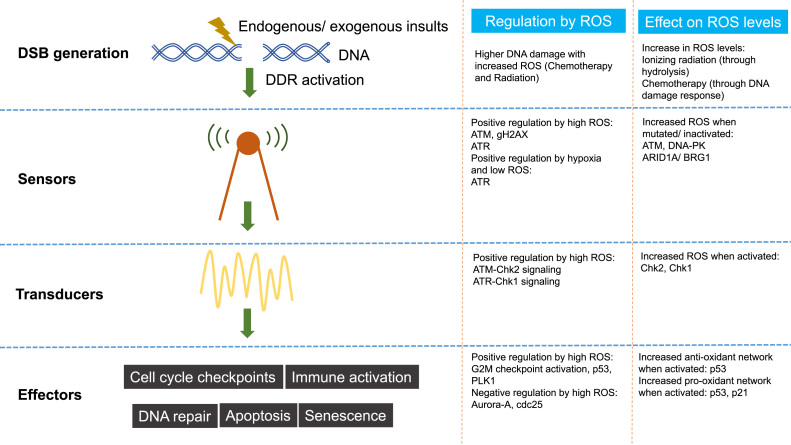
Reactive oxygen species (ROS) are a group of short-lived, highly reactive, oxygen-containing molecules that can induce DNA damage and affect the DNA damage response (DDR). There is unequivocal pre-clinical and clinical evidence that ROS influence the genotoxic stress caused by chemotherapeutics agents and ionizing radiation. Recent studies have provided mechanistic insight into how ROS can also influence the cellular response to DNA damage caused by genotoxic therapy, especially in the context of Double Strand Breaks (DSBs). This has led to the clinical evaluation of agents modulating ROS in combination with genotoxic therapy for cancer, with mixed success so far. These studies point to context dependent outcomes with ROS modulator combinations with Chemotherapy and radiotherapy, indicating a need for additional pre-clinical research in the field. In this review, we discuss the current knowledge on the effect of ROS in the DNA damage response, and its clinical relevance.
Overview
The claims and statistics of this paper haven’t been checked yet.
Run the check — free, no account needed. It reads the open-access text and checks the sources it cites.
Integrity signals
Registry
Cites
Statistics
Figures
Verification
Claims the paper makes
The claims and statistics of this paper haven’t been checked yet.
Run the check — free, no account needed. It reads the open-access text and checks the sources it cites.
Claims other papers make about this one
Each is checked against this paper’s own text: does it say what the citing paper says it does?
In the citing paper
“The most frequently occurring mutations in the tumor suppressor gene TP53 in lung cancer are Guanine → Thymine and Guanine → Adenine transversions (Srinivas et al. 2019; Gibbons et al. 2014).”
From Reactive Oxygen Species, Toxicity, Oxidative Stress, and Antioxidants: Chronic Diseases and Aging (2023) · cites this paper as Srinivas et al. 2019
Self-check
Percentages, sums and reported differences re-computed from the paper’s own numbers.
The self-check needs the paper’s full text.
Citations
Cites
Vogelstein, B., Lane, D., & Levine, A. J. (2000) · Nature · doi:10.1038/35042675 · Cited by 6,607 · cited 1×
“p53 is a well-studied tumor suppressor that is mutated in over 50% of all cancers [87,88], and affects multiple cellular responses to DNA U.”
BackgroundDNA double-stranded breaks induce histone H2AX phosphorylation on serine 139
Rogakou, E. P., Pilch, D. R., Orr, A. H., Ivanova, V. S., & Bonner, W. M. (1998) · Journal of Biological Chemistry · doi:10.1074/jbc.273.10.5858 · Cited by 5,438
(1994) · New England Journal of Medicine · doi:10.1056/nejm199404143301501 · Cited by 4,737
The DNA Damage Response: Making It Safe to Play with Knives
Ciccia, A., & Elledge, S. J. (2010) · Molecular Cell · doi:10.1016/j.molcel.2010.09.019 · Cited by 4,368 · cited 1×
“This response includes DNA damage recognition, activation of checkpoints, cell cycle arrest, and eventually final outcomes of repair, apoptosis and immune clearance [4,5].”
BackgroundRadiobiology for the Radiologist.
(1974) · Annals of Internal Medicine · doi:10.7326/0003-4819-80-3-438_1 · Cited by 3,498
Molecular Mechanisms of Mammalian DNA Repair and the DNA Damage Checkpoints
Sancar, A., Lindsey-Boltz, L. A., Ünsal-Kaçmaz, K., & Linn, S. (2004) · Annual Review of Biochemistry · doi:10.1146/annurev.biochem.73.011303.073723 · Cited by 3,317 · cited 1×
“Depending on the nature of the lesion in DNA, specific pathways are activated to facilitate identification of the damaged regions and their repair [2,3].”
BackgroundImmunogenic Cell Death in Cancer Therapy
Kroemer, G., Galluzzi, L., Kepp, O., & Zitvogel, L. (2013) · Annual Review of Immunology · doi:10.1146/annurev-immunol-032712-100008 · Cited by 3,303 · cited 1×
“to eventual T-cell mediated killing [116].”
Yang, Y., Li, S., Yang, Q., Shi, Y., Zheng, M., Liu, Y., Chen, F., Song, G., Xu, H., Wan, T., et al. (2014) · Cellular Physiology and Biochemistry · doi:10.1159/000358696 · Cited by 3,263
ATM and ATR Substrate Analysis Reveals Extensive Protein Networks Responsive to DNA Damage
Matsuoka, S., Ballif, B. A., Smogorzewska, A., McDonald, E. R., Hurov, K. E., Luo, J., Bakalarski, C. E., Zhao, Z., Solimini, N., Lerenthal, Y., et al. (2007) · Science · doi:10.1126/science.1140321 · Cited by 3,075
Association of reactive oxygen species levels and radioresistance in cancer stem cells
Diehn, M., Cho, R. W., Lobo, N. A., Kalisky, T., Dorie, M. J., Kulp, A. N., Qian, D., Lam, J. S., Ailles, L. E., Wong, M., et al. (2009) · Nature · doi:10.1038/nature07733 · Cited by 2,555
Cited by
Sorted by citations
Items 201–300 of 1,002
Evodiamine induces ROS-Dependent cytotoxicity in human gastric cancer cells via TRPV1/Ca2+ pathway
Liu, L., Sun, X., Guo, Y., & Ge, K. (2021) · Chemico-Biological Interactions · doi:10.1016/j.cbi.2021.109756 · Cited by 56
Shiau, J., Chuang, Y.-T., Yang, K., Chang, F., Sheu, J., Hou, M., Jeng, J., Tang, J., & Chang, H. (2022) · Antioxidants · doi:10.3390/antiox11050841 · Cited by 56
“Besides apoptosis, oxidative stress also modulates cellular changes such as DNA damage [17] and antioxidant signaling [18–20].”
BackgroundWang, Y., Liu, Y., Liu, Y., Zhong, J., Wang, J., Sun, L., Yu, L., Wang, Y., Li, Q., Jin, W., et al. (2023) · Biomaterials · doi:10.1016/j.biomaterials.2023.122028 · Cited by 56
Yang, W., Zhou, C., He, C., Yang, Y., Aiyiti, W., Xu, L., & Shuai, C. (2024) · Journal of Colloid and Interface Science · doi:10.1016/j.jcis.2024.08.195 · Cited by 56
Lin, S. M., Baek, C. Y., Jung, J., Kim, W. S., Song, H.-Y., Lee, J. H., Ji, H. J., Zhi, Y., Kang, B. S., Bahn, Y., et al. (2020) · Scientific Reports · doi:10.1038/s41598-019-56141-3 · Cited by 59
The microbiome(s) and cancer: know thy neighbor(s)
González‐Sánchez, P., & DeNicola, G. M. (2021) · The Journal of Pathology · doi:10.1002/path.5661 · Cited by 57
“Apart from bacterial toxins that interact directly with host DNA, various bacteria also have the ability to generate reactive oxygen species (ROS), which are known to cause oxidative DNA lesions and carcinogenesis [131].”
BackgroundHuang, C., Dong, L., Zhao, B., Huang, S., Lu, Y., Zhang, X., Hu, X., Huang, Y., He, W., Xu, Y. X., et al. (2023) · Journal of Nanobiotechnology · doi:10.1186/s12951-023-02144-2 · Cited by 61
Zhou, H., Wang, L., Lin, Z., Jiang, C., Chen, X., Wang, K., Liu, L., Shao, L., Pan, J., Li, J., et al. (2023) · Journal for ImmunoTherapy of Cancer · doi:10.1136/jitc-2023-007840 · Cited by 55
“To further investigate the combination effect of MG and RT, we utilized the syngeneic CT26 mouse tumor model and the human colorectal carcinoma HCT116 xenograft tumor model (figure 4A and online supplemental figure 13A).”
MethodCheng, W., Xue, X., Gan, L., Jin, P., Zhang, B., Guo, M., Si, J., Du, H., Chen, H., & Fang, J. (2021) · Analytica Chimica Acta · doi:10.1016/j.aca.2021.338362 · Cited by 55
Intelligent nanotherapeutic strategies for the delivery of CRISPR system
Chen, C., Zhong, W., Du, S., Li, Y., Zeng, Y., Liu, K., Yang, J., Guan, X., & Han, X. (2022) · Acta Pharmaceutica Sinica B · doi:10.1016/j.apsb.2022.12.013 · Cited by 56
Yang, J., He, Y., Zhang, M., Liang, C., Li, T., Ji, T., Zu, M., Ma, X., Zhang, Z., Liang, C., et al. (2023) · Exploration · doi:10.1002/exp.20230061 · Cited by 54
Piccolo, M., Ferraro, M. G., Iazzetti, F., Santamaria, R., & Irace, C. (2024) · Cancers · doi:10.3390/cancers16061220 · Cited by 59
“Although not all ROS affect DNA (superoxide and hydrogen peroxide at physiological levels do not react with DNA), it has been proven that hydroxyl radicals and other more reactive ROS can act directly on DNA, playing a detrimental role in damaging nucleic acids [52].”
BackgroundAdvances in nanoparticle-based radiotherapy for cancer treatment
He, M., Chen, S., Yu, H., Fan, X., Wu, H., Wang, Y., Wang, H., & Yin, X. (2024) · iScience · doi:10.1016/j.isci.2024.111602 · Cited by 54
Zhang, X., Wang, B., Xu, S., Wang, J., Gao, L., Song, Y., Lv, J.-W., Xu, F., Li, J., Chen, J., et al. (2020) · Journal of Hazardous Materials · doi:10.1016/j.jhazmat.2020.124768 · Cited by 54
Targeting the Redox Landscape in Cancer Therapy
Narayanan, D., Ma, S., & Özcelik, D. (2020) · Cancers · doi:10.3390/cancers12071706 · Cited by 56
The RAGE Axis: A Relevant Inflammatory Hub in Human Diseases
Armando Rojas, R., Lindner, C., Schneider, I., González, I., & Uribarri, J. (2024) · Biomolecules · doi:10.3390/biom14040412 · Cited by 61
“RAGE-induced ROS generation represents a crucial source of DNA damage in tumor cells, mediating oxidative inactivation of DNA repair enzymes, thus impairing the DNA damage responses and favoring RAGE-mediated genomic instability within tumor cells [199].”
BackgroundRuan, Y., Zeng, J., Jin, Q., Chu, M., Ji, K., Wang, Z., & Li, L. (2020) · Experimental and Therapeutic Medicine · doi:10.3892/etm.2020.9398 · Cited by 55
The contribution of DNA repair pathways to genome editing and evolution in filamentous pathogens
Huang, J. T., & Cook, D. E. (2022) · FEMS Microbiology Reviews · doi:10.1093/femsre/fuac035 · Cited by 57
“…DNA through canonical non-homologous end joining and homologous recombination Proper repair of DNA double-strand breaks (DSBs), caused by inherent mechanisms or external factors, are vital to the maintenance and function of the genome (Mehta and Haber 2014, Srinivas et al. 2019, Vitor et al. 2020).”
BackgroundGuo, J., Jiangling, Z., Liang, L., Liu, N., Qi, M., Zhao, S., Su, J., Liu, J., Peng, C., Chen, X., et al. (2020) · Journal of Cellular and Molecular Medicine · doi:10.1111/jcmm.15093 · Cited by 50
Moreira, H., Szyjka, A., Paliszkiewicz, K., & Barg, E. (2019) · Oxidative Medicine and Cellular Longevity · doi:10.1155/2019/6793957 · Cited by 55
Peng, L., Jiang, J., Chen, H., Zhou, L., Huang, Z., Qin, S., Jin, P., Luo, M., Li, B., Shi, J., et al. (2021) · Cell Reports · doi:10.1016/j.celrep.2021.110069 · Cited by 51
Modulation of the immune system by melatonin; implications for cancer therapy
Moslehi, M., Moazamiyanfar, R., Dakkali, M. S., Rezaei, S., Rastegar‐Pouyani, N., Jafarzadeh, E., Moloudi, K., Khodamoradi, E., Taeb, S., & Najafi, M. (2022) · International Immunopharmacology · doi:10.1016/j.intimp.2022.108890 · Cited by 54
Bartolomeo, L. D., Irrera, N., Campo, G. M., Borgia, F., Motolese, A., Vaccaro, F., Squadrito, F., Altavilla, D., Condorelli, A. G., Motolese, A., et al. (2022) · Frontiers in Allergy · doi:10.3389/falgy.2022.876695 · Cited by 51
“In addition to EGFR, ROS produced during DIP may activate several signal transduction cascades such as mitogen-activated protein kinases (MAPK), involved in proliferation and antiapoptotic signaling of many cancers, and lead to genomics instability and DNA damage, which have a pro-tumorigenic effect (112, 113).”
BackgroundZhou, D., Du, M., Luo, H., Ran, F., Zhao, X., Dong, Y., Zhang, T., Hao, J., Li, D., & Li, J. (2022) · Journal of Nanobiotechnology · doi:10.1186/s12951-022-01620-5 · Cited by 51
“Many mechanistic studies have found that ROS expression is closely related to the occurrence and development of RISI [33, 34].”
BackgroundStimuli-Responsive Polymeric Nanocarriers Accelerate On-Demand Drug Release to Combat Glioblastoma
Ismail, M., Wang, Y., Li, Y., Liu, J., Zheng, M., & Zou, Y. (2024) · Biomacromolecules · doi:10.1021/acs.biomac.4c00722 · Cited by 52
Zhou, H., Wu, C., Jin, Y., Wu, O., Chen, L., Guo, Z., Xinzhou, W., Chen, Q., Kwan, K. Y.-H., Li, Y. M., et al. (2024) · Journal of Orthopaedic Translation · doi:10.1016/j.jot.2024.08.016 · Cited by 60
“These abnormal cross-linking and aggregation further disrupt the normal structure and function of proteins, which may ultimately interfere with the normal metabolism and intra-and extracellular signaling of IVD cells [73].”
BackgroundmicroRNAs identified in prostate cancer: Correlative studies on response to ionizing radiation
Labbé, M., Hoey, C., Ray, J., Potiron, V. A., Supiot, S., Liu, S. K., & Fradin, D. D. (2020) · Molecular Cancer · doi:10.1186/s12943-020-01186-6 · Cited by 52
The importance of Ras in drug resistance in cancer
Healy, F. M., Prior, I. A., & MacEwan, D. J. (2021) · British Journal of Pharmacology · doi:10.1111/bph.15420 · Cited by 52
“Cisplatin also induces mitochondrial ROS, which further increase DNA damage and thus increase the cytotoxic properties of the drug (Marullo et al., 2013; Srinivas et al., 2019).”
BackgroundRole of Molecular Hydrogen in Ageing and Ageing‐Related Diseases
Fu, Z., Zhang, J., & Zhang, Y. (2022) · Oxidative Medicine and Cellular Longevity · doi:10.1155/2022/2249749 · Cited by 53
“They also cause mitochondrial DNA (mtDNA) strand breaks and degradation [20] in vivo , while ionization radiation and ultraviolet light exposure may also be associated with DNA damage.”
Recent advances in glioma microenvironment-response nanoplatforms for phototherapy and sonotherapy
Li, X., Geng, X., Chen, Z., & Yuan, Z. (2022) · Pharmacological Research · doi:10.1016/j.phrs.2022.106218 · Cited by 51
Rational design of ratiometric aggregation-induced emission luminogens for biosensing and bioimaging
Chen, X., Yang, Q., Lv, X., Xiong, Y., Tang, B. Z., & Huang, X. (2024) · Coordination Chemistry Reviews · doi:10.1016/j.ccr.2024.215970 · Cited by 51
Reactive oxygen species in cancer: Mechanistic insights and therapeutic innovations
Ma, N., Wang, Y., Li, X., Xu, M., & Tan, D. (2025) · Cell Stress and Chaperones · doi:10.1016/j.cstres.2025.100108 · Cited by 60
“32 To improve the synthesis of proteins that induce apoptosis and decrease the synthesis of proteins that hinder cell death, a strategy involves boosting the production of death receptors and their binding molecules, as well as controlling the chemical modifications of Bcl-2 through ubiquitination…”
Du, Y., Du, S., Liu, L., Gan, F., Jiang, X., Wangrao, K., Lyu, P., Gong, P., & Yao, Y. (2020) · Radiation Research · doi:10.1667/rade-20-00019.1 · Cited by 53
Melatonin: an endogenous miraculous indolamine, fights against cancer progression
Samanta, S. (2020) · Journal of Cancer Research and Clinical Oncology · doi:10.1007/s00432-020-03292-w · Cited by 55
“On the other hand, H2O2 also appears during OS, regulates the signaling of NF-κB, MAP kinase pathways (Srinivas et al. 2019).”
BackgroundLiu, T.-I., Lu, T.-Y., Yang, Y.-C., Chang, S.-H., Chen, H.-H., Lu, I.-L., Sabu, A., & Chiu, H.-C. (2020) · Biomaterials · doi:10.1016/j.biomaterials.2020.120229 · Cited by 50
Morvaridzadeh, M., Nachvak, S. M., Agah, S., Sepidarkish, M., Dehghani, F., Rahimlou, M., Pizarro, A. B., & Heshmati, J. (2020) · Food Research International · doi:10.1016/j.foodres.2020.109578 · Cited by 49
Mechanisms of cancer cell killing by metformin: a review on different cell death pathways
Wu, X., Xu, W., Huan, X., Wu, G., Li, G., Zhou, Y., & Najafi, M. (2022) · Molecular and Cellular Biochemistry · doi:10.1007/s11010-022-04502-4 · Cited by 52
“1 3 In addition to the induction of the immune response, there are anti-cancer modalities such as radiotherapy and chemotherapy that directly induce cell death via inducing DNA damage and production of heavy amounts of reactive oxygen species (ROS) [7, 8].”
BackgroundChung, J., Akter, S., Han, S., Shin, Y., Choi, T., Kang, I., & Kim, S. H. (2022) · International Journal of Molecular Sciences · doi:10.3390/ijms24010129 · Cited by 49
Zhang, S., Wu, L., Shi, W., Qin, J., Feng, W. J., Chen, Y., & Zhang, R. (2023) · Advanced Functional Materials · doi:10.1002/adfm.202302360 · Cited by 49
Wang, S., Cheng, M., Wang, S., Jiang, W., Yang, F., Shen, X., Zhang, L., Yan, X., Jiang, B., & Fan, K. (2024) · Advanced Materials · doi:10.1002/adma.202403921 · Cited by 49
Involvement of Metabolic Lipid Mediators in the Regulation of Apoptosis
Wójcik, P., Žarković, N., Gęgotek, A., & Skrzydlewska, E. (2020) · Biomolecules · doi:10.3390/biom10030402 · Cited by 50
“The generated ROS can modify DNA, causing the oxidation of nitrogenous bases—especially guanine, which causes GA or GT conversion—and double-strand breaks, leading to the activation of the p53 protein, which initiates the mitochondrial pathway of apoptosis [81,82].”
BackgroundApplication of Nano-Drug Delivery System Based on Cascade Technology in Cancer Treatment
Sun, Y., Ma, X., & Hu, H. (2021) · International Journal of Molecular Sciences · doi:10.3390/ijms22115698 · Cited by 49
“ROS comprise of a family of short-lived molecules such as singlet oxygen ((1)O2), hydroxyl radical (•OH), and superoxide anion (O2) [67].”
BackgroundProgress on the study of the anticancer effects of artesunate (Review)
Yang, X., Zheng, Y., Liu, L., Huang, J., Wang, F., & Zhang, J. (2021) · Oncology Letters · doi:10.3892/ol.2021.13011 · Cited by 49
Aging-associated accumulation of mitochondrial DNA mutations in tumor origin
Kong, M., Guo, L., Xu, W., He, C., Jia, X., Zhao, Z., & Gu, Z. (2022) · Life Medicine · doi:10.1093/lifemedi/lnac014 · Cited by 51
Ultraviolet Light Causes Skin Cell Senescence: From Mechanism to Prevention Principle
Song, S., Li, F., Zhao, B., Zhou, M., & Wang, X. (2024) · Advanced Biology · doi:10.1002/adbi.202400090 · Cited by 48
Reactive oxygen species: balancing agents in plants
Alam, P., Faizan, M., Arif, Y., Azzam, M. A., Hayat, S., Afzal, S., & Albalawi, T. (2025) · Frontiers in Plant Science · doi:10.3389/fpls.2025.1713590 · Cited by 64
Piedade, A. P., Pinho, A. C., Branco, R., & Morais, P. V. (2020) · Applied Surface Science · doi:10.1016/j.apsusc.2020.145818 · Cited by 48
Beyond the Double-Strand Breaks: The Role of DNA Repair Proteins in Cancer Stem-Cell Regulation
Nathansen, J., Meyer, F., Müller, L., Schmitz, M., Borgmann, K., & Dubrovska, A. (2021) · Cancers · doi:10.3390/cancers13194818 · Cited by 51
LKB1 and cancer: The dual role of metabolic regulation
Li, T., & Zhu, H. (2020) · Biomedicine & Pharmacotherapy · doi:10.1016/j.biopha.2020.110872 · Cited by 47
Targeting cancer-specific metabolic pathways for developing novel cancer therapeutics
Pal, S., Sharma, A. K., Mathew, S. P., & Jaganathan, B. G. (2022) · Frontiers in Immunology · doi:10.3389/fimmu.2022.955476 · Cited by 50
“Clin Sci (Lond) (2019) 133(15):1745– 58.”
BackgroundJavitt, A., Shmueli, M. D., Kramer, M. P., Kolodziejczyk, A. A., Cohen, I., Radomir, L., Sheban, D., Kamer, I., Litchfield, K., Bab-Dinitz, E., et al. (2023) · Nature Cancer · doi:10.1038/s43018-023-00557-4 · Cited by 56
Ferroptosis-Like Death in Microorganisms: A Novel Programmed Cell Death Following Lipid Peroxidation
Kwun, M. S., & Lee, D. G. (2023) · Journal of Microbiology and Biotechnology · doi:10.4014/jmb.2307.07002 · Cited by 47
“ROS attacks lesions of sugars and bases, resulting in genotoxicity via oxidation or single- and double-strand DNA breaks (DSB) [25-27].”
BackgroundJia, J., Wu, X. F., Long, G., Yu, J., He, W., Zhang, H., Wang, D., Ye, Z., & Tian, J. (2023) · Frontiers in Immunology · doi:10.3389/fimmu.2023.1219785 · Cited by 47
Chi, T., Sang, T., Wang, Y., & Ye, Z. (2023) · Bioconjugate Chemistry · doi:10.1021/acs.bioconjchem.3c00476 · Cited by 47
Qu, C. F., Shao, X., Jia, R., Song, G., Shi, D., Wang, H., Wang, J., & An, H. (2024) · ACS Nano · doi:10.1021/acsnano.4c05483 · Cited by 49
Habibalahi, A., Moghari, M. D., Campbell, J. M., Anwer, A. G., Mahbub, S. B., Gosnell, M. E., Saad, S., Pollock, C. A., & Goldys, E. M. (2020) · Redox Biology · doi:10.1016/j.redox.2020.101561 · Cited by 47
Xiao, K., Zhang, N., Li, F., Hou, D., Zhai, X., Xu, W., Wang, G., Wang, H., & Zhao, L. (2022) · Nature Communications · doi:10.1038/s41467-022-32474-y · Cited by 47
Dings, M. P. G., van der Zalm, A. P., Bootsma, S., van Maanen, T., Waasdorp, C., van den Ende, T., Liu, D., Bailey, P. J., Köster, J., Zwijnenburg, D. A., et al. (2022) · Cell Reports Medicine · doi:10.1016/j.xcrm.2022.100802 · Cited by 47
Fahmy, S. A., Sedky, N. K., Ramzy, A., Abdelhady, M. M. M., Alabrahim, O. A. A., Shamma, S. N., & Azzazy, H. M. E.-S. (2023) · Journal of Drug Delivery Science and Technology · doi:10.1016/j.jddst.2023.104820 · Cited by 47
Selenoproteins and tRNA-Sec: regulators of cancer redox homeostasis
DeAngelo, S. L., Győrffy, B., Koutmos, M., & Shah, Y. M. (2023) · Trends in cancer · doi:10.1016/j.trecan.2023.08.003 · Cited by 50
Jain, S., Bhar, K., Kumar, S., Bandyopadhyaya, S., Tapryal, S., Mandal, C. C., & Sharma, A. K. (2020) · Dalton Transactions · doi:10.1039/d0dt00209g · Cited by 46
Wang, X., Liu, Z., Wang, Y., & Gou, S. (2022) · Journal of Medicinal Chemistry · doi:10.1021/acs.jmedchem.2c00472 · Cited by 46
Zhang, P., Liu, C., Wu, W., Mao, Y., Qin, Y., Hu, J., Jing Hua, H. U., Fu, J., Hua, D., & Yin, J. (2021) · Chemical Engineering Journal · doi:10.1016/j.cej.2021.131543 · Cited by 45
Copper in cancer: friend or foe? Metabolism, dysregulation, and therapeutic opportunities
Shan, D., Jinling, S., Ren, Y., Zhang, Y., Ba, Y., Luo, P., Cheng, Q., Xu, H., Weng, S., Zuo, A., et al. (2025) · 癌症:英文版 · doi:10.1002/cac2.70005 · Cited by 53
“Reactive oxygen species (ROS) are a class of oxygen-containing derivatives, mainly including superoxide (O 2 − ) and hydrogen peroxide (H 2 O 2 ) [70].”
Cabrera-Serrano, A. J., Sánchez‐Maldonado, J. M., González‐Olmedo, C., Carretero-Fernández, M., Díaz-Beltrán, L., Gutiérrez‐Bautista, J. F., García‐Verdejo, F. J., Gálvez-Montosa, F., López-López, J. A., García-Martín, P., et al. (2025) · Antioxidants · doi:10.3390/antiox14030264 · Cited by 50
An Erlotinib gold(I) conjugate for combating triple-negative breast cancer
Ortega, E., Zamora, A., Basu, U., Lippmann, P., Rodrı́guez, V., Janiak, C., Ott, I., & Ruiz, J. (2019) · Journal of Inorganic Biochemistry · doi:10.1016/j.jinorgbio.2019.110910 · Cited by 44
“Excessive ROS levels have also been linked to DNA damage through the activation of the DNA damage response [33].”
BackgroundMUC1 oncoprotein mitigates ER stress via CDA-mediated reprogramming of pyrimidine metabolism
Olou, A. A., King, R. J., Yu, F., & Singh, P. K. (2020) · Oncogene · doi:10.1038/s41388-020-1225-4 · Cited by 45
“ROS, ER stress and chemotherapeutic drugs induce genotoxic stress (73–75).”
Dong, H., Wang, M., Chang, C., Sun, M., Yang, F., Li, L., Feng, M., Zhang, L., Li, Q., Zhu, Y., et al. (2020) · Biochemical Pharmacology · doi:10.1016/j.bcp.2020.114266 · Cited by 44
Nakaoka, A., Nakahana, M., Inubushi, S., Akasaka, H., Salah, M., Kubota, H., Fujita, Y., Hassan, M., Mukumoto, N., Nishikawa, R., et al. (2021) · Oncology Reports · doi:10.3892/or.2021.7964 · Cited by 46
Sha, Z., Yang, S., Fu, L., Geng, M., Gu, J., Liu, X., Li, S., Zhou, X., & He, C. (2021) · Nanoscale · doi:10.1039/d0nr09220g · Cited by 45
Role of Oxidative Stress in Metabolic Reprogramming of Brain Cancer
Agrawal, K., Asthana, S., & Kumar, D. (2023) · Cancers · doi:10.3390/cancers15204920 · Cited by 45
“High quantities of ROS, which are the moderately condensed metabolites of oxygen with significant oxidizing capacities, are toxic to cells, yet at lower concentrations they help complex signaling activities [17].”
BackgroundBakewell, S. J., Conde, I. P., Fallah, Y., McCoy, M., Lu, J., & Shajahan‐Haq, A. N. (2020) · Cancers · doi:10.3390/cancers12092647 · Cited by 45
“In cancer cells, ROS has been implicated in mediating therapeutic response [27] by inducing DNA damage.”
BackgroundJiao, X., Gonsioroski, A. V., Flaws, J. A., & Qiao, H. (2020) · Environmental Pollution · doi:10.1016/j.envpol.2020.115601 · Cited by 44
Wang, C., Zhao, M., Xie, J., Ji, C., Leng, Z., & Gu, Z. (2021) · Chemical Engineering Journal · doi:10.1016/j.cej.2021.131725 · Cited by 44
Molecular mechanisms of ferroptosis and its role in prostate cancer therapy
Wang, S., Wei, W., Ma, N., Qu, Y., & Liu, Q. (2022) · Critical Reviews in Oncology/Hematology · doi:10.1016/j.critrevonc.2022.103732 · Cited by 44
Salivary Redox Homeostasis in Human Health and Disease
Čižmárová, B., Tomečková, V., Hubková, B., Hurajtová, A., Ohlasová, J., & Birková, A. (2022) · International Journal of Molecular Sciences · doi:10.3390/ijms231710076 · Cited by 48
Park, J., & Son, H. (2024) · The Plant Pathology Journal · doi:10.5423/ppj.rw.01.2024.0001 · Cited by 46
“ROS accumulation induces DNA damage, contributing to double-strand break formation and the oxidation of Park and Son 236 nucleotide bases (Srinivas et al., 2019).”
BackgroundXiong, Y., Li, J., Jiang, X., Zhen, W., Ma, X., & Lin, W. (2025) · Advanced Science · doi:10.1002/advs.202413518 · Cited by 43
Lv, X., Liu, C., Liu, S., Li, Y., Wang, W., Li, K., Hua, F., Cui, B., Zhang, X., Yu, J., et al. (2021) · Acta Pharmaceutica Sinica B · doi:10.1016/j.apsb.2021.07.015 · Cited by 48
Exploring the Inflammatory Pathogenesis of Colorectal Cancer
Khalyfa, A. A., Punatar, S., Aslam, R., & Yarbrough, A. (2021) · Diseases · doi:10.3390/diseases9040079 · Cited by 44
“Some bacteria are also able to produce reactive oxygen species (ROS), which can lead to DNA damage through oxidative processes [92].”
BackgroundTian, Z., Liu, H., Chen, X., Losiewicz, M. D., Wang, R., Du, X., Wang, B., Ya, M., Zhang, S., Shi, L., et al. (2021) · Ecotoxicology and Environmental Safety · doi:10.1016/j.ecoenv.2021.112919 · Cited by 42
Liu, H., Zhang, W., Jin, L., Liu, S., Liang, L., & Wei, Y. (2023) · International Journal of Molecular Sciences · doi:10.3390/ijms24076279 · Cited by 43
“D, the k y regulators of DDR sensor Ataxia telangiectasia mutated protei (ATM), checkpoint kinase 2 (Chk2) and checkpoint kinase 1 (Chk1) were significantly activated by plumbagin; however, another DDR sensor Ataxia telangiectasia mutated and Rad3-related protein (ATR) was downregulated by PLB at 15 µM.”
BackgroundInfluentialBadhe, P., Nanaware, V., Badhe, A., Wondmie, G. F., Jardan, Y. A. B., & Bourhia, M. (2024) · Scientific Reports · doi:10.1038/s41598-024-63498-7 · Cited by 52
Wang, Y., Li, Q., Niu, L., Xu, L., Guo, Y., Wang, L., & Guo, C. (2020) · British Journal of Cancer · doi:10.1038/s41416-020-1007-3 · Cited by 42
“Moreover, there have been conflicting reports on the role of the ROS-induced JNK pathway in cancer progression.(34) It was reported that ROS accumulation is a key factor for tumour formation.”
BackgroundMondal, A., Sen, U., Roy, N., Muthukumar, V., Sahoo, S. K., Bose, B., & Paira, P. (2020) · Dalton Transactions · doi:10.1039/d0dt03107k · Cited by 42
Targeting the redox imbalance in mitochondria: A novel mode for cancer therapy
Mani, S., Swargiary, G., & Ralph, S. J. (2021) · Mitochondrion · doi:10.1016/j.mito.2021.11.002 · Cited by 43
The Impact of Oxidative Stress on Pediatrics Syndromes
Micangeli, G., Menghi, M., Profeta, G., Tarani, F., Mariani, A., Petrella, C., Barbato, C., Ferraguti, G., Ceccanti, M., Tarani, L., et al. (2022) · Antioxidants · doi:10.3390/antiox11101983 · Cited by 46
“In the DNA, the ROS can cause degradation or modification of bases, breaks in both a single strand and both, deletions or translocations of DNA segments, and bonds with other proteins [55,56].”
BackgroundDNA damage response signaling: A common link between cancer and cardiovascular diseases
Nikfarjam, S., & Singh, K. K. (2022) · Cancer Medicine · doi:10.1002/cam4.5274 · Cited by 45
Amini, P., Moazamiyanfar, R., Dakkali, M. S., Khani, A., Jafarzadeh, E., Moloudi, K., Khodamoradi, E., Johari, R., Taeb, S., & Najafi, M. (2022) · Current Topics in Medicinal Chemistry · doi:10.2174/1568026623666221014152759 · Cited by 43
Lipid bilayer-based biological nanoplatforms for sonodynamic cancer therapy
Li, S., Mok, G. S. P., & Dai, Y. (2023) · Advanced Drug Delivery Reviews · doi:10.1016/j.addr.2023.115110 · Cited by 41
Environmental behaviors and toxic mechanisms of engineered nanomaterials in soil
Wang, C., Chen, L., Xu, J., Zhang, L., Yang, X., Zhang, C., Zhang, C., Gao, P., & Zhu, L. (2023) · Environmental Research · doi:10.1016/j.envres.2023.117820 · Cited by 41
Wang, D., Tang, L. M., Chen, M., Gong, Z., Fan, C., Qu, H., Liu, Y., Shi, L., Mo, Y., Wang, Y., et al. (2024) · ACS Nano · doi:10.1021/acsnano.4c07676 · Cited by 44
Fu, J., Peng, Z., Zhang, Y., & Shi, D. (2020) · Gynecologic Oncology · doi:10.1016/j.ygyno.2020.01.013 · Cited by 41
Evolutionary and Comparative Analysis of Bacterial Nonhomologous End Joining Repair
Sharda, M., Badrinarayanan, A., & Seshasayee, A. S. N. (2020) · Genome Biology and Evolution · doi:10.1093/gbe/evaa223 · Cited by 41
Functional Application of Sulfur-Containing Spice Compounds
Xie, J., Liao, B., & Tang, R. (2020) · Journal of Agricultural and Food Chemistry · doi:10.1021/acs.jafc.0c05002 · Cited by 42
The DNA damage response network in the treatment of head and neck squamous cell carcinoma
Psyrri, A. K., Gkotzamanidou, M. A., Papaxoinis, G., Krikoni, L., Economopoulou, P., Kotsantis, I., Anastasiou, Μ., & Souliotis, V. L. (2021) · ESMO Open · doi:10.1016/j.esmoop.2021.100075 · Cited by 43
“Common tumor characteristics, including high levels of oxidative stress, replicative stress and loss of DNA damageinduced cell cycle checkpoints, contribute to DNA damage accumulation.(8,9) Besides high levels of endogenous DNA damage, functional loss of one or more DNA repair pathways is frequent in tumors.”
BackgroundLi, Y., Yu, H., Ren, J., Lu, G., Cao, Y., Xu, Z., Kang, Y., & Xue, P. (2021) · Small · doi:10.1002/smll.202104302 · Cited by 41
Astaxanthin Mitigates Thiacloprid-Induced Liver Injury and Immunotoxicity in Male Rats
Abou‐Zeid, S. M., Aljuaydi, S. H., AbuBakr, H. O., Tahoun, E. A. E.-A., Cerbo, A. D., Alagawany, M. M., Khalil, S. R., & Farag, M. R. (2021) · Marine Drugs · doi:10.3390/md19090525 · Cited by 40
“from oxidative DNA damage with consequent mitochondrial-mediated apoptosis [51].”
BackgroundPlatinum-Based Two-Photon Photosensitizer Responsive to NIR Light in Tumor Hypoxia Microenvironment
Wang, Y., Shi, X., Fang, H., Han, Z., Yuan, H., Zhu, Z., Dong, L., Guo, Z., & Wang, X. (2022) · Journal of Medicinal Chemistry · doi:10.1021/acs.jmedchem.2c00141 · Cited by 40
Photocatalytic antimicrobial and photostability studies of TiO2/ZnO thin films
Widyastuti, E., Chiu, C.-T., Hsu, J., & Lee, Y. C. (2023) · Arabian Journal of Chemistry · doi:10.1016/j.arabjc.2023.105010 · Cited by 43
Metadata
- Authors
- Srinivas, U. S., Tan, B. W. Q., Vellayappan, B. A., & Jeyasekharan, A. D.
- Affiliations
- National University of Singapore (SG)
- National University Hospital (SG)
- Corresponding author
- Jeyasekharan, Anand D.
- Venue
- Redox Biology
- Publisher
- Elsevier BV
- Published
- 2019-07
- Volume
- 25
- Pages
- 101084
- ISSN
- 2213-2317 (ISSN-L)
- PMC
- PMC6859528
- OpenAlex
- W2906120852
- Cited by
- 2,144
- References
- 153
- Citations by year
- 2026: 217 · 2025: 396 · 2024: 392 · 2023: 381 · 2022: 335 · 2021: 262 · 2020: 132 · 2019: 26
- FWCI
- 10.28
- Type
- journal article
- Language
- en
- Open access
- gold
- doi.org
- Licence
- Locations
- Redox Biology (publishedVersion, cc-by)
- PubMed Central (publishedVersion, cc-by)
- PubMed (publishedVersion)
- National University of Singapore (submittedVersion, cc-by-nc-nd)
- DOAJ (DOAJ: Directory of Open Access Journals) (submittedVersion, cc-by-sa)
- Funders
- National Medical Research Council (NMRC/TA/0052/2016)
- AstraZeneca
- Ministry of Health -Singapore
- Meso Scale Diagnostics
- National Research Foundation Singapore
- Ministry of Education - Singapore
- Janssen Pharmaceuticals
- Topics
- Life Sciences › Biochemistry, Genetics and Molecular Biology › Molecular Biology › Redox biology and oxidative stress
- Life Sciences › Biochemistry, Genetics and Molecular Biology › Molecular Biology › DNA Repair Mechanisms
- Health Sciences › Medicine › Radiology, Nuclear Medicine and Imaging › Effects of Radiation Exposure
- Keywords
- reactive oxygen species, DNA damage response, cancer, DNA double-strand breaks, genotoxic stress, anticancer agents, ionizing radiation, radiosensitizers, combination therapy, oxidative DNA damage
- MeSH terms
- Animals, DNA Damage, DNA Repair, Humans, Neoplasms, Tumor Suppressor Protein p53, Apoptosis, Reactive Oxygen Species
About these checks
Registry, retraction, Cites and statistics results are computed, not judged, with one exception: a printed reference that no index lists is read once by a model before it counts as a citation error. Claims are extracted by a model and kept only when their quote appears verbatim in the text; each cited source is then checked, with a model’s help, for whether it says what the claim relies on. Those verdicts can be wrong — read the claim’s quote and the cited source before relying on one.
Statistics and arithmetic are recomputed, not judged.
Confidence bands are shown only for fields calibrated on our annotated test set. None is calibrated yet, so no band is shown.
What counts as a claim ›How we measure confidence ›How we check this ›
Are you an author, or do you see a problem with this page? Request a review
