

The DOI matches its Crossref record; 152 of the 153 references it cites were found in a registry or an index.
ROS and the DNA damage response in cancer
Open accessAbstract
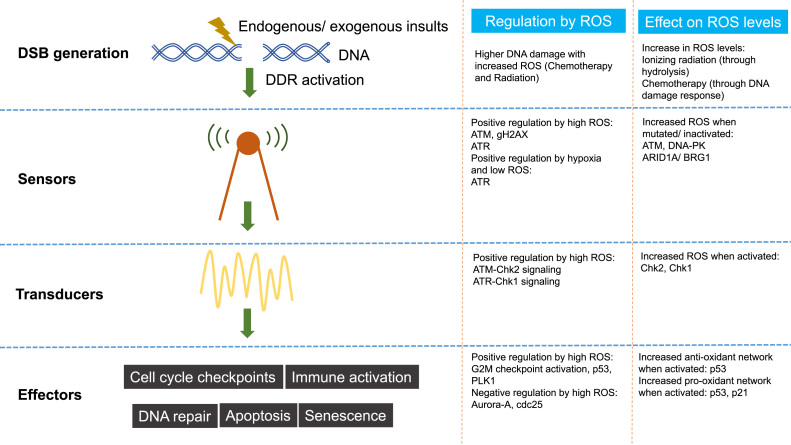
Reactive oxygen species (ROS) are a group of short-lived, highly reactive, oxygen-containing molecules that can induce DNA damage and affect the DNA damage response (DDR). There is unequivocal pre-clinical and clinical evidence that ROS influence the genotoxic stress caused by chemotherapeutics agents and ionizing radiation. Recent studies have provided mechanistic insight into how ROS can also influence the cellular response to DNA damage caused by genotoxic therapy, especially in the context of Double Strand Breaks (DSBs). This has led to the clinical evaluation of agents modulating ROS in combination with genotoxic therapy for cancer, with mixed success so far. These studies point to context dependent outcomes with ROS modulator combinations with Chemotherapy and radiotherapy, indicating a need for additional pre-clinical research in the field. In this review, we discuss the current knowledge on the effect of ROS in the DNA damage response, and its clinical relevance.
Overview
The claims and statistics of this paper haven’t been checked yet.
Run the check — free, no account needed. It reads the open-access text and checks the sources it cites.
Integrity signals
Registry
Cites
Statistics
Figures
Verification
Claims the paper makes
The claims and statistics of this paper haven’t been checked yet.
Run the check — free, no account needed. It reads the open-access text and checks the sources it cites.
Claims other papers make about this one
Each is checked against this paper’s own text: does it say what the citing paper says it does?
In the citing paper
“The most frequently occurring mutations in the tumor suppressor gene TP53 in lung cancer are Guanine → Thymine and Guanine → Adenine transversions (Srinivas et al. 2019; Gibbons et al. 2014).”
From Reactive Oxygen Species, Toxicity, Oxidative Stress, and Antioxidants: Chronic Diseases and Aging (2023) · cites this paper as Srinivas et al. 2019
Self-check
Percentages, sums and reported differences re-computed from the paper’s own numbers.
The self-check needs the paper’s full text.
Citations
Cites
Vogelstein, B., Lane, D., & Levine, A. J. (2000) · Nature · doi:10.1038/35042675 · Cited by 6,607 · cited 1×
“p53 is a well-studied tumor suppressor that is mutated in over 50% of all cancers [87,88], and affects multiple cellular responses to DNA U.”
BackgroundDNA double-stranded breaks induce histone H2AX phosphorylation on serine 139
Rogakou, E. P., Pilch, D. R., Orr, A. H., Ivanova, V. S., & Bonner, W. M. (1998) · Journal of Biological Chemistry · doi:10.1074/jbc.273.10.5858 · Cited by 5,438
(1994) · New England Journal of Medicine · doi:10.1056/nejm199404143301501 · Cited by 4,737
The DNA Damage Response: Making It Safe to Play with Knives
Ciccia, A., & Elledge, S. J. (2010) · Molecular Cell · doi:10.1016/j.molcel.2010.09.019 · Cited by 4,368 · cited 1×
“This response includes DNA damage recognition, activation of checkpoints, cell cycle arrest, and eventually final outcomes of repair, apoptosis and immune clearance [4,5].”
BackgroundRadiobiology for the Radiologist.
(1974) · Annals of Internal Medicine · doi:10.7326/0003-4819-80-3-438_1 · Cited by 3,498
Molecular Mechanisms of Mammalian DNA Repair and the DNA Damage Checkpoints
Sancar, A., Lindsey-Boltz, L. A., Ünsal-Kaçmaz, K., & Linn, S. (2004) · Annual Review of Biochemistry · doi:10.1146/annurev.biochem.73.011303.073723 · Cited by 3,317 · cited 1×
“Depending on the nature of the lesion in DNA, specific pathways are activated to facilitate identification of the damaged regions and their repair [2,3].”
BackgroundImmunogenic Cell Death in Cancer Therapy
Kroemer, G., Galluzzi, L., Kepp, O., & Zitvogel, L. (2013) · Annual Review of Immunology · doi:10.1146/annurev-immunol-032712-100008 · Cited by 3,303 · cited 1×
“to eventual T-cell mediated killing [116].”
Yang, Y., Li, S., Yang, Q., Shi, Y., Zheng, M., Liu, Y., Chen, F., Song, G., Xu, H., Wan, T., et al. (2014) · Cellular Physiology and Biochemistry · doi:10.1159/000358696 · Cited by 3,263
ATM and ATR Substrate Analysis Reveals Extensive Protein Networks Responsive to DNA Damage
Matsuoka, S., Ballif, B. A., Smogorzewska, A., McDonald, E. R., Hurov, K. E., Luo, J., Bakalarski, C. E., Zhao, Z., Solimini, N., Lerenthal, Y., et al. (2007) · Science · doi:10.1126/science.1140321 · Cited by 3,075
Association of reactive oxygen species levels and radioresistance in cancer stem cells
Diehn, M., Cho, R. W., Lobo, N. A., Kalisky, T., Dorie, M. J., Kulp, A. N., Qian, D., Lam, J. S., Ailles, L. E., Wong, M., et al. (2009) · Nature · doi:10.1038/nature07733 · Cited by 2,555
Cited by
Sorted by citations
Reactive oxygen species (ROS) as pleiotropic physiological signalling agents
Sies, H., & Jones, D. P. (2020) · Nature Reviews Molecular Cell Biology · doi:10.1038/s41580-020-0230-3 · Cited by 5,335
Juan, C. A., Pérez de la Lastra, J. M., Plou, F. J., & Pérez-Lebeña, E. (2021) · International Journal of Molecular Sciences · doi:10.3390/ijms22094642 · Cited by 2,810
“The DNA damage caused by ROS, from endogenous or exogenous sources, has been a significant breakthrough in carcinogenesis research over the last 20 years [22].”
BackgroundReactive Oxygen Species, Toxicity, Oxidative Stress, and Antioxidants: Chronic Diseases and Aging
Jomova, K., Raptova, R., Alomar, S. Y., Alwasel, S. H., Nepovimova, E., Kuca, K., & Valko, M. (2023) · Archives of Toxicology · doi:10.1007/s00204-023-03562-9 · Cited by 2,638
Wang, B., Wang, Y., Zhang, J., Hu, C., Jiang, J., Li, Y., & Peng, Z. (2023) · Archives of Toxicology · doi:10.1007/s00204-023-03476-6 · Cited by 941
Mitochondria in oxidative stress, inflammation and aging: from mechanisms to therapeutic advances
Xu, X., Pang, Y., & Fan, X. (2025) · Signal Transduction and Targeted Therapy · doi:10.1038/s41392-025-02253-4 · Cited by 1,016
The double-edged roles of ROS in cancer prevention and therapy
Wang, Y., Qi, H., Liu, Y., Duan, C., Liu, X., Xia, T., Chen, D., Piao, H., & Liu, H. (2021) · Theranostics · doi:10.7150/thno.56747 · Cited by 657
“Moreover, ROS not only delay the identification of damaged regions by affecting sensor kinases (ATM and ATR) and downstream transducer kinases (CHK1 and CHK2) [101, 102], but also impair the activation of DNA repair enzyme OGG1 by oxidation of critical cysteine residues [103].”
BackgroundCopper uptake, essentiality, toxicity, detoxification and risk assessment in soil-plant environment
Shabbir, Z., Sardar, A., Shabbir, A., Abbas, G., Shamshad, S., Khalid, S., Natasha, N., Murtaza, G., Dumat, C., & Shahid, M. A. R. (2020) · Chemosphere · doi:10.1016/j.chemosphere.2020.127436 · Cited by 482
ROS: Basic Concepts, Sources, Cellular Signaling, and its Implications in Aging Pathways
de Almeida, A. J. P. O., de Oliveira, J. C. P. L., Pontes, L. V. D. S., Júnior, J. F. D. S., Gonçalves, T. A. F., Dantas, S. H., Feitosa, M. S. D. A., Silva, A. O., & de Medeiros, I. A. (2022) · Oxidative Medicine and Cellular Longevity · doi:10.1155/2022/1225578 · Cited by 557
“Oxidative stress can injure DNA, leading to DNA damage response (DDR) [207].”
The multifaceted role of reactive oxygen species in tumorigenesis
Kirtonia, A., Sethi, G., & Garg, M. (2020) · Cellular and Molecular Life Sciences · doi:10.1007/s00018-020-03536-5 · Cited by 452
Anti‐inflammatory hydrogel dressings and skin wound healing
Huang, C., Dong, L., Zhao, B., Lu, Y., Huang, S., Yuan, Z., Luo, G., Xu, Y. X., & Qian, W. (2022) · Clinical and Translational Medicine · doi:10.1002/ctm2.1094 · Cited by 465
Tumor‐Microenvironment‐Responsive Nanomedicine for Enhanced Cancer Immunotherapy
Peng, S., Xiao, F., Chen, M., & Gao, H. (2021) · Advanced Science · doi:10.1002/advs.202103836 · Cited by 451
ROS induced lipid peroxidation and their role in ferroptosis
Endale, H. T., Tesfaye, W., & Mengstie, T. A. (2023) · Frontiers in Cell and Developmental Biology · doi:10.3389/fcell.2023.1226044 · Cited by 441
Interplay of oxidative stress, cellular communication and signaling pathways in cancer
Iqbal, M. J., Kabeer, A., Abbas, Z., Siddiqui, H. A., Călina, D. C., Sharifi‐Rad, J., & Cho, W. C. S. (2024) · Cell Communication and Signaling · doi:10.1186/s12964-023-01398-5 · Cited by 426
“At high oxidative stress levels, p53 promotes cell death by suppressing the expression of antioxidant genes and inducing the expression of prooxidative genes, including PIG3, PIG6, FDRX, Bax, Puma to further stimulate ROS production in cell that leads towards senescence [40, 45–47].”
BackgroundAnti-angiogenic therapy: current challenges and future perspectives
Lopes-Coelho, F., Martins, F., Pereira, S. A., & Serpa, J. (2021) · International Journal of Molecular Sciences · doi:10.3390/ijms22073765 · Cited by 416
“However, higher ROS are also associated with chemotherapy resistance [221].”
BackgroundDas, A. K. (2023) · The Science of The Total Environment · doi:10.1016/j.scitotenv.2023.165076 · Cited by 404
DNA Damage/Repair Management in Cancers
Alhmoud, J. F., Woolley, J. F., Moustafa, A. A., & Malki, M. I. (2020) · Cancers · doi:10.3390/cancers12041050 · Cited by 410
“Sources of DNA damage can be endogenous or exogenous and include reactive oxygen species (ROS) or ionizing radiation [1].”
BackgroundCellular Stress Responses in Radiotherapy
Kim, W., Lee, S., Seo, D., Kim, D., Kim, K., Kim, E., Kang, J., Seong, K. M., Youn, H., & Youn, B. (2019) · Cells · doi:10.3390/cells8091105 · Cited by 370
Cancer Metabolism: The Role of ROS in DNA Damage and Induction of Apoptosis in Cancer Cells
Zhao, Y., Ye, X., Xiong, Z., Ihsan, A., Arés, I., Martínez, M., López-Torres, B., Martínez‐Larrañaga, M., Anadón, A., Wang, X., et al. (2023) · Metabolites · doi:10.3390/metabo13070796 · Cited by 347
“The imbalance of ROS induces adverse cancer outcomes by affecting sign l transduction wi hin the DDR [93] because the accumulation of ROS can be toxic to cells, and toxic levels of ROS have been shown to affect replication”
BackgroundInfluentialTargeting Metabolic Plasticity and Flexibility Dynamics for Cancer Therapy
Fendt, S., Frezza, C., & Erez, A. (2020) · Cancer Discovery · doi:10.1158/2159-8290.cd-20-0844 · Cited by 327
Helicobacter pylori and gastric cancer: mechanisms and new perspectives
Duan, Y., Xu, Y., Dou, Y., & Xu, D. (2025) · Journal of Hematology & Oncology · doi:10.1186/s13045-024-01654-2 · Cited by 311
The Influence of Cell Cycle Regulation on Chemotherapy
Sun, Y., Liu, Y., Ma, X., & Hu, H. (2021) · International Journal of Molecular Sciences · doi:10.3390/ijms22136923 · Cited by 320
“ROS can induce CHK1 activation or directly affect the protein phosphatase Cdc25 family (Cdc25A, B, and C) to promote cell cycle arrest [98].”
BackgroundThe emerging role of oxidative stress in inflammatory bowel disease
Muro, P., Zhang, L., Li, S., Zhao, Z., Jin, T., Mao, F., & Mao, Z. (2024) · Frontiers in Endocrinology · doi:10.3389/fendo.2024.1390351 · Cited by 332
“Furthermore, ROS/RNS can directly attack DNA, causing oxidative DNA damage in IBD (41).”
BackgroundMucha, P., Skoczyńska, A., Małecka, M., Hikisz, P., & Budzisz, E. (2021) · Molecules · doi:10.3390/molecules26164886 · Cited by 305
NF‐κB signalling pathways in nucleus pulposus cell function and intervertebral disc degeneration
Zhang, G., Liu, M., Chen, H., Wu, Z., Gao, Y., Ma, Z., He, X., & Kang, X. (2021) · Cell Proliferation · doi:10.1111/cpr.13057 · Cited by 265
Intratumoural microbiota: a new frontier in cancer development and therapy
Cao, Y., Xia, H., Tan, X., Shi, C., Ma, Y., Meng, D., Zhou, M., Lv, Z., Wang, S., & Jin, Y. (2024) · Signal Transduction and Targeted Therapy · doi:10.1038/s41392-023-01693-0 · Cited by 269
“146 147 – 149 ETBF toxin increases the expression of spermine oxidase (SMO) in HT29/c1 and T84 colonic epithelial cells, triggering the SMO-dependent production of ROS and activation of γ -H2A, which causes DNA damage.”
BackgroundThe Role of Cancer Stem Cells in Radiation Resistance
Arnold, C. R., Mangesius, J., Skvortsova, I., & Ganswindt, U. (2020) · Frontiers in Oncology · doi:10.3389/fonc.2020.00164 · Cited by 226
Dual Role of Reactive Oxygen Species and their Application in Cancer Therapy
Huang, R., Chen, H., Liang, J., Li, Y., Yang, J., Luo, C., Tang, Y., Ding, Y., Liu, X., Yuan, Q., et al. (2021) · Journal of Cancer · doi:10.7150/jca.54699 · Cited by 228
“Under oxidative stress, ROS regulate the activation of ATM, which recognizes DNA damage [138].”
BackgroundChaudhary, M. R., Chaudhary, S., Sharma, Y., Singh, T. A., Mishra, A. K., Sharma, S. G., & Mehdi, M. M. (2023) · Biogerontology · doi:10.1007/s10522-023-10050-1 · Cited by 218
Mitochondrial Dynamics, ROS, and Cell Signaling: A Blended Overview
Brillo, V., Chieregato, L., Leanza, L., Muccioli, S., & Costa, R. (2021) · Life · doi:10.3390/life11040332 · Cited by 208
“Intracellular ROS increase promotes a series of signaling cascades, including the activation of MAPK and NF-κB pathways; moreover, DNA damage induced by ROS accumulation can promote p53 accumulation, activating the p53/Bax pathway and resulting in apoptosis [117].”
BackgroundInfluentialCopper Complexes as Anticancer Agents Targeting Topoisomerases I and II
Molinaro, C., Martoriati, A., Pélinski, L., & Cailliau, K. (2020) · Cancers · doi:10.3390/cancers12102863 · Cited by 205
Salivary gland function, development, and regeneration
Chibly, A. M., Aure, M. H., Patel, V. N., & Hoffman, M. P. (2022) · Physiological Reviews · doi:10.1152/physrev.00015.2021 · Cited by 219
Rauf, A., Khalil, A. A., Awadallah, S. M., Khan, S. A., Abu‐Izneid, T., Kamran, M., Hemeg, H. A., Mubarak, M. S., Khalid, A., & Wilairatana, P. (2023) · Food Science & Nutrition · doi:10.1002/fsn3.3784 · Cited by 220
Antioxidant Therapy in Cancer: Rationale and Progress
Luo, M., Zhou, L., Huang, Z., Li, B., Nice, E. C., Xu, J., & Huang, C. (2022) · Antioxidants · doi:10.3390/antiox11061128 · Cited by 205
Molecular Mechanisms of Parthanatos and Its Role in Diverse Diseases
Huang, P., Chen, G., Jin, W., Mao, K., Wan, H., & He, Y. T. (2022) · International Journal of Molecular Sciences · doi:10.3390/ijms23137292 · Cited by 200
Stimuli-Responsive Gene Delivery Nanocarriers for Cancer Therapy
Zhang, Q., Kuang, G., Li, W., Wang, J., Ren, H., & Zhao, Y. (2023) · Nano-Micro Letters · doi:10.1007/s40820-023-01018-4 · Cited by 191
Ma, S., Song, W., Xu, Y., Si, X., Lv, S., Zhang, Y., Tang, Z., & Chen, X. (2020) · Nano Letters · doi:10.1021/acs.nanolett.9b05265 · Cited by 180
Cytotoxic mechanisms of doxorubicin at clinically relevant concentrations in breast cancer cells
Nicoletto, R. E., & Ofner, C. M. (2022) · Cancer Chemotherapy and Pharmacology · doi:10.1007/s00280-022-04400-y · Cited by 178
“Detection of phosphorylated H2AX at Serine-139 allows for the quantification of DNA DSBs.”
BackgroundInfluentialNickel Carcinogenesis Mechanism: DNA Damage
Guo, H., Liu, H., Wu, H., Cui, H., Fang, J. S., Zuo, Z., Deng, J., Li, Y., Wang, X., & Zhao, L. (2019) · International Journal of Molecular Sciences · doi:10.3390/ijms20194690 · Cited by 191
Shin, J., Song, M.-H., Oh, J.-W., Keum, Y.-S., & Saini, R. K. (2020) · Antioxidants · doi:10.3390/antiox9060532 · Cited by 173
“In the human body, a range of short-lived reactive oxygen species (ROS), including superoxide radical/anion (O2•−), hydroxyl radical (•OH), and hydrogen peroxide H2O2 are endogenously produced by mitochondria (electron transport chain), NADPH oxidase, peroxisomes, and endoplasmic reticulum (as byproducts during the ce…”
BackgroundThe gold complex auranofin: new perspectives for cancer therapy
Abdalbari, F. H., & Telleria, C. M. (2021) · Discover Oncology · doi:10.1007/s12672-021-00439-0 · Cited by 173
Shi, Y., Zhu, X.-T., Su-na, Z., Ma, Y., Han, Y., Yue, J., & Zhang, Y. (2023) · Frontiers in Endocrinology · doi:10.3389/fendo.2023.1172481 · Cited by 179
“transduction within DDR, interfering with cell cycle progression, and inducing p53 transcriptional response and apoptosis (32).”
BackgroundReactive Oxygen Species Scavenging Nanomedicine for the Treatment of Ischemic Heart Disease
Zhang, Z., Dalan, R., Hu, Z., Wang, J., Chew, N., Poh, K. K., Tan, R., Soong, T. W., Dai, Y., Ye, L., et al. (2022) · Advanced Materials · doi:10.1002/adma.202202169 · Cited by 174
Recent advances in MOF-based nanoplatforms generating reactive species for chemodynamic therapy
Zhong, Y., Li, X., Chen, J., Wang, X., Wei, L.-T., Fang, L., Kumar, A., Zhuang, S., & Liu, J. (2020) · Dalton Transactions · doi:10.1039/d0dt01882a · Cited by 159
Xue, T., Xu, C., Wang, Y., Wang, Y., Tian, H., & Zhang, Y. (2019) · Biomaterials Science · doi:10.1039/c9bm01044k · Cited by 157
Connecting Calcium-Based Nanomaterials and Cancer: From Diagnosis to Therapy
Bai, S., Lan, Y., Fu, S., Cheng, H., Lu, Z., & Liu, G. (2022) · Nano-Micro Letters · doi:10.1007/s40820-022-00894-6 · Cited by 164
“Although free radicals are generally thought to exert antitumor effects through directly attack on the double stranded DNA structure and causing irreversible DNA damage, cytotoxic free radicalinduced dysregulation of associated calcium signaling is also thought to be the cause of cell apoptosis, which explains why the…”
BackgroundImpact of heavy metal toxicity on the human health and environment
Kotnala, S., Tiwari, S., Nayak, A., Bhushan, B., Chandra, S., Medeiros, C. R., & Coutinho, H. D. M. (2025) · The Science of The Total Environment · doi:10.1016/j.scitotenv.2025.179785 · Cited by 169
Altered glucose metabolism and cell function in keloid fibroblasts under hypoxia
Wang, Q., Wang, P., Qin, Z., Yang, X. C., Pan, B., Nie, F., & Bi, H. (2020) · Redox Biology · doi:10.1016/j.redox.2020.101815 · Cited by 153
“A growing body of data revealed that ROS level increased in cells exposed to hypoxia [30, 31], while other researchers detected the opposite result.”
ResultCircadian rhythms and cancers: the intrinsic links and therapeutic potentials
Zhou, L., Zhang, Z., Nice, E. C., Huang, C., Zhang, W., & Tang, Y. C. (2022) · Journal of Hematology & Oncology · doi:10.1186/s13045-022-01238-y · Cited by 163
Li, C., Deng, C., Wang, S., Dong, X. D., Dai, B., Guo, W., Guo, Q., Feng, Y., Xu, H., Song, X., et al. (2024) · Redox Biology · doi:10.1016/j.redox.2024.103059 · Cited by 154
“While Cisplatin induces DNA single-strand breaks, activating the ATR-Chk1 pathway [24 – 26].”
BackgroundAntitumor Effects of Carvacrol and Thymol: A Systematic Review
Sampaio, L. A., Pina, L. T. S., Serafini, M. R., Tavares, D. D. S., & Guimarães, A. G. (2021) · Frontiers in Pharmacology · doi:10.3389/fphar.2021.702487 · Cited by 158
Reactive oxygen species-powered cancer immunotherapy: Current status and challenges
He, M., Wang, M., Xu, T., Zhang, M., Dai, H., Wang, C., Ding, D., & Zhong, Z. (2023) · Journal of Controlled Release · doi:10.1016/j.jconrel.2023.02.040 · Cited by 147
Regulation and signaling pathways in cancer stem cells: implications for targeted therapy for cancer
Zeng, Z., Fu, M., Hu, Y., Wei, Y., Wei, X., & Luo, M. (2023) · Molecular Cancer · doi:10.1186/s12943-023-01877-w · Cited by 155
“Moreover, studies have demonstrated how CSCs use ROS to resist radio-and chemotherapy-derived oxidative stress [324].”
BackgroundLi, J., Zhao, Y., Gong, S., Wang, M., Liu, X., He, Q., Li, Y., Huang, S., Qiao, H., Tan, X.-R., et al. (2023) · Nature Communications · doi:10.1038/s41467-023-36523-y · Cited by 145
Emerging carbon-supported single-atom catalysts for biomedical applications
Liao, G., Zhang, L., Li, C., Liu, S., Fang, B., & Yang, H. (2022) · Matter · doi:10.1016/j.matt.2022.07.031 · Cited by 135
Ren, Y., Wang, R., Weng, S., Xu, H., Zhang, Y., Chen, S., Liu, S., Ba, Y., Zhou, Z., Luo, P., et al. (2023) · Molecular Cancer · doi:10.1186/s12943-023-01831-w · Cited by 149
“On the other hand, ROS also oxidatively modify key signaling proteins and proteins involved in crucial biological mechanisms [4, 29, 30].”
BackgroundMechanisms and applications of radiation-induced oxidative stress in regulating cancer immunotherapy
Zheng, Z., Su, J., Bao, X., Wang, H., Bian, C., Zhao, Q., & Jiang, X. M. (2023) · Frontiers in Immunology · doi:10.3389/fimmu.2023.1247268 · Cited by 145
“DNA is one of the main targets of ROS, which can induce DNA damage and induce DNA damage response (18).”
BackgroundSupramolecular hydrogels for wound repair and hemostasis
Zhuo, S., Liang, Y., Wu, Z., Zhao, X., Han, Y. N., & Guo, B. (2023) · Materials Horizons · doi:10.1039/d3mh01403g · Cited by 132
Advancements in Regenerative Hydrogels in Skin Wound Treatment: A Comprehensive Review
Olteanu, G., Neacșu, S. M., JOIȚA, F. A., Musuc, A. M., Lupu, C. E., Ioniță-Mîndrican, C.-B., Lupuliasa, D., & Mititelu, M. (2024) · International Journal of Molecular Sciences · doi:10.3390/ijms25073849 · Cited by 140
Qi, B., Song, L., Hu, L., Guo, D. S., Ren, G., Peng, T., Liu, M., Fang, Y., Li, C., Zhang, M., et al. (2022) · Experimental & Molecular Medicine · doi:10.1038/s12276-022-00800-5 · Cited by 126
Mechanisms and regulations of ferroptosis
Zhang, X.-D., Liu, Z., Wang, M.-S., Guo, Y.-X., Wang, X., Luo, K., Huang, S., & Li, R. (2023) · Frontiers in Immunology · doi:10.3389/fimmu.2023.1269451 · Cited by 138
Howard, D., Sebastian, S. T., Le, Q. V.-C., Thierry, B., & Kempson, I. M. (2020) · International Journal of Molecular Sciences · doi:10.3390/ijms21020579 · Cited by 125
“Out of these the double strand breaks causes are most important [29,34].”
BackgroundRole of Rad51 and DNA repair in cancer: A molecular perspective
Laurini, E., Marson, D., Fermeglia, A., Aulić, S., Fermeglia, M., & Pricl, S. (2020) · Pharmacology & Therapeutics · doi:10.1016/j.pharmthera.2020.107492 · Cited by 135
The Importance of Being PI3K in the RAS Signaling Network
Cuesta, C., Arévalo-Alameda, C., & Castellano, E. (2021) · Genes · doi:10.3390/genes12071094 · Cited by 125
Gallic acid for cancer therapy: Molecular mechanisms and boosting efficacy by nanoscopical delivery
Ashrafizadeh, M., Zarrabi, A., Mirzaei, S., Hashemi, F., Samarghandian, S., Zabolian, A., Hushmandi, K., Ang, H. L., Sethi, G., Kumar, A. P., et al. (2021) · Food and Chemical Toxicology · doi:10.1016/j.fct.2021.112576 · Cited by 124
Yi, G. Y., Kim, M. J., Kim, H. I., Park, J., & Baek, S. H. (2022) · Antioxidants · doi:10.3390/antiox11040625 · Cited by 119
ROS: A “booster” for chronic inflammation and tumor metastasis
Chen, A., Huang, H., Fang, S., & Hang, Q. (2024) · Biochimica et Biophysica Acta (BBA) - Reviews on Cancer · doi:10.1016/j.bbcan.2024.189175 · Cited by 127
Medicinal Prospects of Antioxidants From Algal Sources in Cancer Therapy
Ferdous, U. T., & Yusof, Z. N. B. (2021) · Frontiers in Pharmacology · doi:10.3389/fphar.2021.593116 · Cited by 121
“Above all, these alterations of chromosomes give rise to genetic instability and ultimately lead to carcinogenesis (De Sá Junior et al., 2017; Srinivas et al., 2019).”
BackgroundOxidative Stress in Cancer Therapy: Friend or Enemy?
Azmanova, M., & Pitto‐Barry, A. (2022) · ChemBioChem · doi:10.1002/cbic.202100641 · Cited by 123
Hyaluronan and Reactive Oxygen Species Signaling—Novel Cues from the Matrix?
Berdiaki, A., Neagu, M. T., Spyridaki, I., Николаевич, К. А., Pérez, S., & Nikitovic, D. (2023) · Antioxidants · doi:10.3390/antiox12040824 · Cited by 127
Ashrafizadeh, M., Bakhoda, M. R., Bahmanpour, Z., Ilkhani, K., Zarrabi, A., Makvandi, P., Khan, H. Z., Mazaheri, S., Darvish, M., & Mirzaei, H. (2020) · Frontiers in Chemistry · doi:10.3389/fchem.2020.00829 · Cited by 114
Recent Overview of Potent Antioxidant Activity of Coordination Compounds
El‐Lateef, H. M. A., El‐Dabea, T., Khalaf, M. M., & Abu‐Dief, A. M. (2023) · Antioxidants · doi:10.3390/antiox12020213 · Cited by 114
Sun, X., Wang, S., Gai, J., Guan, J., Li, J., Li, Y., Zhao, J., Zhao, C., Fu, L., & Li, Q. (2019) · Frontiers in Oncology · doi:10.3389/fonc.2019.00754 · Cited by 112
Zhou, T., Yang, X., Chen, Z., Yang, Y., Wang, X., Cao, X., Chen, C., Chen, H., Tian, H., Qin, A., et al. (2022) · Advanced Science · doi:10.1002/advs.202105466 · Cited by 108
Molecular mechanisms of ROS-modulated cancer chemoresistance and therapeutic strategies
Zhou, X., An, B., Lin, Y., Ni, Y., Zhao, X., & Liang, X. (2023) · Biomedicine & Pharmacotherapy · doi:10.1016/j.biopha.2023.115036 · Cited by 112
Regulation of seed germination: ROS, epigenetic, and hormonal aspects
Wang, Y., Sun, X., Peng, J., Li, F., Ali, F., & Wang, Z. (2024) · Journal of Advanced Research · doi:10.1016/j.jare.2024.06.001 · Cited by 121
“The formation of hydroxyl radicals at a higher level in the mitochondria of seeds results in a higher degree of damage to mitochondrial DNA and activation of the antioxidant defense system [70,71].”
Zhang, C., Xin, L., Li, J., Cao, J., Sun, Y., Wang, X., Luo, J., Zeng, Y., Li, Q., Zhang, Y., et al. (2021) · Advanced Healthcare Materials · doi:10.1002/adhm.202101946 · Cited by 106
Krawczyk, M., Burzyńska-Pędziwiatr, I., Woźniak, L. A., & Bukowiecka‐Matusiak, M. (2023) · Biomolecules · doi:10.3390/biom13091402 · Cited by 120
“This can lead to mutations, carcinogenesis, apoptosis, necrosis, and hereditary diseases [43].”
BackgroundCancer cell membrane-coated nanoparticles: a promising anti-tumor bionic platform
Guo, Q., Wang, S., Xu, R., Tang, Y., & Xia, X. (2024) · RSC Advances · doi:10.1039/d4ra01026d · Cited by 108
“145 In recent years other metal ion ( e.g. , Cu 2+ and Mn 2+ ) mediated Fenton-like reactions have also been developed for CTD enhancement.”
BackgroundLow‐Density Neutrophils in Systemic Lupus Erythematosus
Tay, S. H., Celhar, T., & Fairhurst, A. (2020) · Arthritis & Rheumatology · doi:10.1002/art.41395 · Cited by 107
“Consistent with these findings, chronically elevated ROS, which often occurs in SLE, affects several aspects of DNA damage response and may lead to accumulation of such genomic changes (57,58).”
BackgroundRole of Mitochondria in Cancer Stem Cell Resistance
García-Heredia, J. M., & Carnero, A. (2020) · Cells · doi:10.3390/cells9071693 · Cited by 109
Emerging roles of cystathionine β-synthase in various forms of cancer
Ascenção, K., & Szabó, C. (2022) · Redox Biology · doi:10.1016/j.redox.2022.102331 · Cited by 105
Sirtuins' control of autophagy and mitophagy in cancer
Aventaggiato, M., Vernucci, E., Barreca, F., Russo, M. A., & Tafani, M. (2020) · Pharmacology & Therapeutics · doi:10.1016/j.pharmthera.2020.107748 · Cited by 103
Ammonia detoxification promotes CD8+ T cell memory development by urea and citrulline cycles
Tang, K., Zhang, H., Deng, J., Wang, D., Liu, S., Lu, S., Cui, Q., Chen, C., Liu, J., Yang, Z., et al. (2022) · Nature Immunology · doi:10.1038/s41590-022-01365-1 · Cited by 105
Myeloperoxidase: Growing importance in cancer pathogenesis and potential drug target
Valadez-Cosmes, P., Raftopoulou, S., Mihalič, Z. N., Marsche, G., & Kargl, J. (2021) · Pharmacology & Therapeutics · doi:10.1016/j.pharmthera.2021.108052 · Cited by 108
Mechano-signaling via Piezo1 prevents activation and p53-mediated senescence of muscle stem cells
Peng, Y., Du, J., Günther, S., Guo, X., Wang, S., Schneider, A., Zhu, L., & Braun, T. W. (2022) · Redox Biology · doi:10.1016/j.redox.2022.102309 · Cited by 109
“Increased production of ROS promotes accumulation of P53 in numerous cell types [37,38], which sparked the idea that the enhanced presence of P53 in Piezo1scKO MuSCs is due to increased ROS production.”
BackgroundTargeting innate sensing in the tumor microenvironment to improve immunotherapy
Liu, Z., Han, C., & Fu, Y. (2019) · Cellular and Molecular Immunology · doi:10.1038/s41423-019-0341-y · Cited by 105
“Radiation directly kills cancer cells by inducing DNA damage and increasing reactive oxygen species (ROS) levels, which will restrict the proliferation of irradiated cells and promote cell apoptosis.(125) Intriguingly, our previous study first revealed that the adaptive immune system was required for the optimal antit…”
BackgroundFerrari, E., Bettuzzi, S., & Naponelli, V. (2022) · International Journal of Molecular Sciences · doi:10.3390/ijms23116075 · Cited by 106
ROS and TGFβ: from pancreatic tumour growth to metastasis
Chang, C., & Pauklin, S. (2021) · Journal of Experimental & Clinical Cancer Research · doi:10.1186/s13046-021-01960-4 · Cited by 102
“Elevated ROS has foremostly an anti-proliferative effect in benign pancreatic tissue by activating the DNA damage response pathways that block cell proliferation or lead to apoptosis upon too extensive cellular damage [27].”
BackgroundMa, H.-J., Kang, Z.-H., Foo, T., Shen, Z.-Y., & Xia, B. (2022) · Hepatology · doi:10.1002/hep.32335 · Cited by 82
“[9,10] Oxidative stress results from an imbalance between reactive oxygen species (ROS) production and removal.[11] As a major endogenous cause of DNA damage, this imbalance can cause oxidized lesions in DNA, which are highly damaging and carry a high mutagenic potency.”
BackgroundZhou, S., Cai, H., He, X., Tang, Z., & Lu, S. (2023) · Coordination Chemistry Reviews · doi:10.1016/j.ccr.2023.215536 · Cited by 102
Vaneev, A. N., Gorelkin, P. V., Garanina, A. S., Lopatukhina, H., Vodopyanov, S., Alova, A. V., Ryabaya, O. O., Akasov, R., Zhang, Y., Novák, P., et al. (2020) · Analytical Chemistry · doi:10.1021/acs.analchem.0c01256 · Cited by 103
Reactive oxygen species (ROS) in cancer: from mechanism to therapeutic implications
Akter, S., Madhuvilakku, R., Kar, A. K., Nila, I. S., Liu, P., Inuzuka, H., Wei, W., & Hong, Y. (2026) · Signal Transduction and Targeted Therapy · doi:10.1038/s41392-026-02583-x · Cited by 135
The micro(nano)plastics perspective: exploring cancer development and therapy
Deng, X., Gui, Y., & Zhao, L. (2025) · Molecular Cancer · doi:10.1186/s12943-025-02230-z · Cited by 115
“Oxidative stress refers to the accumulation of reactive oxygen species (ROS) in the body, which are capable of triggering DNA damage [35], leading to genetic mutations and thus increasing the risk of cancer.”
Density functional theory studies of the antioxidants—a review
Mahmoudi, S., Dehkordi, M. M., & Asgarshamsi, M. H. (2021) · Journal of Molecular Modeling · doi:10.1007/s00894-021-04891-1 · Cited by 100
Molecular Mechanism of β-Sitosterol and its Derivatives in Tumor Progression
Bao, X., Zhang, Y., Zhang, H., & Xia, L. (2022) · Frontiers in Oncology · doi:10.3389/fonc.2022.926975 · Cited by 97
The Biochemistry and Effectiveness of Antioxidants in Food, Fruits, and Marine Algae
Pruteanu, L.-L., Bailey, D. S., Grădinaru, A. C., & Jäntschi, L. (2023) · Antioxidants · doi:10.3390/antiox12040860 · Cited by 124
Exploring the Application of Micellar Drug Delivery Systems in Cancer Nanomedicine
Wang, Q., Atluri, K., Tiwari, A. K., & Babu, R. J. (2023) · Pharmaceuticals · doi:10.3390/ph16030433 · Cited by 104
“The production of ROS, particularly hydrogen peroxide (H2O2), is essential for several physiological activities [23,24].”
BackgroundRadiotherapy modulates tumor cell fate decisions: a review
Chen, H., Han, Z., Luo, Q., Wang, Y., Li, Q., Zhou, L., & Zuo, H.-D. (2022) · Radiation Oncology · doi:10.1186/s13014-022-02171-7 · Cited by 101
Wang, M., Kim, R., Kohonen‐Corish, M. R. J., Chen, H., Donovan, C., & Oliver, B. G. G. (2025) · British Journal of Cancer · doi:10.1038/s41416-025-02999-2 · Cited by 118
“Oxidative damage also plays an important role in the development of many cancers [89, 90].”
Zhang, X., Yu, S., Li, X., Wen, X., Liu, S., Zu, R., Ren, H., Li, T. X., Yang, C., & Luo, H. (2023) · Pharmacological Research · doi:10.1016/j.phrs.2023.106777 · Cited by 97
Metadata
- Authors
- Srinivas, U. S., Tan, B. W. Q., Vellayappan, B. A., & Jeyasekharan, A. D.
- Affiliations
- National University of Singapore (SG)
- National University Hospital (SG)
- Corresponding author
- Jeyasekharan, Anand D.
- Venue
- Redox Biology
- Publisher
- Elsevier BV
- Published
- 2019-07
- Volume
- 25
- Pages
- 101084
- ISSN
- 2213-2317 (ISSN-L)
- PMC
- PMC6859528
- OpenAlex
- W2906120852
- Cited by
- 2,144
- References
- 153
- Citations by year
- 2026: 217 · 2025: 396 · 2024: 392 · 2023: 381 · 2022: 335 · 2021: 262 · 2020: 132 · 2019: 26
- FWCI
- 10.28
- Type
- journal article
- Language
- en
- Open access
- gold
- doi.org
- Licence
- Locations
- Redox Biology (publishedVersion, cc-by)
- PubMed Central (publishedVersion, cc-by)
- PubMed (publishedVersion)
- National University of Singapore (submittedVersion, cc-by-nc-nd)
- DOAJ (DOAJ: Directory of Open Access Journals) (submittedVersion, cc-by-sa)
- Funders
- National Medical Research Council (NMRC/TA/0052/2016)
- AstraZeneca
- Ministry of Health -Singapore
- Meso Scale Diagnostics
- National Research Foundation Singapore
- Ministry of Education - Singapore
- Janssen Pharmaceuticals
- Topics
- Life Sciences › Biochemistry, Genetics and Molecular Biology › Molecular Biology › Redox biology and oxidative stress
- Life Sciences › Biochemistry, Genetics and Molecular Biology › Molecular Biology › DNA Repair Mechanisms
- Health Sciences › Medicine › Radiology, Nuclear Medicine and Imaging › Effects of Radiation Exposure
- Keywords
- reactive oxygen species, DNA damage response, cancer, DNA double-strand breaks, genotoxic stress, anticancer agents, ionizing radiation, radiosensitizers, combination therapy, oxidative DNA damage
- MeSH terms
- Animals, DNA Damage, DNA Repair, Humans, Neoplasms, Tumor Suppressor Protein p53, Apoptosis, Reactive Oxygen Species
About these checks
Registry, retraction, Cites and statistics results are computed, not judged, with one exception: a printed reference that no index lists is read once by a model before it counts as a citation error. Claims are extracted by a model and kept only when their quote appears verbatim in the text; each cited source is then checked, with a model’s help, for whether it says what the claim relies on. Those verdicts can be wrong — read the claim’s quote and the cited source before relying on one.
Statistics and arithmetic are recomputed, not judged.
Confidence bands are shown only for fields calibrated on our annotated test set. None is calibrated yet, so no band is shown.
What counts as a claim ›How we measure confidence ›How we check this ›
Are you an author, or do you see a problem with this page? Request a review
