

The DOI matches its Crossref record; 152 of the 153 references it cites were found in a registry or an index.
ROS and the DNA damage response in cancer
Open accessAbstract
Reactive oxygen species (ROS) are a group of short-lived, highly reactive, oxygen-containing molecules that can induce DNA damage and affect the DNA damage response (DDR). There is unequivocal pre-clinical and clinical evidence that ROS influence the genotoxic stress caused by chemotherapeutics agents and ionizing radiation. Recent studies have provided mechanistic insight into how ROS can also influence the cellular response to DNA damage caused by genotoxic therapy, especially in the context of Double Strand Breaks (DSBs). This has led to the clinical evaluation of agents modulating ROS in combination with genotoxic therapy for cancer, with mixed success so far. These studies point to context dependent outcomes with ROS modulator combinations with Chemotherapy and radiotherapy, indicating a need for additional pre-clinical research in the field. In this review, we discuss the current knowledge on the effect of ROS in the DNA damage response, and its clinical relevance.
Overview
The claims and statistics of this paper haven’t been checked yet.
Run the check — free, no account needed. It reads the open-access text and checks the sources it cites.
Integrity signals
Registry
Cites
Statistics
Figures
Verification
Claims the paper makes
The claims and statistics of this paper haven’t been checked yet.
Run the check — free, no account needed. It reads the open-access text and checks the sources it cites.
Claims other papers make about this one
Each is checked against this paper’s own text: does it say what the citing paper says it does?
In the citing paper
“The most frequently occurring mutations in the tumor suppressor gene TP53 in lung cancer are Guanine → Thymine and Guanine → Adenine transversions (Srinivas et al. 2019; Gibbons et al. 2014).”
From Reactive Oxygen Species, Toxicity, Oxidative Stress, and Antioxidants: Chronic Diseases and Aging (2023) · cites this paper as Srinivas et al. 2019
Self-check
Percentages, sums and reported differences re-computed from the paper’s own numbers.
The self-check needs the paper’s full text.
Citations
Cites
Vogelstein, B., Lane, D., & Levine, A. J. (2000) · Nature · doi:10.1038/35042675 · Cited by 6,607 · cited 1×
“p53 is a well-studied tumor suppressor that is mutated in over 50% of all cancers [87,88], and affects multiple cellular responses to DNA U.”
BackgroundDNA double-stranded breaks induce histone H2AX phosphorylation on serine 139
Rogakou, E. P., Pilch, D. R., Orr, A. H., Ivanova, V. S., & Bonner, W. M. (1998) · Journal of Biological Chemistry · doi:10.1074/jbc.273.10.5858 · Cited by 5,438
(1994) · New England Journal of Medicine · doi:10.1056/nejm199404143301501 · Cited by 4,737
The DNA Damage Response: Making It Safe to Play with Knives
Ciccia, A., & Elledge, S. J. (2010) · Molecular Cell · doi:10.1016/j.molcel.2010.09.019 · Cited by 4,368 · cited 1×
“This response includes DNA damage recognition, activation of checkpoints, cell cycle arrest, and eventually final outcomes of repair, apoptosis and immune clearance [4,5].”
BackgroundRadiobiology for the Radiologist.
(1974) · Annals of Internal Medicine · doi:10.7326/0003-4819-80-3-438_1 · Cited by 3,498
Molecular Mechanisms of Mammalian DNA Repair and the DNA Damage Checkpoints
Sancar, A., Lindsey-Boltz, L. A., Ünsal-Kaçmaz, K., & Linn, S. (2004) · Annual Review of Biochemistry · doi:10.1146/annurev.biochem.73.011303.073723 · Cited by 3,317 · cited 1×
“Depending on the nature of the lesion in DNA, specific pathways are activated to facilitate identification of the damaged regions and their repair [2,3].”
BackgroundImmunogenic Cell Death in Cancer Therapy
Kroemer, G., Galluzzi, L., Kepp, O., & Zitvogel, L. (2013) · Annual Review of Immunology · doi:10.1146/annurev-immunol-032712-100008 · Cited by 3,303 · cited 1×
“to eventual T-cell mediated killing [116].”
Yang, Y., Li, S., Yang, Q., Shi, Y., Zheng, M., Liu, Y., Chen, F., Song, G., Xu, H., Wan, T., et al. (2014) · Cellular Physiology and Biochemistry · doi:10.1159/000358696 · Cited by 3,263
ATM and ATR Substrate Analysis Reveals Extensive Protein Networks Responsive to DNA Damage
Matsuoka, S., Ballif, B. A., Smogorzewska, A., McDonald, E. R., Hurov, K. E., Luo, J., Bakalarski, C. E., Zhao, Z., Solimini, N., Lerenthal, Y., et al. (2007) · Science · doi:10.1126/science.1140321 · Cited by 3,075
Association of reactive oxygen species levels and radioresistance in cancer stem cells
Diehn, M., Cho, R. W., Lobo, N. A., Kalisky, T., Dorie, M. J., Kulp, A. N., Qian, D., Lam, J. S., Ailles, L. E., Wong, M., et al. (2009) · Nature · doi:10.1038/nature07733 · Cited by 2,555
A critical role for histone H2AX in recruitment of repair factors to nuclear foci after DNA damage
Paull, T. T., Rogakou, E. P., Yamazaki, V., Kirchgessner, C. U., Gellert, M., & Bonner, W. M. (2000) · Current Biology · doi:10.1016/s0960-9822(00)00610-2 · Cited by 2,098 · cited 1×
“Phosphorylated H2AX (γH2AX) helps to recruit multiple components of the DDR to the site of DNA DSBs to initiate DNA DSB repair [58,59].”
BackgroundCauses and consequences of replication stress
Zeman, M. K., & Cimprich, K. A. (2014) · Nature Cell Biology · doi:10.1038/ncb2897 · Cited by 2,079 · cited 2×
“physical obstacles to the replication fork [29].”
BackgroundATM, ATR, and DNA-PK: The Trinity at the Heart of the DNA Damage Response
Blackford, A. N., & Jackson, S. P. (2017) · Molecular Cell · doi:10.1016/j.molcel.2017.05.015 · Cited by 2,050
TIGAR, a p53-Inducible Regulator of Glycolysis and Apoptosis
Bensaad, K., Tsuruta, A., Selak, M. A., Vidal, M. N. C., Nakano, K., Bartrons, R., Gottlieb, E., & Vousden, K. H. (2006) · Cell · doi:10.1016/j.cell.2006.05.036 · Cited by 2,019
Ros and ros-mediated cellular signaling
Zhang, J., Wang, X., Vikash, V., Ye, Q., Wu, D., Liu, Y., & Dong, W. (2016) · Oxidative Medicine and Cellular Longevity · doi:10.1155/2016/4350965 · Cited by 1,980 · cited 1×
“g·H2O2 regulating NFκB, MAPK pathways) [11].”
An Oncogene-Induced DNA Damage Model for Cancer Development
Halazonetis, T. D., Gorgoulis, V. G., & Bartek, J. (2008) · Science · doi:10.1126/science.1140735 · Cited by 1,851
The DNA damage response and cancer therapy
Lord, C. J., & Ashworth, A. (2012) · Nature · doi:10.1038/nature10760 · Cited by 1,649 · cited 1×
“The response to DSBs is particularly relevant in carcinogenesis and cancer therapy, as many of the components of the pathway are mutated in cancer, and most current cancer treatment (chemotherapy and radiotherapy) exploits these defects [8].”
BackgroundFree Radicals in Biology: Oxidative Stress and the Effects of Ionizing Radiation
Riley, P. A. (1994) · International Journal of Radiation Biology · doi:10.1080/09553009414550041 · Cited by 1,453
Genomic Instability in Mice Lacking Histone H2AX
Celeste, A., Petersen, S., Romanienko, P. J., Fernandez-Capetillo, O., Chen, H. T., Sedelnikova, O. A., Reina-San-Martin, B., Coppola, V., Meffre, E., Difilippantonio, M. J., et al. (2002) · Science · doi:10.1126/science.1069398 · Cited by 1,385
The antioxidant function of the p53 tumor suppressor
Sablina, A. A., Budanov, A. V., Ilyinskaya, G. V., Agapova, L. S., Kravchenko, J. E., & Chumakov, P. M. (2005) · Nature Medicine · doi:10.1038/nm1320 · Cited by 1,137 · cited 1×
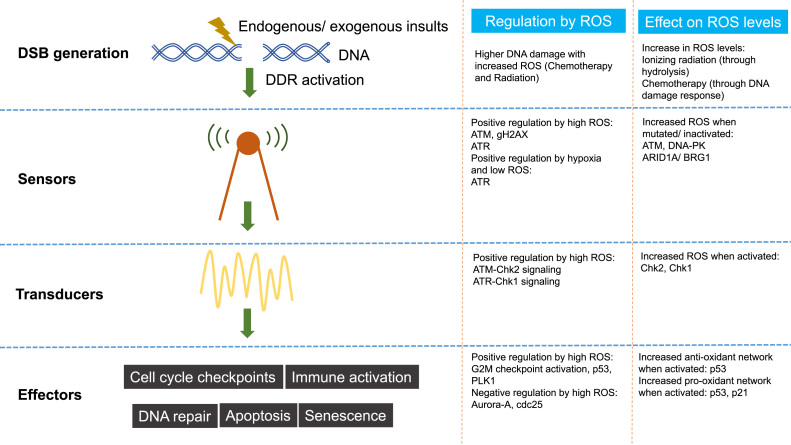
“With lower ROS intensity, p53 activates antioxidant genes, while with higher ROS intensity it switches on pro-oxidant genes [93].”
BackgroundDynamics of DNA damage response proteins at DNA breaks: a focus on protein modifications
Polo, S. E., & Jackson, S. P. (2011) · Genes & Development · doi:10.1101/gad.2021311 · Cited by 1,092
DNA repair dysregulation from cancer driver to therapeutic target
Curtin, N. J. (2012) · Nature Reviews Cancer · doi:10.1038/nrc3399 · Cited by 1,051 · cited 1×
“DNA can be damaged by a variety of exogenous and endogenous insults including chemicals, radiation, free radicals, and topological changes, each causing distinct forms of damage [1].”
BackgroundH2AX: the histone guardian of the genome
Fernández-Capetillo, Ó., Lee, A., Nussenzweig, M. C., & Nussenzweig, A. (2004) · DNA repair · doi:10.1016/j.dnarep.2004.03.024 · Cited by 1,031 · cited 1×
“Histone H2AX is another chromatin factor that has been extensively studied in the DNA damage response [57].”
BackgroundEndogenous HMGB1 regulates autophagy
Tang, D., Kang, R., Livesey, K. M., Cheh, C.-W., Farkas, A., Loughran, P., Hoppe, G., Bianchi, M. E., Tracey, K. J., Zeh, H. J., et al. (2010) · Journal of Cell Biology · doi:10.1083/jcb.200911078 · Cited by 951
Yang, H., Hreggvidsdottir, H. S., Palmblad, K., Wang, H., Ochani, M., Li, J., Lü, B., Chavan, S. S., Rosas‐Ballina, M., Al‐Abed, Y., et al. (2010) · Proceedings of the National Academy of Sciences · doi:10.1073/pnas.1003893107 · Cited by 812
Respiratory burst in human neutrophils
Dahlgren, C., & Karlsson, A. (1999) · Journal of Immunological Methods · doi:10.1016/s0022-1759(99)00146-5 · Cited by 810 · cited 1×
“oxidative bursts in phagocytes to eliminate pathogens) [10] to acting as”
BackgroundMarullo, R., Werner, E., Degtyareva, N., Moore, B., Altavilla, G., Ramalingam, S. S., & Doetsch, P. W. (2013) · PLoS ONE · doi:10.1371/journal.pone.0081162 · Cited by 777 · cited 1×
“In addition to generating nuclear DNA adducts, platinum drugs increase mtROS via formation of mitochondrial DNA adducts [104–106], the extent of which correlates with cytotoxicity [24,107].”
BackgroundGupta, S. C., Hevia, D., Patchva, S., Park, B., Koh, W., & Aggarwal, B. B. (2011) · Antioxidants and Redox Signaling · doi:10.1089/ars.2011.4414 · Cited by 759
Chemotherapy-Associated Oxidative Stress: Impact on Chemotherapeutic Effectiveness
Conklin, K. A. (2004) · Integrative Cancer Therapies · doi:10.1177/1534735404270335 · Cited by 752
Free Radicals in Biological Materials
Commoner, B., Townsend, J., & Pake, G. E. (1954) · Nature · doi:10.1038/174689a0 · Cited by 743 · cited 1×
“Reactive oxygen species (ROS) comprise of a family of short-lived molecules like O2, H2O2 and •OH, first described in skeletal muscle as free radicals [9].”
BackgroundShibata, T., Ohta, T., Tong, K. I., Kokubu, A., Odogawa, R., Tsuta, K., Asamura, H., Yamamoto, M., & Hirohashi, S. (2008) · Proceedings of the National Academy of Sciences · doi:10.1073/pnas.0806268105 · Cited by 728 · cited 2×
“Decreased Keap1-Nrf2 interaction [111,112] and loss-of-function mutations of Keap1 [112,113] lead to aberrant Nrf2 activation, and therefore resistance to radiotherapy.”
BackgroundMutually exclusive redox forms of HMGB1 promote cell recruitment or proinflammatory cytokine release
Venereau, E., Casalgrandi, M., Schiraldi, M., Antoine, D. J., Cattaneo, A., De Marchis, F., Liu, J., Antonelli, A., Preti, A., Raeli, L., et al. (2012) · Journal of Experimental Medicine · doi:10.1084/jem.20120189 · Cited by 720
CDC25 phosphatases in cancer cells: key players? Good targets?
Boutros, R., Lobjois, V., & Ducommun, B. (2007) · Nature reviews. Cancer · doi:10.1038/nrc2169 · Cited by 710
Schiraldi, M., Raucci, A., Martínez‐Muñoz, L., Livoti, E., Celona, B., Vénéreau, E., Apuzzo, T., Marchis, F. D., Pedotti, M., Bachi, A., et al. (2012) · The Journal of Experimental Medicine · doi:10.1084/jem.20111739 · Cited by 676
Role of peroxisomes in ros/rns-metabolism: Implications for human disease
Fransen, M., Nordgren, M., Wang, B., & Apanasets, O. (2012) · Biochimica et Biophysica Acta (BBA) - Molecular Basis of Disease · doi:10.1016/j.bbadis.2011.12.001 · Cited by 644 · cited 1×
“polyamine oxidase) [14], (iv) Endoplasmic reticulum (produce H2O2 as a byproduct during protein folding); or upon exposure to exogenous stress like ionizing radiation (IR), chemotherapeutic drugs and environmental insults, which affect the organelles and enzymes listed above [15].”
BackgroundLoss of Keap1 Function Activates Nrf2 and Provides Advantages for Lung Cancer Cell Growth
Ohta, T., Iijima, K., Miyamoto, M., Nakahara, I., Tanaka, H., Ohtsuji, M., Suzuki, T., Kobayashi, A., Yokota, J., Sakiyama, T., et al. (2008) · Cancer Research · doi:10.1158/0008-5472.can-07-5003 · Cited by 630
Kazama, H., Ricci, J.-E., Herndon, J. M., Hoppe, G., Green, D. R., & Ferguson, T. A. (2008) · Immunity · doi:10.1016/j.immuni.2008.05.013 · Cited by 627 · cited 1×
“cells has however been reported to also mediate immunological tolerance [125], although the relevance of this finding to ICD after chemotherapy is unclear.”
BackgroundTsung, A., Klune, J. R., Zhang, X., Jeyabalan, G., Cao, Z., Peng, X., Stolz, D. B., Geller, D. A., Rosengart, M. R., & Billiar, T. R. (2007) · The Journal of Experimental Medicine · doi:10.1084/jem.20070247 · Cited by 622 · cited 1×
“The antioxidant N-acetylcysteine attenuates HMGB1 release [121], and HMGB1 release in itself increases ROS production [122], which can lead to further oxidation of HMGB1.”
BackgroundThe DNA Damage Response: Implications for Tumor Responses to Radiation and Chemotherapy
Goldstein, M., & Kastan, M. B. (2015) · Annual Review of Medicine · doi:10.1146/annurev-med-081313-121208 · Cited by 590 · cited 2×
“Depending on the nature of the lesion in DNA, specific pathways are activated to facilitate identification of the damaged regions and their repair [2,3].”
BackgroundReactive Oxygen Species (ROS)––Induced genetic and epigenetic alterations in human carcinogenesis
Ziech, D., Franco, R., Pappa, A., & Panayiotidis, M. I. (2011) · Mutation research. Fundamental and molecular mechanisms of mutagenesis · doi:10.1016/j.mrfmmm.2011.02.015 · Cited by 587 · cited 1×
“polyamine oxidase) [14], (iv) Endoplasmic reticulum (produce H2O2 as a byproduct during protein folding); or upon exposure to exogenous stress like ionizing radiation (IR), chemotherapeutic drugs and environmental insults, which affect the organelles and enzymes listed above [15].”
BackgroundOxidative stress induces degradation of mitochondrial DNA
Shokolenko, I. N., Venediktova, N. I., Bochkareva, A., Wilson, G. L., & ALEXEYEV, M. F. (2009) · Nucleic Acids Research · doi:10.1093/nar/gkp100 · Cited by 583 · cited 1×
“ROS accumulation also induces mitochondrial DNA lesions, strand breaks and degradation of mitochondrial DNA [27].”
BackgroundThe structural biochemistry of the superoxide dismutases
Perry, J. J. P., Shin, D. S., Getzoff, E. D., & Tainer, J. A. (2009) · Biochimica et Biophysica Acta (BBA) - Proteins and Proteomics · doi:10.1016/j.bbapap.2009.11.004 · Cited by 581 · cited 1×
“ROS are produced endogenously by (i) mitochondria (where O2 acts as a terminal electron acceptor for electron transport chain) [12], (ii) NADPH oxidase, a cell membrane bound enzyme [13], (iii) Peroxisomes (which contain enzymes that produce H2O2 e.”
BackgroundIncreased ionizing radiation sensitivity and genomic instability in the absence of histone H2AX
Bassing, C. H., Chua, K. F., Sekiguchi, J., Suh, H., Whitlow, S. R., Fleming, J. C., Monroe, B., Ciccone, D. N., Yan, C. T., Vlasáková, K., et al. (2002) · Proceedings of the National Academy of Sciences · doi:10.1073/pnas.122228699 · Cited by 537
ARID1A Deficiency Impairs the DNA Damage Checkpoint and Sensitizes Cells to PARP Inhibitors
Shen, J., Peng, Y., Wei, L., Zhang, W., Yang, L., Lan, L., Kapoor, P., Ju, Z., Mo, Q., Shih, I.-M., et al. (2015) · Cancer Discovery · doi:10.1158/2159-8290.cd-14-0849 · Cited by 522
High speed of fork progression induces DNA replication stress and genomic instability
Maya-Mendoza, A., Moudry, P., Merchut-Maya, J. M., Lee, M., Strauss, R., & Bartek, J. (2018) · Nature · doi:10.1038/s41586-018-0261-5 · Cited by 514 · cited 1×
“results in genomic instability and paves the way for tumor development through the accumulation of additional pro-carcinogenic changes [28,30].”
BackgroundMa, Y., Chapman, J., Levine, M., Polireddy, K., Drisko, J., & Chen, Q. (2014) · Science Translational Medicine · doi:10.1126/scitranslmed.3007154 · Cited by 501 · cited 2×
“On the other end of the spectrum, due to the diverse effects described above for ROS in activating various DNA damage responses, high ROS is also associated with resistance to chemotherapy [18,136].”
BackgroundShibata, T., Kokubu, A., Gotoh, M., Ojima, H., Ohta, T., Yamamoto, M. P., & Hirohashi, S. (2008) · Gastroenterology · doi:10.1053/j.gastro.2008.06.082 · Cited by 476 · cited 2×
“Decreased Keap1-Nrf2 interaction [111,112] and loss-of-function mutations of Keap1 [112,113] lead to aberrant Nrf2 activation, and therefore resistance to radiotherapy.”
BackgroundMolecular Pathways: The Immunogenic Effects of Platinum-Based Chemotherapeutics
Hato, S. V., Khong, A., de Vries, I. J. M., & Lesterhuis, W. J. (2014) · Clinical Cancer Research · doi:10.1158/1078-0432.ccr-13-3141 · Cited by 475
ARID1A Mutations in Cancer: Another Epigenetic Tumor Suppressor?
Wu, J. N., & Roberts, C. W. M. (2012) · Cancer Discovery · doi:10.1158/2159-8290.cd-12-0361 · Cited by 465
HMGB1 release and redox regulates autophagy and apoptosis in cancer cells
Tang, D., Kang, R., Cheh, C.-W., Livesey, K. M., Liang, X., Schapiro, N. E., Benschop, R., Sparvero, L. J., Amoscato, A. A., Tracey, K. J., et al. (2010) · Oncogene · doi:10.1038/onc.2010.261 · Cited by 461
Mechanisms of Oncogene-Induced Replication Stress: Jigsaw Falling into Place
Kotsantis, P., Petermann, E., & Boulton, S. J. (2018) · Cancer Discovery · doi:10.1158/2159-8290.cd-17-1461 · Cited by 416 · cited 4×
“Modulation of replication stress by ROS has clinical implications, with the development of several agents- notably ATR and WEE1 inhibitors, which target replication stress in tumours [28].”
BackgroundInfluentialZabludoff, S., Deng, C., Grondine, M. R., Sheehy, A. M., Ashwell, S., Caleb, B. L., Green, S. A., Haye, H. R., Horn, C. L., Janetka, J. W., et al. (2008) · Molecular Cancer Therapeutics · doi:10.1158/1535-7163.mct-08-0492 · Cited by 411
ATR inhibitors as a synthetic lethal therapy for tumours deficient in ARID1A
Williamson, C. T., Miller, R., Pemberton, H. N., Jones, S. E., Campbell, J., Konde, A., Badham, N., Rafiq, R., Brough, R., Gulati, A., et al. (2016) · Nature Communications · doi:10.1038/ncomms13837 · Cited by 382
Mitochondrial dysfunction in ataxia-telangiectasia
Valentin-Vega, Y. A., MacLean, K. H., Tait-Mulder, J., Milasta, S., Steeves, M., Dorsey, F. C., Cleveland, J. L., Green, D. R., & Kastan, M. B. (2012) · Blood · doi:10.1182/blood-2011-08-373639 · Cited by 365 · cited 1×
“ATM loss modulates mitochondrial turnover, with an increase in aberrant mitochondria and therefore ROS [40,41].”
BackgroundARID1A loss impairs enhancer-mediated gene regulation and drives colon cancer in mice
Mathur, R., Alver, B., Roman, A. K. S., Wilson, B. G., Wang, X., Agoston, A. T., Park, P. J., Shivdasani, R. A., & Roberts, C. W. M. (2016) · Nature Genetics · doi:10.1038/ng.3744 · Cited by 356
p53 Suppresses the Nrf2-dependent Transcription of Antioxidant Response Genes
Faraonio, R., Vergara, P., Marzo, D. D., Pierantoni, G. M., Napolitano, M., Russo, T., & Cimino, F. (2006) · Journal of Biological Chemistry · doi:10.1074/jbc.m605707200 · Cited by 351 · cited 6×
“Decreased Keap1-Nrf2 interaction [111,112] and loss-of-function mutations of Keap1 [112,113] lead to aberrant Nrf2 activation, and therefore resistance to radiotherapy.”
BackgroundInfluentialInfluence of Induced Reactive Oxygen Species in p53-Mediated Cell Fate Decisions
Macip, S., Igarashi, M., Berggren, P., Yu, J., Lee, S. W., & Aaronson, S. A. (2003) · Molecular and Cellular Biology · doi:10.1128/mcb.23.23.8576-8585.2003 · Cited by 331 · cited 1×
“Furthermore, ROS accumulation has different effects on cell fate depending on p53 status; with more apoptosis in cells with functional WT p53 [92].”
Backgrounddos Santos, N. A. G., Bezerra, C. S. C., Martins, N. M., Curti, C., Bianchi, M. L. P., & dos Santos, A. C. (2007) · Archives of Toxicology · doi:10.1007/s00204-006-0173-2 · Cited by 329
Redox Homeostasis and Cellular Antioxidant Systems: Crucial Players in Cancer Growth and Therapy
Marengo, B., Nitti, M., Furfaro, A. L., Colla, R., Ciucis, C. D., Marinari, U. M., Pronzato, M. A., Traverso, N., & Domenicotti, C. (2016) · Oxidative Medicine and Cellular Longevity · doi:10.1155/2016/6235641 · Cited by 327 · cited 1×
“Secondly, ROS has a dose dependent effect on activity of proteins leading to differential downstream outcomes [140], which are”
BackgroundCisplatin induced Mitochondrial DNA damage in dorsal root ganglion neurons
Podratz, J. L., Knight, A. M., Ta, L. E., Staff, N. P., Gass, J. M., Genelin, K., Schlattau, A., Lathroum, L., & Windebank, A. J. (2010) · Neurobiology of Disease · doi:10.1016/j.nbd.2010.11.017 · Cited by 322
DNA damage induces reactive oxygen species generation through the H2AX-Nox1/Rac1 pathway
Kang, M. A., So, E.-Y., Simons, A. L., Spitz, D. R., & Ouchi, T. (2012) · Cell Death & Disease · doi:10.1038/cddis.2011.134 · Cited by 311
Hemorrhagic Shock Induces NAD(P)H Oxidase Activation in Neutrophils: Role of HMGB1-TLR4 Signaling
Fan, J., Li, Y., Levy, R. M., Fan, J., Hackam, D. J., Vodovotz, Y., Yang, H., Tracey, K. J., Billiar, T. R., & Wilson, M. A. (2007) · The Journal of Immunology · doi:10.4049/jimmunol.178.10.6573 · Cited by 307 · cited 1×
“The antioxidant N-acetylcysteine attenuates HMGB1 release [121], and HMGB1 release in itself increases ROS production [122], which can lead to further oxidation of HMGB1.”
BackgroundROS-induced autophagy in cancer cells assists in evasion from determinants of immunogenic cell death
Garg, A. D., Dudek, A. M., Ferreira, G. B., Verfaillie, T., Vandenabeele, P., Krysko, D. V., Mathieu, C., & Agostinis, P. (2013) · Autophagy · doi:10.4161/auto.25399 · Cited by 305 · cited 1×
“Induction of autophagy via increased levels of ROS results in biochemical hallmarks of ICD evasion [130].”
BackgroundThe Superoxide-Generating Oxidase Nox1 Is Functionally Required for Ras Oncogene Transformation
Mitsushita, J., Lambeth, J. D., & Kamata, T. (2004) · Cancer Research · doi:10.1158/0008-5472.can-03-3909 · Cited by 303 · cited 1×
“γH2AX mediated activation of the Nox1-Rac1 complex [67,68] regulates ROS production [69].”
BackgroundNox1-dependent Reactive Oxygen Generation Is Regulated by Rac1
Cheng, G., Diebold, B. A., Hughes, Y., & Lambeth, J. D. (2006) · Journal of Biological Chemistry · doi:10.1074/jbc.m512751200 · Cited by 285 · cited 1×
“γH2AX mediated activation of the Nox1-Rac1 complex [67,68] regulates ROS production [69].”
BackgroundChoi, Y.-M., Kim, H., Shim, W., Anwar, M. A., Kwon, J.-W., Kwon, H., Kim, H. J., Jeong, H., Kim, H. M., Hwang, D., et al. (2015) · PLoS ONE · doi:10.1371/journal.pone.0135083 · Cited by 283
Monti, D., Mitchell, E. P., Bazzan, A. J., Littman, S. J., Zabrecky, G. P., Yeo, C. J., Pillai, M. V., Newberg, A. B., Deshmukh, S., & Levine, M. N. (2012) · PLoS ONE · doi:10.1371/journal.pone.0029794 · Cited by 274
Yang, Z., Schumaker, L. M., Egorin, M. J., Zuhowski, E. G., Guo, Z., & Cullen, K. J. (2006) · Clinical Cancer Research · doi:10.1158/1078-0432.ccr-06-1037 · Cited by 270
Lissanu, Y., Sun, Y., Terranova, C. J., Khan, F., Martínez-Ledesma, E., Gay, J. P., Gao, G., Mullinax, R. A., Khor, T. O., Feng, N., et al. (2018) · Nature Medicine · doi:10.1038/s41591-018-0019-5 · Cited by 268
Mechanism of p53 stabilization by ATM after DNA damage
Cheng, Q., & Chen, J. (2010) · Cell Cycle · doi:10.4161/cc.9.3.10556 · Cited by 264 · cited 1×
“Upon cellular stress and DNA damage; p53 is stabilized and aids in transcription of genes to determine cell fate [89].”
BackgroundGeneration and Function of Reactive Oxygen Species in Dendritic Cells During Antigen Presentation
Matsue, H., Edelbaum, D., Shalhevet, D., Mizumoto, N., Yang, C., Mummert, M. E., Oeda, J., Masayasu, H., & Takashima, A. (2003) · The Journal of Immunology · doi:10.4049/jimmunol.171.6.3010 · Cited by 253 · cited 1×
“ROS plays an active role in the pathways involved in immunogenic cell death including the induction of autophagy [127], and antigen presentation by immune cells [128,129].”
BackgroundShi, Y., Nikulenkov, F., Zawacka‐Pankau, J., Li, H., Gabdoulline, R. R., Xu, J., Eriksson, S. E., Hedström, E., Issaeva, N., Kel, A. E., et al. (2014) · Cell Death and Differentiation · doi:10.1038/cdd.2013.186 · Cited by 236
NADPH Oxidases: A Perspective on Reactive Oxygen Species Production in Tumor Biology
Meitzler, J. L., Antony, S., Wu, Y., Juhasz, A. N., Liu, H., Jiang, G., Lu, J., Roy, K., & Doroshow, J. H. (2013) · Antioxidants and Redox Signaling · doi:10.1089/ars.2013.5603 · Cited by 213 · cited 1×
“ROS are produced endogenously by (i) mitochondria (where O2 acts as a terminal electron acceptor for electron transport chain) [12], (ii) NADPH oxidase, a cell membrane bound enzyme [13], (iii) Peroxisomes (which contain enzymes that produce H2O2 e.”
BackgroundXiao, D., Herman-Antosiewicz, A., Antosiewicz, J., Xiao, H., Brisson, M., Lazo, J. S., & Singh, S. V. (2005) · Oncogene · doi:10.1038/sj.onc.1208759 · Cited by 199
Redox-sensitive alteration of replisome architecture safeguards genome integrity
Somyajit, K., Gupta, R., Polášek-Sedláčková, H., Neelsen, K. J., Ochs, F., Rask, M., Choudhary, C., & Lukas, J. (2017) · Science · doi:10.1126/science.aao3172 · Cited by 190 · cited 1×
“Elevated ROS lead to dissociation of PRDX2 and TIMELESS, thus slowing replication fork speed [36].”
BackgroundRedox Regulation of p53, Redox Effectors Regulated by p53: A Subtle Balance
Maillet, A., & Pervaiz, S. (2011) · Antioxidants and Redox Signaling · doi:10.1089/ars.2011.4434 · Cited by 188
Teng, Y., Yadav, T., Duan, M.-H., Tan, J. J., Xiang, Y., Gao, B., Xu, J., Liang, Z., Liu, Y., Nakajima, S., et al. (2018) · Nature Communications · doi:10.1038/s41467-018-06586-3 · Cited by 184
Reciprocal down-regulation of p53 and SOD2 gene expression-implication in p53 mediated apoptosis
Drane, P., Bravard, A., Bouvard, V., & May, E. (2001) · Oncogene · doi:10.1038/sj.onc.1204101 · Cited by 180 · cited 2×
“Furthermore, under conditions of high ROS, p53 has been demonstrated to downregulate antioxidant proteins including SOD2 [97] and the anti-oxidant transcriptional factor Nrf2 [98].”
BackgroundMaya‐Mendoza, A., Ostráková, J., Košař, M., Hall, A., Dušková, P., Mistrík, M., Merchut‐Maya, J. M., Hodný, Z., Bártková, J., Christensen, C., et al. (2014) · Molecular Oncology · doi:10.1016/j.molonc.2014.11.001 · Cited by 179
Gruosso, T., Mieulet, V., Cardon, M., Bourachot, B., Kieffer, Y., Devun, F., Dubois, T., Dutreix, M., Vincent‐Salomon, A., Miller, K. M., et al. (2016) · EMBO Molecular Medicine · doi:10.15252/emmm.201505891 · Cited by 179
Redox Modulation of HMGB1-Related Signaling
Janko, C., Filipović, M. R., Munoz, L. E., Schorn, C., Schett, G. A., Ivanović‐Burmazović, I., & i, M. H. (2013) · Antioxidants and Redox Signaling · doi:10.1089/ars.2013.5179 · Cited by 171
Wanka, C., Steinbach, J., & Rieger, J. (2012) · Journal of Biological Chemistry · doi:10.1074/jbc.m112.384578 · Cited by 170
Redox Regulation of Human OGG1 Activity in Response to Cellular Oxidative Stress
Bravard, A., Vacher, M., Gouget, B., Coutant, A., de Boisferon, F. H., Marsin, S., Chevillard, S., & Radicella, J. P. (2006) · Molecular and Cellular Biology · doi:10.1128/mcb.00624-06 · Cited by 165
Mehta, M. P., Shapiro, W. R., Phan, S. C., Gervais, R., Carrié, C., Chabot, P., Patchell, R. A., Glantz, M., Recht, L. D., Langer, C. J., et al. (2008) · International Journal of Radiation Oncology*Biology*Physics · doi:10.1016/j.ijrobp.2008.05.068 · Cited by 163
Polireddy, K., Dong, R., Reed, G. A., Yu, J., Chen, P., Williamson, S. K., Violet, P.-C., Pessetto, Z. Y., Godwin, A. K., Fan, F., et al. (2017) · Scientific Reports · doi:10.1038/s41598-017-17568-8 · Cited by 158
Salehi, F., Behboudi, H., Kavoosi, G., & Ardestani, S. K. (2018) · Scientific Reports · doi:10.1038/s41598-018-32308-2 · Cited by 157 · cited 1×
“formation of 8-oxo guanine) [25], which can lead to G-T or G-A transversions if unrepaired.”
BackgroundRegulation of Cellular Metabolism and Hypoxia by p53Preprint
Humpton, T. J., & Vousden, K. H. (2016) · Cold Spring Harbor Perspectives in Medicine · doi:10.1101/cshperspect.a026146 · Cited by 154 · cited 2×
“p53 is a redox protein with clusters of cysteine residues that can be targets of ROS [90], but it can also regulate ROS in turn [91].”
BackgroundLocus-specific mutation databases: pitfalls and good practice based on the p53 experience
Soussi, T., Ishioka, C., Claustres, M., & Béroud, C. (2006) · Nature reviews. Cancer · doi:10.1038/nrc1783 · Cited by 144 · cited 1×
“p53 is a well-studied tumor suppressor that is mutated in over 50% of all cancers [87,88], and affects multiple cellular responses to DNA U.”
BackgroundMa, X., Wang, L., Huang, D., Li, Y., Yang, D., Li, T., Li, F., Sun, L., Wei, H., He, K., et al. (2017) · Nature Communications · doi:10.1038/s41467-017-01647-5 · Cited by 140
Ju, H.-Q., Gocho, T., Aguilar, M., Wu, M., Zhuang, Z.-N., Fu, J., Yanaga, K., Huang, P., & Chiao, P. J. (2015) · Molecular Cancer Therapeutics · doi:10.1158/1535-7163.mct-14-0420 · Cited by 137
Jiang, Y., Guo, C., Vasko, M. R., & Kelley, M. R. (2008) · Cancer Research · doi:10.1158/0008-5472.can-08-1173 · Cited by 135
Orthomolecular Oncology Review: Ascorbic Acid and Cancer 25 Years Later
González, M. J., Miranda-Massari, J. R., Mora, E., Guzmán, A., Riordan, N. H., Riordan, H. D., Casciari, J. J., Jackson, J. A., & Román‐Franco, A. A. (2005) · Integrative Cancer Therapies · doi:10.1177/1534735404273861 · Cited by 135 · cited 1×
“This has led to suggestions that ROS modulators could be used for cancer primary prevention, or to enhance therapeutic responses [18,19].”
BackgroundAlexander, M. S., Wilkes, J. G., Schroeder, S. R., Buettner, G. R., Wagner, B. A., Du, J., Gibson-Corley, K. N., O’Leary, B. R., Spitz, D. R., Buatti, J. M., et al. (2018) · Cancer Research · doi:10.1158/0008-5472.can-18-1680 · Cited by 129
Novel signaling axis for ROS generation during K-Ras-induced cellular transformation
Park, M.-T., Kim, M.-J., Suh, Y., Kim, R.-K., Kim, H., Lim, E.-J., Yoo, K.-C., Lee, G.-H., Kim, Y.-H., Hwang, S.-G., et al. (2014) · Cell Death and Differentiation · doi:10.1038/cdd.2014.34 · Cited by 126
Bryant, C., Rawlinson, R., & Massey, A. J. (2014) · BMC Cancer · doi:10.1186/1471-2407-14-570 · Cited by 119
Nrf2 is a potential therapeutic target in radioresistance in human cancer
Zhou, S., Ye, W., Shao, Q., Zhang, M., & Liang, J. (2013) · Critical Reviews in Oncology/Hematology · doi:10.1016/j.critrevonc.2013.09.001 · Cited by 115 · cited 1×
“ATM-deficient cells also have increased ROS due to defects in NRF2 activity, a transcriptional factor which promotes the expression of antioxidant proteins under conditions of cellular stress [42,43].”
BackgroundOxidative stress induces H2AX phosphorylation in human spermatozoa
Li, Z., Yang, J. J., & Huang, H. (2006) · FEBS Letters · doi:10.1016/j.febslet.2006.10.016 · Cited by 114 · cited 1×
“Conversely, acute oxidative stress increases γH2AX activation and DDR signaling [63].”
BackgroundMontero, A. J., Diaz-Montero, C. M., Deutsch, Y. E., Hurley, J. E., Koniaris, L. G., Rumboldt, T., Yasir, S., Jorda, M., Garret-Mayer, E., Avisar, E., et al. (2011) · Breast Cancer Research and Treatment · doi:10.1007/s10549-011-1889-0 · Cited by 112
Zhang, Z., Hou, X., Shao, C., Li, J., Cheng, J., Kuang, S., Ahmad, N., Ratliff, T. L., & Liu, X. (2014) · Cancer Research · doi:10.1158/0008-5472.can-14-1916 · Cited by 109
ATM/G6PD-driven redox metabolism promotes FLT3 inhibitor resistance in acute myeloid leukemia
Gregory, M. A., D’Alessandro, A., Calderon, F. A., Kim, J., Nemkov, T. G., Adane, B., Rozhok, A. I., Kumar, A., Kumar, V., Pollyea, D. A., et al. (2016) · Proceedings of the National Academy of Sciences · doi:10.1073/pnas.1603876113 · Cited by 108
Systematic Review of Intravenous Ascorbate in Cancer Clinical Trials
Nauman, G., Gray, J. C., Parkinson, R., Levine, M., & Paller, C. J. (2018) · Antioxidants · doi:10.3390/antiox7070089 · Cited by 107 · cited 1×
“[137], and further RCTs are required to determine the efficacy of these strategies.”
BackgroundAPE2 is required for ATR-Chk1 checkpoint activation in response to oxidative stress
Willis, J., Patel, Y., Lentz, B. L., & Yan, S. (2013) · Proceedings of the National Academy of Sciences · doi:10.1073/pnas.1301445110 · Cited by 100 · cited 7×
“Chk1 inhibition potentiates the cytotoxic effects of DNA-damage therapeutics in preclinical studies [75–77], although the relevance of ROS in this context has not been clearly defined.”
BackgroundInfluentialKatsube, T., Mori, M., Tsuji, H., Shiomi, T., Wang, B., Liu, Q., Nenoi, M., & Onoda, M. (2014) · The Journal of Biochemistry · doi:10.1093/jb/mvu021 · Cited by 94 · cited 1×
“Oxidative stress by H2O2 requires ATR for γ-H2AX accumulation and activation of the DDR [48], as well as ATR dependent phosphorylation of Chk1 [49].”
Backgroundde Aguiar, P. H. N., Furtado, C., Repolês, B. M., Ribeiro, G. A., Mendes, I. C., Peloso, E. D. F., Gadelha, F. R., Macedo, A. M., Franco, G. R., Pena, S. D. J., et al. (2013) · PLoS neglected tropical diseases · doi:10.1371/journal.pntd.0002279 · Cited by 93
Wang, S., Chen, M.-S., Chou, Y., Ueng, Y., Yin, P., Yeh, T.-S., & Lee, H. (2016) · Oncotarget · doi:10.18632/oncotarget.12356 · Cited by 93
Guerriero, J. L., Ditsworth, D., Catanzaro, J. M., Sabino, G. J., Furie, M. B., Kew, R. R., Crawford, H. C., & Zong, W. (2011) · The Journal of Immunology · doi:10.4049/jimmunol.1003267 · Cited by 92 · cited 1×
“Oxidized HMGB1 enhances apoptosis and chemosensitivity in pancreatic and colorectal cancer cell lines [123], whereas reduced HMGB1 promotes autophagy-mediated chemoresistance towards melphalan, oxaliplatin and paclitaxel [123,124].”
BackgroundKozlov, S., Waardenberg, A. J., Engholm‐Keller, K., Arthur, J. W., Graham, M. E., & Lavin, M. F. (2016) · Molecular & Cellular Proteomics · doi:10.1074/mcp.m115.055723 · Cited by 92 · cited 1×
“directly activated by oxidative stress, for example by H2O2, leading to its autophosphorylation and subsequent downstream activation of the DDR pathway [47].”
BackgroundReactive oxygen species are essential mediators in antigen presentation by Kupffer cells
Maemura, K., Zheng, Q., Wada, T., Ozaki, M., Takao, S., Aikou, T., Bulkley, G. B., Klein, A. S., & Sun, Z. (2005) · Immunology and Cell Biology · doi:10.1111/j.1440-1711.2005.01323.x · Cited by 90 · cited 1×
“ROS plays an active role in the pathways involved in immunogenic cell death including the induction of autophagy [127], and antigen presentation by immune cells [128,129].”
BackgroundAbdel-Fatah, T. M. A., Middleton, F. K., Arora, A., Agarwal, D., Chen, T., Moseley, P. M., Perry, C., Doherty, R. E., Chan, S. Y. T., Green, A. R., et al. (2014) · Molecular Oncology · doi:10.1016/j.molonc.2014.10.013 · Cited by 86
Constitutive expression of γ-H2AX has prognostic relevance in triple negative breast cancer
Nagelkerke, A., van Kuijk, S. J. A., Sweep, F. C. G. J., Nagtegaal, I. D., Hoogerbrugge, N., Martens, J. W. M., Timmermans, M. A. M., van Laarhoven, H. W. M., Bussink, J., & Span, P. N. (2011) · Radiotherapy and Oncology · doi:10.1016/j.radonc.2011.07.009 · Cited by 84
Meng, Y., Chen, C., Yung, M. M. H., Sun, W., Sun, J. F., Li, Z., Li, J., Li, Z., Zhou, W., Liu, S. S., et al. (2018) · Cancer Letters · doi:10.1016/j.canlet.2018.04.029 · Cited by 77
Wright, M. E., Virtamo, J. R. K., Hartman, A. M., Pietinen, P., Edwards, B. K., Taylor, P. R., Huttunen, J. K., & Albanes, D. (2007) · Cancer · doi:10.1002/cncr.22482 · Cited by 70
Cdc6 contributes to cisplatin-resistance by activation of ATR-Chk1 pathway in bladder cancer cells
Chen, S., Chen, X., Xie, G., He, Y., Yan, D., Zheng, D., Li, S., Fu, X., Li, Y., Pang, X., et al. (2016) · Oncotarget · doi:10.18632/oncotarget.9616 · Cited by 70
Cannan, W. J., Tsang, B. P., Wallace, S. S., & Pederson, D. S. (2014) · Journal of Biological Chemistry · doi:10.1074/jbc.m114.571588 · Cited by 68 · cited 9×
“As 8- Oxo-dG can be potentially converted to DSBs, further work will be required to understand the contribution of ROS to DSB generation through this route.”
BackgroundInfluentialStrategies for Prolonged Therapy in Patients With Advanced Non–Small-Cell Lung Cancer
Fidias, P. M., & Novello, S. (2010) · Journal of Clinical Oncology · doi:10.1200/jco.2010.30.7074 · Cited by 67
Temporal DNA-PK activation drives genomic instability and therapy resistance in glioma stem cells
Wang, Y., Xu, H., Liu, T., Huang, M., Butter, P.-P., Li, C., Zhang, L., Kao, G. D., Gong, Y., Maity, A. M., et al. (2018) · JCI Insight · doi:10.1172/jci.insight.98096 · Cited by 65
Manipulating DNA damage-response signaling for the treatment of immune-mediated diseases
McNally, J. P., Millen, S. H., Chaturvedi, V., Lakes, N., Terrell, C. E., Elfers, E. E., Carroll, K. R., Hogan, S. P., Andreassen, P. R., Kanter, J., et al. (2017) · Proceedings of the National Academy of Sciences · doi:10.1073/pnas.1703683114 · Cited by 62
Vandenberk, L., Garg, A. D., Verschuere, T., Koks, C., Belmans, J., Beullens, M., Agostinis, P., Vleeschouwer, S. D., & Gool, S. V. (2015) · OncoImmunology · doi:10.1080/2162402x.2015.1083669 · Cited by 60
Chang, M., Lin, L., Wu, M.-T., Chan, C., Chang, H., Lee, M., Sun, T.-Y., Jeng, P., Yeung, S., Lin, H.-J., et al. (2015) · PLoS ONE · doi:10.1371/journal.pone.0143663 · Cited by 59
Koczor, C. A., Shokolenko, I. N., Boyd, A. K., Balk, S. P., Wilson, G. L., & LeDoux, S. P. (2009) · Journal of Biological Chemistry · doi:10.1074/jbc.m109.036020 · Cited by 56 · cited 4×
“Downstream of the sensor kinases are the transducer kinases Chk2 (activated by ATM) and Chk1 (activated by ATR), which phosphorylate and regulate proteins involved in DDR, DNA repair and cell cycle arrest.”
BackgroundInfluentialBradley, K. A., Zhou, T., McNall‐Knapp, R. Y., Jakacki, R. I., Levy, A., Vézina, G., & Pollack, I. F. (2012) · International Journal of Radiation Oncology*Biology*Physics · doi:10.1016/j.ijrobp.2012.09.004 · Cited by 55
Okoh, V. O., Garba, N. A., Penney, R. B., Das, J., Deoraj, A., Singh, K. P., Sarkar, S., Felty, Q. H., Yoo, C., Jackson, R. M., et al. (2015) · British Journal of Cancer · doi:10.1038/bjc.2014.586 · Cited by 54
Anderson, C., & Reynolds, C. P. (2002) · Bone Marrow Transplantation · doi:10.1038/sj.bmt.1703605 · Cited by 53
Autophagy substrate SQSTM1/p62 regulates chromatin ubiquitination during the DNA damage response
Wang, Y., Zhu, W., & Zhao, Y. (2016) · Autophagy · doi:10.1080/15548627.2016.1245262 · Cited by 52 · cited 1×
“In contrast, ROS accumulation inhibits Aurora kinase A [86], even though PLK1 and Aurora-A are epistatic in the pathway.”
BackgroundHe, L., Nan, M.-H., Oh, H. C., Kim, Y. H., Jang, J. H., Erikson, R. L., Ahn, J. S., & Kim, B. Y. (2011) · Biochemical and Biophysical Research Communications · doi:10.1016/j.bbrc.2011.05.032 · Cited by 50
Independent Mechanistic Inhibition of Cdc25 Phosphatases by a Natural Product Caulibugulone
Brisson, M., Foster, C. A., Wipf, P., Joo, B., Tomko, R. J., Nguyen, T. P. T., & Lazo, J. S. (2006) · Molecular Pharmacology · doi:10.1124/mol.106.028589 · Cited by 50
Giurgiovich, A. J. (1997) · Carcinogenesis · doi:10.1093/carcin/18.1.93 · Cited by 48
Macip, S., Kosoy, A., Lee, S. W., O’Connell, M. J., & Aaronson, S. A. (2006) · Oncogene · doi:10.1038/sj.onc.1209629 · Cited by 46
Ward, A., & Hudson, J. W. (2014) · PLoS ONE · doi:10.1371/journal.pone.0087918 · Cited by 46 · cited 1×
“Interestingly, oxidative stress with H2O2 increases PLK1 expression in a p53 dependent manner [84,85], but maintains a G2/M arrest.”
BackgroundItamochi, H., Nishimura, M., Oumi, N., Kato, M., Oishi, T., Shimada, M., Sato, S., Naniwa, J., Sato, S., Kudoh, A., et al. (2013) · International Journal of Gynecological Cancer · doi:10.1097/igc.0000000000000014 · Cited by 44
High expression of phospho-H2AX predicts a poor prognosis in colorectal cancer.
Lee, Y., Yin, T., Chen, Y., Chai, C., Wang, J., Liu, M.-C., Lin, Y.-C., & Kan, J. (2015) · PubMed · Cited by 43
Kwan, S.-Y., Cheng, X., Tsang, Y. T. M., Choi, J.-S., Kwan, S., Izaguirre, D. I., Kwan, H. S., Gershenson, D. M., & Wong, K. (2016) · Oncotarget · doi:10.18632/oncotarget.10921 · Cited by 43 · cited 1×
“ROS lowers ARID1A expression by promoter methylation in ovarian cancers [53,54], and ARID1A loss sensitizes ovarian cancer cells to ROS inducing agent elesclomol [55].”
BackgroundSedletska, Y., Radicella, J. P., & Sage, É. (2013) · Nucleic Acids Research · doi:10.1093/nar/gkt731 · Cited by 42 · cited 1×
“Oxidized bases occurring from ROS activity also present a physical obstacle to replication forks [37], resulting in the breakdown of replication forks at fragile sites across the genome.”
BackgroundSinglet Oxygen-Mediated Oxidation during UVA Radiation Alters the Dynamic of Genomic DNA Replication
Graindorge, D., Martineau, S., Machon, C., Arnoux, P., Guitton, J., Francesconi, S., Frochot, C., Sage, É., & Girard, P.-M. (2015) · PLoS ONE · doi:10.1371/journal.pone.0140645 · Cited by 42 · cited 1×
“ROS oxidize dNTPs to affect polymerase activity and thereby reduce replication fork velocity in vitro [34,35].”
BackgroundZulato, E., Ciccarese, F., Agnusdei, V., Pinazza, M., Nardo, G., Iorio, E., Curtarello, M., Silic‐Benussi, M., Rossi, E. M. C., Venturoli, C., et al. (2018) · Biochemical Pharmacology · doi:10.1016/j.bcp.2018.09.019 · Cited by 42
Patwardhan, R. S., Sharma, D., Checker, R., Thoh, M., & Sandur, S. K. (2015) · Free Radical Research · doi:10.3109/10715762.2015.1056180 · Cited by 39
Sullivan, K. D., Palaniappan, V. V., & Espinosa, J. M. (2014) · Cell Cycle · doi:10.4161/15384101.2014.973330 · Cited by 39 · cited 1×
“ATM loss modulates mitochondrial turnover, with an increase in aberrant mitochondria and therefore ROS [40,41].”
BackgroundWinarto, H., Tan, M. I., Sadikin, M., & Wanandi, S. I. (2017) · Translational Oncogenomics · doi:10.1177/1177272716689818 · Cited by 38
Fan, P., Zhang, Y., Wang, Y., Wei, W., Zhou, Y., Xie, Y., Wang, X., Qi, Y., Chang, L., Jia, Z., et al. (2018) · Free Radical Biology and Medicine · doi:10.1016/j.freeradbiomed.2018.10.449 · Cited by 38
Barr, P. M., Miller, T. P., Friedberg, J. W., Peterson, D. R., Baran, A. M., Herr, M. M., Spier, C. M., Cui, H., Roe, D. J., Persky, D. O., et al. (2014) · Blood · doi:10.1182/blood-2014-04-570044 · Cited by 37
Duong, H., Hong, Y. B., Kim, J. S., Lee, H., Yi, Y. W., Kim, Y. J., Wang, A., Zhao, W., Cho, C., Seong, Y., et al. (2013) · Journal of Cellular and Molecular Medicine · doi:10.1111/jcmm.12101 · Cited by 35
Moulder, S. L., Dhillon, N., Ng, C. S., Hong, D. S., Wheler, J. J., Naing, A., Tse, S., LaPaglia, A., Dorr, R. T., Hersh, E. M., et al. (2009) · Investigational New Drugs · doi:10.1007/s10637-009-9273-1 · Cited by 35
Xie, H., Chen, P., Hw, H., Lp, L., & Zhao, F. (2017) · PubMed · Cited by 33
William, W. N., Zinner, R., Karp, D. D., Oh, Y. W., Glisson, B. S., Phan, S.-C., & Stewart, D. J. (2007) · Journal of Thoracic Oncology · doi:10.1097/jto.0b013e31811f4719 · Cited by 28
Miura, M., & Sasaki, T. (1991) · Radiation Research · doi:10.2307/3577823 · Cited by 28 · cited 1×
“Early studies observed that depletion of GSH could enhance radiosensitivity of squamous cell carcinoma cell lines [110].”
BackgroundLi, M., Lin, Y., Palchik, G. A., Matsunaga, S., Wang, D., & Chen, B. P. C. (2014) · Free Radical Biology and Medicine · doi:10.1016/j.freeradbiomed.2014.08.019 · Cited by 27 · cited 1×
“Similarly, DNA-PK deficient cells accumulate higher ROS upon oxidative stress [45,46].”
BackgroundRole of imaging in predicting response to neoadjuvant chemotherapy in gastric cancer
Kwee, R. M. (2014) · World Journal of Gastroenterology · doi:10.3748/wjg.v20.i7.1650 · Cited by 25 · cited 1×
“have profound effects on both pro-survival and pro-death pathways [138], and may result in attenuation of specific chemotherapeutic responses [139].”
BackgroundChatzimichail, E. A., Matthaios, D., Bouros, D. E., Karakitsos, P., Romanidis, Κ., Kakolyris, S., Papashinopoulos, G., & Rigas, A. G. (2014) · International Journal of Genomics · doi:10.1155/2014/160236 · Cited by 23
Agathanggelou, A., Weston, V., Perry, T., Davies, N. J., Skowrońska, A., Payne, D. T., Fossey, J., Oldreive, C., Wei, W., Pratt, G., et al. (2015) · Haematologica · doi:10.3324/haematol.2014.115170 · Cited by 21
A phase I study of imexon plus gemcitabine as first-line therapy for advanced pancreatic cancer
Cohen, S. J., Zalupski, M. M., Modiano, M., Conkling, P., Patt, Y. Z., Davis, P., Dorr, R. T., Boytim, M. L., & Hersh, E. M. (2009) · Cancer Chemotherapy and Pharmacology · doi:10.1007/s00280-009-1162-y · Cited by 20 · cited 1×
“While the pro-oxidant molecule Imexon demonstrated initial promising results in advanced pancreatic cancer in combination with gemcitabine [134], a larger phase II trial demonstrated no significant survival benefit or responses (ClinicalTrials.”
BackgroundNOV-002 plus carboplatin in platinum-resistant ovarian cancer
Krasner, C. N., Seiden, M. V., Penson, R. T., Roche, M. R., Kendall, D. L., Young, J., Matulonis, U. A., Pereira, L., & Berlin, S. T. (2008) · Journal of Clinical Oncology · doi:10.1200/jco.2008.26.15_suppl.5593 · Cited by 9
Fidias, P. M., Ciuleanu, T. A., Gladkov, O. A., Manikhas, G., Bondarenko, I., Pluzanska, A., Ramlau, R., & Lynch, T. J. (2010) · Journal of Clinical Oncology · doi:10.1200/jco.2010.28.18_suppl.lba7007 · Cited by 5
Cited by
Sorted by citations
Reactive oxygen species (ROS) as pleiotropic physiological signalling agents
Sies, H., & Jones, D. P. (2020) · Nature Reviews Molecular Cell Biology · doi:10.1038/s41580-020-0230-3 · Cited by 5,335
Juan, C. A., Pérez de la Lastra, J. M., Plou, F. J., & Pérez-Lebeña, E. (2021) · International Journal of Molecular Sciences · doi:10.3390/ijms22094642 · Cited by 2,810
“The DNA damage caused by ROS, from endogenous or exogenous sources, has been a significant breakthrough in carcinogenesis research over the last 20 years [22].”
BackgroundReactive Oxygen Species, Toxicity, Oxidative Stress, and Antioxidants: Chronic Diseases and Aging
Jomova, K., Raptova, R., Alomar, S. Y., Alwasel, S. H., Nepovimova, E., Kuca, K., & Valko, M. (2023) · Archives of Toxicology · doi:10.1007/s00204-023-03562-9 · Cited by 2,638
Wang, B., Wang, Y., Zhang, J., Hu, C., Jiang, J., Li, Y., & Peng, Z. (2023) · Archives of Toxicology · doi:10.1007/s00204-023-03476-6 · Cited by 941
Mitochondria in oxidative stress, inflammation and aging: from mechanisms to therapeutic advances
Xu, X., Pang, Y., & Fan, X. (2025) · Signal Transduction and Targeted Therapy · doi:10.1038/s41392-025-02253-4 · Cited by 1,016
Metadata
- Authors
- Srinivas, U. S., Tan, B. W. Q., Vellayappan, B. A., & Jeyasekharan, A. D.
- Affiliations
- National University of Singapore (SG)
- National University Hospital (SG)
- Corresponding author
- Jeyasekharan, Anand D.
- Venue
- Redox Biology
- Publisher
- Elsevier BV
- Published
- 2019-07
- Volume
- 25
- Pages
- 101084
- ISSN
- 2213-2317 (ISSN-L)
- PMC
- PMC6859528
- OpenAlex
- W2906120852
- Cited by
- 2,144
- References
- 153
- Citations by year
- 2026: 217 · 2025: 396 · 2024: 392 · 2023: 381 · 2022: 335 · 2021: 262 · 2020: 132 · 2019: 26
- FWCI
- 10.28
- Type
- journal article
- Language
- en
- Open access
- gold
- doi.org
- Licence
- Locations
- Redox Biology (publishedVersion, cc-by)
- PubMed Central (publishedVersion, cc-by)
- PubMed (publishedVersion)
- National University of Singapore (submittedVersion, cc-by-nc-nd)
- DOAJ (DOAJ: Directory of Open Access Journals) (submittedVersion, cc-by-sa)
- Funders
- National Medical Research Council (NMRC/TA/0052/2016)
- AstraZeneca
- Ministry of Health -Singapore
- Meso Scale Diagnostics
- National Research Foundation Singapore
- Ministry of Education - Singapore
- Janssen Pharmaceuticals
- Topics
- Life Sciences › Biochemistry, Genetics and Molecular Biology › Molecular Biology › Redox biology and oxidative stress
- Life Sciences › Biochemistry, Genetics and Molecular Biology › Molecular Biology › DNA Repair Mechanisms
- Health Sciences › Medicine › Radiology, Nuclear Medicine and Imaging › Effects of Radiation Exposure
- Keywords
- reactive oxygen species, DNA damage response, cancer, DNA double-strand breaks, genotoxic stress, anticancer agents, ionizing radiation, radiosensitizers, combination therapy, oxidative DNA damage
- MeSH terms
- Animals, DNA Damage, DNA Repair, Humans, Neoplasms, Tumor Suppressor Protein p53, Apoptosis, Reactive Oxygen Species
About these checks
Registry, retraction, Cites and statistics results are computed, not judged, with one exception: a printed reference that no index lists is read once by a model before it counts as a citation error. Claims are extracted by a model and kept only when their quote appears verbatim in the text; each cited source is then checked, with a model’s help, for whether it says what the claim relies on. Those verdicts can be wrong — read the claim’s quote and the cited source before relying on one.
Statistics and arithmetic are recomputed, not judged.
Confidence bands are shown only for fields calibrated on our annotated test set. None is calibrated yet, so no band is shown.
What counts as a claim ›How we measure confidence ›How we check this ›
Are you an author, or do you see a problem with this page? Request a review
