

The DOI matches its Crossref record; 152 of the 153 references it cites were found in a registry or an index.
ROS and the DNA damage response in cancer
Open accessAbstract
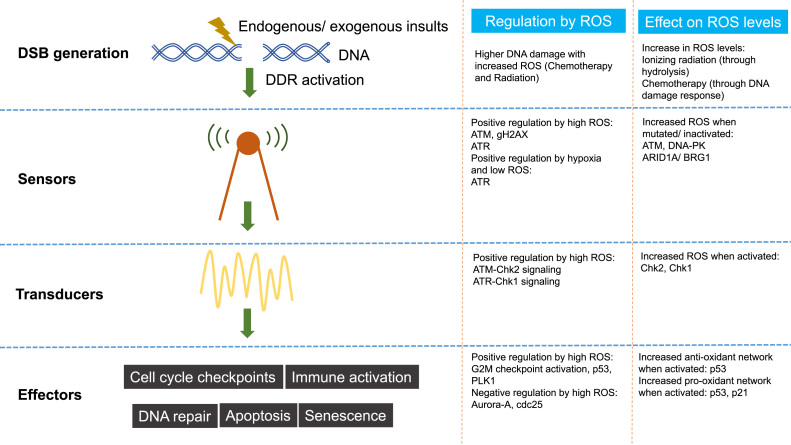
Reactive oxygen species (ROS) are a group of short-lived, highly reactive, oxygen-containing molecules that can induce DNA damage and affect the DNA damage response (DDR). There is unequivocal pre-clinical and clinical evidence that ROS influence the genotoxic stress caused by chemotherapeutics agents and ionizing radiation. Recent studies have provided mechanistic insight into how ROS can also influence the cellular response to DNA damage caused by genotoxic therapy, especially in the context of Double Strand Breaks (DSBs). This has led to the clinical evaluation of agents modulating ROS in combination with genotoxic therapy for cancer, with mixed success so far. These studies point to context dependent outcomes with ROS modulator combinations with Chemotherapy and radiotherapy, indicating a need for additional pre-clinical research in the field. In this review, we discuss the current knowledge on the effect of ROS in the DNA damage response, and its clinical relevance.
Overview
The claims and statistics of this paper haven’t been checked yet.
Run the check — free, no account needed. It reads the open-access text and checks the sources it cites.
Integrity signals
Registry
Cites
Statistics
Figures
Verification
Claims the paper makes
The claims and statistics of this paper haven’t been checked yet.
Run the check — free, no account needed. It reads the open-access text and checks the sources it cites.
Claims other papers make about this one
Each is checked against this paper’s own text: does it say what the citing paper says it does?
In the citing paper
“The most frequently occurring mutations in the tumor suppressor gene TP53 in lung cancer are Guanine → Thymine and Guanine → Adenine transversions (Srinivas et al. 2019; Gibbons et al. 2014).”
From Reactive Oxygen Species, Toxicity, Oxidative Stress, and Antioxidants: Chronic Diseases and Aging (2023) · cites this paper as Srinivas et al. 2019
Self-check
Percentages, sums and reported differences re-computed from the paper’s own numbers.
The self-check needs the paper’s full text.
Citations
Cites
Vogelstein, B., Lane, D., & Levine, A. J. (2000) · Nature · doi:10.1038/35042675 · Cited by 6,607 · cited 1×
“p53 is a well-studied tumor suppressor that is mutated in over 50% of all cancers [87,88], and affects multiple cellular responses to DNA U.”
BackgroundDNA double-stranded breaks induce histone H2AX phosphorylation on serine 139
Rogakou, E. P., Pilch, D. R., Orr, A. H., Ivanova, V. S., & Bonner, W. M. (1998) · Journal of Biological Chemistry · doi:10.1074/jbc.273.10.5858 · Cited by 5,438
(1994) · New England Journal of Medicine · doi:10.1056/nejm199404143301501 · Cited by 4,737
The DNA Damage Response: Making It Safe to Play with Knives
Ciccia, A., & Elledge, S. J. (2010) · Molecular Cell · doi:10.1016/j.molcel.2010.09.019 · Cited by 4,368 · cited 1×
“This response includes DNA damage recognition, activation of checkpoints, cell cycle arrest, and eventually final outcomes of repair, apoptosis and immune clearance [4,5].”
BackgroundRadiobiology for the Radiologist.
(1974) · Annals of Internal Medicine · doi:10.7326/0003-4819-80-3-438_1 · Cited by 3,498
Molecular Mechanisms of Mammalian DNA Repair and the DNA Damage Checkpoints
Sancar, A., Lindsey-Boltz, L. A., Ünsal-Kaçmaz, K., & Linn, S. (2004) · Annual Review of Biochemistry · doi:10.1146/annurev.biochem.73.011303.073723 · Cited by 3,317 · cited 1×
“Depending on the nature of the lesion in DNA, specific pathways are activated to facilitate identification of the damaged regions and their repair [2,3].”
BackgroundImmunogenic Cell Death in Cancer Therapy
Kroemer, G., Galluzzi, L., Kepp, O., & Zitvogel, L. (2013) · Annual Review of Immunology · doi:10.1146/annurev-immunol-032712-100008 · Cited by 3,303 · cited 1×
“to eventual T-cell mediated killing [116].”
Yang, Y., Li, S., Yang, Q., Shi, Y., Zheng, M., Liu, Y., Chen, F., Song, G., Xu, H., Wan, T., et al. (2014) · Cellular Physiology and Biochemistry · doi:10.1159/000358696 · Cited by 3,263
ATM and ATR Substrate Analysis Reveals Extensive Protein Networks Responsive to DNA Damage
Matsuoka, S., Ballif, B. A., Smogorzewska, A., McDonald, E. R., Hurov, K. E., Luo, J., Bakalarski, C. E., Zhao, Z., Solimini, N., Lerenthal, Y., et al. (2007) · Science · doi:10.1126/science.1140321 · Cited by 3,075
Association of reactive oxygen species levels and radioresistance in cancer stem cells
Diehn, M., Cho, R. W., Lobo, N. A., Kalisky, T., Dorie, M. J., Kulp, A. N., Qian, D., Lam, J. S., Ailles, L. E., Wong, M., et al. (2009) · Nature · doi:10.1038/nature07733 · Cited by 2,555
Cited by
Sorted by citations
Items 801–900 of 1,002
Jovandarić, M. Z., Jovanović, K., Raus, M., Babić, S., Igic, T., Kotlica, B., & Milićević, S. (2024) · Medicina · doi:10.3390/medicina60121969 · Cited by 18
Yin, W., Sun, S., Yao, H., Li, W., Cui, Y., & Peng, C. (2025) · ACS Biomaterials Science & Engineering · doi:10.1021/acsbiomaterials.4c02263 · Cited by 15
Jain, S., Bhar, K., Bandyopadhayaya, S., Singh, V. K., Mandal, C. C., Tapryal, S., & Sharma, A. K. (2020) · Journal of Inorganic Biochemistry · doi:10.1016/j.jinorgbio.2020.111174 · Cited by 16
Implant-derived CoCrMo alloy nanoparticle disrupts DNA replication dynamics in neuronal cells
Bijukumar, D. R., Segu, A., Chastain, P. D., & Mathew, M. T. (2021) · Cell Biology and Toxicology · doi:10.1007/s10565-020-09577-7 · Cited by 15
Pang, Y., Zhang, H., & Ai, H. (2021) · Chemical Research in Toxicology · doi:10.1021/acs.chemrestox.1c00149 · Cited by 17
Drug-free phototherapy of superficial tumors: White light at the end of the tunnel
Mehanna, S., Mansour, N., Daher, C. F., Elias, M. G., Dagher, C., & Khnayzer, R. S. (2021) · Journal of Photochemistry and Photobiology B Biology · doi:10.1016/j.jphotobiol.2021.112324 · Cited by 15
Lee, H., To, N. B., Kim, M., Nguyen, Y. T.-K., Cho, S. K., & Choi, H. (2021) · Journal of Pharmaceutical and Biomedical Analysis · doi:10.1016/j.jpba.2021.114449 · Cited by 15
A pooled analysis of molecular epidemiological studies on modulation of DNA repair by host factors
Opattová, A., Langie, S. A. S., Milić, M., Collins, A. R., Brevik, A., Coşkun, E., Dušinská, M., Gaivão, I., Kadıoğlu, E., Laffón, B., et al. (2022) · Mutation Research/Genetic Toxicology and Environmental Mutagenesis · doi:10.1016/j.mrgentox.2022.503447 · Cited by 15
Autism spectrum disorder in the fragile X premutation state: possible mechanisms and implications
Aishworiya, R., Protic, D. D., & Hagerman, R. J. (2022) · Journal of Neurology · doi:10.1007/s00415-022-11209-5 · Cited by 15
Yao, J., Takenaga, K., Koshikawa, N., Kida, Y., Lin, J. C., Watanabe, T., Maru, Y., Hippo, Y., Yamamoto, S., Zhu, Y., et al. (2022) · International Journal of Cancer · doi:10.1002/ijc.34319 · Cited by 15
“Apoptosis was probably triggered by mtROS, as conversion to hydrogen oxide and subsequent release into the cytoplasmic space and nucleus is known to cause nDNA damage.(41) The reversal of CCCh1005-induced H2AX phosphorylation, PARP-1 cleavage and cell death by MitoTEMPO support this notion.”
BackgroundAğca, C. A., Kırıcı, M., Nedzvetsky, V. S., Gündoğdu, R., & Tykhomyrov, A. A. (2020) · Chemistry & Biodiversity · doi:10.1002/cbdv.202000441 · Cited by 15
Vascular Senescence: A Potential Bridge Between Physiological Aging and Neurogenic Decline
Rojas-Vázquez, S., Blasco-Chamarro, L., López-Fabuel, I., Martínez-Máñez, R., & Fariñas, I. (2021) · Frontiers in Neuroscience · doi:10.3389/fnins.2021.666881 · Cited by 15
Ming, Z., Zhang, Y., Song, L., Chen, M., Lin, L., He, Y., Liu, W., Zhu, Y., Zhang, Y., & Zhang, G. (2024) · Advanced Science · doi:10.1002/advs.202309992 · Cited by 13
Nanomaterials for enhanced X‐ray‐triggered cancer therapy: Progress and prospects
Chen, Y., Shangguan, S., Lin, Z., Zeng, X., Chan, S. Y., Qin, X., & Yan, S. (2024) · BMEMat · doi:10.1002/bmm2.12122 · Cited by 14
Yoshino, Y., Yoshino, F., Aoki, I., Mori, Y., Suzuki, G., Tsuji, S., Amano, T., Shiino, A., Chano, T., Furusho, Y., et al. (2025) · ACS Nano · doi:10.1021/acsnano.4c06753 · Cited by 14
Gu, W., Pan, T., Wang, X., Kang, L., Liu, N., Piao, M., & Feng, C. (2025) · International Immunopharmacology · doi:10.1016/j.intimp.2025.114866 · Cited by 16
Huang, Q., Jing, Y., Xiong, L., Li, L., Feng, J., & Cheng, J. G. (2025) · Journal of Translational Medicine · doi:10.1186/s12967-025-06640-x · Cited by 18
“These mutations occur during DNA replication and are often perpetuated in subsequent cell divisions [81].”
InfluentialGheybi, K., Soh, P. X. Y., Jiang, J., Mbeki, T. M. N., Louw, M., Burns, D., Mundra, P. A., Kiriy, D., Hasan, M. M., Jaratlerdsiri, W., et al. (2025) · Nature Communications · doi:10.1038/s41467-025-63865-6 · Cited by 14
“Additionally, ROS1 (ranking 11 points above the median) has been shown to display DDR activity 53 , is a BRCA-negative breast cancer gene candidate 54 , and has been shown to harbour PPVs in Chinese PCa patients 55 .”
Zhang, X., Zhang, Z., Huang, M. N., Jin, Y., Huang, Y., Ji, P., & Ma, Z. (2025) · International Journal of Nanomedicine · doi:10.2147/ijn.s551477 · Cited by 14
“32 The Role of Inflammatory Responses and Key Mechanisms in the Development of RP The pathogenesis of RP involves the release of damage-associated molecular patterns (DAMPs), which serve as danger signals that recruit various immune cells to sites of injury, thereby exacerbating pulmonary tissue…”
64Cu-Labeled Stapled Peptide-Based Radiopharmaceuticals Targeting MDM2/MDMX for Pan-p53 Tumors
Tian, H., Zuo, Q., Zhang, S., Huang, H., Dong, W., Huang, Z., Liu, X., Xie, L., Zhang, Y., Zhang, H., et al. (2025) · Journal of Medicinal Chemistry · doi:10.1021/acs.jmedchem.5c02183 · Cited by 15
Ultrasound boosts doxorubicin efficacy against sensitive and resistant ovarian cancer cells
Foglietta, F., Macrì, M., Panzanelli, P., Francovich, A., Durando, G., Garello, F., Terreno, E., Serpe, L., & Canaparo, R. (2023) · European Journal of Pharmaceutics and Biopharmaceutics · doi:10.1016/j.ejpb.2023.01.005 · Cited by 14
Wang, M., Li, B., Liu, Y., Zhang, M., Huang, C., Cai, T., Jia, Y., Huang, X., Ke, H., Liu, S., et al. (2023) · Frontiers in Pharmacology · doi:10.3389/fphar.2023.1107507 · Cited by 14
“SQSTM1 gene encodes p62, a multifunctional ubiquitination-binding scaffold protein, which shuttles between the nucleus and the cytoplasm (Kwon et al., 2019). p62 participates in the ubiquitin-proteasomal and the autophagy-lysosomal protein degradation systems, and plays a key role in DNA repair and oxidative stress re…”
BackgroundIntroduction to Cell Cycle and Its Regulators
Mir, M. A., & Jan, A. (2023) · Springer eBooks · doi:10.1007/978-981-19-8911-7_3 · Cited by 14
Role and mechanism of FOXG1-related epigenetic modifications in cisplatin-induced hair cell damage
Mu, Y., Zou, S., Li, M., Ding, Y., Huang, X. Y., He, Z., & Kong, W. (2023) · Frontiers in Molecular Neuroscience · doi:10.3389/fnmol.2023.1064579 · Cited by 16
“The accumulation of mitochondrial superoxide in cells can induce DNA damage and ultimately lead to cell damage (Srinivas et al., 2019).”
BackgroundJi, P., Chen, J., Wang, H., Shi, L., Tang, X., & Duo, Y. (2023) · Biomaterials Science · doi:10.1039/d3bm00206c · Cited by 14
Boylan, J., Byers, E., & Kelly, D. F. (2023) · Medical Research Archives · doi:10.18103/mra.v11i6.3994 · Cited by 15
González-Ruíz, J., Baccarelli, A., de León, D. F. C., & Prada, D. (2023) · Current Environmental Health Reports · doi:10.1007/s40572-023-00421-8 · Cited by 16
“Oxidative stress involves the imbalance between the production of ROS and the capacity of antioxidant systems to neutralize them [42].”
BackgroundMiranda, S. E. M., Lemos, J. D. A., Ottoni, F. M., Cassali, G. D., Townsend, D. M., Ferreira, C. D. A., Alves, R. J., Ferreira, L. A. M., & de Barros, A. L. B. (2023) · Biomedicine & Pharmacotherapy · doi:10.1016/j.biopha.2023.116054 · Cited by 14
“Naphthoquinones like lapachol exert antineoplastic effects through both DNA/protein damage mediated by ROS and inhibition of topoisomerases required by cancer cells [7,18,32, 49,51,56,61,65].”
Nam, Y., Park, S., Kim, E., Lee, I., Park, Y. J., Kim, T., Kim, M. J., Moon, S., Shin, S., Kim, H., et al. (2024) · International Journal of Hygiene and Environmental Health · doi:10.1016/j.ijheh.2023.114318 · Cited by 14
Zeng, Y., Liu, F., Wang, J., Shao, B., He, T., Xiang, Z., Wang, Y., Zhu, S., Yang, T., Yu, S., et al. (2024) · Chinese Chemical Letters · doi:10.1016/j.cclet.2024.109734 · Cited by 14
Sciaccotta, R., Gangemi, S., Penna, G., Giordano, L., Pioggia, G., & Allegra, A. (2024) · Antioxidants · doi:10.3390/antiox13040475 · Cited by 15
“The damage to cellular DNA caused by ROS is mostly attributed to the oxidative stress-induced degradation of pyrimidine and purine bases, single-strand breaks, and oxidation of proteins thiols and lipids [43].”
Nanomedicine-based disulfiram and metal ion co-delivery strategies for cancer treatment
Shen, X., Sheng, H., Zhang, Y., Dong, X., Kou, L., Yao, Q., & Zhao, X. (2024) · International Journal of Pharmaceutics X · doi:10.1016/j.ijpx.2024.100248 · Cited by 14
Germline BARD1 variants predispose to mesothelioma by impairing DNA repair and calcium signaling
Novelli, F., Yoshikawa, Y., Vitto, V. A. M., Modesti, L., Minaai, M., Pastorino, S., Emi, M., Kim, J.-H., Kricek, F., Bai, F., et al. (2024) · Proceedings of the National Academy of Sciences · doi:10.1073/pnas.2405231121 · Cited by 14
Extracellular Membrane Vesicles of Escherichia coli Induce Apoptosis of CT26 Colon Carcinoma Cells
Jiang, Y., Ma, J., Long, Y., Dan, Y., Fang, L., & Wang, Z. (2024) · Microorganisms · doi:10.3390/microorganisms12071446 · Cited by 16
Wang, B., Wu, S., Jia, S., Ruan, X.-Q., Sheng, C., & Zhou, Q. (2024) · Journal of Medicinal Chemistry · doi:10.1021/acs.jmedchem.4c00982 · Cited by 14
Rigillo, G., Cappellucci, G., Baini, G., Vaccaro, F., Miraldi, E., Pani, L., Tascedda, F., Bruni, R., & Biagi, M. (2024) · Nutrients · doi:10.3390/nu16172953 · Cited by 15
“Our data demonstrated a delay in wound closure when treated with B. aristata bark dry extracts, even after a long exposure time, both at 10 and 100 µ g/mL, corrob-orating numerous evidence regarding the BER and PROTBER inhibitory effects of cell migration [80,81,84–86].”
BackgroundWang, H., Xu, X., Ouyang, Y., Xiao, F., He, C., Yang, X., Ren, Y., Zhou, Y., Chen, S., Hu, Y., et al. (2024) · Cellular and Molecular Gastroenterology and Hepatology · doi:10.1016/j.jcmgh.2024.101448 · Cited by 14
“46 The resulting genetic alterations serve as driving forces for the progression from chronic in fl ammation to malignancies.”
Alves, J., da Silva, F. R., Kahl, V. F. S., Reyes, J. M., Lima, E., Abreu, M. B., Thiesen, F. V., dos Santos, D. L., Salvador, M. M., Branco, C. S., et al. (2020) · Ecotoxicology and Environmental Safety · doi:10.1016/j.ecoenv.2020.111397 · Cited by 14
Molecular mechanisms of non-thermal atmospheric pressure plasma-induced cellular responses
Hara, H., & Adachi, T. (2020) · Japanese Journal of Applied Physics · doi:10.35848/1347-4065/abd496 · Cited by 14
SILAC-Based Quantitative Proteomic Analysis of Oxaliplatin-Resistant Pancreatic Cancer Cells
Kim, Y. E., Kim, E.-K., Song, M.-J., Kim, T., Jang, H. H., & Kang, D. (2021) · Cancers · doi:10.3390/cancers13040724 · Cited by 14
“Because oxaliplatin induces the formation of free radicals as well as oxaliplatin-DNA adducts, exposure to oxaliplatin causes oxidative DNA damages and subsequently cytotoxicity [11,37].”
BackgroundZhou, L., Yu, T., Yang, F., Han, J., Zuo, B., Huang, L., Bai, X., Jiang, M., Wu, D., Chen, S., et al. (2021) · Frontiers in Oncology · doi:10.3389/fonc.2021.668617 · Cited by 14
The Influence of miRNAs on Radiotherapy Treatment in Prostate Cancer – A Systematic Review
Soares, S., Guerreiro, S. G., Martins, N. A., de Faria, I. C. J., Baylina, P., Sales, M. G., Correa‐Duarte, M. A., & Fernandes, R. (2021) · Frontiers in Oncology · doi:10.3389/fonc.2021.704664 · Cited by 14
“Then, different pathways are activated in an intent to repair the damaged DNA, induce cell cycle arrest or even cell death (66).”
BackgroundRichartz, N., Pietka, W., Gilljam, K. M., Skah, S., Skålhegg, B. S., Bhagwat, S., Naderi, E. H., Ruud, E., & Blomhoff, H. K. (2021) · Molecular Cancer Research · doi:10.1158/1541-7786.mcr-21-0652 · Cited by 14
Ciclopirox Olamine Exerts Tumor-Suppressor Effects via Topoisomerase II Alpha in Lung Adenocarcinoma
Yin, J., Che, G., Jiang, K., Zhou, Z., Wu, L., Xu, M., Liu, J., & Yan, S. (2022) · Frontiers in Oncology · doi:10.3389/fonc.2022.791916 · Cited by 14
Wahyuni, E. A., Yii, C., Liang, H.-L., Luo, Y.-H., Yang, S., Wu, P.-Y., Hsu, W., Nien, C.-Y., & Chen, S. (2022) · Chemico-Biological Interactions · doi:10.1016/j.cbi.2022.110046 · Cited by 14
Beneficial antioxidant effects of Coenzyme Q10 on reproduction
Carneiro, M. F. H., & Colaiácovo, M. P. (2022) · Vitamins and hormones · doi:10.1016/bs.vh.2022.10.004 · Cited by 16
Defining the nuanced nature of redox biology in post-traumatic stress disorder
Reed, E. C., & Case, A. J. (2023) · Frontiers in Physiology · doi:10.3389/fphys.2023.1130861 · Cited by 14
“In addition to oxidized DNA bases, reactive species may also cause double and single stranded DNA breaks, affect chromatin remodeling complexes, and alter epigenetic modifications (Srinivas et al., 2019).”
BackgroundZheng, X., Wu, H., Wang, S., Zhao, J., & Hu, L. (2023) · Gels · doi:10.3390/gels9060452 · Cited by 14
Lenz, S. A. P., Li, D., & Wetmore, S. D. (2020) · DNA repair · doi:10.1016/j.dnarep.2020.102944 · Cited by 15
Hu, Y., Chen, Z., Lü, L., Zhang, L., Liu, T., Luo, X., & Liao, X. (2021) · Animal nutrition · doi:10.1016/j.aninu.2021.05.013 · Cited by 14
“The ROS can predispose cellular DNA to damage (Srinivas et al., 2019).”
BackgroundIschemia-reperfusion injury induces ZBP1-dependent PANoptosis in endothelial cells
Cui, Y., Huang, L., Ma, J., Zhao, Y., Li, J., Wang, Y., Zhuang, J., & Yang, Y. (2025) · Biochimica et Biophysica Acta (BBA) - Molecular Basis of Disease · doi:10.1016/j.bbadis.2025.167782 · Cited by 13
Xu, J., Shen, D., Wang, Y., Han, X., Dong, X., Chen, X., Shu, H., Hou, J., & Yu, S. (2025) · ACS Applied Materials & Interfaces · doi:10.1021/acsami.5c02580 · Cited by 13
Li, Q., Zhu, Y., Ding, J., Pan, W., Hu, Y., Lu, J., Gao, S., Jiang, H., Yin, Z., & Tan, S. (2025) · Biomacromolecules · doi:10.1021/acs.biomac.5c00954 · Cited by 13
Chao, J., Liang, Y., Wang, H., Xun, Z., Wang, S., Xuan, Z., Wang, M., Huang, Q., Zhang, R., Liu, M., et al. (2025) · Nature Communications · doi:10.1038/s41467-025-64572-y · Cited by 13
“As we addressed in response to Q5, we examined the hearts, livers, lungs, kidneys, and peripheral blood of mice treated with Hesperidin, and found no evidence of organ damage, indicating good tolerability.”
Neogi, N., Choudhury, K. P., Hossain, I., Hossain, S., & Sazid, M. G. (2025) · doi:10.3390/eesp2025037001 · Cited by 15
“These effects lead to replication fork collapse, double-strand breaks, and genomic instability, promoting tumor development [8].”
Paka, S. K., Kodi, T., Gopinathan, A., Byregowda, B. H., Nandakumar, K., & Kishore, A. (2026) · Cell Biochemistry and Function · doi:10.1002/cbf.70173 · Cited by 13
“However, when ROS synthesis surpasses the body's processing capabilities, cells undergo oxidative stress, leading biomolecules like lipids, proteins, and DNA to be destroyed [68].”
Oxidative Stress in the Tumor Immune Microenvironment: Mechanisms and Therapeutic Perspectives
Wang, Z., Li, B., Tang, P., Yan, F., Wang, S., Leng, G., Dawa, P., Chen, Y., Guo, Y., Yang, P., et al. (2026) · MedComm – Oncology · doi:10.1002/mog2.70068 · Cited by 14
Sarkar, M. K., Kar, A. G., Jayaraman, A., Mahapatra, S. K., & Vadivel, V. (2021) · Journal of Pharmacy and Pharmacology · doi:10.1093/jpp/rgab085 · Cited by 13
Benefits of β-blockers in cancer treatment
Arif, M., Hardianti, M. S., Tyagita, N., & Safitri, A. H. (2022) · Oncology in Clinical Practice · doi:10.5603/ocp.2022.0016 · Cited by 13
Ye, Y., Pan, J.-C., Chen, X., Li, J., Jiao, Q., Zhu, H., Liu, J., & Wang, Z. (2022) · The Analyst · doi:10.1039/d2an00690a · Cited by 14
Wu, F., Xie, X., Li, G., Bao, D., Li, H., Wu, G., Lai, Y., Xing, Y., Ouyang, P., Chen, G., et al. (2022) · Environmental Toxicology · doi:10.1002/tox.23658 · Cited by 13
Wang, S., Zhou, L., Tian, H., Li, B., Su, M., Li, Q., Nice, E. C., Huang, C., Shao, J., & He, T. (2023) · Journal of Nanobiotechnology · doi:10.1186/s12951-023-01779-5 · Cited by 13
Lee, K. K., Kim, J.-W., Lee, C., & Lee, S. C. (2023) · Journal of Controlled Release · doi:10.1016/j.jconrel.2023.07.050 · Cited by 13
The Antitumor Activity of Piplartine: A Review
Duarte, A. B. S., Gomes, R. C., Nunes, V. R. V., Gonçalves, J. C. R., Correia, C. A., dos Santos, A. Z. G., & de Sousa, D. P. (2023) · Pharmaceuticals · doi:10.3390/ph16091246 · Cited by 13
“Increased intracellular reactive oxygen species (ROS) can lead to cellular damage (e.g., DNA strand destruction and cell membrane lysis), affect cellular metabolism reactions, and activate certain cell death pathways, such as apoptosis [49–51].”
Zhang, C., Li-hong, J., Zhou, X., He, Y.-P., Liu, Y., Zhou, D., Lv, Y., Wu, B., & Zhao, Z. (2023) · Translational Oncology · doi:10.1016/j.tranon.2023.101812 · Cited by 14
“For example, they can continuously attack the structure and function of DNA and affect the DDR to drive DNA damage and genetic instability [64].”
BackgroundHedgehog signaling and the glioma-associated oncogene in cancer radioresistance
Zhang, L., Zhang, Y., Li, K., & Xue, S. (2023) · Frontiers in Cell and Developmental Biology · doi:10.3389/fcell.2023.1257173 · Cited by 13
Kim, K.-H., Choi, E.-Y., Ahn, H.-M., Kim, D., & Kim, Y. (2023) · Cancers · doi:10.3390/cancers15235504 · Cited by 13
Yang, Z., Li, L., Xiong, Y.-L., Chen, N., Yu, T., Li, H., Ren, T., You, H., Wang, X., Li, T., et al. (2023) · Photodiagnosis and Photodynamic Therapy · doi:10.1016/j.pdpdt.2023.103917 · Cited by 13
Casagrande, N., Borghese, C., Corona, G., & Aldinucci, D. (2024) · Biomedicine & Pharmacotherapy · doi:10.1016/j.biopha.2024.116296 · Cited by 13
Tan, Z., Deng, Y., Cai, Z., He, H., Tang, Z., Feng, Y., Ye, J., Liu, R., Cai, S., Huang, H., et al. (2024) · Journal of Cancer · doi:10.7150/jca.93832 · Cited by 14
“Overcoming the degradation ability of peroxidases such as CAT, the excessive generation of ROS results in oxidative stress [32] and cell cycle arrest [33].”
BackgroundTargeted ferritinophagy in gastrointestinal cancer: from molecular mechanisms to implications
Feng, Z., Luan, M., Zhu, W., Xing, Y., Ma, X., Wang, Y., & Jia, Y. (2024) · Archives of Toxicology · doi:10.1007/s00204-024-03745-y · Cited by 12
“The Fe 2+ in the LIP can be transported extracellularly via ferroportin (FPN), while excess iron is stored in ferritin (Jelic et al. 2021; Srinivas et al. 2019).”
Yang, H., & Lan, L. (2024) · FEBS Letters · doi:10.1002/1873-3468.14938 · Cited by 13
“Reactive oxygen species (ROS) are generated endogenously by mitochondria, NADPH oxidase, and peroxisomes upon endogenous oxidative stress or in response to exogenous stress, e.g., ionizing radiation (IR) and some chemotherapeutic drugs [1,2].”
Hosseini, Z., Ahmadi, A., Shadi, A., Hosseini, S. J., & Nikmanesh, H. (2024) · Nanomedicine · doi:10.1080/17435889.2024.2367958 · Cited by 13
Huang, Y.-Z., Sang, M., Xi, P.-W., Xu, R.-X., Cai, M., Wang, Z.-W., Zhao, J., Li, Y.-H., Yin, P., Ding, Q., et al. (2024) · Cancer Research · doi:10.1158/0008-5472.can-23-2738 · Cited by 13
Griffin, D., Carson, R., Moss, D., Sessler, T., Lavin, D. P., Tiwari, V. K., Karelia, S., Kennedy, R. D., Savage, K. I., McDade, S. S., et al. (2024) · Molecular Cancer Research · doi:10.1158/1541-7786.mcr-24-0151 · Cited by 14
Chen, T., Zhang, P., Cong, X.-F., Wang, Y.-Y., Li, S., Wang, H., Zhao, S., & Sun, X. (2024) · Frontiers in Pharmacology · doi:10.3389/fphar.2024.1405521 · Cited by 13
Zhao, G., Liu, Y., Wei, X., Yang, C., Lu, J., Yan, S., Ma, X., Cheng, X. Y., You, Z., Ding, Y., et al. (2024) · Marine Drugs · doi:10.3390/md22080357 · Cited by 13
“The accumulation of ROS can lead to oxidative stress, which can cause damage to cellular components, including DNA [20,21].”
BackgroundHuang, C., Zhang, K., Yu, R., Liu, X., Li, Y., Yang, B., Chen, P., Zhang, M., Lu, X., Zhuo, Y., et al. (2024) · Acta Biomaterialia · doi:10.1016/j.actbio.2024.08.045 · Cited by 13
ERK5 suppression overcomes FAK inhibitor resistance in mutant KRAS-driven non-small cell lung cancer
Pozzato, C., Outeiro-Pinho, G., Galiè, M., Ramadori, G., & Konstantinidou, G. (2024) · EMBO Molecular Medicine · doi:10.1038/s44321-024-00138-7 · Cited by 14
“High cellular ROS levels cause irreversible damage to proteins, DNA and lipids (Juan et al, 2021; Srinivas et al, 2019).”
The role of pyroptosis in the occurrence and development of pregnancy-related diseases
Li, J., Wang, M. T., Zhou, H., Jin, Z., Yin, H., & Yang, S. (2024) · Frontiers in Immunology · doi:10.3389/fimmu.2024.1400977 · Cited by 13
Shi, D., Yang, Y., Tong, L., Zhang, L., Yang, F., Tao, J., & Zhao, M. (2024) · Molecules · doi:10.3390/molecules29215181 · Cited by 13
Tao, S. M., Wang, L.-L., Li, M., Wang, J., Gu, H. M., & Zhang, L. J. (2024) · Mutation Research/Reviews in Mutation Research · doi:10.1016/j.mrrev.2024.108517 · Cited by 13
Wu, Q. Y., Xiao, J., Hu, Z., Zhao, F., Li, R., & Zhang, D. (2024) · RSC Advances · doi:10.1039/d4ra05314a · Cited by 13
X‐ray controlled release strategy in cancer therapy
Ruan, Y., Huang, H., Liu, H., Gong, J., Li, C., & Sun, X. (2025) · BMEMat · doi:10.1002/bmm2.12136 · Cited by 16
Jin, K., Shi, S., Huang, D., Huang, H., Zou, B., Huang, W., & Chen, T. (2025) · Chemical Engineering Journal · doi:10.1016/j.cej.2025.160005 · Cited by 13
Sasaki, R., Luo, Y., Kishi, S., Ogata, R., Nishiguchi, Y., Sasaki, T., Ohmori, H., Fujiwara‐Tani, R., & Kuniyasu, H. (2025) · International Journal of Molecular Sciences · doi:10.3390/ijms26031192 · Cited by 14
The biological roles and molecular mechanisms of m6A reader IGF2BP1 in the hallmarks of cancer
Li, Q., Wu, S., Zhang, L., Li, W., Xiang, D., & Kasim, V. (2025) · Genes & Diseases · doi:10.1016/j.gendis.2025.101567 · Cited by 13
Masi, M., Poppi, L., Previtali, V., Nelson, S. R., Wynne, K. J., Varignani, G., Falchi, F., Veronesi, M., Albanesi, E., Tedesco, D., et al. (2025) · Cell Death Discovery · doi:10.1038/s41420-025-02382-3 · Cited by 19
“However, also DDR kinases ATM, ATR and DNA-PK have been described to play a pivotal role in cell cycle progression, ROS regulation and mitochondrial activity [39, 41, 44, 45].”
Huang, Y., Tian, H., Yue, Z., Liang, L., Huang, C., Zhu, H., & Yang, J. (2025) · Materials Today Bio · doi:10.1016/j.mtbio.2025.101707 · Cited by 15
“Notably, Cu 2 + , functioning as potent peroxide-like enzymes, can induce intracellular ROS accumulation through a Fenton-like reaction, causing mitochondrial DNA impairment [15,16].”
Vageli, D. P., Kasle, D. A., Doukas, S. G., Doukas, P. G., & Sasaki, C. T. (2020) · Oncotarget · doi:10.18632/oncotarget.27706 · Cited by 13
Redox‐sensitive signaling pathways in renal cell carcinoma
Cruz‐Gregorio, A., Aranda‐Rivera, A. K., Pedraza‐Chaverrí, J., Solano, J. D., & Ibarra‐Rubio, M. E. (2021) · BioFactors · doi:10.1002/biof.1784 · Cited by 12
“OS might participate in cancer development by triggering genotoxic (direct DNA damage) and nongenotoxic (epigenetic and cell signaling alterations) mechanisms.(27) ROS can also modulate cell signaling pathways, regulating cell proliferation, survival, and differentiation.”
BackgroundPattern recognition of tumor dormancy and relapse beyond cell-intrinsic and cell-extrinsic pathways
Manjili, M. H., & Khazaie, K. (2022) · Seminars in Cancer Biology · doi:10.1016/j.semcancer.2021.12.008 · Cited by 13
Rhein activated Fas-induced apoptosis pathway causing cardiotoxicity in vitro and in vivo
Li, G. M., Chen, J. R., Zhang, H. Q., Sun, C., Chen, G., Xiong, Q., Cao, X. Y., Yu, L., Lin, Z. W., Qin, J., et al. (2022) · Toxicology Letters · doi:10.1016/j.toxlet.2022.04.006 · Cited by 13
Deng, J., Guo, Y., Hu, X., Du, J., Gu, J., Kong, L., Tao, B., Fu, D., Ying, T., & Li, J. (2022) · Oxidative Medicine and Cellular Longevity · doi:10.1155/2022/3243647 · Cited by 13
Endirlik, B. Ü., Wincent, E., & Dreij, K. (2022) · Environmental Pollution · doi:10.1016/j.envpol.2022.120510 · Cited by 13
Metal-polyphenol polymer modified polydopamine for chemo-photothermal therapy
Xu, L. J., Luo, Z., Liu, Q., Wang, C., Zhou, F., & Zhou, M. (2023) · Frontiers in Chemistry · doi:10.3389/fchem.2023.1124448 · Cited by 13
“However, excessive ROS in cells can cause severe damage toDNA, proteins and lipids and is considered to be a signal regulating apoptosis (Srinivas et al., 2019).”
BackgroundPhytosphingosine inhibits cell proliferation by damaging DNA in human cell lines
Sun, C., Chang, X., MacIsaac, H. J., Wen, J., Zhao, L., Dai, Z., & Li, J. (2023) · Ecotoxicology and Environmental Safety · doi:10.1016/j.ecoenv.2023.114840 · Cited by 13
A selective fluorescent turn-on probe for imaging and sensing of hydrogen peroxide in living cells
Ciou, J.-J., Wu, T., Chen, Z., Cheng, B., & Lai, C. (2023) · Analytical and Bioanalytical Chemistry · doi:10.1007/s00216-023-04800-w · Cited by 13
“For example, factors such as carcinogens, ultraviolet (UV) light, inflammation, and aging can stimulate cells to produce excess H2O2 during the early stages of tumor formation, thus leading to DNA damage and, eventually, cancer [6].”
Backgroundp38/TF/HIF-α Signaling Pathway Participates in the Progression of CIPN in Mice
Yang, Y., Hu, L., Wang, C., Yang, X., Song, L., Jiang, C., Li, Y., Li, T., Liu, W., & Feng, J. (2019) · BioMed Research International · doi:10.1155/2019/5347804 · Cited by 13
Novel Pt(IV) Prodrugs Displaying Antimitochondrial Effects
Tabrizi, L., Thompson, K., Mnich, K., Chintha, C., Gorman, A. M., Morrison, L., Luessing, J., Lowndes, N. F., Dockery, P., Samali, A., et al. (2020) · Molecular Pharmaceutics · doi:10.1021/acs.molpharmaceut.0c00417 · Cited by 13
Metadata
- Authors
- Srinivas, U. S., Tan, B. W. Q., Vellayappan, B. A., & Jeyasekharan, A. D.
- Affiliations
- National University of Singapore (SG)
- National University Hospital (SG)
- Corresponding author
- Jeyasekharan, Anand D.
- Venue
- Redox Biology
- Publisher
- Elsevier BV
- Published
- 2019-07
- Volume
- 25
- Pages
- 101084
- ISSN
- 2213-2317 (ISSN-L)
- PMC
- PMC6859528
- OpenAlex
- W2906120852
- Cited by
- 2,144
- References
- 153
- Citations by year
- 2026: 217 · 2025: 396 · 2024: 392 · 2023: 381 · 2022: 335 · 2021: 262 · 2020: 132 · 2019: 26
- FWCI
- 10.28
- Type
- journal article
- Language
- en
- Open access
- gold
- doi.org
- Licence
- Locations
- Redox Biology (publishedVersion, cc-by)
- PubMed Central (publishedVersion, cc-by)
- PubMed (publishedVersion)
- National University of Singapore (submittedVersion, cc-by-nc-nd)
- DOAJ (DOAJ: Directory of Open Access Journals) (submittedVersion, cc-by-sa)
- Funders
- National Medical Research Council (NMRC/TA/0052/2016)
- AstraZeneca
- Ministry of Health -Singapore
- Meso Scale Diagnostics
- National Research Foundation Singapore
- Ministry of Education - Singapore
- Janssen Pharmaceuticals
- Topics
- Life Sciences › Biochemistry, Genetics and Molecular Biology › Molecular Biology › Redox biology and oxidative stress
- Life Sciences › Biochemistry, Genetics and Molecular Biology › Molecular Biology › DNA Repair Mechanisms
- Health Sciences › Medicine › Radiology, Nuclear Medicine and Imaging › Effects of Radiation Exposure
- Keywords
- reactive oxygen species, DNA damage response, cancer, DNA double-strand breaks, genotoxic stress, anticancer agents, ionizing radiation, radiosensitizers, combination therapy, oxidative DNA damage
- MeSH terms
- Animals, DNA Damage, DNA Repair, Humans, Neoplasms, Tumor Suppressor Protein p53, Apoptosis, Reactive Oxygen Species
About these checks
Registry, retraction, Cites and statistics results are computed, not judged, with one exception: a printed reference that no index lists is read once by a model before it counts as a citation error. Claims are extracted by a model and kept only when their quote appears verbatim in the text; each cited source is then checked, with a model’s help, for whether it says what the claim relies on. Those verdicts can be wrong — read the claim’s quote and the cited source before relying on one.
Statistics and arithmetic are recomputed, not judged.
Confidence bands are shown only for fields calibrated on our annotated test set. None is calibrated yet, so no band is shown.
What counts as a claim ›How we measure confidence ›How we check this ›
Are you an author, or do you see a problem with this page? Request a review
