

Closed-loop insulin delivery in suboptimally controlled type 1 diabetes: a multicentre, 12-week randomised trial
Open accessThe DOI matches its Crossref record; 22 of the 22 references it cites were found in a registry or an index.
Abstract
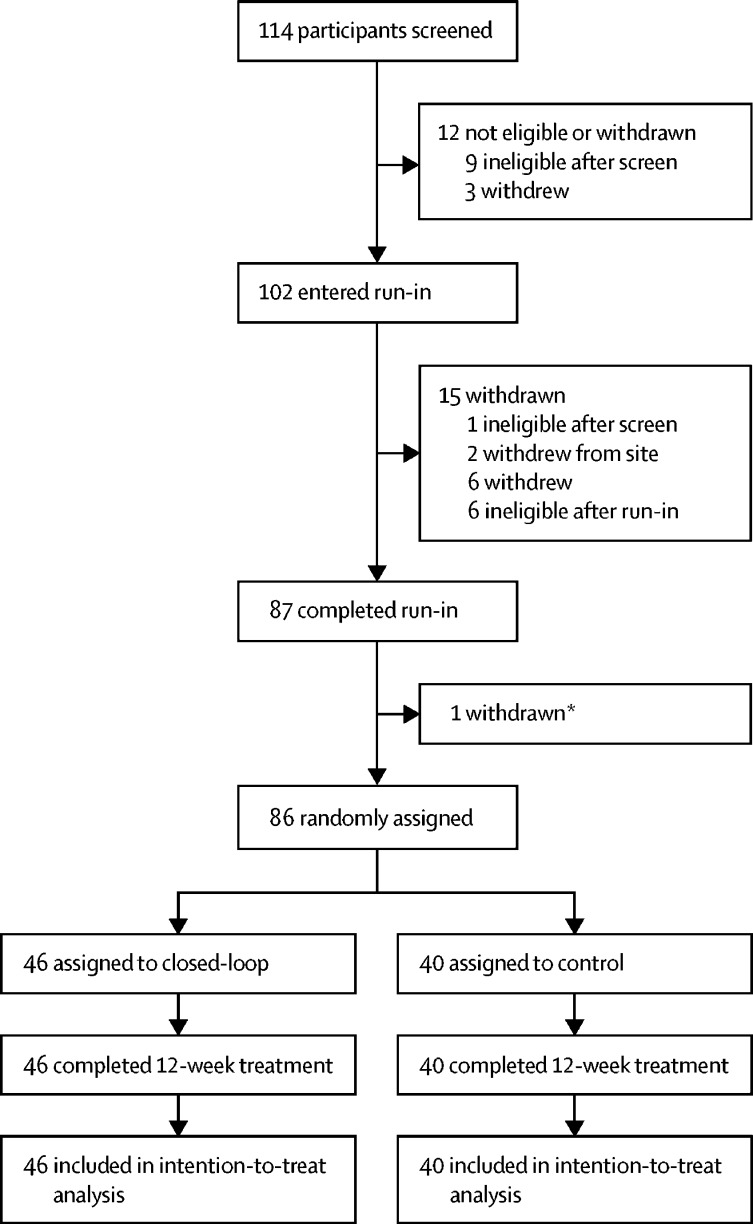
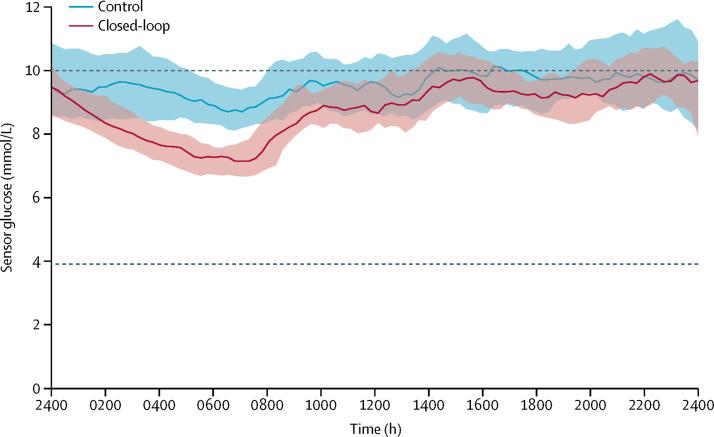
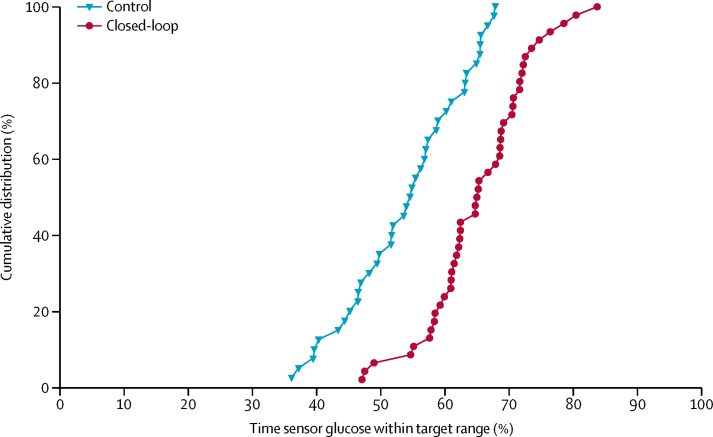
Background The achievement of glycaemic control remains challenging for patients with type 1 diabetes. We assessed the effectiveness of day-and-night hybrid closed-loop insulin delivery compared with sensor-augmented pump therapy in people with suboptimally controlled type 1 diabetes aged 6 years and older. Methods In this open-label, multicentre, multinational, single-period, parallel randomised controlled trial, participants were recruited from diabetes outpatient clinics at four hospitals in the UK and two centres in the USA. We randomly assigned participants with type 1 diabetes aged 6 years and older treated with insulin pump and with suboptimal glycaemic control (glycated haemoglobin [HbA 1c ] 7·5–10·0%) to receive either hybrid closed-loop therapy or sensor-augmented pump therapy over 12 weeks of free living. Training on study insulin pump and continuous glucose monitoring took place over a 4-week run-in period. Eligible subjects were randomly assigned using central randomisation software. Allocation to the two study groups was unblinded, and randomisation was stratified within centre by low (<8·5%) or high (≥8·5%) HbA 1c . The primary endpoint was the proportion of time that glucose concentration was within the target range of 3·9–10·0 mmol/L at 12 weeks post randomisation. Analyses of primary outcome and safety measures were done in all randomised patients. The trial is registered with ClinicalTrials.gov, number NCT02523131, and is closed to accrual. Findings From May 12, 2016, to Nov 17, 2017, 114 individuals were screened, and 86 eligible patients were randomly assigned to receive hybrid closed-loop therapy (n=46) or sensor-augmented pump therapy (n=40; control group). The proportion of time that glucose concentration was within the target range was significantly higher in the closed-loop group (65%, SD 8) compared with the control group (54%, SD 9; mean difference in change 10·8 percentage points, 95% CI 8·2 to 13·5; p<0·0001). In the closed-loop group, HbA 1c was reduced from a screening value of 8·3% (SD 0·6) to 8·0% (SD 0·6) after the 4-week run-in, and to 7·4% (SD 0·6) after the 12-week intervention period. In the control group, the HbA 1c values were 8·2% (SD 0·5) at screening, 7·8% (SD 0·6) after run-in, and 7·7% (SD 0·5) after intervention; reductions in HbA 1c percentages were significantly greater in the closed-loop group compared with the control group (mean difference in change 0·36%, 95% CI 0·19 to 0·53; p<0·0001). The time spent with glucose concentrations below 3·9 mmol/L (mean difference in change −0·83 percentage points, −1·40 to −0·16; p=0·0013) and above 10·0 mmol/L (mean difference in change −10·3 percentage points, −13·2 to −7·5; p<0·0001) was shorter in the closed-loop group than the control group. The coefficient of variation of sensor-measured glucose was not different between interventions (mean difference in change −0·4%, 95% CI −1·4% to 0·7%; p=0·50). Similarly, total daily insulin dose was not different (mean difference in change 0·031 U/kg per day, 95% CI −0·005 to 0·067; p=0·09) and bodyweight did not differ (mean difference in change 0·68 kg, 95% CI −0·34 to 1·69; p=0·19). No severe hypoglycaemia occurred. One diabetic ketoacidosis occurred in the closed-loop group due to infusion set failure. Two participants in each study group had significant hyperglycaemia, and there were 13 other adverse events in the closed-loop group and three in the control group. Interpretation Hybrid closed-loop insulin delivery improves glucose control while reducing the risk of hypoglycaemia across a wide age range in patients with suboptimally controlled type 1 diabetes. Funding JDRF, NIHR, and Wellcome Trust.
Overview
The claims and statistics of this paper haven’t been checked yet.
Free: it reads the open-access text and checks the first 5 claims that cite a source we can check. Create a free account to check every claim.
Integrity signals
Registry
Cites
Statistics
Figures
Verification
Claims the paper makes
The claims and statistics of this paper haven’t been checked yet.
Free: it reads the open-access text and checks the first 5 claims that cite a source we can check. Create a free account to check every claim.
Claims other papers make about this one
Each is checked against this paper’s own text: does it say what the citing paper says it does?
The source backs part of the claim, not all of it — or backs it for a different population, condition or comparison.
In the citing paper
“The use of SAP therapy has been shown to improve not just A1C or hypoglycemia but also glycemic variability and albuminuria1185–1187 when compared with MDI.”
From American Association of Clinical Endocrinology Clinical Practice Guideline: Developing a Diabetes Mellitus Comprehensive Care Plan-2022 Update. (2022) · cites this paper as [1187]
Experimental — accuracy not yet measuredThe source backs part of the claim, not all of it — or backs it for a different population, condition or comparison.
In the citing paper
“All currently FDA-approved AID systems were tested for safety and efficacy in their pivotal trials in children and adults with type 1 diabetes (194)(195)(196)(197)(198)(199)(200)(201)(202)(203)(204)(205)(206).”
From 7. Diabetes Technology: Standards of Care in Diabetes—2025 (2025) · cites this paper as [196]
Experimental — accuracy not yet measuredThe source backs part of the claim, not all of it — or backs it for a different population, condition or comparison.
In the citing paper
“Hybrid Closed Loop systems that might decrease the risk of DKA were not standard features of CSII treatment at the time of study inclusion. 22 , 23 , 26”
From Insulin pump therapy is associated with higher rates of mild diabetic ketoacidosis compared to injection therapy: A 2‐year Swedish national survey of children and adolescents with type 1 diabetes (2022) · cites this paper as [26]
Experimental — accuracy not yet measured
Self-check
Percentages, sums and reported differences re-computed from the paper’s own numbers.
The self-check needs the paper’s full text.
Citations
Cites
Unwin, N. C. (2006) · Cited by 1,661
Estimates of Location Based on Rank Tests
Hodges, J. L., & Lehmann, E. L. (1963) · The Annals of Mathematical Statistics · doi:10.1214/aoms/1177704172 · Cited by 1,260
Miller, K. M., Foster, N. C., Beck, R. W., Bergenstal, R. M., DuBose, S. N., DiMeglio, L. A., Maahs, D. M., & Tamborlane, W. V. (2015) · Diabetes Care · doi:10.2337/dc15-0078 · Cited by 1,254
Self-citationRisk of hypoglycaemia in types 1 and 2 diabetes: Effects of treatment modalities and their duration
UK Hypoglycaemia Study Group (2007) · Diabetologia · doi:10.1007/s00125-007-0599-y · Cited by 825
Gold, A. E., Macleod, K. M., & Frier, B. M. (1994) · Diabetes Care · doi:10.2337/diacare.17.7.697 · Cited by 810
Threshold-based insulin-pump interruption for reduction of hypoglycemia
Bergenstal, R. M., Klonoff, D. C., Garg, S. K., Bode, B. W., Meredith, M., Slover, R. H., Ahmann, A. J., Welsh, J. B., Lee, S. W., & Kaufman, F. R. (2013) · New England Journal of Medicine · doi:10.1056/nejmoa1303576 · Cited by 652
Self-citationSafety of a hybrid closed-loop insulin delivery system in patients with type 1 diabetes
Bergenstal, R. M., Garg, S., Weinzimer, S. A., Buckingham, B. A., Bode, B. W., Tamborlane, W. V., & Kaufman, F. R. (2016) · JAMA · doi:10.1001/jama.2016.11708 · Cited by 644
Self-citationGarg, S. K., Weinzimer, S. A., Tamborlane, W. V., Buckingham, B. A., Bode, B. W., Bailey, T. S., Brazg, R. L., Ilany, J., Slover, R. H., Anderson, S. M., et al. (2017) · Diabetes Technology & Therapeutics · doi:10.1089/dia.2016.0421 · Cited by 585
Self-citationWeisman, A., Bai, J.-W., Cardinez, M., Kramer, C. K., & Perkins, B. A. (2017) · The Lancet Diabetes & Endocrinology · doi:10.1016/s2213-8587(17)30167-5 · Cited by 463
Home Use of an Artificial Beta Cell in Type 1 Diabetes
Thabit, H., Tauschmann, M., Allen, J. M., Leelarathna, L., Hartnell, S., Wilinska, M. E., Acerini, C. L., Dellweg, S., Benesch, C., Heinemann, L., et al. (2015) · New England Journal of Medicine · doi:10.1056/nejmoa1509351 · Cited by 450
Self-citation
Cited by
Items 201–300 of 440
Efficacy of advanced hybrid closed loop systems for the management of type 1 diabetes in children
Ferrito, L., Passanisi, S., Bonfanti, R., Cherubini, V., Minuto, N., Schiaffini, R., & Scaramuzza, A. E. (2021) · Minerva Pediatrics · doi:10.23736/s2724-5276.21.06531-9 · Cited by 22
Lindmeyer, A. M., Meier, J. J., & Nauck, M. A. (2020) · Journal of Diabetes Science and Technology · doi:10.1177/1932296820949939 · Cited by 15
Standardized Hybrid Closed-Loop System Reporting
Shah, V. N., & Garg, S. K. (2021) · Diabetes Technology & Therapeutics · doi:10.1089/dia.2020.0622 · Cited by 14
Self-citationAutomated insulin dosing systems: Advances after a century of insulin
Thabit, H., Lal, R., & Leelarathna, L. (2021) · Diabetic Medicine · doi:10.1111/dme.14695 · Cited by 14
Self-citationLo Presti, J., Galderisi, A., Doyle, F. J., Zisser, H. C., Dassau, E., Renard, E., Toffanin, C., & Cobelli, C. (2023) · Journal of Diabetes Science and Technology · doi:10.1177/19322968221076559 · Cited by 12
“IP t k IP t R t IP IP IP IP aIP b 1 2 1 1 1 1 0 ( ) = − ⋅ ( ) + ( ) ( ) = , (1)”
Haughton, S., Riley, D. R. J., Berry, S. A., Arshad, M. F., Eleftheriadou, A., Anson, M., Yap, Y. W., Cuthbertson, D. J., Malik, R. A., Azmi, S., et al. (2025) · Diabetes Obesity and Metabolism · doi:10.1111/dom.16455 · Cited by 17
“39,40 A subgroup analysis for pump type would be helpful however, this was not possible as the TriNetX database is unable to distinguish between pump types.”
Elbarbary, N. S., & Ismail, E. A. R. (2023) · Diabetology & Metabolic Syndrome · doi:10.1186/s13098-023-01232-5 · Cited by 15
“Previous studies reported AHCL systems often fail to reach target TIR during daytime, in particular post-prandial TIR targets [13, 70].”
BackgroundJahan, U. M., Blevins, B., Minko, S., & Reukov, V. V. (2024) · Biomedical Physics & Engineering Express · doi:10.1088/2057-1976/ad927f · Cited by 12
Fuchs, J., Allen, J. M., Boughton, C. K., Wilinska, M. E., Thankamony, A., de Beaufort, C. E., Campbell, F., Yong, J., Froehlich‐Reiterer, E., Mader, J. K., et al. (2021) · BMJ Open · doi:10.1136/bmjopen-2020-042790 · Cited by 12
Self-citationDiabetes technologies – what the general physician needs to know
Li, A., & Hussain, S. (2020) · Clinical Medicine · doi:10.7861/clinmed.2020-0034 · Cited by 14
Mise en place de l’insulinothérapie automatisée en boucle fermée : position d’experts français
Franc, S., Schaepelynck, P., Tubiana‐Rufi, N., Chaillous, L., Joubert, M., Renard, É., Reznik, Y., Abettan, C., Bismuth, É., Beltrand, J., et al. (2020) · Médecine des Maladies Métaboliques · doi:10.1016/s1957-2557(20)30003-1 · Cited by 24
AID(„automated insulin delivery“)-Systeme in der Diabetologie
Biester, T., Dovč, K., Chobot, A. P., Tauschmann, M., & Kapellen, T. M. (2021) · Der Diabetologe · doi:10.1007/s11428-021-00777-1 · Cited by 13
Self-citationLachal, S., Tourki, Y., Franc, S., Huneker, E., Charpentier, G., & Benhamou, P. (2021) · Journal of Diabetes Science and Technology · doi:10.1177/19322968211046021 · Cited by 13
“17(1) 176 –185 © 2021 Diabetes Technology Society Article reuse guidelines: sagepub.”
BackgroundInfluentialForlenza, G. P., Vigers, T., Berget, C., Messer, L. H., Lal, R., Basina, M., Maahs, D. M., Hood, K. K., Buckingham, B. A., Wilson, D. M., et al. (2022) · Diabetes Technology & Therapeutics · doi:10.1089/dia.2021.0326 · Cited by 14
Evaluating Deep Q-Learning Algorithms for Controlling Blood Glucose in In Silico Type 1 Diabetes
Tejedor, M., Hjerde, S. T. N., Myhre, J. N., & Godtliebsen, F. (2023) · Diagnostics · doi:10.3390/diagnostics13193150 · Cited by 13
Propper‐Lewinsohn, T., Elran‐Barak, R., Gillon‐Keren, M., Yackobovitch‐Gavan, M., Liberman, A., Phillip, M., & Shalitin, S. (2023) · Diabetes Technology & Therapeutics · doi:10.1089/dia.2023.0500 · Cited by 11
“14 In contrast to these studies, several studies found no difference in weight gain while using HCL system.”
Alternative therapeutic strategies in diabetes management
Annicchiarico, A., Barile, B., Buccoliero, C., Nicchia, G. P., & Brunetti, G. (2024) · World Journal of Diabetes · doi:10.4239/wjd.v15.i6.1142 · Cited by 14
Automated Insulin Delivery Technology in the Hospital: Update on Safety and Efficacy Data
Thompson, B., Boyle, M. E., Castro, J. C., Dodoo, C., & Cook, C. B. (2024) · Endocrine Practice · doi:10.1016/j.eprac.2024.07.012 · Cited by 14
Johansson, M. M. E., de Ribot, F. M., Sime, M.-J., Boucsein, A., Zhou, Y., Jefferies, C., Paul, R. G., Wiltshire, E. J., Abraham, M. B., Jones, T. W., et al. (2025) · Diabetes Technology & Therapeutics · doi:10.1089/dia.2024.0568 · Cited by 12
Maida, E., Caruso, P., Bonavita, S., Abbadessa, G., Miele, G., Longo, M., Scappaticcio, L., Ruocco, E., Trojsi, F., Esposito, K., et al. (2025) · Journal of Clinical Medicine · doi:10.3390/jcm14124240 · Cited by 15
Artificial Pancreas Technology Offers Hope for Childhood Diabetes
Schoelwer, M. J., & DeBoer, M. D. (2021) · Current Nutrition Reports · doi:10.1007/s13668-020-00347-9 · Cited by 11
“Tauschmann et al. (2018) [42] Cambridge FlorenceM RCT N = 86 3 months TIR was higher in the HCL group compared to the control group (65% vs. 54”
Grant, A. D., Lewis, D. M., & Kriegsfeld, L. J. (2021) · Journal of Diabetes Science and Technology · doi:10.1177/1932296821994825 · Cited by 12
Insulin Titration Guidelines for Patients With Type 1 Diabetes: It Is About Time!
Walsh, J. S. A., Roberts, R., Bailey, T. S., & Heinemann, L. (2022) · Journal of Diabetes Science and Technology · doi:10.1177/19322968221087261 · Cited by 13
Dhatariya, K., & Umpierrez, G. E. (2022) · Diabetic Medicine · doi:10.1111/dme.14980 · Cited by 12
Bedros, J. R., Jermendy, G., Gaál, Z., Gerő, L., Hídvégi, T., Kempler, P., Lengyel, C., Várkonyi, T. T., Winkler, G., & Wittmann, I. (2023) · Diabetologia Hungarica · doi:10.24121/dh.2023.20 · Cited by 21
Lawton, J., Blackburn, M., Breckenridge, J. P., Hallowell, N., Farrington, C., & Rankin, D. (2019) · Trials · doi:10.1186/s13063-019-3373-9 · Cited by 13
Where Do We Stand with Closed-Loop Systems and Their Challenges?
Jackson, M. A., & Castle, J. R. (2020) · Diabetes Technology & Therapeutics · doi:10.1089/dia.2019.0469 · Cited by 13
“These two systems include a model predictive control algorithm that has been extensively tested(9) and shown to improve time in range and reduce hypoglycemia over a 12-week period in children and adults with type 1 diabetes (Table 1).(10) In 2020, the CamAPS FX app received CE mark in the European Union and United Kin…”
MethodVirtual visits and the use of continuous glucose monitoring for diabetes care in the era of COVID-19
UNDERWOOD, P. C., Hibben, J., Gibson, J. M., & DiNardo, M. M. (2021) · Journal of the American Association of Nurse Practitioners · doi:10.1097/jxx.0000000000000659 · Cited by 13
Benhamou, P., Lablanche, S., Vambergue, A., Pou, S., Madrolle, S., Ugalde, H. M. R., Franc, S., & Charpentier, G. (2022) · Diabetes Obesity and Metabolism · doi:10.1111/dom.14654 · Cited by 13
Artificial pancreas systems: experiences from concept to commercialisation
Rodríguez-Sarmiento, D. L., Vargas, F. M. L., & Maira, G. (2022) · Expert Review of Medical Devices · doi:10.1080/17434440.2022.2150546 · Cited by 11
“Although a pivotal study of adolescents and adults was conducted in 2018 [68], additional studies were performed considering children and pregnant women before launching”
BackgroundDo, Q. D., Hašková, A., Radovnická, L., Konečná, J., Horová, E., Parkin, C. G., Grunberger, G., Prázný, M., & Šoupal, J. (2023) · Diabetes Obesity and Metabolism · doi:10.1111/dom.15289 · Cited by 10
Wilkinson, T., Tomic, D., Boyle, E., Burren, D., Elghattis, Y., Jenkins, A. J., Keesing, C., Middleton, S., Nanayakkara, N., Williman, J. A., et al. (2024) · BMJ Open · doi:10.1136/bmjopen-2023-078171 · Cited by 12
Castorani, V., Rigamonti, A., Frontino, G., Morotti, E., Sandullo, F., Scialabba, F., Arrigoni, F., Dionisi, B., Foglino, R., Morosini, C., et al. (2024) · Frontiers in Endocrinology · doi:10.3389/fendo.2024.1243565 · Cited by 11
Continuous Subcutaneous Insulin Infusions: Closing the Loop
Díaz-Balzac, C. A., Pillinger, D., & Wittlin, S. D. (2022) · The Journal of Clinical Endocrinology & Metabolism · doi:10.1210/clinem/dgac746 · Cited by 11
One Size Fits All Versus Individualized Medicine in Type 1 Diabetes Management
Midyett, L. K. (2023) · Diabetes Technology & Therapeutics · doi:10.1089/dia.2023.0109 · Cited by 18
Newman, C., Hartnell, S., Wilinska, M. E., Alwan, H., & Hovorka, R. (2023) · Journal of Diabetes Science and Technology · doi:10.1177/19322968231187915 · Cited by 12
Self-citationSingle-Hormone Artificial Pancreas Use in Diabetes: Clinical Efficacy and Remaining Challenges
Taleb, N., Tagougui, S., & RABASA-LHORET, R. P. R. (2019) · Diabetes Spectrum · doi:10.2337/ds18-0094 · Cited by 11
“(9), no significant side effects were reported except for one episode of hospitalization with diabetic ketoacidosis due to insulin infusion set failure.”
BackgroundAll Insulin Pumps Are Not Equivalent: A Bench Test Assessment for Several Basal Rates
Girardot, S., Jacquemier, P., Mousin, F., Rendekeu, C., Hardy, S., & Riveline, J. (2020) · Diabetes Technology & Therapeutics · doi:10.1089/dia.2019.0486 · Cited by 10
Evaluating dasiglucagon as a treatment option for hypoglycemia in diabetes
Li, S., Hu, Y., Tan, X., Wang, D., Hu, J., Zou, P., & Wang, L. (2020) · Expert Opinion on Pharmacotherapy · doi:10.1080/14656566.2020.1747432 · Cited by 11
TELLEZ, S. E., Hornung, L. N., Abu‐El‐Haija, M. A., & Elder, D. A. (2023) · Journal of Clinical Medicine · doi:10.3390/jcm12093319 · Cited by 9
Barth, C.-M., Bernard, J., & Huang, E. M. (2024) · CHI Conference on Human Factors in Computing Systems · doi:10.1145/3613904.3642234 · Cited by 18
“Hybrid closed-loop systems have been shown to reduce hyperglycemia, hypoglycemia, and HbA1C concentrations [110].”
BackgroundTime With Rapid Change of Glucose
Christensen, M., Nørgaard, L. J., Bohl, M., Bibby, B. M., & Hansen, K. W. (2024) · Journal of Diabetes Science and Technology · doi:10.1177/19322968241255127 · Cited by 9
Vallivaara, H., Leppänen, H. A., Mustonen, J., Saari, A., Martikainen, J. A., & Rintamäki, R. M. (2025) · Diabetes Obesity and Metabolism · doi:10.1111/dom.16520 · Cited by 10
New therapies towards a better glycemic control in youths with type 1 diabetes
Cardona‐Hernandez, R., Dovč, K., Biester, T., Ekhlaspour, L., Macedoni, M., Tauschmann, M., & Mameli, C. (2023) · Pharmacological Research · doi:10.1016/j.phrs.2023.106882 · Cited by 15
“%]) children, adolescents and adults aged 6–65 years, AID use increased time in target range over 12 weeks compared with sensor-augmented pump therapy by 10.8% points (95% CI 8.2–13.5; p < 0 ⋅ 0001) [87].”
BackgroundMethodInfluentialSelf-citationArtificial Pancreas System for Type 1 Diabetes—Challenges and Advancements
Kapil, S., Saini, R., WANGNOO, S. K., & Dhir, S. (2020) · Exploratory Research and Hypothesis in Medicine · doi:10.14218/erhm.2020.00028 · Cited by 16
Kalman Filter-Based Novel Methodology to Assess Insulin Pump Accuracy
Girardot, S., Mousin, F., Vezinet, J., Jacquemier, P., Hardy, S., & Riveline, J. (2019) · Diabetes Technology & Therapeutics · doi:10.1089/dia.2019.0147 · Cited by 10
Automated Insulin Delivery in Children with Type 1 Diabetes
Cengiz, E. (2020) · Endocrinology and Metabolism Clinics of North America · doi:10.1016/j.ecl.2019.10.012 · Cited by 10
Fantasia, K. L., Demers, L., Steenkamp, D., & Modzelewski, K. L. (2022) · Journal of Diabetes Science and Technology · doi:10.1177/19322968221077132 · Cited by 8
Kiilavuori, M., Varimo, T. J., Tuomaala, A., & Pulkkinen, M. (2024) · Diabetes Obesity and Metabolism · doi:10.1111/dom.15992 · Cited by 9
Azova, S., Laffel, L. M., Lennerz, B. S., Petty, C. R., Wolfsdorf, J. I., Rhodes, E. T., & Garvey, K. C. (2025) · Diabetes Research and Clinical Practice · doi:10.1016/j.diabres.2025.112041 · Cited by 9
Closed-loop therapy: recent advancements and potential predictors of glycemic outcomes
Royston, C., Hovorka, R., & Boughton, C. K. (2025) · Expert Opinion on Drug Delivery · doi:10.1080/17425247.2025.2492363 · Cited by 12
“CamAPS FX has been proven to be safe and effective across all ages (≥ 1 years old) in randomized clinical trials (Table 1) [22, 37, 53] and in the real-world.”
Self-citationLiarakos, A. L., Crabtree, T. S. J., Griffin, T. P., Hussain, S., Gallen, G., Elliott, J., Furlong, N. J., Narendran, P., Thabit, H., Leelarathna, L., et al. (2025) · Diabetes Technology & Therapeutics · doi:10.1089/dia.2025.0165 · Cited by 13
“Similar results of weight gain were observed in other real-world studies and RCTs. 31,32 The weight gain could be explained by potentially increased dietary freedom after HCL initiation (e.g., more freedom to snack), but detailed mechanisms need to be explored further.”
Self-citationSafety of artificial pancreas in hepato-biliary-pancreatic surgery: A prospective study
Hayashi, H., Tajima, H., Hanazaki, K., Takamura, H., Gabata, R., Okazaki, M., Ohbatake, Y., Nakanuma, S., Makino, I., Miyashita, T., et al. (2019) · Asian Journal of Surgery · doi:10.1016/j.asjsur.2019.03.011 · Cited by 8
A Technological Revolution: The Integration of New Treatments to Manage Type 1 Diabetes
Galderisi, A., & Sherr, J. L. (2019) · Pediatric Annals · doi:10.3928/19382359-20190725-03 · Cited by 8
Chalew, S. A., Delamater, A. M., Washington, S., Bhat, J. N., Franz, D. Z., Gómez, R., Felipe, D. L., Tieh, P., & Finger, L. (2021) · Journal of Diabetes Science and Technology · doi:10.1177/19322968211021386 · Cited by 8
Decision Support Systems and Closed‐Loop
Nimri, R., Phillip, M., & Kovatchev, B. P. (2022) · Diabetes Technology & Therapeutics · doi:10.1089/dia.2022.2504 · Cited by 9
Watso, J. C., Robinson, A. T., Singar, S., Cuba, J. N., & Koutnik, A. P. (2024) · American Journal of Physiology-Cell Physiology · doi:10.1152/ajpcell.00694.2023 · Cited by 8
Berget, C., Annan, F., Biester, T., Choudhary, P., Forlenza, G. P., Peters, A. L., Renard, É., & Deiss, D. (2025) · Diabetes Obesity and Metabolism · doi:10.1111/dom.16321 · Cited by 9
Joubert, M., Meyer, L., Bekka, S., Rakotoarisoa, L., Scheyer, N., Dreves, B., & Guerci, B. (2025) · Diabetes Obesity and Metabolism · doi:10.1111/dom.70122 · Cited by 9
Kobayati, A., Fathi, A. E., Garfield, N., Legault, L., Jafar, A., Yale, J., Tsoukas, M. A., & Haidar, A. (2025) · Nature Communications · doi:10.1038/s41467-025-63671-0 · Cited by 11
“In our study, HbA1c reductions were not accompanied by improved CGM outcomes, which contradicts studies of closed-loop insulin pumps 21,22 .”
Insurance Coverage for Emerging Diabetes Technologies: Payers' Perspective
Nolan, T., & Frazzitta, M. A. (2021) · Diabetes Technology & Therapeutics · doi:10.1089/dia.2021.0262 · Cited by 6
Crabtree, T. S. J., Choudhary, P., Lumb, A. N., Hammond, P. J., McLay, A., Campbell, F., Ng, S. M., Wilmot, E. G., & Hussain, S. (2022) · Diabetes Therapy · doi:10.1007/s13300-022-01203-5 · Cited by 12
“Combining CGM with CSII with an algorithm can create an automated insulin delivery (AID) system, demonstrated in clinical trials to improve time in range and reduce hypoglycaemia [2, 3].”
MethodSelf-citationJabari, M. A. (2023) · Scientific Reports · doi:10.1038/s41598-023-40423-y · Cited by 11
Renard, É., Tubiana‐Rufi, N., Chaillous, L., Bonnemaison, É., Hanaire, H. P., Bismuth, É., Joubert, M., Coutant, R., Schaepelynck, P., Beltrand, J., et al. (2024) · Médecine des Maladies Métaboliques · doi:10.1016/j.mmm.2024.04.002 · Cited by 13
Wang, Y.-Y., Ying, H., Fang, T. I. A. N., Qian, X., & Zhou, Z.-F. (2024) · PLoS ONE · doi:10.1371/journal.pone.0308202 · Cited by 10
Pavan, J., Cobry, E. C., Reed, Z. W., Villa-Tamayo, M. F., C., J. L. D., DeBoer, M. D., Schoelwer, M. J., Jost, E., KINGMAN, R. S., Holmes, V. F., et al. (2025) · Diabetes Technology & Therapeutics · doi:10.1089/dia.2024.0650 · Cited by 10
Self-citationOne-year evaluation of automated insulin delivery systems in adults with type 1 diabetes
Pujante, P., García, A. V., Villa-Fernández, E., García‐Villarino, M., González‐Vidal, T., Díaz-Naya, L., Gutiérrez-Buey, G., Veiguela, B., Rivas‐Otero, D., Torre, E. L. M., et al. (2025) · Frontiers in Digital Health · doi:10.3389/fdgth.2025.1596188 · Cited by 6
Feasibility of large experimental animal models in testing novel therapeutic strategies for diabetes
Nagaya, M., Hasegawa, K., Uchikura, A., Nakano, K., Watanabe, M., Umeyama, K., Matsunari, H., Osafune, K., Kobayashi, E., Nakauchi, H., et al. (2021) · World Journal of Diabetes · doi:10.4239/wjd.v12.i4.306 · Cited by 7
Automated Insulin Delivery Systems: Today, Tomorrow and User Requirements
Giménez, M., Conget, I., & Oliver, N. S. (2021) · Journal of Diabetes Science and Technology · doi:10.1177/19322968211029937 · Cited by 8
Schoemaker, M., Martensson, A., Mader, J. K., Nørgaard, K., Freckmann, G., Benhamou, P., Diem, P., & Heinemann, L. (2023) · Journal of Diabetes Science and Technology · doi:10.1177/19322968231203237 · Cited by 10
Closed-loop insulin delivery has wide-ranging benefits
Morris, A. W. J. (2018) · Nature Reviews Endocrinology · doi:10.1038/s41574-018-0117-y · Cited by 7
Multicenter Trial of Closed-Loop Control in Type 1 Diabetes
Hernández, J. A. Z., Castillo-Castro, C., & Rodríguez-Gutiérrez, R. (2020) · New England Journal of Medicine · doi:10.1056/nejmc1915995 · Cited by 7
Wilkinson, T., Nanayakkara, N., Burren, D., Jenkins, A., Williman, J. A., Keesing, C., Boyle, E., Elghattis, Y., Bennett, A., Gunn, T. C., et al. (2026) · Diabetes Technology & Therapeutics · doi:10.1177/15209156261423558 · Cited by 6
“Studies initiating HCL in patients with elevated baseline HbA1c have reported that only a minority attain time in range > 70%: mean time in range was 61 – 11% in a study of Omnipod 5, 33 57 – 17% in a study of MiniMed 780 G, 34 and 65 – 8% in a study of CamAPS, 9 although participants in these trials had higher averag…”
Trends in the pathophysiology of Charcot neuroarthropathy
Dardari, D. (2022) · Trends in Endocrinology and Metabolism · doi:10.1016/j.tem.2022.12.003 · Cited by 6
Baxter, F., Baillie, N., Dover, A. R., Stimson, R. H., Gibb, F. W., & Forbes, S. (2024) · PLoS ONE · doi:10.1371/journal.pone.0297601 · Cited by 7
Monnier, L., Colette, C., Renard, É., Benhamou, P., Aouinti, S., Molinari, N., & Owens, D. (2024) · Diabetes & Metabolism · doi:10.1016/j.diabet.2024.101589 · Cited by 8
Registration and Real-Life Studies on Automated Insulin Delivery Systems
Aktürk, H. K., Brown, S. A., Beck, R. W., Sherr, J. L., Bergenstal, R. M., Kovatchev, B. P., Vigersky, R. A., Breton, M. D., Hovorka, R., Klonoff, D. C., et al. (2025) · Journal of Diabetes Science and Technology · doi:10.1177/19322968251334993 · Cited by 7
Self-citationRegistration and Real-Life Studies on Automated Insulin Delivery Systems
Aktürk, H. K., Brown, S. A., Beck, R. W., Sherr, J. L., Bergenstal, R. M., Kovatchev, B. P., Vigersky, R. A., Breton, M. D., Hovorka, R., Klonoff, D. C., et al. (2025) · Diabetes Technology & Therapeutics · doi:10.1089/dia.2025.0130 · Cited by 6
Self-citationNauck, M. A., Kahle, M., Lindmeyer, A. M., Wenzel, S., & Meier, J. J. (2020) · Journal of Diabetes Science and Technology · doi:10.1177/1932296820972691 · Cited by 9
1921–2021: From insulin discovery to islet transplantation in type 1 diabetes
Chetboun, M., Jannin, A., Kerr-Conte, J. A., Pattou, F. N., & Vantyghem, M. (2021) · Annales d Endocrinologie · doi:10.1016/j.ando.2021.03.006 · Cited by 7
DeBoer, M. D., Valdez, R. S., Corbett, J. P., Krauthause, K., WAKEMAN, C. A., Luke, A. S., Oliveri, M. C., Cherñavvsky, D. R., & Patek, S. D. (2023) · Diabetes Therapy · doi:10.1007/s13300-023-01401-9 · Cited by 7
Mesa, A., Beneyto, A., José, J., Viaplana, J., Bondía, J., Vehí, J., Conget, I., & Giménez, M. (2023) · Diabetes Research and Clinical Practice · doi:10.1016/j.diabres.2023.110956 · Cited by 7
Exposure to Closed Loop Barriers Using Virtual Reality
Lanning, M. S., Shen, J., Wasser, D., Riddle, R. S., Agustin, B., Hood, K. K., & Naranjo, D. M. (2020) · Journal of Diabetes Science and Technology · doi:10.1177/1932296820902771 · Cited by 7
Benhamou, P., Adenis, A., Lablanche, S., Franc, S., Amadou, C., Penfornis, A., Kariyawasam, D., Beltrand, J., & Charpentier, G. (2023) · Journal of Diabetes Science and Technology · doi:10.1177/19322968231186976 · Cited by 8
“2,4 From this information, it is likely that, when adjusting for baseline glucose control, the differences in TIR outcomes between these five commercial AID systems should not be clinically meaningful, but this question has to be addressed by head-to-head trials.”
BackgroundLei, M., Ling, P., Lin, B., Lv, J., Liu, Z., Zhou, Y., Deng, H., Yang, D., Wang, C., Yang, X., et al. (2025) · Diabetes Obesity and Metabolism · doi:10.1111/dom.16505 · Cited by 5
Continuous monitoring of biomolecular targets in vivo using DNA-based electrochemical sensors
Chamorro-García, A., Alfonsini, M., Caprioli, D., Parolo, C., & Idili, A. (2025) · Current Opinion in Electrochemistry · doi:10.1016/j.coelec.2025.101765 · Cited by 9
Eldib, A. H., Dhaver, S., KIBAA, K., Atakov-Castillo, A., Salah, T., Al-Badri, M. R., Khater, A., MCCARRAGHER, R., Elenani, O., Toschi, E., et al. (2024) · World Journal of Diabetes · doi:10.4239/wjd.v15.i3.455 · Cited by 7
Holstein, A., & Bolli, B. (2019) · Acta Diabetologica · doi:10.1007/s00592-019-01321-w · Cited by 5
In Silico Testing of a Closed-Loop Artificial Pancreas Based on Generalized Predictive Control
Liu, W., & Jin, H. (2020) · Journal of Physics Conference Series · doi:10.1088/1742-6596/1642/1/012023 · Cited by 7
Ciechanowska, A., Góra, I. M., Sabalińska, S., Foltyński, P., & Ładyżyński, P. (2021) · Journal of Applied Biomedicine · doi:10.1016/j.bbe.2021.04.010 · Cited by 9
Individualisierung der Diabetestherapie durch Automatisierung der Insulingabe
Biester, T., Dovč, K., Chobot, A. P., Tauschmann, M., & Kapellen, T. M. (2021) · Monatsschrift Kinderheilkunde · doi:10.1007/s00112-021-01239-0 · Cited by 4
“a aus [27],b aus [11], c aus [26],d aus [12], e aus [27], f aus [28]”
BackgroundSelf-citationSantos, T. J. D., Rodrigues, T. D. C., Puñales, M. K., Arrais, R. F., & Kopacek, C. (2021) · Current Pediatrics Reports · doi:10.1007/s40124-021-00248-7 · Cited by 6
Diabetestechnologie (Update 2023)
Schütz-Fuhrmann, I., Rami-Merhar, B. M., Fröhlich-Reiterer, E. E., Hofer, S. E., Tauschmann, M., Mader, J. K., Resl, M., Kautzky‐Willer, A., Winhofer-Stöckl, Y., Laimer, M., et al. (2023) · Wiener klinische Wochenschrift · doi:10.1007/s00508-023-02165-9 · Cited by 5
Self-citationClosed-loop insulin delivery: understanding when and how it is effective
Benhamou, P., & Reznik, Y. (2020) · The Lancet Digital Health · doi:10.1016/s2589-7500(19)30219-5 · Cited by 5
Omnipod 5 in children and adolescents with type 1 diabetes: Improved outcomes with fewer boluses
Tinti, D., Castorani, V., Nobili, C., Felappi, B., Prandi, E., Piccini, B., Toni, S., Bassi, M., Minuto, N., Bonfanti, R., et al. (2025) · Diabetes Obesity and Metabolism · doi:10.1111/dom.16436 · Cited by 4
Wang, Q., Li, X., Zhang, W., Wang, H., Tang, J., Ding, Y., Zheng, X., & Luo, S. (2025) · Therapeutic Advances in Endocrinology and Metabolism · doi:10.1177/20420188251350210 · Cited by 4
Blervaque, J., Vesin, A., Benhamou, P., & Lablanche, S. (2025) · Diabetes Technology & Therapeutics · doi:10.1177/15209156251362700 · Cited by 4
“Those systems completely change the management of T1D, allowing a better glycemic control compared with conventional therapy 11 – 15 and reduce the disease burden for patients.”
Farhat, I., Drishti, S., Bochner, R. E., & Bargman, R. (2024) · Journal of Pediatric Endocrinology and Metabolism · doi:10.1515/jpem-2024-0312 · Cited by 4
Neue Therapieoptionen mit kontinuierlich gemessenen Glukosedaten – Empfehlungen für die Praxis
Seufert, J., Deiss, D., Gölz, S., Haak, T., Klausmann, G., Kroeger, J., Lobmann, R., Pfeiffer, A. F. H., Schnell, O., Seibold, A., et al. (2019) · Diabetologie und Stoffwechsel · doi:10.1055/a-0978-4537 · Cited by 4
“Automatisierte Closed-Loop-Systeme, die CGM und CSII mittels eines Algorithmus verbinden, verbessern die glykämische Kontrolle, ohne das Risiko von Hypoglykämien zu erhöhen [36, 37].”
BackgroundEmpfehlungen zur Diabetes-Behandlung mit automatischen Insulin-Dosierungssystemen
Berge, T. V. D., Biester, S., Biester, T., Buchmann, A.-K., Datz, N., Grosser, U., Kapitzke, K., Klusmeier, B., Remus, K., Reschke, F., et al. (2021) · Diabetologie und Stoffwechsel · doi:10.1055/a-1652-9011 · Cited by 5
Metadata
- Authors
- Tauschmann, M., Thabit, H., Bally, L., Allen, J. M., Hartnell, S., Wilinska, M. E., Ruan, Y., Sibayan, J., Kollman, C., Cheng, P., Beck, R. W., Acerini, C. L., Evans, M. L., Dunger, D. B., Elleri, D., Campbell, F., Bergenstal, R. M., Criego, A., Shah, V. N., Leelarathna, L., Hovorka, R., Alvarado, B., Ashanti, C., Baggott, J., Balakrishnan, K., Barber, N., Bath, L., Beasley, S., Beatson, C., Borgman, S., Bradshaw, S., Bugielski, B., Carlson, A., Collett, E., Curtis, J., Demmitt, J., Donahue, D., Exall, J., Forshaw, R., Hayes, J., Heath, S., Hellmann, A., Huegel, V, Hyatt, J., James, L., Joseph, H., Joshee, P., Konerza, W., Lum, J., Madden, M., Martens, T., McCarthy, C., McDonald, M., Mikityuk, V, Miles, H., Miller, D., Mubita, W., Murphy, C., Olson, B., Pad, R., Patibandla, N., Riding, K., Shaju, A., Thomas, L., Thomson, J., White, D., Yau, S., & Yong, J.
- Affiliations
- University of Cambridge (GB)
- Cambridge University Hospitals NHS Foundation Trust (GB)
- Jaeb Center for Health Research (US)
- Royal Hospital for Sick Children (GB)
- Leeds Teaching Hospitals NHS Trust (GB)
- University of Colorado Anschutz (US)
- University of Manchester (GB)
- Corresponding author
- Hovorka, Roman
- ORCID
- Tauschmann, Martin
- Thabit, Hood
- Bally, Lia
- Hartnell, Sara
- Wilinska, Malgorzata E
- Ruan, Yue
- Sibayan, Judy
- Kollman, Craig
- Cheng, Peiyao
- Beck, Roy W
- Acerini, Carlo L
- Evans, Mark L
- Dunger, David B
- Campbell, Fiona
- Bergenstal, Richard M
- Criego, Amy
- Shah, Viral N
- Leelarathna, Lalantha
- Hovorka, Roman
- Beatson, C
- Forshaw, R
- Lum, J
- Martens, T
- Miles, H
- Mubita, W
- Venue
- The Lancet
- Publisher
- Elsevier BV
- Published
- 2018-10
- Volume
- 392
- Issue
- 10155
- Pages
- 1321-1329
- ISSN
- 0099-5355 (ISSN-L)
- 0140-6736
- PMC
- PMC6182127
- OpenAlex
- W2890424595
- Semantic Scholar
- 2b3d55b3718484b4ce018d80a4d5c3aad85b2559
- Cited by
- 440
- References
- 22
- Citations by year
- 2026: 29 · 2025: 48 · 2024: 58 · 2023: 63 · 2022: 66 · 2021: 65 · 2020: 58 · 2019: 43 · 2018: 7
- FWCI
- 34.39
- Type
- journal article
- Language
- en
- Open access
- hybrid
- doi.org
- Licence
- cc-by
- www.elsevier.com/tdm/userlicense/1.0/ (tdm)
- www.elsevier.com/legal/tdmrep-license (tdm)
- creativecommons.org/licenses/by/4.0/ (vor)
- Locations
- The Lancet (publishedVersion, cc-by)
- Europe PMC (PubMed Central) (publishedVersion, other-oa)
- PubMed Central (publishedVersion, cc-by)
- PubMed (publishedVersion)
- Research Explorer (The University of Manchester) (submittedVersion, other-oa)
- Funders
- University of Minnesota
- Wellcome Trust (100574/Z/12/Z)
- University Hospitals of Leicester NHS Trust
- National Institute for Health and Care Research (100574/Z/12/Z)
- NIHR Cambridge Biomedical Research Centre (100574/Z/12/Z)
- Topics
- Health Sciences › Medicine › Endocrinology, Diabetes and Metabolism › Diabetes Management and Research
- Health Sciences › Medicine › Endocrinology, Diabetes and Metabolism › Diabetes Management and Education
- Life Sciences › Biochemistry, Genetics and Molecular Biology › Genetics › Diabetes and associated disorders
- Keywords
- type 1 diabetes, hybrid closed-loop insulin delivery, sensor-augmented pump therapy, HbA1c, continuous glucose monitoring, insulin pump, time in target glucose range, glycemic control, children and adolescents, hypoglycemia
- MeSH terms
- Adolescent, Adult, Child, Child, Preschool, Diabetes Mellitus, Type 1, Female, Glycated Hemoglobin, Humans, Hypoglycemia, Hypoglycemic Agents, Insulin, Insulin Infusion Systems, Male, Blood Glucose Self-Monitoring, Infusion Pumps, Implantable, Young Adult
About these checks
Registry, retraction, Cites and statistics results are computed, not judged, with one exception: a printed reference that no index lists is read once by a model before it counts as a citation error. Claims are extracted by a model and kept only when their quote appears verbatim in the text; each cited source is then checked, with a model’s help, for whether it says what the claim relies on. Those verdicts can be wrong — read the claim’s quote and the cited source before relying on one.
Statistics and arithmetic are recomputed, not judged.
Confidence bands are shown only for fields calibrated on our annotated test set. None is calibrated yet, so no band is shown.
What counts as a claim ›How we measure confidence ›How we check this ›
Are you an author, or do you see a problem with this page? Request a review
Data sources
Bibliographic data: Semantic Scholar, OpenAlex, Crossref.
Contains information from the Semantic Scholar Academic Graph Datasets, made available under the ODC Attribution License (ODC-BY 1.0).
Semantic Scholar’s data is described in: Kinney, R., et al. (2023). The Semantic Scholar Open Data Platform. arXiv:2301.10140.
