

Closed-loop insulin delivery in suboptimally controlled type 1 diabetes: a multicentre, 12-week randomised trial
Open accessThe DOI matches its Crossref record; 22 of the 22 references it cites were found in a registry or an index.
Abstract
Background The achievement of glycaemic control remains challenging for patients with type 1 diabetes. We assessed the effectiveness of day-and-night hybrid closed-loop insulin delivery compared with sensor-augmented pump therapy in people with suboptimally controlled type 1 diabetes aged 6 years and older. Methods In this open-label, multicentre, multinational, single-period, parallel randomised controlled trial, participants were recruited from diabetes outpatient clinics at four hospitals in the UK and two centres in the USA. We randomly assigned participants with type 1 diabetes aged 6 years and older treated with insulin pump and with suboptimal glycaemic control (glycated haemoglobin [HbA 1c ] 7·5–10·0%) to receive either hybrid closed-loop therapy or sensor-augmented pump therapy over 12 weeks of free living. Training on study insulin pump and continuous glucose monitoring took place over a 4-week run-in period. Eligible subjects were randomly assigned using central randomisation software. Allocation to the two study groups was unblinded, and randomisation was stratified within centre by low (<8·5%) or high (≥8·5%) HbA 1c . The primary endpoint was the proportion of time that glucose concentration was within the target range of 3·9–10·0 mmol/L at 12 weeks post randomisation. Analyses of primary outcome and safety measures were done in all randomised patients. The trial is registered with ClinicalTrials.gov, number NCT02523131, and is closed to accrual. Findings From May 12, 2016, to Nov 17, 2017, 114 individuals were screened, and 86 eligible patients were randomly assigned to receive hybrid closed-loop therapy (n=46) or sensor-augmented pump therapy (n=40; control group). The proportion of time that glucose concentration was within the target range was significantly higher in the closed-loop group (65%, SD 8) compared with the control group (54%, SD 9; mean difference in change 10·8 percentage points, 95% CI 8·2 to 13·5; p<0·0001). In the closed-loop group, HbA 1c was reduced from a screening value of 8·3% (SD 0·6) to 8·0% (SD 0·6) after the 4-week run-in, and to 7·4% (SD 0·6) after the 12-week intervention period. In the control group, the HbA 1c values were 8·2% (SD 0·5) at screening, 7·8% (SD 0·6) after run-in, and 7·7% (SD 0·5) after intervention; reductions in HbA 1c percentages were significantly greater in the closed-loop group compared with the control group (mean difference in change 0·36%, 95% CI 0·19 to 0·53; p<0·0001). The time spent with glucose concentrations below 3·9 mmol/L (mean difference in change −0·83 percentage points, −1·40 to −0·16; p=0·0013) and above 10·0 mmol/L (mean difference in change −10·3 percentage points, −13·2 to −7·5; p<0·0001) was shorter in the closed-loop group than the control group. The coefficient of variation of sensor-measured glucose was not different between interventions (mean difference in change −0·4%, 95% CI −1·4% to 0·7%; p=0·50). Similarly, total daily insulin dose was not different (mean difference in change 0·031 U/kg per day, 95% CI −0·005 to 0·067; p=0·09) and bodyweight did not differ (mean difference in change 0·68 kg, 95% CI −0·34 to 1·69; p=0·19). No severe hypoglycaemia occurred. One diabetic ketoacidosis occurred in the closed-loop group due to infusion set failure. Two participants in each study group had significant hyperglycaemia, and there were 13 other adverse events in the closed-loop group and three in the control group. Interpretation Hybrid closed-loop insulin delivery improves glucose control while reducing the risk of hypoglycaemia across a wide age range in patients with suboptimally controlled type 1 diabetes. Funding JDRF, NIHR, and Wellcome Trust.
Overview
The claims and statistics of this paper haven’t been checked yet.
Free: it reads the open-access text and checks the first 5 claims that cite a source we can check. Create a free account to check every claim.
Integrity signals
Registry
Cites
Statistics
Figures
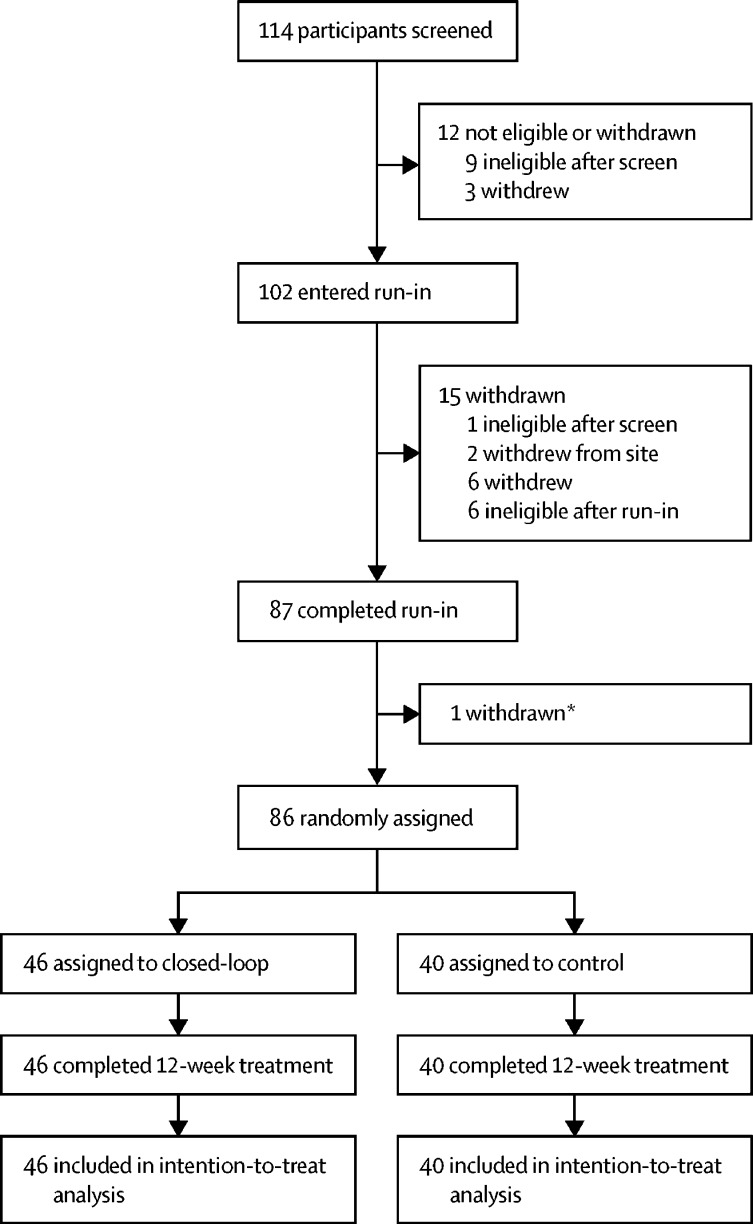
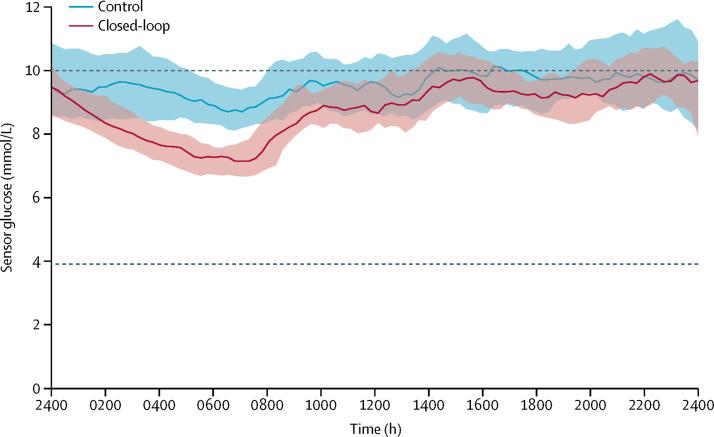
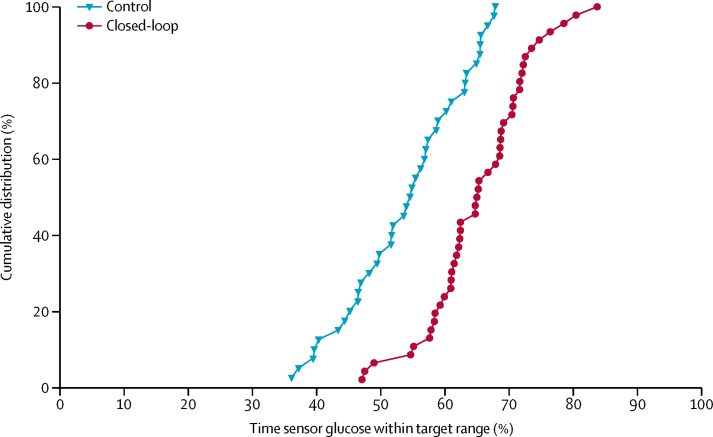
Verification
Claims the paper makes
The claims and statistics of this paper haven’t been checked yet.
Free: it reads the open-access text and checks the first 5 claims that cite a source we can check. Create a free account to check every claim.
Claims other papers make about this one
Each is checked against this paper’s own text: does it say what the citing paper says it does?
The source backs part of the claim, not all of it — or backs it for a different population, condition or comparison.
In the citing paper
“The use of SAP therapy has been shown to improve not just A1C or hypoglycemia but also glycemic variability and albuminuria1185–1187 when compared with MDI.”
From American Association of Clinical Endocrinology Clinical Practice Guideline: Developing a Diabetes Mellitus Comprehensive Care Plan-2022 Update. (2022) · cites this paper as [1187]
Experimental — accuracy not yet measuredThe source backs part of the claim, not all of it — or backs it for a different population, condition or comparison.
In the citing paper
“All currently FDA-approved AID systems were tested for safety and efficacy in their pivotal trials in children and adults with type 1 diabetes (194)(195)(196)(197)(198)(199)(200)(201)(202)(203)(204)(205)(206).”
From 7. Diabetes Technology: Standards of Care in Diabetes—2025 (2025) · cites this paper as [196]
Experimental — accuracy not yet measuredThe source backs part of the claim, not all of it — or backs it for a different population, condition or comparison.
In the citing paper
“Hybrid Closed Loop systems that might decrease the risk of DKA were not standard features of CSII treatment at the time of study inclusion. 22 , 23 , 26”
From Insulin pump therapy is associated with higher rates of mild diabetic ketoacidosis compared to injection therapy: A 2‐year Swedish national survey of children and adolescents with type 1 diabetes (2022) · cites this paper as [26]
Experimental — accuracy not yet measured
Self-check
Percentages, sums and reported differences re-computed from the paper’s own numbers.
The self-check needs the paper’s full text.
Citations
Cites
Unwin, N. C. (2006) · Cited by 1,661
Estimates of Location Based on Rank Tests
Hodges, J. L., & Lehmann, E. L. (1963) · The Annals of Mathematical Statistics · doi:10.1214/aoms/1177704172 · Cited by 1,260
Miller, K. M., Foster, N. C., Beck, R. W., Bergenstal, R. M., DuBose, S. N., DiMeglio, L. A., Maahs, D. M., & Tamborlane, W. V. (2015) · Diabetes Care · doi:10.2337/dc15-0078 · Cited by 1,254
Self-citationRisk of hypoglycaemia in types 1 and 2 diabetes: Effects of treatment modalities and their duration
UK Hypoglycaemia Study Group (2007) · Diabetologia · doi:10.1007/s00125-007-0599-y · Cited by 825
Gold, A. E., Macleod, K. M., & Frier, B. M. (1994) · Diabetes Care · doi:10.2337/diacare.17.7.697 · Cited by 810
Threshold-based insulin-pump interruption for reduction of hypoglycemia
Bergenstal, R. M., Klonoff, D. C., Garg, S. K., Bode, B. W., Meredith, M., Slover, R. H., Ahmann, A. J., Welsh, J. B., Lee, S. W., & Kaufman, F. R. (2013) · New England Journal of Medicine · doi:10.1056/nejmoa1303576 · Cited by 652
Self-citationSafety of a hybrid closed-loop insulin delivery system in patients with type 1 diabetes
Bergenstal, R. M., Garg, S., Weinzimer, S. A., Buckingham, B. A., Bode, B. W., Tamborlane, W. V., & Kaufman, F. R. (2016) · JAMA · doi:10.1001/jama.2016.11708 · Cited by 644
Self-citationGarg, S. K., Weinzimer, S. A., Tamborlane, W. V., Buckingham, B. A., Bode, B. W., Bailey, T. S., Brazg, R. L., Ilany, J., Slover, R. H., Anderson, S. M., et al. (2017) · Diabetes Technology & Therapeutics · doi:10.1089/dia.2016.0421 · Cited by 585
Self-citationWeisman, A., Bai, J.-W., Cardinez, M., Kramer, C. K., & Perkins, B. A. (2017) · The Lancet Diabetes & Endocrinology · doi:10.1016/s2213-8587(17)30167-5 · Cited by 463
Home Use of an Artificial Beta Cell in Type 1 Diabetes
Thabit, H., Tauschmann, M., Allen, J. M., Leelarathna, L., Hartnell, S., Wilinska, M. E., Acerini, C. L., Dellweg, S., Benesch, C., Heinemann, L., et al. (2015) · New England Journal of Medicine · doi:10.1056/nejmoa1509351 · Cited by 450
Self-citation
Cited by
Items 101–200 of 440
Emerging Diabetes Technologies: Continuous Glucose Monitors/Artificial Pancreases
ALMURASHI, A. M., Rodriguez, E., & Garg, S. K. (2023) · Journal of the Indian Institute of Science · doi:10.1007/s41745-022-00348-3 · Cited by 67
Takahashi, H., Sakata, N., Yoshimatsu, G., Hasegawa, S., & Kodama, S. (2019) · Journal of Clinical Medicine · doi:10.3390/jcm8020249 · Cited by 43
“to properly and easily control their blood glucose levels [8,9].”
BackgroundBionic Pancreas Research Group, Beck, R. W., Russell, S. J., Damiano, E. R., El-Khatib, F. H., Ruedy, K. J., Balliro, C., Li, Z., & Calhoun, P. (2022) · Diabetes Technology & Therapeutics · doi:10.1089/dia.2022.0167 · Cited by 40
Self-citationBoucsein, A., Watson, A. S., Frewen, C. M., Sanders, O. J., Haszard, J. J., Jones, S. D., Milford-Hughes, P. J., de Bock, M. I., & Wheeler, B. J. (2023) · Diabetes Care · doi:10.2337/dc22-1971 · Cited by 40
Pease, A., Zomer, E., Liew, D., Earnest, A., Soldatos, G., Ademi, Z., & Zoungas, S. (2020) · Diabetes Technology & Therapeutics · doi:10.1089/dia.2020.0064 · Cited by 39
Practical implementation of automated closed-loop insulin delivery: A French position statement
Tubiana‐Rufi, N., Schaepelynck, P., Franc, S., Chaillous, L., Joubert, M., Renard, É., Reznik, Y., Abettan, C., Bismuth, É., Beltrand, J., et al. (2020) · Diabetes & Metabolism · doi:10.1016/j.diabet.2020.10.004 · Cited by 44
O'Donnell, S., Lewis, D., Marchante Fernández, M., Wäldchen, M., Cleal, B., Skinner, T., Raile, K., Tappe, A., Ubben, T., Willaing, I., et al. (2019) · JMIR Research Protocols · doi:10.2196/15368 · Cited by 38
“Closed-loop systems designed for commercial use have been shown to be safe and effective in reducing hyperglycemia and hypoglycemia in people with diabetes (PwD) of all age groups [4-8], and these systems are therefore seen as the gold standard of future diabetes therapy [9].”
BackgroundAuzanneau, M., Rosenbauer, J., Maier, W., von Sengbusch, S., Hamann, J., Kapellen, T. M., Freckmann, G., Schmidt, S., Lilienthal, E., & Holl, R. W. (2021) · Journal of Diabetes Science and Technology · doi:10.1177/19322968211028608 · Cited by 43
Janež, A., Battelino, T., Klupa, T., Kocsis, G., Kuricova, M., Lalic, N. M., Stoian, A. P., Prázný, M., Rahelić, D., Šoupal, J., et al. (2021) · Diabetes Therapy · doi:10.1007/s13300-021-01160-5 · Cited by 48
Automated Insulin Delivery with SGLT2i Combination Therapy in Type 1 Diabetes
Garcia‐Tirado, J., Farhy, L. S., Nass, R. M., Kollar, L. L., Oliveri, M. C., Basu, R., Kovatchev, B. P., & Basu, A. (2022) · Diabetes Technology & Therapeutics · doi:10.1089/dia.2021.0542 · Cited by 39
Benhamou, P., Adenis, A., Lebbad, H., Tourki, Y., Heredia, M., Gehr, B., Franc, S., & Charpentier, G. (2023) · Diabetes, Obesity and Metabolism · doi:10.1111/dom.15008 · Cited by 35
Sick day management in children and adolescents with diabetes
Phelan, H., Hanås, R., Hofer, S. E., James, S., Landry, A., Lee, W., Wood, J., & Ethel Codner, D. (2022) · Pediatric Diabetes · doi:10.1111/pedi.13415 · Cited by 47
“They have the potential to substantially increase time in range and improve metabolic control.(57,58) Several systems incorporate customizable glucose targets and user-initiated modes to reduce or intensify insulin delivery in special situations.”
Visser, H. S. D., Waraich, S., Chhabra, M., Yamamoto, J. M., Zenlea, I. S., Askin, N., Rabbani, R., McGavock, J., TEAM Trial Patient Coresearchers, Greenberg, D. T., et al. (2025) · Archives of Pediatrics and Adolescent Medicine · doi:10.1001/jamapediatrics.2025.2740 · Cited by 44
PAULEY, M. E., Tommerdahl, K. L., Snell‐Bergeon, J. K., & Forlenza, G. P. (2022) · Current Cardiology Reports · doi:10.1007/s11886-022-01799-x · Cited by 46
Automated Insulin Delivery for Young People with Type 1 Diabetes and Elevated A1c
Boucsein, A., Zhou, Y., Michaels, V. R., Haszard, J. J., Jefferies, C., Wiltshire, E. J., Paul, R. G., Parry‐Strong, A., Pasha, M., Petrovski, G., et al. (2024) · NEJM Evidence · doi:10.1056/evidoa2400185 · Cited by 39
Benhamou, P., Adenis, A., Tourki, Y., Pou, S., Madrolle, S., Franc, S., Kariyawasam, D., Beltrand, J., Klonoff, D. C., & Charpentier, G. (2022) · Journal of Diabetes Science and Technology · doi:10.1177/19322968221128565 · Cited by 33
Stahl‐Pehe, A., Mashhadi, N. S., Wirth, M., Schlesinger, S., Kuß, O., Holl, R. W., Bächle, C., Warz, K.-D., Bürger-Büsing, J., Spörkel, O., et al. (2025) · EClinicalMedicine · doi:10.1016/j.eclinm.2025.103190 · Cited by 42
Artificial Intelligence Algorithms for Treatment of Diabetes
Rashid, M. M., Askari, M. R., Chen, C., Liang, Y., Shu, K., & Çınar, A. (2022) · Algorithms · doi:10.3390/a15090299 · Cited by 42
Automated Insulin Delivery in Adults
Boughton, C. K., & Hovorka, R. (2019) · Endocrinology and Metabolism Clinics of North America · doi:10.1016/j.ecl.2019.10.007 · Cited by 34
Self-citationJacobsen, L. M., Sherr, J. L., Considine, E. G., Chen, A. X., Peeling, S., Hulsmans, M., Charleer, S., Urazbayeva, M., Tosur, M., ALAMARIE, S. A., et al. (2023) · Communications Medicine · doi:10.1038/s43856-023-00358-x · Cited by 42
Haidar, A., Legault, L., Raffray, M., Gouchie‐Provencher, N., Jacobs, P. G., Fathi, A. E., Rutkowski, J., Messier, V., & RABASA-LHORET, R. P. R. (2020) · Diabetes Technology & Therapeutics · doi:10.1089/dia.2020.0365 · Cited by 34
“The two large studies of the University of Cambridge and the University of Virginia algorithms included a review of data and adjustments of therapy parameters after 2 weeks of system usage.(8,10) Moreover, it has been reported that patients”
MethodThe automated pancreas: A review of technologies and clinical practice
Biester, T., Tauschmann, M., Chobot, A. P., Kordonouri, O., Danne, T., Kapellen, T. M., & Dovč, K. (2021) · Diabetes Obesity and Metabolism · doi:10.1111/dom.14576 · Cited by 34
“Because diabetes influences not only individuals' lives but also those of parents and other caregivers, in children, the need not only for bet- ter control but also to reduce the overall burden may be achieved by an AID.”
BackgroundInfluentialSelf-citationAsgharzadeh, A., Patel, M., Connock, M. J., Damery, S. L., Ghosh, I., Jordan, M., Freeman, K., Brown, A., Court, R. A., Baldwin, S., et al. (2024) · Health Technology Assessment · doi:10.3310/jypl3536 · Cited by 38
Psychosocial Aspects of Diabetes Technology Use
Papadakis, J. L., Anderson, L. M., Garza, K. P., Feldman, M. A., Shapiro, J. B., Evans, M. A., Thompson, L. G., & Weissberg-Benchell, J. A. (2019) · Endocrinology and Metabolism Clinics of North America · doi:10.1016/j.ecl.2019.10.004 · Cited by 30
Self-citationBoughton, C. K., & Hovorka, R. (2020) · Current Opinion in Organ Transplantation · doi:10.1097/mot.0000000000000786 · Cited by 38
Self-citationElbarbary, N. S., & Ismail, E. A. R. (2022) · Diabetes Research and Clinical Practice · doi:10.1016/j.diabres.2022.110045 · Cited by 31
Hypoglycaemia in type 1 diabetes mellitus: risks and practical prevention strategies
Kaur, J., & Seaquist, E. R. (2022) · Nature Reviews Endocrinology · doi:10.1038/s41574-022-00762-8 · Cited by 38
Bassi, M., Franzone, D., Dufour, F., Strati, M. F., Scalas, M., Tantari, G., Aloi, C., Salina, A., d’Annunzio, G., Maghnie, M., et al. (2023) · Life · doi:10.3390/life13030783 · Cited by 47
“4% of glycated hemoglobin was observed in the HCL group and glycemic outcomes were better in the HCL group [33].”
BackgroundRidder, F. D., den Brinker, M., & Block, C. E. M. D. (2019) · Therapeutic Advances in Endocrinology and Metabolism · doi:10.1177/2042018819871903 · Cited by 33
Paldus, B., Morrison, D., Lee, M., Zaharieva, D. P., Riddell, M. C., & O'Neal, D. N. (2022) · Journal of Diabetes Science and Technology · doi:10.1177/19322968221088327 · Cited by 38
Martin, L. D., Hoagland, M. A., Rhodes, E. T., Wolfsdorf, J. I., & Hamrick, J. L. (2019) · Anesthesia & Analgesia · doi:10.1213/ane.0000000000004491 · Cited by 44
Michaels, V. R., Boucsein, A., Watson, A. S., Frewen, C. M., Sanders, O. J., Haszard, J. J., Jones, S., Milford-Hughes, P. J., de Bock, M. I., & Wheeler, B. J. (2024) · Diabetes Technology & Therapeutics · doi:10.1089/dia.2023.0334 · Cited by 28
“8,11 –11 Importantly, ongoing HbA 1c improvement of 2.5 percentage-points sustained over 12 months is the largest AHCL gain to date reported over a longer period of AHCL use, with traditional HbA 1c improvements in clinical trials of between 0.4 and 1.5 percentage-points (5–14 mmol/mol).”
InfluentialDe Meulemeester, J., Keymeulen, B., De Block, C., Van Huffel, L., Taes, Y., Ballaux, D., Spincemaille, K., Lapauw, B., Vanhaverbeke, G., Lowyck, I., et al. (2025) · Diabetologia · doi:10.1007/s00125-025-06366-x · Cited by 27
“Comparable results were reported in RCTs by Tauschmann et al (2.1 kg) [3] and Choudhary et al (2.0 kg) [10] among people with type 1 diabetes with suboptimal glucose management.”
InfluentialClosed-loop systems: recent advancements and lived experiences
Kadiyala, N., Hovorka, R., & Boughton, C. K. (2024) · Expert Review of Medical Devices · doi:10.1080/17434440.2024.2406901 · Cited by 33
Self-citationGianini, A., Suklan, J., Skela‐Savič, B., Klemenčič, S., Battelino, T., Dovč, K., & Bratina, N. (2022) · Frontiers in Endocrinology · doi:10.3389/fendo.2022.967725 · Cited by 27
Kang, S. L., Hwang, Y. N., Kwon, J. Y., & Kim, S. M. (2022) · Diabetology & Metabolic Syndrome · doi:10.1186/s13098-022-00962-2 · Cited by 32
“[58] 2018 86 Medtronic hybrid closed loop system MPC SAP 24 h 12 weeks”
BackgroundHybrid Closed Loop Using a Do-It-Yourself Artificial Pancreas System in Adults With Type 1 Diabetes
Nanayakkara, N., Sharifi, A., Burren, D., Elghattis, Y., Jayarathna, D. K., & Cohen, N. D. (2023) · Journal of Diabetes Science and Technology · doi:10.1177/19322968231153882 · Cited by 32
“22,24,28 The rate of technical problems was very low, as evidenced by the high percentage of time in closed-loop mode during the AAPS arm of the study.”
Leelarathna, L., Beck, R. W., Bergenstal, R. M., Thabit, H., & Hovorka, R. (2019) · Diabetes Care · doi:10.2337/dc18-2479 · Cited by 28
Self-citationHybrid closed-loop insulin pump technology can be safely used in the inpatient setting
Pelkey, M. N., Boyle, M. E., Long, A., Castro, J. C., Cook, C. B., & Thompson, B. (2023) · Endocrine Practice · doi:10.1016/j.eprac.2022.11.006 · Cited by 25
Use of diabetes technology in children
Schoelwer, M. J., DeBoer, M. D., & Breton, M. D. (2024) · Diabetologia · doi:10.1007/s00125-024-06218-0 · Cited by 34
“Parents of children using AID report a reduction Tandem Control-IQ [23, 24] Omnipod 5 [25] Medtronic 780G [26] iLet [27] CamAPS FX [22, 28] Date in the burden of diabetes, reduced fear of hypoglycaemia and improved quality of sleep in multiple studies [39–42].”
BackgroundRecent advances in closed-loop insulin delivery
Ware, J., & Hovorka, R. (2021) · Metabolism · doi:10.1016/j.metabol.2021.154953 · Cited by 31
Self-citationMewes, D., Wäldchen, M., Knoll, C., Raile, K., & Braune, K. (2022) · Journal of Diabetes Science and Technology · doi:10.1177/19322968221080199 · Cited by 31
Coutant, R., Bismuth, É., Bonnemaison, É., Dalla‐Vale, F., Morinais, P., Perrard, M., Trely, J., Faure, N., Bouhours‐Nouet, N., Levaillant, L., et al. (2023) · Diabetes Technology & Therapeutics · doi:10.1089/dia.2022.0518 · Cited by 26
“…TIR at enrollment, 17 and this was also demonstrated in the study by Schoelwer et al. 30 Similarly, in the study by Tauschmann et al. in children and adults with suboptimally controlled diabetes, 13 those with the higher HbA1c and lower TIR at enrollment had the greatest improvement with HCL.”
Conway, R. B. N., Gonzalez, A. G., Shah, V. N., Rasmussen, C. G., Aktürk, H. K., Pyle, L. L., Forlenza, G. P., Alonso, G. T., & Snell‐Bergeon, J. K. (2023) · Diabetes Metabolic Syndrome and Obesity · doi:10.2147/dmso.s416192 · Cited by 27
Self-citationLepore, G., Scaranna, C., Corsi, A., Dodesini, A. R., & Trevisan, R. (2020) · Diabetes Technology & Therapeutics · doi:10.1089/dia.2019.0302 · Cited by 24
Stanger, C., Kowatsch, T., Xie, H., Nahum-Shani, I. B., Lim-Liberty, F., Anderson, M. A. B., Santhanam, P., Kaden, S. J., & Rosenberg, B. (2021) · JMIR Research Protocols · doi:10.2196/27109 · Cited by 22
Nørgaard, K., Ranjan, A. G., Laugesen, C., Tidemand, K. G., Green, A., Selmer, C., Svensson, J., Andersen, H. U., Vistisen, D., & Carstensen, B. (2023) · Diabetes Care · doi:10.2337/dc23-1137 · Cited by 31
A clinical review of the t:slim X2 insulin pump
Berget, C., Lange, S. L., Messer, L. H., & Forlenza, G. P. (2020) · Expert Opinion on Drug Delivery · doi:10.1080/17425247.2020.1814734 · Cited by 27
Abraham, M. B., Smith, G. J., Dart, J., Clarke, A. D., Bebbington, K. R., Fairchild, J. M., Ambler, G. R., Cameron, F. J., Davis, E. A., & Jones, T. W. (2024) · Diabetes Care · doi:10.2337/dc24-0276 · Cited by 30
The DIY artificial pancreas system: an ethical dilemma for doctors
Shaw, D., Crabtree, T. S. J., Hammond, P. J., McLay, A., & Wilmot, E. G. (2020) · Diabetic Medicine · doi:10.1111/dme.14270 · Cited by 23
Engineered Biomaterials for Enhanced Function of Insulin‐Secreting β‐Cell Organoids
Hunckler, M. D., & García, A. J. (2020) · Advanced Functional Materials · doi:10.1002/adfm.202000134 · Cited by 25
The closed‐loop artificial pancreas in 2020
Fabris, C., & Kovatchev, B. P. (2020) · Artificial Organs · doi:10.1111/aor.13704 · Cited by 24
Rankin, D., Kimbell, B., Allen, J. M., Besser, R. E. J., Boughton, C. K., Campbell, F., Elleri, D., Fuchs, J., Ghatak, A., Randell, T. L., et al. (2021) · Journal of Diabetes Science and Technology · doi:10.1177/1932296821994201 · Cited by 30
Self-citationDo‐it‐yourself closed‐loop systems for people living with type 1 diabetes
Dowling, L., Wilmot, E. G., & Choudhary, P. (2020) · Diabetic Medicine · doi:10.1111/dme.14321 · Cited by 23
Ridder, F. D., den Brinker, M., & Block, C. E. M. D. (2019) · Therapeutic Advances in Endocrinology and Metabolism · doi:10.1177/2042018819865399 · Cited by 23
Ahmed, S. H., Ewins, D. L., Bridges, J., Timmis, A., Payne, N., Mooney, C., & MacGregor, C. (2020) · Advances in Therapy · doi:10.1007/s12325-020-01431-w · Cited by 28
“A further landmark study established its safety and efficacy across the age spectrum to patients as young as 6 years [4].”
BackgroundWersäll, J. H., Adolfsson, P., Forsander, G., & Hanas, R. (2022) · Pediatric Diabetes · doi:10.1111/pedi.13377 · Cited by 21
“Hybrid Closed Loop systems that might decrease the risk of DKA were not standard features of CSII treatment at the time of study inclusion.(22,23,26) However, an interrupted insulin delivery will cause ketosis and risk of progression to DKA regardless of which insulin delivery mode is used.”
BackgroundLevy, C. J., Bailey, R. J., Laffel, L. M., Forlenza, G. P., DiMeglio, L. A., Hughes, M. S., Brown, S. A., Aleppo, G., Bhargava, A., Shah, V. N., et al. (2024) · Diabetes Technology & Therapeutics · doi:10.1089/dia.2024.0048 · Cited by 22
Self-citationReal-World Efficacy of the Hybrid Closed-Loop System
Usoh, C. O., Johnson, C. P., Speiser, J. L., Bundy, R. A., Dharod, A., & Aloi, J. (2021) · Journal of Diabetes Science and Technology · doi:10.1177/1932296820985103 · Cited by 23
Siamashvili, M., Davis, H. A., & Davis, S. N. (2021) · Expert Review of Endocrinology & Metabolism · doi:10.1080/17446651.2021.1979391 · Cited by 28
“in 86 T1DM participants who sixyears old and above [64].”
BackgroundRenard, É., Tubiana‐Rufi, N., Bonnemaison, É., Coutant, R., Dalla‐Vale, F., Bismuth, É., Faure, N., Bouhours‐Nouet, N., Farret, A., Storey, C., et al. (2021) · Diabetes Obesity and Metabolism · doi:10.1111/dom.14605 · Cited by 25
“The Cambridge group reported significant improvements of percentage time in the 70-180 mg/dL target range (TIR) and percentage time below range (TBR) in a 12-week randomized control study with an AID system, compared with a standalone sensor-augmented pump without low-glucose suspend, in a subcohort of 23 children age…”
MethodZone-MPC Automated Insulin Delivery Algorithm Tuned for Pregnancy Complicated by Type 1 Diabetes
Özaslan, B., Deshpande, S., Doyle, F. J., & Dassau, E. (2022) · Frontiers in Endocrinology · doi:10.3389/fendo.2021.768639 · Cited by 24
The Evolution of Diabetes Technology – Options Toward Personalized Care
Zahid, M., Dowlatshahi, S., Kansara, A., & Sadhu, A. (2023) · Endocrine Practice · doi:10.1016/j.eprac.2023.04.007 · Cited by 24
Development and Future of Automated Insulin Delivery (AID) Systems
Garg, S. K., & MCVEAN, J. J. F. (2024) · Diabetes Technology & Therapeutics · doi:10.1089/dia.2023.0467 · Cited by 28
“53 The CamAPS FX system is the only one that is approved for use during pregnancy in Europe and Australia as it allows lower pregnancy-specific targets (AiDAPT trial).”
Schiaffini, R., Lumaca, A., Martino, M., Rapini, N., Deodati, A., Amodeo, M. E., Ciampalini, P., Matteoli, M. C., Pampanini, V., & Cianfarani, S. (2024) · Diabetes/Metabolism Research and Reviews · doi:10.1002/dmrr.3826 · Cited by 23
Neuromodulation of metabolic functions: from pharmaceuticals to bioelectronics to biocircuits
Seicol, B. J., Bejarano, S., Behnke, N., & Guo, L. (2019) · Journal of Biological Engineering · doi:10.1186/s13036-019-0194-z · Cited by 24
Type 1 diabetes: from the dream of automated insulin delivery to a fully artificial pancreas
Phillip, M., Kowalski, A. J., & Battelino, T. (2024) · Nature Medicine · doi:10.1038/d41591-024-00013-5 · Cited by 20
Patel, R., Crabtree, T. S. J., Taylor, N., Langeland, L., Gazis, A., Mendis, B., Wilmot, E. G., & IDRIS, I. R. (2022) · Diabetic Medicine · doi:10.1111/dme.14793 · Cited by 23
Closed-Loop and Artificial Intelligence–Based Decision Support Systems
Nimri, R., Phillip, M., & Kovatchev, B. P. (2023) · Diabetes Technology & Therapeutics · doi:10.1089/dia.2023.2505 · Cited by 22
Nattero‐Chávez, L., Pascual, E. L., de la Villa, E. D. L. C., Cebada, A. B., Ruiz, T., Tobar, A. Q., Lorenzo, M., Sánchez, C., Izquierdo, A., Luque‐Ramírez, M., et al. (2023) · Diabetes Research and Clinical Practice · doi:10.1016/j.diabres.2023.110627 · Cited by 19
Eviz, E., Mutlu, G. Y., Karakus, K. E., Can, E., Gökçe, T., Muradoğlu, S., & Hatun, Ş. (2023) · Diabetes Technology & Therapeutics · doi:10.1089/dia.2023.0112 · Cited by 19
A simple modeling framework for prediction in the human glucose–insulin system
Sirlanci, M., Levine, M. E., Wang, C. C. L., Albers, D. J., & Stuart, A. M. (2023) · Chaos An Interdisciplinary Journal of Nonlinear Science · doi:10.1063/5.0146808 · Cited by 25
Heinemann, L., & Lange, K. (2019) · Journal of Diabetes Science and Technology · doi:10.1177/1932296819889641 · Cited by 21
Leelarathna, L., Thabit, H., Wilinska, M. E., Bally, L., Mader, J. K., Arnolds, S., Benesch, C., Pieber, T. R., Shah, V. N., Carlson, A. L., et al. (2020) · Diabetes Care · doi:10.2337/dc19-2041 · Cited by 22
Self-citationPease, A., Andrikopoulos, S., Abraham, M. B., Craig, M. E., Fenton, B., Overland, J., Price, S., Simmons, D. S., & Ross, G. P. (2021) · The Medical Journal of Australia · doi:10.5694/mja2.51118 · Cited by 20
Evidence from clinical trials on high-risk medical devices in children: a scoping review
Guerlich, K., Patro-Gołąb, B., Dworakowski, P., Fraser, A. G., Kammermeier, M., Melvin, T., & Koletzko, B. V. (2023) · Pediatric Research · doi:10.1038/s41390-023-02819-4 · Cited by 17
Bally, L., Herzig, D., Ruan, Y., Wilinska, M. E., Semmo, M., Vogt, A. P., Wertli, M. M., Vogt, B., Stettler, C., & Hovorka, R. (2019) · Diabetes Obesity and Metabolism · doi:10.1111/dom.13861 · Cited by 17
“Closed-loop insulin delivery is an emerging therapeutic modality that titrates insulin in response to sensor glucose levels and has been shown to improve glucose control across populations and ages of subjects with type 1 to type 2 diabetes.(6-10) In a post hoc analysis of an outpatient hybrid closed-loop study, a sho…”
BackgroundSelf-citationBoughton, C. K., Allen, J. M., Tauschmann, M., Hartnell, S., Wilinska, M. E., Musolino, G., Acerini, C. L., Dunger, D. B., Campbell, F., Ghatak, A., et al. (2020) · BMJ Open · doi:10.1136/bmjopen-2019-033500 · Cited by 18
Self-citationInsulin Pump Therapy and Continuous Glucose Monitoring
Schütz-Fuhrmann, I., Rami-Merhar, B. M., Fröhlich-Reiterer, E. E., Hofer, S. E., Tauschmann, M., Mader, J. K., Resl, M., Kautzky‐Willer, A., Winhofer-Stöckl, Y., Laimer, M., et al. (2009) · Oxford University Press eBooks · doi:10.1093/med/9780199568604.001.0001 · Cited by 19
Self-citationMolfetta, S. D., Gioia, L. D., Caruso, I., Caporusso, M., Trerotoli, P., Natalicchio, A., Perrini, S., Laviola, L., & Giorgino, F. (2025) · Diabetes Obesity and Metabolism · doi:10.1111/dom.70150 · Cited by 24
Bally, L., Thabit, H., Tauschmann, M., Allen, J. M., Hartnell, S., Wilinska, M. E., Exall, J., Huegel, V., Sibayan, J., Borgman, S. K., et al. (2017) · BMJ Open · doi:10.1136/bmjopen-2017-016738 · Cited by 17
Self-citationSenior, P. A., Lam, A. P., Farnsworth, K., Perkins, B. A., & RABASA-LHORET, R. P. R. (2020) · Current Diabetes Reports · doi:10.1007/s11892-020-01339-3 · Cited by 18
Galindo, R. J., Aleppo, G., Parkin, C. G., Baidal, D. A., Carlson, A. L., Cengiz, E., Forlenza, G. P., Kruger, D. F., Levy, C. J., McGill, J. B., et al. (2022) · Journal of Diabetes Science and Technology · doi:10.1177/19322968221144052 · Cited by 19
Self-citationAlfadli, S. F., Alotaibi, Y. S., Aqdi, M. J., Almozan, L. A., Alzubaidi, Z. B., Altemani, H. A., Almutairi, S. D., Alabdullah, H. A., Almehmadi, A. A., Alanzi, A. L., et al. (2025) · Metabolism Open · doi:10.1016/j.metop.2025.100382 · Cited by 16
Fox, D. S., Ware, J., Boughton, C. K., Allen, J. M., Wilinska, M. E., Tauschmann, M., Denvir, L., Thankamony, A., Campbell, F., Wadwa, R. P., et al. (2024) · Journal of Diabetes Science and Technology · doi:10.1177/19322968241231950 · Cited by 18
Self-citationCamerlingo, N., Vettoretti, M., Sparacino, G., Facchinetti, A., Mader, J. K., Choudhary, P., & Favero, S. D. (2021) · Diabetes Obesity and Metabolism · doi:10.1111/dom.14483 · Cited by 17
Closed‐loop technology: a practical guide
Hartnell, S., Fuchs, J., Boughton, C. K., & Hovorka, R. (2021) · Practical Diabetes · doi:10.1002/pdi.2350 · Cited by 22
Self-citationAmigó, J., Ortiz-Zúñiga, Á., de Urbina, A. M. O., Sánchez, M., Dos-Santos, M., Abad, M., Cuadra, F., Simó, R., Hernández, C., & Simó-Servat, O. (2023) · Diabetes Research and Clinical Practice · doi:10.1016/j.diabres.2023.110730 · Cited by 15
New advances in insulin products
Rajpoot, K., Tekade, M., Sharma, M. C., Molugulu, N., & Tekade, R. K. (2020) · Elsevier eBooks · doi:10.1016/b978-0-12-814455-8.00014-1 · Cited by 21
Estremera, E., Cabrera, A., Beneyto, A., & Vehí, J. (2022) · Journal of Biomedical Informatics · doi:10.1016/j.jbi.2022.104141 · Cited by 22
Mameli, C., Smylie, G. M., Galati, A., Rapone, B., Cardona‐Hernandez, R., Zuccotti, G., & Delvecchio, M. (2023) · European Journal of Pediatrics · doi:10.1007/s00431-023-04833-4 · Cited by 19
“Studies comparing the CamAPS FX system to SAP showed more favourable outcomes in AHCL users across all CGM metrics, with an increase in TIR of 11% in the 12-week study in 86 children, adolescents and adults older than 6 years (HbA1c > 58 mmol/mol) [45] and of 15% in the 6-month study in 133 patients aged 6–18 years (H…”
Zhang, P., Li, C., Huang, T., Bai, Y., Quan, P., Li, W., Zhang, Z., Zhang, F., Liu, Z., Wan, B., et al. (2021) · Nano Letters · doi:10.1021/acs.nanolett.1c02438 · Cited by 15
Chico, A., Navas de Solís, S., Lainez, M., Rius, F., & Cuesta, M. (2023) · Diabetes Technology & Therapeutics · doi:10.1089/dia.2022.0449 · Cited by 14
Benioudakis, E. S., Karlafti, E., Kalaitzaki, A. E., Kaiafa, G. D., Savopoulos, C. G., & Didangelos, T. (2021) · Current Diabetes Reviews · doi:10.2174/1573399818666211103163208 · Cited by 17
Commercial hybrid closed-loop systems available for a patient with type 1 diabetes in 2022
Seget, S., Tekielak, A., Rusak, E., & Jarosz-Chobot, P. A. (2023) · Pediatric Endocrinology Diabetes and Metabolism · doi:10.5114/pedm.2023.126359 · Cited by 19
Samuel, P., Khan, N., Klein, G., Skobkarev, S., Mammon, B., Fournier, M., Hawke, K., Weissinger, A., & Elliott, T. G. (2023) · Canadian Journal of Diabetes · doi:10.1016/j.jcjd.2023.09.003 · Cited by 16
Feng, S., Zhang, Y., Hou, C., Liu, Y., Gao, Y., Song, Y., & Luo, J. S. (2024) · Science Advances · doi:10.1126/sciadv.adn8695 · Cited by 14
“Unfortunately, routine insulin and pramlintide delivery methods are inadequate for reducing glycemic fluctuations and preventing complications in diabetic patients ( 25 – 27 ).”
Automated Insulin Delivery: The Artificial Pancreas Technical Challenges
Hernando, M. E., García-Sáez, G., Aguilera, E. J. G., Gandía, C. P., & Rodríguez-Herrero, A. (2019) · American Journal of Therapeutics · doi:10.1097/mjt.0000000000001086 · Cited by 17
Petrovski, G., Khalaf, F. A., Campbell, J., Day, E., Almajaly, D., Hussain, K., Pasha, M., Umer, F., Hamdan, M., & Khalifa, A. (2022) · Acta Diabetologica · doi:10.1007/s00592-022-01851-w · Cited by 15
“AHCL MiniMed 780G system as a new AID device improves glycemic control by decreasing HbA1c and increasing TIR without compromising hypoglycemic events in children and adolescents with T1D, previously treated with MDI without prior pump experience.”
BackgroundInfluentialClosed-loop insulin delivery systems in children and adolescents with type 1 diabetes
Dovč, K., & Battelino, T. (2020) · Expert Opinion on Drug Delivery · doi:10.1080/17425247.2020.1713747 · Cited by 15
“while there are several other devices extensively evaluated at home, largely unsupervised, for longer periods [59,97,98].”
Background
Metadata
- Authors
- Tauschmann, M., Thabit, H., Bally, L., Allen, J. M., Hartnell, S., Wilinska, M. E., Ruan, Y., Sibayan, J., Kollman, C., Cheng, P., Beck, R. W., Acerini, C. L., Evans, M. L., Dunger, D. B., Elleri, D., Campbell, F., Bergenstal, R. M., Criego, A., Shah, V. N., Leelarathna, L., Hovorka, R., Alvarado, B., Ashanti, C., Baggott, J., Balakrishnan, K., Barber, N., Bath, L., Beasley, S., Beatson, C., Borgman, S., Bradshaw, S., Bugielski, B., Carlson, A., Collett, E., Curtis, J., Demmitt, J., Donahue, D., Exall, J., Forshaw, R., Hayes, J., Heath, S., Hellmann, A., Huegel, V, Hyatt, J., James, L., Joseph, H., Joshee, P., Konerza, W., Lum, J., Madden, M., Martens, T., McCarthy, C., McDonald, M., Mikityuk, V, Miles, H., Miller, D., Mubita, W., Murphy, C., Olson, B., Pad, R., Patibandla, N., Riding, K., Shaju, A., Thomas, L., Thomson, J., White, D., Yau, S., & Yong, J.
- Affiliations
- University of Cambridge (GB)
- Cambridge University Hospitals NHS Foundation Trust (GB)
- Jaeb Center for Health Research (US)
- Royal Hospital for Sick Children (GB)
- Leeds Teaching Hospitals NHS Trust (GB)
- University of Colorado Anschutz (US)
- University of Manchester (GB)
- Corresponding author
- Hovorka, Roman
- ORCID
- Tauschmann, Martin
- Thabit, Hood
- Bally, Lia
- Hartnell, Sara
- Wilinska, Malgorzata E
- Ruan, Yue
- Sibayan, Judy
- Kollman, Craig
- Cheng, Peiyao
- Beck, Roy W
- Acerini, Carlo L
- Evans, Mark L
- Dunger, David B
- Campbell, Fiona
- Bergenstal, Richard M
- Criego, Amy
- Shah, Viral N
- Leelarathna, Lalantha
- Hovorka, Roman
- Beatson, C
- Forshaw, R
- Lum, J
- Martens, T
- Miles, H
- Mubita, W
- Venue
- The Lancet
- Publisher
- Elsevier BV
- Published
- 2018-10
- Volume
- 392
- Issue
- 10155
- Pages
- 1321-1329
- ISSN
- 0099-5355 (ISSN-L)
- 0140-6736
- PMC
- PMC6182127
- OpenAlex
- W2890424595
- Semantic Scholar
- 2b3d55b3718484b4ce018d80a4d5c3aad85b2559
- Cited by
- 440
- References
- 22
- Citations by year
- 2026: 29 · 2025: 48 · 2024: 58 · 2023: 63 · 2022: 66 · 2021: 65 · 2020: 58 · 2019: 43 · 2018: 7
- FWCI
- 34.39
- Type
- journal article
- Language
- en
- Open access
- hybrid
- doi.org
- Licence
- cc-by
- www.elsevier.com/tdm/userlicense/1.0/ (tdm)
- www.elsevier.com/legal/tdmrep-license (tdm)
- creativecommons.org/licenses/by/4.0/ (vor)
- Locations
- The Lancet (publishedVersion, cc-by)
- Europe PMC (PubMed Central) (publishedVersion, other-oa)
- PubMed Central (publishedVersion, cc-by)
- PubMed (publishedVersion)
- Research Explorer (The University of Manchester) (submittedVersion, other-oa)
- Funders
- University of Minnesota
- Wellcome Trust (100574/Z/12/Z)
- University Hospitals of Leicester NHS Trust
- National Institute for Health and Care Research (100574/Z/12/Z)
- NIHR Cambridge Biomedical Research Centre (100574/Z/12/Z)
- Topics
- Health Sciences › Medicine › Endocrinology, Diabetes and Metabolism › Diabetes Management and Research
- Health Sciences › Medicine › Endocrinology, Diabetes and Metabolism › Diabetes Management and Education
- Life Sciences › Biochemistry, Genetics and Molecular Biology › Genetics › Diabetes and associated disorders
- Keywords
- type 1 diabetes, hybrid closed-loop insulin delivery, sensor-augmented pump therapy, HbA1c, continuous glucose monitoring, insulin pump, time in target glucose range, glycemic control, children and adolescents, hypoglycemia
- MeSH terms
- Adolescent, Adult, Child, Child, Preschool, Diabetes Mellitus, Type 1, Female, Glycated Hemoglobin, Humans, Hypoglycemia, Hypoglycemic Agents, Insulin, Insulin Infusion Systems, Male, Blood Glucose Self-Monitoring, Infusion Pumps, Implantable, Young Adult
About these checks
Registry, retraction, Cites and statistics results are computed, not judged, with one exception: a printed reference that no index lists is read once by a model before it counts as a citation error. Claims are extracted by a model and kept only when their quote appears verbatim in the text; each cited source is then checked, with a model’s help, for whether it says what the claim relies on. Those verdicts can be wrong — read the claim’s quote and the cited source before relying on one.
Statistics and arithmetic are recomputed, not judged.
Confidence bands are shown only for fields calibrated on our annotated test set. None is calibrated yet, so no band is shown.
What counts as a claim ›How we measure confidence ›How we check this ›
Are you an author, or do you see a problem with this page? Request a review
Data sources
Bibliographic data: Semantic Scholar, OpenAlex, Crossref.
Contains information from the Semantic Scholar Academic Graph Datasets, made available under the ODC Attribution License (ODC-BY 1.0).
Semantic Scholar’s data is described in: Kinney, R., et al. (2023). The Semantic Scholar Open Data Platform. arXiv:2301.10140.
