

Closed-loop insulin delivery in suboptimally controlled type 1 diabetes: a multicentre, 12-week randomised trial
Open accessThe DOI matches its Crossref record; 22 of the 22 references it cites were found in a registry or an index.
Abstract
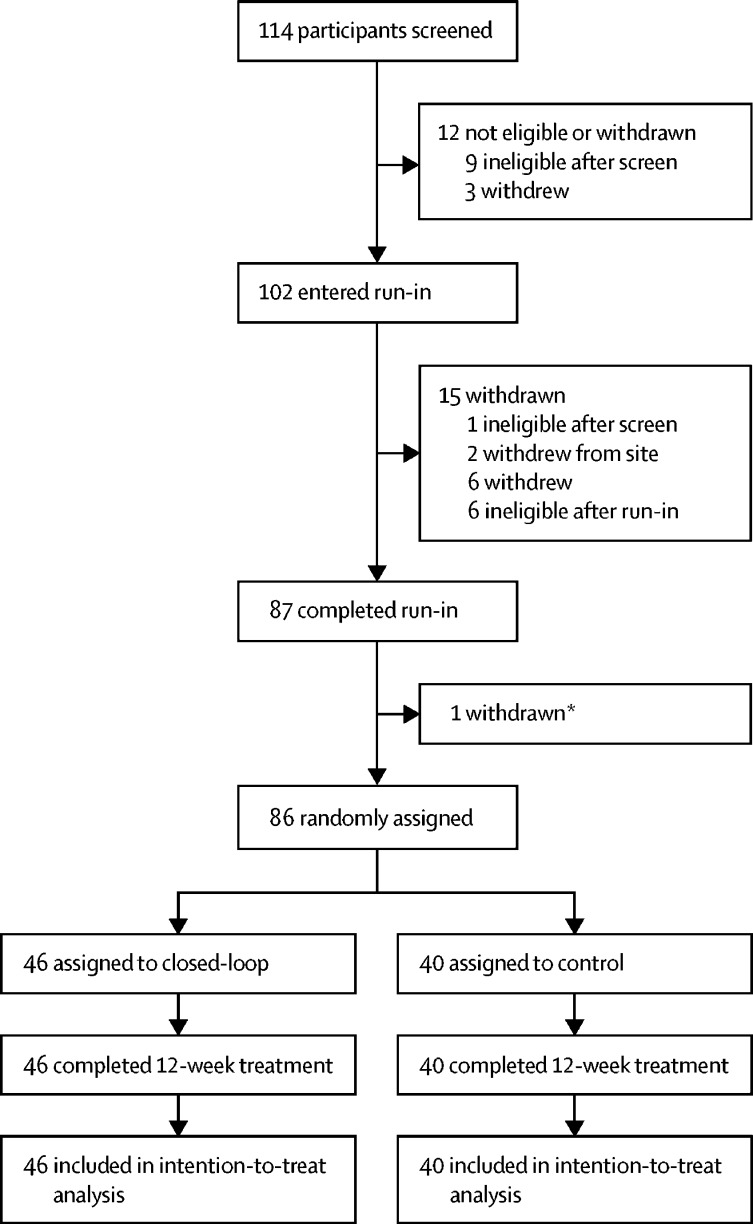
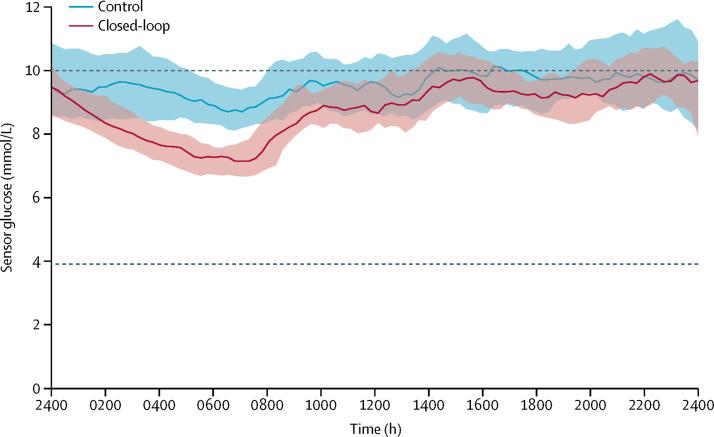
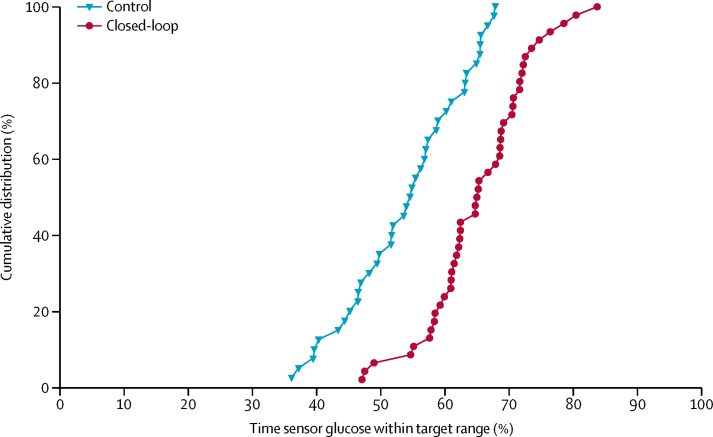
Background The achievement of glycaemic control remains challenging for patients with type 1 diabetes. We assessed the effectiveness of day-and-night hybrid closed-loop insulin delivery compared with sensor-augmented pump therapy in people with suboptimally controlled type 1 diabetes aged 6 years and older. Methods In this open-label, multicentre, multinational, single-period, parallel randomised controlled trial, participants were recruited from diabetes outpatient clinics at four hospitals in the UK and two centres in the USA. We randomly assigned participants with type 1 diabetes aged 6 years and older treated with insulin pump and with suboptimal glycaemic control (glycated haemoglobin [HbA 1c ] 7·5–10·0%) to receive either hybrid closed-loop therapy or sensor-augmented pump therapy over 12 weeks of free living. Training on study insulin pump and continuous glucose monitoring took place over a 4-week run-in period. Eligible subjects were randomly assigned using central randomisation software. Allocation to the two study groups was unblinded, and randomisation was stratified within centre by low (<8·5%) or high (≥8·5%) HbA 1c . The primary endpoint was the proportion of time that glucose concentration was within the target range of 3·9–10·0 mmol/L at 12 weeks post randomisation. Analyses of primary outcome and safety measures were done in all randomised patients. The trial is registered with ClinicalTrials.gov, number NCT02523131, and is closed to accrual. Findings From May 12, 2016, to Nov 17, 2017, 114 individuals were screened, and 86 eligible patients were randomly assigned to receive hybrid closed-loop therapy (n=46) or sensor-augmented pump therapy (n=40; control group). The proportion of time that glucose concentration was within the target range was significantly higher in the closed-loop group (65%, SD 8) compared with the control group (54%, SD 9; mean difference in change 10·8 percentage points, 95% CI 8·2 to 13·5; p<0·0001). In the closed-loop group, HbA 1c was reduced from a screening value of 8·3% (SD 0·6) to 8·0% (SD 0·6) after the 4-week run-in, and to 7·4% (SD 0·6) after the 12-week intervention period. In the control group, the HbA 1c values were 8·2% (SD 0·5) at screening, 7·8% (SD 0·6) after run-in, and 7·7% (SD 0·5) after intervention; reductions in HbA 1c percentages were significantly greater in the closed-loop group compared with the control group (mean difference in change 0·36%, 95% CI 0·19 to 0·53; p<0·0001). The time spent with glucose concentrations below 3·9 mmol/L (mean difference in change −0·83 percentage points, −1·40 to −0·16; p=0·0013) and above 10·0 mmol/L (mean difference in change −10·3 percentage points, −13·2 to −7·5; p<0·0001) was shorter in the closed-loop group than the control group. The coefficient of variation of sensor-measured glucose was not different between interventions (mean difference in change −0·4%, 95% CI −1·4% to 0·7%; p=0·50). Similarly, total daily insulin dose was not different (mean difference in change 0·031 U/kg per day, 95% CI −0·005 to 0·067; p=0·09) and bodyweight did not differ (mean difference in change 0·68 kg, 95% CI −0·34 to 1·69; p=0·19). No severe hypoglycaemia occurred. One diabetic ketoacidosis occurred in the closed-loop group due to infusion set failure. Two participants in each study group had significant hyperglycaemia, and there were 13 other adverse events in the closed-loop group and three in the control group. Interpretation Hybrid closed-loop insulin delivery improves glucose control while reducing the risk of hypoglycaemia across a wide age range in patients with suboptimally controlled type 1 diabetes. Funding JDRF, NIHR, and Wellcome Trust.
Overview
The claims and statistics of this paper haven’t been checked yet.
Free: it reads the open-access text and checks the first 5 claims that cite a source we can check. Create a free account to check every claim.
Integrity signals
Registry
Cites
Statistics
Figures
Verification
Claims the paper makes
The claims and statistics of this paper haven’t been checked yet.
Free: it reads the open-access text and checks the first 5 claims that cite a source we can check. Create a free account to check every claim.
Claims other papers make about this one
Each is checked against this paper’s own text: does it say what the citing paper says it does?
The source backs part of the claim, not all of it — or backs it for a different population, condition or comparison.
In the citing paper
“The use of SAP therapy has been shown to improve not just A1C or hypoglycemia but also glycemic variability and albuminuria1185–1187 when compared with MDI.”
From American Association of Clinical Endocrinology Clinical Practice Guideline: Developing a Diabetes Mellitus Comprehensive Care Plan-2022 Update. (2022) · cites this paper as [1187]
Experimental — accuracy not yet measuredThe source backs part of the claim, not all of it — or backs it for a different population, condition or comparison.
In the citing paper
“All currently FDA-approved AID systems were tested for safety and efficacy in their pivotal trials in children and adults with type 1 diabetes (194)(195)(196)(197)(198)(199)(200)(201)(202)(203)(204)(205)(206).”
From 7. Diabetes Technology: Standards of Care in Diabetes—2025 (2025) · cites this paper as [196]
Experimental — accuracy not yet measuredThe source backs part of the claim, not all of it — or backs it for a different population, condition or comparison.
In the citing paper
“Hybrid Closed Loop systems that might decrease the risk of DKA were not standard features of CSII treatment at the time of study inclusion. 22 , 23 , 26”
From Insulin pump therapy is associated with higher rates of mild diabetic ketoacidosis compared to injection therapy: A 2‐year Swedish national survey of children and adolescents with type 1 diabetes (2022) · cites this paper as [26]
Experimental — accuracy not yet measured
Self-check
Percentages, sums and reported differences re-computed from the paper’s own numbers.
The self-check needs the paper’s full text.
Citations
Cites
Unwin, N. C. (2006) · Cited by 1,661
Estimates of Location Based on Rank Tests
Hodges, J. L., & Lehmann, E. L. (1963) · The Annals of Mathematical Statistics · doi:10.1214/aoms/1177704172 · Cited by 1,260
Miller, K. M., Foster, N. C., Beck, R. W., Bergenstal, R. M., DuBose, S. N., DiMeglio, L. A., Maahs, D. M., & Tamborlane, W. V. (2015) · Diabetes Care · doi:10.2337/dc15-0078 · Cited by 1,254
Self-citationRisk of hypoglycaemia in types 1 and 2 diabetes: Effects of treatment modalities and their duration
UK Hypoglycaemia Study Group (2007) · Diabetologia · doi:10.1007/s00125-007-0599-y · Cited by 825
Gold, A. E., Macleod, K. M., & Frier, B. M. (1994) · Diabetes Care · doi:10.2337/diacare.17.7.697 · Cited by 810
Threshold-based insulin-pump interruption for reduction of hypoglycemia
Bergenstal, R. M., Klonoff, D. C., Garg, S. K., Bode, B. W., Meredith, M., Slover, R. H., Ahmann, A. J., Welsh, J. B., Lee, S. W., & Kaufman, F. R. (2013) · New England Journal of Medicine · doi:10.1056/nejmoa1303576 · Cited by 652
Self-citationSafety of a hybrid closed-loop insulin delivery system in patients with type 1 diabetes
Bergenstal, R. M., Garg, S., Weinzimer, S. A., Buckingham, B. A., Bode, B. W., Tamborlane, W. V., & Kaufman, F. R. (2016) · JAMA · doi:10.1001/jama.2016.11708 · Cited by 644
Self-citationGarg, S. K., Weinzimer, S. A., Tamborlane, W. V., Buckingham, B. A., Bode, B. W., Bailey, T. S., Brazg, R. L., Ilany, J., Slover, R. H., Anderson, S. M., et al. (2017) · Diabetes Technology & Therapeutics · doi:10.1089/dia.2016.0421 · Cited by 585
Self-citationWeisman, A., Bai, J.-W., Cardinez, M., Kramer, C. K., & Perkins, B. A. (2017) · The Lancet Diabetes & Endocrinology · doi:10.1016/s2213-8587(17)30167-5 · Cited by 463
Home Use of an Artificial Beta Cell in Type 1 Diabetes
Thabit, H., Tauschmann, M., Allen, J. M., Leelarathna, L., Hartnell, S., Wilinska, M. E., Acerini, C. L., Dellweg, S., Benesch, C., Heinemann, L., et al. (2015) · New England Journal of Medicine · doi:10.1056/nejmoa1509351 · Cited by 450
Self-citation
Cited by
Items 401–440 of 440
Thabit, H., Boughton, C. K., Mubita, W., Rubio, J., Allen, S., Heugh, R., Mader, J. K., Narendran, P., Evans, M. L., Leelarathna, L., et al. (2023) · Diabetes Obesity and Metabolism · doi:10.1111/dom.15366
“12,13 This relatively small treatment effect may have therefore attenuated any cardiac rhythm improvement.”
BackgroundSelf-citationEinblick in die Glukosewerte unter Real-World-Bedingungen
Thomas, A. (2023) · Info Diabetologie · doi:10.1007/s15034-023-4587-1
Hybrid closed-loop therapy: the calm before the storm
Crabtree, T. S. J. (2023) · British Journal of Diabetes · doi:10.15277/bjd.2023.426
Traiter les hypoglycémies iatrogènes à l’ère des nouvelles technologies
Monnier, L., & Colette, C. (2024) · Médecine des Maladies Métaboliques · doi:10.1016/j.mmm.2024.02.002
Developing Strategies to Improve Diabetes Management in College-Going Young Adults
(2024) · Frontiers research topics · doi:10.3389/978-2-8325-4815-8
Artificial Pancreas – Hybrid Closed Loop: an impending revolution
Basavaraju, N., Jones, A., & Moulik, P. K. (2024) · Independent Nurse · doi:10.12968/indn.2024.4.12
Chappel, E. (2024) · Encyclopedia · doi:10.3390/encyclopedia4020052
“The recent improvement in blood glucose meter accuracy enabled closing the loop thanks to specific algorithms and wireless communication between a continuous glucose meter and the delivery system for one (insulin) or two hormones (insulin and glucagon) [8–12].”
BackgroundClinical applications of deep learning in diabetes and its enhancements with future predictions
Pay, L. (2024) · Elsevier eBooks · doi:10.1016/b978-0-323-95686-4.00011-3
Mesa, A., Roca, D., Granados, M., Pueyo, I., Cabré, C., Amor, A. J., Solà, C., Matas, O., Castanys, J., Conget, I., et al. (2024) · Endocrinología Diabetes y Nutrición · doi:10.1016/j.endinu.2024.05.012
Supported Open-source Artificial Pancreas Systems in Type 1 Diabetes With Suboptimal Glycemia
Hawke, K., & Elliott, T. G. (2024) · Canadian Journal of Diabetes · doi:10.1016/j.jcjd.2024.09.002
(2024) · American Diabetes Association eBooks · doi:10.2337/9781580408363.ch05
Kannan, A., Gupta, A. K., Joshi, A. S., Azhagan, B. T., Bansal, B., Prasad, G. M., Sah, J., Baraneedharan, K., Joseph, M. P., Choudhury, R., et al. (2025) · International journal of clinical metabolism and diabetes. · doi:10.1177/30502071241295843
“13 Thus, the impact of real-time glycemic monitoring has been shown to benefit both patients and HCPs to monitor the effects of different types of food, timing of meals, their activity and stress levels and provide appropriate lifestyle and clinical management accordingly.”
InfluentialNow Is the Time to Remove Barriers to AID Treatment for Those With Detectable C-Peptide
Lumb, A. N. (2025) · Diabetes Care · doi:10.2337/dci25-0108
Kang, S. L., Hwang, Y. N., Kwon, J. Y., & Kim, S. M. (2024) · Figshare · doi:10.6084/m9.figshare.26552224
Graña, C., Ravaud, P., Ghosn, L., & Tran, V.-T. (2020) · Figshare · doi:10.6084/m9.figshare.13199052
Godoi, A., Reis Marques, I., Padrão, E. M. H., Mahesh, A., Hespanhol, L. C., Riceto Loyola Júnior, J. E., de Souza, I. A. F., Moreira, V. C. S., Silva, C. H., Miyawaki, I. A., et al. (2024) · Figshare · doi:10.6084/m9.figshare.26620396
Diabetes & Technik: Chancen bei Sprachbarriere
Aydınkoç-Tuzcu, K., Kietabl, A.-T., Frühwald, L., & Fasching, P. (2025) · Die Diabetologie · doi:10.1007/s11428-025-01405-y
Morar-Stan, A., Dobrotă, L., Radutu, A., & Domnariu, C. D. (2026) · Journal of Clinical Medicine · doi:10.3390/jcm15031112
“The integration of predictive alert systems within CGM devices serves as a safety net, identifying occult hypoglycemic excursions that often elude both the patient and the caregiver [12].”
Propper‐Lewinsohn, T., Elran‐Barak, R., Gillon‐Keren, M., Yackobovitch‐Gavan, M., Liberman, A., Phillip, M., & Shalitin, S. (2026) · Hormone Research in Paediatrics · doi:10.1159/000550948
Modernes Diabetesmanagement bei Kindern und Jugendlichen mit Diabetes mellitus Typ 1
Galler, A. (2026) · Pädiatrie up2date · doi:10.1055/a-2554-2185 · Cited by 1
A Review on Hybrid Closed Loop Insulin Delivery System
Kuralarasan, S. G. (2025) · Advances in Applied Biological Research · doi:10.48165/aabr.2025.2.2.04
González-Maroto, I., Moreno-Fernández, J., Beato-Víbora, P. I., & Quirós, C. (2026) · Diabetes & Metabolism · doi:10.1016/j.diabet.2026.101757
Automated insulin delivery use in children and adolescents with type 1 diabetes across the world
Seget, S., Rusak, E., Pélicand, J., Fry, M., SHEANON, N. M., Schierloh, U. H. E., Xatzipsalti, M., Malinici, E. A., Tinti, D., Neylon, O. M., et al. (2026) · Diabetes Research and Clinical Practice · doi:10.1016/j.diabres.2026.113253 · Cited by 1
Succurro, E., Cersosimo, G., Sarnelli, P., Brisinda, F. M., Gattuso, I., Mazza, V., Fabiano, G., Iorio, F., Arena, R., Mazzitello, G., et al. (2026) · Acta Diabetologica · doi:10.1007/s00592-026-02690-9
“Extensive evidence supports the benefits of current AID systems in improving glycaemic management, decreasing hypo-glycaemia risk and fear of hypoglycaemia, and improving Quality of Life (QOL) for people with diabetes mellitus [3, 7–14].”
L’insulinothérapie automatisée : du concept à la pratique clinique, une évolution ininterrompue
Renard, É. (2026) · Bulletin de l Académie Nationale de Médecine · doi:10.1016/j.banm.2026.02.013
Chernaya, M. E., Khalimov, Y. S., Volkova, A. S., Lisker, A. V., Nersesyan, A. A., Korotkova, E. V., & Obiedkova, Y. A. (2026) · Diabetes Mellitus · doi:10.14341/dm13366
Wen, S., Yuan, X., Jiyu, L., & Zhou, L. (2026) · Pharmacological Research - Modern Chinese Medicine · doi:10.1016/j.prmcm.2026.100826
Diabetestechnologie (Update 2026)
Schütz-Fuhrmann, I., Rami-Merhar, B. M., Hofer, S. E., Fröhlich-Reiterer, E. E., Tauschmann, M., Mader, J. K., Resl, M., Kautzky‐Willer, A., Winhofer-Stöckl, Y., Wascher, T. C., et al. (2026) · Wiener klinische Wochenschrift · doi:10.1007/s00508-025-02630-7
Self-citationVantomme, K., Dolatabadi, S., Sidhu, B., Hopman, W. M., & Houlden, R. L. (2026) · Canadian Journal of Diabetes · doi:10.1016/j.jcjd.2026.05.009
King, A. C., Christian, P., Bassett, P., & Holloway, E. (2026) · Archives of Disease in Childhood · doi:10.1136/archdischild-2026-330408
“16 WHAT IS ALREADY KNOWN ON THIS TOPIC ⇒ Children and young people (CYP) with persistently elevated glycated haemoglobin (HbA1c) are under-represented in clinical trials of diabetes technologies, despite being at highest risk of acute and long-term complications.”
From algorithm to alarm: a narrative review on insulin delivery innovation
Saleem, N. U. A., Arshad, F., Qadri, M., Mushtaq, M. S., Khan, M., Shakoor, P., Patel, T., Noor, A., Sardarova, N., Anand, N., et al. (2026) · Annals of Medicine and Surgery · doi:10.1097/ms9.0000000000005307
“…insulin pump therapy, the 12-week use of a hybrid closed-loop insulin delivery system during the day improved overall glucose con-trol and decreased the risk of hypoglycemia in individuals with suboptimally controlled type 1 diabetes, including adults, adolescents, and children [ 31 ] .”
Bach, E., Fisker, S., Christensen, M., Bibby, B. M., & Hansen, K. W. (2026) · Journal of Diabetes Science and Technology · doi:10.1177/19322968261471164
O'Neill, T., McTague, K., Begley, T., Banka, P., & Hollywood, E. (2026) · JBI Evidence Synthesis · doi:10.11124/jbies-25-00511
Hohendorff, J., Klupa, T., Wrobel, M., Grzelka‐Wozniak, A., Sochacka-Tatara, E., PLONKA-STEPIEN, M., Zych, Z., Matejko, B., ADAMCZYK-HOHENDORFF, M. M., Rokicka, D., et al. (2026) · Diabetes Obesity and Metabolism · doi:10.1111/dom.71339
Modernes Diabetesmanagement bei Kindern und Jugendlichen mit Diabetes mellitus Typ 1
Galler, A. (2026) · Diabetes aktuell · doi:10.1055/a-2922-4498
Automated Insulin Delivery Systems in Youth with Diabetes
Mroweh, M., Thompson, S., & Ekhlaspour, L. (2026) · Endocrinology and Metabolism Clinics of North America · doi:10.1016/j.ecl.2026.08.009
Diabetes Technology and Physical Activity in the Youth
Tauschmann, M., Sanfilippo, S., & Dovč, K. (2026) · Endocrinology and Metabolism Clinics of North America · doi:10.1016/j.ecl.2026.08.017
Self-citationBenhamou, P., Vesin, A., Reynaud, L., Roux‐Mallouf, T. L., & Chatel, B. (2026) · Diabetes Obesity and Metabolism · doi:10.1111/dom.71452
Metadata
- Authors
- Tauschmann, M., Thabit, H., Bally, L., Allen, J. M., Hartnell, S., Wilinska, M. E., Ruan, Y., Sibayan, J., Kollman, C., Cheng, P., Beck, R. W., Acerini, C. L., Evans, M. L., Dunger, D. B., Elleri, D., Campbell, F., Bergenstal, R. M., Criego, A., Shah, V. N., Leelarathna, L., Hovorka, R., Alvarado, B., Ashanti, C., Baggott, J., Balakrishnan, K., Barber, N., Bath, L., Beasley, S., Beatson, C., Borgman, S., Bradshaw, S., Bugielski, B., Carlson, A., Collett, E., Curtis, J., Demmitt, J., Donahue, D., Exall, J., Forshaw, R., Hayes, J., Heath, S., Hellmann, A., Huegel, V, Hyatt, J., James, L., Joseph, H., Joshee, P., Konerza, W., Lum, J., Madden, M., Martens, T., McCarthy, C., McDonald, M., Mikityuk, V, Miles, H., Miller, D., Mubita, W., Murphy, C., Olson, B., Pad, R., Patibandla, N., Riding, K., Shaju, A., Thomas, L., Thomson, J., White, D., Yau, S., & Yong, J.
- Affiliations
- University of Cambridge (GB)
- Cambridge University Hospitals NHS Foundation Trust (GB)
- Jaeb Center for Health Research (US)
- Royal Hospital for Sick Children (GB)
- Leeds Teaching Hospitals NHS Trust (GB)
- University of Colorado Anschutz (US)
- University of Manchester (GB)
- Corresponding author
- Hovorka, Roman
- ORCID
- Tauschmann, Martin
- Thabit, Hood
- Bally, Lia
- Hartnell, Sara
- Wilinska, Malgorzata E
- Ruan, Yue
- Sibayan, Judy
- Kollman, Craig
- Cheng, Peiyao
- Beck, Roy W
- Acerini, Carlo L
- Evans, Mark L
- Dunger, David B
- Campbell, Fiona
- Bergenstal, Richard M
- Criego, Amy
- Shah, Viral N
- Leelarathna, Lalantha
- Hovorka, Roman
- Beatson, C
- Forshaw, R
- Lum, J
- Martens, T
- Miles, H
- Mubita, W
- Venue
- The Lancet
- Publisher
- Elsevier BV
- Published
- 2018-10
- Volume
- 392
- Issue
- 10155
- Pages
- 1321-1329
- ISSN
- 0099-5355 (ISSN-L)
- 0140-6736
- PMC
- PMC6182127
- OpenAlex
- W2890424595
- Semantic Scholar
- 2b3d55b3718484b4ce018d80a4d5c3aad85b2559
- Cited by
- 440
- References
- 22
- Citations by year
- 2026: 29 · 2025: 48 · 2024: 58 · 2023: 63 · 2022: 66 · 2021: 65 · 2020: 58 · 2019: 43 · 2018: 7
- FWCI
- 34.39
- Type
- journal article
- Language
- en
- Open access
- hybrid
- doi.org
- Licence
- cc-by
- www.elsevier.com/tdm/userlicense/1.0/ (tdm)
- www.elsevier.com/legal/tdmrep-license (tdm)
- creativecommons.org/licenses/by/4.0/ (vor)
- Locations
- The Lancet (publishedVersion, cc-by)
- Europe PMC (PubMed Central) (publishedVersion, other-oa)
- PubMed Central (publishedVersion, cc-by)
- PubMed (publishedVersion)
- Research Explorer (The University of Manchester) (submittedVersion, other-oa)
- Funders
- University of Minnesota
- Wellcome Trust (100574/Z/12/Z)
- University Hospitals of Leicester NHS Trust
- National Institute for Health and Care Research (100574/Z/12/Z)
- NIHR Cambridge Biomedical Research Centre (100574/Z/12/Z)
- Topics
- Health Sciences › Medicine › Endocrinology, Diabetes and Metabolism › Diabetes Management and Research
- Health Sciences › Medicine › Endocrinology, Diabetes and Metabolism › Diabetes Management and Education
- Life Sciences › Biochemistry, Genetics and Molecular Biology › Genetics › Diabetes and associated disorders
- Keywords
- type 1 diabetes, hybrid closed-loop insulin delivery, sensor-augmented pump therapy, HbA1c, continuous glucose monitoring, insulin pump, time in target glucose range, glycemic control, children and adolescents, hypoglycemia
- MeSH terms
- Adolescent, Adult, Child, Child, Preschool, Diabetes Mellitus, Type 1, Female, Glycated Hemoglobin, Humans, Hypoglycemia, Hypoglycemic Agents, Insulin, Insulin Infusion Systems, Male, Blood Glucose Self-Monitoring, Infusion Pumps, Implantable, Young Adult
About these checks
Registry, retraction, Cites and statistics results are computed, not judged, with one exception: a printed reference that no index lists is read once by a model before it counts as a citation error. Claims are extracted by a model and kept only when their quote appears verbatim in the text; each cited source is then checked, with a model’s help, for whether it says what the claim relies on. Those verdicts can be wrong — read the claim’s quote and the cited source before relying on one.
Statistics and arithmetic are recomputed, not judged.
Confidence bands are shown only for fields calibrated on our annotated test set. None is calibrated yet, so no band is shown.
What counts as a claim ›How we measure confidence ›How we check this ›
Are you an author, or do you see a problem with this page? Request a review
Data sources
Bibliographic data: Semantic Scholar, OpenAlex, Crossref.
Contains information from the Semantic Scholar Academic Graph Datasets, made available under the ODC Attribution License (ODC-BY 1.0).
Semantic Scholar’s data is described in: Kinney, R., et al. (2023). The Semantic Scholar Open Data Platform. arXiv:2301.10140.
