

Closed-loop insulin delivery in suboptimally controlled type 1 diabetes: a multicentre, 12-week randomised trial
Open accessThe DOI matches its Crossref record; 22 of the 22 references it cites were found in a registry or an index.
Abstract
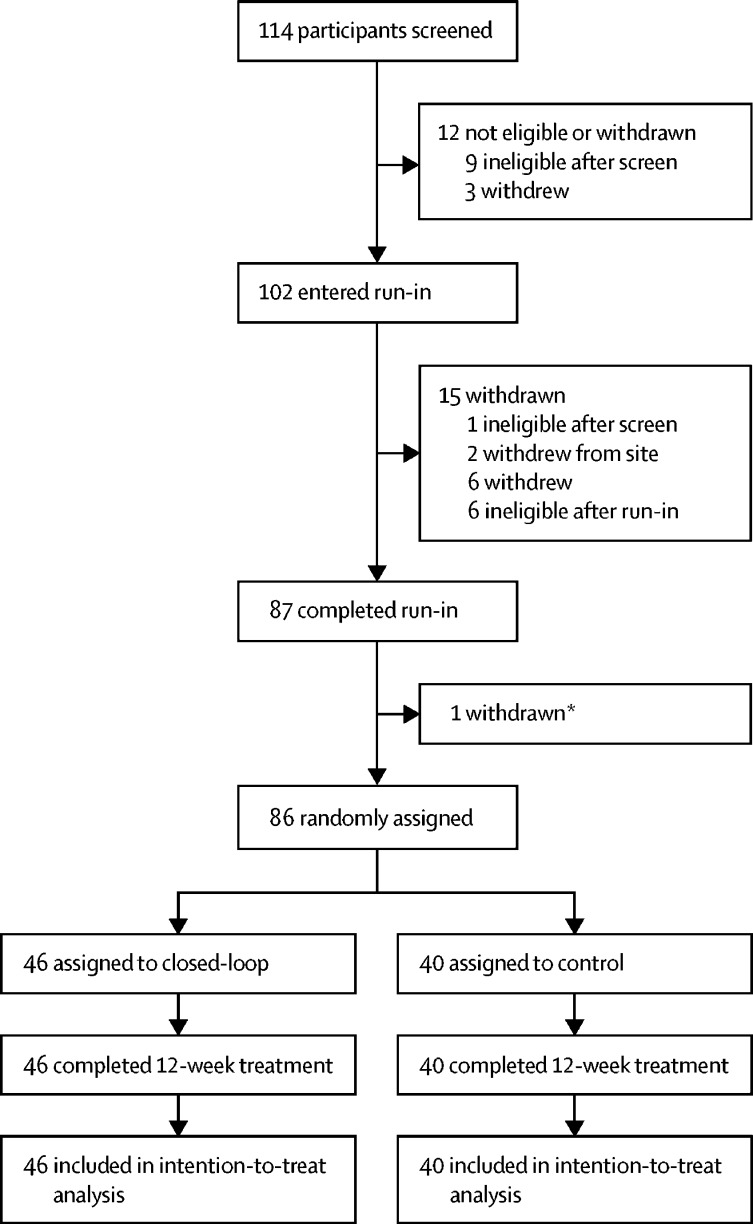
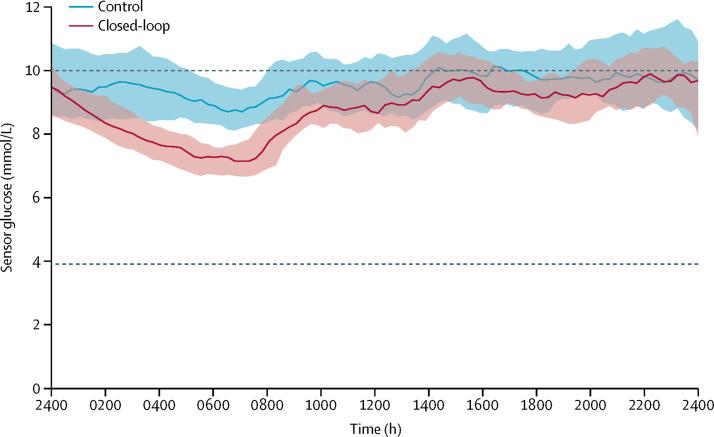
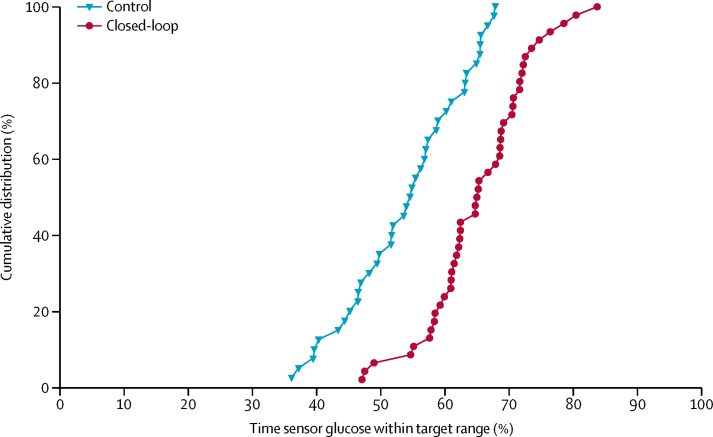
Background The achievement of glycaemic control remains challenging for patients with type 1 diabetes. We assessed the effectiveness of day-and-night hybrid closed-loop insulin delivery compared with sensor-augmented pump therapy in people with suboptimally controlled type 1 diabetes aged 6 years and older. Methods In this open-label, multicentre, multinational, single-period, parallel randomised controlled trial, participants were recruited from diabetes outpatient clinics at four hospitals in the UK and two centres in the USA. We randomly assigned participants with type 1 diabetes aged 6 years and older treated with insulin pump and with suboptimal glycaemic control (glycated haemoglobin [HbA 1c ] 7·5–10·0%) to receive either hybrid closed-loop therapy or sensor-augmented pump therapy over 12 weeks of free living. Training on study insulin pump and continuous glucose monitoring took place over a 4-week run-in period. Eligible subjects were randomly assigned using central randomisation software. Allocation to the two study groups was unblinded, and randomisation was stratified within centre by low (<8·5%) or high (≥8·5%) HbA 1c . The primary endpoint was the proportion of time that glucose concentration was within the target range of 3·9–10·0 mmol/L at 12 weeks post randomisation. Analyses of primary outcome and safety measures were done in all randomised patients. The trial is registered with ClinicalTrials.gov, number NCT02523131, and is closed to accrual. Findings From May 12, 2016, to Nov 17, 2017, 114 individuals were screened, and 86 eligible patients were randomly assigned to receive hybrid closed-loop therapy (n=46) or sensor-augmented pump therapy (n=40; control group). The proportion of time that glucose concentration was within the target range was significantly higher in the closed-loop group (65%, SD 8) compared with the control group (54%, SD 9; mean difference in change 10·8 percentage points, 95% CI 8·2 to 13·5; p<0·0001). In the closed-loop group, HbA 1c was reduced from a screening value of 8·3% (SD 0·6) to 8·0% (SD 0·6) after the 4-week run-in, and to 7·4% (SD 0·6) after the 12-week intervention period. In the control group, the HbA 1c values were 8·2% (SD 0·5) at screening, 7·8% (SD 0·6) after run-in, and 7·7% (SD 0·5) after intervention; reductions in HbA 1c percentages were significantly greater in the closed-loop group compared with the control group (mean difference in change 0·36%, 95% CI 0·19 to 0·53; p<0·0001). The time spent with glucose concentrations below 3·9 mmol/L (mean difference in change −0·83 percentage points, −1·40 to −0·16; p=0·0013) and above 10·0 mmol/L (mean difference in change −10·3 percentage points, −13·2 to −7·5; p<0·0001) was shorter in the closed-loop group than the control group. The coefficient of variation of sensor-measured glucose was not different between interventions (mean difference in change −0·4%, 95% CI −1·4% to 0·7%; p=0·50). Similarly, total daily insulin dose was not different (mean difference in change 0·031 U/kg per day, 95% CI −0·005 to 0·067; p=0·09) and bodyweight did not differ (mean difference in change 0·68 kg, 95% CI −0·34 to 1·69; p=0·19). No severe hypoglycaemia occurred. One diabetic ketoacidosis occurred in the closed-loop group due to infusion set failure. Two participants in each study group had significant hyperglycaemia, and there were 13 other adverse events in the closed-loop group and three in the control group. Interpretation Hybrid closed-loop insulin delivery improves glucose control while reducing the risk of hypoglycaemia across a wide age range in patients with suboptimally controlled type 1 diabetes. Funding JDRF, NIHR, and Wellcome Trust.
Overview
The claims and statistics of this paper haven’t been checked yet.
Free: it reads the open-access text and checks the first 5 claims that cite a source we can check. Create a free account to check every claim.
Integrity signals
Registry
Cites
Statistics
Figures
Verification
Claims the paper makes
The claims and statistics of this paper haven’t been checked yet.
Free: it reads the open-access text and checks the first 5 claims that cite a source we can check. Create a free account to check every claim.
Claims other papers make about this one
Each is checked against this paper’s own text: does it say what the citing paper says it does?
The source backs part of the claim, not all of it — or backs it for a different population, condition or comparison.
In the citing paper
“The use of SAP therapy has been shown to improve not just A1C or hypoglycemia but also glycemic variability and albuminuria1185–1187 when compared with MDI.”
From American Association of Clinical Endocrinology Clinical Practice Guideline: Developing a Diabetes Mellitus Comprehensive Care Plan-2022 Update. (2022) · cites this paper as [1187]
Experimental — accuracy not yet measuredThe source backs part of the claim, not all of it — or backs it for a different population, condition or comparison.
In the citing paper
“All currently FDA-approved AID systems were tested for safety and efficacy in their pivotal trials in children and adults with type 1 diabetes (194)(195)(196)(197)(198)(199)(200)(201)(202)(203)(204)(205)(206).”
From 7. Diabetes Technology: Standards of Care in Diabetes—2025 (2025) · cites this paper as [196]
Experimental — accuracy not yet measuredThe source backs part of the claim, not all of it — or backs it for a different population, condition or comparison.
In the citing paper
“Hybrid Closed Loop systems that might decrease the risk of DKA were not standard features of CSII treatment at the time of study inclusion. 22 , 23 , 26”
From Insulin pump therapy is associated with higher rates of mild diabetic ketoacidosis compared to injection therapy: A 2‐year Swedish national survey of children and adolescents with type 1 diabetes (2022) · cites this paper as [26]
Experimental — accuracy not yet measured
Self-check
Percentages, sums and reported differences re-computed from the paper’s own numbers.
The self-check needs the paper’s full text.
Citations
Cites
Unwin, N. C. (2006) · Cited by 1,661
Estimates of Location Based on Rank Tests
Hodges, J. L., & Lehmann, E. L. (1963) · The Annals of Mathematical Statistics · doi:10.1214/aoms/1177704172 · Cited by 1,260
Miller, K. M., Foster, N. C., Beck, R. W., Bergenstal, R. M., DuBose, S. N., DiMeglio, L. A., Maahs, D. M., & Tamborlane, W. V. (2015) · Diabetes Care · doi:10.2337/dc15-0078 · Cited by 1,254
Self-citationRisk of hypoglycaemia in types 1 and 2 diabetes: Effects of treatment modalities and their duration
UK Hypoglycaemia Study Group (2007) · Diabetologia · doi:10.1007/s00125-007-0599-y · Cited by 825
Gold, A. E., Macleod, K. M., & Frier, B. M. (1994) · Diabetes Care · doi:10.2337/diacare.17.7.697 · Cited by 810
Threshold-based insulin-pump interruption for reduction of hypoglycemia
Bergenstal, R. M., Klonoff, D. C., Garg, S. K., Bode, B. W., Meredith, M., Slover, R. H., Ahmann, A. J., Welsh, J. B., Lee, S. W., & Kaufman, F. R. (2013) · New England Journal of Medicine · doi:10.1056/nejmoa1303576 · Cited by 652
Self-citationSafety of a hybrid closed-loop insulin delivery system in patients with type 1 diabetes
Bergenstal, R. M., Garg, S., Weinzimer, S. A., Buckingham, B. A., Bode, B. W., Tamborlane, W. V., & Kaufman, F. R. (2016) · JAMA · doi:10.1001/jama.2016.11708 · Cited by 644
Self-citationGarg, S. K., Weinzimer, S. A., Tamborlane, W. V., Buckingham, B. A., Bode, B. W., Bailey, T. S., Brazg, R. L., Ilany, J., Slover, R. H., Anderson, S. M., et al. (2017) · Diabetes Technology & Therapeutics · doi:10.1089/dia.2016.0421 · Cited by 585
Self-citationWeisman, A., Bai, J.-W., Cardinez, M., Kramer, C. K., & Perkins, B. A. (2017) · The Lancet Diabetes & Endocrinology · doi:10.1016/s2213-8587(17)30167-5 · Cited by 463
Home Use of an Artificial Beta Cell in Type 1 Diabetes
Thabit, H., Tauschmann, M., Allen, J. M., Leelarathna, L., Hartnell, S., Wilinska, M. E., Acerini, C. L., Dellweg, S., Benesch, C., Heinemann, L., et al. (2015) · New England Journal of Medicine · doi:10.1056/nejmoa1509351 · Cited by 450
Self-citation
Cited by
9. Pharmacologic Approaches to Glycemic Treatment: Standards of Medical Care in Diabetes—2022
American Diabetes Association Professional Practice Committee (2022) · Diabetes Care · doi:10.2337/dc22-s009 · Cited by 1,555
“The safety and efficacy of hybrid closed-loop systems has been supported in the literature in adolescents and adults with type 1 diabetes (19,20), and recent evidence suggests that a closed-loop system is superior to sensor-augmented pump therapy for glycemic control and reduction of hypoglycemia over 3 months of comp…”
BackgroundSix-Month Randomized, Multicenter Trial of Closed-Loop Control in Type 1 Diabetes
Brown, S. A., Kovatchev, B. P., Raghinaru, D., Lum, J. W., Buckingham, B. A., Kudva, Y. C., Laffel, L. M., Levy, C. J., Pinsker, J. E., Wadwa, R. P., et al. (2019) · New England Journal of Medicine · doi:10.1056/nejmoa1907863 · Cited by 1,030
Self-citation9. Pharmacologic Approaches to Glycemic Treatment: Standards of Medical Care in Diabetes—2021
American Diabetes Association (2021) · Diabetes Care · doi:10.2337/dc21-s009 · Cited by 972
9. Pharmacologic Approaches to Glycemic Treatment: Standards of Medical Care in Diabetes—2020
American Diabetes Association (2020) · Diabetes Care · doi:10.2337/dc20-s009 · Cited by 914
9. Pharmacologic Approaches to Glycemic Treatment: Standards of Care in Diabetes—2023
ElSayed, N. A., Aleppo, G., Aroda, V. R., Bannuru, R. R., Brown, F. M., Bruemmer, D., Collins, B. S., Hilliard, M. E., Isaacs, D., Johnson, E. L., et al. (2023) · Diabetes Care · doi:10.2337/dc23-s009 · Cited by 851
Blonde, L., Umpierrez, G. E., Reddy, S. S., McGill, J. B., Berga, S. L., Bush, M., Chandrasekaran, S., DeFronzo, R. A., Einhorn, D., Galindo, R. J., et al. (2022) · Endocrine Practice · doi:10.1016/j.eprac.2022.08.002 · Cited by 507
Phillip, M., Nimri, R., Bergenstal, R. M., Barnard-Kelly, K., Danne, T., Hovorka, R., Kovatchev, B. P., Messer, L. H., Parkin, C. G., Ambler-Osborn, L., et al. (2023) · Endocrine Reviews · doi:10.1210/endrev/bnac022 · Cited by 443
Self-citation7. Diabetes Technology: Standards of Medical Care in Diabetes—2022
American Diabetes Association Professional Practice Committee (2022) · Diabetes Care · doi:10.2337/dc22-s007 · Cited by 358
7. Diabetes Technology: Standards of Care in Diabetes—2025
American Diabetes Association Professional Practice Committee, ElSayed, N. A., McCoy, R. G., Aleppo, G., Balapattabi, K., Beverly, E. A., Briggs Early, K., Bruemmer, D., Echouffo-Tcheugui, J. B., Ekhlaspour, L., et al. (2025) · Diabetes Care · doi:10.2337/dc25-s007 · Cited by 348
Bergenstal, R. M., Nimri, R., Beck, R. W., Criego, A., Laffel, L., Schatz, D., Battelino, T., Danne, T., Weinzimer, S. A., Sibayan, J., et al. (2021) · The Lancet · doi:10.1016/s0140-6736(20)32514-9 · Cited by 344
Self-citation7. Diabetes Technology: Standards of Care in Diabetes — 2023
ElSayed, N. A., Aleppo, G., Aroda, V. R., Bannuru, R. R., Brown, F. M., Bruemmer, D., Collins, B. S., Hilliard, M. E., Isaacs, D., Johnson, E. L., et al. (2023) · Diabetes Care · doi:10.2337/dc23-s007 · Cited by 301
Grunberger, G., Sherr, J., Allende, M., Blevins, T., Bode, B., Handelsman, Y., Hellman, R., Lajara, R., Roberts, V. L., Rodbard, D., et al. (2021) · Endocrine Practice · doi:10.1016/j.eprac.2021.04.008 · Cited by 288
Brown, S. A., Forlenza, G. P., Bode, B. W., Pinsker, J. E., Levy, C. J., Criego, A. B., Hansen, D. W., Hirsch, I. B., Carlson, A. L., Bergenstal, R. M., et al. (2021) · Diabetes Care · doi:10.2337/dc21-0172 · Cited by 286
Self-citation7. Diabetes Technology: Standards of Care in Diabetes—2024
American Diabetes Association Professional Practice Committee, ElSayed, N. A., Aleppo, G., Bannuru, R. R., Bruemmer, D., Collins, B. S., Ekhlaspour, L., Hilliard, M. E., Johnson, E. L., Khunti, K., et al. (2024) · Diabetes Care · doi:10.2337/dc24-s007 · Cited by 281
New closed-loop insulin systems
Boughton, C. K., & Hovorka, R. (2021) · Diabetologia · doi:10.1007/s00125-021-05391-w · Cited by 270
“Cambridge closed-loop [16] Randomised parallel study comparing closed loop with SAP 3 months n =86 children and adults with sub-optimal glycaemic control 7.”
BackgroundMethodSelf-citationOne Year Real-World Use of the Control-IQ Advanced Hybrid Closed-Loop Technology
Breton, M. D., & Kovatchev, B. P. (2021) · Diabetes Technology & Therapeutics · doi:10.1089/dia.2021.0097 · Cited by 250
7. Diabetes Technology: Standards of Medical Care in Diabetes—2020
American Diabetes Association (2020) · Diabetes Care · doi:10.2337/dc20-s007 · Cited by 250
Advances in technology for management of type 1 diabetes
Beck, R. W., Bergenstal, R. M., Laffel, L. M., & Pickup, J. C. (2019) · The Lancet · doi:10.1016/s0140-6736(19)31142-0 · Cited by 242
Self-citationRandomized Trial of Closed-Loop Control in Very Young Children with Type 1 Diabetes
Ware, J., Allen, J. M., Boughton, C. K., Wilinska, M. E., Hartnell, S., Thankamony, A., de Beaufort, C., Schierloh, U., Fröhlich-Reiterer, E., Mader, J. K., et al. (2022) · New England Journal of Medicine · doi:10.1056/nejmoa2111673 · Cited by 222
Self-citationBenhamou, P.-Y., Franc, S., Reznik, Y., Thivolet, C., Schaepelynck, P., Renard, E., Guerci, B., Chaillous, L., Lukas-Croisier, C., Jeandidier, N., et al. (2019) · The Lancet Digital Health · doi:10.1016/s2589-7500(19)30003-2 · Cited by 217
One year clinical experience of the first commercial hybrid closed-loop system
Lal, R. A., Basina, M., Maahs, D. M., Hood, K., Buckingham, B., & Wilson, D. M. (2019) · Diabetes Care · doi:10.2337/dc19-0855 · Cited by 215
7. Diabetes Technology: Standards of Medical Care in Diabetes—2021
American Diabetes Association (2021) · Diabetes Care · doi:10.2337/dc21-s007 · Cited by 202
7. Diabetes Technology: Standards of Medical Care in Diabetes—2019
American Diabetes Association (2019) · Diabetes Care · doi:10.2337/dc19-s007 · Cited by 179
“sensor-augmented pump therapy, the HCL system reduced the risk for hypoglycemia and improved glucose control in A1C levels (124).”
Insulin Therapy in Adults with Type 1 Diabetes Mellitus: a Narrative Review
Janež, A., Guja, C., Mitrakou, A., Lalic, N., Tankova, T., Czupryniak, L., Tabák, A. G., Prazny, M., Martinka, E., & Smircic-Duvnjak, L. (2020) · Diabetes Therapy · doi:10.1007/s13300-019-00743-7 · Cited by 177
ISPAD Clinical Practice Consensus Guidelines 2022: Diabetes technologies: Insulin delivery
Sherr, J. L., Schoelwer, M., Dos Santos, T. J., Reddy, L., Biester, T., Galderisi, A., van Dyk, J. C., Hilliard, M. E., Berget, C., & DiMeglio, L. A. (2022) · Pediatric Diabetes · doi:10.1111/pedi.13421 · Cited by 152
Hybrid closed‐loop therapy: Where are we in 2021?
Leelarathna, L., Choudhary, P., Wilmot, E. G., Lumb, A., Street, T., Kar, P., & Ng, S. M. (2021) · Diabetes, Obesity and Metabolism · doi:10.1111/dom.14273 · Cited by 141
Self-citationContinuous glucose monitoring: The achievement of 100 years of innovation in diabetes technology
Galindo, R. J., & Aleppo, G. (2020) · Diabetes Research and Clinical Practice · doi:10.1016/j.diabres.2020.108502 · Cited by 133
Stem Cell-Based Clinical Trials for Diabetes Mellitus
de Klerk, E., & Hebrok, M. (2021) · Frontiers in Endocrinology · doi:10.3389/fendo.2021.631463 · Cited by 157
“Similar improvements were also noticed when comparing sensoraugmented pumps against hybrid closed-loop system (where insulin is continuously administered, except during boosts at mealtime) (36), or bihormonal closed loop systems (37) that release both insulin and glucagon.”
ResultEmerging routes to the generation of functional β-cells for diabetes mellitus cell therapy
Nair, G. G., Tzanakakis, E. S., & Hebrok, M. (2020) · Nature Reviews Endocrinology · doi:10.1038/s41574-020-0375-3 · Cited by 134
Braune, K., Lal, R. A., Petruželková, L., Scheiner, G., Winterdijk, P., Schmidt, S., Raimond, L., Hood, K. K., Riddell, M. C., Skinner, T. C., et al. (2022) · The Lancet Diabetes & Endocrinology · doi:10.1016/s2213-8587(21)00267-9 · Cited by 130
A Systematic Review of Commercial Hybrid Closed-Loop Automated Insulin Delivery Systems
Peacock, S., Frizelle, I., & Hussain, S. (2023) · Diabetes Therapy · doi:10.1007/s13300-023-01394-5 · Cited by 122
Latres, E., Finan, D. A., Greenstein, J. L., Kowalski, A., & Kieffer, T. J. (2019) · Cell Metabolism · doi:10.1016/j.cmet.2019.02.007 · Cited by 117
Isganaitis, E., Raghinaru, D., Ambler-Osborn, L., Pinsker, J. E., Buckingham, B. A., Wadwa, R. P., Ekhlaspour, L., Kudva, Y. C., Levy, C. J., Forlenza, G. P., et al. (2021) · Diabetes Technology & Therapeutics · doi:10.1089/dia.2020.0572 · Cited by 115
“In a 12-week randomized trial, Tauschmann et al. 20 reported among 13–21 years old an improvement from baseline in TIR of 14% using CLC ( N = 11) versus 4% using SAP ( N = 8).”
Self-citationClosed-Loop Therapy and Preservation of C-Peptide Secretion in Type 1 Diabetes
Boughton, C. K., Allen, J. M., Ware, J., Wilinska, M. E., Hartnell, S., Thankamony, A., Randell, T., Ghatak, A., Besser, R. E. J., Elleri, D., et al. (2022) · New England Journal of Medicine · doi:10.1056/nejmoa2203496 · Cited by 108
Self-citationArtificial intelligence for diabetes care: current and future prospects
Sheng, B., Pushpanathan, K., Guan, Z., Lim, Q. H., Lim, Z. W., Yew, S. M. E., Goh, J. H. L., Bee, Y. M., Sabanayagam, C., Sevdalis, N., et al. (2024) · The Lancet Diabetes & Endocrinology · doi:10.1016/s2213-8587(24)00154-2 · Cited by 106
Wearable Glucose Monitoring and Implantable Drug Delivery Systems for Diabetes Management
Zhang, J., Xu, J., Lim, J., Nolan, J. K., Lee, H., & Lee, C. H. (2021) · Advanced Healthcare Materials · doi:10.1002/adhm.202100194 · Cited by 119
Bally, L., Gubler, P., Thabit, H., Hartnell, S., Ruan, Y., Wilinska, M. E., Evans, M. L., Semmo, M., Vogt, B., Coll, A. P., et al. (2019) · Kidney International · doi:10.1016/j.kint.2019.03.006 · Cited by 104
Self-citationWare, J., Boughton, C. K., Allen, J. M., Wilinska, M. E., Tauschmann, M., Denvir, L., Thankamony, A., Campbell, F. M., Wadwa, R. P., Buckingham, B. A., et al. (2022) · The Lancet Digital Health · doi:10.1016/s2589-7500(22)00020-6 · Cited by 101
Self-citationBiester, T., Berget, C., Boughton, C. K., Cudizio, L., Ekhlaspour, L., Hilliard, M. E., Reddy, L., Sap, S. N. U., Schoelwer, M. J., Sherr, J. L., et al. (2024) · Hormone Research in Paediatrics · doi:10.1159/000543034 · Cited by 131
Abraham, M. B., Karges, B., Dovč, K., Naranjo, D. M., Arbeláez, A. M., Mbogo, J., Javelikar, G., Jones, T. W., & Mahmud, F. H. (2022) · Pediatric Diabetes · doi:10.1111/pedi.13443 · Cited by 143
Current Advances of Artificial Pancreas Systems: A Comprehensive Review of the Clinical Evidence
Moon, S. J., Jung, I., & Park, C.-Y. (2021) · Diabetes & Metabolism Journal · doi:10.4093/dmj.2021.0177 · Cited by 98
“, infusion set error) rather than automated insulin delivery function [37,45,76,78].”
BackgroundDomingo‐Lopez, D. A., Lattanzi, G., Schreiber, L. H. J., Wallace, E. J., Wylie, R., O’Sullivan, J., Dolan, E. B., & Duffy, G. P. (2022) · Advanced Drug Delivery Reviews · doi:10.1016/j.addr.2022.114280 · Cited by 126
Sherr, J. L., Bode, B. W., Forlenza, G. P., Laffel, L. M., Schoelwer, M. J., Buckingham, B. A., Criego, A. B., DeSalvo, D. J., MacLeish, S. A., Hansen, D. W., et al. (2022) · Diabetes Care · doi:10.2337/dc21-2359 · Cited by 97
Self-citationForlenza, G. P., DeSalvo, D. J., Aleppo, G., Wilmot, E. G., Berget, C., Huyett, L. M., Hadjiyianni, I., Méndez, J. J., Conroy, L. R., Ly, T. T., et al. (2024) · Diabetes Technology & Therapeutics · doi:10.1089/dia.2023.0578 · Cited by 99
Dovc, K., Boughton, C., Tauschmann, M., Thabit, H., Bally, L., Allen, J. M., Acerini, C. L., Arnolds, S., de Beaufort, C., Bergenstal, R. M., et al. (2019) · Diabetes Care · doi:10.2337/dc18-2625 · Cited by 97
Self-citationDovc, K., Piona, C., Yeşiltepe Mutlu, G., Bratina, N., Jenko Bizjan, B., Lepej, D., Nimri, R., Atlas, E., Muller, I., Kordonouri, O., et al. (2020) · Diabetes Care · doi:10.2337/dc19-0895 · Cited by 96
Boughton, C. K., Hartnell, S., Thabit, H., Poettler, T., Herzig, D., Wilinska, M. E., Ashcroft, N. L., Sibayan, J., Cohen, N., Calhoun, P., et al. (2021) · Diabetes, Obesity and Metabolism · doi:10.1111/dom.14355 · Cited by 96
Self-citationRealizing a Closed-Loop (Artificial Pancreas) System for the Treatment of Type 1 Diabetes
Lal, R. A., Ekhlaspour, L., Hood, K., & Buckingham, B. (2019) · Endocrine Reviews · doi:10.1210/er.2018-00174 · Cited by 95
Braune, K., O'Donnell, S., Cleal, B., Lewis, D., Tappe, A., Willaing, I., Hauck, B., & Raile, K. (2019) · JMIR mHealth and uHealth · doi:10.2196/14087 · Cited by 94
“Multiple clinical trials have shown that closed-loop insulin delivery systems (also known as automated insulin delivery systems or “artificial pancreas”) designed for commercial use are safe and effective in reducing hyper- and hypoglycemia in people of all age groups with diabetes, including adolescents and children…”
Crabtree, T. S. J., Griffin, T. P., Yap, Y. W., Narendran, P., Gallen, G., Furlong, N., Cranston, I., Chakera, A., Philbey, C., Karamat, M. A., et al. (2023) · Diabetes Care · doi:10.2337/dc23-0635 · Cited by 88
“The findings observed are less generalizable to individuals with lower baseline HbA1c levels, though HCL use is supported in these individuals by existing randomized controlled trial evidence (8,9,11).”
Self-citationNew advances in type 1 diabetes
Subramanian, S., Khan, F., & Hirsch, I. B. (2024) · BMJ · doi:10.1136/bmj-2023-075681 · Cited by 88
Blauw, H., Onvlee, A. J., Klaassen, M., van Bon, A. C., & DeVries, J. H. (2021) · Diabetes Care · doi:10.2337/dc20-2106 · Cited by 84
Evolution of Diabetes Technology
Dovč, K., & Battelino, T. (2019) · Endocrinology and Metabolism Clinics of North America · doi:10.1016/j.ecl.2019.10.009 · Cited by 132
Closed-loop control in insulin pumps for type-1 diabetes mellitus: safety and efficacy
Fuchs, J., & Hovorka, R. (2020) · Expert Review of Medical Devices · doi:10.1080/17434440.2020.1784724 · Cited by 82
“In the study by Tauschmann et al, there were no severe hypoglycaemia events and one DKA event in the closed-loop group due to infusion set failure (56).”
BackgroundSelf-citationThe Artificial Pancreas and Type 1 Diabetes
Nwokolo, M., & Hovorka, R. (2023) · The Journal of Clinical Endocrinology & Metabolism · doi:10.1210/clinem/dgad068 · Cited by 119
Self-citationForlenza, G. P., Buckingham, B. A., Brown, S. A., Bode, B. W., Levy, C. J., Criego, A. B., Wadwa, R. P., Cobry, E. C., Slover, R. J., Messer, L. H., et al. (2021) · Diabetes Technology & Therapeutics · doi:10.1089/dia.2020.0546 · Cited by 78
Self-citationSmart closed-loop drug delivery systems
Paci, M. M., Saha, T., Djassemi, O., Wu, S. T., Chua, C. Y. X., Wang, J., & Grattoni, A. (2025) · Nature Reviews Bioengineering · doi:10.1038/s44222-025-00328-z · Cited by 113
“Such ‘hybrid’ systems are superior to conventional treatment such as multiple daily insulin injections 63 , continuous insulin pump infusion 118 or even traditional CLSs 119–121 .”
Jiao, X., Shen, Y., & Chen, Y. (2022) · BMJ Open Diabetes Research & Care · doi:10.1136/bmjdrc-2021-002633 · Cited by 76
“The results showed that the different control groups may be a source of heterogeneity (p=0.067; online supplemental appendix 13).”
InfluentialLawton, J., Blackburn, M., Rankin, D., Allen, J. M., Campbell, F. M., Leelarathna, L., Tauschmann, M., Thabit, H., Wilinska, M. E., Elleri, D., et al. (2019) · Diabetes Technology & Therapeutics · doi:10.1089/dia.2018.0306 · Cited by 75
Self-citationClinical Opportunities for Continuous Biosensing and Closed-Loop Therapies
Li, J., Liang, J., Laken, S. J., Langer, R., & Traverso, G. (2020) · Trends in Chemistry · doi:10.1016/j.trechm.2020.02.009 · Cited by 77
Moon, J. S., Kang, S., Choi, J. H., Lee, K. A., Moon, J. H., Chon, S., Kim, D. J., Kim, H. J., Seo, J. A., Kim, M. K., et al. (2024) · Diabetes & Metabolism Journal · doi:10.4093/dmj.2024.0249 · Cited by 90
Davis, G. M., Peters, A. L., Bode, B. W., Carlson, A. L., Dumais, B., Vienneau, T. E., Huyett, L. M., & Ly, T. T. (2023) · Diabetes Care · doi:10.2337/dc22-1915 · Cited by 69
Self-citationRayan, M. N., Reddy, N., Verma, N., & Dungan, K. M. (2026) · PubMed · Cited by 110
Wu, Z., Luo, S., Zheng, X., Bi, Y., Xu, W., Yan, J., Yang, D., & Weng, J. (2020) · Therapeutic Advances in Endocrinology and Metabolism · doi:10.1177/2042018820950146 · Cited by 76
Current Status and Emerging Options for Automated Insulin Delivery Systems
Forlenza, G. P., & Lal, R. A. (2022) · Diabetes Technology & Therapeutics · doi:10.1089/dia.2021.0514 · Cited by 67
Godoi, A., Reis Marques, I., Padrão, E. M. H., Mahesh, A., Hespanhol, L. C., Riceto Loyola Júnior, J. E., de Souza, I. A. F., Moreira, V. C. S., Silva, C. H., Miyawaki, I. A., et al. (2023) · Diabetology & Metabolic Syndrome · doi:10.1186/s13098-023-01144-4 · Cited by 67
“…[28, 34, 43, 44, 46]; five (n = 605) assessed t:slim X2 with Control IQ (Tandem) [33, 35, 36, 38, 45]; two (n = 144) assessed Modified Florence [30, 31]; two (n = 119) assessed MiniMed 780G (Medtronic) [8, 29]; two assessed openAPS (n = 129) [34, 41]; one (n = 63) assessed DBLG1 (Dbl-diabetes)…”
Advances in artificial pancreas systems
Boughton, C. K., & Hovorka, R. (2019) · Science Translational Medicine · doi:10.1126/scitranslmed.aaw4949 · Cited by 66
Self-citationTime in range centered diabetes care
Dovč, K., & Battelino, T. (2021) · Clinical Pediatric Endocrinology · doi:10.1297/cpe.30.1 · Cited by 70
“Consequently, a broad spectrum of treatment modalities for closing the loop is currently available on the market (in details discussed elsewhere (70)), including low-glucose suspend (71, 72), predictive low-glucose suspend systems MiniMed 640G (Medtronic Diabetes, USA) and Tandem t:slim X2 Insulin Pump with Basal IQ ®…”
Precision medicine in type 1 diabetes
Carr, A. L. J., Evans‐Molina, C., & Oram, R. A. (2022) · Diabetologia · doi:10.1007/s00125-022-05778-3 · Cited by 72
Glycaemic variability: The under‐recognized therapeutic target in type 1 diabetes care
Wilmot, E. G., Choudhary, P., Leelarathna, L., & Baxter, M. (2019) · Diabetes Obesity and Metabolism · doi:10.1111/dom.13842 · Cited by 73
“However, a more recent publication from the same group did not show improvements in GV measures with CoV.(80) Simi-”
BackgroundSelf-citationSemaglutide in Adults with Type 1 Diabetes and Obesity
Shah, V. N., Akturk, H. K., Kruger, D., Ahmann, A., Bhargava, A., Bakoyannis, G., Pyle, L., & Snell-Bergeon, J. K. (2025) · NEJM Evidence · doi:10.1056/evidoa2500173 · Cited by 62
Self-citationBiester, T., Muller, I., von dem Berge, T., Atlas, E., Nimri, R., Phillip, M., Battelino, T., Bratina, N., Dovc, K., Scheerer, M. F., et al. (2021) · Diabetes, Obesity and Metabolism · doi:10.1111/dom.14258 · Cited by 61
“Thus, this pilot study provides evidence that young patients with T1D will probably benefit from adjunct therapy with dapagliflozin combined with automated insulin delivery, as current HCL systems often fail to reach target TIR during daytime, in particular postprandial TIR targets.(6,8) However, during carbohydrate-r…”
Randomized Controlled Trial of Mobile Closed-Loop Control
Kovatchev, B., Anderson, S. M., Raghinaru, D., Kudva, Y. C., Laffel, L. M., Levy, C., Pinsker, J. E., Wadwa, R. P., Buckingham, B., Doyle, F. J., et al. (2020) · Diabetes Care · doi:10.2337/dc19-1310 · Cited by 60
Self-citationPetrovski, G., Khalaf, F. A., Campbell, J., Day, E., Almajaly, D., Hussain, K., Pasha, M., Umer, F., Hamdan, M., & Khalifa, A. (2022) · BMC Endocrine Disorders · doi:10.1186/s12902-022-00996-7 · Cited by 74
“6% in sub- optimally controlled patients with T1D [14] and 0.”
BackgroundResultInfluentialReal-world evidence of automated insulin delivery system use
Considine, E. G., & Sherr, J. L. (2024) · Diabetes Technology & Therapeutics · doi:10.1089/dia.2023.0442 · Cited by 59
“18,20,24,27,31,65 This is likely secondary to lower time in target range noted among pediatric cohorts at enrollment.”
Kariyawasam, D., Morin, C., Casteels, K., Le Tallec, C., Sfez, A., Godot, C., Huneker, E., Garrec, N., Benhamou, P.-Y., Polak, M., et al. (2022) · The Lancet Digital Health · doi:10.1016/s2589-7500(21)00271-5 · Cited by 57
“17,18 An increasing number of studies have assessed hybrid closed-loop systems in children younger than 14 years; 17,19–30 however, only a few studies have assessed hybrid closed-loop systems under conditions resembling everyday life in the long-term, during day and night, in participants…”
BackgroundLandscape of Continuous Glucose Monitoring (CGM) and Integrated CGM: Accuracy Considerations
Bailey, T. S., & Alva, S. (2021) · Diabetes Technology & Therapeutics · doi:10.1089/dia.2021.0236 · Cited by 56
Lawton, J., Blackburn, M., Rankin, D., Allen, J., Campbell, F., Leelarathna, L., Tauschmann, M., Thabit, H., Wilinska, M. E., & Hovorka, R. (2019) · Diabetic Medicine · doi:10.1111/dme.13887 · Cited by 62
Self-citationJendle, J., Pöhlmann, J., de Portu, S., Smith-Palmer, J., & Roze, S. (2019) · Diabetes Technology & Therapeutics · doi:10.1089/dia.2018.0328 · Cited by 52
“56,57 While these trials could not be used for the present cost-effectiveness analyses as they did not investigate the MiniMed 670G sys-tem, both studies demonstrated that the use of HCL was associated with improved glycemic control and a lower risk of hypoglycemia.”
Garcia-Tirado, J., Diaz, J. L., Esquivel-Zuniga, R., Koravi, C. L. K., Corbett, J. P., Dawson, M., Wakeman, C., Barnett, C. L., Oliveri, M. C., Myers, H., et al. (2021) · Diabetes Care · doi:10.2337/dc21-0932 · Cited by 52
Fuchs, J., & Hovorka, R. (2021) · Frontiers in Pediatrics · doi:10.3389/fped.2021.679484 · Cited by 61
Self-citationKarges, B., Rosenbauer, J., Stahl‐Pehe, A., Flury, M., Biester, T., Tauschmann, M., Lilienthal, E., Hamann, J., Galler, A., & Holl, R. W. (2024) · The Lancet Diabetes & Endocrinology · doi:10.1016/s2213-8587(24)00284-5 · Cited by 63
Self-citationCommemorating insulin's centennial: engineering insulin pharmacology towards physiology
Kurtzhals, P., Nishimura, E., Haahr, H. L., Høeg-Jensen, T., Johansson, E., Madsen, P., Sturis, J., & Kjeldsen, T. (2021) · Trends in Pharmacological Sciences · doi:10.1016/j.tips.2021.05.005 · Cited by 56
Kovatchev, B. P., Singh, H., Mueller, L., & Gonder-Frederick, L. A. (2022) · Diabetes Care · doi:10.2337/dc22-1217 · Cited by 49
Barriers to Uptake of Insulin Technologies and Novel Solutions
PAULEY, M. E., Berget, C., Messer, L. H., & Forlenza, G. P. (2021) · Medical Devices Evidence and Research · doi:10.2147/mder.s312858 · Cited by 73
Modern diabetes devices in the school setting: Perspectives from school nurses
March, C. A., Nanni, M., Kazmerski, T. M., Siminerio, L. M., Miller, E. P., & Libman, I. M. (2020) · Pediatric Diabetes · doi:10.1111/pedi.13015 · Cited by 54
Kovatchev, B. P., Kollar, L., Anderson, S. M., Barnett, C., Breton, M. D., Carr, K., Gildersleeve, R., Oliveri, M. C., Wakeman, C. A., & Brown, S. A. (2020) · The Lancet Digital Health · doi:10.1016/s2589-7500(19)30218-3 · Cited by 47
“More recently, two studies using different algorithms implemented in Android smart phones, reported mobile AP use of 12 weeks by significant number of participants – 86 [19] and 68 [20], respectively.”
BackgroundGawrecki, A., Zozulińska‐Ziółkiewicz, D., Michalak, M., Adamska, A., Michalak, M., Frąckowiak, U., Flotyńska, J., Pietrzak, M., Czapla, S., Gehr, B., et al. (2021) · PLoS ONE · doi:10.1371/journal.pone.0248965 · Cited by 53
“in a multicenter, 12-week randomized trial [12].”
Garcia‐Tirado, J., Colmegna, P. H., Villard, O., Diaz, J. L., Esquivel-Zuniga, R., Koravi, C. L. K., Barnett, C. L., Oliveri, M. C., Fuller, M. R., Brown, S. A., et al. (2023) · Diabetes Care · doi:10.2337/dc23-0119 · Cited by 50
Developing the UVA/Padova Type 1 Diabetes Simulator: Modeling, Validation, Refinements, and Utility
Cobelli, C., & Kovatchev, B. (2023) · Journal of Diabetes Science and Technology · doi:10.1177/19322968231195081 · Cited by 46
Pemberton, J. S., Wilmot, E. G., Barnard‐Kelly, K., Leelarathna, L., Oliver, N., Randell, T., Taplin, C. E., Choudhary, P., & Adolfsson, P. (2023) · Diabetes, Obesity and Metabolism · doi:10.1111/dom.14962 · Cited by 44
Self-citationAutomated insulin delivery systems: from early research to routine care of type 1 diabetes
Renard, É. (2022) · Acta Diabetologica · doi:10.1007/s00592-022-01929-5 · Cited by 58
“The Cambridge MPC algorithm was then investigated while hosted in a smartphone and using a modified Medtronic 640G pump connected to an Enlite 3 glucose sensor [64].”
MethodPetruželková, L., Jiranova, P., Šoupal, J., Kozak, M., Plachý, L., Neuman, V., Průhová, Š., Obermannová, B., Koloušková, S., & Šumník, Z. (2021) · Pediatric Diabetes · doi:10.1111/pedi.13190 · Cited by 46
Borel, A.-L., Lablanche, S., Waterlot, C., Joffray, E., Barra, C., Arnol, N., Amougay, H., & Benhamou, P.-Y. (2024) · Diabetes Care · doi:10.2337/dc24-0623 · Cited by 43
Closed-loop insulin delivery: update on the state of the field and emerging technologies
Ware, J., & Hovorka, R. (2022) · Expert Review of Medical Devices · doi:10.1080/17434440.2022.2142556 · Cited by 47
“4 percentage points Median 71% Tauschmann 2018 [78]”
BackgroundSelf-citationGriffin, T. P., Gallen, G., Hartnell, S., Crabtree, T. S. J., Holloway, M., Gibb, F. W., Lumb, A. N., Wilmot, E. G., Choudhary, P., & Hussain, S. (2023) · Diabetic Medicine · doi:10.1111/dme.15078 · Cited by 54
Self-citationCriego, A. B., Carlson, A. L., Brown, S. A., Forlenza, G. P., Bode, B. W., Levy, C. J., Hansen, D. W., Hirsch, I. B., Bergenstal, R. M., Sherr, J. L., et al. (2024) · Diabetes Technology & Therapeutics · doi:10.1089/dia.2023.0364 · Cited by 49
Self-citationTraining and Support for Hybrid Closed-Loop Therapy
Boughton, C. K., Hartnell, S., Allen, J. M., Fuchs, J., & Hovorka, R. (2022) · Journal of Diabetes Science and Technology · doi:10.1177/1932296820955168 · Cited by 43
Self-citationArtificial Pancreas: Current Progress and Future Outlook in the Treatment of Type 1 Diabetes
Ramli, R., Reddy, M., & Oliver, N. S. (2019) · Drugs · doi:10.1007/s40265-019-01149-2 · Cited by 48
Graña, C., Ravaud, P., Ghosn, L., & Tran, V.-T. (2020) · BMC Medicine · doi:10.1186/s12916-020-01773-w · Cited by 46
Metadata
- Authors
- Tauschmann, M., Thabit, H., Bally, L., Allen, J. M., Hartnell, S., Wilinska, M. E., Ruan, Y., Sibayan, J., Kollman, C., Cheng, P., Beck, R. W., Acerini, C. L., Evans, M. L., Dunger, D. B., Elleri, D., Campbell, F., Bergenstal, R. M., Criego, A., Shah, V. N., Leelarathna, L., Hovorka, R., Alvarado, B., Ashanti, C., Baggott, J., Balakrishnan, K., Barber, N., Bath, L., Beasley, S., Beatson, C., Borgman, S., Bradshaw, S., Bugielski, B., Carlson, A., Collett, E., Curtis, J., Demmitt, J., Donahue, D., Exall, J., Forshaw, R., Hayes, J., Heath, S., Hellmann, A., Huegel, V, Hyatt, J., James, L., Joseph, H., Joshee, P., Konerza, W., Lum, J., Madden, M., Martens, T., McCarthy, C., McDonald, M., Mikityuk, V, Miles, H., Miller, D., Mubita, W., Murphy, C., Olson, B., Pad, R., Patibandla, N., Riding, K., Shaju, A., Thomas, L., Thomson, J., White, D., Yau, S., & Yong, J.
- Affiliations
- University of Cambridge (GB)
- Cambridge University Hospitals NHS Foundation Trust (GB)
- Jaeb Center for Health Research (US)
- Royal Hospital for Sick Children (GB)
- Leeds Teaching Hospitals NHS Trust (GB)
- University of Colorado Anschutz (US)
- University of Manchester (GB)
- Corresponding author
- Hovorka, Roman
- ORCID
- Tauschmann, Martin
- Thabit, Hood
- Bally, Lia
- Hartnell, Sara
- Wilinska, Malgorzata E
- Ruan, Yue
- Sibayan, Judy
- Kollman, Craig
- Cheng, Peiyao
- Beck, Roy W
- Acerini, Carlo L
- Evans, Mark L
- Dunger, David B
- Campbell, Fiona
- Bergenstal, Richard M
- Criego, Amy
- Shah, Viral N
- Leelarathna, Lalantha
- Hovorka, Roman
- Beatson, C
- Forshaw, R
- Lum, J
- Martens, T
- Miles, H
- Mubita, W
- Venue
- The Lancet
- Publisher
- Elsevier BV
- Published
- 2018-10
- Volume
- 392
- Issue
- 10155
- Pages
- 1321-1329
- ISSN
- 0099-5355 (ISSN-L)
- 0140-6736
- PMC
- PMC6182127
- OpenAlex
- W2890424595
- Semantic Scholar
- 2b3d55b3718484b4ce018d80a4d5c3aad85b2559
- Cited by
- 440
- References
- 22
- Citations by year
- 2026: 29 · 2025: 48 · 2024: 58 · 2023: 63 · 2022: 66 · 2021: 65 · 2020: 58 · 2019: 43 · 2018: 7
- FWCI
- 34.39
- Type
- journal article
- Language
- en
- Open access
- hybrid
- doi.org
- Licence
- cc-by
- www.elsevier.com/tdm/userlicense/1.0/ (tdm)
- www.elsevier.com/legal/tdmrep-license (tdm)
- creativecommons.org/licenses/by/4.0/ (vor)
- Locations
- The Lancet (publishedVersion, cc-by)
- Europe PMC (PubMed Central) (publishedVersion, other-oa)
- PubMed Central (publishedVersion, cc-by)
- PubMed (publishedVersion)
- Research Explorer (The University of Manchester) (submittedVersion, other-oa)
- Funders
- University of Minnesota
- Wellcome Trust (100574/Z/12/Z)
- University Hospitals of Leicester NHS Trust
- National Institute for Health and Care Research (100574/Z/12/Z)
- NIHR Cambridge Biomedical Research Centre (100574/Z/12/Z)
- Topics
- Health Sciences › Medicine › Endocrinology, Diabetes and Metabolism › Diabetes Management and Research
- Health Sciences › Medicine › Endocrinology, Diabetes and Metabolism › Diabetes Management and Education
- Life Sciences › Biochemistry, Genetics and Molecular Biology › Genetics › Diabetes and associated disorders
- Keywords
- type 1 diabetes, hybrid closed-loop insulin delivery, sensor-augmented pump therapy, HbA1c, continuous glucose monitoring, insulin pump, time in target glucose range, glycemic control, children and adolescents, hypoglycemia
- MeSH terms
- Adolescent, Adult, Child, Child, Preschool, Diabetes Mellitus, Type 1, Female, Glycated Hemoglobin, Humans, Hypoglycemia, Hypoglycemic Agents, Insulin, Insulin Infusion Systems, Male, Blood Glucose Self-Monitoring, Infusion Pumps, Implantable, Young Adult
About these checks
Registry, retraction, Cites and statistics results are computed, not judged, with one exception: a printed reference that no index lists is read once by a model before it counts as a citation error. Claims are extracted by a model and kept only when their quote appears verbatim in the text; each cited source is then checked, with a model’s help, for whether it says what the claim relies on. Those verdicts can be wrong — read the claim’s quote and the cited source before relying on one.
Statistics and arithmetic are recomputed, not judged.
Confidence bands are shown only for fields calibrated on our annotated test set. None is calibrated yet, so no band is shown.
What counts as a claim ›How we measure confidence ›How we check this ›
Are you an author, or do you see a problem with this page? Request a review
Data sources
Bibliographic data: Semantic Scholar, OpenAlex, Crossref.
Contains information from the Semantic Scholar Academic Graph Datasets, made available under the ODC Attribution License (ODC-BY 1.0).
Semantic Scholar’s data is described in: Kinney, R., et al. (2023). The Semantic Scholar Open Data Platform. arXiv:2301.10140.
