

Closed-loop insulin delivery in suboptimally controlled type 1 diabetes: a multicentre, 12-week randomised trial
Open accessThe DOI matches its Crossref record; 22 of the 22 references it cites were found in a registry or an index.
Abstract
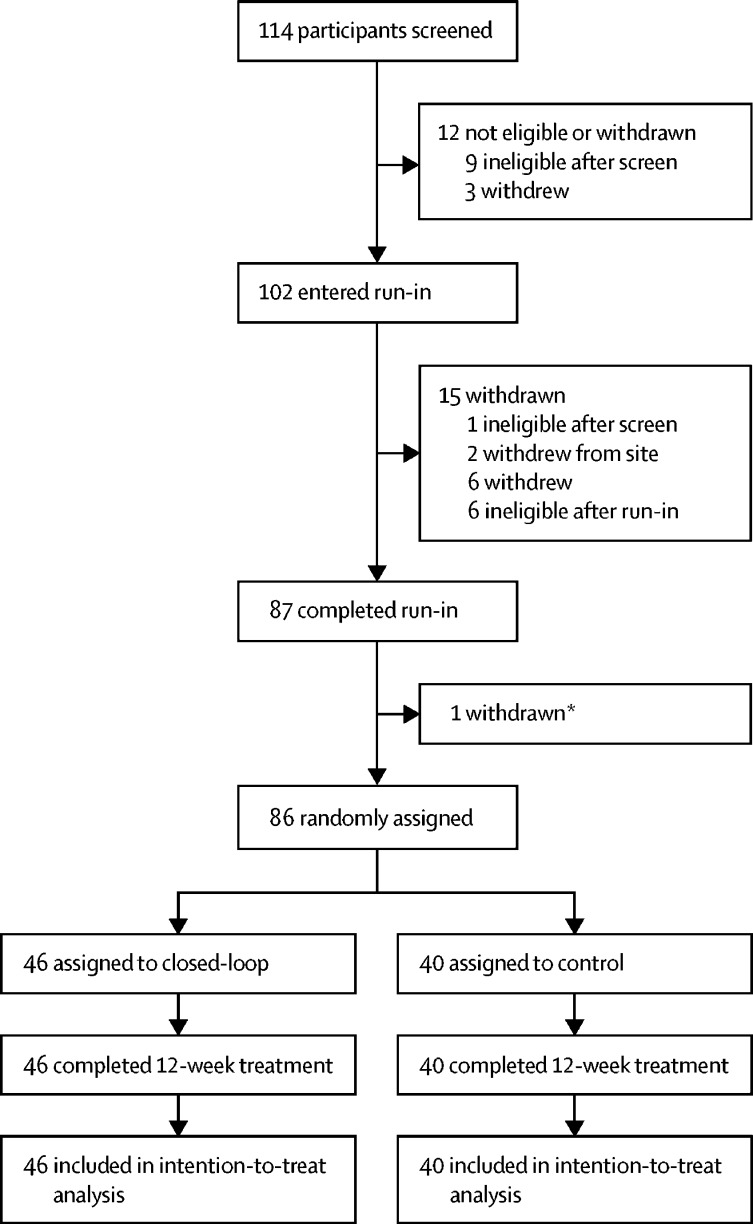
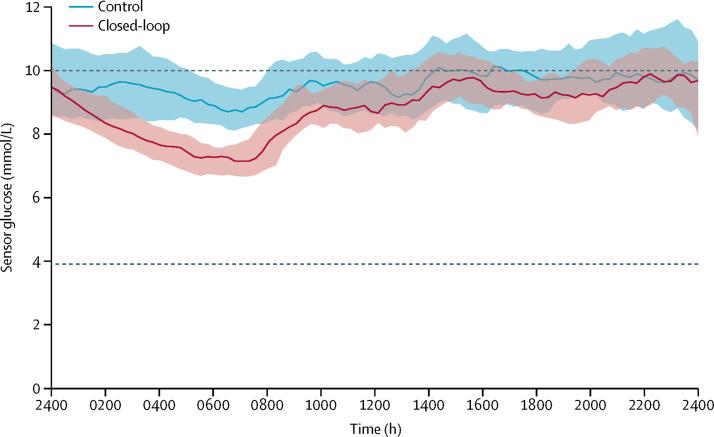
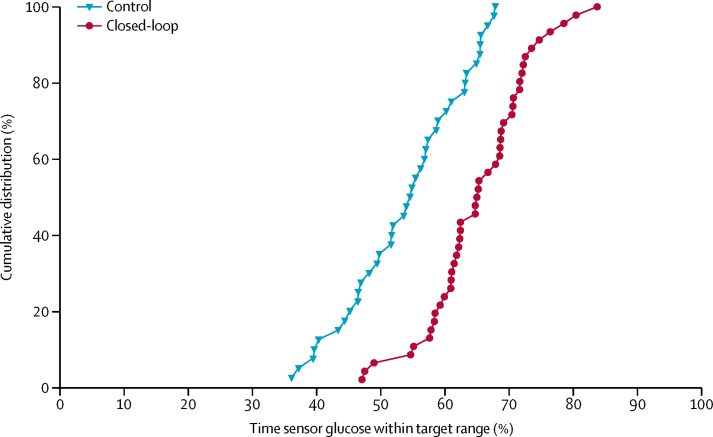
Background The achievement of glycaemic control remains challenging for patients with type 1 diabetes. We assessed the effectiveness of day-and-night hybrid closed-loop insulin delivery compared with sensor-augmented pump therapy in people with suboptimally controlled type 1 diabetes aged 6 years and older. Methods In this open-label, multicentre, multinational, single-period, parallel randomised controlled trial, participants were recruited from diabetes outpatient clinics at four hospitals in the UK and two centres in the USA. We randomly assigned participants with type 1 diabetes aged 6 years and older treated with insulin pump and with suboptimal glycaemic control (glycated haemoglobin [HbA 1c ] 7·5–10·0%) to receive either hybrid closed-loop therapy or sensor-augmented pump therapy over 12 weeks of free living. Training on study insulin pump and continuous glucose monitoring took place over a 4-week run-in period. Eligible subjects were randomly assigned using central randomisation software. Allocation to the two study groups was unblinded, and randomisation was stratified within centre by low (<8·5%) or high (≥8·5%) HbA 1c . The primary endpoint was the proportion of time that glucose concentration was within the target range of 3·9–10·0 mmol/L at 12 weeks post randomisation. Analyses of primary outcome and safety measures were done in all randomised patients. The trial is registered with ClinicalTrials.gov, number NCT02523131, and is closed to accrual. Findings From May 12, 2016, to Nov 17, 2017, 114 individuals were screened, and 86 eligible patients were randomly assigned to receive hybrid closed-loop therapy (n=46) or sensor-augmented pump therapy (n=40; control group). The proportion of time that glucose concentration was within the target range was significantly higher in the closed-loop group (65%, SD 8) compared with the control group (54%, SD 9; mean difference in change 10·8 percentage points, 95% CI 8·2 to 13·5; p<0·0001). In the closed-loop group, HbA 1c was reduced from a screening value of 8·3% (SD 0·6) to 8·0% (SD 0·6) after the 4-week run-in, and to 7·4% (SD 0·6) after the 12-week intervention period. In the control group, the HbA 1c values were 8·2% (SD 0·5) at screening, 7·8% (SD 0·6) after run-in, and 7·7% (SD 0·5) after intervention; reductions in HbA 1c percentages were significantly greater in the closed-loop group compared with the control group (mean difference in change 0·36%, 95% CI 0·19 to 0·53; p<0·0001). The time spent with glucose concentrations below 3·9 mmol/L (mean difference in change −0·83 percentage points, −1·40 to −0·16; p=0·0013) and above 10·0 mmol/L (mean difference in change −10·3 percentage points, −13·2 to −7·5; p<0·0001) was shorter in the closed-loop group than the control group. The coefficient of variation of sensor-measured glucose was not different between interventions (mean difference in change −0·4%, 95% CI −1·4% to 0·7%; p=0·50). Similarly, total daily insulin dose was not different (mean difference in change 0·031 U/kg per day, 95% CI −0·005 to 0·067; p=0·09) and bodyweight did not differ (mean difference in change 0·68 kg, 95% CI −0·34 to 1·69; p=0·19). No severe hypoglycaemia occurred. One diabetic ketoacidosis occurred in the closed-loop group due to infusion set failure. Two participants in each study group had significant hyperglycaemia, and there were 13 other adverse events in the closed-loop group and three in the control group. Interpretation Hybrid closed-loop insulin delivery improves glucose control while reducing the risk of hypoglycaemia across a wide age range in patients with suboptimally controlled type 1 diabetes. Funding JDRF, NIHR, and Wellcome Trust.
Overview
The claims and statistics of this paper haven’t been checked yet.
Free: it reads the open-access text and checks the first 5 claims that cite a source we can check. Create a free account to check every claim.
Integrity signals
Registry
Cites
Statistics
Figures
Verification
Claims the paper makes
The claims and statistics of this paper haven’t been checked yet.
Free: it reads the open-access text and checks the first 5 claims that cite a source we can check. Create a free account to check every claim.
Claims other papers make about this one
Each is checked against this paper’s own text: does it say what the citing paper says it does?
The source backs part of the claim, not all of it — or backs it for a different population, condition or comparison.
In the citing paper
“The use of SAP therapy has been shown to improve not just A1C or hypoglycemia but also glycemic variability and albuminuria1185–1187 when compared with MDI.”
From American Association of Clinical Endocrinology Clinical Practice Guideline: Developing a Diabetes Mellitus Comprehensive Care Plan-2022 Update. (2022) · cites this paper as [1187]
Experimental — accuracy not yet measuredThe source backs part of the claim, not all of it — or backs it for a different population, condition or comparison.
In the citing paper
“All currently FDA-approved AID systems were tested for safety and efficacy in their pivotal trials in children and adults with type 1 diabetes (194)(195)(196)(197)(198)(199)(200)(201)(202)(203)(204)(205)(206).”
From 7. Diabetes Technology: Standards of Care in Diabetes—2025 (2025) · cites this paper as [196]
Experimental — accuracy not yet measuredThe source backs part of the claim, not all of it — or backs it for a different population, condition or comparison.
In the citing paper
“Hybrid Closed Loop systems that might decrease the risk of DKA were not standard features of CSII treatment at the time of study inclusion. 22 , 23 , 26”
From Insulin pump therapy is associated with higher rates of mild diabetic ketoacidosis compared to injection therapy: A 2‐year Swedish national survey of children and adolescents with type 1 diabetes (2022) · cites this paper as [26]
Experimental — accuracy not yet measured
Self-check
Percentages, sums and reported differences re-computed from the paper’s own numbers.
The self-check needs the paper’s full text.
Citations
Cites
Unwin, N. C. (2006) · Cited by 1,661
Estimates of Location Based on Rank Tests
Hodges, J. L., & Lehmann, E. L. (1963) · The Annals of Mathematical Statistics · doi:10.1214/aoms/1177704172 · Cited by 1,260
Miller, K. M., Foster, N. C., Beck, R. W., Bergenstal, R. M., DuBose, S. N., DiMeglio, L. A., Maahs, D. M., & Tamborlane, W. V. (2015) · Diabetes Care · doi:10.2337/dc15-0078 · Cited by 1,254
Self-citationRisk of hypoglycaemia in types 1 and 2 diabetes: Effects of treatment modalities and their duration
UK Hypoglycaemia Study Group (2007) · Diabetologia · doi:10.1007/s00125-007-0599-y · Cited by 825
Gold, A. E., Macleod, K. M., & Frier, B. M. (1994) · Diabetes Care · doi:10.2337/diacare.17.7.697 · Cited by 810
Threshold-based insulin-pump interruption for reduction of hypoglycemia
Bergenstal, R. M., Klonoff, D. C., Garg, S. K., Bode, B. W., Meredith, M., Slover, R. H., Ahmann, A. J., Welsh, J. B., Lee, S. W., & Kaufman, F. R. (2013) · New England Journal of Medicine · doi:10.1056/nejmoa1303576 · Cited by 652
Self-citationSafety of a hybrid closed-loop insulin delivery system in patients with type 1 diabetes
Bergenstal, R. M., Garg, S., Weinzimer, S. A., Buckingham, B. A., Bode, B. W., Tamborlane, W. V., & Kaufman, F. R. (2016) · JAMA · doi:10.1001/jama.2016.11708 · Cited by 644
Self-citationGarg, S. K., Weinzimer, S. A., Tamborlane, W. V., Buckingham, B. A., Bode, B. W., Bailey, T. S., Brazg, R. L., Ilany, J., Slover, R. H., Anderson, S. M., et al. (2017) · Diabetes Technology & Therapeutics · doi:10.1089/dia.2016.0421 · Cited by 585
Self-citationWeisman, A., Bai, J.-W., Cardinez, M., Kramer, C. K., & Perkins, B. A. (2017) · The Lancet Diabetes & Endocrinology · doi:10.1016/s2213-8587(17)30167-5 · Cited by 463
Home Use of an Artificial Beta Cell in Type 1 Diabetes
Thabit, H., Tauschmann, M., Allen, J. M., Leelarathna, L., Hartnell, S., Wilinska, M. E., Acerini, C. L., Dellweg, S., Benesch, C., Heinemann, L., et al. (2015) · New England Journal of Medicine · doi:10.1056/nejmoa1509351 · Cited by 450
Self-citation
Cited by
Items 301–400 of 440
Sathyanarayanan, A., Crabtree, T. S. J., Choudhary, P., Elliott, D., Evans, M. L., Lumb, A. N., & Wilmot, E. G. (2022) · Diabetes Research and Clinical Practice · doi:10.1016/j.diabres.2022.109777 · Cited by 4
Self-citationLiu, W., Chen, T., Liang, B., Wang, Y., & Jin, H. (2023) · Frontiers in Endocrinology · doi:10.3389/fendo.2023.1115436 · Cited by 4
Omeara, M., Acuña, J. C. M., & Uribe, A. (2023) · JMIR Diabetes · doi:10.2196/46880 · Cited by 5
“The most recent devices allow more stringent targets to be pursued, reducing the risk of hypoglycemia and the coefficient of variation [50].”
BackgroundSehgal, S., de Bock, M. I., Grosman, B., Williman, J. A., Kurtz, N., Guzman, V., Benedetti, A., Roy, A., Turksoy, K., Juarez, M., et al. (2024) · BMC Endocrine Disorders · doi:10.1186/s12902-024-01709-y · Cited by 4
“In addition, both the TBR( 3.9mmol/L and time in severe hypoglycemia ( 3 mmol/L [ 54 mg/dL]) were lower (in both phases) than real-world studies published in the last 5 years [16, 17].”
BackgroundJacobasch, G., Bleiber, R., & Schönian, G. (1982) · PubMed · Cited by 5
Hackl, L., Bonfig, W., Pozza, S. B., Lanzinger, S., Treptau, N., Raile, K., Elpel, U., Ludwig, K., Buchal, G., Holl, R. W., et al. (2021) · Pediatric Diabetes · doi:10.1111/pedi.13283 · Cited by 3
Renard, É. (2020) · Journal of Diabetes Science and Technology · doi:10.1177/1932296820901612 · Cited by 5
Guideline Development for Medical Device Technology: Issues for Consideration
Battelino, T., Brosius, F. C., Ceriello, A., Cosentino, F., Green, J., Kellerer, M., Koob, S., Kosiborod, M., Lalic, N. M., Marx, N., et al. (2022) · Journal of Diabetes Science and Technology · doi:10.1177/19322968221093355 · Cited by 5
Bünzel, K., Sanfilippo, S., Moser, O., Mader, J. K., Hofmann, M., Rami-Merhar, B. M., & Tauschmann, M. (2025) · Hormone Research in Paediatrics · doi:10.1159/000548290 · Cited by 3
Self-citationDo, Q. D., Radovnická, L., Hašková, A., Konečná, J., Horová, E., Grunberger, G., Prázný, M., Parkin, C. G., Flekač, M., & Šoupal, J. (2025) · Diabetes Technology & Therapeutics · doi:10.1177/15209156251376013 · Cited by 3
Oktavian, P., Wungu, C. D. K., Wibisono, S., & Amin, I. M. (2025) · Endocrine Practice · doi:10.1016/j.eprac.2025.09.198 · Cited by 3
Diabetes mellitus and work participation
Tomic, D., Walker-Bone, K. E., Keegel, T. G., Zomer, E., Zoungas, S., & Magliano, D. J. (2025) · Nature Reviews Endocrinology · doi:10.1038/s41574-025-01194-w · Cited by 8
“No studies examined work outcomes of insulin pumps or closed-loop systems, despite strong evidence that these technologies improve glycaemic control 98,99 , which highlights an important evidence gap.”
Ståhl, F. L., Hellman, J., & Ekelund, C. (2026) · Diabetes Technology & Therapeutics · doi:10.1177/15209156251414976 · Cited by 4
“9 It is unknown to what extent the AID capabilities have been used in our data, and the system is therefore categorized as a CSII-CGM pump, and direct comparison with the AID trial results should be done with caution.”
Ward, M. C., Boucsein, A., Zhou, Y., Michaels, V. R., Haszard, J. J., Jefferies, C., Wiltshire, E. J., Paul, R. G., Lopez-Sanchez, C. A., de Bock, M. I., et al. (2026) · Diabetes Technology & Therapeutics · doi:10.1177/15209156261426883 · Cited by 3
“12 – 18 Furthermore, these results highlight the potential of AID to reduce burden and improve longer term outcomes, building on prior studies from our group.”
Jacobsen, S. S., Hommel, E. E., Ranjan, A. G., & Nørgaard, K. (2022) · Diabetes Technology & Therapeutics · doi:10.1089/dia.2021.0532 · Cited by 3
Power optimization in Battery-Powered Micro-Motors
Huang, H., Khandelwal, N., Kerssemakers, T., Ballinger, I., & Traverso, G. (2023) · IEEE International Conference on Cyborg and Bionic Systems (CBS) · doi:10.1109/cbs55922.2023.10115384 · Cited by 3
“It is also the key component for constructing a closed-loop drug delivery system [6], [7].”
BackgroundNattero‐Chávez, L., de la Villa, E. D. L. C., Pascual, E. L., Cebada, A. B., Gracia, T. R., Tobar, A. Q., Moñino, M. L., Rodríguez, C. S., Izquierdo, A., Escobar-Morreale, H. F., et al. (2024) · Therapeutic Advances in Endocrinology and Metabolism · doi:10.1177/20420188241288789 · Cited by 4
“14 The advances in smartphone-based technology offer patients convenient and potentially cost-effective self-management tools.”
BackgroundHybrid Closed-Loop Insulin Delivery Systems for People With Type 1 Diabetes
Service, C. H. T. A. (2021) · Canadian Journal of Health Technologies · doi:10.51731/cjht.2021.50 · Cited by 4
Discovery of insulin 100 years on
Russell-Jones, D. L., & Bawlchhim, Z. (2022) · Postgraduate Medical Journal · doi:10.1136/postgradmedj-2022-141651 · Cited by 3
Variation of glucose time in range in type 1 diabetes
Hansen, K. W., & Bibby, B. M. (2022) · Endocrinology Diabetes & Metabolism · doi:10.1002/edm2.379 · Cited by 2
RAIMOND, L. H., O’Donnell, S., Bøggild-Damkvist, T., Filges, T., & Lomborg, K. E. (2022) · Chronic Illness · doi:10.1177/17423953221142341 · Cited by 4
Technological Innovations in Type 1 Diabetes Mellitus Management: A Narrative Review
Gunatilake, S. S. C. (2024) · Sri Lanka Journal of Diabetes Endocrinology and Metabolism · doi:10.4038/sjdem.v15i1.7534 · Cited by 5
Wilkinson, T., Donnelly, S., Lever, C. S., Williman, J. A., Meier, R. A., Boucsein, A., Jones, S., Ballagh, D., van Rensburg, R., Sampson, R., et al. (2025) · Journal of Diabetes Science and Technology · doi:10.1177/19322968251349528 · Cited by 5
Glycemic variability and iatrogenic hypoglycemia: how to resolve
Monnier, L., Colette, C., Renard, É., Benhamou, P., Aouinti, S., Molinari, N., & Owens, D. (2025) · Diabetes Research and Clinical Practice · doi:10.1016/j.diabres.2025.112360 · Cited by 3
Pharmacotherapy of Children and Adolescents with Type 1 Diabetes Mellitus
Kapellen, T. M. (2019) · Handbook of experimental pharmacology · doi:10.1007/164_2019_245 · Cited by 4
Insulin pumps: are services and health equity undermining technological progression?
Curtis, L. R., Alington, K., & Partridge, H. L. (2021) · Practical Diabetes · doi:10.1002/pdi.2349 · Cited by 4
New technical approach to the diabetes therapy
Dovč, K., & Battelino, T. (2020) · Minerva Pediatrics · doi:10.23736/s0026-4946.20.05865-x · Cited by 3
E-Health: digitale Brücken im Versorgungssystem
Glück, S., & Perings, C. A. (2024) · Herz · doi:10.1007/s00059-024-05265-y · Cited by 2
Diabetes Without Math as Automation Advances: A Shifting Clinical Paradigm
Mora, P. A., Cook, K. P., & MacLeod, J. (2025) · Diabetes Technology and Obesity Medicine · doi:10.1089/dtom.2025.0033 · Cited by 3
Is Diabetes Technology Associated With Weight Gain in Children and Adolescents With Type 1 Diabetes?
Ziegler, J., Holl, R. W., Biester, T., Tauschmann, M., Rosenbauer, J., Neu, A., Flury, M., Seufert, J., Auzanneau, M., & Karges, B. (2025) · Diabetes Care · doi:10.2337/dc25-1768 · Cited by 2
Self-citationYe, M., & Arnold, M. A. (2021) · Analytical Chemistry · doi:10.1021/acs.analchem.1c00300 · Cited by 2
The implementation of modern technology into standard of care of type 1 diabetes
Petruželková, L., Plachý, L., Kajprová, M., Neuman, V., Obermannová, B., Průhová, Š., Lebl, J., Koloušková, S., & Šumník, Z. (2022) · Česko-slovenská pediatrie · doi:10.55095/cspediatrie2022/010 · Cited by 2
Health-Care Disparities in the Use of Diabetes Technologies in the UK
Barnard-Kelly, K. D., & Parkin, C. G. (2022) · International Journal of Diabetes and Technology · doi:10.4103/ijdt.ijdt_1_23 · Cited by 3
Insulin’s Legacy: A Century of Breakthroughs and Innovation
Hadid, S. A., Zhang, E., Frishman, W. H., & Brutsaert, E. F. (2024) · Cardiology in Review · doi:10.1097/crd.0000000000000680 · Cited by 4
Kosmeri, C., Baltogianni, M. S., Giapros, V. I., Siomou, E. C., Tsinopoulou, V. R., Balomenou, F., & Serbis, A. (2024) · Endocrines · doi:10.3390/endocrines5020015 · Cited by 3
“…use automated insulin delivery systems will probably achieve better glycemic control, decreased hypoglycemia risk, and larger freedom regarding food and exercise with the rapid advancement of the relevant technology and the possibility of fully closed-loop systems in the foreseeable future [34,35].”
BackgroundBoughton, C. K., Allen, J. M., Ware, J., Wilinska, M. E., Hartnell, S., Thankamony, A., Randell, T. L., Ghatak, A., Besser, R. E. J., Elleri, D., et al. (2024) · Efficacy and Mechanism Evaluation · doi:10.3310/ktfr5698 · Cited by 2
Self-citationKelly, J., Steenkamp, D., Brouillard, E., & Wolpert, H. A. (2025) · Diabetic Medicine · doi:10.1111/dme.70031 · Cited by 2
Early Stages of Automated Insulin Delivery
Zisser, H., Hovorka, R., Basu, A., Battelino, T., Boughton, C. K., Breton, M. D., Buckingham, B. A., Brown, S. A., Cherñavvsky, D. R., Dassau, E., et al. (2025) · Diabetes Technology & Therapeutics · doi:10.1089/dia.2025.18802.hz · Cited by 3
“89,93,96,97,119,120 This disappointing outcome is primarily due to the mismatch between the slow absorption of subcutaneous insulin 121 and rapid absorption of carbohydrate, hindering the ability of the systems to counteract variations in postprandial glucose levels.”
Self-citationClosed-loop insulin delivery system enhances type 1 diabetes glycemic control
Fuchs, J., & Hovorka, R. (2020) · The Journal of Pediatrics · doi:10.1016/j.jpeds.2019.12.050 · Cited by 2
Self-citationAdaptive and Individualized Artificial Pancreas for Precision Management of Type 1 Diabetes
Toffanin, C., Cobelli, C., & Magni, L. (2022) · Springer eBooks · doi:10.1007/978-3-030-98927-9_15 · Cited by 4
How prescribers can use technology to improve patient care
Shah, S., & Coughlan, J. (2019) · Journal of Prescribing Practice · doi:10.12968/jprp.2019.1.4.198 · Cited by 2
Managing Diabetes in the Digital Age
Dugan, J. A., Ahmed, S., Vincent, M., Perry, R., & Young, C. F. (2020) · Physician Assistant Clinics · doi:10.1016/j.cpha.2019.12.003 · Cited by 2
Insulin Edema With Use of U-500 Regular Insulin in a Hybrid Closed-Loop Insulin Pump
Vasigh, M., Mohammady, J., & Hopkins, R. L. (2020) · Cureus · doi:10.7759/cureus.10886 · Cited by 2
“The use of hybrid closed-loop systems has been found to result in significant improvement in “time in glucose target range” [12], as was the case in this patient.”
MethodUpdate Typ-1-Diabetes bei Kids: Insuline, Technologie, Telemedizin
Kapellen, T. M. (2021) · Info Diabetologie · doi:10.1007/s15034-021-3755-4 · Cited by 2
Ware, J., Boughton, C. K., Allen, J. M., Wilinska, M. E., Tauschmann, M., Denvir, L. A., Thankamony, A., Campbell, F., Wadwa, R. P., Buckingham, B. A., et al. (2021) · SSRN Electronic Journal · doi:10.2139/ssrn.3893537 · Cited by 2
Self-citationSchoelwer, M. J., Bisio, A., Breton, M. D., & DeBoer, M. D. (2021) · Diabetes Technology & Therapeutics · doi:10.1089/dia.2021.0405 · Cited by 1
Zahradnická, M., Németová, L., Kahle, M., Vávra, D., Bém, R., Girman, P., Haluzík, M., & Saudek, F. (2025) · Diabetes Technology & Therapeutics · doi:10.1089/dia.2024.0606 · Cited by 1
“8 Compared with other insulin regimens, 8 – 12 AID systems can offer improved glycemic control, quality of life, and cost-effectiveness.”
The ‘Designer’ Artificial Pancreas: How Does Current Technology Mimic Pancreatic Physiology?
Daly, L. A. (2025) · Cureus · doi:10.7759/cureus.86770 · Cited by 2
“Likewise, more recent large-scale clinical trials have demonstrated similar improvements across a range of populations, including pregnant women [25], children [26] and adults with sub-optimally controlled diabetes [27].”
Yang, L., Xie, F., Han, L., You, F., Wei, Z., Liu, C., Xu, C., & Sun, Y. (2025) · Therapeutic Advances in Endocrinology and Metabolism · doi:10.1177/20420188251347028 · Cited by 1
“18,19 Our study further supports the role of DIYAPS in improving glycemic outcomes.”
Li, M. M., Feldman, N., Tanzer, J. R., Tremblay, E. S., & Millington, K. (2025) · Diabetes Spectrum · doi:10.2337/ds24-0080 · Cited by 2
Angelino, S., Maiorino, M. I., Petrizzo, M., Martino, N. D., Caruso, P., Carbone, C., Pontillo, A., Maio, A., Longo, M., Scappaticcio, L., et al. (2025) · Frontiers in Endocrinology · doi:10.3389/fendo.2025.1717249 · Cited by 1
Benhamou, P., Vesin, A., Reynaud, L., & Chatel, B. (2025) · Journal of Diabetes Science and Technology · doi:10.1177/19322968251404493 · Cited by 1
Real-world evidence on the CamAPS FX hybrid closed-loop system in people living with type 1 diabetes
Boughton, C. K., Hovorka, T., Wilinska, M. E., Hartnell, S., & Hovorka, R. (2026) · Metabologia · doi:10.1007/s44357-025-00002-2 · Cited by 2
Self-citationParimi, N., Wu, C., Ziglar, J., Brown, E. A., Sidhaye, A. R., Mathioudakis, N. N., & Wolf, R. M. (2026) · Journal of Diabetes Science and Technology · doi:10.1177/19322968261426387 · Cited by 1
Liu, Y., Wang, Y., Wu, W., Chen, Y., Zeng, T., Li, X., Zheng, C., Li, Y., Wu, X., Yao, H., et al. (2026) · Diabetes Obesity and Metabolism · doi:10.1111/dom.70709 · Cited by 1
“Slight weight gain was also recorded, aligning with previous HCL trials [25, 36, 37].”
Wolf, R. M., OSPELT, E. L., VORA, D., Odugbesan, O., Brown, E. A., Wong, J. C., March, C. A., & Mathioudakis, N. N. (2026) · Journal of Diabetes Science and Technology · doi:10.1177/19322968261459450 · Cited by 1
Enlarging the loop: closed-loop insulin delivery for type 1 diabetes
Galderisi, A., & Sherr, J. L. (2018) · The Lancet · doi:10.1016/s0140-6736(18)32329-8 · Cited by 3
Pushing the limits of insulin delivery 100 years later: A case study of a race across Canada
Turner, L. V., & Riddell, M. C. (2021) · Diabetes Obesity and Metabolism · doi:10.1111/dom.14629 · Cited by 1
“An AID system is composed of an insulin pump, CGM, and computer-based algorithm that can include specific settings for hypoglycaemia mitigation during an acute exercise session.(14) However, few studies have examined the effectiveness of AID systems during sustained multi-day extreme endurance exercise events.”
Bashir, B., Elisaus, P., Chatzimavridou-Grigoriadou, V., Urwin, A., Chapman, A., Ohol, S., Findlow, L. A., Foster, J., Harwood, R., Fullwood, C., et al. (2022) · Diabetic Medicine · doi:10.1111/dme.14816 · Cited by 1
Self-citationSISTEMAS AUTOMÁTICOS DE ADMINISTRACIÓN DE INSULINA: MITOS, LEYENDAS Y GESTIÓN DEL SANTO GRIAL
Mesa, A., & Conget, I. (2023) · Endocrinología Diabetes y Nutrición · doi:10.1016/j.endinu.2023.01.002 · Cited by 1
Automated insulin delivery systems: Myths, legends and management of the Holy Grail
Mesa, A., & Conget, I. (2023) · Endocrinología Diabetes y Nutrición (English ed ) · doi:10.1016/j.endien.2023.01.002 · Cited by 3
Weekly insulin: a paradigm shift in type 1 diabetes therapy
SHAH, A. S., & Wolf, R. M. (2023) · The Lancet · doi:10.1016/s0140-6736(23)02227-4 · Cited by 2
Wilkinson, T., & de Bock, M. I. (2023) · Journal of Diabetes Science and Technology · doi:10.1177/19322968231208216 · Cited by 1
Wearable Artificial Pancreas Device Technology
Matsumoto, A. (2024) · Springer eBooks · doi:10.1007/978-981-99-8122-9_12 · Cited by 1
Mit automatischer Insulindosierung durch die Schwangerschaft
Thomas, A. (2024) · Info Diabetologie · doi:10.1007/s15034-023-4910-x · Cited by 1
Update on recent advances in technology in type 1 diabetes
Aslam, A., Thabit, H., & Leelarathna, L. (2024) · British Journal of Diabetes · doi:10.15277/bjd.2024.440 · Cited by 3
“HCPs providing AID therapy will also need to ensure that specific education and clinical guidance on managing glycaemia during periods of illness or exercise are provided to users of this system, to ensure their safe and effective use.”
BackgroundSelf-citationTauschmann, M. (2024) · Die Diabetologie · doi:10.1007/s11428-024-01240-7 · Cited by 1
Self-citationMesa, A., Roca, D., Granados, M., Pueyo, I., Cabré, C., Amor, A. J., Solà, C., Matas, O., Castanys, J., Conget, I., et al. (2024) · Endocrinología Diabetes y Nutrición (English ed ) · doi:10.1016/j.endien.2024.11.004 · Cited by 1
Franceschi, R., Mozzillo, E., Candia, F. D., Fanti, S., Maines, E., Guarnieri, C., Maffeis, C., Ros, A. D., Piccoli, E., Pertile, R., et al. (2025) · Diabetes Technology and Obesity Medicine · doi:10.1089/dtom.2025.0022 · Cited by 3
“9,10 Regarding hybrid closed loop (HCL) systems, higher BMI z-score values than CSII users have been found in some studies 11 – 13 but not in others.”
Early Stages of Automated Insulin Delivery
Zisser, H., Hovorka, R., Basu, A., Battelino, T., Boughton, C. K., Breton, M. D., Buckingham, B. A., Brown, S. A., Cherñavvsky, D. R., Dassau, E., et al. (2025) · Journal of Diabetes Science and Technology · doi:10.1177/19322968251335685 · Cited by 2
“89,93,96,97,119,120 This disappointing outcome is primarily due to the mismatch between the slow absorption of sub-cutaneous insulin 121 and rapid absorption of carbohydrate, hindering the ability of the systems to counteract variations in postprandial glucose levels.”
Self-citationLiu, W., Chen, T., & Jin, H. (2020) · International Conference on Medical and Health Informatics (ICMHI) · doi:10.1145/3418094.3418131 · Cited by 1
L'insulinothérapie au xxie siècle : une symphonie de plus en plus harmonieuse
Benhamou, P., Hanaire, H. P., & Renard, É. (2021) · Médecine des Maladies Métaboliques · doi:10.1016/s1957-2557(21)00179-6 · Cited by 1
Real-World Experience With Automated Insulin Pump Technology in Veterans With Type 1 Diabetes
Amole, M., WHYTE, L., Ghayee, H. K., Bril, F., Cusi, K. J., & Leey, J. (2021) · Federal Practitioner · doi:10.12788/fp.0156 · Cited by 2
Event Detection and Control of Blood Glucose Levels Using Deep Neural Network
Govindaraju, D., Shree, R. R. R., Priyanka, S., Porkodi, S., & Subbian, S. (2021) · Advances in intelligent systems and computing · doi:10.1007/978-981-16-2674-6_18 · Cited by 2
Provision of continuous subcutaneous insulin infusion to type 1 diabetes ‘frequent flyers’
Amato, L. A., Kalolo, R., Yu, W., & Simmons, D. S. (2023) · Internal Medicine Journal · doi:10.1111/imj.16213 · Cited by 1
Automated Insulin Delivery for People With Type 1 Diabetes and High HbA1c: Is It Time?
Wheeler, B. J., & Boucsein, A. (2024) · Diabetes Care · doi:10.2337/dci24-0076 · Cited by 1
Hybrid-Closed-Loop-System bei mangelnder Zuckerkontrolle besonders gut
Kapellen, T. M. (2018) · Info Diabetologie · doi:10.1007/s15034-018-1399-9
Quel scénario pour le déploiement de l'insulinothérapie automatisée en boucle fermée ?
Benhamou, P., Franc, S., Hanaire, H. P., Penfornis, A., & Charpentier, G. (2018) · Médecine des Maladies Métaboliques · doi:10.1016/s1957-2557(18)30176-7
Day, C. (2018) · British Journal of Diabetes · doi:10.15277/bjd.2018.199
Optimizing Insulin Pump Therapy: Advanced Bolus Options
Carić, B., Vuković, B., & Lalic, K. S. (2019) · World Congress on Medical Physics and Biomedical Engineering, September 7 - 12, 2009, Munich, Germany · doi:10.1007/978-3-030-17971-7_50
Neue Technologien in der Diabetestherapie
Serfling, G., Kalscheuer, H., Schmid, S. M., & Lehnert, H. (2019) · Der Internist · doi:10.1007/s00108-019-0654-z · Cited by 1
Sepsis prediction model derived from hospital-arrival clinical data
Balamuth, F. (2020) · The Journal of Pediatrics · doi:10.1016/j.jpeds.2019.12.051 · Cited by 1
The dawn of automated insulin delivery: from promise to product
Nally, L. M., & Sherr, J. L. (2020) · Elsevier eBooks · doi:10.1016/b978-0-12-816714-4.00016-8
Rasante Weiterentwicklung der Therapiemöglichkeiten
Kapellen, T. M. (2020) · Pädiatrie · doi:10.1007/s15014-020-2342-9
Neue Entwicklungen bei Diabetes mellitus Typ 1
Haberbosch, L., & Spranger, J. (2021) · DMW - Deutsche Medizinische Wochenschrift · doi:10.1055/a-1240-9714
“Im Rahmen der Onset-Studien zeigten sich eine signifikante Reduktion des HbA1c sowie niedrigere postprandiale Blutzuckerspiegel bei vergleichbaren Hypoglykämieraten [7].”
BackgroundInfluential(2020) · Wiener klinische Wochenschrift · doi:10.1007/s00508-020-01674-1
Kowalski, A. J. (2019) · Elsevier eBooks · doi:10.1016/b978-0-12-815655-1.00008-9
La terapia con microinfusore: stato dell’arte
Bruttomesso, D. (2022) · il Diabete · doi:10.30682/ildia2201g · Cited by 3
Omeara, M., Acuña, J. C. M., & Uribe, A. (2022) · Research Square · doi:10.21203/rs.3.rs-1688540/v1
Berge, T. V. D., Biester, S., Biester, T., Buchmann, A.-K., Datz, N., Grosser, U., Kapitzke, K., Klusmeier, B., Remus, K., Reschke, F., et al. (2022) · Diabetes aktuell · doi:10.1055/a-1851-2883
Omeara, M., Acuña, J. C. M., & Uribe, A. (2022) · Research Square · doi:10.21203/rs.3.rs-1688540/v2
Power Optimization in Battery-Powered Micro-MotorsPreprint
Huang, H., Khandelwal, N., Kerssemakers, T., Ballinger, I., & Traverso, G. (2022) · doi:10.36227/techrxiv.21082588.v1
Power Optimization in Battery-Powered Micro-MotorsPreprint
Huang, H., Khandelwal, N., Kerssemakers, T., Ballinger, I., & Traverso, G. (2022) · doi:10.36227/techrxiv.21082588
Proceedings of 21st ISPAD science school for physicians 2022
Santos, T. J. D., Chobot, A. P., Piona, C. A., Dovč, K., Biester, T., Gajewska, K. A., de Beaufort, C. E., Šumník, Z., & Petruželková, L. (2022) · Pediatric Diabetes · doi:10.1111/pedi.13412 · Cited by 2
An artificial pancreas system in android phones: A dual app architecture
Chandrasekhar, A., Saini, D., & Padhi, R. (2023) · Pervasive and Mobile Computing · doi:10.1016/j.pmcj.2023.101767 · Cited by 1
Jacobsen, L. M., Sherr, J. L., Considine, E. G., Chen, A., Peeling, S., Hulsmans, M., Charleer, S., Urazbayeva, M., Tosur, M., ALAMARIE, S. A., et al. (2023) · medRxiv · doi:10.1101/2023.04.15.23288624
“%) on SAP had improved TIR.53 Adolescents and All rights reserved.”
BackgroundInfluentialHatulely, C. A. (2023) · Journal of Advance Research in Medical & Health Science · doi:10.53555/nnmhs.v9i8.1807
“Lower bolus insulin requirements in the closed-loop group than in the sensor-augmented pump therapy group could be explained by lower glucose concentrations in this group during closed-loop use, lessening the need for correction boluses.(14,15,20)”
BackgroundContinuous subcutaneous insulin infusion: a local perspective
Yau, T., Jenkins, A. J., & Ronald, C. W. (2023) · Hong Kong Medical Journal · doi:10.12809/hkmj219644
Elhenawy, Y. I., Shaarawy, M. A., & Selim, E. M. (2023) · Journal of Pediatric Endocrinology and Metabolism · doi:10.1515/jpem-2023-0250
Diabetestechnik: Vom Pieksen über das Monitoring zum Closed Loop
Berwinkel, S., & Flohr, F. (2023) · Ernährung & Medizin · doi:10.1055/a-2100-0336
Metadata
- Authors
- Tauschmann, M., Thabit, H., Bally, L., Allen, J. M., Hartnell, S., Wilinska, M. E., Ruan, Y., Sibayan, J., Kollman, C., Cheng, P., Beck, R. W., Acerini, C. L., Evans, M. L., Dunger, D. B., Elleri, D., Campbell, F., Bergenstal, R. M., Criego, A., Shah, V. N., Leelarathna, L., Hovorka, R., Alvarado, B., Ashanti, C., Baggott, J., Balakrishnan, K., Barber, N., Bath, L., Beasley, S., Beatson, C., Borgman, S., Bradshaw, S., Bugielski, B., Carlson, A., Collett, E., Curtis, J., Demmitt, J., Donahue, D., Exall, J., Forshaw, R., Hayes, J., Heath, S., Hellmann, A., Huegel, V, Hyatt, J., James, L., Joseph, H., Joshee, P., Konerza, W., Lum, J., Madden, M., Martens, T., McCarthy, C., McDonald, M., Mikityuk, V, Miles, H., Miller, D., Mubita, W., Murphy, C., Olson, B., Pad, R., Patibandla, N., Riding, K., Shaju, A., Thomas, L., Thomson, J., White, D., Yau, S., & Yong, J.
- Affiliations
- University of Cambridge (GB)
- Cambridge University Hospitals NHS Foundation Trust (GB)
- Jaeb Center for Health Research (US)
- Royal Hospital for Sick Children (GB)
- Leeds Teaching Hospitals NHS Trust (GB)
- University of Colorado Anschutz (US)
- University of Manchester (GB)
- Corresponding author
- Hovorka, Roman
- ORCID
- Tauschmann, Martin
- Thabit, Hood
- Bally, Lia
- Hartnell, Sara
- Wilinska, Malgorzata E
- Ruan, Yue
- Sibayan, Judy
- Kollman, Craig
- Cheng, Peiyao
- Beck, Roy W
- Acerini, Carlo L
- Evans, Mark L
- Dunger, David B
- Campbell, Fiona
- Bergenstal, Richard M
- Criego, Amy
- Shah, Viral N
- Leelarathna, Lalantha
- Hovorka, Roman
- Beatson, C
- Forshaw, R
- Lum, J
- Martens, T
- Miles, H
- Mubita, W
- Venue
- The Lancet
- Publisher
- Elsevier BV
- Published
- 2018-10
- Volume
- 392
- Issue
- 10155
- Pages
- 1321-1329
- ISSN
- 0099-5355 (ISSN-L)
- 0140-6736
- PMC
- PMC6182127
- OpenAlex
- W2890424595
- Semantic Scholar
- 2b3d55b3718484b4ce018d80a4d5c3aad85b2559
- Cited by
- 440
- References
- 22
- Citations by year
- 2026: 29 · 2025: 48 · 2024: 58 · 2023: 63 · 2022: 66 · 2021: 65 · 2020: 58 · 2019: 43 · 2018: 7
- FWCI
- 34.39
- Type
- journal article
- Language
- en
- Open access
- hybrid
- doi.org
- Licence
- cc-by
- www.elsevier.com/tdm/userlicense/1.0/ (tdm)
- www.elsevier.com/legal/tdmrep-license (tdm)
- creativecommons.org/licenses/by/4.0/ (vor)
- Locations
- The Lancet (publishedVersion, cc-by)
- Europe PMC (PubMed Central) (publishedVersion, other-oa)
- PubMed Central (publishedVersion, cc-by)
- PubMed (publishedVersion)
- Research Explorer (The University of Manchester) (submittedVersion, other-oa)
- Funders
- University of Minnesota
- Wellcome Trust (100574/Z/12/Z)
- University Hospitals of Leicester NHS Trust
- National Institute for Health and Care Research (100574/Z/12/Z)
- NIHR Cambridge Biomedical Research Centre (100574/Z/12/Z)
- Topics
- Health Sciences › Medicine › Endocrinology, Diabetes and Metabolism › Diabetes Management and Research
- Health Sciences › Medicine › Endocrinology, Diabetes and Metabolism › Diabetes Management and Education
- Life Sciences › Biochemistry, Genetics and Molecular Biology › Genetics › Diabetes and associated disorders
- Keywords
- type 1 diabetes, hybrid closed-loop insulin delivery, sensor-augmented pump therapy, HbA1c, continuous glucose monitoring, insulin pump, time in target glucose range, glycemic control, children and adolescents, hypoglycemia
- MeSH terms
- Adolescent, Adult, Child, Child, Preschool, Diabetes Mellitus, Type 1, Female, Glycated Hemoglobin, Humans, Hypoglycemia, Hypoglycemic Agents, Insulin, Insulin Infusion Systems, Male, Blood Glucose Self-Monitoring, Infusion Pumps, Implantable, Young Adult
About these checks
Registry, retraction, Cites and statistics results are computed, not judged, with one exception: a printed reference that no index lists is read once by a model before it counts as a citation error. Claims are extracted by a model and kept only when their quote appears verbatim in the text; each cited source is then checked, with a model’s help, for whether it says what the claim relies on. Those verdicts can be wrong — read the claim’s quote and the cited source before relying on one.
Statistics and arithmetic are recomputed, not judged.
Confidence bands are shown only for fields calibrated on our annotated test set. None is calibrated yet, so no band is shown.
What counts as a claim ›How we measure confidence ›How we check this ›
Are you an author, or do you see a problem with this page? Request a review
Data sources
Bibliographic data: Semantic Scholar, OpenAlex, Crossref.
Contains information from the Semantic Scholar Academic Graph Datasets, made available under the ODC Attribution License (ODC-BY 1.0).
Semantic Scholar’s data is described in: Kinney, R., et al. (2023). The Semantic Scholar Open Data Platform. arXiv:2301.10140.
