

Fertility, mortality, migration, and population scenarios for 195 countries and territories from 2017 to 2100: a forecasting analysis for the Global Burden of Disease Study
Open accessThe DOI matches its Crossref record; 33 of the 34 references it cites were found in a registry or an index.
Abstract
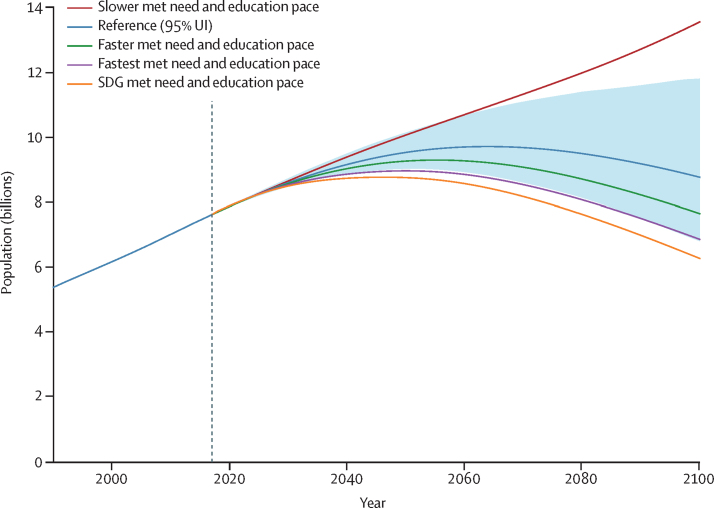
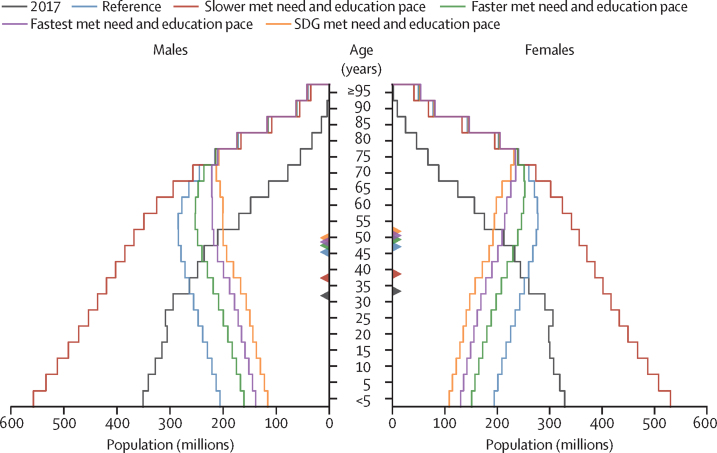
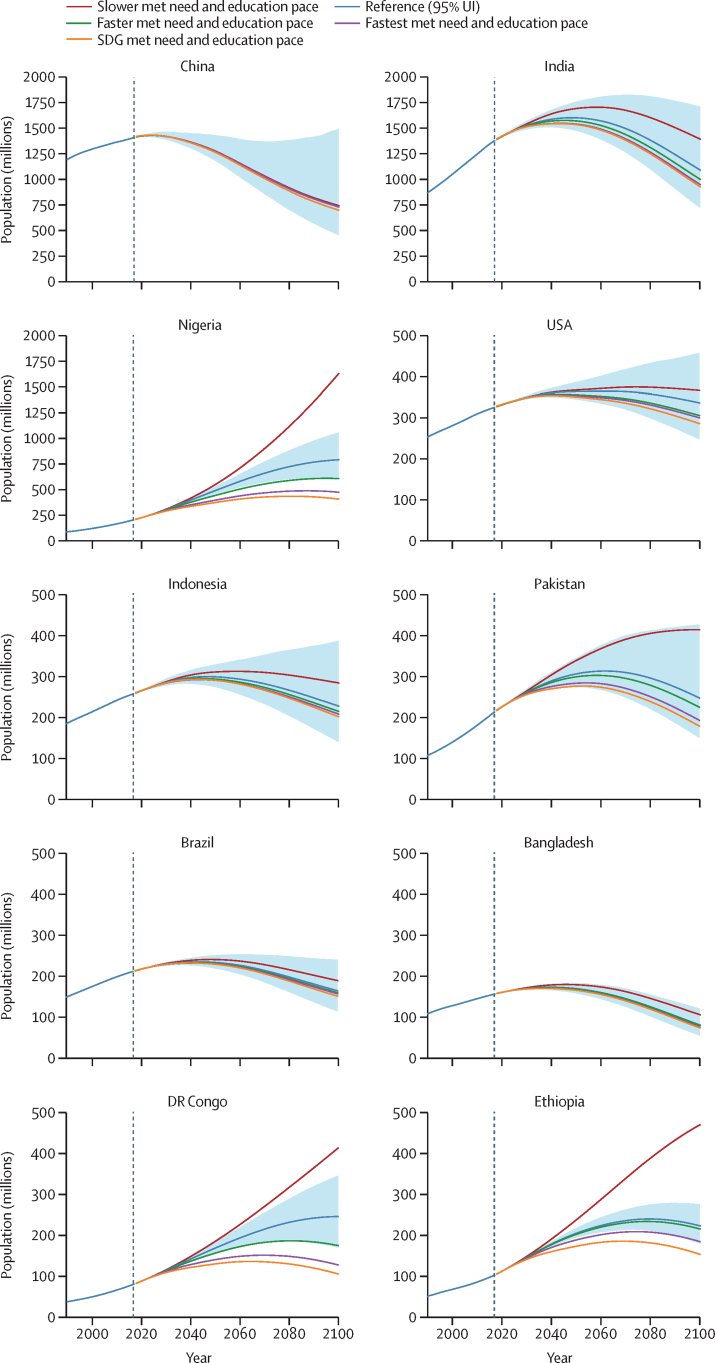
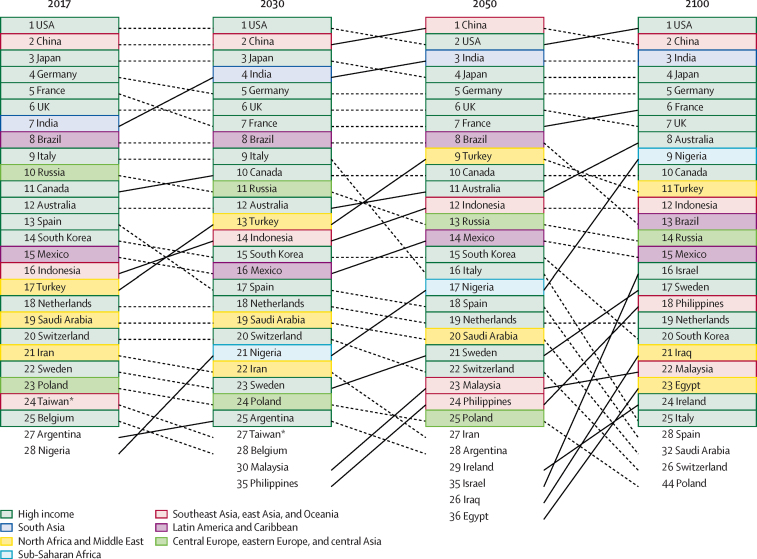
BACKGROUND: Understanding potential patterns in future population levels is crucial for anticipating and planning for changing age structures, resource and health-care needs, and environmental and economic landscapes. Future fertility patterns are a key input to estimation of future population size, but they are surrounded by substantial uncertainty and diverging methodologies of estimation and forecasting, leading to important differences in global population projections. Changing population size and age structure might have profound economic, social, and geopolitical impacts in many countries. In this study, we developed novel methods for forecasting mortality, fertility, migration, and population. We also assessed potential economic and geopolitical effects of future demographic shifts. METHODS: We modelled future population in reference and alternative scenarios as a function of fertility, migration, and mortality rates. We developed statistical models for completed cohort fertility at age 50 years (CCF50). Completed cohort fertility is much more stable over time than the period measure of the total fertility rate (TFR). We modelled CCF50 as a time-series random walk function of educational attainment and contraceptive met need. Age-specific fertility rates were modelled as a function of CCF50 and covariates. We modelled age-specific mortality to 2100 using underlying mortality, a risk factor scalar, and an autoregressive integrated moving average (ARIMA) model. Net migration was modelled as a function of the Socio-demographic Index, crude population growth rate, and deaths from war and natural disasters; and use of an ARIMA model. The model framework was used to develop a reference scenario and alternative scenarios based on the pace of change in educational attainment and contraceptive met need. We estimated the size of gross domestic product for each country and territory in the reference scenario. Forecast uncertainty intervals (UIs) incorporated uncertainty propagated from past data inputs, model estimation, and forecast data distributions. FINDINGS: The global TFR in the reference scenario was forecasted to be 1·66 (95% UI 1·33-2·08) in 2100. In the reference scenario, the global population was projected to peak in 2064 at 9·73 billion (8·84-10·9) people and decline to 8·79 billion (6·83-11·8) in 2100. The reference projections for the five largest countries in 2100 were India (1·09 billion [0·72-1·71], Nigeria (791 million [594-1056]), China (732 million [456-1499]), the USA (336 million [248-456]), and Pakistan (248 million [151-427]). Findings also suggest a shifting age structure in many parts of the world, with 2·37 billion (1·91-2·87) individuals older than 65 years and 1·70 billion (1·11-2·81) individuals younger than 20 years, forecasted globally in 2100. By 2050, 151 countries were forecasted to have a TFR lower than the replacement level (TFR <2·1), and 183 were forecasted to have a TFR lower than replacement by 2100. 23 countries in the reference scenario, including Japan, Thailand, and Spain, were forecasted to have population declines greater than 50% from 2017 to 2100; China's population was forecasted to decline by 48·0% (-6·1 to 68·4). China was forecasted to become the largest economy by 2035 but in the reference scenario, the USA was forecasted to once again become the largest economy in 2098. Our alternative scenarios suggest that meeting the Sustainable Development Goals targets for education and contraceptive met need would result in a global population of 6·29 billion (4·82-8·73) in 2100 and a population of 6·88 billion (5·27-9·51) when assuming 99th percentile rates of change in these drivers. INTERPRETATION: Our findings suggest that continued trends in female educational attainment and access to contraception will hasten declines in fertility and slow population growth. A sustained TFR lower than the replacement level in many countries, including China and India, would have economic, social, environmental, and geopolitical consequences. Policy options to adapt to continued low fertility, while sustaining and enhancing female reproductive health, will be crucial in the years to come. FUNDING: Bill & Melinda Gates Foundation.
Overview
The claims and statistics of this paper haven’t been checked yet.
Free: it reads the open-access text and checks the first 5 claims that cite a source we can check. Create a free account to check every claim.
Integrity signals
Registry
Cites
Statistics
Figures
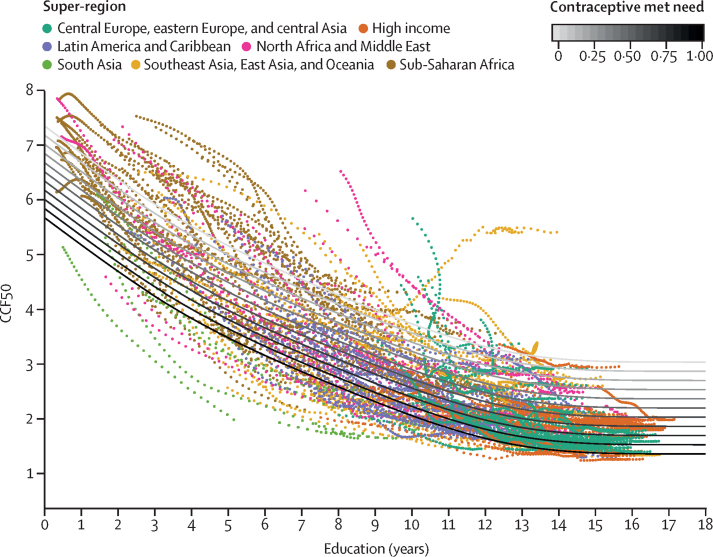
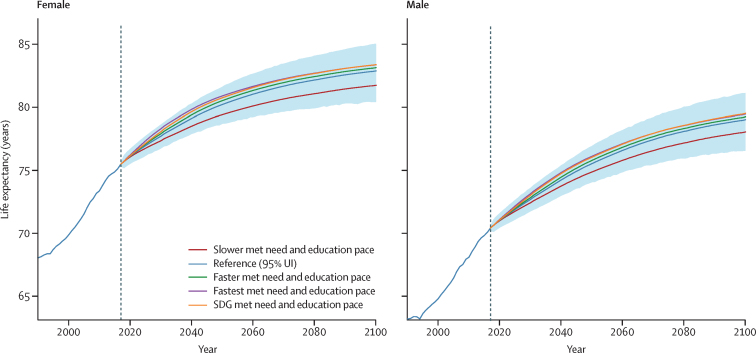
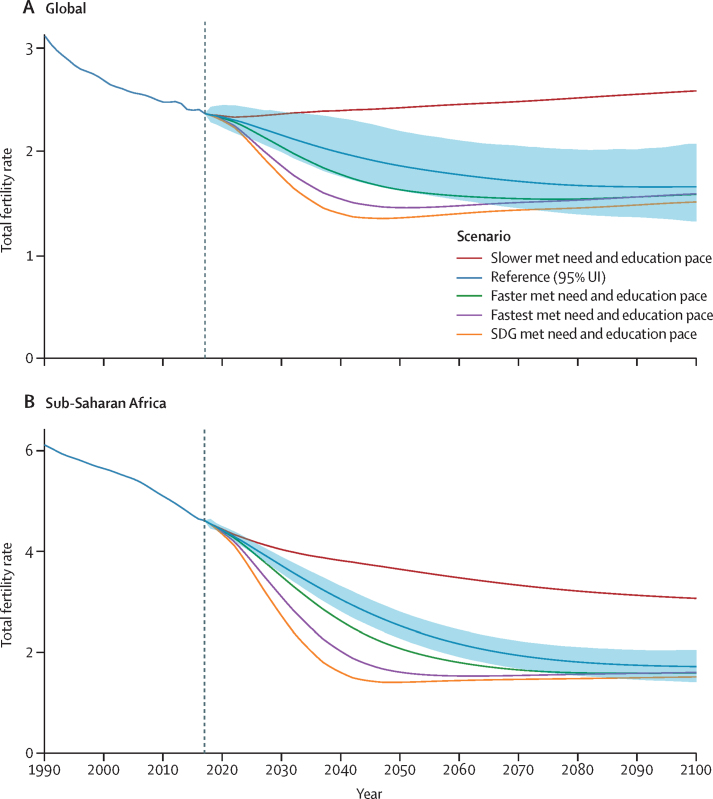
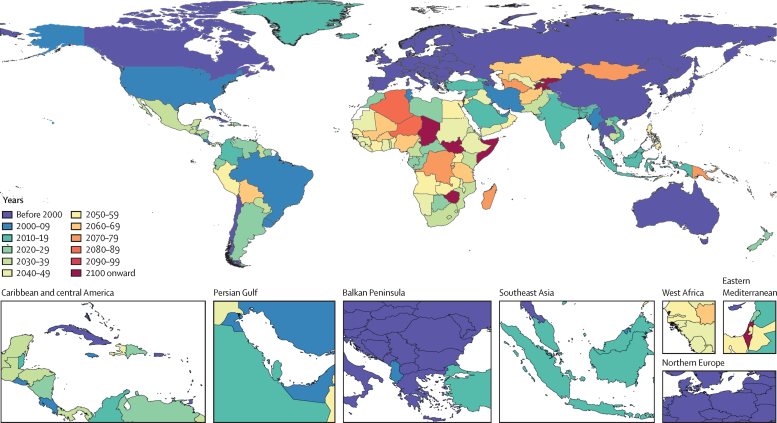
Verification
Claims the paper makes
The claims and statistics of this paper haven’t been checked yet.
Free: it reads the open-access text and checks the first 5 claims that cite a source we can check. Create a free account to check every claim.
Claims other papers make about this one
Each is checked against this paper’s own text: does it say what the citing paper says it does?
The source backs part of the claim, not all of it — or backs it for a different population, condition or comparison.
In the citing paper
“Demographic data in the 5 years preceding 2021 demonstrate that the total fertility rate (TFR) in some countries has fallen below replacement levels—the minimum rate necessary for generational replacement of the population assuming no migration—with no evidence of this predicted rebound.”
From Global fertility in 204 countries and territories, 1950–2021, with forecasts to 2100: a comprehensive demographic analysis for the Global Burden of Disease Study 2021 (2024) · cites this paper as [4]
Experimental — accuracy not yet measuredThe source backs part of the claim, not all of it — or backs it for a different population, condition or comparison.
In the citing paper
“By 2050 and 2100, respectively, 77% of predominantly high-income countries and 93% of all countries will have a TFR below the replacement level of 2.1 children per woman.”
From Declining global fertility rates and the implications for family planning and family building: an IFFS consensus document based on a narrative review of the literature (2024) · cites this paper as Vollset et al., 2020
Experimental — accuracy not yet measuredThe source backs part of the claim, not all of it — or backs it for a different population, condition or comparison.
In the citing paper
“Not including the effects of migration, many countries are predicted to have a population decline of more than 50% from 2017 to 2100 (Vollset et al., 2020; Dao et al., 2021).”
From Declining global fertility rates and the implications for family planning and family building: an IFFS consensus document based on a narrative review of the literature (2024) · cites this paper as Vollset et al., 2020
Experimental — accuracy not yet measuredThe source backs part of the claim, not all of it — or backs it for a different population, condition or comparison.
In the citing paper
“Different TFRs among countries will promote immigration and emigration with important consequences for all countries, including increased political and social friction (Vollset et al., 2020).”
From Declining global fertility rates and the implications for family planning and family building: an IFFS consensus document based on a narrative review of the literature (2024) · cites this paper as Vollset et al., 2020
Experimental — accuracy not yet measured
6 more claims about this paper
Create a free account to see every claim other papers make about this one.
Self-check
Percentages, sums and reported differences re-computed from the paper’s own numbers.
The self-check needs the paper’s full text.
Citations
Cites
Planetary boundaries: Guiding human development on a changing planet
Steffen, W., Richardson, K., Rockström, J., Cornell, S. E., Fetzer, I., Bennett, E. M., Biggs, R., Carpenter, S. R., de Vries, W., de Wit, C. A., et al. (2015) · Science · doi:10.1126/science.1259855 · Cited by 12,527
Roth, G. A., Abate, D., Abate, K. H., Abay, S. M., Abbafati, C., Abbasi, N., Abbastabar, H., Abd-Allah, F., Abdela, J., Abdelalim, A., et al. (2018) · The Lancet · doi:10.1016/s0140-6736(18)32203-7 · Cited by 8,600
Planetary Boundaries: Exploring the Safe Operating Space for Humanity
Rockström, J., Steffen, W., Noone, K., Persson, Å., Chapin, F. S. I., Lambin, E., Lenton, T. M., Scheffer, M., Folke, C., Schellnhuber, H. J., et al. (2009) · Ecology and Society · doi:10.5751/es-03180-140232 · Cited by 7,187
Time Series: Theory and Methods
Ziegel, E. R., Brockwell, P., & Davis, R. (1992) · Technometrics · doi:10.2307/1270070 · Cited by 5,012
Stanaway, J. D., Afshin, A., Gakidou, E., Lim, S. S., Abate, D., Abate, K. H., Abbafati, C., Abbasi, N., Abbastabar, H., Abd-Allah, F., et al. (2018) · The Lancet · doi:10.1016/s0140-6736(18)32225-6 · Cited by 4,943
Self-citationThe second machine age: work, progress, and prosperity in a time of brilliant technologies
(2015) · Choice Reviews Online · doi:10.5860/choice.184834 · Cited by 4,381
Foreman, K. J., Marquez, N., Dolgert, A., Fukutaki, K., Fullman, N., McGaughey, M., Pletcher, M. A., Smith, A. E., Tang, K., Yuan, C.-W., et al. (2018) · The Lancet · doi:10.1016/s0140-6736(18)31694-5 · Cited by 2,994
Self-citationEssay on the Principle of Population: The 1803 Edition
Malthus, T. R. (2019) · Yale University Press eBooks · doi:10.12987/9780300231892 · Cited by 1,949
Guidelines for accurate and transparent health estimates reporting: the GATHER statement
Stevens, G. A., Alkema, L., Black, R. E., Boerma, J. T., Collins, G. S., Ezzati, M., Grove, J. T., Hogan, D. R., Hogan, M. C., Horton, R., et al. (2016) · The Lancet · doi:10.1016/s0140-6736(16)30388-9 · Cited by 1,798
Self-citationIPCC (2022) · Cambridge University Press eBooks · doi:10.1017/9781009157940 · Cited by 1,482
Research works printed but not linked: 1
- Lutz W Butz WP KC S World population and human capital in the twenty-first century 2014 2014 Oxford University Press Oxford
Cited by
Items 901–1,000 of 1,000
Fertility behaviour under geopolitical uncertainty: Evidence from Ukraine
Saha, J. (2026) · Economics & Human Biology · doi:10.1016/j.ehb.2026.101594 · Cited by 2
Su, Z., Yang, X., McDonnell, D., Ahmad, J., Bentley, B. L., Cheshmehzangi, A., Šegalo, S., Nie, J.-B., da Veiga, C. P., & Xiang, Y. (2026) · Frontiers in Public Health · doi:10.3389/fpubh.2026.1734790 · Cited by 2
“Analyses of the population trends paint a sobering picture—23 countries world-wide, including Japan, Spain, Italy, and Ukraine, will see their populations halve by 2,100 (6).”
Parnell, T. A., Copeland, K., & Minjeur, M. (2026) · Journal of Restorative Reproductive Medicine · doi:10.63264/6yy3mw82 · Cited by 3
Islam, M. R., Oyoshi, K., & Takeuchi, W. (2026) · Remote Sensing · doi:10.3390/rs18081183 · Cited by 2
Zhang, R., Qiu, X., Kong, X., & Wong, P. (2026) · Clinical Breast Cancer · doi:10.1016/j.clbc.2026.04.011 · Cited by 2
Huang, Z., Xie, T., Tang, M., Chen, Z., Jia, D., Su, A., Jin, Z., Liang, T., & Wei, X. (2026) · PLoS ONE · doi:10.1371/journal.pone.0347482 · Cited by 2
“By combining past data with probability distributions, the model accounts for age, period, and cohort effects, thus capturing potential patterns and dynamics in disease burden over time and enabling predictions of the changing epidemiologic landscape of ILD&PS [26,27].”
Tothanarungroj, P., Suparan, K., Danpanichkul, P., Wijarnpreecha, K., Yang, J. D., & Singal, A. G. (2026) · Journal of Gastroenterology and Hepatology · doi:10.1111/jgh.70404 · Cited by 2
“Furthermore, with the aging population growing across the Asia-Pacific countries [3, 5, 6], Japan—home to the highest aging population in the world [73]—has shifted the starting age for screening to 40 years with no specified upper age limit [74], unlike the US Preventive Services Task Force…”
Zheng, Z., Zhang, H., Xie, W., Zhu, J., Ye, H., Li, M., Cheng, Y., Zou, Y., Wang, K., Shi, J., et al. (2026) · QJM · doi:10.1093/qjmed/hcag147 · Cited by 2
Observation and modeling of fertility loss attributable to natural disasters from 1990-2021
Chen, M., Wang, W., Tan, D. S., Ye, Z., Zhao, Y., Liang, Z., Wang, X., Juan, J., & Yang, C. (2026) · Communications Medicine · doi:10.1038/s43856-026-01743-y · Cited by 3
“Given that natural disasters have been recognized as an unpredictable driver of fertility change 3,4 , it is essential to conduct a systematic analysis of the associations between natural disasters and fertility, and to provide accurate quanti fi cations of fertility losses attributable to speci fi c…”
Measuring the Burden of Disease in the United Arab Emirates, 1990 – 2019: A Road to Future
Bhagavathula, A. S., & Shehab, A. (2021) · New Emirates Medical Journal · doi:10.2174/0250688202999210204103820 · Cited by 2
Mimbale, J., & Mbutamuntu, J.-M. (2021) · Academia Letters · doi:10.20935/al3802 · Cited by 2
Key External Drivers of Change to 2070
Barrett, C. B., Benton, T. G., Fanzo, J., Herrero, M., Nelson, R., Bageant, E., Buckler, E. S., Cooper, K., Culotta, I., Fan, S., et al. (2022) · Sustainable development goals series · doi:10.1007/978-3-030-88802-2_3 · Cited by 2
Epidemiologic and demographic transition as drivers of NCDs
Bovet, P., Paccaud, F., & Stachenko, S. (2023) · Routledge eBooks · doi:10.4324/9781003306689-3 · Cited by 2
How Can Host Countries Provide Neurological Care to Migrants and Refugees?
Shakir, R. A. (2021) · Sustainable development goals series · doi:10.1007/978-3-030-81058-0_10 · Cited by 2
Petrova, K., & Choudhury, A. R. (2024) · Contributions to economics · doi:10.1007/978-3-031-51175-2_13 · Cited by 3
Du, X., Guo, C., Zhang, C., & Xu, B. (2024) · Applied Biochemistry and Biotechnology · doi:10.1007/s12010-024-04899-2 · Cited by 2
Herzog, D. J., & Herzog, N. J. (2024) · Metaverse · doi:10.54517/m.v5i1.2690 · Cited by 2
Asociación de parto prematuro y enfermedad periodontal en Bolivia, Chile y Colombia
Herrera-Serna, B. Y., Soto, O. P. L., Rendón-Blandón, D. L., Alfonso-Galeano, E., Salgado-Yepes, L. V., & Chacón, T. (2024) · Biomédica · doi:10.7705/biomedica.7418 · Cited by 4
“Some of the relevant aspects between countries such as Bolivia, Chile, and Colombia are life expectancy in years (74.2, 82.1, 82.7, respectively) (13), infant mortality rate in deaths per 1,000 live births (29.4, 6.9, 12.7, respectively) (14), and fertility rate (3.4, 1.7, 2.1, respectively) (13).”
BackgroundInfluentialApal'kova, T. G., Levchenko, K. G., & Липагина, Л. В. (2024) · Национальная безопасность / nota bene · doi:10.7256/2454-0668.2024.5.71570 · Cited by 2
Manyara, A. M., Manyanga, T., Chingono, R., Naidoo, S., Mattick, K., Pearson, G. M. E., Babatunde, O. O., Naidoo, N., Ward, K. A., & Gregson, C. L. (2024) · PLoS ONE · doi:10.1371/journal.pone.0313036 · Cited by 2
Global and Regional Sustainability Challenges for Plant and Soil Nutrient Management
Verma, V., & Edrisi, S. A. (2024) · Sustainable plant nutrition in a changing world · doi:10.1007/978-3-031-53590-1_17 · Cited by 2
Insights into Fertility Variability in Africa: A Path Toward Achieving the SDGs
Dzivor, N. D., Mensah, E., Mensah, A. C., & Odamtten, M. (2024) · Pan-African Journal of Health and Environmental Science · doi:10.56893/ajhes2024v03i02.04 · Cited by 2
Zhang, Q., Luo, L., Yan, L., Guo, J., Wu, H., Zhang, Z.-W., Zhu, Y., & Qiao, R. (2025) · Frontiers in Pediatrics · doi:10.3389/fped.2024.1461134 · Cited by 3
Han, S.-H., & Yum, K. S. (2025) · Brain Sciences · doi:10.3390/brainsci15020170 · Cited by 2
“With the rapidly aging global population, the incidences of stroke and other age-related diseases are projected to increase, further straining healthcare systems [2,3].”
Croft, E. A., Chan, W. P., & der Loos, H. F. M. V. (2025) · Springer eBooks · doi:10.1007/978-3-319-77270-7_5 · Cited by 3
Shen, Z.-Z., Li, E.-Z., Zhang, R., Cao, M., Zhang, Y., Yang, Q., Hu, C., Pan, S., Xu, Z., Ye, Z., et al. (2025) · Journal of Cancer Research and Clinical Oncology · doi:10.1007/s00432-025-06230-w · Cited by 3
“China’s rapidly aging population has established geriatric cohorts as the primary contributors to the national cancer burden, a trend projected to intensify with ongoing demographic transitions (Ju et al. 2023; Vollset et al. 2020).”
Metrics for diplomats: is mortality from non-communicable diseases increasing or decreasing?
Bovet, P., & Banatvala, N. (2025) · The Lancet · doi:10.1016/s0140-6736(25)01280-2 · Cited by 2
Whither Women and Peace and Security?
Hudson, V. M. (2025) · Politics & Gender · doi:10.1017/s1743923x25100408 · Cited by 2
Panic or integration: Discourses of population and ageing in South-Eastern European media
Melegh, A. (2026) · Demográfia · doi:10.21543/dem.68.2.1 · Cited by 2
“By the end of this century, the region containing Bulgaria, Serbia, Hungary, Croatia, Bosnia, Czechia, Poland, Slovakia, Slovenia, and Romania is projected to lose more than half of its 2017 population (Vollset, 2020).”
Funding of Population Policies and Programs
Dutta, A., Ward, K., & Sharma, S. (2022) · International handbooks of population · doi:10.1007/978-3-031-02040-7_23 · Cited by 2
12. Displacing the Human: Representing Ecological Crisis on Stage
Shepherd‐Barr, K., & Simpson, H. (2022) · Open Book Publishers · doi:10.11647/obp.0303.12 · Cited by 6
Robotics: Techniques, Functions, Social Role. Part 3. Robots and Social Problems
Zieliński, C. (2023) · Pomiary, Automatyka, Robotyka · doi:10.14313/par_248/5 · Cited by 3
НАПОРЧУК, Д. (2024) · Herald of Khmelnytskyi National University Economic sciences · doi:10.31891/2307-5740-2024-330-6 · Cited by 2
Cerezini, M. T., & de Castro, C. N. (2024) · Instituto de Pesquisa Econômica Aplicada (Ipea) eBooks · doi:10.38116/td2993-port · Cited by 4
Global Aging and the Medicine of the Future
Grinin, L. E., Леонидович, Г. А., & Korotayev, A. (2024) · World Futures · doi:10.1080/02604027.2024.2424723 · Cited by 4
“All demographic forecasts agree that the world’s population will age dramatically in the coming decades (Grinin et al., 2024; Lutz et al., 2018; UN Population Division, 2024; Vollset et al., 2020; Wittgenstein Centre, 2024); see Figures 1 and 2, as well as Table 1.”
Xu, B., Wang, P., Wang, Y., Wang, Q., Bao, W., Zhao, X., Miao, J., & Gao, F. (2025) · Land · doi:10.3390/land14020431 · Cited by 3
Education as a Driver of Innovative Recovery and Economic Development of Ukraine
Luchyk, S., Luchyk, V., Manachynska, Y., & Luchyk, M. (2025) · Lecture notes on data engineering and communications technologies · doi:10.1007/978-3-031-81557-7_9 · Cited by 2
Fertility impact of intense precipitation in rural areas: The role of income expectation shocks
Kou, Z., Zhao, W., & Zhou, M. (2025) · Economic Modelling · doi:10.1016/j.econmod.2025.107171 · Cited by 2
Improving the Efficiency of Credit Decisions Using Digitalization in Commercial Banks
Khamdamov, S. J., Mаkhmudov, S., Kamilova, I. K., Mirhaydarova, M., Karshiev, D., Akbarov, K., & Eshboyev, M. (2024) · International Conference on Future Networks and Distributed Systems (ICFNDS) · doi:10.1145/3726122.3726138 · Cited by 2
Sun, Q., Hu, J., Ye, Y., Ma, L., Zhang, X., Yang, R., & Huang, Y. (2025) · BMC Cancer · doi:10.1186/s12885-025-14586-y · Cited by 2
Nakhaee, N., Amiri, F., Samari, M., Sharifi, H. P., & Iranpour, A. (2024) · Journal of Research Development in Nursing and Midwifery · doi:10.61882/jgbfnm.21.4.14 · Cited by 3
Entflechtung von Wachstum und Ressourcenverbrauch
Graf, J. (2020) · Bautechnik · doi:10.1002/bate.202000078 · Cited by 2
Falcão, R. P. D. Q., & Cruz, E. P. (2021) · Revista Eletrônica de Ciência Administrativa · doi:10.21529/recadm.2021010 · Cited by 2
Outside The City of Grace: appraising dystopia and global sustainability
Wadley, D. (2021) · The Journal of Population and Sustainability · doi:10.3197/jps.2021.5.2.75 · Cited by 2
Ramaswamy, S., Joshi, S. M., & Velankar, D. H. (2021) · Indian Journal of Community Health · doi:10.47203/ijch.2021.v33i02.008 · Cited by 2
“Recent study Vollset S E, Goren E et al(33) indicate that India is rapidly moving towards population peak, which is followed by decline, suggesting that proportion of dependent population (geriatric group) shall grow faster.”
Expectant, anxious and excited: the information journey of Chinese first-time mothers
Liu, M., & Xu, F. (2022) · Online Information Review · doi:10.1108/oir-10-2021-0538 · Cited by 2
Alharbe, U. A., Alatawi, H. H., Amirthalingam, P., Daghriri, S. M., Alhwiti, A. A., Alanazi, T. S., Ahmare, A. T. S. A., Zaitone, S. A., Aljabri, A. M., & Hamdan, A. M. (2022) · Frontiers in Cardiovascular Medicine · doi:10.3389/fcvm.2022.948028 · Cited by 3
Yan, L., & Ye, W. (2023) · Sustainability · doi:10.3390/su15043093 · Cited by 3
Monlezun, D. J. (2023) · Elsevier eBooks · doi:10.1016/b978-0-443-18906-7.00001-5 · Cited by 2
The Human Paradox: Worlds Apart in a Connected World
Gaffikin, F. (2023) · Routledge eBooks · doi:10.4324/9781003106593 · Cited by 3
The Noble Quest: Navigating Toward Sustainable Transportation
Swanson, D., & Jin, Y. (2023) · Transportation Journal · doi:10.5325/transportationj.62.3.0249 · Cited by 3
Lundström, V., Simpson, D., & Yaworsky, P. M. (2024) · Open Quaternary · doi:10.5334/oq.129 · Cited by 5
Kuété, M., Li, C., Yang, F., Huang, Q. Y., Yuan, H., Sipeuwou, C. H. N., Ma, X., Zangue, C. R. F., Zhao, K., Xiong, C., et al. (2021) · International Journal of Gynecology & Obstetrics · doi:10.1002/ijgo.13704 · Cited by 3
“This observation in China compared with many countries European countries, 4,6,10,31,32 where both contraceptive methods are widely available and irrespective of an individual's gender. of the People's Republic of China, the FP policy has gradually been revised in accordance with the economy's…”
RetractedProblems of assessing socio-economic damage due to epidemics
Дмитриевна, Б. Г., Городин, В. Н., Романов, С. М., Redko, A. N., Nosikov, D. V., & Grinenko, S. V. (2021) · Epidemiology and Vaccinal Prevention · doi:10.31631/2073-3046-2021-20-2-93-101 · Cited by 2
Dewi, A. V. N., Kamila, N. S. S., & Nurhidayati, S. (2021) · PLACENTUM Jurnal Ilmiah Kesehatan dan Aplikasinya · doi:10.20961/placentum.v9i3.54858 · Cited by 2
“, (2020) discovered the reason for the decline in birth rates in some countries is because women tend to delay marriage and childbirth because they choose to be more educated and working [7].”
BackgroundAvoiding the “Great Filter”: Extraterrestrial Life and Humanity’s Future in the Universe
Jiang, J. H., Rosen, P. E., Lu, K., Fahy, K. A., & Obacz, P. (2023) · Journal of Humanities & Social Sciences · doi:10.33140/jhss.06.02.03 · Cited by 2
Global poverty and inequality from 1980 to the COVID-19 pandemicPreprint
Moses, M., Kharas, H., Miller-Petrie, M. K., Tsakalos, G., Marczak, L. B., Hay, S. I., Murray, C. J. L., & Dieleman, J. L. (2021) · SocArXiv (OSF Preprints) · doi:10.31235/osf.io/x47np · Cited by 3
Self-citationMadagascar: An Amphibian Hotspot and the Conservation of the Harlequin Mantella Frog
Edmonds, D., Andreone, F., & Crottini, A. (2021) · Elsevier eBooks · doi:10.1016/b978-0-12-821139-7.00063-5 · Cited by 2
Trends in population health and demography – Authors' reply
Vollset, S. E., Smith, A. E., Bisignano, C., & Murray, C. J. L. (2021) · The Lancet · doi:10.1016/s0140-6736(21)01049-7 · Cited by 2
Self-citationSNOMED CT: a potential powerhouse in the health record revolution
Roberts, L., Lanes, S., & Cooper, C. (2022) · British Journal of Healthcare Management · doi:10.12968/bjhc.2022.0039 · Cited by 2
What works or what matters? Contested ideas of girls' education, gender equity and global connection
Unterhalter, E. (2022) · Elsevier eBooks · doi:10.1016/b978-0-12-818630-5.01022-8 · Cited by 4
A Mathematical Model for Forecasting Global Demographic Dynamics in the Age of Intelligent MachinesPreprint
Sadovnichy, V. A., Akaev, A. A., & Korotayev, A. (2022) · Research Square · doi:10.21203/rs.3.rs-2180585/v1 · Cited by 3
Henry, A., Sher, A. A., & Primack, R. B. (2023) · Elsevier eBooks · doi:10.1016/b978-0-12-822562-2.00131-6 · Cited by 2
Voskamp, I., Timmermans, W. J., Woolderink, H., van Klaveren, S., & Verstand, D. (2023) · doi:10.18174/639403 · Cited by 2
Challenge to universites ranking – how to improve subjective reputation scoresPreprint
Henneberg, M., & Rühli, F. J. (2023) · Research Square · doi:10.21203/rs.3.rs-3651146/v1 · Cited by 2
Long-Term Benefits of Curbing Human Population GrowthPreprint
Judge, M. A., Saraswati, C., Weeda, L. J. Z., Bassat, Q., Prata, N., Souëf, P. N. L., & Bradshaw, C. J. A. (2024) · SSRN Electronic Journal · doi:10.2139/ssrn.4795464 · Cited by 3
“Of the three main projection sources described, the IHME’s projections appear the most out-299 of-step with the Population Division’s and IIASA-JRC’s projections, and the approach has been heavily critiqued for unrealistic assumptions 43 .”
InfluentialWhat Drives Refugees' Return After Conflict?Preprint
Adema, J. A. H., Chargaziia, L., Giesing, Y., Necker, S., & Poutvaara, P. (2025) · SSRN Electronic Journal · doi:10.2139/ssrn.5499118 · Cited by 4
The impact of demographic factors on national security
Imideeva, I. V., Aiyzhy, E. V., Васильевна, Б. Р., Liktan, V. T., & Сергеевна, М.-С. Ч. (2023) · SOCIOLOGIA E RICERCA SOCIALE · doi:10.3280/sr2022-129005 · Cited by 1
Konstantinidis, N. V., & Talias, Μ. A. (2023) · Cureus · doi:10.7759/cureus.42173 · Cited by 2
“Despite ongoing efforts to restructure and modernize the Greek healthcare system, the implementation of integrated care remains limited, and its potential to improve the management of chronic diseases has yet to be fully realized [1-3].”
BackgroundFertility and ageing – actuarial perspectives
Babad, Y. M., Grenham, D., & Gutterman, S. (2023) · British Actuarial Journal · doi:10.1017/s1357321723000065 · Cited by 2
Fujiyoshi, J., Inoue, H., Sawano, T., Mushimoto, Y., Motomura, Y., Nishiyama, K., Kaku, N., Nagata, H., Yamamura, K., Ishimura, M., et al. (2023) · Early Human Development · doi:10.1016/j.earlhumdev.2023.105869 · Cited by 1
Spiritual state of modern civilization: apocalypse
Kirsta, Y. B. (2023) · National Security and Strategic Planning · doi:10.37468/2307-1400-2023-2-5-20 · Cited by 1
Fan, X., Li, J., Yundendorj, G., Duan, Y., Liu, S., Jiao, J., & Liu, L. (2023) · Clinical ophthalmology · doi:10.2147/opth.s431911 · Cited by 1
(2023) · Johannesburg International Conference on Chemical, Biological and Environmental Engineering (JCBEE) · doi:10.17758/iicbe5.c1123042 · Cited by 1
Cubillos, A. L., Palencia-Sánchez, F., & Riaño-Casallas, M. I. (2023) · Revista Med · doi:10.18359/rmed.6408 · Cited by 1
Liu, D. H., & Raftery, A. E. (2024) · The Annals of Applied Statistics · doi:10.1214/23-aoas1793 · Cited by 5
Kastrati, L., Marques-Vidal, P. M., Dhana, K., Bally, L., Lambrinoudaki, I. V., Groothof, D., Bakker, S. J. L., Eisenga, M. F., & Muka, T. (2024) · The Journal of Clinical Endocrinology & Metabolism · doi:10.1210/clinem/dgae125 · Cited by 1
la migración una moneda de dos caras?
Nalvarte, A. R. (2024) · Revista Peruana de Derecho Internacional · doi:10.38180/rpdi.v74i176.494 · Cited by 1
Zarrinkamar, M., Zamaniyan, M., Darookola, M. A. G., Samakkhah, S. A., Gavzan, H., Khosravi, P., & Geran, M. (2024) · Journal of Nursing and Midwifery Sciences · doi:10.5812/jnms-148930 · Cited by 1
Sustainable Agriculture for Food Safety, Security, and Sufficiency
Salisu, M. A., Ismail, F., Bamiro, N. B., & Luqman, H. (2024) · Springer eBooks · doi:10.1007/978-981-97-7429-6_3 · Cited by 4
Wang, Z., Li, P., Li, W., Cao, Y., Liu, J., Li, L., Liu, J., & Zheng, T. (2025) · Environment & Health · doi:10.1021/envhealth.4c00246 · Cited by 2
Рудень, В. В., & Hodor, O. (2024) · Lviv clinical bulletin · doi:10.25040/lkv2024.04.040 · Cited by 1
Glycations on Decellularized Muscle Matrix Reduce Muscle Regeneration and Increase Inflammation
Olson, L. C., Jawad, A. Y., Crocker, E. S., Pennebaker, S. E., Lodato, B. P., Cohen, D. J., Schwartz, Z., & McClure, M. J. (2025) · Tissue Engineering Part A · doi:10.1089/ten.tea.2024.0284 · Cited by 1
“7,8 Previously, we found that aged mouse muscle ( * 20 months old) accumulated advanced glycation end products (AGEs) 6 a type of nonenzymatic cross-link formed on the ECM through the Maillard reaction.”
Tumwizere, G., Douglas, Y. J., Kabagenyi, A., & Kwagala, B. (2025) · PLOS Global Public Health · doi:10.1371/journal.pgph.0004730 · Cited by 1
“While fertility rates have declined in many regions, some low-and middle-income countries still experience high levels of fertility [3].”
Afra, A., bachari, E. S., Khedmati, M., Bachari, S. S., & Kamyari, N. (2025) · Archives of Pediatric Infectious Diseases · doi:10.5812/apid-159400 · Cited by 1
Omics-Based Strategies to Unravel the Role of Melatonin in Biotic and Abiotic Stress Amelioration
Jose, S., Rahman, M., Keloth, M. R. A., Mohapatra, S., Rithesh, L., Kumar, S., Surendra, B. K., Ramseena, S. R., & Bouket, A. C. (2025) · Springer eBooks · doi:10.1007/978-981-96-8869-2_2 · Cited by 4
Li, C., Xu, Z., Wang, C., Nie, L., & Wang, H. (2025) · Land · doi:10.3390/land14091713 · Cited by 1
Hecht, E. M., Hu, P., Serai, S. D., Wu, H. H., Brunsing, R. L., Guimarães, A. R., Kurugol, S., Ringe, K. I., Syed, A., & on behalf of the ISMRM Body MRI Study Group (2025) · Magnetic Resonance in Medicine · doi:10.1002/mrm.70055 · Cited by 1
Duarte, M. A. R., Vedel, I., Cetin‐Sahin, D., Bousbiat, I., Godard‐Sebillotte, C., Sourial, N., Maclagan, L. C., Diong, C. C., Bronskill, S. E., Seitz, D. P., et al. (2025) · Journal of the American Geriatrics Society · doi:10.1111/jgs.70066 · Cited by 1
Voyage of Plant Breeding to 2050
Priyadarshan, P. M., & Ortiz, R. O. (2025) · Springer eBooks · doi:10.1007/978-981-95-0583-8_1 · Cited by 2
Tai, J.-H., Lyu, Y.-Y., Zhang, Y., Chu, W.-W., Yang, M. C., Zhou, Q., & Wu, Y. (2025) · International Journal of Antimicrobial Agents · doi:10.1016/j.ijantimicag.2025.107636 · Cited by 1
Qiao, X., Chen, H., Zhao, P., Chen, X., Wang, X., Guo, L., & Pan, Q. (2025) · Archives of Medical Science · doi:10.5114/aoms/210383 · Cited by 1
“Population data was standardized using the WHO World Standard Population database (https:// seer.cancer.gov/stdpopulations/world.who.html), while population forecasts (2017–2100) originated from the Global Burden of Disease Study 2019 [28].”
Ma, Y., Zan, H., Li, L., Li, S., Xiao, Y. P., Li, J., Cai, J., Zhang, H., Yang, J., Ren, Z., et al. (2025) · Communications Medicine · doi:10.1038/s43856-025-01259-x · Cited by 7
“This result might be attributed to future population growth and aging 75 .”
Wang, X., Wen, K., Li, Y., He, Y., Shen, W., & Wang, H. (2025) · Neuroepidemiology · doi:10.1159/000549912 · Cited by 4
Liang, S., Sun, T., Jia, X., Cao, J., & Wang, X. (2025) · PLoS ONE · doi:10.1371/journal.pone.0333960 · Cited by 1
“We used the BAPC model to predict the age-standardized incidence, mortality, and DALYs rate for NMSC by sex from 2022 to 2036 [16].”
Self-citationComplexity of cropping systems
Caviglia, O. P., Mercau, J. L., & Sadras, V. O. (2025) · Elsevier eBooks · doi:10.1016/b978-0-443-30208-4.00003-4 · Cited by 1
Alface, A. B., Conde, K., Matsuyama, H., Urakawa, S., Phung, L. D., & Watanabe, T. (2025) · Water Air & Soil Pollution · doi:10.1007/s11270-025-08981-1 · Cited by 1
“As the global population is projected to reach 10 billion by 2050 (Dukuzumuremyi et al., 2024), the volume of wastewater and sewage sludge will increase substantially, putting additional pressure on existing wastewater treatment infrastructure (Vollset et al., 2020).”
Diene, S. M., Diack, I., Fernandez, R., Audebert, A., Roupsard, O., Leroux, L., Diouf, A. A., Cicek, H., Diallo, M. S., & Sarr, I. (2025) · Agroforestry Systems · doi:10.1007/s10457-025-01399-y · Cited by 1
“In 2100, the population of sub-Saharan Africa is projected to reach 3.1 billion people (Vollset et al. 2020).”
InfluentialFertility Decrease and Rising Volcanic Activity Can Stop Global Warming
Викторович, К. В., Tereshin, A. G., & Mikushina, O. V. (2026) · Doklady Earth Sciences · doi:10.1134/s1028334x25608351 · Cited by 1
Integrative genomic and transcriptomic dissection of salt tolerance for Japonica rice improvement
Gao, J., Kim, T.-H., Baek, D.-H., Lee, C., Park, W.-G., Yun, S. D., & Kim, S. (2026) · Frontiers in Plant Science · doi:10.3389/fpls.2025.1751273 · Cited by 1
Metadata
- Authors
- Vollset, S. E., Goren, E., Yuan, C.-W., Cao, J., Smith, A. E., Hsiao, T., Bisignano, C., Azhar, G. S., Castro, E., Chalek, J., Dolgert, A. J., Frank, T., Fukutaki, K., Hay, S. I., Lozano, R., Mokdad, A. H., Nandakumar, V., Pierce, M., Pletcher, M., Robalik, T., Steuben, K. M., Wunrow, H. Y., Zlavog, B. S., & Murray, C. J. L.
- Affiliations
- University of Washington (US)
- Corresponding author
- Murray, Christopher J L
- ORCID
- Venue
- The Lancet
- Publisher
- Elsevier BV
- Published
- 2020-10
- Volume
- 396
- Issue
- 10258
- Pages
- 1285-1306
- ISSN
- 0099-5355 (ISSN-L)
- 0140-6736
- PMC
- PMC7561721
- OpenAlex
- W3043365850
- Cited by
- 1,506
- References
- 34
- Citations by year
- 2026: 195 · 2025: 279 · 2024: 266 · 2023: 276 · 2022: 247 · 2021: 197 · 2020: 45
- FWCI
- 288.65
- Type
- journal article
- Language
- en
- Open access
- hybrid
- doi.org
- Licence
- cc-by
- www.elsevier.com/tdm/userlicense/1.0/ (tdm)
- www.elsevier.com/legal/tdmrep-license (tdm)
- creativecommons.org/licenses/by/4.0/ (vor)
- Locations
- The Lancet (publishedVersion, cc-by)
- PubMed Central (publishedVersion, cc-by)
- PubMed (publishedVersion)
- FIU - Digital Commons (Florida International University) (submittedVersion)
- Funders
- Bill and Melinda Gates Foundation
- Topics
- Social Sciences › Demography › Insurance, Mortality, Demography, Risk Management
- Health Sciences › Medicine › Public Health, Environmental and Occupational Health › Reproductive Health and Contraception
- Social Sciences › Geography, Planning and Development › demographic modeling and climate adaptation
- Keywords
- population projections, fertility prediction, mortality forecasting, migration forecasting, age-specific fertility, age-specific mortality, net migration, educational attainment, gross domestic product, demographic scenarios, population decline, age structure, uncertainty intervals, Global Burden of Disease Study, socioeconomic determinants of fertility
- MeSH terms
- Global Burden of Disease, Birth Rate, Female, Forecasting, Humans, Male, Mortality, Population Growth, Human Migration
About these checks
Registry, retraction, Cites and statistics results are computed, not judged, with one exception: a printed reference that no index lists is read once by a model before it counts as a citation error. Claims are extracted by a model and kept only when their quote appears verbatim in the text; each cited source is then checked, with a model’s help, for whether it says what the claim relies on. Those verdicts can be wrong — read the claim’s quote and the cited source before relying on one.
Statistics and arithmetic are recomputed, not judged.
Confidence bands are shown only for fields calibrated on our annotated test set. None is calibrated yet, so no band is shown.
What counts as a claim ›How we measure confidence ›How we check this ›
Are you an author, or do you see a problem with this page? Request a review
Data sources
Bibliographic data: Semantic Scholar, OpenAlex, Crossref.
Contains information from the Semantic Scholar Academic Graph Datasets, made available under the ODC Attribution License (ODC-BY 1.0).
Semantic Scholar’s data is described in: Kinney, R., et al. (2023). The Semantic Scholar Open Data Platform. arXiv:2301.10140.
