

Fertility, mortality, migration, and population scenarios for 195 countries and territories from 2017 to 2100: a forecasting analysis for the Global Burden of Disease Study
Open accessThe DOI matches its Crossref record; 33 of the 34 references it cites were found in a registry or an index.
Abstract
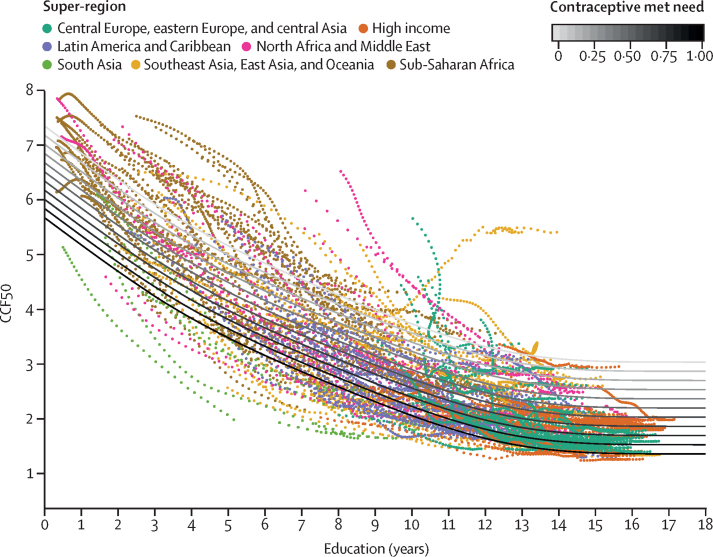
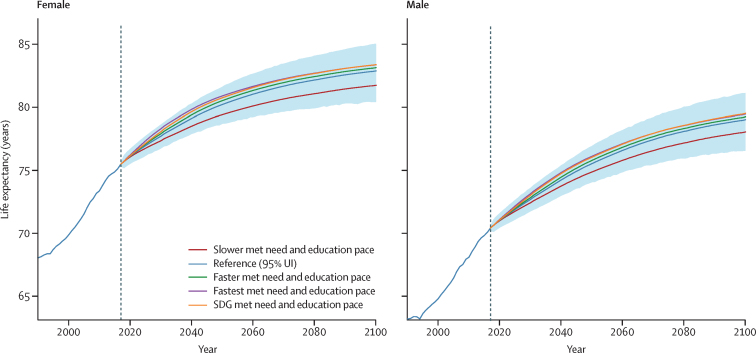
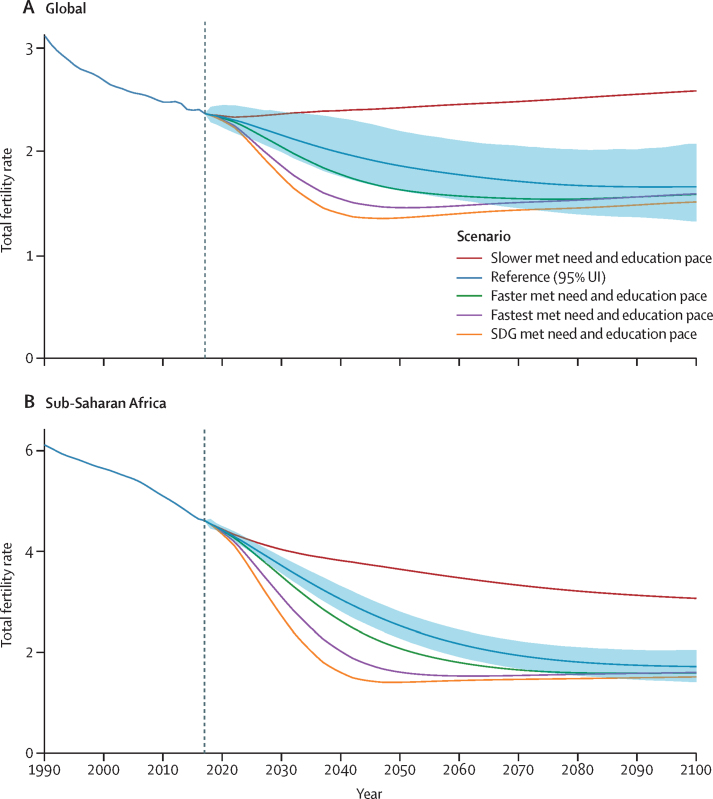
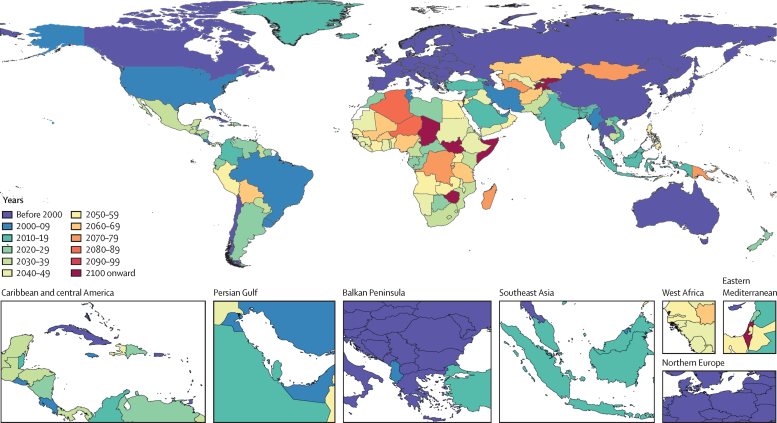
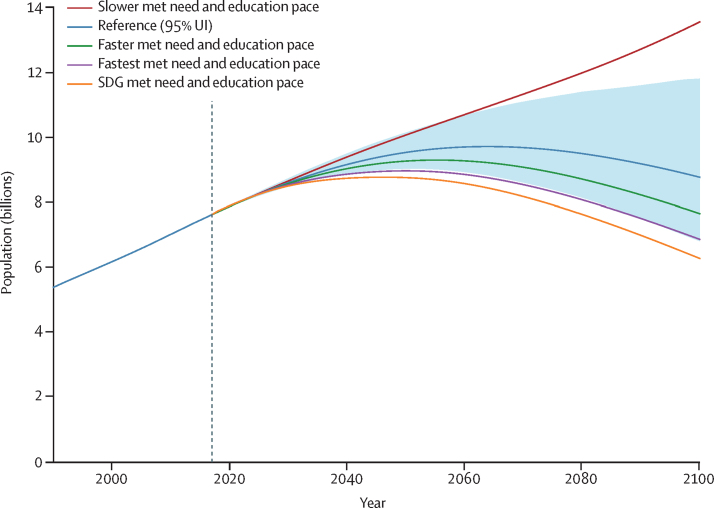
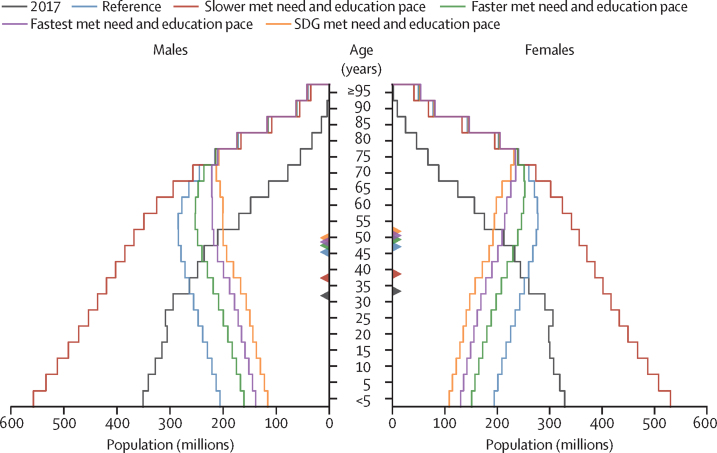
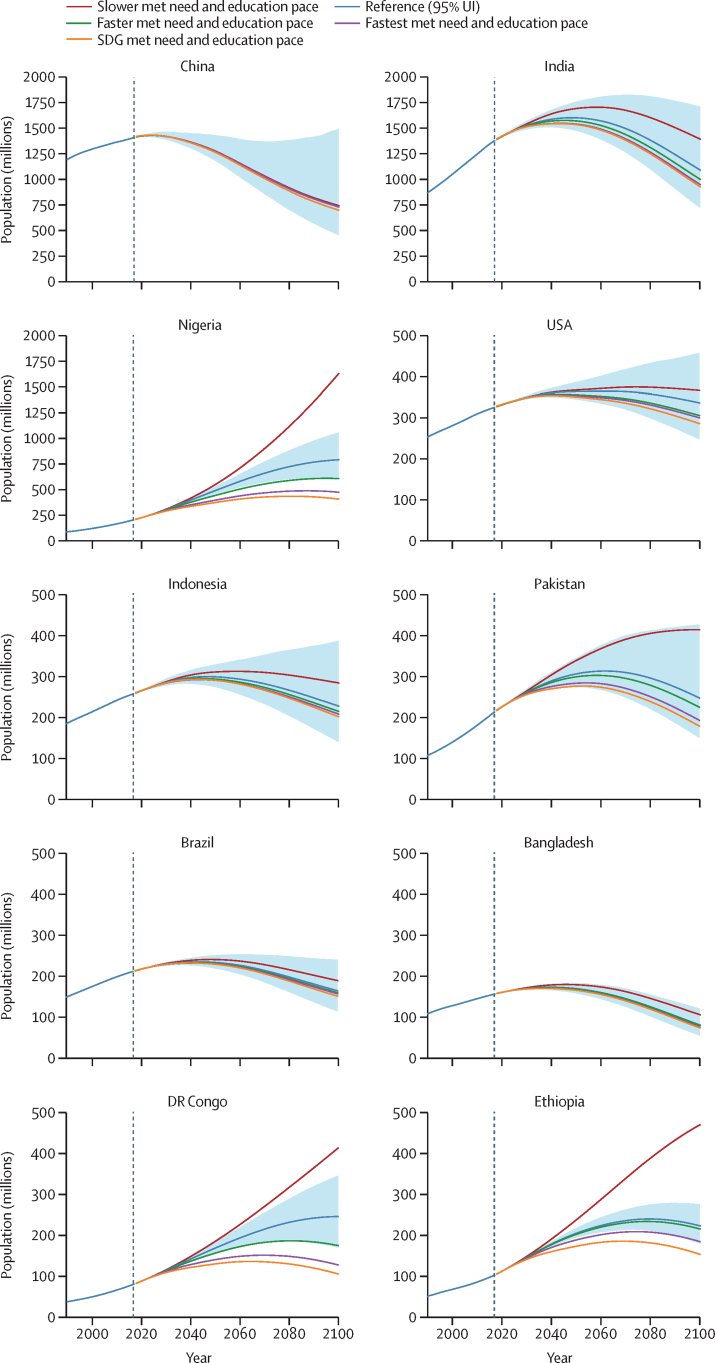
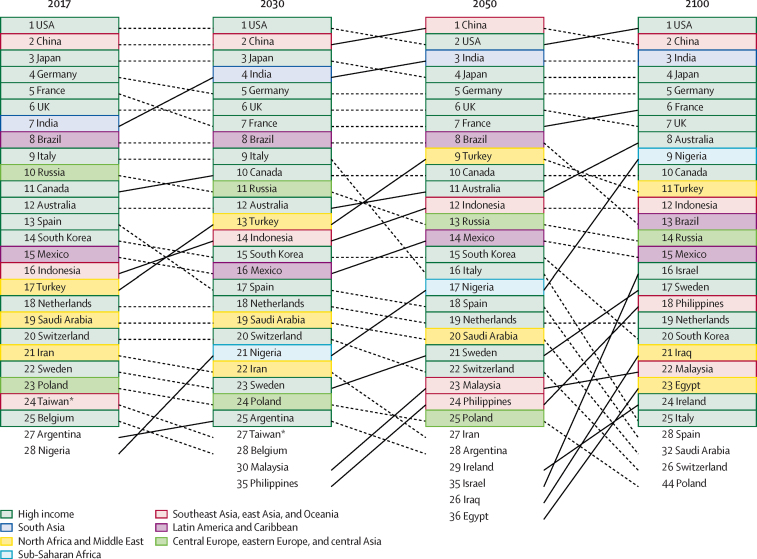
BACKGROUND: Understanding potential patterns in future population levels is crucial for anticipating and planning for changing age structures, resource and health-care needs, and environmental and economic landscapes. Future fertility patterns are a key input to estimation of future population size, but they are surrounded by substantial uncertainty and diverging methodologies of estimation and forecasting, leading to important differences in global population projections. Changing population size and age structure might have profound economic, social, and geopolitical impacts in many countries. In this study, we developed novel methods for forecasting mortality, fertility, migration, and population. We also assessed potential economic and geopolitical effects of future demographic shifts. METHODS: We modelled future population in reference and alternative scenarios as a function of fertility, migration, and mortality rates. We developed statistical models for completed cohort fertility at age 50 years (CCF50). Completed cohort fertility is much more stable over time than the period measure of the total fertility rate (TFR). We modelled CCF50 as a time-series random walk function of educational attainment and contraceptive met need. Age-specific fertility rates were modelled as a function of CCF50 and covariates. We modelled age-specific mortality to 2100 using underlying mortality, a risk factor scalar, and an autoregressive integrated moving average (ARIMA) model. Net migration was modelled as a function of the Socio-demographic Index, crude population growth rate, and deaths from war and natural disasters; and use of an ARIMA model. The model framework was used to develop a reference scenario and alternative scenarios based on the pace of change in educational attainment and contraceptive met need. We estimated the size of gross domestic product for each country and territory in the reference scenario. Forecast uncertainty intervals (UIs) incorporated uncertainty propagated from past data inputs, model estimation, and forecast data distributions. FINDINGS: The global TFR in the reference scenario was forecasted to be 1·66 (95% UI 1·33-2·08) in 2100. In the reference scenario, the global population was projected to peak in 2064 at 9·73 billion (8·84-10·9) people and decline to 8·79 billion (6·83-11·8) in 2100. The reference projections for the five largest countries in 2100 were India (1·09 billion [0·72-1·71], Nigeria (791 million [594-1056]), China (732 million [456-1499]), the USA (336 million [248-456]), and Pakistan (248 million [151-427]). Findings also suggest a shifting age structure in many parts of the world, with 2·37 billion (1·91-2·87) individuals older than 65 years and 1·70 billion (1·11-2·81) individuals younger than 20 years, forecasted globally in 2100. By 2050, 151 countries were forecasted to have a TFR lower than the replacement level (TFR <2·1), and 183 were forecasted to have a TFR lower than replacement by 2100. 23 countries in the reference scenario, including Japan, Thailand, and Spain, were forecasted to have population declines greater than 50% from 2017 to 2100; China's population was forecasted to decline by 48·0% (-6·1 to 68·4). China was forecasted to become the largest economy by 2035 but in the reference scenario, the USA was forecasted to once again become the largest economy in 2098. Our alternative scenarios suggest that meeting the Sustainable Development Goals targets for education and contraceptive met need would result in a global population of 6·29 billion (4·82-8·73) in 2100 and a population of 6·88 billion (5·27-9·51) when assuming 99th percentile rates of change in these drivers. INTERPRETATION: Our findings suggest that continued trends in female educational attainment and access to contraception will hasten declines in fertility and slow population growth. A sustained TFR lower than the replacement level in many countries, including China and India, would have economic, social, environmental, and geopolitical consequences. Policy options to adapt to continued low fertility, while sustaining and enhancing female reproductive health, will be crucial in the years to come. FUNDING: Bill & Melinda Gates Foundation.
Overview
The claims and statistics of this paper haven’t been checked yet.
Free: it reads the open-access text and checks the first 5 claims that cite a source we can check. Create a free account to check every claim.
Integrity signals
Registry
Cites
Statistics
Figures
Verification
Claims the paper makes
The claims and statistics of this paper haven’t been checked yet.
Free: it reads the open-access text and checks the first 5 claims that cite a source we can check. Create a free account to check every claim.
Claims other papers make about this one
Each is checked against this paper’s own text: does it say what the citing paper says it does?
The source backs part of the claim, not all of it — or backs it for a different population, condition or comparison.
In the citing paper
“Demographic data in the 5 years preceding 2021 demonstrate that the total fertility rate (TFR) in some countries has fallen below replacement levels—the minimum rate necessary for generational replacement of the population assuming no migration—with no evidence of this predicted rebound.”
From Global fertility in 204 countries and territories, 1950–2021, with forecasts to 2100: a comprehensive demographic analysis for the Global Burden of Disease Study 2021 (2024) · cites this paper as [4]
Experimental — accuracy not yet measuredThe source backs part of the claim, not all of it — or backs it for a different population, condition or comparison.
In the citing paper
“By 2050 and 2100, respectively, 77% of predominantly high-income countries and 93% of all countries will have a TFR below the replacement level of 2.1 children per woman.”
From Declining global fertility rates and the implications for family planning and family building: an IFFS consensus document based on a narrative review of the literature (2024) · cites this paper as Vollset et al., 2020
Experimental — accuracy not yet measuredThe source backs part of the claim, not all of it — or backs it for a different population, condition or comparison.
In the citing paper
“Not including the effects of migration, many countries are predicted to have a population decline of more than 50% from 2017 to 2100 (Vollset et al., 2020; Dao et al., 2021).”
From Declining global fertility rates and the implications for family planning and family building: an IFFS consensus document based on a narrative review of the literature (2024) · cites this paper as Vollset et al., 2020
Experimental — accuracy not yet measuredThe source backs part of the claim, not all of it — or backs it for a different population, condition or comparison.
In the citing paper
“Different TFRs among countries will promote immigration and emigration with important consequences for all countries, including increased political and social friction (Vollset et al., 2020).”
From Declining global fertility rates and the implications for family planning and family building: an IFFS consensus document based on a narrative review of the literature (2024) · cites this paper as Vollset et al., 2020
Experimental — accuracy not yet measured
6 more claims about this paper
Create a free account to see every claim other papers make about this one.
Self-check
Percentages, sums and reported differences re-computed from the paper’s own numbers.
The self-check needs the paper’s full text.
Citations
Cites
Planetary boundaries: Guiding human development on a changing planet
Steffen, W., Richardson, K., Rockström, J., Cornell, S. E., Fetzer, I., Bennett, E. M., Biggs, R., Carpenter, S. R., de Vries, W., de Wit, C. A., et al. (2015) · Science · doi:10.1126/science.1259855 · Cited by 12,527
Roth, G. A., Abate, D., Abate, K. H., Abay, S. M., Abbafati, C., Abbasi, N., Abbastabar, H., Abd-Allah, F., Abdela, J., Abdelalim, A., et al. (2018) · The Lancet · doi:10.1016/s0140-6736(18)32203-7 · Cited by 8,600
Planetary Boundaries: Exploring the Safe Operating Space for Humanity
Rockström, J., Steffen, W., Noone, K., Persson, Å., Chapin, F. S. I., Lambin, E., Lenton, T. M., Scheffer, M., Folke, C., Schellnhuber, H. J., et al. (2009) · Ecology and Society · doi:10.5751/es-03180-140232 · Cited by 7,187
Time Series: Theory and Methods
Ziegel, E. R., Brockwell, P., & Davis, R. (1992) · Technometrics · doi:10.2307/1270070 · Cited by 5,012
Stanaway, J. D., Afshin, A., Gakidou, E., Lim, S. S., Abate, D., Abate, K. H., Abbafati, C., Abbasi, N., Abbastabar, H., Abd-Allah, F., et al. (2018) · The Lancet · doi:10.1016/s0140-6736(18)32225-6 · Cited by 4,943
Self-citationThe second machine age: work, progress, and prosperity in a time of brilliant technologies
(2015) · Choice Reviews Online · doi:10.5860/choice.184834 · Cited by 4,381
Foreman, K. J., Marquez, N., Dolgert, A., Fukutaki, K., Fullman, N., McGaughey, M., Pletcher, M. A., Smith, A. E., Tang, K., Yuan, C.-W., et al. (2018) · The Lancet · doi:10.1016/s0140-6736(18)31694-5 · Cited by 2,994
Self-citationEssay on the Principle of Population: The 1803 Edition
Malthus, T. R. (2019) · Yale University Press eBooks · doi:10.12987/9780300231892 · Cited by 1,949
Guidelines for accurate and transparent health estimates reporting: the GATHER statement
Stevens, G. A., Alkema, L., Black, R. E., Boerma, J. T., Collins, G. S., Ezzati, M., Grove, J. T., Hogan, D. R., Hogan, M. C., Horton, R., et al. (2016) · The Lancet · doi:10.1016/s0140-6736(16)30388-9 · Cited by 1,798
Self-citationIPCC (2022) · Cambridge University Press eBooks · doi:10.1017/9781009157940 · Cited by 1,482
Research works printed but not linked: 1
- Lutz W Butz WP KC S World population and human capital in the twenty-first century 2014 2014 Oxford University Press Oxford
Cited by
Items 601–700 of 1,000
Sagnon, A., Traoré, M., Tibiri, E. B., Zongo, S., Bonkoungou, I. J. O., Nakamura, S., Barro, N., Tiendrébéogo, F., & Sarr, P. S. (2024) · Frontiers in Sustainable Food Systems · doi:10.3389/fsufs.2024.1445683 · Cited by 9
Peng, X., Wang, J., Chen, T., He, L., Li, J., Xia, S., Kong, X., Zhou, N., Long, D., Sang, C., et al. (2025) · Scientific Reports · doi:10.1038/s41598-025-93338-1 · Cited by 9
“Atrial fibrillation, an age related disease, imposes a growing burden with population aging 22 .”
Chang, H. Y., Yan, X., Zhong, Q., Ning, P., Weng, M., & Liu, Y. (2025) · BMJ Open · doi:10.1136/bmjopen-2024-094462 · Cited by 9
“We employed linear regression to calculate age-specific incidence and their AAPCs, where the logarithmic scale of the rates served as the dependent variable and year as the independent variable.”
Climate change and tuberculosis: an analytical framework
Saunders, M. J., Boccia, D., Khan, P. Y., Goscé, L., Gasparrini, A., Clark, R. A., Pescarini, J. M., Charalambous, S., Fekadu, L., Johansen, F. D. C., et al. (2025) · The Lancet Respiratory Medicine · doi:10.1016/s2213-2600(25)00329-7 · Cited by 16
“47,48 Given this evidence, the IPCC states with high confidence that extreme weather events and variability act as direct drivers of involuntary migration and displacement, and as indirect drivers through deteriorating economic conditions and livelihoods.”
Tang, H., Chen, X., Huang, J., Yang, Q., Liang, K., Qiu, X., Tang, J., Tian, C., Luo, N., Lin, M., et al. (2025) · Ageing Research Reviews · doi:10.1016/j.arr.2025.102985 · Cited by 7
Zhou, P., Wu, H., Xu, K., Pan, X., & Li, L. (2026) · PLoS ONE · doi:10.1371/journal.pone.0340498 · Cited by 10
“Future ARHL burden (2022–2050) was predicted using a Bayesian APC model with integrated nested Laplacian approximation (R packages BAPC and INLA) [23], incorporating GBD Population Forecasts 2017–2100 for population projections [24].”
Evaluating crop models to assess rice yield potential in Argentina
Meus, L. D., Quintero, C. E., Ribas, G. G., da Silva, M. R., Streck, N. A., Alberto, C. M., Zamero, M. D. L. Á., & Zanon, A. J. (2022) · Crop and Environment · doi:10.1016/j.crope.2022.08.002 · Cited by 7
Intraurban Geographic and Socioeconomic Inequalities of Mortality in Four Cities in Colombia
Rodríguez-Villamizar, L. A., Marín, D., Piñeros, J. G., Rojas-Sánchez, O. A., Serrano-Lomelin, J. A., & Herrera, V. (2023) · International Journal of Environmental Research and Public Health · doi:10.3390/ijerph20020992 · Cited by 7
“Being the most robust health outcome in the majority of countries, the analysis of mortality allows governments to identify medium- and long-term infrastructure and knowledge needs, as well as plann the allocation of resources [1].”
BackgroundSgueglia, G., Longobardi, S., Valerio, D., Campitiello, M. R., Colacurci, N., Pietro, C. D., Battaglia, R., D’Hooghe, T. M., Altucci, L., & Dell’Aversana, C. (2023) · Clinical Epigenetics · doi:10.1186/s13148-023-01490-0 · Cited by 6
“Introduction The evident decline in human fertility seen across industrialised countries [1, 2] is increasing the demand for medically assisted reproduction (MAR) procedures including in vitro fertilisation (IVF) [3].”
BackgroundIncreased prevalence of fungemia in Medina, Saudi Arabia
Khateb, A. M., Alofi, F. S., & Almutairi, A. Z. (2023) · Frontiers in Epidemiology · doi:10.3389/fepid.2023.1180331 · Cited by 8
Does tertiary education expansion affect the fertility of women past the college-entry age?
Bharati, T., Chang, S., & Li, Q. (2023) · Journal of Economic Behavior & Organization · doi:10.1016/j.jebo.2023.06.026 · Cited by 10
Prospects for Russia’s demographic expansion: Economics, institutions, and culture
Balatsky, E. V., & Екимова, Н. А. (2023) · Terra Economicus · doi:10.18522/2073-6606-2023-21-2-23-37 · Cited by 7
Merchant, A. A. H., Hassan, S., Baig, N., Atiq, H., Mahmood, S., Doll, A., Naseer, R., Haq, Z. U., Shehnaz, D., Haider, A. H., et al. (2023) · Trauma Surgery & Acute Care Open · doi:10.1136/tsaco-2023-001132 · Cited by 7
Ahmed, K. J., Haq, S. M. A., & Hyder, M. B. (2023) · Frontiers in Environmental Science · doi:10.3389/fenvs.2023.1160394 · Cited by 7
Ma, Y., He, Y., Tang, D., Cai, G., Fan, D., Cao, Y., & Pan, F. (2024) · The Science of The Total Environment · doi:10.1016/j.scitotenv.2023.169761 · Cited by 8
Assens, M., Frederiksen, H. W., Pedersen, A. T., Petersen, J. H., Andersson, A., Sundberg, K., Jensen, L. N., Curtin, P. C. P., Skakkebæk, N. E., Swan, S. H., et al. (2024) · Human Reproduction · doi:10.1093/humrep/deae229 · Cited by 8
Dillon, D., Reigh, S., Rappazzo, K. M., Luben, T. J., & Weaver, A. M. (2025) · Current Environmental Health Reports · doi:10.1007/s40572-025-00476-9 · Cited by 8
Comprehensive review of the microbial approach to Mealybug management
Sandhya, N., Uthandi, S., Anandham, R., Kannan, M., Venkatesan, M., Narayanan, M. B., & Senthilkumar, M. (2025) · International Journal of Tropical Insect Science · doi:10.1007/s42690-025-01452-4 · Cited by 11
The Causal Effects of Education on Age at Marriage and Marital Fertility
Cummins, N. (2025) · European Review of Economic History · doi:10.1093/ereh/heae023 · Cited by 7
Climate change and the progressive business model
Rochlin, C. (2021) · The Electricity Journal · doi:10.1016/j.tej.2021.106927 · Cited by 7
“We just do it … we are dead already”: Exploring the sexual behaviors of youth living with HIV
Zgambo, M., Arabiat, D. H., & Ireson, D. (2022) · Journal of Adolescence · doi:10.1002/jad.12003 · Cited by 7
Rowlands, S., & Regmi, P. (2022) · Indian Journal of Public Administration · doi:10.1177/00195561221082984 · Cited by 13
He, Q., Deng, X., Chuan, L., Yan, Z., & Qi, Y. (2022) · International Journal of Environmental Research and Public Health · doi:10.3390/ijerph19127365 · Cited by 10
“[1] predicted that the world’s population would reach a peak of approximately 9.”
BackgroundKarri, B., & Mathew, G. S. (2022) · Cogent Social Sciences · doi:10.1080/23311886.2022.2106649 · Cited by 8
Energy Budgets of Evolving Nations and Their Growing Cities
Chaisson, E. J. (2022) · Energies · doi:10.3390/en15218212 · Cited by 8
Década del Envejecimiento Saludable: Informe de referencia
de la Salud, O. P. (2022) · Pan American Health Organization eBooks · doi:10.37774/9789275326589 · Cited by 15
Long term lithium availability and electric mobility: What can we learn from resource assessment?
Sanginesi, F., Millacci, G., Giaccherini, A., Buccianti, A., Fusi, L., Benedetto, F. D., & Pardi, L. A. (2023) · Journal of Geochemical Exploration · doi:10.1016/j.gexplo.2023.107212 · Cited by 10
Long-term forecast of the replacement migration in Russia
Yumaguzin, V. V., & Vinnik, M. V. (2023) · Journal of the New Economic Association · doi:10.31737/22212264_2023_1_48 · Cited by 7
A survey to investigate transport conditions in depopulating cities in Illinois
Sutradhar, U., Badhrudeen, M., Chauhan, R., & Derrible, S. (2023) · Transportation Research Interdisciplinary Perspectives · doi:10.1016/j.trip.2023.100886 · Cited by 7
Park, J. Y., Chung, Y., Song, J., Kim, C., Lee, H., Son, Y., Shin, I., Park, J. H., & Kim, J.-H. (2023) · Journal of Menopausal Medicine · doi:10.6118/jmm.23018 · Cited by 8
“At that time, the proportion of seniors in Korea is predicted to be the highest worldwide [2].”
BackgroundXu, X., Li, Y., & Mi, H. (2024) · BMC Health Services Research · doi:10.1186/s12913-024-10875-7 · Cited by 7
“Massive evidence shows that there will be a steady and slow increase in life expectancy [7–9].”
BackgroundAging of the Global Population as an Integral Problem of the Future
Grinin, L. E., Леонидович, Г. А., & Korotayev, A. (2023) · Sociological Journal · doi:10.19181/socjour.2023.29.2.6 · Cited by 12
Zhang, Y., Zhao, J., Yan, Y., Shi, Y., & Yu, Q. (2021) · Environmental Research Letters · doi:10.1088/1748-9326/ac0e66 · Cited by 7
Calvo-Sotomayor, I., & Ordeñana, E. A. (2022) · Frontiers in Public Health · doi:10.3389/fpubh.2022.792287 · Cited by 9
Optimistically biased economic growth forecasts and negatively skewed annual variationPreprint
Burgess, M. G., Langendorf, R. E., Ippolito, T., & Pielke, R. A. (2020) · doi:10.31235/osf.io/vndqr · Cited by 7
Trends in population health and demography
Maaløe, N., Housseine, N., Meguid, T., Tellier, S., van Roosmalen, J., Meyrowitsch, D. W., & van den Akker, T. (2021) · The Lancet · doi:10.1016/s0140-6736(21)01047-3 · Cited by 7
Uthman-Akinhanmi, Y. O., Ademiluyi, D., Oyewunmi, B. T., Akinola, O., Ilo, J., Eviano, O. J., & Akinyemi, A. O. (2024) · World Nutrition Journal · doi:10.25220/wnj.v08.i1.0010 · Cited by 6
Nishimura, H., Nawa, N., Ogawa, T., Fushimi, K., Schwartz, B. S., & Fujiwara, T. (2024) · Environmental Research · doi:10.1016/j.envres.2024.120498 · Cited by 6
Inequalities in total fertility rate in Sierra Leone, 2008–2019
Osborne, A., Sesay, U., Bah, M. S., Bangura, C., & Ahinkorah, B. O. (2025) · BMC Public Health · doi:10.1186/s12889-024-21196-z · Cited by 6
“With a TFR of 3.9 in 2022, it is nearly twice as high as the 2.1 acceptable replacement level [10].”
InfluentialModeling Demographic Growth in Russia: Factors, Mechanisms, Reserves
Екимова, Н. А. (2025) · Journal of Applied Economic Research · doi:10.15826/vestnik.2025.24.2.013 · Cited by 8
Shao, K., Wang, C., Chen, W., Gong, W., Lin, X., Ye, B., & Ye, D. (2025) · BMC Public Health · doi:10.1186/s12889-025-23469-7 · Cited by 6
“For lymphoma, there was also reported a steady decrease in HL, but a significant increase for NHL [31], which is distinctly different in our study.”
Gong, J., Wu, Y., Qiu, C., Yin, G., & Yuan, P. (2025) · BMC Public Health · doi:10.1186/s12889-025-23369-w · Cited by 6
“However, in recent decades, the total fertility rate in most countries around the world has plummeted precipitously [22].”
Zhang, X., Wang, W., Wang, W., Wang, Z., Xu, A., & Xue, Z. (2025) · Frontiers in Pediatrics · doi:10.3389/fped.2025.1646693 · Cited by 6
Maqsood, K., Mehmood, T., Maqbool, H. H., Afzal, A., Maqbool, M. F., Fatima, M., Jan, T., Ashraf, S., Khawar, M. B., & Muanprasat, C. (2025) · Frontiers in Reproductive Health · doi:10.3389/frph.2025.1697925 · Cited by 8
Social Marketing for a Healthy Diet: A Systematic Literature Review
Chatterjee, S., Bryła, P., & Ciabiada-Bryła, B. (2025) · Nutrition Reviews · doi:10.1093/nutrit/nuaf194 · Cited by 9
Harighi, H., Kia, A. K., Salehi, M. B., & Mortaheb, H. R. (2026) · Journal of environmental chemical engineering · doi:10.1016/j.jece.2026.121130 · Cited by 6
Feng, Z., Shan, X., Fan, B., Yang, L., & Gong, F. (2026) · Frontiers in Psychiatry · doi:10.3389/fpsyt.2025.1684168 · Cited by 7
Chang, H., Min, J. Y., Yoo, D., Lee, S. U., Hwang, S. Y., Yoon, H. J., Cha, W. C., Shin, T. G., Jo, I. J., & Kim, T. (2021) · International Journal of Environmental Research and Public Health · doi:10.3390/ijerph18031210 · Cited by 6
“The Disability-Adjusted Life Years (DALY) for injury, which is the number of years lost due to ill-health, disability, or early death, is 252 million years, representing 10% of the DALY for more than 100 diseases in 2017 [2,4].”
BackgroundAlcohol control policies add to secular trends in all-cause mortality rates in young adults
Tran, A., Manthey, J., Lange, S., Jiang, H., Štelemėkas, M., Liutkutė, V., Meščeriakova-Veliulienė, O., Petkevičienė, J., Radišauskas, R., Telksnys, T., et al. (2021) · Scientific Reports · doi:10.1038/s41598-021-94562-1 · Cited by 7
Yan, Y., Zhang, X., Ren, H., An, X., Fan, W., Liang, J., & Huang, Y. (2022) · Frontiers in Neurology · doi:10.3389/fneur.2022.859616 · Cited by 6
Otaki, J., Taketomi, K., 柴原, 真., Watanabe, Y., Nagata-Kobayashi, S., Harada, Y., & Mitoma, H. (2022) · PLoS ONE · doi:10.1371/journal.pone.0270477 · Cited by 6
“In Japan, the birthrate has been declining, and the population is aging at one of the fastest rates in the world [17].”
BackgroundWu, G., Wu, Q., Xu, J., Gao, G., Chen, T., & Chen, G. (2023) · General Thoracic and Cardiovascular Surgery · doi:10.1007/s11748-023-01987-8 · Cited by 7
“By the end of 2020, the population aged 60 and above in China reached 260 million, and it is projected that the total population in China will peak around 2025, with the proportion of people aged 60 and above exceeding 30% by 2035 [50].”
Okui, T. (2024) · BMC Pregnancy and Childbirth · doi:10.1186/s12884-024-06382-6 · Cited by 11
“…of educational attainment on birthrate in Japan: an analysis using the census and the vital statistics from 2000 to 2020 Tasuku Okui 1* Background Fertility decline has been observed in many developed countries in recent decades [1, 2] and is also predicted in the twenty-first century globally [3].”
MethodSalonen, M. K., Lahdenperä, M., Rotkirch, A., & Lummaa, V. (2024) · iScience · doi:10.1016/j.isci.2024.110227 · Cited by 9
“15 Currently, as global fertility continuesto declineat an unexpected pace, 16 while different societal crises caused by both technological change and climate crises are likely to multiply and escalate, the question of fertility resilience is increasingly topical.”
Decline in reproductive health and its transgenerational lag effect
Feng, R., Yang, C., Zhang, Y., & Chen, B. (2024) · The Science of The Total Environment · doi:10.1016/j.scitotenv.2024.173994 · Cited by 7
Effects of extreme climate events and child mortality on total fertility rate in Bangladesh
Haq, S. M. A., Chowdhury, M. A. B., Ahmed, K. J., & Uddin, M. J. (2024) · Heliyon · doi:10.1016/j.heliyon.2024.e35087 · Cited by 7
Nath, N. J., Aditi, A., & Kumar, S. (2024) · Hospital Topics · doi:10.1080/00185868.2024.2400527 · Cited by 6
“The global population has grown over time despite reducing fertility rate (Vollset et al. 2020).”
Fuglsang, C. H., Rasmussen, T. B., Rudolfsen, J. H., Olsen, J., Skipper, N., Ulrichsen, S. P., Sørensen, H. T., & Christiansen, C. F. (2024) · The Lancet Regional Health - Europe · doi:10.1016/j.lanepe.2024.101189 · Cited by 7
“In particular, the demographic shift towards older populations 6 is likely to alter the prevalence and thus the economic burden of brain disorders.”
Guo, X., Ma, M., Chen, Y., Fang, Z., Liu, J., Yan, S., Feng, Y., Cheng, X., Wu, J., & Ye, B. (2025) · BMC Public Health · doi:10.1186/s12889-025-21412-4 · Cited by 8
“Despite these measures, the outlook for increasing the birth rate remains uncertain [8].”
Hembre, B. S. H., Chokshi, M., Hoffman, S. J., Suleman, F., Andresen, S., Sandberg, K. I., & Røttingen, J. (2025) · Globalization and Health · doi:10.1186/s12992-024-01092-2 · Cited by 6
Evaluation of China’s fertility policy based on PMC modeling
Chen, J., Gao, Y., & Xi, W. (2025) · Frontiers in Public Health · doi:10.3389/fpubh.2025.1533307 · Cited by 6
Velaz-Acera, N., Ruiz-Marín, R., & Borge-Díez, D. (2025) · Journal of Cleaner Production · doi:10.1016/j.jclepro.2025.145027 · Cited by 7
Moyo, G., Tepekule, B., Katsidzira, L., Blaser, M. J., & Metcalf, C. J. E. (2025) · Trends in Microbiology · doi:10.1016/j.tim.2025.01.004 · Cited by 7
Kansay, V., Sharma, V. D., Chandan, G., Sharma, I., Chakrabarti, S., & Bera, M. K. (2025) · Research on Chemical Intermediates · doi:10.1007/s11164-025-05552-1 · Cited by 6
Xue, Y., Lv, K., Yuan, C., Fan, G., & Yu, P. (2025) · Supportive Care in Cancer · doi:10.1007/s00520-025-09530-6 · Cited by 6
“In the twenty-first century, China’s population aged 65 and older increased from 62.99 million in 1990 to 190.64 million in 2020, with the proportion of the total population rising from 5.57 to 13.50% [8], marking one of the world’s fastest-growing elderly populations [9].”
InfluentialSelf-citationWahab, Z. A., Wahab, A., Farah, H., Waheed, A., & Sahbeni, G. (2023) · Arabian Journal of Geosciences · doi:10.1007/s12517-022-11121-2 · Cited by 6
Zheng, C.-S., Huang, W., Xia, H., Mi, J., Li, Y.-Q., Liang, H., Zhou, L., Lu, Z.-X., & Wu, F. (2023) · APOPTOSIS · doi:10.1007/s10495-023-01884-8 · Cited by 6
“The burden of cancer has increased in China as the population ages [4, 52, 53].”
Qin, Y., Peng, H., Li, J., & Gong, J. (2024) · BMC Infectious Diseases · doi:10.1186/s12879-024-09243-x · Cited by 6
Declining human fertility and the epidemic of despair
Platt, M. L., & Sterling, P. (2024) · Nature Mental Health · doi:10.1038/s44220-024-00241-1 · Cited by 7
Nutrition in New Zealand: Can the Past Offer Lessons for the Present and Guidance for the Future?
Coad, J., & Pedley, K. C. (2020) · Nutrients · doi:10.3390/nu12113433 · Cited by 8
Rastad, Z., Golmohammadian, M., Jalali, A., Kaboudi, B., & Kaboudi, M. (2021) · Journal of Education and Health Promotion · doi:10.4103/jehp.jehp_784_20 · Cited by 7
“C is an important phenomenon in demographic change and the axis of sustainable development, particularly in countries with low replacement level fertility.[1] In such countries, including the Islamic Republic of Iran (with a fertility rate of 1.”
BackgroundMattsson, K., & Rosendahl, S. P. (2022) · Journal of Transcultural Nursing · doi:10.1177/10436596211068432 · Cited by 6
Girard, P., Michel, S., Mercandalli, S., & Losch, B. (2022) · Revue de la régulation · doi:10.4000/regulation.21157 · Cited by 10
Dong, F., Wu, L., Feng, Y., & Liang, D. (2022) · Journal of Medical Devices · doi:10.1115/1.4055435 · Cited by 6
Will the summer sea ice in the Arctic reach a tipping point?
Johannessen, O. M., & Shalina, E. V. (2023) · Atmospheric and Oceanic Science Letters · doi:10.1016/j.aosl.2023.100352 · Cited by 10
Energy, Demography, and Climate: Is There an Alternative to Abandoning Fossil Fuels?
Клименко, В. В., Klimenko, A. V., Mikushina, O. V., & Tereshin, A. G. (2022) · Doklady Physics · doi:10.1134/s102833582210007x · Cited by 8
Low, but not too low, fertility can represent a positive development
Skirbekk, V. (2023) · Vienna Yearbook of Population Research · doi:10.1553/p-cmbb-hheg · Cited by 8
Kalogeropoulos, K., Fragkopoulos, D., Andreopoulos, P., & Tragaki, A. (2024) · Economies · doi:10.3390/economies12110294 · Cited by 5
Li, Z., Li, R., Chen, J., Yang, R., Li, P., & Qiu, B. (2025) · Journal of the National Cancer Center · doi:10.1016/j.jncc.2025.02.004 · Cited by 7
“44 The combination of rapidly population growth and a weak cancer surveillance system underscores the urgent need for more attention and investment in cancer data infrastructure in the region.”
Samborska-Goik, K., Starzewska-Sikorska, A., & Obłój, P. (2025) · Sustainability · doi:10.3390/su17156857 · Cited by 5
Drastic Variations in Chemical Composition of Organic Inputs: Implications for Organic Fertilization
Bachelder, J., Wiggenhauser, M., Winkel, L. H. E., Frossard, E., & Tolu, J. (2025) · Environmental Science & Technology · doi:10.1021/acs.est.5c06493 · Cited by 6
Xing, X., Wang, K., Wang, Z.-Z., Li, X., Liu, J., Liu, C., Qiu, Y., Yan, S., Dong, X., & Zhang, L. (2025) · International Journal of Clinical Pharmacy · doi:10.1007/s11096-025-01977-1 · Cited by 5
“Population aging has become a global concern due to increasing life expectancy and declining fertility rates [1, 2].”
Marzi, S., Karmen, P., Papadimitriou, E., Valle, D. D., Salvi, A., & Corbane, C. (2025) · Big Earth Data · doi:10.1080/20964471.2025.2535852 · Cited by 5
“…to project the drivers of human vulnerability and coping capacity (Birkmann et al., 2021; Cuaresma & Lutz, 2015; de Sherbinin et al., 2019; Furlan et al., 2021; Liu et al., 2024; Rigaud et al., 2018; Rohat, 2018; Rohat et al., 2019; Russo et al., 2019; Vollset et al., 2020; Yang et al., 2021).”
Peng, H., Chou, X., Zhang, Z., & Qiu, H. (2025) · BMC Public Health · doi:10.1186/s12889-025-24358-9 · Cited by 9
Mai, T. Q., Yang, B. J., & Chao, G. (2025) · BMC Public Health · doi:10.1186/s12889-025-24228-4 · Cited by 8
“This demographic challenge underscores the inter-connected nature of reproductive health, family planning access, and maternal health outcomes [30, 31].”
Shi, K., Xu, C., Zhang, X., Liang, H., Li, X., Liu, B., & Wang, Q. (2025) · BMC Public Health · doi:10.1186/s12889-025-24407-3 · Cited by 6
“The increasing proportion of the global birth cohort resides in Sub-Saharan Africa making the burden of hepatoblastoma remains challenging [29].”
Conrado, F., Giacomini, G., Marraffa, P., Golzio, F., Tagliabò, V., & Gianino, M. M. (2025) · Archives of Public Health · doi:10.1186/s13690-025-01719-9 · Cited by 5
“A balanced age dependency ratio is essential for the fiscal sustainability of national healthcare and social security financing programs [64, 65].”
Global rice land suitability and adaptation strategies under climate change
Dadrasi, A., Vačkářová, D., Salmani, F., Nguyễn, C. T., & Weinzettel, J. (2025) · Journal of Environmental Management · doi:10.1016/j.jenvman.2025.127630 · Cited by 5
Barriers to Implementation of Prehabilitation
Rampal, T., & Tribe, S. (2025) · British Journal of Hospital Medicine · doi:10.12968/hmed.2024.0817 · Cited by 7
Gao, Y., Wang, X., Wang, Q., Jiang, L., Wu, C., Guo, Y., Cui, N., Tang, H., & Tang, L. (2025) · International Journal of Surgery · doi:10.1097/js9.0000000000004066 · Cited by 5
Microbial-derived inducers of plant immunity: recent advances and future prospects
Boubakri, H. (2025) · Planta · doi:10.1007/s00425-025-04879-8 · Cited by 5
“The global population is expected to reach 10 billion by 2050 (Vollset et al. 2020).”
Zhang, X., Zhao, T., Xie, T., Zhang, S., Xu, Q., Cheng, Y., Wei, H., He, A., Liu, B., Lu, Q., et al. (2025) · EClinicalMedicine · doi:10.1016/j.eclinm.2025.103651 · Cited by 6
“28 All 15 countries recommend Tdap, though vaccination timing varies largely through our schedule review.”
Liu, L., Wang, K., Dai, M., Luo, W., Tang, L., Ding, X., Liu, Y., Wu, L., Liu, N., & Luo, J. (2025) · The British Journal of Psychiatry · doi:10.1192/bjp.2025.10450 · Cited by 6
Global Trends and Future Predictions of Psoriasis Burden: Insights from the GBD 2021 Study
Gu, X., Wang, X., Bin, Y., Xue, R., & Zhu, G. (2025) · Psoriasis Targets and Therapy · doi:10.2147/ptt.s558419 · Cited by 7
“31 Based on data from GBD 2021, an ARIMA model was constructed, and the “forecast” R package was utilized to project the ASIR, ASPR and ASDR for the next 15 years.”
Ventura, S., Miró, J. R. A., Camacho-Caballero, D., Casellas, E., Segura, R., Martilli, A., & Villalba, G. (2025) · Urban Climate · doi:10.1016/j.uclim.2025.102757 · Cited by 6
Song, Z., Zhang, B., Pang, S., Qiu, M., Huang, J. F., Hao, J., Yang, X., & Li, Y. (2026) · Journal of Global Health · doi:10.7189/jogh.16.04094 · Cited by 5
Zhang, Z., Diao, Y., Fu, M., Han, W., Zhou, H., Fan, R., Xu, B., & Chen, B. (2026) · JMIR Aging · doi:10.2196/73802 · Cited by 6
“Demographic data from 1990 to 2050 were acquired from the GBD study database and a projection of the population [13,14].”
Delimitacja i klasyfikacja obszarów depopulacyjnych w Polsce
Śleszyński, P. (2026) · Przegląd Geograficzny · doi:10.7163/przg.2026.1.1 · Cited by 5
4. Mycoaesthetics: Weird Fungi and Jeff VanderMeer’s Annihilation
Woods, D. (2022) · Open Book Publishers · doi:10.11647/obp.0303.04 · Cited by 10
Metadata
- Authors
- Vollset, S. E., Goren, E., Yuan, C.-W., Cao, J., Smith, A. E., Hsiao, T., Bisignano, C., Azhar, G. S., Castro, E., Chalek, J., Dolgert, A. J., Frank, T., Fukutaki, K., Hay, S. I., Lozano, R., Mokdad, A. H., Nandakumar, V., Pierce, M., Pletcher, M., Robalik, T., Steuben, K. M., Wunrow, H. Y., Zlavog, B. S., & Murray, C. J. L.
- Affiliations
- University of Washington (US)
- Corresponding author
- Murray, Christopher J L
- ORCID
- Venue
- The Lancet
- Publisher
- Elsevier BV
- Published
- 2020-10
- Volume
- 396
- Issue
- 10258
- Pages
- 1285-1306
- ISSN
- 0099-5355 (ISSN-L)
- 0140-6736
- PMC
- PMC7561721
- OpenAlex
- W3043365850
- Cited by
- 1,506
- References
- 34
- Citations by year
- 2026: 195 · 2025: 279 · 2024: 266 · 2023: 276 · 2022: 247 · 2021: 197 · 2020: 45
- FWCI
- 288.65
- Type
- journal article
- Language
- en
- Open access
- hybrid
- doi.org
- Licence
- cc-by
- www.elsevier.com/tdm/userlicense/1.0/ (tdm)
- www.elsevier.com/legal/tdmrep-license (tdm)
- creativecommons.org/licenses/by/4.0/ (vor)
- Locations
- The Lancet (publishedVersion, cc-by)
- PubMed Central (publishedVersion, cc-by)
- PubMed (publishedVersion)
- FIU - Digital Commons (Florida International University) (submittedVersion)
- Funders
- Bill and Melinda Gates Foundation
- Topics
- Social Sciences › Demography › Insurance, Mortality, Demography, Risk Management
- Health Sciences › Medicine › Public Health, Environmental and Occupational Health › Reproductive Health and Contraception
- Social Sciences › Geography, Planning and Development › demographic modeling and climate adaptation
- Keywords
- population projections, fertility prediction, mortality forecasting, migration forecasting, age-specific fertility, age-specific mortality, net migration, educational attainment, gross domestic product, demographic scenarios, population decline, age structure, uncertainty intervals, Global Burden of Disease Study, socioeconomic determinants of fertility
- MeSH terms
- Global Burden of Disease, Birth Rate, Female, Forecasting, Humans, Male, Mortality, Population Growth, Human Migration
About these checks
Registry, retraction, Cites and statistics results are computed, not judged, with one exception: a printed reference that no index lists is read once by a model before it counts as a citation error. Claims are extracted by a model and kept only when their quote appears verbatim in the text; each cited source is then checked, with a model’s help, for whether it says what the claim relies on. Those verdicts can be wrong — read the claim’s quote and the cited source before relying on one.
Statistics and arithmetic are recomputed, not judged.
Confidence bands are shown only for fields calibrated on our annotated test set. None is calibrated yet, so no band is shown.
What counts as a claim ›How we measure confidence ›How we check this ›
Are you an author, or do you see a problem with this page? Request a review
Data sources
Bibliographic data: Semantic Scholar, OpenAlex, Crossref.
Contains information from the Semantic Scholar Academic Graph Datasets, made available under the ODC Attribution License (ODC-BY 1.0).
Semantic Scholar’s data is described in: Kinney, R., et al. (2023). The Semantic Scholar Open Data Platform. arXiv:2301.10140.
