

Fertility, mortality, migration, and population scenarios for 195 countries and territories from 2017 to 2100: a forecasting analysis for the Global Burden of Disease Study
Open accessThe DOI matches its Crossref record; 33 of the 34 references it cites were found in a registry or an index.
Abstract
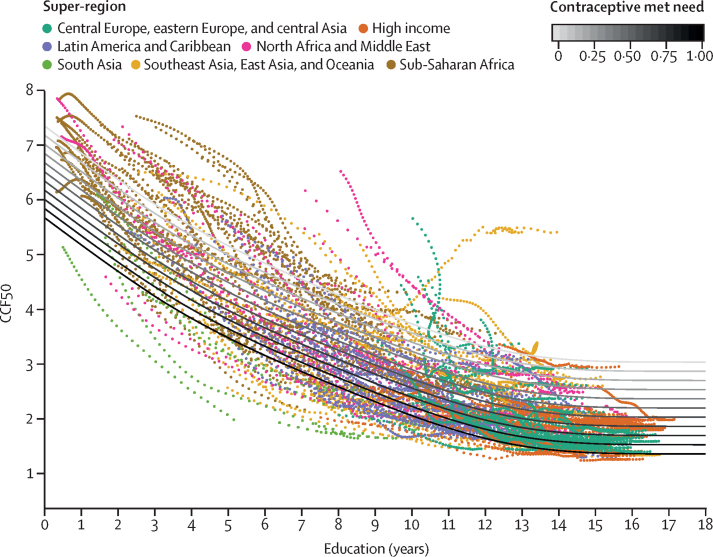
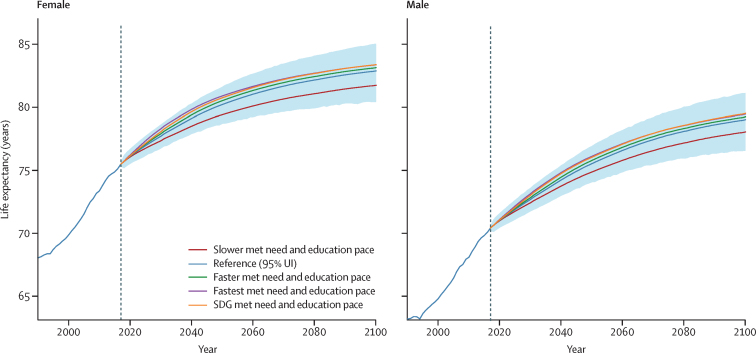
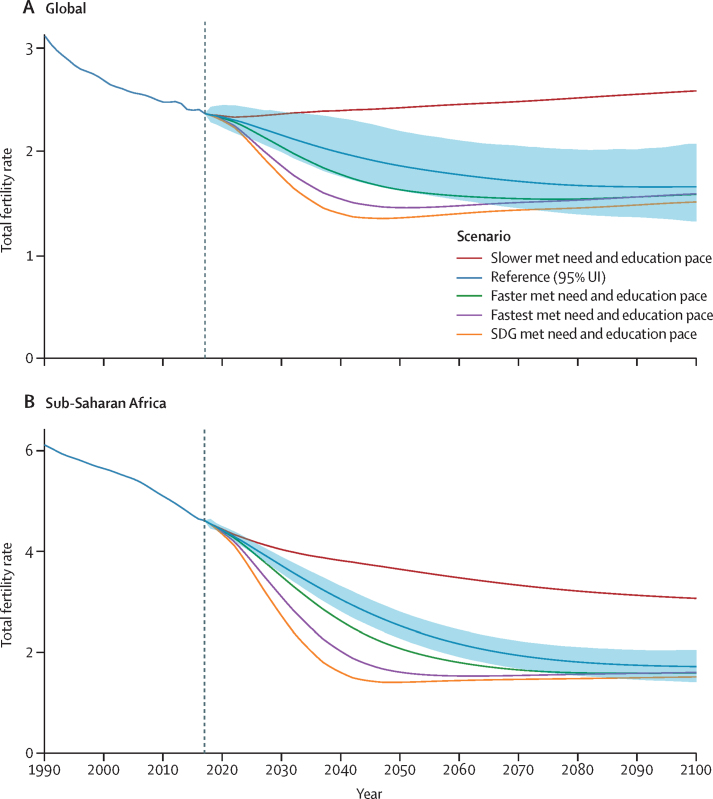
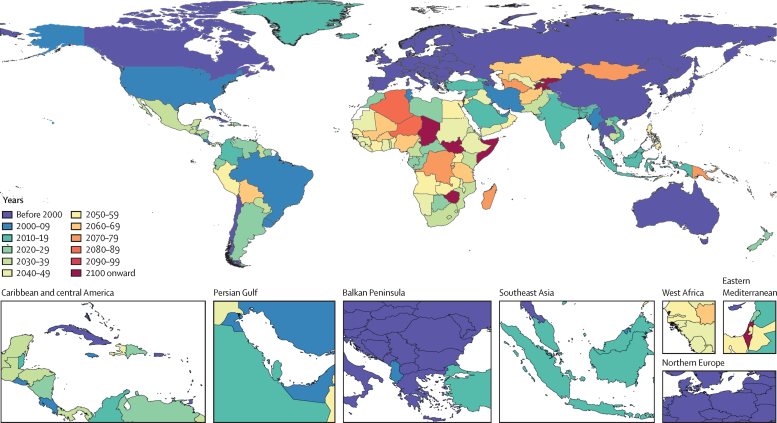
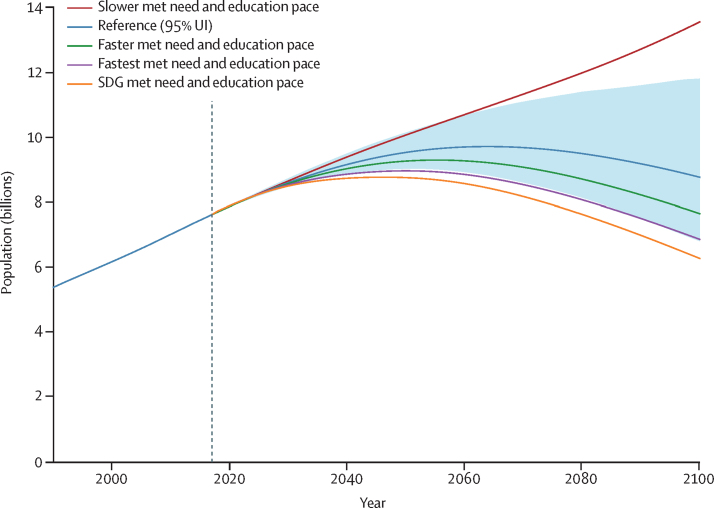
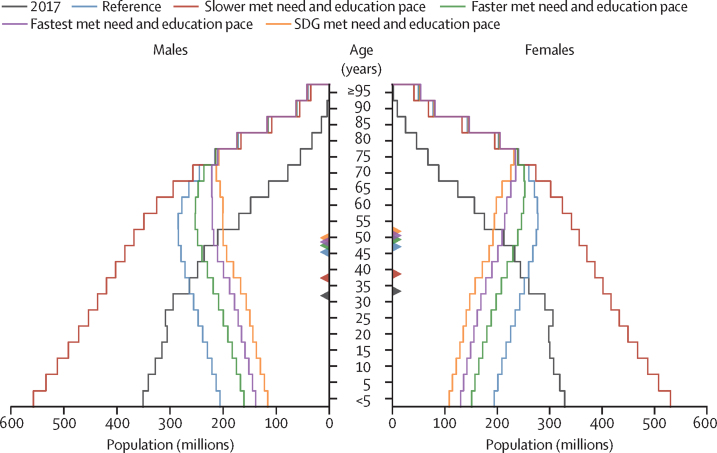
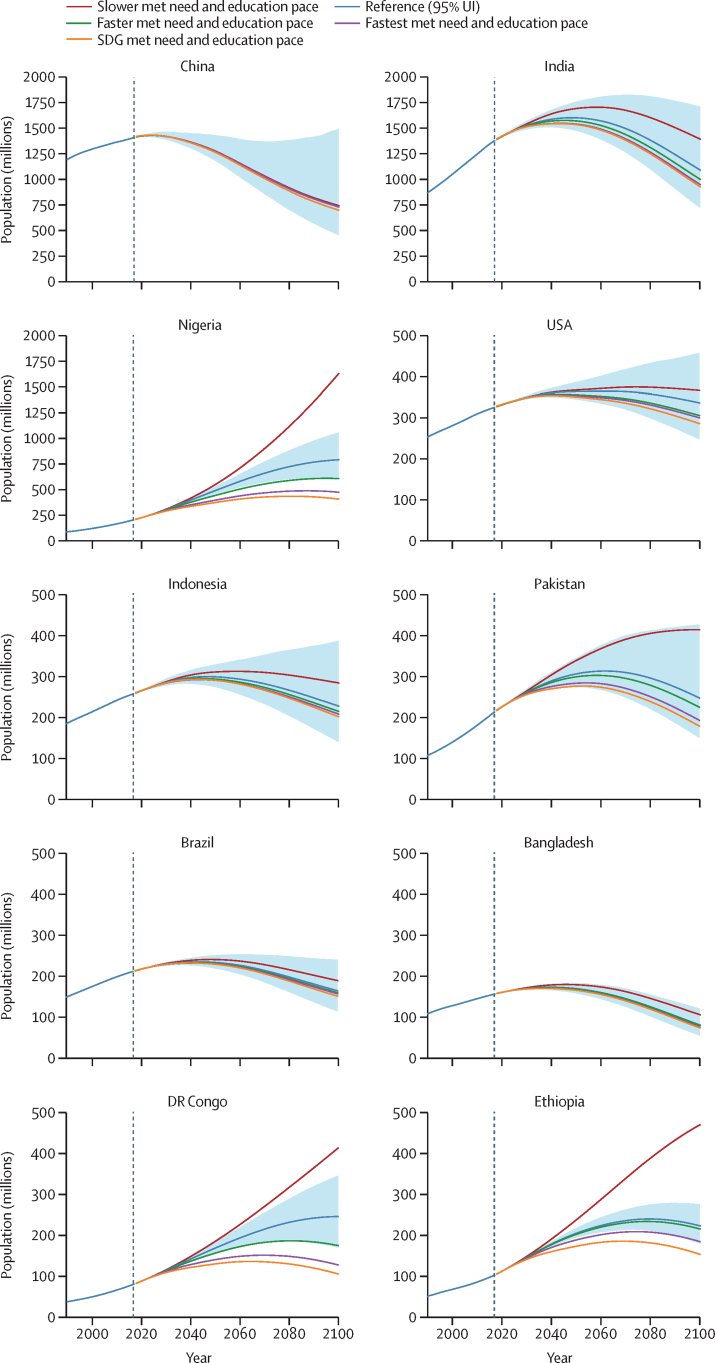
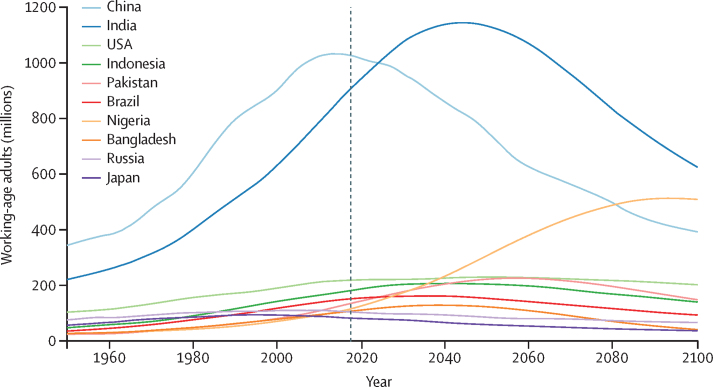
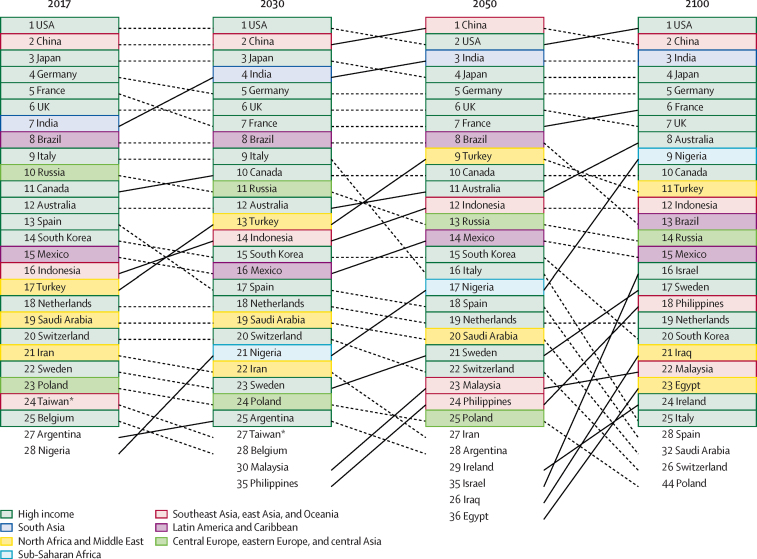
BACKGROUND: Understanding potential patterns in future population levels is crucial for anticipating and planning for changing age structures, resource and health-care needs, and environmental and economic landscapes. Future fertility patterns are a key input to estimation of future population size, but they are surrounded by substantial uncertainty and diverging methodologies of estimation and forecasting, leading to important differences in global population projections. Changing population size and age structure might have profound economic, social, and geopolitical impacts in many countries. In this study, we developed novel methods for forecasting mortality, fertility, migration, and population. We also assessed potential economic and geopolitical effects of future demographic shifts. METHODS: We modelled future population in reference and alternative scenarios as a function of fertility, migration, and mortality rates. We developed statistical models for completed cohort fertility at age 50 years (CCF50). Completed cohort fertility is much more stable over time than the period measure of the total fertility rate (TFR). We modelled CCF50 as a time-series random walk function of educational attainment and contraceptive met need. Age-specific fertility rates were modelled as a function of CCF50 and covariates. We modelled age-specific mortality to 2100 using underlying mortality, a risk factor scalar, and an autoregressive integrated moving average (ARIMA) model. Net migration was modelled as a function of the Socio-demographic Index, crude population growth rate, and deaths from war and natural disasters; and use of an ARIMA model. The model framework was used to develop a reference scenario and alternative scenarios based on the pace of change in educational attainment and contraceptive met need. We estimated the size of gross domestic product for each country and territory in the reference scenario. Forecast uncertainty intervals (UIs) incorporated uncertainty propagated from past data inputs, model estimation, and forecast data distributions. FINDINGS: The global TFR in the reference scenario was forecasted to be 1·66 (95% UI 1·33-2·08) in 2100. In the reference scenario, the global population was projected to peak in 2064 at 9·73 billion (8·84-10·9) people and decline to 8·79 billion (6·83-11·8) in 2100. The reference projections for the five largest countries in 2100 were India (1·09 billion [0·72-1·71], Nigeria (791 million [594-1056]), China (732 million [456-1499]), the USA (336 million [248-456]), and Pakistan (248 million [151-427]). Findings also suggest a shifting age structure in many parts of the world, with 2·37 billion (1·91-2·87) individuals older than 65 years and 1·70 billion (1·11-2·81) individuals younger than 20 years, forecasted globally in 2100. By 2050, 151 countries were forecasted to have a TFR lower than the replacement level (TFR <2·1), and 183 were forecasted to have a TFR lower than replacement by 2100. 23 countries in the reference scenario, including Japan, Thailand, and Spain, were forecasted to have population declines greater than 50% from 2017 to 2100; China's population was forecasted to decline by 48·0% (-6·1 to 68·4). China was forecasted to become the largest economy by 2035 but in the reference scenario, the USA was forecasted to once again become the largest economy in 2098. Our alternative scenarios suggest that meeting the Sustainable Development Goals targets for education and contraceptive met need would result in a global population of 6·29 billion (4·82-8·73) in 2100 and a population of 6·88 billion (5·27-9·51) when assuming 99th percentile rates of change in these drivers. INTERPRETATION: Our findings suggest that continued trends in female educational attainment and access to contraception will hasten declines in fertility and slow population growth. A sustained TFR lower than the replacement level in many countries, including China and India, would have economic, social, environmental, and geopolitical consequences. Policy options to adapt to continued low fertility, while sustaining and enhancing female reproductive health, will be crucial in the years to come. FUNDING: Bill & Melinda Gates Foundation.
Overview
The claims and statistics of this paper haven’t been checked yet.
Free: it reads the open-access text and checks the first 5 claims that cite a source we can check. Create a free account to check every claim.
Integrity signals
Registry
Cites
Statistics
Figures
Verification
Claims the paper makes
The claims and statistics of this paper haven’t been checked yet.
Free: it reads the open-access text and checks the first 5 claims that cite a source we can check. Create a free account to check every claim.
Claims other papers make about this one
Each is checked against this paper’s own text: does it say what the citing paper says it does?
The source backs part of the claim, not all of it — or backs it for a different population, condition or comparison.
In the citing paper
“Demographic data in the 5 years preceding 2021 demonstrate that the total fertility rate (TFR) in some countries has fallen below replacement levels—the minimum rate necessary for generational replacement of the population assuming no migration—with no evidence of this predicted rebound.”
From Global fertility in 204 countries and territories, 1950–2021, with forecasts to 2100: a comprehensive demographic analysis for the Global Burden of Disease Study 2021 (2024) · cites this paper as [4]
Experimental — accuracy not yet measuredThe source backs part of the claim, not all of it — or backs it for a different population, condition or comparison.
In the citing paper
“By 2050 and 2100, respectively, 77% of predominantly high-income countries and 93% of all countries will have a TFR below the replacement level of 2.1 children per woman.”
From Declining global fertility rates and the implications for family planning and family building: an IFFS consensus document based on a narrative review of the literature (2024) · cites this paper as Vollset et al., 2020
Experimental — accuracy not yet measuredThe source backs part of the claim, not all of it — or backs it for a different population, condition or comparison.
In the citing paper
“Not including the effects of migration, many countries are predicted to have a population decline of more than 50% from 2017 to 2100 (Vollset et al., 2020; Dao et al., 2021).”
From Declining global fertility rates and the implications for family planning and family building: an IFFS consensus document based on a narrative review of the literature (2024) · cites this paper as Vollset et al., 2020
Experimental — accuracy not yet measuredThe source backs part of the claim, not all of it — or backs it for a different population, condition or comparison.
In the citing paper
“Different TFRs among countries will promote immigration and emigration with important consequences for all countries, including increased political and social friction (Vollset et al., 2020).”
From Declining global fertility rates and the implications for family planning and family building: an IFFS consensus document based on a narrative review of the literature (2024) · cites this paper as Vollset et al., 2020
Experimental — accuracy not yet measured
6 more claims about this paper
Create a free account to see every claim other papers make about this one.
Self-check
Percentages, sums and reported differences re-computed from the paper’s own numbers.
The self-check needs the paper’s full text.
Citations
Cites
Planetary boundaries: Guiding human development on a changing planet
Steffen, W., Richardson, K., Rockström, J., Cornell, S. E., Fetzer, I., Bennett, E. M., Biggs, R., Carpenter, S. R., de Vries, W., de Wit, C. A., et al. (2015) · Science · doi:10.1126/science.1259855 · Cited by 12,527
Roth, G. A., Abate, D., Abate, K. H., Abay, S. M., Abbafati, C., Abbasi, N., Abbastabar, H., Abd-Allah, F., Abdela, J., Abdelalim, A., et al. (2018) · The Lancet · doi:10.1016/s0140-6736(18)32203-7 · Cited by 8,600
Planetary Boundaries: Exploring the Safe Operating Space for Humanity
Rockström, J., Steffen, W., Noone, K., Persson, Å., Chapin, F. S. I., Lambin, E., Lenton, T. M., Scheffer, M., Folke, C., Schellnhuber, H. J., et al. (2009) · Ecology and Society · doi:10.5751/es-03180-140232 · Cited by 7,187
Time Series: Theory and Methods
Ziegel, E. R., Brockwell, P., & Davis, R. (1992) · Technometrics · doi:10.2307/1270070 · Cited by 5,012
Stanaway, J. D., Afshin, A., Gakidou, E., Lim, S. S., Abate, D., Abate, K. H., Abbafati, C., Abbasi, N., Abbastabar, H., Abd-Allah, F., et al. (2018) · The Lancet · doi:10.1016/s0140-6736(18)32225-6 · Cited by 4,943
Self-citationThe second machine age: work, progress, and prosperity in a time of brilliant technologies
(2015) · Choice Reviews Online · doi:10.5860/choice.184834 · Cited by 4,381
Foreman, K. J., Marquez, N., Dolgert, A., Fukutaki, K., Fullman, N., McGaughey, M., Pletcher, M. A., Smith, A. E., Tang, K., Yuan, C.-W., et al. (2018) · The Lancet · doi:10.1016/s0140-6736(18)31694-5 · Cited by 2,994
Self-citationEssay on the Principle of Population: The 1803 Edition
Malthus, T. R. (2019) · Yale University Press eBooks · doi:10.12987/9780300231892 · Cited by 1,949
Guidelines for accurate and transparent health estimates reporting: the GATHER statement
Stevens, G. A., Alkema, L., Black, R. E., Boerma, J. T., Collins, G. S., Ezzati, M., Grove, J. T., Hogan, D. R., Hogan, M. C., Horton, R., et al. (2016) · The Lancet · doi:10.1016/s0140-6736(16)30388-9 · Cited by 1,798
Self-citationIPCC (2022) · Cambridge University Press eBooks · doi:10.1017/9781009157940 · Cited by 1,482
Research works printed but not linked: 1
- Lutz W Butz WP KC S World population and human capital in the twenty-first century 2014 2014 Oxford University Press Oxford
Cited by
Items 201–300 of 1,000
Elliott, P. S., Devine, L. D., Gibney, E. R., & O’Sullivan, A. M. (2024) · Nutrition Research · doi:10.1016/j.nutres.2024.03.004 · Cited by 46
Castro, R. P., da Silva, P. D., & Pires, L. C. (2024) · Applied Sciences · doi:10.3390/app14146158 · Cited by 50
Slafer, G. A., Savin, R., Pinochet, D. E., & Calderini, D. F. (2021) · Elsevier eBooks · doi:10.1016/b978-0-12-819194-1.00003-7 · Cited by 57
Fertility intention and its affecting factors in China: A national cross-sectional survey
Xiang, Z., Zhang, X., Li, Y., Li, J., Wang, Y., Wang, Y., Ming, W., Sun, X., Jiang, B., Zhai, G., et al. (2023) · Heliyon · doi:10.1016/j.heliyon.2023.e13445 · Cited by 50
Haakenstad, A., Bintz, C., Knight, M., Bienhoff, K., Chacón‐Torrico, H., Curioso, W. H., Dieleman, J. L., Gage, A. D., Gakidou, E. E., Hay, S. I., et al. (2023) · The Lancet Global Health · doi:10.1016/s2214-109x(23)00330-3 · Cited by 42
Self-citationMohan, D., Bakir, A. N., Sajab, M. S., Bakarudin, S. B., Mansor, N. N., Roslan, R., & Kaco, H. (2021) · Polymer Composites · doi:10.1002/pc.25987 · Cited by 39
Shocks, agricultural productivity, and natural resource extraction in rural Southeast Asia
Nguyen, T., Nguyen, T. T., Hung, M., Nguyen, D. L., & Grote, U. (2022) · World Development · doi:10.1016/j.worlddev.2022.106043 · Cited by 43
Zhang, C., Qin, L., Yin, F., Chen, Q., & Zhang, S. (2024) · BMC Musculoskeletal Disorders · doi:10.1186/s12891-024-08002-y · Cited by 46
Islam, S., Roshid, M. M., Bhowmik, R. C., Dhar, B. K., Raihan, A., & Karim, R. (2025) · Energy Policy · doi:10.1016/j.enpol.2025.114801 · Cited by 37
Patterns of Urban Shrinkage: A Systematic Analysis of Romanian Cities (1992–2020)
Eva, M., Cehan, A., & Lazăr, A. (2021) · Sustainability · doi:10.3390/su13137514 · Cited by 37
“EU post-socialist countries are currently among the most affected countries in the world by overall population decline [63].”
BackgroundChand, R., Joshi, P. K., & Khadka, S. (2022) · India studies in business and economics · doi:10.1007/978-981-19-0763-0 · Cited by 46
Zhang, Z., Wang, J., Song, N., Shi, L., & Du, J. (2023) · Frontiers in Public Health · doi:10.3389/fpubh.2023.1079248 · Cited by 44
Carga das Doenças Crônicas Não Transmissíveis nos Países de Língua Portuguesa
Malta, D. C., Gomes, C. S., Veloso, G. A., de Souza, J. B., de Oliveira, P. P. V., Ferreira, A. V. L., Naghavi, M., Ferrinho, P. D. L. G. M., de Freitas, P. C., & Ribeiro, A. L. P. (2023) · Ciência & Saúde Coletiva · doi:10.1590/1413-81232023285.11622022 · Cited by 36
Segurança alimentar: reflexões sobre um problema complexo
Domene, S. M. Á., Agostini, K., Almeida, G., Camargo, R. G. M., de Carvalho, A. M., Corrêa, F., Delbem, A. C. B., Domingos, S. S., Drucker, D. P., Marchioni, D. M. L., et al. (2023) · Estudos Avançados · doi:10.1590/s0103-4014.2023.37109.012 · Cited by 60
Woolf, B. A. R., Rajasundaram, S., Cronjé, H. T., Yarmolinsky, J. W., Burgess, S., & Gill, D. (2023) · BMJ · doi:10.1136/bmj-2023-076197 · Cited by 43
Global mean sea level likely higher than present during the holocene
Creel, R. C., Austermann, J., Kopp, R. E., Khan, N. S., Albrecht, T., & Kingslake, J. (2024) · Nature Communications · doi:10.1038/s41467-024-54535-0 · Cited by 44
“Modern human civilization in the 21st century is projected to near 10 billion people 49 , hundreds of millions of whom live in permanent coastal communities that cannot be relocated inland.”
Impact of Digitalisation on Economic Growth, Productivity and Employment
Arsić, M. (2020) · Economic Themes · doi:10.2478/ethemes-2020-0025 · Cited by 57
Brereton, C. F., & Jagals, P. (2021) · International Journal of Environmental Research and Public Health · doi:10.3390/ijerph18063010 · Cited by 41
“Poverty Climate change * + + Overcrowding Poverty Family planning availability Family size + + + − [9,79,85]”
BackgroundGao, Y., Wang, X., Wang, Q., Jiang, L., Wu, C., Guo, Y., Cui, N., Tang, H., & Tang, L. (2025) · Reproductive Health · doi:10.1186/s12978-025-02013-1 · Cited by 39
“The global population forecast information for 2017–2100 was obtained from GBD study [27].”
Inequality in human exposure to future climate extremes
Hosseinzadehtalaei, P., Hamdi, R., Moradkhani, H., Termonia, P., & Tabari, H. (2025) · Nature Communications · doi:10.1038/s41467-025-63385-3 · Cited by 55
Forest gains and losses in Southeast Asia over 27 years: The slow convergence towards reforestation
Paradis, E. (2020) · Forest Policy and Economics · doi:10.1016/j.forpol.2020.102332 · Cited by 39
Contraceptive use and fertility transitions: The distinctive experience of sub-Saharan Africa
Dasgupta, A., Wheldon, M. C., Kantorová, V., & Ueffing, P. (2022) · Demographic Research · doi:10.4054/demres.2022.46.4 · Cited by 42
Włodarczyk, K., & Smolińska, B. (2022) · Molecules · doi:10.3390/molecules27154963 · Cited by 34
Ríos-Blancas, M. J., Pando‐Robles, V., Razo, C., Cárcamo, C., Mendoza, W., Pacheco‐Barrios, K., Miranda, J. J., Lansingh, V. C., Demie, T. G., Saha, M., et al. (2023) · Frontiers in Public Health · doi:10.3389/fpubh.2023.1189861 · Cited by 37
Self-citationDemand and fluctuation range of China's coal production under the dual carbon target
Shi-hua, R., Xiao-miao, J., De-Zhi, Z., Zhang, Y., He-ping, X., & Zheng-quan, G. (2024) · Energy Reports · doi:10.1016/j.egyr.2024.03.005 · Cited by 34
The Global Decline in Human Fertility: The Post-Transition Trap Hypothesis
Aitken, R. J. (2024) · Life · doi:10.3390/life14030369 · Cited by 48
“Indeed, Vollset et al. [5] predict that by 2050, this demographic convergence will result in 151 of 195 countries having a TFR lower than the replacement level, while 183 are predicted to pass this threshold by 2100.”
BackgroundGrowing mismatches of supply and demand of ecosystem services in the Netherlands
de Knegt, B., Lof, M. E., Clec’h, S. L., & Alkemade, R. (2024) · Journal of Environmental Management · doi:10.1016/j.jenvman.2024.123442 · Cited by 38
Schaller, J., Webber, H. A., Ewert, F. A., Stein, M., & Puppe, D. (2024) · npj Sustainable Agriculture · doi:10.1038/s44264-024-00035-z · Cited by 39
Tateishi, E., Takahashi, K., & NAKANO, T. (2020) · Cities · doi:10.1016/j.cities.2020.103033 · Cited by 37
Population decline: where demography, social science, and biology intersect
Aitken, R. J. (2024) · Reproduction · doi:10.1530/rep-24-0070 · Cited by 33
Gong, T., Guo, S., Liu, F.-H., Huo, Y.-L., Zhang, M., Shi, Y., Zhou, H., Xu, P., Wang, X., Xu, H.-L., et al. (2023) · Nature Communications · doi:10.1038/s41467-023-43282-3 · Cited by 36
“Recent changes in fertility rates in China may have partly contributed to the early development of OC 33 .”
Multimorbidity patterns and prevalence among geriatric patients in Japanese hospital dentistry
Matsumoto, K., Tsutsui, T., Hashimoto, R., Sakakura, M., Onishi, T., & Akashi, M. (2025) · BMC Geriatrics · doi:10.1186/s12877-025-06012-6 · Cited by 33
“Global population projection models suggest that the proportion of people aged 65 years and older will be substantial across many regions [4].”
Yields and Yield Gaps in Lowland Rice Systems and Options to Improve Smallholder Production
Awio, T., Senthilkumar, K., Dimkpa, C. O., Otim-Nape, G. W., Struik, P. C., & Stomph, T. J. (2022) · Agronomy · doi:10.3390/agronomy12030552 · Cited by 38
“In addition, SSA population continues to grow, with the projection that the population will at least double by 2050 and peak by 2100 [3,4].”
BackgroundThe Shape of Things to Come: International Migration in the Twenty-First Century
Massey, D. S. (2023) · Springer eBooks · doi:10.1007/978-3-031-19153-4_2 · Cited by 46
Chao, F., Gerland, P., Cook, A. R., Guilmoto, C. Z., & Alkema, L. (2021) · BMJ Global Health · doi:10.1136/bmjgh-2021-005516 · Cited by 34
“The most recent set of world population projections from the Global Burden of Disease Study assumes for instance birth masculinity to remain constant through 2100 at their 2017 levels, an unlikely feature in view of the rapid changes in SRB levels observed in countries with skewed SRBs. 23 The population projections p…”
Kanger, L., Tinits, P., Pahker, A.-K., Orru, K., Tiwari, A. K., Sillak, S., Šeļa, A., & Vaik, K. (2021) · Global Environmental Change · doi:10.1016/j.gloenvcha.2021.102447 · Cited by 39
Fertility loss: negative effects of environmental toxicants on oogenesis
Yao, X., Liu, W., Xie, Y., Xi, M., & Xiao, L. Y. (2023) · Frontiers in Physiology · doi:10.3389/fphys.2023.1219045 · Cited by 40
“In recent years, a global decline in fertility rates and a high incidence of human infertility has been observed (GBD, 2019 Demographics Collaborators, 2020; Vollset et al., 2020).”
BackgroundChina's dietary transition and its impact on cropland demand for sustainable agriculture
Sun, Z., Zhan, Y., Liu, L., Ye, Q., & Zhang, Q. (2024) · Sustainable Production and Consumption · doi:10.1016/j.spc.2024.06.018 · Cited by 38
Ambient particulate matter burden of disease in the Kingdom of Saudi Arabia
Rojas‐Rueda, D., Alsufyani, W. A., Herbst, C. H., Albalawi, S. M. F., Alsukait, R. F., & Alomran, M. (2021) · Environmental Research · doi:10.1016/j.envres.2021.111036 · Cited by 37
Estimating minimum energy requirement for transitioning to a net-zero, developed India in 2070
Bhattacharyya, R., Singh, K. K., Grover, R. B., & Bhanja, K. (2022) · Current Science · doi:10.18520/cs/v122/i5/517-527 · Cited by 37
Masoud, A. A. (2023) · Air Quality Atmosphere & Health · doi:10.1007/s11869-023-01357-6 · Cited by 34
Fertility history and intentions of married women, China
Li, Q., Yang, R., Zhou, Z., Qian, W., Zhang, J., Wu, Z., Jin, L., Wu, X., Zhang, C., Zheng, B., et al. (2024) · Bulletin of the World Health Organization · doi:10.2471/blt.23.289736 · Cited by 33
Wu, H., Li, Y., Zou, C., Guo, W., Han, F., Huang, G., & Sun, L. (2025) · BMC Musculoskeletal Disorders · doi:10.1186/s12891-025-08331-6 · Cited by 41
“Standard-age population data [14] and predicted population data for 2100 [15] were obtained from the relevant literature.”
Ziwei, K., Mengjiao, C., Yongjie, Z., Mengqi, Z., & Yeqin, Y. (2023) · Nurse Education Today · doi:10.1016/j.nedt.2023.105719 · Cited by 31
Gore-Langton, G. R., Cano, J., Simpson, H., Tatem, A., Tejedor-Garavito, N., Wigley, A., Carioli, A., Gething, P., Weiss, D. J., Chandramohan, D., et al. (2022) · PLOS Global Public Health · doi:10.1371/journal.pgph.0001061 · Cited by 30
Hatem, G., & Goossens, M. M. (2022) · BAU Journal - Health and Wellbeing · doi:10.54729/yvaa4887 · Cited by 31
Association of depression and sleep quality with frailty: a cross-sectional study in China
Zhang, Y., Yu, G., Bai, W., Wu, S., Geng, X., Zhang, W., Liu, Y., Meng, Y., Gao, J., Li, W., et al. (2024) · Frontiers in Public Health · doi:10.3389/fpubh.2024.1361745 · Cited by 38
Zhao, J., Qi, W., Cheng, Y., Hao, R., Yuan, M., Jin, H., Wang, Y., Lv, H., Wu, Y., & Hu, J. (2024) · Reproductive Health · doi:10.1186/s12978-024-01855-5 · Cited by 38
“A research article published in the Lancet in July 2020 projected that by 2100, the global total fertility rate could drop to 1.7, meaning an average of only 1.7 children per woman during her reproductive lifespan [2].”
BackgroundInfluentialHow aging of the global population is changing oncology
Gu, Y., Lin, F. P. Y., & Epstein, R. J. (2021) · ecancermedicalscience · doi:10.3332/ecancer.2021.ed119 · Cited by 34
C. elegans as a model organism to study female reproductive health
Athar, F., & Templeman, N. M. (2022) · Comparative Biochemistry and Physiology Part A Molecular & Integrative Physiology · doi:10.1016/j.cbpa.2022.111152 · Cited by 36
Longitudinal profiling of metabolic ageing trends in two population cohorts of young adults
Mäkinen, V., Karsikas, M., Kettunen, J., Lehtimäki, T. J., Kähönen, M. A. P., Viikari, J. S. A., Perola, M., Salomaa, V. V., Järvelin, M., Raitakari, O. T., et al. (2022) · International Journal of Epidemiology · doi:10.1093/ije/dyac062 · Cited by 36
Ren, H.-M., Liao, M., Tan, S.-X., Chen, C., Zhu, S., Zheng, L., Ma, J., Mu, Y., Li, W.-L., Zhang, S., et al. (2022) · Frontiers in Public Health · doi:10.3389/fpubh.2022.910641 · Cited by 35
Xiao, L., Wang, Q., Ni, H., Xu, T. S., Zeng, Q., Yu, X., Wu, H., Guo, P., Zhang, Q., & Zhang, X. (2022) · The Science of The Total Environment · doi:10.1016/j.scitotenv.2022.158245 · Cited by 31
Yang, L., Wu, J., Mo, X., Chen, Y., Huang, S., Zhou, L., Dai, J., Xie, L., Chen, S., Shang, H., et al. (2023) · JMIR Public Health and Surveillance · doi:10.2196/40552 · Cited by 35
Leroux, L., Clermont‐Dauphin, C., N’Diénor, M., Jourdan, C., Roupsard, O., & Seghieri, J. (2022) · The Science of The Total Environment · doi:10.1016/j.scitotenv.2022.158707 · Cited by 33
Morrison, J., & Malik, S. M. M. R. (2024) · International Journal for Equity in Health · doi:10.1186/s12939-023-02092-1 · Cited by 29
“Community-level values and norms surrounding marriage and fertility are more entrenched in rural areas [21, 22].”
BackgroundAge and expertise: The effects of ageism on professional recognition for senior nurses
Mohamed, S. A. A. K., & Shaban, M. (2024) · Geriatric Nursing · doi:10.1016/j.gerinurse.2024.08.045 · Cited by 36
Global Trend in Pancreatic Cancer Prevalence Rates Through 2040: An Illness‐Death Modeling Study
Hesami, Z., Olfatifar, M., Sadeghi, A., Zali, M. R., Mohammadi‐Yeganeh, S., Habibi, M. A., Ghadir, M. R., & Houri, H. (2024) · Cancer Medicine · doi:10.1002/cam4.70318 · Cited by 29
Stout, M. J., van de Ven, C. J. M., Parekh, V. I., Pardo, J. L., Garifullin, M., Xu, M., Fenner, D. E., & Smith, R. D. (2021) · JAMA Network Open · doi:10.1001/jamanetworkopen.2021.11621 · Cited by 32
Quantifying cost of disease in livestock: a new metric for the Global Burden of Animal Diseases
Gilbert, W., Marsh, T. L., Chaters, G. L., Jemberu, W. T., Bruce, M., Steeneveld, W., Afonso, J. S., Huntington, B., & Rushton, J. (2024) · The Lancet Planetary Health · doi:10.1016/s2542-5196(24)00047-0 · Cited by 37
Prevention and control of non-communicable diseases in iran: the case for Investment
Yousefi, M., Daştan, İ., Alinezhad, F., Ranjbar, M., Hamelmann, C., Ostovar, A., Moghisi, A., Mohammadi, S., Mataria, A., Hammerich, A., et al. (2022) · BMC Public Health · doi:10.1186/s12889-022-13615-w · Cited by 30
Lozada-Martínez, I. D., Marín, J. S., Toro, S. M. C., Mazenett-Granados, E., Suárez, J. F., Sarmiento, M., & Anaya, J. (2024) · Archives of Gerontology and Geriatrics Plus · doi:10.1016/j.aggp.2024.100006 · Cited by 30
Global burdens of nasopharyngeal carcinoma in children and young adults and predictions to 2040
Lei, S., Chen, L., Ji, P., Li, K., Li, Q., Huang, C.-L., Wang, G., Ma, J., Guo, R., & Tang, L. (2024) · Oral Oncology · doi:10.1016/j.oraloncology.2024.106891 · Cited by 28
Demographic transition in South Korea: implications of falling birth rates
Kim, C. Y., & Chung, S.-H. (2024) · Korean Journal of Pediatrics · doi:10.3345/cep.2023.01599 · Cited by 41
“3 , 4 ) This decline in the TFR can be attributed to a tapestry of factors such as increased economic opportunities that often lead women to delay motherhood in favor of career or education, the shift toward smaller family norms with urbanization, and expanded access to healthcare and family…”
BackgroundWu, Y.-L., Wu, Y., Akhmetzhanov, A. R., Wu, M., Lin, Y.-F., & Lin, C. (2024) · BMJ Open · doi:10.1136/bmjopen-2023-082959 · Cited by 37
Xiang, X.-N., Wang, Z., Hu, J., Zhang, J.-Y., Li, K., Chen, Q.-X., Xu, F., Zhang, Y.-W., He, H., He, C., et al. (2024) · Journal of Medical Internet Research · doi:10.2196/54876 · Cited by 33
Hierarchically porous 3D-printed ceramic scaffolds for bone tissue engineering
Chan, S. S. L., Black, J. R., Franks, G. V., & Heath, D. E. (2024) · Biomaterials Advances · doi:10.1016/j.bioadv.2024.214149 · Cited by 29
Dai, X., Dai, M., Liang, Y., Li, X., & Zhao, W. (2025) · BMC Oral Health · doi:10.1186/s12903-025-05864-z · Cited by 41
“…population data were sourced from the World Standards database, developed by the WHO (https:// seer. cancer. gov/ stdpo pulat ions/ world. who. html), and population forecast data were obtained from the GBD Global Fertility, Mortality, Migration, and Population Forecasts for 2017–2100 [32].”
Equity and Cost-Effectiveness in Valuation and Action Planning to Preserve Biodiversity
Ando, A. W. (2022) · Environmental and Resource Economics · doi:10.1007/s10640-022-00674-1 · Cited by 31
A Golden Thread approach to transforming Maternal and Child Health in Singapore
Yap, F. K. P., Loy, S. L., Ku, C. W., Chua, M. C., Godfrey, K. M., & Chan, J. K. Y. (2022) · BMC Pregnancy and Childbirth · doi:10.1186/s12884-022-04893-8 · Cited by 33
“Improving MCH is vital for all countries, but particularly for Singapore, because of rapid socio-economic development, ageing and ultra-low fertility rates [2, 3].”
BackgroundHuang, L., Yuan, L., Xia, Y., Yang, Z., Luo, Z., Zheng, Y., Li, M., & Yuan, J. (2023) · Ecological Indicators · doi:10.1016/j.ecolind.2023.110883 · Cited by 28
Haakenstad, A., Coates, M. M., Bukhman, G., McConnell, M. A., & Verguet, S. (2022) · Health Policy and Planning · doi:10.1093/heapol/czac053 · Cited by 29
“The challenge of reducing CHE is complicated by the need for health systems to confront the healthcare needs of rapidly ageing populations and the growing burden of non-communicable diseases (NCDs) (Binagwaho et al., 2014; Vollset et al., 2020; Vos et al., 2020).”
BackgroundJones, P. R., Ungewiß, J., Eichinger, P., Wörner, M., Crabb, D. P., & Schiefer, U. (2022) · Frontiers in Human Neuroscience · doi:10.3389/fnhum.2022.914459 · Cited by 32
MUNTEAN, M., Fărcaș, A. C., Medeleanu, M. L., Salanță, L. C., & Borşa, A. (2022) · Sustainability · doi:10.3390/su141710862 · Cited by 31
Lindsey, P. A., Anderson, S. H., Dickman, A., Gandiwa, P., Harper, S. E., Morakinyo, A. B., Nyambe, N., O'Brien-Onyeka, M., Packer, C., Parker, A., et al. (2022) · Annual Review of Environment and Resources · doi:10.1146/annurev-environ-120920-125536 · Cited by 33
Su, X., Jin, K., Zhou, X. J., Zhang, Z., Zhang, C., Li, Y., Yang, M., Huang, X., Xu, S., Wei, Q., et al. (2023) · Frontiers in Endocrinology · doi:10.3389/fendo.2023.1125819 · Cited by 32
Mason, N., & Büchs, M. (2023) · Sustainability Science Practice and Policy · doi:10.1080/15487733.2023.2222624 · Cited by 59
“Growth resilience is also desirable because the future of growth in the global North is uncertain for several reasons, including a decelerating pace of technological innovation, a decline in labor force participation rates, and slowing global population growth (Gordon 2016; Vollset et al. 2020).”
BackgroundTechnologies: Limitless Possibilities and Effective Control
Grinin, L. E., & Леонидович, Г. А. (2023) · World-systems evolution and global futures · doi:10.1007/978-3-031-34999-7_8 · Cited by 27
Gu, L., Zhou, J., Zhang, L., Li, C., Bao, K., Du, F., Jiang, N., Peng, J., & Jiang, Y. Q. (2025) · Stroke · doi:10.1161/strokeaha.124.048950 · Cited by 35
Zeng, G., Liu, L., Wang, Y., Yu, J., Wang, H., & Li, F. (2025) · Frontiers in Endocrinology · doi:10.3389/fendo.2025.1506229 · Cited by 32
Bäck, S., Skaffari, E., Vepsäläinen, H., Lehto, R., Lehto, E., Nissinen, K., Ray, C., Nevalainen, J., Roos, E., Erkkola, M., et al. (2021) · European Journal of Nutrition · doi:10.1007/s00394-021-02672-3 · Cited by 33
Samways, D. (2022) · The Journal of Population and Sustainability · doi:10.3197/jps.63772239426891 · Cited by 35
“Moreover, it has been shown that, in conjunction with access to modern contraceptives, education, particularly of girls, is one of the most important factors in reducing fertility (Lutz, Butz and KC, 2014; Vollset et al., 2020).”
BackgroundFuture land-use competition constrains natural climate solutions
Zheng, Q., Siman, K., Zeng, Y., Teo, H. C., Sarira, T. V., Sreekar, R., & Koh, L. P. (2022) · The Science of The Total Environment · doi:10.1016/j.scitotenv.2022.156409 · Cited by 29
Can a negative population growth rate sustain a positive economic growth rate in the long run?
Bucci, A. (2023) · Mathematical Social Sciences · doi:10.1016/j.mathsocsci.2023.01.001 · Cited by 32
Reinforcement learning for sequential decision making in population research
Deliu, N. (2023) · Quality & Quantity · doi:10.1007/s11135-023-01755-z · Cited by 34
“…al. 2022; Nigri et al. 2022), RL can be particularly suited to inform population policies in a context of global population changes (Billari 2022; Vollset et al. 2020) thanks to the following features: (i) RL explicitly tackles the problem of making decisions and learning policies in an…”
Demography: Toward Optimization of Demographic Processes
Korotayev, A., Malkov, S., & Musieva, J. (2023) · World-systems evolution and global futures · doi:10.1007/978-3-031-34999-7_6 · Cited by 31
Paulsson, A., Koch, M., & Fritz, M. (2024) · Critical Social Policy · doi:10.1177/02610183231218971 · Cited by 33
Korean National Burden of Disease: The Importance of Diabetes Management
Kim, C.-N., Jung, Y.-S., Kim, Y.-E., Ock, M., & Yoon, S. (2024) · Diabetes & Metabolism Journal · doi:10.4093/dmj.2024.0087 · Cited by 27
“In the GBD study, which covered population scenarios for various countries, the total fertility rate in South Korea was re-ported to be 1.24 in 2017 and 1.22 in 2019 [42].”
BackgroundInfluentialPotential Role of Probiotics for Inflammaging: A Narrative Review
Peladic, N. J., Dell’Aquila, G., Carrieri, B., Maggio, M. G., Cherubini, A., & Orlandoni, P. (2021) · Nutrients · doi:10.3390/nu13092919 · Cited by 30
“Independent of variations in fertility, mortality, and migrations, the number of older subjects in the world will continue to increase [1].”
BackgroundBuzdin, A. A., Patrushev, M. V., & Sverdlov, E. D. (2021) · Plants · doi:10.3390/plants10081667 · Cited by 29
Climate ethics and population policy: A review of recent philosophical work
Cafaro, P. (2021) · Wiley Interdisciplinary Reviews Climate Change · doi:10.1002/wcc.748 · Cited by 31
Hallberg, I., Persson, S., Olovsson, M. H., Moberg, M., Ranefall, P., Laskowski, D., Damdimopoulou, P., Sirard, M., Rüegg, J., & Sjunnesson, Y. C. B. (2022) · Reproductive Toxicology · doi:10.1016/j.reprotox.2022.02.004 · Cited by 26
Zhang, R., Liu, Y., Dong, L., Li, H., Li, Y., Zhou, W., Wu, H.-T., Wang, Y. X., & Wei, W. (2022) · Frontiers in Pediatrics · doi:10.3389/fped.2022.735335 · Cited by 29
The Family Life Course Framework: Perspectives on Interdependent Lives and Inequality
Roy, K. M., & Settersten, R. A. (2022) · Springer eBooks · doi:10.1007/978-3-030-92002-9_20 · Cited by 30
Safiri, S., Noori, M., Nejadghaderi, S. A., Mousavi, S. E., Sullman, M. J. M., Araj‐Khodaei, M., Collins, G. S., Kolahi, A., & Gharagozli, K. (2023) · Age and Ageing · doi:10.1093/ageing/afad042 · Cited by 28
Modeling Social Self-Organization and Historical Dynamics: Africa’s Futures
Korotayev, A., Shulgin, S. G., Ustyuzhanin, V., Zinkina, J. V., & Grinin, L. E. (2023) · World-systems evolution and global futures · doi:10.1007/978-3-031-34999-7_20 · Cited by 32
Grinin, L., Grinin, A., & Korotayev, A. (2023) · World Futures · doi:10.1080/02604027.2023.2204791 · Cited by 24
“…projections are unanimous in predicting a dramatic aging of the world population in the coming decades (Alkema et al., 2011; Kaneda et al., 2016; Lutz et al., 2018; Raftery et al., 2012; UN Population Division, 2019b, 2022a, 2022b; Vollset et al., 2020; Wittgenstein Centre, 2022) (see Figure 4).”
BackgroundNonhormonal Male Contraceptive Development—Strategies for Progress
Nickels, L. M., & Yan, W. (2023) · Pharmacological Reviews · doi:10.1124/pharmrev.122.000787 · Cited by 33
“Studies have suggested that a TFR of 2.0 to 2.1 is required to maintain a stable population (Goodkind et al., 2018; Vollset et al., 2020).”
BackgroundInfluentialTakei, G. L. (2024) · Reproductive Medicine and Biology · doi:10.1002/rmb2.12614 · Cited by 25
Ideological Dilemmas Actualised by the Idea of Living Environmentally Childfree
Nakkerud, E. (2021) · Human Arenas · doi:10.1007/s42087-021-00255-6 · Cited by 29
Metadata
- Authors
- Vollset, S. E., Goren, E., Yuan, C.-W., Cao, J., Smith, A. E., Hsiao, T., Bisignano, C., Azhar, G. S., Castro, E., Chalek, J., Dolgert, A. J., Frank, T., Fukutaki, K., Hay, S. I., Lozano, R., Mokdad, A. H., Nandakumar, V., Pierce, M., Pletcher, M., Robalik, T., Steuben, K. M., Wunrow, H. Y., Zlavog, B. S., & Murray, C. J. L.
- Affiliations
- University of Washington (US)
- Corresponding author
- Murray, Christopher J L
- ORCID
- Venue
- The Lancet
- Publisher
- Elsevier BV
- Published
- 2020-10
- Volume
- 396
- Issue
- 10258
- Pages
- 1285-1306
- ISSN
- 0099-5355 (ISSN-L)
- 0140-6736
- PMC
- PMC7561721
- OpenAlex
- W3043365850
- Cited by
- 1,506
- References
- 34
- Citations by year
- 2026: 195 · 2025: 279 · 2024: 266 · 2023: 276 · 2022: 247 · 2021: 197 · 2020: 45
- FWCI
- 288.65
- Type
- journal article
- Language
- en
- Open access
- hybrid
- doi.org
- Licence
- cc-by
- www.elsevier.com/tdm/userlicense/1.0/ (tdm)
- www.elsevier.com/legal/tdmrep-license (tdm)
- creativecommons.org/licenses/by/4.0/ (vor)
- Locations
- The Lancet (publishedVersion, cc-by)
- PubMed Central (publishedVersion, cc-by)
- PubMed (publishedVersion)
- FIU - Digital Commons (Florida International University) (submittedVersion)
- Funders
- Bill and Melinda Gates Foundation
- Topics
- Social Sciences › Demography › Insurance, Mortality, Demography, Risk Management
- Health Sciences › Medicine › Public Health, Environmental and Occupational Health › Reproductive Health and Contraception
- Social Sciences › Geography, Planning and Development › demographic modeling and climate adaptation
- Keywords
- population projections, fertility prediction, mortality forecasting, migration forecasting, age-specific fertility, age-specific mortality, net migration, educational attainment, gross domestic product, demographic scenarios, population decline, age structure, uncertainty intervals, Global Burden of Disease Study, socioeconomic determinants of fertility
- MeSH terms
- Global Burden of Disease, Birth Rate, Female, Forecasting, Humans, Male, Mortality, Population Growth, Human Migration
About these checks
Registry, retraction, Cites and statistics results are computed, not judged, with one exception: a printed reference that no index lists is read once by a model before it counts as a citation error. Claims are extracted by a model and kept only when their quote appears verbatim in the text; each cited source is then checked, with a model’s help, for whether it says what the claim relies on. Those verdicts can be wrong — read the claim’s quote and the cited source before relying on one.
Statistics and arithmetic are recomputed, not judged.
Confidence bands are shown only for fields calibrated on our annotated test set. None is calibrated yet, so no band is shown.
What counts as a claim ›How we measure confidence ›How we check this ›
Are you an author, or do you see a problem with this page? Request a review
Data sources
Bibliographic data: Semantic Scholar, OpenAlex, Crossref.
Contains information from the Semantic Scholar Academic Graph Datasets, made available under the ODC Attribution License (ODC-BY 1.0).
Semantic Scholar’s data is described in: Kinney, R., et al. (2023). The Semantic Scholar Open Data Platform. arXiv:2301.10140.
