

Fertility, mortality, migration, and population scenarios for 195 countries and territories from 2017 to 2100: a forecasting analysis for the Global Burden of Disease Study
Open accessThe DOI matches its Crossref record; 33 of the 34 references it cites were found in a registry or an index.
Abstract
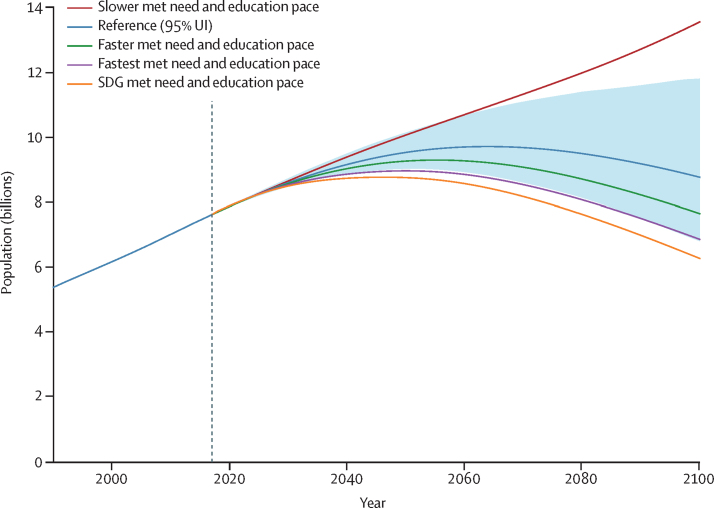
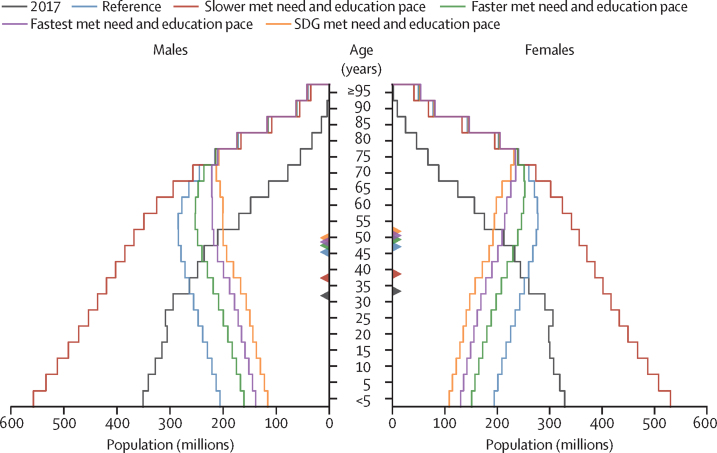
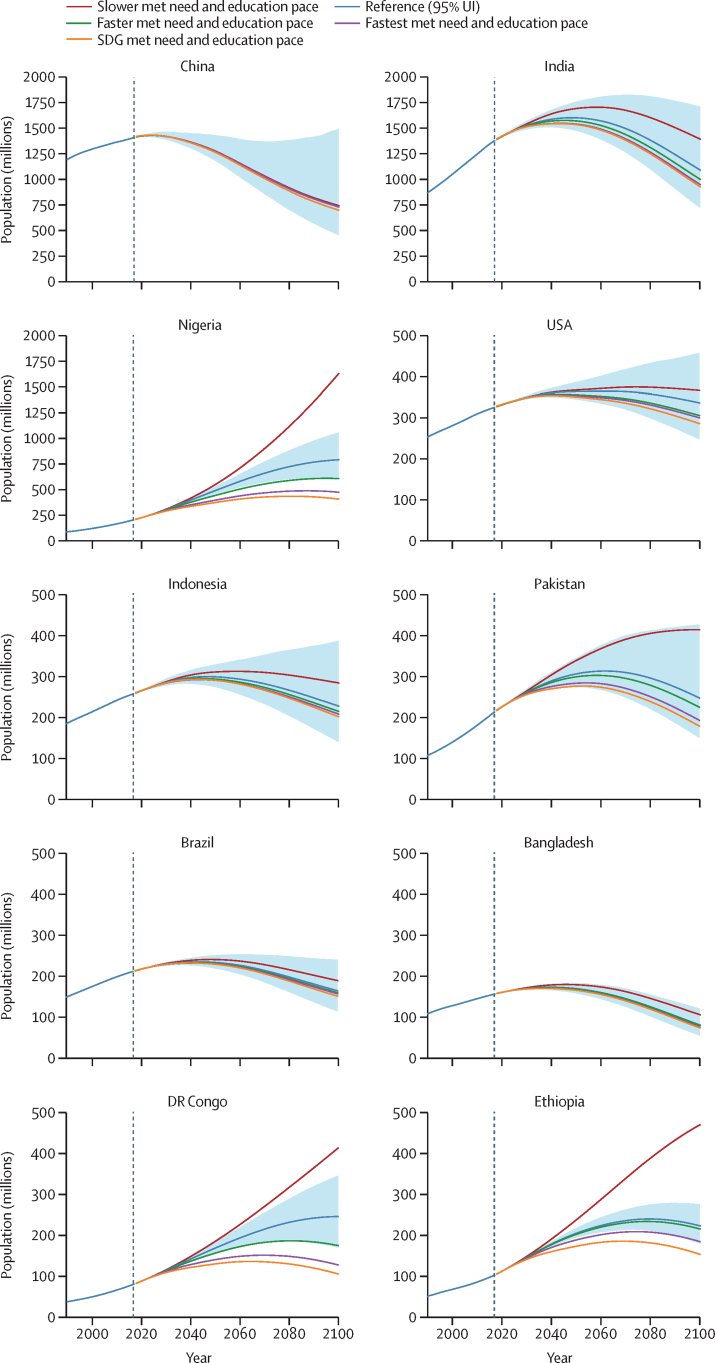
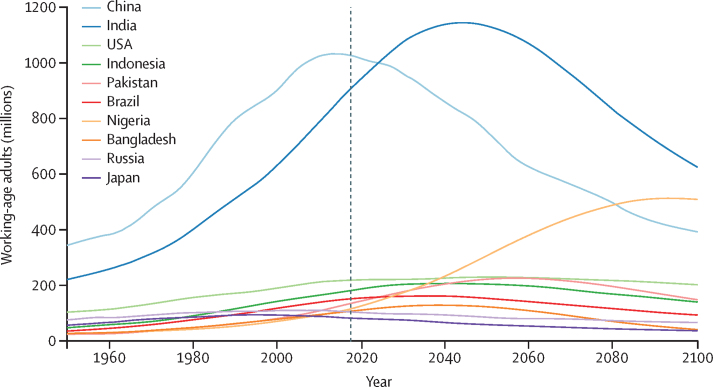
BACKGROUND: Understanding potential patterns in future population levels is crucial for anticipating and planning for changing age structures, resource and health-care needs, and environmental and economic landscapes. Future fertility patterns are a key input to estimation of future population size, but they are surrounded by substantial uncertainty and diverging methodologies of estimation and forecasting, leading to important differences in global population projections. Changing population size and age structure might have profound economic, social, and geopolitical impacts in many countries. In this study, we developed novel methods for forecasting mortality, fertility, migration, and population. We also assessed potential economic and geopolitical effects of future demographic shifts. METHODS: We modelled future population in reference and alternative scenarios as a function of fertility, migration, and mortality rates. We developed statistical models for completed cohort fertility at age 50 years (CCF50). Completed cohort fertility is much more stable over time than the period measure of the total fertility rate (TFR). We modelled CCF50 as a time-series random walk function of educational attainment and contraceptive met need. Age-specific fertility rates were modelled as a function of CCF50 and covariates. We modelled age-specific mortality to 2100 using underlying mortality, a risk factor scalar, and an autoregressive integrated moving average (ARIMA) model. Net migration was modelled as a function of the Socio-demographic Index, crude population growth rate, and deaths from war and natural disasters; and use of an ARIMA model. The model framework was used to develop a reference scenario and alternative scenarios based on the pace of change in educational attainment and contraceptive met need. We estimated the size of gross domestic product for each country and territory in the reference scenario. Forecast uncertainty intervals (UIs) incorporated uncertainty propagated from past data inputs, model estimation, and forecast data distributions. FINDINGS: The global TFR in the reference scenario was forecasted to be 1·66 (95% UI 1·33-2·08) in 2100. In the reference scenario, the global population was projected to peak in 2064 at 9·73 billion (8·84-10·9) people and decline to 8·79 billion (6·83-11·8) in 2100. The reference projections for the five largest countries in 2100 were India (1·09 billion [0·72-1·71], Nigeria (791 million [594-1056]), China (732 million [456-1499]), the USA (336 million [248-456]), and Pakistan (248 million [151-427]). Findings also suggest a shifting age structure in many parts of the world, with 2·37 billion (1·91-2·87) individuals older than 65 years and 1·70 billion (1·11-2·81) individuals younger than 20 years, forecasted globally in 2100. By 2050, 151 countries were forecasted to have a TFR lower than the replacement level (TFR <2·1), and 183 were forecasted to have a TFR lower than replacement by 2100. 23 countries in the reference scenario, including Japan, Thailand, and Spain, were forecasted to have population declines greater than 50% from 2017 to 2100; China's population was forecasted to decline by 48·0% (-6·1 to 68·4). China was forecasted to become the largest economy by 2035 but in the reference scenario, the USA was forecasted to once again become the largest economy in 2098. Our alternative scenarios suggest that meeting the Sustainable Development Goals targets for education and contraceptive met need would result in a global population of 6·29 billion (4·82-8·73) in 2100 and a population of 6·88 billion (5·27-9·51) when assuming 99th percentile rates of change in these drivers. INTERPRETATION: Our findings suggest that continued trends in female educational attainment and access to contraception will hasten declines in fertility and slow population growth. A sustained TFR lower than the replacement level in many countries, including China and India, would have economic, social, environmental, and geopolitical consequences. Policy options to adapt to continued low fertility, while sustaining and enhancing female reproductive health, will be crucial in the years to come. FUNDING: Bill & Melinda Gates Foundation.
Overview
The claims and statistics of this paper haven’t been checked yet.
Free: it reads the open-access text and checks the first 5 claims that cite a source we can check. Create a free account to check every claim.
Integrity signals
Registry
Cites
Statistics
Figures
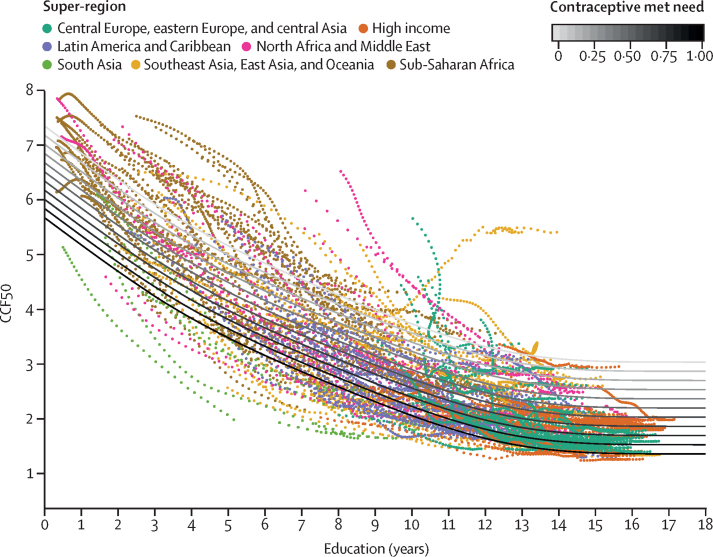
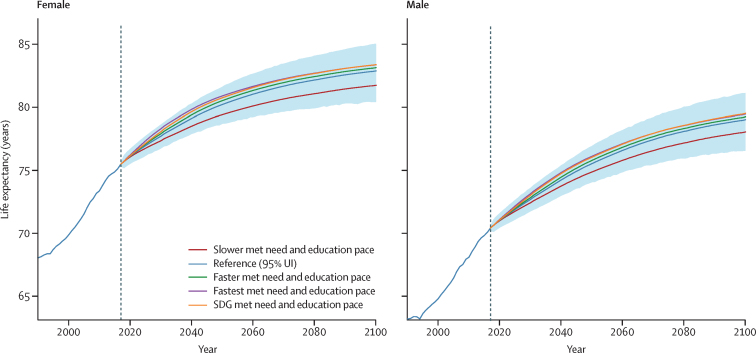
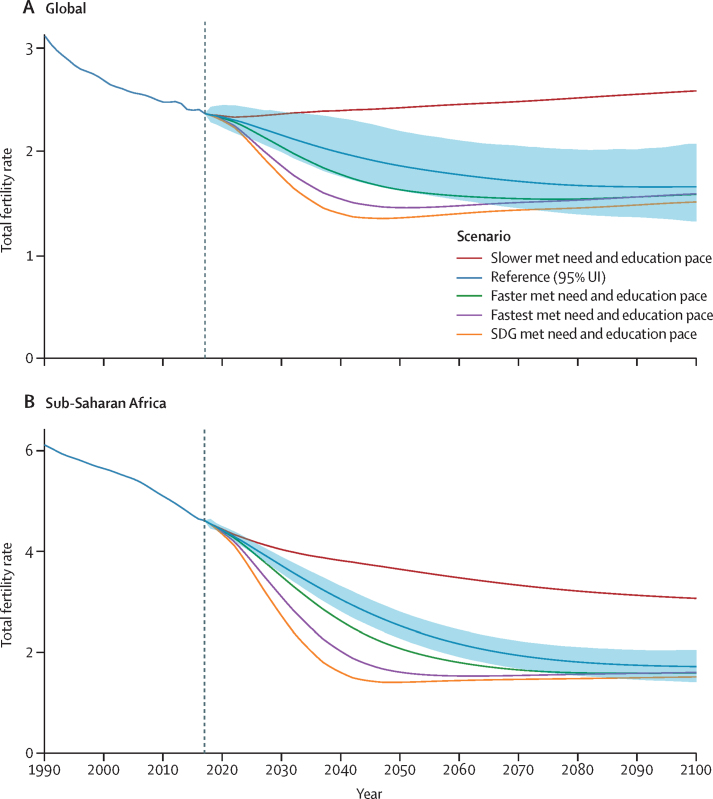
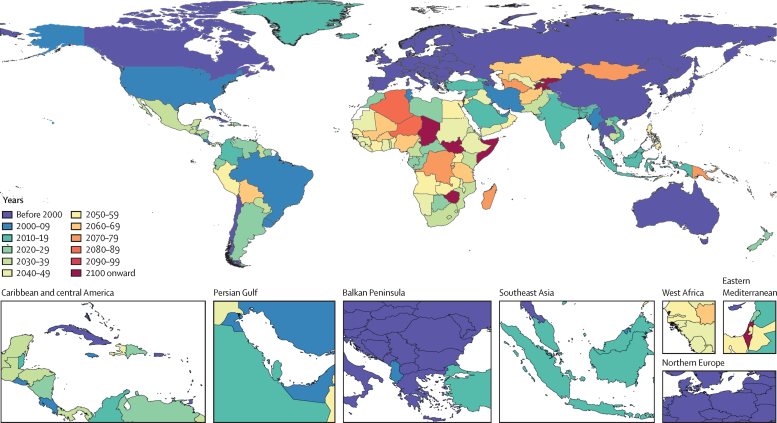
Verification
Claims the paper makes
The claims and statistics of this paper haven’t been checked yet.
Free: it reads the open-access text and checks the first 5 claims that cite a source we can check. Create a free account to check every claim.
Claims other papers make about this one
Each is checked against this paper’s own text: does it say what the citing paper says it does?
The source backs part of the claim, not all of it — or backs it for a different population, condition or comparison.
In the citing paper
“Demographic data in the 5 years preceding 2021 demonstrate that the total fertility rate (TFR) in some countries has fallen below replacement levels—the minimum rate necessary for generational replacement of the population assuming no migration—with no evidence of this predicted rebound.”
From Global fertility in 204 countries and territories, 1950–2021, with forecasts to 2100: a comprehensive demographic analysis for the Global Burden of Disease Study 2021 (2024) · cites this paper as [4]
Experimental — accuracy not yet measuredThe source backs part of the claim, not all of it — or backs it for a different population, condition or comparison.
In the citing paper
“By 2050 and 2100, respectively, 77% of predominantly high-income countries and 93% of all countries will have a TFR below the replacement level of 2.1 children per woman.”
From Declining global fertility rates and the implications for family planning and family building: an IFFS consensus document based on a narrative review of the literature (2024) · cites this paper as Vollset et al., 2020
Experimental — accuracy not yet measuredThe source backs part of the claim, not all of it — or backs it for a different population, condition or comparison.
In the citing paper
“Not including the effects of migration, many countries are predicted to have a population decline of more than 50% from 2017 to 2100 (Vollset et al., 2020; Dao et al., 2021).”
From Declining global fertility rates and the implications for family planning and family building: an IFFS consensus document based on a narrative review of the literature (2024) · cites this paper as Vollset et al., 2020
Experimental — accuracy not yet measuredThe source backs part of the claim, not all of it — or backs it for a different population, condition or comparison.
In the citing paper
“Different TFRs among countries will promote immigration and emigration with important consequences for all countries, including increased political and social friction (Vollset et al., 2020).”
From Declining global fertility rates and the implications for family planning and family building: an IFFS consensus document based on a narrative review of the literature (2024) · cites this paper as Vollset et al., 2020
Experimental — accuracy not yet measured
6 more claims about this paper
Create a free account to see every claim other papers make about this one.
Self-check
Percentages, sums and reported differences re-computed from the paper’s own numbers.
The self-check needs the paper’s full text.
Citations
Cites
Planetary boundaries: Guiding human development on a changing planet
Steffen, W., Richardson, K., Rockström, J., Cornell, S. E., Fetzer, I., Bennett, E. M., Biggs, R., Carpenter, S. R., de Vries, W., de Wit, C. A., et al. (2015) · Science · doi:10.1126/science.1259855 · Cited by 12,527
Roth, G. A., Abate, D., Abate, K. H., Abay, S. M., Abbafati, C., Abbasi, N., Abbastabar, H., Abd-Allah, F., Abdela, J., Abdelalim, A., et al. (2018) · The Lancet · doi:10.1016/s0140-6736(18)32203-7 · Cited by 8,600
Planetary Boundaries: Exploring the Safe Operating Space for Humanity
Rockström, J., Steffen, W., Noone, K., Persson, Å., Chapin, F. S. I., Lambin, E., Lenton, T. M., Scheffer, M., Folke, C., Schellnhuber, H. J., et al. (2009) · Ecology and Society · doi:10.5751/es-03180-140232 · Cited by 7,187
Time Series: Theory and Methods
Ziegel, E. R., Brockwell, P., & Davis, R. (1992) · Technometrics · doi:10.2307/1270070 · Cited by 5,012
Stanaway, J. D., Afshin, A., Gakidou, E., Lim, S. S., Abate, D., Abate, K. H., Abbafati, C., Abbasi, N., Abbastabar, H., Abd-Allah, F., et al. (2018) · The Lancet · doi:10.1016/s0140-6736(18)32225-6 · Cited by 4,943
Self-citationThe second machine age: work, progress, and prosperity in a time of brilliant technologies
(2015) · Choice Reviews Online · doi:10.5860/choice.184834 · Cited by 4,381
Foreman, K. J., Marquez, N., Dolgert, A., Fukutaki, K., Fullman, N., McGaughey, M., Pletcher, M. A., Smith, A. E., Tang, K., Yuan, C.-W., et al. (2018) · The Lancet · doi:10.1016/s0140-6736(18)31694-5 · Cited by 2,994
Self-citationEssay on the Principle of Population: The 1803 Edition
Malthus, T. R. (2019) · Yale University Press eBooks · doi:10.12987/9780300231892 · Cited by 1,949
Guidelines for accurate and transparent health estimates reporting: the GATHER statement
Stevens, G. A., Alkema, L., Black, R. E., Boerma, J. T., Collins, G. S., Ezzati, M., Grove, J. T., Hogan, D. R., Hogan, M. C., Horton, R., et al. (2016) · The Lancet · doi:10.1016/s0140-6736(16)30388-9 · Cited by 1,798
Self-citationIPCC (2022) · Cambridge University Press eBooks · doi:10.1017/9781009157940 · Cited by 1,482
Research works printed but not linked: 1
- Lutz W Butz WP KC S World population and human capital in the twenty-first century 2014 2014 Oxford University Press Oxford
Cited by
Items 501–600 of 1,000
Hou, X., Song, Z., Zhang, F., Liu, Z., Long, W., Long, Z., Zhou, M., Wang, E., Yin, P., & Zhu, M. (2022) · BMJ Open · doi:10.1136/bmjopen-2021-059699 · Cited by 15
Utsunomiya, R., Mikami, K., Doi, T., Choudhury, M. E., Jogamoto, T., Tokunaga, N., Ishii, E., Eguchi, M., Yano, H., & Tanaka, J. (2022) · Cells · doi:10.3390/cells11223649 · Cited by 13
Migration and Integration in a Post-Pandemic World: Socioeconomic Opportunities and Challenges
Lerpold, L., Sjöberg, Ö., & Wennberg, K. J. (2023) · Springer eBooks · doi:10.1007/978-3-031-19153-4 · Cited by 16
Li, D., Yu, Y., & Wang, B. (2023) · Scientific Reports · doi:10.1038/s41598-023-39053-1 · Cited by 16
Delacroix, C., & Owoo, N. S. (2023) · World · doi:10.3390/world4040048 · Cited by 11
“This estimate is predicated on the hypothetical assumption that that the Sustainable Development Goals’ targets for contraceptive access and education will be met [13].”
BackgroundCausal relationship between genetically predicted type 2 diabetes mellitus and male infertility
Fan, C., Zhang, J., & Qiu, D. (2024) · Frontiers in Endocrinology · doi:10.3389/fendo.2024.1357279 · Cited by 16
Normative power in the planetary organic crisis
Manners, I. (2024) · Cooperation and Conflict · doi:10.1177/00108367241244954 · Cited by 14
“With female educational attainment, together with sexual and reproductive health and rights, driving declining fertility rates across the world the global population is projected to peak at under 10 billion in the 2060s (Vollset et al., 2020).”
Safer sex negotiation and parity among women in sub-Saharan Africa
Adu, C., Frimpong, J. B., Mohammed, A., Tetteh, J. K., Budu, E., Ahinkorah, B. O., & Seidu, A. (2022) · Journal of Biosocial Science · doi:10.1017/s0021932021000651 · Cited by 11
“In spite of significant decline in the rate of population growth in SSA, the majority of women continue to have parity three or higher, largely due to low levels of educational attainment and contraceptive use and other socio-cultural factors (Yaya et al ., 2018; Vollset et al. , 2020).”
Gyasi, P. A., Zhou, L., & Amarteifio, E. N. A. (2023) · Cogent Social Sciences · doi:10.1080/23311886.2023.2275431 · Cited by 17
“On the positive side, migration can provide better economic opportunities for families, and this can lead to increased investments in education, particularly for girls (Ichou & Wallace, 2019; Vollset et al., 2020).”
BackgroundThe association between the number of pregnancies and depressive symptoms: A population-based study
Wang, Y., Wei, R., Chen, Z., Tang, Y., Liu, L., Qiao, P., Ren, C., Yu, Z., & Lu, C. (2024) · Journal of Affective Disorders · doi:10.1016/j.jad.2024.01.161 · Cited by 10
Enough with the incels! A literary cry for help from female insings (involuntary single).
Larsen, M., & Kennair, L. E. O. (2025) · Evolutionary Behavioral Sciences · doi:10.1037/ebs0000349 · Cited by 14
Frazier, A., Beck, M. R., Waldrip, H. M., & Koziel, J. A. (2024) · Frontiers in Microbiology · doi:10.3389/fmicb.2024.1503315 · Cited by 11
Daugėlaitė, K., Lacour, P., Winkler, I., Koch, M.-L., Schneider, A., Schneider, N. G., Coraggio, F., Tolkachov, A., Nguyen, X. P., Vilkaite, A., et al. (2025) · Nature Communications · doi:10.1038/s41467-025-58451-9 · Cited by 14
Verhulst-type equation and the universal pattern for global population growth
Sojecka, A. A., & Drozd-Rzoska, A. (2025) · PLoS ONE · doi:10.1371/journal.pone.0323165 · Cited by 13
Research on sustainable development in India: Growth, key themes, and challenges
Raman, R., Nair, V. K., Lathabai, H. H., & Nedungadi, P. (2025) · Social Sciences & Humanities Open · doi:10.1016/j.ssaho.2025.101637 · Cited by 18
Saha, I., Sundström, C., Kandasamy, A., Kraepelien, M., Dayia, N., Saha, A., Jayaram‐Lindström, N., Chakrabarti, A., & Benegal, V. (2025) · BMJ Global Health · doi:10.1136/bmjgh-2024-017836 · Cited by 12
Global prevalence, trends, and dose-response associations of polypharmacy in older adults
Tian, F., Chen, Z., Zhang, Y., Cai, H., 万学华, Zhou, F. X., & Zhou, Z. (2026) · The Journals of Gerontology Series A · doi:10.1093/gerona/glag176 · Cited by 12
Adair, T., & López, A. D. (2021) · PLoS ONE · doi:10.1371/journal.pone.0252140 · Cited by 11
“Birth registration completeness according to the CRVS data was calculated as the number of registered births divided by the number of estimated live births reported in the UN World Population Prospects and also in the GBD Study [13, 14].”
BackgroundMethodInfluentialYu, J., Liu, X., Chen, S., Liu, Y., Liu, H., Zheng, H., Yang, N., Wu, S., & Li, Y. (2021) · Endocrine · doi:10.1007/s12020-021-02870-3 · Cited by 10
De, A., Saha, A., Kumar, P., & Pal, G. (2022) · Journal of Ambient Intelligence and Humanized Computing · doi:10.1007/s12652-022-03714-2 · Cited by 12
“In a recent study, Vollset et al. (2020) funded by the Bill and Melinda Gates Foundation, the population of senior citizens above 80 years of age is predicted to touch 866 million by the end of the century from around 141 million at 2017.”
MethodMuscle metabolism in older adults
Иванникова, Е. В., Dudinskaya, Е. N., & Onuchina, Y. S. (2022) · Russian Journal of Geriatric Medicine · doi:10.37586/2686-8636-2-2022-96-102 · Cited by 12
OECD (2022) · OECD eBooks · doi:10.1787/e246f50f-en · Cited by 13
An evolutionary case for polygyny to counter demographic collapse
Larsen, M. (2023) · Frontiers in Psychology · doi:10.3389/fpsyg.2023.1062950 · Cited by 11
“Eastern European and Asian cultures have been less willing to open their borders to counter low fertility (Vollset et al., 2020).”
BackgroundThe logistic dynamics of population growth as a prerequisite for global sustainable development
Hrytsiuk, P., Parfeniuk, O., & Shevchenko, I. (2023) · IOP Conference Series Earth and Environmental Science · doi:10.1088/1755-1315/1126/1/012030 · Cited by 11
“Similar conclusions were reached in a paper [11] that modeled the future population as a function of fertility, migration, and death rates.”
ResultFunctional dentition and well‐being among Chilean 80‐year‐olds
Sáenz‐Ravello, G., Contreras, J., Baeza, M., Silva, A. B., Danke, K., Gonzalez, S., Jara, G., & Gamonal, J. A. (2023) · Gerodontology · doi:10.1111/ger.12699 · Cited by 13
Yan, S., Fan, W., Ma, Y., Xie, S., Li, R., Lan, Y., Xie, L., & Jing, J. (2024) · International Journal of Women s Health · doi:10.2147/ijwh.s458763 · Cited by 10
Relationship of SOD-1 Activity in Metabolic Syndrome and/or Frailty in Elderly Individuals
Dzięgielewska-Gęsiak, S., Wysocka, E., Fatyga, E., & Muc‐Wierzgoń, M. (2024) · Metabolites · doi:10.3390/metabo14090514 · Cited by 10
“Due to the increasing human lifespan, advancements in civilization, and improvements in the quality of life worldwide, the percentage of people in the post-productive age group is steadily rising [1].”
BackgroundModeling global loss of life from climate change through 2060
Homer, J. B. (2020) · System Dynamics Review · doi:10.1002/sdr.1674 · Cited by 10
Population increase impacts the climate, using the sensitive Arctic as an example
Johannessen, O. M., & Shalina, E. V. (2022) · Atmospheric and Oceanic Science Letters · doi:10.1016/j.aosl.2022.100192 · Cited by 10
Sakboonyarat, B., Mungthin, M., Hatthachote, P., Srichan, Y., & Rangsin, R. (2022) · BMC Family Practice · doi:10.1186/s12875-022-01648-4 · Cited by 14
“From 2017 to 2100, Thailand was forecasted to have population declines greater than one half [1].”
BackgroundShining a light on care homes during the COVID 19 pandemic in the UK 2020
Stevenson, A. (2020) · Quality in Ageing and Older Adults · doi:10.1108/qaoa-10-2020-0051 · Cited by 10
Gandasegui, V. D., Miguel, B. E.-S., & Sanz, M. T. (2020) · Social Indicators Research · doi:10.1007/s11205-020-02566-7 · Cited by 16
Ellison, G. M. (2020) · Expert Opinion on Therapeutic Targets · doi:10.1080/14728222.2020.1798403 · Cited by 12
Ethical Oversight of Data Science Health Research in Africa
Adebamowo, C., Callier, S., Maduka, O. C., Akintola, S., Kukucka, J., Arima, C. G., Ogundiran, T. O., Jegede, A. S., Akintola, A., Adeyemo, O., et al. (2024) · NEJM AI · doi:10.1056/aipc2400033 · Cited by 10
Roque, F. D. O., Bellón, B., Guerra, A., Valente‐Neto, F., Santos, C. C., Melo, I., Arcos, A. N., de Oliveira, A. G., Nunes, A. V., Martins, C. D. A., et al. (2023) · Frontiers in Veterinary Science · doi:10.3389/fvets.2023.1229676 · Cited by 9
Women’s visibility and bargaining power in the common bean value chain in Mozambique
Maereka, E. K., Nchanji, E. B., Nyamolo, V., Lutomia, C. K., & Chataika, B. Y. E. (2023) · CABI Agriculture and Bioscience · doi:10.1186/s43170-023-00197-9 · Cited by 9
“Similar to women, the youth have also been side-lined in economic development (Bank 2006), yet they will soon make up 50% of the global population, and their proportion is rapidly growing, especially in Sub-Saharan Africa (UN-DESA 2022; Vollset et al. 2020).”
The spatiotemporal socio-demography of the Tokyo capital region: a data-driven explorative approach
Tateishi, E. (2023) · Review of Regional Research · doi:10.1007/s10037-023-00198-1 · Cited by 11
Towards a nuanced view and response to global fertility trends
Mburu, G., Kiarie, J. N., & Allotey, P. A. (2024) · The Lancet · doi:10.1016/s0140-6736(24)00490-2 · Cited by 10
Environmental violence and enterprise: The outsized role of business for environmental peacebuilding
Marcantonio, R. A. (2024) · Business Horizons · doi:10.1016/j.bushor.2024.07.003 · Cited by 7
Forecasting Population in an Uncertain World: Approaches, New Uses, and Troubling Limitations
Lee, R. D. (2024) · Population and Development Review · doi:10.1111/padr.12674 · Cited by 12
Hou, P. (2025) · PLoS ONE · doi:10.1371/journal.pone.0312664 · Cited by 11
Linghu, D., Zhang, D., & Liu, M. (2025) · Biomolecules and Biomedicine · doi:10.17305/bb.2024.11668 · Cited by 9
“This percentage is expected to rise as the global population ages [2].”
Population Growth and Decline in China: A Geographical Analysis, 1982–2020
Qiu, Y., Cao, G., & Liu, T. (2025) · Population Space and Place · doi:10.1002/psp.70003 · Cited by 9
Extreme surface solar ultraviolet radiation events reduce maize yields in China
Guan, H., Zhu, P., Huang, J., Jin, Z., Ma, Y., Li, X., Zeng, Y., Su, W., Miao, S., Wu, W., et al. (2025) · Communications Earth & Environment · doi:10.1038/s43247-025-02432-9 · Cited by 11
“The global population is projected to peak in 2064 12 , making it increasingly challenging to achieve the second goal of the “ 2030 Agenda for Sustainable Development ”— ending hunger and promotingsustainableagriculture.”
Zhou, Y., Tian, X., Tang, Y., Peng, P., & Deng, D. (2025) · Frontiers in Public Health · doi:10.3389/fpubh.2025.1581039 · Cited by 9
Bose, P., Ray, M., Patra, P. K., Dasgupta, S., Saha, K., Sen, A., Saha, S., Poddar, R., Chatterjee, S., Mukhopadhyay, S. K., et al. (2025) · Applied and Environmental Soil Science · doi:10.1155/aess/9943996 · Cited by 10
Chen, Z., Wu, J., Ye, X., Jin, J., & Zhang, W. (2025) · Antibiotics · doi:10.3390/antibiotics14070652 · Cited by 11
“The number of new cases was predicted by averaging the projected rates for the last two prediction periods, followed by applying these rates to GBD national population forecasts [55] and world population age standard [48].”
Cui, S., Liu, L., Zhang, F., Fu, Q., Ma, C., & Ding, Y. (2025) · Carbon Research · doi:10.1007/s44246-025-00225-5 · Cited by 9
“The projected global population of 9.73 billion by 2064 necessitates a 50%–75% increase in food production, intensifying the need for sustainable agricultural intensification (Blanco-Canqui 2013; Calicioglu et al. 2019; Vollset et al. 2020; Basso et al. 2024).”
InfluentialLuo, L., Xing, Y., Zhao, S., Ren, W., & Zhang, L. (2025) · BMC Geriatrics · doi:10.1186/s12877-025-06408-4 · Cited by 12
Yuan, L., Zhao, Z., Peng, H., Zong, W., Zhu, J., Qu, H., Liang, C., Nilsson, J., & Chen, Y. (2026) · Cardiovascular Diabetology · doi:10.1186/s12933-026-03174-4 · Cited by 10
“With an aging global population, projections suggest that, by 2100, there will be approximately 2.37 billion adults aged 65 years and older worldwide [8].”
InfluentialThe propensity to have children in Hungary, with some examples from other European countries
Berde, É., & Drabancz, Á. (2022) · Frontiers in Sociology · doi:10.3389/fsoc.2022.1009115 · Cited by 14
Ergothioneine attenuates varicocele‐induced testicular damage by upregulating HSP90AA1 in rats
Chen, Q., Zhou, R., Yang, C., Jiang, Q., Yuan, H., Qiu, X. Y., Tian, H., Zhou, J., & Liu, C. (2023) · Journal of Biochemical and Molecular Toxicology · doi:10.1002/jbt.23301 · Cited by 11
Lee, B. J. H., Tham, Y. C., Tan, T., Bylstra, Y. M., Lim, W. K., Jain, K., Chan, C. M., Mathur, R., Cheung, C. M. G., & Fenner, B. J. (2023) · Ophthalmic Genetics · doi:10.1080/13816810.2023.2182329 · Cited by 12
“prevalence in regional populations (39).”
Forced migration under conditions of high social vulnerability of the population of Ukraine
Bil, M. (2022) · Migration & Law · doi:10.32752/2786-5185-2022-2-5-6-31-43 · Cited by 9
Predicting the future development scale of high-speed rail through the urban scaling law
Li, Z., & Chen, Z. (2023) · Transportation Research Part A Policy and Practice · doi:10.1016/j.tra.2023.103755 · Cited by 13
Resiliency of the Digestive System During Aging and the Impact of Diet
Sanders, L., Goltz, S. R., & Maki, K. C. (2023) · Nutrition Today · doi:10.1097/nt.0000000000000616 · Cited by 11
Immediate Antecedents of Intentions for Having Children in Southeast Iranian Women
Ghasemi, J., Safizadeh, M., Khajeh, Z., & Nakhaee, N. (2023) · Korean Journal of Family Medicine · doi:10.4082/kjfm.23.0048 · Cited by 11
Truskolaski, T., & Lukasz (2022) · EUROPEAN RESEARCH STUDIES JOURNAL · doi:10.35808/ersj/2990 · Cited by 12
Grinin, L. E., Леонидович, Г. А., & Korotayev, A. (2023) · Social Evolution & History · doi:10.30884/seh/2023.02.09 · Cited by 14
“…principle (see above), but significantly more than the number anticipated for the Scientific-Cybernetic one (with maximum fourfold increase; the world population by the end of the present century will be about 10–12 billion people, or less) [UN Population Division, 2023; Vollset et al ., 2020]).”
BackgroundBaldridge, A. S., Orji, I. A., Shedul, G. L., Iyer, G. Y. N., Jamro-Comer, E., Ye, J., Akor, B., Okpetu, E. I., Osagie, S., Odukwe, A., et al. (2024) · BMC Family Practice · doi:10.1186/s12875-024-02579-y · Cited by 9
“The median (IQR) number of clinic visits for each patient with diabetes made was similar at ECHO (3 [1–5]) and at non-ECHO sites (3 [1–6]; p = 0.46).”
BackgroundInfluentialDai, X., & Liang, Y. (2024) · Frontiers in Oncology · doi:10.3389/fonc.2024.1429972 · Cited by 15
Baraka, K., Ezzahar, J., Madiafi, M., Erraji, H., Vivaldi, G. A., & Tallou, A. (2025) · Frontiers in Sustainable Food Systems · doi:10.3389/fsufs.2025.1542166 · Cited by 9
Demography as a Driver of Robonomics
Webster, C. (2021) · ROBONOMICS The Journal of the Automated Economy · doi:10.67723/rj.v1i.12 · Cited by 19
“A great deal of brainpower and attention has been invested into the human population scenarios for the future (Vollset et al ., 2020).”
An equation to calculate UPDRS motor severity for online and rural assessments of Parkinson's
Sangarapillai, K., Norman, B. M., & Almeida, Q. J. (2021) · Parkinsonism & Related Disorders · doi:10.1016/j.parkreldis.2021.11.028 · Cited by 9
Two kinds of embryo research: four case examples
Savulescu, J., Labude, M. K., Barcellona, C., Huang, Z., Leverentz, M. K., Xafis, V., & Lysaght, T. (2022) · Journal of Medical Ethics · doi:10.1136/medethics-2021-108038 · Cited by 9
Impact of childbirth history on dense breast in mammographic screening: a cross-sectional study
Ochi, T., Tsunoda, H. S., Yamauchi, H., & Takahashi, O. (2022) · BMC Women s Health · doi:10.1186/s12905-022-01772-4 · Cited by 9
“1, which is considered the minimum rate necessary for generational replacement of the population [34].”
BackgroundQuirós, P., & Lasheras, F. S. (2023) · Applied Intelligence · doi:10.1007/s10489-023-04492-w · Cited by 9
Trends in population health and demography
O’Sullivan, J. (2021) · The Lancet · doi:10.1016/s0140-6736(21)01050-3 · Cited by 9
A thermosurvey dataset: Older adults’ experiences and adaptation to urban heat and climate change
Jancewicz, B., & Wrotek, M. (2024) · Scientific Data · doi:10.1038/s41597-024-03509-4 · Cited by 11
“Additionally, the population of older adults is growing and is projected to increase further with those who were previously young ageing and reaching old age 8,9 .”
BackgroundWest African Pidgin: World Language Against the Grain
Yakpo, K. (2024) · Africa Spectrum · doi:10.1177/00020397241263364 · Cited by 10
“A sophisticated probabilistic study by Vollset et al. (2020) that takes into account socio-demographic factors, crude population growth, and probabilities of con fl ict and climate change produces a more modest combined emigration of approximately 44 million people out of the six Pidgin-speaking…”
BackgroundBasukala, A. K., Eschenbach, A., & Rasche, L. (2024) · Environmental Monitoring and Assessment · doi:10.1007/s10661-024-13405-4 · Cited by 8
Cieślak, I., Jaworski, M., Pańczyk, M., Barzykowski, K., Majda, A., Theofanidis, D., & Gotlib, J. (2024) · Nurse Education Today · doi:10.1016/j.nedt.2024.106537 · Cited by 8
Global burden and trends of severe periodontitis among women of childbearing age, 1990–2021
Dai, X., Tao, Y., Zhou, J., Zhou, Y., Liang, S., & Ma, X. (2025) · Journal of Periodontology · doi:10.1002/jper.24-0615 · Cited by 9
Maugeri, A., Barchitta, M., Schillaci, G., & Agodi, A. (2025) · Journal of Global Health · doi:10.7189/jogh.15.04034 · Cited by 13
“These indicators suggest that high fertility rates among adolescents and high dependency ratios strain health care resources, potentially leading to increased infant mortality [ 9 , 10 ].”
Chen, R., Deng, J., Sun, Y., Sun, D., Lu, H., Jiao, X., Zhu, F., Lu, L., & Sima, G. (2025) · Frontiers in Public Health · doi:10.3389/fpubh.2025.1552405 · Cited by 13
Pei, H., Su, J., Li, J., Liang, Y., & He, X. (2025) · BMC Neurology · doi:10.1186/s12883-025-04367-2 · Cited by 8
“…were drawn from the WHO World Standard Population ( h t t p s : / / s e e r . c a n c e r . g o v / s t d p o p u l a t i o n s / w o r l d . w h o . h t m l), while future population estimates were based on GBD Global Fertility, Mortality, Migration, and Population Forecasts for 2017–2100 [29].”
Lin, T., Zhou, R. L., Tao, J., Chen, A., Lin, J., Zhang, J., Fan, X., & Shi, H. (2025) · Psychiatry Research · doi:10.1016/j.psychres.2025.116746 · Cited by 8
Evidence that declining human fecundity contributes to the fertility crisis
Lindahl‐Jacobsen, R., Beck, A. L., Priskorn, L., Holmboe, S. A., Fischer, M. B., Andersson, A., & Skakkebæk, N. E. (2025) · Fertility and Sterility · doi:10.1016/j.fertnstert.2025.10.017 · Cited by 9
Work-family conflict and mental health: A systematic review and meta-analysis
Liu, D., Ni, Y., Ma, T. S. W., Fan, X., Zhan, Y., Lam, I., Lui, M. C. L., Chandola, T., Kawachi, I. I., Cuijpers, P. J., et al. (2026) · PLoS Medicine · doi:10.1371/journal.pmed.1005162 · Cited by 11
Hamrick, C., & Chen, G. (2021) · Journal of Future Foods · doi:10.1016/j.jfutfo.2021.08.001 · Cited by 10
Speciesism, Science, and Society
Swartz, B., & Mishler, B. D. (2022) · Springer eBooks · doi:10.1007/978-3-030-99031-2_1 · Cited by 9
Nehme, S. G., & Abeidi, A. G. (2022) · Epitoanyag-Journal of Silicate Based and Composite Materials · doi:10.14382/epitoanyag-jsbcm.2022.27 · Cited by 8
Nakei, M. D., Venkataramana, P. B., & Ndakidemi, P. A. (2023) · Frontiers in Sustainable Food Systems · doi:10.3389/fsufs.2022.1085843 · Cited by 12
Berheto, T. M., Sengoelge, M., Tadesse, S., Workie, S. B., Tessema, G. A., Memirie, S. T., Mohammed, S., Getnet, F., Walker, A., Naghavi, M., et al. (2023) · Frontiers in Public Health · doi:10.3389/fpubh.2023.1149966 · Cited by 8
Demographic Sustainability of Ukraine and Its Changes Caused by the Russian-Ukrainian War
Теслюк, Р. (2024) · Journal of Population and Social Studies · doi:10.25133/jpssv322024.026 · Cited by 8
Quille, P., Kacprzyk, J., O’Connell, S., & Ng, C. K. ‐. (2024) · Journal of Applied Phycology · doi:10.1007/s10811-024-03182-5 · Cited by 10
“However there are key challenges associated with the transition to more sustainable farming; chief amongst these is the need to maintain yields to support a growing world population that is expected to peak at ca. 9.7 billion by 2064 (Vollset et al. 2020).”
InfluentialBiochar imparting abiotic stress resilience
Datta, D., Ghosh, S., Das, K., Singh, S. V., Mazumdar, S. P., Mandal, S., & Singh, Y. (2024) · Elsevier eBooks · doi:10.1016/b978-0-443-15506-2.00012-2 · Cited by 13
Increasing sunflower productivity by mitigating soil salt stress through biochar-based amendments
Sun, Y., Wang, X., Yao, R., & Xie, W. (2024) · Archives of Agronomy and Soil Science · doi:10.1080/03650340.2024.2373163 · Cited by 9
“However, the global population will grow up to 11.2 billion by 2100 (Vollset et al. 2020).”
InfluentialChen, S., Sun, S., Cai, M., Zhou, Z., Ma, Y., Zhou, Z., Wang, F., Liu, J., Song, W., Liu, Y., et al. (2024) · Journal of Ovarian Research · doi:10.1186/s13048-024-01486-1 · Cited by 10
“Currently, a declining trend in fertility rates is observed all over the world, with infertility not only profoundly affecting patients and their families but also imposing significant economic burdens on society [3].”
BackgroundHuo, M., Wang, Y., Yuan, X., Yuan, Y., & Zhang, X. (2025) · BMC Women s Health · doi:10.1186/s12905-024-03537-7 · Cited by 12
User presence monitoring based on Velostat pressure sensors and Arduino platform
Gála, M., Barabáš, J., & Kopaskova, M. (2020) · International Conference on Computational Problems of Electrical Engineering (CPEE) · doi:10.1109/cpee50798.2020.9238739 · Cited by 8
“INTRODUCTION Population aging, especially in Europe and Asia, could result in situations where the largest population cohort will include people over 65 years of age [1].”
BackgroundPrevention of non-communicable diseases under the COVID-19 pandemic
", S. E., Єлізарова, О. Т., Hozak, S. V., Polka, N. S., Парац, А., & Stankevych, T. V. (2021) · Environment & Health · doi:10.32402/dovkil2021.02.004 · Cited by 8
“За прогностичними розрахунками the Global Burden of Disease [8], у разі збереження нинішніх тенденцій у 2100 році чисельність української популяції становитиме 17,5 мільйонів з пере-”
InfluentialZhao, Y., Xiao, Q., Tang, W., Wang, R., & Luo, M. (2021) · World Neurosurgery · doi:10.1016/j.wneu.2021.12.013 · Cited by 8
Liu, J., Jiang, B., Fu, Y., Wang, Z., Liu, M., Yin, P., & Zhou, M. (2022) · PubMed Central · doi:10.46234/ccdcw2022.069 · Cited by 8
Low-polarity untargeted metabolomic profiling as a tool to gain insight into seminal fluid
Olesti, E., Boccard, J., Rahban, R., Girel, S., Moskaleva, N. E., Zufferey, F., Rossier, M. F., Nef, S., Rudaz, S. L., & González‐Ruiz, V. (2023) · Metabolomics · doi:10.1007/s11306-023-02020-y · Cited by 10
“, 2017)) and its future trends are becoming an increasingly worrying issue worldwide (Vollset et al., 2020).”
BackgroundVolume Loss Assessment with MT-InSAR during Tunnel Construction in the City of Naples (Italy)
Ragione, G. D., Rocca, A., Perissin, D., & Bilotta, E. (2023) · Remote Sensing · doi:10.3390/rs15102555 · Cited by 8
“The need for new infrastructures in densely populated cities due to the increasing global population [1], as well as the increasing migration from rural to urban areas [2], must be satisfied.”
BackgroundAging Affects KV7 Channels and Perivascular Adipose Tissue-Mediated Vascular Tone
Wang, Y., Yildiz, F., Викторович, С. А., Kaßmann, M., Markó, L., Köhler, M.-B., Luft, F. C., Gollasch, M., & Tsvetkov, D. (2021) · Frontiers in Physiology · doi:10.3389/fphys.2021.749709 · Cited by 8
“Human life expectancy is increasing steadily, which will further amplify age-related effects (Vollset et al., 2020).”
BackgroundTrends in population health and demography
Keilman, N. (2021) · The Lancet · doi:10.1016/s0140-6736(21)01113-2 · Cited by 8
Four billion reasons to include women’s health in the research agenda
Carneiro, M. M. (2023) · Women & Health · doi:10.1080/03630242.2023.2170207 · Cited by 8
Chen, C. X., Koskue, V., Duan, H., Gao, L., Shon, H. K., Martin, G. J. O., Chen, G. Q., & Freguia, S. (2024) · The Science of The Total Environment · doi:10.1016/j.scitotenv.2024.174174 · Cited by 7
Metadata
- Authors
- Vollset, S. E., Goren, E., Yuan, C.-W., Cao, J., Smith, A. E., Hsiao, T., Bisignano, C., Azhar, G. S., Castro, E., Chalek, J., Dolgert, A. J., Frank, T., Fukutaki, K., Hay, S. I., Lozano, R., Mokdad, A. H., Nandakumar, V., Pierce, M., Pletcher, M., Robalik, T., Steuben, K. M., Wunrow, H. Y., Zlavog, B. S., & Murray, C. J. L.
- Affiliations
- University of Washington (US)
- Corresponding author
- Murray, Christopher J L
- ORCID
- Venue
- The Lancet
- Publisher
- Elsevier BV
- Published
- 2020-10
- Volume
- 396
- Issue
- 10258
- Pages
- 1285-1306
- ISSN
- 0099-5355 (ISSN-L)
- 0140-6736
- PMC
- PMC7561721
- OpenAlex
- W3043365850
- Cited by
- 1,506
- References
- 34
- Citations by year
- 2026: 195 · 2025: 279 · 2024: 266 · 2023: 276 · 2022: 247 · 2021: 197 · 2020: 45
- FWCI
- 288.65
- Type
- journal article
- Language
- en
- Open access
- hybrid
- doi.org
- Licence
- cc-by
- www.elsevier.com/tdm/userlicense/1.0/ (tdm)
- www.elsevier.com/legal/tdmrep-license (tdm)
- creativecommons.org/licenses/by/4.0/ (vor)
- Locations
- The Lancet (publishedVersion, cc-by)
- PubMed Central (publishedVersion, cc-by)
- PubMed (publishedVersion)
- FIU - Digital Commons (Florida International University) (submittedVersion)
- Funders
- Bill and Melinda Gates Foundation
- Topics
- Social Sciences › Demography › Insurance, Mortality, Demography, Risk Management
- Health Sciences › Medicine › Public Health, Environmental and Occupational Health › Reproductive Health and Contraception
- Social Sciences › Geography, Planning and Development › demographic modeling and climate adaptation
- Keywords
- population projections, fertility prediction, mortality forecasting, migration forecasting, age-specific fertility, age-specific mortality, net migration, educational attainment, gross domestic product, demographic scenarios, population decline, age structure, uncertainty intervals, Global Burden of Disease Study, socioeconomic determinants of fertility
- MeSH terms
- Global Burden of Disease, Birth Rate, Female, Forecasting, Humans, Male, Mortality, Population Growth, Human Migration
About these checks
Registry, retraction, Cites and statistics results are computed, not judged, with one exception: a printed reference that no index lists is read once by a model before it counts as a citation error. Claims are extracted by a model and kept only when their quote appears verbatim in the text; each cited source is then checked, with a model’s help, for whether it says what the claim relies on. Those verdicts can be wrong — read the claim’s quote and the cited source before relying on one.
Statistics and arithmetic are recomputed, not judged.
Confidence bands are shown only for fields calibrated on our annotated test set. None is calibrated yet, so no band is shown.
What counts as a claim ›How we measure confidence ›How we check this ›
Are you an author, or do you see a problem with this page? Request a review
Data sources
Bibliographic data: Semantic Scholar, OpenAlex, Crossref.
Contains information from the Semantic Scholar Academic Graph Datasets, made available under the ODC Attribution License (ODC-BY 1.0).
Semantic Scholar’s data is described in: Kinney, R., et al. (2023). The Semantic Scholar Open Data Platform. arXiv:2301.10140.
