

Fertility, mortality, migration, and population scenarios for 195 countries and territories from 2017 to 2100: a forecasting analysis for the Global Burden of Disease Study
Open accessThe DOI matches its Crossref record; 33 of the 34 references it cites were found in a registry or an index.
Abstract
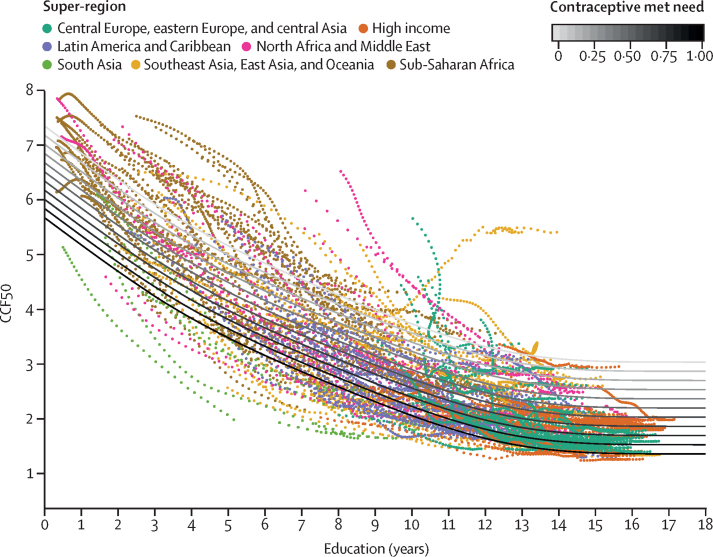
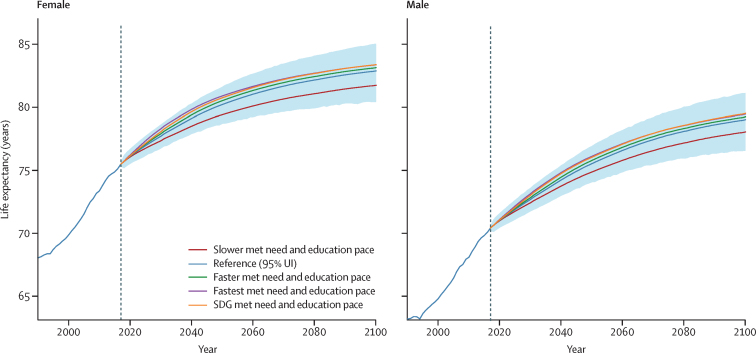
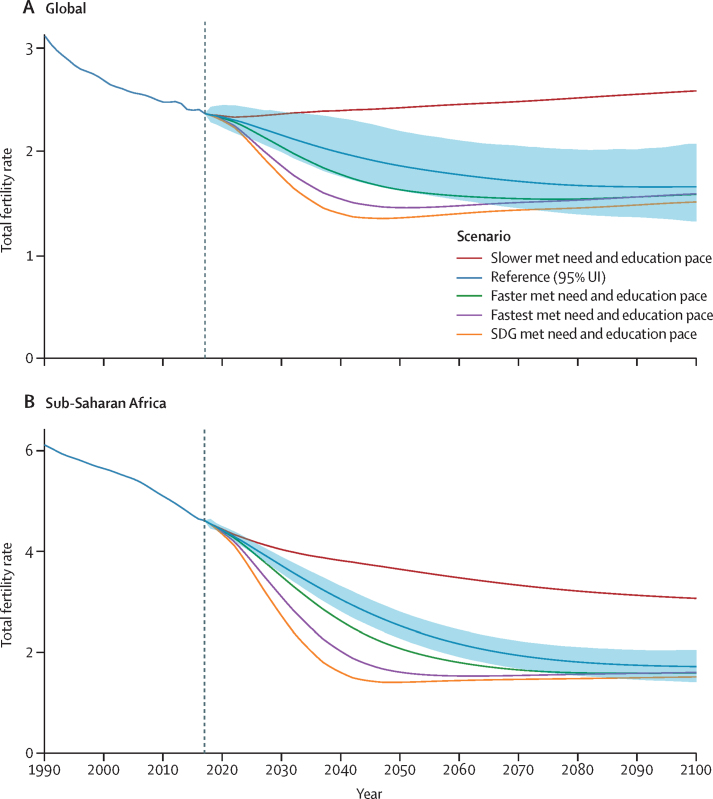
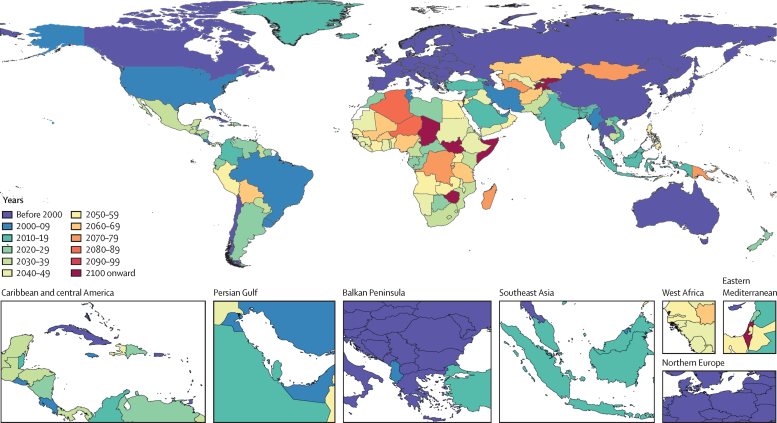
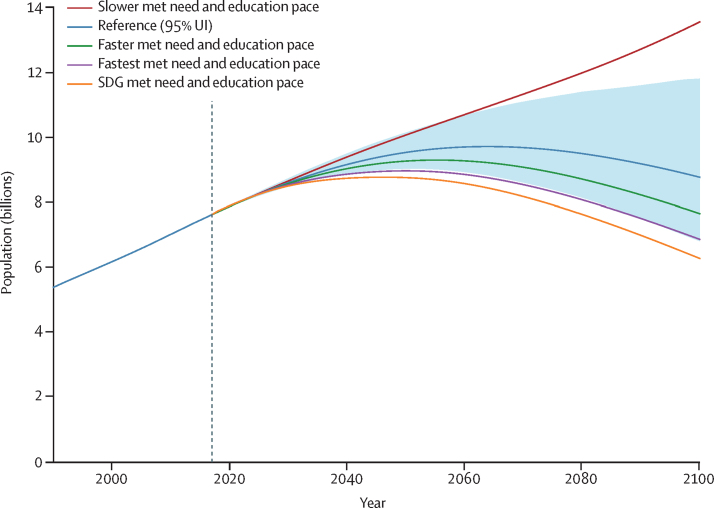
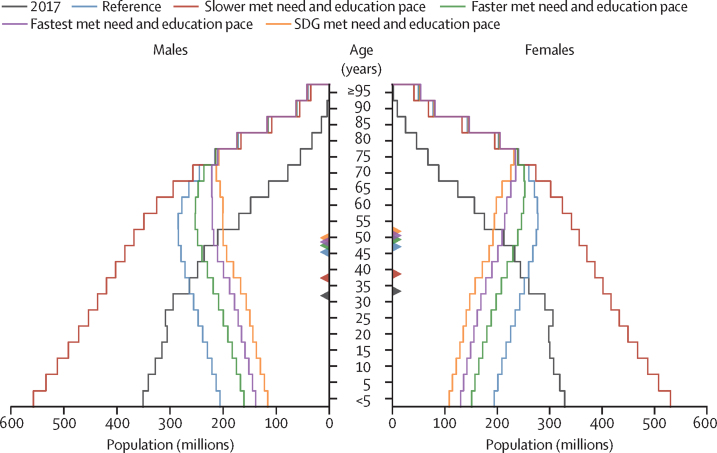
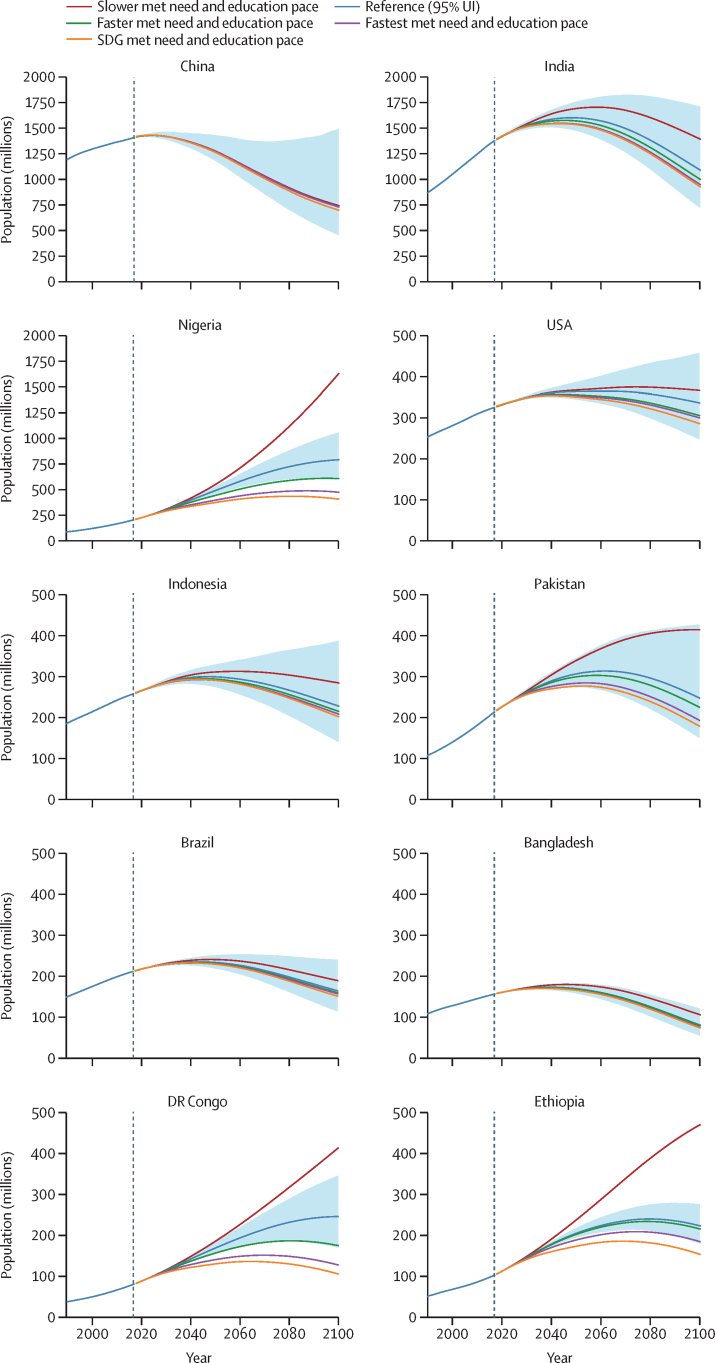
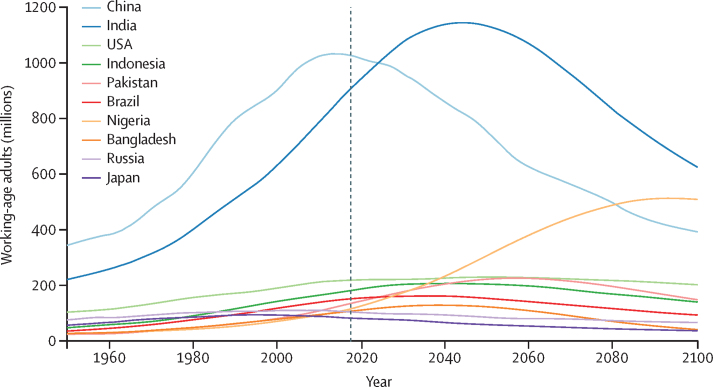
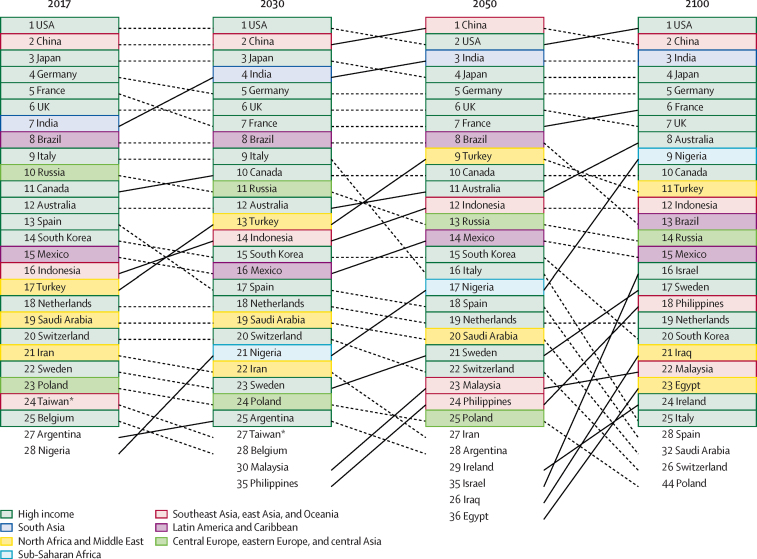
BACKGROUND: Understanding potential patterns in future population levels is crucial for anticipating and planning for changing age structures, resource and health-care needs, and environmental and economic landscapes. Future fertility patterns are a key input to estimation of future population size, but they are surrounded by substantial uncertainty and diverging methodologies of estimation and forecasting, leading to important differences in global population projections. Changing population size and age structure might have profound economic, social, and geopolitical impacts in many countries. In this study, we developed novel methods for forecasting mortality, fertility, migration, and population. We also assessed potential economic and geopolitical effects of future demographic shifts. METHODS: We modelled future population in reference and alternative scenarios as a function of fertility, migration, and mortality rates. We developed statistical models for completed cohort fertility at age 50 years (CCF50). Completed cohort fertility is much more stable over time than the period measure of the total fertility rate (TFR). We modelled CCF50 as a time-series random walk function of educational attainment and contraceptive met need. Age-specific fertility rates were modelled as a function of CCF50 and covariates. We modelled age-specific mortality to 2100 using underlying mortality, a risk factor scalar, and an autoregressive integrated moving average (ARIMA) model. Net migration was modelled as a function of the Socio-demographic Index, crude population growth rate, and deaths from war and natural disasters; and use of an ARIMA model. The model framework was used to develop a reference scenario and alternative scenarios based on the pace of change in educational attainment and contraceptive met need. We estimated the size of gross domestic product for each country and territory in the reference scenario. Forecast uncertainty intervals (UIs) incorporated uncertainty propagated from past data inputs, model estimation, and forecast data distributions. FINDINGS: The global TFR in the reference scenario was forecasted to be 1·66 (95% UI 1·33-2·08) in 2100. In the reference scenario, the global population was projected to peak in 2064 at 9·73 billion (8·84-10·9) people and decline to 8·79 billion (6·83-11·8) in 2100. The reference projections for the five largest countries in 2100 were India (1·09 billion [0·72-1·71], Nigeria (791 million [594-1056]), China (732 million [456-1499]), the USA (336 million [248-456]), and Pakistan (248 million [151-427]). Findings also suggest a shifting age structure in many parts of the world, with 2·37 billion (1·91-2·87) individuals older than 65 years and 1·70 billion (1·11-2·81) individuals younger than 20 years, forecasted globally in 2100. By 2050, 151 countries were forecasted to have a TFR lower than the replacement level (TFR <2·1), and 183 were forecasted to have a TFR lower than replacement by 2100. 23 countries in the reference scenario, including Japan, Thailand, and Spain, were forecasted to have population declines greater than 50% from 2017 to 2100; China's population was forecasted to decline by 48·0% (-6·1 to 68·4). China was forecasted to become the largest economy by 2035 but in the reference scenario, the USA was forecasted to once again become the largest economy in 2098. Our alternative scenarios suggest that meeting the Sustainable Development Goals targets for education and contraceptive met need would result in a global population of 6·29 billion (4·82-8·73) in 2100 and a population of 6·88 billion (5·27-9·51) when assuming 99th percentile rates of change in these drivers. INTERPRETATION: Our findings suggest that continued trends in female educational attainment and access to contraception will hasten declines in fertility and slow population growth. A sustained TFR lower than the replacement level in many countries, including China and India, would have economic, social, environmental, and geopolitical consequences. Policy options to adapt to continued low fertility, while sustaining and enhancing female reproductive health, will be crucial in the years to come. FUNDING: Bill & Melinda Gates Foundation.
Overview
The claims and statistics of this paper haven’t been checked yet.
Free: it reads the open-access text and checks the first 5 claims that cite a source we can check. Create a free account to check every claim.
Integrity signals
Registry
Cites
Statistics
Figures
Verification
Claims the paper makes
The claims and statistics of this paper haven’t been checked yet.
Free: it reads the open-access text and checks the first 5 claims that cite a source we can check. Create a free account to check every claim.
Claims other papers make about this one
Each is checked against this paper’s own text: does it say what the citing paper says it does?
The source backs part of the claim, not all of it — or backs it for a different population, condition or comparison.
In the citing paper
“Demographic data in the 5 years preceding 2021 demonstrate that the total fertility rate (TFR) in some countries has fallen below replacement levels—the minimum rate necessary for generational replacement of the population assuming no migration—with no evidence of this predicted rebound.”
From Global fertility in 204 countries and territories, 1950–2021, with forecasts to 2100: a comprehensive demographic analysis for the Global Burden of Disease Study 2021 (2024) · cites this paper as [4]
Experimental — accuracy not yet measuredThe source backs part of the claim, not all of it — or backs it for a different population, condition or comparison.
In the citing paper
“By 2050 and 2100, respectively, 77% of predominantly high-income countries and 93% of all countries will have a TFR below the replacement level of 2.1 children per woman.”
From Declining global fertility rates and the implications for family planning and family building: an IFFS consensus document based on a narrative review of the literature (2024) · cites this paper as Vollset et al., 2020
Experimental — accuracy not yet measuredThe source backs part of the claim, not all of it — or backs it for a different population, condition or comparison.
In the citing paper
“Not including the effects of migration, many countries are predicted to have a population decline of more than 50% from 2017 to 2100 (Vollset et al., 2020; Dao et al., 2021).”
From Declining global fertility rates and the implications for family planning and family building: an IFFS consensus document based on a narrative review of the literature (2024) · cites this paper as Vollset et al., 2020
Experimental — accuracy not yet measuredThe source backs part of the claim, not all of it — or backs it for a different population, condition or comparison.
In the citing paper
“Different TFRs among countries will promote immigration and emigration with important consequences for all countries, including increased political and social friction (Vollset et al., 2020).”
From Declining global fertility rates and the implications for family planning and family building: an IFFS consensus document based on a narrative review of the literature (2024) · cites this paper as Vollset et al., 2020
Experimental — accuracy not yet measured
6 more claims about this paper
Create a free account to see every claim other papers make about this one.
Self-check
Percentages, sums and reported differences re-computed from the paper’s own numbers.
The self-check needs the paper’s full text.
Citations
Cites
Planetary boundaries: Guiding human development on a changing planet
Steffen, W., Richardson, K., Rockström, J., Cornell, S. E., Fetzer, I., Bennett, E. M., Biggs, R., Carpenter, S. R., de Vries, W., de Wit, C. A., et al. (2015) · Science · doi:10.1126/science.1259855 · Cited by 12,527
Roth, G. A., Abate, D., Abate, K. H., Abay, S. M., Abbafati, C., Abbasi, N., Abbastabar, H., Abd-Allah, F., Abdela, J., Abdelalim, A., et al. (2018) · The Lancet · doi:10.1016/s0140-6736(18)32203-7 · Cited by 8,600
Planetary Boundaries: Exploring the Safe Operating Space for Humanity
Rockström, J., Steffen, W., Noone, K., Persson, Å., Chapin, F. S. I., Lambin, E., Lenton, T. M., Scheffer, M., Folke, C., Schellnhuber, H. J., et al. (2009) · Ecology and Society · doi:10.5751/es-03180-140232 · Cited by 7,187
Time Series: Theory and Methods
Ziegel, E. R., Brockwell, P., & Davis, R. (1992) · Technometrics · doi:10.2307/1270070 · Cited by 5,012
Stanaway, J. D., Afshin, A., Gakidou, E., Lim, S. S., Abate, D., Abate, K. H., Abbafati, C., Abbasi, N., Abbastabar, H., Abd-Allah, F., et al. (2018) · The Lancet · doi:10.1016/s0140-6736(18)32225-6 · Cited by 4,943
Self-citationThe second machine age: work, progress, and prosperity in a time of brilliant technologies
(2015) · Choice Reviews Online · doi:10.5860/choice.184834 · Cited by 4,381
Foreman, K. J., Marquez, N., Dolgert, A., Fukutaki, K., Fullman, N., McGaughey, M., Pletcher, M. A., Smith, A. E., Tang, K., Yuan, C.-W., et al. (2018) · The Lancet · doi:10.1016/s0140-6736(18)31694-5 · Cited by 2,994
Self-citationEssay on the Principle of Population: The 1803 Edition
Malthus, T. R. (2019) · Yale University Press eBooks · doi:10.12987/9780300231892 · Cited by 1,949
Guidelines for accurate and transparent health estimates reporting: the GATHER statement
Stevens, G. A., Alkema, L., Black, R. E., Boerma, J. T., Collins, G. S., Ezzati, M., Grove, J. T., Hogan, D. R., Hogan, M. C., Horton, R., et al. (2016) · The Lancet · doi:10.1016/s0140-6736(16)30388-9 · Cited by 1,798
Self-citationIPCC (2022) · Cambridge University Press eBooks · doi:10.1017/9781009157940 · Cited by 1,482
Research works printed but not linked: 1
- Lutz W Butz WP KC S World population and human capital in the twenty-first century 2014 2014 Oxford University Press Oxford
Cited by
Items 801–900 of 1,000
Yin, M., Zheng, H., Han, B., Wu, B., Qing, Y., Deng, H., Xu, K., Liu, H., Tao, M., Li, Y., et al. (2025) · Advanced Exercise and Health Science · doi:10.1016/j.aehs.2025.11.004 · Cited by 3
Mei, R., Tan, M., Liu, M., & Lin, L. K. (2025) · BMC Public Health · doi:10.1186/s12889-025-25842-y · Cited by 4
“Projections suggest that by 2050, 151 of the 195 countries and territories studied may have TFRs below the replacement threshold [13], suggesting potential widespread population decline on a global scale.”
InfluentialInterconnected Pathways and Therapeutic Implications for Cardiovascular Aging and Diseases
Bai, X., Zhang, Y., Qu, J. T., & Liu, G. (2025) · JACC Asia · doi:10.1016/j.jacasi.2025.10.017 · Cited by 3
Hu, Y., Sun, G., Duan, W., Zou, S., Di, Y., Chen, Y. C. Y., Kayumba, P. M., Wei, W., Maeyer, P. D., & Goethals, P. L. M. (2026) · The Innovation · doi:10.1016/j.xinn.2026.101257 · Cited by 3
“46,47 Moreover, as rural livelihoods became increasingly unsustainable owing to environmental degradation, there was a marked trend of out-migration from environmentally stressed rural areas toward urban centers or even across national borders.”
Fagerberg, J. (2026) · Environmental Innovation and Societal Transitions · doi:10.1016/j.eist.2026.101103 · Cited by 3
Field-scale water use assessment in the Lower Mississippi Alluvial Plain using OpenET
Duan, W., Yang, Y., Anderson, M. C., Hain, C., Melton, F., Volk, J., & Knipper, K. R. (2026) · International Journal of Applied Earth Observation and Geoinformation · doi:10.1016/j.jag.2026.105172 · Cited by 5
Multi-ancestry GWAS of age-related hearing loss identifies 140 loci and key cellular mechanisms
Shi, L., He, H., Li, J., Gai, K., Li, W., Zhao, Y., Yuan, H., & Wu, Y. (2026) · Nature Communications · doi:10.1038/s41467-026-69894-z · Cited by 7
“As the global aging populations continue to increase, the prevalence of ARHL is gradually increasing over years 1,2 .”
Characterising Patient Pathways Prior to the Diagnosis of Interstitial Lung Disease
Fermoyle, C. C., Townend, J., Navaratnam, V. V., Goh, N. S. L., Gonnelli, F., Eleangovan, N., Smith, U., Heatley, H., Carter, V. A., Price, D. B., et al. (2026) · Respirology · doi:10.1002/resp.70230 · Cited by 3
Sun, C., Wu, T., Yu, C., Yang, S., Yang, H., Zhou, Z. Y., & Bi, Y. (2026) · Diabetes Obesity and Metabolism · doi:10.1111/dom.70712 · Cited by 4
Pension System Resilience Under Extreme Demographic Shock: Lessons from the Ukrainian Case
Kondrat, I., Bublyk, M., & Yaroshevych, N. (2026) · Journal of risk and financial management · doi:10.3390/jrfm19040254 · Cited by 3
Cheng, B., Yan, J., Huang, Y., Fang, J., Zhou, X., & Chen, X. (2026) · Internal and Emergency Medicine · doi:10.1007/s11739-026-04352-8 · Cited by 3
“Future population projections for China and the United States (2024–2050) were obtained from the Institute for Health Metrics and Evaluation (IHME) database [17].”
Larsen, M., Kennair, L. E. O., & Fisher, M. L. (2026) · Politics and the Life Sciences · doi:10.1017/pls.2026.10020 · Cited by 4
Punetha, P., O’Callaghan, T. F., & McCarthy, E. K. (2026) · Molecular Nutrition & Food Research · doi:10.1002/mnfr.70483 · Cited by 4
Economic Possibilities for our Grandchildren Reloaded: How to Promote Sustainable Well-Being for all
Sarracino, F., & Slater, G. (2026) · Applied Research in Quality of Life · doi:10.1007/s11482-026-10586-7 · Cited by 4
“The problem is that the sum of all the individual private consumption undermines the environment, reduces the possibility to establish meaningful social relations and does not solve the collective problem that individuals are trying to address.”
InfluentialZhu, J., Ni, C., Wei, S., Bi, J., Wang, X. L., Zheng, J., Xu, X., Lv, W., Cai, W., Dong, Z., et al. (2026) · Journal of Global Health · doi:10.7189/jogh.16.04147 · Cited by 3
“We obtained population projections from the Institute for Health Metrics and Evaluation global population forecast data set [ 34 , 35 ].”
McCollum, D., Nicholson, H., & Duffy, P. (2021) · Local Economy The Journal of the Local Economy Policy Unit · doi:10.1177/02690942211057439 · Cited by 5
“Indeed, the Lancet (Vollset et al., 2020) controversially has recently proclaimed a largely universal shift towards falling fertility rates and ageing populations, and warned of the attendant economic, social, environmental, and geopolitical consequences of such a shift.”
BackgroundSustainable Platform for Environmental Changes in Smart City
Ueda, T., & Ogishi, T. (2021) · International Conference on Smart and Sustainable Technologies (SpliTech) · doi:10.23919/splitech52315.2021.9566381 · Cited by 3
Mineyama, R., Tezuka, F., Takagi, N., Kokabu, S., & Okubo, M. (2023) · Geriatrics · doi:10.3390/geriatrics8010008 · Cited by 3
“The percentage of aging population has increased worldwide [1], and efforts by researchers and clinicians to study older adults [2–4] and centenarians [5–7] are increasing.”
BackgroundPassano, P., Choi, M. A., & Matusiewicz, M. (2023) · The Journal of Population and Sustainability · doi:10.3197/jps.63799953906869 · Cited by 5
“Despite their relevance, these solutions continue to be viewed as unrelated to core climate objectives and are rarely included in climate strategies (Vollset et al., 2020; Canning and Schultz, 3 HOW CAN GIRLS’ EDUCATION AND FAMILY PLANNING IMPROVE COMMUNITY RESILIENCE TO CLIMATE CHANGE IN THE SAHEL?”
BackgroundSubversive Semantics in Political and Cultural Discourse: The Production of Popular Knowledge
Mackenthun, G., & Dosch, J. (2023) · Edition Politik · doi:10.1515/9783839461778 · Cited by 5
Jia, Y., Liu, F., Cheng, Y., Wang, J., Ma, W., Chen, C., Sun, P., & Shang, S. (2023) · International Journal for Quality in Health Care · doi:10.1093/intqhc/mzad079 · Cited by 3
Fatal Family Violence and the Dementias: Gray Mist Killings
Websdale, N. S. (2023) · Routledge eBooks · doi:10.4324/9781003333869 · Cited by 4
A global perspective: characteristics of infertility‐related randomized clinical trials
Xi, Y., Cao, Y., Tao, L., Gao, S., Jin, Z., Cheng, J., Jiang, H., & Zhang, Z. (2024) · Andrology · doi:10.1111/andr.13596 · Cited by 4
Testicular dysfunction and “its recovery effect” after cadmium exposure
Zhang, Q., Yang, Y., Liu, J., Wu, Y., Liu, Y., & Zhang, J. (2024) · Food and Chemical Toxicology · doi:10.1016/j.fct.2024.114656 · Cited by 4
Global Aging, Adaptation to It and Future Demographic Transformations
Grinin, L. E., Леонидович, Г. А., & Korotayev, A. (2024) · World-systems evolution and global futures · doi:10.1007/978-3-031-56764-3_7 · Cited by 7
Innovative hemostasis technique for cesarean section in placenta previa: A retrospective study
Kawakami, K., Kurokawa, Y., Urago, K., Maruyama, Y., Fujikawa, R., Ishibashi, H., Kitagawa, M., Shimizu, T., Tokuda, T., Kawagoe, H., et al. (2024) · International Journal of Gynecology & Obstetrics · doi:10.1002/ijgo.15796 · Cited by 4
Yang, Y., Xue, X., Zhou, J., Qiu, Z., Wang, B., Yin, Z., Ou, G., & Zhou, Q. (2024) · Heliyon · doi:10.1016/j.heliyon.2024.e36680 · Cited by 5
“Projections suggest that by 2100, a total of 183 countries may experience below-replacement fertility rates Y. Yang et al. [45].”
BackgroundThe economic impact of Long-Acting Contraceptives (LARCs) on public health
Marcelino, A. C., Pereira, P. D. C., & Bahamondes, L. G. (2025) · Clinics · doi:10.1016/j.clinsp.2025.100598 · Cited by 6
“2 This reduction would significantly lessen the strain on public health systems worldwide, resulting in substantial savings on costs related to prenatal care, childbirth, and infant care, 3,4 particularly in socioeconomically vulnerable regions.”
Sylvest, R., Vittrup, I., Vassard, D., Saupstad, M., Ziebe, S., Larsen, E. C., Hvidman, H. W., Petersen, K. B., Nielsen, H. S., Schmidt, L., et al. (2025) · Acta Obstetricia Et Gynecologica Scandinavica · doi:10.1111/aogs.15071 · Cited by 4
Wang, J.-L., Wang, J.-J., Zhang, C.-X., & Li, G.-F. (2025) · Frontiers in Pharmacology · doi:10.3389/fphar.2025.1531496 · Cited by 1
Peng, M., Yang, Y., Sun, Z., Wu, J., Zhu, L., Zeng, Y., Zhang, Y., & Yao, Y. (2025) · Journal of Advanced Research · doi:10.1016/j.jare.2025.03.044 · Cited by 4
Guimarães, B. P., Nalley, L. L., & Lafontaine, S. (2025) · npj Sustainable Agriculture · doi:10.1038/s44264-025-00060-6 · Cited by 5
“The demand for food and other materials will continue to increase as the population is projected to reach 10 billion in 2064 41 .”
Circular Economy: Advantages and Disadvantages
Markić, D. N., & Ilić, P. (2024) · КРУЖНА ЕКОНОМИЈА · doi:10.7251/prb2401031m · Cited by 4
El-Zeiny, A., Nagy, A., & Kaamoush, M. I. A. (2025) · Euro-Mediterranean Journal for Environmental Integration · doi:10.1007/s41207-025-00803-4 · Cited by 6
“The Global Burden of Disease 2017 report projects that Egypt’s population will reach approximately 200 million by 2100 (Vollset et al. 2020).”
An, B., Che, M., Liu, Y., Yang, X., & Li, Z. (2025) · BMC Public Health · doi:10.1186/s12889-025-23120-5 · Cited by 3
Flood, D., Green, H., Gross, A. L., Kobayashi, L. C., Levine, D. A., Lee, J., Wixom, C. R., & Langa, K. M. (2025) · BMJ Open · doi:10.1136/bmjopen-2023-074794 · Cited by 4
“”(2) A “demographic transition” also has been observed in many countries around the world as gains in life expectancy and reductions in fertility shift population age structures upwards.(3) This trend of population aging is expected to contribute to a substantial increase in the global burdens of dementia and diabetes.”
BackgroundFiorelli, R. K. A., Lewandrowski, K., Siciliano, A., Schmidt, S. L., de Carvalho, P. S. T., Fiorelli, S. K. A., Marques, M. A., & Sobrinho, S. L. D. S. (2025) · Current Aging Science · doi:10.2174/0118746098371434250728051423 · Cited by 4
Nagy, D., Meszlényi, T., Boda, K., Lantos, C., & Pauk, J. (2025) · Plants · doi:10.3390/plants14152435 · Cited by 3
Shi, T., Qian, Z., Liu, T., & Zhang, P. (2025) · Frontiers in Neurology · doi:10.3389/fneur.2025.1640190 · Cited by 3
The African continent needs to prioritise planetary health
Oladunjoye, I. O., Adebayo, A. O., Odumosu, O. O., & Adebisi, Y. A. (2020) · Public Health in Practice · doi:10.1016/j.puhip.2020.100071 · Cited by 3
Russian Pro-Natalist Policy and Its Hidden Dilemma
Latov, Y., & Латова, Н. В. (2021) · Zhurnal Economicheskoj Teorii · doi:10.31063/2073-6517/2021.18-3.5 · Cited by 3
Future Directions for Research on Residential Segregation and Inequality in China
Pryce, G. B. J. (2021) · The urban book series · doi:10.1007/978-3-030-74544-8_15 · Cited by 5
Advanced fungal bio-based materials for remediation of toxic metals in aquatic ecosystems
Pereira, M. D. G., dos Santos, A. V., Geris, R., & Malta, M. (2023) · Elsevier eBooks · doi:10.1016/b978-0-323-91894-7.00007-4 · Cited by 5
Family Caregivers of Older Adults with Physical Disabilities in Rural Thailand
Tuttle, D., Griffiths, J., & Kaunnil, A. (2022) · The Qualitative Report · doi:10.46743/2160-3715/2023.5785 · Cited by 3
Analysis of Economic Potential in Stock Zakat in the Indonesian Financial Sector
Nur, S. M., Valencia, E. L., & Amaroh, S. (2023) · Journal International Dakwah and Communication · doi:10.55849/jidc.v3i1.234 · Cited by 4
Lee, S., Fujita, K., Morishita, T., Negoro, E., Tsukasaki, H., Oiwa, K., Hara, T., Tsurumi, H., Ueda, T., & Yamauchi, T. (2023) · Cancers · doi:10.3390/cancers15184458 · Cited by 3
“However, given the aging population worldwide [33], universal implications appear likely in the near future.”
BackgroundDotson, K. (2023) · Proceedings of the Aristotelian Society (Hardback) · doi:10.1093/arisoc/aoad011 · Cited by 3
Challenges in health risk assessment of multiple chemical exposures in epidemiological studies
Tohyama, C., & Honda, Y. (2024) · Environmental Health and Preventive Medicine · doi:10.1265/ehpm.23-00312 · Cited by 3
“Developed countries have entered a population decline phase, with the total fertility rate lower than that required to preserve the species sustainably [1].”
BackgroundMa, J., Ma, F., & Zou, H. (2024) · Global Health & Medicine · doi:10.35772/ghm.2024.01027 · Cited by 3
Underestimating demographic uncertainties in the synthesis process of the IPCC
Giarola, S., Chiani, L., Drouet, L., Marangoni, G., Nappo, F., Muttarak, R., & Tavoni, M. (2024) · npj Climate Action · doi:10.1038/s44168-024-00152-y · Cited by 3
“Further approaches implement statistical methods for population projectionusing auto-regressiveerrorpropagationonuncertainty 34 , such as thepopulationprojectionsoftheInstituteforHealthMetricsandEvaluation (IHME),whichisbasedonfertility,migration,andmortalityrateestimates of the Global Burden of…”
InfluentialPublic health insurance for the elderly: an insight from bibliometric analysis
Agrawal, G. K., & Kumar, A. (2025) · International Journal of Health Care Quality Assurance · doi:10.1108/ijhcqa-03-2023-0019 · Cited by 3
Malekpoorafshar, M., Salehinejad, P., Pouya, F. S., Moghadam, N. K., & Shahesmaeili, A. (2021) · Journal of Family & Reproductive Health · doi:10.18502/jfrh.v15i1.6070 · Cited by 5
“According to the World Bank’s predictions, with this current population decline in Iran, by 2025, fertility rate will reach under 1%, and Iran's demographic composition will be quite aged (3, 4).”
Demand for ‘Advantaged’ Hydrocarbons During the 21st Century Energy Transition
Davies, A., & Simmons, M. D. (2021) · EAGE Global Energy Transition Conference & Exhibition (GET) · doi:10.3997/2214-4609.202121019 · Cited by 4
Public health insurance for elderly: did researchers recognise health as human right for elderly?
Agrawal, G., & Mishra, A. (2022) · International Journal of Human Rights in Healthcare · doi:10.1108/ijhrh-08-2021-0155 · Cited by 3
Wale, J., & Rowlands, S. (2022) · Journal of Philanthropy and Marketing · doi:10.1002/nvsm.1737 · Cited by 4
Long-Term Impact of Interregional Migrants on Population Prediction
Oo, S., & Tsukai, M. (2022) · Sustainability · doi:10.3390/su14116580 · Cited by 3
Alvarado, E. C., Bégué, A., Leroux, L., & Gaetano, R. (2023) · International Journal of Applied Earth Observation and Geoinformation · doi:10.1016/j.jag.2023.103398 · Cited by 5
Introduction: Between Human and Post-human Revolutions, or What Future Awaits Us?
Grinin, L. E., Леонидович, Г. А., & Korotayev, A. (2024) · World-systems evolution and global futures · doi:10.1007/978-3-031-56764-3_1 · Cited by 2
Rana, Y., Dongo, G., Snead, C., Agi, G. O., Sadik, O. A., Heidkamp, R. A., & Abdulwahab, A. (2021) · Gates Open Research · doi:10.12688/gatesopenres.13319.1 · Cited by 3
Human Population Density and Reproductive Health: A Changing World Needs Endocrinology
Weitekamp, C. A., & Hofmann, H. A. (2021) · Endocrinology · doi:10.1210/endocr/bqab198 · Cited by 3
“In addition, accurately estimating human fecundity is important for modeling changes in population growth, which itself is critical for informed decision-making in a changing world under a changing climate (8).”
BackgroundBalancing the health benefits and climate mortality costs of haemodialysis
Bhopal, A. S., Sharma, S., & Norheim, O. F. (2023) · Future Healthcare Journal · doi:10.7861/fhj.2022-0127 · Cited by 4
“Then, using UN population projections and 2100 life tables developed by the Global Burden of Disease Collaboration, 32 For the health benefit of receiving haemodialysis, we used the ‘End-stage renal disease, on dialysis’ disability weighting in the Global Burden of Disease study (0.429 healthy life…”
MethodInfluentialGreece, Demographic Changes, and Challenges
Kotzamanis, B. (2024) · World regional geography book series · doi:10.1007/978-3-031-29819-6_27 · Cited by 3
Alkema, L. (2020) · OSF Preprints (OSF Preprints) · doi:10.31219/osf.io/3m6va · Cited by 3
Vienna Yearbook of Population Research 2020
Sobotka, T., Jasilioniene, A., Zeman, K., & Fariñas, D. R. (2020) · Vienna Yearbook of Population Research · doi:10.1553/populationyearbook2020 · Cited by 3
Population Decline: Too Small and Too Slow to Influence Climate ChangePreprint
Kuruc, K., Vyas, S., Budolfson, M. B., Geruso, M., & Spears, D. (2023) · SSRN Electronic Journal · doi:10.2139/ssrn.4535022 · Cited by 4
Rana, J., Oldroyd, J. C., Hossain, M. B., Katha, S., Khan, M. N., Karim, M. N., Renzetti, S., & Islam, R. M. (2024) · medRxiv · doi:10.1101/2024.10.30.24316405 · Cited by 5
The population of Zambia: past, present and futurePreprint
Moyo, N., Nanyangwe-Moyo, T., Mapoma, C. C., Munkombwe, B., Phiri, M., Banda, A., Wu, J., & Qiao, X. (2022) · Research Square · doi:10.21203/rs.3.rs-1617840/v1 · Cited by 5
2. Human Environmental Aesthetics: The Molecular Sublime and the Molecular Grotesque
Hamann-Rose, P. (2022) · Open Book Publishers · doi:10.11647/obp.0303.02 · Cited by 7
Campos, L., & Patoine, P.-L. (2022) · Open Book Publishers · doi:10.11647/obp.0303.01 · Cited by 3
Pathways to a Decarbonised Power Sector in India
Bhattacharya, S., Banerjee, R., Ramadesigan, V., Liebman, A., & Dargaville, R. (2023) · International Conference On Smart Technologies For Smart Nation (SmartTechCon) · doi:10.1109/smarttechcon57526.2023.10391588 · Cited by 3
“India’s population is expected to peak by 2050 and gradually decline to 1.5 billion in 2070 [29].”
BackgroundInfluentialOrthey, R., Rechdan, J., Satchell, L. P., Kyo, A., Matsuda, I., & Walsh, D. (2024) · Collabra Psychology · doi:10.1525/collabra.115298 · Cited by 3
Futri, I., Ketkaew, C., & Naruetharadhol, P. (2024) · Societies · doi:10.3390/soc14080134 · Cited by 5
“Experts predict a rise in the proportion of elderly individuals within the global population, with estimates indicating an increase from 12% to approximately 22% [4–6].”
Decline in and recovery of fertility rates after COVID-19-related state of emergency in Japan
Mitoma, T., Maki, J., Ooba, H., & Masuyama, H. (2024) · BMJ Open · doi:10.1136/bmjopen-2024-087657 · Cited by 3
Demographic attitudes of students in the context of the formation of new family values
Анатольевна, Г. Г., Buldakova, N., Перепелица, С. А., Григорьевна, К. Н., & Kaknaeva, P. V. (2025) · Vestnik Vâtskogo gosudarstvennogo universiteta. · doi:10.25730/vsu.7606.24.041 · Cited by 2
Chen, Z., Wang, Q., Zhang, L., Qiu, J., Zeng, Y., Kuang, H., Chen, C., & Hong, Z. (2025) · American Journal of Men s Health · doi:10.1177/15579883251323187 · Cited by 4
“Specifically, among men aged 40– 70 years, ED affects 52% of Americans, 30% of Europeans aged 40–79, and 63% of Asians aged 50– 80 (Li et al., 2005; Salonia et al., 2021; Vollset et al., 2020).”
Fujii, M., Nakamura, T., Okumura, Y., Ito, Y. M., Asano, T., & Hirano, S. (2025) · Surgery Today · doi:10.1007/s00595-025-03027-9 · Cited by 2
“This demographic shift is expected to lead to an aging population, a reduction in the working-age population, and, in some countries, a substantial population decline projected to continue [1, 2].”
The contributions of immigration to demographic change across cities and regions in Australia
Raymer, J., Guan, Q., Jiang, Y., & O’Donnell, J. (2025) · Population Studies · doi:10.1080/00324728.2025.2479621 · Cited by 2
“However, the demographic importance of international migration and competition for immigrants may grow wider, when decades of below-replacement fertility eventually lead to global as well as national population decline and ageing (Lutz et al. 2018; Vollset et al. 2020; United Nations 2022).”
Jiang, Z., Jiang, Q., Wang, P., & Zhong, L. (2025) · Frontiers in Medicine · doi:10.3389/fmed.2025.1592621 · Cited by 2
Chen, R., Deng, J., Sun, Y., Sun, D., Lu, H., & Sima, G. (2025) · Frontiers in Public Health · doi:10.3389/fpubh.2025.1577138 · Cited by 3
Barrie, E. M., Krochuk, B. A., Jarrett, C., Ferreira, D. F., Rodrigues, P. F., Mufumu, S. L., Malanza, S. E., Akele, A. E. N., Alene, C. E. E., Brzeski, K. E., et al. (2025) · Frontiers in Conservation Science · doi:10.3389/fcosc.2025.1504350 · Cited by 2
Fasfous, M. W., Abdel-Fattah, M. N., & Ibrahim, S. A. (2025) · International Journal of Environmental Research and Public Health · doi:10.3390/ijerph22081228 · Cited by 4
Mansouri, M., Bouhjar, A., Cadimi, I., Haisoufi, D., Fares, R., & Malainine, C. (2025) · The Open Public Health Journal · doi:10.2174/0118749445421746250826065105 · Cited by 2
de Ziegler, D., Braumann, N., Sean, S., & Toner, J. P. (2025) · Fertility and Sterility · doi:10.1016/j.fertnstert.2025.09.012 · Cited by 4
Qin, H., Liu, H., Sun, J., Cai, L., Tan, Y. Q., Li, M., Xiao, Y., & Li, L. (2025) · PLoS ONE · doi:10.1371/journal.pone.0332082 · Cited by 2
Ramadan, M. M., Alkhatabi, H. A., Aboalola, D. A., Alaa, S., & Alsiary, R. (2025) · PLoS ONE · doi:10.1371/journal.pone.0331198 · Cited by 3
Cao, Y., Yang, L., Fan, L., Liu, X., Yang, C., Xu, Z., Zhang, Q., & Zhang, J. (2025) · PLoS ONE · doi:10.1371/journal.pone.0334229 · Cited by 3
“…is likely due to synergistic progress across SDI dimensions: income growth supports healthcare investment [81], improvements in educational attainment enhance health literacy and CRC screening adherence [82], and declining fertility reflects improved women’s empowerment and healthcare access [83].”
Fertility and women unemployment: new evidence from Türkiye
Tanış, Z. S., Öztaşçı, D. D., & Özmen, İ. (2025) · Economic Change and Restructuring · doi:10.1007/s10644-025-09934-8 · Cited by 3
“However, changes in population play an important role in almost all societies in terms of economic, social, resource, environmental, and many more (Vollset et al. 2020).”
Yuan, Z., Li, W., Gong, X., & Li, J. (2025) · BMJ Open · doi:10.1136/bmjopen-2025-104587 · Cited by 2
“The guarantor is LJ. Funding The authors have not declared a specific grant for this research from any funding agency in the public, commercial or not- for-profit sectors.”
Shaji, A., Narassima, M. S., Pavithran, K., Vijaykumar, D. K., Verma, V., & John, D. (2025) · BMJ Open · doi:10.1136/bmjopen-2024-095939 · Cited by 2
Xiong, X., & Zhong, F. (2025) · Journal of Paediatrics and Child Health · doi:10.1111/jpc.70227 · Cited by 3
Yu, Y., Jia, W., Shi, H., Chen, Z., Yu, S., Wang, Y., liu, X., Chen, R., Li, X., & Jiang, S. (2025) · BMJ Open · doi:10.1136/bmjopen-2025-101291 · Cited by 2
Amoah, I., Attakora, R., Arthur, M. A., Lombardo, M., Osei, E. O., Mohammed, A. Z., Adadi, P., Adukonu, E. K., Solomon, D., Ackom, R., et al. (2025) · Journal of Food Biochemistry · doi:10.1155/jfbc/4087414 · Cited by 3
Adhitiah, E. F. P., Sunarti, E., & Muflikahti, I. (2025) · Jurnal Biometrika dan Kependudukan · doi:10.20473/jbk.v14i2.2025.167-178 · Cited by 2
Salerno, P. R. V. D. O., Cotton, A. H., Nascimento, B. R., Chen, Z., Pereira, G. T. R., Abizaid, A., Dallan, L. P., Salerno, P. R., Al-Kindi, S. G., Petermann-Rocha, F. E., et al. (2025) · Arquivos Brasileiros de Cardiologia · doi:10.36660/abc.20250189 · Cited by 2
Zhang, Q., Xiao, Y., Zhong, J., & Chen, Y. (2026) · International Journal of Surgery · doi:10.1097/js9.0000000000004847 · Cited by 3
Yang, Y., Pan, N., Liu, Y., Xu, W., & Ossowski, Z. M. (2026) · European Review of Aging and Physical Activity · doi:10.1186/s11556-026-00404-2 · Cited by 3
“Parallel to this demographic shift, more than 55 million people currently live with dementia worldwide, a figure expected to reach 78 million by 2030 and 139 million by 2050, according to conservative WHO/ADI estimates, with the [4, 5].”
Chen, Y., Zhang, F., Chen, Y., & Qian, Z. (2026) · Microbial Drug Resistance · doi:10.1177/10766294261422462 · Cited by 2
“The global elderly population is growing rapidly, 22 and this demographic shift signi fi cantly contributes to the overall disease burden.”
A sustainable world population: A strong structurationist review and critique of three concepts
Samways, D., & Anderson-Samways, B. (2026) · Environmental Values · doi:10.1177/09632719261423239 · Cited by 2
Wu, Y., Cai, W., Chen, M., Luo, T., Norman, R. J., Khomami, M. B., Moran, L., Zhang, H., Samarasinghe, S., Rawaf, S., et al. (2026) · iScience · doi:10.1016/j.isci.2026.115116 · Cited by 3
“The largest percentage increases are forecasted for the US (34.3% [31.8–36.7]), Nepal (24.1% [17.9– 30.4]), and Sudan (21.2% [18.1–24.2]).”
InfluentialLuo, B., Xiang, Y., Ren, H., Ma, L., & Huang, Y. (2026) · Health care science · doi:10.1002/hcs2.70064 · Cited by 2
“…continue unabated in the coming decade, with the proportion of individuals aged ≥ 65 years projected to rise from 13.5% in 2021 to 22.3% by 2035 [72], Given that IS risk increases exponentially with age, the absolute growth in the elderly population will inevitably contribute to ASIR escalation.”
Influential
Metadata
- Authors
- Vollset, S. E., Goren, E., Yuan, C.-W., Cao, J., Smith, A. E., Hsiao, T., Bisignano, C., Azhar, G. S., Castro, E., Chalek, J., Dolgert, A. J., Frank, T., Fukutaki, K., Hay, S. I., Lozano, R., Mokdad, A. H., Nandakumar, V., Pierce, M., Pletcher, M., Robalik, T., Steuben, K. M., Wunrow, H. Y., Zlavog, B. S., & Murray, C. J. L.
- Affiliations
- University of Washington (US)
- Corresponding author
- Murray, Christopher J L
- ORCID
- Venue
- The Lancet
- Publisher
- Elsevier BV
- Published
- 2020-10
- Volume
- 396
- Issue
- 10258
- Pages
- 1285-1306
- ISSN
- 0099-5355 (ISSN-L)
- 0140-6736
- PMC
- PMC7561721
- OpenAlex
- W3043365850
- Cited by
- 1,506
- References
- 34
- Citations by year
- 2026: 195 · 2025: 279 · 2024: 266 · 2023: 276 · 2022: 247 · 2021: 197 · 2020: 45
- FWCI
- 288.65
- Type
- journal article
- Language
- en
- Open access
- hybrid
- doi.org
- Licence
- cc-by
- www.elsevier.com/tdm/userlicense/1.0/ (tdm)
- www.elsevier.com/legal/tdmrep-license (tdm)
- creativecommons.org/licenses/by/4.0/ (vor)
- Locations
- The Lancet (publishedVersion, cc-by)
- PubMed Central (publishedVersion, cc-by)
- PubMed (publishedVersion)
- FIU - Digital Commons (Florida International University) (submittedVersion)
- Funders
- Bill and Melinda Gates Foundation
- Topics
- Social Sciences › Demography › Insurance, Mortality, Demography, Risk Management
- Health Sciences › Medicine › Public Health, Environmental and Occupational Health › Reproductive Health and Contraception
- Social Sciences › Geography, Planning and Development › demographic modeling and climate adaptation
- Keywords
- population projections, fertility prediction, mortality forecasting, migration forecasting, age-specific fertility, age-specific mortality, net migration, educational attainment, gross domestic product, demographic scenarios, population decline, age structure, uncertainty intervals, Global Burden of Disease Study, socioeconomic determinants of fertility
- MeSH terms
- Global Burden of Disease, Birth Rate, Female, Forecasting, Humans, Male, Mortality, Population Growth, Human Migration
About these checks
Registry, retraction, Cites and statistics results are computed, not judged, with one exception: a printed reference that no index lists is read once by a model before it counts as a citation error. Claims are extracted by a model and kept only when their quote appears verbatim in the text; each cited source is then checked, with a model’s help, for whether it says what the claim relies on. Those verdicts can be wrong — read the claim’s quote and the cited source before relying on one.
Statistics and arithmetic are recomputed, not judged.
Confidence bands are shown only for fields calibrated on our annotated test set. None is calibrated yet, so no band is shown.
What counts as a claim ›How we measure confidence ›How we check this ›
Are you an author, or do you see a problem with this page? Request a review
Data sources
Bibliographic data: Semantic Scholar, OpenAlex, Crossref.
Contains information from the Semantic Scholar Academic Graph Datasets, made available under the ODC Attribution License (ODC-BY 1.0).
Semantic Scholar’s data is described in: Kinney, R., et al. (2023). The Semantic Scholar Open Data Platform. arXiv:2301.10140.
