

Fertility, mortality, migration, and population scenarios for 195 countries and territories from 2017 to 2100: a forecasting analysis for the Global Burden of Disease Study
Open accessThe DOI matches its Crossref record; 33 of the 34 references it cites were found in a registry or an index.
Abstract
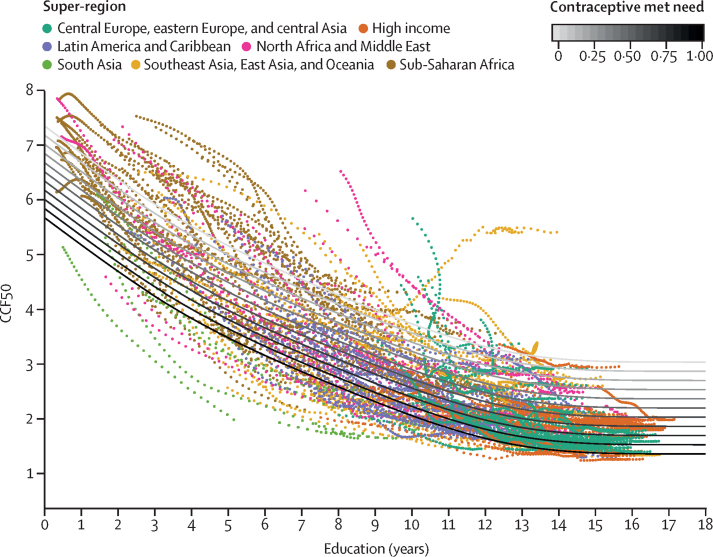
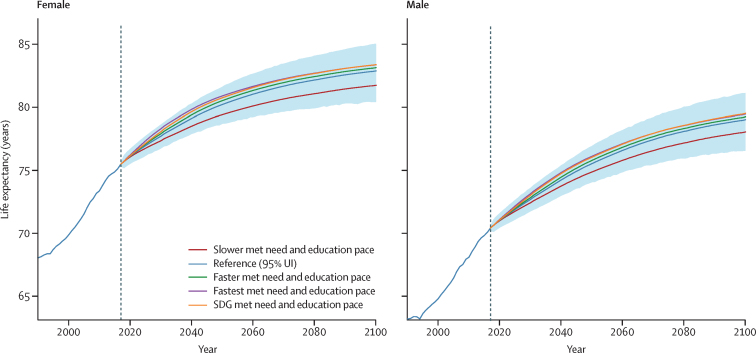
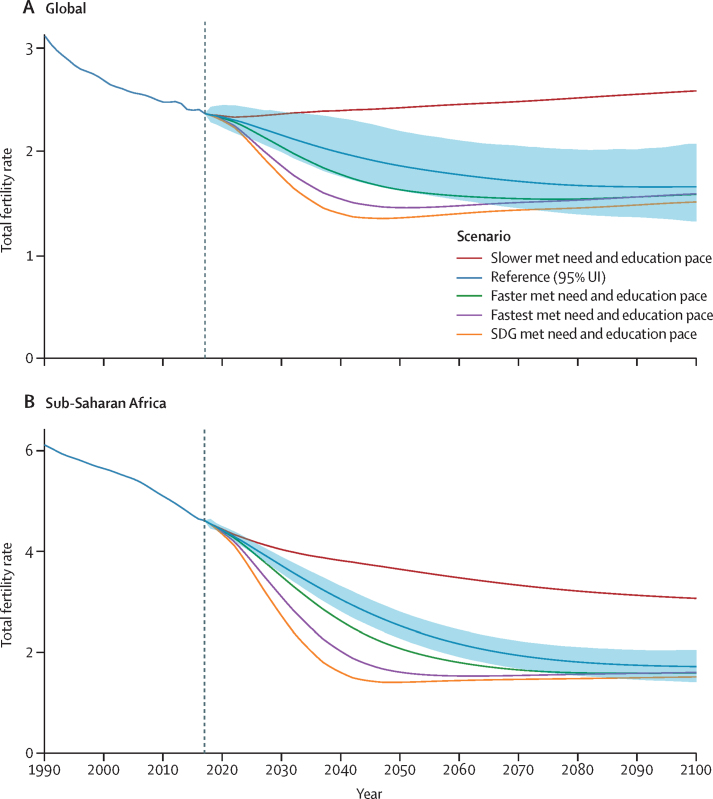
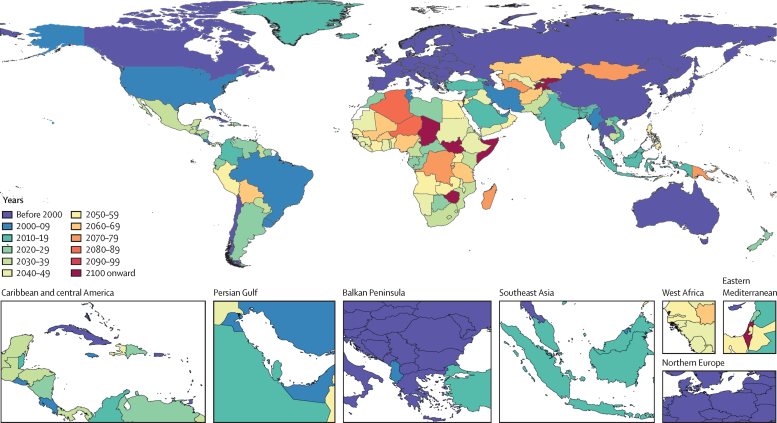
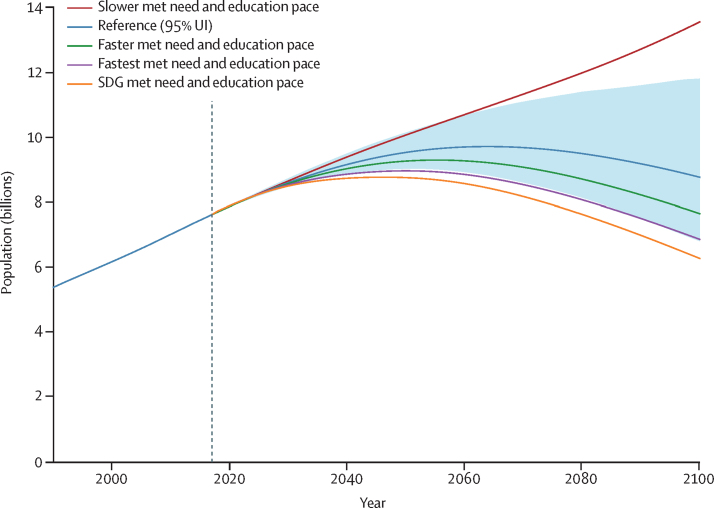
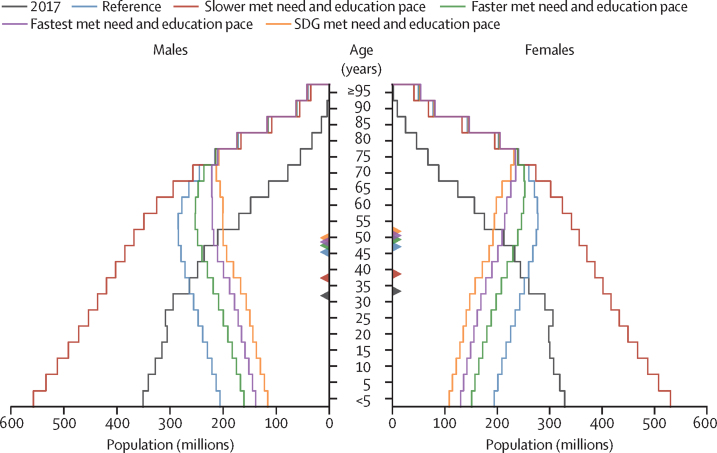
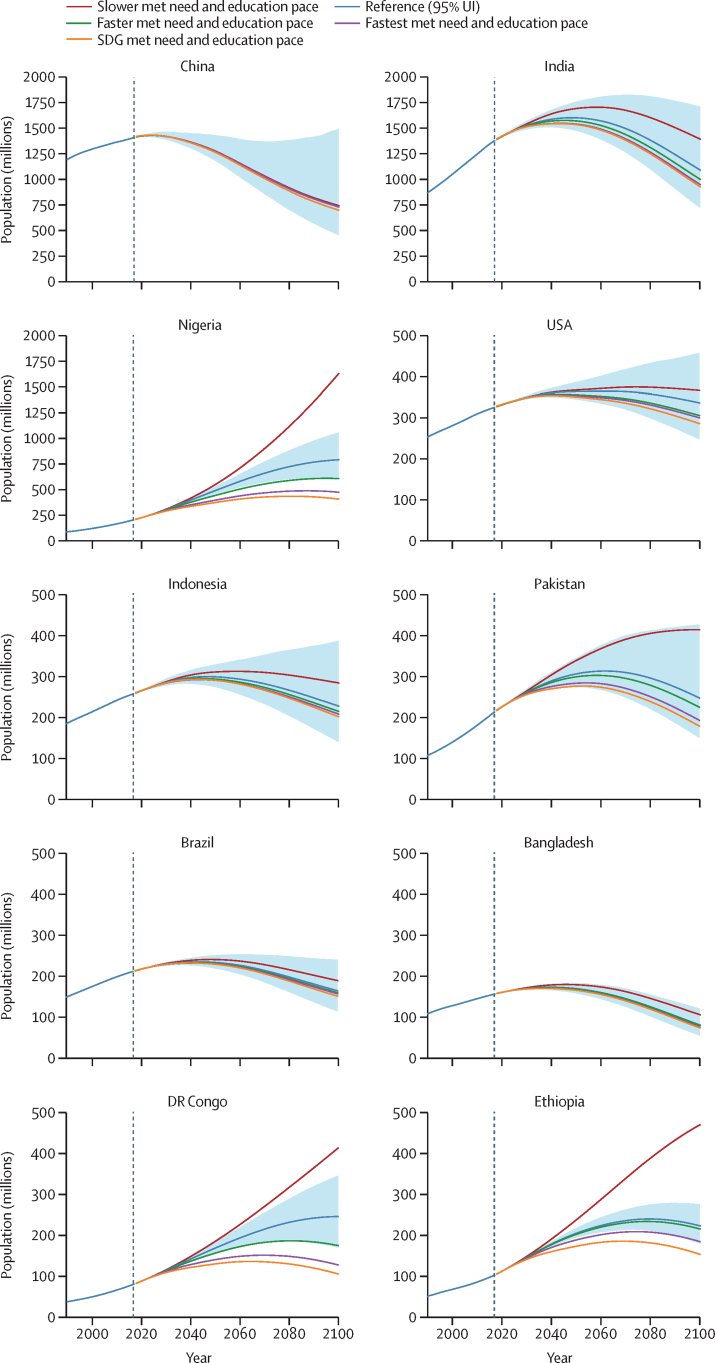
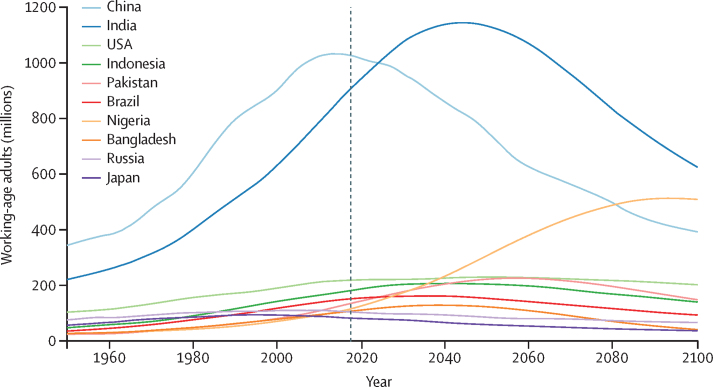
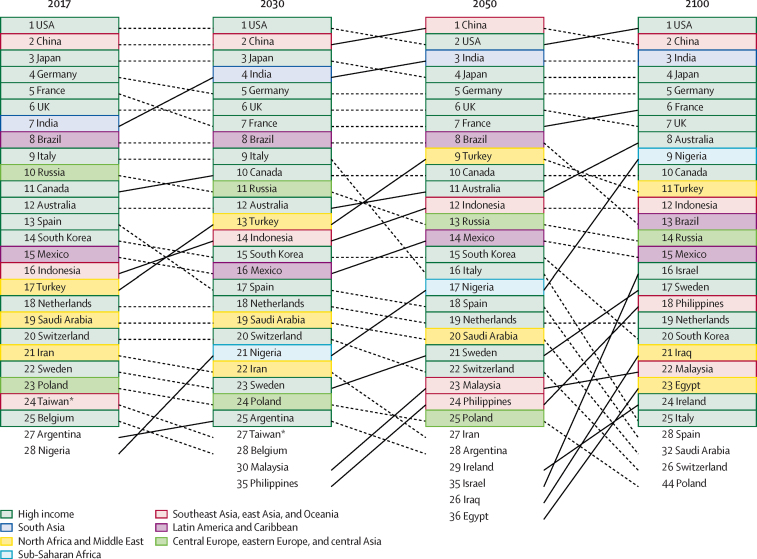
BACKGROUND: Understanding potential patterns in future population levels is crucial for anticipating and planning for changing age structures, resource and health-care needs, and environmental and economic landscapes. Future fertility patterns are a key input to estimation of future population size, but they are surrounded by substantial uncertainty and diverging methodologies of estimation and forecasting, leading to important differences in global population projections. Changing population size and age structure might have profound economic, social, and geopolitical impacts in many countries. In this study, we developed novel methods for forecasting mortality, fertility, migration, and population. We also assessed potential economic and geopolitical effects of future demographic shifts. METHODS: We modelled future population in reference and alternative scenarios as a function of fertility, migration, and mortality rates. We developed statistical models for completed cohort fertility at age 50 years (CCF50). Completed cohort fertility is much more stable over time than the period measure of the total fertility rate (TFR). We modelled CCF50 as a time-series random walk function of educational attainment and contraceptive met need. Age-specific fertility rates were modelled as a function of CCF50 and covariates. We modelled age-specific mortality to 2100 using underlying mortality, a risk factor scalar, and an autoregressive integrated moving average (ARIMA) model. Net migration was modelled as a function of the Socio-demographic Index, crude population growth rate, and deaths from war and natural disasters; and use of an ARIMA model. The model framework was used to develop a reference scenario and alternative scenarios based on the pace of change in educational attainment and contraceptive met need. We estimated the size of gross domestic product for each country and territory in the reference scenario. Forecast uncertainty intervals (UIs) incorporated uncertainty propagated from past data inputs, model estimation, and forecast data distributions. FINDINGS: The global TFR in the reference scenario was forecasted to be 1·66 (95% UI 1·33-2·08) in 2100. In the reference scenario, the global population was projected to peak in 2064 at 9·73 billion (8·84-10·9) people and decline to 8·79 billion (6·83-11·8) in 2100. The reference projections for the five largest countries in 2100 were India (1·09 billion [0·72-1·71], Nigeria (791 million [594-1056]), China (732 million [456-1499]), the USA (336 million [248-456]), and Pakistan (248 million [151-427]). Findings also suggest a shifting age structure in many parts of the world, with 2·37 billion (1·91-2·87) individuals older than 65 years and 1·70 billion (1·11-2·81) individuals younger than 20 years, forecasted globally in 2100. By 2050, 151 countries were forecasted to have a TFR lower than the replacement level (TFR <2·1), and 183 were forecasted to have a TFR lower than replacement by 2100. 23 countries in the reference scenario, including Japan, Thailand, and Spain, were forecasted to have population declines greater than 50% from 2017 to 2100; China's population was forecasted to decline by 48·0% (-6·1 to 68·4). China was forecasted to become the largest economy by 2035 but in the reference scenario, the USA was forecasted to once again become the largest economy in 2098. Our alternative scenarios suggest that meeting the Sustainable Development Goals targets for education and contraceptive met need would result in a global population of 6·29 billion (4·82-8·73) in 2100 and a population of 6·88 billion (5·27-9·51) when assuming 99th percentile rates of change in these drivers. INTERPRETATION: Our findings suggest that continued trends in female educational attainment and access to contraception will hasten declines in fertility and slow population growth. A sustained TFR lower than the replacement level in many countries, including China and India, would have economic, social, environmental, and geopolitical consequences. Policy options to adapt to continued low fertility, while sustaining and enhancing female reproductive health, will be crucial in the years to come. FUNDING: Bill & Melinda Gates Foundation.
Overview
The claims and statistics of this paper haven’t been checked yet.
Free: it reads the open-access text and checks the first 5 claims that cite a source we can check. Create a free account to check every claim.
Integrity signals
Registry
Cites
Statistics
Figures
Verification
Claims the paper makes
The claims and statistics of this paper haven’t been checked yet.
Free: it reads the open-access text and checks the first 5 claims that cite a source we can check. Create a free account to check every claim.
Claims other papers make about this one
Each is checked against this paper’s own text: does it say what the citing paper says it does?
The source backs part of the claim, not all of it — or backs it for a different population, condition or comparison.
In the citing paper
“Demographic data in the 5 years preceding 2021 demonstrate that the total fertility rate (TFR) in some countries has fallen below replacement levels—the minimum rate necessary for generational replacement of the population assuming no migration—with no evidence of this predicted rebound.”
From Global fertility in 204 countries and territories, 1950–2021, with forecasts to 2100: a comprehensive demographic analysis for the Global Burden of Disease Study 2021 (2024) · cites this paper as [4]
Experimental — accuracy not yet measuredThe source backs part of the claim, not all of it — or backs it for a different population, condition or comparison.
In the citing paper
“By 2050 and 2100, respectively, 77% of predominantly high-income countries and 93% of all countries will have a TFR below the replacement level of 2.1 children per woman.”
From Declining global fertility rates and the implications for family planning and family building: an IFFS consensus document based on a narrative review of the literature (2024) · cites this paper as Vollset et al., 2020
Experimental — accuracy not yet measuredThe source backs part of the claim, not all of it — or backs it for a different population, condition or comparison.
In the citing paper
“Not including the effects of migration, many countries are predicted to have a population decline of more than 50% from 2017 to 2100 (Vollset et al., 2020; Dao et al., 2021).”
From Declining global fertility rates and the implications for family planning and family building: an IFFS consensus document based on a narrative review of the literature (2024) · cites this paper as Vollset et al., 2020
Experimental — accuracy not yet measuredThe source backs part of the claim, not all of it — or backs it for a different population, condition or comparison.
In the citing paper
“Different TFRs among countries will promote immigration and emigration with important consequences for all countries, including increased political and social friction (Vollset et al., 2020).”
From Declining global fertility rates and the implications for family planning and family building: an IFFS consensus document based on a narrative review of the literature (2024) · cites this paper as Vollset et al., 2020
Experimental — accuracy not yet measured
6 more claims about this paper
Create a free account to see every claim other papers make about this one.
Self-check
Percentages, sums and reported differences re-computed from the paper’s own numbers.
The self-check needs the paper’s full text.
Citations
Cites
Planetary boundaries: Guiding human development on a changing planet
Steffen, W., Richardson, K., Rockström, J., Cornell, S. E., Fetzer, I., Bennett, E. M., Biggs, R., Carpenter, S. R., de Vries, W., de Wit, C. A., et al. (2015) · Science · doi:10.1126/science.1259855 · Cited by 12,527
Roth, G. A., Abate, D., Abate, K. H., Abay, S. M., Abbafati, C., Abbasi, N., Abbastabar, H., Abd-Allah, F., Abdela, J., Abdelalim, A., et al. (2018) · The Lancet · doi:10.1016/s0140-6736(18)32203-7 · Cited by 8,600
Planetary Boundaries: Exploring the Safe Operating Space for Humanity
Rockström, J., Steffen, W., Noone, K., Persson, Å., Chapin, F. S. I., Lambin, E., Lenton, T. M., Scheffer, M., Folke, C., Schellnhuber, H. J., et al. (2009) · Ecology and Society · doi:10.5751/es-03180-140232 · Cited by 7,187
Time Series: Theory and Methods
Ziegel, E. R., Brockwell, P., & Davis, R. (1992) · Technometrics · doi:10.2307/1270070 · Cited by 5,012
Stanaway, J. D., Afshin, A., Gakidou, E., Lim, S. S., Abate, D., Abate, K. H., Abbafati, C., Abbasi, N., Abbastabar, H., Abd-Allah, F., et al. (2018) · The Lancet · doi:10.1016/s0140-6736(18)32225-6 · Cited by 4,943
Self-citationThe second machine age: work, progress, and prosperity in a time of brilliant technologies
(2015) · Choice Reviews Online · doi:10.5860/choice.184834 · Cited by 4,381
Foreman, K. J., Marquez, N., Dolgert, A., Fukutaki, K., Fullman, N., McGaughey, M., Pletcher, M. A., Smith, A. E., Tang, K., Yuan, C.-W., et al. (2018) · The Lancet · doi:10.1016/s0140-6736(18)31694-5 · Cited by 2,994
Self-citationEssay on the Principle of Population: The 1803 Edition
Malthus, T. R. (2019) · Yale University Press eBooks · doi:10.12987/9780300231892 · Cited by 1,949
Guidelines for accurate and transparent health estimates reporting: the GATHER statement
Stevens, G. A., Alkema, L., Black, R. E., Boerma, J. T., Collins, G. S., Ezzati, M., Grove, J. T., Hogan, D. R., Hogan, M. C., Horton, R., et al. (2016) · The Lancet · doi:10.1016/s0140-6736(16)30388-9 · Cited by 1,798
Self-citationIPCC (2022) · Cambridge University Press eBooks · doi:10.1017/9781009157940 · Cited by 1,482
Research works printed but not linked: 1
- Lutz W Butz WP KC S World population and human capital in the twenty-first century 2014 2014 Oxford University Press Oxford
Cited by
Vos, T., Lim, S. S., Abbafati, C., Abbas, K. M., Abbasi, M., Abbasifard, M., Abbasi-Kangevari, M., Abbastabar, H., Abd-Allah, F., Abdelalim, A., et al. (2020) · The Lancet · doi:10.1016/s0140-6736(20)30925-9 · Cited by 19,358
Murray, C. J. L., Aravkin, A. Y., Zheng, P., Abbafati, C., Abbas, K. M., Abbasi-Kangevari, M., Abd-Allah, F., Abdelalim, A., Abdollahi, M., Abdollahpour, I., et al. (2020) · The Lancet · doi:10.1016/s0140-6736(20)30752-2 · Cited by 9,854
“With the availability of a GBDinformed future health scenarios platform, 45,46 the possibility of estimating avoidable burden is much more tractable.”
BackgroundSelf-citationOng, K. L., Stafford, L. K., McLaughlin, S. A., Boyko, E. J., Vollset, S. E., Smith, A. E., Dalton, B. E., Duprey, J., Cruz, J. A., Hagins, H., et al. (2023) · The Lancet · doi:10.1016/s0140-6736(23)01301-6 · Cited by 6,146
“40 For each location ( l ), age ( a ), sex ( s ), and year ( y ), we logit-transformed the GBD 2019 diabetes prevalence estimates logit ( Y l,a,s,y ) and used a fixed coefficient (β 1 ) on SDI only for type 1 diabetes (equation 1) and BMI for type 2 diabetes (equation 2) over time, and a random…”
Self-citationNichols, E., Steinmetz, J. D., Vollset, S. E., Fukutaki, K., Chalek, J., Abd-Allah, F., Abdoli, A., Abualhasan, A., Abu-Gharbieh, E., Akram, T. T., et al. (2022) · The Lancet Public Health · doi:10.1016/s2468-2667(21)00249-8 · Cited by 5,575
“37,38”
Self-citationNaghavi, M., Vollset, S. E., Ikuta, K. S., Swetschinski, L. R., Gray, A. P., Wool, E. E., Robles Aguilar, G., Mestrovic, T., Smith, G., Han, C., et al. (2024) · The Lancet · doi:10.1016/s0140-6736(24)01867-1 · Cited by 3,791
“49 This could have a compounding effect on AMR—increasing the vulnerability to infection while increasing the volume of antimicrobials used—creating greater selection pressure for resistance to emerge.”
Self-citationCancer statistics in China and United States, 2022: profiles, trends, and determinants
Xia, C., Dong, X., Li, H., Cao, M., Sun, D., He, S., Yang, F., Yan, X., Zhang, S., Li, N., et al. (2022) · Chinese Medical Journal · doi:10.1097/cm9.0000000000002108 · Cited by 3,402
“The total population size in China is expected to reach a peak around 2025, and the proportion of those aged 60 years and older is expected to exceed 30% by 2035.([18,20]) If population size remains stable or decreases, but population aging continues to increase, the upward trend in cancer burden is likely to”
BackgroundSteinmetz, J. D., Culbreth, G. T., Haile, L. M., Rafferty, Q., Lo, J., Fukutaki, K. G., Cruz, J. A., Smith, A. E., Vollset, S. E., Brooks, P. M., et al. (2023) · The Lancet Rheumatology · doi:10.1016/s2665-9913(23)00163-7 · Cited by 2,053
Self-citationFerreira, M. L., de Luca, K., Haile, L. M., Steinmetz, J. D., Culbreth, G. T., Cross, M., Kopec, J. A., Ferreira, P. H., Blyth, F. M., Buchbinder, R., et al. (2023) · The Lancet Rheumatology · doi:10.1016/s2665-9913(23)00098-x · Cited by 1,877
Self-citationEnvironmental impacts and decarbonization strategies in the cement and concrete industries
Habert, G., Miller, S. A., John, V. M., Provis, J. L., Favier, A., Horvath, A., & Scrivener, K. L. (2020) · Nature Reviews Earth & Environment · doi:10.1038/s43017-020-0093-3 · Cited by 1,572
Bourne, R., Steinmetz, J. D., Flaxman, S., Briant, P. S., Taylor, H. R., Resnikoff, S., Casson, R. J., Abdoli, A., Abu-Gharbieh, E., Afshin, A., et al. (2021) · The Lancet Global Health · doi:10.1016/s2214-109x(20)30425-3 · Cited by 1,431
Self-citationChronic kidney disease and the global public health agenda: an international consensus
Francis, A., Harhay, M. N., Ong, A. C. M., Tummalapalli, S. L., Ortiz, A., Fogo, A. B., Fliser, D., Roy-Chaudhury, P., Fontana, M., Nangaku, M., et al. (2024) · Nature Reviews Nephrology · doi:10.1038/s41581-024-00820-6 · Cited by 1,374
“Moreover, with an ageing global population, the global tax base to fund health care will shrink over the next 30 years, emphasizing the crucial need to prevent kidney failure and its associated high health care costs (such as KRT costs) 135 .”
Haile, L. M., Kamenov, K., Briant, P. S., Orji, A. U., Steinmetz, J. D., Abdoli, A., Abdollahi, M., Abu-Gharbieh, E., Afshin, A., Ahmed, H., et al. (2021) · The Lancet · doi:10.1016/s0140-6736(21)00516-x · Cited by 1,108
Self-citationVollset, S. E., Ababneh, H. S., Abate, Y. H., Abbafati, C., Abbasgholizadeh, R., Abbasian, M., Abbastabar, H., Abd Al Magied, A. H. A., Abd ElHafeez, S., Abdelkader, A., et al. (2024) · The Lancet · doi:10.1016/s0140-6736(24)00685-8 · Cited by 1,025
Self-citationNg, M., Gakidou, E., Lo, J., Abate, Y. H., Abbafati, C., Abbas, N., Abbasian, M., Abd ElHafeez, S., Abdel-Rahman, W. M., Abd-Elsalam, S., et al. (2025) · The Lancet · doi:10.1016/s0140-6736(25)00355-1 · Cited by 1,151
“4,32,33 In these MR-BRT models, we assume the past relationship between SDI and overweight and obesity will continue into the future.”
The Global Burden of Disease Study at 30 years
Murray, C. J. L. (2022) · Nature Medicine · doi:10.1038/s41591-022-01990-1 · Cited by 856
Self-citationGlobal burden of cardiovascular diseases: projections from 2025 to 2050
Chong, B., Jayabaskaran, J., Jauhari, S. M., Chan, S. P., Goh, R., Kueh, M. T. W., Li, H., Chin, Y. H., Kong, G., Anand, V. V., et al. (2025) · European Journal of Preventive Cardiology · doi:10.1093/eurjpc/zwae281 · Cited by 793
Black, R. J., Cross, M., Haile, L. M., Culbreth, G. T., Steinmetz, J. D., Hagins, H., Kopec, J. A., Brooks, P. M., Woolf, A. D., Ong, K. L., et al. (2023) · The Lancet Rheumatology · doi:10.1016/s2665-9913(23)00211-4 · Cited by 674
The future of farming: Who will produce our food?
Giller, K. E., Delaune, T., Silva, J. V., Descheemaeker, K., van de Ven, G., Schut, A. G. T., van Wijk, M., Hammond, J., Hochman, Z., Taulya, G., et al. (2021) · Food Security · doi:10.1007/s12571-021-01184-6 · Cited by 646
Lozano, R., Fullman, N., Mumford, J. E., Knight, M., Barthelemy, C. M., Abbafati, C., Abbastabar, H., Abd-Allah, F., Abdollahi, M., Abedi, A., et al. (2020) · The Lancet · doi:10.1016/s0140-6736(20)30750-9 · Cited by 719
Self-citationSu, D., Cui, Y., He, C., Yin, P., Bai, R., Zhu, J., Lam, J. S. T., Zhang, J., Yan, R., Zheng, X., et al. (2025) · BMJ · doi:10.1136/bmj-2024-080952 · Cited by 611
“27”
InfluentialFive insights from the Global Burden of Disease Study 2019
Murray, C. J. L., Abbafati, C., Abbas, K. M., Abbasi, M., Abbasi-Kangevari, M., Abd-Allah, F., Abdollahi, M., Abedi, P., Abedi, A., Abolhassani, H., et al. (2020) · The Lancet · doi:10.1016/s0140-6736(20)31404-5 · Cited by 675
Self-citationBhattacharjee, N. V., Schumacher, A. E., Aali, A., Abate, Y. H., Abbasgholizadeh, R., Abbasian, M., Abbasi-Kangevari, M., Abbastabar, H., Abd ElHafeez, S., Abd-Elsalam, S., et al. (2024) · The Lancet · doi:10.1016/s0140-6736(24)00550-6 · Cited by 629
Regenerative Agriculture: An agronomic perspective
Giller, K. E., Hijbeek, R., Andersson, J. A., & Sumberg, J. (2021) · Outlook on Agriculture · doi:10.1177/0030727021998063 · Cited by 605
“8 billion in 2060 (Vollset et al., 2020), whereas the United Nations Population Programme projects a population of 11.”
BackgroundInfluentialChen, M. X., Zhong, Y. J., Dong, Q. Q., Wong, H. M., & Wen, Y. F. (2021) · Journal of Clinical Periodontology · doi:10.1111/jcpe.13506 · Cited by 564
Kerr, J. A., Patton, G. C., Cini, K. I., Abate, Y. H., Abbas, N., Abd Al Magied, A. H. A., Abd ElHafeez, S., Abd-Elsalam, S., Abdollahi, A., Abdoun, M., et al. (2025) · The Lancet · doi:10.1016/s0140-6736(25)00397-6 · Cited by 460
“70,71 Forecasted obesity prevalence was estimated by multiplying forecasted overweight and obesity prevalence by the forecasted proportion of obesity among the population with overweight for each draw.”
Underestimating the Challenges of Avoiding a Ghastly Future
Bradshaw, C. J. A., Ehrlich, P. R., Beattie, A., Ceballos, G., Crist, E., Diamond, J., Dirzo, R., Ehrlich, A. H., Harte, J., Harte, M. E., et al. (2021) · Frontiers in Conservation Science · doi:10.3389/fcosc.2020.615419 · Cited by 526
“By 2050, the world population will likely grow to ∼ 9.9 billion (prb.org), with growth projected by many to continue until well into the next century (Bradshaw and Brook, 2014; Gerland et al., 2014), although more recent estimates predict a peak toward the end of this century (Vollset et al., 2020).”
InfluentialGill, T. K., Mittinty, M. M., March, L. M., Steinmetz, J. D., Culbreth, G. T., Cross, M., Kopec, J. A., Woolf, A. D., Haile, L. M., Hagins, H., et al. (2023) · The Lancet Rheumatology · doi:10.1016/s2665-9913(23)00232-1 · Cited by 422
Self-citationGlobal Burden and Inequality of Dental Caries, 1990 to 2019
Wen, P. Y. F., Chen, M. X., Zhong, Y. J., Dong, Q. Q., & Wong, H. M. (2022) · Journal of Dental Research · doi:10.1177/00220345211056247 · Cited by 431
“In spite of the progress in reducing caries burden, forecasted population growth (Menashe-Oren et al. 2017; Vollset et al. 2020) points to the need for an oral health infrastructure capable of meeting the expanding oral health care need of the sub-Saharan African population.”
BackgroundThe Lancet Nigeria Commission: investing in health and the future of the nation
Abubakar, I., Dalglish, S. L., Angell, B., Sanuade, O., Abimbola, S., Adamu, A. L., Adetifa, I. M. O., Colbourn, T., Ogunlesi, A. O., Onwujekwe, O., et al. (2022) · The Lancet · doi:10.1016/s0140-6736(21)02488-0 · Cited by 373
Environmental factors in declining human fertility
Skakkebæk, N. E., Lindahl-Jacobsen, R., Levine, H., Andersson, A.-M., Jørgensen, N., Main, K. M., Lidegaard, Ø., Priskorn, L., Holmboe, S. A., Bräuner, E. V., et al. (2022) · Nature Reviews Endocrinology · doi:10.1038/s41574-021-00598-8 · Cited by 389
Ng, M., Dai, X., Cogen, R. M., Abdelmasseh, M., Abdollahi, A., Abdullahi, A., Aboagye, R. G., Abukhadijah, H. J., Adeyeoluwa, T. E., Afolabi, A. A., et al. (2024) · The Lancet · doi:10.1016/s0140-6736(24)01548-4 · Cited by 344
Wu, A.-M., Cross, M., Elliott, J. M., Culbreth, G. T., Haile, L. M., Steinmetz, J. D., Hagins, H., Kopec, J. A., Brooks, P. M., Woolf, A. D., et al. (2024) · The Lancet Rheumatology · doi:10.1016/s2665-9913(23)00321-1 · Cited by 292
“19 To obtain forecasted cases, forecasted rates were multiplied by forecasted population counts.”
MethodSelf-citationCross, M., Ong, K. L., Culbreth, G. T., Steinmetz, J. D., Cousin, E., Lenox, H., Kopec, J. A., Haile, L. M., Brooks, P. M., Kopansky-Giles, D. R., et al. (2024) · The Lancet Rheumatology · doi:10.1016/s2665-9913(24)00117-6 · Cited by 313
Self-citationGiller, K. E., Delaune, T., Silva, J. V., van Wijk, M., Hammond, J., Descheemaeker, K., van de Ven, G., Schut, A. G. T., Taulya, G., Chikowo, R., et al. (2021) · Food Security · doi:10.1007/s12571-021-01209-0 · Cited by 329
Huang, B., Wang, Z., Kong, Y., Jin, M., & Ma, L. (2023) · BMC Public Health · doi:10.1186/s12889-023-16793-3 · Cited by 295
“The study predicted that the world population is expected to reach its peak in 2064, while by the year 2100, a total of 183 countries are projected to have fertility rates below replacement levels [2].”
BackgroundInfluentialThe Food Security Conundrum of sub-Saharan Africa
Giller, K. E. (2020) · Global Food Security · doi:10.1016/j.gfs.2020.100431 · Cited by 278
Ward, J. L., Azzopardi, P. S., Francis, K. L., Santelli, J. S., Skirbekk, V., Sawyer, S. M., Kassebaum, N. J., Mokdad, A. H., Hay, S. I., Abd-Allah, F., et al. (2021) · The Lancet · doi:10.1016/s0140-6736(21)01546-4 · Cited by 292
Self-citationAgeing and population shrinking: implications for sustainability in the urban century
Jarzebski, M. P., Elmqvist, T., Gasparatos, A., Fukushi, K., Eckersten, S., Haase, D., Goodness, J., Khoshkar, S., Saito, O., Takeuchi, K., et al. (2021) · npj Urban Sustainability · doi:10.1038/s42949-021-00023-z · Cited by 261
Estimated micronutrient shortfalls of the EAT–Lancet planetary health diet
Beal, T., Ortenzi, F., & Fanzo, J. (2023) · The Lancet Planetary Health · doi:10.1016/s2542-5196(23)00006-2 · Cited by 266
Overcoming Global Food Security Challenges through Science and Solidarity
Barrett, C. B. (2021) · American Journal of Agricultural Economics · doi:10.1111/ajae.12160 · Cited by 253
Oh, J., Kim, S., Kim, M. S., Abate, Y. H., Abd ElHafeez, S., Abdelkader, A., Abdi, P., Abdulah, D. M., Aboagye, R. G., Abolhassani, H., et al. (2025) · The Lancet Respiratory Medicine · doi:10.1016/s2213-2600(25)00003-7 · Cited by 236
Haakenstad, A., Yearwood, J. A., Fullman, N., Bintz, C., Bienhoff, K., Weaver, M. R., Nandakumar, V., LeGrand, K. E., Knight, M., Abbafati, C., et al. (2022) · The Lancet Global Health · doi:10.1016/s2214-109x(22)00429-6 · Cited by 258
Self-citationOral health for healthy ageing
Patel, J., Wallace, J., Doshi, M., Gadanya, M., Ben Yahya, I., Roseman, J., & Srisilapanan, P. (2021) · The Lancet Healthy Longevity · doi:10.1016/s2666-7568(21)00142-2 · Cited by 221
Fauser, B. C. J. M., Adamson, G. D., Boivin, J., Chambers, G. M., de Geyter, C., Dyer, S., Inhorn, M. C., Schmidt, L., Serour, G. I., Tarlatzis, B., et al. (2024) · Human Reproduction Update · doi:10.1093/humupd/dmad028 · Cited by 224
“Not including the effects of migration, many countries are predicted to have a population decline of more than 50% from 2017 to 2100 (Vollset et al. , 2020; Dao et al. , 2021).”
BackgroundInfluentialTian, F., Chen, Z., Zeng, Y., Feng, Q., & Chen, X. (2023) · JAMA Network Open · doi:10.1001/jamanetworkopen.2023.26910 · Cited by 193
Schumacher, A. E., Zheng, P., Barber, R. M., A, B., Aalipour, M. A., Aalruz, H., Ababneh, H. S., Abaraogu, U. O., Abbafati, C., Abbas, N., et al. (2025) · The Lancet · doi:10.1016/s0140-6736(25)01330-3 · Cited by 209
Liang, Y., Huang, J., Zhao, Q., Mo, H., Su, Z., Feng, S., Li, S., & Ruan, X. (2025) · Human Reproduction · doi:10.1093/humrep/deae292 · Cited by 180
Hu, W., Fang, L., Ni, R., Zhang, H., & Pan, G. (2022) · BMC Cancer · doi:10.1186/s12885-022-09940-3 · Cited by 189
“We applied the Norpred APC model [25] and the Autoregressive Integrated Moving Average (ARIMA) model [26] for sensitivity analysis to verify the stability of the prediction.”
MethodDoody, P., Lord, J. M., Greig, C. A., & Whittaker, A. C. (2023) · Gerontology · doi:10.1159/000528561 · Cited by 177
Gupta, J., Bai, X., Liverman, D. M., Rockström, J., Qin, D., Stewart-Koster, B., Rocha, J. C., Jacobson, L., Abrams, J. F., Andersen, L. S., et al. (2024) · The Lancet Planetary Health · doi:10.1016/s2542-5196(24)00042-1 · Cited by 197
Zhang, Y., Ji, Y., Liu, S., Li, J., Wu, J., Jin, Q., Liu, X., Duan, H., Feng, Z., Ya, L., et al. (2025) · Journal of the National Cancer Center · doi:10.1016/j.jncc.2025.02.002 · Cited by 349
“…trends in BC ASIR in transitioning countries would further reflect changes in above risk determinants associated with socioeconomic development 48 , 49 (such as increasing prevalence of over-weight, 50-52 declining age at menarche, 53 postponement of childbearing and falling fertility rate, 35 ,…”
Effects of education on adult mortality: A global systematic review and meta-analysis
Balaj, M., Henson, C. A., Aronsson, A., Aravkin, A., Beck, K., Degail, C., Donadello, L., Eikemo, K., Friedman, J., Giouleka, A., et al. (2024) · The Lancet Public Health · doi:10.1016/s2468-2667(23)00306-7 · Cited by 192
Self-citationComparative analysis of cancer statistics in China and the United States in 2024
Wu, Y., He, S., Cao, M., Teng, Y., Li, Q., Tan, N., Wang, J., Zuo, T., Li, T., Zheng, Y., et al. (2024) · Chinese Medical Journal · doi:10.1097/cm9.0000000000003442 · Cited by 179
Jiang, C.-Y., Han, K., Yang, F., Yin, S.-Y., Zhang, L., Liang, B.-Y., Wang, T.-B., Jiang, T., Chen, Y.-R., Shi, T.-Y., et al. (2023) · Ageing Research Reviews · doi:10.1016/j.arr.2023.102124 · Cited by 174
Wu, J., Jin, Q., Zhang, Y., Ji, Y., Li, J., Liu, X., Duan, H., Feng, Z., Ya, L., Zhang, Y., et al. (2025) · Journal of the National Cancer Center · doi:10.1016/j.jncc.2024.11.006 · Cited by 349
Assessing cognitive decline in the aging brain: lessons from rodent and human studies
Brito, D. V. C., Esteves, F., Rajado, A. T., Silva, N., ALFA score Consortium, Andrade, R., Apolónio, J., Calado, S., Faleiro, L., Matos, C., et al. (2023) · npj Aging · doi:10.1038/s41514-023-00120-6 · Cited by 177
“Therefore, estimations towards the end of the century point to an overall global convergence of life expectancies 2 .”
BackgroundResultNon-monotonic changes in Asian Water Towers’ streamflow at increasing warming levels
Cui, T., Li, Y., Yang, L., Nan, Y., Li, K., Tudaji, M., Hu, H., Long, D., Shahid, M., Mubeen, A., et al. (2023) · Nature Communications · doi:10.1038/s41467-023-36804-6 · Cited by 170
Pedroza, P., Miller-Petrie, M. K., Chen, C., Chakrabarti, S., Chapin, A., Hay, S., Tsakalos, G., Wimo, A., & Dieleman, J. L. (2022) · eClinicalMedicine · doi:10.1016/j.eclinm.2022.101337 · Cited by 177
Self-citationVision Loss Expert Group of the Global Burden of Disease Study, Pesudovs, K., Lansingh, V. C., Kempen, J. H., Tapply, I. H., Fernandes, A. G., Cicinelli, M. V., Arrigo, A., Leveziel, N., Resnikoff, S., et al. (2024) · Eye · doi:10.1038/s41433-024-02961-1 · Cited by 247
Bryazka, D., Reitsma, M. B., Abate, Y. H., Magied, A. H. A. A. A., Abdelkader, A. F. I., Abdollahi, A., Abdoun, M., Abdulkader, R. S., Zúñiga, R. A. A., Abhilash, E. S., et al. (2024) · The Lancet Public Health · doi:10.1016/s2468-2667(24)00166-x · Cited by 199
Lobanov-Rostovsky, S., He, Q., Chen, Y., Liu, Y., Wu, Y., Liu, Y., Venkatraman, T., French, E., Curry, N., Hemmings, N., et al. (2023) · BMC Public Health · doi:10.1186/s12889-023-15583-1 · Cited by 160
“However, skewed sex ratios at birth make TFR prediction difficult [13].”
BackgroundMadagascar’s extraordinary biodiversity: Threats and opportunities
Ralimanana, H., Perrigo, A. L., Smith, R. J., Borrell, J. S., Faurby, S., Rajaonah, M. T., Randriamboavonjy, T., Vorontsova, M. S., Cooke, R. S. C., Phelps, L. N., et al. (2022) · Science · doi:10.1126/science.adf1466 · Cited by 164
The Human Creation and Use of Reactive Nitrogen: A Global and Regional Perspective
Galloway, J. N., Bleeker, A., & Erisman, J. W. (2021) · Annual Review of Environment and Resources · doi:10.1146/annurev-environ-012420-045120 · Cited by 202
IPCC baseline scenarios have over-projected CO 2 emissions and economic growth
Burgess, M. G., Ritchie, J., Shapland, J., & Pielke, R. A. (2020) · Environmental Research Letters · doi:10.1088/1748-9326/abcdd2 · Cited by 187
“Fifth, some demographers now anticipate substantially slower population growth than previous UN projections suggested (e.g. only 6–9 billion people, not 10–12 billion, by 2100; Vollset et al 2020), due to falling birth rates, especially in developing countries (Bricker and Ibbitson 2019).”
BackgroundMokdad, A. H., Bisignano, C., Hsu, J. M., Ababneh, H. S., Abbasgholizadeh, R., Abdelkader, A., PubMed, M., Abiodun, O. O., Aboagye, R. G., Abu‐Zaid, A., et al. (2024) · The Lancet · doi:10.1016/s0140-6736(24)01446-6 · Cited by 190
Self-citationGlobal mortality of snakebite envenoming between 1990 and 2019
Collaborators, G. 2. S. E., Roberts, N. L. S., Johnson, E. K., Zeng, S., Hamilton, E. B., Abdoli, A., Alahdab, F., Alipour, V., Ancuceanu, R., Andrei, C. L., et al. (2022) · Nature Communications · doi:10.1038/s41467-022-33627-9 · Cited by 182
Self-citationHinkel, J., Feyen, L., Hemer, M., Cozannet, G. L., Lincke, D., Marcos, M., Mentaschi, L., Merkens, J.-L., de Moel, H., Muis, S., et al. (2021) · Earth s Future · doi:10.1029/2020ef001882 · Cited by 162
“This can be supported by developing sets of plausible adaptation scenarios that can be used consistently across modelling efforts, similarly to the SSPs.”
BackgroundInfluentialMboi, N., Syailendrawati, R., Ostroff, S. M., Elyazar, I., Glenn, S., Rachmawati, T., Nugraheni, W. P., Ali, P. B., Trisnantoro, L., Adnani, Q. E. S., et al. (2022) · The Lancet Global Health · doi:10.1016/s2214-109x(22)00371-0 · Cited by 207
Self-citationVision Loss Expert Group of the Global Burden of Disease Study, Bourne, R., Jonas, J. B., Friedman, D. S., Nangia, V. B., Bron, A. M., Tapply, I. H., Fernandes, A. G., Cicinelli, M. V., Arrigo, A., et al. (2024) · Eye · doi:10.1038/s41433-024-02995-5 · Cited by 197
“We age-standardized our estimates using the GBD standard population [11].”
MethodHow far will global population rise? Researchers can't agree
Adam, D. (2021) · Nature · doi:10.1038/d41586-021-02522-6 · Cited by 146
Food Production in the Context of Global Developmental Challenges
Daszkiewicz, T. (2022) · Agriculture · doi:10.3390/agriculture12060832 · Cited by 175
Kchouk, S., Melsen, L. A., Walker, D. W., & van Oel, P. R. (2022) · Natural hazards and earth system sciences · doi:10.5194/nhess-22-323-2022 · Cited by 156
Haeuser, E., Byrne, S., Nguyen, J., Raggi, C., McLaughlin, S. A., Bisignano, C., Harris, A. A., Smith, A. E., Lindstedt, P. A., Smith, G., et al. (2025) · The Lancet · doi:10.1016/s0140-6736(25)01037-2 · Cited by 143
“Using GBD population forecasts, 57 we calculated the number of zero-dose children needed to be reached by 2030 and corresponding DTP1 coverage.”
Self-citationKumar, A., Bhattacharya, T., Mukherjee, S., & Sarkar, B. (2022) · Biochar · doi:10.1007/s42773-022-00148-z · Cited by 157
Revisiting the role of sulfur in crop production: A narrative review
Sharma, R. K., Cox, M. S., Oglesby, C., & Dhillon, J. S. (2024) · Journal of Agriculture and Food Research · doi:10.1016/j.jafr.2024.101013 · Cited by 143
Diversifying crop rotations enhances agroecosystem services and resilience
Liu, C., Plaza‐Bonilla, D., Coulter, J. A., Kutcher, H. R., Beckie, H. J., Wang, L., Floc’h, J.-B., Hamel, C., Siddique, K. H. M., Li, L., et al. (2022) · Advances in agronomy · doi:10.1016/bs.agron.2022.02.007 · Cited by 169
The changing tide of human fertility
Aitken, R. J. (2022) · Human Reproduction · doi:10.1093/humrep/deac011 · Cited by 129
“So powerful is this trend that before the end of the century, 183 out 195 countries will be characterized by TFR values below replacement levels (Vollset et al., 2020).”
BackgroundRICORS2040: the need for collaborative research in chronic kidney disease
Ortíz, A., Roger, M., Jimenez, V. M., Jr., Pérez, J. C. R., Furlano, M. M., Atxer, L. S., Zurro, D. G., Casabona, C. M. R., Zurro, D. G., Gómez, C. G., et al. (2021) · Clinical Kidney Journal · doi:10.1093/ckj/sfab170 · Cited by 142
“The population of Spain is projected to peak in the present decade and to become progressively older and decrease to ~23– 33 million by 2100 [30, 31].”
BackgroundHe, Y., Zhao, J., Wang, L., Han, C., Yan, R., Zhu, P., Qian, T., Yu, S., Zhu, X., & He, W. (2025) · Scientific Reports · doi:10.1038/s41598-025-89240-5 · Cited by 170
† (2023) · The Lancet · doi:10.1016/s0140-6736(23)00860-7 · Cited by 136
“53 In 2100 it is forecasted that the majority of the world’s population (including children and adolescents) will live in countries of low and low-middle sociodemographic development (eg, Democratic Republic of the Congo, India, and Nigeria), 53 settings that have an excess burden of communicable…”
InfluentialArndt, M. B., Abate, Y. H., Abbasi‐Kangevari, M., ElHafeez, S. A., Abdelmasseh, M., Abd-Elsalam, S. M., Abdulah, D. M., Abdulkader, R. S., Abidi, H., Abiodun, O. A., et al. (2024) · The Lancet · doi:10.1016/s0140-6736(24)01821-x · Cited by 182
Technological Trends and Engineering Issues on Vertical Farms: A Review
Kabir, M. S. N., Reza, M. N., Chowdhury, M., Ali, M., Samsuzzaman, S., Ali, M. R., Lee, K. Y., & Chung, S. (2023) · Horticulturae · doi:10.3390/horticulturae9111229 · Cited by 139
O’Sullivan, J. (2023) · World · doi:10.3390/world4030034 · Cited by 138
“IHME relates completed fertility at age 45 with education attainment at age 25, arguing that completed fertility is a more robust measure than TFR [52].”
Gilbert, W., Thomas, L. F., Coyne, L., & Rushton, J. (2020) · animal · doi:10.1016/j.animal.2020.100123 · Cited by 146
Grinin, L. E., Леонидович, Г. А., & Korotayev, A. (2021) · Technological Forecasting and Social Change · doi:10.1016/j.techfore.2021.121348 · Cited by 123
“…aging, we rely on demographic projections, all of which predict an increase in this process in World System within this century, especially in high- and middle-income countries (Kaneda et al., 2016; Lutz et al., 2018; UN Population Division 2019; Vollset et al., 2020; Wittgenstein Center 2020).”
Bovine host genome acts on rumen microbiome function linked to methane emissions
Martínez-Álvaro, M., Auffret, M. D., Duthie, C.-A., Dewhurst, R. J., Cleveland, M. A., Watson, M., & Roehe, R. (2022) · Communications Biology · doi:10.1038/s42003-022-03293-0 · Cited by 136
Responsible plant nutrition: A new paradigm to support food system transformation
Dobermann, A., Bruulsema, T. W., Çakmak, İ., Gerard, B. G., Majumdar, K., McLaughlin, M., Reidsma, P., Vanlauwe, B., Wollenberg, L., Zhang, F. S., et al. (2022) · Global Food Security · doi:10.1016/j.gfs.2022.100636 · Cited by 138
Cheng, H., Luo, W., Si, S., Xin, X., Peng, Z., Zhou, H., Liu, H., & Yu, Y. (2022) · BMC Public Health · doi:10.1186/s12889-022-13656-1 · Cited by 140
“[37] also confirmed that life expectancy was one of the indispensable factors which could influence TFR.”
BackgroundBaste, I., & Watson, R. T. (2022) · Global Environmental Change · doi:10.1016/j.gloenvcha.2022.102466 · Cited by 110
Urbanization, Migration, and Adaptation to Climate Change
Adger, W. N., Crépin, A., Folke, C., Ospina, D., Chapin, F. S., Segerson, K., Seto, K. C., Anderies, J. M., Barrett, S. A., Bennett, E. M., et al. (2020) · One Earth · doi:10.1016/j.oneear.2020.09.016 · Cited by 126
Doody, P., Asamane, E. A., Aunger, J. A., Swales, B., Lord, J. M., Greig, C. A., & Phillips, A. C. (2022) · Ageing Research Reviews · doi:10.1016/j.arr.2022.101666 · Cited by 128
“…exacerbated by declining fertility rates in economically developed countries, which are projected to cause an increase in dependency ratios across the developed world (Murray et al., 2018; United Nations Department of Economic and Social Affairs Population Division, 2019; Vollset et al., 2020).”
BackgroundNguyen, A. T., Lee, P., Rodriguez, E. K., Chahal, K., Freedman, B. R., & Nazarian, A. (2025) · The Lancet Healthy Longevity · doi:10.1016/j.lanhl.2025.100707 · Cited by 128
Nitrogen and the future of agriculture: 20 years on
Cassman, K. G., & Dobermann, A. (2021) · AMBIO · doi:10.1007/s13280-021-01526-w · Cited by 124
Sirota, S. B., Bender, R. G., Dominguez, R.-M. V., Movo, A., Swetschinski, L. R., Araki, D. T., Han, C., Wool, E. E., He, J., Carter, A., et al. (2025) · The Lancet Infectious Diseases · doi:10.1016/s1473-3099(25)00689-9 · Cited by 171
Ali, M., Ali, Q., Sohail, M. A., Ashraf, M. F., Saleem, M. H., Hussain, S., & Zhou, L. (2021) · International Journal of Molecular Sciences · doi:10.3390/ijms221810165 · Cited by 118
“7 billion up to 2064 (estimated by the United Nations (UN) [12,13]).”
BackgroundVision Loss Expert Group of the Global Burden of Disease Study, Curran, K., Pető, T., Jonas, J. B., Friedman, D. S., Kim, J. E., Leasher, J. L., Tapply, I. H., Fernandes, A. G., Cicinelli, M. V., et al. (2024) · Eye · doi:10.1038/s41433-024-03101-5 · Cited by 134
“We age-standardized our estimates using the GBD standard population [17].”
Spatial heterogeneity of demographic structure effects on urban carbon emissions
Wei, L.-Y., & Liu, Z. (2022) · Environmental Impact Assessment Review · doi:10.1016/j.eiar.2022.106790 · Cited by 101
Nong, J., Su, C., Li, C., Wang, C., Li, W., Li, Y., Chen, P., Li, Y., Li, Z., She, X., et al. (2024) · EClinicalMedicine · doi:10.1016/j.eclinm.2024.102964 · Cited by 125
Why sub-Saharan Africa might exceed its projected population size by 2100
Ezeh, A., Kissling, F., & Singer, P. (2020) · The Lancet · doi:10.1016/s0140-6736(20)31522-1 · Cited by 95
Inequality can double the energy required to secure universal decent living
Millward-Hopkins, J. (2022) · Nature Communications · doi:10.1038/s41467-022-32729-8 · Cited by 126
Metadata
- Authors
- Vollset, S. E., Goren, E., Yuan, C.-W., Cao, J., Smith, A. E., Hsiao, T., Bisignano, C., Azhar, G. S., Castro, E., Chalek, J., Dolgert, A. J., Frank, T., Fukutaki, K., Hay, S. I., Lozano, R., Mokdad, A. H., Nandakumar, V., Pierce, M., Pletcher, M., Robalik, T., Steuben, K. M., Wunrow, H. Y., Zlavog, B. S., & Murray, C. J. L.
- Affiliations
- University of Washington (US)
- Corresponding author
- Murray, Christopher J L
- ORCID
- Venue
- The Lancet
- Publisher
- Elsevier BV
- Published
- 2020-10
- Volume
- 396
- Issue
- 10258
- Pages
- 1285-1306
- ISSN
- 0099-5355 (ISSN-L)
- 0140-6736
- PMC
- PMC7561721
- OpenAlex
- W3043365850
- Cited by
- 1,506
- References
- 34
- Citations by year
- 2026: 195 · 2025: 279 · 2024: 266 · 2023: 276 · 2022: 247 · 2021: 197 · 2020: 45
- FWCI
- 288.65
- Type
- journal article
- Language
- en
- Open access
- hybrid
- doi.org
- Licence
- cc-by
- www.elsevier.com/tdm/userlicense/1.0/ (tdm)
- www.elsevier.com/legal/tdmrep-license (tdm)
- creativecommons.org/licenses/by/4.0/ (vor)
- Locations
- The Lancet (publishedVersion, cc-by)
- PubMed Central (publishedVersion, cc-by)
- PubMed (publishedVersion)
- FIU - Digital Commons (Florida International University) (submittedVersion)
- Funders
- Bill and Melinda Gates Foundation
- Topics
- Social Sciences › Demography › Insurance, Mortality, Demography, Risk Management
- Health Sciences › Medicine › Public Health, Environmental and Occupational Health › Reproductive Health and Contraception
- Social Sciences › Geography, Planning and Development › demographic modeling and climate adaptation
- Keywords
- population projections, fertility prediction, mortality forecasting, migration forecasting, age-specific fertility, age-specific mortality, net migration, educational attainment, gross domestic product, demographic scenarios, population decline, age structure, uncertainty intervals, Global Burden of Disease Study, socioeconomic determinants of fertility
- MeSH terms
- Global Burden of Disease, Birth Rate, Female, Forecasting, Humans, Male, Mortality, Population Growth, Human Migration
About these checks
Registry, retraction, Cites and statistics results are computed, not judged, with one exception: a printed reference that no index lists is read once by a model before it counts as a citation error. Claims are extracted by a model and kept only when their quote appears verbatim in the text; each cited source is then checked, with a model’s help, for whether it says what the claim relies on. Those verdicts can be wrong — read the claim’s quote and the cited source before relying on one.
Statistics and arithmetic are recomputed, not judged.
Confidence bands are shown only for fields calibrated on our annotated test set. None is calibrated yet, so no band is shown.
What counts as a claim ›How we measure confidence ›How we check this ›
Are you an author, or do you see a problem with this page? Request a review
Data sources
Bibliographic data: Semantic Scholar, OpenAlex, Crossref.
Contains information from the Semantic Scholar Academic Graph Datasets, made available under the ODC Attribution License (ODC-BY 1.0).
Semantic Scholar’s data is described in: Kinney, R., et al. (2023). The Semantic Scholar Open Data Platform. arXiv:2301.10140.
