

Fertility, mortality, migration, and population scenarios for 195 countries and territories from 2017 to 2100: a forecasting analysis for the Global Burden of Disease Study
Open accessThe DOI matches its Crossref record; 33 of the 34 references it cites were found in a registry or an index.
Abstract
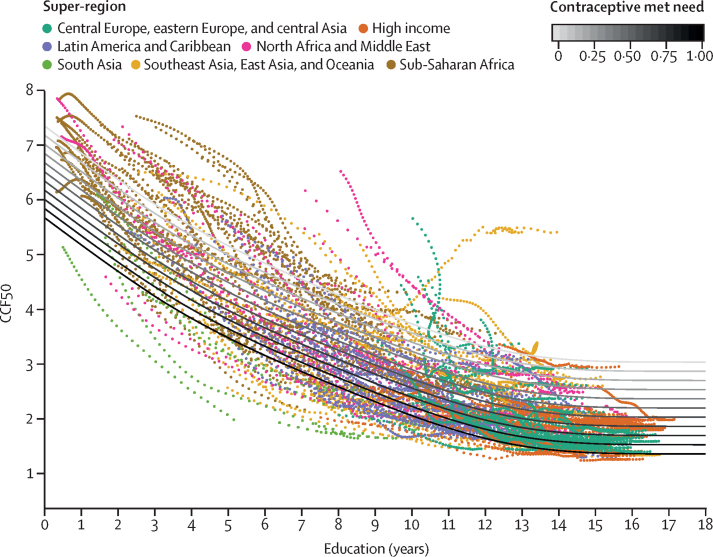
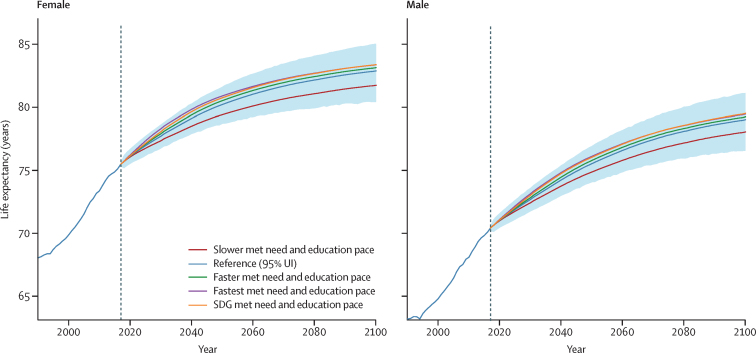
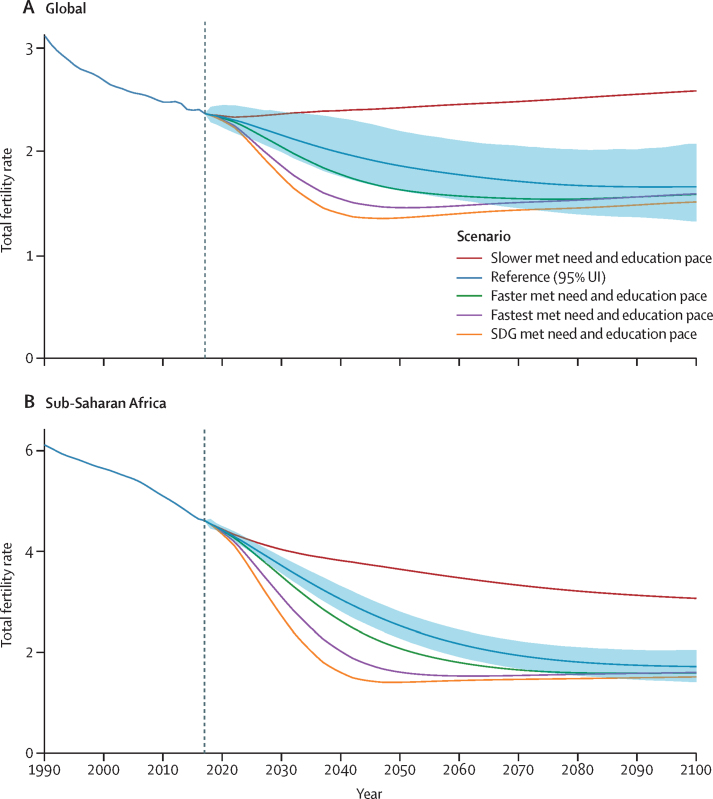
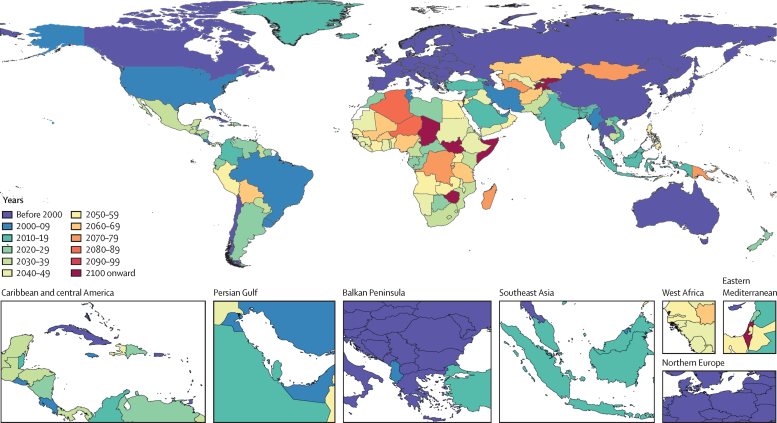
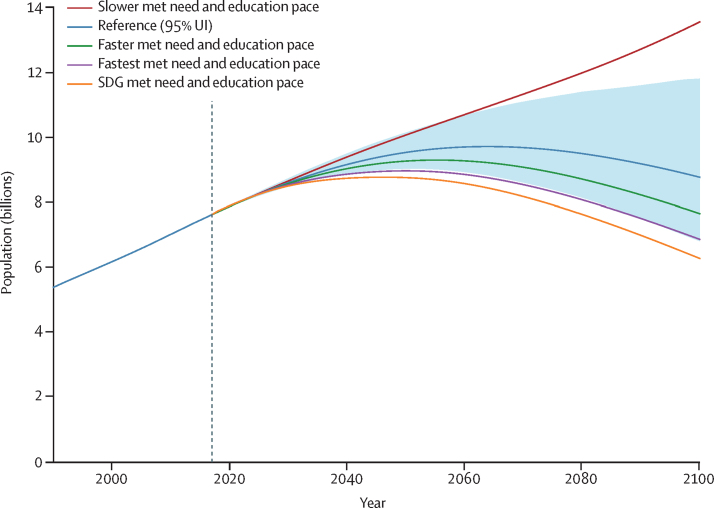
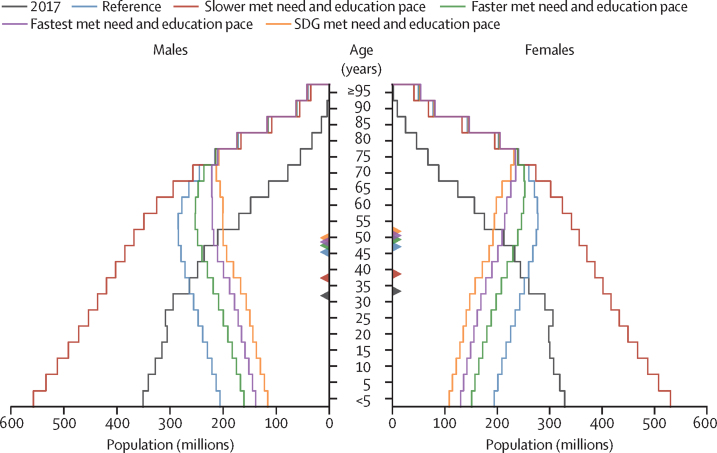
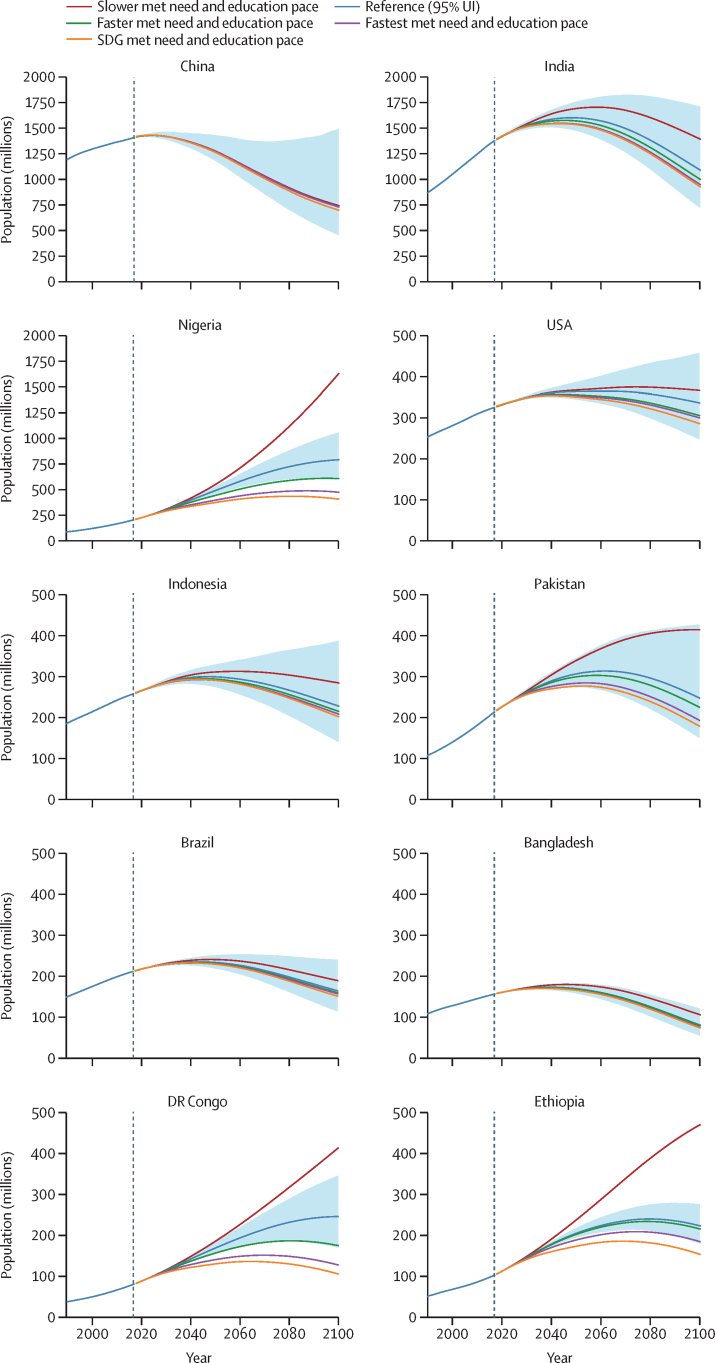
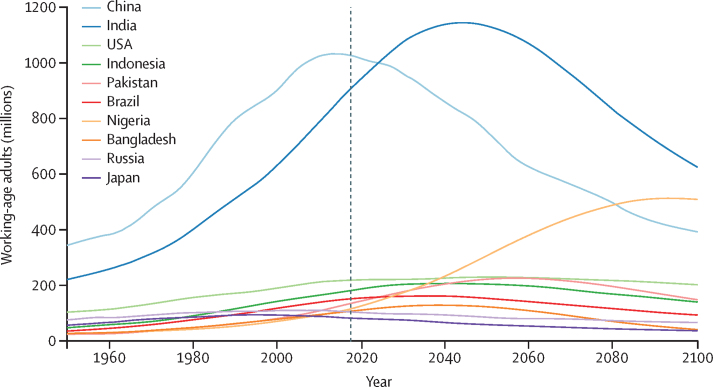
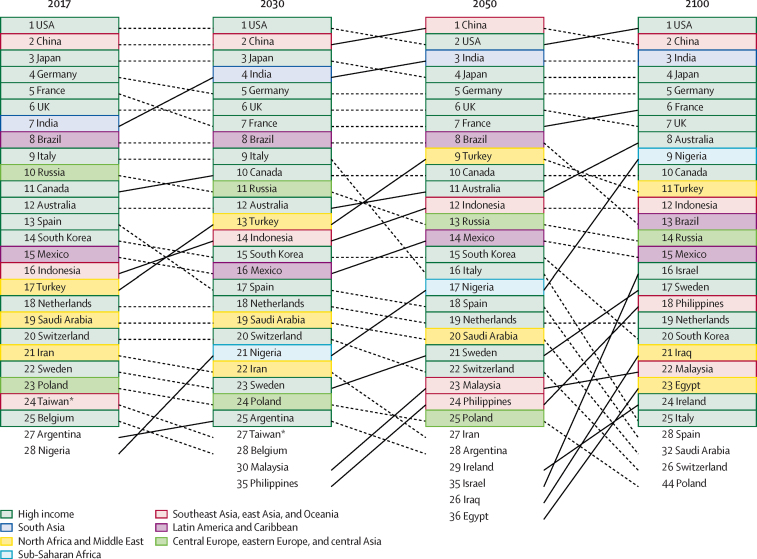
BACKGROUND: Understanding potential patterns in future population levels is crucial for anticipating and planning for changing age structures, resource and health-care needs, and environmental and economic landscapes. Future fertility patterns are a key input to estimation of future population size, but they are surrounded by substantial uncertainty and diverging methodologies of estimation and forecasting, leading to important differences in global population projections. Changing population size and age structure might have profound economic, social, and geopolitical impacts in many countries. In this study, we developed novel methods for forecasting mortality, fertility, migration, and population. We also assessed potential economic and geopolitical effects of future demographic shifts. METHODS: We modelled future population in reference and alternative scenarios as a function of fertility, migration, and mortality rates. We developed statistical models for completed cohort fertility at age 50 years (CCF50). Completed cohort fertility is much more stable over time than the period measure of the total fertility rate (TFR). We modelled CCF50 as a time-series random walk function of educational attainment and contraceptive met need. Age-specific fertility rates were modelled as a function of CCF50 and covariates. We modelled age-specific mortality to 2100 using underlying mortality, a risk factor scalar, and an autoregressive integrated moving average (ARIMA) model. Net migration was modelled as a function of the Socio-demographic Index, crude population growth rate, and deaths from war and natural disasters; and use of an ARIMA model. The model framework was used to develop a reference scenario and alternative scenarios based on the pace of change in educational attainment and contraceptive met need. We estimated the size of gross domestic product for each country and territory in the reference scenario. Forecast uncertainty intervals (UIs) incorporated uncertainty propagated from past data inputs, model estimation, and forecast data distributions. FINDINGS: The global TFR in the reference scenario was forecasted to be 1·66 (95% UI 1·33-2·08) in 2100. In the reference scenario, the global population was projected to peak in 2064 at 9·73 billion (8·84-10·9) people and decline to 8·79 billion (6·83-11·8) in 2100. The reference projections for the five largest countries in 2100 were India (1·09 billion [0·72-1·71], Nigeria (791 million [594-1056]), China (732 million [456-1499]), the USA (336 million [248-456]), and Pakistan (248 million [151-427]). Findings also suggest a shifting age structure in many parts of the world, with 2·37 billion (1·91-2·87) individuals older than 65 years and 1·70 billion (1·11-2·81) individuals younger than 20 years, forecasted globally in 2100. By 2050, 151 countries were forecasted to have a TFR lower than the replacement level (TFR <2·1), and 183 were forecasted to have a TFR lower than replacement by 2100. 23 countries in the reference scenario, including Japan, Thailand, and Spain, were forecasted to have population declines greater than 50% from 2017 to 2100; China's population was forecasted to decline by 48·0% (-6·1 to 68·4). China was forecasted to become the largest economy by 2035 but in the reference scenario, the USA was forecasted to once again become the largest economy in 2098. Our alternative scenarios suggest that meeting the Sustainable Development Goals targets for education and contraceptive met need would result in a global population of 6·29 billion (4·82-8·73) in 2100 and a population of 6·88 billion (5·27-9·51) when assuming 99th percentile rates of change in these drivers. INTERPRETATION: Our findings suggest that continued trends in female educational attainment and access to contraception will hasten declines in fertility and slow population growth. A sustained TFR lower than the replacement level in many countries, including China and India, would have economic, social, environmental, and geopolitical consequences. Policy options to adapt to continued low fertility, while sustaining and enhancing female reproductive health, will be crucial in the years to come. FUNDING: Bill & Melinda Gates Foundation.
Overview
The claims and statistics of this paper haven’t been checked yet.
Free: it reads the open-access text and checks the first 5 claims that cite a source we can check. Create a free account to check every claim.
Integrity signals
Registry
Cites
Statistics
Figures
Verification
Claims the paper makes
The claims and statistics of this paper haven’t been checked yet.
Free: it reads the open-access text and checks the first 5 claims that cite a source we can check. Create a free account to check every claim.
Claims other papers make about this one
Each is checked against this paper’s own text: does it say what the citing paper says it does?
The source backs part of the claim, not all of it — or backs it for a different population, condition or comparison.
In the citing paper
“Demographic data in the 5 years preceding 2021 demonstrate that the total fertility rate (TFR) in some countries has fallen below replacement levels—the minimum rate necessary for generational replacement of the population assuming no migration—with no evidence of this predicted rebound.”
From Global fertility in 204 countries and territories, 1950–2021, with forecasts to 2100: a comprehensive demographic analysis for the Global Burden of Disease Study 2021 (2024) · cites this paper as [4]
Experimental — accuracy not yet measuredThe source backs part of the claim, not all of it — or backs it for a different population, condition or comparison.
In the citing paper
“By 2050 and 2100, respectively, 77% of predominantly high-income countries and 93% of all countries will have a TFR below the replacement level of 2.1 children per woman.”
From Declining global fertility rates and the implications for family planning and family building: an IFFS consensus document based on a narrative review of the literature (2024) · cites this paper as Vollset et al., 2020
Experimental — accuracy not yet measuredThe source backs part of the claim, not all of it — or backs it for a different population, condition or comparison.
In the citing paper
“Not including the effects of migration, many countries are predicted to have a population decline of more than 50% from 2017 to 2100 (Vollset et al., 2020; Dao et al., 2021).”
From Declining global fertility rates and the implications for family planning and family building: an IFFS consensus document based on a narrative review of the literature (2024) · cites this paper as Vollset et al., 2020
Experimental — accuracy not yet measuredThe source backs part of the claim, not all of it — or backs it for a different population, condition or comparison.
In the citing paper
“Different TFRs among countries will promote immigration and emigration with important consequences for all countries, including increased political and social friction (Vollset et al., 2020).”
From Declining global fertility rates and the implications for family planning and family building: an IFFS consensus document based on a narrative review of the literature (2024) · cites this paper as Vollset et al., 2020
Experimental — accuracy not yet measured
6 more claims about this paper
Create a free account to see every claim other papers make about this one.
Self-check
Percentages, sums and reported differences re-computed from the paper’s own numbers.
The self-check needs the paper’s full text.
Citations
Cites
Planetary boundaries: Guiding human development on a changing planet
Steffen, W., Richardson, K., Rockström, J., Cornell, S. E., Fetzer, I., Bennett, E. M., Biggs, R., Carpenter, S. R., de Vries, W., de Wit, C. A., et al. (2015) · Science · doi:10.1126/science.1259855 · Cited by 12,527
Roth, G. A., Abate, D., Abate, K. H., Abay, S. M., Abbafati, C., Abbasi, N., Abbastabar, H., Abd-Allah, F., Abdela, J., Abdelalim, A., et al. (2018) · The Lancet · doi:10.1016/s0140-6736(18)32203-7 · Cited by 8,600
Planetary Boundaries: Exploring the Safe Operating Space for Humanity
Rockström, J., Steffen, W., Noone, K., Persson, Å., Chapin, F. S. I., Lambin, E., Lenton, T. M., Scheffer, M., Folke, C., Schellnhuber, H. J., et al. (2009) · Ecology and Society · doi:10.5751/es-03180-140232 · Cited by 7,187
Time Series: Theory and Methods
Ziegel, E. R., Brockwell, P., & Davis, R. (1992) · Technometrics · doi:10.2307/1270070 · Cited by 5,012
Stanaway, J. D., Afshin, A., Gakidou, E., Lim, S. S., Abate, D., Abate, K. H., Abbafati, C., Abbasi, N., Abbastabar, H., Abd-Allah, F., et al. (2018) · The Lancet · doi:10.1016/s0140-6736(18)32225-6 · Cited by 4,943
Self-citationThe second machine age: work, progress, and prosperity in a time of brilliant technologies
(2015) · Choice Reviews Online · doi:10.5860/choice.184834 · Cited by 4,381
Foreman, K. J., Marquez, N., Dolgert, A., Fukutaki, K., Fullman, N., McGaughey, M., Pletcher, M. A., Smith, A. E., Tang, K., Yuan, C.-W., et al. (2018) · The Lancet · doi:10.1016/s0140-6736(18)31694-5 · Cited by 2,994
Self-citationEssay on the Principle of Population: The 1803 Edition
Malthus, T. R. (2019) · Yale University Press eBooks · doi:10.12987/9780300231892 · Cited by 1,949
Guidelines for accurate and transparent health estimates reporting: the GATHER statement
Stevens, G. A., Alkema, L., Black, R. E., Boerma, J. T., Collins, G. S., Ezzati, M., Grove, J. T., Hogan, D. R., Hogan, M. C., Horton, R., et al. (2016) · The Lancet · doi:10.1016/s0140-6736(16)30388-9 · Cited by 1,798
Self-citationIPCC (2022) · Cambridge University Press eBooks · doi:10.1017/9781009157940 · Cited by 1,482
Research works printed but not linked: 1
- Lutz W Butz WP KC S World population and human capital in the twenty-first century 2014 2014 Oxford University Press Oxford
Cited by
Items 701–800 of 1,000
Ellison, J., Berrington, A. M., Dodd, E., & Forster, J. J. (2023) · Journal of the Royal Statistical Society Series C (Applied Statistics) · doi:10.1093/jrsssc/qlad095 · Cited by 7
Feed balances for ruminant livestock: gridded estimates for data−constrained regions
Fraval, S., Mutua, J. Y., Amole, T. A., Tolera, A. Y., Feyisa, T., Thornton, P. K., Notenbaert, A. M. O., Adesogan, A. T., Balehegn, M., Ayantunde, A. A., et al. (2024) · animal · doi:10.1016/j.animal.2024.101199 · Cited by 7
Meo, S. A., Shaikh, N., & Meo, A. S. (2024) · Saudi Medical Journal · doi:10.15537/smj.2024.45.9.20240437 · Cited by 7
Wang, Y., Yuan, Y., Mo, S., Wang, F., Wei, J., Yao, Y., Zeng, Y., & Zhang, Y. (2024) · Science China Life Sciences · doi:10.1007/s11427-024-2718-9 · Cited by 6
“It is projected that this demographic in China will surge to 125.4 million, making up one-tenth of the national population by 2050 (Vollset et al., 2020).”
InfluentialCheema, H. N., Ma, H., Wang, K., Tang, M., Zhang, K., jahandad, A., Saba, T., Fang, X., Shahzad, M. A., Ansar, M., et al. (2024) · Scientia Horticulturae · doi:10.1016/j.scienta.2024.113768 · Cited by 5
Zhang, Y., Wang, S., & Hei, M. (2025) · Pediatric Investigation · doi:10.1002/ped4.12461 · Cited by 6
Bai, J., Zhang, L., Zhang, M., Hao, Y., Yi, Z., & Zhou, Y. (2025) · BMC Public Health · doi:10.1186/s12889-025-22188-3 · Cited by 5
“The autoregressive integrated moving average (ARIMA) model is frequently employed in epidemiological and demographic studies to forecast trends by analyzing time series of historical data [24].”
Dai, F., Cai, Y., Luo, H., Shu, R., Zhang, T., & Dai, Y. (2025) · BMC Gastroenterology · doi:10.1186/s12876-025-03916-w · Cited by 8
City-level population prediction in Japan from 2020 to 2100 by machine learning
Li, C., Keeley, A. R., Takeda, S., Seki, D., Zhang, J., Shi, B. Q., & Managi, S. (2025) · Expert Systems with Applications · doi:10.1016/j.eswa.2025.128005 · Cited by 5
Lian, Y., & Luo, P. (2025) · Annals of Global Health · doi:10.5334/aogh.4688 · Cited by 8
Rahman, M. M., Sakamoto, H., Sultana, S., Sassa, M., Alam, M. A., & Shibuya, K. (2025) · The Lancet Regional Health - Western Pacific · doi:10.1016/j.lanwpc.2025.101596 · Cited by 9
Xu, Z., Li, D., Liu, Q., Li, S., Li, Y., Li, S., Bian, Y., Kan, X., Wang, Y., & Liu, J. (2025) · Environment International · doi:10.1016/j.envint.2025.109638 · Cited by 5
Shi, G., Chen, S., Shentu, J., Liu, N., Luo, H., Li, C., Chen, L., Luo, K., Chen, Q., Zhang, Q., et al. (2025) · Circulation · doi:10.1161/circulationaha.125.074298 · Cited by 5
Anand, S., Sharma, H. B., & Dubey, B. (2025) · Marine Pollution Bulletin · doi:10.1016/j.marpolbul.2025.118577 · Cited by 6
Manyara, A. M., Manyanga, T., Jallow, M. W., Madela, E. I. Y., Wilson, H., Burton, A. J., Paruk, F., Grundy, C., Gates, L., Drammeh, I., et al. (2026) · The Lancet Global Health · doi:10.1016/s2214-109x(25)00490-5 · Cited by 5
Spatiotemporal dynamics and influencing factors of the global material footprint
Wang, H., Wei, Y., Wu, Y., Wang, X., Wang, Y., Wang, G., & Yue, Q. (2021) · Environmental Science and Pollution Research · doi:10.1007/s11356-021-16923-7 · Cited by 7
Arenberg, S., Kuruc, K., Franz, N., Vyas, S., Lawson, N., LoPalo, M., Budolfson, M. B., Geruso, M., & Spears, D. (2022) · Demography · doi:10.1215/00703370-10290429 · Cited by 6
Gelişmekte Olan Ülkelerin Sağlık Sistemi Göstergelerinin Karşılaştırmalı Analizi
Boz, C., Yılmaz, S., & Özsarı, H. (2022) · Sağlık akademisyenleri dergisi/Sağlık akademisyenler dergisi · doi:10.52880/sagakaderg.1180248 · Cited by 8
Sheikh, T. A., Baba, Z. A., Ganie, Z. A., Hamid, B., Yatoo, A. M., Haq, A. U., Iqbal, S., Wani, F. J., Kannan, S. V., & Ahmad, R. (2022) · Journal of soil science and plant nutrition · doi:10.1007/s42729-022-01055-9 · Cited by 5
Kawamura, E., & Asano, M. (2023) · BMC Pregnancy and Childbirth · doi:10.1186/s12884-023-05519-3 · Cited by 5
“66 in 2100, and involved 23 countries, including Japan, Thailand, and Spain, forecasted to have a population decline of < 50% from 2017 to 2100, leading to severe population decline worldwide [1].”
BackgroundBeyond the Big Five and Birds: Divergent ecotourism perspectives in rapidly changing Africa
Scholte, P. T., Kamgang, S. A., & Sabuhoro, E. (2023) · Animal Conservation · doi:10.1111/acv.12891 · Cited by 5
Shin, J.-W., Park, H. T., Choe, S.-A., & Jeon, O. H. (2023) · Menopause The Journal of The North American Menopause Society · doi:10.1097/gme.0000000000002238 · Cited by 5
The Future Society and the Transition to It
Sadovnichy, V. A., Akaev, A. A., Ilyin, I. V., Malkov, S., Grinin, L. E., Andreev, A. I., & Korotayev, A. (2023) · World-systems evolution and global futures · doi:10.1007/978-3-031-34999-7_3 · Cited by 5
Low Fertility - the Challenge of Demographic Security of Georgia
Meladze, G. (2023) · GEORGIAN GEOGRAPHICAL JOURNAL · doi:10.52340/ggj.2023.03.02.08 · Cited by 5
Mohammad, A., Paulo, M. S., Hosani, S. A., Jabri, O. A., Yafei, Z. A., Datta, S., & Koornneef, E. J. (2024) · Cureus · doi:10.7759/cureus.62294 · Cited by 5
Namuyiga, D. B., Stellmacher, T., & Borgemeister, C. (2024) · CABI Agriculture and Bioscience · doi:10.1186/s43170-024-00281-8 · Cited by 5
Zheng, Z., Xu, S., Zhu, J., Yang, Q., Ye, H., Li, M., Zhang, X., Liu, H., Cheng, Y., Zou, Y., et al. (2024) · Cancer Epidemiology · doi:10.1016/j.canep.2024.102725 · Cited by 6
A New Paradigm for Plant Nutrition
Dobermann, A., Bruulsema, T. W., Çakmak, İ., Gerard, B. G., Majumdar, K., McLaughlin, M., Reidsma, P., Vanlauwe, B., Wollenberg, L., Zhang, F. S., et al. (2021) · CGSPace A Repository of Agricultural Research Outputs (Consultative Group for International Agricultural Research) · doi:10.48565/scfss2021-hg55 · Cited by 6
“5 billion by 2050 (12), it is no longer the only objective.”
BackgroundDasgupta, P. S. (2021) · National Institute Economic Review · doi:10.1017/nie.2021.15 · Cited by 5
A globális népességnövekedés mozgatórugói és a várható jövőbeli folyamatok
Drabancz, Á. (2021) · Európai Tükör · doi:10.32559/et.2020.4.2 · Cited by 5
Lung function and atherosclerosis: a cross-sectional study of multimorbidity in rural Uganda
Gilbert, R. F., Cichowitz, C., Bibangambah, P., Kim, J., Hemphill, L., Yang, I. T., Sentongo, R. N., Kakuhikire, B., Christiani, D. C., Tsai, A. C., et al. (2022) · BMC Pulmonary Medicine · doi:10.1186/s12890-021-01792-0 · Cited by 7
“Characterizing the prevalence and shared risk factors of co-occurring chronic diseases in sub-Saharan Africa—where most of the upcoming population growth is projected to occur [84]—is crucial to expand our understanding of the epidemiology of non-communicable disease among at-risk populations.”
BackgroundAlterung und Pflege als kommunale Aufgabe: Deutsche und japanische Ansätze und Erfahrungen
Waldenberger, F., Naegele, G., Kudo, H., & 松田, 智. (2022) · Dortmunder Beiträge zur Sozialforschung · doi:10.1007/978-3-658-36844-9 · Cited by 6
Malkov, S., Korotayev, A., & Davydova, O. I. (2022) · Computer Research and Modeling · doi:10.20537/2076-7633-2022-14-6-1371-1394 · Cited by 6
Passive Precision Farming Reshapes the Agricultural Sector
Tauber, M., Gollan, B., Schmittner, C., & Knopf, P. (2023) · Computer · doi:10.1109/mc.2022.3218388 · Cited by 6
Hounnaklang, N., Sarnkhaowkhom, C., & Bannatham, R. (2021) · The Open Public Health Journal · doi:10.2174/1874944502114010294 · Cited by 5
Menon, S. N., Tyagi, S., & Shankar, V. G. (2022) · Smart innovation, systems and technologies · doi:10.1007/978-981-16-6624-7_27 · Cited by 5
Кишенин, П. А. (2023) · Демографическое обозрение · doi:10.17323/demreview.v10i1.17261 · Cited by 7
Socio-Technological Challenges and Opportunities: Paths ForwardPreprint
Wu, C.-J., Manne, S., Ranganathan, P., Bird, S., & Greenstein, S. M. (2021) · arXiv (Cornell University) · doi:10.48550/arxiv.2108.06738 · Cited by 6
“Recent data has pointed to significant demographic changes that will be occurring by the year 2100 [Vollset et al., 2020].”
BackgroundPair-Bonding: In Human Evolution
Larsen, M. (2023) · Springer eBooks · doi:10.1007/978-3-031-08956-5_1684-1 · Cited by 5
Climate change and tuberculosis: an analytical frameworkPreprint
Saunders, M. J., Boccia, D., Khan, P. Y., Goscé, L., Gasparrini, A., Clark, R. A., Pescarini, J. M., White, R. G., Houben, R. M. G. J., Zignol, M., et al. (2025) · medRxiv · doi:10.1101/2025.02.18.25322451 · Cited by 6
Abdellatef, E., Gebre, Y., & Bauer, P. (2025) · Plants People Planet · doi:10.1002/ppp3.70099 · Cited by 8
“In addition, it is the only region in the world where the population is forecasted to continuously grow over the next 80 years, from 13% (1.2 billion people, in 2017) to 35% (3.1 billion people, in 2100) of the global population (Vollset et al., 2020).”
InfluentialQuinn, K. J., Ma, Y., Carli, M. M., & Coelho, D. H. (2023) · Otology & Neurotology Open · doi:10.1097/ono.0000000000000029 · Cited by 4
Lee, E. H., Lee, H. S., Lee, K. H., Song, Y. G., & Han, S. H. (2023) · Journal of Microbiology Immunology and Infection · doi:10.1016/j.jmii.2023.06.003 · Cited by 4
Long-Term Demographic Forecasting
Makarov, V., Бахтизин, А. Р., Luo, H., Wu, J., Wu, Z., & Sidorenko, M. Y. (2023) · Herald of the Russian Academy of Sciences · doi:10.1134/s1019331623010033 · Cited by 4
Reproductive disorders in male workers under the influence of a chemical production factor
Fesenko, M. A., Golovaneva, G. V., & Miteleva, T. Y. (2024) · Russian Journal of Occupational Health and Industrial Ecology · doi:10.31089/1026-9428-2024-64-8-531-541 · Cited by 4
Tian, T., Yang, R. J., Fu, Y., Zhou, Z., Qian, W., Zhang, J., Wu, Z., Jin, L., Wu, X., Zhang, C., et al. (2024) · Journal of Global Health · doi:10.7189/jogh.14.04149 · Cited by 5
“Previous studies have demonstrated significant disparities in the prevalence of diseases among countries with varying socioeconomic statuses [34].”
Jin, W., Huang, K., Zhang, M., Jiang, L., Huang, Y., Wang, H., Tian, Y., Zhu, H., Zou, N., Pan, H., et al. (2024) · Journal of the National Cancer Center · doi:10.1016/j.jncc.2024.06.008 · Cited by 4
Chen+, X., Hao, X., Wu+, J., & Liu, X. (2025) · Tobacco Induced Diseases · doi:10.18332/tid/204299 · Cited by 6
“The Ljung-Box Q test used to verify that the model residuals maintained an independent normal distribution, ensuring a robust prediction of smoking-attributable cancer burden trends across the specified timeframe 17 .”
Li, C., Lei, S., Xu, Y., Zhang, Y., Li, L., Zheng, R., & Ding, L. (2025) · Chinese Medical Journal · doi:10.1097/cm9.0000000000003667 · Cited by 8
“[22] Our study also found that low fertility substantially increases the risk of breast cancer in older women.”
Geslin, E. (2025) · Multimedia · doi:10.3390/multimedia1010004 · Cited by 4
Does Human Depopulation Reduce Resource Consumption? Evidence from Anthropocene Japan
Barrahmoune, A., Matanle, P., & Kim, J. (2026) · Sustainability Science · doi:10.1007/s11625-025-01775-8 · Cited by 4
“As population decline progresses, Japan’s experience portends a broader trend already unfolding in many high-income nations and projected to materialize globally as total fertility rates continue to decline (Vollset et al. 2020; UNPD 2024 ).”
Ma, Z., Chen, R., Wang, A., Xi, Y., Liang, M., Yuan, S., Fan, N., Zang, J., Wang, T., & Zang, L. (2026) · Journal of Medical Internet Research · doi:10.2196/92315 · Cited by 4
“Over decades, the global prevalence of MSDs has exhibited a sustained upward trajectory, paralleling demographic shifts toward an aging population [2].”
The Lancet Commission on 21st century global threats to health
Murray, C., Kanem, N., Abed, S., Abubakar, I. I., Adetifa, I., Aguilera, X., Asma, S., Capua, I., Chungong, M., Davies, S. C., et al. (2026) · The Lancet · doi:10.1016/s0140-6736(26)01714-9 · Cited by 10
Self-citationStenz, L., Beyens, M., Gill, M. E., Paoloni‐Giacobino, A., & Geyter, C. D. (2022) · Clinical Epigenetics · doi:10.1186/s13148-022-01409-1 · Cited by 4
“Introduction In numerous countries worldwide, the total fertility rate (TFR), which is defined as the average number of children born to a woman during her lifetime, has been in decline for decades [1].”
BackgroundStruggle for Climate Rescue: The Euphoria of Plans versus Cold Reality
Клименко, В. В., Klimenko, A. V., Tereshin, A. G., & Mikushina, O. V. (2023) · Thermal Engineering · doi:10.1134/s0040601523030011 · Cited by 5
Exploring theoretical conditions for a steady-state global economy: A simulation model
Matutinović, I., Ulanowicz, R. E., & Vlah, D. (2023) · The Anthropocene Review · doi:10.1177/20530196231170369 · Cited by 5
“The policy aimed at reducing material consumption in upper-income countries is also necessary to accommodate population growth in low-income African and South-East Asian countries (Bongaarts, 2016; Vollset et al., 2020).”
BackgroundDegefu, S., Tadesse, A., Ashagir, K., & Ezo, E. (2023) · Heliyon · doi:10.1016/j.heliyon.2023.e16224 · Cited by 4
Véjar, L. I., Cáceres, P., Llanos, N., & Obregón, K. B.-F. (2023) · REVISTA CUHSO · doi:10.7770/cuhso-v33n1-art629 · Cited by 4
Time to pregnancy and life expectancy: a cohort study of 18 796 pregnant couples
Lindahl‐Jacobsen, R., Petersson, M. T., Priskorn, L., Skakkebæk, N. E., Juul, A., Kristensen, D. M., Eisenberg, M. L., & Jensen, T. K. (2023) · Human Reproduction · doi:10.1093/humrep/dead260 · Cited by 5
Long-term demographic forecasting
Makarov, V., Бахтизин, А. Р., Luo, H., Wu, J., Wu, Z., & Sidorenko, M. Y. (2023) · Вестник Российской академии наук · doi:10.31857/s0869587323010048 · Cited by 4
Energy Efficiency in Polish Farms
Szajner, P., & Wieliczko, B. (2024) · Energies · doi:10.3390/en17153654 · Cited by 5
Su, J., Liang, Y., & He, X. (2024) · Frontiers in Medicine · doi:10.3389/fmed.2024.1430741 · Cited by 6
Larsen, M. (2024) · Routledge eBooks · doi:10.4324/9781003499237 · Cited by 7
Qin, H., & Li, Q. (2024) · Edelweiss Applied Science and Technology · doi:10.55214/25768484.v8i5.1796 · Cited by 4
Ren, P., Liao, M., Zhou, L., Rong, H., Zhong, H., li, L., Xiao, T., Li, F., Zeng, J., & Chen, X. (2024) · Geriatric Nursing · doi:10.1016/j.gerinurse.2024.09.025 · Cited by 5
Set rainy days aside: How pension insurance affects household tourism consumption
Yang, Q., Cai, Y., Zhang, P., & Li, R. (2025) · Journal of Hospitality and Tourism Management · doi:10.1016/j.jhtm.2025.03.001 · Cited by 6
Li, Z., Lin, Y., Wang, W., Xie, M., Jiang, Y., Wang, Z., Huang, X., & Zhang, Q. (2025) · Journal of Trace Elements in Medicine and Biology · doi:10.1016/j.jtemb.2025.127643 · Cited by 4
Human reproduction in crisis: causes unknown
Skakkebæk, N. E., Priskorn, L., Lindahl‐Jacobsen, R., Andersson, A., Kristensen, D. M., Beck, A. L., Aksglæde, L., Fischer, M. B., França, L. R., & Juul, A. (2025) · The Lancet · doi:10.1016/s0140-6736(25)00736-6 · Cited by 4
Lindahl‐Jacobsen, R., Beck, A. L., Priskorn, L., Holmboe, S. A., Andersson, A., Juul, A., & Skakkebæk, N. E. (2025) · Scientific Reports · doi:10.1038/s41598-025-08332-4 · Cited by 4
Kocur-Bera, K., & Szuniewicz, K. (2021) · Sustainability · doi:10.3390/su13052929 · Cited by 4
Dollar value of disability-adjusted life years in South Africa in 2019
Senkubuge, F., Hongoro, C., & Kirigia, J. M. (2021) · Journal of Global Health Economics and Policy · doi:10.52872/001c.26856 · Cited by 4
Grunennvaldt, R. L., Paungfoo‐Lonhienne, C., Trueman, S. J., & Gallart, M. (2022) · Rhizosphere · doi:10.1016/j.rhisph.2022.100471 · Cited by 7
Park, C. S., Lee, S., Kim, H., & Kabak, M. (2022) · Florence Nightingale Journal of Nursing · doi:10.5152/fnjn.2022.21122 · Cited by 10
Time for change? Scenario analysis on buyer–seller negotiations
Haggenmüller, S., Oehlschläger, P., Herbst, U., & Voeth, M. (2022) · Journal of Business and Industrial Marketing · doi:10.1108/jbim-11-2021-0511 · Cited by 5
Quak, X. E. S., Sultana, R., Aau, W. K., Goh, C. C., & Tan, N. C. (2022) · Frontiers in Public Health · doi:10.3389/fpubh.2022.996696 · Cited by 8
A New Paradigm for Plant Nutrition
Dobermann, A., Bruulsema, T. W., Çakmak, İ., Gerard, B. G., Majumdar, K., McLaughlin, M., Reidsma, P., Vanlauwe, B., Wollenberg, E. K., Zhang, F. S., et al. (2023) · Springer eBooks · doi:10.1007/978-3-031-15703-5_19 · Cited by 5
Drabancz, Á., & Berde, É. (2022) · Multidiszciplináris kihívások sokszínű válaszok · doi:10.33565/mksv.2022.02.02 · Cited by 5
Medical considerations in the ageing implant patient
Dave, M., Tattar, R., & Patel, N. (2023) · Oral Surgery · doi:10.1111/ors.12821 · Cited by 5
A Darwinian Survival Guide: Hope for the Twenty-First Century
Brooks, D. R., & Agosta, S. J. (2024) · The MIT Press eBooks · doi:10.7551/mitpress/15069.001.0001 · Cited by 7
Li, Y., Luo, D., Li, T., Ding, H., & Liu, Y. (2024) · Scientific Reports · doi:10.1038/s41598-024-63842-x · Cited by 5
Pandemics: the limits to growth and environmental health research
Butler, C. D. (2020) · Current Opinion in Environmental Sustainability · doi:10.1016/j.cosust.2020.10.005 · Cited by 4
Introduction: the relevance of studying fertility across time and space
Sobotka, T. (2020) · Vienna Yearbook of Population Research · doi:10.1553/populationyearbook2020.int01 · Cited by 6
The evolution of built-up areas in Ghana since 1975
Fafchamps, M., & Shilpi, F. J. (2021) · PLoS ONE · doi:10.1371/journal.pone.0250847 · Cited by 4
We know how many people the earth can support
Tucker, C. J. (2020) · The Journal of Population and Sustainability · doi:10.3197/jps.2020.5.1.77 · Cited by 4
Anais do VII Seminário Nacional de Ciência e Tecnologia em Cunicultura SENACITEC – 2021
Brasil, A., & Brasil, U. (2021) · Revista Brasileira de Cunicultura · doi:10.46342/cunicultura.v1.2021.5 · Cited by 4
Yield Formation Parameters of Selected Winter Wheat Genotypes in Response to Water Shortage
Hlaváčová, M., Klem, K., Pytela, J., Veselá, B., Hlavinka, P., Smutná, P., Horáková, V., Škarpa, P., & Trnka, M. (2022) · Agronomy · doi:10.3390/agronomy12040831 · Cited by 4
Chavez–Mora, E., Monares, S., & Troncoso-Pantoja, C. (2022) · Revista chilena de nutrición · doi:10.4067/s0717-75182022000100062 · Cited by 4
Wang, Y., Wang, L., Ma, W., Zhao, H., Han, X., & Zhao, X. (2024) · BMC Infectious Diseases · doi:10.1186/s12879-024-09058-w · Cited by 4
“This model has been widely used in various fields, including economics [21] and demography [22].”
MethodMéroc, E., Fröberg, J., Almási, T., Winje, B. A., Orrico‐Sánchez, A., Steens, A., McDonald, S., Bollaerts, K., & Knol, M. J. (2021) · BMC Infectious Diseases · doi:10.1186/s12879-021-06017-7 · Cited by 4
“Ageing adults experience a natural decline in their immune response, also called immuno-senescence [5, 6], increasing their risk of contracting infectious diseases, as well as their risk of a severe disease course.”
BackgroundFertility and the Education of African Parents and Children
Vogl, T. (2022) · National Bureau of Economic Research · doi:10.3386/w30474 · Cited by 5
Pregnancy and Urology Residency: Towards Equity-centred Practice
Mertens, L. S., Pignot, G., Afferi, L., Vásquez, J. L., Mir, C. M., & Pradère, B. (2023) · European Urology · doi:10.1016/j.eururo.2023.05.020 · Cited by 4
Hwang, I. D., Nam, Y., Sung, W., Shim, S., Yeom, J., Lee, B., Lee, H., Chung, J., Cho, T. H., Choi, Y. J., et al. (2024) · SSRN Electronic Journal · doi:10.2139/ssrn.4725518 · Cited by 4
Munakampe, M. N., Haaland, M. E. S., Zulu, J. M., & Michelo, C. (2021) · Health Policy OPEN · doi:10.1016/j.hpopen.2021.100046 · Cited by 3
“)” [48]; an attempt at narrowing down 'sustainability' in this discussion highlights the contribution of high adolescent fertility to the looming failure to attain sustainable development, mainly due to limited resources [49].”
BackgroundSelected factors of depopulation in South-Eastern Europe
Zienkiewicz, T., & Zienkiewicz, E. (2024) · Wiadomości Statystyczne The Polish Statistician · doi:10.59139/ws.2024.02.1 · Cited by 5
Fertility Rates in Cambodia: A Bumpy Road
Sean, S., Ou, P., Pirtea, P., & de Ziegler, D. (2024) · Fertility & Reproduction · doi:10.1142/s2661318224300034 · Cited by 3
Bento, V. A., Lima, D. C. A., & Russo, A. (2025) · Frontiers in Climate · doi:10.3389/fclim.2025.1519880 · Cited by 3
Wu, J., Deng, Y., Tong, K., & Sun, Z. (2025) · BMC Psychiatry · doi:10.1186/s12888-025-06680-z · Cited by 3
“In this study, both projection models were based on observed trends from 1990 to 2021 and incorporated GBD Population Forecasts for 2017–2100 [38] to estimate future dysthymia rates.”
Effects of essential tremor on longevity and mortality rates in families
Onat, O. E., Ustunel, F., Akbostanci, C., Doganyigit, K. E., Sen, M., Günaydın, E. C., Bilgüvar, K., & Akbostancı, M. C. (2025) · PLoS ONE · doi:10.1371/journal.pone.0320422 · Cited by 3
“When comparing our findings to national mortality data, we found that the median age of death in our cohort (74 years; males: 71, females: 77) was in line with the average life expectancy of the Turkish population in 2019, which was 78 years (males: 76, females: 81) [37].”
Huang, J., Timmins, F., Wang, D., Luan, X., Yao, W., & Zhang, Y. (2025) · Journal of Gerontological Nursing · doi:10.3928/00989134-20250811-02 · Cited by 4
Skaria, R., Rivero, J. A., & Diño, M. J. S. (2025) · BMC Nursing · doi:10.1186/s12912-025-04033-5 · Cited by 6
“Literature often shows that migration often results in poorer health outcomes [7], unequal access to health services [8], and a higher incidence of mortality [9] and morbidity due to chronic conditions [10], among other negative consequences.”
Metadata
- Authors
- Vollset, S. E., Goren, E., Yuan, C.-W., Cao, J., Smith, A. E., Hsiao, T., Bisignano, C., Azhar, G. S., Castro, E., Chalek, J., Dolgert, A. J., Frank, T., Fukutaki, K., Hay, S. I., Lozano, R., Mokdad, A. H., Nandakumar, V., Pierce, M., Pletcher, M., Robalik, T., Steuben, K. M., Wunrow, H. Y., Zlavog, B. S., & Murray, C. J. L.
- Affiliations
- University of Washington (US)
- Corresponding author
- Murray, Christopher J L
- ORCID
- Venue
- The Lancet
- Publisher
- Elsevier BV
- Published
- 2020-10
- Volume
- 396
- Issue
- 10258
- Pages
- 1285-1306
- ISSN
- 0099-5355 (ISSN-L)
- 0140-6736
- PMC
- PMC7561721
- OpenAlex
- W3043365850
- Cited by
- 1,506
- References
- 34
- Citations by year
- 2026: 195 · 2025: 279 · 2024: 266 · 2023: 276 · 2022: 247 · 2021: 197 · 2020: 45
- FWCI
- 288.65
- Type
- journal article
- Language
- en
- Open access
- hybrid
- doi.org
- Licence
- cc-by
- www.elsevier.com/tdm/userlicense/1.0/ (tdm)
- www.elsevier.com/legal/tdmrep-license (tdm)
- creativecommons.org/licenses/by/4.0/ (vor)
- Locations
- The Lancet (publishedVersion, cc-by)
- PubMed Central (publishedVersion, cc-by)
- PubMed (publishedVersion)
- FIU - Digital Commons (Florida International University) (submittedVersion)
- Funders
- Bill and Melinda Gates Foundation
- Topics
- Social Sciences › Demography › Insurance, Mortality, Demography, Risk Management
- Health Sciences › Medicine › Public Health, Environmental and Occupational Health › Reproductive Health and Contraception
- Social Sciences › Geography, Planning and Development › demographic modeling and climate adaptation
- Keywords
- population projections, fertility prediction, mortality forecasting, migration forecasting, age-specific fertility, age-specific mortality, net migration, educational attainment, gross domestic product, demographic scenarios, population decline, age structure, uncertainty intervals, Global Burden of Disease Study, socioeconomic determinants of fertility
- MeSH terms
- Global Burden of Disease, Birth Rate, Female, Forecasting, Humans, Male, Mortality, Population Growth, Human Migration
About these checks
Registry, retraction, Cites and statistics results are computed, not judged, with one exception: a printed reference that no index lists is read once by a model before it counts as a citation error. Claims are extracted by a model and kept only when their quote appears verbatim in the text; each cited source is then checked, with a model’s help, for whether it says what the claim relies on. Those verdicts can be wrong — read the claim’s quote and the cited source before relying on one.
Statistics and arithmetic are recomputed, not judged.
Confidence bands are shown only for fields calibrated on our annotated test set. None is calibrated yet, so no band is shown.
What counts as a claim ›How we measure confidence ›How we check this ›
Are you an author, or do you see a problem with this page? Request a review
Data sources
Bibliographic data: Semantic Scholar, OpenAlex, Crossref.
Contains information from the Semantic Scholar Academic Graph Datasets, made available under the ODC Attribution License (ODC-BY 1.0).
Semantic Scholar’s data is described in: Kinney, R., et al. (2023). The Semantic Scholar Open Data Platform. arXiv:2301.10140.
